

If you suspect a preventable sepsis injury in Miami, you should contact Law Offices of Anidjar and Levine early to protect your rights and preserve time-sensitive evidence.
You’ll need rapid access to hospital charts, EMS reports, lab timelines, and records from every provider to document missed warning signs, delayed antibiotics or fluids, and failures to escalate care.
Your lawyer can coordinate expert review, manage insurer communications, explain fees in writing, and pursue compensation before Florida’s strict deadlines apply.
Learn more by visiting our Miami Medical Malpractice Lawyer page for critical steps and options.
Main Takeaways
- Choose a Miami lawyer experienced in sepsis and medical negligence, with a track record of handling rapid deterioration and complex hospital timelines.
- Act quickly to preserve evidence: hospital charts, EMS reports, lab timelines, cultures, and notes identifying every provider and decision point.
- Investigate common sepsis failures: missed warning signs, delayed testing, delayed antibiotics/fluids, poor monitoring, and failure to escalate or transfer to ICU.
- Use qualified medical experts to prove causation, compare care to protocols, and quantify losses like medical bills, disability, and future care needs.
- Confirm clear written fee terms, case expenses, lien handling, and communication expectations, including response times and updates, before critical decisions.


How We Can Help With Your Miami Sepsis Injury Claim
When sepsis follows a delayed diagnosis, medication error, or untreated infection, you need a legal team that can act quickly and build a claim with clear, documented proof.
When sepsis follows a delay or error, you need a legal team ready to move fast and prove your claim.
You’ll receive focused guidance as you collect records, preserve timelines, and identify every provider involved, so nothing important is overlooked.
You can rely on us to coordinate medical record requests, consult qualified experts, and calculate losses tied to hospitalization, ongoing treatment, and time away from work.
You are also entitled to practical support while the case moves forward.
You can ask us to connect you with Rehab Referrals that address mobility, strength, and daily living needs, and to help you locate Accessibility Services that reduce barriers at home, work, or school.
You’ll stay informed through clear updates, disciplined deadlines, and careful negotiation, and you’ll be prepared for litigation when fair resolution isn’t offered.
OUR CONSULTATIONSARE FREE
START YOUR FREE CASE REVIEW

Understanding Miami Sepsis Injury Cases
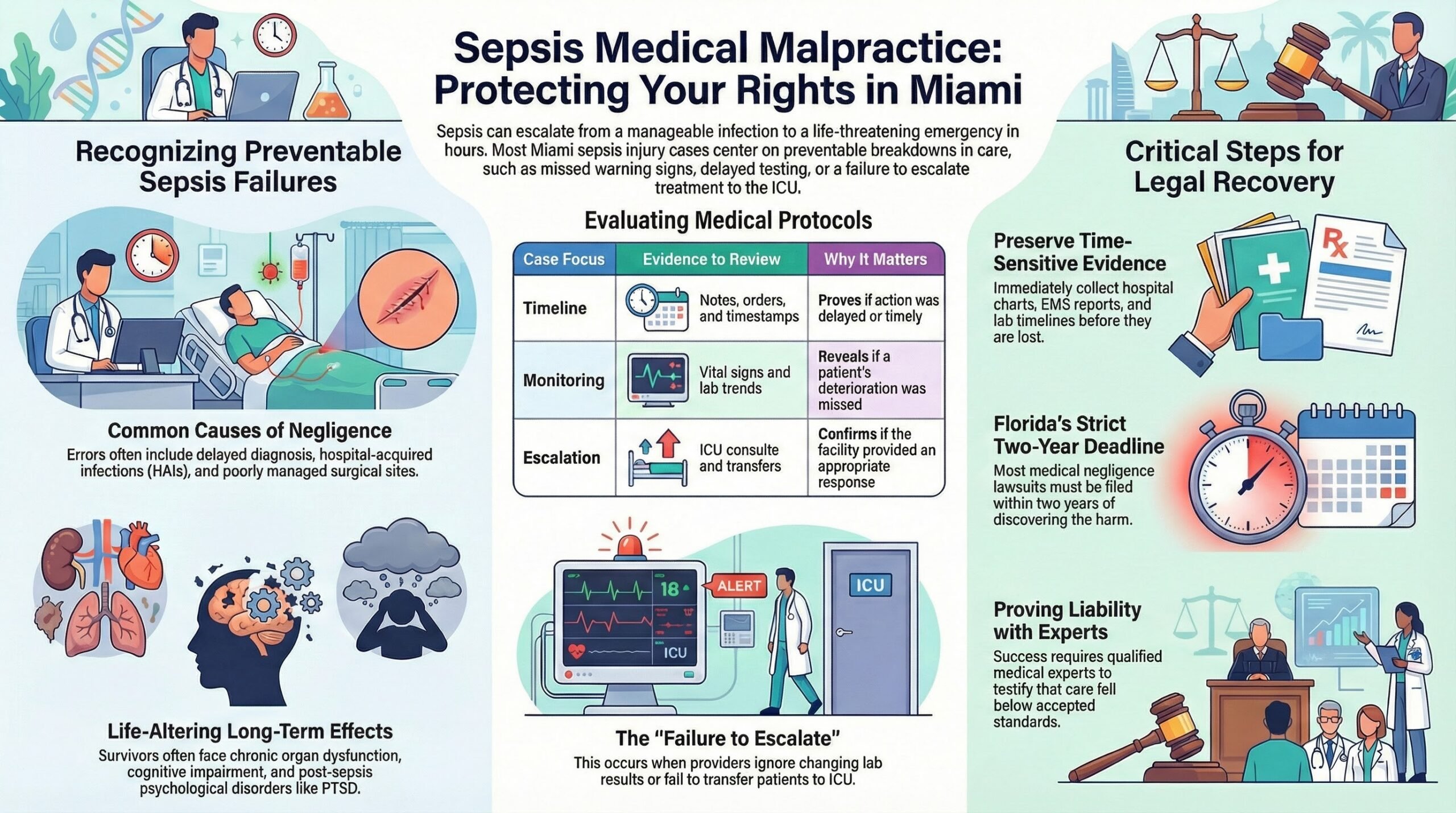
Although sepsis can develop rapidly, most Miami sepsis injury cases center on preventable breakdowns in care, such as missed warning signs, delayed testing, or a failure to escalate treatment.
You typically evaluate whether the healthcare team adhered to medical protocols, documented timely assessments, and responded to changes in physiologic parameters and lab results.
You also examine whether Risk communication was clear, consistent, and shared with the patient and family, especially when condition changes required urgent decisions.
| Case focus | What you review | Why it matters |
|---|---|---|
| Timeline | Notes, orders, timestamps | Shows delay or timely action |
| Monitoring | Physiologic parameters, labs, reassessments | Reveals missed deterioration |
| Escalation | Consults, transfers, ICU criteria | Confirms appropriate response |
When you serve others, you pursue accountability that improves future care, reinforces safety culture, and helps families understand what should have happened and why.
Common Causes of Miami Sepsis Injuries
You can suffer sepsis injuries when hospital-acquired infections take hold, when providers delay diagnosis and treatment, or when surgical site complications allow bacteria to spread.
You can also face severe harm when wounds and ulcers go untreated, especially if proper cleaning, monitoring, and timely antibiotics don’t occur.
You’ll want to identify which of these causes applies, because it often determines where the medical breakdown occurred and who may be responsible.
Hospital-Acquired Infections
Because hospitals concentrate vulnerable patients and invasive procedures in close quarters, hospital-acquired infections remain a leading cause of sepsis injuries in Miami.
You may face exposure through central lines, urinary catheters, ventilators, or surgical sites, where bacteria can enter the bloodstream and rapidly overwhelm your body.
You can also encounter resistant organisms that thrive when antibiotic stewardship is weak, allowing inappropriate prescribing and poor de-escalation practices to fuel hard-to-treat infections.
You serve others best by insisting on strong infection surveillance, consistent hand hygiene, and thorough environmental cleaning, especially in intensive care and post-operative units.
You should expect clear isolation protocols, careful device management, and timely removal of unnecessary lines.
When these safeguards lapse, preventable infections can become life-threatening sepsis.
Delayed Diagnosis And Treatment
When clinicians miss early warning signs, delayed diagnosis and treatment can turn a manageable infection into full-scale sepsis within hours.
You may notice that fever, confusion, rapid breathing, or falling blood pressure gets dismissed as a routine illness, especially in crowded Miami settings.
If lab work, cultures, or imaging aren’t ordered promptly, you lose vital time, and antibiotics or fluids may be started too late to prevent organ strain.
You also face a higher risk when handoffs are rushed, documentation is incomplete, or provider burnout narrows attention to the most obvious complaint.
Even well-meaning remote visits can worsen delays because telemedicine limitations restrict physical exams and timely testing.
Surgical Site Complications
Although most surgeries proceed without incident, a contaminated or poorly managed surgical site can become a portal for bacteria that rapidly escalate into sepsis.
If you serve patients or support loved ones in recovery, watch for drainage, increasing redness, warmth, a foul odor, or fever, and insist on prompt reassessment.
Breakdowns in sterile technique, delayed dressing changes, and inadequate post-operative monitoring can allow infection to spread beyond the incision.
You should also take wound dehiscence seriously, as reopening the tissue creates direct access to deeper structures and exposes the bloodstream.
When clinicians dismiss worsening pain or swelling, you can request cultures, imaging, and clear documentation of findings.
Proper scar management matters, but it must never replace vigilant infection control and timely escalation.
Untreated Wounds And Ulcers
Untreated wounds and ulcers often start as localized skin breakdown, yet they can progress quickly into deep infection and sepsis if you don’t address them with consistent care and timely medical oversight.
When you care for patients or loved ones, monitor for worsening redness, drainage, odor, or pain, and document daily changes.
A disrupted skin microbiome can allow aggressive bacteria to thrive, especially when moisture, pressure, or poor circulation persists.
You should insist on proper cleansing, appropriate dressings, and cultures when recovery stalls, and you must ask about antibiotics only when clinically indicated.
For pressure injuries and diabetic ulcers, you need offloading techniques, routine repositioning, and footwear adjustments to reduce tissue damage.
If fever, confusion, or rapid heart rate develops, seek emergency care immediately.


Legal Rights of Miami Sepsis Injury Victims
Because sepsis often escalates from a manageable infection to a life-threatening emergencyin a matter of hours, Miami victims and their families have clear legal rights to pursue accountability if preventable medical errors or unsafe conditions played a role.
You’re entitled to expect competent care, timely escalation, and accurate documentation, and you may seek recovery when failures cause avoidable harm.
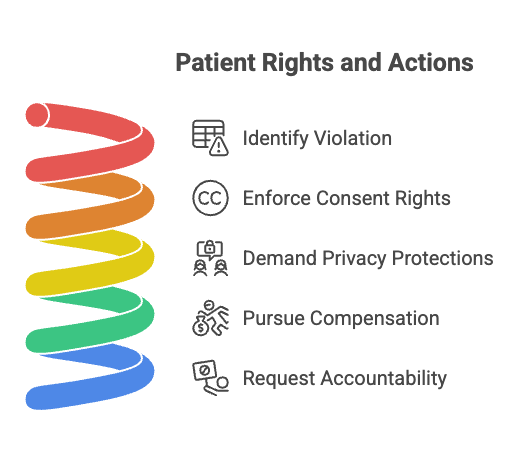
- You can enforce Consent Rights when providers perform procedures without informed consent or withhold material information about risks and alternatives.
- You can demand Privacy Protections when records are disclosed improperly or when access controls fail.
- You can pursue compensation for medical costs, lost income, disability, and the added burden your loved ones may carry as caregivers.
- You can request accountability from hospitals, nursing homes, or other entities when policies, staffing, sanitation, or monitoring practices create unsafe conditions.
Steps to Take After a Miami Sepsis Injury
After a Miami sepsis injury, you should seek emergency medical care immediately, because rapid treatment can prevent further organ damage and strengthen the medical record.
You’ll also want to document your symptoms and treatment in detail, including timelines, medications, test results, and the names of all providers involved.
As soon as your condition allows, you should contact a sepsis injury lawyer, so you can protect your rights and preserve crucial evidence before it’s lost.
Seek Emergency Medical Care
How quickly you seek emergency medical care can determine whether sepsis remains treatable or escalates into organ failure.
If you suspect an infection is worsening, go to an emergency department or call 911, especially if symptoms include fever, confusion, rapid breathing, severe pain, or sudden weakness.
You’ll serve your family and community best by acting without delay, because early intervention protects others from preventable loss.
When you arrive, clearly state that you’re concerned about sepsis, and ask the team to assess you under urgent triage priorities.
You should share key context, such as recent surgery, wounds, urinary issues, pneumonia, or immunosuppression, as these factors inform rapid evaluation.
If you can’t advocate for yourself, bring someone who can speak firmly.
Document Symptoms And Treatment
Once you’ve sought emergency care and the medical team begins evaluating you, start documenting your symptoms and treatment in real time.
Write down fever, chills, confusion, shortness of breath, pain levels, and any rapid changes, then note when each symptom started and whether it improves or worsens.
Keep a symptom diary that includes vital signs you’re told, lab results you receive, and names of clinicians who speak with you.
Request copies of discharge papers, medication lists, imaging reports, and nursing notes, and store them in one secure place. Maintain treatment logs with dates, dosages, IV fluids, antibiotics, procedures, and any adverse reactions.
If you’re too ill, ask a trusted person to document your condition respectfully, so you can later support your recovery and protect others with accurate information.
Contact A Sepsis Injury Lawyer
When should you contact a Miami sepsis injury lawyer? You should reach out as soon as you suspect delayed diagnosis, improper treatment, or preventable infection control failures, especially if your loved one’s condition worsens quickly.
Early legal guidance helps you protect others by holding providers accountable and preserving vital records before they’re altered or lost.
Use reliable Contact methods, such as a direct phone call, secure online form, or scheduled video meeting, and ask what information to bring, including timelines, discharge papers, and billing statements.
Clarify Response times, so you know when to expect an initial review and follow-up steps.
You can also request that the lawyer coordinate record requests, speak with insurers, and outline next actions while you focus on recovery and support.
How a Miami Sepsis Injury Lawyer Can Help You
Although sepsis can progress rapidly and leave you facing overwhelming medical and financial strain, a Miami sepsis injury lawyer can step in to protect your rights and bring structure to your claim.
When sepsis escalates fast, a Miami sepsis injury lawyer can protect your rights and bring order to your claim.
You merit an advocate who treats your case as a service to your family and your community, while holding negligent providers accountable.
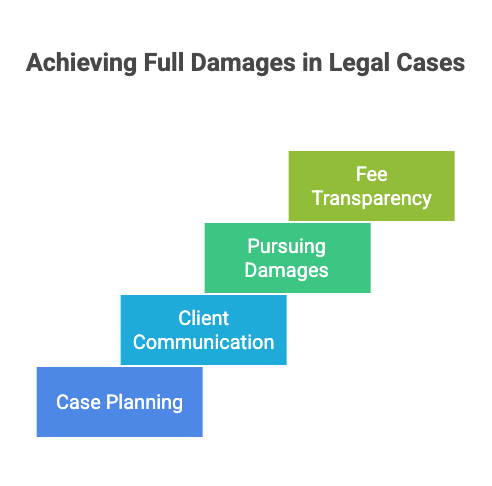
- You’ll receive clear case planning, including evidence collection, timeline review, and coordination with appropriate medical and financial professionals.
- You’ll benefit from strong Client Communication, so you understand deadlines, options, and risks before you make decisions.
- Your lawyer can pursue full damages by documenting hospital records, billing, wage loss, and out-of-pocket costs, then negotiating firmly with insurers.
- You’ll have Fee Transparency, with written terms that explain costs, contingency arrangements, and what happens if recovery is limited.
With steady guidance, you can focus on care and supporting others, not paperwork and pressure.
Long-Term Effects of Miami Sepsis Injuries
After a sepsis injury, you may face long-term complications that persist well beyond the initial infection, affecting your health, independence, and ability to work.
You can develop chronic organ dysfunction, along with neurological and cognitive impairment that disrupts memory, focus, and everyday decision-making.
You may also experience post-sepsis psychological disorders, such as anxiety, depression, or post-traumatic stress, which can require ongoing treatment and careful documentation.
Chronic Organ Dysfunction
Because sepsis can disrupt blood flow and oxygen delivery throughout your body, it doesn’t always end with hospital discharge; for many Miami survivors, it marks the start of chronic organ dysfunction.
You may experience ongoing strain on your kidneys, heart, lungs, or liver as inflammation persists and recovery becomes uneven.
Mitochondrial Dysfunction can limit cellular energy, while vascular remodeling can stiffen or narrow vessels, reducing reliable perfusion.
| Organ system | What you may notice |
|---|---|
| Kidneys | fatigue, swelling, abnormal labs |
| Lungs/Heart | breathlessness, low stamina, fluid retention |
If you serve others, you’ll want predictable strength; ongoing monitoring, medication adherence, nutrition, and gradual rehabilitation can help you meet commitments safely.
You should document symptoms and follow-up care, since chronic impairment can affect work capacity and support needs.
Neurological And Cognitive Impairment
Even when your infection is controlled and your physiological signs stabilize, sepsis can cause lasting damage to the brain and nervous system, affecting how you think, remember, and function day to day.
You may notice slowed processing, reduced attention, difficulty finding words, or short-term memory lapses that complicate medication schedules, finances, and safe driving.
Your balance and coordination can also decline, increasing fall risk and limiting your ability to serve others through work and community commitments.
Clinicians may document Neuroimaging Findings, such as subtle white matter changes or prior hypoxic injury, to connect symptoms to the septic event.
Emerging Biomarker Research tracks inflammation and neuronal injury signals, supporting earlier identification and targeted rehabilitation.
With structured therapy, sleep hygiene, and cognitive pacing, you can rebuild function and sustain meaningful service over time.
Post-Sepsis Psychological Disorders
Cognitive and neurological changes often overlap with mental health complications, and many sepsis survivors also develop post-sepsis psychological disorders that persist long after discharge. You may notice PTSD emergence after ICU memories, nightmares, or medical triggers, and Anxiety disorders that heighten vigilance, irritability, and sleep disruption. These symptoms can strain your ability to serve patients, clients, or family with steady attention, so you should treat them as legitimate injuries, not personal weakness.
| Common experience | How it shows up | Practical support |
|---|---|---|
| Intrusive recall | flashbacks, panic | trauma-focused therapy |
| Persistent worry | restlessness, insomnia | CBT, medication review |
| Social withdrawal | isolation, low drive | peer support, pacing |
If avoidable medical errors contributed, you can document the impact of care and seek accountability while protecting your long-term recovery.
Proving Liability in Miami Sepsis Medical Malpractice Injury Cases
When sepsis follows a missed infection or delayed treatment, proving liability in a Miami medical malpractice case turns on clear evidence that a provider’s choices fell below the accepted standard of care and directly caused your harm.
You’ll focus on what should’ve happened, when it should’ve happened, and how the failure changed your outcome, especially during the crucial early hours.
You can strengthen your case with expert testimony from clinicians who compare the chart against accepted protocols for screening, cultures, antibiotics, fluids, and escalation of care.
You’ll also rely on records that show abnormal vital signs, lab trends, and delayed responses, including gaps in handoffs or monitoring.
Forensic Microbiology may help trace the source of infection, link organisms to untreated sites, and determine whether earlier targeted therapy was available.
When you document each decision point, you honor patient safety and support accountability, which helps protect others from preventable sepsis in the future.
Compensation for Miami Sepsis Damages
Proving a provider’s liability lays the groundwork for the next question: how you’ll be compensated for the harm sepsis caused.
You can pursue damages that reflect the full scope of your losses, so your recovery supports both your recovery and your ability to care for others.
Compensation often includes past and future medical expenses, rehabilitation, in-home assistance, and the income you’ve lost or may lose if sepsis limits your work.
Damages may cover medical bills, rehabilitation, in-home care, and the income you’ve lost—or may lose—if sepsis affects work.
You can also seek damages for pain, disability, scarring, and the reduced ability to enjoy daily life, especially when long-term complications persist.
If your loved one died, you may recover funeral costs and the value of lost support and services.
You’ll also decide how to receive funds, including lump-sum payments or structured settlements that provide reliable, scheduled income.
Your lawyer will address tax implications, negotiate liens, and document future care needs to protect your net recovery.
The Statute of Limitations for Miami Sepsis Injury Cases
How long do you have to file a Miami sepsis injury claim before the court bars it as untimely?
In Florida, sepsis lawsuits usually follow medical negligence Filing Deadlines, which commonly give you two years from when you knew, or should’ve known, that negligent care contributed to the infection and resulting harm.
That timeframe can tighten quickly when vital records, witnesses, and clinical timelines must be preserved for the people you aim to protect.
You should also understand exceptions that may extend or suspend the clock.
Discovery Tolling can apply when you couldn’t reasonably learn the cause of the injury earlier, and certain circumstances, such as concealment or delayed access to information, may affect when the period starts.
However, tolling isn’t automatic, and courts apply it narrowly.
To serve patients and families responsibly, you must document when symptoms emerged, when you received diagnoses, and when you first suspected a preventable error.
Why You Need an Experienced Miami Sepsis Injury Lawyer
Although sepsis can escalate in hours, building a successful injury claim demands careful, experienced work that starts long before a lawsuit is filed.
You need counsel who can quickly secure medical records, preserve time-sensitive timelines, and identify where delayed diagnosis, inadequate monitoring, or improper discharge created preventable harm.
An experienced Miami sepsis injury lawyer coordinates with qualified clinicians to review charts, explain causation, and quantify long-term losses, so your claim reflects both medical reality and your family’s service-centered goals.
You’ll also benefit from strong Resource networks that support investigation, expert testimony, and life-care planning, while protecting you from avoidable costs and procedural missteps.
You should expect clear Fee structures that align incentives and prevent surprises, including a transparent discussion of case expenses and repayment terms.
With seasoned guidance, you can focus on recovery and advocacy, while your legal team advances accountability and safer care for others, too.
How to Choose the Right Miami Sepsis Injury Lawyer for Your Case
Experienced counsel can secure records, align expert review, and build a claim that reflects the true medical and financial impact of sepsis, but you still need to select the right lawyer for your specific facts and goals.
Start by confirming that the attorney regularly handles sepsis and medical negligence matters in Miami, and can explain how delays in diagnosis, treatment lapses, or discharge decisions caused harm.
Ask how they’ll gather hospital charts, EMS reports, and laboratory timelines, then test the case with qualified experts.
Review Fee Structures in writing, including contingency terms, costs, and how liens may affect recovery, so you can plan responsibly.
Evaluate Communication Style by noting whether you receive clear updates, prompt replies, and respectful guidance for decision making.
Finally, choose counsel who treats your case as service, protecting your family while pursuing accountability and safer care for others.
About the Law Offices of Anidjar and Levine
The Law Offices of Anidjar and Levine represents Miami clients in complex injury matters, including sepsis cases tied to medical negligence, with a focus on disciplined case preparation and client-centered service.
When you work with this team, you’ll see an approach built on careful investigation, timely communication, and respect for the people you serve, including injured patients and their families.
You can expect the firm to gather records, consult qualified medical reviewers, and develop a clear damages narrative that supports accountability and safer care.
The attorneys pursue fair resolutions, yet they’re prepared to litigate when insurers or providers refuse to act responsibly.
You’ll also benefit from a practice shaped by firm awards that reflect sustained performance, while staying grounded in community outreach that prioritizes access and practical support.
If your goal is to protect others while seeking justice, you’ll find a measured, service-driven partner throughout your case.
Frequently Asked Questions
Can I Pursue a Claim if My Loved One Died From Sepsis?
Yes, you can pursue a claim if your loved one died from sepsis, when negligent care contributed to the outcome.
You’ll typically file a wrongful death action, showing a duty of care, a breach, and a causal link to death.
You should promptly gather records, timelines, and witness details.
A careful assessment of damages can address medical bills, funeral costs, lost support, and related losses for eligible survivors.
What if Sepsis Developed After Discharge From a Miami Hospital?
If sepsis developed after discharge, you can still pursue a claim if you show the hospital’s care fell below standards and caused the outcome.
You’ll review discharge instructions for missed warning signs, inadequate antibiotics, or unsafe timing, and you’ll document gaps in follow-up care, such as delayed labs or ignored calls.
You should gather records, timelines, and witness accounts, then consult qualified counsel to act promptly.
Do I Need Expert Witnesses to Prove Delayed Sepsis Diagnosis?
Yes, you’ll usually need expert witnesses to prove a delayed sepsis diagnosis, because the court expects expert testimony to explain diagnostic standards and whether care fell below them.
You’ll rely on a qualified clinician to compare the symptoms, labs, and timeline to accepted practice, and to connect the delay to harm.
Without this support, you may struggle to show negligence and causation clearly.
This guidance helps you advocate responsibly for patients.
Will My Immigration Status Affect a Miami Sepsis Injury Lawsuit?
Your immigration status usually won’t block a sepsis injury lawsuit in Miami, but it can affect how you handle the case.
You should discuss deportation risk with counsel, because some disclosures may increase scrutiny, even if courts focus on negligence.
You must also confirm insurance eligibility, since coverage details can shape recovery options and liens.
You can still pursue accountability, protect patient safety, and support others through responsible litigation.
Can I Sue a Miami Nursing Home for Sepsis From Infected Bedsores?
Yes, you can sue if you show the nursing home’s failure to prevent or treat bedsores led to sepsis.
You’ll need to prove facility negligence, such as poor turning schedules, delayed wound care, or ignored infection signs, and connect those lapses to your harm.
Act quickly, prioritize documentation preservation by securing records, photos, witness names, and incident reports, and seek medical evaluation to support causation and damages.
—————————
If you’ve suffered a sepsis injury in Miami, you can’t afford to delay, and you shouldn’t face the process alone.
You’ll need prompt medical documentation, careful preservation of records, and a clear strategy to prove negligence and damages.
You also must act within Florida’s filing deadlines, which can bar recovery if missed.
With the Law Offices of Anidjar and Levine and a dedicated Miami Medical Malpractice Lawyer, you can pursue accountability, evaluate settlement options, and prepare a strong case for trial.

