

A Law Offices of Anidjar and Levine Orlando nursing negligence injury lawyer helps you act quickly to protect your health and your claim. Your attorney can secure medical records, medication logs, staffing documents, and witness statements before crucial details disappear.
They work with medical experts to show how the nursing error breached professional standards and caused your injuries. They also handle insurers, value medical costs, lost income, and pain, and build a credible case for settlement or trial.
For more information, visit our Orlando Medical Malpractice Lawyer. Below is what you should know.
Main Takeaways
- An Orlando nursing negligence injury lawyer investigates records, staffing logs, witness statements, and facility policies to identify negligent care and responsible parties.
- Strong claims require proving duty, breach, causation, and measurable damages through medical records, expert review, and organized evidence.
- Common nursing negligence includes medication errors, inadequate monitoring, poor fall prevention, and delayed emergency response, causing serious harm.
- A lawyer preserves evidence early, builds a timeline, communicates with insurers and providers, and pursues settlement or trial when needed.
- Compensation may include medical expenses, lost income, added care needs, pain and suffering, and other losses tied to the nursing error.


How We Can Help With Your Orlando Nursing Negligence Injury Claim
Protect your rights by working with a legal team that understands how nursing negligence claims are built and proven. You need counsel that listens carefully, explains each step clearly, and moves your claim forward with purpose. Our role is to gather records, identify responsible parties, preserve evidence, and present your losses in a clear, credible way.
You also merit guidance that reflects patient advocacy and respect for your family’s goals. We help you organize timelines, secure witness statements, and follow practical documentation tips that strengthen your position. When insurers question your experience, we respond with facts, consistency, and disciplined preparation.
We communicate with providers and opposing representatives, so you can focus on recovery and the people who rely on you. Throughout the process, you receive honest case assessments, prompt updates, and strategic recommendations designed to protect your interests and support a just financial outcome under Florida law.
OUR CONSULTATIONSARE FREE
START YOUR FREE CASE REVIEW

Understanding Orlando Nursing Negligence Injury Cases
Building a strong claim also requires a clear understanding of what nursing negligence looks like in practice and how Florida law evaluates it. When you pursue justice, you must show that a nurse owed a duty of care, breached that duty, and directly caused measurable harm. Your case often turns on medical records, expert review, and whether the care provided fell below accepted professional standards.
You should also understand that these cases involve more than an isolated mistake. They examine communication, documentation, supervision, and the extent to which proper staff training supported safe patient care. Florida law generally requires careful proof, including evidence of how the injury affected your health, finances, and daily life.
By focusing on facts, timelines, and credible medical opinions, you strengthen your position and protect the dignity of those affected. Effective patient advocacy means holding providers accountable while seeking outcomes that promote recovery, safer practices, and greater respect for every person entrusted to nursing care.
Common Causes of Orlando Nursing Negligence
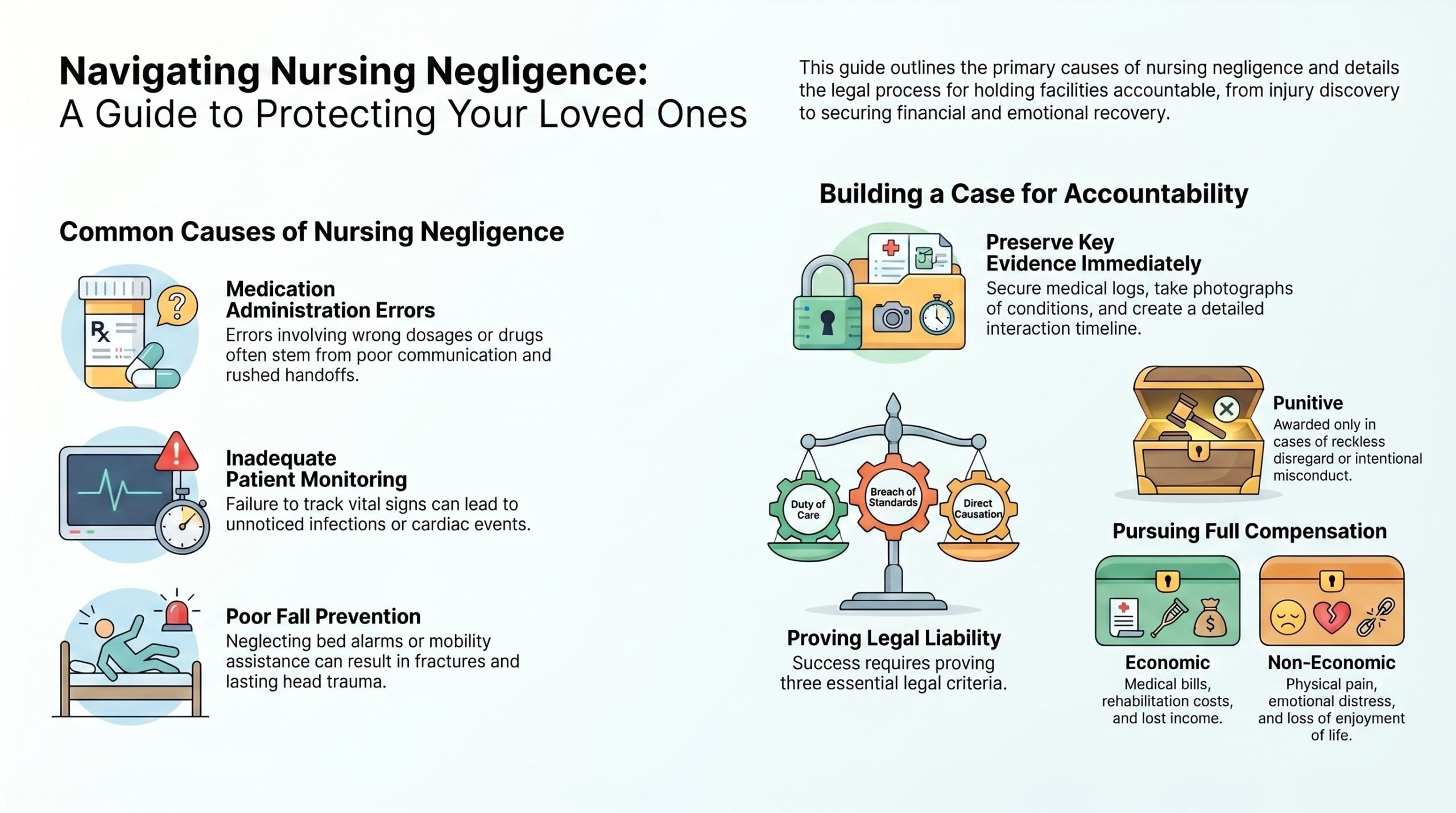
You should understand the common causes of nursing negligence, because these failures often lead directly to serious patient harm. In many Orlando cases, you’ll see medication administration errors, inadequate patient monitoring, and poor fall prevention measures that place vulnerable patients at unnecessary risk. You may also encounter a delayed emergency response, which can worsen a patient’s condition and strengthen the basis of a negligence claim.
Medication Administration Errors
Too often, medication administration errors in nursing settings cause serious harm when staff give the wrong drug, use the wrong dose, or fail to follow a physician’s orders. When this happens, you may face preventable complications that disrupt recovery and place your trust at risk. These mistakes often stem from poor communication, rushed handoffs, Medication timing failures, and Documentation errors that conceal pivotal details about allergies, contraindications, or prior doses.
You merit care delivered with diligence, accuracy, and respect for your wellbeing. In many cases, proper verification procedures, clear charting, and careful adherence to prescribing instructions would have prevented the injury. If a nurse or facility failed to meet that duty, you may have grounds to pursue accountability and seek compensation for the harm caused and related losses.
Inadequate Patient Monitoring
When nurses don’t monitor a patient closely, early warning signs of distress can go unnoticed until a preventable complication becomes far more serious. You trust caregivers to track vital signs, respond to changes, and communicate concerns without delay. When that vigilance slips, infections, breathing problems, or cardiac events may worsen before anyone intervenes.
You may see inadequate monitoring in the form of telemetry gaps, delayed charting, missed reassessments, or ignored alarms during busy shifts. Unsafe staffing ratios often make these failures more likely, especially when nurses must divide attention among too many vulnerable patients.
In a profession rooted in service, careful observation protects essential dignity, supports recovery, and honors each person’s needs. If monitoring failures caused harm, you may have grounds to pursue accountability and secure resources for recovery and future care needs.
Poor Fall Prevention
In busy hospital units, poor fall prevention can turn a manageable condition into a serious injury within moments. When you entrust a loved one to nursing staff, you expect consistent safeguards that protect dignity, stability, and healing every hour.
Falls often occur when providers ignore basic precautions, including bed alarms, mobility assistance, clear walkways, and proper wet-floor signage. You may also see how insufficient staffing leaves vulnerable patients unsupported during transfers, toileting, or nighttime movement.
When caregivers fail to assess medications, weakness, confusion, or prior fall history, preventable harm becomes far more likely. These lapses can cause fractures, head trauma, and lasting setbacks that compromise recovery. By identifying unsafe practices, you help hold facilities accountable and reinforce the standard of attentive, compassionate care every patient merits daily.
Delayed Emergency Response
Delayed emergency response can be just as dangerous as poor fall prevention, because a patient’s condition can worsen quickly if nurses and staff don’t act at the first sign of distress. When you entrust a nursing facility with someone’s care, you expect prompt attention during breathing problems, chest pain, sudden confusion, or signs of stroke. If caregivers ignore alarms, delay contacting physicians, or fail to follow dispatch protocols, precious minutes may be lost.
You may see harm worsen when response time is slow and treatment is postponed. In a setting devoted to service, staff must recognize emergencies, communicate clearly, and escalate care without hesitation. When they do not, preventable injuries, permanent complications, and wrongful death can follow. Careful investigation can determine whether delayed action constituted nursing negligence under Florida law.


Legal Rights of Orlando Nursing Negligence Injury Victims
Accountability shapes the legal rights available to Orlando nursing negligence injury victims, because Florida law allows you to pursue compensation when a nurse’s careless act or omission causes harm. You may seek damages for medical costs, lost income, pain, and reduced quality of life. These rights also protect your dignity, your voice, and your role in decisions about care through Patient advocacy and Consent rights.
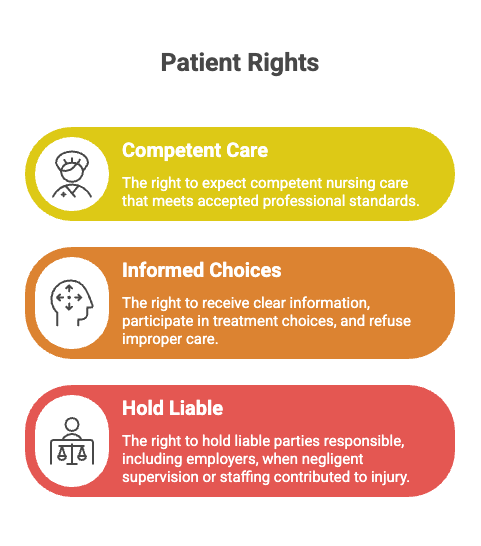
Your legal protections often include:
- The right to expect competent nursing care that meets accepted professional standards.
- The right to receive clear information, participate in treatment choices, and refuse improper care.
- The right to hold liable parties responsible, including employers, when negligent supervision or staffing contributed to injury.
When negligence disrupts your recovery, asserting your rights can also advance safer care for others in Orlando. A qualified attorney can explain how evidence, causation, and damages affect your claim while helping you pursue accountability with purpose, compassion, and a strong commitment to service.
Steps to Take After an Orlando Nursing Negligence Injury
After an Orlando nursing negligence injury, you should seek immediate medical care to protect your health and create a clear record of your condition. You should also preserve crucial evidence, including medical records, photographs, witness information, and any communication related to the incident. Once you’ve taken these steps, you should consult an injury lawyer who can assess your claim and help you safeguard your rights.
Seek Immediate Medical Care
In the moments following a nursing negligence injury, you should seek immediate medical care to safeguard both your health and your legal claim. Prompt treatment protects you from worsening complications and creates a clear record of your condition. Request an urgent assessment as soon as symptoms appear, even if the harm seems minor at first.
If your injuries are severe, call 911 or ask for immediate transport to the nearest emergency department. Follow every medical instruction, attend recommended follow-up visits, and report all symptoms honestly and completely.
Your focus should remain on recovering so you can continue caring for those who depend on you. Timely care also helps physicians connect your injuries to the negligent act, which may become important if you later pursue compensation for your losses and ongoing treatment needs.
Preserve Key Evidence
Prompt medical care protects your health, and preserving evidence helps protect your right to seek compensation. As you continue caring for your loved one, gather records, names, dates, and written observations while details remain fresh and accurate.
Take digital photographs of visible injuries, bedding, room conditions, medications, and any equipment involved. Save text messages, emails, billing statements, discharge papers, and care plans in one secure place. If personal items, clothing, or devices may show neglect, store them carefully and avoid altering their condition.
Create a simple timeline that documents symptoms, staff interactions, and changes in treatment. When you share evidence with medical providers or investigators, note when, why, and with whom you shared it, so the chain of custody remains clear, organized, and credible throughout the process.
Consult An Injury Lawyer
Because nursing negligence claims often involve complex medical records, facility policies, and strict filing deadlines, consulting an Orlando injury lawyer early can help you protect your rights and avoid preventable mistakes.
When you meet counsel, prepare for a comprehensive client interview about treatment, staffing failures, communications, and resulting harm. Bring records, photographs, bills, and names of witnesses who may support your account. Ask how the lawyer will investigate the facility, preserve evidence, and evaluate damages tied to medical needs, lost income, and future care.
You should also discuss the fee structure, including contingency terms, case costs, and how expenses are handled if recovery is delayed. By seeking timely legal guidance, you strengthen your ability to pursue accountability, safeguard vulnerable patients, and support safer care practices within the community for others.
How an Orlando Nursing Negligence Injury Lawyer Can Help You
When nursing negligence causes serious harm, an Orlando nursing negligence injury lawyer can help you identify the responsible parties, preserve essential evidence, and build a claim that reflects the full extent of your losses. You merit clear guidance that protects your well-being and supports patient advocacy. Your lawyer reviews medical records, staffing logs, and policies to determine whether caregivers violated accepted documentation standards and failed to provide safe, competent treatment.
A skilled attorney helps you by:
- Investigating the incident, interviewing witnesses, and securing records before critical details are lost.
- Consulting qualified medical experts to explain how the nursing error occurred and why it breached professional duties.
- Pursuing fair compensation for medical expenses, lost income, added care needs, and other measurable damages.
With informed legal support, you can act responsibly for yourself and those who depend on you. Your lawyer manages communication, deadlines, and strategy so you can focus on recovery and meaningful service to others.
Long-Term Effects of Orlando Nursing Negligence Injuries
You may face lasting physical complications after nursing negligence, including reduced mobility, chronic pain, infections, or worsening medical conditions that affect your daily life. You can also suffer emotional and cognitive harm, such as anxiety, depression, trauma, memory problems, or diminished mental functioning that alters your independence.
As these effects continue, you may confront substantial financial and care burdens, including ongoing treatment costs, rehabilitation expenses, and the need for long-term personal support.
Lasting Physical Complications
Although some injuries recover with time, nursing negligence often leaves patients with lasting physical complications that alter mobility, strength, and overall health. You may face chronic pain that limits daily tasks, disrupts sleep, and reduces your ability to care for others with consistency and safety.
In many cases, mobility loss follows untreated infections, pressure injuries, falls, medication errors, or delayed intervention. You might need assistive devices, rehabilitation, or ongoing medical treatment to regain partial function. Muscle weakness, nerve damage, reduced balance, and joint stiffness can also interfere with work, household responsibilities, and personal independence.
When these complications persist, your physical condition may decline further, creating additional medical needs and financial pressure. Careful legal action can help you access resources for treatment, long-term support, and a more stable path to recovery.
Emotional And Cognitive Harm
Physical injuries often bring more than pain and reduced mobility, because nursing negligence can also cause lasting emotional and cognitive harm that affects your stability, judgment, and quality of life.
You may struggle with anxiety, depression, sleep disruption, or psychological trauma after repeated neglect, medication errors, or frightening medical events. These effects can make it harder for you to trust caregivers, communicate clearly, and stay engaged with the people who rely on your compassion and presence.
In some cases, emotional distress develops alongside cognitive decline, leaving you with memory problems, confusion, poor concentration, or reduced decision-making ability. When these symptoms persist, they can diminish your independence and sense of purpose. Recognizing these harms matters because timely legal action can help protect your dignity, well-being, and long-term recovery and restoration.
Financial And Care Burdens
When nursing negligence causes lasting injury, the financial consequences often extend far beyond the initial medical crisis. You may face repeated hospital visits, rehabilitation costs, medication expenses, home modifications, and reduced income if you can’t return to work. These losses can create severe financial strain, especially when your family is already focused on providing steady, restorative support.
You may also assume new caregiving duties that affect your schedule, health, and relationships. Over time, constant supervision, transportation needs, and medical coordination can lead to caregiver burnout, even when you’re deeply committed to serving your loved one.
A serious injury doesn’t only alter one person’s future; it can reshape your entire household’s stability. By recognizing these burdens early, you can better document damages and pursue compensation that protects your family’s care needs over time.
Proving Liability in Orlando Nursing Negligence Injury Cases
Because nursing negligence claims often turn on facts that facilities and insurers may dispute, proving liability in an Orlando case requires clear evidence that a nurse owed your loved one a duty of care, breached the accepted standard of nursing practice, and caused a preventable injury. You must connect records, witness accounts, and timelines to show what happened and why it should’ve been prevented.
You strengthen your claim with expert testimony that explains how competent nurses would’ve responded under similar circumstances. In some cases, res ipsa may support an inference of negligence when the injury ordinarily would not occur without improper care. A careful causation analysis also matters, especially when a patient has already faced serious health conditions.
If the defense raises alternative explanations, burden shifting arguments may help focus attention on missing charts, altered notes, or unexplained deviations from protocol. By building organized proof, you protect your loved one’s dignity and help uphold safer care standards for others in your community.
Dealing With Insurance Companies After an Orlando Nursing Negligence Injury
Sorting through insurer communications after an Orlando nursing negligence injury requires a disciplined approach, since adjusters often move quickly to limit exposure before the full extent of the harm is clear. You should keep every letter, email, bill, and voicemail, and document each contact in a dated log. When you speak with an insurer, stay factual, avoid speculation, and do not minimize symptoms or caregiving burdens.
You also need to recognize common claims tactics, including requests for broad medical authorizations, recorded statements, or quick settlement discussions before your condition is fully understood. Review policy language carefully, track adjuster deadlines, and respond in writing when possible, so your record remains clear.
If you are helping a loved one, protect their dignity by organizing medication records, care notes, and provider instructions. Careful communication supports accountability, preserves important details, and helps you serve your family member with steadiness, respect, and informed judgment during a difficult time.
What to Expect During an Orlando Nursing Negligence Injury Claim Process
You can expect your claim to begin with an initial case evaluation, where your attorney reviews the facts, assesses liability, and explains your legal options. From there, you’ll need strong medical evidence to document your injuries, connect them to the nursing negligence, and support the full value of your damages. Most claims then move into settlement negotiations, but if a fair agreement isn’t reached, your case may proceed to trial and final resolution.
Initial Case Evaluation
Navigating an Orlando nursing negligence injury claim begins with a focused case evaluation, in which an attorney reviews the facts, identifies potential breaches of the standard of care, and assesses how the negligence caused harm. During this stage, you can expect a thorough client interview that clarifies what happened, who was involved, and how the injury affected your daily life and ability to care for others.
Your attorney will also develop a clear case timeline, organizing essential events to reveal patterns, omissions, and decision points. This early assessment helps determine whether your claim meets legal requirements and what strategy may best protect your interests.
You should come prepared to answer detailed questions honestly and completely. A careful evaluation gives you direction, strengthens accountability, and supports your commitment to seek justice responsibly.
Gathering Medical Evidence
Building the medical record is one of the most important stages of an Orlando nursing negligence injury claim, because those documents often show what care was provided, when decisions were made, and how the injury developed.
You’ll work with your attorney to collect medical records, nursing notes, medication logs, care plans, and facility reports. These materials help identify missed symptoms, delayed treatment, charting gaps, or departures from accepted standards. Your legal team may also arrange staff interviews to clarify who participated in care, what concerns were raised, and whether policies were followed.
If outside providers treated the injury, those records can connect the harm to earlier nursing mistakes. By gathering clear, complete evidence, you strengthen the factual foundation of your claim and support accountability for care that should’ve protected a vulnerable person.
Settlement Negotiation Process
Once the medical evidence is organized, settlement negotiations often begin with a demand that outlines the nursing errors, the resulting injuries, and the financial and personal losses involved. You can expect insurers and defense counsel to review records, question damages, and respond with counteroffers. Your lawyer advocates for fair compensation while keeping your goals, values, and service to loved ones in focus.
During this stage, you may discuss mediator strategies if informal talks stall, though negotiation usually continues through letters, calls, and conferences. Cultural considerations can also matter, especially when communication styles, family roles, or caregiving duties affect how harm is understood.
You should prepare for patience, careful documentation, and informed decisions. A well-managed negotiation process can protect your interests and support accountability without unnecessary delay or disruption.
Trial And Case Resolution
If settlement efforts don’t resolve your claim, the case may proceed to trial, where each side presents evidence, expert testimony, and legal arguments to a judge or jury. You should expect structured hearings, witness examination, and careful review of records that explain how the negligence harmed you or your loved one.
Your attorney prepares you for testimony, challenges defense claims, and explains jury dynamics so you understand how jurors evaluate credibility and damages. Expert witnesses may clarify nursing standards, causation, and long-term care needs.
During the trial, you remain involved by answering questions honestly and supporting your legal team’s efforts to seek accountability. If the jury or judge rules in your favor, the case ends with a verdict and damages award. Sometimes, trial pressure also leads to a final settlement before a verdict.
Compensation for Orlando Nursing Negligence Injury Damages
Accountability matters when nursing negligence causes serious harm, because the compensation you pursue should reflect the full extent of your losses. When a nurse’s preventable mistake changes your health, stability, or ability to care for others, you merit a recovery that addresses the real impact on your life. A lawyer helps you document the harm, connect it to negligent conduct, and present a demand grounded in evidence.
You should also understand that compensation timelines vary based on medical complexity, disputed liability, and insurers’ willingness to act fairly. If the misconduct was especially reckless or intentional, punitive damages may be appropriate to hold wrongdoers accountable and discourage similar conduct.
By pursuing compensation thoughtfully, you protect your future and reinforce standards that keep patients safe. Your claim can do more than secure financial relief. It can affirm dignity, encourage reform, and support a safer healthcare environment for others.
Economic vs Non-Economic Damages in Orlando Nursing Negligence Cases
You can pursue economic damages for measurable losses, such as medical bills, rehabilitation costs, and lost income caused by nursing negligence. You may also recover non-economic damages for harder-to-measure harm, including pain, suffering, emotional distress, and loss of enjoyment of life. To secure full compensation, you must present clear evidence in court that proves both the financial impact of your injuries and the personal harm you’ve endured.
Economic Damages Explained
Clarity matters when distinguishing the losses a nursing negligence claim may cover. Economic damages address the measurable financial harm you suffer because a nurse’s mistake changed your care, recovery, or ability to work and support others.
You may seek payment for hospital bills, corrective treatment, medication, rehabilitation, transportation to appointments, and assistive equipment. If the injury keeps you from working, your claim can include lost wages and reduced future earnings. You may also recover costs tied to long-term care, home health assistance, or modifications that help you rehabilitate safely each day.
These damages rely on records, invoices, employment information, and expert analysis to show what you’ve already paid and what you’ll likely need later. By documenting these losses carefully, you strengthen your claim and protect your family’s financial stability.
Non-Economic Loss Categories
How do non-economic damages differ from the financial losses listed above? They address the human consequences of nursing negligence, losses that do not arrive with invoices or wage statements. In Orlando cases, you may seek compensation for physical pain, emotional suffering, mental anguish, disability, disfigurement, and loss of enjoyment of life.
These categories recognize how an injury can limit your ability to serve your family, support your community, and participate in meaningful daily activities. Pain valuation helps translate persistent discomfort and reduced quality of life into a compensable loss.
When negligence contributes to a death, non-economic damages may also include companionship losses and the need for bereavement counseling. Although these harms are less tangible than medical bills, they remain serious, life-altering, and central to a full recovery after negligence.
Proving Damages In Court
Establishing damages in court requires more than describing what happened, because each claimed loss must be tied to the nursing negligence with reliable evidence. You must show how the error caused measurable harm, then support that link with records, expert opinions, billing statements, and testimony from those who understand your care needs.
Economic damages usually include medical expenses, rehabilitation costs, lost income, and future treatment needs. Non-economic damages address pain, emotional distress, disability, and reduced quality of life. Your case depends on careful compensatory valuation, so every figure should reflect documented losses and credible projections.
In limited situations, courts also examine punitive thresholds when conduct shows reckless disregard, though those claims require stronger proof. When you present organized evidence, you help the court recognize the full extent of harm and the need for accountability.
When an Orlando Nursing Negligence Injury Case Goes to Trial vs Settlement
In many Orlando nursing negligence injury claims, your case may resolve through settlement, but it may proceed to trial when the evidence is disputed, liability is denied, or the insurer refuses to offer fair compensation.
Settlement can spare you time, expense, and stress while still securing resources needed to support recuperation, family stability, and continued care. You may choose a trial when the defense minimizes harm, challenges medical proof, or refuses accountability for preventable injury. During litigation, your lawyer prepares witnesses, organizes records, and evaluates whether bench trials or jury selection better serve your goals and the facts.
A trial may yield a stronger result, but it also carries uncertainty, additional costs, and a longer path to resolution. A fair settlement offers certainty and privacy, yet it must reflect the full extent of your losses and future needs. By weighing risk, evidence, and your commitment to justice, you can pursue an outcome that protects both recovery and those depending on you.
The Statute of Limitations for Orlando Nursing Negligence Injury Cases
After a nursing negligence injury, time can limit your right to seek compensation in Orlando. Florida law sets strict filing deadlines for medical negligence claims, and missing them can bar recovery entirely. If you devote yourself to protecting a loved one, you must still track these dates carefully and preserve records showing what happened.
In many cases, the limitations period begins when the injury occurred or when you reasonably discovered it. That is where discovery tolling may matter. If negligent care remained hidden despite diligent attention, the clock may start later, though only within limits established by law.
Special rules can also apply in cases involving wrongful death, incapacitated patients, or fraudulent concealment. Because these timelines affect whether a court will hear your case at all, you should treat them as a central part of your planning. Prompt action helps protect your ability to pursue accountability and resources for continued care.
When to Contact an Orlando Nursing Negligence Injury Lawyer
Reach out to an Orlando nursing negligence injury lawyer as soon as you suspect that substandard nursing care caused a preventable decline, unexpected complication, or avoidable death. Prompt action helps you protect a vulnerable patient, ask informed questions, and respond with purpose during a difficult time for your family and loved ones.
You should make contact when medical records seem inconsistent, staff explanations change, pressure injuries worsen, medications appear mishandled, or a fall, infection, dehydration, or untreated symptom raises concern. Early intervention can help you gather facts while memories remain fresh and care timelines are still clear.
Evidence preservation also matters because chart notes, incident reports, photographs, and witness accounts may become harder to obtain over time. If a resident cannot speak for themselves, your timely action may help uphold their dignity and protect others from similar harm. By contacting counsel promptly, you create space to evaluate what happened and determine appropriate next steps.
Why You Need an Experienced Orlando Nursing Negligence Injury Lawyer
Because nursing negligence cases often turn on subtle charting issues, clinical standards, and disputed timelines, you need an experienced Orlando nursing negligence injury lawyer to identify what went wrong and connect it to the harm your loved one suffered.
You may suspect poor communication, delayed responses, medication errors, or neglect linked to staff burnout, but suspicion alone rarely proves liability. An experienced lawyer works to secure records, review policies, consult qualified medical experts, and uncover patterns that show how a preventable lapse caused injury. That legal guidance also protects your family advocacy efforts by turning your concerns into documented facts and a clear claim for accountability.
When you serve an injured parent, spouse, or child, you need more than compassion. You need informed action that respects the truth, preserves evidence, and speaks for someone who may not be able to speak for themselves. With experienced counsel, you can pursue justice in a focused, credible, and effective manner.
How to Choose the Right Orlando Nursing Negligence Injury Lawyer for Your Case
Choosing the right Orlando nursing negligence injury lawyer is the next practical step once you understand why experience matters. You should look for an attorney who listens carefully, explains your options clearly, and treats your family’s concerns with respect. A strong lawyer will understand medical records, facility policies, and the lasting harm negligence can cause.
As you compare firms, ask about similar case results, communication practices, and who will handle your matter day-to-day. You should also discuss client expectations early, so you know how often you’ll receive updates and what information you must provide. Review attorney fees in plain terms, including contingency arrangements and case costs, before you sign anything.
Choose someone who values preparation, responds promptly, and shows a genuine commitment to accountability. When you find a lawyer who combines skill, transparency, and compassion, you’ll be better positioned to pursue justice and protect others from similar harm in the future.
About The Law Offices of Anidjar & Levine
Turn to The Law Offices of Anidjar & Levine when you need a firm that approaches nursing negligence claims with focus, preparation, and a clear commitment to client service.
You are entitled to counsel that listens carefully, acts promptly, and protects your family’s interests with steady attention throughout each stage of your case.
When you work with this firm, you gain a team that values service, responsiveness, and disciplined legal advocacy.
Its firm history reflects a sustained commitment to helping injured people seek accountability and fair compensation under Florida law.
You can expect clear communication, practical guidance, and representation shaped by the facts of your situation rather than a one-size-fits-all approach.
The attorneys investigate negligence thoroughly, document losses carefully, and pursue results that support your recovery and future stability.
Client testimonials often emphasize professionalism, accessibility, and genuine concern for those facing difficult circumstances.
If you want a law firm that serves with purpose, this team provides capable, reliable support.
Frequently Asked Questions
Can Family Members Report Suspected Nursing Negligence on a Patient’s Behalf?
Yes, you can report suspected nursing negligence on a patient’s behalf, especially when the patient can’t safely advocate for themselves. Your family reporting may alert supervisors, state licensing boards, or ombudsman programs to serious concerns. You should document dates, symptoms, staff names, and responses, then submit a clear complaint promptly. As patient advocates, you help protect vulnerable people, support accountability, and encourage safer care standards for everyone involved.
Are Nursing Negligence Claims Different From General Medical Malpractice Cases?
Yes, you’ll find nursing negligence claims can differ from general medical malpractice cases in important ways. You must examine scope differences, especially the nurse’s role, training, and standard duties in patient monitoring, communication, and timely intervention. While both claims require proof of harm and a breached professional standard, nursing cases often focus more narrowly on bedside care. That distinction can matter when you seek accountability and protect vulnerable patients and families.
What Records Should I Request From the Hospital or Nursing Facility?
Request the complete medical records, including admission notes, physician orders, nursing notes, medication administration logs, care plans, lab results, imaging, and discharge instructions. You should also request incident reports, fall reports, wound assessments, staffing schedules, and internal communications related to the event. Ask for billing records and consent forms as well. These documents help you understand what occurred, identify lapses in care, and protect the person you seek to serve.
Can Nursing Negligence Happen in Home Healthcare Settings?
Yes, nursing negligence can happen in home healthcare settings. You may see it during home visits when a nurse misses symptoms, fails to monitor changes, or makes medication errors. You can also face risks from poor wound care, unsafe transfers, or inadequate communication with physicians and family members. If you serve a vulnerable loved one, you should document concerns promptly and review whether the care met accepted professional standards and obligations.
Do Expert Witnesses Testify in Orlando Nursing Negligence Cases?
Yes, you can expect expert witnesses to testify in nursing negligence cases when their insight helps prove what competent care is required. Medical experts explain the accepted standards testimony, identify departures from safe practice, and connect those failures to the harm suffered. Their opinions often guide judges and juries through intricate records and clinical decisions. If you’re seeking accountability to protect others, expert testimony can strengthen your case and support a just outcome.
—————————
If you or a loved one suffered harm because of nursing negligence, you should act promptly to protect your rights.
A skilled Orlando nursing negligence injury lawyer can evaluate your claim, gather crucial evidence, and pursue the compensation you may be entitled to recover.
With informed legal guidance, you can make sound decisions and hold negligent parties accountable.
The Law Offices of Anidjar and Levine can provide the focused representation your case demands and help you move forward.
For more information, speak with an Orlando Medical Malpractice Lawyer.

