
An Orlando loss of vision injury lawyer helps you act quickly after an eye injury by protecting evidence, organizing medical records, and dealing with insurers.
You should seek immediate medical care, preserve damaged items, document how the injury affects your work and daily life, and avoid statements that could weaken your claim.
The Law Offices of Anidjar and Levine can also help you pursue compensation for treatment, lost income, rehabilitation, and reduced quality of life, including issues related to an Orlando Medical Malpractice Lawyer.
The sections below explain what to do and how legal help applies.
Main Takeaways
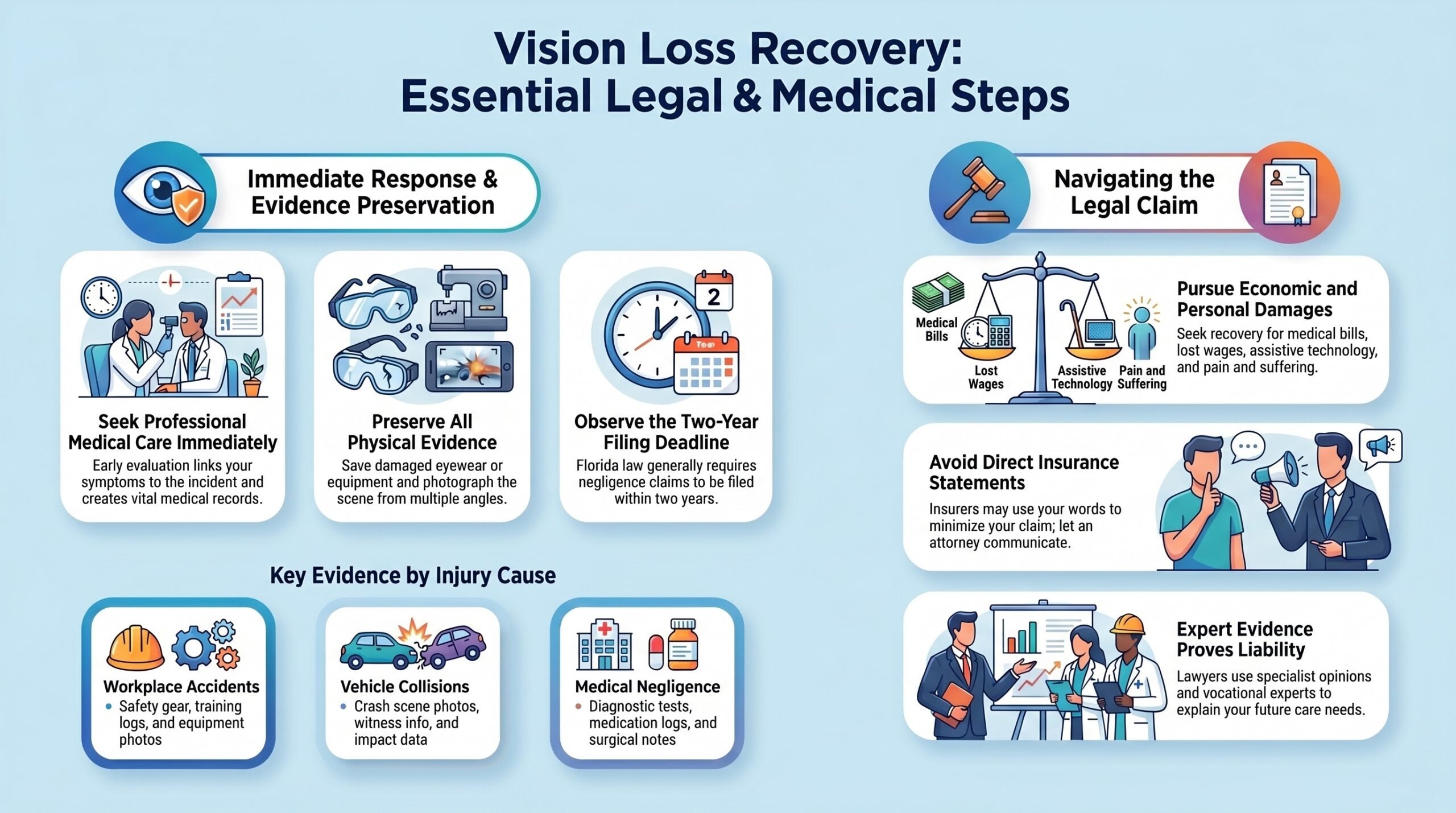
- Seek immediate emergency or ophthalmology care after a vision injury to protect sight and create medical records linking the injury to the incident.
- Preserve evidence by saving damaged items, taking photos, gathering witness information, and keeping receipts, records, and symptom notes.
- Contact an Orlando loss of vision injury lawyer promptly to protect deadlines, avoid insurer mistakes, and strengthen your claim from the start.
- A lawyer can collect medical documentation, specialist opinions, and expert evidence to prove negligence, damages, and future care needs.
- Compensation may include medical bills, lost income, reduced earning capacity, rehabilitation, assistive technology, and pain and suffering.
How We Can Help With Your Orlando Loss of Vision Injury Claim
After a vision injury, you may face immediate medical concerns, lost income, and lasting uncertainty about your future. You need legal support that protects your rights while respecting your commitment to caring for your family and community.
We help you build a clear, organized claim from the beginning. You receive guidance on documenting treatment, preserving records, and showing how your injury affects daily responsibilities, work, and service to others. We gather evidence, consult appropriate professionals, and present the full impact of your losses with precision. That includes costs tied to vision rehabilitation, assistive technology, ongoing care, and reduced earning capacity. We also handle insurer communications, manage deadlines, and pursue outcomes that reflect both present needs and future challenges.
Throughout the process, you receive direct answers, practical advice, and steady advocacy. Our goal is to reduce your burden, strengthen your claim, and help you move forward with stability, dignity, and confidence in your next steps.
Understanding Orlando Loss of Vision Injury Cases


Building a strong claim also requires a clear understanding of how Orlando loss-of-vision injury cases are evaluated under Florida law. You must show that another party’s negligence caused your injury and that your losses can be documented with credible evidence. Medical records, specialist opinions, diagnostic testing, and treatment plans often establish the severity of your condition and its expected impact.
OUR CONSULTATIONSARE FREE
START YOUR FREE CASE REVIEW

You should also understand how damages are measured. Florida law may allow recovery for medical expenses, lost income, reduced earning capacity, and the personal effects of diminished sight on daily life. Your claim can include the cost of vision rehabilitation, ongoing care, and assistive technology that supports independence and service to others. In serious cases, attorneys may work with vocational and life-care experts to explain future needs. When you understand these legal and practical factors, you’re better prepared to protect your rights and pursue accountability with purpose, dignity, and informed judgment.
Common Causes of Orlando Loss of Vision
You can lose your vision for many reasons, and each cause may point to a different legal claim. Your injury may stem from a workplace eye accident, vehicle collision trauma, medical negligence, or toxic chemical exposure. When you identify how the harm occurred, you can better understand liability, damages, and the steps needed to protect your rights.
Workplace Eye Accidents


Often, workplace eye injuries occur in everyday settings where hazards are easy to overlook, yet the consequences can be permanent. You may serve others in construction, healthcare, hospitality, or maintenance, yet one flying fragment, chemical splash, or sudden flash can forever alter your sight and your ability to keep helping people.
When employers fail to provide proper eye protection, maintain safe equipment, or deliver consistent employer training, preventable injuries become far more likely. You can suffer vision loss from defective tools, unsecured materials, toxic cleaning agents, or ignored safety protocols. Even a brief lapse in supervision can cause lasting harm. If your injury resulted from unsafe conditions, inadequate instruction, or missing protective gear, you merit answers and accountability. Prompt legal guidance can help you restore your livelihood and your future.
Vehicle Collision Trauma
When a vehicle collision occurs, the force of impact can damage the eyes, optic nerve, or surrounding facial structures in an instant. As a vehicle occupant, you may suffer vision loss from shattered glass, airbag deployment, dashboard contact, or blunt trauma that disrupts delicate ocular tissues. Even when injuries seem minor, the effects can progress quickly and interfere with your ability to work, drive, and care for others.
Crash biomechanics help explain why sudden deceleration, rotation, and compression place extreme stress on your head and face. You may experience retinal detachment, orbital fractures, hemorrhaging, or nerve damage that alters sight permanently. Prompt evaluation matters because early documentation links your symptoms to the collision and supports the accountability process. By acting quickly, you protect your health and strengthen your ability to pursue recovery.
Medical Negligence Injuries
Although medical treatment is meant to preserve and restore sight, negligent care can cause severe visual harm through delayed diagnosis, surgical mistakes, medication errors, or inadequate follow-up. If you suffer vision loss after a provider overlooks retinal detachment, glaucoma, stroke symptoms, or infection, you may face lasting consequences that careful care could’ve mended.
Medical malpractice involving the eyes often begins with diagnostic errors, poor communication, or failure to monitor complications after procedures. You may also be harmed when a surgeon damages delicate structures, prescribes the wrong drug, or ignores warning signs during recovery. When that happens, you need clear answers to protect your health, support your family, and continue serving others. An experienced attorney can evaluate records, identify preventable failures, and help you pursue accountability for avoidable sight-related injuries.
Toxic Chemical Exposure
Handling toxic chemicals can place your vision at immediate risk, especially in workplaces, industrial sites, cleaning environments, and areas where hazardous substances aren’t properly stored or labeled. Contact with industrial solvents, corrosive agents, or airborne fumes can burn eye tissue, damage the cornea, and cause lasting vision loss. You may also face serious harm through pesticide exposure, especially when employers fail to provide goggles, ventilation, or safety training.
If your work or service to others places you near hazardous chemicals, you are entitled to protection and prompt medical care after any exposure. Even a brief splash or vapor contact can lead to inflammation, scarring, or permanent blindness. When negligence causes that injury, legal action can help you secure treatment costs, lost income, and accountability from those responsible for your safety and recovery.
Legal Rights of Orlando Loss of Vision Injury Victims
Because a vision injury can alter nearly every part of your life, Florida law gives you the right to seek compensation from the party whose negligence caused your harm. If another person or business caused your visual impairment, you may pursue damages that reflect both immediate losses and long-term consequences, while protecting your ability to continue serving your family and community.
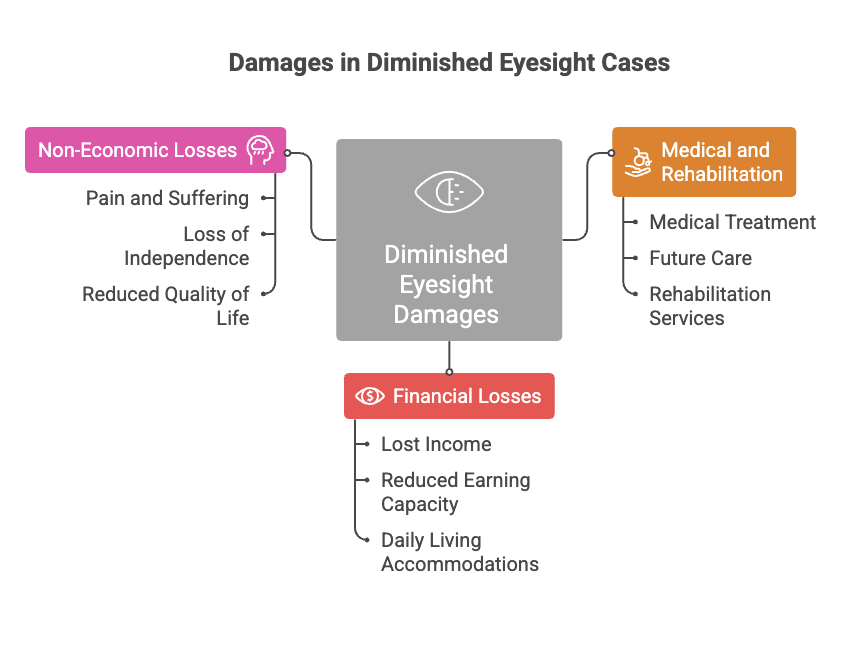
Your legal rights may include recovery for:
- Medical treatment, future care, and rehabilitation services related to diminished eyesight.
- Lost income, reduced earning capacity, and necessary accommodations for daily living.
- Pain, suffering, and other losses that affect your independence and quality of life.
You also have the right to fair legal advocacy, access to evidence, and representation during settlement talks or litigation. In some cases, your claim can support broader policy reform by promoting safer practices and accountability. By asserting your rights, you help protect others from similar harm while seeking the resources needed to rebuild your life.
Steps to Take After an Orlando Loss of Vision Injury
After an Orlando loss of vision injury, you should seek immediate medical care to preserve your health and create a clear record of the harm you’ve suffered. You should also preserve injury evidence, including photographs, medical records, and any items connected to the incident, because that information can support your claim. Once your immediate needs are addressed, you should contact an Orlando lawyer who can protect your rights and guide your next steps.
Seek Immediate Medical Care
Even if your vision seems to improve, you should seek immediate medical care, since eye injuries can worsen quickly and some forms of damage do not cause obvious symptoms right away. Prompt evaluation protects your health and strengthens your ability to continue serving your family, workplace, and community. A physician can identify internal bleeding, retinal damage, corneal injury, or pressure changes before they create lasting harm.
You should go to an emergency room, urgent care center, or ophthalmologist without delay. Follow medical instructions carefully, attend all follow-up visits, and report any changes in pain, blurriness, flashes, or field loss. Immediate treatment may preserve sight and reduce complications. If your injury affects daily function, ask about consultants, supportive therapies, and vision rehab services. Early care often improves recovery and helps you return to meaningful responsibilities sooner.
Preserve Injury Evidence
While your medical treatment should remain the priority, you should also preserve as much evidence as possible after a loss-of-vision injury in Orlando. Keep damaged eyewear, medications, protective equipment, and clothing in separate containers, and avoid cleaning or altering any of them. Strong chain preservation helps show what happened and protects the integrity of important items.
You should gather names and contact information for witnesses, request incident reports, and save receipts for every related expense. Use photo documentation to capture visible injuries, hazardous conditions, warning signs, lighting, and equipment from multiple angles. If your vision limits what you can record, ask a trusted person to help carefully and promptly. When you preserve evidence well, you strengthen the factual record and support accountability for everyone affected by the incident.
Contact An Orlando Lawyer
Reach out to an Orlando lawyer as soon as your condition allows, because early legal guidance can protect your rights and prevent costly mistakes. Your attorney can explain deadlines, communicate with insurers, and help you avoid statements that weaken your claim or limit support for future care.
You should also share how the injury affects your work, family responsibilities, mental health, and daily independence. A skilled lawyer can connect medical records, witness accounts, and financial losses to show the full impact on your life. If your injury requires accommodations, counsel can address accessibility rights and related barriers that interfere with treatment, employment, or community service. By seeking legal help promptly, you strengthen your case and improve your ability to secure resources that support recovery and continued service to others.
How an Orlando Loss of Vision Injury Lawyer Can Help You
Clarity matters after a vision injury because the steps you take can directly affect your wellbeing, your financial recovery, and your ability to move forward. An Orlando loss of vision injury lawyer helps you protect your rights, document your damages, and pursue compensation that supports your care and service to others.
- You receive guidance on evidence, insurance claims, and deadlines, so your case reflects the full impact of medical costs, lost income, and daily limitations.
- Your lawyer works with doctors and experts to identify rehabilitation options and assistive technology that may strengthen both your recovery plan and your claim.
- You gain an advocate who negotiates firmly, values your losses carefully, and prepares for trial if insurers refuse fair payment.
With legal support, you can make informed decisions, reduce avoidable setbacks, and focus on convalescence while pursuing the resources needed to continue helping your family, workplace, and community with confidence and stability.
Long-Term Effects of Orlando Loss of Vision Injuries
After a loss of vision injury, you may face lasting challenges in daily life, from working and driving to managing routine tasks safely and independently. You may also experience significant emotional and mental strain, as the injury can affect your confidence, relationships, and overall quality of life. In many cases, you’ll need ongoing medical care, rehabilitation, and adaptive support to restore your health and help you adjust to long-term changes.
Daily Life Challenges
When a serious eye injury causes lasting vision loss, the effects often extend far beyond medical treatment and into nearly every part of daily life. You may need help with transportation, reading labels, managing medications, preparing meals, and getting around public spaces safely. Routine tasks often take longer, and you must learn new methods to complete them efficiently.
Vision adaptations can help you remain independent, but they often require training, practice, and ongoing adjustments. Accessibility technology, such as screen readers, magnifiers, voice commands, and smart navigation tools, may improve your ability to work, communicate, and serve your family or community. You may also need changes at home, including better lighting, marked steps, organized storage, and safer layouts, to reduce risks and support consistent daily functioning over time.
Emotional And Mental Impact
Because vision loss can alter how you work, move through the world, and interact with others, it often carries a significant emotional and psychological burden. You may experience sadness, frustration, anxiety, and identity loss as familiar roles and routines change.
You might withdraw from community service, family responsibilities, or ministry because tasks that once felt natural now require assistance. That shift can affect your confidence and sense of purpose. Sleep problems, irritability, and depression may follow, especially when others underestimate what you are facing. Grief counseling can help you process the losses, strengthen resilience, and rebuild trust in your abilities. With steady support, you can adapt without surrendering your values. Recognizing the emotional impact matters because your recovery involves more than physical change; it also includes your dignity and hope.
Ongoing Medical Needs
Vision loss also creates ongoing medical needs that can affect nearly every part of your daily life. You may need regular visits with clinicians, updated prescriptions, therapy, and monitoring for complications that can arise long after the initial injury.
As you continue caring for yourself and others, you may also require vocational rehabilitation to regain confidence, adapt your work duties, or train for a different role. Assistive technology can help you read, travel safely, manage medications, and stay connected with your family and community. You might need home modifications, mobility training, and coordinated support from caregivers and medical providers. These continuing needs often bring substantial costs, time demands, and disruption. Understanding the full scope of your future care helps you protect your health, independence, and ability to serve those who depend on you.
Proving Liability in Orlando Loss of Vision Injury Cases
Although every loss of vision case turns on its own facts, proving liability in Orlando requires more than showing that you suffered a serious eye injury. You must connect another party’s careless, reckless, or wrongful conduct to the damage affecting your sight. That often means collecting medical records, incident reports, photographs, witness statements, and other evidence to explain how the injury occurred and why it should have been prevented.
You also need to address comparative liability, because the defense may argue that your own actions contributed to the harm. In Florida, that issue can affect the compensation available for the care and support you need to continue serving your family and community. Strong expert testimony can be crucial, especially when doctors must explain how trauma, delayed treatment, toxic exposure, or surgical errors caused permanent or partial vision loss. When you build a clear, evidence-based case, you place yourself in the strongest position to pursue accountability under Orlando law.
Dealing With Insurance Companies After an Orlando Loss of Vision Injury
Once insurance companies get involved, the focus often shifts from your medical recovery to limiting the value of your claim. You may face recorded statement requests, broad medical authorizations, and pressure to accept a quick payment before the full impact of your vision injury is understood. If you serve others through your work, family, or community, that pressure can feel especially heavy.
You can protect yourself by keeping communication careful, organized, and documented. Save letters, emails, bills, treatment records, and notes about every call. Do not assume adjusters are evaluating your situation fairly. Some insurers rely on delays, selective interpretation of records, claim denials, or other bad-faith practices to reduce what they pay. You should answer truthfully, but briefly, and avoid speculation about your condition or recuperation. A lawyer can communicate on your behalf, challenge unfair tactics, and help you stay focused on recuperating while protecting your rights and financial stability.
What to Expect During an Orlando Loss of Vision Injury Claim Process
You can expect your claim process to begin with an initial case evaluation, where your attorney reviews how the vision loss occurred and assesses the strength of your case. From there, you’ll need to gather medical records, accident documentation, and other evidence, while your lawyer manages insurance claim negotiations on your behalf. If the insurer won’t offer fair compensation, your case may proceed to filing a lawsuit and litigation, where your attorney presents your claim in court.
Initial Case Evaluation
When you begin an Orlando loss of vision injury claim, the initial case evaluation gives your lawyer a focused opportunity to assess the facts, identify potentially liable parties, and determine whether the available evidence supports a strong legal claim. During this stage, you usually receive a free consultation and a careful case screening. Your attorney listens to your account, asks direct questions, and evaluates how the incident has affected your ability to work, care for others, and meet daily responsibilities.
You can expect a clear explanation of your legal options, potential challenges, and the steps required to move forward. This meeting also helps your lawyer decide whether prompt action is necessary to protect your interests. By preparing thoughtfully and answering honestly, you help build a claim grounded in service, accountability, and responsible advocacy.
Evidence And Medical Records
Because vision injury claims often depend on precise documentation, evidence, and medical records play a central role in proving how the incident occurred, how severe the damage is, and how the condition has affected your daily life. You should expect your attorney to gather treatment notes, ophthalmology evaluations, diagnostic tests, photographs, and witness statements promptly.
Your legal team may also review patient interviews, employment records, and expert opinions to show how the injury limits your ability to work, drive, read, or care for others. Imaging privacy matters, so your records must be handled carefully and shared only when necessary. You can strengthen your claim by keeping appointment summaries, prescription information, symptom journals, and receipts for related expenses. Clear, organized evidence helps present your condition accurately and supports the full scope of your losses.
Insurance Claim Negotiations
Strong records also shape the next phase of a vision injury case, which often involves negotiations with the insurance company. You can expect the insurer to review your medical proof, income losses, and future care needs before making an offer. That first offer may not reflect the full impact of partial or total vision loss on your daily service to others.
Your lawyer responds with organized evidence, a clear damages analysis, and steady negotiation tactics designed to protect your interests. You should also expect discussion of policy limits, because available coverage can affect strategy and timing. Throughout this stage, you benefit from patience, consistency, and careful communication. By staying focused on truthful documentation and long-term needs, you strengthen your position and improve the chance of a fair, responsible resolution for everyone involved.
Filing And Litigation
If the insurer won’t offer fair compensation, your case may move into formal filing and litigation, where deadlines, pleadings, and court rules begin to shape the process. Your lawyer files the complaint, serves the defendant, and explains each stage so you can make informed decisions that protect your future and your family.
During litigation, both sides exchange evidence, question witnesses, and evaluate medical records, expert opinions, and financial losses. You may answer written questions, attend a deposition, and participate in pretrial mediation to explore settlement before trial. If several injured people share similar claims, your attorney may evaluate whether a class action is appropriate. Throughout the case, you serve your interests best by staying organized, attending appointments, and responding promptly, which helps your legal team present a clear, credible claim.
Compensation for Orlando Loss of Vision Injury Damages
When another party’s negligence causes a serious eye injury, you can pursue compensation for the full scope of your vision-related damages. Your claim may include emergency care, surgeries, specialist appointments, medications, and ongoing treatment designed to preserve remaining sight and support daily functioning. If your injury affects your work, compensation can also address reduced earning capacity, vocational rehabilitation, and necessary assistive technology that helps you continue serving others with independence and safety.
You can also seek recovery for future medical needs, home modifications, transportation support, and other practical accommodations your condition requires. In many cases, vision loss changes how you complete ordinary tasks, participate in family life, and fulfill professional responsibilities. A thorough legal evaluation helps document those consequences with medical records, expert opinions, and financial evidence. By building a strong claim, your attorney works to secure resources that protect your stability, dignity, and ability to move forward with purpose after a preventable injury.
Economic vs Non-Economic Damages in Orlando Loss of Vision Cases
To recover full compensation, you need to distinguish between economic losses, such as medical bills and lost income, and non-economic harm, such as pain, suffering, and reduced quality of life. You should also understand how these damages are calculated and valued, because the strength of your claim often depends on the accuracy of those assessments. Your case will need clear supporting evidence, including medical records, employment information, and testimony that shows how the vision loss has affected your daily life.
Calculating Economic Losses
Because vision loss often changes nearly every part of your daily life, calculating economic losses begins with a careful review of the financial harm you can document. You should gather medical bills, rehabilitation costs, prescription expenses, transportation receipts, and records showing home or workplace modifications.
You also need proof of any changes in income. Pay stubs, tax returns, employer statements, and vocational assessments can help establish lost wages and reduced future earnings. If you can no longer perform the same work or must limit your hours while serving your family or community, those losses matter. Expert testimony may project ongoing treatment costs, assistive technology needs, and long-term care expenses. By organizing these records early, you give your attorney a stronger foundation to present a clear, accurate claim for the measurable losses your injury has caused.
Valuing Non-Economic Harm
Non-economic harm often proves harder to pin down than medical bills or lost income, yet it can represent a substantial part of your Orlando vision injury claim. When your sight changes, you may lose independence, confidence, and the ability to participate fully in work, family, and community life. Those losses affect your quality of life in ways that merit careful recognition.
In valuing this harm, you consider daily frustration, emotional suffering, diminished enjoyment, and the lasting impact on your relationships and service to others. Pain valuation also addresses how vision loss changes routine tasks, mobility, and personal dignity. Although no formula can restore what you have lost, a fair assessment should reflect the human cost of your injury and the broader ways it limits how you live, contribute, and care for others.
Evidence Supporting Damages
While every vision loss claim turns on its own facts, strong evidence gives economic and non-economic damages the support they need. To prove economic losses, you should gather medical bills, future treatment estimates, wage records, and vocational assessments showing how impaired sight limits your earning ability and daily service to others.
For non-economic damages, your claim benefits from consistent medical notes, mental health records, photographs, and journals describing pain, anxiety, and lost independence. Witness testimony from family members, coworkers, caregivers, and community members can explain how your injury changed the way you live, work, and help those around you. In disputed cases, forensic analysis may connect the incident to your vision loss and rebut claims of prior conditions. Clear, organized proof helps you present a credible and complete damages case.
When an Orlando Loss of Vision Injury Case Goes to Trial vs Settlement
Although many Orlando loss of vision injury claims resolve through settlement, your case may need to go to trial if the insurer disputes liability, minimizes the extent of your vision loss, or refuses to offer compensation that reflects your medical costs, lost income, and long-term limitations.
When you evaluate settlement psychology, you consider whether the defense fears strong evidence, credible witnesses, and a jury that may understand how vision loss affects your ability to work, drive, and care for others. Trial dynamics matter because courtroom testimony, expert opinions, and cross-examination can clarify the full impact of your injury.
A fair settlement can spare you time, stress, and uncertainty, but it should still honor your ongoing needs and service to your family and community. If the insurer remains unreasonable, proceeding to trial may provide the leverage or verdict necessary to secure accountability. Your lawyer helps you weigh risk, cost, timing, and likely outcomes with discipline and purpose.
The Statute of Limitations for Orlando Loss of Vision Injury Cases
Because filing deadlines can determine whether you recover anything at all, you must understand Florida’s statute of limitations as soon as an Orlando loss of vision injury occurs. In many negligence cases, you generally have two years to file, but the exact deadline depends on how the injury happened, who caused it, and whether another law changes the period.
You should also know that the nuances of the statute and filing exceptions can affect your timetable. If a minor suffered the injury, if delayed discovery applies, or if a government entity is involved, different rules may control notice requirements or extend, shorten, or pause the clock. Missing even one deadline can prevent recovery, no matter how serious your vision loss may be. By learning the applicable limits early, preserving records, and carefully tracking crucial dates, you protect your ability to seek accountability and secure resources that help you continue serving your family and community with stability.
When to Contact an Orlando Loss of Vision Injury Lawyer
In the aftermath of a serious eye injury, you should contact an Orlando loss-of-vision injury lawyer as soon as your condition is stable and you can act. Prompt action helps protect evidence, identify witnesses, and preserve records from doctors, employers, or property owners before details fade or disappear.
You should also reach out before giving detailed statements to insurers or signing any documents. Insurance timing can affect how your claim develops, especially when adjusters request recorded interviews or quick settlements. Early intervention allows your attorney to monitor deadlines, coordinate with your medical providers, and help you avoid mistakes that could weaken your case. If your injury happened at work, in traffic, on unsafe property, or because of a defective product, don’t wait for problems to grow.
By contacting counsel early, you create space to focus on recovery, support your family, and continue serving others while your legal rights are protected against avoidable delays and harmful misunderstandings later.
Why You Need an Experienced Orlando Loss of Vision Injury Lawyer
When vision loss follows a preventable accident, an experienced Orlando loss of vision injury lawyer gives you a clear advantage by connecting the medical, legal, and financial parts of your claim. You need counsel who understands how eye injuries affect work, independence, family responsibilities, and your ability to continue serving others with confidence and stability.
An experienced lawyer gathers medical evidence, works with experts, calculates long-term damages, and challenges insurers that try to minimize your losses. You benefit from clear case timelines, stronger documentation, and a strategy built to protect your future rather than secure a quick settlement. Skilled representation also helps you pursue compensation for treatment, lost income, rehabilitation, and reduced quality of life. As you evaluate legal support, client testimonials can show how effective advocacy has helped injured people move forward with dignity. With the right experience guiding your claim, you can focus on recovery while your attorney advances a well-prepared case on your behalf.
How to Choose the Right Orlando Loss of Vision Injury Lawyer for Your Case
Sorting through your options starts with identifying a lawyer who has direct experience handling vision loss and other catastrophic injury claims in Orlando. You should look for a record of strong case results, trial readiness, and knowledge of medical evidence involving permanent eye injuries. When your goal is to protect your family and continue serving others, practical experience matters.
You should also evaluate how the lawyer communicates and whether the firm treats you with respect and urgency. Client testimonials can reveal how the attorney handles difficult cases, answers questions, and supports clients through recovery. Ask direct questions about Fee structures, litigation costs, and whether consultations are free, so you understand your obligations from the beginning. It is also wise to confirm who will manage your case day-to-day and how often you will receive updates. Choosing carefully helps you find counsel who can pursue accountability and the resources your future may require.
About The Law Offices of Anidjar & Levine
The Law Offices of Anidjar & Levine represent injury victims across Orlando with a focus on responsive service, careful case preparation, and results-driven advocacy. When you face vision loss after an accident, you need a legal team that treats your case with urgency, respect, and steady attention.
You can expect direct communication, practical guidance, and support designed to help you protect your health, finances, and future. The firm’s approach reflects a strong commitment to serving injured people and families during difficult times. Its firm history shows sustained work on behalf of Floridians harmed by negligence, while client testimonials often highlight accessibility, professionalism, and consistent follow-through.
You benefit from a team that investigates thoroughly, values your concerns, and works to pursue fair compensation through settlement or trial when necessary. If you want counsel that combines experience with service, The Law Offices of Anidjar & Levine offers representation grounded in preparation, accountability, and client-centered advocacy.
Frequently Asked Questions
Can I Switch Lawyers During My Orlando Loss of Vision Injury Case?
Yes, you can switch lawyers during your case if your current representation no longer serves your interests well. You should review your agreement, address fee disputes carefully, and confirm how files and deadlines will transfer. When you change counsel, your new attorney can protect continuity and help you pursue a just outcome. Act promptly, because delays may affect strategy, court schedules, and your ability to serve your family faithfully.
Will My Loss of Vision Injury Claim Affect Future Employment Opportunities?
Your loss-of-vision injury claim shouldn’t automatically harm your future employment opportunities. Employers generally can’t lawfully reject you because you pursued a valid claim, and your career prospects often depend more on your qualifications and ability to perform crucial duties. You may need to discuss workplace accommodations, but that doesn’t weaken your value. If retaliation or discrimination occurs, you should promptly document it and seek legal guidance to protect your position.
Are Loss of Vision Injury Settlements Taxable in Florida?
In Florida, your loss-of-vision injury settlement usually isn’t taxable if it compensates you for physical injuries or medical care. However, you may owe taxes on taxable damages, such as punitive damages or interest. Your settlement structure also matters because the way parties allocate payments can affect tax treatment. You should review the agreement carefully and consult a tax professional to protect your recovery and continue serving others well.
Can Family Members File Claims Related to My Loss of Vision Injury?
Yes, your family members may file certain family claims related to your loss of vision injury, depending on Florida law and their specific losses. They may pursue derivative actions for loss of consortium, services, or support if your injury has directly harmed the household. You should document those impacts carefully and seek legal guidance promptly. By acting early, you help protect your rights and your family’s ability to recover fair compensation.
What Documents Should I Bring to My First Lawyer Consultation?
Bring your medical records, accident reports, insurance correspondence, photographs, bills, employment records, and any witness statements to your first consultation. You should also bring a written timeline of events, contact information for involved parties, and notes about how the injury affects your daily responsibilities and ability to serve others. These documents help your lawyer assess liability, damages, and deadlines quickly, so you can receive clear guidance and make informed decisions.
—————————
If you’ve suffered a loss of vision injury in Orlando, you shouldn’t face the legal process alone. You need clear guidance, prompt action, and a legal team that understands how to protect your rights and pursue full compensation.
By working with an experienced attorney, you can strengthen your claim and focus on your recovery.
The Law Offices of Anidjar and Levine can evaluate your case, explain your options, and help you move forward with confidence.
For additional help, speak with an Orlando Medical Malpractice Lawyer.

