

The Law Offices of Anidjar and Levine can review whether a provider reasonably evaluated jaundice symptoms, ordered and interpreted appropriate tests, and arranged timely treatment or follow-up.Jaundice may signal liver disease, infection, bile-flow problems, or dangerous newborn bilirubin levels, but an abnormal result alone does not prove negligence. A potential claim requires evidence that a lapse in accepted care caused preventable injury.Medical records and qualified expert review can help assess causation, damages, and legal deadlines. Learn more from a Miami Personal Injury Lawyer. The following sections explain these issues and possible next steps.
Main Takeaways
- A Miami jaundice malpractice lawyer can assess whether delayed diagnosis or treatment caused preventable harm.
- Potential cases involve missed warning signs, inadequate bilirubin monitoring, delayed phototherapy, or unaddressed liver and bile-duct conditions.
- An abnormal bilirubin result or adverse outcome alone does not establish negligence; the applicable medical standard and causation must be evaluated.
- Medical records, test results, communications, and a clear treatment timeline can help qualified reviewers assess a claim.
- Potential compensation may cover medical and rehabilitation costs, lost income, pain and suffering, and reduced quality of life.


How We Can Help With Your Miami Medical Malpractice Jaundice Conditions Injury Claim
When medical negligence contributes to a failure to diagnose or properly treat jaundice, the resulting harm may require extensive care and create lasting financial and personal consequences. A Miami medical malpractice lawyer can help an injured patient or family pursue a claim while keeping their immediate needs in view. The legal team may review medical records, consult qualified professionals, and organize evidence to assess whether the care provided fell below accepted standards and caused harm.
Support also includes explaining legal options, communicating with insurers, and managing deadlines and required filings. This guidance can reduce administrative pressure so families can focus on treatment and recovery. Where ongoing care is needed, the team may consider future medical expenses, lost income, and other documented losses when evaluating potential compensation.
Care Coordination can help connect legal planning with the practical demands of treatment, while Family Support recognizes the importance of clear communication and respectful service. Each claim is approached with attention to the patient’s circumstances and the family’s concerns.
OUR CONSULTATIONSARE FREE
START YOUR FREE CASE REVIEW

Understanding Miami Medical Malpractice Jaundice Conditions Injury Cases
Jaundice is a sign of an underlying medical condition, and a malpractice claim may arise if a healthcare provider’s unreasonable failure to identify or treat its cause leads to preventable harm. In Miami injury cases, the central question is whether care met accepted professional standards and whether a lapse caused measurable injury. Jaundice physiology involves bilirubin accumulating in the body, which can cause yellowing of the skin or eyes. Its presence calls for appropriate assessment, monitoring, and communication with the patient or family.
In newborns, neonatal risk factors can make timely evaluation especially important. A provider’s responsibilities may include recognizing warning signs, arranging suitable testing, explaining follow-up needs, and responding to changes in the patient’s condition. A claim may require medical records, expert review, and evidence connecting the alleged failure to harm. Not every adverse outcome indicates negligence. A careful review can help families understand what occurred and support accountability, while protecting the dignity and well-being of those affected.
Common Causes of Miami Medical Malpractice Jaundice Conditions
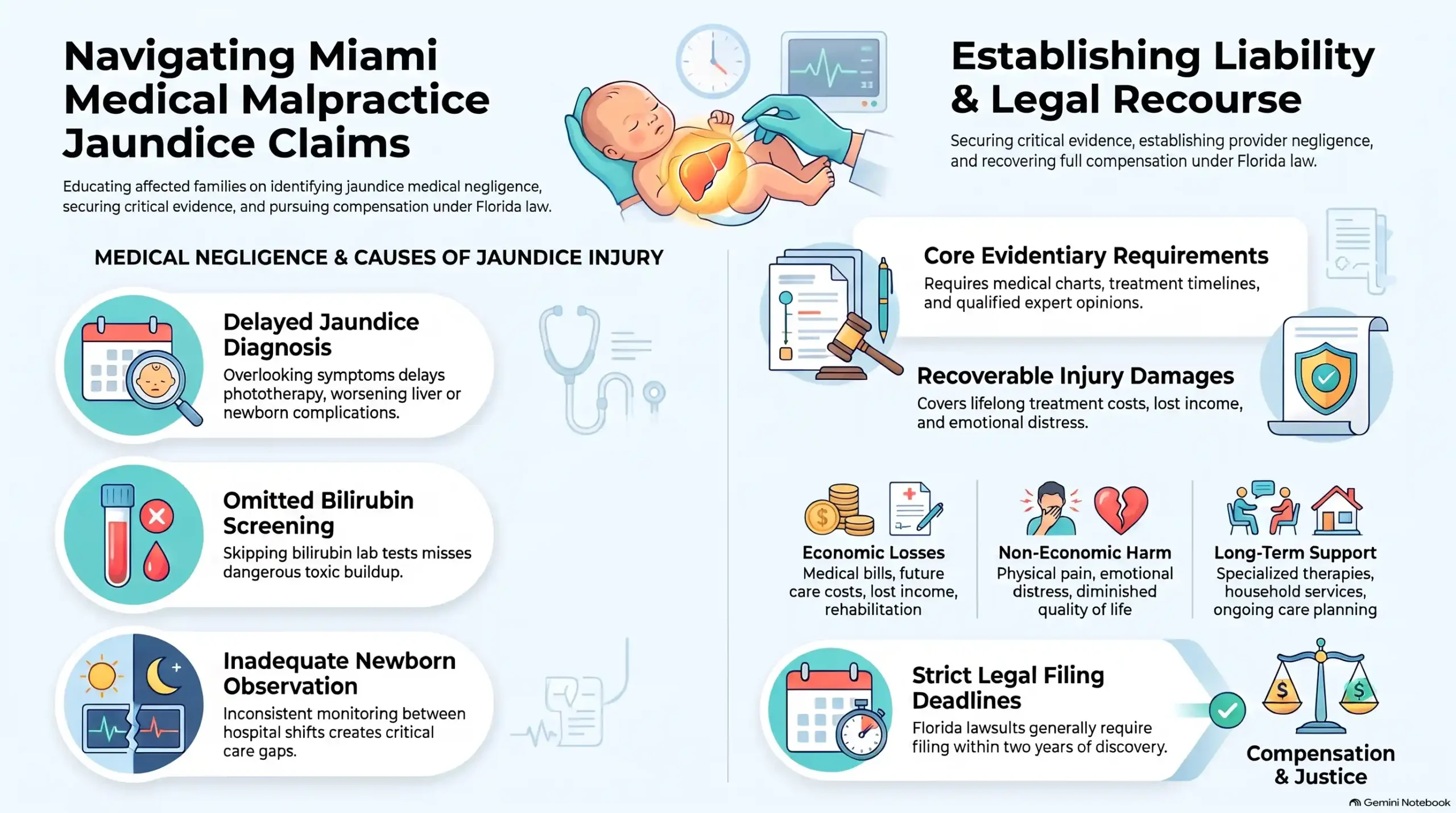
Common causes of jaundice-related medical negligence may include delayed diagnosis, missed bilirubin testing, and inadequate monitoring of a newborn’s condition. These lapses can prevent timely recognition of rising bilirubin levels and increase the risk of serious complications. Delayed phototherapy may further expose an affected infant to avoidable harm.
Delayed Jaundice Diagnosis
Because jaundice can signal a serious underlying condition, delayed diagnosis may allow liver disease, bile duct obstruction, infection, or complications in a newborn to worsen. A timely clinical assessment can help identify the cause and guide appropriate care, reducing the risk of preventable harm. When yellowing of the skin or eyes persists, clinicians may need to evaluate prolonged jaundice and investigate whether an underlying disorder is affecting the liver or bile flow. Cholestatic jaundice, in particular, can indicate impaired bile movement and may require prompt evaluation. Delays can occur when symptoms are overlooked, follow-up is inadequate, or concerning changes are not communicated clearly to patients and families. Medical professionals are expected to respond reasonably to reported symptoms, arrange suitable assessment, and explain next steps. A delay that falls below accepted standards may warrant legal review.
Missed Bilirubin Testing
A delayed diagnosis may begin when a clinician fails to order or review bilirubin testing despite signs of jaundice or other concerning symptoms. Bilirubin levels help clinicians assess jaundice severity and determine whether timely treatment or further evaluation is needed. Missed testing may occur when symptoms are attributed to a temporary condition, relevant history is overlooked, or responsibility for reviewing results is unclear. Laboratory protocols should identify when testing is appropriate, how results are communicated, and who must act on abnormal findings. Clinicians must also apply screening thresholds suited to the patient’s age and clinical circumstances rather than relying on appearance alone. When testing is omitted, or results are not addressed, care may be delayed, potentially increasing the risk of preventable harm and limiting opportunities for effective intervention.
Inadequate Newborn Monitoring
Newborns with jaundice may require repeated observation and timely bilirubin checks, since their condition can change during the first days of life. Inadequate monitoring may occur when hospital staff do not document visible changes, assess feeding, or communicate concerns between shifts. Newborn observation should include attention to skin color, alertness, and other signs that may indicate worsening jaundice. A feeding assessment can help identify whether an infant is taking enough milk, since poor intake may contribute to rising bilirubin levels. Care teams should also consider relevant risk factors and ensure follow-up plans are clearly explained to caregivers before discharge. When monitoring is inconsistent, important changes may go unrecognized, limiting opportunities for timely clinical evaluation. A careful, coordinated approach supports newborn safety and helps families receive appropriate guidance.
Delayed Phototherapy Treatment
When bilirubin levels reach treatment thresholds, delayed phototherapy can allow jaundice to worsen and increase the risk of complications. Timely treatment depends on accurate test results, prompt communication among caregivers, and clear protocols for starting therapy. Delays may occur when staff fail to review laboratory findings, overlook rising bilirubin levels, or do not arrange treatment after a transfer between facilities. Phototherapy equipment failure can also interrupt care, particularly if staff do not promptly identify malfunctioning lights or ensure equipment is working. Regular irradiance measurement helps confirm that devices deliver effective light intensity; inadequate checks may leave an infant receiving ineffective treatment. Providers should document decisions, monitor bilirubin response, and explain concerns to the family. When preventable delays cause harm, a careful review can help determine whether accepted standards of care were followed.
Don’t Wait. Call Our Florida Personal Injury Lawyers Now!


Legal Rights of Miami Medical Malpractice Jaundice Conditions Injury Victims
If negligent medical care causes jaundice-related harm, injured patients and their families may have legal rights under Florida law. A claim may allow them to seek compensation when a provider’s failure to meet the applicable standard of care causes injury. Patient advocacy can help families understand available options, preserve relevant records, and communicate concerns through appropriate channels. Hospital accountability may also be pursued when an institution’s conduct contributed to preventable harm.
Depending on the evidence and circumstances, potential damages may include:
- Medical expenses, rehabilitation costs, and other documented care needs.
- Lost income or reduced earning capacity resulting from lasting effects.
- Compensation for pain, suffering, and diminished quality of life.
Florida medical malpractice claims are subject to specific procedural requirements, including deadlines and pre-suit steps. Families may benefit from consulting a qualified attorney to assess whether the facts support a claim and identify applicable time limits. A careful review can help protect the injured person’s interests while supporting responsible care for others. No outcome is guaranteed, and each case depends on its evidence.
Why Do Miami Medical Malpractice Jaundice Conditions Injuries Happen?
Jaundice-related injuries may occur when a healthcare provider fails to recognize, evaluate, or treat elevated bilirubin levels in a timely manner. Jaundice physiology involves the buildup of bilirubin, a substance produced as red blood cells break down. The liver processes bilirubin and helps remove it from the body. When bilirubin metabolism is impaired, levels can rise and cause yellowing of the skin and eyes. In newborns, severe, untreated hyperbilirubinemia may lead to permanent neurological injury.
Medical errors may arise when clinicians do not assess risk factors, order appropriate bilirubin testing, interpret results accurately, or arrange timely follow-up. Delayed treatment, inadequate monitoring, or failure to communicate concerning results can allow levels to become dangerously high. Providers may also overlook signs of an underlying condition affecting the liver or blood. These injuries are not inevitable; prompt recognition and appropriate care can reduce the risk of serious complications. Whether a particular outcome reflects negligence depends on the circumstances and applicable medical standards.
What Should You Do After a Miami Medical Malpractice Jaundice Condition Injury?
After a suspected jaundice-related medical injury, the affected person should seek immediate medical care to address health risks and document the condition. Preserving medical records, test results, and communications can help clarify the care provided and its consequences. A malpractice lawyer can review the circumstances and explain potential legal options.
Seek Immediate Medical Care
Prompt medical evaluation is essential when a patient develops jaundice or related symptoms after a possible medical error. A qualified clinician can assess the cause, identify complications, and recommend appropriate treatment. Patients should contact their treating provider promptly and explain when symptoms began, how they have changed, and which medications or procedures may be relevant. Emergency symptoms, including confusion, severe abdominal pain, fever, persistent vomiting, unusual bleeding, or difficulty staying awake, require immediate emergency care. These signs may indicate a serious condition that cannot safely wait for a routine appointment. If symptoms worsen or the provider is unavailable, the patient should go to an emergency department or call emergency services. Timely urgent evaluation can reduce the risk of further harm and help ensure care decisions are based on the patient’s current condition.
Preserve Medical Records
Alongside obtaining medical care, preserving records can help document how jaundice developed and what treatment followed. A clear timeline may help clinicians and others reviewing the patient’s care understand when symptoms appeared and how they changed.
Record preservation should include copies of hospital and clinic records, laboratory results, imaging reports, prescriptions, discharge instructions, and bills. Notes about visible symptoms, communications with providers, and changes in the patient’s condition can add useful context. Record dates and names as accurately as possible.
Original documents should remain unaltered, and requests for records should be made through the appropriate facility process. Digital files and paper copies require secure storage, with access limited to trusted individuals. Keeping an organized, backed-up collection can reduce the risk of loss and help make sure relevant information remains available for ongoing care and review.
Consult a Malpractice Lawyer
A Miami medical malpractice lawyer can help evaluate whether a failure to recognize or properly treat jaundice may have caused preventable harm. After preserving medical records, the affected patient or family can request an Initial Consultation to explain the timeline, symptoms, treatment, and resulting injuries. The lawyer may review available records, identify questions for medical experts, and explain whether the facts support a potential claim. During Attorney Selection, families can consider the lawyer’s experience with medical negligence cases, communication practices, and approach to investigating infant or adult jaundice injuries. They should ask about deadlines, likely costs, and the steps involved before deciding whether to proceed. Prompt legal guidance can help preserve evidence and clarify options while allowing families to focus on the patient’s care and recovery. A consultation does not guarantee a claim or outcome.
Don’t Wait. Call Our Florida Personal Injury Lawyers Now!
Critical Evidence in a Miami Medical Malpractice Jaundice Conditions Injury Case
Evidence is central to determining whether a medical provider failed to diagnose or properly treat jaundice and whether that failure caused harm.
Relevant materials may include:
- Medical records and bilirubin test results
- A timeline of symptoms, testing, and treatment
- Expert medical opinions on the care provided and its effects
Medical Records
How can medical records clarify whether jaundice was recognized and treated appropriately? A careful review can show when caregivers documented visible symptoms, communicated concerns, and arranged follow-up or escalation. Notes from physicians, nurses, and other providers may reveal whether responsibilities were clear and whether warning signs received timely attention. The record can also identify gaps in communication, delayed referrals, or discharge instructions that did not adequately explain when to seek further care.
For families seeking accountability and improved patient safety, preserving relevant records can help establish a reliable timeline. Record retention policies and privacy safeguards govern how facilities maintain and protect this information. Authorized access may include hospital charts, clinic notes, medication records, and communications among providers. A qualified legal professional can assess whether records are complete, relevant, and obtained through proper procedures, while respecting the patient’s confidentiality and applicable requirements.
Bilirubin Test Results
When jaundice is suspected, bilirubin test results can help show whether its severity was recognized and addressed in a timely manner. These measurements may reveal elevated total bilirubin or changes in direct and indirect bilirubin, findings that can help identify impaired processing or obstruction. Bilirubin interpretation requires attention to the patient’s age, symptoms, medical history, and the specific laboratory ranges reported. A result outside a reference range does not, by itself, establish negligence; its significance depends on the clinical context and the provider’s response. In a potential malpractice claim, qualified reviewers may compare test values with examination notes, documented concerns, and applicable standards of care. Clear, accurate records can help families and legal representatives understand whether abnormal findings were appropriately evaluated and whether preventable harm may have occurred.
Treatment Timeline
A clear treatment timeline can help show whether jaundice was recognized, evaluated, and managed without avoidable delay. Records may document when symptoms appeared, when caregivers notified clinicians, and when examinations or bilirubin testing occurred. They can also show whether follow-up, additional testing, or treatment was arranged promptly as the patient’s condition changed.
Relevant treatment milestones include initial assessment, communication of test results, decisions about monitoring or intervention, and discharge instructions. Comparing these events with the patient’s documented condition may reveal gaps in care or missed opportunities to respond. Care coordination is also important: records can show whether providers shared information and whether referrals or follow-up appointments were completed. A careful chronology helps clarify what actions occurred, when they occurred, and whether the patient received consistent attention throughout the course of care.
Expert Medical Opinions
Because jaundice can arise from several underlying conditions, expert medical opinions may be crucial in evaluating whether care met accepted standards. In a Miami medical malpractice case, qualified practitioners can assess whether clinicians recognized warning signs, ordered appropriate tests, and responded promptly to results. Their analysis may address delays in diagnosing liver disease, infection, or complications affecting newborns and other patients.
Expert qualifications matter because the reviewer should have relevant training and experience with the condition and care at issue. The opinion methodology should be clear, grounded in medical records, test results, and accepted clinical standards. Experts may also explain how an alleged lapse contributed to injury and whether timely care could have changed the outcome. These opinions can clarify complex evidence for a court while supporting a fair, informed evaluation of a patient’s claim.
Long-Term Effects of Miami Medical Malpractice Jaundice Conditions Injuries
Severe or untreated jaundice may lead to lasting neurological impairments that affect movement, hearing, or other functions. Some children may experience developmental delays that require ongoing assessment and support. Long-term medical care can be necessary to address these effects and monitor changes over time.
Neurological Impairments
When newborn jaundice is not recognized or treated promptly, excessive bilirubin can injure the developing brain and cause lasting neurological impairments. Severe bilirubin toxicity may damage areas that control movement, muscle tone, hearing, and coordination. Affected children can develop cerebral palsy, with stiffness, involuntary movements, or difficulty maintaining posture. Auditory neuropathy may interfere with the brain’s ability to process sound, even when the inner ear detects it. Some children experience abnormal eye movements, impaired upward gaze, or balance problems. The nature and severity of these effects depend on the extent of injury and the timing of treatment. Families may require coordinated care from neurologists, audiologists, therapists, and other experts. When preventable medical errors are suspected, careful review of treatment records can help clarify whether delayed recognition contributed to the injury.
Developmental Delays
Developmental delays may emerge after untreated or inadequately treated newborn jaundice causes bilirubin-related brain injury. Affected children may take longer to reach developmental milestones involving movement, communication, attention, or social interaction. The pattern and severity vary, depending on the extent of injury and the child’s individual development. Some children may experience learning challenges that become more apparent as school demands increase, including difficulty processing information, expressing ideas, or maintaining focus. These challenges can affect participation in classroom activities and relationships with peers. Early recognition of developmental differences can help families, educators, and other supportive adults respond with appropriate understanding and accommodations. When medical negligence is suspected, records documenting jaundice, treatment decisions, and developmental progress may help clarify whether delayed care contributed to the child’s difficulties and their lasting effects.
Ongoing Medical Care
Long-term effects of untreated or inadequately treated newborn jaundice may require ongoing medical care as a child grows. Depending on the severity of the injury, a child may need hearing assessments, developmental evaluations, physical or occupational therapy, and expert consultations. Regular monitoring can help clinicians identify emerging concerns and adjust treatment plans as needs change. Care coordination among pediatricians, neurologists, audiologists, therapists, and other providers can reduce gaps in treatment and give caregivers a clearer understanding of recommended services. Consistent follow-up scheduling is important because missed assessments may delay recognition of hearing, movement, or learning difficulties. Families may also need assistance accessing records, arranging referrals, and communicating with providers. A structured care plan can support continuity, informed decisions, and timely intervention throughout childhood, while documenting the child’s evolving needs and responses to treatment.
Proving Liability in Miami Medical Malpractice Jaundice Conditions Injury Cases
Proving liability in a Miami medical malpractice case involving jaundice requires evidence that a healthcare provider failed to meet the accepted standard of care and that the failure caused preventable harm. The Standard of care depends on the circumstances, including the patient’s age, symptoms, test results, and medical history. Providers may be responsible when they fail to recognize warning signs, order appropriate testing, interpret bilirubin levels correctly, or arrange timely treatment and follow-up.
A claim must also establish causation. A careful causation analysis examines whether the provider’s conduct, rather than the underlying condition or another factor, led to injury. Medical records, laboratory results, treatment timelines, and expert opinions can help clarify what occurred and whether earlier intervention could have prevented or reduced harm. In infant cases, evidence may address whether delays contributed to complications such as neurological injury. Families seeking accountability benefit from preserving relevant records and obtaining qualified legal guidance. Each case requires an individualized review of the evidence and applicable Florida law.
Dealing With Insurance Companies After a Miami Medical Malpractice Jaundice Condition Injury
After a jaundice-related medical injury, insurance companies may contact the patient or family to gather information and assess a potential claim. Their representatives may request recorded statements, medical authorizations, or details about treatment. Families should respond carefully, provide accurate information, and avoid speculation about what caused the injury or whether care was appropriate. They may ask that requests be provided in writing and consult qualified counsel before signing broad releases.
Insurance adjuster tactics can include emphasizing uncertainty, seeking quick statements, or presenting an early offer before the full effects of delayed diagnosis or treatment are known. A calm, organized approach helps protect the patient’s interests while preserving respectful communication. Records of calls, letters, expenses, and medical developments can assist those evaluating the matter.
Settlement offer evaluation should account for documented losses, continuing care needs, and the injury’s effect on daily life. Do not accept an offer solely for convenience; careful review can help families make an informed decision that supports the patient’s needs.
What to Expect During a Miami Medical Malpractice Jaundice Conditions Injury Claim Process
A jaundice-related medical malpractice claim typically begins with an initial case evaluation to assess the circumstances and potential legal issues. Medical records are then reviewed to determine whether the care provided met applicable standards before a claim is filed. The process may proceed through negotiation or, if a resolution is not reached, trial.
Initial Case Evaluation
An initial case evaluation examines whether a healthcare provider’s conduct may have caused preventable harm related to jaundice. During an intake interview, the attorney or legal team gathers a concise account of the diagnosis, treatment, symptoms, and resulting effects on the patient and family. The discussion may clarify when concerns arose, what information is available, and what support the family needs. An eligibility screening then considers whether the circumstances may warrant a malpractice claim under Florida law, including applicable deadlines and basic legal requirements. This preliminary assessment does not establish liability or guarantee a recovery. It helps determine whether further investigation is appropriate and whether pursuing a claim could support accountability and resources for care. Families can ask questions, describe their priorities, and receive an explanation of possible next steps.
Medical Record Review
Medical record review helps determine whether the care provided for jaundice met applicable standards and whether any departure may have contributed to harm. Reviewers examine prenatal, birth, pediatric, and hospital records, including bilirubin measurements, screening results, treatment decisions, and follow-up instructions. A clear Record chronology can show when symptoms appeared, how quickly test results were addressed, and whether treatment was timely. Reviewers also compare documented care with applicable clinical guidelines and the patient’s circumstances, rather than relying on a single entry or outcome. Documentation gaps, inconsistent notes, or missing test results may require clarification and careful assessment. The review may involve qualified medical professionals who can explain the significance of findings and identify possible connections between care and injury. This process supports an accurate, compassionate evaluation while preserving the child’s medical history and needs.
Filing the Claim
After the medical record review, filing a Miami jaundice-related malpractice claim generally begins with evaluating whether the available evidence supports allegations of negligent care and resulting injury. Counsel may identify the providers involved, clarify how delayed diagnosis or treatment affected the patient, and determine which records or expert opinions are needed. Claim filing deadlines require prompt attention because Florida law sets time limits that may depend on when the injury was discovered and other circumstances. Complaint preparation involves organizing the factual allegations, identifying responsible parties, and stating the harm and legal basis for seeking relief. Required supporting materials may also need to be assembled before the case is formally filed. Careful preparation helps make sure the claim accurately presents the patient’s experience and supports accountability, while allowing the family to focus on care and recovery.
Negotiation or Trial
Once a Miami jaundice-related malpractice claim is filed, the parties may pursue settlement negotiations or prepare for trial. During negotiations, each side reviews medical records, expert opinions, and evidence concerning the patient’s diagnosis, treatment, and resulting harm. A Mediation strategy may help the parties assess disputed issues with a neutral mediator and consider whether a fair resolution is possible. Settlement can reduce delay and uncertainty, but an agreement should reflect documented losses and future care needs.
If negotiations do not resolve the dispute, the claim may proceed to trial. Courtroom preparation includes organizing records, preparing witnesses, and presenting expert testimony about the applicable standard of care and causation. The court or jury evaluates the evidence before deciding liability and damages. Throughout either path, careful preparation supports accountability and helps protect the patient’s interests while respecting the needs of those affected.
Compensation for Miami Medical Malpractice Jaundice Conditions Injury Damages
When negligent care causes jaundice to go untreated or leads to avoidable complications, the injured patient may be entitled to compensation for the resulting losses. A claim may address expenses and disruptions linked to the medical error, supported by records connecting the harm to the provider’s conduct.
Recoverable losses may include additional medical treatment, hospital stays, medication, diagnostic testing, and rehabilitation required because jaundice was missed or inadequately managed. Where the injury prevents a patient from working, Lost income may also be considered, along with documented reductions in future earning capacity. If the patient needs help with daily activities during recovery, caregiver expenses may form part of the claim.
Families who assist an injured person may help preserve bills, employment records, care schedules, and medical documentation. These materials can clarify the practical effects of the injury and support an accurate assessment of the requested compensation. The amount available depends on the evidence, the extent of harm, and applicable Florida law. Each case requires individual review.
Economic vs. Non-Economic Damages in Miami Medical Malpractice Jaundice Conditions Cases
Economic damages may include medical expenses, lost income, and future care costs resulting from a jaundice-related medical injury. Non-economic damages address harm such as pain, emotional distress, and reduced quality of life. Establishing either category generally requires evidence connecting the losses to the alleged medical negligence.
Economic Losses
A jaundice-related medical malpractice claim may involve both economic and non-economic damages, depending on how the patient was harmed. Economic losses are measurable financial costs linked to delayed diagnosis, inadequate treatment, or another departure from accepted medical care. They may include hospital bills, medication, follow-up appointments, laboratory testing, and expenses for additional treatment needed to address complications. If the patient cannot work during recovery or experiences lasting limitations, Lost Wages and reduced future earning capacity may also be considered. A claim may include Household Services when the patient must pay others to perform tasks they previously handled. Careful records, such as invoices, employment documents, and medical bills, can help establish these amounts. Identifying documented losses supports a fair assessment of the resources needed for the patient’s ongoing care and recovery.
Non-Economic Harm
Beyond documented financial costs, jaundice-related medical malpractice may cause non-economic harm that affects a patient’s daily life and well-being. Unlike medical bills or lost income, these losses concern personal experiences that may not have a direct price. A patient may endure Emotional distress, including fear, anxiety, or grief related to a delayed diagnosis, improper treatment, or lasting health effects. Physical discomfort, fatigue, and changes in appearance can also interfere with ordinary routines and relationships. Some patients experience diminished enjoyment of family activities, work, education, or community service they once valued. These effects may extend to caregivers and relatives who provide support, although their experiences differ from the patient’s own harm. In Miami malpractice cases, non-economic damages are distinct from economic losses and address the human consequences of negligent care.
Proving Damages
When negligent care involving jaundice causes harm, proving damages requires evidence that connects the patient’s losses to the alleged malpractice. Medical records, expert opinions, and treatment histories can help establish how delayed diagnosis or improper management affected the patient’s health. Economic damages may include past and anticipated medical expenses, rehabilitation, and Future care costs. Employment records and vocational assessments may support claims for lost wages or reduced earning capacity when complications limit a person’s ability to work. Non-economic damages address harms that lack a direct price, including pain, emotional distress, and loss of normal activities. The evidence should distinguish losses caused by the alleged negligence from those arising from other conditions. Careful documentation helps present a complete account of the patient’s needs and supports a fair assessment of compensation under applicable Florida law.
Don’t Wait. Call Our Florida Personal Injury Lawyers Now!
When a Miami Medical Malpractice Jaundice Conditions Injury Case Goes to Trial vs Settlement
Although many Miami medical malpractice claims involving jaundice-related injuries resolve through settlement, some proceed to trial when the parties dispute whether negligent care caused the harm or how much compensation is appropriate. A settlement can provide a defined resolution without requiring a public courtroom proceeding. The parties may negotiate after reviewing medical records, consulting qualified experts, and evaluating the injury’s effects on the patient and family. Any proposed agreement should be evaluated in light of the patient’s care needs and the evidence supporting the claim.
At trial, each side presents evidence and questions witnesses before a judge or jury. Trial testimony may address the timing of diagnosis, treatment decisions, and the consequences of delayed or inadequate care. The jury weighs the evidence, considers the parties’ arguments, and deliberates before reaching a verdict. A trial can offer a formal decision, but its outcome is uncertain, and proceedings may take substantial time. The choice between settlement and trial depends on the facts, priorities, and the guidance you have available.
Florida Laws That May Affect Your Miami Medical Malpractice Jaundice Conditions Case
Florida law sets deadlines and procedural requirements that can shape a Miami medical malpractice claim involving jaundice-related harm. These rules help determine how evidence is reviewed, which parties may be responsible, and what steps must occur before a lawsuit proceeds. Families seeking accountability for preventable injury can benefit from understanding the framework.
- Florida presuit screening generally requires a claimant to investigate the allegations and notify each prospective defendant before filing suit. Medical records and qualified expert opinions may support this process.
- Florida’s comparative fault rules can affect recovery when more than one person or entity contributed to an injury. The evidence may address clinical decisions, delayed testing, treatment, or follow-up care.
- Sovereign immunity may apply when a government-operated hospital or public healthcare provider is involved. Special notice procedures and limits on damages can affect how a claim is pursued.
These requirements can influence case preparation and resolution. Careful review of the providers’ roles, records, and applicable rules helps ensure the claim is presented accurately and that affected patients’ interests are handled with appropriate care.
The Statute of Limitations for Miami Medical Malpractice Jaundice Conditions Injury Cases
The deadline for filing a Miami medical malpractice claim involving jaundice-related injury can depend on when the harm was discovered and the circumstances surrounding the care. Florida law generally sets a two-year period for medical negligence claims, measured from when the patient knew or reasonably should have known that an injury may have resulted from medical care. These accrual rules can matter when jaundice or its complications were not recognized promptly, or when the connection to a provider’s actions became apparent only later.
A separate statute of repose may bar a claim after four years from the incident, subject to limited exceptions. Additional rules may apply to minors, fraud, concealment, or cases involving a medical provider’s written admission of negligence. The Limitations deadline is not necessarily extended simply because treatment continues or the injury worsens. Missing the applicable filing period can prevent recovery, so the relevant dates and exceptions require careful evaluation under Florida law.
How a Miami Medical Malpractice Jaundice Conditions Lawyer Can Help You
Because filing deadlines can turn on when a jaundice-related injury was discovered and what the medical records show, a Miami medical malpractice lawyer can assess the claim’s timing and potential value. The lawyer can explain how delayed diagnosis, inadequate monitoring, or treatment errors may have contributed to harm and identify evidence needed to evaluate responsibility.
A lawyer may assist by:
- Reviewing medical records, test results, and treatment timelines with qualified medical experts.
- Identifying potentially responsible providers and explaining available legal options.
- Calculating documented losses, including ongoing care needs, lost income, and related expenses.
This guidance can help families focus on the affected person’s care while preserving accurate information about the injury and its consequences. A lawyer may also coordinate communications with insurers and healthcare providers, reducing administrative burdens. Caregiver support can help relatives share practical responsibilities, while Emotional resilience may be strengthened through clear information and access to appropriate community resources. The legal process cannot undo an injury, but careful advocacy can support accountability and help secure resources for future care.
When to Contact a Miami Medical Malpractice Jaundice Conditions Lawyer
Prompt legal guidance may be important when a jaundice-related condition was diagnosed late, monitored inadequately, or treated in a way that may have caused preventable harm. A patient or family may contact a Miami medical malpractice lawyer after learning that delayed testing, missed warning signs, or an inadequate treatment plan may have contributed to injury. Early contact can help clarify applicable deadlines and preserve records, including test results, discharge instructions, and communications with care providers.
Consultation preparation can include a concise timeline of symptoms, appointments, diagnoses, and treatment, along with copies of available medical documents. The patient need not determine whether malpractice occurred before requesting an assessment. A lawyer can review the circumstances and explain what further information may be relevant.
Choosing counsel involves considering whether the lawyer handles medical negligence matters and communicates clearly about fees, process, and next steps. Families seeking to protect a patient’s interests may benefit from asking focused questions and arranging a consultation promptly, particularly when deadlines or ongoing care concerns exist.
Why You Need an Experienced Miami Medical Malpractice Jaundice Conditions Lawyer
An experienced Miami medical malpractice lawyer can help determine whether a jaundice-related injury may have resulted from a preventable failure in care. Such cases can involve delayed diagnosis, inadequate bilirubin monitoring, or failure to provide timely treatment. An experienced attorney can review medical records, consult qualified experts, and assess whether the care provided met accepted medical requirements.
Standard of care benchmarks help explain what clinicians should reasonably have done under the circumstances. Comparing a patient’s treatment with those benchmarks can clarify whether a lapse contributed to serious harm, such as neurological injury. This analysis may require careful review of test results, treatment decisions, and communication among providers.
Legal guidance can also support hospital accountability by identifying whether institutional policies, staffing, or oversight contributed to unsafe care. A lawyer can organize evidence and explain the connection between a preventable lapse and its consequences. This work may help families seek answers and pursue remedies while encouraging safer practices that protect other patients.
How to Choose the Right Miami Medical Malpractice Jaundice Conditions Lawyer for Your Case
Choosing the right Miami medical malpractice lawyer for a jaundice-related case requires careful attention to the attorney’s experience with medical negligence claims and complex medical evidence. A suitable attorney should understand how delayed diagnosis, inadequate monitoring, or treatment errors may affect a patient’s health. The lawyer should also be prepared to assess medical records and consult qualified professionals when necessary.
Attorney credentials can help families evaluate a lawyer’s training, licensing, and relevant case experience. They may also review whether the attorney has handled claims involving jaundice, newborn care, or related complications. A clear explanation of the legal process and potential challenges can help clients make informed decisions.
Communication style matters throughout a demanding claim. The attorney should listen carefully, answer questions directly, and provide timely updates without making unsupported promises. Families seeking accountability and improved patient safety may benefit from choosing counsel who treats their concerns with respect and explains each decision. A thoughtful selection process can support a well-prepared case and responsible advocacy.
About The Law Offices of Anidjar & Levine
The Law Offices of Anidjar & Levine represents individuals and families in injury and medical malpractice matters, including cases involving concerns about jaundice care.
The firm assists clients seeking answers about whether a healthcare provider’s actions contributed to delayed diagnosis, inadequate monitoring, or harm to a newborn.
Firm history reflects a practice focused on representing people facing serious injuries and difficult legal questions.
In medical malpractice matters, the attorneys review available records, consult appropriate medical professionals, and assess whether the evidence supports a claim.
Each case depends on its specific facts, applicable standards of care, and resulting harm.
The firm’s attorney values include attentive client service, clear communication, and careful case preparation.
These principles can help families understand the legal process and make informed decisions while addressing a child’s medical needs.
The firm may explain potential options, investigate relevant events, and pursue compensation when supported by evidence.
Its role is to provide legal guidance and represent clients’ interests, not to replace medical care or guarantee a particular outcome.

Frequently Asked Questions
Can Jaundice Itself Cause Permanent Damage to a Newborn’s Brain?
Yes, severe untreated jaundice can cause permanent brain damage in a newborn, although most cases resolve without lasting harm when treated promptly. Excess bilirubin can enter the brain, causing bilirubin toxicity and neurological injury, including hearing loss, movement disorders, or kernicterus. The risk depends on bilirubin levels, the infant’s health, and how quickly care is provided. A newborn with worsening yellowing, poor feeding, unusual sleepiness, or a high-pitched cry requires urgent medical assessment.
How Is Neonatal Jaundice Different From Jaundice in Adults?
Neonatal jaundice differs from adult jaundice in its causes, timing, and potential risks. In newborns, it commonly results from immature liver function and usually appears during the first days after birth. Adult jaundice more often signals an underlying liver, blood, or bile duct disorder. Symptom differences may include feeding difficulties or unusual sleepiness in infants, while adults may report abdominal pain or dark urine. Prompt assessment helps identify serious causes in both groups.
What Treatments Are Commonly Used to Lower a Newborn’s Bilirubin Levels?
Newborn bilirubin levels are commonly lowered through frequent feeding and, when needed, Phototherapy treatment, which uses specific light to help the body remove bilirubin. Clinicians monitor levels and the infant’s age, health, and risk factors to determine appropriate care. For severe cases, Exchange transfusion may rapidly replace some of the infant’s blood with donor blood. Timely assessment and treatment help reduce the risk of bilirubin-related injury and support the newborn’s well-being.
Can Jaundice Develop After a Patient Leaves the Hospital?
Yes, newborn jaundice can develop or become more noticeable after a baby leaves the hospital. When jaundice symptoms typically appear depends on the cause, but common newborn jaundice emerges during the first several days of life and may peak after discharge. Signs parents should monitor at home include yellowing of the skin or eyes, poor feeding, unusual sleepiness, or fewer wet diapers. Contact a healthcare professional promptly if symptoms worsen or the baby is difficult to wake.
Which Specialists May Evaluate a Child for Complications From Untreated Jaundice?
A child with possible complications from untreated jaundice may be evaluated by a pediatric neurologist and a developmental expert. A pediatric neurologist can assess movement, muscle tone, hearing-related neurological signs, and other concerns associated with bilirubin injury. A developmental expert can examine language, learning, behavior, and motor milestones over time. The child’s pediatrician may coordinate referrals, while audiologists and therapists can provide focused assessments and support as needed.
—————————
Jaundice may signal an underlying condition that requires timely diagnosis and treatment.
When a medical provider’s negligence causes preventable harm, an injured patient or family may have legal options under Florida law.
The Law Offices of Anidjar and Levine can review the circumstances, explain potential claims, and assess available evidence.
Because filing deadlines and case-specific requirements may apply, seeking prompt guidance from a Miami Personal Injury Lawyer promptly may help protect important rights and support an informed decision about next steps.

