

The Law Offices of Anidjar and Levine can assess whether a Miami hospital or healthcare provider failed to meet accepted standards and caused preventable injury. Potential claims may involve diagnostic delays, surgical or medication errors, birth injuries, or failures in monitoring and communication. A careful review of medical records, expert opinions, and other evidence can help connect an alleged breach to specific harm. Florida deadlines and pre-suit requirements may affect legal options. The following sections explain important issues and available steps. For related legal guidance, see our Miami Personal Injury Lawyer page.
Main Takeaways
- A Miami medical malpractice lawyer can assess whether a provider or hospital breached the standard of care and caused measurable harm.
- Potential claims may involve diagnostic delays, surgical mistakes, medication errors, birth injuries, or inadequate hospital systems.
- Medical records, test results, witness accounts, and expert opinions can help establish breach, causation, and damages.
- Preserve records, discharge instructions, photographs, and dated notes documenting symptoms, treatment, expenses, and lasting effects.
- Seek urgent medical care first; consult a qualified attorney promptly about your circumstances and applicable deadlines.
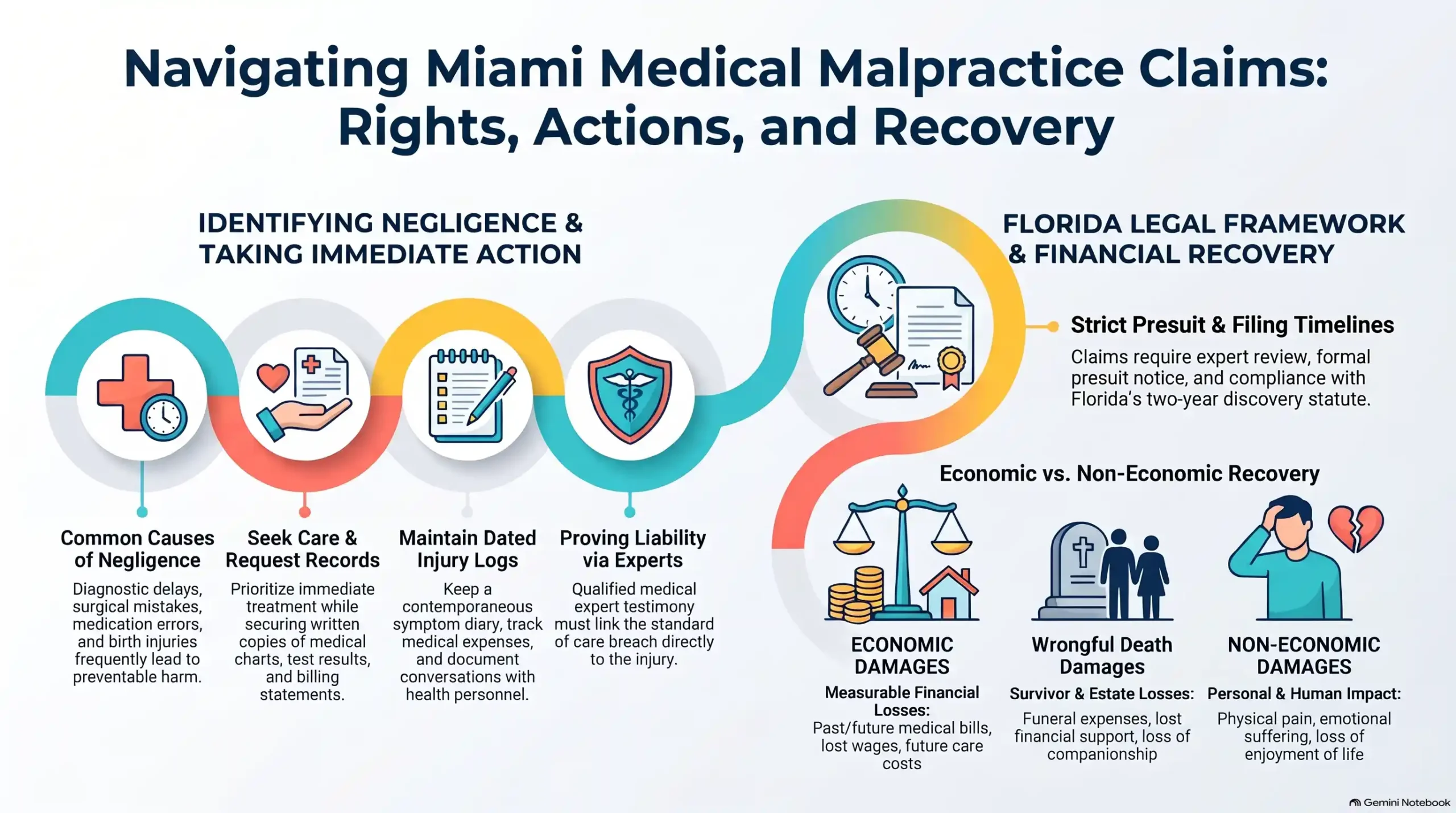


How We Can Help With Your Miami Medical Malpractice Hospital & Provider Negligence Injury Claim
When a hospital or medical provider’s negligence causes serious harm, the injured patient may face extensive treatment costs, lost income, and lasting health consequences. A legal team can help address the practical demands of pursuing a claim while allowing the patient to focus on recovery. Its work may include organizing medical records, identifying relevant providers, and consulting qualified professionals to assess the care and resulting harm.
A thorough Claim Investigation can clarify what happened, preserve important evidence, and establish the losses connected to the injury. Counsel may also communicate with insurers, handle required filings, and evaluate settlement proposals against the patient’s documented needs. This support can reduce avoidable delays and help guarantee that essential details receive careful attention.
Through clear Legal Guidance, the patient can better understand available options, procedural requirements, and potential next steps. An attorney can explain the process in accessible terms and provide steady representation throughout negotiations or litigation. The goal is to pursue fair accountability and meaningful compensation with diligence, respect, and care.
OUR CONSULTATIONSARE FREE
START YOUR FREE CASE REVIEW

Understanding Miami Medical Malpractice Hospital & Provider Negligence Injury Cases
Miami medical malpractice cases arise when a hospital or health care provider fails to meet the accepted standard of care and a patient is harmed as a result. Understanding these cases requires examining the care provided, the patient’s injury, and whether the provider’s conduct fell below what a reasonably careful professional would do in similar circumstances. A claim may involve an individual clinician, a hospital, or both, depending on their roles and responsibilities.
Hospitals have duties that may include appropriate Hospital Oversight and Provider Credentialing, as well as maintaining systems that support safe patient care. A legal review considers records, professional standards, and the connection between the alleged failure and the resulting harm. Not every unfavorable medical outcome establishes negligence; evidence must show that a breach of duty caused a measurable injury. These cases can help patients and families seek accountability while encouraging health care institutions to uphold careful, responsible practices for the communities they serve.
Common Causes of Miami Medical Malpractice Hospital & Provider Negligence
Medical negligence in Miami hospitals and care settings can arise from diagnostic errors, surgical mistakes, medication errors, and preventable birth injuries. These incidents may result from failures to follow accepted standards of care or to communicate essential information. Understanding how each type of error occurs can clarify when a patient’s harm may warrant further review.
Diagnostic Errors
Diagnostic errors can occur when a provider fails to identify a condition, reaches an incorrect diagnosis, or delays recognizing a disease that requires timely treatment. In Miami, these errors may arise when symptoms are overlooked, medical histories are incomplete, or test results are misread or not followed up. Missed diagnoses can prevent patients from receiving appropriate care, while delayed diagnoses may allow an illness to progress and limit available treatment options. Providers are expected to assess symptoms carefully, consider relevant conditions, order suitable tests, and communicate findings clearly. Hospitals also have responsibilities to maintain reliable processes for reviewing results and coordinating care among clinicians. When a diagnostic error causes harm, the circumstances may warrant review to determine whether the provider or facility failed to meet applicable standards of care and whether that failure contributed to the injury.
Surgical Mistakes
Surgical mistakes may occur before, during, or after an operation, including when a procedure is performed on the wrong site, instruments are retained, or a patient is not properly monitored during recovery. These errors can result from inadequate planning, communication failures, or lapses in established safety procedures. Wrong-site surgery may occur when teams fail to verify a patient’s identity, the planned procedure, and the correct location before beginning. Retained instruments can cause infection, pain, or additional surgery, while errors during an operation may damage nearby organs or tissue. After surgery, insufficient monitoring can delay recognition of bleeding, breathing problems, or other serious complications. Hospitals and providers are expected to follow appropriate safeguards and respond promptly to warning signs. When a preventable mistake causes harm, a careful review may help clarify accountability and available options.
Medication Errors
Medication errors can occur when a drug is prescribed, dispensed, administered, or monitored incorrectly. In Miami hospitals and medical settings, these mistakes may involve prescribing an inappropriate medication, selecting the wrong dose, or failing to account for allergies and harmful drug interactions. Errors can also arise during pharmacy dispensing when a label, medication, or instruction does not match the prescriber’s order. During treatment changes, incomplete Medication reconciliation may leave providers without an accurate record of a patient’s current prescriptions, over-the-counter drugs, and supplements. Nurses and other clinicians may contribute to harm by administering medication at the wrong time or overlooking required monitoring. Clear communication, careful recordkeeping, and established safety checks help reduce these risks. When preventable errors cause injury, review of the care provided may clarify whether professional standards were met.
Birth Injuries
Birth injuries may result when a hospital or provider fails to meet accepted standards of care during pregnancy, labor, delivery, or newborn treatment. Examples include missed warning signs, inadequate monitoring of fetal distress, delayed decisions about cesarean delivery, and improper use of delivery instruments. Errors in managing maternal conditions or responding to complications can also contribute to Birth trauma, including oxygen deprivation, fractures, or nerve damage. After birth, failures to assess breathing, treat infection, or provide timely neonatal care may cause neonatal injuries or worsen a newborn’s condition. Not every injury indicates negligence; an evaluation considers whether the care provided met professional standards and whether a breach caused harm. Careful review of prenatal records, monitoring data, delivery notes, and newborn assessments can help clarify how an injury occurred and identify opportunities to protect families.
Don’t Wait. Call Our Florida Personal Injury Lawyers Now!


Legal Rights of Miami Medical Malpractice Hospital & Provider Negligence Injury Victims
When a Miami hospital or medical provider fails to meet the accepted standard of care and causes harm, the injured patient may have legal rights under Florida law. These rights may allow patients and families to seek answers, pursue compensation, and support healthcare accountability while encouraging safer care for others. Patient advocacy can help ensure concerns are heard and records are preserved.
Depending on the circumstances, an injured patient may be able to:
- Request and review relevant medical records.
- Consult an independent medical professional about the care received.
- Seek compensation for medical costs, lost income, and other legally recognized losses.
- File a claim within Florida’s applicable deadlines and follow required pre-suit procedures.
- Obtain legal guidance about evidence, potential defendants, and available remedies.
A claim generally requires proof of the applicable professional standard, a breach, causation, and damages. Florida law imposes specific requirements, including time limits, that may affect a case. Prompt, informed action can protect a patient’s options and help families pursue a fair resolution with care and dignity.
Why Do Miami Medical Malpractice Hospital & Provider Negligence Injuries Happen?
Understanding a patient’s legal rights also requires examining how preventable harm occurs. Medical injuries may result when a provider fails to recognize symptoms, misreads test results, or delays necessary treatment. Errors can also arise during surgery, medication administration, childbirth, or discharge planning. In some cases, a hospital’s processes contribute to unsafe care, including incomplete records, poor communication between departments, or inadequate staffing.
Provider Training is crucial because clinicians must maintain the skills needed to assess patients, follow current standards, and respond to changing conditions. When training is insufficient or supervision is lacking, mistakes may go unnoticed until a patient suffers serious harm. A strong Safety Culture encourages staff to report hazards, communicate concerns, and follow reliable procedures without fear of blame. Conversely, rushed decisions, unclear responsibilities, and ignored warnings can increase risk.
Not every poor outcome reflects negligence. A careful review of the circumstances helps distinguish an unavoidable complication from harm linked to a preventable departure from accepted medical standards.
What Should You Do After a Miami Medical Malpractice Hospital & Provider Negligence Injury?
After a suspected medical negligence injury, the patient should seek immediate medical care to address urgent health needs and document ongoing harm. Preserving medical records, test results, prescriptions, and related communications can help establish the sequence of events. A qualified malpractice lawyer can assess the circumstances and explain the legal options available.
Get Immediate Medical Care
Prompt medical care should be the first priority after a suspected medical error or negligent treatment in a Miami hospital or medical facility. If the patient has emergency symptoms, such as difficulty breathing, severe bleeding, sudden weakness, or loss of consciousness, someone should call 911 or go to the nearest emergency department without delay. For less severe concerns, the patient should contact a qualified physician promptly and explain the symptoms, recent treatment, and possible change in condition. A second medical opinion may help identify complications and determine whether urgent treatment is needed. Patients should follow clinicians’ instructions and avoid stopping prescribed medication or changing a care plan without professional guidance. Timely evaluation can reduce further harm and support recovery. Seeking care also helps protect others by ensuring that serious health concerns receive appropriate attention.
Preserve Medical Records
Once immediate medical needs have been addressed, preserving records can help document the care received and any changes in the patient’s condition. The patient or an authorized representative should request written copies of medical charts, discharge instructions, test results, imaging reports, prescriptions, and billing statements. Records from every provider involved may help create a clearer timeline of treatment and follow-up care. Secure digital backups of electronic files, photographs, and relevant messages in a protected location, while keeping original documents unchanged. A dated log can record symptoms, appointments, medications, and conversations with healthcare staff, using factual descriptions rather than conclusions. Receipts and insurance correspondence should also be retained. Organized, complete records can support continuity of care and help make certain that concerns about treatment are documented accurately for later review by appropriate professionals.
Contact a Malpractice Lawyer
When concerns about negligent medical care arise, a Miami medical malpractice lawyer can assess whether the available facts may support a legal claim. After preserving medical records, the injured patient or an authorized representative can contact counsel to discuss the treatment, resulting harm, and questions about responsibility. A Free consultation may provide an opportunity to learn how the review process works, what information could be useful, and whether deadlines may affect the matter. Before choosing a firm, the patient can ask about attorney availability, experience with hospital and provider negligence claims, and how updates will be shared. Prompt legal guidance may help preserve relevant evidence and clarify possible next steps. A careful review can also support accountability and encourage safer care for other patients, while leaving medical decisions to qualified health professionals.
Don’t Wait. Call Our Florida Personal Injury Lawyers Now!
Critical Evidence in a Miami Medical Malpractice Hospital & Provider Negligence Injury Case
A strong Miami medical malpractice claim depends on evidence showing what care was provided, whether it met accepted standards, and how the alleged negligence caused injury.
Crucial evidence may include:
- Medical records and treatment histories
- Expert testimony on the standard of care
- Statements from witnesses, including staff and family
- Photographs and other documentation of injuries
- Records of follow-up care, expenses, and lasting effects
Medical Records
Medical records often provide the clearest evidence of what happened during a patient’s care and whether a hospital or provider met the required standard. These documents may include physician notes, nursing observations, medication lists, test results, consent forms, discharge instructions, and communication records. Collectively, they can establish the timing of symptoms, decisions, treatment, and changes in a patient’s condition. A careful review may reveal missing entries, conflicting information, delayed responses, or departures from documented care plans. Patients and families seeking accountability should preserve copies of relevant records and note when and how they obtained them. Record retention policies can affect how long facilities keep particular materials, so timely requests may be important. Privacy safeguards protect sensitive health information while allowing authorized access to evaluate a potential claim and support a fair review of care.
Expert Testimony
Because medical negligence cases often involve complicated clinical decisions, expert testimony can be critical to determining whether a hospital or provider met the applicable standard of care. A qualified medical expert can explain what a reasonably careful professional would have done under similar circumstances and whether a departure from that standard caused harm. Expert qualifications matter: relevant training, clinical experience, and familiarity with the medical issue help establish the reliability of an opinion. Experts may review medical records, treatment timelines, and other case materials before offering an assessment. Careful testimony preparation helps ensure opinions are clear, supported by evidence, and responsive to the issues in dispute. In a Miami malpractice claim, this testimony can help judges or jurors understand complicated care decisions and evaluate the evidence fairly, supporting accountability and safer care for the community.
Witness Statements
Witness statements can provide important evidence in a Miami medical malpractice case by documenting what patients, family members, staff, or other observers saw and heard. Their accounts may clarify how concerns were communicated, what responses followed, and who was present during important interactions. Witness credibility depends on factors such as firsthand knowledge, consistency, and the ability to recall events accurately. A witness should distinguish personal observations from assumptions or information learned from others. Promptly preserving statements can help protect details that may fade over time. Notes should record when and where an event occurred, who was involved, and the witness’s own words as closely as possible. Investigators may compare accounts with available records and testimony to identify agreements or differences. Respectful, careful interviews can support a fair evaluation of the care provided.
Injury Documentation
When an injury follows suspected medical negligence, clear documentation can help establish its nature, severity, and progression. Medical records, photographs, and treatment summaries may show when symptoms appeared and how they changed. Contemporaneous Notes can preserve details about pain, limitations, and conversations with healthcare providers while those events remain fresh. A Symptom Diary may also help track daily changes, medication effects, missed activities, and new concerns. Entries should be dated, factual, and consistent, without speculation or alterations. Copies of test results, discharge instructions, prescriptions, and follow-up recommendations can provide additional context. Organized documentation may help clinicians assess ongoing needs and allow legal professionals to evaluate the connection between care and injury. Patients should retain original records securely and request corrections through appropriate channels if an entry appears inaccurate or incomplete.
Long-Term Effects of Miami Medical Malpractice Hospital & Provider Negligence Injuries
Medical malpractice injuries may cause chronic pain or lasting disability that limits a person’s ability to work and manage daily activities. Some patients also experience persistent cognitive impairment that affects memory, concentration, or decision-making. These long-term effects can require ongoing treatment and create substantial medical expenses.
Chronic Pain and Disability
Chronic pain and lasting disability can follow negligent medical care in Miami when a preventable error causes serious injury or delays effective treatment. These effects may limit mobility, interfere with work, and make ordinary tasks difficult. Some patients require ongoing Pain management, rehabilitation, assistive devices, or additional procedures to address complications and preserve function. The type and duration of care depend on the injury and each person’s medical needs.
Disability accommodations may help affected individuals participate in employment, education, and community life. Families and caregivers can also face added responsibilities as they support daily needs and treatment plans. When negligence is suspected, medical records and professional evaluations may help clarify the injury’s cause, expected course, and future costs. Careful documentation can support informed decisions about treatment, support services, and potential legal claims.
Lasting Cognitive Impairment
Lasting cognitive impairment may result from negligent hospital or provider care in Miami, particularly when an error deprives the brain of oxygen, causes a serious infection, or delays treatment of a neurological emergency. The effects may include memory loss, reduced attention, difficulty processing information, or changes in judgment and behavior. Executive dysfunction can make planning, organizing tasks, and making decisions challenging, limiting a person’s ability to manage daily responsibilities or contribute to family and community life. These changes may affect relationships, education, and employment, even when physical injuries improve. Cognitive rehabilitation can help individuals develop strategies for communication, memory, and problem-solving, while supporting greater independence. A careful assessment can identify the nature and extent of impairment and clarify how it affects a person’s functioning, goals, and participation in meaningful activities.
Ongoing Medical Expenses
When negligent hospital or provider care causes a serious injury, ongoing medical expenses may continue long after the initial treatment in Miami. Depending on the harm, a patient may require physician visits, prescription medication, rehabilitation, assistive devices, or home health support. Some injuries also call for future surgeries or adjustments to living arrangements. These needs can affect a person’s ability to serve family members and participate in community life, especially when care demands are substantial.
Future care planning helps identify likely treatment needs and their expected duration. Expense forecasting can estimate these costs using medical records, professional assessments, and anticipated changes in the patient’s condition. A careful projection should account for inflation and possible complications without overstating uncertain needs. Documenting ongoing expenses can clarify the long-term financial impact of negligent care and support informed decisions about recovery and available legal options.
Proving Liability in Miami Medical Malpractice Hospital & Provider Negligence Injury Cases
Proving liability in a Miami medical malpractice case requires evidence that a hospital or health care provider failed to meet the applicable standard of care and that the failure caused a patient’s injury. Medical records, test results, treatment notes, and witness accounts can help establish what occurred and when. Qualified medical experts may explain how a reasonably careful provider would have acted under similar circumstances and whether the departure contributed to harm.
A claim may involve an individual clinician, a hospital, or both, depending on the facts. Hospital credentialing records can help show whether a facility properly reviewed a provider’s qualifications and clinical privileges. Institutional policies may also reveal whether required safety procedures were followed or whether a preventable systems failure contributed to the injury. The evidence must link the alleged breach to specific harm, not merely show an unfavorable outcome. Careful review can clarify responsibility and support a fair assessment of the patient’s needs and losses.
Dealing With Insurance Companies After a Miami Medical Malpractice Hospital & Provider Negligence Injury
After a suspected medical injury in Miami, insurers for a hospital or health care provider may contact the patient to request information, obtain a recorded statement, or discuss settlement. Their representatives may seek details before the patient understands the full medical consequences or has gathered relevant records. A careful Insurer communication strategy helps protect accurate reporting and the patient’s ability to make informed decisions.
Patients can remain courteous while declining to speculate about fault, prognosis, or events they cannot clearly recall. They should avoid signing releases or accepting payment before reviewing the terms and understanding whether future claims could be affected. Claim adjuster tactics may include requesting broad access to medical history or presenting an early offer as a convenient resolution. Patients may ask for requests in writing and keep copies of correspondence, bills, and treatment records. A qualified Miami medical malpractice lawyer can explain communication risks and help make certain responses remain accurate, limited, and consistent with the patient’s interests and recovery needs.
What to Expect During a Miami Medical Malpractice Hospital & Provider Negligence Injury Claim Process
A Miami medical malpractice claim typically begins with an evaluation of the alleged harm and a review of relevant medical records. Florida’s claim requirements may shape the evidence, notices, and deadlines involved in pursuing the case. Depending on the parties’ positions, the matter may proceed through negotiation or litigation.
Initial Case Evaluation
During an initial case evaluation, a Miami medical malpractice lawyer reviews the medical records, treatment timeline, and available evidence to assess whether a hospital or provider may have breached the applicable standard of care. The discussion also considers how the alleged error affected the patient and whether the resulting harm may support a legal claim. Case eligibility depends on the facts, applicable law, and evidence connecting the provider’s conduct to an injury. The lawyer may ask about the patient’s care, subsequent treatment, expenses, and ongoing needs to understand the claim’s scope. An Evaluation timeline can vary depending on the complexity of the circumstances and the information available. This early assessment helps identify practical next steps, explain potential obstacles, and determine whether further investigation may serve the patient’s interests.
Medical Record Review
Once an initial evaluation suggests that a claim warrants further investigation, a Miami medical malpractice lawyer may review the patient’s medical records in detail. This review may include hospital charts, physician notes, test results, medication records, discharge instructions, and relevant communications among providers. The lawyer may organize these materials into a Record chronology to understand when symptoms appeared, what care was provided, and how decisions developed. Careful comparison can reveal chart discrepancies, missing entries, inconsistent descriptions, or delays that warrant further attention. The review may also help identify which providers participated in treatment and what additional records could clarify the events. When appropriate, qualified medical professionals may assess whether the documented care fell below accepted standards and contributed to the patient’s injury. This process supports a careful, evidence-based evaluation of the claim.
Florida Claim Requirements
Florida medical malpractice claims must satisfy specific pre-suit requirements before a lawsuit can proceed. After reviewing the relevant records, the claimant generally obtains a qualified medical expert’s opinion that the care may have fallen below the accepted standard and caused injury. This review helps confirm that a claim has a sound factual basis before formal notice is given.
A Pre-Suit Notice must be served on each prospective defendant, identifying the claimant and describing the alleged negligence and resulting harm. Florida law then provides a pre-suit investigation period, during which the parties exchange information and evaluate the claim. Medical Screening may include requests for records, written questions, and expert review to assess liability and damages. These steps can require careful coordination and timely responses. Meeting the statutory requirements preserves the injured person’s ability to seek accountability while supporting a fair, informed process for all involved.
Negotiation or Litigation
After the pre-suit process, a Miami medical malpractice claim may proceed through settlement negotiations or litigation, depending on the parties’ positions and the evidence. During negotiations, the injured patient’s representative may present medical records, expert opinions, and documented losses to support a fair resolution. The hospital or provider may respond with a settlement offer, which the parties can accept, reject, or counter. Pretrial mediation may help the parties assess disputed issues and explore agreement with a neutral mediator. If negotiations do not resolve the claim, litigation continues in court. The parties exchange evidence, question witnesses, and prepare expert testimony. At trial, jury selection occurs before each side presents its case. The jury evaluates the evidence and determines liability and, when appropriate, damages. Throughout the process, careful preparation supports accountability and informed decisions.
Compensation for Miami Medical Malpractice Hospital & Provider Negligence Injury Damages
Compensation in a Miami medical malpractice case may cover the financial and personal losses caused by a hospital’s or health care provider’s negligence. A claim may seek payment for harm linked to a preventable medical error, such as an incorrect diagnosis, surgical mistake, medication error, or failure to provide appropriate care. The available recovery depends on the evidence, the nature of the injury, and applicable Florida law.
A successful claim may also address lasting consequences, including the need for ongoing treatment, assistance with daily activities, or changes to a person’s ability to work and participate in family or community life. When negligence causes a patient’s death, eligible relatives may pursue a wrongful death claim for losses recognized by law. Punitive damages may be available in limited circumstances involving particularly serious misconduct; they are not awarded in every case and require specific legal grounds.
Careful review of medical records, expert opinions, and other evidence helps determine what compensation may be pursued and who may bring the claim.
Economic vs Non-Economic Damages in Miami Medical Malpractice Hospital & Provider Negligence Cases
In Miami medical malpractice cases, damages generally fall into economic and non-economic categories. Economic damages may include medical expenses, lost income, and future care costs, while non-economic damages address losses such as pain, suffering, and reduced quality of life. Proving these losses typically requires records, expert opinions, and other evidence linking them to the negligence.
Economic Damages
When medical negligence at a Miami hospital or provider’s office causes injury, damages may include both economic losses and non-economic harm. Economic damages compensate for measurable financial costs linked to the injury and its consequences. They may include past and future medical expenses, such as hospital care, corrective procedures, rehabilitation, medication, and necessary medical equipment. Records, invoices, and qualified assessments can help document these losses and estimate anticipated treatment costs.
A patient who cannot work during recovery may also seek compensation for lost wages. If the injury limits the patient’s ability to perform previous work or reduces future income, diminished earning capacity may be considered. Evidence can include employment records, wage statements, medical opinions, and vocational assessments. Careful documentation helps establish the connection between negligent care and each claimed financial loss, supporting a fair assessment of the resources needed for treatment and financial stability.
Non-Economic Damages
Beyond measurable financial losses, a patient harmed by medical negligence in Miami may seek non-economic damages for the injury’s personal effects. These damages address harm that does not come with a direct price, including physical pain, emotional suffering, and the disruption of important relationships. A patient may also experience loss of enjoyment when an injury limits the ability to pursue hobbies, participate in family life, or engage in community service. The effects can extend beyond the patient, affecting loved ones who provide support and share in changed routines. Unlike medical bills or lost wages, non-economic damages reflect the human consequences of negligent care rather than specific financial expenses. Their purpose is to recognize the seriousness of these personal losses and account for how an injury may alter a patient’s daily life and future.
Proving Your Losses
Proving losses in a Miami medical malpractice case requires evidence that connects the provider’s negligence to both financial costs and personal harm. Economic damages may include medical bills, rehabilitation expenses, prescription costs, and necessary future care. Pay records, tax returns, invoices, and expert assessments can help establish these amounts. Lost income may be supported by employment records and documentation of missed work. When an injury limits future work options or advancement, evidence of diminished earning capacity can show its longer-term financial effect.
Non-economic damages address harm that does not have a precise price, such as pain, emotional distress, disability, or reduced ability to participate in daily life. Medical records, testimony from treating professionals, and accounts from family members may help explain these effects. Clear, consistent evidence allows a claim to present the full impact of negligence.
Don’t Wait. Call Our Florida Personal Injury Lawyers Now!
When a Miami Medical Malpractice Hospital & Provider Negligence Injury Case Goes to Trial vs Settlement
In a Miami medical malpractice case involving alleged hospital or provider negligence, settlement may resolve the claim without a trial, while litigation may proceed to a jury if the parties cannot agree on responsibility or damages. A settlement can provide compensation without requiring injured patients or families to testify in court. Negotiations may address medical expenses, lost income, future care needs, and other documented losses. The parties may also consider settlement confidentiality, which can limit public disclosure of agreed terms, subject to the agreement and applicable requirements.
If settlement is not reached, each side presents evidence and arguments at trial. Medical records, expert testimony, and witness accounts may help the jury assess whether negligence caused harm and what compensation is supported. Jury deliberations follow the presentation of evidence and closing arguments. A verdict can offer a formal resolution, but trial preparation takes time, and the result is uncertain. The choice between settlement and trial depends on case-specific evidence, priorities, and informed legal advice.
Florida Laws That May Affect Your Miami Medical Malpractice Hospital & Provider Negligence Case
Florida law sets specific rules for medical malpractice claims that may affect a Miami patient’s ability to recover compensation. These requirements help assess whether care fell below accepted standards and whether that failure caused harm.
Patients and families seeking accountability should understand the procedures that can shape a claim.
- Florida pre-suit screening generally requires investigation and notice to a prospective defendant before a lawsuit proceeds.
- Medical records and qualified expert opinions may be needed to support the claim during this screening process.
- Florida’s comparative negligence rules may reduce compensation if the patient’s own conduct contributed to the injury.
- Damage limits and other statutory provisions may affect the compensation available, depending on the claim and applicable law.
- Sovereign immunity may apply when a government-operated facility or employee is involved, with special rules governing liability and recovery.
These rules can influence evidence gathering, negotiations, and litigation strategy. Because requirements vary by party and circumstances, careful legal review can help patients pursue a fair resolution while respecting the protections and responsibilities established by Florida law.
The Statute of Limitations for Miami Medical Malpractice Hospital & Provider Negligence Injury Cases
Although medical negligence may not become apparent immediately, strict filing deadlines can determine whether a Miami patient may pursue a claim. In Florida, a medical malpractice action generally must be filed within two years after the incident is discovered, or should have been discovered through reasonable diligence. The discovery rule may affect when this period begins, particularly when an injury or its connection to treatment is not readily recognizable.
Florida law also imposes an outside limit, generally four years from the incident, regardless of when the harm is discovered. A separate deadline may apply when fraud, concealment, or intentional misrepresentation prevented discovery. These Deadline exceptions are narrow, and special rules may govern claims involving children or other circumstances.
Before filing, a claimant generally must provide the required notice and conduct a pre-suit investigation, which can affect timing. Missing a deadline may bar recovery, even when the care fell below accepted standards. Prompt attention to dates helps preserve accountability and protect patients and families.
How a Miami Medical Malpractice Hospital & Provider Negligence Lawyer Can Help You
A Miami medical malpractice lawyer can help patients and families assess whether negligent care caused an injury and determine the steps required to pursue a claim. Counsel can explain the legal process, organize relevant information, and coordinate a careful review of the circumstances surrounding treatment. This support can help families seek accountability while protecting their ability to focus on a patient’s needs.
A lawyer may assist by:
- Obtaining and reviewing medical records to identify gaps or concerns in care.
- Consulting qualified medical professionals about applicable standards and possible harm.
- Identifying responsible providers, facilities, or other parties based on the evidence.
- Calculating documented losses, including treatment costs, lost income, and future care needs.
- Preparing filings, managing communications, and presenting the claim through negotiation or litigation.
Effective Attorney advocacy combines clear communication with a disciplined case strategy tailored to the evidence and the family’s priorities. Counsel can also explain potential outcomes and legal options without promising a result. By handling procedural demands and advancing an evidence-based claim, a lawyer can help families pursue fair consideration and support broader efforts to improve patient safety.
When to Contact a Miami Medical Malpractice Hospital & Provider Negligence Lawyer
When should a patient or family contact a Miami medical malpractice lawyer? Contact may be appropriate when treatment causes unexpected harm, a diagnosis is delayed, or a provider’s actions appear inconsistent with accepted care. Early Warning Signs can include worsening symptoms after a procedure, conflicting explanations about treatment, medication errors, or records that do not match what the patient experienced. These concerns do not establish negligence on their own, but they may warrant a careful review.
Prompt attention can help preserve relevant records and clarify what happened while details remain available. Patients and families should retain discharge instructions, prescriptions, bills, test results, and communications with the care team. They may also write down dates, symptoms, and questions raised during treatment. If a loved one cannot speak for themselves, a family member or authorized representative may seek information on their behalf.
A lawyer can assess whether further inquiry into Provider Accountability is appropriate and explain any applicable filing deadlines.
Why You Need an Experienced Miami Medical Malpractice Hospital & Provider Negligence Lawyer
Because medical malpractice claims often involve complex records, expert opinions, and strict filing deadlines, an experienced Miami medical malpractice lawyer can help patients and families evaluate their options. Counsel Experience matters when a claim requires careful review of treatment decisions, hospital procedures, and the harm that followed. A lawyer familiar with these matters can identify relevant evidence, organize medical records, and consult qualified professionals to assess whether care fell below accepted standards.
A sound Case Strategy also helps keep the claim focused on the facts and the needs of those affected. Counsel can explain legal procedures, communicate with insurers, and address disputes about responsibility or damages. This support may allow patients and families to concentrate on recovery and caregiving while their legal concerns receive consistent attention. No lawyer can guarantee a particular result, and each claim depends on its evidence and circumstances. Experienced guidance can, however, help claimants make informed decisions and pursue accountability through an orderly, evidence-based process.
How to Choose the Right Miami Medical Malpractice Hospital & Provider Negligence Lawyer for Your Case
Choosing the right Miami medical malpractice lawyer requires careful consideration of the attorney’s experience, communication practices, and approach to evaluating evidence. Prospective clients can review an Attorney’s credentials, including relevant experience with hospital and provider negligence claims, professional standing, and familiarity with Florida malpractice procedures. The lawyer should be prepared to explain how medical records, expert opinions, and timelines may affect the case, without promising a particular result.
Communication style also matters. A lawyer who listens carefully, answers questions directly, and provides regular updates can help clients make informed decisions while managing a demanding process. During an initial consultation, the client can ask who will handle the matter, how developments will be reported, and what information is needed to assess potential negligence. Clear explanations are especially important for people seeking accountability and safer care for others. Comparing several qualified lawyers may help identify an approach that fits the client’s needs, priorities, and expectations. The decision should rest on relevant experience, transparency, and a credible plan for reviewing the facts.
About The Law Offices of Anidjar & Levine
The Law Offices of Anidjar & Levine represents individuals in Miami medical malpractice matters involving allegations of negligent care by hospitals or health care providers.
The firm reviews claims involving diagnostic errors, treatment decisions, surgical care, and preventable injuries.
Its attorneys assess available records, explain legal options, and help clients understand the steps involved in pursuing a claim.
The firm’s history provides context for its approach to representing injured people and their families.
In medical malpractice cases, that work may include gathering medical documentation, consulting qualified professionals, and examining whether care met applicable standards.
The firm also communicates with clients about case developments and the practical considerations that can affect a legal matter.
Community involvement reflects a commitment to serving people beyond individual cases.
For those seeking to support others, access to clear information about legal rights can be important after serious harm.
The firm’s role is to provide representation and guidance while pursuing accountability through the legal process.

Frequently Asked Questions
Can I File a Medical Malpractice Claim if I Signed a Consent Form?
Yes. Signing a consent form does not automatically prevent a patient from filing a medical malpractice claim. Informed consent limits generally cover known risks that were properly explained and accepted; they do not excuse negligent treatment, errors, or failure to disclose material information. Consent form exceptions may apply when consent was obtained through misleading statements, inadequate disclosure, coercion, or treatment beyond the authorized scope. A qualified attorney can assess the circumstances and applicable deadlines.
Can a Hospital Be Liable for an Independent Contractor’s Negligence?
A hospital can be liable for an independent contractor’s negligence in certain circumstances. Hospital liability may arise when the facility failed to use reasonable care in selecting or overseeing the contractor, or when the contractor acted as the hospital’s apparent agent. Apparent agency may apply if the hospital’s conduct led a patient to reasonably believe the provider was its employee, and the patient relied on that impression. The specific facts and applicable state law determine the outcome.
What Happens if I Contributed to My Own Medical Injury?
If a patient contributed to a medical injury, recovery may be reduced or, in some jurisdictions, barred, depending on applicable law and the evidence. Patient contributory negligence can include failing to disclose relevant medical history, disregarding treatment instructions, or missing follow-up care. Under comparative fault rules, responsibility may be divided between the patient and providers, with compensation adjusted to reflect each party’s share. A careful review can determine how these principles affect a claim.
Can Family Members Bring a Claim After a Patient Dies From Medical Negligence?
Yes. In Florida, eligible family members may pursue a Florida wrongful death claim when medical negligence causes a patient’s death. The personal representative of the deceased patient’s estate generally files the action on behalf of qualifying survivors and the estate. Depending on the circumstances, survivors may seek damages for lost support, services, and companionship, while estate compensation may cover medical expenses and lost earnings. Strict deadlines and eligibility rules apply, so prompt legal review is important.
Are Medical Malpractice Settlements Subject to Taxes in Florida?
In Florida, medical malpractice settlements are generally not taxable when compensation covers physical injuries or sickness, including related medical expenses and pain and suffering. Tax treatment may differ for punitive damages, interest, or amounts allocated to lost wages, depending on the circumstances and applicable federal rules. Settlement reporting requirements also vary; some taxable portions may need to appear on a tax return. A tax professional can review the settlement agreement and advise on reporting obligations.
—————————
Medical malpractice claims in Miami can involve complex medical evidence, strict deadlines, and serious consequences for patients and their families.
Promptly preserving records and obtaining a qualified review may help determine whether a hospital or provider failed to meet the applicable standard of care.
The Law Offices of Anidjar and Levine can assess the circumstances, explain your legal options, and pursue compensation when the evidence supports it.
Learn more about working with a Miami Personal Injury Lawyer.
Each claim depends on its facts, applicable law, and timely action.