

If defective brakes, worn tires, faulty steering, or neglected maintenance contributed to your Brevard County truck accident, The Law Offices of Anidjar and Levine can investigate what happened and who may be responsible. We can review inspection and repair records, help preserve damaged components and electronic data, and consult qualified professionals when appropriate. You may be able to seek compensation for medical care, lost income, future treatment, and other injury-related losses. Florida deadlines may limit your options, so act promptly. Learn more from a Brevard County Personal Injury Lawyer. The sections below explain important steps and considerations.
Main Takeaways
- A Brevard County truck equipment-failure lawyer can investigate whether defective brakes, tires, steering, lights, or suspension contributed to a crash.
- Potentially responsible parties may include the truck driver, carrier, maintenance provider, or parts manufacturer.
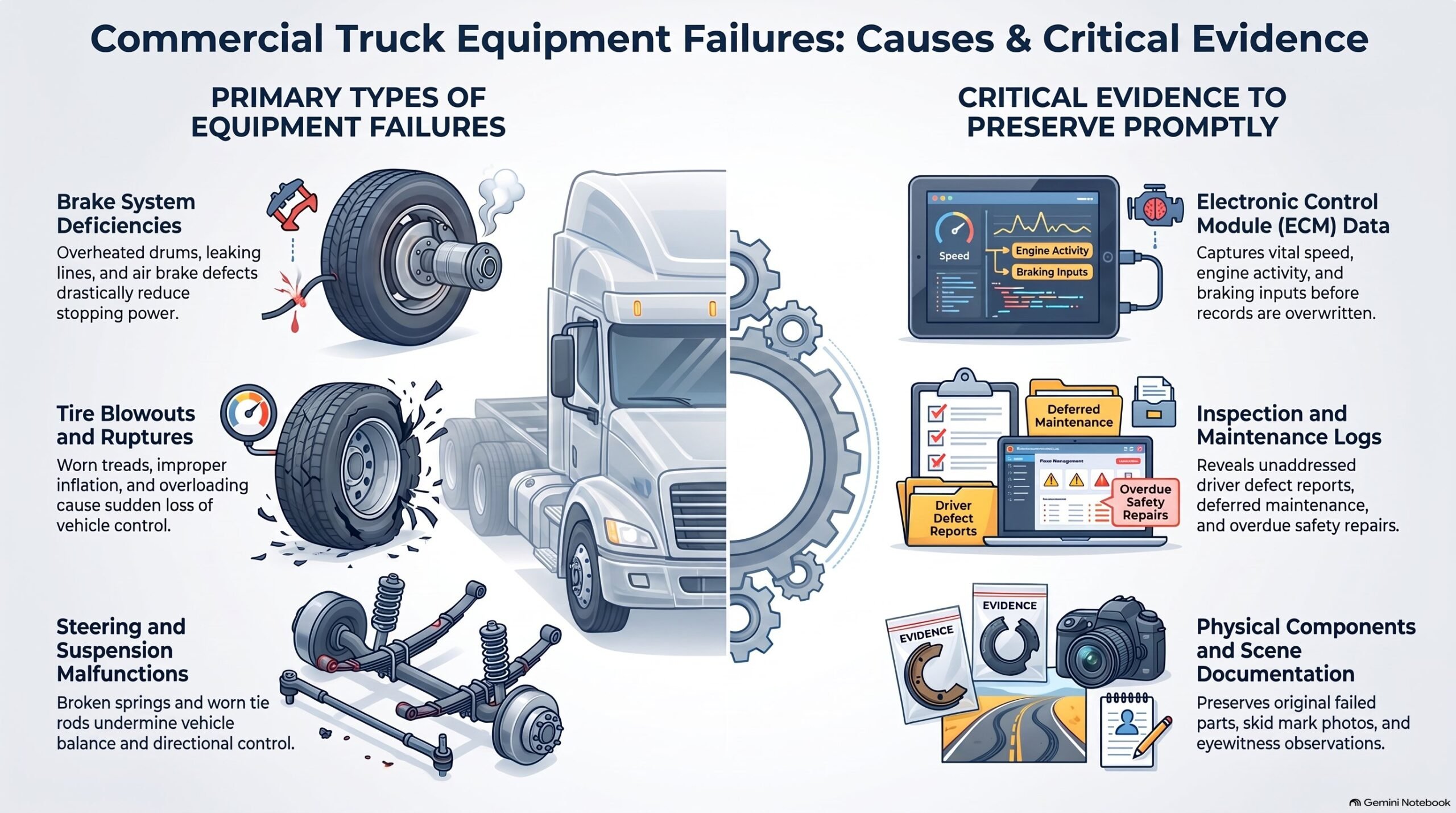
- Key evidence includes inspection and repair records, driver defect reports, damaged components, photographs, witness accounts, and electronic vehicle data.
- Prompt preservation of records, electronic data, and damaged parts can help establish the defect and connect it to the collision.
- Claims may seek compensation for medical care, lost income, pain, and future treatment; Florida comparative-fault rules may affect recovery.


How We Can Help With Your Brevard County Truck Accident Equipment Failures Injury Claim
When a truck’s brakes, tires, control system, or other equipment fail, determining what happened and who may be responsible requires a careful investigation. We can guide you through the claim process while you focus on your health and the needs of those who depend on you. Our team listens to your concerns, explains available options, and keeps you informed as your case progresses.
We gather relevant records, review maintenance and inspection documents, and consult qualified professionals when needed. We also identify potentially responsible parties and assess the losses connected to your injuries. This work helps us develop a thoughtful Claim Strategy based on evidence, your circumstances, and your goals.
Through Client Advocacy, we handle communications with insurers, address requests for information, and carefully evaluate settlement proposals. We’ll explain the potential benefits and risks of each option, so you can make informed decisions. If negotiations don’t produce a fair resolution, we can discuss the next steps and represent your interests throughout the legal process.
OUR CONSULTATIONSARE FREE
START YOUR FREE CASE REVIEW

Understanding Brevard County Truck Accident Equipment Failure Injury Cases
A truck equipment failure can involve more than a broken part; it may raise questions about inspection, maintenance, repairs, or manufacturing. When you’re injured in a crash, we help you understand how the failure may relate to the collision and your losses. These cases often require careful review of records, physical evidence, and the events leading up to impact.
We may examine vehicle inspection documents, repair histories, photographs, and witness accounts to clarify what happened. Crash reconstruction can help explain how a truck’s condition affected its movement, while roadway conditions may provide important context about the collision. We’ll also consider how the incident affected your health, work, and daily responsibilities.
A thorough investigation can identify relevant evidence and help establish who may be legally responsible. We’ll explain the process, answer your questions, and keep your needs in view as we assess your claim. Our goal is to support you and your family with clear guidance while pursuing accountability and fair compensation.
Common Causes of Brevard County Truck Accident Equipment Failures
When we examine the causes of truck equipment failures in Brevard County, we often find brake system problems, tire blowouts, or faulty lighting. Handling and suspension defects can also interfere with a driver’s ability to control a truck safely. We’ll explain how these failures occur and why they may contribute to serious crashes.
Brake System Failures
Brake system failures can prevent a commercial truck from stopping safely, especially under the heavy loads and frequent braking common on Brevard County roads. Worn brake pads, damaged drums, leaking lines, or poor maintenance can reduce stopping power and put everyone nearby at risk. Brake fade may develop when repeated braking overheats components, making it harder for a driver to slow or control a truck. Air brake defects, including leaks or malfunctioning valves, can also delay braking or prevent the system from applying properly. We can help you understand how investigators examine maintenance records, inspection reports, and vehicle components to identify what went wrong. When a brake failure causes a crash, preserving evidence can support accountability and help protect injured people and their families as they seek answers and fair compensation.
Tire Blowouts
Under heavy loads and changing road conditions, a truck tire blowout can cause a driver to lose control or force nearby vehicles into danger. In Brevard County, worn Tire Tread, underinflation, overloading, road debris, and neglected inspections can increase the risk. Heat and friction may weaken a tire until it fails, while impact with a pothole or sharp object can trigger a sudden rupture. Understanding Blowout Physics helps explain why a truck may pull sharply, become difficult to direct, or shed debris across traffic lanes. Carriers and drivers should follow inspection schedules, maintain proper tire pressure, and promptly replace damaged tires. When a blowout causes a crash, we can help you examine maintenance records, inspection reports, and other evidence to identify failures and pursue accountability for those harmed.
Faulty Lighting
Faulty truck lighting can make a large vehicle harder to see and harder to judge its movements, especially at night or in poor weather. When headlights fail, remain misaligned, or provide weak illumination, drivers may not see hazards in time. Limited Headlight visibility can also make it harder for others to judge a truck’s distance and approach. Burned-out brake lights, turn signals, or marker lamps can hide a truck’s actions and reduce the warning other road users need to respond safely.
We can help you understand whether a lighting defect contributed to a crash and who may be responsible. Taillight compliance matters because required lights must function as intended. Maintenance records, inspection reports, and the damaged components may help show whether a carrier or repair provider overlooked a problem before the collision.
Steering and Suspension Defects
When a truck’s guidance or suspension system fails, the driver may lose control or struggle to keep the vehicle stable, increasing the risk of a serious crash. Steering linkage defects can prevent the wheels from responding properly, making it difficult to turn or maintain a safe path. Worn joints, damaged tie rods, or poor repairs may contribute to these failures. Suspension component failures, including broken springs or worn shock absorbers, can also affect balance, tire contact, and braking. These problems may develop through inadequate inspections, deferred maintenance, or defective parts. When we investigate a Brevard County truck accident, we can examine maintenance records, inspection reports, and damaged components to identify contributing failures. Understanding what went wrong helps us pursue accountability and seek support for people injured while sharing the road with commercial trucks.
Don’t Wait. Call Our Florida Personal Injury Lawyers Now!


Legal Rights of Brevard County Truck Accident Equipment Failure Injury Victims
Brevard County truck accident equipment failure victims may have the right to seek compensation for injuries, lost income, and other damages caused by a defective or poorly maintained component. We can help you understand your Victim Rights and the Legal Protections available under Florida law. Depending on the evidence, you may pursue a claim against a responsible trucking company, maintenance provider, parts manufacturer, or other party.
Brevard County truck accident victims may seek compensation when defective or poorly maintained equipment causes harm.
Your potential rights may include:
- Seeking payment for medical care, rehabilitation, and future treatment.
- Recovering lost wages and compensation for reduced earning capacity.
- Requesting damages for pain, disability, and loss of quality of life.
- Preserving evidence and obtaining records relevant to your claim.
- Consulting an attorney before accepting a settlement or signing a release.
We’ll help you assess your options while respecting your priorities and the people who depend on you. Florida deadlines can limit how long you have to file, so prompt legal guidance can protect your ability to seek accountability and support a fair recovery.
Why Do Brevard County Truck Accident Equipment Failures Happen?
Understanding how equipment failures occur can help identify who may be responsible for a truck crash and the injuries that follow. These failures often begin with inadequate inspection or maintenance. Worn brakes, damaged tires, defective steering components, and faulty lights can prevent a driver from controlling a truck or warning others in time. A carrier may also contribute by ignoring repair needs, pressuring drivers to keep operating unsafe vehicles, or failing to follow required maintenance schedules.
Some breakdowns result from defective parts or improper repairs, which may involve manufacturers or service providers. Roadway hazards and weather conditions can add stress to equipment, especially when a truck has worn tires, weak brakes, or poorly secured cargo. Even so, challenging conditions don’t excuse preventable maintenance failures. When equipment fails, a truck can strike another vehicle, leave the roadway, or spill cargo. Understanding these causes helps us examine how preventable failures put drivers, passengers, and other community members at risk.
Don’t Wait. Call Our Florida Personal Injury Lawyers Now!
What Should You Do After a Brevard County Truck Accident Equipment Failure Injury?
After a truck accident involving equipment failure, seek medical care promptly, even if your injuries seem minor. Document the scene by taking photographs, gathering witness information, and preserving relevant records. We should also contact a lawyer to understand our options and protect important evidence.
Seek Medical Care
Because truck equipment failures can cause serious or delayed injuries, seek medical care as soon as possible, even if you feel well at the scene. Prompt care can identify conditions that may not show symptoms immediately, including head, neck, or internal injuries. Call 911 if you need emergency assistance, and follow the responders’ guidance. If your injuries seem less urgent, contact a healthcare provider promptly and explain that you were involved in a truck crash. Attend recommended follow-up appointments and follow your treatment plan. Tell your provider about new or worsening symptoms, and ask questions when instructions aren’t clear. Keep treatment records, including visit summaries, diagnoses, prescriptions, and bills. These records can help you track your recovery and provide an accurate account of the care you received. Prioritizing your health also helps you remain available to support those who depend on you.
Document the Scene
If it’s safe, document the crash scene before vehicles or equipment are moved. Use Safe positioning: stay clear of traffic, unstable cargo, leaking fluids, and damaged machinery, and follow emergency responders’ instructions. Your safety comes first, so don’t approach a hazard to get a better photograph. From a secure location, photograph the truck, trailer, damaged components, other vehicles, road conditions, skid marks, debris, and visible injuries. Capture wide views and close details, and note the date, time, weather, and location. Ask witnesses for their names and contact information, and record what they observed without pressing them to speculate. Avoid touching or removing parts. Preserving the scene can help protect evidence of an equipment failure and support an accurate account of what happened for everyone affected by the crash.
Contact a Lawyer
Photographs, witness details, and other scene records can help preserve what happened, but they may not reveal why a truck component failed. We can help you take the next step by contacting a lawyer familiar with commercial vehicle equipment cases. A prompt review may identify evidence that needs protection, such as maintenance records, inspection reports, and damaged parts. Ask the trucking company or insurer to preserve relevant materials, but avoid giving recorded statements or signing releases before you understand their effect.
During an Initial consultation, we can discuss your injuries, the crash, and possible sources of responsibility. Bring medical records, photographs, and insurance correspondence if available. Ask how the lawyer handles attorney fees, case expenses, and payment if there’s no recovery. Clear guidance can help you protect your rights while you focus on treatment and support those who depend on you.
Critical Evidence in a Brevard County Truck Accident Equipment Failure Injury Case
We’ll examine records and physical evidence to show what failed, when it failed, and whether proper safety procedures were followed.
Crucial evidence may include:
- Inspection and maintenance records showing repairs, recurring defects, or missed service
- Electronic control module data documenting vehicle speed, braking, and engine activity
- Driver inspection reports identifying equipment problems before the crash
- Photographs capturing vehicle damage, road conditions, and visible defects
- Witness statements describing the crash and the truck’s condition beforehand
We can help you identify and preserve this evidence before it’s lost or altered.
Inspection and Maintenance Records
When a truck’s brakes, tires, guidance, or other equipment fail, inspection and maintenance records can help show whether the carrier knew—or should have known—about a dangerous condition.
We can review inspection reports, repair invoices, work orders, and driver defect reports to identify warning signs and determine whether the carrier responded promptly. These records may reveal repeated problems, overdue repairs, or equipment returned to service without adequate correction. Comparing documented work with maintenance schedules can also help us assess whether the carrier followed its own procedures and applicable safety duties.
Record retention matters because relevant documents may be lost or discarded over time. We can send preservation requests and seek records from the carrier, repair providers, or other responsible parties. By organizing this evidence, we can help you explain what happened, support accountability, and pursue fair compensation for the harm you’ve suffered.
Electronic Control Module Data
A truck’s electronic control module (ECM) can record events before and during a crash, helping clarify whether an equipment failure contributed to your injuries. The module may capture speed, braking, engine performance, and other information that helps us assess what happened. When a component malfunction is suspected, this evidence can show whether the truck responded as expected or whether a mechanical problem affected the driver’s ability to avoid impact.
We act promptly to seek ECM data preservation because electronic records may be overwritten, lost, or altered as a vehicle is used or repaired. Qualified professionals can perform crash data retrieval and interpret the results alongside other evidence. We’ll work to secure relevant data, explain what it may establish, and use it to support your claim and protect your interests as you focus on recovery.
Driver Inspection Reports
Driver inspection reports can reveal whether a truck’s equipment problems were noticed, documented, or left unaddressed before a crash. We can review these records to determine what the driver checked, when inspections occurred, and whether the carrier followed required procedures. Entries about brakes, tires, lights, steering, or other safety components may help establish whether a defect existed before the trip and whether anyone took corrective action. Report discrepancies between inspection forms, maintenance records, and electronic control module data may warrant closer scrutiny. We also look for falsified entries, missing reports, or repeated notes that identify a defect without showing repairs. These records can help us assess responsibility and preserve evidence for an injured person seeking fair compensation. Our review may also guide questions about inspection practices and safety oversight.
Photographs and Witness Statements
Photographs and witness statements can help establish how a truck’s equipment failure contributed to a crash and the injuries that followed. We can use images of damaged brakes, tires, lights, or coupling systems to document conditions before repairs or disposal alter the evidence. Photos of the roadway, vehicle positions, and visible injuries may also help explain the event’s sequence and impact.
Photo Metadata, including timestamps and location information, can help verify when and where images were taken. We should preserve original files and avoid edits that could raise questions about authenticity. Witness accounts may clarify what happened before, during, and after the collision, including unusual sounds or vehicle movements. We assess Witness Credibility by considering each person’s opportunity to observe, consistency, and potential bias. Careful documentation can support accountability and help protect everyone affected.
Long-Term Effects of Brevard County Truck Accident Equipment Failures Injuries
Truck accident equipment failures can leave you with chronic pain and limited mobility that disrupt daily activities. You may also face lasting cognitive effects, including memory or concentration difficulties. As we assess these injuries, we consider ongoing medical expenses and the care you may need over time.
Chronic Pain and Mobility
When a truck’s defective brakes, tires, or other equipment cause a crash, the resulting injuries can leave lasting pain and limit mobility long after initial treatment ends. We recognize that persistent back, neck, joint, or nerve pain can disrupt work, family responsibilities, and the ability to serve others. A careful treatment plan may include physical therapy, medication, injections, or other Pain management options tailored to your condition. When walking, lifting, or standing remains difficult, mobility aids such as canes, braces, or wheelchairs may support safer movement and greater independence. We encourage you to follow medical guidance and document how symptoms affect daily activities. These records can help your care team adjust treatment and may clarify the long-term effects of the crash when you pursue compensation for ongoing needs and reduced mobility.
Lasting Cognitive Effects
Even after visible injuries begin to recover, a truck crash caused by defective equipment can leave lasting cognitive effects. A blow to the head or oxygen deprivation can affect how you think, remember, and manage daily responsibilities. You may experience Memory lapses, difficulty concentrating, or slower processing, which can complicate conversations and familiar tasks. Some people also develop executive dysfunction, which can make planning, organizing, and controlling impulses more difficult.
These changes may affect your work, relationships, and ability to serve others as you once did. We encourage you to take persistent symptoms seriously and tell your healthcare provider what has changed, even if the effects seem subtle. Keeping notes about specific challenges can help you describe them clearly. A careful medical assessment can identify cognitive concerns and guide appropriate support.
Ongoing Medical Expenses
As recovery continues, injuries from equipment failures in Brevard County truck accidents may require ongoing medical care, including physician visits, medication, rehabilitation, or future procedures. We can help you consider how these needs affect your finances and daily responsibilities. Keep records of appointments, treatment plans, prescription costs, and related travel expenses. These documents can show how medical needs continue after the initial emergency care and help us assess potential compensation.
Future treatment may include consultations with specialists, assistive devices, or additional therapy. Your doctors can explain which services are medically necessary and how long they may be needed. We can use that information to estimate costs when pursuing a claim against responsible parties. Because estimates can change, we should review updated medical guidance and bills as your recovery progresses, while protecting your access to appropriate care and supporting those who depend on you.
Proving Liability in Brevard County Truck Accident Equipment Failure Injury Cases
Proving liability in a Brevard County truck accident involving equipment failure requires evidence that identifies the defect, establishes who was responsible for it, and connects it to the crash and resulting injuries. We can investigate maintenance records, inspection reports, repair invoices, and electronic data to determine when the problem arose and whether anyone ignored warning signs. Photographs, witness accounts, and qualified engineering analysis may help show how a failed tire, brake, steering component, or other part contributed to the collision.
Responsibility may rest with a driver, trucking company, maintenance provider, or equipment manufacturer, depending on the evidence. We assess each party’s conduct under applicable negligence standards and explain how those findings affect liability allocation. Florida law may also reduce a recovery when an injured person shares responsibility, so careful proof matters. Preserving damaged parts and records can strengthen the case and help us present a clear account of what happened and who must answer for the harm.
Dealing With Insurance Companies After a Brevard County Truck Accident Equipment Failure Injury
After a Brevard County truck accident involving equipment failure, insurance companies may contact you quickly to discuss the crash and your injuries. We can help you respond carefully, protect your interests, and focus on recovery.
An adjuster may ask for a recorded statement or request a broad medical authorization. Before agreeing, we should understand what the request covers and how your words or records could affect the claim. You can provide basic information, but you don’t need to speculate about the cause, minimize your injuries, or accept an early offer before understanding your losses.
We can preserve relevant documents, organize communications, and, when appropriate, direct insurer questions through a representative. Keep copies of letters, emails, repair records, and medical bills, and note when you contact each party. These steps help us give accurate information and avoid preventable misunderstandings.
Insurance policies and Florida law may impose claim deadlines. We should identify applicable dates promptly, so you don’t risk losing important rights while addressing your health and family needs.
What to Expect During a Brevard County Truck Accident Equipment Failure Injury Claim Process
We’ll investigate how the equipment failure occurred and identify the parties who may be responsible for your injuries. We’ll gather and preserve evidence, including maintenance records, inspection reports, and medical documentation, to support your claim. Once we assess the available evidence and losses, we’ll explain whether settlement or litigation may be the next step.
Claim Investigation
How thoroughly a truck accident claim is investigated can shape the evidence available to establish that defective or poorly maintained equipment caused the crash. We’ll act promptly to support Evidence preservation, since damaged components, maintenance records, and electronic data may change or disappear. Our team can document the truck and scene, obtain inspection and repair histories, and review photographs, witness accounts, and crash data. We’ll also assess whether the available records show regulatory compliance with applicable inspection and maintenance requirements. This careful review helps us connect equipment conditions to the collision and explain the resulting harm. We’ll keep you informed, answer questions, and coordinate the investigation with your medical and recovery needs. By preserving reliable information early, we can help you pursue a well-supported claim while respecting everyone affected.
Identifying Liable Parties
When a truck’s equipment failure contributes to a crash, responsibility may extend beyond the driver. We’ll consider who designed, made, supplied, maintained, or operated the faulty component, because several parties may share legal responsibility. Manufacturer liability may arise when a defective part or unsafe design causes a failure. Distributor responsibility may apply if a company supplied a defective component or mishandled it before delivery. A trucking company may also be accountable for inadequate maintenance, unsafe repair decisions, or putting an unfit vehicle on the road. In some cases, a repair shop or parts supplier may have contributed to the hazard. We’ll assess each party’s role under applicable law and explain how those findings may affect your claim. This careful approach helps pursue fair accountability while protecting your ability to focus on recovery.
Evidence and Documentation
Because equipment failures can involve parts that are repaired, replaced, or discarded, preserving evidence early is essential. We’ll move quickly to identify relevant records and physical evidence, including the failed component, maintenance history, inspection reports, and driver logs. Evidence Preservation may also involve photographs of the truck and crash scene, witness accounts, and available electronic data. We’ll explain which materials matter and take reasonable steps to prevent their loss.
Clear Documentation Protocols help us organize information and assess how the failure occurred. We’ll gather medical records, treatment expenses, proof of missed work, and details about how your injuries affect daily responsibilities. Keep receipts, follow medical instructions, and share new information with us promptly. Your careful participation helps us build an accurate account of the harm and supports a thorough review of the claim.
Settlement or Litigation
Once we’ve reviewed the evidence and assessed your injuries, we’ll explain the available paths toward resolving your Brevard County truck accident claim. We’ll discuss settlement negotiations, including the compensation you may seek for medical care, lost income, and other documented losses. We’ll evaluate any offer against the evidence and your needs, and we won’t pressure you to accept less than a fair resolution. If both sides can’t agree, we may pursue mediation or file a lawsuit. Mediation preparation includes organizing records, identifying disputed issues, and preparing you to describe how the equipment failure affected your life. Litigation can involve discovery, depositions, and a court hearing or trial. At each stage, we’ll explain the process, deadlines, and choices, so you can make informed decisions while focusing on your recovery and responsibilities to those who depend on you.
Compensation for Brevard County Truck Accident Equipment Failure Injury Damages
What compensation can you seek after a truck crash caused by equipment failure? We can help you pursue damages that address your injuries and the practical effects on your life. Depending on the evidence, a claim may include medical expenses, rehabilitation costs, prescription medication, and necessary future treatment. Keep bills, records, and provider recommendations so we can document the care your recovery requires.
You may also seek payment for lost wages if your injuries kept you from working. If they limit your ability to earn income in the future, diminished earning capacity may be part of your claim. We can gather employment records, wage statements, and professional assessments to support these losses.
Compensation may also account for physical pain, emotional distress, and reduced ability to take part in daily activities. Each case depends on its facts, including the equipment defect, the responsible parties, and the severity of your injuries. We’ll work to present a clear, well-supported account of what you’ve endured and what you’ll need going forward.
Economic vs Non-Economic Damages in Brevard County Truck Accident Equipment Failures Cases
We distinguish economic losses, such as medical bills and lost income, from non-economic harm, including pain and reduced quality of life. To support your claim, we gather records and other evidence that show how the equipment failure caused these losses. This proof helps us present a clear, well-supported account of your damages.
Economic Losses
Economic losses measure the financial harm caused by a truck accident involving failed equipment, while non-economic damages address losses such as pain, emotional distress, and reduced quality of life. In a Brevard County claim, we can help you identify and document costs tied directly to the collision. These may include medical bills, rehabilitation expenses, prescription costs, and necessary medical equipment. You may also seek compensation for lost wages if injuries kept you from working, along with reduced earning capacity when lasting limitations affect your ability to earn income. Future treatment and support needs may also qualify when reliable evidence establishes their likely cost. We can help organize records, employment information, and expert assessments to present a clear account of your financial losses and support a fair claim for the resources you need.
Non-Economic Harm
Although financial records can measure bills and lost income, they can’t fully capture the personal impact of a truck accident caused by equipment failure. Non-economic damages address harms that don’t come with a clear price tag. We may seek compensation for physical pain, emotional distress, and the disruption an injury brings to daily life. A serious crash can affect sleep, relationships, independence, and the ability to care for family or contribute to the community. Loss of enjoyment may arise when injuries prevent you from pursuing activities that once gave your life meaning. These damages differ from economic losses, such as medical expenses and missed wages, because they reflect the human consequences of the collision. We can help you understand how Florida law treats these personal harms and what compensation may be available.
Proving Damages
To prove damages after a truck accident involving equipment failure, we must connect each claimed loss to the crash and support it with reliable evidence. Economic damages include medical bills, rehabilitation costs, lost income, and reduced earning capacity. We can document these losses through invoices, employment records, tax returns, and expert assessments. Damage valuation should also account for future losses, such as ongoing treatment or diminished ability to work, using medical opinions and sound financial projections.
Non-economic damages address harm that lacks a direct price, including pain, emotional distress, and loss of enjoyment of life. We can support these claims with treatment records, personal accounts, and testimony from people who understand how the injury changed daily life. By presenting both categories clearly, we help you seek compensation that reflects the full impact of the crash.
Don’t Wait. Call Our Florida Personal Injury Lawyers Now!
When a Brevard County Truck Accident Equipment Failures Injury Case Goes to Trial vs Settlement
When a truck’s brakes, tires, lighting, or other equipment fail and cause a crash in Brevard County, the injured person may need to decide whether to accept a settlement or take the case to trial. We can help you weigh each option against your recovery needs, the evidence, and the risks involved.
A settlement may provide compensation sooner and avoid the uncertainty, expense, and demands of a courtroom. However, you shouldn’t accept an offer simply to end the process if it doesn’t reasonably address your losses. Settlement timing matters: medical progress and a clearer understanding of future needs can affect whether an offer is fair.
If negotiations don’t produce an acceptable result, trial may allow us to present evidence about the equipment failure, its consequences, and the compensation you seek. Our trial strategy would depend on the available proof and your goals. We’ll explain likely challenges, prepare you for each stage, and help you make an informed decision that supports your recovery and responsibilities.
Florida Laws That May Affect Your Brevard County Truck Accident Equipment Failures Case
Florida law can affect who’s responsible for a truck’s equipment failure, what evidence matters, and how long you have to pursue a claim. We can review state statutes alongside federal safety rules to identify responsible parties and protect affected people.
- Florida comparative negligence may reduce compensation if your actions contributed to the crash. We’ll assess the evidence before assigning fault.
- Trucking companies must maintain vehicles and address known defects. Maintenance logs and inspection records can help show whether they met that duty.
- Manufacturers may face liability when a defective component, such as a brake or tire, caused the failure.
- Federal regulations govern many commercial vehicle safety requirements. Federal preemption may limit certain state-law claims, depending on the rule and circumstances.
- Evidence preservation matters. We can seek records, defective parts, and qualified expert review to clarify how the equipment failed.
These laws shape how we build a claim and pursue accountability. By carefully evaluating each duty and defense, we can help you seek a fair outcome while supporting safer roads for everyone.
The Statute of Limitations for Brevard County Truck Accident Equipment Failure Injury Cases
The deadlines discussed above matter because Florida law limits how long you have to file a truck accident injury lawsuit. For most negligence claims, Florida generally allows two years from the date the cause of action accrues. Missing the Filing deadline can prevent you from seeking compensation in court, even when a defective tire, brake, or other component contributed to the crash.
The date that starts the clock may require careful review. Florida’s discovery rule can affect when a claim accrues if an injury or its connection to the collision wasn’t immediately known, subject to applicable legal limits. However, you shouldn’t assume that delayed discovery extends your time. Different deadlines may apply to wrongful death claims, claims involving government entities, or other circumstances, and exceptions depend on the facts and current law.
We encourage you to preserve records and promptly note important dates. Acting within the applicable period protects your opportunity to seek accountability and support those who depend on you.
How a Brevard County Truck Accident Equipment Failures Lawyer Can Help You
Because truck equipment failures can involve complex maintenance records and technical evidence, we can help identify how a defective or poorly maintained component contributed to the crash. We’ll explain your options during a Legal consultation and develop a claim strategy focused on accountability and fair recovery.
Our work may include:
- Preserving the truck, failed component, and electronic data before they’re altered or lost.
- Reviewing inspection, repair, and maintenance records for overlooked defects or missed warnings.
- Consulting qualified experts who can examine the equipment and explain how its failure caused the collision.
- Identifying potentially responsible parties, including carriers, maintenance providers, manufacturers, or parts suppliers.
- Documenting your injuries, financial losses, and the effects on your family and daily responsibilities.
We’ll manage communications with insurers, assess settlement proposals, and prepare evidence to support your position. Our guidance can help you make informed decisions while protecting your interests. By pursuing a thorough investigation, we also support safer practices that may help prevent similar harm to others.
When to Contact a Brevard County Truck Accident Equipment Failures Lawyer
Contact a Brevard County truck accident equipment failures lawyer as soon as you can after a crash, especially if a failed brake, tire, direction-control system, or other component may have contributed. Early legal consultation can help us identify time-sensitive steps while you focus on medical care and supporting your family. A damaged truck or part may be repaired, moved, or discarded, so prompt attention can help preserve relevant information.
We can also help you understand deadlines that may apply to your claim and what records to keep, including medical bills, repair estimates, photographs, and communications with insurers. If you’re unsure whether equipment failure played a role, you can still ask for guidance; an initial review may clarify what information matters.
Ask about attorney fee arrangements before deciding how to proceed. We can explain the terms, costs, and responsibilities in clear language, so you can make an informed choice without overlooking your household’s needs or your ability to seek fair compensation.
Why You Need an Experienced Brevard County Truck Accident Equipment Failures Lawyer
When a truck’s equipment failure may have caused a crash, an experienced Brevard County lawyer can help us investigate how the defect occurred and who may be responsible. We can work to preserve maintenance records, inspection reports, and damaged components before evidence disappears or changes. This information may help show whether a carrier, repair shop, manufacturer, or another party failed to meet its duties.
Attorney experience matters because truck equipment cases can involve federal safety rules, technical evidence, and several potentially responsible parties. We can consult qualified experts to examine braking systems, tires, directional components, or other failed equipment and explain how the failure contributed to the collision. A careful investigation can also help us respond to arguments that shift blame onto you.
Local knowledge can help us understand Brevard County roads, courts, and community resources relevant to your claim. By pursuing accountability, we can seek support for your recovery and help protect others from preventable truck crashes.
How to Choose the Right Brevard County Truck Accident Equipment Failures Lawyer for Your Case
Choosing the right lawyer starts with finding someone who has handled truck equipment failure claims and can explain how they’ll investigate yours. Ask how they identify defective parts, preserve maintenance records, and work with qualified experts. Also look for experience with commercial vehicle cases involving brakes, tires, steering systems, or other essential equipment.
Review Attorney qualifications, including licensing, relevant case experience, and familiarity with Florida injury claims. During a consultation, notice whether the lawyer listens carefully, answers questions directly, and explains possible challenges without promising a particular result. Clear communication matters when you’re balancing recovery with responsibilities to your family and community.
Discuss fee structures before deciding. Ask whether fees depend on a recovery, which case expenses may arise, and how those costs are handled. Request a written agreement and read it closely. We can compare answers from several lawyers to assess their approach, availability, and resources. Choose someone with a clear plan, whose judgment you trust, and who treats your concerns with respect.
About The Law Offices of Anidjar & Levine
At The Law Offices of Anidjar & Levine, we represent people injured in truck crashes, including cases involving equipment failures.
We recognize that a defective brake, tire, or other component can cause serious harm, and we work to identify what happened and who may be responsible.
Our role includes reviewing available records, consulting qualified professionals when appropriate, and explaining your options clearly.
Our Firm’s history reflects a commitment to helping injured people pursue accountability and seek compensation under the law.
We know recovery can involve medical care, lost income, and uncertainty about the future.
We’ll listen to your concerns, answer your questions, and keep you informed as your case progresses.
Our client philosophy centers on respectful service and careful preparation.
We treat your circumstances with attention, not as a routine file, and we approach each claim with diligence.
If you’re seeking guidance after a truck equipment failure, we can discuss your situation and the steps available to you.

Frequently Asked Questions
What Types of Truck Equipment Failures Can Lead to an Accident?
Truck equipment failures that can cause accidents include Brake system failures, tire blowouts, directional defects, broken suspension components, faulty lights, and defective coupling devices. We can help you understand how these problems affect a truck’s control, visibility, or ability to stop safely. Poor maintenance, worn parts, and manufacturing defects may contribute to a failure. By identifying the equipment involved, we can clarify potential safety concerns and support efforts to protect injured people and prevent similar harm.
Who May Be Responsible for a Defective Truck Component?
A manufacturer, parts supplier, maintenance provider, or trucking company may be responsible for a defective truck component, depending on the cause of the failure. We can investigate who designed, produced, distributed, installed, or maintained the part and whether proper safety standards were followed. Component design defects may expose a manufacturer to liability, while Parts supplier liability can arise when a supplier provides a faulty component. We’ll help you identify responsible parties and pursue accountability.
Can a Truck Manufacturer Be Liable for an Equipment-Related Crash?
Yes, a truck manufacturer may face liability if a defective component caused the crash and the evidence supports a product claim. We can help you examine the part’s design, manufacture, warnings, and maintenance history to identify possible responsibility. Product recalls may reveal known safety concerns, but a recall alone doesn’t prove fault. By preserving the truck and records, we can help protect your ability to seek accountability and support those harmed.
What if a Truck’s Maintenance Records Are Missing or Incomplete?
Missing Maintenance Records don’t automatically prove negligence, but they may raise serious questions about whether the truck received required inspections and repairs. We can compare available logs, invoices, inspection reports, and electronic data to identify gaps and assess their significance. Take Record Preservation Steps promptly: save relevant communications and photographs, and ask us to send formal preservation notices for maintenance files and related evidence. We’ll help you protect the information needed to investigate responsibility and serve those affected.
Can Equipment Failure Cause a Truck Accident Even if the Driver Acted Carefully?
Yes, equipment failure can cause a truck accident even when the driver acts carefully. A sudden brake defect, tire blowout, or handling malfunction may leave little time for an effective driver reaction, particularly in poor road conditions. We can review maintenance records, inspection reports, and other evidence to determine whether a preventable defect contributed to the crash. This review can clarify responsibility and help protect the injured person’s interests.
—————————
If a truck’s equipment failure caused your injuries in Brevard County, The Law Offices of Anidjar and Levine can help you understand your legal options and pursue compensation.
Our team can investigate the crash, preserve evidence, identify responsible parties, and communicate with insurers on your behalf.
Acting promptly matters because vehicle records and physical evidence may not remain available indefinitely.
Contact us to discuss your circumstances and learn how we can support your claim. You don’t have to handle this alone.
Learn more about working with a Brevard County Personal Injury Lawyer.

