The Law Offices of Anidjar and Levine help claimants when an insurer unreasonably delays, underpays, misrepresents coverage, or wrongfully denies benefits owed under a policy.
Counsel reviews policy terms, claim records, medical evidence, and insurer communications to identify unfair conduct and document resulting losses.
The lawyer also protects deadlines, manages negotiations, and prepares litigation when necessary to pursue full compensation and accountability under Florida law.
These issues often arise after serious crashes, and related guidance may be found here: Fort Myers Car Accident Lawyer.
The sections below explain the process, proof, and available remedies.
Main Takeaways
- A Fort Myers bad faith insurance injury lawyer reviews policy terms, claim handling, and losses to determine whether the insurer acted unfairly.
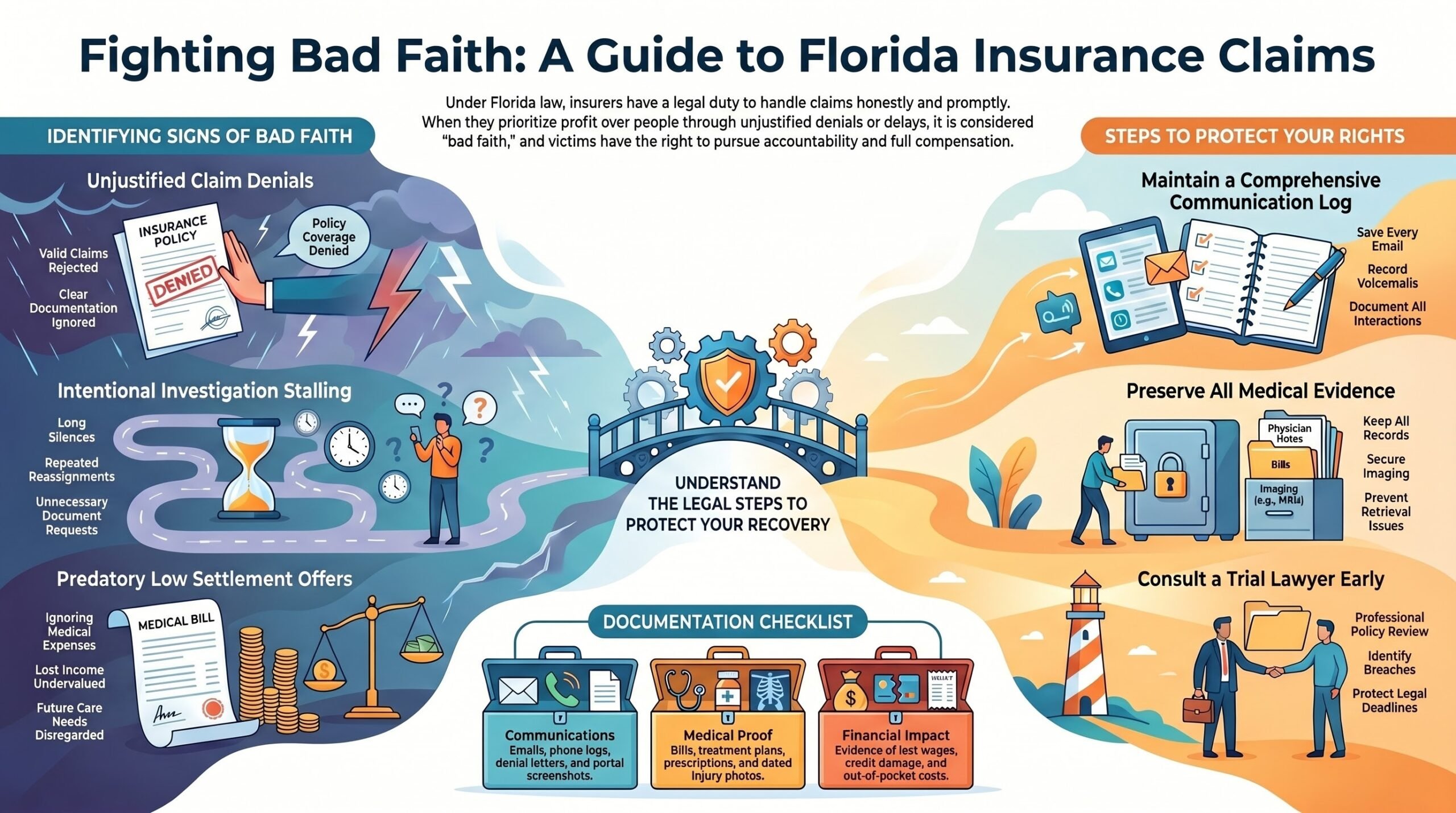
- Common bad faith includes unjustified denials, long investigation delays, lowball settlement offers, and misrepresenting exclusions, deadlines, or coverage duties.
- Strong claims rely on organized evidence such as policy language, emails, phone logs, denial letters, medical records, bills, photos, and timelines.
- After insurer misconduct, document every communication, preserve medical imaging and treatment records, and note delays, shifting explanations, and unanswered requests.
- A lawyer negotiates strategically, protects deadlines, prepares litigation when needed, and pursues remedies under Florida law for insurer bad faith.
How We Can Help With Your Fort Myers Bad Faith Insurance Injury Claim
Protecting an injured claimant’s rights in a bad faith insurance matter requires a careful review of the insurer’s conduct, the policy terms, and the full extent of the losses involved. Legal counsel can assist by organizing records, identifying unreasonable delay or denial, and presenting a clear account of damages with discipline and care.
Support may also include reviewing communications, preserving evidence, and coordinating with medical and financial professionals to ensure the claim reflects the claimant’s present and future needs. A focused approach to claims psychology helps anticipate how insurers evaluate pressure points, credibility, and exposure. That insight informs a negotiation strategy designed to pursue fair payment without losing sight of the human impact of the injury. When necessary, counsel can prepare the matter for litigation, protect deadlines, and address tactics that place profit over people.
This service-centered representation aims to relieve burdens, strengthen the claim, and help injured individuals move forward with stability and dignity.
Understanding Fort Myers Bad Faith Insurance Injury Cases


A clear understanding of Fort Myers bad faith insurance injury cases begins with the insurer’s legal duty to handle claims honestly, promptly, and with fair regard for the injured claimant’s interests. When that duty is ignored, the law may recognize conduct that places financial protection over fair treatment and meaningful recovery.
OUR CONSULTATIONSARE FREE
START YOUR FREE CASE REVIEW

These cases generally involve an injured person who expected proper evaluation of the claim, timely communication, and reasonable efforts toward resolution. Instead, the insurer’s actions may reflect unfairness in insurance, obstructing benefits that should have been considered in good faith. Florida law sets standards requiring careful investigation, balanced decision-making, and transparency regarding claims throughout the process. A bad-faith case consequently focuses on whether the insurer met those obligations, not simply on whether a dispute existed.
For people committed to helping others, understanding this framework supports informed advocacy, accountability, and protection for vulnerable claimants facing unnecessary delay, confusion, or diminished compensation after a serious injury.
Common Causes of Fort Myers Bad Faith Insurance
Several recurring practices often give rise to bad faith insurance disputes in Fort Myers, particularly when insurers place their own financial interests above fair claim handling. Common examples include unjustified claim denials, delayed claim investigations, and settlement offers that fall well below the value of the loss. In some cases, policy misrepresentation tactics further impair a claimant’s ability to obtain the benefits that should be available under the policy.
Unjustified Claim Denials
Denying a valid insurance claim without a reasonable basis is one of the clearest signs of bad faith conduct in Fort Myers injury cases. Such conduct may appear through unsupported insurance refusals, selective reading of policy language, or distorted evaluations of medical evidence and liability.


In many coverage disputes, an insurer may reject a claim despite clear documentation, witness statements, or policy terms that support payment. This behavior can place unnecessary financial pressure on injured people and their families, limiting access to care, transportation, and household stability. A proper claims process requires honesty, fairness, and a balanced review of all relevant facts. When an insurer chooses denial over good faith evaluation, the conduct may violate legal duties owed to policyholders and injured claimants seeking accountability, recovery, and meaningful assistance.
Delayed Claim Investigations
During the claims process, delayed investigations often signal bad faith when an insurer fails to act with reasonable diligence after receiving notice of an injury claim. Unnecessary requests, prolonged silence, and repeated reassignment of adjusters may prevent injured people from receiving timely support and guidance.
In Fort Myers cases, these delays can weaken evidence preservation, disrupt medical documentation, and create avoidable hardship for families trying to care for others. A responsible insurer should maintain investigative transparency, communicate next steps, and review available records without unreasonable postponement. When a carrier ignores witnesses, postpones inspections, or delays evaluating clear facts, its conduct may reflect a disregard for policy obligations. Careful legal review can help determine whether the delay resulted from an ordinary complication or from conduct inconsistent with fair claims-handling standards.
Low Settlement Offers
Although an insurer may acknowledge coverage, a low settlement offer can still indicate bad faith when it bears little relation to the documented injuries, medical expenses, lost income, or other provable damages in a Fort Myers claim. Such conduct may reflect lowball tactics designed to protect the insurer’s financial interests rather than fairly compensate the injured person. Adjusters may rely on incomplete evaluations, ignore clear evidence, or discount future care needs. In some cases, settlement pressure is applied when a claimant faces mounting bills and urgent family responsibilities. A service-minded community benefits when insurers evaluate claims honestly, promptly, and with respect for the harm suffered.
When an offer remains unreasonably low despite strong documentation, it may warrant further legal review to determine whether the insurer failed to act in good faith under Florida law.
Policy Misrepresentation Tactics
Unreasonably low offers are not the only warning sign of bad faith, as some insurers also use policy misrepresentation tactics to limit or avoid payment on valid Fort Myers injury claims. These practices may involve citing Hidden Exclusions that were never clearly disclosed, or relying on Ambiguous Definitions to reinterpret coverage after a loss has occurred. In some cases, adjusters present incomplete explanations of benefits, deadlines, or reporting duties, creating confusion for injured policyholders who are trying to act responsibly and protect their families.
Such conduct can delay medical care, strain household finances, and undermine trust in the claims process. A careful review of policy language, claim communications, and insurer conduct often reveals whether a denial was based on a legitimate dispute or a deliberate effort to evade contractual obligations and accountability.
Legal Rights of Fort Myers Bad Faith Insurance Injury Victims
In Fort Myers, injury victims facing bad-faith insurance practices retain important legal rights under Florida law, including the right to fair claim handling, timely communication, and an honest evaluation of covered losses. These rights arise from policy terms, common-law duties, and statutory protections designed to promote accountability and preserve trust in the claims process.
Florida law protects Fort Myers injury victims with rights to fair handling, timely communication, and honest evaluation of covered losses.
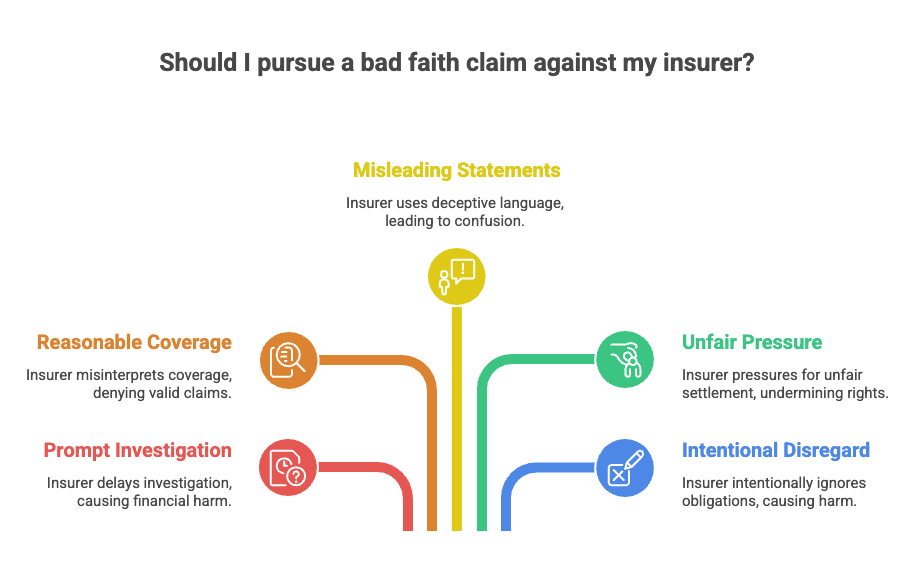
- Victims may expect insurers to investigate promptly, interpret coverage reasonably, and avoid misleading statements or unjustified delays.
- Florida law may allow recovery when bad faith conduct worsens financial harm, interferes with medical access, or undermines family stability.
- Courts may impose insurer penalties when evidence shows intentional disregard of obligations, unfair settlement pressure, or failure to act in good faith.
For people committed to caring for others, these rights support dignity, stability, and responsible recovery. They also encourage insurers to honor obligations fairly, which helps protect households and strengthens confidence in a system meant to serve the injured.
Steps to Take After a Fort Myers Bad Faith Insurance Injury
After a Fort Myers bad faith insurance injury, the claimant should document all communications with the insurer, including letters, emails, phone calls, and claim-related notes. Medical records, treatment plans, bills, and physician statements should also be preserved, as they may help establish the extent of the injury and the insurer’s conduct. Early consultation with a trial lawyer can provide direction on protecting evidence, meeting legal deadlines, and evaluating potential remedies.
Document All Communications
As a practical safeguard, every communication with the insurance company should be documented carefully, including phone calls, emails, letters, claim portal messages, and notes from in-person conversations. Clear records help establish what was said, when it was said, and whether the insurer responded fairly and promptly.
Detailed communication logs can reveal delays, shifting explanations, or unanswered requests that may suggest improper claim handling. Claimants should retain timestamped emails, save voicemails, take screenshots of portal updates, and write summaries immediately after each discussion. Each entry should identify the date, time, representative, and substance of the exchange. Organized documentation supports accountability and helps those assisting the injured person understand the claim history without confusion. When questions arise later, a complete record often provides the most reliable foundation for protecting the claimant’s interests and community trust.
Preserve Medical Evidence
Medical evidence should be preserved with the same care as communication records, because treatment documentation often provides the clearest proof of the nature, extent, and cause of an injury. Complete medical documentation may include emergency evaluations, physician notes, prescriptions, billing records, and discharge instructions, each showing how care progressed over time.
Careful organization also supports the integrity of the evidence chain. Individuals should keep copies of test results, follow written storage protocols for paper and digital files, and request imaging preservation for X-rays, MRIs, and scans before records become difficult to retrieve. Photographs of visible injuries, taken consistently and dated accurately, can further support the timeline. By promptly and respectfully preserving these materials, a claimant helps ensure that those responsible can be held accountable and that service to injured people remains grounded in reliable facts.
Consult A Trial Lawyer
In many Fort Myers bad-faith insurance injury matters, consulting a trial lawyer is a practical step once the insurer’s conduct raises concerns about delay, underpayment, misrepresentation, or unjustified denial. Counsel can review policy terms, claim records, and communications to identify whether legal duties were breached and what remedies may protect the injured person and family.
A trial lawyer also helps organize facts in a manner that supports service-minded decision-making. This includes preserving deadlines, advising on statements, and shaping a sound trial strategy if negotiations fail. Early courtroom preparation may increase leverage by demonstrating to the insurer that the claim will be presented clearly and responsibly. With objective guidance, injured individuals can pursue accountability while protecting resources needed for medical care, household stability, and the broader well-being of those who depend on them.
How a Fort Myers Bad Faith Insurance Injury Lawyer Can Help You
Confronting an insurance company that delays, underpays, or wrongfully denies a valid injury claim often requires legal intervention, particularly when bad faith practices place financial pressure on the injured party. A Fort Myers bad faith insurance injury lawyer evaluates insurer conduct, identifies violations, and protects the claimant’s right to fair treatment under Florida law.
When an insurer delays, underpays, or wrongfully denies a valid injury claim, legal action may be necessary to enforce fair treatment.
Such counsel provides focused assistance through:
- Policy audits that compare coverage language with the insurer’s actions and stated reasons for denial.
- Claim timelines that document delays, unanswered communications, and other patterns supporting evidence of bad faith.
- Strategic negotiations and, when necessary, litigation aimed at securing proper benefits and accountability.
Long-Term Effects of Fort Myers Bad Faith Insurance Injuries
Fort Myers bad-faith insurance injuries can have lasting consequences that extend well beyond the initial claim dispute. Many affected individuals face chronic pain challenges and significant emotional trauma, both of which can interfere with daily functioning, medical progress, and overall stability. Financial recovery strain also remains a serious concern, as delayed or denied benefits may increase treatment costs, reduce income, and complicate long-term rehabilitation.
Chronic Pain Challenges
Often, chronic pain becomes one of the most disruptive long-term effects of a serious injury, persisting long after initial treatment has ended and limiting a person’s ability to work, sleep, and perform ordinary daily tasks.
For many injured individuals, ongoing discomfort requires consistent pain management through medical care, physical therapy, medications, or adaptive routines that support daily functioning. Sleep disruption frequently follows, as persistent pain interferes with rest and slows physical recovery. Over time, reduced mobility, diminished stamina, and recurring flare-ups may hinder employment, household responsibilities, and community service. When insurers act in bad faith, delays or denials of necessary treatment can intensify these burdens and prolong suffering. A careful legal response may help secure access to appropriate care, protect financial stability, and support a more manageable recovery process for the injured person.
Emotional Trauma Impact
Persistent physical pain is frequently accompanied by emotional trauma that can continue long after the original injury and the insurance dispute began. Individuals may experience anxiety, sleep disturbance, irritability, and social withdrawal, especially when trust in fair treatment has been undermined. In serious cases, symptoms may resemble post-traumatic stress, including heightened vigilance, intrusive memories, and difficulty feeling safe.
These effects can also alter relationships with family, caregivers, and community supports. Attachment disruption may develop when a person becomes fearful of dependence, misunderstood by others, or emotionally distant as a means of coping. Over time, this strain can reduce participation in meaningful service, work, and daily responsibilities. Careful legal advocacy and informed support often help injured individuals restore stability, dignity, and confidence in their future, as well as long-term emotional resilience.
Financial Recovery Strain
In the aftermath of a bad faith insurance dispute, financial recovery may become a prolonged and destabilizing process for an injured person and the household that depends on that person’s income. Delayed payments, denied claims, and unresolved treatment costs often force families to absorb expenses that should have been covered promptly and fairly.
As obligations grow, Medical debt may accumulate alongside lost wages, transportation costs, and reduced work capacity. Credit damage can follow when bills remain unpaid, affecting housing options, borrowing ability, and long-term stability. Caregivers may also face difficult choices between treatment needs and necessary household expenses. For those committed to protecting vulnerable individuals, this financial strain reflects more than inconvenience. It can hinder rehabilitation, disrupt family security, and create lasting barriers to recovery, independence, and meaningful future planning for all.
Proving Liability in Fort Myers Bad Faith Insurance Injury Cases
Establishing liability in Fort Myers bad faith insurance injury cases requires clear proof that an insurer failed to meet its legal duty to handle a claim fairly, honestly, and with due regard for the insured’s interests. Courts examine policy terms, claim records, correspondence, expert opinions, and timelines to determine whether decisions were reasonable under the circumstances.
Claimants generally must show unreasonable delay, inadequate investigation, improper denial, or failure to settle when liability was evident and damages were likely to exceed coverage. Evidence often includes internal notes, adjuster communications, and departures from accepted industry standards. In some matters, burden shifting may arise after substantial evidence of misconduct is presented, requiring the insurer to justify its actions with credible support.
A causal nexus must also be demonstrated between the bad-faith conduct and the injury suffered, such as additional financial loss or exposure to excess judgment. Careful documentation helps decision-makers assess whether accountability is warranted and justice can better serve affected individuals and families.
Dealing With Insurance Companies After a Fort Myers Bad Faith Insurance Injury
After a suspected act of bad faith, communications with the insurance company should be handled with caution, precision, and a clear understanding of the claimant’s legal position. Every statement, document, and response may affect how the insurer evaluates the matter. Careful recordkeeping, respectful communication, and timely follow-up help protect the injured person’s interests while preserving facts that may later prove important.
Insurance representatives may use claim tactics that minimize losses, shift responsibility, or pressure acceptance of inadequate resolutions. For that reason, responses should remain factual, measured, and supported by available records. It is often wise to avoid speculation, broad authorizations, or informal conversations that create confusion. Sound negotiation strategies focus on documented harm, policy obligations, and consistent messaging. When advocates, families, and caregivers act with patience and discipline, they strengthen the ability to serve the injured person well. Thoughtful preparation encourages accountability and promotes fair treatment without unnecessary conflict or avoidable delay.
What to Expect During a Fort Myers Bad Faith Insurance Injury Claim Process
A Fort Myers bad-faith insurance injury claim process typically begins with formal claim filing, followed by close scrutiny of the insurer’s responses and deadlines. During this period, insurers may use delay tactics, making thorough evidence and documentation crucial to support the injured party’s position. As the matter develops, the claim may proceed toward settlement negotiations or, when necessary, litigation to pursue fair recovery.
Claim Filing Steps
Guiding through a bad faith insurance injury claim in Fort Myers typically begins with a careful review of the insurance policy, the injury-related losses, and the insurer’s communications to determine whether the carrier failed to handle the claim fairly. Counsel then organizes the initial paperwork, including medical records, bills, witness statements, repair estimates, and prior correspondence, to ensure the claim is supported by clear documentation.
Next, a formal notice or complaint may be prepared that identifies the policy provisions at issue, the facts of the injury claim, and the conduct believed to constitute bad faith. Attention to filing timelines is crucial, because missed deadlines can limit recovery or weaken leverage. Throughout this stage, accurate records, respectful communication, and careful follow-up help protect the injured person’s interests and support a resolution that promotes accountability and responsible claim handling.
Insurer Delay Tactics
Once a bad-faith injury claim has been submitted, one of the most common problems involves insurer delay tactics designed to slow the review, increase pressure on the injured claimant, or create excuses to limit payment. In Fort Myers cases, these tactics may include repeated requests for unnecessary updates, unexplained transfer of adjusters, and long gaps in communication that resemble Claims Ghosting. Some insurers also schedule Excessive Examinations, demanding duplicative interviews or medical reviews that add burden without advancing resolution. Such conduct can disrupt care, strain households, and frustrate those trying to act responsibly toward loved ones and the broader community.
A careful legal response often focuses on identifying unreasonable delay patterns, pressing for timely action, and protecting the claimant from pressure tactics that undermine fair treatment and meaningful recovery after serious injury.
Evidence And Documentation
In any Fort Myers bad faith insurance injury claim, evidence and documentation shape the course of the dispute by showing what the insurer knew, when it knew it, and how it responded to the claim. Relevant materials often include policy language, correspondence, adjuster notes, medical records, photographs, billing statements, and claim timelines.
Careful recordkeeping helps injured people and their advocates present a clear account of events and identify conduct that may reflect unfair handling. Phone logs, emails, denial letters, and internal communications can reveal inconsistencies, missing investigations, or shifting explanations. In some matters, forensic reports, expert opinions, and preserved digital records provide added support regarding damages, causation, or claim evaluation practices. Organized documentation also helps counsel assess credibility, protect the injured person’s interests, and promote consistent accountability throughout the claims process.
Settlement Or Litigation
With the factual record assembled, attention often turns to whether a Fort Myers bad-faith insurance injury claim can be resolved through settlement or must proceed to litigation. Settlement is often explored first because it may conserve resources, reduce delay, and help injured people secure support sooner. Counsel typically evaluates damages, policy conduct, and comparable outcomes before presenting demands. Effective Mediation Strategies can clarify positions, narrow disputes, and encourage responsible decision-making by insurers.
If settlement efforts fail, litigation may become necessary to compel disclosures, test defenses, and seek full accountability. The court process can involve pleadings, discovery, motions, and trial preparation, each requiring patience and disciplined advocacy. Attorneys may also study Jury Trends in the venue to assess risk, value, and presentation. The central objective remains fair recovery and principled service to harmed individuals.
Compensation for Fort Myers Bad Faith Insurance Injury Damages
Many bad faith insurance injury claims in Fort Myers involve compensation that extends beyond the value of the original covered loss, because an insurer’s improper delay, denial, or underpayment can cause separate and substantial financial harm. When misconduct worsens an injured person’s circumstances, Florida law may permit recovery for added losses that flow from the insurer’s conduct. This may include expenses tied to delayed medical care, damaged credit, increased debt, and other proven consequences.
In appropriate cases, compensation may also address Emotional distress caused by prolonged uncertainty, repeated misrepresentations, or unfair claim practices that place avoidable pressure on individuals and families. Courts may also consider Punitive damages when the insurer’s behavior reflects intentional misconduct or a reckless disregard for the rights of policyholders. Such remedies are designed not only to compensate the harmed party but also to encourage fair treatment, accountability, and responsible claims handling, thereby serving the broader community and protecting the public from similar misconduct.
Economic vs Non-Economic Damages in Fort Myers Bad Faith Insurance Cases
In Fort Myers bad-faith insurance cases, damages are generally divided into economic losses, which can be measured through financial records, and non-economic losses, which reflect less tangible harm. A proper evaluation often considers categories such as medical expenses, lost income, pain and suffering, and emotional distress, with each requiring a different method of valuation. Proving these damages in a claim typically depends on clear documentation, credible testimony, and evidence showing how the insurer’s conduct affected the claimant’s financial and personal well-being.
Economic Damage Categories
Under Florida bad faith law, economic damages generally refer to measurable financial losses caused by an insurer’s unreasonable delay, denial, or failure to settle a valid injury claim. In Fort Myers cases, these losses often include medical expenses that increased because payment was withheld, Lost wages from missed work, and Property loss tied to the underlying accident or claim.
Additional categories may include out-of-pocket costs for transportation, medications, rehabilitation, household assistance, and other necessary services obtained while benefits were wrongfully delayed. When coverage failures force injured people into debt, interest charges, collection costs, and other documented financial consequences may also be considered. Careful records, invoices, employment statements, and repair estimates help establish these damages. Clear proof supports accountability and promotes fair recovery for those seeking to protect their families and continue serving their communities.
Non-Economic Loss Valuation
Financial losses often provide the clearest starting point, yet bad faith insurance conduct can also cause non-economic harm that is no less real. In Fort Myers cases, these losses may include pain, emotional distress, loss of dignity, strained family relationships, and reduced enjoyment of daily life. Non-economic valuation seeks a fair measure of human impact, especially when delayed or denied benefits worsen suffering and dependence.
Several frameworks help explain this harm in a disciplined way. Pain valuation considers duration, intensity, and disruption of normal function. Quality-adjusted life concepts examine how health limitations diminish meaningful living. Caregiver burden refers to the stress placed on loved ones who step in to help. Hedonic regression offers an economic lens on lost enjoyment of life, supporting a fuller understanding of the consequences of injury for affected individuals and families.
Proving Damages In Claims
Clarity is essential when proving damages in a Fort Myers bad-faith insurance case because recovery often depends not only on showing wrongful insurer conduct but also on establishing the full extent of the harm it caused. Economic damages often include unpaid medical bills, rehabilitation costs, lost wages, medical liens, and future loss of earnings. These losses are typically supported through records, invoices, employment history, and expert opinions. Non-economic damages address pain, emotional distress, inconvenience, and diminished quality of life resulting from delayed or denied benefits. In bad faith matters, the claimant must connect the insurer’s conduct to both financial strain and personal suffering.
Careful documentation helps courts and juries understand how misconduct affected treatment decisions, household stability, and long-term recovery. Thorough proof strengthens accountability and supports fair compensation for those harmed.
When a Fort Myers Bad Faith Insurance Injury Case Goes to Trial vs Settlement
In many Fort Myers bad faith insurance injury cases, the path toward settlement or trial depends on the strength of the evidence, the insurer’s conduct, and the extent of the claimant’s damages. Settlement often becomes appropriate when documentation clearly shows unreasonable delay, denial, or underpayment, and when both sides recognize the value of resolving harm efficiently for the claimant and family.
Trial may become necessary when the insurer refuses accountability, disputes causation, or minimizes serious losses despite substantial proof. In those situations, counsel evaluates Jury dynamics, witness credibility, and the likelihood that jurors will understand how the insurer’s conduct affected recovery and stability. Settlement leverage often increases after depositions, expert disclosures, and judicial rulings clarify weaknesses in the defense. Even so, a service-minded approach remains important because strategic decisions should protect the injured person’s long-term well-being, conserve resources when possible, and pursue a courtroom verdict only when fair compensation cannot otherwise be achieved.
The Statute of Limitations for Fort Myers Bad Faith Insurance Injury Cases
Under Florida law, the statute of limitations can determine whether a Fort Myers bad faith insurance injury claim may proceed at all, making early legal evaluation vital. These statute limits establish the time allowed to bring a civil action, and missing applicable filing deadlines can bar recovery regardless of the claim’s underlying worth.
In bad faith matters, the controlling period may depend on the nature of the action, the policy involved, and when the cause of action legally accrued. Courts may examine when coverage obligations were resolved, when damages became fixed, and whether required pre-suit steps were completed. Because these rules affect accountability and the ability to secure resources for injured people, careful attention to dates serves both legal compliance and community-minded responsibility. Accurate recordkeeping, prompt notice, and preservation of claim materials can help protect a claimant’s position. A timely, well-documented case is often indispensable to fairly advancing a claim under Florida law.
When to Contact a Fort Myers Bad Faith Insurance Injury Lawyer
At the earliest sign that an insurer may be delaying, undervaluing, or unreasonably denying a valid injury claim, consultation with a Fort Myers bad faith insurance injury lawyer may become essential. Concern often arises when communication becomes inconsistent, requested records seem repetitive, or settlement offers fail to reflect documented losses and ongoing care needs.
Early intervention can help identify problematic claim handling before avoidable harm expands. A timely review may support Claim preservation by organizing correspondence, policy language, medical records, and deadlines clearly. Contact may also be appropriate after sudden claim closure, unexplained payment delays, shifting coverage explanations, or pressure to accept inadequate terms.
For individuals focused on protecting family well-being and serving others responsibly, prompt legal guidance can help maintain order during a stressful process. Acting when warning signs first appear may reduce confusion, preserve important evidence, and create a more reliable path toward fair claim treatment and overall financial stability.
Why You Need an Experienced Fort Myers Bad Faith Insurance Injury Lawyer
When an insurer resists a valid injury claim, an experienced Fort Myers bad faith insurance injury lawyer can provide the focused analysis needed to determine whether the conduct reflects ordinary dispute or actionable bad faith. That knowledge matters because insurers often rely on delay, partial investigation, or misrepresentation in ways that are difficult for injured people to identify and challenge on their own.
A seasoned lawyer helps protect both the claimant and the broader interests of fairness by gathering records, evaluating policy duties, and measuring the insurer’s actions against Florida standards. Through local proficiency, counsel understands regional insurers, court expectations, and procedural demands that may affect an injury case. Strong client advocacy also helps keep the matter centered on accountability, timely communication, and proper valuation of losses. In service-oriented communities, this legal support can promote stability, preserve resources for recovery, and encourage insurers to honor obligations with the good faith the law requires for everyone involved.
How to Choose the Right Fort Myers Bad Faith Insurance Injury Lawyer for Your Case
Selecting the right Fort Myers bad faith insurance injury lawyer requires more than confirming that a firm handles injury matters, because bad faith disputes often involve careful review of policy language, claim history, insurer communications, and Florida-specific legal duties. A thoughtful selection process should focus on experience with delayed payments, unfair denials, undervalued claims, and settlement misconduct.
Prospective clients should compare firms through Attorney interviews and Local consultations, paying attention to how clearly each lawyer explains strategy, deadlines, evidence needs, and possible outcomes. A suitable lawyer will demonstrate familiarity with Florida insurance standards, courtroom procedure, and negotiation tactics, while also showing respect for the injured person’s goals and family responsibilities. It is also wise to review credentials, prior case results, professional reputation, and communication practices. When a lawyer offers consistent guidance, timely responses, and a service-minded approach, that representation may better support accountability, financial recovery, and peace of mind during a difficult claims process.
About The Law Offices of Anidjar & Levine
Client-focused representation remains a defining feature of The Law Offices of Anidjar & Levine, a firm known for assisting injured people through complex insurance disputes and related personal injury matters in Fort Myers. The firm emphasizes responsive communication, careful case preparation, and practical guidance for individuals facing stressful legal and financial uncertainty after serious accidents or insurer misconduct.
Its approach reflects a service-minded philosophy, centered on helping clients pursue fair treatment and meaningful recovery under Florida law. Drawing on the firm’s extensive history, the attorneys and staff are presented as committed advocates who understand both negotiation strategy and the demands of litigation. Publicly available client testimonials often highlight professionalism, accessibility, and diligence, qualities many families value when seeking trustworthy counsel.
The firm also offers support with documentation, insurer correspondence, and damage evaluation, which can ease burdens during recovery. Within the Fort Myers community, this reputation contributes to its standing as a resource for those facing bad-faith insurance challenges.
Frequently Asked Questions
Can I Change Lawyers During an Ongoing Bad Faith Insurance Case?
Yes, a person may change counsel during an ongoing bad faith insurance case. The client generally has the right to choose representation that better serves the claim and those affected by the outcome. However, timing matters, because a shift can delay proceedings or affect strategy. Fee disputes may also arise between former and new attorneys. Before making changes, careful review of contracts, deadlines, and case status is usually crucial.
How Are Attorney Fees Typically Structured in Bad Faith Insurance Claims?
Attorney fees in bad faith insurance claims are often structured through contingency arrangements, where counsel receives a percentage of any recovery, or through hourly billing, where clients pay for time spent on the matter. Some firms may use hybrid models depending on risk, intricacy, and expected duration. A careful review of the fee agreement helps guarantee transparency, responsible stewardship of resources, and alignment between legal strategy and the claimant’s broader interests.
Will My Bad Faith Insurance Claim Remain Confidential?
A bad faith insurance claim may remain confidential in part, but not always in full. Client confidentiality generally protects communications with counsel, while court filings and hearings may become public. Settlement secrecy is possible when the parties agree to nondisclosure terms, though some facts may still be disclosed by law or due to litigation needs. Careful legal guidance helps protect sensitive information while advancing a claim in a responsible, service-minded manner.
Can a Denied Business Insurance Claim Involve Bad Faith Practices?
Yes, a denied business insurance claim can involve bad-faith practices when an insurer unreasonably delays, misrepresents policy terms, or ignores clear evidence of coverage. Such conduct often appears in coverage disputes where the carrier prioritizes its interests over fair claim handling. Careful documentation audits may reveal inconsistent explanations, inadequate investigations, or unjustified denials. Those seeking to protect employees, customers, and operations should have the claim reviewed promptly by qualified legal counsel.
How Long Should I Keep Records Related to My Insurance Dispute?
Records related to an insurance dispute should generally be kept for at least five to seven years after final resolution, and longer if litigation, tax issues, or ongoing medical care remain possible. Careful document retention supports an accurate claims timeline and helps protect all parties involved. A prudent approach includes preserving policies, letters, emails, bills, estimates, photographs, and settlement documents because later review may be necessary to properly serve affected individuals.
—————————
Bad faith insurance practices can jeopardize an injury victim’s financial stability and delay necessary recovery. In Fort Myers, a knowledgeable attorney can evaluate the insurer’s conduct, protect the claimant’s rights, and pursue the compensation permitted by law.
With careful documentation, timely action, and experienced legal guidance, injured individuals are better positioned to challenge unfair treatment, especially after working with a Fort Myers Car Accident Lawyer.
The Law Offices of Anidjar and Levine provides focused representation to those confronting bad-faith insurance issues after a serious injury.