

The Law Offices of Anidjar and Levine can evaluate whether a healthcare provider departed from the applicable standard of care and caused a preventable injury in a medical malpractice case involving misdiagnosis or failure to diagnose.The review may include medical records, diagnostic testing, communications, treatment timelines, expert opinions, and evidence of additional expenses or lasting harm. Florida procedural requirements and filing deadlines require prompt attention. A West Palm Beach Personal Injury Lawyer can help preserve evidence, assess liability and damages, communicate with insurers, and determine whether negotiation or litigation is appropriate.
Main Takeaways
- A West Palm Beach medical malpractice lawyer can evaluate whether misdiagnosis or delayed diagnosis breached Florida’s applicable standard of care.
- Liability generally requires proving that a healthcare provider’s negligence caused additional injury, the progression of an illness, reduced recovery, or other compensable harm.
- Medical records, diagnostic images, test results, prescriptions, communications, and timelines can help establish what providers knew and when they knew it.
- Qualified medical experts often assess whether symptoms, abnormal findings, medications, referrals, and follow-up were appropriately addressed.
- Potential damages may include additional treatment costs, lost income, disability, pain, and other documented losses.


How We Can Help With Your West Palm Beach Medical Malpractice Misdiagnosis & Failure to Diagnose Injury Claim
When a medical misdiagnosis or failure to diagnose causes harm, an experienced West Palm Beach medical malpractice lawyer can investigate whether the healthcare provider’s conduct fell below the applicable standard of care. The review may begin with a confidential consultation concerning symptoms, treatment, communications, and subsequent medical events.
A legal team can help preserve relevant records, obtain diagnostic images, and identify qualified medical professionals who can evaluate the care provided. Second opinion consults may clarify whether warning signs, test results, or accepted treatment steps were overlooked. Counsel can also assess how the alleged error affected the patient’s condition, treatment needs, employment, and daily life.
Because outcomes of missed diagnoses vary, each claim requires careful evaluation of causation and damages rather than assumptions based solely on an unfavorable result. If evidence supports a claim, the lawyer may communicate with insurers, organize supporting documentation, and pursue an appropriate resolution. The process is intended to protect the individual’s interests while promoting accountability and access to needed care.
OUR CONSULTATIONSARE FREE
START YOUR FREE CASE REVIEW

Understanding West Palm Beach Medical Malpractice Misdiagnosis & Failure to Diagnose Injury Cases
West Palm Beach medical malpractice misdiagnosis and failure to diagnose cases generally involve allegations that a healthcare provider failed to identify a condition, interpret medical information correctly, or initiate appropriate treatment within the required standard of care. These matters require a careful assessment of the patient’s medical history, symptoms, examinations, test results, communications, and subsequent treatment.
A claim typically examines whether the provider acted as a reasonably careful professional would have under comparable circumstances and whether the alleged lapse caused additional injury, reduced recovery prospects, or unnecessary treatment. Symptom timeline building can organize when complaints appeared, how they progressed, and when providers received relevant information. This chronology may help clarify whether a delayed response contributed to harm.
An Independent medical review can evaluate the records, explain the applicable medical issues, and address causation. Because these cases involve individualized facts and professional standards, qualified legal and medical guidance helps injured patients and their families pursue accountability while supporting informed decisions about available remedies.
Common Causes of West Palm Beach Medical Malpractice Misdiagnosis & Failure to Diagnose
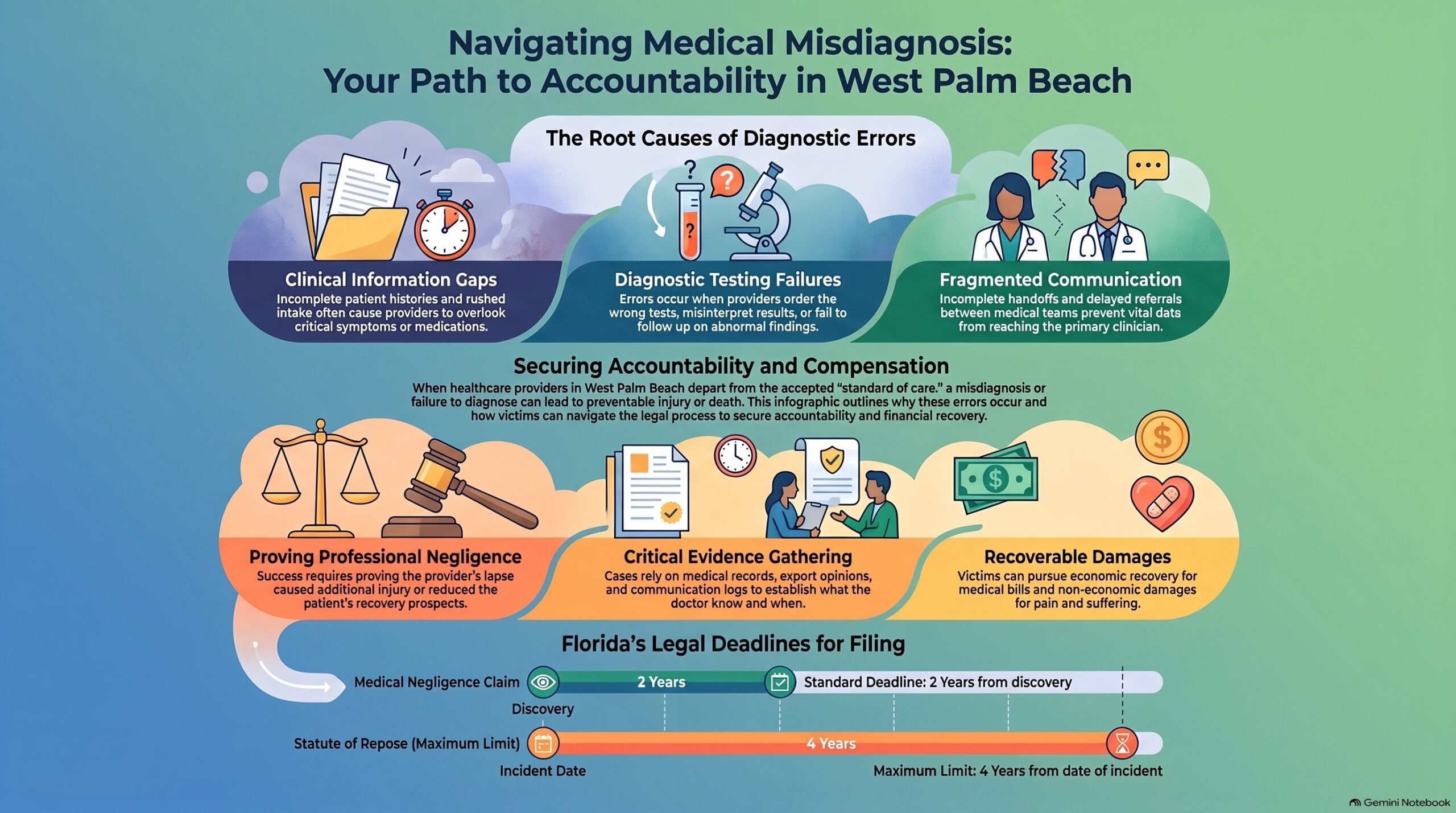
Common causes of misdiagnosis and failure to diagnose include incomplete patient histories, diagnostic testing errors, and inaccurate interpretation of symptoms. Communication breakdowns among healthcare providers can further prevent crucial information from reaching those responsible for evaluation and treatment. These failures may delay appropriate care and significantly delay patient recovery.
Incomplete Patient History
Incomplete patient history can prevent a healthcare provider from identifying critical symptoms, prior diagnoses, medications, allergies, or relevant family medical conditions. When intake questions are rushed, records are unavailable, or a patient cannot communicate complete information, clinically important context may be overlooked. Providers may also fail to clarify when symptoms began, how they progressed, or whether similar concerns occurred previously. A careful review of the medication timeline can identify recent prescriptions, dosage changes, missed doses, and possible interactions that may support a patient’s presentation.
Likewise, symptom documentation support can help patients and caregivers accurately record severity, frequency, triggers, and changes over time. Clear communication and thorough recordkeeping allow healthcare professionals to evaluate concerns responsibly. If an incomplete history contributes to a missed condition or delayed diagnosis, legal counsel may examine whether reasonable information-gathering practices were followed.
Diagnostic Testing Errors
Diagnostic testing errors can occur when a provider orders the wrong test, misunderstands its purpose, or fails to respond appropriately to an abnormal result. Other root causes of misdiagnosis include collecting inadequate specimens, using outdated equipment, overlooking quality-control issues, or failing to compare current findings with prior results. Delayed test results may prevent timely treatment, particularly when a serious condition requires urgent evaluation. Errors can also arise when a provider fails to follow up on a pending study, fails to communicate significant findings, or incorrectly assumes that a negative result excludes disease. Proper testing requires selecting an appropriate study, documenting the clinical reason, reviewing results promptly, and arranging additional evaluation when necessary. Patients may be harmed when these responsibilities are not met, especially if a treatable condition progresses.
Misinterpretation of Symptoms
When symptoms are misinterpreted, a healthcare provider may attribute a patient’s complaints to a less serious condition while overlooking signs of a potentially harmful disease. This error can occur when symptoms resemble common illnesses, develop gradually, or vary from one examination to another. Providers should evaluate symptom timelines, consider the patient’s medical history, and recognize patterns that may indicate a serious underlying disorder. Failure to appreciate the significance of pain, fatigue, neurological changes, or other warning signs may delay appropriate diagnosis and treatment. Misinterpretation can also cause providers to dismiss persistent complaints without adequately reassessing the working diagnosis. The resulting misdiagnosis consequences may include disease progression, avoidable complications, additional treatment, and reduced recovery prospects. Careful clinical judgment helps protect patients and support timely intervention.
Communication Breakdowns
Communication breakdowns can compound the harm caused by misinterpreted symptoms by preventing important clinical information from reaching the appropriate provider. In West Palm Beach medical settings, incomplete handoffs, delayed referrals, and unclear instructions may lead to significant symptoms or test results being overlooked. A patient’s concerns can also become fragmented when multiple professionals rely on different records or assumptions about who will communicate the next step. Effective patient follow-up requires clearly assigned responsibilities, timely outreach, and documentation of unresolved symptoms. Inadequate provider charting may further obscure changes in a patient’s condition, medication history, or prior evaluations. When communication failures contribute to a delayed or incorrect diagnosis, the resulting harm may include disease progression, unnecessary treatment, and reduced opportunities for recovery. Careful coordination helps protect patients and support accountability.
Don’t Wait. Call Our Florida Personal Injury Lawyers Now!


Legal Rights of West Palm Beach Medical Malpractice Misdiagnosis & Failure to Diagnose Injury Victims
West Palm Beach patients injured by a medical misdiagnosis or failure to diagnose may have legal rights when a healthcare provider’s conduct falls below the accepted standard of care. A claim may seek compensation for additional treatment, lost income, disability, pain, and other documented losses. Legal evaluation can also address Patient consent issues and Doctor recordkeeping errors when they affect proof of negligence or harm.
Potential rights may include:
- Requesting complete medical records and diagnostic reports
- Consulting an independent medical expert about the injury
- Preserving evidence, including prescriptions and billing statements
- Pursuing damages through negotiation or a civil lawsuit
- Observing Florida’s medical malpractice filing deadlines
Victims and families may benefit from promptly discussing the matter with a qualified medical malpractice attorney. Counsel can assess whether admissible evidence supports a claim, identify responsible parties, and explain procedural requirements without making promises about recovery. Serving injured patients requires careful investigation, respectful communication, and attention to the individual’s medical, financial, and personal needs throughout the legal process.
Why Do West Palm Beach Medical Malpractice Misdiagnosis & Failure to Diagnose Injuries Happen?
Misdiagnosis and failure to diagnose injuries may occur when a healthcare provider overlooks significant symptoms, misinterprets test results, or does not obtain and review an adequate medical history. Diagnostic delays can include incomplete examinations, inadequate follow-up, communication failures, and excessive reliance on preliminary assumptions. Clinician judgment errors may arise when symptoms resemble several conditions, a provider discounts a patient’s reported concerns, or a serious illness presents atypically. In some cases, testing is ordered but results are not reviewed promptly, documented accurately, or communicated to the appropriate practitioner.
Staffing shortages, high patient volume, fragmented medical records, and insufficient coordination among experts can further increase the risk of missed diagnoses. Language barriers and limited access to prior records may also obscure important information. These circumstances can allow an injury or disease to worsen before appropriate treatment begins. The precise cause depends on the medical facts, applicable standards, and surrounding circumstances.
What Should You Do After a West Palm Beach Medical Malpractice Misdiagnosis & Failure to Diagnose Injury?
After a suspected misdiagnosis or failure to diagnose injury, the patient should seek immediate medical care to address ongoing risks and prevent further harm. The patient should also document medical history, symptoms, treatments, diagnoses, and related expenses while preserving relevant records. Consulting a qualified West Palm Beach medical malpractice lawyer can help evaluate the circumstances and protect potential legal rights.
Seek Immediate Medical Care
Prompt medical attention should be obtained when a patient suspects that a delayed, missed, or incorrect diagnosis caused an injury or allowed a medical condition to worsen. A patient experiencing urgent symptoms should call emergency services or visit an emergency department rather than waiting for a routine appointment. Even when symptoms appear manageable, prompt evaluation by an appropriate clinician can identify complications and support safer treatment. A second opinion may help clarify whether additional testing, clinician care, or corrective treatment is necessary. Patients should request medical documentation concerning current findings, recommended care, and any changes in condition. This information may assist in a later record review, but immediate health needs remain the priority. Following qualified medical advice and attending scheduled appointments can reduce further harm while preserving opportunities for recovery.
Document Your Medical History
Because medical records may reveal how a condition developed and how providers responded, the patient should maintain a detailed account of symptoms, appointments, diagnoses, treatments, medications, test results, and changes in health. A clear symptom timeline should identify when symptoms began, whether they worsened, and how each intervention affected the condition. The patient should save discharge instructions, prescriptions, laboratory reports, imaging results, and billing statements in an organized file. Notes should include each doctor’s contact information, the concerns reported, advice received, referrals made, and follow-up instructions. Family members or caregivers can help record observations when illness interferes with writing or memory. The patient should request copies of relevant records and preserve messages, portal communications, and photographs showing visible changes. Accurate documentation can support continuity of care and help clarify what occurred.
Consult A Malpractice Lawyer
When a misdiagnosis or failure to diagnose may have caused an injury, consulting a West Palm Beach medical malpractice lawyer can help determine whether the healthcare provider’s conduct violated the applicable standard of care. A lawyer can review medical records, diagnostic reports, treatment timelines, and statements from relevant witnesses to assess potential negligence and resulting harm. Prompt legal guidance may also help preserve evidence, identify filing deadlines, and prevent damaging communications with insurers or healthcare providers. Individuals should continue necessary medical care and discuss Second opinion options with qualified physicians, particularly when symptoms persist or worsen. Maintaining early symptom tracking, including dates, changes, appointments, and treatments, may clarify the progression of harm. A malpractice lawyer can explain available remedies and help pursue accountability while protecting the individual’s interests.
Critical Evidence in a West Palm Beach Medical Malpractice Misdiagnosis & Failure to Diagnose Injury Case
Clinical evidence can establish what providers knew, when they knew it, and whether their response met the applicable standard of care. A case may rely on medical records, diagnostic test results, expert medical opinions, and documented communications to connect the alleged error with the resulting injury.
Careful preservation and review of these materials can clarify the strength and scope of the claim.
- Complete medical records, including histories, notes, orders, referrals, and treatment plans
- Imaging, laboratory reports, pathology findings, and other diagnostic test results
- Expert opinions addressing the standard of care, breach, causation, and damages
- Messages, emails, call logs, portal communications, and written instructions
- Evidence of delayed treatment, worsening symptoms, additional procedures, and related losses
Medical Records
Medical records often provide the foundation for evaluating a West Palm Beach medical malpractice claim involving misdiagnosis or a failure to diagnose. They may show the patient’s reported symptoms, medical history, physical examinations, diagnoses, treatment decisions, and changes in condition over time. Electronic health records can also reveal when information was entered, revised, or reviewed, helping establish the sequence of clinical events. Patient communication logs may document telephone calls, portal messages, appointment requests, reported worsening symptoms, and instructions provided by office personnel. Attorneys and medical professionals may compare these entries with applicable standards of care to identify overlooked warnings or delayed responses. Preserving complete records is important because missing, altered, or incomplete documentation can affect how the claim is evaluated and how patient concerns are understood.
Diagnostic Test Results
Diagnostic test results can provide objective evidence in a West Palm Beach medical malpractice case involving misdiagnosis or failure to diagnose. Laboratory reports, imaging studies, pathology findings, and cardiac monitoring may show what clinicians knew, or reasonably should have recognized, when treatment decisions were made. Comparing results with documented symptoms can reveal delayed testing, overlooked abnormalities, or an unexplained failure to communicate urgent findings. Test dates also help establish whether patient neglect caused a preventable progression of illness. Results may clarify whether a patient received wrongful consent because material risks, alternatives, or diagnostic concerns were not disclosed. Medication review records can identify contraindications or interactions that should have prompted additional testing. Documentation of follow-up care may show whether abnormal findings were monitored, repeated, or appropriately addressed before causing further injury or complications.
Expert Medical Opinions
When a misdiagnosis or failure to diagnose is alleged, expert medical opinions help determine whether the healthcare provider’s conduct departed from the applicable standard of care. Qualified physicians may examine the patient’s records, reported symptoms, examination findings, diagnostic test results, and treatment decisions. Their analysis can address what a reasonably careful provider would have recognized, ordered, or communicated under comparable circumstances. This expert review may also evaluate whether an earlier diagnosis or intervention probably would have improved the outcome. Medical experts rely on accepted Diagnostic standards, current clinical knowledge, and relevant malpractice research rather than hindsight alone. Their opinions can clarify intricate medical issues for a court or jury. Attorneys may use these findings to develop case strategy, identify necessary evidence, and present the patient’s experience accurately and responsibly.
Communication Documentation
Clear, contemporaneous communication records can provide key evidence in a West Palm Beach misdiagnosis or failure-to-diagnose case. Telephone notes, portal messages, emails, discharge instructions, and appointment records may show what symptoms were reported, when concerns were raised, and how healthcare providers responded. These materials can support patient timeline reconstruction by establishing the sequence between complaints, examinations, testing, referrals, and treatment decisions. Witness communication logs, including statements from family members or caregivers who contacted an office, may corroborate that important information reached the medical team. Documentation can also reveal delayed callbacks, inconsistent advice, missed follow-up, or failures to communicate test results. A legal professional can organize these records, compare them with the medical chart, and identify discrepancies relevant to whether reasonable providers promptly recognized and addressed a developing condition.
Long-Term Effects of West Palm Beach Medical Malpractice Misdiagnosis & Failure to Diagnose Injuries
Misdiagnosis or failure to diagnose may result in chronic health complications that require continuing treatment and limit a person’s daily functioning. These injuries can also create ongoing medical expenses, including medication, rehabilitation, expert care, and future procedures. In addition, prolonged illness and uncertainty may contribute to significant emotional and psychological trauma.
Chronic Health Complications
Chronic health complications can arise when a medical misdiagnosis or failure to diagnose allows a serious condition to progress without appropriate recovery. Patients may develop Chronic pain, reduced mobility, organ damage, or lasting neurological impairment, depending on the underlying illness and the length of treatment delays. These consequences can interfere with employment, family responsibilities, and personal independence. They may also require rehabilitation costs, assistive services, or changes to daily routines, even after recovery begins. A diminished quality of life can affect physical functioning and emotional well-being, creating challenges that extend beyond the initial injury. For individuals and families seeking accountability, medical records, expert evaluations, and evidence of the missed diagnosis may help clarify whether negligent care contributed to the continuing complications and resulting limitations.
Ongoing Medical Expenses
When a misdiagnosis or failure to diagnose causes a condition to worsen, ongoing medical expenses may continue long after the initial treatment. Patients may require additional consultations, diagnostic testing, prescription medications, rehabilitation, assistive equipment, or corrective procedures. Ongoing treatment costs can also include transportation, home health services, and modifications needed to support daily care. These expenses may be difficult to predict when complications become chronic or require periodic monitoring. Medical billing disputes may arise when insurers deny necessary services, assign responsibility incorrectly, or challenge whether treatment relates to the original medical error. Detailed records, itemized bills, treatment plans, and provider statements can help document the financial impact. A qualified attorney may assess recoverable expenses and pursue compensation designed to protect the patient’s access to appropriate future recovery.
Emotional And Psychological Trauma
Emotional and psychological trauma may develop after a medical misdiagnosis or failure to diagnose allows an illness or injury to worsen. Patients may experience anxiety, depression, anger, sleep disruption, or persistent fear about future medical care. Some individuals also struggle with diminished independence, strained relationships, and reduced confidence in healthcare professionals. These effects can continue long after physical treatment ends, particularly when complications require invasive procedures, extended rehabilitation, or permanent lifestyle changes. Trauma coping may involve counseling, support groups, medication management, and structured strategies for restoring daily stability. Access to appropriate mental health support can help patients and families process what occurred and address continuing symptoms. Documentation of psychological treatment, diagnoses, and functional limitations may also assist in evaluating the full scope of damages associated with a malpractice claim.
Don’t Wait. Call Our Florida Personal Injury Lawyers Now!
Proving Liability in West Palm Beach Medical Malpractice Misdiagnosis & Failure to Diagnose Injury Cases
Proving liability in a West Palm Beach medical malpractice misdiagnosis or failure-to-diagnose case requires evidence that a healthcare provider departed from the accepted standard of care and that the departure caused or worsened the patient’s injury. The burden of proof generally rests with the injured patient, who must establish each required element through competent evidence. Medical records, diagnostic reports, treatment histories, and testimony from qualified medical experts may help show what a reasonably careful provider would have recognized or done under similar circumstances.
The causation elements require connecting the negligent delay, missed diagnosis, or incorrect diagnosis to a specific harm, such as disease progression, additional treatment, reduced recovery prospects, or increased medical expenses. A case may also require proof of damages, including physical impairment, lost income, and necessary future care. A careful review of the timeline can clarify whether earlier diagnosis or treatment would likely have produced a better outcome for the patient.
Dealing With Insurance Companies After a West Palm Beach Medical Malpractice Misdiagnosis & Failure to Diagnose Injury
After a West Palm Beach medical malpractice misdiagnosis or failure-to-diagnose injury, insurance companies may investigate the claim, request extensive medical records, and evaluate whether the provider’s conduct caused the reported harm. Their representatives may seek recorded statements, employment information, prior health records, and authorization forms. Claimants should understand that seemingly routine answers can be interpreted narrowly or used to minimize responsibility. A person pursuing compensation may benefit from directing communications through qualified counsel, preserving relevant documents, and avoiding speculation about medical history or future losses.
Insurers may emphasize preexisting conditions, alternative causes, or gaps in treatment to challenge the claim’s value. The Settlement timeline can vary according to record collection, expert review, negotiations, and coverage issues. Insurer denial letters should be retained and reviewed carefully because they may identify disputed facts, policy defenses, or procedural deadlines. Prompt attention can help protect the injured person’s interests while supporting a fair resolution and continued access to necessary care.
What to Expect During a West Palm Beach Medical Malpractice Misdiagnosis & Failure to Diagnose Injury Claim Process
The claim process typically begins with an initial case evaluation to assess whether the medical provider’s conduct may constitute negligence. Counsel then gathers medical records and other evidence, negotiates with insurers, and evaluates the claim’s potential value. If settlement efforts fail, preparation may proceed toward trial, including witness development and presentation of supporting evidence.
Initial Case Evaluation
When a potential misdiagnosis or failure-to-diagnose claim is first evaluated, a West Palm Beach medical malpractice lawyer examines whether the healthcare provider departed from the applicable standard of care and whether that error caused a treatable injury. The initial consultation typically addresses the patient’s symptoms, diagnoses, treatment decisions, worsening condition, and resulting losses. Counsel may conduct an expert timeline analysis to identify crucial decision points and assess whether earlier recognition could have changed the outcome. The lawyer also explains potential deadlines, including Florida’s medical negligence limitations rules, and considers whether qualified medical support may be required. An evidence preservation checklist can help protect communications, appointment details, and other case-related information without duplicating the later medical-evidence-gathering process. This evaluation allows the legal team to determine whether pursuing the claim responsibly may support accountability and patient protection.
Gathering Medical Evidence
Building on the initial evaluation, gathering medical evidence allows a West Palm Beach medical malpractice lawyer to reconstruct the patient’s care and assess whether a misdiagnosis or failure to diagnose caused the claimed injury. The legal team may obtain hospital charts, physician notes, test results, imaging, prescriptions, referral records, and billing documentation. Medical records audits can identify missing entries, inconsistent statements, delayed follow-up, or results that were not communicated. Timeline reconstruction then organizes symptoms, appointments, testing, diagnoses, and treatment into a clear sequence. The lawyer may request authorizations, consult qualified medical professionals, and compare the documented care with accepted standards. Family observations, employment records, and evidence of subsequent treatment may also clarify the injury’s impact. Careful evidence collection supports an accurate, compassionate evaluation of the claim.
Negotiating With Insurers
Although insurers may request extensive documentation, their primary objective is to evaluate liability and limit the amount paid on a medical malpractice claim. During negotiations, the insurer may review medical records, expert opinions, employment information, and treatment expenses. A representative could question whether the provider’s conduct caused the injury or whether an earlier diagnosis would have changed the outcome. Strong causation evidence can address these concerns by linking the delayed or incorrect diagnosis to measurable harm. Counsel may present damages calculations covering additional medical care, lost income, reduced earning capacity, rehabilitation, and other legally recognized losses. Settlement discussions often involve written demands, counteroffers, and requests for clarification. An attorney can manage communications, protect confidential information, and assess whether proposed compensation fairly reflects the claimant’s documented injuries and continuing needs.
Preparing For Trial
If negotiations do not resolve a West Palm Beach medical malpractice misdiagnosis or failure to diagnose claim, the case may proceed to trial, where the claimant must prove that the healthcare provider breached the applicable standard of care and caused legally compensable harm. Counsel typically organizes medical records, expert opinions, imaging, billing documentation, and witness testimony before presenting the case. Voir preparation helps identify potential juror conflicts, biases, and relevant experiences during jury selection. A carefully developed trial strategy addresses how evidence will establish negligence, causation, and damages while anticipating defenses raised by the provider or insurer. Through evidence testing, attorneys evaluate the reliability, admissibility, and clarity of proposed exhibits and testimony. The claimant may testify, answer cross-examination, and await the jury’s decision after closing arguments and judicial instructions.
Compensation for West Palm Beach Medical Malpractice Misdiagnosis & Failure to Diagnose Injury Damages
Compensation in a West Palm Beach medical malpractice case involving misdiagnosis or failure to diagnose may address the physical, emotional, and financial harm caused by delayed or improper medical care. A claimant generally must establish that the healthcare provider breached the applicable standard of care and that this error caused additional injury, worsened disease, or reduced recovery prospects. Causation evidence may include medical records, diagnostic timelines, expert opinions, and testimony from treating physicians. A legal evaluation can also identify responsible parties, applicable filing deadlines, and available sources of recovery.
Insurers may attempt to minimize exposure through common insurance tactics, including disputing negligence, attributing harm to a preexisting condition, questioning treatment decisions, or proposing an early settlement before the injury’s full consequences are known. A careful review helps protect the patient’s interests and supports an informed demand. Counsel may coordinate medical documentation and communications so that injured individuals and families can pursue accountability while preserving their ability to make responsible decisions.
Economic vs Non-Economic Damages in West Palm Beach Medical Malpractice Misdiagnosis & Failure to Diagnose Cases
Economic damages may include medical expenses, lost income, rehabilitation costs, and other measurable financial losses resulting from a misdiagnosis or delayed diagnosis. Non-economic damages address harms such as pain, emotional distress, disability, and diminished quality of life. Calculating medical malpractice compensation requires evaluating documented losses, future needs, and the injury’s broader effects under applicable Florida law.
Economic Damages
Economic damages in a West Palm Beach medical malpractice misdiagnosis or failure-to-diagnose case generally encompass the measurable financial losses resulting from the medical error. These damages may include reasonable medical expenses for corrective treatment, hospitalization, medication, rehabilitation, and necessary medical equipment. Lost wages may be recoverable if the patient is unable to work during treatment or recovery. If the injury causes lasting impairment, compensation may also account for reduced future earning capacity and for benefits the patient would likely have received. Transportation costs, in-home assistance, and other documented out-of-pocket expenses may qualify when they result directly from the diagnostic error. Financial records, employment documentation, medical bills, expert testimony, and proof of causation can help establish the amount sought. Careful evaluation supports a fair claim and helps protect the patient’s long-term needs.
Non-Economic Damages
Non-economic damages address the personal effects of a misdiagnosis or failure to diagnose that cannot be measured through bills or employment records. They may include physical pain, emotional distress, anxiety, diminished quality of life, disability, disfigurement, and loss of companionship. In West Palm Beach medical malpractice cases, these injuries can affect a patient’s independence, relationships, and ability to participate in meaningful activities. Evidence may include testimony from the patient, family members, treating professionals, and other individuals who observed changes after the medical error. An expert review can help connect the provider’s alleged negligence to the patient’s suffering while distinguishing it from preexisting conditions or unrelated causes. The patient’s duty to mitigate harm may also be considered, including compliance with reasonable treatment recommendations. These damages recognize human consequences beyond financial loss.
Calculating Medical Malpractice Compensation
When a misdiagnosis or failure to diagnose causes additional harm, compensation is generally evaluated by separating measurable financial losses from the broader personal consequences of the injury. Economic damages may include emergency treatment, hospitalization, medication, rehabilitation, transportation, lost wages, reduced earning capacity, and future care. Medical bill forecasting can help estimate the cost of reasonably necessary services when an injury requires long-term monitoring or assistance. Non-economic damages address pain, emotional distress, disability, disfigurement, loss of enjoyment, and effects on family relationships. A pain impact evaluation may document how symptoms, treatment, and limitations affect daily life over time. Attorneys and medical professionals typically use records, expert opinions, employment evidence, and testimony to support both categories. Florida law may impose procedural requirements or limitations on damages, making careful case assessment indispensable to pursuing fair compensation for affected individuals and families.
When a West Palm Beach Medical Malpractice Misdiagnosis & Failure to Diagnose Injury Case Goes to Trial vs Settlement
A West Palm Beach medical malpractice misdiagnosis or failure-to-diagnose case may proceed to trial when the parties cannot agree on liability, causation, or the value of the resulting injuries. Trial requires organized preparation, including medical record review, expert testimony, witness interviews, exhibits, and a clear presentation of how the delayed diagnosis affected the patient. A Trial timeline strategy helps counsel anticipate deadlines, evaluate evidentiary needs, and prepare the injured person and family for courtroom demands.
Settlement may offer greater predictability, privacy, and faster access to compensation, while avoiding the uncertainty and expense of trial. However, accepting an offer requires careful evaluation of future treatment, lost income, caregiving needs, and permanent limitations. Strong evidence can create leverage in settlement negotiations, but negotiations may continue until trial or during proceedings. Attorneys serving injured patients can explain risks and options objectively, helping each client choose a resolution that supports medical recovery, financial stability, and long-term dignity.
Don’t Wait. Call Our Florida Personal Injury Lawyers Now!
Florida Laws That May Affect Your West Palm Beach Medical Malpractice Misdiagnosis & Failure to Diagnose Case
Florida law can significantly influence how a West Palm Beach medical malpractice claim involving misdiagnosis or failure to diagnose is evaluated, pursued, and resolved. Florida medical negligence generally requires proof that a healthcare provider breached the applicable standard of care and caused compensable harm. An attorney may assess:
Florida medical negligence claims require proving that a breach of the standard of care caused harm, with procedural rules governing how cases proceed.
- Expert testimony requirements supporting the standard of care, breach, and medical causation.
- Pre-suit notice obligations, including investigation and formal notice to prospective defendants.
- Comparative fault rules that may reduce recovery if a claimant’s conduct contributed to the injury.
- Vicarious liability principles affecting hospitals, practices, and supervising entities.
- Damage limitations and evidentiary rules that can influence case valuation and presentation.
These laws require careful preparation and accurate medical records. Counsel serving injured patients may coordinate qualified experts, preserve communications, and explain procedural duties in accessible terms. The defense may challenge causation, argue alternative diagnoses, or dispute whether earlier treatment would have changed the outcome. A thorough legal review helps protect patient interests while promoting accountability and informed decision-making throughout the claim process.
The Statute of Limitations for West Palm Beach Medical Malpractice Misdiagnosis & Failure to Diagnose Injury Cases
Timely action is vital in West Palm Beach medical malpractice cases involving misdiagnosis and failure to diagnose because Florida law imposes strict filing deadlines. Generally, a medical negligence claim must be filed within two years after the patient discovered, or reasonably should have discovered, the injury and its possible connection to medical care. Florida also imposes a four-year statute of repose, which can bar a claim regardless of when the harm was identified. In cases involving fraud, concealment, or misrepresentation, the deadline may be extended, but specific requirements apply.
Statute exceptions can also protect minors or individuals whose conditions prevented timely discovery, depending on the circumstances. Tolling deadlines may pause the limitations period during certain periods, including the time required for a properly served pre-suit investigation under Florida medical malpractice law. Because misdiagnosed injuries may develop gradually, determining the applicable date requires careful review of medical records, symptoms, and communications. Missing a deadline can permanently preclude recovery, making prompt evaluation necessary to protect patients’ rights.
How a West Palm Beach Medical Malpractice Misdiagnosis & Failure to Diagnose Lawyer Can Help You
When a patient suffers harm after a medical condition is misdiagnosed or overlooked, a West Palm Beach medical malpractice misdiagnosis and failure-to-diagnose lawyer can evaluate whether the provider’s conduct fell below the applicable standard of care.
The lawyer can organize evidence, explain legal options, and pursue accountability while treating the patient’s circumstances with care.
- Conduct a medical chronology review to identify delays, missed warning signs, and treatment changes.
- Obtain relevant records, including diagnostic reports, billing materials, prescriptions, and communications.
- Arrange Expert consultations to assess whether care departed from accepted medical standards.
- Identify responsible providers, facilities, and insurers based on the available evidence.
- Calculate damages involving additional treatment, lost income, disability, pain, and necessary future care.
Counsel can manage communications, preserve important documentation, and present a coherent claim during negotiations or litigation. The lawyer may also address disputed causation by connecting the diagnostic error to a worsened condition or reduced treatment opportunity. Through diligent preparation, legal counsel helps protect a patient’s interests and supports a fair resolution grounded in medical evidence, Florida law, and the patient’s actual needs.
When to Contact a West Palm Beach Medical Malpractice Misdiagnosis & Failure to Diagnose Lawyer
A consultation with a West Palm Beach medical malpractice lawyer specializing in misdiagnosis and failure-to-diagnose may be appropriate after a patient learns that a condition was overlooked, misdiagnosed, or diagnosed only after a harmful delay. Recognizing urgency is important when symptoms worsen, treatment becomes more difficult, or permanent injury may have occurred. Prompt legal guidance can help preserve relevant medical records, identify important dates, and clarify potential deadlines without interfering with ongoing medical care.
Patients or families may also consider contacting counsel after receiving conflicting diagnoses, discovering that test results were not reviewed, or learning that a provider failed to order testing that was reasonably indicated. Reporting incidents to the appropriate hospital department, licensing authority, or patient advocate may create an important record, but such reports do not necessarily replace legal advice or extend filing deadlines. A consultation is particularly prudent when bills, lost income, disability, or continuing treatment needs result from the suspected error. Early attention supports informed decisions and helps protect the patient’s interests.
Why You Need an Experienced West Palm Beach Medical Malpractice Misdiagnosis & Failure to Diagnose Lawyer
Because misdiagnosis and failure-to-diagnose claims often involve complex medical evidence, an experienced West Palm Beach medical malpractice misdiagnosis and failure-to-diagnose lawyer can be essential to evaluating whether a provider’s conduct departed from the applicable standard of care. Such counsel can review records, timelines, test results, referrals, and treatment decisions to identify whether an unreasonable delay or missed diagnosis caused harm.
A knowledgeable lawyer also helps protect Patient rights by explaining available remedies and preserving evidence before it becomes difficult to obtain. Through second-opinion advocacy, counsel may determine whether additional evaluation should have occurred and whether providers adequately responded to warning signs. Familiarity with diagnostic standardization can assist in comparing clinical conduct with accepted protocols, guidelines, and customary practices. Counsel can further examine informed consent documentation to determine whether patients received material information about risks, alternatives, and follow-up needs. This careful analysis supports a fair evaluation of accountability while helping injured patients and their families pursue appropriate relief through a responsible legal process.
How to Choose the Right West Palm Beach Medical Malpractice Misdiagnosis & Failure to Diagnose Lawyer for Your Case
Selecting the right West Palm Beach medical malpractice misdiagnosis and failure-to-diagnose lawyer requires careful evaluation of the attorney’s experience, resources, and approach to complex medical claims. A qualified lawyer should understand Florida’s medical negligence requirements, investigate treatment records thoroughly, and consult appropriately credentialed medical experts. Experience handling misdiagnosis cases may help counsel identify missed symptoms, delayed testing, and treatment decisions that caused preventable harm.
Prospective clients should ask how the attorney communicates, who will manage the case, and whether the firm can pursue necessary evidence against hospitals, physicians, and insurers. Client testimonials may offer insight into professionalism, responsiveness, and dedication, although they should be considered alongside verifiable credentials and case experience. The fee structure should be explained clearly, including whether representation is contingent on recovery and which litigation expenses may apply. A careful consultation can help determine whether the lawyer demonstrates sound judgment, compassion, and the commitment required to serve an injured patient and the patient’s family effectively.
About The Law Offices of Anidjar & Levine
With experience handling complex personal injury and medical malpractice matters, The Law Offices of Anidjar & Levine represents clients who may have suffered harm due to misdiagnosis or failure to diagnose.
The firm evaluates medical records, treatment timelines, and communications to determine whether negligent care may have contributed to injury, worsening illness, or delayed treatment.
Its approach may include Expert consultation with qualified medical professionals, preservation of evidence, and careful review of applicable standards of care.
Attorneys explain patient rights and outline potential legal remedies so individuals and families can make informed decisions during difficult circumstances.
Each matter receives a claim strategy tailored to its facts, including assessment of liability, damages, and procedural requirements.
The firm also works to communicate clearly with clients, investigate responsible parties, and pursue appropriate compensation through negotiation or litigation when warranted.
Its representation is intended to help clients seek accountability while protecting their interests throughout the legal process.

Frequently Asked Questions
Can I File a Misdiagnosis Claim if I Signed a Medical Consent Form?
Signing a medical consent form does not automatically prevent a misdiagnosis claim. Informed Consent generally acknowledges treatment risks and authorization, but it does not excuse negligent evaluation, inaccurate diagnosis, or failure to follow accepted medical standards. A Liability Waiver may be limited or unenforceable, particularly when it attempts to release professional negligence. The patient must establish duty, breach, causation, and damages. A qualified medical malpractice attorney can assess records, deadlines, and applicable state law.
Does Misdiagnosis Qualify as Medical Malpractice if My Condition Eventually Improved?
Yes. Misdiagnosis may constitute medical malpractice even if the patient’s condition eventually recovers, provided that a healthcare professional breached the accepted standard of care and caused injury, unnecessary treatment, delayed recovery, or additional expense. The significance of improvement matters, but it does not automatically eliminate liability. The patient must establish negligence and measurable harm. Because deadlines vary, the statute of limitations should be reviewed promptly with a qualified attorney to avoid losing evidence or legal rights.
Can Family Members Bring Claims After a Misdiagnosis Causes a Patient’s Death?
Yes, eligible family members may bring claims when a misdiagnosis contributes to a patient’s death, provided negligence and causation can be established. Wrongful death eligibility generally depends on state law, the claimant’s relationship to the deceased, and applicable filing deadlines. Surviving relatives’ claims may seek compensation for lost financial support, medical and funeral expenses, companionship, and other legally recognized losses. A qualified attorney can evaluate evidence and identify proper claimants.
Are Telemedicine Providers Responsible for Diagnostic Errors in West Palm Beach?
Telemedicine providers may be held liable for diagnostic errors in West Palm Beach when their care falls below the applicable telemedicine standard of care and causes patient harm. Responsibility depends on the provider’s conduct, available information, technology limitations, and whether a reasonable clinician would have ordered testing, referral, or follow-up. Diagnosis documentation is important because it may show the symptoms considered, the advice given, and any missed warning signs. Florida law also requires proving causation and damages.
Can a Hospital Be Liable for an Independent Physician’s Misdiagnosis?
A hospital may be liable for an independent physician’s misdiagnosis under specific circumstances, despite the physician’s separate employment status. Independent liability can arise when hospital staff negligently follow, communicate, or act upon diagnostic information, or when the facility failed to maintain adequate policies, credentialing, supervision, or emergency procedures. Hospital duties may also include informing patients about physician affiliations and providing appropriate care. Liability depends on evidence, applicable Florida law, and causation.
—————————
Medical misdiagnosis or failure to diagnose can cause serious, preventable harm and lasting financial consequences.
Victims may have legal options when a healthcare provider’s negligence falls below accepted standards and causes injury.
The Law Offices of Anidjar and Levine can evaluate the circumstances, explain applicable rights, and help determine whether a medical malpractice claim is appropriate.
Speak with a West Palm Beach Personal Injury Lawyer promptly, as evidence must be preserved and Florida’s filing deadlines may limit recovery.

