1.0 Introduction: The Deceptive Complexity of Parking Lot Accidents
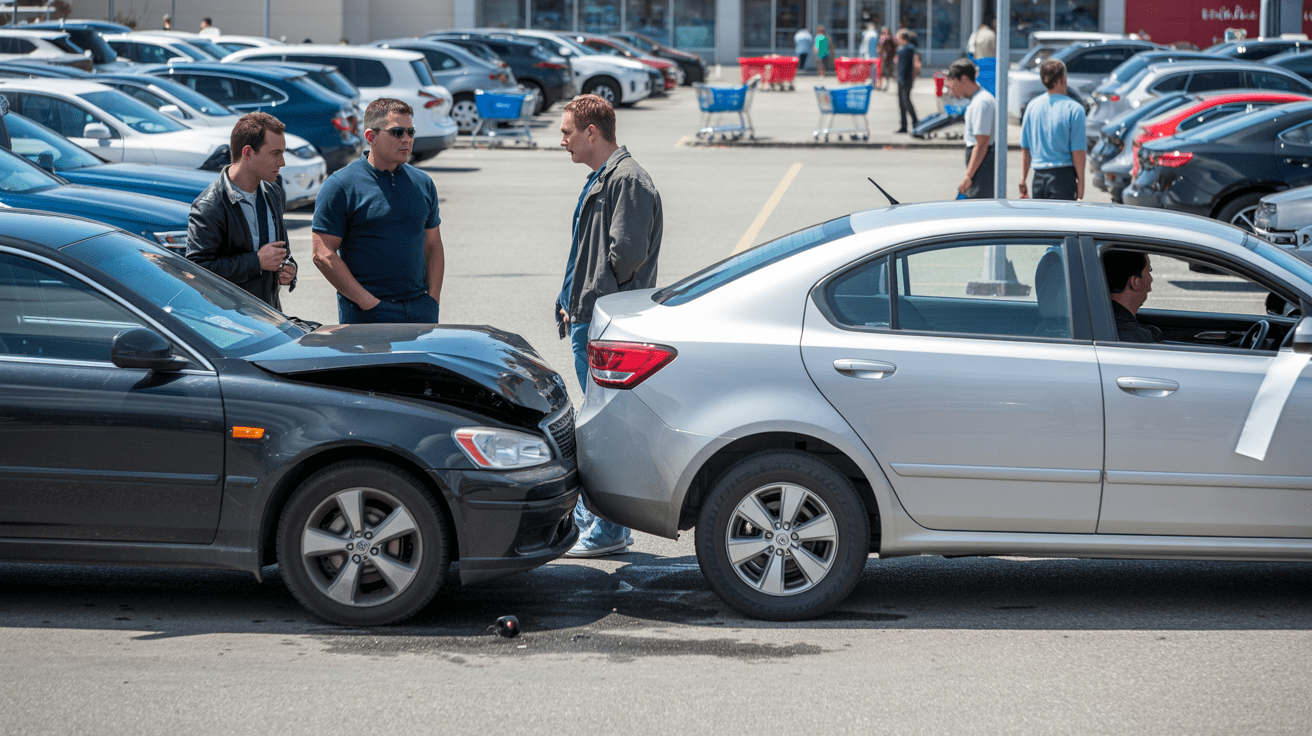
While often perceived as minor fender-benders, parking lot accidents in Tampa present unique and significant legal challenges. These incidents frequently involve disputed fault, complex liability questions that extend beyond the drivers involved, and the application of specific Florida state laws. Successfully navigating these claims is therefore not a matter of routine procedure, but one of legal strategy, requiring a comprehensive grasp of Florida’s complex liability landscape.
Learn More: Tampa Parking Lot Accident Injury Lawyer
The core of a successful claim rests on a thorough investigation that untangles the various contributing factors—from driver behavior to the maintenance responsibilities of property owners. A meticulous legal analysis is essential to counter the common tactics used by insurance companies to minimize settlements and to ensure that victims receive the full compensation they are entitled to under the law. This analysis begins with a clear understanding of the most common causes of these deceptively complex accidents.


2.0 The Anatomy of a Parking Lot Accident: An Analysis of Common Causes
Identifying the root causes of parking lot accidents is a critical strategic step. A clear understanding of these recurring factors is essential not only for preventing future incidents but also for establishing negligence in a legal claim. The confined, low-speed environment of a parking lot creates a distinct set of hazards that differ from those on public roadways. Analysis of cases in Tampa reveals several recurring themes that contribute to a high frequency of preventable collisions.
Distracted Drivers and Pedestrians The prevalence of smartphones and other electronic devices has made distraction a leading cause of parking lot accidents. It is common to observe drivers checking messages or adjusting navigation systems while navigating crowded lots, which significantly reduces their awareness and reaction time. This inattention is mirrored in pedestrians who walk between vehicles while texting, oblivious to their surroundings. This lack of general awareness and basic sidewalk etiquette creates highly dangerous situations where neither party recognizes the impending risk until the moment of impact.
Unclear Traffic Lane Markings Many parking facilities in Tampa suffer from faded, poorly designed, or entirely absent lane markings, creating confusion and increasing accident risk. When drivers cannot clearly identify proper traffic flow, stop lines, or pedestrian crossings, the likelihood of collisions rises. Faded paint can make it difficult to distinguish lane boundaries, while confusing or contradictory arrows can cause drivers to make sudden, unexpected maneuvers. Property owners have a legal responsibility to maintain clear, visible markings that guide traffic safely.
Speeding in Tight Spaces Drivers often treat parking lots as shortcuts, maintaining speeds that are inappropriate for the confined environment. Excessive speed dramatically reduces the time available to react to unexpected hazards, such as a child emerging from between parked cars or another vehicle backing out of a space. The narrow aisles common in many lots leave minimal room for error, compounding the danger when vehicles approach from opposite directions.
Backing Up Without Caution Reversing maneuvers account for a disproportionate number of parking lot collisions. This is frequently due to drivers relying solely on mirrors and failing to perform a thorough visual check for pedestrians or other vehicles in their blind spots. While modern reverse cameras have improved visibility, they do not eliminate all limitations. Rushing or failing to proceed with caution while backing up creates a significant risk, particularly for more vulnerable individuals like children and the elderly.
These varied causes underscore that responsibility is rarely confined to one party, leading directly to the complex legal question of establishing liability.
3.0 Establishing Liability: A Multi-Factor Analysis
In a parking lot accident case, establishing fault is rarely straightforward. Liability often extends beyond a single driver’s mistake and requires a detailed analysis of both driver behavior and the legal responsibilities of the property owner. A comprehensive investigation is necessary to determine all parties who may have contributed to the incident through their actions or negligence.
To prove driver fault, an investigation will reconstruct the incident using evidence such as surveillance footage, eyewitness testimony, and police reports. This evidence is used to establish specific acts of negligence, such as failure to yield, exceeding a safe speed for the conditions, or violating posted signage within the parking facility.
A strategic investigation must therefore expand beyond driver actions to include a rigorous premises liability audit. This involves scrutinizing the property for evidence of systemic negligence, as Florida’s premises liability laws hold owners legally responsible for maintaining safe conditions. An owner can be held liable if their failure to address hazardous conditions contributed to an accident. Examples of such negligence include:
- Inadequate lighting that creates poor visibility.
- Unclear or faded traffic markings that cause driver confusion.
- Poorly maintained surfaces, such as potholes or cracks.
- Obstructed sightlines caused by overgrown landscaping or structural elements.
- Deficient signage that fails to properly direct traffic flow.
The key takeaway is that a successful legal strategy involves identifying all potentially liable parties, which may include individual drivers, property owners, and third-party maintenance companies. This comprehensive approach is essential to ensuring a victim can pursue maximum compensation from all available sources. Understanding who is liable is the first step; the next is understanding the specific legal rights and deadlines that govern a claim.
4.0 The Victim’s Legal Rights and Critical Deadlines in Florida
Understanding your legal rights after being injured in a parking lot accident is of paramount strategic importance. This knowledge empowers you to protect your interests, especially when dealing with insurance companies or other parties who may attempt to minimize their financial responsibility. Florida law provides specific protections and avenues for recourse that allow victims to seek fair compensation for their injuries and losses.
Your core legal rights as a victim of a Tampa parking lot accident include:
- The right to seek compensation for medical expenses, lost wages, and pain and suffering.
- The right to obtain fair settlements for vehicle and other property damage.
- The right to challenge unfair insurance disputes with the support of legal representation.
- The right to access critical evidence, such as official accident reports and surveillance footage.
- The right to pursue a claim within the legally mandated timeframe.
A critical deadline governs all personal injury claims in Florida. Under the state’s statute of limitations, an accident victim generally has two years from the date of the incident to file a personal injury lawsuit. Failing to file a lawsuit within this two-year window has severe consequences. Missing the deadline will almost certainly result in the court dismissing the case, permanently forfeiting your right to pursue compensation through the legal system. While certain exceptions can apply—for instance, if the injured party is a minor or if the at-fault party leaves the state—it is crucial to act promptly. From this foundation of legal rights, the next step is to understand the immediate, practical actions required to protect them.


5.0 Strategic Protocol: Critical Actions in the Aftermath of an Incident
The actions taken in the immediate aftermath of a parking lot accident are crucial. These initial steps form the evidentiary foundation for any future legal claim and can significantly influence its outcome. Prompt and thorough action helps create an objective record of the event, linking injuries and damages directly to the incident.
1. Document the Accident Scene Gathering evidence at the scene is the first and most critical step in protecting your legal rights. This documentation creates an objective record that will be invaluable later.
- Take thorough photographs of the damage to all vehicles involved.
- Photograph the broader scene, including skid marks, traffic signs, and overall lighting conditions.
- Document the exact location of the collision and any surrounding obstacles.
- Identify and photograph any nearby surveillance cameras that may have captured the incident.
- Collect the names and contact information of all parties involved and any witnesses who saw what happened.
2. Seek Medical Attention Immediately Obtaining a prompt medical evaluation is essential for two primary reasons. First, it protects your health by identifying and treating injuries—including internal damage or soft tissue trauma—that may not present immediate symptoms. Second, it creates an official medical record that formally links your injuries to the accident. This documented causal link between the incident and the resulting injuries is a critical element of proof that is non-negotiable for a successful personal injury claim.
3. Report to Proper Authorities Reporting the accident to law enforcement, even if it seems minor, is a vital step. A police report serves as official, third-party documentation of the incident. Officers will document the crash details, gather initial witness statements, and create a report that corroborates your account of events. This official record becomes invaluable when dealing with insurance companies and helps to formally establish when, where, and how the accident occurred.
Each of these initial steps is foundational, serving to substantiate the full scope of damages—both immediate and long-term—that a victim has suffered.
6.0 The Full Scope of Damages: Quantifying Short and Long-Term Impacts
True compensation in a personal injury claim must account for far more than immediate medical bills and vehicle repairs. A thorough assessment of damages considers the profound, long-term consequences that an accident can have on a victim’s health, finances, and overall quality of life. These impacts can persist for years, and securing a settlement that reflects their full scope is a primary objective of any serious claim.
Chronic Pain and Disability What may initially seem like a straightforward injury can evolve into a chronic pain condition that fundamentally alters a person’s life. These conditions often require ongoing pain management, extensive physical therapy, and other specialized interventions. In some cases, the resulting limitations may necessitate disability accommodations at work, affecting career trajectory and long-term earning potential.
Emotional and Psychological Trauma The non-physical impacts of an accident are often just as debilitating as the physical injuries. Victims frequently develop post-traumatic stress disorder (PTSD), anxiety, or a persistent fear of driving. Sleep disturbances, such as insomnia and nightmares, are common and can disrupt daily functioning. These “invisible wounds” can strain personal relationships, diminish work performance, and erode one’s overall quality of life.
Financial Burdens Over Time The economic pressure from a serious accident can escalate over months and even years. Ongoing medical treatments and specialized care result in accumulating expenses that may far exceed initial projections. Concurrently, lost wages from an inability to return to work—or a return at reduced capacity—can deplete family savings. These long-term financial strains affect not only the victim but their entire household.
Calculating and substantiating these comprehensive damages is a complex task, underscoring why securing expert legal counsel is essential to recovering their true value.
7.0 The Role of Expert Legal Counsel in Maximizing Recovery
Navigating the complexities of a parking lot accident claim requires a level of legal and procedural expertise that most individuals do not possess. Experienced legal representation is a strategic necessity, providing the skill to counter insurance company tactics and manage the intricate details that can otherwise jeopardize a claim. An attorney works to level the playing field and ensure the victim’s rights are protected throughout the process.
The key functions performed by an experienced personal injury lawyer include:
- Conducting thorough investigations and reconstructing accident scenes.
- Obtaining and preserving critical evidence like surveillance footage.
- Identifying all liable parties, including property owners.
- Calculating the full value of damages, including future medical needs and pain and suffering.
- Handling all insurance negotiations to prevent unfair, low-ball settlements.
- Managing the entire claims process to allow the victim to focus on recovery.
Ultimately, the core value of an experienced attorney is to serve as a dedicated advocate, countering the institutional priorities of insurance carriers, whose adjusters are trained to minimize claim payouts. By building a compelling, evidence-based case, a lawyer works to secure a settlement or verdict that reflects the true value of the client’s losses. With a clear understanding of the attorney’s role, we can now address some of the most common questions potential clients have about these cases.
8.0 Frequently Asked Questions (FAQ)
This section addresses some of the most common questions regarding Tampa parking lot accidents.
Are Parking Lot Owners Responsible for Accidents on Their Property? Yes, property owners can be held responsible if their negligence contributed to the accident. They have a legal duty to maintain safe conditions, which includes repairing hazards like potholes, ensuring adequate lighting, and providing clear traffic markings. If an investigation proves that a breach of this duty was a direct cause of your injuries, the owner may be held liable.
Can I Sue if I Was Partially at Fault? Yes. Florida operates under a comparative negligence system. This means you can still recover damages even if you are found to be partially at fault for the accident. However, your total compensation award will be reduced by your percentage of fault. For example, if you are found to be 20% at fault, your final recovery would be reduced by 20%.
What if the Other Driver Left the Scene? If the at-fault driver flees the scene (a hit-and-run), you should immediately contact law enforcement. An investigation will be initiated to identify the driver using evidence like surveillance footage and witness statements. In the meantime, you may be able to seek compensation through your own uninsured motorist (UM) insurance coverage.
Do Parking Lot Accidents Affect Insurance Rates Differently Than Road Accidents? Generally, no. Insurance companies typically do not distinguish between accident locations when assessing rate changes. The primary factors are who was at fault and the total cost of the claim. If you are found at fault for a collision in a parking lot, you will likely see a premium increase, similar to an accident on a public road.
How Long Does a Parking Lot Accident Case Typically Take? The duration of a case varies significantly depending on its complexity. Simple cases with clear liability and minor injuries may settle in as little as three to six months. However, more intricate cases involving serious injuries or disputed fault can take 12 to 24 months or more, as it may be necessary to wait until you have reached maximum medical improvement before the full scope of your damages can be calculated.
9.0 Conclusion: Securing Your Right to Recovery
Parking lot accidents in Tampa are complex legal matters that demand diligent investigation, a nuanced understanding of liability, and expert advocacy to resolve successfully. As this analysis has shown, these incidents are rarely simple, and achieving a fair outcome requires a strategic approach that accounts for all contributing factors and the full extent of a victim’s damages. Victims should not have to navigate this challenging process alone while pitted against the resources of insurance companies and other liable parties.
If you have suffered injuries in a Tampa parking lot accident, the next step is to secure legal counsel dedicated to protecting your rights. We encourage you to contact the Law Offices of Anidjar and Levine for a free consultation. Let an experienced team handle the legal intricacies so you can focus on what matters most: healing and recovery.