
A Plantation slip-and-fall grocery and supermarket lawyer at The Law Offices of Anidjar and Levine can investigate how a hazardous condition arose and whether the store knew or should have known about it. Potential hazards include spills, wet entryways, fallen produce, damaged flooring, and obstructed aisles. Photographs, witness accounts, incident reports, surveillance footage, and inspection records may help assess responsibility. Prompt medical care and documentation can support an injury claim. Learn more from a Plantation Personal Injury Lawyer. The following sections explain legal rights, evidence, and steps to evaluate.
Main Takeaways
- A Plantation slip-and-fall lawyer can investigate how a grocery-store hazard arose and identify potentially responsible parties.
- Florida claims generally require evidence that the store knew or should have known about a dangerous condition and failed to address or warn about it.
- Preserve useful evidence, including scene photographs, witness details, incident reports, medical records, and relevant receipts.
- Seek prompt medical care and report the fall to store management with a clear, factual account.
- A lawyer can explain deadlines, assess how comparative fault may affect recovery, and help communicate with insurers.
How We Can Help With Your Plantation Slip & Fall Grocery & Supermarkets Injury Claim
Don’t Wait. Call Our Florida Personal Injury Lawyers Now!
When a grocery or supermarket fall in Plantation causes an injury, an attorney can investigate how the hazard arose, identify the responsible parties, and assess whether the store failed to take reasonable steps to address it. Legal counsel can help an injured person organize records, communicate with insurers, and pursue a claim while remaining focused on recovery and daily responsibilities. This support may include reviewing incident reports, photographs, medical documentation, and available witness accounts to clarify what assistance is needed.
An attorney can also examine Store safety policies and relevant inspection or maintenance records to determine whether established procedures were followed. When appropriate, counsel may coordinate with medical providers to document the injury’s effects and explain what information is needed to evaluate potential losses. Guidance about Claim filing deadlines can help prevent avoidable delays and preserve the person’s ability to seek compensation. Throughout the process, clear updates and careful preparation can help the injured person make informed decisions and pursue a fair resolution.
Understanding Plantation Slip & Fall Grocery & Supermarkets Injury Cases


A Plantation grocery or supermarket slip-and-fall case generally turns on whether a hazardous condition caused the injury and whether the business knew, or reasonably should have known, about the danger but failed to address it. The injured person must establish that the condition presented an unreasonable risk and that the store’s conduct contributed to the fall. Evidence may include incident reports, surveillance footage, inspection records, witness accounts, and photographs documenting the area shortly after the event.
OUR CONSULTATIONSARE FREE
START YOUR FREE CASE REVIEW

The circumstances surrounding the incident also matter. Store Layout and Customer Traffic can help explain how a condition developed, how readily staff could observe it, and whether reasonable inspection practices were followed. Florida premises-liability law may require proof that the business had actual or constructive knowledge of the hazard. Evidence can support constructive knowledge if the condition existed long enough to be discovered or occurred with regularity. Careful documentation helps clarify responsibility, supports an accurate evaluation of injuries, and allows the claim to be assessed fairly.
Common Causes of Plantation Slip & Fall Grocery & Supermarkets
Slip-and-fall hazards in Plantation grocery stores and supermarkets commonly include spills and leaks that leave floors slick. Wet entryways and produce dropped on the floor can also create unsafe walking surfaces, especially when hazards aren’t addressed promptly. Uneven flooring may add risk by catching customers off guard as they move through the store.
Spills and Leaks


Spills and leaks can turn ordinary grocery store aisles into hazardous walking surfaces, especially when liquids spread beyond their origin. Common sources include dropped beverages, leaking packages, broken containers, and refrigeration leaks near display cases. Produce mist, melted ice, and liquid from thawing products may also collect on floors, creating slippery residue that is difficult to see against patterned or reflective surfaces. These hazards can affect shoppers and employees moving through busy aisles, especially when merchandise or displays limit visibility. Reasonable store practices include inspecting high-risk areas, responding promptly to reported spills, and using suitable signs or barriers while cleanup is underway. When a spill remains unattended or is inadequately cleaned, a person may lose footing and suffer injuries. The circumstances surrounding the hazard and the store’s response may be relevant to evaluating responsibility.
Wet Entryways
Rainy weather can make grocery store entrances in Plantation especially hazardous when customers track water inside on carts and umbrellas. This rainwater tracking can leave tile or polished flooring slick, particularly where foot traffic is concentrated. Entry matting can help absorb moisture, but mats must be large enough, secured, and replaced or dried when saturated. If mats shift, curl, or fail to cover the path customers use, they may create additional tripping hazards while leaving wet flooring exposed. Store operators can reduce risks through prompt inspections, clear procedures for wet-weather conditions, and timely placement of warning signs or barriers. Employees who notice pooling water or saturated mats should report the condition and help keep the entrance safe until the area is addressed. These precautions protect customers and staff.
Produce on Floors
When produce falls from displays or shopping carts, it can create a sudden slipping hazard in Plantation grocery stores. Bruised Produce may leak juice onto tile, while Fallen Grapes can roll into aisles and become difficult to see. Shoppers focused on selecting groceries may not notice these hazards before stepping on them. Store employees can help protect customers by regularly inspecting produce sections, promptly removing fallen items, and cleaning residue from the floor. Clear procedures for reporting spills and restocking displays can also reduce the time hazards remain. When a store knows, or reasonably should know, that produce is on the floor, a delayed response may increase the risk of a fall. Customers who encounter a spill can alert staff so that it is addressed before another shopper is injured.
Uneven Flooring
Uneven flooring can create a trip or slip hazard in Plantation grocery stores, particularly where cracked tiles, raised seams, loose mats, or abrupt changes in floor level disrupt a shopper’s path. These defects may develop through heavy cart traffic, inadequate maintenance, aging surfaces, or improper installation. Spilled liquids near damaged areas can increase the risk by making an already unstable surface slippery. Store operators should inspect customer walkways regularly, repair damaged sections promptly, and secure mats so their edges remain flat. Appropriate threshold strips can reduce abrupt height differences between flooring surfaces, while suitable Flooring material can help maintain stable, even walkways. Clear warning signs and temporary barriers may protect shoppers while repairs are underway. If a fall occurs, photographs, incident reports, and witness accounts may help establish the condition and how long it lasted.
Legal Rights of Plantation Slip & Fall Grocery & Supermarkets Injury Victims
A slip and fall in a Plantation grocery store or supermarket may give an injured person the right to seek compensation if the business’s negligence caused the hazard and resulting injury. Florida premises liability law generally requires proof that the retailer knew or should have known about a dangerous condition and failed to address it or warn of it. These rights support accountability while helping injured people obtain resources for recovery.
Victim Protections may include the ability to pursue compensation for documented losses, subject to evidence and applicable legal deadlines. Retailer Responsibilities include taking reasonable care to maintain safe premises and respond appropriately to known hazards.
A claim may involve:
- Medical expenses and necessary future treatment.
- Lost income or reduced earning capacity.
- Pain, suffering, and effects on daily activities.
- Evidence such as incident reports, photographs, witness accounts, and medical records.
Prompt documentation can help preserve relevant information. Each case depends on its facts, and comparative fault may affect recovery. An attorney can explain available options and help protect a claimant’s interests while the person focuses on recuperating and family responsibilities.
Why Do Plantation Slip & Fall Grocery & Supermarket Injuries Happen?
Understanding how these incidents occur can help clarify the safety duties that may apply to Plantation grocery stores and supermarkets. Falls often result from hazards that develop during ordinary store operations. Spilled liquids, dropped produce, leaking refrigeration units, and tracked-in rainwater can make floors slippery. Loose mats, damaged flooring, cluttered aisles, and misplaced merchandise may also create tripping risks.
Some hazards arise when staff members do not identify or address changing conditions promptly. Effective Staff Training can help employees spot spills, follow inspection routines, and warn customers while a hazard is being corrected. Store Layout also matters. Narrow aisles, obstructed sightlines, poorly positioned displays, and inadequate lighting can make hazards harder to notice or avoid.
Busy periods may increase risks as customers and workers move goods through crowded areas. Inadequate maintenance, delayed cleanup, or unclear procedures can allow dangerous conditions to persist. These factors may combine, making a routine shopping visit unsafe for customers seeking necessary goods.
What Should You Do After a Plantation Slip & Fall Grocery & Supermarkets Injury?
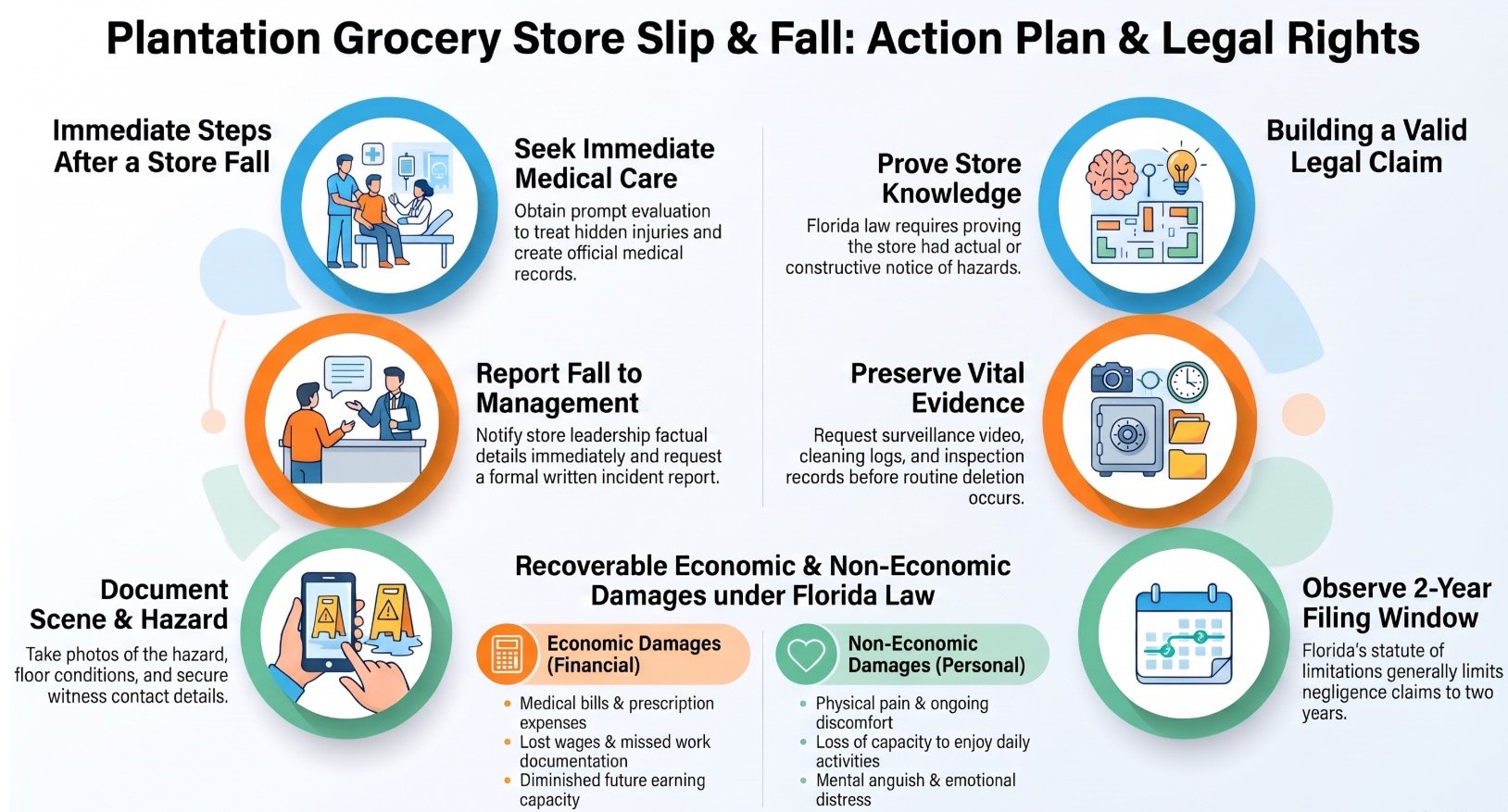
After a grocery store slip and fall in Plantation, the injured person should seek prompt medical care, even if symptoms seem minor at first. Report the incident to store management and request a copy of any written report. When safe, document the scene with photographs and details about the hazard, location, and witnesses.
Seek Medical Care
Prompt medical evaluation is essential after a slip and fall in a Plantation grocery store or supermarket, even when an injury initially seems minor. Urgent assessment can identify fractures, head injuries, or soft-tissue damage that may not be immediately apparent. A qualified healthcare professional can recommend appropriate testing and treatment based on the person’s symptoms and medical history. Delayed care may allow an injury to worsen and can complicate recovery, so prompt attention is prudent. The injured person should describe how the fall occurred, where pain or discomfort is located, and whether symptoms have changed. Symptom monitoring is also important after the initial examination because some conditions develop gradually. New or worsening pain, dizziness, confusion, numbness, or limited movement warrants timely follow-up or emergency care. Medical records can also document the injury and treatment provided.
Report The Incident
Once immediate medical needs are addressed, the injured person should report the fall to a store manager or another responsible employee as soon as reasonably possible. Prompt manager notification gives the store an opportunity to respond, assist the injured person, and address any ongoing hazard that could affect other customers or employees. The person should provide a clear, factual account of when and where the fall occurred and describe the circumstances without guessing or assigning blame. They may ask the employee to prepare an Incident report and request information about how to obtain a copy. If possible, the injured person should note the names and positions of employees involved in receiving the report. A calm, accurate report supports a reliable record and helps the store handle the incident responsibly.
Document The Scene
A clear incident report can preserve the store’s account, while photographs and notes may help document the conditions that contributed to the fall. If the injured person can do so safely, they should record the hazard location and capture the surrounding area before staff clean or repair it. Images may show spills, debris, uneven flooring, warning signs, lighting, and nearby displays. Notes should describe the floor condition, the time, and any changes observed after the incident. Witness names and contact details can help preserve independent accounts, while receipts or store records may establish when the person was present. Keep documentation factual and avoid speculating about fault. The injured person should prioritize medical care and ask someone trusted to assist if pain or limited mobility makes gathering evidence unsafe. Keep copies securely.
Critical Evidence in a Plantation Slip & Fall Grocery & Supermarkets Injury Case
Evidence can help establish how a hazard arose, how long it remained, and whether the store took reasonable steps to address it.
Essential materials in a Plantation grocery store slip-and-fall case may include:
- Incident scene photos
- Surveillance footage
- Witness statements
- Maintenance records
Incident Scene Photos
How can photographs help establish what happened after a grocery store fall in Plantation? Images can document the location, size, and appearance of a spill or other hazard, along with nearby warning signs, floor conditions, and the surrounding layout. These details may help clarify whether a dangerous condition was present and how it related to the fall.
Prompt photographs can capture conditions before cleanup or other changes. If able, photograph the area from several angles, include wider views for context, and avoid altering the scene. The original files should be retained, since photo metadata may record when and where images were created. Image preservation helps maintain their reliability for later review. Witnesses may also take photographs, but each image’s source and handling should be documented to support its authenticity.
Surveillance Footage
Beyond photographs of the scene, surveillance footage may show the events leading up to and following a fall in a Plantation grocery store. Recordings can help establish when a hazardous condition appeared, how long it remained, and whether employees had an opportunity to address it. They may also document the fall’s location and the immediate response, providing context that still images cannot capture. Camera angles and image quality affect what the footage can reliably show, so review the recording alongside other available evidence. Video retention is often limited by routine storage practices, making prompt preservation requests important. Relevant footage may help clarify disputed details and support a fair assessment of the store’s conduct. Careful handling preserves an accurate record and can assist those seeking accountability while protecting the integrity of the investigation.
Witness Statements
Witness statements can clarify what happened before, during, and after a fall in a Plantation grocery store. Customers, employees, or other observers may describe a spill, the shopper’s path, warning signs, or the response after the incident. Their accounts can help establish whether a hazard was visible and how long it may have affected the area, without replacing other evidence.
Statement timing matters because details can become less clear over time. When appropriate, investigators may ask witnesses to record what they recall soon after the event, using their own words and avoiding speculation. Witness credibility may depend on consistency, opportunity to observe, and any relationship to the parties. A careful, respectful process can preserve useful information while recognizing that each person’s perspective may be incomplete or mistaken.
Maintenance Records
Maintenance records can show whether a Plantation grocery store followed its inspection and cleanup procedures before a fall. Inspection logs may identify when employees checked an aisle, noted a spill, or reported a hazard. Cleaning schedules can show when floors were washed and whether employees used warning signs or other precautions. These documents may also reveal gaps between inspections, delayed responses, or recurring maintenance concerns. Their accuracy and timing matter because records created before an incident may provide a clearer account than later recollections. A prompt request to preserve relevant materials can help prevent routine deletion or alteration. When reviewed alongside photographs, witness accounts, and incident reports, maintenance records can clarify what the store knew and what steps it took. This evidence may support a fair assessment of responsibility and encourage safer conditions for customers.
Don’t Wait. Call Our Florida Personal Injury Lawyers Now!
Long-Term Effects of Plantation Slip & Fall Grocery & Supermarket Injuries
A grocery store slip and fall can cause lasting physical pain, particularly when injuries affect the back, joints, or head. Some individuals experience chronic mobility limitations that interfere with work and daily activities. Ongoing treatment and reduced independence may also create emotional strain and significant financial burdens.
Lasting Physical Pain
Although some injuries from grocery store slip and falls may seem minor at first, lasting pain can develop as the effects of a fracture, spinal injury, or damaged joint become clearer. Persistent discomfort can interfere with routine responsibilities, caring for family, and efforts to support others. Pain may intensify with certain activities or persist during rest, making its pattern hard to predict. Sleep disruption can further affect concentration, mood, and daily functioning. A medical evaluation helps identify the source of ongoing symptoms and guide appropriate treatment. Depending on the injury, care may include medication, physical therapy, expert consultations, or other pain management strategies. Keeping records of symptoms, appointments, and related expenses can help document the injury’s ongoing effects. A legal professional can assess whether the available evidence supports a compensation claim.
Chronic Mobility Limitations
When a slip and fall in a Plantation grocery store damages a joint, bone, or the spine, mobility problems may persist long after the initial injury. Stiffness, weakness, reduced balance, or limited range of motion can make walking, standing, and reaching more difficult. Some people require a cane, walker, wheelchair, or ongoing rehabilitation to manage daily activities safely. These limitations may affect the ability to move through crowded aisles, lift groceries, or enter and exit a store without assistance. For customers and community members who depend on accessible shopping, Accessible store layouts and mobility aid compatibility can help reduce barriers. Clear pathways, stable flooring, reachable shelves, and suitable checkout areas support safer movement. When an injury causes lasting restrictions, documenting medical needs and practical access challenges can clarify the extent of the harm and necessary accommodations.
Emotional and Financial Effects
Long-term injuries from a Plantation grocery store slip and fall can affect emotional well-being and financial stability as well as physical mobility. Persistent pain, reduced independence, or difficulty returning to familiar activities may contribute to stress, frustration, and changes in mood. These effects can also influence relationships when relatives take on caregiving duties or household responsibilities. Family strain may increase if the injured person cannot maintain previous roles or needs ongoing assistance. Medical appointments, rehabilitation, prescriptions, and lost income can create financial anxiety, particularly when recovery extends over months or limits future work. Careful documentation of symptoms, treatment, expenses, and daily challenges may help clarify the injury’s broader consequences. Support from healthcare providers, family members, and qualified legal professionals can help injured individuals pursue appropriate care and understand available options for addressing lasting losses.
Proving Liability in Plantation Slip & Fall Grocery & Supermarkets Injury Cases
Proving liability in a Plantation grocery store slip and fall case requires evidence that the store’s negligence caused the hazardous condition and resulting injury. A person generally must show that a dangerous condition existed, the store knew or should have known about it, and the store failed to take reasonable steps to correct it or warn customers. Useful evidence may include incident reports, photographs, surveillance footage, witness accounts, and inspection or cleanup records. These details can help establish when a spill, fallen item, or other hazard appeared and whether employees had a fair opportunity to address it.
Constructive notice may apply when a hazard remained long enough that reasonable inspection would have discovered it. Florida’s comparative negligence rules may also reduce damages if the injured person shares responsibility. Careful evidence preservation supports a fair assessment of responsibility and helps protect customers from similar hazards. Each case depends on its specific facts and applicable law.
Dealing With Insurance Companies After a Plantation Slip & Fall Grocery & Supermarkets Injury
After a Plantation grocery store slip and fall, an insurer may contact the injured person to discuss the incident and request information. The representative may ask about the conditions, injuries, medical care, and other details. The injured person can respond accurately while avoiding guesses or statements that minimize the harm. Before providing Recorded statements or signing documents, the person may seek guidance from a qualified attorney. An insurer’s questions and forms can affect how the incident is evaluated, so careful review helps protect the person’s interests.
The injured person should preserve relevant records, including medical bills, photographs, correspondence, and notes about conversations with insurance representatives. Prompt, organized documentation helps ensure information is available when needed. The insurer may also discuss a settlement or refer to policy limits, but an early offer may not account for the full extent of treatment or lasting effects. A legal professional can explain available options and communicate with the insurer, allowing the injured person to focus on recovery while supporting a fair assessment.
What to Expect During a Plantation Slip & Fall Grocery & Supermarkets Injury Claim Process
A Plantation grocery store slip-and-fall claim typically begins with an evaluation of the incident, injuries, and available legal options. The process then involves collecting evidence and negotiating with insurers to seek a fair settlement. If negotiations do not resolve the claim, the case may proceed to trial preparation.
Initial Case Evaluation
During an initial case evaluation, a Plantation slip-and-fall attorney reviews how the grocery store or supermarket incident occurred, the injuries reported, and the available evidence. This discussion clarifies the client’s immediate needs and determines whether the matter warrants further legal attention. The attorney may ask when and where the fall happened, what conditions were present, and how the injuries have affected daily activities. The information supports a preliminary Case Worth review, including whether the circumstances may establish a valid claim under applicable law. A Liability Assessment considers the store’s possible responsibility, the injured person’s conduct, and any factors that could affect recovery. The attorney also explains potential timelines, legal options, and the client’s role in the process. This early review provides a measured basis for deciding appropriate next steps.
Evidence Collection
What evidence can clarify how a grocery store fall occurred? A careful investigation may identify the hazard, how long it existed, and whether store staff had notice. Relevant materials can include incident reports, surveillance footage, inspection and cleaning logs, photographs of the scene, and witness accounts. Medical records can document the injuries and treatment that followed.
Evidence preservation is important because video recordings may be overwritten and physical conditions can change quickly. An injured person or representative may document visible conditions when safe, retain clothing and footwear, and request that relevant records be preserved. Investigators can also seek employee statements and store policies concerning inspections and spill response. Chain documentation records when evidence was collected, who handled it, and where it was stored. Organized, reliable evidence can help clarify responsibility and support a fair review of the claim.
Settlement Negotiations
Once the evidence and injuries are evaluated, settlement negotiations may begin with the grocery store or its insurer. The parties may review incident reports, medical records, wage documentation, and other information to assess responsibility and the claim’s value. A negotiation strategy should account for injury severity, expected future care, financial losses, and any disputes about how the fall occurred. The injured person may receive an offer, but an initial amount does not necessarily reflect the claim’s full impact. Settlement timing can vary because treatment, records collection, and insurer review may take time. A careful response helps guarantee that any proposed resolution addresses documented losses and ongoing needs. With informed guidance, the injured person can evaluate options and pursue a fair agreement while considering the broader effects on family and community.
Trial Preparation
If settlement negotiations do not resolve a Plantation grocery store slip and fall claim, the case may proceed toward trial. Preparation typically involves reviewing medical records, incident reports, photographs, surveillance footage, and witness accounts. The injured person’s legal team may consult qualified experts to explain how the hazard caused the fall and affected the person’s health, work, and daily responsibilities. The grocery store may present its own evidence and challenge the claim, so careful documentation and consistent testimony are important.
Before trial, the parties may file motions and organize exhibits. Jury selection allows attorneys to identify impartial jurors who can evaluate the evidence fairly. During courtroom testimony, witnesses may answer questions from both sides, and experts may discuss safety practices or injuries. The judge or jury then considers liability and damages under applicable law.
Compensation for Plantation Slip & Fall Grocery & Supermarkets Injury Damages
Compensation for a Plantation grocery store slip-and-fall injury may cover medical expenses, lost income, reduced future earning capacity, and pain and suffering. The amount depends on the injury’s effects and the available evidence. A claim may include costs for emergency treatment, follow-up appointments, medication, rehabilitation, and other fall-related care. Records and provider assessments can help establish the treatment required and whether additional care is anticipated.
Lost income may be considered when injuries prevent a person from working or reduce work hours. If the injury affects the ability to earn in the future, evidence about job duties, restrictions, and expected recovery may support a request for compensation. Future expenses may also include reasonably anticipated medical care or assistive services.
A lawyer can review incident reports, photographs, witness accounts, and medical documentation to assess the claim. Careful preparation helps present the injury’s practical consequences and supports a fair resolution, while allowing the injured person to focus on recovery and daily responsibilities.
Economic vs Non-Economic Damages in Plantation Slip & Fall Grocery & Supermarkets Cases
In Plantation grocery and supermarket slip-and-fall cases, damages may include economic losses, such as medical expenses and lost income, as well as non-economic harm, including pain and reduced quality of life. Each category reflects a different effect of the injury and may require distinct evidence. Clear records and credible documentation can help establish the extent and value of the losses.
Economic Damages
Economic damages in a Plantation grocery or supermarket slip-and-fall case cover measurable financial losses caused by the injury, such as medical bills, rehabilitation costs, and lost income. These costs may include emergency treatment, follow-up appointments, medication, medical equipment, and transportation to care. Documentation helps establish the amount and connection between each expense and the fall. Employer records, pay statements, or tax documents may support lost wages. If the injury limits a person’s ability to perform their occupation or earn at the same level, diminished earning capacity may also be considered. Future medical needs and projected income losses can require professional assessments. A careful accounting can help an injured person seek compensation that reflects documented financial harm while allowing the claim to be evaluated fairly and responsibly.
Non-Economic Damages
Beyond documented financial losses, a Plantation grocery or supermarket slip-and-fall claim may include non-economic damages for harm without a precise dollar value. These damages address the personal effects of an injury, rather than bills or lost income. Depending on the circumstances, they may include physical pain, discomfort, and limitations on ordinary activities. Emotional Distress may also be considered when an injured person experiences anxiety, fear, or other significant emotional effects connected to the fall. Loss of enjoyment can describe reduced ability to take part in family, community, or recreational activities that previously contributed to daily well-being. Such harms can affect relationships and independence, as well as the person’s capacity to serve and support others. Their nature and extent vary with the injury and its effects on everyday life.
Proving Your Losses
A successful Plantation grocery or supermarket slip-and-fall claim requires evidence connecting the fall to the injuries and supporting the losses claimed. Medical records, diagnostic results, and treatment notes can document the injury, its progression, and the care required. Economic damages include measurable costs, such as medical bills, prescription expenses, and income lost during recovery. Paycheck documentation, employer records, and tax returns may help establish missed work or reduced earnings. Receipts and invoices can support claims for transportation, medical equipment, or household assistance needed during recovery.
Non-economic damages address losses without a fixed price, including pain, emotional distress, and limits on daily activities. Consistent treatment records and clear descriptions of routine changes can help explain these effects. Organized, accurate evidence enables a fair assessment of both damage categories and supports accountability.
When a Plantation Slip & Fall Grocery & Supermarkets Injury Case Goes to Trial vs Settlement
Whether a Plantation grocery store slip-and-fall case settles or proceeds to trial depends on factors such as the strength of the evidence, the extent of the injuries, and the parties’ willingness to resolve the claim. Settlement may provide a more predictable outcome and avoid the time, expense, and uncertainty of a courtroom proceeding. It can also allow an injured person to receive compensation without requiring witnesses to testify publicly. However, settlement requires agreement on the claim’s value and terms.
If the parties cannot reach a fair resolution, the case may proceed to trial. Each side presents evidence, examines witnesses, and argues before the judge or jury. Courtroom testimony may help clarify how the fall occurred, what the store knew, and how the injuries affected the person’s life. After hearing the evidence, jurors deliberate and reach a decision. A trial can provide a formal determination, but the outcome is uncertain. The choice depends on the case’s circumstances and the injured person’s priorities.
Florida Laws That May Affect Your Plantation Slip & Fall Grocery & Supermarkets Case
Florida law sets specific requirements for proving liability after a grocery store slip and fall in Plantation. Under Florida’s Premises liability rules, an injured person generally must show that a store had actual or constructive knowledge of a dangerous condition and failed to address it. Evidence may include inspection records, employee reports, photographs, and witness accounts. These rules help clarify how responsibility is assessed and support fair outcomes for injured customers and the community.
Key legal considerations include:
- Notice of the hazard: A claimant may show the store knew about the condition or that it existed long enough for reasonable care to reveal it.
- Reasonable precautions: Stores must take appropriate steps to inspect and maintain areas open to customers.
- Comparative negligence: A person’s share of responsibility may reduce recoverable damages under Florida’s modified comparative negligence law.
- Evidence and causation: Records and testimony must connect the hazardous condition to the fall and resulting injuries.
Each case depends on its facts, including the hazard’s location, duration, and the parties’ conduct.
The Statute of Limitations for Plantation Slip & Fall Grocery & Supermarkets Injury Cases
Because filing deadlines can determine whether an injury claim proceeds, the statute of limitations is an important consideration after a grocery store slip and fall in Plantation. Under Florida law, a negligence claim generally must be filed within two years of the date of injury. Missing that deadline may prevent an injured person from pursuing compensation, regardless of the seriousness of the harm or the store’s conduct.
The limitation calculation can depend on the claim’s facts, including when the injury occurred and whether a legal rule changes the filing period. Deadline exceptions may apply in limited circumstances, such as when a claimant is a minor or a defendant’s conduct prevents timely filing. These exceptions are fact-specific and should not be assumed to extend the deadline.
Prompt attention to the applicable time limit helps preserve the opportunity to seek accountability and support recovery. Because case details can affect filing periods, injured individuals and those assisting them should confirm the relevant deadline with reliable legal guidance as soon as possible.
Don’t Wait. Call Our Florida Personal Injury Lawyers Now!
How a Plantation Slip & Fall Grocery & Supermarkets Lawyer Can Help You
After a grocery store fall in Plantation, a lawyer can help an injured person understand the available legal options and the evidence needed to support a claim. The lawyer can also explain how premises liability principles apply and what records may clarify the store’s responsibility. This guidance can help an injured person pursue fair treatment while protecting the interests of others who use the store.
- Assess the claim: Review incident reports, photographs, witness accounts, and medical records to evaluate the available evidence.
- Investigate conditions: Seek relevant maintenance logs, inspection records, and surveillance footage to determine how a hazard arose and whether it was addressed.
- Manage communications: Handle discussions with the store or insurer, explain settlement proposals, and maintain clear attorney-client communication about decisions and case progress.
- Explain representation: Describe legal fee structures and potential costs so the client can make informed choices.
A lawyer may also organize documentation and present the claim clearly, supporting an orderly process grounded in evidence, accountability, and respect for everyone affected.
When to Contact a Plantation Slip & Fall Grocery & Supermarkets Lawyer
Prompt action can help preserve evidence and clarify the options available after a grocery store fall in Plantation. An injured person should consider contacting a lawyer once immediate medical needs are addressed, especially if the cause of the fall is uncertain or the injury requires ongoing care. Prompt legal advice may help identify records, photographs, witness details, and other information that could become harder to obtain over time.
Consultation timing also matters when a store or insurer requests a statement, offers payment, or asks for documents. Before responding, the injured person can seek guidance about the request and the potential consequences of signing a release. Florida law sets deadlines for filing injury claims, so waiting too long may limit available options. A lawyer can review the circumstances and explain relevant time limits without requiring an immediate decision. Seeking assistance early can also support clear communication and help the injured person focus on recovery and responsibilities to others.
Why You Need an Experienced Plantation Slip & Fall Grocery & Supermarkets Lawyer
An experienced Plantation slip and fall lawyer can assess whether a grocery store may be legally responsible for a hazardous condition and explain what evidence may support a claim. This guidance can help an injured shopper understand how Florida law applies and what facts may matter, including how long a spill or obstruction existed and whether staff knew about it.
A lawyer can also identify records that may clarify the store’s response, such as incident reports, surveillance footage, cleaning logs, and Store Inspection documents. These materials may show whether the store followed reasonable procedures and had an opportunity to correct the danger. Prompt preservation can be important because some evidence may be lost or overwritten.
How to Choose the Right Plantation Slip & Fall Grocery & Supermarkets Lawyer for Your Case
Choosing the right Plantation slip and fall lawyer involves evaluating experience with grocery store premises liability claims, knowledge of Florida law, and the ability to investigate how a hazardous condition arose. When choosing a lawyer, consider whether counsel can explain the evidence needed to establish notice, causation, and the extent of the injury. A careful review of prior case experience may show how the lawyer handles store surveillance, incident reports, witness accounts, and maintenance records.
During an initial consultation, a prospective client can assess whether the lawyer listens closely, answers questions directly, and communicates realistic expectations. Clear communication helps injured people make informed decisions while balancing recovery with family and community responsibilities. The lawyer should describe likely steps, potential challenges, and the client’s role in preserving relevant information.
Fee structures should be explained in writing, including any contingency arrangement, costs, and circumstances in which payment may be due. Comparing these terms supports a considered choice without relying on promises of a particular outcome.
About The Law Offices of Anidjar & Levine
For those evaluating legal representation, The Law Offices of Anidjar & Levine handles personal injury matters, including claims arising from falls in grocery stores and supermarkets. The firm represents injured people seeking accountability and compensation after hazardous conditions cause harm. Its work may involve examining incident reports, gathering witness statements, reviewing available video, and determining whether a property owner took reasonable steps to address or warn about a dangerous condition.
Individuals considering counsel can review the attorneys’ background, experience, and communication approach before deciding whether the firm suits their needs. A careful consultation can help clarify the possible legal issues, evidence requirements, and next steps without assuming a particular outcome. The firm also describes community involvement as part of its broader presence in Florida, reflecting attention to people and organizations beyond its legal practice. For Plantation residents, selecting representation may include weighing responsiveness, case preparation, and a clear explanation of available options. These considerations can help injured shoppers make informed decisions while pursuing fair treatment.

Frequently Asked Questions
Can I File a Claim if I Fell in a Grocery Store Parking Lot?
A person may be able to file a claim after falling in a grocery store parking lot, depending on the circumstances and applicable law. A premises liability claim generally requires evidence that a hazardous condition caused the fall and that the store or property owner knew, or reasonably should have known, about it but failed to address or warn of it. Photographs, witness details, medical records, and prompt legal guidance can help assess the claim.
What if I Slipped on a Substance a Store Employee Spilled?
A shopper may have a claim if a store employee spilled the substance and the store failed to reasonably address the hazard. Employee Spill Liability depends on evidence showing how the spill occurred, whether staff knew about it, and what precautions followed. Cleanup Procedure Timing matters: prompt cleanup or warnings may reduce risk, while an unreasonable delay may support negligence. Photographs, incident reports, witness details, and medical records can help preserve relevant evidence.
Can a Store Be Responsible for a Fall Caused by a Shopping Cart?
A store may be responsible for a fall caused by a shopping cart if it created or knew about the hazard, or should have discovered it through reasonable inspections. A Cart obstruction left in an aisle or a cart with a wheel malfunction may create an unsafe condition. Responsibility depends on the circumstances, including how long the hazard existed, whether staff had notice, and whether reasonable steps could have prevented the injury.
Does a Store’s Incident Report Prove That It Was at Fault?
A store’s incident report does not, by itself, prove that the store was at fault. It may document the fall, location, reported hazard, witness accounts, and actions taken, making it useful evidence of fault. However, the report’s accuracy, completeness, and timing matter, and you may dispute its contents. Responsibility generally depends on all available evidence, including surveillance footage, maintenance records, and whether the store knew or reasonably should have known about the dangerous condition.
Can I Pursue a Claim if I Fell While Shopping With a Child?
A shopper may pursue a claim after falling while accompanying a child if unsafe store conditions caused the fall and the store knew, or reasonably should have known, about the hazard. Child supervision may be relevant, but bringing a child does not automatically prevent recovery. The shopper should document the scene, report the incident, and preserve medical records. Witness statements and available surveillance footage may help establish what happened and whether the store acted reasonably.
—————————
A grocery store fall can lead to serious injuries, medical expenses, and uncertainty about what comes next. A Plantation Personal Injury Lawyer can assess the circumstances, explain available legal options, and help preserve evidence relevant to a claim. The Law Offices of Anidjar and Levine represents injured people seeking accountability from negligent property owners. Prompt legal guidance can help protect important deadlines and support an informed decision about pursuing compensation for documented losses and the effects of the injury.