The Law Offices of Anidjar and Levine can help investigate hazardous conditions, identify responsible parties, and preserve evidence before surveillance footage or records disappear.
A West Palm Beach Personal Injury Lawyer may review incident reports, photographs, witness accounts, inspection practices, medical records, and financial losses to evaluate premises liability and comparative responsibility.
Legal guidance can also help protect communications with insurers, assess filing deadlines, and pursue appropriate compensation for grocery store or supermarket slip-and-fall injuries.
Main Takeaways
- A West Palm Beach grocery store slip-and-fall lawyer can evaluate hazardous conditions, store responsibility, notice, and potential comparative fault.
- Promptly preserve surveillance footage, incident reports, inspection records, photographs, receipts, and witness contact information before evidence disappears.
- Medical records, bills, employment documentation, and rehabilitation information help establish injuries, financial losses, and ongoing limitations.
- Counsel can communicate with store representatives and insurers while protecting you from damaging statements or unfavorable agreements.
- A lawyer can assess Florida filing deadlines, prepare required documents, negotiate compensation, and pursue a premises-liability claim.
How We Can Help With Your West Palm Beach Slip & Fall Grocery & Supermarkets Injury Claim
When a shopper suffers an injury in a grocery store or supermarket, a West Palm Beach slip and fall lawyer can investigate the incident, identify the responsible parties, and pursue the compensation available under Florida law. Legal assistance may begin with a careful consultation concerning the event, medical treatment, financial effects, and the shopper’s immediate needs. Counsel can communicate with store representatives and insurers, organize records, and help prevent statements or agreements that could undermine the claim.


Evidence Preservation is also important. A lawyer may seek surveillance footage, incident reports, inspection records, photographs, witness information, and other materials before they disappear or become difficult to obtain. Medical documentation and employment records can help establish the injury’s practical consequences. Counsel can evaluate applicable Filing Deadlines and prepare required documents within the time allowed, protecting the individual’s opportunity to seek relief. Throughout the process, a legal team can provide informed guidance, answer questions, and pursue a resolution that supports the injured person’s recovery and dignity.
Understanding West Palm Beach Slip & Fall Grocery & Supermarkets Injury Cases
OUR CONSULTATIONSARE FREE
START YOUR FREE CASE REVIEW

Understanding a West Palm Beach slip and fall grocery or supermarket injury case requires examining how the incident occurred, whether the property owner or operator had notice of the hazardous condition, and how that condition caused the claimed injuries. The analysis may include surveillance footage, incident reports, employee statements, medical records, and photographs documenting the scene and visible harm. Evidence preservation is important because video systems may overwrite recordings, and physical conditions can change before they are inspected. A claimant’s account, witness testimony, and treatment history may help establish timing, responsibility, and the extent of damages. Florida premises liability principles also require consideration of the injured person’s conduct and any comparative responsibility.
Documentation of medical expenses, lost income, rehabilitation needs, and continuing limitations can support a damages evaluation. During settlement negotiations, organized evidence and a clear understanding of liability may help the parties reach a fair resolution while protecting the claimant’s interests.
Common Causes of West Palm Beach Slip & Fall Grocery & Supermarkets Injuries


Common causes of grocery store slip-and-fall incidents include wet aisles and spilled food products that create hazardous walking surfaces. Uneven flooring, damaged tiles, and poorly maintained walkways may also increase the risk of a sudden fall. These conditions can raise questions about store maintenance, inspection practices, and potential liability.
Wet Grocery Aisles
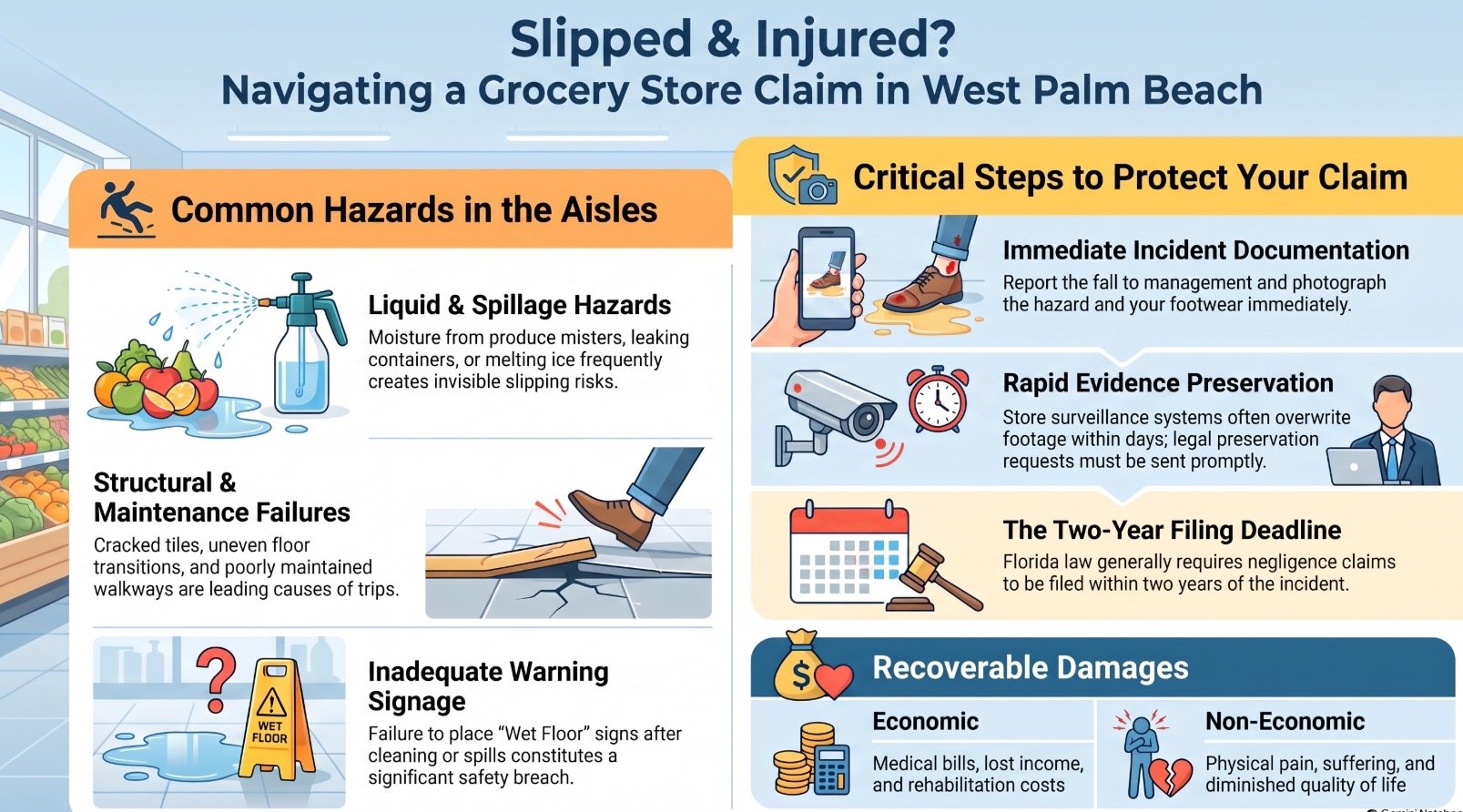
Wet grocery aisles can result from spilled beverages, leaking containers, melting ice, or moisture tracked inside by customers and employees. These conditions may develop near refrigerated cases, entrances, checkout lanes, or produce misters, where water can remain unnoticed on smooth flooring. Grocery stores generally have a responsibility to inspect aisles, address moisture promptly, and maintain reasonably safe walking surfaces. Employees may need to clean the area, place warning signs, or restrict access until the floor is dry. Missing or inadequate warnings can create signage hazards that increase risks for shoppers, particularly older adults and individuals using mobility aids. Customer safety depends on consistent inspections, timely cleanup, appropriate floor maintenance, and visible notices. Documentation of reports, surveillance footage, and incident conditions may help clarify whether reasonable precautions were taken.
Spilled Food Products
Spilled food products, including sauces, cooking oils, beverages, and loose produce, can create slippery surfaces throughout grocery stores and supermarkets. These substances may spread quickly through foot traffic, remain difficult to see, or become more hazardous when combined with shopping cart wheels and footwear. Stores generally have a responsibility to maintain reasonably safe premises, conduct prompt inspections, and respond appropriately after receiving notice of a spill. Employees should isolate affected areas, place visible warning signs, and clean the substance using suitable procedures. Store safety audits can help identify recurring problems, inadequate monitoring, or training deficiencies that contribute to these incidents. In a claim, Comparative negligence impacts may arise if a shopper failed to observe an apparent hazard or disregarded posted warnings, potentially reducing recoverable damages under Florida law.
Uneven Store Flooring
Uneven store flooring can create trip hazards even when no liquid or debris is present. Raised edges, depressed sections, cracked tiles, or abrupt changes in elevation may disrupt a customer’s natural walking pattern, particularly when attention is directed toward shelves or merchandise. These conditions can develop from shifting foundations, installation errors, temperature-related expansion, or ordinary structural movement. Grocery stores must maintain reasonable surface stability in areas used by customers, including aisles, entrances, checkout lanes, and service zones. Consistent store inspections can help identify flooring irregularities before they cause injuries. When an unsafe elevation change is discovered, timely corrective action, clear warnings, or temporary access restrictions may reduce risks to customers and employees. Documenting the condition and response may also help evaluate whether reasonable safety practices were followed.
Poorly Maintained Walkways
Poorly maintained walkways can create slip, trip, and fall hazards throughout grocery stores and supermarkets, especially at entrances, in aisles, at checkout areas, and on exterior paths. Cracked pavement, broken tiles, loose mats, potholes, and damaged curbs may destabilize customers and employees. Accumulated debris, overgrown landscaping, or inadequate lighting can further obscure hazards and limit a person’s ability to respond safely. Store operators generally have a responsibility to identify and correct dangerous conditions within a reasonable time. Effective store inspection policies should require regular reviews, documented findings, prompt repairs, and appropriate warnings when hazards cannot be immediately removed.
Compliance with Slip safety standards may also help reduce preventable injuries and demonstrate reasonable safety practices. When walkway conditions cause a fall, maintenance records, surveillance footage, photographs, and witness statements may help clarify responsibility and support an injured person’s pursuit of assistance.
Don’t Wait. Call Our Florida Personal Injury Lawyers Now!
Legal Rights of West Palm Beach Slip & Fall Grocery & Supermarket Injury Victims
When a grocery store or supermarket’s hazardous condition causes a customer to slip and fall, the injured person may have legal rights to pursue compensation. Under Premises Liability principles, the property owner or operator may be responsible when it knew, or reasonably should have known, about an unsafe condition and failed to address it. Potentially recoverable damages can include medical expenses, lost income, rehabilitation costs, and pain-related losses.
Grocery store slip-and-fall victims may pursue compensation when hazardous conditions result from negligent property maintenance.
A victim may protect those rights by:
- Reporting the incident promptly to store management.
- Requesting an incident report and obtaining witness contact information.
- Photographing the condition and preserving relevant clothing or footwear.
- Seeking medical evaluation and following recommended treatment.
- Consulting a qualified attorney before accepting settlement terms.
Comparative Negligence may reduce recovery if the injured person’s conduct contributed to the event. Deadlines for filing claims apply, and evidence can become difficult to obtain over time. Legal counsel can evaluate responsibility, document damages, communicate with insurers, and pursue a fair resolution while supporting the victim’s recovery.
Why Do West Palm Beach Slip & Fall Grocery & Supermarket Injuries Happen?
Understanding why grocery store and supermarket slip-and-fall injuries occur can help establish whether negligent property maintenance contributed to the incident. Common causes include spilled liquids, leaking refrigeration units, melting ice, loose produce, and recently mopped floors lacking adequate warnings. Uneven flooring, damaged tiles, defective mats, and cluttered aisles may also create dangerous walking surfaces.
Poor maintenance patterns can indicate that a hazardous condition remained despite reasonable opportunities for inspection and correction. In some cases, employees may fail to clean spills promptly, document hazards, or notify supervisors. Store policy failures can contribute when safety procedures are incomplete, inconsistently enforced, or insufficiently communicated to staff.
Lighting problems and obstructed pathways may further limit a shopper’s ability to identify dangers. High-traffic areas, checkout lines, and refrigerated sections require particular attention because conditions can change quickly. Identifying the specific hazard, its duration, and the store’s response may help clarify whether inadequate care contributed to the injury.
What Should You Do After a West Palm Beach Slip & Fall Grocery & Supermarkets Injury?
After a West Palm Beach grocery store slip and fall, the injured person should seek immediate medical care, even if symptoms initially appear minor. The injured person should also report the incident promptly to store management and record details for an official report. Preserve photographs, witness information, clothing, and other evidence to document the accident accurately.
Seek Immediate Medical Care
Prompt medical evaluation is essential following a slip and fall in a West Palm Beach grocery store or supermarket, even if the injury initially appears minor. A qualified clinician can identify fractures, concussions, soft-tissue damage, or internal injuries that may worsen without treatment. If severe pain, confusion, bleeding, loss of consciousness, or difficulty moving occurs, emergency response should be requested immediately. Medical personnel can triage immediately, address urgent symptoms, and confirm stability before recommending discharge or further care. The injured person should follow all treatment instructions, attend scheduled appointments, and promptly report worsening symptoms. Medical records, diagnostic results, prescriptions, and provider observations also create valuable injury documentation. Prompt care aids health and establishes an objective record of the condition following the incident for potential legal review.
Report the Incident
When a slip and fall occurs in a West Palm Beach grocery store or supermarket, the injured person should promptly notify a store manager, customer service representative, or other responsible employee. Reporting the incident allows the business to respond appropriately, address hazards, and create an internal record while the circumstances remain current.
The injured person should describe the general location and explain that a fall occurred, without speculating about fault or minimizing symptoms. Employees may provide assistance, restrict access to the area, or arrange appropriate medical support. Incident scene safety should remain a priority for the injured person, employees, and other customers.
A prompt report also supports a later store liability investigation by identifying responsible personnel and encouraging timely review of store procedures. The injured person should request confirmation that management received the report and follow reasonable safety instructions.
Document the Accident
Begin accident documentation as soon as practical after a West Palm Beach grocery store or supermarket slip and fall. The injured person, or a trusted companion, should photograph the specific hazard, surrounding conditions, footwear, visible injuries, and any clothing damage before the area changes. Photographic documentation should include wide views that establish location and close images that show details such as liquid, debris, uneven flooring, or inadequate warnings. Record names and contact information for witnesses, employees, and responding managers promptly. An incident timeline creation process can organize the time of arrival, discovery of the condition, fall, medical response, store report, and subsequent symptoms. Preserving receipts, surveillance requests, medical records, and written communications may also help clarify what occurred and support a thorough evaluation by counsel.
Critical Evidence in a West Palm Beach Slip & Fall Grocery & Supermarket Injury Case
Evidence can establish how the incident occurred, whether the store had notice of the hazard, and the extent of the resulting injuries.
Important materials may include:
- Surveillance camera footage showing the hazard and surrounding activity
- Incident reports prepared by store personnel
- Witness names and contact information
- Medical records documenting diagnoses and treatment
- Medical bills supporting the claimed financial losses
Prompt preservation and collection of these materials can substantially affect the evaluation of a West Palm Beach slip-and-fall injury claim.
Surveillance Camera Footage
How can a brief moment on a grocery store floor be accurately reconstructed after a fall? Surveillance camera footage may provide an objective account of conditions and events surrounding a West Palm Beach injury. Cameras can show the aisle’s lighting, the presence of liquid or debris, warning signs, employee activity, and the person’s movements before and after the incident. A careful review may also show whether store practices met applicable lighting standards and whether policy enforcement matched safety expectations. Prompt preservation is important because systems may overwrite recordings within days or weeks. A legal representative can send a preservation request and seek footage from multiple camera angles, including entrances, checkout areas, and nearby aisles. Such evidence may help clarify notice, hazardous conditions, and reasonable responses without relying solely on memory.
Incident Reports
When a shopper falls in a grocery store, an incident report can establish the basic facts while the details are still fresh. The document may identify the date, time, location, reported conditions, involved employees, and immediate response. It can also show whether staff followed Incident report requirements, including prompt documentation, supervisor notification, photographs, or preservation of relevant materials. Consistent reports may demonstrate how the store applies Store safety protocols after a hazard is discovered. Request a copy through appropriate legal channels because stores may restrict access to internal records. Compare the report with medical records, surveillance footage, and other evidence for accuracy. Clear, timely documentation can help attorneys evaluate notice, negligence, and the store’s response while supporting a fair claim for an injured shopper.
Witness Contact Information
Witness contact information can preserve essential accounts from shoppers, employees, and other individuals who observed the fall or the hazardous condition beforehand. Record names, telephone numbers, email addresses, and brief descriptions of each person’s location promptly, while memories remain clear. Witness statements may clarify whether liquid, debris, uneven flooring, or inadequate warnings existed before the incident. Employees may also identify inspection practices, cleaning activity, or prior complaints without relying solely on an incident report.
A careful record should distinguish firsthand observations from assumptions and avoid pressuring anyone to adopt a particular version of events. Investigators may evaluate credibility issues by considering a witness’s position, consistency, relationship with the store, and willingness to provide a signed statement. Preserving this information can support a fair, thorough review that serves the injured person’s interests.
Medical Records and Bills
Medical records and bills provide crucial evidence of the injuries and financial losses arising from a West Palm Beach grocery store slip and fall. Treatment notes can document symptoms, diagnoses, prescribed care, physical limitations, and the relationship between the incident and resulting conditions. Emergency department records, imaging reports, therapy documentation, and physician opinions may establish the severity and expected recovery time. Itemized invoices help show charges for consultations, medication, diagnostic testing, transportation, and rehabilitation. Independent damages proofs strengthen a claim by separating medical expenses from unsupported estimates or unrelated treatment. Attention to billing statement accuracy is also necessary because duplicate entries, coding errors, insurance adjustments, or unpaid balances can affect calculations. Preserving complete records enables a legal representative to present reliable evidence while serving the injured individual’s interests responsibly.
Long-Term Effects of West Palm Beach Slip & Fall Grocery & Supermarket Injuries
Long-term injuries from grocery store slip-and-fall accidents may cause chronic pain, reduced mobility, and limitations on daily activities. Some individuals require ongoing medical treatment, rehabilitation, medication, or additional procedures to manage lasting symptoms. These conditions can also cause emotional stress and financial strain through lost income, ongoing expenses, and a diminished quality of life.
Chronic Pain and Mobility Issues
Although some slip-and-fall injuries initially appear minor, pain and mobility limitations can persist long after the incident and interfere with walking, standing, employment, and ordinary daily activities. Persistent discomfort may affect concentration, sleep, household responsibilities, and the ability to assist family members or serve others reliably. Stiffness, weakness, altered balance, or reduced range of motion can also increase the risk of additional falls and restrict participation in community life. Chronic symptoms tracking can help document pain patterns, functional limitations, aggravating conditions, and the effect on work or personal care. Records may also clarify the need for mobility aid accommodations, such as permission to use canes, walkers, seating, accessible routes, or modified duties. Careful documentation presents a clearer account of lasting impairments and their practical consequences.
Ongoing Medical Treatment
Persistent pain or mobility limitations may require ongoing medical treatment rather than a single follow-up visit. A West Palm Beach slip and fall injury may involve continuing appointments with physicians, orthopedic doctors, physical therapists, or other providers. Each visit can document symptoms, functional changes, treatment recommendations, and the need for additional care. Patients should follow prescribed instructions and maintain a clear Medication timeline, including dosage changes, side effects, and treatment responses. Medical records may help establish whether continuing care relates to injuries sustained in a grocery or supermarket incident. When limitations affect walking, standing, or daily activities, a provider may recommend assistive devices, rehabilitation, home services, or disability support. Consistent treatment and accurate documentation enable caregivers, advocates, and legal representatives to understand the person’s ongoing medical needs.
Emotional and Financial Strain
A West Palm Beach slip and fall in a grocery store or supermarket can create emotional and financial strain that continues after initial medical treatment. Persistent pain, reduced mobility, and uncertainty about recovery may contribute to anxiety, depression, sleep disruption, or withdrawal from normal activities. Qualified mental health support can help injured individuals manage these effects while they address physical limitations. Financial pressure may develop when medical expenses, transportation costs, and lost wages exceed available resources. Careful budgeting recovery planning can help organize bills, anticipated treatment, household needs, and potential income changes. Family members may also experience stress when providing transportation, personal care, or financial assistance.
Documenting these consequences can clarify the injury’s broader impact for insurance discussions or legal claims. Timely professional guidance may help restore available benefits and promote a stable recovery.
Don’t Wait. Call Our Florida Personal Injury Lawyers Now!
Proving Liability in West Palm Beach Slip & Fall Grocery & Supermarket Injury Cases
In West Palm Beach slip and fall cases, proving liability generally requires establishing that the grocery store or supermarket created a hazardous condition, knew it existed, or should have discovered and corrected it through reasonable inspections. Evidence may include photographs of the substance or obstruction, surveillance footage, incident reports, inspection logs, and witness statements. The injured person must also show that the condition caused the fall and resulting injuries. Store policies can help demonstrate whether employees followed appropriate cleaning and inspection procedures. Negligent staffing, inadequate training, or insufficient supervision may support an argument that management failed to maintain reasonably safe premises.
Hazard awareness is equally important; warning signs, employee communications, and prior complaints may reveal whether personnel recognized a danger but failed to address it. Timely medical documentation can connect the incident to the claimed harm. Because conditions may be cleaned or records altered quickly, preserving evidence and identifying witnesses promptly can materially strengthen a liability evaluation.
Dealing With Insurance Companies After a West Palm Beach Slip & Fall Grocery & Supermarkets Injury
After a West Palm Beach grocery store slip and fall, the store’s insurance company may investigate the incident and determine whether it will accept responsibility. An adjuster may request statements, photographs, medical records, receipts, and other injury-related documentation. The injured person should provide accurate information while avoiding speculation, admissions, or recorded statements before understanding the claim’s potential value.
Adjuster tactics can include minimizing symptoms, questioning prior medical conditions, suggesting that a hazard was apparent, or presenting an early settlement before the full extent of harm is known. A thorough review of liability evidence and medical information can help prevent an uninformed decision. Settlement timelines vary depending on investigation, treatment, documentation, and negotiations. Although an insurer may encourage prompt resolution, patience may protect the injured person’s interests. A West Palm Beach slip and fall lawyer can communicate with the insurer, preserve relevant evidence, and help ensure that compassionate support is not undermined by pressure or incomplete information.
What to Expect During a West Palm Beach Slip & Fall Grocery & Supermarket Injury Claim Process
A West Palm Beach slip-and-fall injury claim typically begins with filing the claim and gathering evidence, including medical records, photographs, witness statements, and incident reports. The injured individual or attorney may then negotiate with the supermarket’s insurance company to seek appropriate compensation. If negotiations do not resolve the dispute, the case may proceed toward settlement or litigation.
Filing Your Injury Claim
When a shopper is injured in a West Palm Beach grocery store or supermarket, filing a claim generally begins with establishing how the fall occurred and why the property owner or operator may be legally responsible. The injured person typically notifies the store, identifies the appropriate insurer, and provides a concise account of the incident and resulting harm. A legal representative may then assess liability, applicable deadlines, and the claim’s potential value before submitting a demand. Address evidence preservation promptly through formal communications, without delaying medical attention or necessary treatment. During insurance negotiation, adjusters may request statements, records, or authorizations and may propose a settlement. The claimant should evaluate any offer carefully, considering medical expenses, lost income, continuing needs, and the circumstances before accepting or pursuing further legal action.
Gathering Evidence And Documentation
Supporting a West Palm Beach slip and fall claim requires organized evidence that connects the store condition to the reported injuries. The injured person should preserve Incident photos showing the spill, obstruction, lighting, floor surface, warning signs, and surrounding area. Take photographs promptly, when possible, because conditions may be cleaned or changed. Witness statements can document what occurred, when the hazard was observed, and whether employees received notice before the fall. Store records, including incident reports, surveillance footage requests, inspection logs, and maintenance information, may further establish relevant facts. Medical records should identify diagnoses, treatment, restrictions, and anticipated care, while employment documentation may show missed work.
A chronological file containing communications, receipts, photographs, and provider information helps counsel evaluate the claim accurately and serve the injured individual responsibly.
Negotiating With Insurance Companies
Insurance negotiations typically begin after the grocery store, its insurer, or an assigned claims representative receives notice of the West Palm Beach slip-and-fall claim. The insurer may request incident details, medical records, photographs, witness information, and documentation of lost income. A claims adjuster evaluates liability, damages, and whether store policies or maintenance practices contributed to the incident. Early offers may be limited, delayed, or based on incomplete information. A Limited record strategy can weaken an injured person’s position when crucial evidence is withheld or overlooked. Counsel may organize the available proof, address disputed facts, and communicate with the insurer on the claimant’s behalf. Clear documentation and consistent statements can create settlement leverage while protecting the claimant from unnecessary pressure. Professional negotiation focuses on a fair, evidence-supported valuation.
Resolving Your Slip And Fall Case
Once negotiations establish the available evidence and the parties’ positions, the claim may proceed toward resolution through settlement or litigation. A settlement can provide compensation without trial, but the injured person should understand the proposed release, payment terms, and effect on future claims before accepting. Evidence preservation remains important throughout this stage, including medical records, photographs, surveillance footage, incident reports, and communications with the store. If negotiations fail, litigation may begin with a complaint, discovery, depositions, and pretrial motions. Witness testimony can clarify the dangerous condition, how long it existed, and whether store personnel had notice. The court may encourage mediation before trial. An attorney can organize documentation, explain procedural choices, protect the client’s interests, and pursue a resolution that supports recovery and fair treatment.
Compensation for West Palm Beach Slip & Fall Grocery & Supermarket Injury Damages
Compensation for a West Palm Beach grocery store or supermarket slip-and-fall injury may include medical expenses, lost income, reduced future earning capacity, and damages for pain and suffering. The available recovery depends on the injury’s severity, the duration of treatment, and evidence connecting the condition to the store’s conduct.
Under Florida premises liability law, an injured customer generally must establish that the property owner or operator knew, or reasonably should have known, about a hazardous condition and failed to address it or provide adequate warning. Photographs, incident reports, surveillance footage, witness accounts, and medical records may help establish responsibility.
Comparative negligence can reduce compensation if the injured person’s conduct contributed to the accident. Insurance negotiations may address the claim, although a lawsuit could become necessary when liability or damages remain disputed. A qualified attorney can evaluate documentation, protect deadlines, communicate with insurers, and pursue a resolution that supports the injured person’s recovery and ongoing needs.
Economic vs Non-Economic Damages in West Palm Beach Slip & Fall Grocery & Supermarket Cases
Economic damages may include medical expenses, lost wages, rehabilitation costs, and other documented financial losses resulting from a grocery store slip and fall. Non-economic damages address losses such as pain and suffering, emotional distress, and reduced quality of life, which require a different method of evaluation. Calculating total compensation requires reviewing both categories, supported by the injury’s severity, duration, and impact on the individual’s daily life.
Economic Damages
When a grocery or supermarket slip and fall causes documented financial losses, the injured person may pursue economic damages as part of a premises liability claim. These damages may include emergency treatment, physician visits, medication, physical therapy, assistive equipment, and reasonably necessary future medical care. Lost wages can also be recoverable when injuries prevent the person from working, reduce earning capacity, or require time away for treatment. Receipts, pay records, medical bills, employment statements, and expert testimony may help establish the amount and connection to the incident. Comparative negligence considerations can affect recovery if the injured person’s conduct contributed to the fall. Counsel may evaluate liability evidence, damages documentation, insurance positions, and Mediation settlement strategies to seek a fair resolution while supporting the person’s financial stability and ongoing recovery.
Non-Economic Damages
Non-economic damages address the physical pain, emotional distress, inconvenience, and diminished quality of life that may follow a grocery or supermarket slip and fall. Unlike medical bills or lost wages, these losses do not have a fixed dollar value. They may include ongoing discomfort, fear of walking through stores, sleep disruption, embarrassment, and limitations on family, household, or community activities. In West Palm Beach cases, personal injury damages for these harms generally depend on credible evidence connecting the condition to the fall and showing its effect on daily living. Proof requirements may include medical records, treatment testimony, statements from family members, and a clear account of changed routines. A careful presentation helps decision-makers recognize the human consequences while preserving accuracy, dignity, and fairness for everyone involved.
Calculating Total Compensation
Determining total compensation in a West Palm Beach grocery or supermarket slip-and-fall case requires evaluating both financial losses and the less tangible effects of the injury. Economic damages may include emergency treatment, rehabilitation, medication, transportation, lost wages, reduced earning capacity, and anticipated medical care. Non-economic damages can address pain, emotional distress, diminished quality of life, scarring, and loss of normal activities. A careful assessment should distinguish documented losses from projected needs and account for comparative fault or insurance coverage limits. During the Insurance claim timeline, organized records can support accurate valuation and timely responses.
Evidence preservation tips include photographing the hazard, retaining clothing and footwear, obtaining witness information, requesting store incident reports, and preserving medical documentation. Each case requires individualized analysis to promote a fair recovery and continued support.
Don’t Wait. Call Our Florida Personal Injury Lawyers Now!
When a West Palm Beach Slip & Fall Grocery & Supermarket Injury Case Goes to Trial vs Settlement
A West Palm Beach grocery or supermarket slip-and-fall case may resolve through settlement or proceed to trial, depending on the strength of the evidence, the severity of the injuries, and the parties’ willingness to accept reasonable terms. Settlement can provide earlier compensation, greater privacy, and more predictable results. Negotiations may address medical expenses, lost income, pain, and future care without requiring witnesses to testify.
Trial may become necessary when the parties disagree about responsibility, injury extent, or the value of the claim. In a premises liability action, evidence such as incident reports, surveillance footage, photographs, employee testimony, and medical records can influence the outcome. Comparative negligence may also affect how the court evaluates responsibility and apportions damages. A trial involves discovery, motions, testimony, and judicial decision-making, creating additional expense and uncertainty. A careful case assessment helps determine whether settlement serves the injured person’s needs or whether trial is necessary to seek fair accountability and compensation.
Florida Laws That May Affect Your West Palm Beach Slip & Fall Grocery & Supermarket Case
Florida law may materially influence a West Palm Beach grocery or supermarket slip-and-fall claim, particularly through premises liability requirements, notice standards, comparative negligence rules, and statutory filing deadlines. A property owner may owe invitees reasonable care, including appropriate inspection, maintenance, and warnings about hazardous conditions.
Evidence concerning how long a spill existed, whether employees knew about it, and whether reasonable procedures were followed can affect liability.
- Store policies and inspection logs may clarify whether the store exercised reasonable care.
- Photographs, surveillance footage, and witness accounts can help establish conditions.
- Comparative negligence may reduce recovery if the injured person contributed to the incident.
- An open and obvious condition may affect whether a warning was reasonably required.
- Medical records can connect the fall to documented injuries and necessary treatment.
Florida law also recognizes arguments concerning causation, notice, and the extent of damages. Careful evidence preservation supports fair treatment and helps those seeking to serve injured individuals evaluate claims responsibly. Legal guidance can clarify how these principles apply without assuming that any single fact determines the outcome.
The Statute of Limitations for West Palm Beach Slip & Fall Grocery & Supermarket Injury Cases
Timely action is important in West Palm Beach grocery and supermarket slip-and-fall injury cases because Florida law imposes deadlines for filing personal injury lawsuits. Under Florida’s current statute, many negligence claims must generally be filed within two years after the injury. Claims involving a government-owned store or facility may require shorter notice periods and additional procedural steps. Missing an applicable deadline can permanently bar recovery, even when hazardous conditions caused serious harm.
The limitations period may include exceptions, such as delayed discovery in limited circumstances, but these exceptions are fact-specific and should not be assumed. Early attention also helps preserve evidence, including photographs, incident reports, surveillance footage, inspection records, witness information, and medical documentation. Prompt documentation can clarify when and where the fall occurred and may address Comparative fault defenses, such as allegations that the injured person failed to watch the walking surface. Individuals serving injured neighbors should recognize that deadlines vary with case details and seek qualified legal guidance promptly.
How a West Palm Beach Slip & Fall Grocery & Supermarket Lawyer Can Help You
When a grocery or supermarket slip-and-fall causes injury, legal counsel can help identify the responsible parties, evaluate the available evidence, and determine whether the property owner or operator failed to maintain reasonably safe premises.
A lawyer may also guide injured individuals through the process of protecting their interests while pursuing accountability.
- Conduct Evidence collection involving photographs, surveillance footage, inspection records, and maintenance logs.
- Obtain witness statements that clarify how the incident occurred and whether hazards were reported.
- Examine store policies, employee practices, and inspection procedures for possible safety failures.
- Assess medical records, treatment needs, lost income, and other consequences of the injury.
- Communicate with insurers and opposing parties to support a fair, documented resolution.
Counsel can coordinate information from medical providers, witnesses, and property representatives while preserving relevant records. This organized approach reduces confusion and lets the injured person focus on recovery and family or community responsibilities. Legal guidance also promotes responsible property-management practices by addressing preventable hazards and encouraging safer conditions for shoppers, employees, and visitors.
When to Contact a West Palm Beach Slip & Fall Grocery & Supermarket Lawyer
Although an injured shopper may initially focus on medical care, contacting a West Palm Beach slip-and-fall grocery and supermarkets lawyer promptly can help preserve evidence and protect potential legal rights. Immediate legal guidance may be appropriate when a store condition caused a fall, an employee received notice, or injuries require ongoing treatment.
Emergency symptoms should always receive prompt medical attention before legal consultations. After treatment, the shopper should document timeline details, including the visit, location, warning signs, footwear, weather conditions, and communications with store personnel. Photographs of the area and injuries can provide useful context if conditions later change.
A lawyer may advise the shopper to identify witnesses and obtain Witness statements while memories remain reliable. The grocery store may possess surveillance recordings, inspection logs, incident reports, and maintenance records. A timely request can help preserve footage before routine deletion or replacement. Early contact also allows the injured person to organize records and respond carefully to insurer inquiries while supporting a fair process for everyone involved.
Why You Need an Experienced West Palm Beach Slip & Fall Grocery & Supermarket Lawyer
An experienced West Palm Beach slip-and-fall grocery and supermarkets lawyer can evaluate whether store conditions, employee conduct, or inadequate warnings contributed to an injury and identify the evidence needed to support a claim. This review may include surveillance footage, inspection records, employee statements, photographs, medical documentation, and witness accounts.
Grocery stores present changing hazards, including spills, uneven flooring, obstructed aisles, and poorly maintained entrances. Establishing premises liability requires more than showing that a fall occurred. The injured person generally must demonstrate that the store created a dangerous condition, knew about it, or should reasonably have discovered and corrected it.
An experienced attorney can preserve vital evidence, communicate with insurers, assess applicable deadlines, and develop a focused legal strategy. Counsel can also address arguments concerning comparative fault, notice, causation, and the extent of damages. By handling these responsibilities carefully, the lawyer helps protect an injured individual’s rights while seeking accountability and fair compensation for medical expenses, lost income, and related consequences.
How to Choose the Right West Palm Beach Slip & Fall Grocery & Supermarkets Lawyer for Your Case
Selecting the right West Palm Beach slip-and-fall grocery and supermarkets lawyer requires careful consideration of the attorney’s experience with premises liability claims, familiarity with Florida law, and ability to investigate changing store conditions. A prospective client should ask how counsel identifies hazards, preserves surveillance footage, obtains incident reports, and evaluates witness testimony. Prior experience with comparable grocery-store accidents may help an attorney recognize disputed facts and develop an effective case strategy.
Client communication also demands close attention. The lawyer should explain legal options clearly, respond within reasonable timeframes, and ensure the injured person understands major decisions before proceeding. During a free case evaluation, the attorney can discuss potential liability, available evidence, deadlines, and likely challenges without promising a particular result. Fee arrangements should be presented in writing, including responsibility for case expenses.
Carefully comparing qualifications, communication practices, investigative resources, and professional approach can help an injured shopper choose representation that protects their interests and supports a fair resolution.
About The Law Offices of Anidjar & Levine
The Law Offices of Anidjar & Levine represents individuals injured in premises liability accidents, including slip-and-fall incidents occurring in grocery stores and supermarkets. The firm serves West Palm Beach residents by examining how hazardous conditions developed and whether store owners or operators failed to address foreseeable risks.
Its attorneys may investigate surveillance footage, inspection records, incident reports, employee statements, and medical documentation. This evidence can help determine whether company negligence, inadequate maintenance, insufficient warnings, or unsafe store practices contributed to an injury. The firm’s approach focuses on identifying responsible parties and presenting a clear account of the accident and its consequences.
Clients may receive guidance regarding medical treatment, insurance communications, claim deadlines, and potential legal remedies. Attorneys also assess damages, including medical expenses, lost income, reduced earning capacity, and pain and suffering. By handling legal responsibilities, the firm lets injured individuals focus on recovery while their interests are professionally represented throughout the claim process.

Frequently Asked Questions
Can I Pursue a Claim if I Slipped While Shopping With a Child?
Yes, an injured shopper may pursue a claim after slipping while shopping with a child, provided evidence supports negligence or unsafe premises. Liability may depend on whether the store knew, or reasonably should have known, about the hazard and failed to address it. Child safety concerns do not automatically establish responsibility, but they may provide relevant context. A liability waiver, if presented, may not eliminate rights, especially when negligence caused the injury.
Does the Store’s Membership or Loyalty Program Affect My Injury Claim?
A store’s membership or loyalty program generally does not prevent an injury claim. Participation may, however, create records such as purchase timestamps, digital receipts, or location data that support the shopper’s account. Review the program’s loyalty terms for provisions addressing disclosures, arbitration, or liability limitations, although such clauses may not control every negligence claim. Evidence requirements still include proving the hazard, notice, causation, and resulting damages through reliable documentation and testimony.
Can I Recover Damages for Damaged Personal Belongings During the Fall?
A shopper may recover damages for personal belongings damaged during a fall if another party’s negligence caused the incident and the losses are reasonably documented. Recoverable items may include clothing, glasses, electronics, or bags, subject to depreciation and applicable insurance coverage. The claimant should preserve damaged property, photographs, receipts, repair estimates, and incident reports as proof documentation. Promptly reporting the loss and seeking legal guidance can help protect the claim.
What Happens if My Fall Occurred in a Grocery Store Parking Lot?
A fall in a grocery store parking lot may support a premises liability claim if a dangerous condition caused the injury and the responsible party failed to address it. Parking lot responsibilities may belong to the store, property owner, contractor, or municipality. Notice requirements often require proof that the hazard was known or should have been discovered. Comparative negligence rules can reduce recovery if the injured person contributed to the accident.
Can Undocumented Immigrants File a West Palm Beach Slip-And-Fall Claim?
Undocumented immigrants may file a West Palm Beach slip-and-fall claim if unsafe property conditions caused their injuries. Florida generally does not eliminate slip-and-fall rights based on immigration status. An injured person should document the location, preserve medical records, identify witnesses, and report the incident promptly. Because insurance companies may seek damaging statements, confidential guidance from a qualified premises-liability attorney can help protect the claim and address applicable deadlines.
—————————
A grocery store slip and fall can cause serious injuries, financial losses, and uncertainty about available legal remedies. Liability may depend on whether the property owner knew, or reasonably should have known, about a dangerous condition and failed to address it.
The Law Offices of Anidjar and Levine can evaluate the circumstances, preserve relevant evidence, and pursue appropriate compensation. Injured individuals may benefit from speaking with a West Palm Beach Personal Injury Lawyer promptly to protect their rights and support a well-prepared claim.