
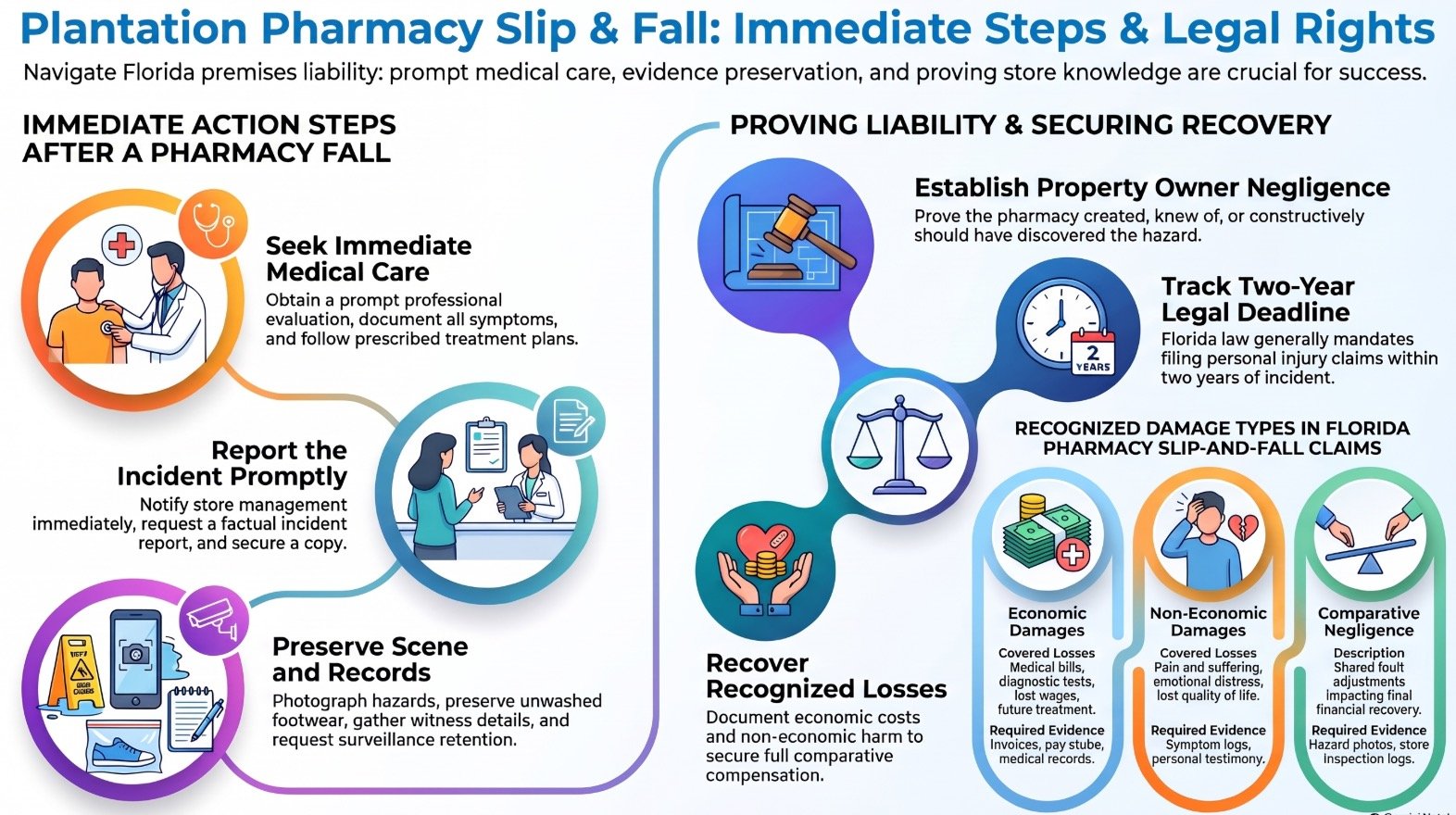
A Plantation slip-and-fall pharmacy lawyer at The Law Offices of Anidjar and Levine can assess whether a hazardous condition caused an injury and explain potential legal options. Florida claims generally require evidence that the pharmacy created the hazard, knew or should have discovered it, and failed to act reasonably. Photos, witness details, medical records, and promptly preserved surveillance or inspection logs may help clarify what happened. An attorney can also explain deadlines, insurance communications, and possible compensation. Learn more from a Plantation Personal Injury Lawyer. The following sections outline important hazards, evidence, and claim considerations.
Main Takeaways
- A Plantation pharmacy slip-and-fall lawyer can assess whether an unsafe condition caused your fall and injuries.
- Florida claims may require you to show the pharmacy created, knew about, or should have discovered the hazard.
- Photos, witness details, incident reports, and surveillance or inspection records may help document what happened.
- Seek medical care promptly and report the fall to a pharmacy manager or employee.
- A lawyer can review records, explain deadlines, organize evidence, and discuss potential compensation for legally recognized losses.
How We Can Help With Your Plantation Slip & Fall Pharmacies Injury Claim
A Plantation slip and fall lawyer can help an injured person assess whether a pharmacy’s unsafe condition caused the fall and resulting harm. Legal guidance can clarify available options and help the person make informed decisions while focusing on recovery and daily responsibilities.
The lawyer may review relevant records, explain Claim eligibility, and identify information needed to evaluate the matter. This support can help the injured person understand next steps without assuming the outcome. The lawyer may also organize documents, communicate with involved parties, and address questions about the process.
Clear attorney communication helps ensure concerns are heard and important updates are conveyed in understandable terms. A lawyer can explain deadlines, discuss the person’s goals, and provide practical guidance about pursuing a claim. By handling legal tasks with care and professionalism, the lawyer can reduce avoidable burdens and help the injured person focus on personal well-being and family needs.
Don’t Wait. Call Our Florida Personal Injury Lawyers Now!
Understanding Plantation Slip & Fall Pharmacy Injury Cases


When someone falls inside a pharmacy in Plantation, the circumstances of the incident help determine whether a property owner or operator may be legally responsible. A claim generally requires evidence that the responsible party owed a duty of reasonable care, failed to meet that duty, and caused the injury. The analysis may also consider whether the person who fell contributed to the incident and how that conduct affects recovery under Florida law.
OUR CONSULTATIONSARE FREE
START YOUR FREE CASE REVIEW

Pharmacy layout risks can affect whether customers can move safely through the premises, particularly when store design, displays, or service areas affect access and visibility. Medication pickup safety is also relevant because customers may need to traverse checkout and consultation spaces while carrying prescriptions or receiving instructions. These considerations do not establish liability on their own. Investigators may review photographs, incident reports, witness accounts, and available surveillance footage to understand the setting and sequence of events. Prompt documentation can help preserve evidence and clarify whether reasonable safety measures were in place.
Common Causes of Slip-and-Fall Accidents in Pharmacies
Common slip-and-fall hazards in Plantation pharmacies include spilled liquids and wet floors that create slippery walking surfaces. Cluttered aisles may obstruct customers’ paths, while uneven flooring can cause a sudden loss of balance. Identifying these conditions helps clarify how a fall may occur and what safety concerns may be involved.
Spilled Liquids


Spilled liquids can create hazardous conditions in Plantation pharmacies, particularly when a leak, dropped product, or customer spill is not promptly identified and cleaned. Common sources include leaking beverage containers, broken bottles, and liquids released from pharmacy or personal-care products. These hazards may be difficult to notice when shelves obscure a spill or customers move items through busy aisles. Staff members who serve customers and maintain a safe environment should follow clear Cleaning protocols and know how to initiate a prompt spill response. Regular inspections can help identify leaks or spills before someone encounters them. Employees should report hazards immediately, use appropriate procedures to address the source, and direct people away from the affected area. Consistent training and accountability can reduce preventable incidents and support safer pharmacy operations for customers and staff.
Wet Floors
Wet floors can develop in Plantation pharmacies from recently mopped surfaces, tracked-in rainwater, leaking equipment, or moisture near refrigerators and restrooms. These conditions may create hazards for customers seeking prescriptions and for employees assisting them. Pharmacies can reduce risks by promptly drying wet areas and placing clear warning signs where moisture remains during cleaning. Regular inspections help staff identify recurring leaks or damp spots before someone is injured. Floor mat placement near entrances can capture rainwater, provided mats lie flat and are maintained so they do not introduce another tripping risk. Appropriate footwear policies may also support safer working conditions for pharmacy employees, though they cannot replace proper floor maintenance. When a fall occurs, the circumstances, inspection practices, and response to the hazard may matter when evaluating responsibility and available legal options.
Cluttered Aisles
When merchandise, delivery cartons, or restocking equipment obstruct pharmacy aisles, customers may have difficulty navigating safely. Aisle congestion can reduce visibility and limit space for people using mobility aids, carrying children, or moving carefully through the store. Products left on the floor may also create unexpected hazards, especially when customers must turn quickly or reach for items on nearby shelves. Pharmacies serve people seeking medication and assistance, so maintaining clear pathways supports both safe access and attentive service. Staff members can reduce risks by promptly removing misplaced goods, storing supplies outside customer routes, and monitoring busy areas during deliveries and restocking. When staff cannot remove an obstruction immediately, clear warnings and reasonable barriers can help direct customers around it. Consistent aisle checks may help identify hazards before injuries occur.
Uneven Flooring
Uneven flooring can create a sudden trip hazard for pharmacy customers, particularly where cracked tiles, raised edges, loose mats, or changes in floor level are difficult to see. These conditions may be especially concerning for older adults, people with mobility limitations, and customers carrying prescriptions or other items. In a busy Plantation pharmacy, damaged surfaces can go unnoticed if staff do not regularly inspect customer areas. Proper tile maintenance helps identify loose, broken, or uneven tiles before they cause a fall. Flooring changes between entrances, aisles, and service counters should also be level, secure, and clearly visible. When repairs are delayed, or warnings are absent, customers may have little opportunity to avoid a hazard. Routine inspections and prompt corrective action can help pharmacies maintain safer premises and protect those they serve.
Legal Rights of Plantation Slip & Fall Pharmacy Injury Victims
People injured in a Plantation pharmacy slip and fall may have the right to seek compensation if a property owner or business failed to maintain reasonably safe conditions or address a known hazard. Florida premises liability law generally requires proof that the responsible party knew or should have known of a dangerous condition and failed to take reasonable action. A claim may help an injured person recover medical expenses, lost income, and other legally recognized losses.
Key rights and responsibilities may include:
- Seeking accountability: A victim may pursue a claim against a party whose negligence contributed to the fall.
- Preserving evidence: Medical records, incident reports, photographs, and witness details can help clarify what occurred.
- Protecting dignity: Patient privacy and prescription safety remain important when pharmacies document incidents or communicate about a claim.
Timely legal guidance can help explain deadlines, evaluate available evidence, and protect the victim’s interests while allowing the pharmacy to continue serving its community responsibly.
Why Do Plantation Slip & Fall Pharmacy Injuries Happen?
Plantation pharmacy slip and fall injuries often occur when a hazardous condition develops in an area customers use and is not corrected or clearly marked. Common causes include spilled liquids, tracked-in rainwater, loose floor mats, damaged flooring, and cluttered aisles. These conditions can be difficult to notice when customers are focused on locating prescriptions or speaking with pharmacy staff.
Medication handling may also contribute to unsafe conditions. Leaking containers, dropped products, or supplies left on the floor can create obstacles, particularly near service counters and pickup areas. A pharmacy layout that narrows walkways or places displays close to customer traffic may make hazards harder to see and avoid. Poor lighting and inadequate warning signs can further increase the risk.
Pharmacies serve people with varied mobility and vision needs, so clear paths and prompt attention to spills are important safety measures. When staff fail to inspect customer areas or address hazards within a reasonable time, preventable falls may occur, sometimes causing serious injuries.
What Should You Do After a Plantation Slip & Fall Pharmacies Injury?
After a pharmacy slip and fall, the injured person should seek prompt medical care, even if the injury initially seems minor. Report the fall to pharmacy staff or management, and request a copy of any incident report. Preserve photographs, witness details, and relevant records to document the conditions and resulting injuries.
Get Medical Care
Prompt medical evaluation is essential after a slip and fall at a Plantation pharmacy, even when an injury initially seems minor. Anyone who falls should seek an Urgent assessment from a qualified medical professional, especially if pain, swelling, dizziness, or limited movement develops. Some injuries, including head trauma and fractures, may not be immediately apparent, so delaying care can increase health risks.
For severe pain, heavy bleeding, loss of consciousness, or suspected serious injury, emergency services or an Emergency room may be appropriate. Otherwise, a prompt visit to a doctor or urgent care clinic can help identify injuries and guide treatment. The injured person should describe how the fall occurred and report all symptoms, even those that seem unrelated. Following medical advice and keeping records of evaluations, diagnoses, and treatment can support recovery and provide useful documentation.
Report The Fall
Once immediate medical needs are addressed, the injured person should report the fall to the pharmacy manager or another responsible employee as soon as practicable. A prompt report allows the pharmacy to respond to the incident and address any continuing hazard that could affect customers or staff. The injured person should clearly notify staff, describing where and when the fall occurred and the general circumstances, without speculating about its cause. If pain, mobility limits, or distress make communication difficult, a companion may report on the person’s behalf. The injured person may ask an employee to help complete an incident report and should ask how to obtain a copy. The report should be accurate and factual. If staff are unavailable, the person can contact store management through established customer service channels.
Preserve Evidence
Preserve evidence as soon as it is reasonably safe to do so, since pharmacy conditions may change quickly. The injured person or a companion can photograph the spill, floor surface, warning signs, lighting, and surrounding area before staff clean or alter the scene. Images should show both close details and wider context. The person should retain the shoes and clothing worn during the fall without washing or repairing them, and keep receipts or other records related to the visit.
Evidence preservation also includes requesting that the pharmacy retain surveillance footage, incident reports, and cleaning or inspection logs. Record witness names and contact information promptly, with brief notes on what each person observed. Also keep medical records and treatment instructions. Because documentation deadlines may apply, organize records and preservation requests without delay.
Critical Evidence in a Plantation Slip & Fall Pharmacies Injury Case
Evidence can help establish how a pharmacy hazard arose, how long it remained, and what occurred after the fall.
Essential records and observations may include:
- Incident reports and surveillance footage
- Photographs of the hazard and surrounding area
- Witness statements describing the conditions and fall
Incident Reports
Incident reports can provide a contemporaneous account of a slip and fall at a Plantation pharmacy, including when and where it occurred, who responded, and what conditions were observed. Report timing matters because a report prepared soon after an incident may preserve details before memories fade or conditions change. Report contents may identify the injured person, witnesses, employees involved, reported hazards, and steps taken after the fall. The document may also record whether staff offered assistance or arranged medical care, reflecting the pharmacy’s response to a person in need. However, an incident report is not necessarily a complete account or an admission of fault. A careful review can compare its statements with other available evidence and identify missing details. Injured individuals may request a copy and preserve related communications for legal review.
Surveillance Footage
Alongside an incident report, surveillance footage may provide a time-stamped view of a slip and fall at a Plantation pharmacy. Video may show when a customer entered, how long a spill or other condition remained, and whether staff responded before the fall. This record can help clarify disputed accounts and support a careful review of what occurred. However, footage may be overwritten under routine Video retention policies, so a prompt written request to preserve relevant recordings can be important. Coverage may also be incomplete because of camera blind spots, limited angles, or obstructed views. A recording may capture only part of the event and should be considered alongside other evidence. Preserving and reviewing footage can help establish a reliable timeline while supporting a fair assessment of the injured person’s experience.
Hazard Photographs
When a spill, leak, or other dangerous condition is present, photographs can document its location and appearance at a Plantation pharmacy. Images may show the substance, nearby flooring, warning signs, lighting, and the surrounding aisle, helping clarify how the hazard affected safe passage. Photographs taken soon after a fall can preserve details that may change when staff clean the area or move objects. Retain the original files when possible, since Image Metadata may help establish when and where an image was captured. Photo Authentication can support the reliability of the images and address questions about editing or context. Clear, well-framed photographs may help an injured person’s legal representative assess the condition and explain its significance. Careful documentation can also support efforts to improve safety for other pharmacy visitors.
Witness Statements
Photographs can document a hazard’s appearance, while witness statements may explain how it developed and what happened before or after a fall at a Plantation pharmacy. Customers, employees, and delivery personnel may have observed a spill, a leaking container, or the time staff received notice. Their accounts can help establish whether the condition existed long enough for reasonable inspection or cleanup.
Witness credibility depends on factors such as the person’s opportunity to observe, consistency, and independence from the parties. A careful record should identify each witness and preserve contact information, while distinguishing direct observations from assumptions. Statement timing also matters. Accounts gathered soon after the incident may preserve details that later become difficult to recall, although each witness should describe events in their own words. Respectful, accurate documentation can assist those evaluating responsibility and support a fair review of the injured person’s claim.
Long-Term Effects of Plantation Slip & Fall Pharmacies Injuries
A slip and fall in a Plantation pharmacy can lead to effects that persist well beyond the initial injury. Some individuals experience chronic pain or reduced mobility that interferes with daily activities and work. Lasting emotional effects, including anxiety about falling again, may also affect their well-being.
Chronic Pain
Chronic pain can persist long after a slip and fall at a Plantation pharmacy, even after initial injuries appear to recover. Lingering discomfort may follow fractures, spinal injuries, or damage to muscles and connective tissue. In some cases, nerve damage causes burning, tingling, or sharp sensations that interfere with sleep and concentration. A medical evaluation can help identify the source of symptoms and guide appropriate care. Treatment may include medication, physical therapy, or other forms of Pain management tailored to the person’s condition. Consistent records of symptoms, appointments, and treatment can clarify how the injury affects daily responsibilities and overall well-being. For people who care for or support others, persistent pain may also make those duties harder. Timely attention can support recovery and document lasting effects.
Reduced Mobility
Persistent pain after a pharmacy slip-and-fall may also limit mobility, especially when injuries affect the legs, hips, back, or balance. Reduced movement can make routine activities, such as walking through a store, climbing stairs, or preparing meals, more difficult. For individuals who regularly assist family members or serve their communities, these limitations may also affect caregiving and volunteer responsibilities. Recovery may require physical therapy, home modifications, or Mobility aid adjustments to support safe movement and reduce fall risks. Depending on the injury and medical guidance, a person may need a cane, walker, or wheelchair. Accessible transportation can help maintain access to medical appointments, work, and necessary services when driving or using public transit becomes difficult. Documenting mobility changes and related expenses may help evaluate the injury’s long-term impact.
Lasting Emotional Effects
Even after physical injuries begin to recover, a pharmacy slip and fall may leave lasting emotional effects. Emotional trauma can include persistent fear, embarrassment, or distress associated with the incident. A person may become uneasy when entering pharmacies, walking across polished floors, or encountering similar conditions. These anxiety triggers can interfere with routine errands and make it harder to maintain independence or fulfill responsibilities to family and community.
The effects may also disrupt sleep, concentration, and confidence, especially when a fall causes serious injury or happens in public. Some individuals avoid necessary appointments or shopping because they fear another accident. Support from trusted people and qualified professionals may help address these concerns. When emotional symptoms persist, they warrant attention alongside physical recovery. Documenting their impact can also help explain the full consequences of the fall.
Proving Liability in Plantation Slip & Fall Pharmacies Injury Cases
Proving liability in a Plantation pharmacy slip and fall case requires evidence that the business failed to use reasonable care and that the failure caused the injury. Evidence may include photographs, witness accounts, incident reports, and surveillance footage showing the hazard and the circumstances of the fall. Store inspection records can help establish how often employees checked aisles and whether they followed reasonable cleanup procedures.
The injured person generally must show that the pharmacy created the dangerous condition, knew about it, or should have discovered it through reasonable inspections. Constructive notice may be supported by evidence that a spill or obstruction remained long enough to be found and addressed. The condition’s location, appearance, and surrounding circumstances may also help explain how it developed.
A pharmacy may argue that the injured person failed to exercise reasonable care. Under comparative negligence principles, responsibility may be divided according to each party’s conduct. Careful documentation helps clarify what happened and supports a fair assessment of responsibility while serving the interests of those affected.
Dealing With Insurance Companies After a Plantation Slip & Fall Pharmacies Injury
After a pharmacy slip and fall in Plantation, an insurer may contact the injured person to discuss the incident and evaluate a potential claim. The insurer may request details about the fall, injuries, treatment, and prior medical conditions. Responses should be accurate and limited to what the person knows; speculation can create confusion or affect how the account is interpreted.
Recorded statements may be requested soon after an incident, sometimes before the injured person understands the full extent of the harm. Before agreeing, the person may seek guidance from a qualified attorney and clarify whether participation is required. It is also important to keep copies of correspondence and avoid signing broad medical authorizations or settlement documents without review.
Insurers may question whether a hazard existed, whether the pharmacy had notice, or whether the fall caused the reported injuries. If claim denials occur, review the written explanation carefully and preserve supporting records. Clear, respectful communication can help protect the injured person’s interests while allowing the insurer to assess the matter fairly.
Don’t Wait. Call Our Florida Personal Injury Lawyers Now!
What to Expect During a Plantation Slip & Fall Pharmacies Injury Claim Process
A Plantation pharmacy slip-and-fall claim typically begins with an evaluation of the incident, the injuries, and the available evidence. The process may then involve collecting records and witness statements, followed by negotiations with the responsible parties or their insurers. If the parties cannot reach a settlement, the claim may proceed to trial.
Initial Case Evaluation
During an initial case evaluation, a lawyer reviews how the fall occurred, the injuries sustained, and the available evidence to assess whether the pharmacy may be legally responsible. This Liability Assessment considers whether a hazardous condition existed, whether reasonable steps were taken to address it, and whether the pharmacy had notice of the danger. The lawyer may also consider how the incident affected the injured person’s health, work, and daily responsibilities. Claim Valuation involves estimating potential damages, including medical expenses, lost income, and other documented losses. The assessment helps determine whether pursuing a claim is appropriate and what issues may require further attention. A careful evaluation also clarifies the legal process, likely challenges, and possible outcomes, enabling the injured person to make informed decisions while preserving resources for recovery and community obligations.
Evidence Collection
Because evidence can change or disappear quickly, a Plantation slip and fall claim often begins with documenting the scene and identifying relevant records. Photographs may show the hazard, surrounding conditions, warning signs, and where the fall occurred. Witness names and contact details can help preserve independent accounts while memories remain clear. Pharmacy records, incident reports, cleaning schedules, and surveillance footage may also clarify how the condition arose and whether staff had notice. Preserving evidence may require prompt written requests, since video systems may overwrite recordings and routine records may be discarded. Counsel may coordinate collection and maintain chain documentation for physical items, digital files, and copies of records. Careful organization helps establish what happened and supports a fair review of the injured person’s experience and the pharmacy’s response.
Negotiations and Settlement
After reviewing the available evidence and medical records, settlement discussions may begin with the pharmacy’s insurer or legal representatives. These discussions typically consider the circumstances of the fall, documented injuries, treatment needs, lost income, and other supported losses. Settlement offers may differ from the injured person’s assessment of fair compensation, so each proposal requires careful review. A negotiation strategy can account for the strength of the evidence, the likely course of medical care, and the practical costs of continued discussions. Counsel may request additional documentation, explain how the incident affected daily responsibilities, and respond to disputed claims about fault or damages. The injured person generally retains authority to accept or reject an offer. Before finalizing any agreement, the injured person should understand its terms and scope, including how it affects future claims.
Trial and Resolution
If settlement negotiations do not resolve a Plantation pharmacy slip-and-fall claim, the injured person may pursue the case in court. The process generally begins with pretrial procedures, including evidence exchange, motions, and efforts to clarify disputed facts. Jury selection allows both sides to question prospective jurors and identify potential conflicts or bias. During trial, each party presents documents, photographs, witness accounts, and expert opinions relevant to the incident and resulting injuries. Trial testimony may address the store’s inspection practices, the hazard’s duration, medical treatment, and the effect on daily activities. The judge determines legal issues, while the jury evaluates evidence and decides liability and, when appropriate, damages. A verdict may end the dispute, but post-trial motions or an appeal may follow. Throughout, careful preparation supports a fair resolution and accountability.
Compensation for Plantation Slip & Fall Pharmacies Injury Damages
Compensation after a slip-and-fall injury at a Plantation pharmacy may cover medical expenses, lost income, reduced earning capacity, and pain and suffering. A claim may also include costs for diagnostic testing, medication, emergency treatment, and follow-up appointments when supported by medical records. Pharmacy rehabilitation costs, such as physical therapy or occupational therapy, may be considered if they are reasonably connected to the fall. Future care expenses may be relevant when a qualified provider documents the need for ongoing treatment, assistive devices, or additional procedures.
The amount available depends on the injury’s effects, the evidence establishing how the incident occurred, and applicable legal requirements. Receipts, wage records, treatment notes, and professional assessments can help support the claimed losses. A careful review may also consider whether the injured person needs support with daily activities or a gradual return to work. Any proposed resolution should reflect documented needs without assuming every expense will be covered. Legal guidance can help clarify the evidence required and the options available.
Economic vs Non-Economic Damages in Plantation Slip & Fall Pharmacies Cases
In Plantation pharmacy slip-and-fall cases, economic damages may include medical expenses, lost income, and other measurable financial losses. Non-economic damages address less quantifiable harm, such as pain, emotional distress, and reduced quality of life. Establishing either category generally requires credible evidence that connects the losses to the fall.
Economic Damages
Economic damages in a Plantation pharmacy slip-and-fall case are financial losses that can be documented and assigned a monetary value. They may include reasonable medical expenses related to the injury, such as emergency care, diagnostic testing, medication, rehabilitation, and follow-up treatment. Records, invoices, and payment statements can help establish the amount and connection to the fall. If the injury prevents a person from working, pay records, employer statements, or tax documents may support a Past Wage Loss claim. When lasting limitations affect the ability to earn income, evidence may also support a claim for Diminished Earning Capacity. Future treatment costs and projected income losses may require professional assessments. Careful documentation helps clarify the financial consequences and supports a fair evaluation of the claim, while preserving resources for recovery and future needs.
Non-Economic Damages
While economic damages address measurable financial losses, non-economic damages may account for the physical pain, emotional distress, and disruption to daily life caused by a pharmacy slip and fall in Plantation. These losses recognize that an injury can affect a person beyond medical bills or missed income. Persistent pain may limit mobility, interfere with household responsibilities, or make ordinary activities difficult. Emotional distress can include anxiety, fear of falling again, or changes in sleep and mood. Loss of enjoyment of hobbies, family gatherings, and community service may also reflect the injury’s broader impact. The nature and extent of these damages depend on the circumstances and applicable law. In a claim, non-economic damages may be considered alongside economic losses to present a fuller picture of how the fall affected the injured person’s life.
Proving Your Losses
To support a claim after a pharmacy slip and fall in Plantation, the injured person must document both financial losses and the injury’s effects on daily life. Economic damages may include medical bills, rehabilitation costs, and income lost during recovery. Paycheck Replacement may be supported by wage statements, employer records, and medical restrictions showing why work was missed. Receipts and invoices can establish treatment expenses and other out-of-pocket costs. Non-economic damages address pain, emotional distress, and limitations on ordinary activities. Consistent medical records and a clear account of changes in daily routines can help explain these effects. If an injury prevents household tasks, evidence of paid assistance or the need for Household Services may also be relevant. Organized documentation helps present a complete, credible account of losses and supports fair claim consideration.
When a Plantation Slip & Fall Pharmacies Injury Case Goes to Trial vs. Settlement
A Plantation pharmacy slip-and-fall injury case may settle or proceed to trial, depending on the evidence, the parties’ positions, and the likely costs and risks of litigation. Settlement can provide a defined outcome without the uncertainty, delay, and expense of a courtroom proceeding. Negotiations may address documented losses and an injured person’s practical needs while allowing the parties to avoid a public dispute. A settlement generally requires agreement on compensation and the terms of resolution.
If negotiations do not produce an acceptable agreement, the case may proceed to trial. Each side presents evidence, and witnesses may testify about the fall, the conditions at the pharmacy, and the resulting harm. The judge or jury evaluates the evidence and determines the outcome. Jury deliberations can add uncertainty because the decision rests on how jurors assess the facts and witnesses’ credibility. The choice between settlement and trial depends on case-specific considerations, not a guaranteed result.
Florida Laws That May Affect Your Plantation Slip & Fall Pharmacies Case
The decision to settle or proceed to trial may depend in part on Florida laws governing premises liability and injury claims. These rules help determine whether a pharmacy may be responsible for unsafe conditions and how an injured visitor’s conduct may affect recovery. Understanding them can support informed decisions and help protect the interests of people seeking accountability.
- Premises liability: A property owner or operator may have a duty to use reasonable care to maintain the premises and address hazards. Evidence about notice, inspections, warnings, and cleanup practices may be important.
- Comparative negligence: Florida’s comparative negligence rules may reduce compensation when an injured person shares responsibility for a fall. The assigned share of fault can affect the amount recoverable.
- Evidence and damages: Medical records, incident reports, photographs, and witness accounts may help establish what happened and the losses involved. Applicable legal standards guide how courts assess that evidence.
Each case depends on its specific facts, and legal advice can clarify how these principles may apply.
The Statute of Limitations for Plantation Slip & Fall Pharmacies Injury Cases
How long does an injured person have to bring a claim after a pharmacy slip and fall in Plantation? Under Florida law, the Filing Deadline for most negligence claims is generally two years from the date of the fall. Missing this deadline can prevent an injured person from pursuing compensation, no matter how serious the harm. Prompt attention to the date matters because evidence may also become harder to preserve over time.
Some circumstances may affect when the limitations period begins or how long it lasts. These Limitations Exceptions can involve a claimant’s age, legal incapacity, or a defendant’s concealment or absence from the state, depending on the facts and applicable law. Special rules may also apply when a claim involves a government entity, including separate notice requirements and shorter deadlines.
Do not assume an exception applies or rely on an estimated deadline. The governing period depends on the claim and circumstances, so timely review of the relevant dates is important to protect the ability to seek accountability.
Don’t Wait. Call Our Florida Personal Injury Lawyers Now!
How a Plantation Slip & Fall Pharmacies Lawyer Can Help You
When a pharmacy fall causes injury, a Plantation slip and fall lawyer can investigate the circumstances, identify potentially responsible parties, and explain your legal options. The lawyer’s work can help an injured person pursue accountability while supporting safer conditions for other customers and employees. A focused Legal Consultation may clarify how evidence, property ownership, and store procedures affect a claim.
A lawyer may assist by:
- Preserving evidence: Securing incident reports, photographs, surveillance footage, and witness statements before they are lost or altered.
- Assessing responsibility: Reviewing inspection records and maintenance practices to determine whether the pharmacy, property owner, or another party may have contributed to the hazard.
- Developing Case Strategy: Organizing medical documentation, evaluating losses, and preparing a reasoned approach to settlement discussions or litigation.
This guidance can reduce confusion during a demanding recovery period. By presenting documented facts and clearly explaining available remedies, counsel can help the injured person make informed decisions. A careful claim may also encourage responsible parties to address unsafe conditions and reduce risks for the wider community.
When to Contact a Plantation Slip & Fall Pharmacies Lawyer
Prompt legal guidance may be important after a pharmacy fall, particularly when injuries require medical care or the cause of the hazard is unclear. A person may contact a Plantation slip and fall pharmacies lawyer soon after receiving necessary treatment, especially if symptoms worsen or the incident affects daily responsibilities. Early advice can help clarify what information to preserve, including photographs, witness details, incident reports, and medical records.
Recognizing Negligence may require examining whether a spill, obstruction, uneven surface, or other dangerous condition was present and whether reasonable steps were taken to address it. When the cause is disputed, surveillance footage or store records may become relevant, and such materials may not remain available indefinitely. Prompt contact can help a person understand practical next steps without delaying care or making unsupported claims.
Choosing Representation is a personal decision, but it may matter when questions arise about responsibility, insurance communications, or deadlines. A consultation can explain the process and available options, helping an injured person make informed decisions while focusing on recovery and responsibilities to others.
Why You Need an Experienced Plantation Slip & Fall Pharmacies Lawyer
An experienced Plantation slip and fall pharmacy lawyer can assess whether a pharmacy’s conduct contributed to an injury and explain the evidence needed to support a claim. Such an attorney can examine how a spill, misplaced merchandise, uneven flooring, or another hazard developed and whether staff had a reasonable opportunity to address it. This review may include incident reports, photographs, witness accounts, maintenance records, and available surveillance footage.
Pharmacy cases can involve safety duties that are not immediately apparent. A lawyer can evaluate whether Pharmacy Safety Training prepared employees to recognize and respond to hazards, and whether Store Inspection Protocols were followed. These details may help establish how the condition arose, how long it remained, and whether reasonable precautions could have prevented harm.
Experienced legal guidance can also help an injured person understand applicable deadlines, preserve relevant evidence, and communicate with insurers. By clarifying the issues and organizing reliable documentation, counsel can support a fair assessment of the claim while allowing the injured person to focus on recovery and daily responsibilities.
How to Choose the Right Plantation Slip & Fall Pharmacies Lawyer for Your Case
Choosing the right Plantation slip and fall pharmacy lawyer requires more than confirming that an attorney handles injury claims. A careful review can help an injured person select counsel prepared to assess the incident, preserve evidence, and pursue fair compensation while respecting the needs of everyone affected.
Attorney credentials should include a valid Florida license and experience with premises liability cases involving pharmacies or similar businesses. The attorney should explain how local rules, surveillance footage, inspection records, and witness statements may affect a claim. Clear answers about case strategy and likely challenges can help a person make an informed decision.
Prospective clients should also discuss fee structures before signing an agreement. Many injury lawyers work on a contingency basis, but the agreement should state how fees, case expenses, and any recovery are calculated. A consultation offers an opportunity to assess communication, responsiveness, and willingness to answer questions. The right fit is a lawyer who provides realistic guidance and treats the client’s concerns with care.
About The Law Offices of Anidjar & Levine
The Law Offices of Anidjar & Levine represents people injured in incidents such as pharmacy slip and falls, focusing on evaluating the circumstances and explaining available legal options. The firm can review how a fall occurred, what hazards may have contributed, and whether evidence supports a claim. Its approach may include gathering incident reports, photographs, witness accounts, and relevant medical records to clarify the facts.
Firm history and attorney credentials are useful considerations for people considering legal representation. The firm’s attorneys handle personal injury matters and can explain the steps to pursue compensation, including deadlines and potential challenges. Individuals seeking help for an injured family member may also ask how the firm communicates with clients and coordinates case-related tasks.
A consultation can provide an opportunity to discuss the incident, available documentation, and questions about representation. No outcome is guaranteed, and each case depends on its specific evidence and circumstances. Clear information can help injured people make informed decisions while attending to recovery and responsibilities to others.

Frequently Asked Questions
Can I File a Claim if I Slipped at a Pharmacy While Picking up a Prescription?
You may file a claim after slipping at a pharmacy while picking up a prescription, but recovery depends on evidence that the pharmacy failed to take reasonable steps to address a hazard and that the hazard caused an injury. Wet Floor Evidence, such as photographs, incident reports, witness details, and prompt medical records, may help establish what occurred. Prescription Pickup Safety requires pharmacies to maintain reasonably safe customer areas. Rules and deadlines vary by location.
Does a Pharmacy’s Responsibility Differ From Other Businesses When Customers Fall?
A pharmacy’s responsibility generally does not differ fundamentally from that of other businesses: it must take reasonable steps to keep customer areas safe and address known hazards. Pharmacy safety protocols may require prompt inspection and cleanup, clear warnings, and safe access to aisles and service counters. Prescription area hazards, including spills, clutter, or obstructed pathways, may create liability if staff knew or reasonably should have known of the danger and failed to respond appropriately.
Can I Pursue a Claim if I Was Partly Responsible for My Fall?
A person may still pursue a claim after a fall even when partly responsible. Under Comparative Negligence rules, responsibility may be divided between the injured person and the pharmacy or other responsible party. Shared Fault can reduce compensation according to the person’s assigned share of responsibility, and some jurisdictions bar recovery if that share reaches a legal threshold. Evidence about the hazard, warnings, and conduct can affect the outcome; local legal advice can clarify applicable rules.
What if I Fell Because of a Medication Side Effect Rather Than a Property Hazard?
A fall caused by Medication Side Effects or a Drug Reaction may involve a different claim than one caused by a property hazard. Responsibility may depend on whether the medication was correctly prescribed and dispensed, whether warnings were adequate, and whether the person followed instructions. Medical records, prescription labels, and incident details can help clarify the cause. A qualified attorney can assess potential claims against responsible providers or manufacturers and explain available options.
Can a Family Member Handle My Claim if My Injuries Prevent Me From Doing So?
A family member may assist with a claim if injuries prevent the injured person from managing it, but authority depends on the circumstances and applicable law. A signed authorization or power of attorney may permit help with communications and paperwork. If the person lacks capacity, temporary legal guardianship may be required; medical decision authority alone does not automatically authorize someone to pursue a legal claim. Counsel can explain the appropriate process and protect the person’s interests.
—————————
A slip and fall at a Plantation pharmacy can cause serious injuries, medical expenses, and uncertainty about what comes next. The Law Offices of Anidjar and Levine can review the circumstances, explain the injured person’s legal options, and pursue compensation if negligence contributed to the fall. A Plantation Personal Injury Lawyer can also explain how deadlines and available evidence may affect a claim. Every case depends on its facts, and no particular outcome is guaranteed.