

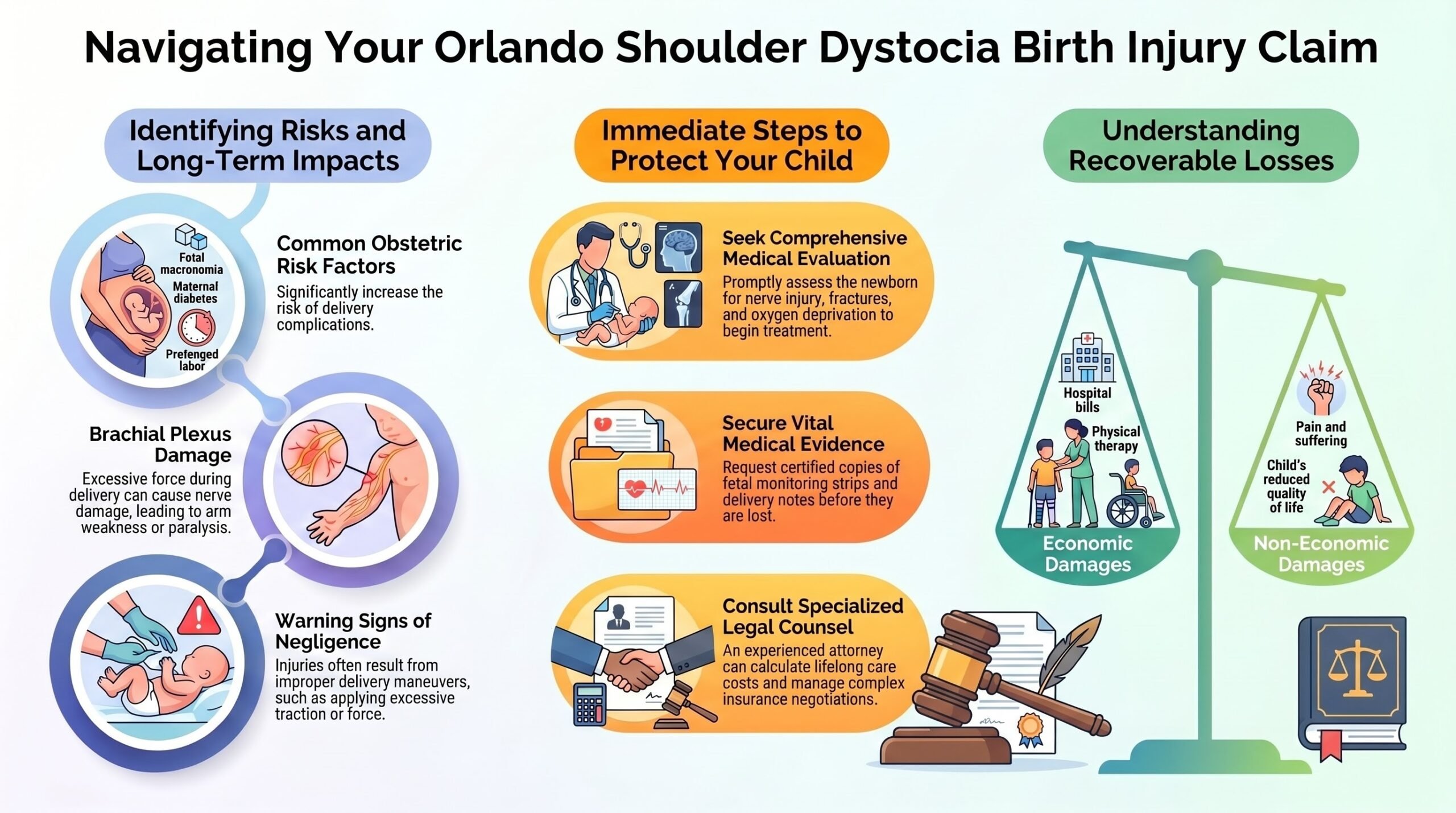
An Orlando shoulder dystocia injury lawyer at the Law Offices of Anidjar and Levine can help you secure fetal monitoring strips, delivery records, and neonatal evaluations before evidence is lost.
You can also get guidance on immediate medical follow-up for brachial plexus injuries, fractures, or oxygen-related complications, while your lawyer assesses whether excessive traction, delayed intervention, or other delivery errors caused harm.
If your child faces long-term therapy or surgery, a strong claim can protect resources for future care, and the next sections explain how.
For related support, you may also consult an Orlando Medical Malpractice Lawyer.
Main Takeaways
- Seek immediate medical care for the mother and newborn to assess nerve injury, fractures, oxygen deprivation, bleeding, and other delivery-related complications.
- An Orlando shoulder dystocia injury lawyer reviews records, fetal monitoring, and provider notes to identify delayed intervention, excessive traction, or other errors.
- Common risk factors include fetal macrosomia, maternal diabetes, prolonged labor, cephalopelvic disproportion, malposition, and improper delivery techniques.
- Proving liability requires expert medical review linking departures from accepted delivery standards to brachial plexus damage or other birth injuries.
- A lawyer can gather evidence, identify responsible parties, calculate long-term care costs, and handle insurers while your family focuses on recovery.
How We Can Help With Your Orlando Shoulder Dystocia Injury Claim
Find your way through this process with a legal team that understands both the medical and legal issues involved in shoulder dystocia claims. You need advocates who listen carefully, organize the facts, and provide steady, informed guidance to protect your family’s interests from the beginning.
We help you gather records, identify responsible parties, and build a clear account of how the birth trauma affected your child and household. You receive practical direction at every stage, including communication with insurers, preparation of supporting evidence, and evaluation of losses tied to ongoing care. Our team also develops compensation strategies that reflect present needs and future demands, so you can focus on serving your loved ones with stability and confidence.
Throughout your claim, you benefit from disciplined case management, timely updates, and legal counsel grounded in experience. With that support, you can pursue accountability and secure resources that help your family move forward with dignity and care.
Understanding Orlando Shoulder Dystocia Injury Cases
After securing legal support, it helps to understand how Orlando shoulder dystocia injury cases are evaluated and why these claims often involve both medical facts and questions of negligence. You need to show what happened during labor, how the team responded, and whether accepted delivery protocols were followed at each stage.


Your case often turns on records, fetal monitoring strips, provider notes, and expert review. These sources help clarify timing, communication, and the actions taken when the baby’s shoulder became lodged. You may also need to connect those facts to the child’s condition, including brachial plexus damage, fractures, oxygen loss, or other neonatal outcomes. In many claims, the central issue is whether the providers acted reasonably under the circumstances and accurately documented the care. When you understand that process, you can better advocate for your child, support your family, and pursue accountability in ways that promote safer care for other families in Orlando.
Common Causes of Orlando Shoulder Dystocia
OUR CONSULTATIONSARE FREE
START YOUR FREE CASE REVIEW

When you examine the common causes of shoulder dystocia, you’ll see that fetal macrosomia and maternal diabetes can markedly increase the risk of this obstetric emergency. You should also understand that prolonged labor may signal mounting complications, especially when the baby’s shoulders have difficulty passing through the birth canal. In some cases, improper delivery techniques can worsen the situation and contribute to serious injuries for both mother and child.
Fetal Macrosomia Risks
Because fetal macrosomia can make a baby markedly larger than average, it increases the likelihood that the baby’s shoulder will become lodged behind the mother’s pelvic bone during delivery, creating a serious risk of shoulder dystocia. When you understand this risk, you can better advocate for careful prenatal monitoring and delivery planning that protects both mother and child.


You should know that excessive fetal growth may be linked to high gestational weight, prolonged pregnancy, or prior deliveries involving larger infants. If providers don’t recognize these warning signs, labor can become more dangerous, increasing the chance of fractures, nerve injuries, oxygen deprivation, and neonatal hypoglycemia. By asking informed questions and encouraging attentive care, you help support safer decisions, earlier intervention when needed, and a delivery approach centered on preventing avoidable harm for families.
Maternal Diabetes Factors
Recognizing maternal diabetes as a significant risk factor can help you understand why shoulder dystocia may occur even with otherwise routine prenatal care. When blood sugar remains elevated during pregnancy, your baby may develop broader shoulders and increased body fat, which can complicate delivery. Careful insulin management matters because unstable glucose levels can affect fetal growth patterns in ways that are not always predictable.
You also should know that maternal diabetes may appear alongside gestational hypertension, adding further stress to pregnancy and increasing the need for close monitoring. By understanding these factors, you can better advocate for safe care, ask informed questions, and support decisions that protect both mother and child. This knowledge helps you serve your family with diligence, compassion, and responsibility throughout pregnancy and birth.
Prolonged Labor Complications
Although labor doesn’t always follow a predictable timeline, prolonged labor can increase the risk of shoulder dystocia by placing added strain on the delivery process and signaling that the baby may have difficulty moving through the birth canal. When labor stalls, you may see signs that call for careful assessment, timely decisions, and prolonged monitoring to protect both mother and child.
As someone committed to helping families, you should understand how labor fatigue can affect contractions, maternal pushing efforts, and the baby’s descent. Extended labor may indicate cephalopelvic disproportion, fetal positioning problems, or other barriers that increase delivery risks. When providers fail to respond appropriately to these warning signs, preventable injuries can follow. Recognizing complications of prolonged labor helps you advocate for safer care, greater accountability, and better outcomes for vulnerable newborns and mothers.
Improper Delivery Maneuvers
When labor becomes difficult, the provider’s response during delivery can determine whether shoulder dystocia is resolved safely or made worse by improper techniques. If your medical team uses the wrong techniques, your baby can suffer preventable harm within moments. Pulling on the head with excessive traction, rotating the infant incorrectly, or failing to recognize malpositioned shoulders can increase pressure on delicate nerves and blood vessels. You trust providers to act with skill, patience, and sound judgment when complications arise.
Proper training matters because each movement during delivery should relieve obstruction rather than intensify it. When a provider ignores accepted standards, delays safer interventions, or applies force instead of controlled technique, you may face lasting injuries and difficult questions. Careful evaluation can help you protect your child and pursue accountability.
Legal Rights of Orlando Shoulder Dystocia Injury Victims
If your child suffered harm from shoulder dystocia during delivery in Orlando, you may have the right to pursue compensation when a medical provider failed to meet the accepted standard of care. Florida law protects your ability to seek accountability, protect your family’s future, and uphold crucial Patient rights after a preventable birth injury.
You may be entitled to recover damages for medical treatment, therapy, future care, and other losses that affect your child and family.
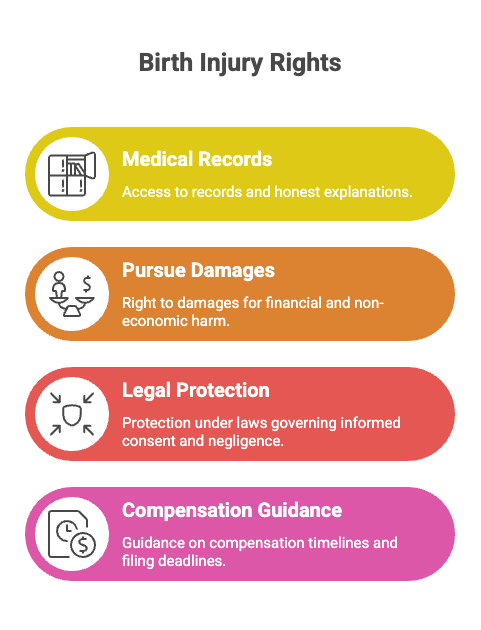
Your legal rights often include:
- Access to medical records and honest explanations of the delivery events.
- The right to pursue damages for financial and non-economic harm.
- Protection under laws that govern informed consent and professional negligence.
- Guidance regarding Compensation timelines and filing deadlines under Florida law.
Steps to Take After an Orlando Shoulder Dystocia Injury
After an Orlando shoulder dystocia injury, you should seek immediate medical care to safeguard your child’s health and identify the full extent of the harm. You should also preserve all medical records, test results, and billing documents, because this evidence can clarify what occurred during delivery. Once you’ve addressed urgent medical needs, you should consult an injury lawyer who can assess your case and explain your legal options.
Seek Immediate Medical Care
Above all, seek immediate medical care for both the newborn and the mother, because prompt evaluation can identify nerve damage, fractures, oxygen-related complications, and other delivery injuries before they worsen. A quick assessment also helps physicians initiate prompt medical intervention, monitor breathing, and address maternal bleeding, pain, or infection risks without delay.
You should ask for a thorough examination, follow all recommended testing, and watch closely for changes in movement, feeding, alertness, or breathing. If your child shows weakness in an arm or signs of distress, insist on immediate follow-up care. You also need evaluation for tearing, hemorrhage, and other postpartum complications that may not be obvious at first. Delayed treatment can increase harm, prolong recovery, and place greater strain on your family’s ability to serve and support one another well.
Preserve Medical Records
Because medical records often become the clearest evidence of what happened during labor and delivery, you should preserve every document related to the shoulder dystocia injury as soon as possible. Request certified copies of prenatal records, labor notes, fetal monitoring strips, imaging, discharge papers, billing statements, and follow-up evaluations. Keep a written timeline that identifies providers, dates, symptoms, and conversations.
Use digital storage to scan and organize each record, photograph, and prescription in labeled folders, and keep paper originals in a secure place. If a provider delays releasing records, document each request carefully. Save emails, portal messages, and receipts for copying fees. If records appear incomplete, note the missing items immediately, since a later medical subpoena may be needed to obtain full documentation. Careful preservation supports accountability, informed treatment, and responsible service to your family.
Consult An Injury Lawyer
Once you’ve gathered and organized the medical records, you should speak with an Orlando shoulder dystocia injury lawyer as soon as possible. You need clear guidance to protect your child, honor your family’s needs, and pursue accountability through lawful, informed action.
An attorney can review delivery notes, witness statements, and medical consent forms to identify whether errors occurred before, during, or after birth. You should ask about deadlines, likely evidence, and how the firm handles fee disputes, costs, and communication. Early legal advice also helps prevent harmful statements to insurers or providers. By consulting counsel promptly, you strengthen your ability to secure resources for treatment, therapy, and long-term care. Taking this step serves your family and supports safer medical practices for other parents and children throughout your community.
How an Orlando Shoulder Dystocia Injury Lawyer Can Help You
When your child suffers harm from shoulder dystocia during delivery, an Orlando shoulder dystocia injury lawyer can help you identify what went wrong, preserve vital medical evidence, and determine whether the medical team failed to follow the accepted standard of care. You need clear answers about birth trauma and neonatal outcomes, and your lawyer works to secure them with discipline and compassion.
An Orlando shoulder dystocia injury lawyer helps uncover what went wrong and whether preventable delivery errors caused your child’s birth trauma.
Your attorney can support your family by:
- Reviewing records, fetal monitoring strips, and delivery notes for preventable errors.
- Consulting qualified medical experts to evaluate clinical decisions and timing.
- Calculating damages, including medical expenses and the support your child now requires.
- Managing insurers and litigation so you can focus on your family and community.
Long-Term Effects of Orlando Shoulder Dystocia Injuries
You may face lasting consequences after a shoulder dystocia injury, especially when brachial plexus damage affects your child’s strength, sensation, and arm function. As your child grows, you may also see ongoing mobility challenges that interfere with daily activities, physical development, and independence. You should also prepare for future medical needs, which may include therapy, expert care, assistive devices, and long-term treatment planning.
Brachial Plexus Damage
Consider brachial plexus damage, one of the most serious long-term effects of shoulder dystocia, because these nerves control movement and sensation in a child’s shoulder, arm, and hand. When excessive force or poor birth positioning stretches these nerves, your child may face weakness, numbness, or partial paralysis that demands prompt evaluation.
As you seek answers and serve your family with care, you should know that outcomes vary widely. Some children improve through nerve regeneration, while others need ongoing medical monitoring, therapy, or surgery to preserve function and reduce pain. Early diagnosis often shapes the best path forward, and complete records can reveal whether preventable delivery errors contributed to the injury. By understanding brachial plexus damage, you can advocate effectively, support your child’s treatment, and pursue accountability when negligence caused lasting harm.
Ongoing Mobility Challenges
Living with ongoing mobility challenges can affect nearly every part of a child’s development after a shoulder dystocia injury. You may notice difficulty with reaching, grasping, crawling, dressing, or participating in school and play alongside peers. These limitations can affect confidence, independence, and the ability to fully engage in family and community life.
As you care for your child, consistent physical therapy can support strength, coordination, and safer movement patterns. In some situations, adaptive equipment may help your child manage daily routines with greater stability and less frustration. You may also need to advocate for appropriate educational accommodations and accessible environments that promote inclusion. When mobility remains limited, your family often carries added responsibilities, making practical support, clear guidance, and accountability especially important as you pursue answers and meaningful assistance.
Future Medical Needs
Because shoulder dystocia injuries can evolve over time, a child’s future medical needs often extend well beyond the delivery room and early rehabilitation. You may face years of specialist visits, updated imaging, targeted therapy, and careful monitoring as your child grows and develops.
You may also need to plan for future surgeries if nerve damage, joint instability, or limited range of motion persists. In some cases, assistive devices can support daily function, improve mobility, and help your child participate more fully at home, in school, and in the community. As someone committed to caring for others, you understand how important it is to secure resources that protect your child’s dignity, independence, and long-term well-being. A thorough legal claim can account for these projected costs and changing needs over time.
Proving Liability in Orlando Shoulder Dystocia Injury Cases
Accountability in a shoulder dystocia injury case depends on showing that a medical provider failed to act according to the accepted standard of care during labor and delivery, and that this failure directly caused harm to your child or to you. To prove liability, you must connect medical records, delivery notes, fetal monitoring strips, and witness statements to specific errors, such as delayed intervention, excessive traction, or poor communication.
You also need expert testimony from qualified physicians who can explain what competent providers should have done under similar circumstances. These experts help clarify causation, rebut defense claims, and address risk apportionment when multiple providers participated in your care. By building a clear timeline and identifying preventable mistakes, you strengthen your position and support accountability. This process does more than seek compensation. It helps protect other families by encouraging safer obstetrical practices, stronger training, and more careful decision-making in Orlando delivery rooms for everyone.
Dealing With Insurance Companies After an Orlando Shoulder Dystocia Injury
After a shoulder dystocia injury, insurance representatives may reach out quickly, but you shouldn’t assume their interests align with yours. You need to protect your family by speaking carefully, limiting recorded statements, and preserving every document related to treatment, billing, and communication. Small inconsistencies can affect insurance negotiation and weaken the value of your claim.
You also should remember that an early settlement offer may not reflect the full harm your child and family will face. When you respond thoughtfully, you create space to advocate for proper care, accountability, and long-term support. If an insurer questions medical records or minimizes the injury, you must take that seriously. A claim denial does not mean the case lacks validity. It often means the insurer believes you will accept less or walk away. By staying organized and seeking informed guidance, you strengthen your position and remain focused on serving your child’s best interests with diligence daily.
What to Expect During an Orlando Shoulder Dystocia Injury Claim Process
During your Orlando shoulder dystocia injury claim, you can expect a clear sequence of steps, beginning with an initial case evaluation and a careful review of your medical records. Your attorney will then file the claim, gather supporting evidence, and assess liability and damages with precision. As your case progresses, you’ll likely pursue a settlement first, but you should also be prepared for trial if the opposing side won’t offer fair compensation.
Initial Case Evaluation
What should you expect when you begin an Orlando shoulder dystocia injury claim? You can expect a focused conversation about your labor, delivery, and your child’s condition, so your attorney can identify crucial concerns and explain whether the facts suggest negligence. During this initial case evaluation, you’ll outline what happened before and during birth, including prenatal counseling, birth positioning, and the response after complications arose.
You’ll also discuss your goals, your family’s needs, and how the legal process may support accountability and future care. Your attorney should answer questions clearly, describe possible timelines, and explain fee arrangements, communication practices, and next steps. This meeting helps you understand your options, protect your family’s interests, and decide how to move forward with confidence while seeking justice for your child.
Medical Record Review
Once your attorney understands the basic facts of your case, the next step is a careful review of the medical records tied to the pregnancy, labor, delivery, and your child’s treatment. Your legal team begins record retrieval from hospitals, obstetric providers, nurses, and pediatric consultants. They compare notes, timelines, fetal monitoring strips, delivery summaries, and neonatal records to identify whether accepted standards of care were followed.
During this stage, you can expect close attention to missing entries, altered timestamps, and coding discrepancies that may obscure what happened in the delivery room. Your attorney may also consult qualified medical experts to interpret intricate documentation and explain how delays, excessive traction, or communication failures affected your child. This review builds a clear, service-driven understanding of the harm your family has endured and why accountability matters.
Filing The Claim
With the records and expert impressions in hand, your attorney can move forward by preparing and filing the claim against the responsible medical providers. You will review the allegations, confirm the parties involved, and make certain the filing reflects the harm your child suffered and the care your family now provides.
Your lawyer will also explain procedural requirements, deadlines, and the expected claim timeline, so you can make informed decisions and continue focusing on your child’s well-being. You should expect careful communication about supporting documents, notices, and court filings, along with clear guidance about fee structures and litigation costs. Throughout this stage, your legal team works to present a complete, accurate claim that honors your family’s service-minded values and seeks accountability from those entrusted with your child’s safe delivery.
Settlement Or Trial
Although many shoulder dystocia injury claims resolve through settlement, your case may still proceed to trial if the medical providers or their insurers refuse to offer fair compensation. Your attorney will prepare both paths carefully, using evidence, expert opinions, and a focused trial strategy to protect your child’s future and your family’s ability to serve and support others.
During settlement negotiations, your lawyer will present the full extent of your losses, including medical care, therapy, and long-term needs. If the defense responds reasonably, you may reach an agreement without appearing in court. If not, your case moves toward trial, where each side presents witnesses, records, and arguments before a judge or jury. Throughout this stage, you should expect guidance, honest case evaluations, and firm advocacy at every step.
Compensation for Orlando Shoulder Dystocia Injury Damages
If a preventable shoulder dystocia injury harmed your child during delivery, you may have the right to recover compensation for the full extent of those losses. You can pursue damages that reflect how the injury changed your child’s life, your family’s responsibilities, and the care your child will require. A careful claim documents medical treatment, therapy, adaptive equipment, in-home assistance, and long-term support.
You should also address less visible harm through thoughtful pain valuation, especially when an injury affects mobility, independence, or daily comfort. If the condition limits your child’s future opportunities, your case may include future earning loss tied to lasting impairment. Compensation can also account for educational support, rehabilitation planning, and modifications that help your child participate more fully in family and community life. By taking action, you don’t just seek financial recovery. You help secure resources that protect your child’s dignity, promote stability, and strengthen your ability to serve your loved one well.
Economic vs Non-Economic Damages in Orlando Shoulder Dystocia Cases
In an Orlando shoulder dystocia case, you may seek economic damages for measurable losses such as medical expenses, rehabilitation costs, and future care needs. You may also pursue non-economic damages for harms that don’t come with fixed bills, including pain, suffering, and reduced quality of life. To recover full compensation, you’ll need clear evidence that proves both the financial impact of the injury and the personal losses your family has endured.
Economic Damage Categories
Because a shoulder dystocia injury can create immediate and long-term financial strain, Florida law allows families to pursue economic damages for measurable losses and non-economic damages for the human consequences that don’t have a fixed price. You may recover costs tied directly to your child’s care, including hospitalization, surgeries, rehabilitation, medications, adaptive equipment, and ongoing therapy.
You may also seek compensation for professional support, home modifications, transportation to clinicians, and projected medical needs supported by expert testimony. If you or your spouse must miss work to provide care, lost wages may become part of your claim. In severe cases, future earning capacity may also matter when an injury limits your child’s long-term vocational prospects. By documenting each expense carefully, you strengthen your ability to secure resources that help your family provide stable, compassionate care.
Non-Economic Losses
While economic damages address bills and other measurable expenses, non-economic losses compensate your family for harms that don’t appear on invoices or pay stubs.
In a shoulder dystocia case, these losses often include pain, suffering, emotional trauma, disfigurement, and the loss of enjoyment you expected from daily life. If your child faces lasting limitations, your family may experience disrupted routines, strained relationships, and profound uncertainty about the future. These damages also recognize how an injury can diminish your child’s quality of life and alter the care, comfort, and companionship your family shares. For parents committed to nurturing and serving their child, those changes carry real weight. Non-economic losses reflect the human impact of negligence, acknowledging burdens that are deeply personal, life-altering, and impossible to measure through receipts alone or spreadsheets.
Proving Full Compensation
Establishing full compensation in an Orlando shoulder dystocia case requires more than listing medical bills and assigning a value to obvious expenses. You must show how the injury affects your child’s future care, therapy needs, adaptive equipment, and your family’s lost income and daily responsibilities.
Economic damages often include hospital costs, rehabilitation, in-home assistance, and projected lifelong treatment. Non-economic damages address pain, suffering, disability, and the loss of normal childhood experiences. To prove both categories fully, you’ll need organized records, credible expert testimony, and a clear narrative that explains the lasting impact on your family. During settlement negotiation, your attorney connects these facts to the compensation you seek, so the result reflects service, accountability, and the resources your child needs to live with dignity and support.
When an Orlando Shoulder Dystocia Injury Case Goes to Trial vs Settlement
Although many Orlando shoulder dystocia injury claims resolve through settlement, some proceed to trial when the parties dispute liability, causation, or the full value of the child’s and family’s losses. If insurers minimize medical errors or future care needs, you may need stronger action. A well-prepared case improves settlement leverage and shows the defense that you’re ready to prove negligence before a jury.
When your lawyer evaluates trial dynamics, you gain a clearer view of risk, timing, and potential recovery. Settlement can provide faster support for therapies, adaptive equipment, and household stability, which helps you continue serving your child and family without prolonged uncertainty. Trial, however, may become necessary if the defense refuses accountability or offers terms that don’t reflect lifelong harm. Your attorney can use expert testimony, delivery records, and economic projections to present a disciplined claim. Whether your case settles or goes to court, a strategic approach protects your interests and advances the resources your child may need.
The Statute of Limitations for Orlando Shoulder Dystocia Injury Cases
Because filing deadlines can determine whether you may pursue compensation at all, you should review the statute of limitations for an Orlando shoulder dystocia injury claim as early as possible. Florida law sets strict time limits for medical malpractice actions, and missing them can end your case regardless of its validity.
You should also understand that the statute’s nuances can affect how courts calculate time. In some situations, the clock may begin when you discovered, or reasonably should’ve discovered, the injury and its possible connection to negligent care. Special rules may apply when the injured patient is a child, but those rules don’t extend the time limit.
Pre-suit requirements in medical negligence matters can also influence timing and procedure. If your goal is to protect your child and serve your family well, careful attention to filing deadlines helps preserve accountability, supports informed decisions, and keeps your opportunity for meaningful recovery within reach under applicable Florida law.
When to Contact an Orlando Shoulder Dystocia Injury Lawyer
If you suspect your child’s shoulder dystocia injury may relate to avoidable delivery errors, you should contact an Orlando shoulder dystocia injury attorney as soon as possible. Prompt action helps you preserve records, document symptoms, and protect your family’s ability to pursue answers. You do not need to wait for a final diagnosis before seeking guidance, especially if your child shows signs of nerve damage, weakness, or limited arm movement.
You should also reach out when ongoing treatment creates emotional, practical, or financial strain. A timely consultation can help you organize medical information, identify the medical experts you need, and plan for early intervention services. As you care for your child, you may also benefit from connecting with support groups that strengthen families facing similar challenges. Taking this step early allows you to focus on service, advocacy, and your child’s long-term well-being, while important details remain available and memories stay fresh for everyone involved in your child’s care.
Why You Need an Experienced Orlando Shoulder Dystocia Injury Lawyer
Acting quickly is only part of protecting your family’s interests; the lawyer you choose also matters. When your child suffers a preventable birth trauma, you need counsel who understands shoulder dystocia medicine, hospital procedures, and the legal standards that govern negligent care. Experience helps your attorney identify crucial records, consult qualified experts, and connect delivery-room decisions to your child’s injuries with precision.
You also need a lawyer who can build a disciplined litigation strategy from the beginning. That means preserving evidence, valuing long-term care needs, and anticipating how insurers and hospitals will defend the case. An experienced Orlando shoulder dystocia injury lawyer can present your claim clearly, protect your ability to seek full compensation, and reduce avoidable delays. Just as important, skilled representation allows you to stay focused on your child, your family, and the work of caring for others while your legal advocate pursues accountability and meaningful support for your future.
How to Choose the Right Orlando Shoulder Dystocia Injury Lawyer for Your Case
While many firms advertise birth injury representation, you should choose an Orlando shoulder dystocia injury lawyer with specific experience handling complex delivery-trauma claims and the medical issues that drive them. Ask how often the attorney has handled brachial plexus, hypoxia, and shoulder dystocia cases, and whether they work with respected medical experts.
You should also evaluate communication and professionalism. A strong lawyer explains your rights clearly, sets realistic Client Expectations, and responds promptly when you need guidance. Review verdicts, settlements, and testimonials for signs of consistent preparation and ethical service. Because your goal is accountability and support for your child, choose counsel who values compassion as much as strategy.
Finally, discuss the fee structures before you sign anything. You should understand contingency percentages, litigation costs, and who pays expenses if the claim does not succeed. When you compare experience, responsiveness, and transparency, you can select counsel prepared to advocate effectively for your family’s future.
About The Law Offices of Anidjar & Levine
Because your choice of counsel can affect every stage of a birth injury claim, you should know what The Law Offices of Anidjar & Levine offers families pursuing accountability after a shoulder dystocia injury. You need a firm that responds promptly, explains each step clearly, and treats your family with respect. Our team focuses on client service, thorough investigation, and strong advocacy, so you can make informed decisions as you pursue compensation for medical care and future support.
You also benefit from understanding the firm’s values. The Firm’s history reflects a commitment to representing injured Floridians with diligence and integrity. That record supports a practical, service-centered approach to serious birth injury cases. Through Community outreach, the firm also demonstrates concern for the people it serves beyond the courtroom. When you work with The Law Offices of Anidjar & Levine, you receive accessible guidance, consistent communication, and determined representation built around your child’s needs and your family’s long-term stability.
Frequently Asked Questions
Can Shoulder Dystocia Injuries Affect Future Pregnancies or Deliveries?
Yes, shoulder dystocia injuries can affect your future pregnancies and deliveries. You may face a higher risk of recurrence, so your medical team should carefully review prior complications. With thoughtful delivery planning, you can protect both mother and child and better prepare those you serve. Your provider may recommend closer monitoring, growth assessment, or a planned cesarean delivery, depending on the earlier injury, fetal size, and your overall pregnancy health.
Are There Support Groups for Families Affected by Shoulder Dystocia?
Yes, you can find support groups for families affected by shoulder dystocia through hospitals, birth injury organizations, and community nonprofits. You may benefit from peer counseling, which connects you with families who understand your experience and can guide your next steps. Many organizations also host online forums where you can exchange practical information, locate resources, and learn how to support your child and serve your family with confidence.
How Common Is Shoulder Dystocia in Orlando Hospitals?
Shoulder dystocia is uncommon in Orlando hospitals, but it occurs often enough that you should understand the risks and response standards. Most hospitals don’t publish detailed hospital statistics specific to Orlando, so you’ll usually rely on broader state or national rates, often around 0.2% to 3% of vaginal births. You can ask local providers about maternal risk factors, staff training, and emergency protocols, which helps you better support families and advocate for safer care.
Can Electronic Fetal Monitoring Help Predict Shoulder Dystocia?
Electronic fetal monitoring can’t reliably predict shoulder dystocia before delivery. You should understand its electronic limitations, because monitoring mainly tracks fetal heart patterns and contractions, not whether the shoulders will become impacted. Some predictive algorithms may flag risk factors, such as maternal diabetes or fetal size, yet they don’t provide dependable forecasts. To serve patients well, you should treat monitoring as one tool and rely on careful clinical judgment and prompt obstetric response.
What Medical Specialists Treat Children With Shoulder Dystocia Complications?
You may need a coordinated team to treat a child with shoulder dystocia complications. Neonatal neurologists evaluate nerve damage, brain injury, and developmental concerns, while pediatric orthopedists address fractures, joint problems, and arm weakness. You may also work with pediatric neurologists, physical therapists, and occupational therapists to restore function. Early evaluation matters because timely treatment can improve mobility, reduce long-term impairment, and help you support your child’s recovery effectively.
—————————
If your child suffered harm from shoulder dystocia in Orlando, you should act promptly to protect your legal rights. You can pursue compensation for medical care, long-term treatment, and other losses when negligence contributed to the injury.
An experienced lawyer can evaluate the facts, preserve essential evidence, and guide you through each stage of the claim.
By working with the Orlando Medical Malpractice Lawyer at Law Offices of Anidjar and Levine, you can move forward with informed legal support and clear direction.

