

An Orlando quadriplegia injury lawyer helps you protect essential evidence, identify every liable party, and document the full impact of your injury.
At the Law Offices of Anidjar and Levine, you can get counsel that can secure scene evidence, medical records, expert opinions, and life care planning support while managing insurers that may minimize or delay your claim.
With strong proof, you can pursue compensation for treatment, rehabilitation, home modifications, lost income, and long-term care.
The sections below explain what strengthens your case most, including help from an Orlando Medical Malpractice Lawyer.
Main Takeaways
- An Orlando quadriplegia injury lawyer investigates crashes, falls, pool incidents, assaults, and product defects to identify every liable party.
- They preserve critical evidence, including scene photos, surveillance footage, witness statements, damaged equipment, and complete medical records.
- A lawyer coordinates medical experts and life care planners to prove spinal cord damage, future treatment needs, and lifelong care costs.
- They pursue compensation for medical bills, rehabilitation, home modifications, assistive technology, lost income, and pain and suffering.
- They handle insurers, demand evidence preservation, protect against low settlements, and guide clients on disability benefits and long-term support.


How We Can Help With Your Orlando Quadriplegia Injury Claim
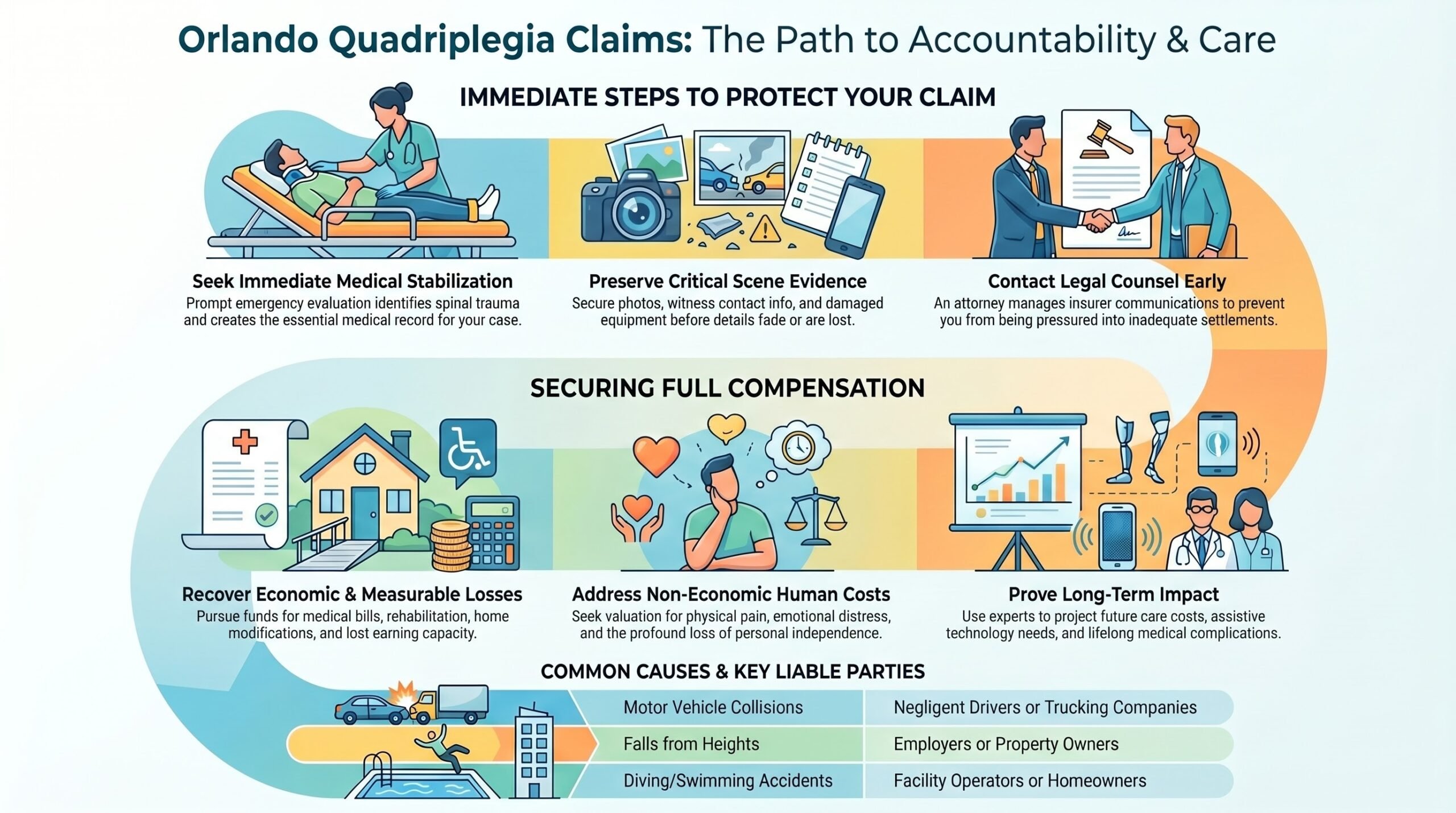
From the outset, we can help with your Orlando quadriplegia injury claim by conducting a thorough investigation, identifying every liable party, and preserving the evidence needed to support your case. You need a legal team that acts decisively, communicates clearly, and keeps your long-term well-being at the center of every step.
We help you document medical needs, projected care costs, lost income, and the daily impact of your injury. We work with respected professionals to present persuasive support for rehabilitation funding and assistive technology, so your claim reflects the resources required for meaningful recovery and service to others.
You can rely on us to manage insurer communications, organize records, prepare demand materials, and advocate for full compensation with discipline and care. Throughout the process, we remain focused on protecting your dignity, strengthening your position, and providing the support you need to move forward with stability, purpose, and confidence in the legal process ahead.
OUR CONSULTATIONSARE FREE
START YOUR FREE CASE REVIEW

Understanding Orlando Quadriplegia Injury Cases
Because these claims often involve catastrophic spinal cord damage, complex medical proof, and substantial long-term losses, understanding Orlando quadriplegia injury cases starts with recognizing what is at stake and what the law requires you to prove. You must show liability, establish the extent of your injuries, and connect every loss to the event through reliable evidence.
Your case may depend on treatment records, expert opinions, life care planning, and vocational analysis. These claims often include future medical expenses, rehabilitation, assistive technology, home modifications, lost earning capacity, and the human cost of daily dependence. While spinal recovery may improve function, the law still examines lasting limitations, ongoing care needs, and reduced independence.
You also need to prepare for insurer tactics, including delay, minimization, or outright insurance denial. When you understand these elements, you can make informed decisions, protect your family, and pursue accountability in ways that reflect service, dignity, and responsible stewardship for the future.
Common Causes of Orlando Quadriplegia
You may suffer quadriplegia after a motor vehicle collision, a swimming accident, a fall from a height, or a violent physical assault. Each of these events can cause severe spinal cord trauma, often with life-changing consequences that affect nearly every part of your daily life. When you understand how these injuries commonly occur, you can better assess liability and protect your right to seek compensation.
Motor Vehicle Collisions
Motor vehicle collisions remain one of the leading causes of quadriplegia in Orlando, particularly when a crash subjects the cervical spine to sudden, violent force. You may see these catastrophic injuries after high-speed impacts, truck crashes, motorcycle wrecks, or a vehicle rollover that crushes the roofline and destabilizes the neck.
When you seek accountability, you help protect other families from similar harm. Driver distraction, impaired driving, reckless speeding, and failure to yield often create the conditions for life-altering spinal trauma. Even with airbags and seat belts, the force of impact can fracture vertebrae, damage the spinal cord, and permanently impair movement below the neck.
A thorough legal investigation can identify negligence, preserve crucial evidence, and pursue resources that support long-term medical care, rehabilitation, accessibility needs, and daily assistance.
Diving And Swimming Accidents
In pools, lakes, and coastal waters around Orlando, diving and swimming accidents can cause catastrophic cervical spinal cord injuries when a person strikes the bottom, a submerged object, or another swimmer with significant force. You may see these incidents occur when property owners ignore depth markings, permit unsafe diving, or fail to address poor Water clarity that hides hazards below the surface.
You should know that negligent Pool supervision also places children and adults at severe risk, especially during crowded gatherings, lessons, and recreational events. If you serve injured neighbors and families, you understand how quickly a preventable water incident can change every aspect of daily life. Careful investigation can reveal whether a homeowner, resort, apartment complex, school, or aquatic facility failed to provide reasonable safety measures and proper warnings.
Falls From Heights
Falling from a roof, scaffold, ladder, balcony, or elevated platform can cause devastating spinal cord trauma when the neck absorbs the force of impact. You may see these incidents happen in a workplace, at a high-rise construction site, or during routine maintenance where basic protections are missing.
When guardrails fail, a scaffold shifts, or no safety net is installed, a single mistake can change your life permanently. You may suffer cervical fractures, spinal cord compression, and immediate loss of movement below the injury.
In many cases, proper training, fall arrest systems, inspections, and supervision could have prevented the accident. If you serve others and your work places you at elevation, you are entitled to safe conditions and accountability when preventable failures lead to quadriplegia and lasting harm for you.
Violent Physical Assaults
Endure a violent assault, and your spine can suffer catastrophic damage in seconds, especially when you’re struck in the head or neck, thrown to the ground, or slammed against a hard surface. When force disrupts the cervical spine, you may face permanent paralysis, breathing complications, and lifelong dependence on skilled care.
You need prompt medical treatment and careful documentation. Photographs, witness statements, and forensic evidence can clarify assault dynamics and connect the attack to your spinal cord trauma. If a negligent property owner ignored security risks, or if another party enabled the violence, you may have grounds to pursue accountability.
By acting quickly, you protect your health, preserve essential proof, and strengthen your ability to secure resources for treatment, rehabilitation, and the restorative support your family and community may need.


Legal Rights of Orlando Quadriplegia Injury Victims
Justice begins with understanding the legal rights available after a catastrophic spinal cord injury. You may pursue compensation for medical care, rehabilitation, lost income, home modifications, and long-term support. Florida law also protects your right to seek damages for pain, suffering, and loss of enjoyment of life when another party’s negligence caused your harm.
Justice starts with knowing your rights after a catastrophic spinal cord injury and pursuing the full support Florida law allows.
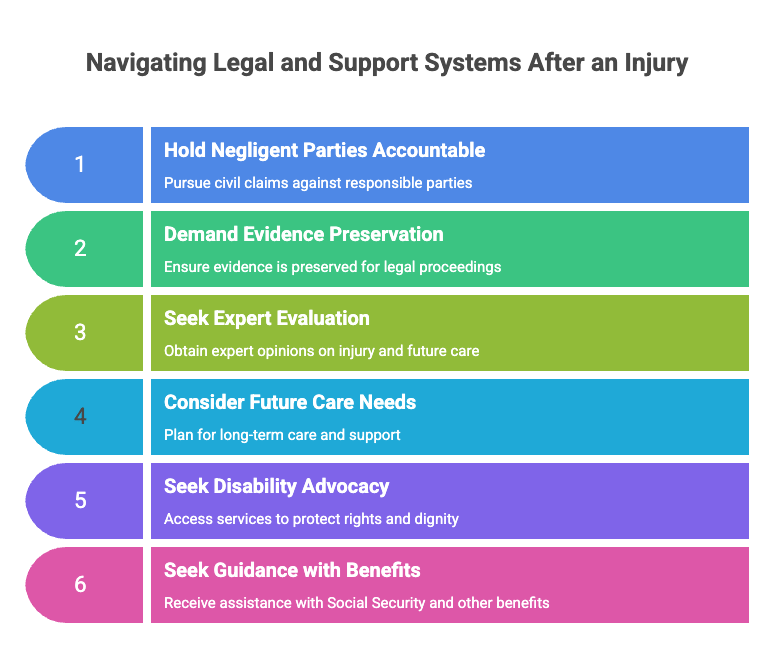
- You have the right to hold negligent drivers, property owners, employers, or institutions accountable through a civil claim.
- You may demand evidence preservation, expert evaluation, and full consideration of future care needs before any settlement.
- You can seek disability advocacy services that protect dignity, access, and equal treatment in healthcare, employment, and public life.
- You may also require guidance with benefits applications, including Social Security and other programs that sustain your family and community role.
When you understand these protections, you are better positioned to restore your future and continue serving others with strength, purpose, and stability.
Steps to Take After an Orlando Quadriplegia Injury
After an Orlando quadriplegia injury, you should seek immediate medical care because prompt treatment protects your health and creates essential records of your condition. You should also preserve injury evidence, including photographs, witness information, and accident reports, so you don’t lose facts that may support your claim. As soon as possible, you should contact legal representation, because an experienced lawyer can protect your rights and guide your next steps.
Seek Immediate Medical Care
Prioritize immediate medical care, because a suspected quadriplegia injury can worsen rapidly without prompt evaluation and stabilization. You should call 911 immediately, avoid moving the injured person unless the danger is immediate, and support calm, steady breathing until help arrives. An emergency evaluation can identify spinal cord trauma, internal complications, and breathing problems that may not be obvious initially.
At the hospital, physicians will begin primary stabilization, protect the neck and back, and order imaging to assess the extent of damage. You should report every symptom, including numbness, weakness, pain, or loss of movement, even if signs seem to improve briefly. Quick treatment can reduce secondary injury and promote long-term recovery. By acting decisively, you protect health, preserve function, and uphold your responsibility to care for others well.
Preserve Injury Evidence
Gather and protect evidence as soon as conditions allow, because the details surrounding a quadriplegia injury can fade quickly or be lost altogether. If you are able, ask a trusted person to secure damaged equipment, clothing, and mobility aids, and to collect contact information from witnesses. Careful chain preservation helps guarantee essential facts remain intact for those working to support your recovery and future needs.
Use photo documentation to record injuries, vehicle positions, hazardous conditions, warning signs, and property damage from multiple angles. Scene mapping can also help capture distances, lighting, obstructions, and points of impact. Keep medical devices, receipts, and written observations in one secure place, and note the date and time for each item. Maintaining a clear chain of custody strengthens reliability and protects the integrity of your evidence.
Contact Legal Representation
Once you’ve taken steps to preserve evidence, contacting legal representation can help protect your rights and keep important deadlines from slipping by. An Orlando quadriplegia injury lawyer can review the facts, explain your options, and begin communicating with insurers or opposing parties on your behalf.
When you seek counsel promptly, you give your legal team time to investigate liability, secure medical records, and calculate long-term damages. Many firms offer a free consultation, which lets you ask focused questions without added pressure.
You should also discuss contingency agreements to understand how fees are handled before the case moves forward. By retaining experienced counsel early, you strengthen your ability to pursue accountability, secure resources for future care, and continue serving your family and community with greater stability and confidence.
How an Orlando Quadriplegia Injury Lawyer Can Help You
Find your way through the aftermath of a catastrophic spinal cord injury with an Orlando quadriplegia injury lawyer who can protect your rights, investigate the cause of your injury, and build a claim that reflects the full extent of your losses. You need counsel that moves quickly, preserves evidence, identifies liable parties, and carefully evaluates damages, including rehabilitation financing and assistive technology needs.
An Orlando quadriplegia injury lawyer acts quickly to protect your rights, preserve evidence, and pursue the full support you need.
A focused attorney helps you pursue justice in ways that support both your recovery and your ability to care for others.
- You receive clear guidance on insurance claims, deadlines, and documentation requirements.
- Your lawyer works with medical and financial experts to present credible, complete evidence.
- You gain an advocate during negotiations, so you aren’t pressured into an inadequate settlement.
- Your claim can include home modifications, lost income, caregiver costs, and daily support needs.
With disciplined preparation and informed strategy, your lawyer helps you seek accountability, secure resources, and move forward with dignity and confidence.
Long-Term Effects of Orlando Quadriplegia Injuries
After a quadriplegia injury, you may face ongoing medical complications that require consistent treatment, monitoring, and support. You may also experience major limits in daily life, as routine tasks, mobility, and personal independence can change in lasting ways. Over time, these challenges can affect your emotional well-being and place serious financial pressure on you and your family.
Ongoing Medical Complications
Often, quadriplegia causes serious medical complications that persist long after the initial injury, affecting nearly every aspect of your health and daily life. You may face chronic pain, muscle spasticity, pressure sores, and dangerous blood clots that require vigilant treatment and monitoring.
Your weakened respiratory function can increase the risk of respiratory infections, pneumonia, and breathing difficulties, especially when mobility is limited. You may also develop urinary tract infections, kidney problems, bowel complications, and severe circulation issues that threaten your overall stability.
Autonomic dysreflexia can create sudden spikes in blood pressure and demand immediate care. As you continue seeking treatment, you also need coordinated medical support from professionals who understand these long-term conditions and remain committed to protecting your health, dignity, and long-term recovery.
Daily Life Limitations
These ongoing medical challenges also reshape the way you move through daily life, limiting your independence at home, at work, and in public spaces. You may need help with bathing, dressing, eating, transferring, and transportation, even when you remain determined to serve your family and community. Mobility challenges can restrict where you go, how long you stay, and what tasks you can complete safely.
Home accessibility often becomes crucial, requiring ramps, widened doorways, modified bathrooms, lowered counters, and adaptive equipment. You may also depend on caregivers for meal preparation, hygiene, and positioning throughout the day.
Returning to work, volunteering, or attending worship services can require careful planning, reliable assistance, and accessible environments. Even routine errands may demand extra time, coordination, and physical support to protect your health and maintain daily function.
Emotional And Financial Impact
Because quadriplegia changes nearly every part of your routine, it can also place a lasting emotional and financial strain on you and your family. You may face anxiety, grief, depression, and uncertainty as you adapt to permanent limitations and a very different future. Your loved ones often step into caregiving roles, and that devotion can lead to caregiver burnout without adequate support, respite, and guidance.
At the same time, medical treatment, home modifications, assistive technology, and lost income can quickly overwhelm your resources. You may need careful financial planning to protect your care, preserve your stability, and reduce pressure on those who serve you daily. When you understand these burdens, you can make informed decisions, seek meaningful support, and pursue the compensation necessary to sustain dignity, independence, and long-term well-being.
Proving Liability in Orlando Quadriplegia Injury Cases
Establishing liability in an Orlando quadriplegia injury case requires clear evidence that another party’s negligence or wrongful conduct directly caused the catastrophic harm. To serve your loved one well, you must show duty, breach, causation, and damages through disciplined investigation and reliable proof. Evidence often includes crash reports, medical records, witness statements, surveillance footage, and scene documentation.
You also need to prove a causal nexus between the wrongful act and the spinal cord injury. That link often depends on expert testimony from physicians, rehabilitation authorities, accident reconstruction professionals, and life care planners. They explain how the incident occurred, why the injury produced quadriplegia, and what losses will continue into the future.
Your legal team may also examine safety violations, employer practices, defective products, or dangerous property conditions. By organizing facts carefully and presenting them with precision, you strengthen accountability and help secure the resources needed to provide faithful, long-term care and meaningful support.
Dealing With Insurance Companies After an Orlando Quadriplegia Injury
In the aftermath of an Orlando quadriplegia injury, dealing with insurance companies requires caution, preparation, and a clear understanding of what’s at stake. You may feel pressure to cooperate quickly, yet your words can affect the support your family and community need for long-term care.
You should document every conversation, save correspondence, and avoid giving recorded statements without careful guidance. Insurers often look for inconsistencies they can use to justify denying a claim or reducing payment. If an adjuster delays responses, disputes medical needs, or misrepresents policy terms, those actions may signal bad faith.
You protect your position by staying organized, responding thoughtfully, and keeping discussions focused on facts rather than speculation. Strong records also preserve settlement leverage, because they show the real impact of the injury on your daily service, independence, and future needs. By approaching insurers strategically, you honor your responsibilities to loved ones and advocate for the resources necessary to serve others well.
What to Expect During an Orlando Quadriplegia Injury Claim Process
You can expect your Orlando quadriplegia injury claim to begin with an initial case evaluation, where your attorney reviews the facts, identifies liable parties, and outlines your legal options. From there, you’ll work through medical evidence gathering and settlement negotiations, both of which play a central role in proving the full extent of your losses and pursuing fair compensation.
If the insurer won’t offer a reasonable resolution, you’ll need to prepare for the trial process, where your claim is presented through evidence, expert testimony, and legal argument.
Initial Case Evaluation
Because quadriplegia claims often involve catastrophic injuries, the initial case evaluation focuses on the facts, the medical evidence, and the full impact the injury has had on your life. During this meeting, you explain how the incident occurred, who may be responsible, and how your daily responsibilities, relationships, and ability to serve others have changed.
Your attorney conducts an initial assessment of liability, insurance coverage, and potential legal challenges. You can expect direct questions, careful listening, and practical guidance about the claim timeline. The evaluation also considers lost income, future care needs, and household support, which helps form a preliminary compensation estimate.
This stage gives you a clear foundation for informed decisions. It also helps your legal team identify priorities, preserve crucial information, and move your Orlando quadriplegia injury claim forward efficiently.
Medical Evidence Gathering
Once the initial case evaluation outlines liability and damages, the claim turns to medical evidence gathering, where the full scope of your quadriplegia must be documented with precision. You and your attorney collect hospital records, rehabilitation notes, physician opinions, and medical imaging that shows spinal cord damage and related complications.
Your legal team also arranges expert interviews with treating doctors, life care planners, and consultants who can explain how your condition affects daily function, future care, and service to others within your family and community.
They may review medications, assistive devices, home modifications, and projected therapy needs. You can expect requests for updated examinations and written reports, because consistent documentation strengthens credibility. Careful evidence gathering helps present your injury accurately, honoring both your losses and the responsibilities you continue to carry each day.
Settlement Negotiation Steps
Manage settlement negotiations with the understanding that this stage often begins after your attorney has assembled strong medical proof and calculated the full financial impact of your quadriplegia. You can expect your lawyer to send a demand package, present supporting records, and explain why compensation should reflect lifelong care needs and lost income.
From there, the insurer usually responds with questions, challenges, or a counteroffer. Your attorney evaluates each position, advises you on reasonable options, and uses mediation strategies when direct talks stall. You should also prepare for settlement timelines that may vary based on disputed liability, policy limits, and the insurer’s willingness to negotiate fairly.
Throughout this process, you remain focused on recovery and service to others, while your legal team protects your interests and pursues a resolution that supports your future.
Trial Process Overview
If settlement efforts don’t produce a fair result, your Orlando quadriplegia injury claim may proceed to trial, where a judge or jury reviews the evidence and decides liability and damages. You should expect several structured stages, each designed to test the facts carefully and protect your right to meaningful compensation.
Your attorney prepares witnesses, medical records, expert testimony, and exhibits, then guides you through jury selection, opening statements, and courtroom testimony. During the trial, you present how the injury changed your daily life and your ability to serve your family and community.
The defense will challenge your claims, but your lawyer responds with evidence and clear arguments. After the closing arguments, the jury deliberates and returns a verdict. If legal errors affect the outcome, your case may later proceed to appellate review.
Compensation for Orlando Quadriplegia Injury Damages
Accountability matters when a catastrophic spinal cord injury leaves you facing permanent quadriplegia and profound financial loss. You may pursue compensation that reflects the full scope of harm and the long-term support your condition requires. A strong claim can address immediate medical treatment, ongoing rehabilitation, in-home nursing assistance, and transportation needs. It should also consider life adaptations, assistive technology, and modifications that help you remain engaged with your family and community.
You merit a legal strategy that documents your needs carefully and presents them with clarity and authority. Your attorney can work with medical providers, rehabilitation experts, and planners to calculate the resources necessary for your future care. By building persuasive evidence, you strengthen your position during negotiations or at trial. Compensation isn’t only about paying bills today. It’s about protecting your dignity, preserving your ability to serve others, and securing the practical support you will rely on for years ahead.
Economic vs Non-Economic Damages in Orlando Quadriplegia Cases
You need to understand how economic damages cover measurable losses, such as medical expenses, rehabilitation costs, lost income, and future care needs. You should also recognize that non-economic damages address harder-to-measure harm, including pain and suffering, loss of independence, and reduced quality of life.
To recover full compensation, you must show the long-term impact of quadriplegia through clear medical evidence, expert testimony, and detailed proof of how your injuries affect daily living.
Economic Damage Categories
Because a quadriplegia injury often changes every part of a person’s life, damages in an Orlando claim typically fall into two primary categories: economic and non-economic losses. Economic damages address the measurable financial harm you face after a catastrophic spinal cord injury.
These categories often include past and future medical bills, rehabilitation expenses, prescription costs, assistive technology, and home or vehicle modifications. You may also recover lost wages if your injury keeps you from working during treatment and recovery. When permanent limitations prevent a return to your prior occupation, your claim can include reduced earning capacity and future earnings.
Economic damages may further cover in-home nursing care, transportation to appointments, and other necessary out-of-pocket costs. By documenting these losses carefully, you help establish the practical support needed to protect your family and continue serving others.
Non-Economic Loss Valuation
Financial records show only part of the harm a quadriplegia injury causes, and a claim must also account for the profound personal losses that don’t appear on bills or pay stubs. You merit recognition for suffering that changes how you experience each day, serve your family, and participate in your community.
Non-economic loss valuation measures harms such as physical pain, emotional distress, loss of enjoyment, and diminished independence. Your lawyer may use a careful pain assessment, testimony from loved ones, and evidence about disrupted routines to present a clear picture of these losses.
This process isn’t about guesswork. It’s a disciplined life valuation that connects your daily reality to fair compensation. By presenting these damages with dignity and precision, you help the legal system see the full human cost of catastrophic harm.
Proving Long-Term Impact
Although the initial aftermath of a quadriplegia injury may reveal the most obvious losses, proving long-term impact requires a broader showing of how the condition will affect your income, medical needs, daily function, and overall quality of life for years to come.
To establish economic damages, you’ll need records that project future treatment, rehabilitation, assistive equipment, home modifications, and lost earning capacity. Vocational assessments help show how your injury limits employment options and reduces lifetime income.
To prove non-economic damages, patient testimony, family observations, and medical opinions can explain pain, dependence, emotional strain, and the loss of independence that shapes how you serve others and participate in your community. When you present this evidence clearly, you strengthen the connection between today’s injury and the lasting burdens you’ll carry in all seasons ahead.
When an Orlando Quadriplegia Injury Case Goes to Trial vs Settlement
When an Orlando quadriplegia injury case moves forward, the decision to settle or proceed to trial often turns on the strength of the evidence, the extent of your long-term losses, and the defendant’s willingness to accept responsibility. If liability is clear and damages are well-documented, settlement timing may favor a resolution before trial. That path can reduce delay, protect your privacy, and secure resources for care, rehabilitation, and family support.
Trial becomes more likely when the insurer disputes fault, minimizes future medical needs, or refuses to value your losses fairly. In that setting, your legal team prepares persuasive testimony, expert analysis, and day-in-the-life evidence to help a jury understand what service, dignity, and daily dependence now require.
Jury dynamics also matter because jurors may respond differently to nuanced medical facts, corporate defendants, and credibility issues. You need counsel who can weigh risk carefully, negotiate from strength, and pursue the forum that best serves your future.
The Statute of Limitations for Orlando Quadriplegia Injury Cases
Settlement strategy and trial readiness matter, but your claim’s timing can determine whether you have any recovery option at all. In Florida, quadriplegia injury claims generally must be filed within a limited period, and missing that deadline can bar compensation for medical care, lost income, and long-term support your family may need.
You should also understand that the statute’s nuances can affect how the filing period is calculated. The facts of your case, the defendant involved, and when your injury was discovered may influence the timeline. In some matters, deadline exceptions may apply, but courts interpret them narrowly, and they do not rescue every delayed claim.
Because quadriplegia cases often involve catastrophic losses and lifelong needs, accurate timing protects more than paperwork; it preserves resources that can help you continue serving your loved ones and community. Careful attention to filing deadlines helps guarantee your case remains eligible for a full legal review.
When to Contact an Orlando Quadriplegia Injury Lawyer
Because early legal guidance can shape both the evidence you preserve and the benefits you pursue, you should contact an Orlando quadriplegia injury lawyer as soon as your condition is medically stable or a family member can act on your behalf. Early intervention helps protect records, witness accounts, photographs, and insurance communications before important details are lost or altered.
You should also reach out when medical providers begin discussing long-term care, home modifications, or rehabilitation needs. At that stage, legal guidance can support organized financial planning and help your family respond responsibly to growing obligations. If an insurer requests a statement, offers a settlement, or asks you to sign documents, that is another clear point to seek counsel.
Prompt action also helps coordinate evidence from employers, caregivers, and treating physicians. By contacting a lawyer early, you put yourself in a stronger position to protect your household, honor your caregiving responsibilities, and plan for the services your recovery may require in advance.
Why You Need an Experienced Orlando Quadriplegia Injury Lawyer
Early contact helps protect your claim, but the quality of the lawyer you choose can directly affect the outcome. When you face a quadriplegia injury, you need counsel that understands catastrophic losses, long-term care demands, and the financial pressure placed on your family and the people who depend on you.
An experienced Orlando quadriplegia injury lawyer can build a stronger case by preserving evidence, working with medical and economic experts, and presenting the full value of your damages. You benefit from a clear strategy, disciplined negotiation, and courtroom readiness if insurers refuse fair compensation.
Strong representation also helps you understand legal costs, timelines, and the practical steps required to move forward responsibly. Because your recovery may shape how you continue serving others, your lawyer must protect both your immediate needs and your future stability. Client testimonials often reflect whether a firm communicates well, acts with integrity, and pursues results consistently and with care.
How to Choose the Right Orlando Quadriplegia Injury Lawyer for Your Case
Start by evaluating whether the lawyer has direct experience handling quadriplegia and other catastrophic injury claims, not just general personal injury cases. You need counsel who understands lifelong medical care, accessibility needs, and the financial impact on your family and community responsibilities. Review case results, credentials, and trial readiness because insurers often resist paying full value in severe-injury matters.
You should also assess the communication style and whether the attorney sets clear client expectations from the beginning. Ask how often you’ll receive updates, who will manage your case, and how decisions will be explained. Examine fee structures carefully so you understand costs, contingency terms, and litigation expenses before signing anything.
Look for a lawyer who works with respected medical experts, rehabilitation clinicians, and life care planners. Finally, choose someone who listens carefully, respects your service-minded values, and demonstrates a disciplined approach to pursuing accountability and meaningful long-term support.
About The Law Offices of Anidjar & Levine
Once you’ve identified the qualities that matter in catastrophic injury representation, it helps to examine how a specific firm applies them in practice.
At The Law Offices of Anidjar & Levine, you can expect focused advocacy, responsive communication, and a disciplined approach to intricate quadriplegia claims in Orlando.
When you review the firm’s history, you see a record of representing injured people and families through serious, life-changing cases.
That background matters because your claim may involve extensive medical evidence, future care planning, and substantial financial losses.
The firm’s work emphasizes preparation, negotiation, and readiness for litigation when insurers refuse fair compensation.
You can also learn from client testimonials, which often highlight accessibility, professionalism, and consistent support during difficult periods.
If service matters to you, those details help you evaluate whether the firm aligns with your values.
In a catastrophic injury case, you need counsel that treats your recovery, dignity, and long-term stability as central priorities every day.
Frequently Asked Questions
Can Quadriplegia Victims Qualify for Social Security Disability Benefits?
Yes, you can qualify for Social Security disability benefits if quadriplegia prevents you from working and meets the SSA’s qualifying criteria. You’ll need medical evidence showing the severity of your condition, functional limitations, and expected duration. During the application process, you should provide complete treatment records, physician statements, and work history. By submitting thorough documentation and responding promptly, you help decision-makers evaluate your claim accurately and serve your long-term care needs.
How Are Home Modifications Funded After a Quadriplegia Injury?
You can fund home modifications after a quadriplegia injury through insurance, Medicaid waivers, veterans benefits, nonprofit assistance, private grants, and adaptive loans. You should also explore state vocational rehabilitation programs and community fundraising, especially when changes that support independence and caregiving are needed. If another party caused your injury, you may recover these costs in a legal claim. Careful documentation, contractor estimates, and medical recommendations will strengthen your applications and help you serve your household effectively.
Can Family Members Receive Compensation for Caregiving Responsibilities?
Yes, you can seek compensation for family caregivers when they provide necessary assistance after a quadriplegia injury. Courts and insurers may recognize paid caregiving if the services are medically necessary, well-documented, and reasonably valued. You should keep detailed records of hours, tasks, and related expenses. This evidence helps show the true cost of care and supports a claim that reflects your family’s service, sacrifice, and ongoing responsibilities.
What Assistive Technologies Are Available for Quadriplegia Patients?
You can access several assistive technologies that support daily function and greater independence. These include power wheelchairs with customized controls, environmental control units, speech-generating devices, and adaptive computer interfaces. Voice-activated aids help you manage lighting, communication, and household tasks efficiently. Eye tracking systems let you operate computers and communication tools when hand movement is limited. You may also benefit from pressure relief mattresses, transfer equipment, and robotic feeding devices.
Are There Local Orlando Support Groups for Quadriplegia Survivors?
Yes, you can find local Orlando support groups for quadriplegia survivors through Orlando meetups, hospital rehabilitation programs, and regional spinal cord injury organizations. You should also contact nearby spinal cord injury centers, which often connect survivors and caregivers with peer groups, counseling, and service opportunities. If you want to serve others, these groups help you share guidance, build community, and support recovery in Orlando with practical insight, trusted referrals, and consistent encouragement.
—————————
If you’re facing the life-changing effects of quadriplegia, you need clear guidance and strong legal support.
By understanding your rights, preserving evidence, and acting promptly, you can protect your claim and pursue the compensation you merit.
An experienced Orlando quadriplegia injury lawyer can evaluate your case, deal with insurers, and advocate for your long-term needs.
The Law Offices of Anidjar and Levine are prepared to help you move forward with confidence and informed legal direction.
For related legal help, consider speaking with an Orlando Medical Malpractice Lawyer.

