

The Law Offices of Anidjar and Levine can help you act quickly after a spinal cord injury by protecting evidence, coordinating with your medical team, and dealing with insurers that may undervalue your claim. You can pursue compensation for emergency care, rehabilitation, home modifications, lost income, and long-term support. Your lawyer can also identify liable parties, preserve deadlines, and build proof of future needs.
If your injury was caused by medical negligence, an Orlando Medical Malpractice Lawyer may also help you understand your options. Continue below to see the crucial steps, rights, and strategies that can shape your recovery.
Main Takeaways
- An Orlando paraplegia injury lawyer helps secure compensation for lifelong medical care, rehabilitation, home modifications, lost income, and daily support needs.
- Seek emergency medical treatment immediately and avoid movement if pain, weakness, or numbness suggests spinal cord trauma.
- Preserve evidence early by photographing the scene, injuries, damaged property, and saving medical records, receipts, witness names, and insurer communications.
- Choose counsel experienced in catastrophic spinal injury cases, Orlando practice, and contingency fee agreements before signing representation documents.
- Strong paraplegia claims rely on medical records, expert evaluations, and proof of how the injury affects mobility, independence, work, and future care.


How We Can Help With Your Orlando Paraplegia Injury Claim
Guide through the aftermath of a paraplegia injury with counsel that focuses on both your immediate needs and your long-term recovery. You need steady guidance, and we help you organize the practical demands that arise after a catastrophic injury while protecting the resources your family and community rely on.
We work closely with you to document treatment needs, lost income, home changes, and daily support requirements. Our team supports Rehabilitation coordination so your care plan reflects present challenges and future goals. We also address Assistive technology, including mobility equipment, vehicle modifications, and tools that help you remain active in work and service.
When insurers delay or minimize what your recovery requires, we respond with clear evidence and persistent advocacy. You receive regular updates, direct answers, and a strategy built around your priorities. With disciplined preparation and focused representation, we help you secure the financial support you need to restore stability, dignity, independence, and peace.
OUR CONSULTATIONSARE FREE
START YOUR FREE CASE REVIEW

Understanding Orlando Paraplegia Injury Cases
Because paraplegia cases often involve permanent physical limitations and substantial financial loss, understanding how these claims work is essential to protecting your future. When you pursue a claim, you must show how the injury changed your mobility, independence, employment, and daily responsibilities. Strong evidence often includes medical records, prognosis, expert evaluations, and documentation of long-term care needs.
You should also understand that damages may extend far beyond initial treatment costs. A thorough claim can account for spinal rehabilitation, home modifications, lost earning capacity, ongoing therapy, and assistive technology that supports your daily life. If you devote your time to caring for others, these losses may affect your ability to serve your family, workplace, and community.
That is why careful case development matters. By identifying the full impact of your injury, you place yourself in a stronger position to seek compensation that reflects both your present burdens and your future needs with clarity.
Common Causes of Orlando Paraplegia
You can suffer paraplegia in many ways, but certain incidents appear more often in Orlando injury claims. You may face life-changing spinal trauma after motor vehicle collisions, slip and fall accidents, workplace construction incidents, or sports-related injuries. When you understand how these events occur, you can better recognize liability and protect your legal rights.
Motor Vehicle Collisions
When a motor vehicle collision causes severe trauma, the force of impact can damage the spinal cord and leave you with life-altering paraplegia. You may face this harm after intersection collisions, high-speed crashes, rollovers, or a hit-and-run caused by a reckless driver. Even with prompt treatment, the injury can interrupt your mobility, independence, and ability to care for those who depend on you.
You merit a careful legal review of how the crash occurred and who should be held accountable. Evidence from police reports, medical records, crash reconstruction, and witness statements can strengthen your claim. By pursuing compensation, you seek resources for rehabilitation, accessible transportation, home modifications, and long-term support, so you can continue serving your family and community with dignity and stability.
Slip And Fall Accidents
Serious falls can cause the same devastating spinal trauma as a violent vehicle crash, particularly if you land on your back, neck, or head. When you slip unexpectedly, your body can twist with force, damaging the spinal cord and changing your ability to walk, work, or care for others.
You may face these injuries in grocery stores, apartment buildings, restaurants, hotels, or private properties where hazards go unaddressed. Wet floors, uneven surfaces, broken handrails, and inadequate lighting often create preventable dangers.
If a property owner ignores known risks, you shouldn’t bear the burden alone. Prompt medical care can restore your health, and careful documentation can strengthen your claim. By taking action, you not only pursue accountability for yourself but also help encourage safer conditions for everyone in your community going forward.
Workplace Construction Incidents
Construction sites expose workers to some of the highest risks of spinal trauma, and a single incident can cause permanent paraplegia in seconds. You may suffer catastrophic harm from falls, trench collapses, struck-by accidents, scaffold failures, or heavy machinery malfunctions. When contractors ignore Safety training, they place every worker, helper, and visitor in danger.
You serve others best when you recognize how preventable many construction injuries are. Proper Equipment maintenance, clear site communication, fall protection, and hazard inspections reduce the likelihood of devastating spinal damage.
If a negligent employer, subcontractor, or property owner failed to protect you, you may have grounds to pursue compensation. A thorough legal review can help identify unsafe practices, preserve evidence, and seek resources for medical care, long-term support, and rehabilitation after a life-altering construction incident.
Sports And Diving Injuries
Although sports and recreational activities promote health and competition, they can also create conditions for catastrophic spinal cord injury that leads to paraplegia. When you serve athletes, swimmers, or families after a severe accident, you often see how quickly ordinary recreation becomes life-changing. Diving into shallow water, Shoreline collisions, and being Hit from behind during football, cycling, or boating can fracture vertebrae and damage the spinal cord.
You should recognize these incidents as preventable harms that often involve negligent supervision, unsafe premises, defective equipment, or reckless conduct. A careful legal review can identify responsibility and protect the resources your injured loved one needs for treatment, rehabilitation, and long-term support. By pursuing accountability, you help restore stability, dignity, and meaningful care after a devastating sports or diving injury.


Legal Rights of Orlando Paraplegia Injury Victims
When another party’s negligence causes a paraplegia injury in Orlando, you have the right to pursue compensation for your medical care, lost income, reduced earning capacity, pain and suffering, and other damages tied to the harm you’ve endured. Florida law also protects your ability to seek support that sustains your dignity and service to others, including Disability benefits and Advocacy resources.
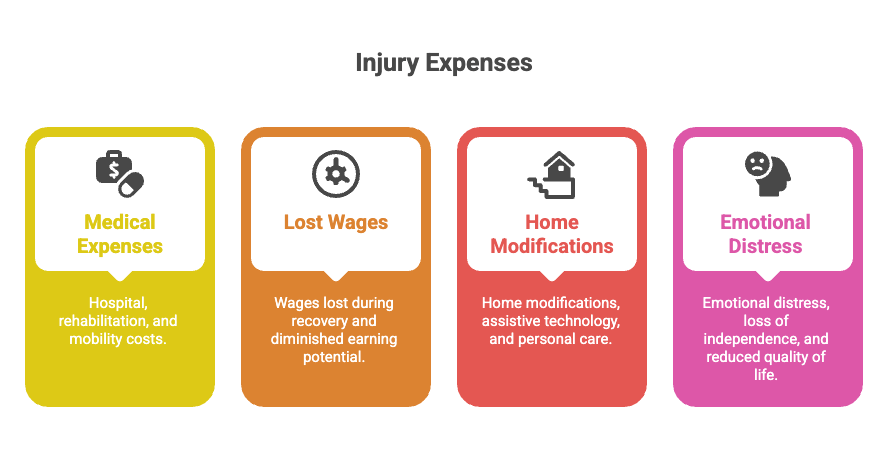
Your legal rights may include compensation for:
- Past and future hospital, rehabilitation, and mobility expenses
- Wages lost during recovery and diminished future earning potential
- Home modifications, assistive technology, and ongoing personal care
- Emotional distress, loss of independence, and reduced quality of life
You may also hold negligent drivers, property owners, employers, or product manufacturers accountable when their conduct caused your injury. In some cases, you can recover damages for a spouse’s losses as well. Understanding these rights helps you protect your future, preserve your capacity to help your family and community, and demand meaningful accountability under Florida law.
Steps to Take After an Orlando Paraplegia Injury
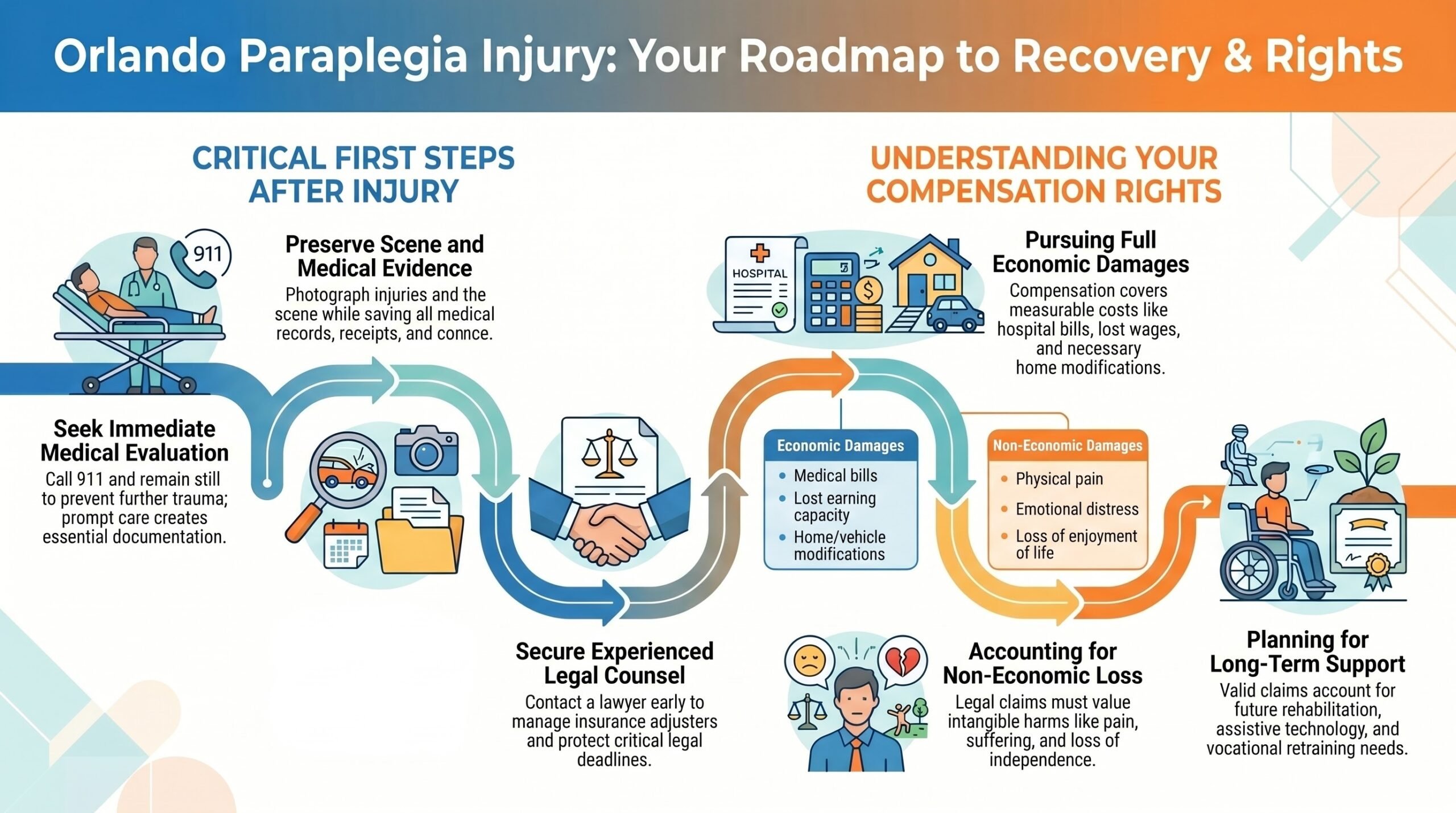
After an Orlando paraplegia injury, you should seek immediate medical care because prompt treatment protects your health and creates essential documentation of your condition. You should also preserve evidence and records, including photographs, medical reports, bills, and any communication related to the incident, since these materials can support your claim. As soon as possible, you should contact legal representation to protect your rights and make informed decisions from the outset.
Seek Immediate Medical Care
Seeking immediate medical care should be your first priority after any incident that may have caused paraplegia, because prompt evaluation can restore your health and create a clear record of the injury. You should call 911, request urgent assessment, and follow emergency instructions without delay. If movement causes pain, weakness, or numbness, remain still until trained responders arrive.
At the hospital, tell clinicians exactly what happened and describe every symptom, even if it seems minor. Accurate information helps doctors identify spinal trauma, reduce complications, and begin treatment quickly.
If a loved one is assisting you, they can support transport coordination, communicate with staff, and help make certain you receive timely attention. By acting decisively, you protect your well-being and strengthen your ability to continue serving your family, workplace, and broader community.
Preserve Evidence And Records
In addition to obtaining medical treatment, you should preserve every piece of evidence and every record connected to the incident, because those materials can help establish how the injury occurred, who may be responsible, and the full extent of your losses. Photograph the scene, visible injuries, damaged equipment, vehicles, and any hazardous conditions before they change. Keep clothing, medical devices, receipts, discharge papers, prescriptions, and transportation logs in a secure location.
You should also request incident reports, witness names, insurance correspondence, and employment records that show missed work or reduced duties. Use careful chain-of-custody practices so that items remain intact and credible.
Create backups through digital archiving, including dated photos, emails, text messages, and voice mails. Organized records can strengthen accountability and support the resources you need to continue serving your family and community.
Contact Legal Representation
Because a paraplegia claim can involve substantial medical costs, long-term care needs, and disputed liability, you should contact legal representation as soon as your immediate medical condition is stable. An attorney can protect your rights, communicate with insurers, and guide decisions that affect your recovery and future independence.
You should choose counsel with experience handling catastrophic injury cases in Orlando. Ask how the firm approaches client outreach, gathers medical evidence, and prepares for negotiations or trial. Review fee structures carefully, so you understand costs, contingency terms, and case expenses before signing anything.
By acting promptly, you help preserve deadlines, witness accounts, and treatment records. Strong legal support also helps you pursue resources that may ease burdens on your family and strengthen your ability to continue serving others with dignity.
How an Orlando Paraplegia Injury Lawyer Can Help You
Guide the aftermath of a catastrophic spinal cord injury with legal guidance that protects your rights and positions your claim for full consideration. You need an advocate who understands how paraplegia changes daily life and who can present clear evidence of your losses, treatment needs, and financial strain.
An Orlando paraplegia injury lawyer helps you pursue resources that support recovery and service to your family and community by:
- Investigating the incident, preserving evidence, and identifying every liable party.
- Documenting medical care, rehabilitation options, and assistive technology needs.
- Calculating lost income, household support costs, and other measurable damages.
- Negotiating assertively with insurers and preparing your case for trial if necessary.
Your attorney also coordinates with medical and vocational professionals to strengthen your claim and counter efforts to minimize it. With disciplined representation, you can focus on recuperation, honoring your responsibilities, and securing compensation that reflects the seriousness of the harm you suffered fully.
Long-Term Effects of Orlando Paraplegia Injuries
After a paraplegia injury, you may face chronic medical complications that require ongoing treatment, monitoring, and daily adjustments. You may also experience lasting emotional and mental effects, as the demands of recovery and reduced mobility can affect your confidence, relationships, and overall well-being. In addition, you may confront major financial and lifestyle changes, from mounting medical costs to barriers that alter how you work, travel, and manage everyday life.
Chronic Medical Complications
While the initial trauma of a paraplegia injury is severe, the long-term medical complications can place an equally serious burden on your health, independence, and financial stability. You may face neuropathic pain that disrupts sleep, limits concentration, and complicates daily care. Reduced mobility can also increase your risk of pressure ulcers, urinary tract infections, respiratory problems, and dangerous blood clots.
These conditions often require ongoing treatment, specialized equipment, home modifications, and frequent medical monitoring. If you devote your life to helping others, these complications can also limit your ability to work, volunteer, and remain active in your community. Careful planning and consistent medical support are crucial, but so is pursuing compensation that reflects the full scope of your future needs, including rehabilitation, attendant care, and long-term preventive services.
Emotional And Mental Impact
Because paraplegia affects far more than physical movement, the emotional and mental impact can shape nearly every part of your daily life. You may struggle with anxiety, depression, anger, or isolation as you adjust to profound changes in independence, identity, and relationships.
You might also experience post-traumatic stress after the accident, especially when reminders trigger fear, helplessness, or disrupted sleep. These reactions can affect how you care for others, participate in your community, and maintain meaningful connections. Grief counseling can help you process loss, rebuild confidence, and develop healthy coping strategies.
Support groups, therapy, and consistent encouragement from trusted loved ones can also strengthen your resilience. When you recognize these emotional effects early, you give yourself a better opportunity to recover with purpose, dignity, and stability over time.
Financial And Lifestyle Changes
Although the physical consequences of paraplegia are immediate, the long-term financial and lifestyle changes can be just as disruptive to your future. You may face ongoing medical bills, reduced earning capacity, and the cost of Home modifications that restore access and safety. Transportation needs, personal care assistance, and adaptive equipment can further strain your household budget.
These changes also affect how you serve your family and community. You may need to adjust your career path, daily routines, and living arrangements to maintain independence. Social isolation can develop when travel, work, or volunteer activities become harder to manage. With proper legal guidance, you can pursue compensation that supports treatment, accessibility, and long-term stability. That support helps you continue living with purpose, dignity, and a meaningful ability to help others.
Proving Liability in Orlando Paraplegia Injury Cases
When a paraplegia injury results from another party’s careless or reckless conduct, proving liability becomes the foundation of your claim. You must show that the responsible party owed you a duty of care, breached that duty, and directly caused the spinal trauma that changed your life. Evidence often includes crash reports, surveillance footage, medical records, witness statements, and scene documentation collected promptly after the event.
To build a persuasive case, you may rely on spinal forensics to connect the mechanism of injury to the negligent act. Expert testimony can explain how force, timing, and medical findings support causation, especially when liability is disputed. You also need to document damages thoroughly, because the severity of paraplegia often reflects the seriousness of the underlying misconduct.
By organizing facts carefully and presenting them clearly, you strengthen your ability to seek accountability, protect your future, and continue serving your family and community with stability, dignity, and purpose ahead.
Dealing With Insurance Companies After an Orlando Paraplegia Injury
After you’ve established how the injury occurred and who caused it, the next challenge is often the insurance company that stands between you and full compensation. You may face adjusters who appear helpful, yet their goal is to reduce what the insurer pays. They often use claim denial tactics, including disputing medical necessity, minimizing future care needs, or requesting recorded statements designed to limit your claim.
You protect yourself by staying organized, documenting every communication, and refusing to guess about symptoms, limitations, or timelines. When you focus on truthful, complete records, you strengthen your position and preserve resources needed to serve your family and community. Effective negotiation strategies also matter.
You should evaluate settlement offers against long-term medical costs, home modifications, lost earning capacity, and daily assistance needs. A lawyer can manage insurer communications, challenge unfair valuations, and keep pressure on the company to act in good faith and resolve matters fairly.
What to Expect During an Orlando Paraplegia Injury Claim Process
During the claim process, you can expect your lawyer to begin with an initial case evaluation, then gather evidence to establish liability and support your position. You’ll also need a careful medical damage assessment, since the full impact of paraplegia often affects your treatment, long-term care, and financial losses. From there, your claim may move toward a settlement, or, if necessary, proceed to trial for a final resolution.
Initial Case Evaluation
Building a strong paraplegia injury claim starts with an initial case evaluation, where an Orlando lawyer reviews the facts of your accident, the extent of your spinal cord injury, and the losses you’ve suffered. During this initial consultation, you can explain how your injury affects your daily responsibilities, relationships, and ability to serve your family and community.
Your lawyer will ask focused questions, outline potential legal options, and discuss case timelines so you understand the process ahead. You may also review medical treatment, financial strain, and the support you’ll need moving forward. This meeting helps you determine whether the attorney is the right advocate for your goals. It also gives your legal team a clear starting point for building a claim that accurately reflects your needs and long-term challenges.
Evidence And Liability
Once your lawyer understands the facts of your injury and your immediate concerns, the claim moves into the evidence and liability stage, where the focus shifts to proving what happened, who is legally responsible, and how the paraplegia has changed your life.
Your attorney gathers reports, photographs, video, witness statements, and digital records, preserving the chain of custody so the evidence remains reliable and admissible. They may also secure expert testimony from accident reconstruction specialists, safety professionals, or vocational experts to clearly explain fault.
During this stage, you can expect a careful review of negligence, policy violations, and contributing factors. Your legal team identifies every responsible party and builds a strong, service-minded case that supports accountability. This work creates the foundation for meaningful recovery and helps protect your future and those who depend on your care.
Medical Damage Assessment
As the claim progresses, medical damage assessment becomes central to showing the full extent of your paraplegia and the care you’ll likely need in the years ahead. Your attorney works with physicians, rehabilitation experts, and life care planners to document your diagnosis, prognosis, limitations, and expected course of treatment. This process helps quantify current losses and future needs with credible medical support.
You can expect detailed reviews of hospital records, therapy reports, prescriptions, and recommendations for assistive technology. Experts may evaluate mobility challenges, home modifications, attendant care, and rehab costs.
They also assess complications such as pressure sores, chronic pain, or bladder and bowel issues that may affect daily living. Thorough assessments protect your ability to continue serving your family and community by presenting a clear, well-supported picture of long-term medical damages.
Settlement Or Trial
Evaluate every settlement offer against the full value of your paraplegia claim, because an early resolution may not cover the lifelong medical care, lost income, and daily assistance you’ll need. Your attorney should compare current settlement trends with your projected damages, then advise whether negotiations truly serve your long-term welfare and your family’s stability.
If insurers refuse fair compensation, you may need to prepare for trial. Litigation often requires depositions, expert testimony, and careful presentation of medical and financial evidence. While a trial can produce a stronger recovery, jury unpredictability always remains a serious factor.
You should weigh the risks, costs, and timeline against the certainty of a reasonable settlement. A disciplined legal strategy helps you pursue accountability, protect those who depend on you, and secure resources for meaningful service to others.
Compensation for Orlando Paraplegia Injury Damages
Because paraplegia often leads to permanent physical, financial, and personal losses, pursuing full compensation is essential to protect your long-term stability. You need a claim that reflects the true scope of your injury, not a quick payment that leaves future needs unmet.
Your compensation should account for continuing medical treatment, in-home support, mobility equipment, home and vehicle modifications, and rehabilitation funding that helps you maintain independence. If returning to your prior occupation is no longer possible, vocational retraining can support a new path that still lets you contribute meaningfully to others and your community. You may also need resources for transportation assistance, counseling, and long-term care planning as your circumstances evolve.
An experienced Orlando paraplegia injury lawyer can document these losses, work with qualified experts, and press insurers to recognize the seriousness of your condition. When your case is prepared thoroughly, you place yourself in a stronger position to secure the support your future requires.
Economic vs Non-Economic Damages in Orlando Paraplegia Cases
When you pursue a paraplegia claim in Orlando, you’ll need to distinguish between economic damages, such as medical bills, rehabilitation costs, lost wages, and future care expenses, and non-economic damages, including pain, suffering, and loss of enjoyment of life.
You must also show how non-economic losses should be valued, using credible evidence that reflects the severity of your condition and the ways it has changed your daily life. To recover full compensation, you’ll need clear proof of the long-term impact of your injury, especially its effect on your work, independence, and ongoing medical needs.
Economic Damage Categories
Although paraplegia claims often involve substantial physical and emotional loss, economic damages focus on the measurable financial harm the injury causes. In Orlando cases, you can seek compensation for hospital bills, surgery, rehabilitation, medications, medical equipment, and home or vehicle modifications that support daily care and mobility.
You may also recover lost wages when your injury keeps you from working, as well as diminished future earnings if paraplegia limits your career path or earning capacity. Economic damages can include in-home assistance, transportation to appointments, and ongoing therapy that helps you remain active in your family and community.
If your injury requires lifelong treatment, your claim should reflect those anticipated costs with reliable documentation. Clear records, expert opinions, and careful calculations help you pursue full financial recovery and protect your ability to serve others.
Non-Economic Loss Valuation
Economic damages account for the financial cost of paraplegia, but they don’t capture the full impact the injury has on your life. Non-economic losses address pain, emotional suffering, loss of independence, and the strain on relationships and daily service to others. These harms merit careful, credible intangible valuation.
When your legal team evaluates non-economic damages, they consider how paraplegia changes your dignity, enjoyment, and quality of life. They examine limits on mobility, sleep, recreation, intimacy, and your ability to participate fully in family, faith, and community responsibilities.
Unlike medical bills, these losses have no fixed price, so clear evidence and persuasive advocacy matter. A thorough claim presents your experience in a way insurers, judges, and juries can understand, helping you pursue compensation that reflects the human cost of this injury fully.
Proving Long-Term Impact
Because paraplegia often creates permanent changes that extend far beyond the initial trauma, proving long-term impact requires clear evidence of how the injury will restore your finances, health, and daily life for years to come.
To establish economic damages, you must document projected medical treatment, home modifications, assistive equipment, attendant care, and lost earning capacity. Your future prognosis helps show whether complications, therapies, or surgeries will continue. Employment experts can evaluate your vocational reintegration, explaining how physical limitations affect your ability to return to work or to serve your family and community in the same way.
Non-economic damages also require proof, including testimony about chronic pain, emotional strain, loss of independence, and reduced quality of life. When you present consistent records and credible expert opinions, you strengthen the case for full, lasting compensation.
When an Orlando Paraplegia Injury Case Goes to Trial vs Settlement
When an Orlando paraplegia injury case moves forward, the decision to settle or go to trial often turns on the strength of the evidence, the extent of your damages, and the insurer’s willingness to offer fair compensation. You need a clear assessment of liability, medical proof, future care costs, and how the injury affects your ability to serve your family and community.
Settlement timing matters because an early offer may undervalue lifelong losses, while a well-supported demand can encourage meaningful negotiations. If the defense disputes fault, minimizes your condition, or refuses to recognize full damages, a trial may become necessary. At that stage, jury dynamics matter. You must consider how jurors may respond to expert testimony, credibility, and the human story behind your losses.
A fair settlement can provide certainty and faster access to resources. A trial can secure fuller accountability when the defense remains unreasonable. Your lawyer should guide you toward the option that best protects your future.
The Statute of Limitations for Orlando Paraplegia Injury Cases
In Florida, the statute of limitations sets a strict deadline for filing an Orlando paraplegia injury lawsuit, and missing that deadline can bar you from recovering compensation altogether. In most negligence cases, you must act within the period Florida law allows, because courts rarely forgive late filings. This deadline protects the integrity of evidence, witness testimony, and the fair administration of justice.
You should also understand that certain facts can affect timing. In limited situations, extensions of limitations may apply, although they are narrowly interpreted. For example, discovery tolling may pause the clock when an injury or its cause could not reasonably have been discovered earlier. Cases involving minors, incapacity, or delayed identification of responsible parties may raise additional timing issues.
If you serve a loved one with paraplegia, careful attention to these rules helps preserve the right to seek accountability, secure resources for long-term care, and support a more stable future for everyone involved.
When to Contact an Orlando Paraplegia Injury Lawyer
Although you may hope the situation will resolve on its own, you should contact an Orlando paraplegia injury lawyer as soon as you suspect another party’s negligence caused the injury. Prompt action helps preserve records, witness statements, photographs, and medical documentation before details fade or evidence disappears. Early intervention also allows you to understand important deadlines and make informed decisions while you focus on treatment and daily responsibilities.
You should also reach out if an insurer contacts you, if fault is disputed, or if medical expenses and care needs begin to overwhelm your household. By seeking guidance quickly, you can protect your ability to pursue accountability and secure resources that support your recovery and service to others.
A timely consultation may also help you connect with rehabilitation providers, community assistance, and support groups that strengthen long-term adjustment. When your family faces uncertainty, taking this step demonstrates stewardship, protects your future, and helps guarantee your voice is heard clearly throughout the legal process.
Why You Need an Experienced Orlando Paraplegia Injury Lawyer
Secure experienced legal counsel because a paraplegia injury claim often involves substantial medical evidence, long-term care projections, and aggressive insurance defense tactics that can undermine the full value of your case. You need an attorney who can connect your diagnosis to future losses, document daily limitations, and present a clear demand for compensation.
An experienced Orlando paraplegia injury lawyer helps you pursue resources that protect dignity, independence, and service to your family and community. Your lawyer works to recover damages for lost income, home modifications, rehab access, adaptive technology, attendant care, and ongoing treatment. Strong legal advocacy also prevents insurers from minimizing pain, disputing causation, or shifting blame.
When liability is contested, your attorney gathers expert opinions, employment records, and life care assessments to support your claim. With skilled representation, you can focus on recovery and responsible planning, knowing your case reflects both your immediate needs and your long-term responsibilities to those who depend on you.
How to Choose the Right Orlando Paraplegia Injury Lawyer for Your Case
Choosing the right Orlando paraplegia injury lawyer means looking beyond general personal injury experience and focusing on counsel with a proven record in catastrophic injury cases. You should evaluate whether the attorney understands the lifelong medical, vocational, and financial consequences of paraplegia, and whether the firm can build a claim that reflects those realities with care and precision.
You should also consider how well the lawyer communicates, because clear guidance helps you make informed decisions while protecting your family and those who depend on you. Ask about trial experience, access to medical experts, and familiarity with Local resources that support rehabilitation and long-term care. Review Client testimonials to see whether former clients describe professionalism, responsiveness, and meaningful results.
A strong lawyer will listen carefully, explain your options honestly, and pursue compensation that supports stability, dignity, and your ability to continue serving others despite serious and lasting challenges ahead.
About The Law Offices of Anidjar & Levine
Turn to The Law Offices of Anidjar & Levine when you need a firm that understands how paraplegia injuries can reshape every part of your life and legal claim.
You merit attorneys who listen carefully, explain your options clearly, and pursue compensation that supports your medical care, mobility needs, lost income, and long-term stability.
When you work with this firm, you gain a team committed to responsive service and practical guidance.
The firm’s history reflects a sustained focus on personal injury representation, strong advocacy, and client-centered attention.
You can expect direct communication, prompt updates, and legal strategies tailored to your circumstances and goals.
If serving your family and protecting your future matter deeply to you, this approach can make a meaningful difference.
Client testimonials often highlight professionalism, accessibility, and a willingness to shoulder legal burdens so you can focus on recovery, caregiving, and the responsibilities that still call for your strength each day.
Frequently Asked Questions
Can Family Members File Claims Related to a Paraplegia Injury?
Yes, you can sometimes file claims if your family member’s paraplegia injury harmed your finances or caregiving responsibilities. You may pursue dependency claims when you relied on that person’s income, support, or services. If the injury later causes death, you may also have grounds for a wrongful death claim. You should document losses carefully and seek prompt legal guidance, so you can protect your family and serve your loved one well.
Will Social Media Posts Affect My Paraplegia Injury Case?
Yes, your social media posts can affect your paraplegia injury case. Defense attorneys may use photo evidence, comments, or location tags to challenge your credibility and the severity of your injuries. Even with privacy settings, shared content can still become discoverable. You should avoid posting about your health, activities, or the accident while your claim remains pending. Careful online conduct helps protect your case and supports a fair outcome for all.
Can I Change Lawyers During My Paraplegia Injury Claim?
Yes, you can change counsel during your paraplegia injury claim. You should review your retainer agreement, confirm how the shift affects contingency fees, and address any fee disputes promptly. Your new attorney can often help with transferring records, notifying insurers, and meeting deadlines. If your current lawyer communicates poorly or neglects your case, changing representation may better support your recovery, your family’s needs, and your broader commitment to serving others well.
How Are Expert Witnesses Used in Paraplegia Injury Cases?
Expert witnesses help you prove how a paraplegia injury occurred, how severe it is, and what care you’ll need. You rely on forensic testimony to clarify liability and rebut disputed facts. Medical experts explain diagnosis, limitations, and future treatment. Vocational and life-care experts provide rehabilitation projections, lost earning capacity estimates, and long-term support needs assessments. Their opinions lend your claim credibility, helping you secure resources that protect your well-being and your ability to serve others.
Are Paraplegia Injury Settlements Subject to Taxes?
Yes, some paraplegia injury settlements are subject to taxes, while others aren’t. You generally won’t owe taxes on compensation for physical injuries or medical costs, but taxable damages can include punitive awards, interest, and some emotional distress claims. You should also review your settlement structure carefully because the allocation of damages may affect taxation. By understanding these rules, you can protect resources needed to support your care and service to others.
—————————
If you’ve suffered paraplegia because of another party’s negligence, you need clear guidance and decisive legal support.
You can pursue compensation for medical care, lost income, long-term rehabilitation, and other substantial losses.
By working with an experienced Orlando paraplegia injury lawyer, you strengthen your claim and protect your rights at every stage.
The Orlando Medical Malpractice Lawyer can evaluate your case, explain your options, and help you move forward with confidence and purpose.

