

The Law Offices of Anidjar and Levine can help you preserve essential evidence, identify liable parties, and build a claim that reflects your medical needs, lost income, and future care costs.
You should seek counsel early because neurological injuries often require detailed records, expert analysis, and strategic communication with insurers.
Your attorney can gather medical proof, witness statements, and imaging while protecting your rights through negotiation or trial.
Continue below to see how these cases are evaluated and pursued, and learn more from an Orlando Medical Malpractice Lawyer.
Main Takeaways
- Consult an Orlando neurological injury lawyer early to preserve evidence, identify liable parties, and protect your rights.
- A lawyer reviews medical records, explains your legal options, and handles insurer negotiations while you focus on treatment.
- Strong claims rely on prompt medical care, documented symptoms, photographs, witness statements, and organized records of expenses and losses.
- Neurological injury cases often require expert testimony, imaging, and long-term planning for rehabilitation, mobility support, and future care.
- If settlement offers are inadequate, an experienced attorney can prepare for mediation or trial to pursue full compensation.


How We Can Help With Your Orlando Neurological Injury Claim
Build your claim on a clear strategy from the start. You need counsel that listens carefully, identifies urgent needs, and organizes evidence in a way that supports your goals and protects your family’s future. Our team helps you gather records, document losses, and present a persuasive demand grounded in facts, timelines, and credible professional support.
You also merit guidance that reflects your commitment to caring for others. We coordinate with providers to understand rehabilitation options, estimate ongoing support needs, and connect those needs to a well-prepared claim. We explain each step, answer questions promptly, and help you make informed decisions without unnecessary delay.
When settlement discussions begin, you benefit from strong advocacy focused on fair compensation for medical care, lost income, home adjustments, and long-term assistance. We also address financial planning concerns so your recovery path remains practical, stable, and centered on service, dignity, and the well-being of those who depend on you.
OUR CONSULTATIONSARE FREE
START YOUR FREE CASE REVIEW

Understanding Orlando Neurological Injury Cases
A strong claim also depends on understanding what makes neurological injury cases different from other personal injury matters. When you pursue justice for someone who was harmed, you must address how the injury affects the brain, spine, nerves, movement, cognition, and daily functioning. These cases often require careful medical documentation, long-term planning, and credible expert analysis.
You should expect neurological evidence to develop over time, because symptoms may change, worsen, or become clearer after treatment begins. Your claim may rely on diagnostic imaging advancements, consultant evaluations, and detailed records that connect the injury to lasting limitations. You also need to show how future care will support recovery, independence, and dignity through neurorehabilitation programs and related services.
If you serve an injured person or a family, understanding these factors helps you value losses more accurately and present a stronger, more responsible case. That preparation can protect both recovery and long-term stability for everyone involved in the future.
Common Causes of Orlando Neurological
You may suffer a neurological injury in Orlando through several serious incidents, each with the potential to cause lasting harm. Motor vehicle collisions, slip and falls, workplace accident hazards, and medical malpractice errors are among the most common causes you should recognize. When you understand how these events occur, you can better identify liability and protect your right to seek compensation.
Motor Vehicle Collisions
When a motor vehicle collision occurs, the force of impact can disrupt the brain, spinal cord, or peripheral nerves in ways that are not immediately obvious. You may feel functional at first, yet delayed symptoms like numbness, dizziness, headaches, or memory problems can signal serious neurological harm. Prompt medical evaluation protects your health and creates a clear record of what happened.
You also serve your family and community by taking these injuries seriously and pursuing proper care. Evidence such as imaging studies, witness statements, and vehicle telemetry can help show how the collision caused your condition. Early treatment and post-crash rehabilitation may improve recovery, preserve independence, and document your needs. An experienced Orlando neurological injury lawyer can help you pursue accountability and secure resources for long-term support and recovery.
Slip And Falls
Although slips and falls may seem less violent than traffic crashes, they can cause serious neurological injuries through sudden head impact, rapid twisting, or forceful compression of the spine. When you fall, your brain may strike the skull, causing concussions, bleeding, or lasting cognitive changes. A hard landing can also damage spinal nerves, leading to numbness, weakness, or persistent pain.
You may encounter these incidents in stores, apartment complexes, parking areas, or private residences, where wet floors, uneven surfaces, poor lighting, or hidden trip hazards create hazardous conditions. If another party failed to correct or warn about those dangers, you may have grounds to pursue accountability. By taking action, you not only protect your own recovery but also help encourage safer environments for others in your community.
Workplace Accident Hazards
Workplace hazards can give rise to serious neurological injuries in an instant, especially in construction sites, warehouses, factories, hospitals, and other physically demanding settings. You may suffer harm when falling objects strike your head, machinery malfunctions, vehicles collide, or repeated exposure to toxic substances affects your nervous system.
If you serve others through demanding work, you merit protection through strong safety training and consistent equipment maintenance. Employers should identify electrical dangers, confined spaces, unstable surfaces, and overexertion risks before injuries occur. When they ignore these duties, you can face traumatic brain injuries, spinal cord damage, nerve compression, or long-term cognitive impairment.
Prompt reporting, thorough documentation, and immediate medical evaluation can protect your health and support accountability. An experienced lawyer can help you pursue recovery and secure resources for your future recovery.
Medical Malpractice Errors
Because medical providers must act with sound judgment and careful attention, serious neurological injuries can result if they make avoidable errors during diagnosis, treatment, surgery, or follow-up care. When you seek care, you trust professionals to protect brain and nerve function through timely, competent decisions.
Yet surgical errors, medication mistakes, anesthesia problems, and diagnostic delays can deprive your condition of prompt intervention, allowing damage to worsen. You may face stroke complications, spinal cord trauma, oxygen deprivation, or untreated infections that permanently affect movement, speech, memory, or sensation.
In these circumstances, pursuing accountability can help you secure resources for treatment while encouraging safer practices for others. By documenting symptoms, preserving records, and seeking legal guidance, you strengthen your ability to prove how negligence caused harm and changed your life and future.


Legal Rights of Orlando Neurological Injury Victims
When a neurological injury results from another party’s negligence, you have the right to pursue compensation for the medical care, lost income, reduced earning capacity, and long-term support you may need. Florida law also protects your right to seek damages for pain, suffering, and loss of enjoyment of life when the facts support those claims.
Florida law may allow compensation for medical care, lost income, long-term support, and pain and suffering after a neurological injury.
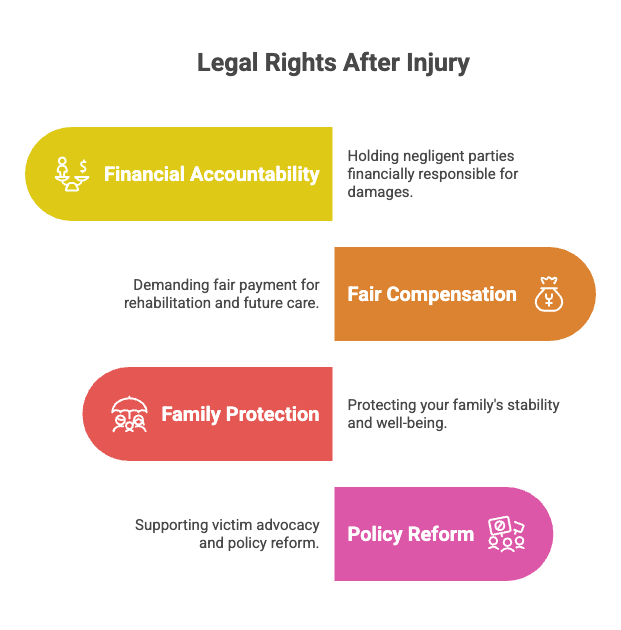
Your legal rights may include:
- Holding negligent doctors, drivers, employers, or property owners financially accountable.
- Demanding fair payment for rehabilitation, assistive technology, and future care needs.
- Protecting your family’s stability when your injury affects daily responsibilities and service to others.
- Supporting broader victim advocacy and policy reform that help prevent similar harm in your community.
You also have the right to be treated with dignity throughout the legal process. An attorney can help you understand available claims, preserve your interests, and pursue a result that reflects the full impact of your injury on your life and future.
Steps to Take After an Orlando Neurological Injury
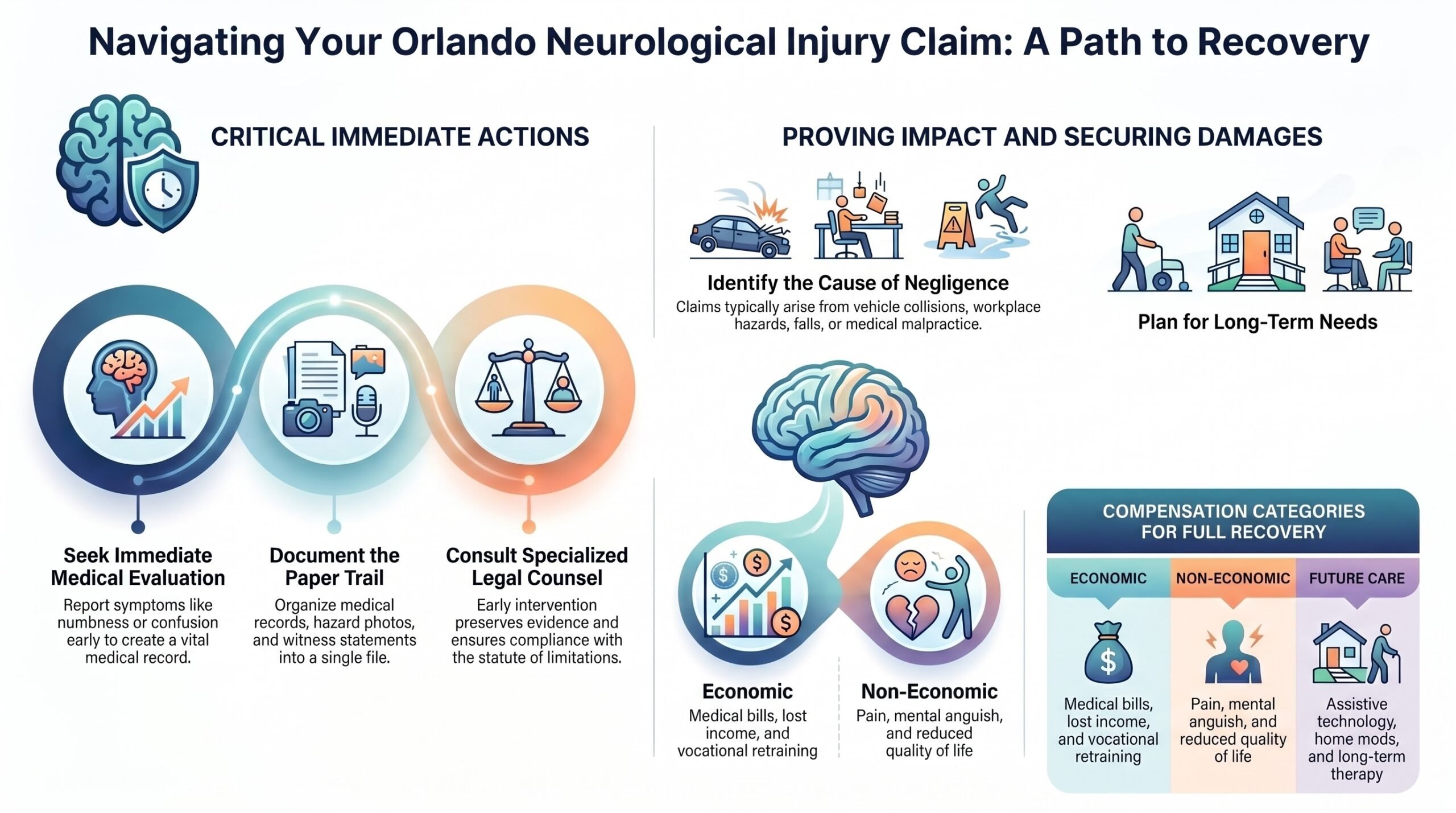
After an Orlando neurological injury, you should seek immediate medical care because prompt treatment can safeguard your health and create an early record of your condition. You should also document injury evidence, including medical records, accident details, photographs, and any communication related to the incident. As soon as possible, you should consult a lawyer to protect your rights and make informed decisions about your next steps.
Seek Immediate Medical Care
Get checked by a medical professional right away, even if your symptoms seem mild at first. Neurological injuries can worsen quickly, and early evaluation helps protect your health and your ability to keep serving the people who depend on you. If symptoms are severe, go to the emergency room for emergency triage and prompt stabilization.
You should report headaches, dizziness, confusion, numbness, vision changes, memory problems, or unusual fatigue without delay. A physician can assess brain, spinal cord, or nerve involvement and begin treatment before complications grow. Follow all care instructions carefully, take prescribed medications as directed, and attend every recommended appointment. If travel is difficult or symptoms persist after discharge, arrange a telehealth follow-up to ensure your condition is monitored. Prompt medical care creates the strongest foundation for recovery.
Document Injury Evidence
Promptly document every detail tied to the incident and your neurological symptoms, because strong evidence can clarify what happened and how the injury has affected your daily life. Write down the date, time, location, and events leading to the harm, then record headaches, dizziness, confusion, numbness, or memory problems as they appear.
Use photo documentation to preserve visible injuries, damaged property, hazards, and the surrounding scene. Keep copies of medical records, discharge papers, prescriptions, and receipts in one organized file. Ask supportive people who observed the incident or your condition to provide witness statements while memories remain fresh. Continue a daily journal that explains pain levels, sleep disruption, work limitations, and changes in your ability to care for others. Careful records can protect your recovery and your future.
Consult A Lawyer
Because neurological injuries often involve complex symptoms and long-term consequences, consulting an Orlando neurological injury lawyer can help you protect your rights and make informed decisions early in the process. You should seek counsel as soon as possible, so your attorney can preserve evidence, identify liable parties, and prevent costly mistakes.
A lawyer will review medical records, explain your legal options, and outline a clear fee structure before representation begins. That guidance helps you focus on recovery while continuing to care for others who depend on you. During consultations, ask about experience with neurological injury claims, expected timelines, and communication practices.
You should also confirm how client confidentiality will be maintained throughout the case. Early legal support can strengthen your claim and promote accountability for the harm you have suffered.
How an Orlando Neurological Injury Lawyer Can Help You
Guide the aftermath of a neurological injury with clear legal guidance, and you can better protect your health, finances, and future. An Orlando neurological injury lawyer helps you act decisively, document losses, and pursue compensation that supports meaningful recovery.
Your attorney can also coordinate rehabilitation planning and identify resources for caregiver support, so you can continue serving your family and community with stability and purpose.
- You receive a careful case review that identifies negligence, preserves evidence, and strengthens your claim.
- You gain help calculating medical costs, lost income, and other damages with accuracy and credibility.
- You benefit from negotiations with insurers, reducing pressure on you while your treatment continues.
- You obtain courtroom representation, if needed, to seek a fair result through skilled advocacy.
With focused legal counsel, you can make informed decisions, avoid costly mistakes, and protect the resources needed for treatment, daily care, and practical support after a serious neurological injury.
Long-Term Effects of Orlando Neurological Injuries
After a neurological injury, you may face lasting cognitive and memory decline that affects your work, relationships, and ability to make decisions. You may also experience emotional and behavioral changes, including irritability, depression, anxiety, or difficulty regulating your responses. In many cases, these injuries also limit your mobility and daily functioning, making routine tasks harder and increasing your need for ongoing care.
Cognitive And Memory Decline
When a neurological injury disrupts the brain’s normal function, you may experience lasting problems with memory, attention, and decision-making that affect nearly every part of daily life. You might forget appointments, lose track of tasks, or struggle to process information quickly, which can hinder your ability to serve your family, coworkers, and community effectively.
Over time, these deficits may interfere with work performance, financial management, medication schedules, and personal safety. In some cases, neurological damage is linked to early-onset dementia, especially when vascular contributions worsen reduced blood flow or prior trauma. You may also find that learning new information becomes harder, while planning and organization require greater effort. Careful medical evaluation, cognitive rehabilitation, and consistent legal support can help you protect your future and maintain your capacity to help others.
Emotional And Behavioral Changes
Neurological injuries often affect more than memory and concentration; they can also alter your emotions, personality, and behavior in ways that strain relationships and disrupt daily stability. You may experience mood swings, irritability, anxiety, or depression that seem unfamiliar and difficult to control. These changes can affect how you communicate, respond to stress, and support the people who depend on you.
You might also notice impulsive decisions, reduced patience, or social withdrawal, especially in settings that once felt comfortable. Loved ones may misread these symptoms as intentional, which can create conflict and isolation. Recognizing these patterns matters because early treatment, counseling, and structured support can protect your well-being and preserve your ability to care for others consistently, compassionately, and with sound judgment over time.
Mobility And Daily Limitations
Because these injuries can disrupt the brain and nervous system pathways that control movement, balance, and coordination, they often make routine physical tasks harder than they were before. You may struggle with walking, climbing stairs, standing for long periods, or using your hands with precision.
These limitations can affect how you serve your family, support your community, and complete daily responsibilities. Assistive devices, such as walkers, braces, or wheelchairs, can improve safety and independence, while Home modifications may reduce hazards and make vital spaces easier to access.
You might also need help with bathing, dressing, cooking, or transportation, especially during recovery. When mobility losses persist, they can change your schedule, limit your work capacity, and require ongoing therapy, structured planning, and dependable support to maintain quality of life.
Proving Liability in Orlando Neurological Injury Cases
Building a strong neurological injury claim in Orlando starts with proving liability through clear, credible evidence. You need to show that another party owed you a duty of care, breached that duty, and caused your neurological harm. Medical records, incident reports, photographs, and witness statements help connect the event to your diagnosis and daily limitations.
You also strengthen your case by working with an expert witness who can explain how the trauma affected your brain, spine, or nervous system. This testimony often clarifies intricate medical issues for a judge or jury. You should also be prepared for arguments about comparative negligence, because the other side may claim you contributed to the incident.
Careful documentation, consistent treatment, and a clear timeline can reduce that risk. When you pursue accountability with thorough evidence, you not only protect your own future but also uphold standards of care that help safeguard others in your Orlando community from similar preventable harm.
Dealing With Insurance Companies After an Orlando Neurological Injury
Once you’ve gathered the evidence needed to prove liability, you must also handle insurance companies carefully, since their evaluation of your claim can materially affect the compensation available for your neurological injury in Orlando. You should communicate with caution, provide accurate information, and avoid statements that insurers could interpret against your interests. Even routine conversations can influence how adjusters assess your losses.
Insurance companies often use settlement tactics designed to limit payouts, especially when neurological injuries involve long-term treatment, cognitive changes, or uncertain recovery timelines. You should keep detailed records of medical care, expenses, missed work, and daily limitations, because complete documentation strengthens your position and supports those who depend on your service and stability.
If insurers delay responses, question treatment, or issue claim denials, you should respond promptly and strategically. Careful advocacy helps protect your rights, preserves the full value of your claim, and supports your ability to continue serving your family and community.
What to Expect During an Orlando Neurological Injury Claim Process
You can expect your claim process to begin with an initial case evaluation, where your attorney reviews the facts of your neurological injury and explains your legal options. From there, you’ll work through medical evidence collection and insurance claim negotiations, both of which play a central role in proving liability and the full extent of your damages. If the insurer won’t offer a fair resolution, your case may proceed to settlement discussions or trial, depending on what best protects your interests.
Initial Case Evaluation
At the outset, your attorney will sit down with you to review how the neurological injury occurred, the medical treatment you’ve received, and the ways the condition has affected your daily life and ability to work. During this initial interview, you can expect focused questions, careful listening, and a clear explanation of whether your claim appears legally viable.
Your lawyer will also identify immediate concerns, such as filing deadlines, insurance communications, and practical steps that protect your rights. You should receive a straightforward overview of the fee structure, including whether representation is based on a contingency arrangement. This meeting helps you understand the path ahead, make informed decisions, and pursue accountability in ways that support your family, your recovery, and the broader good your service-centered values seek.
Medical Evidence Collection
Gathering medical evidence becomes one of the most important stages of an Orlando neurological injury claim, because the strength of your case often depends on clear, well-documented proof of both the injury and its long-term effects. You should expect your legal team to gather hospital records, neurology evaluations, diagnostic scans, medication histories, and rehabilitation notes, then organize them into a clear timeline.
They may also secure forensic imaging, expert opinions, and testimony from treating physicians who understand how your condition affects daily service to others. You can help by attending appointments, following treatment plans, and consistently reporting symptoms. Your lawyer will also monitor chain preservation for records, images, and physical evidence, helping protect accuracy and credibility. This careful process shows the full scope of your injury and future needs.
Insurance Claim Negotiations
Once medical evidence is in place, insurance claim negotiations usually begin with a detailed demand package that outlines liability, explains the neurological injury, and calculates both current and future losses.
You should expect the insurer to review records, question damages, and test causation before meaningful policy negotiation develops. Your lawyer responds with organized proof, expert support, and clear explanations that protect your interests and the care your family may continue providing. Adjusters often request statements, updates, or additional documentation, and each response can influence settlement timelines.
During this stage, you need patience, consistency, and careful communication, because insurers rarely accept full value immediately. Strong preparation helps you present the human impact of the injury with dignity, showing how the losses affect your ability to work, serve others, and meet daily responsibilities with confidence.
Settlement Or Trial
If negotiations don’t produce a fair result, your claim may move toward settlement conferences, mediation, or trial preparation, each of which requires careful evaluation of risk, evidence, and long-term medical needs.
You should weigh whether a negotiated resolution will fully support your recovery, future care, and your ability to continue serving your family and community. Your attorney will assess medical records, expert opinions, damages, and jury perceptions to estimate how a trial may unfold. Settlement psychology also matters because insurers often test your patience, confidence, and willingness to proceed.
If a fair offer remains out of reach, trial preparation becomes crucial. You’ll review testimony, organize documentation, and prepare for courtroom procedures. While settlement can reduce delay and uncertainty, a trial may be necessary to pursue full accountability and lasting financial protection after a neurological injury.
Compensation for Orlando Neurological Injury Damages
Because neurological injuries often alter every aspect of a person’s life, compensation in an Orlando claim must account for both the immediate financial losses and the long-term consequences of the harm. You may need support for emergency care, surgeries, medications, neurological rehabilitation, assistive devices, and ongoing evaluations that measure recovery and future needs.
Your claim should also reflect how the injury affects your ability to work, care for others, and remain engaged in your community. If you can’t return to your prior role, vocational retraining may become vital to restoring purpose and stability. You should seek compensation that recognizes projected treatment demands, home modifications, transportation assistance, and the professional services required for daily function.
Strong documentation, expert opinions, and consistent medical follow-up help establish the full scope of harm. When your legal team presents a clear and well-supported case, you place yourself in the best position to secure resources that protect your future and support those who depend on you.
Economic vs Non-Economic Damages in Orlando Neurological Cases
In an Orlando neurological injury case, you may recover economic damages for measurable losses such as medical bills, rehabilitation costs, lost income, and future care needs. You may also seek non-economic damages for harder-to-measure harm, including pain, mental anguish, and reduced quality of life. To support both categories, you must show how the injury affects you over time, using medical records, expert opinions, and evidence of lasting limitations.
Economic Damage Categories
Calculating the full cost of a neurological injury starts with separating economic damages from non-economic damages. Economic damages cover measurable financial losses you can document with bills, payroll records, invoices, and expert projections. In neurological cases, these categories often include emergency care, hospitalization, surgery, diagnostic imaging, medication, rehabilitation, assistive devices, and ongoing therapy.
You may also recover lost wages when symptoms keep you from working during treatment and recovery. If the injury affects your long-term ability to serve others through your profession, your claim can include reduced earning capacity and future earnings. Additional economic losses may include transportation to appointments, home modifications, in-home nursing assistance, and other out-of-pocket costs tied directly to your condition. Careful documentation helps you present a complete, credible demand for compensation.
Non-Economic Loss Valuation
While economic damages reimburse documented financial losses, non-economic damages address the personal harm a neurological injury causes in your daily life. These damages recognize losses that do not appear on invoices, yet deeply affect how you live, relate to others, and serve your family and community each day.
When valuing non-economic harm, your lawyer examines pain and suffering, emotional distress, loss of enjoyment, and reduced quality of life. They consider how symptoms interfere with sleep, communication, concentration, mobility, and independence.
Testimony from you, your loved ones, and trusted professionals can help show the full human cost of the injury. In Orlando neurological cases, careful valuation matters because a fair claim should reflect not only what you have spent, but also what you have endured and lost personally.
Proving Long-Term Impact
Because neurological injuries often evolve over time, proving their long-term impact requires more than a snapshot of your condition. You need consistent medical records, expert testimony, and objective testing that explains how symptoms affect work, relationships, and daily service to others over months or years.
To establish economic damages, you should document future treatment costs, reduced earning capacity, and the need for vocational rehabilitation. A clear functional prognosis helps show whether you can return to prior duties or must accept permanent limitations. For non-economic damages, your lawyer may use journals, family observations, and clinical evaluations to demonstrate pain, cognitive loss, emotional strain, and diminished independence. When you present this evidence carefully, you help the court understand not only what you’ve lost today, but what your injury will continue to take from your future.
When an Orlando Neurological Injury Case Goes to Trial vs Settlement
In many Orlando neurological injury cases, the path toward settlement or trial depends on the strength of the medical evidence, the extent of your damages, and the insurance company’s willingness to offer fair compensation. If liability is clear and your losses are well-documented, a settlement may protect your resources and provide support sooner to your family and those who depend on you.
However, if the insurer disputes fault, minimizes your symptoms, or refuses to fairly value future care, a trial may become necessary. Your lawyer will assess jury dynamics, expert testimony, and the credibility of treating physicians to determine whether litigation increases your settlement leverage.
A trial can also expose unreasonable defense tactics and highlight the real impact of your condition on daily service, work, and relationships. While settlement offers certainty, a trial may deliver fuller accountability. You should weigh risk, timing, and the goal of securing the means to continue caring for yourself and others over time.
The Statute of Limitations for Orlando Neurological Injury Cases
After a neurological injury, the filing deadline can shape your entire case as much as the medical evidence does. In Florida, filing deadlines generally limit how long you have to bring a claim, and missing them can prevent recovery entirely. Because neurological harm may develop over time, you should pay close attention to when symptoms appeared, when you discovered the injury, and how the event was documented.
You also need to understand the nuances of the statute that can affect your timetable. A claim involving a minor, delayed diagnosis, wrongful death, or a government agency may follow different rules. Evidence preservation matters here because records, witness memories, and treatment details can fade before the clock runs out.
If you serve others in your family or community, acting within these filing deadlines helps protect not only your own rights, but also your ability to secure resources for long-term care, rehabilitation, and daily support after a life-altering neurological injury.
When to Contact an Orlando Neurological Injury Lawyer
Filing deadlines set the outer limit for your claim, but you shouldn’t wait for the calendar to force action when a neurological injury may involve mounting medical needs and disputed facts. You should contact an Orlando neurological injury lawyer as soon as symptoms appear serious, treatment becomes complicated, or another party may be responsible for the harm.
Early intervention helps preserve records, identify witnesses, and document how the injury affects your ability to work, care for family, and serve your community. You should also seek legal guidance when insurers question the extent of the injury, delay payment, or create insurance disputes over coverage and causation.
Prompt action matters if a child is injured, if a loved one cannot advocate independently, or if you face pressure to give statements before the medical picture is clear. By reaching out early, you protect crucial evidence, support informed decisions, and create space to focus on recovery and the people who depend on you.
Why You Need an Experienced Orlando Neurological Injury Lawyer
Choose counsel with proven neurological injury experience, because these cases often turn on complex medical evidence, evolving symptoms, and aggressive insurance defenses. You need an attorney who understands how brain, spinal cord, and nerve injuries affect every part of your life, your work, and your ability to care for others.
When you pursue compensation, experience matters. An experienced Orlando neurological injury lawyer can connect medical records, expert opinions, and long-term treatment needs into a clear claim. That depth of knowledge strengthens your case strategy and helps prevent insurers from minimizing the impact of delayed symptoms, future rehabilitation costs, or permanent limitations.
You also benefit from accurate valuation, disciplined investigation, and timely action under Florida law. Strong representation gives you the structure to make informed decisions while protecting your family’s financial stability. With the right legal advocate, you can focus on recovery and continue serving the people who depend on you, while your attorney pursues accountability and full, fair recovery.
How to Choose the Right Orlando Neurological Injury Lawyer for Your Case
Not every personal injury attorney can manage the medical and legal demands of a neurological injury claim, so you should evaluate potential counsel with care. Focus on lawyers who understand brain, spinal cord, and nerve injuries, and who can explain intricate evidence clearly.
During Client interviews, ask how the attorney investigates liability, works with medical experts, and values long-term care needs. You should also review past results in catastrophic injury matters and confirm who will handle your case day-to-day. Strong communication matters because you need updates to make informed choices and support your family responsibly.
Examine Fee structures closely before you sign anything. A trustworthy lawyer should explain contingency terms, litigation costs, and possible case expenses in plain language. You should also consider responsiveness, courtroom readiness, and professional reputation. When you choose counsel carefully, you place your case in capable hands and protect the resources needed for your recovery and future service.
About The Law Offices of Anidjar & Levine
Serving injured clients across Central Florida, The Law Offices of Anidjar & Levine provides focused representation for people facing the life-altering effects of neurological injuries.
When you seek legal help, you need a team that understands both the medical intricacy of your injury and the daily burdens your family carries.
The firm works to protect your rights, pursue compensation, and help you move forward with dignity and purpose.
You can learn from the firm’s history, which reflects steady service to injured Floridians and a commitment to responsive counsel.
You also benefit from a client-centered approach that values communication, preparation, and practical guidance at each stage of your case.
Client testimonials often describe compassionate service, timely updates, and determined advocacy.
If you want representation grounded in experience and service, this firm offers the disciplined support you need while you focus on healing and caring for those who depend on you daily.
Frequently Asked Questions
Can Neurological Injuries Affect Eligibility for Social Security Disability Benefits?
Yes, neurological injuries can affect your eligibility for Social Security disability benefits if they prevent you from working consistently. You must show, through strong medical records, that your condition causes severe functional limitations expected to last at least 12 months or result in death. If you serve others in demanding roles, document how symptoms restrict concentration, mobility, communication, or daily tasks. Clear evidence strengthens your claim and supports a fair disability determination.
Are Children’s Neurological Injury Claims Handled Differently Than Adult Cases?
Yes, you’ll find that children’s neurological injury claims are handled differently from adult cases. You must address Parental consent, evaluate how Pediatric statutes affect filing deadlines, and protect the child’s long-term interests. Courts often scrutinize settlements more closely because minors can’t legally act for themselves. You should also expect different damages considerations, including future care, developmental support, and educational needs, which can materially shape case strategy and resolution.
Can Pre-Existing Neurological Conditions Impact a New Injury Claim?
Yes, a prior condition can affect your new injury claim, but it doesn’t bar recovery. You can still seek compensation if the new incident worsened your condition or caused distinct harm. Insurers may argue comparative negligence or claim your symptoms existed before, so clear medical evidence matters. By documenting changes carefully, you strengthen your position and support a fair outcome that reflects the injury’s true impact on your daily life.
What Assistive Technologies Help People Live With Neurological Impairments?
You can improve daily living with Assistive devices that support mobility, communication, and independence. Wheelchairs, walkers, speech-generating tools, and home automation systems help you function more safely and effectively. Cognitive aids, including reminder apps, planners, and medication alerts, strengthen memory and organization. You should match technology to specific needs, because tailored support often improves care, reduces caregiver strain, and helps you serve others with greater consistency, dignity, and confidence.
Are Support Groups Available for Families Coping With Neurological Injuries?
Yes, you can find support groups for families coping with neurological injuries through hospitals, rehabilitation centers, and nonprofit organizations. Peer-led meetings help you share practical guidance, strengthen resilience, and serve your loved one more effectively. Virtual forums also give you flexible access to education and community when travel is difficult. You should ask care teams, social workers, or local advocacy groups for referrals to credible, well-moderated support options.
—————————
If you’ve suffered a neurological injury in Orlando, you need clear guidance and decisive legal support.
Your claim may involve intricate medical evidence, liability disputes, and significant long-term losses, so acting promptly matters.
By working with an experienced lawyer, you can protect your rights, strengthen your case, and pursue the compensation you merit.
The Law Offices of Anidjar and Levine can evaluate your situation, explain your options, and help you move forward with confidence.
For more information, consult an Orlando Medical Malpractice Lawyer.

