

The Law Offices of Anidjar and Levine’s Orlando medical malpractice catastrophic lawyer investigates whether negligent medical care caused permanent disability, severe cognitive impairment, paralysis, or other life-altering harm. Counsel reviews medical records, preserves electronic evidence, identifies responsible providers, and consults qualified experts regarding breach and causation. Legal guidance may also address future medical expenses, rehabilitation, lost earning capacity, diminished independence, wrongful death, and Florida filing deadlines. Early consultation with an Orlando Personal Injury Lawyer can help protect evidence and legal rights. Further information explains claim requirements, potential compensation, and selecting appropriate representation.
Main Takeaways
- An Orlando medical malpractice lawyer evaluates whether negligent care caused catastrophic, permanent injury or wrongful death.
- Attorneys investigate surgical errors, delayed diagnoses, medication mistakes, birth injuries, and informed-consent failures.
- Medical records, expert opinions, audit trails, and witness evidence help establish breach, causation, and damages.
- Potential compensation may include medical expenses, rehabilitation, lost earning capacity, pain, suffering, and reduced quality of life.
- Prompt legal review helps preserve evidence, identify responsible parties, and comply with Florida filing deadlines.
How We Can Help With Your Orlando Medical Malpractice Catastrophic Injury Claim
When medical negligence causes a catastrophic injury, an Orlando medical malpractice attorney can help the injured patient and family pursue accountability and appropriate compensation. The legal team can organize medical records, identify responsible parties, and coordinate qualified professionals who evaluate whether care fell below accepted standards. This process allows the family to focus on treatment, rehabilitation, and long-term support while counsel manages demanding legal tasks.
Counsel may provide Witness preparation so individuals can present accurate, consistent testimony during interviews, hearings, or trial. A carefully developed deposition strategy can address difficult questions and preserve important evidence. During settlement negotiation, the attorney can communicate the claim’s strengths, respond to defense arguments, and pursue terms that reflect the patient’s needs. Damages valuation considers medical expenses, future care, lost earning capacity, necessary services, and nonfinancial losses. Through careful preparation and compassionate service, the legal team seeks a resolution that supports stability, dignity, and continuing care for the injured person and family.
Understanding Orlando Medical Malpractice Catastrophic Injury Cases


Understanding an Orlando medical malpractice catastrophic injury case requires examining whether a healthcare provider breached the accepted standard of care and whether that breach caused severe, lasting injury. The evaluation generally considers medical records, treatment decisions, available alternatives, and the nature of the resulting disability.
OUR CONSULTATIONSARE FREE
START YOUR FREE CASE REVIEW

Expert review is often crucial because qualified professionals must assess whether the care departed from established standards and whether that departure probably caused the injury. A claim may also involve informed consent, particularly when material risks, alternatives, or expected outcomes were not adequately explained before treatment.
Potential damages can include past and future medical expenses, rehabilitation, lost earning capacity, assistance with daily activities, and reduced quality of life. Florida law may impose damages caps in limited circumstances, so case-specific legal analysis is important. Statute deadlines also control how long an injured person has to file. Careful preparation helps preserve evidence and supports a fair, service-oriented response to profound harm.
Don’t Wait. Call Our Florida Personal Injury Lawyers Now!
Common Causes of Orlando Medical Malpractice Catastrophic


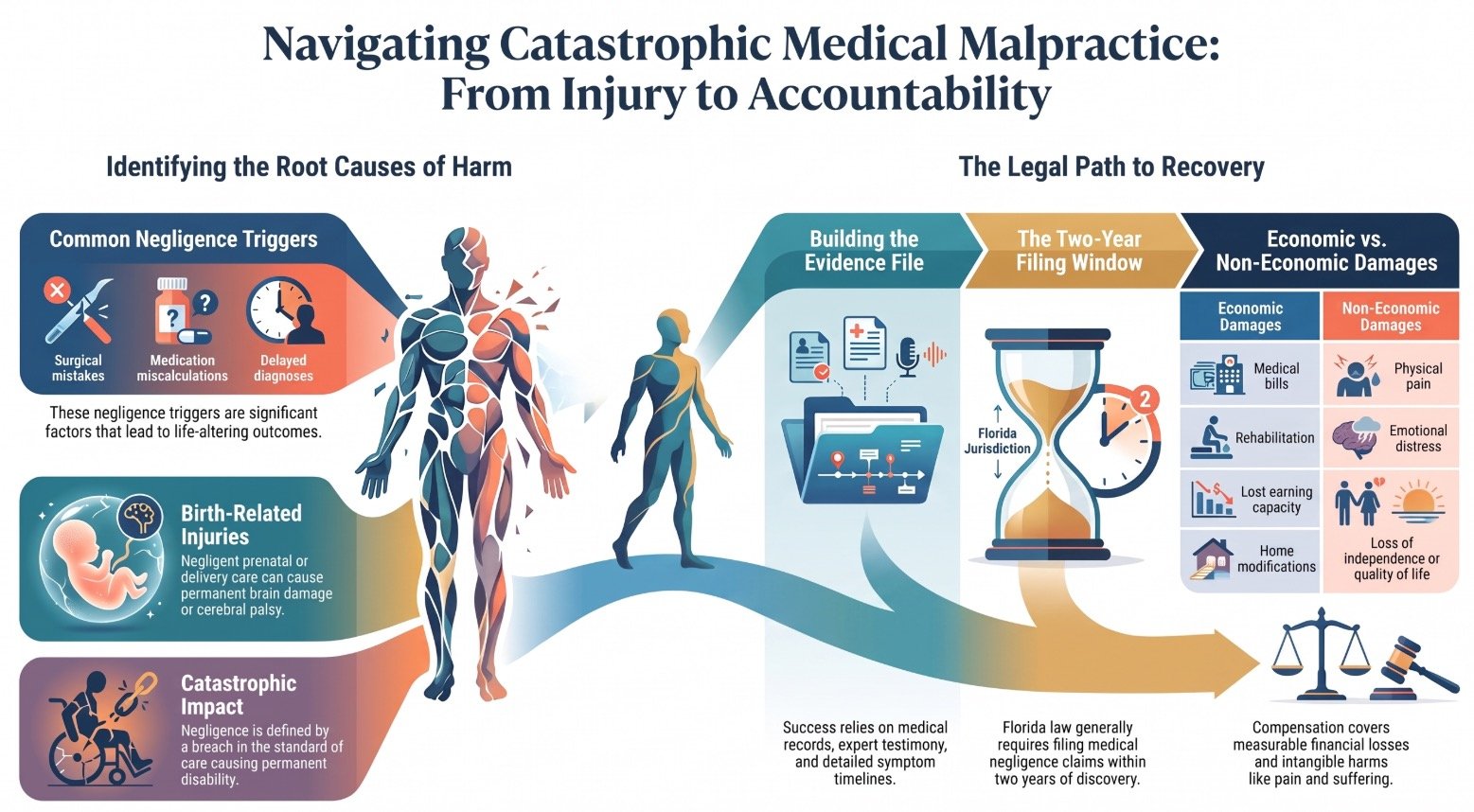
Common causes of catastrophic medical malpractice injuries include surgical errors, misdiagnosis or delayed diagnosis, and medication mistakes. Birth-related injuries may also result when healthcare providers fail to recognize complications or provide appropriate care during pregnancy, labor, or delivery. Each circumstance requires careful evaluation of the medical records, applicable standards of care, and resulting harm.
Surgical Errors
Surgical errors can cause catastrophic injuries when a procedure is performed improperly, the wrong site is treated, or an essential step is omitted. Such errors may involve incorrect incisions, retained surgical instruments, anesthesia mistakes, or damage to nearby organs and tissues. Prevention depends on careful preparation, accurate patient identification, and consistent operating room protocols. Surgical consent should explain material risks, alternatives, and the procedure’s intended scope so each patient can make an informed decision. Surgical teams must also verify the operative site, planned intervention, medications, and equipment before beginning. Strict sterile technique remains critical because contamination can produce severe infections and additional complications. When a preventable surgical mistake causes lasting harm, affected individuals may require extensive treatment, rehabilitation, and support while legal professionals examine whether accepted standards of care were followed.
Misdiagnosis Or Delayed Diagnosis
When a serious condition is misdiagnosed or diagnosed too late, necessary treatment may be delayed until the injury becomes more difficult to manage. Misdiagnosis can arise when symptoms resemble less severe illnesses, test results are overlooked, or a provider fails to investigate persistent complaints. Delayed diagnosis may also occur when referrals, imaging, or follow-up evaluations are not completed within a reasonable period. A diagnostic standard-of-care review can examine whether the provider responded appropriately to the patient’s symptoms, history, and evolving condition. Risk factor misinterpretation may further contribute when age, medical history, or reported symptoms are incorrectly discounted. The resulting harm can include permanent impairment, advanced disease, or reduced treatment options. Careful documentation and qualified legal guidance may help affected families understand potential accountability and pursue appropriate support.
Medication Mistakes
Medication mistakes can cause catastrophic harm, particularly when an incorrect drug, dosage, or administration method prevents a patient from receiving safe and effective treatment. Errors may arise during prescribing, transcription, dispensing, or bedside delivery. Inadequate Medication Reconciliation can leave clinicians unaware of allergies, duplicate prescriptions, or medicines that should have been discontinued. Pharmacy Administration failures, including labeling or dispensing the wrong medication, may compound those risks. Dosage Calculations require careful attention to weight, age, kidney function, and concentration, especially when medicines have narrow safety margins. A Drug Interaction can reduce effectiveness or produce dangerous toxicity when incompatible medications are combined. Healthcare professionals are expected to use verification procedures, communicate clearly, and monitor patients appropriately. When preventable errors cause catastrophic injury, affected patients may seek guidance from an Orlando medical malpractice attorney.
Birth-Related Injuries
Birth-related injuries may result from preventable failures during pregnancy, labor, delivery, or immediate newborn care. Common causes include failure to recognize fetal distress, delayed cesarean delivery, improper use of forceps or vacuum devices, untreated maternal infections, and inadequate monitoring of oxygen levels. Errors in prenatal screening can also leave serious conditions undiagnosed, while poor communication may prevent timely intervention. Consequences can include brain injuries, cerebral palsy, nerve damage, fractures, developmental delays, or newborn death. A catastrophic medical malpractice claim may require medical records, expert opinions, and evidence showing that negligent care caused the injury. Attorneys may assess future treatment, rehabilitation, assistive services, lost earning capacity, and emotional hardship when valuing a case. In fatal cases, families may pursue wrongful death damages and compassionate legal guidance.
Legal Rights of Orlando Medical Malpractice Catastrophic Injury Victims
Orlando medical malpractice catastrophic injury victims may have legal rights to pursue compensation when a healthcare provider’s negligence causes permanent disability, severe cognitive impairment, paralysis, or another life-altering condition. A qualified attorney can evaluate the record, identify responsible parties, and protect the victim’s interests while family members focus on care and recovery.
Orlando catastrophic injury victims may seek compensation when medical negligence causes permanent disability or other life-altering harm.
- Victims may seek damages for medical treatment, rehabilitation, assistive equipment, lost income, and diminished future earning capacity.
- Compensation can include non-economic losses, such as pain, suffering, loss of independence, and reduced quality of life.
- Claims may involve negligent hiring, inadequate supervision, or failures related to patient consent when supported by admissible evidence.
- Florida deadlines and procedural requirements can limit recovery, making timely legal review essential.
Families may also pursue documentation, expert opinions, and insurance information needed to establish liability and damages. A compassionate legal team can coordinate with medical professionals, life-care planners, and support organizations to present a complete account of long-term needs. Legal guidance helps ensure vulnerable individuals receive the informed advocacy and resources needed for continued dignity and care.
Why Do Orlando Medical Malpractice Catastrophic Injuries Happen?
Catastrophic medical malpractice injuries often occur when a healthcare provider’s failure to meet accepted standards of care causes permanent and life-altering damage. In Orlando, these injuries may result from delayed diagnoses, medication errors, surgical mistakes, inadequate monitoring, or failures to respond to worsening symptoms. Communication breakdowns among physicians, nurses, consultants, and facilities can allow serious conditions to progress without timely intervention. Staffing shortages, insufficient training, defective equipment, and incomplete medical records may further increase the risk of negligent care. Root cause analysis examines how organizational practices, supervision, documentation, and decision-making contributed to the event, rather than focusing only on an individual error. This review can identify Preventable harm patterns, including repeated failures to verify medications, recognize warning signs, obtain informed consent, or follow established safety protocols. Understanding these causes supports accountability and encourages healthcare systems to strengthen safeguards, improve communication, and protect patients from avoidable catastrophic consequences during vulnerable periods of care.
What Should You Do After an Orlando Medical Malpractice Catastrophic Injury?
After a catastrophic medical injury, the patient should seek immediate medical care to address urgent health concerns and create a treatment record. They should document injuries, symptoms, medical expenses, and related communications as thoroughly as possible. Consulting a qualified medical malpractice lawyer can help preserve evidence, evaluate potential negligence, and determine appropriate legal steps.
Seek Immediate Medical Care
Seek prompt medical attention when a suspected medical error causes a catastrophic injury. The affected person should call 911 or proceed to an emergency department, particularly when breathing difficulty, uncontrolled bleeding, loss of consciousness, severe pain, paralysis, confusion, or sudden weakness occurs. These common symptoms may indicate emergency signs requiring rapid evaluation and stabilization. Immediate treatment can help prevent complications, including infection, organ damage, permanent disability, or worsening neurological injury. A trusted relative, caregiver, or advocate may help communicate known allergies, medications, medical conditions, and the suspected treatment concern to clinicians. A patient safety checklist can help ensure that urgent questions are addressed, prescribed care is understood, and follow-up instructions are clear. Medical professionals should be permitted to prioritize stabilization and necessary interventions before other considerations.
Document Your Injuries
Once immediate medical needs have been addressed, the injured person or a designated representative should begin documenting the injuries and their effects. A consistent Symptom Timeline can record pain, weakness, cognitive changes, emotional distress, and other developments, including when each symptom began, worsened, or improved. Preserve medical records, discharge instructions, prescriptions, diagnostic results, and follow-up recommendations in an organized file. Damage Documentation should also include photographs of visible injuries, mobility limitations, medical equipment, and relevant home conditions, when appropriate. Receipts and records of transportation, treatment-related expenses, missed work, and necessary assistance may demonstrate how the injury affects daily life. Caregivers can maintain notes describing changes in routines, independence, communication, and personal care needs. Accurate, dated observations provide a clearer account for those evaluating the person’s ongoing needs.
Consult A Malpractice Lawyer
When a catastrophic injury may have resulted from medical negligence, the injured person or a designated representative should consult an experienced Orlando medical malpractice lawyer as soon as practical. A lawyer can preserve evidence, identify applicable deadlines, and explain legal options without interfering with necessary medical care. Early advice can also help restore communication and prevent statements or decisions that could weaken a potential claim. Counsel may review medical records, obtain relevant billing information, interview witnesses, and consult qualified medical experts. These investigation steps can clarify whether a healthcare provider breached the accepted standard of care and caused the injury. Based on the findings, the lawyer can develop a case strategy addressing liability, damages, insurance communications, and possible settlement or litigation. Prompt representation supports informed decisions and safeguards the injured person’s interests.
Critical Evidence in an Orlando Medical Malpractice Catastrophic Injury Case
A catastrophic medical malpractice claim in Orlando depends on clear, reliable evidence establishing what occurred and how the injury resulted.
The following materials can help assess liability, medical causation, and the full extent of the harm:
- Medical Records
- Expert Testimony
- Injury Documentation
- Negligence Evidence
Medical Records
Medical records provide vital evidence in an Orlando medical malpractice catastrophic injury case by documenting the patient’s condition, treatment, clinical decisions, and resulting harm. Progress notes, medication histories, diagnostic results, consent forms, and discharge instructions may establish what providers knew and when they acted. These documents can also clarify symptom changes, delays, omissions, and communication among caregivers. Missing records may raise serious questions, particularly when information should have been recorded during vital care. Healthcare providers may have spoliation duties requiring preservation of relevant materials after litigation becomes reasonably foreseeable. Record authenticity must be examined to confirm that entries are complete, accurate, and unaltered. Chain of custody issues can affect electronically stored information, audit trails, metadata, and copied records. Properly preserved documentation helps families and their representatives pursue accountability.
Expert Testimony
Building on the information contained in medical records, expert testimony can explain whether the care provided met accepted professional standards and whether a departure caused catastrophic injury. A qualified medical expert may evaluate clinical decisions, identify the applicable standard of care, and clarify how a provider’s conduct compared with practices reasonably expected in similar circumstances. The testimony can also address causation, including whether the alleged error created a substantial factor in producing the claimed harm. Courts may examine witness qualifications, such as education, training, licensure, clinical experience, and familiarity with the relevant specialty. Clear, impartial analysis helps fact finders understand complicated medical issues without replacing their role in deciding the case. Attorneys often rely on carefully selected experts who can present opinions grounded in reliable methods, documented facts, and professional responsibility.
Injury Documentation
When catastrophic harm is alleged, thorough injury documentation provides important evidence of the extent, progression, and consequences of the condition. A complete diagnosis timeline can show when symptoms appeared, how they developed, and which lasting impairments were identified. Treatment records may include emergency evaluations, hospital notes, imaging results, surgical reports, rehabilitation plans, medication histories, and expert observations. Together, these materials help establish the patient’s physical limitations, cognitive changes, care requirements, and effect on daily activities. Consistent documentation also preserves information that may otherwise fade as time passes or providers change. Family observations, employment records, and functional assessments can supplement clinical materials by describing changes outside medical settings. Careful organization allows legal professionals and medical experts to evaluate the injury’s severity and explain its ongoing consequences to those seeking justice and supporting affected individuals.
Negligence Evidence
Establishing negligence in an Orlando medical malpractice catastrophic injury case requires evidence showing that a healthcare provider failed to meet the accepted standard of care and that the failure caused substantial harm. Relevant evidence may include medical records, diagnostic images, medication histories, surgical notes, laboratory results, and communications among providers. Witness statements can clarify what occurred before, during, and after treatment. An independent expert review typically compares the provider’s conduct with accepted practices and identifies specific departures. A thorough causation analysis then connects those departures to the catastrophic injury, distinguishing medical negligence from an unavoidable outcome or preexisting condition. Promptly preserving records is crucial because missing documentation can complicate evaluation. This evidence also helps attorneys present a clear, accurate account that supports accountability and informed service to affected patients and families.
Long-Term Effects of Orlando Medical Malpractice Catastrophic Injuries
Orlando medical malpractice catastrophic injuries may result in permanent physical disabilities that alter mobility, independence, and daily functioning. Emotional and psychological trauma can also affect relationships, employment, and overall quality of life. These lasting consequences often create ongoing medical and financial needs, including treatment, rehabilitation, assistive equipment, and personal care.
Permanent Physical Disabilities
Permanent physical disabilities can fundamentally alter an injured person’s mobility, independence, and ability to work after Orlando medical malpractice causes a catastrophic injury. Lasting paralysis, limb loss, severe nerve damage, or impaired coordination may require wheelchairs, prosthetics, home modifications, and assistance with daily activities. These limitations can prevent a person from returning to prior employment or pursuing comparable opportunities, creating substantial lifetime lost earning capacity. Ongoing medical care may include surgeries, medication, physical therapy, occupational therapy, and specialized equipment. Rehabilitation costs can continue for years, while caregivers and transportation may create additional financial obligations. A thorough legal evaluation may account for past and projected expenses, diminished earning potential, and necessary support services. Documentation from physicians, rehab experts, economists, and vocational professionals can help establish the disability’s long-term effects and protect the injured person’s future needs.
Emotional And Psychological Trauma
Emotional and psychological trauma often becomes a lasting consequence of catastrophic medical malpractice, affecting an injured person’s recovery, relationships, independence, and ability to work. Survivors may experience anxiety, depression, post-traumatic stress, sleep disruption, anger, or diminished confidence after an avoidable medical injury. These effects can complicate rehabilitation and make ordinary decisions feel overwhelming. Family members may also experience fear, grief, or caregiver strain, creating a need for secondary victim support within the household. A qualified mental health professional can assess symptoms, establish treatment goals, and help the survivor develop safe coping strategies. Long term counseling may be appropriate when distress persists or changes as the person adapts to permanent limitations. Compassionate legal guidance can help protect the survivor’s voice while coordinating referrals to appropriate psychological services and community resources.
Ongoing Medical And Financial Needs
When a catastrophic medical injury creates lasting disability, ongoing medical and financial needs may extend far beyond the initial treatment period. Patients may require rehabilitation, adaptive equipment, prescription medication, home modifications, and assistance with daily activities. Long-term care can include skilled nursing, in-home support, or specialized residential services, depending on the person’s functional limitations and prognosis. These costs may increase as conditions evolve, making accurate life-care projections essential. Financial Planning should address current expenses, lost earning capacity, future treatment, insurance limitations, and potential public benefits. A qualified legal team may consult medical professionals, economists, and vocational experts to document these needs. Careful preparation can help protect access to necessary services and support relatives who coordinate treatment, benefits, housing, and long-term decision-making for the injured individual.
Proving Liability in Orlando Medical Malpractice Catastrophic Injury Cases
Proving liability in an Orlando medical malpractice catastrophic injury case requires evidence that a healthcare provider breached the accepted standard of care and that the breach directly caused substantial harm. The word “recovery” generally should be “harm”; liability depends on demonstrating serious injury, not improvement. Medical records, diagnostic images, treatment histories, and testimony from qualified experts can establish what competent care required under comparable circumstances. The Evidentiary Burden rests with the injured patient, who must present credible proof of negligence and legally recognizable damages.
Causation standards require more than showing that an undesirable outcome followed treatment. The evidence must connect the provider’s specific act or omission to the catastrophic injury, while addressing alternative causes, preexisting conditions, and the patient’s medical course. Experts may explain whether earlier diagnosis, appropriate treatment, or timely intervention would probably have prevented or alleviated the harm. Attorneys typically evaluate records, consult experts, preserve relevant evidence, and identify responsible parties before filing. Thorough preparation supports accountability and helps protect the patient’s long-term interests.
Dealing With Insurance Companies After an Orlando Medical Malpractice Catastrophic Injury
After an Orlando medical malpractice catastrophic injury, insurance companies may seek statements, medical authorizations, and other information before the full extent of the harm is known. Representatives should avoid providing recorded statements or signing broad releases without careful review. Early communications may affect coverage decisions, valuation, or future access to benefits.
Effective Insurance negotiation strategies include documenting every expense, preserving medical records, identifying applicable policies, and presenting a clear account of ongoing care needs. A representative may communicate through counsel to reduce pressure on an injured person and protect confidential information. Settlement discussions should account for rehabilitation, lost earning capacity, attendant care, equipment, and long-term medical monitoring.
If an insurer disputes responsibility or refuses payment, begin the denial appeal process promptly. The applicable policy, denial letter, deadlines, and supporting evidence require careful examination. Counsel can help organize medical opinions, challenge unsupported conclusions, and pursue available administrative or legal remedies while maintaining respectful, focused communication with all parties.
What to Expect During an Orlando Medical Malpractice Catastrophic Injury Claim Process
The Orlando medical malpractice catastrophic injury claim process typically begins with an initial case evaluation to assess the facts, potential negligence, and legal options. A thorough medical record investigation and expert testimony review then help establish whether the treatment departed from accepted standards and caused the injury. Depending on the evidence and negotiations, the matter may conclude through settlement or proceed to trial.
Initial Case Evaluation
How does an Orlando medical malpractice catastrophic injury claim begin? The process generally starts with a confidential consultation, during which the injured person or representative describes the treatment, resulting harm, and immediate concerns. The attorney evaluates whether the reported circumstances may support a negligence claim and identifies issues requiring prompt attention. This discussion also helps clarify the client’s objectives, including access to care, financial stability, and accountability. If representation appears appropriate, the attorney explains potential legal theories, applicable deadlines, anticipated responsibilities, and likely expenses. A case timeline overview may then outline major stages, from initial assessment through negotiations or litigation, without promising a particular outcome. The evaluation should provide a realistic understanding of available options while treating the affected individual and family with patience, respect, and careful attention to their needs.
Medical Record Investigation
Medical record investigation typically begins once an Orlando medical malpractice attorney obtains authorization to request relevant records from healthcare providers, facilities, laboratories, and other sources. The legal team organizes charts, medication histories, diagnostic results, operative reports, discharge instructions, billing records, and communications. The team compares each document with the claimed injuries and treatment history to identify omissions, inconsistencies, delays, or changes in condition. Attorneys may also secure imaging files, electronic audit trails, incident reports, and prior medical records when they help establish causation or damages. A crucial evidence timeline is developed to place symptoms, decisions, procedures, and follow-up care in chronological order. Records must be preserved, authenticated, and handled according to Florida evidence standards. This investigation helps clarify disputed facts, define the claim’s scope, and protect the injured person’s interests.
Expert Testimony Review
When a catastrophic injury claim proceeds beyond the medical record investigation, qualified experts review the available evidence to assess whether the care met accepted professional standards. A physician may analyze treatment decisions, timing, communication, and foreseeable risks, while life-care and economic specialists evaluate continuing medical needs and losses. Their opinions should rely on reliable methods, complete records, and impartial standards, not speculation or advocacy. The reviewing process can include written reports, conferences with counsel, and preparation for deposition questioning. Experts may identify deviations from accepted practice and explain how those deviations contributed to the injury, using language understandable to nonmedical decision-makers. Courts may examine qualifications, methodology, and relevance through Daubert challenges. Careful expert review helps clarify complex issues and supports a fair evaluation of the injured person’s needs.
Settlement Or Trial
Although many catastrophic medical malpractice claims resolve through negotiation, some proceed to trial when the parties cannot agree on liability or the full value of the losses. Pretrial Negotiations may include demand letters, mediation, depositions, and structured discussions concerning medical evidence, future care, lost income, and other damages. Settlement Timelines vary according to the injury’s complexity, available records, expert reviews, and the parties’ willingness to exchange meaningful offers. If settlement remains unavailable, the case may proceed through motions, jury selection, witness testimony, and closing arguments. Trial preparation requires careful organization and clear presentation of evidence so decision-makers can understand how the medical error affected the injured person and family. A resolution may occur before verdict, but trial counsel must remain prepared to serve the claimant’s interests throughout the process.
Don’t Wait. Call Our Florida Personal Injury Lawyers Now!
Compensation for Orlando Medical Malpractice Catastrophic Injury Damages
Compensation for catastrophic injury damages in an Orlando medical malpractice claim may address the extensive financial, physical, and personal consequences caused by negligent medical care. A claim may seek funds supporting ongoing rehabilitation, adaptive equipment, in-home assistance, and other services required after a life-altering injury. It may also account for anticipated treatment and care coordination when medical needs are expected to continue.
Evaluating potential compensation requires careful documentation and reliable professional analysis. Evidence preservation can include medical records, diagnostic images, billing information, employment documents, and testimony concerning changes in daily functioning. Expert review techniques may help establish how the provider’s conduct caused the injury and why continued support is medically appropriate. Economic projections and life-care assessments can also help present a responsible estimate tailored to the injured person’s circumstances.
Families seeking to protect a vulnerable patient may benefit from prompt legal guidance. Thorough preparation can promote accountability, preserve critical evidence, and support a resolution that provides stability, dignity, and necessary care over time.
Economic vs Non-Economic Damages in Orlando Medical Malpractice Catastrophic Cases
Economic damages may include medical expenses, rehabilitation costs, lost income, and future care required after a catastrophic injury. Non-economic losses address harms such as pain, emotional distress, diminished quality of life, and permanent disability, which require careful evaluation. Catastrophic claims also demand consideration of long-term consequences, evidentiary support, and the distinction between measurable financial losses and less tangible personal harms.
Economic Damages Explained
When medical negligence causes catastrophic harm, economic damages represent the measurable financial losses arising from the injury and its long-term consequences. These losses may include emergency treatment, rehabilitation, medications, assistive equipment, home modifications, and ongoing nursing or personal care. Qualified professionals commonly project future medical needs by assessing life expectancy, treatment requirements, and expected costs. Economic loss proof may include invoices, medical records, insurance statements, employment documentation, and expert testimony connecting expenses to the negligent act. Wage loss valuation examines earnings missed during recovery and diminished future earning capacity. It may account for benefits, career advancement, work-life expectancy, and inflation. Careful documentation helps establish the amount reasonably required to preserve an injured person’s safety, independence, and access to necessary services.
Non-Economic Losses Evaluated
Non-economic losses address the human consequences of catastrophic medical malpractice that cannot be measured through bills, receipts, or income records. They may include physical pain, emotional distress, diminished quality of life, disfigurement, loss of independence, and the inability to participate in family, social, or recreational activities. In catastrophic cases, these effects can persist for decades and may alter a person’s identity, relationships, and daily functioning. Evaluation generally considers medical records, testimony from the injured individual and caregivers, treatment history, and evidence describing life before and after the injury. Careful document retention helps preserve meaningful proof of limitations, symptoms, and personal losses. Expert review may clarify the prognosis, functional impact, and likely duration of suffering, allowing the damages analysis to reflect the full human cost rather than only readily calculated financial harm.
Catastrophic Claim Considerations
Catastrophic medical malpractice claims in Orlando require a damages analysis that distinguishes measurable financial losses from less quantifiable harms affecting the injured person’s life. Economic damages may include emergency treatment, rehabilitation, medications, assistive equipment, lost income, diminished earning capacity, and future attendant care. Accurate Damages calculation typically requires medical records, employment evidence, life-care projections, and expert financial analysis. Non-economic damages address pain, emotional distress, disfigurement, loss of independence, and diminished enjoyment of life. These losses may substantially affect the individual and family, even when they lack a precise monetary value. Causation proof remains critical because liability and damages depend on showing that negligent medical care caused the catastrophic injury. Orlando cases also require careful consideration of comparative fault, statutory limitations, insurance coverage, and long-term needs when presenting a fair, well-supported claim.
When an Orlando Medical Malpractice Catastrophic Injury Case Goes to Trial vs Settlement
Although many Orlando medical malpractice catastrophic injury cases settle, some proceed to trial when the parties cannot agree on fair compensation or liability. Settlement can provide certainty, privacy, and faster access to funds for medical care, rehabilitation, home adjustments, and family support. It also allows the injured person to avoid the uncertainty of a jury’s decision.
Trial may become necessary when an insurer disputes responsibility, undervalues long-term losses, or refuses meaningful negotiations. A carefully developed trial strategy generally includes presenting medical records, qualified expert opinions, life-care projections, and testimony describing the injury’s continuing effects. Counsel may use settlement leverage by demonstrating thorough preparation and readiness to present the case in court.
Neither option is automatically superior. The appropriate path depends on the evidence, projected needs, financial pressures, and the injured person’s tolerance for delay and public proceedings. A lawyer serving catastrophic-injury clients should explain risks clearly, preserve informed decision-making, and pursue the resolution that best protects care, dignity, and future stability.
Florida Laws That May Affect Your Orlando Medical Malpractice Catastrophic Case
Florida law sets the framework for an Orlando medical malpractice catastrophic case, including filing deadlines, required pre-suit procedures, standards for proving negligence, and limits that may affect recoverable damages. Several provisions may shape how an injured patient and family pursue accountability and protect compensation:
Florida law governs deadlines, pre-suit requirements, negligence standards, and potential damage limits in catastrophic medical malpractice cases.
- Florida generally requires an investigation, an expert medical opinion, and formal notice before a lawsuit may proceed. These steps help ensure claims are evaluated responsibly.
- Negligence must be connected to the catastrophic injury through competent evidence. Medical records, expert testimony, and treatment history may establish the applicable standard of care and causation.
- A Cap on damages may be relevant in limited circumstances, although Florida’s rules depend on the defendant and the claim’s specific facts.
- A medical lien can allow providers, insurers, or benefit programs to seek payment from a recovery. Identifying and negotiating valid liens helps preserve funds for ongoing care and essential household needs.
Because laws and interpretations change, qualified counsel should review the facts carefully and explain available protections.
The Statute of Limitations for Orlando Medical Malpractice Catastrophic Injury Cases
Time limits can determine whether an Orlando medical malpractice catastrophic injury claim may proceed in court. Florida generally requires a medical negligence action to be filed within two years after the injured person discovered, or reasonably should have discovered, the negligence and resulting injury. An absolute four-year repose period usually applies from the date of the incident, although exceptions may exist for fraud, concealment, misrepresentation, or claims involving children.
Certain circumstances can pause or extend these deadlines, including the defendant’s concealment of wrongdoing and statutory pre-suit investigation requirements. Before filing, a claimant typically must provide notice and obtain a reasonable investigation, which affects scheduling and available time. Missing a deadline can bar recovery, regardless of the injury’s severity.
The limitations period is separate from issues such as Comparative negligence and damages caps, which may affect the amount recoverable rather than whether a court can hear the claim. Careful attention to dates, records, and statutory exceptions helps protect injured patients’ rights.
How an Orlando Medical Malpractice Catastrophic Lawyer Can Help You
Effective representation can provide structure and informed decision-making in a catastrophic medical malpractice case. An Orlando attorney can coordinate qualified experts, organize intricate records, and present the client’s experience with clarity and respect.
This support may help families pursue accountability while protecting long-term interests.
- Case evaluation: Counsel examines medical records, treatment standards, and causation issues to determine whether negligence contributed to the injury.
- Evidence preservation: The legal team secures records, imaging, communications, billing information, and expert opinions before important material is lost or altered.
- Liability strategy: Attorneys compare provider conduct with applicable standards and develop a focused theory identifying responsible parties and their respective roles.
- Financial recovery: Counsel documents catastrophic damages, including lifelong care, lost earning capacity, rehabilitation, and household support, then conducts settlement negotiation or prepares for trial.
A lawyer also manages communications with insurers and opposing counsel, allowing caregivers to focus on recovery and supporting affected family members. Legal guidance cannot erase harm, but it can promote an orderly, accountable process.
When to Contact an Orlando Medical Malpractice Catastrophic Lawyer
Recognizing when to contact an Orlando medical malpractice catastrophic lawyer can protect a patient’s legal rights and support a thorough investigation. Legal guidance should be considered as soon as a serious injury, permanent disability, brain damage, or unexpected decline follows medical treatment. Early consultation helps identify relevant records, medical devices, prescriptions, billing statements, and communications before they become difficult to obtain. It also supports evidence preservation while memories remain clearer and facilities retain original documentation.
A lawyer may also be contacted when a provider offers an explanation that conflicts with the patient’s condition, refuses to release records, or requests a settlement before the full consequences are understood. Families facing a patient’s death should seek advice promptly regarding a potential Wrongful death claim, because filing deadlines and required procedures can apply. Contact may be appropriate even when fault remains uncertain. An initial review can clarify available information, immediate responsibilities, and practical steps for protecting the patient’s interests without delaying necessary medical care.
Why You Need an Experienced Orlando Medical Malpractice Catastrophic Lawyer
An experienced Orlando medical malpractice catastrophic attorney is essential when a medical injury causes permanent disability, severe cognitive impairment, or life-altering medical needs. Such cases require careful evaluation of medical records, treatment decisions, and long-term consequences. An experienced attorney can identify how negligent care contributed to the injury and present those facts clearly and in an organized way.
Catastrophic claims often involve extensive future expenses, including rehabilitation, adaptive equipment, home modifications, in-home assistance, and lost earning capacity. Accurate damages calculation requires attention to medical projections, life expectancy, inflation, and the injured person’s changing needs. Through expert consultation with physicians, life-care planners, economists, and vocational experts, counsel can develop evidence supporting the full scope of compensation.
A knowledgeable attorney also manages communications, deadlines, document preservation, and negotiations while the family focuses on care and recovery. The attorney’s experience helps protect the injured person’s interests, address disputed liability, and pursue resources that promote dignity, stability, and continued support throughout the years ahead.
Don’t Wait. Call Our Florida Personal Injury Lawyers Now!
How to Choose the Right Orlando Medical Malpractice Catastrophic Lawyer for Your Case
Choosing the right Orlando medical malpractice catastrophic lawyer requires careful consideration of the attorney’s experience, resources, and approach to complex injury claims. A qualified lawyer should understand complex medical records, consult respected medical experts, and evaluate how negligence affected the individual’s long-term needs.
Potential clients should ask how the attorney develops a Case strategy, assesses liability, and prepares for negotiations or trial. Experience with catastrophic injuries is important because these cases may involve permanent disabilities, extensive treatment, lost earning capacity, and ongoing personal care. The lawyer should also demonstrate strong client communication by explaining legal options, realistic timelines, and significant developments in understandable terms.
A careful evaluation includes reviewing professional credentials, disciplinary history, case results, and references when available. The attorney’s willingness to listen respectfully and coordinate with medical, financial, and life-care professionals can also indicate a service-oriented practice. Selecting counsel who combines preparation, integrity, and compassion helps protect the injured person’s interests throughout the legal process.
About The Law Offices of Anidjar & Levine
The Law Offices of Anidjar & Levine represents individuals and families pursuing compensation after serious medical negligence causes catastrophic injury. Its practice emphasizes careful preparation, responsible advocacy, and respect for clients facing substantial physical, financial, and emotional burdens.
The firm’s malpractice team examines the circumstances surrounding an injury, including treatment decisions, communication failures, surgical errors, and delayed diagnoses. Attorneys may coordinate with medical professionals and other qualified consultants to clarify whether the accepted standard of care was followed and how a breach contributed to lasting harm.
A thorough record review is central to this process. Medical charts, imaging, billing information, employment records, and other documentation may help establish causation, damages, and future needs. The firm also considers the effect of catastrophic injuries on caregivers, household responsibilities, rehabilitation, and long-term quality of life.
Through individualized case assessment and organized litigation support, the offices seek accountability while helping affected families understand their legal options. Their approach is designed to serve clients with diligence, clarity, and sustained professional attention.

Frequently Asked Questions
Can Family Members File a Wrongful Death Claim After a Catastrophic Medical Malpractice Injury?
Family members may file a wrongful death claim after a catastrophic medical malpractice injury when state law identifies them as eligible beneficiaries. Eligibility commonly includes spouses, children, or parents, but conflict of beneficiaries can require court intervention. Counsel should evaluate filing timelines, which may be strictly limited. Emotional damages may be recoverable, while probate involvement can determine estate claims, distributions, and the representative authorized to proceed on the family’s behalf.
Will My Medical Malpractice Case Affect My Health Insurance or Government Benefits?
A medical malpractice case generally does not cancel existing health insurance, but insurers may seek reimbursement from any settlement for bills they paid. Settlement proceeds can also affect benefit eligibility for programs such as Medicaid, Medicare-related assistance, Supplemental Security Income, or other needs-based benefits. A qualified attorney and benefits advisor can evaluate insurance coverage, reporting duties, liens, and lawful planning options before accepting compensation, helping preserve critical services and aid the injured person’s interests.
Can I Change Doctors While Pursuing an Orlando Medical Malpractice Claim?
Yes, a patient may change doctors while pursuing a medical malpractice claim, especially when confidence, safety, or treatment quality has deteriorated. Changing Providers should be discussed with counsel to preserve Case Continuity and prevent gaps in records. A Doctor Referral may support appropriate ongoing care, while Litigation Strategy can guide documentation and communication. The patient should prioritize necessary treatment, authorize complete record transfers, and avoid discussing allegations with the former provider.
What Happens if Multiple Healthcare Providers Contributed to My Catastrophic Injury?
Multiple healthcare providers may share responsibility when multi-party negligence contributes to a catastrophic injury. Joint liability or shared fault can depend on state law, causation, and each provider’s conduct. Attorneys may pursue a coordinated defense response, while experts perform expert comparison to distinguish errors and establish collective causation. A consolidation strategy can streamline proceedings, but apportionment of damages ultimately requires evidence showing each party’s contribution to the harm.
Are Medical Malpractice Settlements Taxable Under Florida and Federal Law?
Medical malpractice settlements are often excluded from federal income tax when they compensate physical injuries or illness, including related medical expenses and pain and suffering. However, portions representing punitive damages, interest, or previously deducted medical costs may create Taxable Damages. Florida generally imposes no individual state income tax, but federal rules still apply. Settlement language, allocation, and reporting can affect treatment, so qualified tax and legal professionals should review each agreement before acceptance.
—————————
Victims of catastrophic medical malpractice may face lifelong medical needs, lost income, and profound personal challenges. The Law Offices of Anidjar and Levine can evaluate the circumstances, identify responsible parties, and pursue compensation supported by evidence and applicable Florida law. Because strict deadlines and complex medical issues may affect a claim, prompt legal guidance is important. An experienced Orlando medical malpractice catastrophic injury lawyer can protect the victim’s rights and help pursue a fair, thorough recovery. For additional guidance, consult an Orlando Personal Injury Lawyer.

