

An Orlando cancer injury lawyer at the Law Offices of Anidjar and Levine helps you connect your diagnosis to toxic exposure, preserve medical and employment records, and identify the companies or property owners that may be liable.
You can pursue compensation for treatment costs, lost income, pain, and long-term care, but under Florida law, strong evidence and prompt action matter. If your case involves medical negligence, an Orlando Medical Malpractice Lawyer can help evaluate your options.
Your attorney can manage insurers, coordinate experts, and protect your claim from avoidable mistakes. The sections below explain your options, next steps, and what to expect.
Main Takeaways
- An Orlando cancer injury lawyer investigates toxic exposure, gathers medical and employment records, and builds evidence linking diagnosis to negligent conduct.
- They identify liable manufacturers, employers, or property owners by reviewing workplace files, inspection reports, witness statements, and scientific evidence.
- A lawyer helps pursue compensation for medical bills, lost income, pain, and reduced quality of life caused by cancer-related injuries.
- Prompt legal consultation protects your rights, preserves critical evidence, and helps meet Florida claim deadlines before records or proof become harder to obtain.
- Bring medical records, employment history, insurance correspondence, and exposure notes to your consultation so the attorney can assess liability and next steps.
How We Can Help With Your Orlando Cancer Injury Claim
Start by understanding that your Orlando cancer injury claim requires clear evidence, careful case development, and a legal strategy tailored to the source of your exposure or harm. You need counsel that listens carefully, identifies responsible parties, and protects your ability to pursue recovery while you continue caring for your family and community.


We help you gather records, preserve documentation, and organize medical and employment evidence in a way that supports a strong demand. You receive guidance on claim timelines, insurer communications, and procedural requirements, so avoidable mistakes do not weaken your position. We also coordinate with qualified experts when necessary, assess the full extent of your losses, and prepare each stage of the matter for effective negotiation or litigation.
Throughout the process, our approach reflects patient advocacy and disciplined representation. You remain informed, your questions receive prompt answers, and your claim moves forward with purpose, accuracy, and respect for the service you continue to give others.
Understanding Orlando Cancer Injury Cases
OUR CONSULTATIONSARE FREE
START YOUR FREE CASE REVIEW

Because these claims often involve delayed symptoms, disputed exposure histories, and complex medical records, understanding Orlando cancer injury cases requires a careful review of how the illness developed and who may be legally responsible. You need clear timelines, reliable medical opinions, and supporting records that connect your diagnosis to negligent conduct or unsafe conditions.
As you evaluate a potential claim, you should focus on documentation, legal deadlines, and the full impact cancer has had on your life and ability to serve others. Strong cases often depend on proving duty, breach, causation, and damages with credible evidence. Your legal team may work with physicians, investigators, and financial experts to measure treatment costs, lost income, and future needs. Through cancer awareness and patient advocacy, you can make informed decisions while protecting your rights. A thorough case review also helps identify liable parties and preserve evidence before it becomes harder to obtain or challenge later in court.
Common Causes of Orlando Cancer


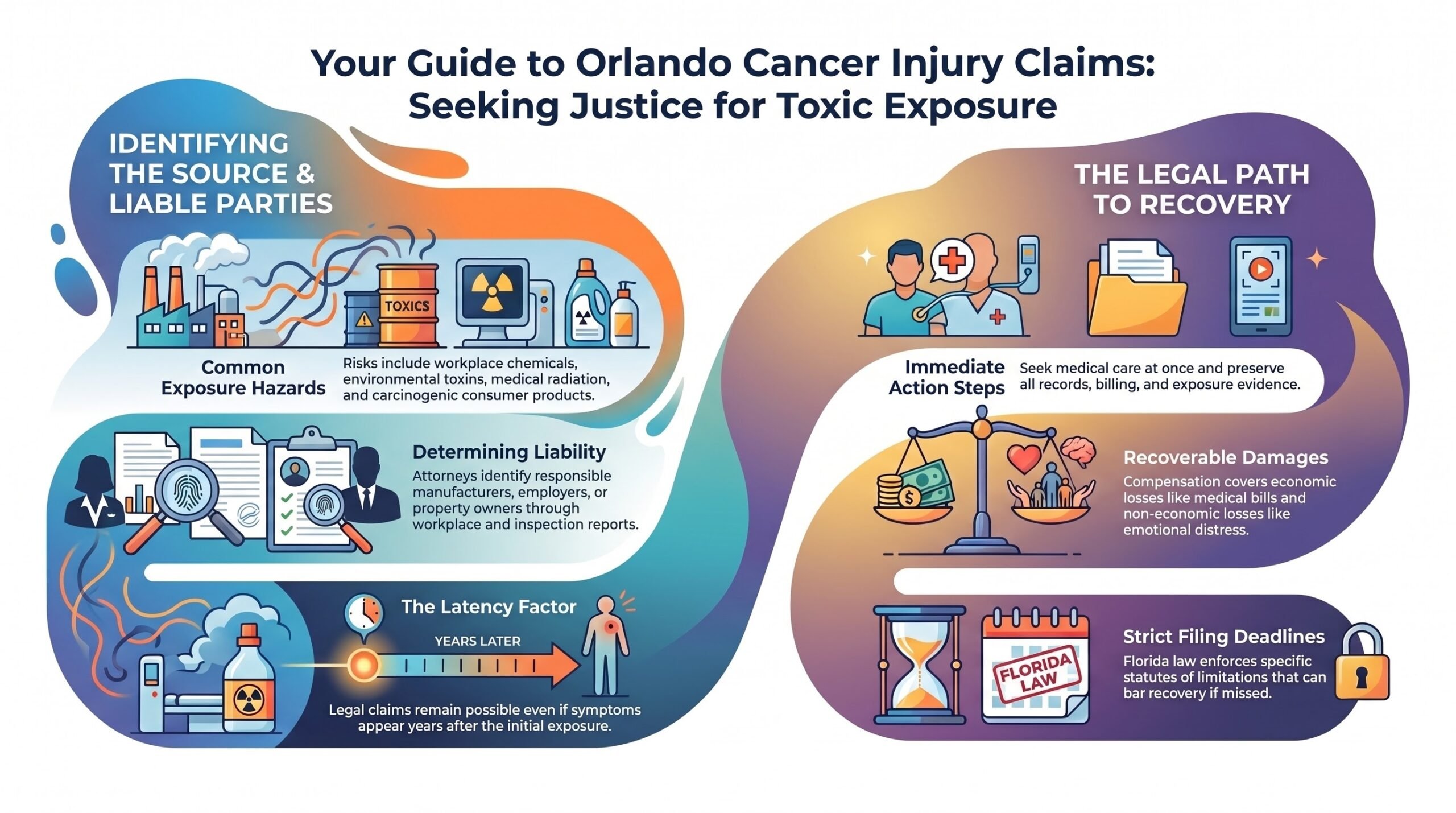
You may face serious cancer risks from workplace chemical exposure, contact with environmental toxins, medical radiation, and carcinogenic consumer or industrial products. If these hazards played a role in your illness, you need to understand how each source of exposure can create lasting harm and support a legal claim. By identifying where and how you were exposed, you can better evaluate liability and protect your right to seek compensation.
Workplace Chemical Exposure
Although many people associate cancer risks with lifestyle or genetics, workplace chemical exposure remains a serious and often overlooked cause of illness in Orlando. If you work around industrial solvents, agricultural pesticides, asbestos, benzene, or radiation, repeated contact may damage your cells over time and increase your cancer risk.
You may face these hazards in construction, manufacturing, healthcare, landscaping, or cleaning services as you support others through your work. Employers should provide training, protective equipment, and safe handling procedures, but failures still happen. When they do, you may not recognize the danger until symptoms appear years later. By understanding where exposure occurs and documenting unsafe conditions, you help protect yourself, your family, and the people who rely on your service, care, and daily commitment to hard work.
Environmental Toxin Contact
Exposure to environmental toxins can accumulate quietly over time and lead to serious health consequences for Orlando residents. You may encounter harmful substances in soil, drinking water, household products, or in nearby industrial runoff without immediately recognizing the danger. When contamination persists, your body can absorb toxins through multiple exposure pathways, increasing the likelihood of long-term illness.
If you serve your family and community, you understand how important prevention and accountability are. Careful toxin mapping can reveal where hazardous substances originated, how they spread, and who may be responsible for failing to protect the public. You shouldn’t have to bear the burden of hidden contamination alone. By identifying environmental sources early, preserving evidence, and seeking informed legal guidance, you can help others recover, support public safety, and pursue justice for preventable cancer-related harm in your community.
Medical Radiation Risks
Vigilance matters when medical radiation becomes part of diagnosis or treatment, because repeated or improperly managed exposure can raise the risk of certain cancers over time. When you seek care for yourself or a loved one, you trust providers to balance medical necessity with safety.
That duty includes radiation monitoring, careful recordkeeping, and dose optimization during imaging scans or therapeutic procedures. If professionals order unnecessary studies, fail to review prior exposure, or ignore protective protocols, you may face preventable harm. Children, pregnant patients, and people requiring repeated scans often carry a greater vulnerability. By asking informed questions, requesting alternatives when appropriate, and keeping thorough medical records, you help protect your family and your community.
When negligent radiation practices contribute to cancer, legal guidance can help you pursue accountability and support safer care for others.
Product-Related Carcinogens
When everyday products contain carcinogenic substances, the risk of cancer can extend far beyond obvious industrial settings and into your home, workplace, or daily routine. You may encounter harmful chemicals in Consumer products such as cleaning agents, cosmetics, and plastics, as well as in contaminated building materials. In some jobs, repeated exposure to Occupational carcinogens, including solvents, asbestos, or formaldehyde, can increase your long-term cancer risk. Even low-level contact over time may matter, especially when warnings are inadequate or manufacturers fail to disclose known hazards.
If you serve others through your work or caregiving, protecting your own wellness also protects those who depend on you. By identifying unsafe products, documenting exposure, and seeking legal guidance, you can hold negligent parties accountable and pursue resources that support remedy, stability, and your family’s future and lasting security.
Legal Rights of Orlando Cancer Injury Victims
If you’ve developed cancer after exposure to a dangerous substance, defective product, or unsafe workplace condition, Florida law may give you the right to pursue compensation from the party responsible. You may seek damages for medical costs, lost income, pain, and reduced quality of life.
In many cases, your rights also include access to records, clear disclosures, and fair treatment during the claims process.
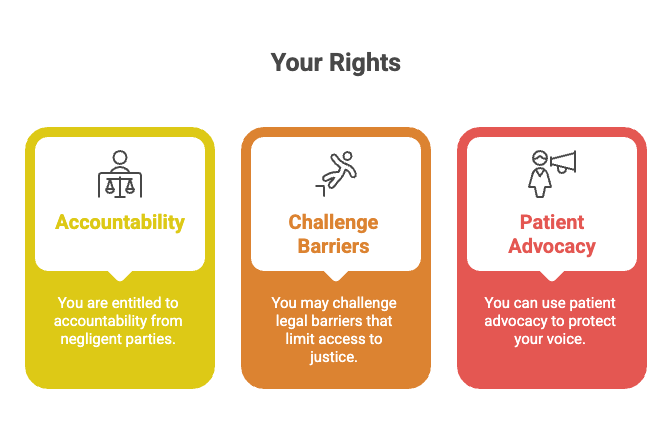
- You are entitled to accountability from negligent manufacturers, employers, or property owners.
- You may challenge legal barriers that limit access to justice and needed resources.
- You can use patient advocacy to protect your voice and support your family and community.
Your legal rights depend on how the exposure occurred, when your diagnosis was made, and what evidence connects your cancer to the harmful condition. Florida law may also allow surviving family members to pursue wrongful death damages in certain cases. By understanding these rights, you place yourself in a stronger position to demand responsibility and meaningful relief.
Steps to Take After an Orlando Cancer Injury
After an Orlando cancer injury, you should seek immediate medical care, because prompt diagnosis and treatment protect both your health and your record of harm. You should also preserve crucial evidence, including medical records, test results, bills, and any communications that may show how the injury occurred. Once you’ve taken these initial steps, you should consult an attorney who can assess your claim, protect your rights, and guide your next decisions.
Seek Immediate Medical Care
Seek medical attention at once, even if your symptoms seem minor, because prompt evaluation can safeguard your health and create a clear record of your condition. After a cancer-related injury in Orlando, you should prioritize immediate treatment and request an emergency assessment when needed. Quick care can identify hidden complications, reduce pain, and support your ability to continue serving your family, patients, coworkers, or community.
Tell every provider exactly what happened, when symptoms began, and how the injury affects your daily responsibilities. Follow medical advice carefully, attend recommended appointments, and report any changes without delay. If transportation is difficult, ask a trusted person to help you get to a hospital, clinic, or medical professional. By acting promptly, you protect your well-being and strengthen the medical foundation for any future legal review or advocacy efforts.
Preserve Key Evidence
Preserve every document, image, and communication tied to the cancer-related injury, because strong evidence can clarify what occurred and support any later claim. Keep medical records, billing statements, prescriptions, workplace reports, insurance letters, and emails in one secure location. Create photographic documentation of visible conditions, treatment effects, equipment, warning labels, and the locations associated with the exposure.
If you still have samples, containers, or devices, store them carefully and limit handling to keep the chain of custody clear. Write down dates, names, symptoms, and conversations while details are fresh. Ask trusted family members or caregivers to help you organize files, back up digital records, and preserve voicemails or text messages. By protecting evidence early, you strengthen the factual record and better support everyone relying on your careful, informed actions.
Consult An Attorney
Why does early legal guidance matter so much in a cancer injury case? You need clear advice before records disappear, deadlines pass, or insurers shape the narrative against you. When you consult an attorney promptly, you protect your rights and strengthen your ability to seek accountability for harm that may affect your family and community.
During a client consultation, you should bring medical records, employment history, insurance correspondence, and notes about suspected exposure. Your attorney can evaluate liability, explain possible claims, and outline the next steps with precision. You should also ask direct questions about experience, communication, fees, and retainer agreements to understand the professional relationship from the start. Early counsel helps you act responsibly, preserve evidence, and pursue justice in ways that serve others well.
How an Orlando Cancer Injury Lawyer Can Help You
Accountability matters when a cancer diagnosis may trace back to negligent conduct, dangerous products, or toxic exposure. An Orlando cancer injury lawyer helps you investigate the source of harm, preserve evidence, and identify every liable party. You receive focused guidance that protects your rights while you continue caring for your family, patients, congregation, or community.
- Investigates medical, workplace, and product-related evidence thoroughly
- Coordinates experts, cancer counseling, and insurance navigation support
- Pursues compensation for treatment costs, lost income, and accountability
Your attorney gathers records, interviews witnesses, consults authorities, and builds a clear claim supported by facts. You gain an advocate who handles insurer communications, counters delay tactics, and seeks fair recovery through settlement or trial. If a corporation, employer, or manufacturer failed in its duty, your lawyer works to expose that misconduct. This legal support helps you pursue justice responsibly, so you can remain present for the people who depend on your service and care.
Long-Term Effects of Orlando Cancer Injuries
You may face long-term effects from a cancer injury that extend well beyond initial treatment, including chronic pain and persistent fatigue that can disrupt your daily functioning. You may also experience emotional and mental strain, such as anxiety, depression, and ongoing stress, which affect your relationships, focus, and overall well-being. In addition, you may confront serious financial and lifestyle consequences, such as medical costs, lost income, and reduced independence, that reshape your future.
Chronic Pain And Fatigue
Living with chronic pain and persistent fatigue can alter nearly every part of your daily life after a cancer-related injury. You may struggle to complete routine tasks, serve your family, or remain active in your community. Pain Management becomes critical because untreated discomfort can limit movement, disrupt sleep, and reduce your ability to function consistently.
You also need Energy Conservation strategies to protect your strength and support steady participation in work, caregiving, and daily responsibilities. Simple adjustments, such as pacing activities, planning rest periods, and prioritizing necessary tasks, can help you preserve stamina. When these symptoms persist, they may affect your long-term independence and quality of life. Careful documentation of your limitations, treatment needs, and ongoing physical challenges can also strengthen your understanding of the injury’s full impact.
Emotional And Mental Strain
Ongoing pain and fatigue often extend beyond physical limitations and place significant pressure on your emotional wellbeing. You may experience anxiety, irritability, grief, or depression as treatment complications disrupt your sense of purpose and your ability to care for others. These changes can strain close relationships and leave you feeling isolated, even when support surrounds you.
You need practical coping strategies that protect your mental health and preserve your capacity to serve your family and community. Counseling, peer support, structured routines, and honest communication can strengthen resilience and mend stability. If you also support a loved one through illness, caregiver burnout may intensify your distress and reduce your patience, focus, and hope. Recognizing these warning signs early helps you seek meaningful support before emotional strain becomes overwhelming or persistent.
Financial And Lifestyle Impact
Uncertainty often shapes the financial and lifestyle consequences of a cancer-related injury long after the initial medical crisis has passed. You may face ongoing treatment costs, reduced income, and added expenses for transportation, home care, or specialized support, all of which can create serious financial strain.
You may also experience lasting lifestyle disruption as work routines change, family responsibilities increase, and personal independence becomes harder to maintain. If you serve others through caregiving, ministry, education, or community work, these losses can affect more than your household; they can limit how you support those who depend on you. Careful legal guidance can help you pursue compensation for current and future losses, protect your stability, and restore the resources you need to move forward with greater security and purpose in Orlando.
Proving Liability in Orlando Cancer Injury Cases
Because cancer injury claims often involve long exposure periods and multiple responsible parties, proving liability in Orlando cases requires a careful review of medical records, workplace conditions, product history, and expert testimony. You need to show how exposure occurred, when it began, and why a company, employer, or manufacturer should be held accountable under Florida law and accepted safety standards.
Your attorney can gather employment files, inspection reports, and internal documents to identify occupational carcinogens and other hazardous conditions. Medical experts can connect your diagnosis to a specific exposure while addressing defenses based on genetic predisposition or alternative causes. Witness statements, corporate records, and scientific literature may reveal whether a defendant knew of the danger and failed to warn, protect, or act responsibly.
When you pursue liability with thorough evidence, you help protect your family and support safer practices for coworkers, patients, and neighbors throughout the Orlando community.
Dealing With Insurance Companies After an Orlando Cancer Injury
After you’ve identified who may be responsible for your cancer injury, you’ll often face insurance companies that move quickly to limit what they pay. You should approach every conversation carefully, because adjusters may ask questions designed to reduce your claim’s value or shift blame. When you respond, stick to documented facts, protect your medical privacy, and avoid speculation.
You can strengthen your position by organizing records, treatment costs, lost income information, and written communications before any insurance negotiation begins. Clear documentation helps you advocate not only for yourself, but also for the family members and others who rely on your stability and care. You should also pay close attention to claim timelines, because missed deadlines can weaken your leverage and create unnecessary disputes. An attorney can manage insurer contact, evaluate settlement offers, and help you avoid statements that insurers may later use against you. That support allows you to focus on treatment, recovery, and serving the people who depend on you.
What to Expect During an Orlando Cancer Injury Claim Process
You can expect your Orlando cancer injury claim to begin with an initial case evaluation, where your attorney reviews the facts, assesses liability, and explains your legal options. From there, you’ll need to gather evidence and medical records, then move through the filing and negotiation stages as your lawyer builds and presents your claim. Depending on the strength of the evidence and the other side’s response, your case may end in a settlement or proceed to trial for a final outcome.
Initial Case Evaluation
Often, the initial case evaluation sets the direction of an Orlando cancer injury claim by identifying the facts, potential sources of liability, and the damages involved. During this meeting, you explain what happened, when concerns arose, and how the harm affected your ability to care for others and meet daily obligations.
Your lawyer then assesses whether delayed diagnosis, unsafe exposure, or failures in early screening may have contributed to your condition. You can expect clear questions, practical guidance, and an honest discussion about timelines, legal options, and likely challenges. This stage also helps you consider immediate needs, including treatment demands, family responsibilities, and financial planning for lost income or future care. By the end, you should understand whether your claim appears viable and what next steps may best protect your interests.
Evidence And Medical Records
At this stage, evidence and medical records become the foundation of your Orlando cancer injury claim. You’ll work closely with your attorney to gather pathology reports, treatment histories, billing records, physician notes, and employment documents that show how the harm affected your life and your ability to serve others. Clear documentation helps connect your diagnosis, exposure, and resulting losses with precision.
Your legal team may organize medical summaries that explain intricate care in a readable format, while evidence timelines place crucial events in order. You should also preserve correspondence, insurance statements, prescriptions, travel receipts, and witness information. When records are complete and consistent, they strengthen credibility and reduce confusion. This careful preparation equips your attorney to evaluate the full scope of harm, identify supporting facts, and protect your interests throughout the claim process.
Filing And Negotiation Steps
Once your records are assembled, your attorney can file the claim by identifying the responsible parties, stating the factual basis of the case, and demanding compensation for the medical, financial, and personal losses tied to your cancer injury. From there, you can expect a structured exchange of information, notices, and responses with insurers, employers, manufacturers, or other defendants.
Your lawyer will track filing deadlines, address statute nuances, and present evidence that supports both causation and damages. You may also help by answering questions, reviewing documents, and clarifying how the injury has affected your work, family, and service to others. As negotiations begin, your attorney will communicate with opposing parties, evaluate offers, and protect your interests while explaining likely settlement timelines and next procedural steps in your Orlando claim.
Settlement Or Trial Outcome
If negotiations don’t produce a fair result, your claim will move toward either a settlement agreement or a trial verdict, and each path carries different demands, timelines, and risks. A settlement may resolve your case sooner, reduce stress, and give you more control over the outcome. You and your lawyer will weigh compensation, confidentiality, and future medical needs before accepting terms.
If your case goes to trial, you should prepare for testimony, expert witnesses, and jury dynamics that can influence the verdict. Trials may bring higher awards, but they also carry uncertainty and added expense. After a verdict, either side may challenge the result through the appeals process, which can extend recovery. Your attorney helps you stay focused, protect your family, and pursue accountability that may benefit others facing similar harm.
Compensation for Orlando Cancer Injury Damages
In cancer injury cases, compensation is designed to address the full scope of harm you’ve suffered, from substantial medical expenses and lost income to pain, suffering, and the lasting impact on your quality of life. You may need ongoing treatment, specialist care, home support, and transportation, and a claim should reflect those realities with care and precision.
If your illness arose from dangerous exposure, you can pursue compensation that recognizes both immediate losses and future burdens. Your attorney will work to document treatment costs, reduced earning capacity, and the practical challenges your condition creates for your family and community responsibilities. Evidence may include employment records, medical opinions, and proof that safer occupational prevention measures were ignored. In some cases, genetic counseling records may also help clarify causation and rebut unfair blame. By seeking full compensation, you protect your stability, preserve your ability to serve others, and hold negligent parties accountable for the harm they caused.
Economic vs Non-Economic Damages in Orlando Cancer Cases
When you pursue a cancer injury claim in Orlando, you may seek economic damages for measurable losses such as medical bills, lost income, and future treatment costs. You may also recover non-economic damages for pain and suffering, emotional distress, and the loss of enjoyment of life that cancer has caused. To obtain full compensation, you must show clear evidence of both the financial impact and the personal harm, so the value of your claim reflects the full extent of your losses.
Economic Damage Categories
Clarity matters at the outset because Orlando cancer cases often involve two distinct forms of compensation: economic damages and non-economic damages. Economic damages address measurable financial losses tied to your diagnosis, treatment, and reduced ability to work.
You may recover past and projected medical bills, including hospital care, surgery, chemotherapy, radiation, prescriptions, travel, and rehabilitation. If your condition interrupts your employment, you can seek lost wages for time already missed and future earnings you’re no longer able to earn. Economic damages can also include home health services, medical equipment, household assistance, and other out-of-pocket costs incurred as a result of the illness. When you pursue these damages, you’re not only protecting your own stability; you’re preserving your capacity to mend for your family and continue serving others with strength, dignity, and purpose.
Non-Economic Loss Examples
Although medical bills and lost income often receive the most attention, non-economic damages address the human consequences of cancer that don’t appear on invoices or pay stubs. You may endure physical pain, emotional anguish, anxiety, fear, and depression as treatment disrupts every part of daily life. Sleep loss, fatigue, and invasive procedures can strain your relationships and limit your ability to care for others.
You may also experience diminished enjoyment when cancer prevents you from participating in family events, community service, hobbies, worship, or ordinary routines that once gave life meaning. Changes in appearance, loss of independence, and reduced companionship can affect your dignity and peace of mind. These losses matter because they reflect how cancer can alter your life, your service to others, and your sense of personal well-being each day.
Proving Compensation Value
Those personal losses must then be translated into a compensation value that an insurer, opposing counsel, or jury can evaluate. In Orlando cancer cases, you prove economic damages with bills, wage records, treatment estimates, and expert opinions about future care and reduced earning capacity.
You also support non-economic damages through testimony, medical narratives, and documentation showing pain, fatigue, anxiety, disfigurement, and loss of enjoyment of life. This process requires careful valuation of compensation because intangible harm must be tied to credible facts rather than guesswork. Your attorney organizes the record, explains how the illness altered your daily service to family and community, and presents a persuasive framework for evidence monetization. When damages are fully documented and clearly explained, you stand in a stronger position to seek fair compensation and accountability under Florida law.
When an Orlando Cancer Injury Case Goes to Trial vs Settlement
In an Orlando cancer injury case, the decision to resolve your claim through settlement or proceed to trial depends on the strength of the evidence, the extent of your damages, and the defendant’s willingness to accept responsibility.
You should evaluate Settlement dynamics carefully, because a fair agreement can provide timely resources for treatment, family support, and continued service to those who rely on you. If the defense disputes causation, minimizes the harm, or refuses to provide adequate compensation, a trial may become necessary. Strong Trial strategies help you present medical records, expert testimony, and corporate conduct clearly and persuasively. At trial, you seek accountability before a jury, but you also accept greater uncertainty, expense, and delay.
Settlement usually offers more control and privacy, while a trial can produce a larger award when misconduct is serious and well-documented. Your lawyer should guide you toward the option that protects your recovery, honors your losses, and advances justice for your community and loved ones.
The Statute of Limitations for Orlando Cancer Injury Cases
Because filing deadlines can determine whether your claim survives at all, you must identify the statute of limitations as early as possible in an Orlando cancer injury case. Florida law sets strict time limits, and missing them can bar recovery even when the underlying harm is severe. If you seek accountability to protect your family and others, timing matters from the start.
You should also examine when the clock began to run. In some cancer injury matters, late discovery affects the analysis because the connection between exposure and diagnosis may not become clear immediately. Certain tolling exceptions may pause or extend the deadline, but courts apply them narrowly and require specific facts. You need organized medical records, employment history, and exposure details so the timeline is accurate and defensible. By confirming the applicable deadline early, you preserve your ability to pursue compensation and advance a claim that may also encourage safer conduct in your community.
When to Contact an Orlando Cancer Injury Lawyer
Prompt action often matters as much as proving liability, so you should contact an Orlando cancer injury lawyer as soon as you suspect that toxic exposure, unsafe conditions, or another party’s misconduct may have contributed to your diagnosis. An early consultation helps you preserve records, identify witnesses, and organize medical and employment information before details fade or documents disappear.
You should also reach out when a doctor connects your illness to workplace chemicals, contaminated products, or repeated environmental contact. Legal guidance can help you build a clear exposure timeline, gather test results, and document when, where, and how contact occurred. If a loved one depends on your support, acting promptly also protects your ability to pursue accountability and secure resources that may serve your family’s needs. Even if you are still undergoing treatment or feel uncertain about the source of exposure, timely contact can prevent avoidable delays and strengthen the factual foundation of your claim from the outset.
Why You Need an Experienced Orlando Cancer Injury Lawyer
Although any attorney can file paperwork, an experienced Orlando cancer injury lawyer does far more than start a claim. You need counsel who understands how medical records, exposure histories, and expert testimony work in concert to prove causation and damages. That experience helps protect your time, resources, and ability to care for others as your case moves forward.
An experienced lawyer also recognizes how delayed diagnosis, failed warnings, or unsafe conditions can affect treatment options and long-term outcomes. If your case involves missed opportunities for early detection, your attorney can connect those facts to the harm you suffered. You also benefit from guidance beyond the courtroom. A seasoned advocate can help you locate support groups, organize documentation, and respond to insurers that minimize your losses. With focused legal strategy and steady direction, you can pursue accountability, secure meaningful compensation, and preserve the strength needed to serve your family and community through hardship.
How to Choose the Right Orlando Cancer Injury Lawyer for Your Case
When you’re choosing an Orlando cancer injury lawyer, you should look beyond advertising and focus on proven experience with complex illness claims. You need counsel who understands toxic exposure, medical evidence, and the long timeline these cases often involve. Review case results, courtroom readiness, and knowledge of Florida procedure. A lawyer with focused experience can protect your family while advancing a claim that may also encourage safer practices for others.
Use Client interviews to evaluate communication, compassion, and strategic thinking. Ask how the lawyer investigates exposure sources, works with medical experts, and prepares for settlement or trial. Discuss Fee structures early, so you understand costs, contingency terms, and litigation expenses. You should also confirm who will handle your case day-to-day and how often you’ll receive updates. Choose someone who listens carefully, answers directly, and treats your matter with the seriousness it warrants. That decision can shape your recovery and future.
About The Law Offices of Anidjar & Levine
Turn to The Law Offices of Anidjar & Levine for representation that centers on careful preparation, responsive service, and a disciplined approach to serious injury claims. When you face a cancer-related injury matter, you need counsel that respects your goals, answers your questions, and acts with purpose at every stage.
You can rely on a team that values service as much as results. The firm’s history reflects sustained work on behalf of injured people and families across Florida, with attention to communication, case strategy, and practical guidance. As you evaluate your options, client testimonials can help you understand how the firm treats people during difficult periods and how it manages intricate claims with professionalism.
You receive support tailored to your circumstances, along with advocacy grounded in facts, preparation, and accountability.
That combination can help you pursue compensation while protecting your time, your dignity, and your ability to care for others in your community with confidence.
Frequently Asked Questions
Can Family Members File a Claim After a Cancer-Related Wrongful Death?
Yes, you can often file a claim after a cancer-related wrongful death if your state law allows eligible family members or the estate to act. You may pursue damages for losses, funeral costs, and survivor benefits, depending on the facts. You might also explore a wrongful survivorship action for harm your loved one suffered before death. You should review eligibility, deadlines, and evidence promptly so your family can protect its rights.
Are Workplace Chemical Exposure Claims Handled Differently From Personal Injury Cases?
Yes, workplace chemical exposure claims are often handled differently from personal injury cases. You usually begin through workers’ compensation, which provides benefits without proving fault, but it may limit broader damages. Occupational claims also require stronger proof linking your illness to specific workplace exposure over time. If a third party contributed, you may pursue a separate personal injury lawsuit. By acting promptly, you help protect your rights and support those depending on you.
Can I Sue if My Cancer Developed Years After Exposure?
Yes, you can sue if your cancer appeared years after exposure, because many cancers involve long latency periods. You should act quickly, though, since each state enforces a statute limitations that controls filing deadlines. Courts often apply discovery rules, which start the clock when you knew or should’ve known the illness was linked to exposure. By pursuing a claim promptly, you protect your rights and strengthen your ability to serve your family.
What Evidence Helps Link Toxic Exposure to a Cancer Diagnosis?
You strengthen the link between toxic exposure and cancer with medical records, exposure timelines, employment files, incident reports, and expert opinions. You should gather pathology results, physician notes, and diagnostic imaging that show when your cancer emerged. You also need documents identifying the substance, duration, and intensity of exposure. Coworker statements and safety data can support your account, while qualified medical experts help connect the exposure to your diagnosis with credible, evidence-based analysis.
Do Multiple Parties Share Liability in a Cancer Injury Lawsuit?
Yes, you may find that multiple parties share liability in a cancer injury lawsuit. If several actors contributed to your toxic exposure, the court can treat them as joint defendants and allocate responsibility according to the evidence. You should identify employers, manufacturers, property owners, or contractors whose conduct harmed you. By pursuing shared liability, you strengthen accountability, protect your community, and support fair compensation for the losses you’ve endured.
—————————
If you’re facing a cancer injury in Orlando, you need clear guidance and strong legal support. You can protect your rights by acting quickly, preserving records, and speaking with counsel who understands these intricate claims.
The Law Offices of Anidjar and Levine can assess your situation, explain your options, and pursue the compensation you may merit.
For help from an Orlando Medical Malpractice Lawyer, experienced legal representation can make a meaningful difference in your recovery and financial stability.

