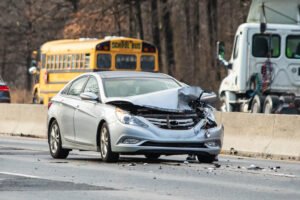
A Coral Springs car accident vehicle and equipment failures lawyer can investigate whether defective parts, missed maintenance, or improper repairs contributed to a collision. The review may cover brakes, tires, steering, airbags, seat belts, service records, and vehicle data. Preserving the vehicle and related evidence can help clarify how the failure occurred and who may be responsible. Coral Springs Personal Injury Lawyer: The Law Offices of Anidjar and Levine can review available information, communicate with insurers, and explain possible next steps. Further details can clarify the process.
Main Takeaways
- A Coral Springs vehicle-failure lawyer can investigate whether defective parts, poor maintenance, or improper repairs contributed to a crash.
- Potentially responsible parties may include drivers, vehicle owners, manufacturers, parts suppliers, or repair and maintenance providers.
- Investigations may examine brakes, tires, steering, airbags, seatbelts, service records, recalls, and the vehicle’s condition after impact.
- Preserve the vehicle and relevant records when possible, and seek prompt medical care for crash-related symptoms.
- A lawyer can explain Florida liability rules, possible damages, insurance communications, and deadlines based on the facts.


How We Can Help With Your Coral Springs Car Accident Vehicle & Equipment Failures Injury Claim
Vehicle and equipment failures can turn an ordinary drive in Coral Springs into a serious collision, especially when defective brakes, tires, directional systems, or safety components contribute to a crash. When an injury claim follows, careful guidance can help an injured person manage practical demands while focusing on recovery. Counsel can review available records, identify relevant parties, and explain options clearly, helping the client make informed decisions. A documented Claim timeline can organize key dates, communications, and required responses, reducing the risk of overlooking a deadline or request. Repair coordination can help preserve the vehicle for inspection, arrange appropriate evaluations, and track repair estimates and related expenses. These steps can support an orderly claim process without promising a particular result. The legal team can also communicate with insurers, track outstanding information, and provide updates as the matter progresses. With consistent attention and respectful service, clients and families can better understand what to expect and plan their next steps.
OUR CONSULTATIONSARE FREE
START YOUR FREE CASE REVIEW

Understanding Coral Springs Car Accident Vehicle & Equipment Failures Injury Cases
Understanding a Coral Springs car accident involving vehicle or equipment failure begins with determining how a component’s condition may have contributed to the collision and resulting injuries. A careful review can establish whether the vehicle functioned as intended and whether its design, manufacture, or maintenance history warrants further examination. This process may involve preserving the vehicle, reviewing service records, and consulting qualified professionals who can assess relevant evidence.
Injury cases also require attention to how the vehicle protected occupants during impact. Crashworthiness Standards may help frame questions about occupant protection, while Manufacturing Oversight can inform an assessment of whether applicable production requirements were followed. These considerations do not establish responsibility on their own; conclusions depend on the facts and supporting evidence.
A thorough investigation can help injured people and their families understand available options and pursue accountability where appropriate. It may also support broader efforts to improve vehicle safety and protect others on Coral Springs roads. Each claim requires an individualized evaluation of injuries, losses, and evidence.
Common Causes of Coral Springs Car Accident Vehicle & Equipment Failures
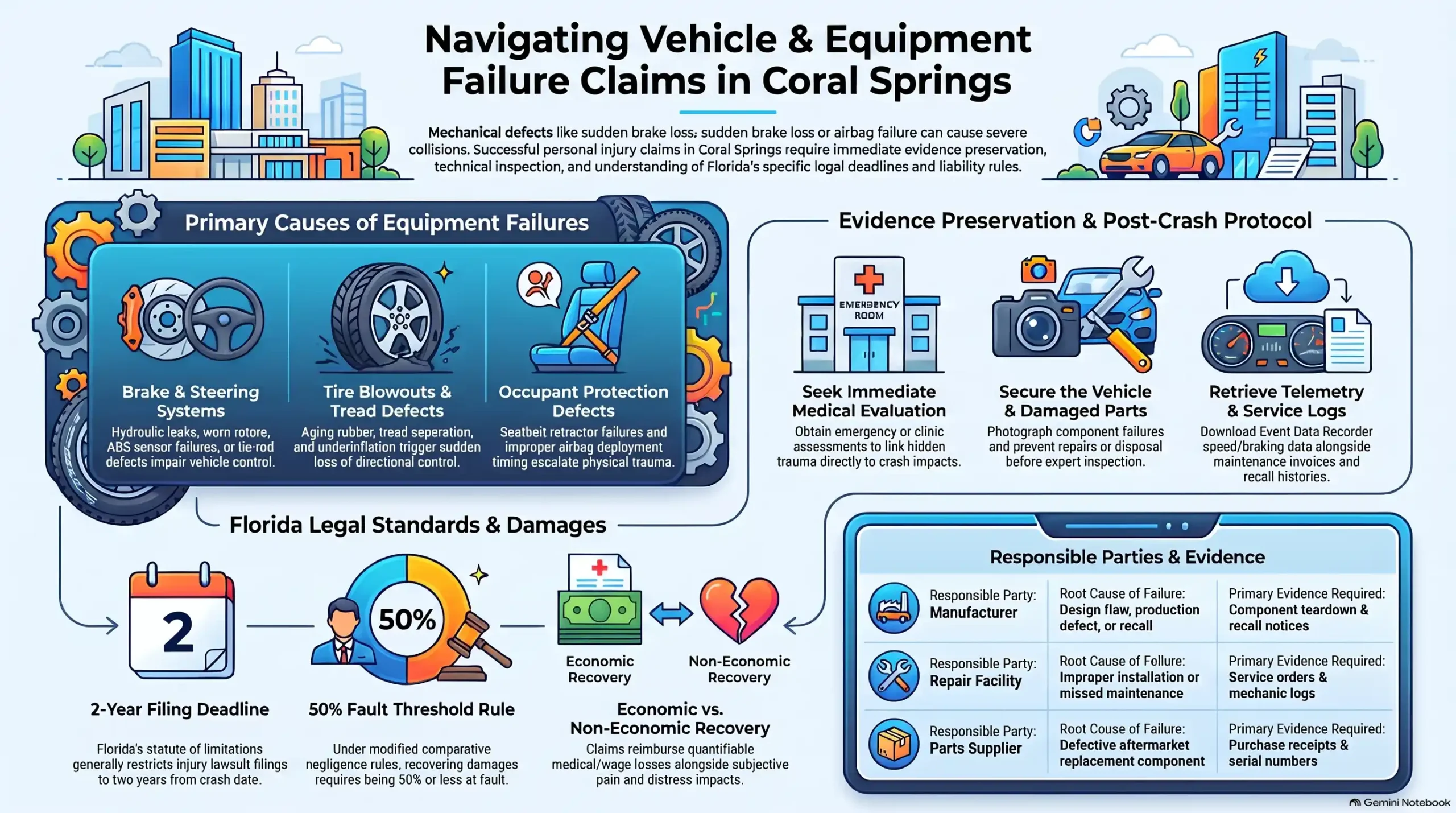
Vehicle and equipment failures can contribute to Coral Springs car accidents when critical components malfunction or fail to perform as intended. Common causes include brake system failures, tire blowouts, and steering component defects. Airbag or seatbelt malfunctions can also increase injury risk during a collision.
Brake System Failures
Brake system failures can prevent a driver from slowing or stopping in time to avoid a collision. In Coral Springs, worn brake pads, damaged rotors, leaking lines, and neglected maintenance may reduce braking performance or cause sudden loss of control. Contaminated brake fluid can impair hydraulic pressure, while an ABS sensor failure may prevent the anti-lock braking system from responding during emergency stops. These defects can arise from poor repairs, defective components, or failure to address known problems. Drivers may notice warning lights, unusual noises, a soft pedal, or longer stopping distances, but some failures occur without clear warning. After a crash, investigators may review maintenance records, repair histories, vehicle data, and component condition to determine whether a defect or maintenance lapse contributed. Prompt documentation can help clarify responsibility and support those affected.
Tire Blowouts
A tire blowout can cause a driver to lose control before there is time to slow down safely. In Coral Springs, worn Tire Tread, underinflation, overloading, and impact damage from potholes or road debris can increase the risk of sudden tire failure. Excessive heat and aging rubber may also weaken a tire, even when visible damage is limited. Drivers can reduce hazards by checking tire pressure regularly, inspecting tread and sidewalls, observing load limits, and replacing worn or damaged tires. These Blowout Prevention measures support safer travel for drivers, passengers, and others sharing the road. When a blowout occurs, a vehicle may veer into nearby traffic or leave the roadway. Investigators may examine maintenance records and tire condition to determine whether a defect or neglect contributed to a crash.
Steering Component Defects
When a steering component fails, a driver may lose the ability to direct the vehicle safely. Defects in the steering linkage, tie rods, ball joints, or steering column can cause looseness, vibration, or sudden changes in vehicle direction. A damaged power steering pump or leaking fluid may make the wheel difficult to turn, especially at low speeds. These problems can result from manufacturing flaws, improper repairs, or inadequate maintenance, and may worsen without warning. Drivers who notice unusual steering resistance, clunking sounds, or uneven tire wear should seek prompt inspection and avoid continued travel when control is uncertain. After a Coral Springs collision, investigators may examine service records and failed parts to determine whether a defect contributed. Identifying the cause can help protect others from similar hazards.
Airbag and Seatbelt Malfunctions
Beyond guiding defects, failures in occupant-protection systems can increase the risk of serious injury during a Coral Springs car accident. Airbags may fail to deploy, inflate unexpectedly, or open with improper force. Airbag deployment timing is essential: a delayed or premature response can leave occupants exposed to impact or create additional injuries. Seatbelts may also fail to restrain occupants as designed. Seatbelt retractor failure can prevent the belt from tightening during a collision, while defective buckles or webbing may release or tear under pressure. These malfunctions can result from design flaws, manufacturing errors, inadequate repairs, or failure to address a known safety defect. A careful investigation may examine vehicle data, inspection records, recall notices, and damaged components. Identifying the source of failure can support accountability and help protect other road users from similar hazards.
Don’t Wait. Call Our Florida Personal Injury Lawyers Now!


Legal Rights of Coral Springs Car Accident Vehicle & Equipment Failures Injury Victims
If a vehicle defect or equipment failure contributes to a crash, injured people in Coral Springs may have legal rights beyond a claim against another driver. Depending on the evidence, responsibility may extend to a vehicle or parts manufacturer, distributor, repair business, or other party whose conduct contributed to the harm. These claims can help injured people seek accountability and the resources they need to recover.
Potential rights and considerations include:
- Seeking compensation for medical expenses, lost income, pain, and other legally recognized losses.
- Preserving the vehicle, failed equipment, maintenance records, and related documentation for evaluation.
- Reviewing whether comparative negligence affects responsibility or the amount recoverable under Florida law.
Filing deadlines can limit the time available to bring a lawsuit, so prompt legal guidance may protect a victim’s options. A careful investigation can identify responsible parties and clarify applicable legal standards. Those pursuing a claim may also help promote safer practices that protect other road users. Each case depends on its facts, available evidence, and the laws governing the claim.
Why Do Coral Springs Car Accident Vehicle & Equipment Failures Injuries Happen?
Vehicle and equipment failure injuries in Coral Springs car accidents can occur when a defective part, poor maintenance, or an improper repair prevents a vehicle from operating safely. Brake defects may limit stopping ability, while tire failures can cause sudden loss of control. Faulty steering components, broken lights, and malfunctioning airbags can also increase the likelihood or severity of a collision.
Some failures stem from manufacturing or design flaws; others develop when inspections, servicing, or repairs are neglected or done incorrectly. A vehicle owner, maintenance provider, parts supplier, or manufacturer may have contributed to a hazardous condition. Roadworthiness standards aim to ensure vehicles and safety systems remain fit for use, but compliance can vary, and hidden defects may go undetected.
Equipment recalls may address known dangers, yet a recalled component can remain in service if notice is missed or repairs are delayed. When a failure leads to a crash, resulting injuries may affect drivers, passengers, pedestrians, and others who depend on safe roads.
What Should You Do After a Coral Springs Car Accident Caused by Vehicle & Equipment Failure?
After a Coral Springs crash involving a vehicle or equipment failure, injured individuals should seek prompt medical care, even if their symptoms initially seem minor. They should preserve relevant evidence by photographing the vehicle defect, documenting the damage, and keeping repair or maintenance records. A lawyer can clarify your legal options and help protect evidence relevant to a potential claim.
Seek Immediate Medical Care
Prompt medical evaluation is essential after a Coral Springs car accident involving a vehicle or equipment failure, even when injuries appear minor. Some conditions, including head trauma and internal injuries, may not produce immediate symptoms. If symptoms are severe, worsening, or potentially life-threatening, contact emergency services. Otherwise, prompt assessment by a qualified healthcare provider can identify injuries and establish appropriate treatment. If emergency care is needed, the Emergency room can provide immediate evaluation and stabilization. The patient should describe the collision, report every symptom, and disclose relevant medical history so clinicians can make informed decisions. After discharge, the patient should schedule a follow-up appointment as directed and follow treatment recommendations. Timely care supports recovery and creates a clear medical record of accident-related injuries.
Document Vehicle Defects
Preserve evidence of any suspected vehicle or equipment defect as soon as it is safe to do so. Photograph the vehicle, damaged components, tire condition, and roadway from multiple angles, capturing close details. Record the vehicle identification number, make, model, mileage, and any warning lights or unusual sounds observed before the collision. Keep repair invoices, maintenance records, inspection reports, and removed parts; do not authorize repairs or disposal before documenting the condition. Save relevant owner’s manuals and search for manufacturer communications, including Recall notices, that may apply to the vehicle or component. A qualified inspection may help determine whether a defect existed and whether manufacturing tolerances were met. These records can preserve useful information for insurers, investigators, and others evaluating what occurred and how to prevent similar harm.
Contact a Lawyer
When a vehicle or equipment failure may have contributed to a Coral Springs car accident, consulting a lawyer can help protect evidence and clarify potential legal claims. A lawyer can review photographs, repair records, maintenance histories, and witness accounts before relevant evidence is lost or altered. Prompt guidance may also help an injured person understand reporting deadlines, insurance communications, and options for pursuing compensation.
A Free consultation can provide an opportunity to discuss the collision, injuries, and available documentation without an initial fee. During that conversation, the lawyer can explain possible next steps and whether further investigation may be appropriate. Prospective clients may ask about attorney availability, experience with vehicle defect cases, and how the firm communicates with clients. Seeking qualified counsel can support accountability and help protect everyone affected by the crash.
Don’t Wait. Call Our Florida Personal Injury Lawyers Now!
Critical Evidence in a Coral Springs Car Accident Vehicle & Equipment Failures Injury Case
Evidence in a vehicle or equipment failure case can help establish the defect, its role in the collision, and whether proper maintenance was performed.
Essential materials may include:
- Vehicle inspection records and maintenance history
- Event data recorder information
- Photographs, repair records, and other defect documentation
Promptly preserving these records can support a reliable assessment of liability and injury claims.
Vehicle Inspection Records
Vehicle inspection records can help determine whether a mechanical defect or missed maintenance contributed to a Coral Springs car accident. Inspection logs may show when a vehicle was examined, what problems were found, and whether repairs were completed. These records can help establish whether a dangerous condition existed before the collision and whether an owner, fleet operator, or repair facility was notified.
Recall records may also reveal whether a manufacturer identified a safety defect affecting the vehicle. Evidence that a recall notice was issued, received, or left unaddressed can help clarify the history of a suspected failure. Maintenance invoices, repair orders, and inspection reports may provide additional context about recurring problems or delayed service. Preserving these documents can support a careful investigation, help injured people pursue accountability, and protect others from similar hazards.
Event Data Recorder
An event data recorder provides an objective snapshot of a vehicle’s operation just before and during a collision. Depending on the vehicle and the device, recorded information may include speed, braking, throttle position, seat belt use, and airbag deployment. This sensor data can help clarify how the vehicle responded and whether a system malfunction may have contributed to the crash.
A qualified professional may preserve and interpret the recorder’s information as part of Crash reconstruction. Access can require expert equipment, and the data may be overwritten or lost if the vehicle is altered or handled improperly. Investigators, as a result, may document the vehicle’s condition and secure relevant electronic evidence promptly. When considered alongside witness accounts and physical evidence, recorder findings can help establish a clearer account of events and support a fair evaluation of responsibility and resulting injuries.
Maintenance History
When a collision may involve a mechanical defect or neglected upkeep, maintenance history can help show whether a vehicle or component was properly inspected and repaired. Records may identify Service intervals, routine inspections, reported concerns, and work completed before the crash. Repair invoices can establish when a part was replaced, who performed the work, and whether a recurring problem received attention. These materials may help clarify whether a vehicle owner, fleet operator, or repair provider followed recommended maintenance practices. Gaps in records do not prove negligence, but they may raise questions that require careful review alongside other evidence. Preserving service logs, invoices, and related records can help guarantee a reliable assessment of the vehicle’s condition and support a fair evaluation of responsibility and injury claims. This information may also help protect others by identifying unsafe maintenance practices.
Defect Documentation
Promptly documenting a suspected defect can preserve vital evidence in a Coral Springs car accident involving vehicle or equipment failure. Photographs should show the damaged part from several angles, its location within the vehicle, and visible identifying marks. Defect photography may also include the surrounding scene, warning lights, tire condition, or other details that help explain how the failure occurred. Date and store images securely, retaining original files whenever possible.
Do not repair, discard, or alter the vehicle or component before a qualified inspection, unless safety requires immediate action. Preservation protocols can include securing the vehicle, recording who handles it, and keeping repair records, removed parts, and related communications. Accurate documentation helps investigators assess the failure and supports fair evaluation of injury claims. Prompt coordination among owners, insurers, and legal representatives can reduce the risk of evidence loss.
Long-Term Effects of Coral Springs Car Accident Vehicle & Equipment Failures Injuries
Vehicle and equipment failures can cause injuries with effects that persist long after a Coral Springs car accident. Some injured people experience chronic pain or lasting mobility limitations that interfere with routine activities. These conditions may require ongoing medical care, rehabilitation, and periodic reassessment.
Chronic Pain
Chronic pain can persist long after a Coral Springs car accident caused by a vehicle or equipment failure, even after visible injuries have recovered. Damaged safety systems, defective components, or other failures may contribute to injuries that leave ongoing pain in muscles, joints, or nerves. Symptoms vary in intensity and may worsen with activity, stress, or weather changes. Pain flare-ups can interfere with work, family responsibilities, and other daily routines, while sleep disruption may reduce concentration and energy. Medical evaluation can help identify possible causes and guide appropriate treatment, which may include medication, therapy, or other care. Keeping records of symptoms, appointments, and how they affect daily life can support clear communication with providers and help document the ongoing impact of injuries for those evaluating the accident’s consequences.
Lasting Mobility Limits
When injuries from a Coral Springs car accident involving vehicle or equipment failure damage bones, joints, or nerves, mobility limits may continue after initial treatment ends. Difficulty walking, standing, lifting, or using stairs can affect work, household responsibilities, and community participation. These restrictions may also change how an injured person supports family members, volunteers, or assists others. Practical adjustments can help preserve independence and meaningful involvement. Workplace accessibility may include modified duties, adjusted workstations, accessible routes, or flexible schedules, depending on the person’s abilities and job requirements. At home, ramps, handrails, and reorganized living spaces can reduce barriers to daily activities. Adaptive recreation may provide accessible ways to maintain social connections and participate in leisure activities. The lasting effects vary, but recognizing functional limits can guide reasonable accommodations and support inclusion.
Ongoing Medical Care
Mobility limits after a Coral Springs car accident may require ongoing medical care, particularly when vehicle or equipment failures cause complicated injuries. Treatment may include physician visits, rehabilitation, pain management, or additional procedures as symptoms and functional needs change. A consistent plan helps injured people address medical concerns while working toward safe, practical independence.
Care Coordination can connect physicians, therapists, and other providers so that each understands the injury history, current goals, and recommended services. This communication may reduce conflicting instructions and help identify changes that require prompt attention. Treatment Continuity also matters when care shifts between hospitals, outpatient clinics, and rehabilitation settings. Organized records, scheduled follow-ups, and clear communication with caregivers can help prevent gaps in services. For caregivers, reliable planning can make ongoing care more manageable and protect the injured person’s dignity and well-being.
Proving Liability in Coral Springs Car Accident Vehicle & Equipment Failures Injury Cases
Vehicle or equipment failures can complicate liability in a Coral Springs car accident case, especially when a defective part, poor maintenance, or improper repairs may have contributed to the crash. Establishing responsibility requires evidence connecting the failure to the collision and resulting injuries. Relevant records may include vehicle inspection and repair histories, maintenance invoices, photographs, crash reports, and witness statements. An independent examination of the vehicle can help identify a failed component and determine whether damage occurred before or during impact.
Liability may involve a driver, repair shop, vehicle owner, parts supplier, or manufacturer, depending on the facts. Product liability principles may apply when a design defect, manufacturing flaw, or inadequate warning contributed to the failure. Manufacturer recalls and safety notices can help identify known risks, though a recall alone does not establish fault. Promptly preserving the vehicle and damaged equipment may protect important evidence. Careful investigation can clarify how the failure occurred and support a fair assessment of responsibility for those injured.
Dealing With Insurance Companies After a Coral Springs Car Accident Vehicle & Equipment Failures Injury
After a Coral Springs crash involving a suspected vehicle or equipment failure, insurance companies may investigate both the collision and the condition of the failed component. Their representatives may request documents, inspect the vehicle, or ask questions about the injured person’s account. Clear, accurate communication can help protect evidence integrity and support a fair review.
Adjuster tactics may include seeking quick settlements, emphasizing gaps in available information, or asking questions that invite speculation about fault. An injured person should avoid guessing the cause of the failure or minimizing symptoms before getting appropriate medical guidance. Investigators may request recorded statements, but the person can seek legal advice before agreeing to provide one. Any response should remain truthful and consistent with known facts.
Preserving repair records, photographs, maintenance history, and relevant correspondence can assist the investigation. Careful handling of insurer communications may also help prevent misunderstandings while the person focuses on recovery and family responsibilities. Insurers should receive accurate information, not unsupported conclusions.
What to Expect During a Coral Springs Car Accident Vehicle & Equipment Failures Injury Claim Process
A vehicle or equipment failure claim typically begins with an assessment of the injuries, losses, and potential responsible parties. The investigation may examine the vehicle defect and rely on evidence such as inspection findings, repair records, photographs, and medical documentation. After reviewing the evidence, the claim may proceed through settlement negotiations or, if necessary, litigation.
Initial Claim Assessment
During the initial assessment of a Coral Springs car accident claim involving vehicle or equipment failure, the attorney reviews how the incident occurred, the injuries sustained, and the available evidence. The review may include police reports, photographs, medical records, witness accounts, and any available repair or purchase documents. This information helps establish a clear timeline and identify questions that require further attention without drawing premature conclusions.
Claim viability depends on whether the evidence supports responsibility, injury, and resulting losses under applicable law. The attorney also reviews coverage to identify relevant policies, potential limits, and notice requirements. The injured person may be asked to preserve records, follow medical recommendations, and avoid statements that could misrepresent the event. These early steps support an organized process and help the claim proceed accurately, fairly, and with respect for everyone affected.
Vehicle Defect Investigation
When the initial review raises questions about a possible vehicle or equipment failure, the investigation focuses on preserving and examining evidence. Qualified professionals may inspect the vehicle, relevant components, and maintenance history to determine whether a defect or improper repair contributed to the collision. They may compare findings with technical standards, service bulletins, and Recall notices involving similar models or parts. The investigation also considers whether the issue arose during design, manufacturing, installation, or later maintenance. These distinctions can help identify potentially responsible parties and clarify manufacturer accountability. In Coral Springs, a claim may involve automakers, parts suppliers, repair facilities, or other entities, depending on the circumstances. Careful, impartial analysis supports a fair assessment of responsibility and helps ensure those affected can pursue appropriate remedies without premature conclusions.
Evidence And Documentation
Thorough documentation helps establish how a vehicle or equipment failure contributed to a Coral Springs collision and the resulting injuries. Begin evidence preservation promptly, before damaged parts are repaired, discarded, or altered. Photographs of the vehicles, roadway, equipment, and visible injuries can record important conditions. Repair invoices, maintenance logs, inspection records, and manufacturer materials may help clarify whether a defect or neglected service played a role. Medical records document diagnoses, treatment, and the injury’s effects on daily activities. Witness Statements can describe what happened before, during, and after the crash, including unusual sounds, loss of control, or warning lights. Collect contact details while memories remain clear. A careful, organized file lets the claims team assess the available information, identify gaps, and present an accurate account of the event.
Settlement Or Litigation
Once the evidence is organized, the claim may proceed toward settlement or, if negotiations do not resolve the dispute, litigation. During settlement discussions, insurers may evaluate liability, medical expenses, lost income, and future care needs. Settlement Offers should be reviewed carefully against documented losses and the likely costs and risks of continuing the claim. A person should not feel pressured to accept an amount before understanding its terms and potential effect on future recovery. If the parties cannot agree, they may file a lawsuit, and the court process can involve discovery, expert testimony, motions, and trial. A litigation strategy may address how equipment defects, maintenance records, or vehicle inspections support liability. Throughout either path, clear communication and accurate records help the injured person pursue fair compensation while protecting the interests of others affected.
Compensation for Coral Springs Car Accident Vehicle & Equipment Failure Injury Damages
A vehicle or equipment failure may cause a Coral Springs car accident and leave injured people facing medical expenses, lost income, and other losses. When negligence contributed to the failure or crash, an injured person may seek compensation from a responsible driver, manufacturer, repair provider, or other liable party. The available recovery depends on the facts, the injuries, and the evidence linking the failure to the harm.
Compensation may address reasonable medical care, rehabilitation, medication, and future treatment needs. Lost income can include wages missed during recovery, while diminished earning capacity may apply when injuries limit a person’s ability to work over time. Records such as medical reports, employment documentation, repair histories, and product information can help establish the extent and cause of losses.
A claim may also account for property damage and the effects of lasting physical limitations. Careful evaluation helps guarantee that requested compensation reflects documented needs and supports an injured person’s recovery without overstating the evidence. Each case requires an individual assessment.
Economic vs Non-Economic Damages in Coral Springs Car Accident Vehicle & Equipment Failures Cases
In vehicle and equipment failure cases, economic losses may include medical expenses, lost income, and repair or replacement costs. Non-economic harm can include pain, emotional distress, and reduced quality of life. Records such as bills, wage statements, repair estimates, and medical documentation can help substantiate both categories of damages.
Economic Losses
Vehicle or equipment failures can create substantial financial losses after a Coral Springs car accident. Economic damages address measurable costs connected to the collision and its consequences. They may include medical expenses, rehabilitation, prescription costs, and necessary transportation to appointments. Repair or replacement costs for a damaged vehicle and other property may also qualify, depending on the evidence and applicable law.
Injured people may also seek compensation for Lost income when injuries prevent them from working. If those injuries limit future employment or reduce the ability to earn at the prior level, diminished earning capacity may be considered. Documentation such as pay records, employer statements, medical assessments, and repair estimates can help establish these losses. Careful accounting allows a claim to reflect both expenses already incurred and reasonably supported financial effects expected in the future.
Non-Economic Harm
Beyond measurable expenses, a Coral Springs car accident involving vehicle or equipment failure may cause non-economic harm, including physical pain, emotional distress, and loss of enjoyment of daily activities. These effects can disrupt a person’s independence, relationships, and ability to participate in routines that once gave life purpose. Emotional distress may include anxiety, fear of driving, or ongoing mental strain connected to the collision and its consequences. Loss of enjoyment may arise when injuries prevent someone from pursuing hobbies, family activities, or community service. Unlike medical bills or lost income, these harms don’t have a direct price, but you may consider them when evaluating a claim. The nature and severity of the injury, its effects on daily life, and applicable Florida law can influence whether compensation is available.
Documenting Damages
When a Coral Springs car accident involves vehicle or equipment failure, documenting damages helps distinguish measurable financial losses from personal harms that have no fixed dollar value. Economic damages may include medical bills, lost wages, rehabilitation costs, and vehicle repairs. A Photo inventory of the crash scene, damaged parts, and visible injuries can preserve details before conditions change. Repair estimates, invoices, receipts, and employment records help show the amount and cause of financial losses. Non-economic damages may include pain, emotional distress, and reduced ability to participate in daily activities. These harms require careful documentation through treatment records, personal accounts, and observations from people familiar with the injured person’s life. Organized evidence can help insurers, courts, and responsible parties assess the full impact of a failure-related collision and support a fair resolution.
Don’t Wait. Call Our Florida Personal Injury Lawyers Now!
When a Coral Springs Car Accident Vehicle & Equipment Failures Injury Case Goes to Trial vs Settlement
After a Coral Springs crash involving a vehicle or equipment failure, an injury claim may resolve through settlement or proceed to trial, depending on the evidence, the parties’ positions, and the extent of the losses. Settlement can provide a more predictable resolution and avoid the added time and expense of court proceedings. Negotiations may consider medical costs, lost income, property damage, and the lasting effects of an injury. A settlement generally requires agreement on compensation and the release of claims.
If the parties dispute responsibility, the cause of the failure, or the value of losses, a trial may be necessary. The Trial Timeline can include preparation, hearings, evidence presentation, and a final decision, so resolution may take longer. At trial, each side presents testimony and records for the judge or jury to assess. Jury Deliberations follow closing arguments when jurors must decide disputed questions and any damages. The choice between settlement and trial depends on case-specific evidence, practical needs, and a careful review of your options.
Florida Laws That May Affect Your Coral Springs Car Accident Vehicle & Equipment Failures Case
The decision to settle or proceed to trial may also depend on how Florida law applies to a vehicle or equipment failure claim. State statutes and legal standards can shape which parties may be responsible, what evidence matters, and how damages are allocated. Their application may also help clarify obligations to people injured through no fault of their own.
Florida law can shape responsibility, evidence, and damages in vehicle failure claims, influencing whether a case settles or proceeds to trial.
- Product liability: A claim may involve a manufacturer, distributor, or seller if a defective vehicle or component contributed to the crash. Evidence of a design, manufacturing, or warning defect may be relevant.
- Florida recall laws: Recall notices and repair records may help establish whether a known safety issue existed and whether appropriate corrective steps were taken. A recall alone does not prove liability.
- Comparative negligence rules: Florida’s modified comparative negligence framework may reduce recovery based on an injured person’s share of fault. If that share exceeds 50 percent, recovery is generally barred.
These rules may affect negotiations and trial strategy. Careful review of crash evidence, maintenance history, and applicable statutes can support a fair assessment of responsibility and help protect injured individuals’ interests.
The Statute of Limitations for Coral Springs Car Accident Vehicle & Equipment Failures Injury Cases
Florida law sets deadlines for filing injury claims arising from Coral Springs car accidents involving vehicle or equipment failures. In many negligence cases, an injured person generally has two years from the date of the crash to file a lawsuit. Missing that deadline can prevent recovery, regardless of the harm’s severity or evidence of a defective component.
Filing deadlines may differ when a claim involves a government entity, a wrongful death, or another legal issue, so the applicable facts matter. The discovery rule may affect when a deadline begins if someone could not reasonably have identified an injury or its cause at the time of the collision. However, it does not automatically extend the filing period, and special statutory limits may apply.
Prompt attention to these time limits supports an orderly process and helps preserve access to evidence. People assisting injured neighbors or family members can encourage them to document the crash date and seek reliable guidance promptly, without assuming that an exception applies.
How a Coral Springs Car Accident Vehicle & Equipment Failures Lawyer Can Help You
When a vehicle or equipment failure contributes to a Coral Springs crash, a lawyer can help identify potential sources of liability and organize the evidence needed to evaluate a claim. Counsel may review maintenance records, vehicle data, repair invoices, and photographs to determine whether a defective component, negligent repair, or inadequate inspection contributed. This work can help protect injured people’s interests and support a fair assessment of responsibility.
A lawyer may also coordinate with qualified professionals and review relevant Local legal resources, including Florida regulations and court procedures.
Depending on the circumstances, the investigation may include:
- Preserving the vehicle and failed parts for inspection before repairs or disposal alter evidence.
- Checking manufacturer notices and product recalls for information about known defects or safety concerns.
- Identifying potentially responsible drivers, repair facilities, manufacturers, or distributors and documenting their roles.
When to Contact a Coral Springs Car Accident Vehicle & Equipment Failures Lawyer
Prompt contact with a Coral Springs car accident vehicle and equipment failures lawyer may be important if a suspected defect, faulty repair, or maintenance failure contributed to a crash. Early legal consultation can help preserve information while the vehicle, damaged components, and repair records remain available for review. A lawyer may also advise the injured person to avoid altering or disposing of relevant parts before completing appropriate documentation.
Contact may be especially timely when a vehicle manufacturer, parts supplier, repair shop, or maintenance provider could share responsibility. Prompt attention can support a careful assessment of manufacturer accountability and help identify records, witnesses, or inspection opportunities that may otherwise become harder to obtain. Medical care and immediate safety needs should remain the first priorities; once those are addressed, legal guidance can clarify practical next steps.
Even when the cause is uncertain, a consultation may help determine whether a mechanical or equipment issue warrants further investigation. This lets affected people make informed decisions while protecting evidence that could help everyone seek a fair resolution.
Why You Need an Experienced Coral Springs Car Accident Vehicle & Equipment Failures Lawyer
Because vehicle and equipment failure claims can involve complex technical evidence and multiple potentially responsible parties, an experienced Coral Springs car accident lawyer can help assess the cause and identify the right next steps. Such claims may require preserving damaged components, reviewing maintenance records, and consulting qualified experts before evidence is lost or altered. A lawyer can examine whether a defect, inadequate repair, or failure to meet manufacturing standards contributed to the collision. The investigation may also consider Product recalls, safety notices, and the vehicle’s service history to determine whether a known concern is relevant. Depending on the facts, responsible parties may include manufacturers, distributors, repair providers, or other entities. Legal guidance can help an injured person understand options, document losses, and communicate with insurers while focusing on recovery. By organizing technical and factual evidence, counsel can present a clearer account of how the failure occurred and how it affected those involved, supporting a fair assessment of responsibility and compensation.
How to Choose the Right Coral Springs Car Accident Vehicle & Equipment Failures Lawyer for Your Case
Selecting the right Coral Springs vehicle and equipment failures lawyer requires careful attention to the attorney’s experience with technically complex accident claims. A suitable attorney should understand how defective components, maintenance failures, or faulty repairs can contribute to a collision and resulting injuries. The lawyer should also be prepared to review service records, preserve damaged parts, and consult qualified experts when the evidence requires it.
Prospective clients can assess Attorney credentials by reviewing relevant licensing, case experience, and familiarity with Florida injury law. They may ask how the attorney investigates mechanical failures, communicates case developments, and addresses disputes over responsibility. Clear answers can help you determine whether the lawyer’s approach supports your needs and the interests of those affected by the crash.
Before proceeding, clients should understand the fee structure, including whether payment depends on a recovery and which costs they may still be responsible for. A written agreement should explain these terms plainly. Careful comparison can help clients make an informed choice.
About The Law Offices of Anidjar & Levine
The Law Offices of Anidjar & Levine represents people injured in car accidents, including those involving vehicle or equipment failures in Coral Springs.
The firm handles claims involving defective parts, maintenance problems, and other circumstances that may contribute to a collision.
Its attorneys review evidence, explain legal options, and keep clients updated as cases progress.
The firm’s history reflects a practice focused on representing injured people and pursuing compensation when another party may be legally responsible.
Each matter depends on its facts, applicable law, and supporting documentation.
The firm may investigate accident reports, vehicle records, repair histories, and expert findings to assess potential claims and identify responsible parties.
Community involvement is another part of the firm’s public presence.
Through service and outreach, the firm supports individuals and families facing difficult circumstances.
For Coral Springs residents, its role includes providing information about legal rights and the steps that may follow a vehicle or equipment failure accident.
Prospective clients can contact the firm to discuss their situation and possible representation.
Frequently Asked Questions
Can a Vehicle Manufacturer Be Liable for a Defective Replacement Part?
A vehicle manufacturer may be liable for a defective replacement part if it made, distributed, or approved the component, or if its failure to warn or inspect contributed to an injury. Responsibility depends on the part’s source, the defect, and the evidence linking it to the harm. Replacement-part warranties may offer separate remedies, while aftermarket component liability can involve the part maker, installer, or seller. Prompt investigation can help protect affected people.
What Happens if a Recalled Vehicle Component Contributed to My Crash?
If a recalled vehicle component contributed to a crash, the manufacturer may face liability if a defect caused or worsened the collision. The driver should preserve the vehicle, damaged parts, repair records, and any recall notification, and obtain medical care. A qualified investigator can assess causation and identify responsible parties. Owners may also qualify for repair reimbursement, but compensation for crash injuries and losses generally requires a separate claim supported by evidence and applicable law.
Can I Pursue a Claim if a Repair Shop Caused the Equipment Failure?
Yes, an injured person may pursue a claim if a repair shop’s negligence caused or contributed to equipment failure and the resulting crash. A successful claim generally requires evidence that the shop failed to use reasonable care and that failure caused the injuries. Repair Shop Negligence may involve improper installation, inadequate inspection, or defective repair work. Maintenance Records, invoices, photographs, and expert assessments can help establish what work was performed and when. Each case depends on its evidence and applicable law.
Should I Preserve the Damaged Vehicle or Equipment After an Accident?
Yes, preserving the damaged vehicle or equipment can help establish how a failure occurred and support a fair investigation. Before repairs or disposal, the owner should photograph the damage, components, and identifying details, then keep relevant records and any removed parts. Secure Storage can prevent further damage or unauthorized changes. If safety, towing, or storage costs require prompt action, the owner should document each step and consult qualified legal counsel before altering evidence.
Can a Vehicle Data Recorder Help Explain How a Mechanical Failure Occurred?
Yes, a vehicle data recorder can help explain how a mechanical failure occurred by preserving information about speed, braking, engine performance, and system warnings before impact. Event data recorder evidence may show when a fault developed and whether the driver or vehicle responded. Fault code analysis can identify stored diagnostic alerts, though codes alone may not establish the cause. A qualified expert should interpret the data alongside physical inspections and maintenance records.
—————————
Vehicle or equipment failures can leave Coral Springs crash victims with serious injuries, disputed liability, and significant expenses.
Preserving the vehicle, documenting the failure, and seeking qualified legal guidance can help protect evidence and clarify your options.
The Law Offices of Anidjar and Levine can review the circumstances, identify potentially responsible parties, and explain the process for pursuing compensation.
Prompt action may help preserve evidence and ensure you understand any legal deadlines.
Learn more from a Coral Springs Personal Injury Lawyer.