

If a storm has damaged your Riverview property, The Law Offices of Anidjar and Levine can help you document losses, review your policy, and pursue a fair insurance claim. We’ll organize photographs, repair estimates, receipts, and inspection records, then address delays, disputed assessments, or inadequate offers. Your policy’s terms, exclusions, deadlines, and evidence all matter, so report damage promptly and avoid unsafe areas. We can also explain practical next steps and how legal support may help resolve your claim. Learn more about a Riverview Personal Injury Lawyer. The sections below outline what to expect.
Main Takeaways
- A Riverview storm-damage lawyer can review your property insurance policy and explain potential coverage for wind, hail, rain, or fallen-tree damage.
- Notify your insurer promptly, describe the damage, and keep copies of claim forms and communications.
- Photograph damage, preserve receipts and repair records, and document the storm timeline before making non-urgent repairs.
- Prioritize safety; avoid unstable areas, standing water, and exposed wires, and seek medical care for injuries.
- A lawyer may help address claim delays, denials, or disputes; coverage depends on your policy and the evidence.
How We Can Help With Your Riverview Property Claim Storm & Weather Damage Injury Claim
After a storm damages your Riverview property, we can help you understand your options and pursue a claim for covered losses. We’ll listen to your concerns, explain the next steps, and help you organize information about the damage and its impact on your household. When you’re focused on safety, repairs, and caring for others, clear guidance can make the process more manageable.
We can review your policy, help identify relevant coverage, and communicate with the insurer on your behalf. We’ll also help you keep records of repair estimates, temporary expenses, and other information that may support your claim. If your family needs Emergency shelter, we can help you consider how those costs may relate to your coverage and what documentation to retain.
Our role includes answering questions and addressing delays or disputes with the insurer. By helping you pursue a fair resolution, we support your household’s recovery and contribute to neighborhood recovery after severe weather. We’ll keep you informed as your claim progresses.
Don’t Wait. Call Our Florida Personal Injury Lawyers Now!
Understanding Riverview Property Claim Storm & Weather Damage Injury Cases


Understanding a Riverview property storm and weather damage claim begins with identifying what caused the loss and how your policy addresses it. We’ll review the policy’s coverage terms, limits, deadlines, and duties so you can understand what your insurer must consider. A careful assessment also connects documented damage to the event and explains how repairs or replacement costs are supported.
OUR CONSULTATIONSARE FREE
START YOUR FREE CASE REVIEW

Insurers may rely on Policy exclusions, coverage limits, or disputed evidence when evaluating a claim. If you receive a Claim denial or an offer that doesn’t reflect the documented loss, we can examine the insurer’s reasoning and identify relevant policy language. We’ll help you organize records, communicate clearly with the insurer, and understand available options without losing sight of your responsibilities to family, employees, tenants, or neighbors affected by the damage.
Each case depends on its policy and evidence. By approaching the process methodically, we can help you make informed decisions, pursue fair consideration, and protect the people who depend on you.
Common Causes of Riverview Property Claim Storm & Weather Damage
We commonly see Riverview property claims arise from hurricanes and high winds that damage roofs, siding, and other structures. Hail can puncture roofing, while heavy rain and flooding may cause water intrusion and damage to interior spaces. Fallen trees and windblown debris can also damage homes and outbuildings, so we’ll explain how these events may affect your claim.
Hurricane and Wind Damage


Hurricanes and severe windstorms can damage Riverview properties by tearing off shingles, breaking windows, and driving rain into vulnerable areas. Windborne debris can strike siding, doors, and outdoor structures, while pressure changes may weaken building connections. Even when a home remains standing, water entering through damaged openings can harm ceilings, walls, insulation, and belongings. We can help you promptly document these conditions, including the storm’s effects on rooms and personal property. If you installed hurricane shutters, keep records showing their condition and use; they may help explain how you protected the property. Review your insurance policy and report damage within its required timeframe. We can also help you preserve photographs, repair estimates, and receipts, then assess whether the insurer’s decision accounts for the full, documented scope of covered wind damage.
Hail and Roof Damage
When hail strikes a Riverview roof, it can crack or dislodge shingles, dent metal panels, and damage flashing or vents, leaving the property vulnerable to leaks. Hailstone Formation begins when water droplets freeze and grow inside storm clouds; larger stones can strike with enough force to bruise roofing materials or break protective surfaces. Roof Vulnerability depends on factors such as age, material, installation quality, and prior wear. Even damage that appears minor may compromise a roof’s ability to protect the building and its contents. We encourage you to document visible impacts promptly, preserve damaged materials when safe, and arrange a qualified inspection. Clear photographs, repair estimates, and maintenance records can help us assess a property claim and explain the loss. By addressing hail damage carefully, we can support a fair review and help protect those who rely on the property.
Flooding and Heavy Rain
Beyond hail-related roof damage, heavy rain can overwhelm drainage systems and send water into Riverview homes and businesses. When gutters, storm drains, or nearby waterways cannot carry runoff away, water may enter through foundations, doors, or low-level openings. Even shallow flooding can damage flooring, walls, electrical equipment, and personal property, while lingering moisture may create conditions for mold. We can help you document the source and extent of the damage, preserve repair records, and review your policy’s coverage and reporting requirements. Prompt action matters: photograph affected areas, protect people from unsafe conditions, and contact your insurer without delay. Effective Flood Mitigation can limit further loss, but it doesn’t replace a careful claim review. We’ll help you understand available options and pursue a fair assessment so you can restore a safe, usable property.
Fallen Trees and Debris
Strong winds and saturated ground can topple trees or scatter branches and other debris across Riverview properties. A fallen tree may damage roofs, fences, vehicles, or utility lines, while smaller debris can break windows and create hazards for residents and responders. We can help you document the damage promptly with photographs, repair estimates, and records of emergency work. Before arranging Tree removal, check your policy and contact your insurer when it’s safe; some policies limit coverage for certain trees or cleanup costs. Keep receipts for temporary repairs and Debris disposal, and avoid discarding damaged materials until the insurer has inspected them, if possible. By preserving clear evidence and prioritizing everyone’s safety, we can support a well-documented claim and help you pursue the coverage your policy provides.
Legal Rights of Riverview Property Claim Storm & Weather Damage Injury Victims
Riverview property owners whose homes or businesses suffer storm or weather damage can file a claim under their insurance policies and expect a fair, timely review. We can help you understand Policyholder rights and pursue the benefits your policy provides. You must also meet policy requirements, including giving prompt notice and supporting your claim with accurate records. Keep copies of communications and decisions so you can respond to questions and protect your interests.
Your rights may include:
- Receiving clear information about coverage, exclusions, and claim procedures.
- Submitting estimates, photographs, receipts, and other relevant documentation.
- Obtaining a written explanation when the insurer denies or limits payment.
- Challenging an assessment through available review or dispute procedures.
- Seeking bad faith protections if an insurer unreasonably delays or mishandles a valid claim.
We can help you assess the insurer’s actions, organize evidence, and clearly communicate your concerns. By asserting your rights, you can protect your household or business and preserve resources needed to serve employees, customers, and neighbors.
Why Do Riverview Property Claim Storm & Weather Damage Injuries Happen?
When severe weather strikes, property damage often results from a combination of hazardous conditions and structural vulnerabilities. High winds can tear shingles from roofs, break windows, and send branches or loose materials into homes and walkways. Heavy rain can overwhelm drainage systems, seep through weak foundations, or flood areas and destabilize floors. Hail can damage siding and glass, while lightning may start fires or disrupt electrical systems.
People can suffer injuries when these hazards affect places where they live, work, or gather. A collapsing tree, falling debris, slippery surface, or exposed wire can endanger residents, visitors, workers, and emergency responders. Poor maintenance may increase these risks when owners overlook damaged roofing, clogged gutters, or weakened structures.
Storm season preparation and weather risk awareness help communities reduce preventable harm. When property owners address known vulnerabilities and take credible forecasts seriously, they can better protect the people who depend on safe buildings and public spaces.
What Should You Do After a Riverview Property Claim Storm & Weather Damage Injury?
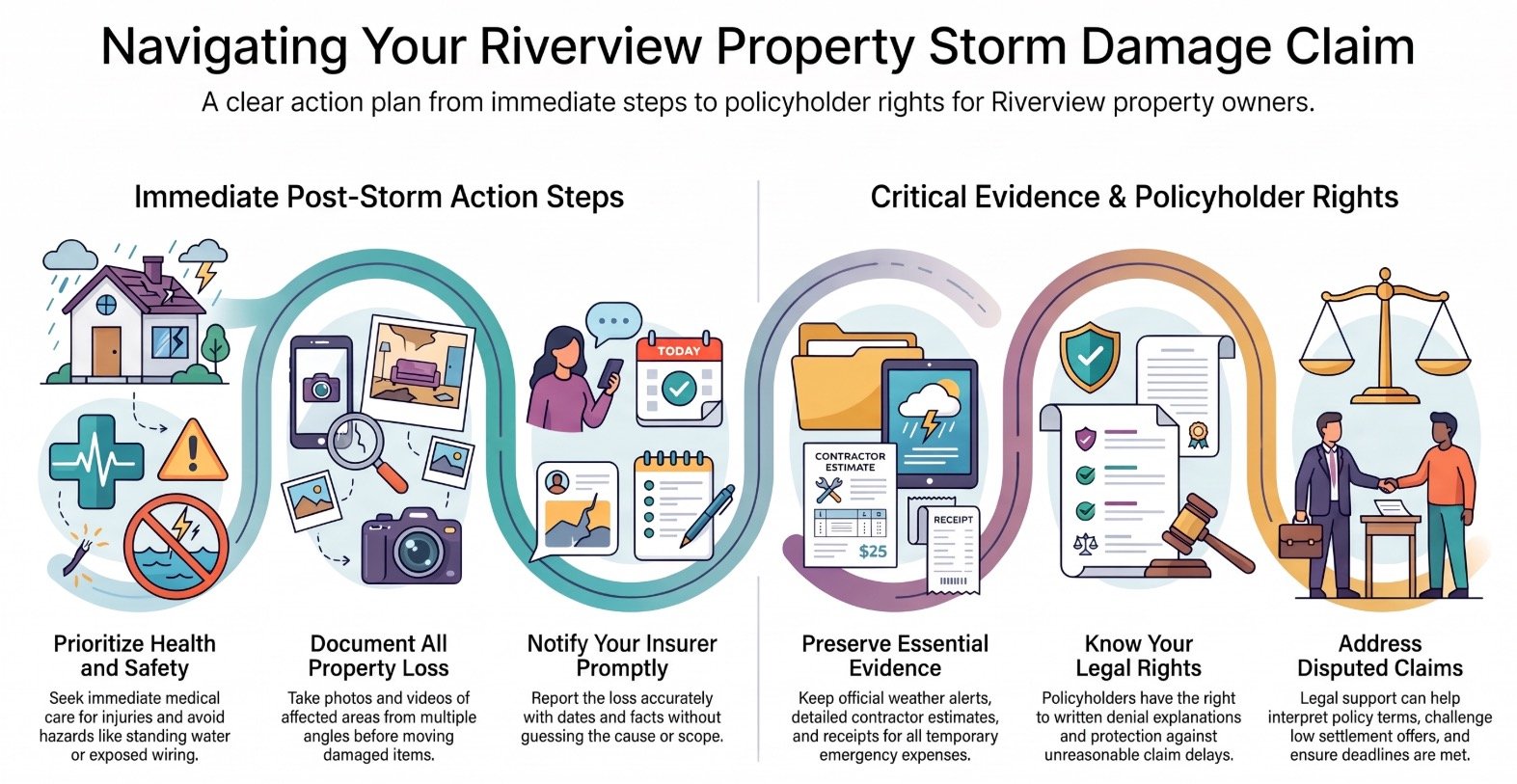
After a storm-related injury, seek immediate medical care and follow your provider’s instructions. Document property damage with clear photographs, videos, and notes before making repairs, when it’s safe to do so. We should also notify our insurance company promptly and keep records of all communications.
Seek Immediate Medical Care
Seek medical care promptly if a storm-related injury occurs, even if symptoms seem minor or delayed. A fall, flying debris, or contact with damaged wiring can cause injuries that worsen over time. We should put health first so we can recover and continue supporting the people who depend on us.
Call emergency services for severe bleeding, trouble breathing, loss of consciousness, or suspected head, neck, or spinal injuries. For urgent but less severe concerns, visit an Emergency room or contact a qualified medical professional promptly. Don’t drive yourself if your condition could make travel unsafe; ask someone you trust to help.
A Medical evaluation can identify hidden injuries and guide appropriate treatment. Follow the clinician’s instructions, attend recommended follow-up appointments, and report new or worsening symptoms without delay. Prompt care protects your well-being and helps you make informed decisions during recovery.
Document the Storm Damage
Once you’ve addressed immediate medical needs, document the storm damage as soon as it’s safe. We can help protect everyone involved by keeping people away from unstable areas, exposed wiring, and standing water. Don’t enter a damaged space if conditions remain unsafe; wait for qualified professionals.
From a safe location, take clear photographs and videos of affected rooms, exterior surfaces, and damaged belongings. Capture wide views and close details, and note the date, time, and location. Keep damaged items in place when practical, but don’t delay necessary steps to prevent further harm.
Create an Inventory Cataloging list that describes each item, its condition, and estimated value. Save receipts and repair records. If moisture is present, ask a qualified expert about Moisture Mapping to identify hidden water intrusion and support accurate damage records. Preserve copies securely.
Notify Your Insurance Company
When it’s safe, notify your insurance company promptly and report the storm damage accurately. Describe what happened, when you discovered the damage, and which areas of the property appear affected. Provide clear details without guessing about the cause or extent of losses. If we documented the damage, we can refer to our photographs, videos, and notes during the call.
Review your policy or insurer’s website for Policy contact details and claim notification deadlines. Ask how to submit a formal claim, what records the company needs, and whether an adjuster will inspect the property. Record the representative’s name, the date, and any claim number. Keep copies of messages and submitted documents. Prompt, accurate notice helps us protect our rights and support a fair review while we continue helping others safely.
Critical Evidence in a Riverview Property Claim Storm & Weather Damage Injury Case
We can strengthen your Riverview storm-damage claim by preserving evidence that documents the event, the property’s condition, and your losses. Gather these records promptly, before repairs or changing conditions make details harder to verify.
Essential evidence includes:
- Weather reports and alerts for the date of the storm
- Clear photographs of property damage, taken from multiple angles
- Repair estimates, invoices, and receipts for related expenses
- Witness statements describing what they observed
- A timeline of the storm, damage discovery, inspections, and claim communications
Weather Reports and Alerts
Weather reports and alerts can help establish when a storm reached Riverview, how severe it was, and what conditions your property faced. We can use National Weather Service records, local forecasts, and official emergency notices to build a reliable timeline of the event. These sources may document rainfall, wind speeds, flood warnings, storm paths, and the timing of changing conditions. Evacuation alerts can also show when officials recognized a threat and urged residents to act. We’ll compare this information with your account and the insurer’s position to assess whether the reported damage fits the storm’s timing and severity. Keep copies of alerts, emails, and other notices you received, including their dates and issuing agencies. Preserving these records can help us present a clear, evidence-based claim and support a fair resolution.
Photographs of Property Damage
Photographs can connect the storm timeline to the damage your Riverview property sustained. We can help you document affected areas promptly, before cleanup or necessary safety measures change what’s visible. Take wide shots of each room or exterior area, then capture close-ups of damaged roofing, broken windows, water intrusion, and fallen materials. Include landmarks that establish where the damage occurred, and photograph multiple angles without altering the scene.
Preserve original files whenever possible. Image Metadata may record when and where a photograph was created, while Timestamp Verification can help confirm when images were taken. Keep copies in a secure location and note who took each photograph and what it depicts. If you’re assisting a family member, neighbor, or community organization, obtain permission and respect privacy. Clear, organized images can help others understand the loss and evaluate the claim fairly.
Repair Estimates and Receipts
After a storm damages your Riverview property, repair estimates and receipts can help show the extent of the loss and the cost of necessary work. We can help you understand how these records support a clear, well-documented claim. Request written estimates from qualified contractors and compare their proposed work, materials, labor, and prices. These estimate comparisons can reveal differences that require clarification and help you assess whether a proposed repair addresses the damage. Keep contracts, invoices, payment confirmations, and receipts for temporary repairs, materials, and other reasonable expenses. Strong receipt organization makes it easier to link each cost to the property damage and respond to insurer questions. Preserve copies and note any outstanding estimates or disputed charges. Careful records support a fair review and help you serve your household responsibly.
Witness Statements and Timelines
Witness statements and a clear timeline can help establish how a storm affected your Riverview property and when damage or related injuries occurred. We can help you record what you observed, when you noticed it, and how conditions changed. Ask neighbors who saw the storm or its aftermath to describe events in their own words. These neighbor interviews may confirm when water entered, debris struck, or hazards appeared. Preserve contact details and note each witness’s observation date.
Compare accounts with repair estimates, receipts, weather reports, photographs, and medical records. Timestamp verification can help show when images or messages were created and whether they match the reported sequence. Record injury symptoms and treatment dates promptly while the details are clear. A clear timeline helps insurers assess responsibility and losses and supports a fair claim that protects your household and community.
Don’t Wait. Call Our Florida Personal Injury Lawyers Now!
Long-Term Effects of Riverview Property Claim Storm & Weather Damage Injuries
We’ll help you understand how storm-related injuries can cause persistent pain and limit mobility long after the weather event. You may also face lasting respiratory problems, particularly after exposure to mold, dust, or contaminated water. These effects can create emotional and financial strain, so we’ll explain how they may shape your recovery and claim.
Persistent Pain and Mobility
Persistent pain and limited mobility can continue long after a storm-related injury, affecting daily activities, work, and independence. We recognize that these limits can make it harder to care for family, serve neighbors, or return to responsibilities you once handled with ease. Chronic joint stiffness may develop after fractures, sprains, or other injuries, while reduced range of motion can interfere with lifting, walking, and reaching. Ongoing discomfort may also disrupt sleep and make routine tasks more demanding. With appropriate medical care, rehabilitation, and consistent follow-up, you may improve strength and preserve function. We encourage you to document symptoms, treatment, and changes in your abilities. If an insurer disputes the lasting impact of your injury, we can help you understand your claim options and pursue evidence-supported compensation.
Lasting Respiratory Problems
After storm-related injuries, lasting respiratory problems can develop from smoke, dust, mold, or other airborne contaminants released by property damage. You may notice shortness of breath, wheezing, chest tightness, or a chronic cough that persists after the immediate danger has passed. These symptoms can reflect airway inflammation or other damage that requires careful medical evaluation. We encourage you to seek prompt care, follow your clinician’s recommendations, and keep records of symptoms, diagnoses, and treatment. If you were exposed while helping neighbors or responding to property damage, tell your provider when and where the exposure occurred. We can help you understand how medical documentation may support a property claim and clarify which losses may be recoverable. Timely attention can protect your health and help preserve important evidence about the storm’s effects.
Emotional and Financial Strain
When storm damage disrupts your home or livelihood, the emotional and financial strain can continue long after the immediate danger passes. You may face repair costs, temporary housing expenses, missed work, and uncertainty about whether your insurer will cover the losses. This Household budget disruption can affect savings, essential bills, and your family’s plans. We can help you document losses, understand policy terms, and pursue a fair claim, so you can focus on restoring stability and supporting those who depend on you.
The stress may also affect sleep, relationships, and daily responsibilities. Thoughtful family stress management can help you communicate, make decisions together, and seek support when needed. We encourage you to keep records of expenses and claim communications, and to ask questions before accepting a settlement. Clear information can ease uncertainty and help you make informed choices.
Proving Liability in Riverview Property Claim Storm & Weather Damage Injury Cases
Proving liability in a Riverview storm or weather damage claim requires more than showing that a storm damaged your property. We must identify who had a duty to protect people or property and show how a failure to meet that duty caused the loss. Weather may be unavoidable, but preventable hazards can still create responsibility.
Maintenance negligence may arise when an owner or property manager ignores known roof leaks, clogged drains, loose siding, or unsafe trees. If reasonable upkeep could have reduced the damage or prevented an injury, records and inspection findings may help establish that connection. Contractor liability may apply when faulty repairs, improper installation, or substandard materials leave a building vulnerable to severe weather.
We can examine photographs, repair histories, contracts, building records, and witness accounts to understand what happened. Expert assessments may clarify whether the storm caused the damage, prior neglect, or defective work. Careful evidence gathering helps us pursue accountability and protect others from similar hazards.
Dealing With Insurance Companies After a Riverview Property Claim Storm & Weather Damage Injury
Once we’ve identified who may be responsible for storm-related damage or injuries, we can address the insurance process and protect the evidence supporting your claim. We’ll help you review relevant policies, identify coverage limits, exclusions, notice requirements, and deadlines. Careful Policy interpretation can clarify whether the insurer should cover property repairs, temporary housing, medical expenses, or other losses. We’ll also organize photographs, repair estimates, medical records, and correspondence so the information stays accurate and easy to access.
During adjuster communication, we can help you provide clear, consistent facts and avoid speculation about the storm, the damage, or your injuries. You don’t need to accept an incomplete explanation of coverage or sign a release before understanding its terms. We’ll address questions, correct factual errors, and keep records of important exchanges. By approaching insurers with preparation and professionalism, we can protect your interests while helping you focus on your family, neighbors, and community. Our guidance can support a fair, well-documented evaluation of your claim.
What to Expect During a Riverview Property Claim Storm & Weather Damage Injury Claim Process
We’ll begin by reporting your claim and documenting the damage, then arrange an inspection to assess the loss. We’ll review your policy’s coverage and negotiate with the insurer based on the evidence. If you can’t reach a fair agreement, we’ll explain your options for resolving the dispute or pursuing a settlement.
Claim Reporting And Documentation
How should you report storm or weather damage to your Riverview property? We recommend contacting your insurer promptly through its designated phone line, website, or agent. Provide your policy information, the date and apparent cause of the damage, and a clear account of what happened. Ask for a claim number and written claim acknowledgment so we can help you track communications and deadlines.
Reporting deadlines vary by policy and circumstances, so review your policy and report the loss as soon as possible. Keep copies of forms, emails, letters, and notes of calls, including dates, names, and instructions. Photograph visible damage and save receipts for reasonable emergency expenses. Don’t discard damaged items or make permanent repairs before documenting them, unless safety requires immediate action. We can help you organize records and communicate clearly while you focus on protecting your household and community.
Property Damage Inspection
What should you expect during a property damage inspection in Riverview? We’ll examine the areas affected by wind, rain, hail, or flooding and document visible damage with notes and photographs. You can help by pointing out concerns, sharing your claim-reporting records, and identifying changes you’ve noticed since the storm.
Our inspection may include Moisture mapping to locate damp materials that aren’t visibly wet, along with a structural assessment of roofs, walls, foundations, and other affected components. We’ll look for signs of water entry, material deterioration, and safety concerns, and, when possible, distinguish storm-related damage from pre-existing conditions. If we find hidden damage or need expert testing, we’ll explain the next steps and why they matter. A careful inspection creates a clearer record of your property’s condition and supports a thorough evaluation of the reported loss.
Coverage Review And Negotiation
Once we’ve documented the storm damage, we’ll review your policy’s terms, limits, exclusions, and deadlines to assess how coverage may apply to the loss. Our Policy language review helps identify covered repairs, documentation requirements, and any provisions the insurer may rely on to limit payment. We’ll compare the insurer’s estimate with inspection findings, contractor assessments, and records of damaged property. This careful work supports a fair evaluation while helping you protect the home or business others depend on. We’ll explain the insurer’s reasoning in clear terms and identify questions that need answers. When evaluating a settlement offer, we’ll assess whether the proposed amount reflects the documented damage, applicable coverage, and reasonable repair costs. We’ll keep you informed, help organize supporting materials, and discuss practical options for responding to the insurer’s position.
Settlement Or Dispute Resolution
After reviewing the insurer’s position and evaluating any settlement offer, we’ll explain the available paths to resolve your Riverview storm or weather damage claim. We’ll compare the offer with documented repair costs, policy limits, and evidence of covered damage so you can make an informed decision. If negotiations stall, Mediation options may allow you and the insurer to work toward a voluntary resolution with a neutral facilitator. We’ll help you prepare supporting records and present your position clearly. When the dispute concerns the amount of loss, your policy may provide an appraisal process. We’ll explain its requirements, potential costs, and limits before you proceed. If these approaches don’t resolve the matter, we can discuss further legal options. Throughout the process, we’ll keep you informed and help protect your interests while you focus on serving others.
Compensation for Riverview Property Claim Storm & Weather Damage Injury Damages
Storm and weather damage can leave Riverview property owners facing substantial repair costs and financial disruption. When we help you assess a claim, we identify covered losses and document the support needed to pursue fair compensation under your policy. This may include damage to your home, detached structures, and vital systems caused by a covered storm event.
We also consider Personal Property Loss, such as damaged furniture, clothing, appliances, and other belongings. An accurate inventory, photographs, receipts, and repair estimates can help establish the extent of these losses. If your home becomes unsafe or uninhabitable, your policy may provide coverage for Additional Living Costs, including temporary lodging and certain necessary expenses while repairs proceed. We can help you review applicable limits, deadlines, and documentation requirements so important costs aren’t overlooked. By organizing evidence and communicating clearly with the insurer, we work to protect your household’s recovery and help you focus on caring for your family and community.
Economic vs. Non-Economic Damages in Riverview Property Claim Storm & Weather Damage Cases
We can distinguish economic damages, such as reasonable repair or replacement costs, from non-economic losses tied to the impact of storm damage on your life. Your claim may also include temporary living expenses if the property becomes uninhabitable. We’ll explain when emotional distress damages may apply and what evidence can support them.
Repair And Replacement Costs
When severe weather damages a Riverview property, repair and replacement costs often form the core of an insurance claim’s economic damages. We help you document the work needed to restore your home or business, including damage to roofing, siding, windows, and structural components. Detailed Contractor bids, photographs, invoices, and material estimates can support your requested amount and clarify where an insurer’s assessment falls short. Your policy may initially pay actual cash value, which accounts for depreciation, then allow depreciation recovery after you complete covered repairs and submit proof of payment. We review deadlines, coverage limits, and claim records so you can pursue the benefits available under your policy. Accurate cost documentation protects your financial recovery and helps you restore a safe, functional property for the people who depend on it.
Temporary Living Expenses
Beyond repair and replacement costs, a storm-damaged property may leave you unable to live safely at home while covered repairs are underway. We can help you identify reasonable Additional living expenses that your policy may cover, including temporary housing costs, meals, and other necessary increases in daily spending. These economic damages should reflect the added costs caused by the covered loss, not expenses you would have paid while living at home. Keep receipts, invoices, and records showing why each expense was necessary and how long repairs required you to stay elsewhere. We can review your policy’s limits, time restrictions, and documentation requirements, then challenge a denial or underpayment when the insurer overlooks supported costs. Careful records help us pursue fair reimbursement while you focus on serving your family and community.
Emotional Distress Damages
Storm damage can cause serious anxiety, disruption, and loss of security, but emotional distress is generally treated differently from measurable financial losses. We can document repair costs, damaged belongings, and additional housing expenses with invoices, estimates, and receipts. Emotional distress, including Emotional trauma and Mental anguish, is generally considered non-economic harm. Whether you can recover these damages depends on the policy, applicable law, and specific facts; distress alone may not establish coverage or liability.
We can help you preserve records that show how the loss affected your household, such as treatment notes or communications with the insurer. Keep your claim focused on accurate evidence, and don’t assume every storm-related policy covers emotional harm. By explaining the distinction clearly, we can support informed decisions and help you pursue the benefits available under your policy and the law.
When a Riverview Property Claim Storm & Weather Damage Injury Case Goes to Trial vs Settlement
How a Riverview property claim ends—through settlement or trial—often depends on the strength of the evidence, the insurer’s position, and the amount of compensation at stake. We’ll review repair estimates, photographs, inspection reports, and communications to assess whether the available proof supports your requested recovery. A settlement may offer a more predictable resolution and avoid the time and uncertainty of going to court. However, we won’t recommend accepting an offer that fails to account for documented damage and related losses.
Settlement timing matters because negotiations may evolve as inspections clarify the scope of repairs. We’ll help you weigh an offer against the evidence and your practical needs, including restoring your property and protecting those who depend on you. If negotiations stall, Jury Trial Considerations include the cost, duration, and uncertainty of trial, as well as your willingness to testify. We’ll explain your options, prepare carefully, and support an informed choice based on your goals, not pressure from the insurer.
Florida Laws That May Affect Your Riverview Property Claim Storm & Weather Damage Case
Florida law can shape what you must prove, how long you have to act, and what your insurer must do after a storm or weather event damages your Riverview property. We can help you understand the rules that govern coverage, claim handling, and disputes so you can protect your household and support those who depend on you.
- Your policy’s terms define covered losses, deductibles, and duties after damage. We’ll review Florida policy exclusions and explain how they may apply to your facts.
- Florida law requires insurers to handle claims fairly and communicate decisions. We can assess whether the insurer’s investigation and explanation meet its obligations.
- You must document damage and take reasonable steps to prevent further harm. Keep photographs, repair records, and receipts for temporary measures.
- Appraisal clause rules may provide a process to resolve disagreements about the amount of loss, but they don’t necessarily decide coverage disputes.
- Building codes and local permitting requirements may affect repairs. We’ll help you identify relevant requirements and preserve records for your claim.
The Statute of Limitations for Riverview Property Claim Storm & Weather Damage Injury Cases
After storm or weather damage, the time to file a property insurance lawsuit may depend on Florida law, your policy, and the circumstances of your claim. Florida sets deadlines for certain property insurance actions, but the applicable period can vary based on the type of dispute and when the claim arose. Your policy may also impose earlier requirements for reporting damage, submitting proof of loss, or completing other steps. These contractual deadlines can affect your rights even when the lawsuit filing window remains open.
We encourage you to review your policy promptly and keep records of the storm, damage, notices, and insurer communications. Missing a Policyholder deadline may create avoidable obstacles, while waiting too long to file a lawsuit can bar recovery. Do not assume that negotiations, inspections, or a pending claim automatically pause a legal deadline. Because rules and policy terms can change, confirm the dates that apply to your circumstances and act in time to protect your household and those who depend on you.
How a Riverview Property Claim Storm & Weather Damage Lawyer Can Help You
When a storm damages your Riverview property, a lawyer can help you assess the claim, understand policy requirements, and respond to an insurer’s decision. We explain coverage provisions, exclusions, and documentation duties so you can make informed choices while protecting the resources your household or community depends on.
Our support may include:
- Reviewing estimates, photographs, repair records, and other damage evidence.
- Applying Policy interpretation to clarify how relevant terms may affect coverage.
- Developing a claim strategy based on the policy, documented losses, and insurer communications.
- Preparing organized submissions that address requested information and support the claimed amount.
- Evaluating a denial or reduced payment and explaining available responses.
We can also communicate with the insurer on your behalf, identify gaps in its assessment, and present evidence clearly and professionally. If negotiations don’t resolve the dispute, we can explain your legal options and represent your interests through the appropriate process. Our goal is to help you pursue a fair resolution and restore the property you need to serve your family, neighbors, or organization.
Don’t Wait. Call Our Florida Personal Injury Lawyers Now!
When to Contact a Riverview Property Claim Storm & Weather Damage Lawyer
Contact a Riverview property claim storm and weather damage lawyer as soon as an insurer disputes coverage, delays its investigation, or offers less than the documented repair costs. Early guidance can help us understand the policy, organize records, and respond before a disagreement becomes harder to resolve.
We should also speak with counsel when severe weather damages a home, business, or community facility and the scope of repairs remains uncertain. A Policyholder consultation can clarify what information to preserve, including photographs, receipts, inspection reports, and communications with the insurer. These records may help establish when and how much damage occurred.
Don’t wait for a final denial to ask about your options. Policies and applicable laws may set deadlines for reporting damage, submitting proof, or bringing a legal action. Through claim deadline planning, we can identify important dates and avoid overlooking required steps. Prompt attention also helps us make informed decisions while protecting the resources needed to restore safe, usable spaces for families, employees, and neighbors.
Why You Need an Experienced Riverview Property Claim Storm & Weather Damage Lawyer
An experienced Riverview property claim storm and weather damage lawyer can help us assess coverage, document losses, and respond effectively if an insurer questions the claim or undervalues repairs. When severe weather damages a home or business, a well-supported claim can protect the resources we need to restore a safe, usable space and continue serving our community.
Policy interpretation matters because coverage depends on specific terms, exclusions, deadlines, and proof requirements. We can explain how those provisions may apply to roof, water, wind, or structural damage and identify gaps in the insurer’s assessment. Our attorney experience also helps us organize repair estimates, photographs, inspection findings, and other records into a clear presentation of the loss.
If the insurer delays, disputes responsibility, or offers less than documented repairs require, we can communicate on your behalf and pursue an appropriate response. With informed guidance, we’re better positioned to safeguard your property, meet your obligations, and let you focus on the people who depend on you.
How to Choose the Right Riverview Property Claim Storm & Weather Damage Lawyer for Your Case
Choosing the right Riverview property claim storm and weather damage lawyer requires more than reviewing credentials; we should also consider the attorney’s experience with property insurance disputes, communication style, and approach to evaluating evidence. We can ask how the lawyer has handled claims involving similar storm damage, disputed estimates, or delayed payments. Clear answers help us assess whether the attorney can explain our options and keep us informed as the matter progresses.
Attorney credentials matter, but we should look beyond a license. We can review relevant experience, disciplinary history, and professional standing, then ask who will manage our claim. A lawyer who listens carefully and responds directly can help us make informed decisions while we focus on our family, neighbors, and other responsibilities.
Before signing an agreement, we should understand the fee structures, including any costs we may owe and when payment is due. We can compare written terms, clarify questions, and choose counsel whose approach fits our needs and goals.
About The Law Offices of Anidjar & Levine
When storm damage leads to an insurance dispute, the Law Offices of Anidjar & Levine represents policyholders seeking help with property claims. We recognize that a damaged home can disrupt your family’s routines and sense of security. Our team helps you navigate the claims process and pursue a fair review of your loss.
Our Firm History reflects a commitment to representing people facing difficult legal and insurance matters. We approach each property claim with careful attention to the policy, the reported damage, and the insurer’s response. We can explain your options, communicate with the insurance company, and help you understand the next steps.
Attorney Credentials and experience matter when you’re evaluating legal representation. We encourage you to ask about the lawyers who may handle your claim, their relevant background, and how they’ll keep you informed. We aim to provide clear guidance and attentive service, so you can make informed decisions while focusing on your household’s needs.

Frequently Asked Questions
Does Homeowners Insurance Cover Damage From Named Storms in Florida?
Yes, homeowners insurance may cover damage from named storms in Florida, but coverage depends on your policy and the cause of loss. We recommend checking whether wind damage is covered, how your Florida hurricane deductible applies, and whether named storm exclusions limit protection. Flood damage generally requires separate flood insurance. If you’re helping a household assess storm losses, we can review the policy language, document damage, and clarify deadlines before you submit a claim.
Can I File a Claim if My Roof Leaked During Heavy Rain?
Yes, we can help you assess whether you may file a claim for a roof leak after heavy rain. Roof leak coverage depends on your policy and the cause of the damage; insurers may distinguish sudden storm damage from wear, poor maintenance, or gradual deterioration. We recommend prompt rain damage documentation, including photographs, repair records, and dates. Review your policy, prevent further damage, and report the loss promptly to your insurer.
What if My Insurer Says the Damage Was Caused by Wear and Tear?
If your insurer attributes the leak to wear and tear, we can help you review the policy and dispute an unsupported denial. Start documenting pre-existing roof conditions with dated photographs, maintenance records, inspection reports, and repair invoices. We can compare this evidence with the storm timeline and the insurer’s findings, then support a challenge to the insurer’s wear-and-tear assessment through a written response or, when appropriate, a formal appeal.
Can I Reopen a Property Damage Claim After Receiving Payment?
Yes, we may be able to reopen a property damage claim after payment, but the settlement terms and applicable deadlines control. Reopening a Settled Claim may be possible if new damage appears, the insurer overlooked covered losses, or the payment didn’t resolve the entire claim. We should review your release, policy, and claim correspondence before contacting the insurer. Supplemental Claim Deadlines vary by policy and law, so act promptly and preserve supporting evidence.
Should I Hire a Public Adjuster for My Storm Damage Claim?
We may benefit from hiring a public adjuster if storm damage is extensive, the insurer’s estimate seems incomplete, or we need help documenting losses. Before choosing one, we should review Public adjuster fee structures, confirm licensing, and understand when fees are due. We can also request comparisons of contractor estimates to identify differences in repair scope and cost. For a straightforward claim, we may manage the process ourselves, while keeping detailed records and deadlines.
—————————
Storm damage can leave you facing costly repairs, disputed coverage, and uncertainty about what to do next. We can review your policy, document the loss, communicate with the insurer, and explain your options under Florida law. Acting promptly can help preserve evidence and protect your claim. If your Riverview property has suffered storm or weather damage, contact The Law Offices of Anidjar and Levine to discuss your circumstances and learn how we can help you pursue the benefits you’re entitled to receive. You can also learn more about a Riverview Personal Injury Lawyer.

