Offices of Anidjar and Levine helps protect essential evidence, coordinate medical documentation, and identify liable parties before crucial details are lost. Counsel manages insurer communications, evaluates future care needs, and pursues compensation for treatment, lost income, rehabilitation, and long-term support.
Early legal involvement can strengthen the claim by preserving witness accounts, crash evidence, and coverage information. The sections that follow explain the legal process, principal steps, and what can affect case value. Learn more from a Fort Myers Car Accident Lawyer.
Main Takeaways
- Seek immediate emergency care after a Fort Myers car crash to diagnose spinal cord damage, stabilize the spine, and create critical medical documentation.
- Preserve evidence early by photographing the scene, vehicle damage, injuries, roadway debris, and collecting witness, police, and insurance information.
- A Fort Myers spinal cord injury lawyer investigates fault using crash reports, witness statements, reconstruction experts, camera footage, and vehicle data.
- Strong claims rely on organized medical records, imaging, specialist opinions, and documentation of long-term mobility limits, pain, and future care needs.
- An attorney handles insurer communications, counters low-value settlement tactics, identifies coverage, and pursues full compensation through negotiation or litigation.


How We Can Help With Your Fort Myers Spinal Cord Car Accident Injury Claim
Guide through the aftermath of a serious collision with informed legal guidance that addresses both immediate concerns and long-term consequences. A Fort Myers legal team can assist by organizing evidence, preserving records, and managing communications with insurers so injured individuals and their families can focus on stability, care, and service to one another.
Representation also includes calculating losses with care, identifying liable parties, and coordinating with qualified professionals who document how the injury affects daily responsibilities, employment, and household needs. Attorneys may help clients locate Community resources that ease transportation, improve access to rehabilitation, and provide temporary financial relief.
They can also point families toward Support groups that provide practical encouragement and informed perspective during recovery. Throughout the claim, counsel maintains deadlines, prepares persuasive demand materials, and negotiates for a result that reflects present burdens and future needs. If settlement efforts fail, the firm can present the case in court with disciplined advocacy and careful preparation.
OUR CONSULTATIONSARE FREE
START YOUR FREE CASE REVIEW

Understanding Fort Myers Spinal Cord Car Accident Injury Cases
Spinal cord injury cases arising from Fort Myers car accidents require a careful review of both medical facts and legal standards, because the consequences often extend far beyond the initial collision. These matters often involve emergency care records, diagnostic imaging, specialist opinions, and evidence showing how the injury affects mobility, independence, and future treatment needs.
In Fort Myers, claims involving the spinal cord also require close attention to insurance issues, liability findings, and the long-term costs of rehabilitation, adaptive equipment, and household support. Car collisions may produce injuries that are immediately obvious or conditions that become clearer as symptoms progress.
A proper case evaluation considers lost income, diminished earning capacity, pain, and the effect on family relationships and daily responsibilities. Those who seek to serve injured people and their families benefit from understanding how legal advocacy can help secure accountability, financial stability, and access to resources needed for recovery, dignity, and continued community participation.
Common Causes of Fort Myers Spinal Cord Car Accident
Several crash scenarios are frequently associated with spinal cord injuries in Fort Myers car accidents. Rear-end collision trauma, distracted driving crashes, high-speed impact wrecks, and drunk driving accidents often generate the force needed to cause severe spinal damage. An overview of these common causes helps clarify how negligence and crash dynamics contribute to life-altering injuries.
Rear-End Collision Trauma
Rear-end collisions can generate abrupt acceleration and deceleration forces that place significant stress on the neck, back, and spinal cord. Even at modest speeds, these impacts may cause whiplash-related complications, including strained muscles, damaged discs, and nerve irritation, which can impair daily functioning and caregiving responsibilities.
The mechanics of injury often involve seatbelt kinematics, in which the restrained torso and moving head create uneven forces across the spine. This motion may aggravate preexisting conditions or cause new trauma, particularly in the cervical and lumbar regions. For individuals committed to supporting family, work, and community, the consequences can be substantial and long-lasting.
Careful medical evaluation is often crucial, because symptoms sometimes emerge gradually. A thorough legal review may also help injured people pursue resources needed for treatment, rehabilitation, and continued service to others.
Distracted Driving Crashes
Beyond the sudden forces seen in rear-end impacts, distracted driving crashes present another frequent source of severe spinal cord harm in Fort Myers car accidents. When a driver diverts attention from traffic conditions, even briefly, the vehicle may drift, strike another car, or leave the roadway, creating traumatic movement that damages the spine. Common distractions include cellphone distraction, navigation screens, passengers, food, and roadside billboards competing for attention.
These preventable events often injure not only occupants, but also pedestrians, cyclists, and families traveling nearby. From a community service perspective, understanding distraction helps residents promote safer habits, support injured neighbors, and encourage responsible driving throughout Fort Myers. Careful documentation of distraction-related conduct can also clarify liability and help secure resources for medical treatment, rehabilitation, and long-term support after a life-changing spinal cord injury.
High-Speed Impact Wrecks
Amplifying the danger on Fort Myers roads, high-speed impact wrecks often generate the violent forces most closely associated with catastrophic spinal cord trauma. When vehicles collide at elevated speeds, the body can be thrust, compressed, or twisted with enough force to damage vertebrae, discs, and delicate nerve pathways.
These crashes frequently involve chain reactions, sudden lane departures, or a vehicle rollover, each of which can intensify spinal injuries. Even when seat belts and airbags function properly, victims may still suffer life-altering harm requiring surgery, rehabilitation, and long-term support.
In some cases, striking guardrails, medians, or roadside debris worsens impact angles and injury severity. For families focused on protecting and serving injured loved ones, understanding how speed magnifies spinal trauma can help them recognize the seriousness of these collisions.
Drunk Driving Accidents
Impairing judgment, slowing reaction time, and reducing coordination, drunk driving creates a substantial risk of severe crashes that can lead to spinal cord injuries in Fort Myers. When an impaired driver ignores traffic laws, misjudges distance, or fails to brake, occupants of other vehicles often suffer catastrophic harm requiring extensive medical care and lifelong support.
From a community service perspective, prevention remains crucial. Strong alcohol awareness efforts help educate motorists about the consequences of impairment and the value of responsible choices. Encouraging designated drivers, rideshare use, and timely intervention by friends or establishments can reduce preventable collisions.
When these accidents occur, a careful legal review may identify negligence, preserve evidence, and support injured individuals as they pursue accountability, treatment resources, and financial recovery after traumatic loss.


Legal Rights of Fort Myers Spinal Cord Car Accident Injury Victims
Accountability often begins with a clear understanding of the legal rights available after a serious collision. In Fort Myers, spinal cord injury victims may pursue compensation when another party’s negligence caused lasting harm. These rights protect medical stability, long-term care planning, and financial security for families committed to serving loved ones with dignity.
Victim advocacy also supports fair treatment during insurance disputes and civil claims.
- Victims may seek damages for hospital care, rehabilitation, lost income, diminished earning capacity, pain, and necessary home modifications.
- Florida law may allow recovery from negligent drivers, employers, vehicle owners, or other responsible entities whose conduct contributed to the crash.
- Certain cases also raise broader public interests, including Policy reform, roadway safety, and stronger accountability standards that may help protect others.
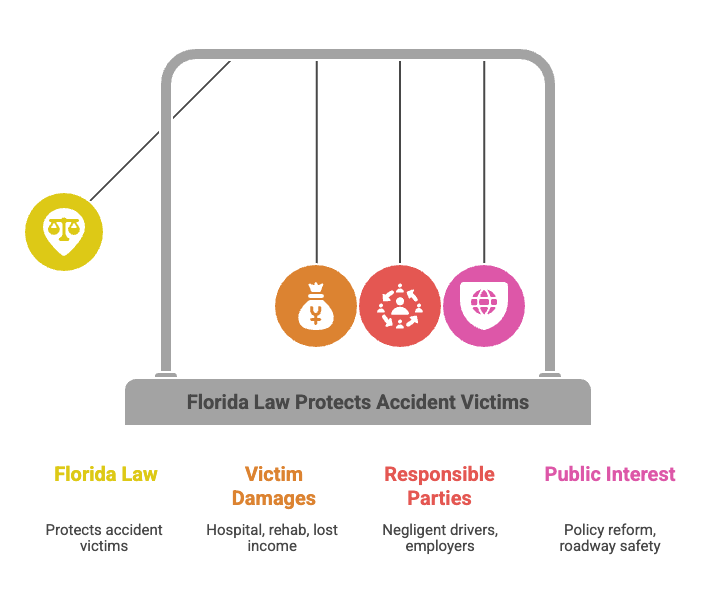
Legal rights exist not only to address present losses, but also to uphold community responsibility, encourage safer conduct, and recognize the profound human impact of catastrophic injury for all.
Steps to Take After a Fort Myers Spinal Cord Car Accident Injury
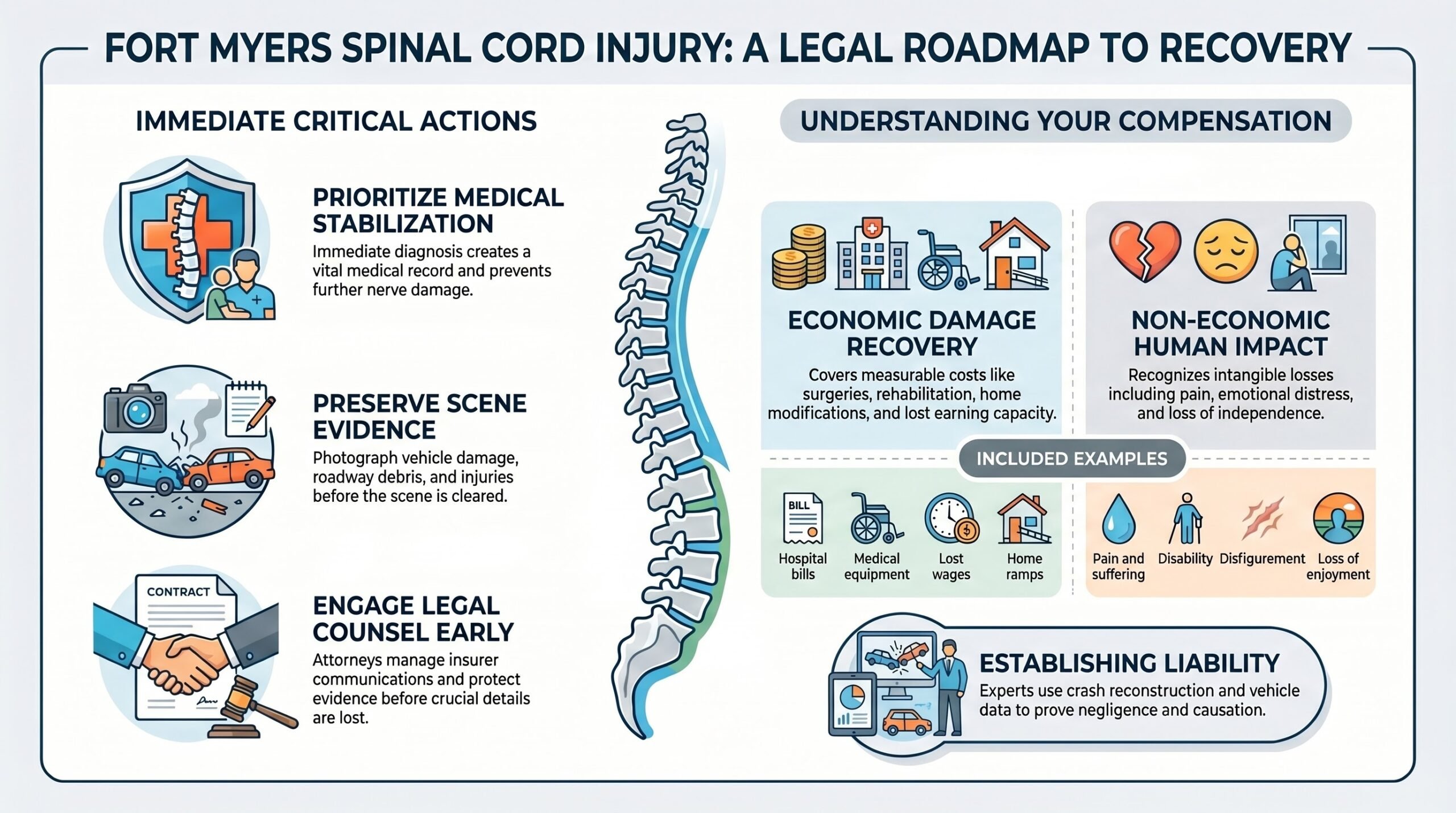
After a Fort Myers spinal cord car accident injury, immediate medical care is vital to protect health and establish a clear record of the harm sustained. It is also important to carefully preserve evidence, including photographs, medical records, and any information related to the collision. Prompt contact with a lawyer can help make sure that legal rights are protected and that crucial steps are taken without delay.
Seek Immediate Medical Care
Prioritize immediate medical evaluation, because spinal cord trauma may not be fully apparent at the scene and delayed treatment can worsen the extent of injury. Even when pain seems manageable, an immediate assessment by emergency personnel or hospital staff can identify hidden damage, stabilize the spine, and reduce the risk of permanent complications.
Those assisting an injured person should ensure prompt care by contacting emergency services and following the dispatcher’s instructions. Appropriate transportation options depend on symptoms, mobility limits, and the possibility of neck or back instability. In many situations, ambulance transport is safest because trained responders can immobilize the body and monitor breathing, circulation, and neurological changes en route.
Early diagnosis also creates a clear treatment path, allowing surgeons, specialists, and rehabilitation providers to coordinate services that protect long-term function and dignity.
Preserve Evidence Carefully
Evidence preservation begins at the crash scene, because the condition of the vehicles, roadway markings, debris patterns, photographs, witness information, and police documentation can later clarify how the collision occurred and how the spinal cord injury was caused.
If physically able, the injured person or a trusted helper should gather names, contact details, insurance information, and statements from witnesses. Careful digital documentation of visible injuries, damaged property, torn clothing, and mobility limitations may support a clearer account of losses. Medical records, discharge instructions, imaging results, receipts, and transportation logs should be organized promptly and stored securely.
Personal notes describing pain levels, daily restrictions, and treatment progress can also be useful. Consistent chain preservation helps protect accuracy, supports accountability, and strengthens efforts to serve the injured person’s long-term recovery needs.
Contact A Lawyer
When a spinal cord injury follows a Fort Myers car accident, contacting a lawyer as soon as practical can help protect the injured person’s legal and financial interests. Counsel can evaluate liability, explain insurance issues, and help preserve claims before crucial deadlines pass. Early guidance also supports families who are focused on care, recovery, and serving one another during a difficult period.
A lawyer may offer a free consultation to review medical records, accident reports, and available evidence. During that meeting, the injured person can ask about experience with catastrophic injury cases, anticipated timelines, and possible fee structures.
Clear legal advice can assist with communication with insurers and prevent harmful statements. Prompt representation often strengthens the ability to pursue compensation for treatment, long-term support, lost income, and necessary future accommodations after injury.
How a Fort Myers Spinal Cord Car Accident Injury Lawyer Can Help You
Guiding a spinal cord injury claim after a car accident often requires legal guidance that is both strategic and all-encompassing. A Fort Myers lawyer helps injured people and their families pursue accountability while protecting access to care, dignity, and practical support.
Counsel often coordinates evidence, medical documentation, and insurer communications to reduce burdens during recovery and promote informed decision-making.
- A lawyer investigates the crash, identifies liable parties, and preserves records, witness statements, and expert opinions needed to support a strong claim.
- Counsel evaluates damages beyond immediate medical bills, including rehabilitation planning, assistive technology, home modifications, and lost earning capacity, so the claim reflects the client’s actual needs.
- An attorney manages settlement negotiations and, when necessary, litigation, advocating for fair compensation while allowing families to focus on caregiving, service, and stability.
This assistance can provide structure, encourage responsible outcomes, and help ensure resources are secured for meaningful recovery and daily functioning after serious harm.
Long-Term Effects of Fort Myers Spinal Cord Car Accident Injuries
Fort Myers spinal cord car accident injuries often produce lasting consequences that extend well beyond the initial trauma. Many individuals face chronic mobility challenges and ongoing medical complications, including the need for continued treatment, rehabilitation, and adaptive support. These injuries also create substantial emotional and financial impact, affecting daily functioning, household stability, and long-term quality of life.
Chronic Mobility Challenges
After a spinal cord injury caused by a car accident, chronic mobility challenges often become one of the most significant long-term consequences, affecting nearly every aspect of daily life. Individuals may struggle with walking, transferring, standing, or maintaining balance, which can limit independence at home, work, and in the community. Many require assistive devices, such as wheelchairs or braces, to maneuver safely and preserve dignity.
These limitations often require thoughtful home modifications, including ramps, widened doorways, and accessible bathrooms, to keep daily routines manageable. Transportation, employment, and participation in family or service-oriented activities may also become more difficult. In many cases, ongoing support from caregivers, rehabilitation professionals, and legal advocates is vital to help injured individuals secure resources, maintain stability, and continue contributing meaningfully to others.
Ongoing Medical Complications
Beyond the daily limitations associated with reduced mobility, spinal cord injuries from car accidents in Fort Myers frequently lead to ongoing medical complications that can persist for years and require continuous treatment. Many individuals develop chronic pain, muscle spasticity, pressure ulcers, respiratory difficulties, and recurrent infections that demand careful monitoring by medical professionals and caregivers.
Autonomic dysfunction may also emerge, affecting blood pressure, temperature regulation, heart rate, and bladder or bowel function. These complications can create serious health risks when not promptly recognized and managed. Secondary conditions, including osteoporosis and circulatory problems, may further reduce physical stability and overall wellness.
Effective long-term care often involves coordinated rehabilitation, preventive medicine, regular evaluations, and attentive support from those committed to helping injured individuals restore and preserve health, dignity, comfort, and as much independence as possible.
Emotional And Financial Impact
Uncertainty often defines the long-term emotional and financial consequences of a spinal cord injury caused by a car accident in Fort Myers. Survivors frequently face profound changes in independence, relationships, and daily purpose, while families assume caregiving roles that reshape household stability. These circumstances can place significant strain on mental health, requiring sustained counseling, community support, and compassionate advocacy.
The financial burden also extends far beyond initial treatment. Ongoing rehabilitation, home modifications, assistive equipment, lost earning capacity, and transportation needs may create lasting hardship. Caregivers and support networks often must coordinate resources carefully to protect dignity and continuity of care.
Effective financial planning becomes vital for meeting current obligations and anticipating future expenses. A structured legal recovery can help secure support necessary for long-term stability and service to others.
Proving Liability in Fort Myers Spinal Cord Car Accident Injury Cases
Establishing liability in a Fort Myers spinal cord car accident case requires a careful analysis of how the collision occurred, who owed a duty of care, and whether that duty was breached through negligent conduct. This process often begins with police reports, photographs, medical records, and roadway evidence that help clarify fault and causation.
Attorneys and investigators may assess witness credibility to determine whether statements are reliable, consistent, and supported by physical facts. In serious injury cases, accident reconstruction can provide a clearer picture of vehicle speed, impact angles, braking patterns, and driver response before the crash. Evidence may also include traffic camera footage, cellphone records, vehicle data, and testimony from medical or engineering professionals.
When negligence is established, the focus remains on linking that conduct to the spinal cord injury and its lasting consequences. A thorough liability investigation supports accountability, promotes safer conduct, and helps injured individuals and their families pursue the resources needed for long-term care.
Dealing With Insurance Companies After a Fort Myers Spinal Cord Car Accident Injury
In the aftermath of a Fort Myers spinal cord car accident, dealing with insurance companies often becomes a vital part of protecting the injured person’s legal and financial interests. Insurers may request recorded statements, broad medical authorizations, or quick settlement discussions before the full extent of harm is understood. Careful communication helps preserve accuracy, prevent misunderstandings, and support the injured person’s continuing medical and caregiving needs.
A disciplined approach is often necessary when insurers minimize injuries, dispute treatment, or issue claim denials without adequate support. Thorough documentation, including medical records, billing statements, and evidence of daily limitations, can strengthen the injured person’s position and promote fair evaluation.
Families who serve as caregivers should also recognize the importance of organized records and consistent information. When an insurer delays payment, misrepresents coverage, or fails to investigate reasonably, those actions may raise concerns about bad faith. Professional legal guidance can help protect dignity, accountability, and long-term stability.
What to Expect During a Fort Myers Spinal Cord Car Accident Injury Claim Process
A Fort Myers spinal cord car accident injury claim typically begins with an initial case evaluation, followed by the collection and review of medical evidence to establish the extent of the injury and its long-term impact.
From there, the process often moves into insurance claim negotiations, where liability, damages, and future care needs are closely examined. If a fair resolution is not reached, the claim may proceed to settlement discussions or trial, depending on the strength of the evidence and the parties’ positions.
Initial Case Evaluation
Begin the initial case evaluation with a careful review of how the Fort Myers car accident occurred, the nature of the spinal cord injury, and the medical treatment received to date. This initial assessment helps counsel understand immediate concerns, identify potential liability issues, and evaluate how the injury has affected daily functioning and family responsibilities.
During this stage, the injured person or their family may complete a client questionnaire outlining the collision timeline, insurance information, employment history, and known losses. Counsel typically explains the claim process, answers practical questions, and discusses communication expectations moving forward.
Attention is also given to preserving important details, locating witnesses, and identifying available sources of coverage. A thorough, organized evaluation supports informed decision-making and allows legal advocates to serve the injured person with diligence, compassion, and purpose.
Medical Evidence Gathering
Gathering medical evidence becomes a central part of a Fort Myers spinal cord car accident injury claim, because the strength of the case often depends on clear proof of diagnosis, treatment, prognosis, and functional limitations. Attorneys typically collect hospital records, surgical notes, rehabilitation reports, physician opinions, and diagnostic studies that document the nature and extent of spinal trauma. They may also review forensic imaging to clarify injury mechanisms and identify trauma that standard records do not fully explain.
Consistent documentation helps caregivers, families, and advocates understand present needs and future support requirements. In more intricate cases, peer consultations with experts may be obtained to confirm causation, assess long-term impairment, and explain expected care demands. Thorough medical evidence supports a careful, service-minded presentation of the injured person’s condition and ongoing challenges.
Insurance Claim Negotiations
Once medical records, expert opinions, and diagnostic findings have been organized, the claim typically moves into insurance negotiations, where those materials are used to support liability and the full scope of damages. During this stage, representatives examine coverage limits, exclusions, and factual disputes, while counsel presents a clear demand supported by evidence and projections of future care.
Effective policy negotiation often requires persistence, accuracy, and attention to insurers’ evaluation of catastrophic injuries. Communications may include recorded statements, requests for authorization, and challenges to causation or the necessity of treatment. An attorney may respond by clarifying losses, correcting misstatements, and documenting unreasonable delay or undervaluation.
When an insurer fails to handle a claim fairly, that conduct may preserve issues relevant to bad-faith litigation. Throughout this phase, organized advocacy helps protect the injured person’s interests and long-term needs.
Settlement Or Trial
At this stage, a Fort Myers spinal cord car accident injury claim may conclude through settlement or proceed into formal litigation, depending on the strength of the evidence, the amount in dispute, and the insurer’s willingness to offer fair compensation.
A careful Settlement strategy evaluates medical needs, future care costs, lost earning capacity, and the broader impact on family stability. Counsel generally advises whether an offer reflects the claimant’s long-term interests and preserves resources needed for continued support and rehabilitation. If negotiations remain inadequate, Trial preparation becomes crucial.
This phase may include depositions, expert testimony, motions, and witness organization, all directed toward presenting a clear account of liability and damages. Whether resolved privately or before a jury, the process is intended to secure accountability and obtain financial recovery that helps injured individuals and those who care for them.
Compensation for Fort Myers Spinal Cord Car Accident Injury Damages
In Fort Myers spinal cord car accident cases, compensation typically extends far beyond initial medical bills, reflecting the profound and often permanent impact of the injury on nearly every aspect of a person’s life. A careful claim often addresses immediate hospitalization, surgeries, medications, long-term rehabilitation, and essential Assistive technology that supports daily functioning and independence.
Compensation may also account for ongoing physician oversight, in-home nursing assistance, home and vehicle modifications, and specialized transportation needs. When paralysis or reduced mobility affects the injured person’s ability to work or continue prior responsibilities, a claim may include projected losses tied to future earning capacity and necessary life care planning.
In especially serious cases, families and caregivers may face substantial added responsibilities, requiring practical resources that preserve stability and dignity. Thorough documentation, expert evaluations, and a clear presentation of future needs are often crucial to pursuing compensation that truly supports recovery, safety, and sustained quality of life over time after the collision.
Economic vs Non-Economic Damages in Fort Myers Spinal Cord Car Accident Cases
In Fort Myers spinal cord car accident cases, damages are generally divided into economic losses and non-economic losses, each serving a distinct role in a compensation claim. Economic damage categories often include medical expenses, lost income, and future care costs, while non-economic losses may address pain and suffering, emotional distress, and reduced quality of life.
Establishing the value of either category typically depends on medical records, employment documentation, expert analysis, and other evidence that supports the full extent of the injury’s impact.
Economic Damage Categories
Economic damages represent the measurable financial losses that follow a spinal cord car accident injury, and they often form the foundation of a Fort Myers personal injury claim. These damages typically include emergency care, hospitalization, surgery, rehabilitation, prescription costs, medical equipment, and future treatment needs linked to long-term impairment.
Additional categories may involve lost wages, reduced earning capacity, and the value of household services the injured person can no longer provide to others. Transportation for medical visits, home or vehicle modifications, and in-home assistance may also qualify when supported by records and professional opinions. Property damage, including repair or replacement of a damaged vehicle and personal items, is another common component.
Careful documentation helps demonstrate the full financial impact and supports a claim for practical resources for recovery and continued service to the family.
Non-Economic Losses
Losses that cannot be measured by receipts or wage statements are often described as non-economic damages, and they address the human impact of a spinal cord injury after a Fort Myers car accident. These losses recognize that serious harm extends beyond hospital bills and missed paychecks. They may include pain and suffering, emotional distress, mental anguish, disability, disfigurement, and loss of enjoyment of daily life.
For many injured people, these effects alter relationships, independence, and the ability to participate in family, community, and service-oriented activities. A spinal cord injury may also disrupt sleep, limit mobility, and change how a person experiences dignity and purpose. In Fort Myers injury cases, non-economic losses acknowledge these profound personal consequences and reflect the broader burden placed on both the injured individual and those who care for them daily.
Proving Damage Value
Assigning a fair value to a spinal cord injury claim requires more than listing medical bills and describing personal suffering. In Fort Myers cases, counsel typically presents clear evidence of economic and non-economic harm, enabling decision-makers to understand the full impact on the injured person and their family.
Economic damages are often supported through treatment records, rehabilitation estimates, life care plans, and expert medical valuation. They may include hospital costs, assistive devices, home modifications, and future loss of earnings when employment capacity is reduced. Non-economic damages require equally careful proof, including testimony about pain, loss of independence, emotional distress, and diminished relationships.
By organizing these elements with credible documentation and witness support, an attorney helps ensure that compensation fully reflects both measurable expenses and the human consequences of catastrophic injury.
When a Fort Myers Spinal Cord Car Accident Injury Case Goes to Trial vs Settlement
In many Fort Myers spinal cord car accident claims, the path to settlement or trial depends on the severity of the injury, the strength of the evidence, and the insurance company’s willingness to offer fair compensation. Settlement is often preferred when liability is clear and future medical needs can be reasonably projected. It may provide faster financial support for treatment, caregiving, and household stability.
A case may proceed to trial when insurers dispute fault, minimize permanent impairment, or refuse to recognize the full human and economic cost of paralysis or related complications. Attorneys may explore mediation alternatives before trial, especially when both sides seek a resolution that preserves resources and reduces strain on the injured person and family. If no fair agreement emerges, trial preparation becomes vital.
Court presentation then turns on expert testimony, life care planning, and jury dynamics, all of which can greatly influence whether a verdict reflects the true extent of loss endured.
The Statute of Limitations for Fort Myers Spinal Cord Car Accident Injury Cases
Even when liability evidence is strong, and settlement discussions appear productive, timing remains a controlling issue in Fort Myers spinal cord car accident cases. Florida law sets firm deadlines for filing civil actions, and missing them can prevent an injured person from pursuing compensation, regardless of the severity of harm or the strength of supporting proof.
Because spinal cord injuries often require long-term care, families focused on service, recovery, and daily support may overlook these deadlines. Yet the statute of limitations can shape every stage of a claim, from evidence preservation to access to court. Certain nuances of the statute may affect how the filing period is calculated, particularly when facts emerge later or multiple parties share responsibility.
In limited circumstances, filing exceptions may apply, but they are not automatic and usually depend on specific facts recognized by law. Careful attention to deadlines helps protect the injured person’s ability to seek accountability and resources for future care.
When to Contact a Fort Myers Spinal Cord Car Accident Injury Lawyer
At the earliest practical stage after a crash, contacting a Fort Myers spinal cord car accident injury lawyer can help protect both the claim and the injured person’s long-term interests. Prompt action is especially important when medical treatment is ongoing, evidence must be preserved, and communication with insurers begins soon after the collision.
An early consultation may be appropriate whenever spinal trauma is suspected, symptoms worsen, liability is disputed, or the injured person is uncertain about required next steps. Families who wish to serve and safeguard a loved one often benefit from timely legal guidance while care plans, records, and expenses are still developing. Quick contact can also reduce insurance pitfalls, including recorded statements, premature settlement offers, and avoidable documentation errors.
When a crash involves multiple vehicles, severe injuries, or questions about coverage, reaching out sooner rather than later supports informed decisions. Early attention helps create order during a difficult period and promotes responsible protection of the injured person’s future.
Why You Need an Experienced Fort Myers Spinal Cord Car Accident Injury Lawyer
For victims of serious spinal trauma, experienced legal representation is often necessary because these claims involve substantial medical evidence, long-term financial consequences, and frequent disputes over fault, causation, and future care needs. An experienced Fort Myers spinal cord car accident injury lawyer helps document losses with precision, including treatment expenses, diminished earning capacity, and projected support requirements over many years.
Such representation also protects access to resources that promote recovery and stability. Counsel can work with medical providers, life-care planners, and financial experts to present the full impact of paralysis, mobility loss, pain, and changing rehabilitation options. This structured advocacy is important when insurers attempt to minimize damages or question medical necessity.
Skilled legal guidance also helps families understand procedures, deadlines, and potential legal costs, allowing them to make informed decisions while focusing on service, caregiving, and community support. In severe injury cases, experience often shapes whether compensation truly reflects lifelong needs and responsibilities.
How to Choose the Right Fort Myers Spinal Cord Car Accident Injury Lawyer for Your Case
How should a person evaluate which attorney is best suited to handle a spinal cord car accident claim in Fort Myers? A careful review should begin with the lawyer’s experience handling catastrophic injury cases, knowledge of Florida insurance law, and record of preparing matters for trial when settlement efforts fall short.
Client interviews can reveal whether the attorney listens attentively, explains options clearly, and treats injured people with dignity and respect. Those meetings should also clarify who will manage day-to-day communication, how evidence will be gathered, and whether medical experts may be consulted to document long-term limitations and future care needs.
Fee structures merit close attention. A person should understand contingency terms, litigation costs, and whether expenses are deducted before or after recovery. It is also wise to review professional standing, courtroom reputation, and responsiveness. Selecting counsel with skill, transparency, and a service-minded approach can strengthen both confidence and case preparation from the outset.
About The Law Offices of Anidjar & Levine
The Law Offices of Anidjar & Levine serves injured clients in Fort Myers with representation focused on serious motor vehicle collision claims, including cases involving spinal cord trauma.
The firm approaches each matter with disciplined preparation, careful communication, and attention to the long-term needs of injured individuals and their families.
Its attorneys and staff emphasize responsive service, helping clients pursue compensation for medical treatment, rehabilitation, lost income, and future care.
This work reflects a practical commitment to easing burdens so clients can focus on recovery and stability.
Client testimonials often describe professionalism, accessibility, and consistent support during difficult periods.
The firm’s presence also extends beyond casework through Community outreach and public engagement that reflect a service-minded philosophy.
By combining legal advocacy with concern for local well-being, the practice presents itself as a resource for people facing life-changing injuries.
This reputation supports its role in complicated spinal cord accident claims throughout the Fort Myers area.
Frequently Asked Questions
Can Family Members Recover Damages for Loss of Companionship After a Spinal Cord Injury?
Yes, family members may recover damages in some cases for lost companionship after a spinal cord injury. Such claims often arise through loss of consortium, typically available to a spouse, and sometimes through limited statutory rights affecting close relatives. Familial bereavement usually applies in wrongful death matters, not nonfatal injuries. Eligibility, proof requirements, and recoverable damages depend on state law, the relationship involved, and the documented impact on daily family life.
Are Spinal Cord Injuries From Rideshare Accidents Handled Differently Than Regular Car Accidents?
Yes, spinal cord injuries from rideshare accidents are often handled differently than regular car accidents because rideshare liability depends on the driver’s status in the app at the time of the crash. Insurance differences are also significant, as coverage may shift between the driver’s personal policy and the rideshare company’s commercial policy. Careful investigation helps injured people, and those supporting them, identify responsible parties and available compensation with greater accuracy.
Can Social Media Posts Affect a Spinal Cord Car Accident Injury Claim?
Yes, social media posts can affect a spinal cord car accident injury claim. Insurers and defense counsel may review post content, even when privacy settings appear restrictive, to challenge credibility, injury severity, or daily limitations. Careful evidence preservation is thus crucial, because deleted material can invite suspicion or separate legal issues. A prudent claimant avoids discussing the incident online and shares guidance with family members, in order to protect the claim and support fair resolution.
What if a Spinal Cord Injury Worsens Weeks After the Car Accident?
A spinal cord injury that worsens weeks after a car accident may indicate delayed deterioration or latent symptoms, both of which require immediate medical evaluation. Prompt documentation helps protect the injured person’s health and clarifies whether the worsening condition relates to the crash. Those assisting the injured person should encourage consistent treatment, careful recordkeeping, and timely legal review. Early action supports proper care, accurate assessment, and accountability for the full extent.
Do Pre-Existing Back or Neck Conditions Impact a Spinal Cord Injury Claim?
Yes, pre-existing conditions can affect a spinal cord injury claim, but they do not automatically prevent recovery. Courts and insurers often examine whether the accident aggravated an earlier back or neck problem. Strong medical documentation is crucial to distinguish prior symptoms from new harm. These cases may involve insurance disputes and arguments about comparative negligence, yet a well-supported claim can still secure compensation that serves the injured person’s ongoing needs.
—————————
A Fort Myers spinal cord car accident injury claim often involves substantial medical, financial, and legal issues that require careful attention.
Injured individuals benefit from understanding their rights, preserving evidence, and seeking qualified legal guidance as early as possible.
With experienced representation, they may pursue compensation for treatment, lost income, and long-term care needs.
Fort Myers Car Accident Lawyer services from Law Offices of Anidjar and Levine provide focused support to help clients address these intricate claims with diligence, clarity, and strategic advocacy.