The Law Offices of Anidjar and Levine evaluates whether negligent prenatal, delivery, or neonatal care caused a child’s birth injury. The review may involve medical records, fetal monitoring, delivery documentation, expert opinions, and evidence of lifelong medical or developmental needs. Florida claims generally require presuit investigation, timely notice, and proof of duty, breach, causation, and damages. Special deadlines may apply to minors or governmental providers. A Florida Personal Injury Lawyer can explain potential causes, legal rights, evidence preservation, and how to select appropriate counsel.
Main Takeaways
- A Florida birth injury lawyer evaluates whether negligent prenatal, labor, delivery, or newborn care caused the child’s injuries.
- Attorneys review medical records, fetal monitoring, delivery notes, imaging, expert opinions, and witness accounts to assess liability and causation.
- Potential claims may involve delayed intervention, monitoring failures, medication errors, oxygen deprivation, communication problems, or inadequate neonatal care.
- Families should preserve records, billing documents, photographs, treatment plans, and symptom timelines while seeking appropriate medical evaluations.
- Florida malpractice deadlines, presuit requirements, governmental-provider rules, and special minor-related provisions can affect available legal options.


How We Can Help With Your Florida Medical Malpractice General Birth Injuries Injury Claim
When a birth injury may have resulted from medical negligence, an experienced Florida medical malpractice attorney can evaluate the circumstances and determine whether a viable claim exists. The legal team may begin by securing relevant medical records, delivery-room materials, imaging studies, and related communications before important information is lost or altered.
Witness interviews can provide context about prenatal care, labor management, emergency responses, and communications with the family. Careful review of nurse documentation may reveal timing, observations, monitoring changes, and whether concerns were properly reported and addressed. Expert consultations can help assess whether treatment met accepted standards and whether a departure contributed to the child’s condition.
The attorney may also identify evidence of liability, including policies, staffing information, medication records, and testimony from healthcare professionals. By organizing the facts and explaining available legal options, counsel can help the family make informed decisions while pursuing accountability and access to appropriate compensation for the child’s ongoing needs.
OUR CONSULTATIONSARE FREE
START YOUR FREE CASE REVIEW

Understanding Florida Medical Malpractice General Birth Injuries Injury Cases
Understanding a Florida medical malpractice birth injury case requires examining whether a healthcare provider’s conduct fell below the accepted standard of care and caused or contributed to harm. The analysis generally considers medical records, prenatal documentation, delivery notes, diagnostic results, witness accounts, and qualified expert opinions. A claim may involve injury to the child, harm to the parent, or both, but legal responsibility depends on proving duty, breach, causation, and legally recognized damages. Florida law also imposes procedural requirements, including presuit investigation and timely notice before filing a lawsuit. In some circumstances, Wrongful birth statutes may affect claims involving a child’s condition, parental decision-making, or alleged lost opportunity to make an informed choice. Informed consent failures may create separate questions concerning whether material risks, alternatives, or recommended procedures were adequately explained. Each case requires careful evaluation of individualized facts, applicable deadlines, and available remedies, with the goal of protecting families and supporting responsible healthcare practices.
Common Causes of Florida Medical Malpractice General Birth Injuries
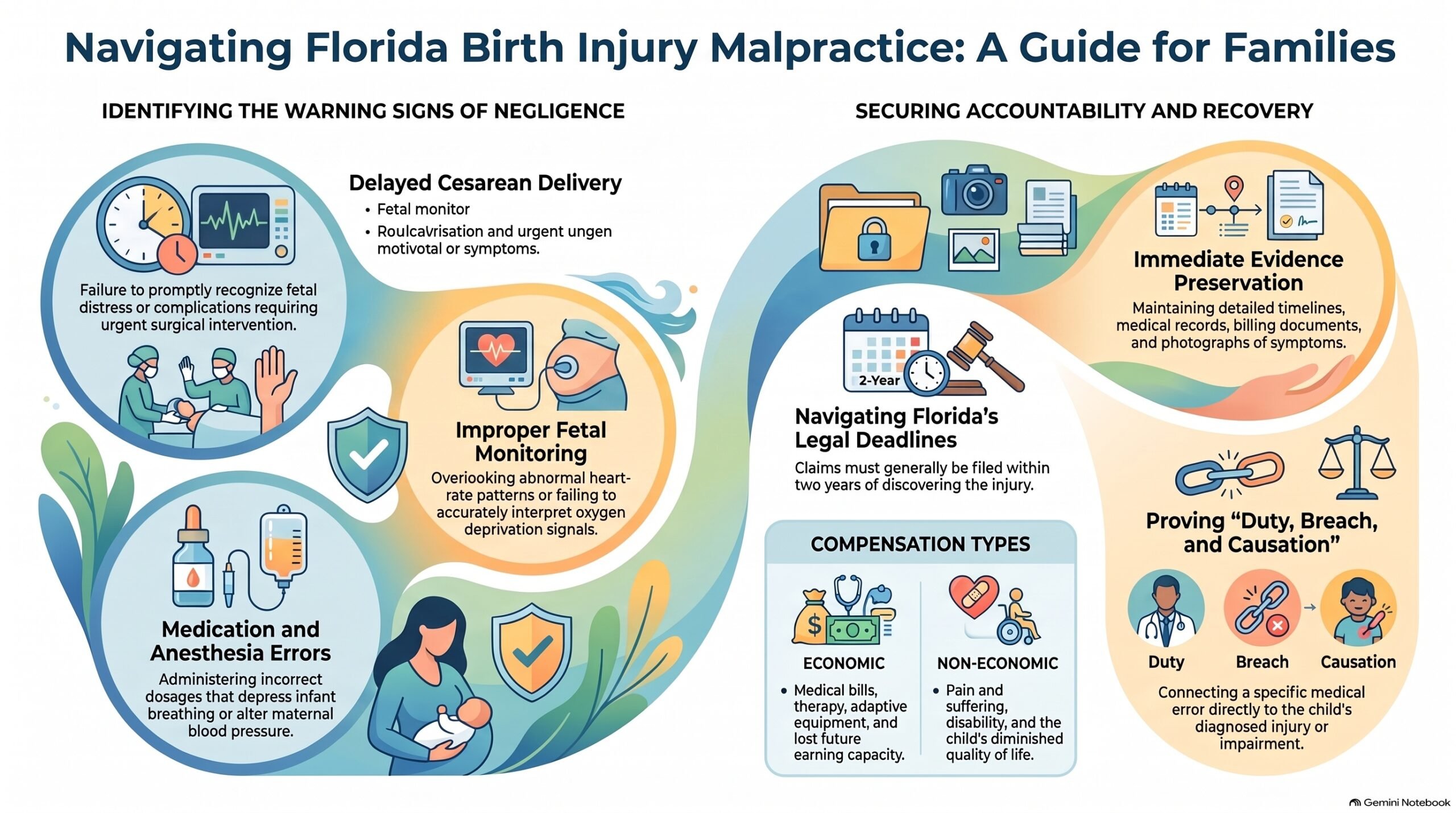
Common causes of general birth injuries may include delayed Cesarean delivery, improper fetal monitoring, and errors during birth assistance. Medication and anesthesia mistakes can also create serious risks for both the mother and child. Each circumstance requires careful review of medical records, treatment decisions, and applicable standards of care.
Delayed Cesarean Delivery
Delayed cesarean delivery can constitute medical negligence when healthcare providers fail to recognize fetal distress, maternal complications, or other conditions requiring prompt surgical intervention. A cesarean may be necessary when labor fails to progress, the umbilical cord becomes compressed, or the mother develops severe bleeding, infection, or dangerous blood-pressure complications. Once circumstances indicate that surgery is medically appropriate, delays in obtaining consent, assembling an operating team, administering anesthesia, or transferring the patient can increase the risk of oxygen deprivation and physical trauma. Resulting injuries may include brain damage, fractures, nerve damage, respiratory problems, or other Neonatal complications. Assisted delivery errors may further worsen harm when instruments are used improperly or when surgical intervention should have occurred sooner. Medical records and expert review help determine whether the response met accepted standards of care.
Improper Fetal Monitoring
When fetal monitoring is performed improperly or interpreted incorrectly, signs of oxygen deprivation and other developing complications may not receive a timely response. Monitoring requires appropriate electrode placement, reliable equipment, consistent observation, and accurate documentation of changing fetal and maternal conditions. Failures may occur when staff overlook abnormal heart rate patterns, misinterpret signal loss, or fail to notify the responsible physician promptly. Medication dosing errors can alter fetal heart activity or maternal blood pressure, making careful assessment especially important. Similarly, anesthesia complications may contribute to maternal hypotension, reduced oxygen delivery, or other changes requiring immediate evaluation. When concerning findings are ignored, minimized, or inadequately communicated, opportunities for intervention may be lost. A qualified Florida medical malpractice attorney can review monitoring records, medication histories, and clinical communications to determine whether negligent monitoring contributed to a birth injury.
Birth Assistance Errors
Birth assistance errors can cause serious harm when healthcare providers fail to respond appropriately during labor, delivery, or the immediate period after birth. Examples include improper positioning, excessive traction, delayed assistance during shoulder dystocia, or failure to recognize complications requiring timely intervention. These mistakes may contribute to fractures, nerve injuries, oxygen deprivation, or other lasting conditions affecting a child’s development and quality of life. Misdiagnosis impacts can arise when symptoms are incorrectly attributed to routine birth stress rather than an emerging emergency. In addition, informed consent issues may arise when providers fail to explain material risks, alternatives, or the need for an urgent procedure before acting, when circumstances permit discussion. Careful documentation, coordinated teamwork, and prompt escalation can reduce preventable injuries and support families seeking accountability.
Medication And Anesthesia Mistakes
Medication and anesthesia mistakes during labor, delivery, or neonatal care can cause preventable harm when providers select an inappropriate drug, administer an incorrect dose, overlook an allergy, or fail to monitor the mother and child adequately. An Incorrect dosage may depress an infant’s breathing, alter maternal blood pressure, or contribute to neurological injury. Errors involving epidurals, general anesthesia, or emergency medications can create anesthesia complications, particularly when clinicians fail to recognize adverse reactions or respond promptly to oxygen deprivation. Providers must review medical histories, confirm medication orders, calculate weight-based doses, and monitor critical signs throughout treatment. When these safeguards are neglected, the resulting injury may require extensive medical care and developmental support. Families seeking accountability may benefit from preserving records and consulting qualified legal professionals regarding potential negligence claims.
Don’t Wait. Call Our Florida Personal Injury Lawyers Now!


Legal Rights of Florida Medical Malpractice General Birth Injuries Injury Victims
Florida medical malpractice law provides birth injury victims and their families with legal rights when negligent medical care causes preventable harm. These protections help families seek accountability, preserve evidence, and obtain resources supporting a child’s long-term needs.
A qualified attorney can evaluate records, identify responsible parties, and explain available remedies without adding unnecessary burden.
- Patient compensation: An eligible claimant may pursue damages for medical treatment, rehabilitation, assistive equipment, lost earning capacity, and related future care.
- Legal representation: Families may consult counsel who can communicate with insurers, retain medical experts, and protect the child’s interests during negotiations or litigation.
- Claim timelines: Florida imposes deadlines for filing malpractice actions, and special rules may apply to minors or claims involving governmental providers.
- Evidence preservation: Medical records, billing documents, care plans, and expert evaluations can help establish the injury’s impact and support a timely claim.
Prompt legal guidance enables families and their advocates to serve the child’s best interests while pursuing a fair resolution.
Why Do Florida Medical Malpractice General Birth Injuries Injuries Happen?
Understanding why these injuries occur helps families and attorneys evaluate whether medical negligence contributed to a child’s harm. Common causes include inadequate monitoring, delayed recognition of fetal distress, improper medication administration, and errors during labor or delivery. When warning signs are overlooked, timely intervention may not occur, increasing the risk of oxygen deprivation, nerve damage, or other serious complications.
Medical negligence can also involve failure to follow accepted obstetric standards, improper use of delivery instruments, or insufficient preparation for an emergency cesarean section. Staffing issues may contribute when facilities lack adequate personnel, assign inexperienced providers, or permit excessive workloads that impair careful decision-making. Communication failures between physicians, nurses, professionals, and families can further delay treatment or create misunderstandings about crucial clinical information.
Not every birth injury results from negligence; some arise from unavoidable medical conditions or complications. Determining the cause generally requires review of prenatal records, fetal monitoring, delivery documentation, and professional testimony. Careful evaluation can clarify whether reasonable care was provided and whether a preventable error caused the child’s injury.
What Should You Do After a Florida Medical Malpractice General Birth Injuries Injury?
After a suspected birth injury, the child should receive immediate medical care to address urgent conditions and establish a record of the diagnosis. The parents should document symptoms, treatments, medical records, and relevant details surrounding the birth. They should also consult a qualified Florida medical malpractice lawyer to evaluate potential negligence and explain available legal options.
Seek Immediate Medical Care
When a newborn shows signs of a possible birth injury, the parents or legal guardians should seek immediate medical care, even if the symptoms appear minor or uncertain. Emergency signs may include difficulty breathing, seizures, unusual weakness, persistent vomiting, poor feeding, abnormal movements, or changes in alertness. If any serious symptoms appear, caregivers should call for emergency assistance immediately rather than waiting for them to resolve. A physician can perform a timely symptoms check and determine whether hospital treatment or expert care is necessary. Even less apparent concerns warrant an urgent assessment because some neurological, spinal, or internal injuries may not be immediately obvious. Prompt evaluation supports the infant’s safety, helps medical professionals identify necessary interventions, and provides caregivers with clear guidance on ongoing care and monitoring.
Document The Birth Injury
Careful documentation can help establish what happened during labor, delivery, and the newborn’s treatment following a suspected birth injury. A parent or caregiver should maintain timelines of events, including contractions, hospital arrival, delivery procedures, medical interventions, observed symptoms, diagnoses, and communications with healthcare professionals. Notes should identify dates, times, names, and statements as accurately as possible. Families may also preserve discharge papers, test results, medication lists, treatment plans, billing records, and photographs showing physical changes. Learning How to record symptoms can improve accuracy: descriptions should address onset, frequency, severity, movement, feeding, sleep, breathing, and developmental concerns without speculation. Records should remain factual and organized in a secure location. Parents can request copies of relevant medical records and promptly update the documentation when new evaluations or treatments occur.
Consult A Malpractice Lawyer
Consulting a Florida medical malpractice lawyer can help a family evaluate whether a healthcare provider’s conduct may have contributed to a child’s birth injury. During a case evaluation meeting, the attorney may review medical records, delivery notes, test results, and the documented timeline of events. The family should describe symptoms, treatments, diagnoses, and communications with healthcare professionals as accurately as possible. A lawyer can explain whether the circumstances suggest negligence, a preventable complication, or an unavoidable medical outcome. Families may also receive confidential legal advice regarding deadlines, evidence preservation, and potential claims against responsible parties. Prompt consultation is important because Florida law imposes strict requirements and time limits for medical malpractice actions. Legal guidance can help protect the child’s interests while allowing caregivers to focus on treatment, recovery, and long-term support.
Critical Evidence in a Florida Medical Malpractice General Birth Injuries Injury Case
A Florida medical malpractice birth injury case depends on organized evidence showing what occurred, whether professional standards were violated, and how the injury affected the child and family.
The following categories commonly guide that evaluation:
- Medical Records Review
- Expert Testimony
- Birth Injury Documentation
- Liability and Damages
Medical Records Review
When a birth injury is suspected, a thorough review of the medical records is essential to determine what occurred before, during, and after delivery. Records may include prenatal visits, fetal monitoring strips, medication charts, nursing notes, delivery reports, and neonatal assessments. Careful analysis can reveal changes in fetal condition, delayed responses, communication failures, or departures from accepted procedures. Interpreting clinical notes requires attention to timing, terminology, and inconsistencies among entries. Identifying missing records or unexplained gaps may also raise important questions about documentation and patient care. Medical records help clarify why expert causation analysis may be pivotal and support the process of proving negligence when the evidence indicates that preventable conduct contributed to the child’s injury. Preserving and organizing these materials can assist families seeking accountability and appropriate support.
Expert Testimony
Medical records provide the factual foundation, but expert testimony often explains whether the documented care met Florida’s medical standards and whether a preventable failure contributed to the child’s injury. Expert witness selection should focus on physicians whose training, experience, and familiarity with relevant obstetric or neonatal practices match the issues presented. These professionals may evaluate factors in medical causation, including timing, risk conditions, monitoring, treatment decisions, and alternative explanations for harm. Testimony reliability depends on a sound methodology, accurate review of the available evidence, and opinions grounded in accepted medical knowledge rather than speculation. Opposing counsel may raise credibility challenges in court by examining qualifications, compensation, prior testimony, or inconsistent conclusions. Clear, impartial explanations can help the court distinguish an unavoidable complication from an injury linked to substandard care.
Birth Injury Documentation
Thorough birth injury documentation establishes the factual record needed to evaluate whether negligent medical care contributed to a child’s condition. Relevant materials may include prenatal records, fetal monitoring strips, delivery notes, medication logs, neonatal assessments, imaging, therapy evaluations, and discharge instructions. Consistent organization helps attorneys and medical reviewers compare events with accepted clinical practices. A precise chronology should identify symptoms, interventions, communications, and changes in the child’s status without speculation. Families should preserve electronic messages, appointment records, photographs, and notes describing observed difficulties, while requesting complete copies from each provider. Timeline bias can arise when memories are recorded long after delivery, so contemporaneous entries are particularly valuable. Insurance delays may affect access to treatment records or evaluations; documented requests and follow-ups help preserve an accurate, usable file.
Liability And Damages
Organized documentation provides the foundation for evaluating liability and damages in a Florida medical malpractice birth injury case. Medical records, fetal monitoring strips, imaging studies, witness statements, and expert opinions may help establish whether providers met applicable standards of care during pregnancy, labor, delivery, or newborn care. Causation proof must connect a specific breach of the professional duty to the child’s injury, rather than merely showing an unfavorable outcome. Evidence may also identify the timing, severity, and permanence of impairments. Damages documentation commonly includes treatment costs, rehabilitation expenses, adaptive equipment, lost future earning capacity, and the child’s anticipated need for lifelong assistance. A careful review can distinguish economic losses from noneconomic harm, including pain, disability, and diminished quality of life. Early preservation of records supports a fair evaluation and compassionate advocacy for affected families.
Don’t Wait. Call Our Florida Personal Injury Lawyers Now!
Long-Term Effects of Florida Medical Malpractice General Birth Injuries Injuries
Long-term birth injuries may create physical and cognitive challenges that affect mobility, communication, learning, and independence. These conditions can also produce emotional and social effects, including difficulty forming relationships, participating in activities, or adapting to daily demands. Ongoing medical treatment, therapy, support services, and specialized equipment may result in lifelong care needs and substantial expenses.
Physical and Cognitive Challenges
When medical negligence during labor or delivery causes a birth injury, the resulting physical and cognitive challenges may continue throughout the child’s development and into adulthood. Some children experience weakness, impaired coordination, limited mobility, or difficulties with speech, memory, attention, and problem-solving. These conditions may require ongoing Therapy and rehabilitation, including physical, occupational, and speech services tailored to changing needs. Developmental delays can affect the acquisition of motor skills, communication abilities, and independent daily activities. Cognitive impairments may also produce learning challenges that require individualized educational planning, classroom accommodations, and dedicated instruction. Consistent family support systems can help coordinate medical care, therapy, education, and long-term planning. Accurate evaluations and documented treatment needs are important for determining appropriate services and assessing whether negligent care contributed to ongoing limitations.
Emotional and Social Impact
Emotional and social effects may accompany birth injuries caused by negligent medical care, particularly when physical or cognitive limitations affect communication, independence, or participation in daily activities. A child may experience frustration, isolation, anxiety, or reduced confidence when interacting with peers. These challenges can influence classroom engagement, friendships, and participation in community activities. Consistent encouragement from caregivers, educators, counselors, and medical professionals may help the child develop coping strategies and preserve a sense of belonging. Appropriate school social support can promote inclusion through individualized communication methods, peer education, and coordinated behavioral assistance. Families may also benefit from advocacy organizations and community resources that reduce isolation and identify practical accommodations. Careful family financial planning can support stable routines and access to appropriate services, while preserving attention to the child’s dignity, relationships, and evolving emotional needs.
Lifelong Care and Expenses
The care required after a birth injury may continue throughout the child’s life, creating ongoing medical, educational, therapeutic, and personal support needs. Expenses may include expert visits, medications, adaptive equipment, transportation, home modifications, attendant care, and future residential services. Children may also require individualized education plans, physical therapy, speech therapy, occupational therapy, and vocational assistance as abilities and circumstances change. Families must consider lost income when caregivers reduce their work hours or leave their jobs to provide supervision. A medical negligence claim may seek compensation for reasonably anticipated costs, although calculating future needs requires careful documentation and qualified analysis. An expert witness can evaluate the injury’s effects, treatment requirements, and projected expenses. Records concerning prenatal care, delivery, diagnosis, and continuing treatment may help establish causation, severity, and the support necessary for a stable future.
Proving Liability in Florida Medical Malpractice General Birth Injuries Injury Cases
Establishing liability in a Florida medical malpractice birth injury case requires proof that a healthcare provider’s conduct fell below the accepted standard of care and caused the child’s injury. Evidence may include prenatal records, fetal monitoring strips, delivery notes, medication histories, and testimony from qualified medical experts. An expert generally explains what a reasonably prudent provider would have done under similar circumstances and identifies the specific act or omission that caused the harm.
The family must also connect the breach to a diagnosed injury, such as oxygen deprivation, cerebral palsy, nerve damage, or developmental impairment. Defense arguments may challenge causation by pointing to congenital conditions or unavoidable complications, making detailed medical analysis critical. Florida law imposes procedural requirements, including presuit investigation and notice, before a lawsuit proceeds. Damages may cover treatment, therapies, adaptive equipment, lost earning capacity, and related losses. Wrongful death claims may apply when negligence causes a fatality, while punitive damages generally require proof of intentional misconduct or gross negligence.
Dealing With Insurance Companies After a Florida Medical Malpractice General Birth Injuries Injury
Once liability is supported by medical records and expert analysis, communication with the healthcare provider’s insurance company must be handled carefully. Families may be contacted for statements, authorizations, or settlement discussions. A representative should avoid recorded statements, speculative comments, and premature releases until counsel reviews the request and protects the child’s interests.
Effective insurer communication remains factual, organized, and limited to verified information. Medical bills, treatment records, developmental evaluations, and disability projections should be preserved and presented through an appropriate legal channel. A careful Negotiation strategy considers immediate expenses, future care, lost earning capacity, and the lasting effects of the injury rather than relying only on current costs.
Insurers may cite reasons for denying a claim, such as disputed negligence, causation, notice, or incomplete documentation. Each position requires a measured, evidence-based response. Settlement timelines vary depending on the investigation, medical stabilization, and negotiations. Families should understand that patience can prevent the undervaluation of a claim, while counsel coordinates communications and evaluates proposals with compassion, diligence, and respect for the child’s long-term needs.
What to Expect During a Florida Medical Malpractice General Birth Injuries Injury Claim Process
The Florida medical malpractice birth injury claim process generally begins with an initial case evaluation to assess the facts, potential negligence, and legal deadlines. Attorneys then gather medical records, expert opinions, and other evidence before filing the claim and presenting it to the responsible parties. The matter may conclude through settlement negotiations or proceed to trial if an acceptable resolution cannot be reached.
Initial Case Evaluation
When a family suspects that medical negligence caused a birth injury, the initial case evaluation provides an organized review of the facts, medical records, and potential legal claims. During this meeting, an attorney typically discusses the child’s condition, relevant treatment, communications with providers, and the family’s concerns. The attorney may explain Florida’s malpractice requirements, potential defendants, filing deadlines, and the challenges of proving causation and damages. Evidence preservation is addressed early so that important information remains available while the claim is assessed. Expert consultation may help determine whether the medical care departed from accepted standards and whether that departure likely caused harm. The evaluation does not guarantee representation or recovery. Instead, it enables informed decisions, identifies immediate priorities, and clarifies how counsel can support the family’s interests.
Gathering Medical Evidence
To evaluate a potential birth injury claim, counsel generally begins by obtaining thorough medical evidence from the pregnancy, labor and delivery, neonatal period, and subsequent treatment. This collection may include prenatal records, fetal monitoring strips, nursing notes, physician orders, imaging studies, laboratory results, discharge summaries, and rehabilitation documentation. Counsel may request complete certified records rather than selected excerpts, then consult qualified medical professionals to assess whether treatment met applicable standards. Witness interviews can clarify communications, symptoms, staffing, and decisions not fully reflected in documentation. Counsel also develops clinical timelines that align examinations, interventions, and changes in the infant’s condition. Insurance communications, billing records, and disability documentation may help identify expenses and ongoing care needs. Proper organization preserves accuracy, supports compassionate advocacy, and allows the family’s circumstances to be evaluated responsibly.
Filing The Claim
Once medical records and preliminary expert assessments have been organized, counsel may determine whether the matter can proceed as a Florida medical malpractice claim. The Statute of limitations governs when a lawsuit must be filed, making prompt evaluation critical. Counsel typically conducts an expert review to assess whether the healthcare provider’s conduct may have breached the accepted standard of care and caused the child’s injury. Florida procedures may require an investigation and presuit notice before a complaint is filed. During this stage, insurance communications should be directed through counsel to preserve accuracy and protect the family from unnecessary pressure. A documentation timeline can organize appointments, symptoms, diagnoses, treatments, and related expenses. Counsel then prepares required notices and pleadings, identifies responsible parties, and explains each procedural obligation to the family.
Settlement Or Trial
Settlement discussions may begin after the parties have exchanged evidence and evaluated the strength, value, and potential risks of the claim. Counsel may present medical records, expert opinions, billing documentation, and evidence concerning the child’s future care needs. A negotiation strategy should account for liability, damages, insurance coverage, and the family’s long-term interests. If negotiations result in a fair agreement, the claim may be resolved without a trial, reducing delay, expense, and uncertainty. When settlement efforts fail, the case may proceed through discovery, pretrial motions, and a jury trial. Trial risk analysis helps assess witness credibility, evidentiary challenges, possible defenses, and the unpredictability of a verdict. The family generally retains authority over settlement decisions, while counsel provides informed guidance and advocates for compensation that supports the child’s ongoing care and services.
Compensation for Florida Medical Malpractice General Birth Injuries Injury Damages
When medical negligence causes a birth injury, the resulting compensation may address both immediate losses and the child’s long-term needs. Potential recovery can include medical evaluation, hospitalization, therapy, medication, adaptive equipment, and specialized education. It may also account for attendant care, transportation, home modifications, and projected treatment required throughout the child’s development.
An attorney may work with physicians, life-care planners, economists, and vocational professionals to establish the scope and cost of necessary services. An accurate economic damages calculation should consider past bills, anticipated expenses, inflation, and the child’s likely care requirements, with supporting documentation to connect each cost to the injury.
A carefully developed Insurance claim strategy can organize records, address coverage issues, and present damages clearly during negotiations. Florida law may impose procedural requirements and limits that affect available recovery. Families seeking to protect a child’s future may benefit from prompt legal guidance, preservation of evidence, and a thorough assessment before accepting any settlement.
Economic vs Non-Economic Damages in Florida Medical Malpractice General Birth Injuries Cases
Economic damages may cover medical treatment, rehabilitation, assistive services, lost income, and other measurable financial losses resulting from a birth injury. Non-economic damages address harm that is less readily quantifiable, including pain, emotional distress, diminished quality of life, and loss of normal function. Calculating birth injury compensation requires evaluating documented expenses, anticipated future needs, and the injury’s lasting personal impact under Florida law.
Economic Damages Explained
In Florida medical malpractice birth injury cases, damages generally fall into two categories: economic and non-economic. Economic damages represent measurable financial losses connected to a child’s injury and resulting care. They may include Medical bills for emergency treatment, hospitalization, diagnostic services, medications, and assistive equipment. Families may also seek reimbursement for therapy costs, including physical, occupational, speech, and developmental services. When an injury requires ongoing support, projected expenses for future caregiving, specialized education, home modifications, transportation, and replacement equipment may be included. Accurate calculation typically requires medical records, invoices, insurance statements, treatment estimates, and other proof documents. Financial experts and treating professionals may help estimate long-term needs and costs. Recoverable amounts depend on evidence, causation, and Florida law, making organized documentation vital when presenting the claim to responsible parties or a court.
Non-Economic Damages Explained
Non-economic damages address the personal consequences of a birth injury that cannot be calculated through medical bills or other financial records. In Florida medical malpractice cases, these damages may reflect pain, emotional distress, disfigurement, disability, loss of enjoyment, and the child’s diminished quality of life. Parents may also experience loss of companionship and significant emotional suffering, depending on the circumstances and applicable law. Wrongful death claims can involve distinct non-economic losses for surviving family members. These damages differ from punitive damages, which are intended to punish exceptionally wrongful conduct rather than compensate for personal harm. The claim settlement timeframe may be influenced by disputes concerning injury severity and long-term effects. Although negotiating medical bills concerns economic recovery, careful advocacy ensures that personal losses receive separate, serious consideration during settlement discussions or trial.
Calculating Birth Injury Compensation
How is birth injury compensation calculated in a Florida medical malpractice case? Attorneys typically evaluate economic and non-economic damages separately. Economic damages may include past medical bills, rehabilitation, specialized equipment, lost parental income, and Future expenses associated with lifelong care, education, housing, and medical supervision. Reliable medical projections and financial analysis help establish these anticipated costs.
Non-economic damages may compensate for pain suffering, emotional distress, disability, loss of enjoyment, and diminished quality of life. Because these losses lack fixed prices, a jury’s valuation may depend on evidence regarding the child’s condition, prognosis, impact on the family, and comparable cases. Florida law and case-specific facts influence available recovery and damage limitations.
Insurers may present negligence defenses, dispute causation, or challenge projected expenses. Thorough documentation, qualified expert testimony, and careful legal analysis help ensure that compensation reflects the injured child’s present and future needs.
When a Florida Medical Malpractice General Birth Injuries Injury Case Goes to Trial vs Settlement
When a Florida medical malpractice birth injury claim proceeds to trial or settlement depends on the strength of the evidence, the extent of the child’s injuries, the parties’ willingness to negotiate, and the likely value of the damages. Settlement may provide a faster, more predictable resolution while reducing the emotional and financial demands of litigation. Through settlement negotiation strategies, representatives may exchange evidence, evaluate future care needs, and seek terms that support the child’s long-term well-being.
A trial may become necessary when liability or damages remain in dispute, negotiations fail, or the responsible parties deny accountability. The process can include expert testimony, medical records, witness examination, and a Jury selection process designed to identify impartial decision-makers. A verdict may provide meaningful compensation, but it also entails uncertainty, delays, and the possibility of an unfavorable outcome. Families and their representatives generally weigh immediate support against potential recovery, while keeping the child’s medical, educational, and personal needs central to every decision.
Don’t Wait. Call Our Florida Personal Injury Lawyers Now!
Florida Laws That May Affect Your Florida Medical Malpractice General Birth Injuries Case
Florida laws may substantially influence a medical malpractice birth injury case by governing liability, procedural requirements, available damages, and the time limits for filing a claim.
Understanding these rules enables families and advocates to pursue accountability while supporting a child’s long-term needs.
- Medical negligence standards: Florida generally requires proof that a healthcare provider breached the accepted professional standard of care and that the breach caused the birth injury. Qualified medical opinions may be necessary to establish these elements.
- Pre-suit procedures: Before filing, a claimant typically must investigate the allegation and provide notice to prospective defendants. Required presuit steps can affect case preparation and help clarify disputed facts.
- Damage considerations: Florida law may influence compensation for medical care, rehabilitation, lost earning capacity, and other losses. Certain statutory restrictions can affect recoverable amounts and require careful evaluation.
- Statute deadlines: Filing requirements and procedural time limits can determine whether a claim proceeds. Counsel can assess the applicable rules without confusing this review with the separate statute-of-limitations analysis.
The Statute of Limitations for Florida Medical Malpractice General Birth Injuries Injury Cases
The statute of limitations can determine whether a Florida medical malpractice birth injury claim may proceed, regardless of the severity of the child’s injuries or the strength of the underlying evidence. Florida generally requires a medical malpractice action to be filed within two years after the injury is discovered, or reasonably should have been discovered. In many cases, an absolute four-year limit also applies, although fraud, concealment, or misrepresentation may affect that period.
Birth injury matters can involve delayed diagnoses, evolving developmental concerns, and uncertainty about when harm became reasonably identifiable. These circumstances make the statute triggers especially important. Parents and guardians should also understand that tolling exceptions may apply in limited circumstances, including those involving minors or negligent concealment. The applicable filing deadlines depend on the facts, parties, and available medical information. Because missing a deadline can bar recovery, careful evaluation of dates and notice requirements remains important to preserving a child’s legal rights.
How a Florida Medical Malpractice General Birth Injuries Lawyer Can Help You
Although birth injury cases can involve extensive medical records and complicated causation issues, a Florida medical malpractice lawyer can provide structured guidance throughout the legal process. The lawyer’s role may include:
Florida malpractice lawyers guide families through complex birth injury claims, from record review and expert consultation to pursuing accountability.
- Reviewing prenatal, delivery, and neonatal records to identify departures from accepted medical standards and clarify potential causation.
- Consulting qualified medical experts who can evaluate treatment decisions, explain long-term effects, and present opinions objectively.
- Investigating hospital negligence trends, staffing practices, equipment concerns, and communication failures that may have contributed to harm.
- Calculating documented losses, including medical care, rehabilitation, assistive services, lost earning capacity, and related household needs.
Counsel can also communicate with insurers, preserve relevant evidence, and address administrative complications such as wrongful billing denials. By organizing the facts and coordinating professional resources, a lawyer helps families pursue accountability while protecting the child’s interests. This support allows caregivers to focus on recovery and informed decision-making without having to manage complex legal procedures alone.
When to Contact a Florida Medical Malpractice General Birth Injuries Lawyer
Early legal guidance can be important when a newborn or child shows signs of a possible birth injury, particularly if medical care during pregnancy, labor, delivery, or neonatal treatment appears to have fallen below accepted standards. A consultation may be appropriate after diagnoses involving oxygen deprivation, cerebral palsy, nerve damage, fractures, developmental delays, or other conditions linked to complications during delivery. Legal assistance can also be considered when medical records are incomplete, explanations are inconsistent, or a care team has not clearly addressed the cause of an injury.
Families should avoid waiting for certainty before seeking information. An attorney can explain the early statute deadlines that may govern a Florida claim, including rules that differ for minors and claims involving public providers. Prompt contact also helps preserve records, identify relevant witnesses, and clarify available options without disrupting the child’s care. Compassionate guidance may provide mental support while caregivers focus on treatment, rehabilitation, and long-term planning.
Why You Need an Experienced Florida Medical Malpractice General Birth Injuries Lawyer
When a child suffers a suspected birth injury, an experienced Florida medical malpractice lawyer can evaluate whether negligent prenatal, labor, delivery, or neonatal care contributed to the harm. Such counsel understands how specialized medical records, fetal monitoring data, and expert opinions may establish whether appropriate standards were followed. A careful review can identify failures in Maternal Health Monitoring, delayed responses to distress, improper treatment, or inadequate newborn assessment.
An experienced lawyer can also investigate Hospital Communication Gaps that may have prevented timely information from reaching physicians, nurses, or specialists. The process may require preserving records, consulting qualified medical professionals, and distinguishing a preventable injury from an unavoidable complication. This work helps families and advocates pursue accountability while protecting the child’s long-term interests. Skilled representation can clarify available legal remedies, address economic and personal consequences, and support informed decisions during a difficult period. Prompt legal attention may also prevent important evidence from being lost or overlooked.
How to Choose the Right Florida Medical Malpractice General Birth Injuries Lawyer for Your Case
Choosing the right Florida medical malpractice birth injury lawyer requires careful consideration of the attorney’s experience, resources, and approach to complex medical negligence claims. Families should evaluate whether the lawyer regularly handles birth injury cases involving delayed treatment, oxygen deprivation, or other preventable complications. Experience with medical records, expert witnesses, and Florida’s malpractice requirements can greatly affect case preparation.
A prospective client should ask how the attorney investigates disputed care, identifies responsible parties, and explains possible outcomes. Clear Client communication is essential, particularly when families are managing medical appointments, rehabilitation, and long-term planning. The lawyer should provide timely updates and explain legal decisions in understandable terms.
Fee transparency also deserves careful review. Before representation begins, the family should understand contingency arrangements, litigation expenses, and circumstances that could affect recovery. Professional organizations, disciplinary histories, and references may offer additional insight. A careful comparison allows families to select counsel prepared to protect the child’s interests and to treat every decision with diligence, respect, and accountability.
About The Law Offices of Anidjar & Levine
The Law Offices of Anidjar & Levine represents individuals and families in Florida medical malpractice and birth injury claims involving preventable harm during pregnancy, labor, delivery, or newborn care.
The firm’s work centers on helping affected families understand their legal options and pursue accountability when negligent medical treatment causes lasting consequences.
Attorney credentials, including experience with intricate medical negligence matters, support careful evaluation of records, expert opinions, and applicable Florida law.
Each case receives a focused case strategy designed to address liability, causation, damages, and the family’s long-term needs.
Firm resources may include medical reviewers, investigators, and legal professionals who help develop evidence and present claims effectively.
Client support remains an important part of the firm’s approach.
Representatives provide communication, explain procedural developments, and help clients make informed decisions throughout the process.
Families seeking to serve a child’s interests can consult the firm to discuss potential claims, applicable deadlines, and available legal remedies during an initial case review with qualified counsel.

Frequently Asked Questions
Can I Afford a Florida Birth Injury Lawyer Without Paying Upfront?
A family may afford a Florida birth injury lawyer without paying upfront because many attorneys accept contingency arrangements. Under a no-win contingency fee agreement, the firm generally receives payment only if it secures compensation, though case expenses and contract terms require careful review. Families should request a low cost or free consultation to discuss eligibility, potential expenses, deadlines, and the attorney’s experience. Written fee agreements promote informed decisions and protect clients throughout the process.
Can Grandparents Participate in a Child’s Birth Injury Lawsuit?
Grandparents generally cannot bring or control a child’s birth injury lawsuit unless they are the child’s legal guardians, adoptive parents, or authorized representatives. Their grandparents eligibility depends on custody orders, parental rights, and applicable Florida law. Lawsuit participation may include providing records, testimony, financial assistance, or caregiving evidence, but damages typically belong to the child or parents. A qualified attorney can clarify authority, protect the child’s interests, and identify any separate claims.
What Happens if the Injured Child Lives Outside Florida?
An injured child living outside Florida may still pursue a Florida medical malpractice claim if the treatment occurred there. Jurisdiction rules determine where a lawsuit may be filed, while venue considerations address the most appropriate court. Attorneys may need to obtain out-of-state evidence, including medical records and testimony from current providers. Conflict of laws can affect deadlines, damages, and liability standards. Careful coordination protects the child’s interests across state lines.
Can a Birth Injury Claim Affect My Child’s Government Benefits?
A birth injury claim can affect a child’s government benefits eligibility, particularly for means-tested programs such as Medicaid or Supplemental Security Income. Settlement proceeds may increase countable resources and require careful planning, such as establishing a special needs trust or a pooled trust. Government agencies may also assert liens on settlements to recover certain medical payments. A qualified attorney and benefits planner can protect eligibility while preserving funds for the child’s ongoing care.
Are Birth Injury Medical Records Protected During Legal Proceedings?
Yes, birth injury medical records are generally protected during legal proceedings, but confidentiality is not absolute. Courts may permit access to medical records when the records are relevant to the claim, subject to protective orders, limited disclosure, and HIPAA compliance. Attorneys typically obtain authorization, subpoenas, or court orders before requesting information. These safeguards help preserve the child’s privacy while allowing the use of evidence necessary to evaluate negligence, damages, treatment needs, and implications for government benefits.
—————————
Families confronting birth injuries may face extensive medical needs, financial strain, and difficult questions about what occurred.
Florida medical malpractice law may provide a path toward accountability when negligent care contributed to a child’s harm, but these claims require timely investigation, qualified medical review, and careful legal preparation.
The Law Offices of Anidjar and Levine can evaluate the circumstances, explain available rights, and pursue appropriate compensation while protecting the family’s interests throughout the legal process.
Learn more from a Florida Personal Injury Lawyer.