An Estero property claim, storm, and weather damage lawyer can help property owners understand policy terms, document losses, and address disputes over delayed, reduced, or denied insurance claims. The Law Offices of Anidjar and Levine can explain how legal support may help. After a storm, prioritize safety, report damage promptly, preserve photographs and repair records, and take reasonable steps to prevent further loss. Injury claims involving unsafe property require separate evidence, such as medical records and witness accounts. For help with an injury claim, contact an Estero Personal Injury Lawyer.
Main Takeaways
- An Estero storm-damage lawyer can review your policy, coverage limits, exclusions, and claim deadlines.
- Document damage safely with dated photos, original videos, repair estimates, receipts, and inspection reports.
- Report the loss promptly, keep insurer communications, and request clear explanations for delays, reductions, or denials.
- A lawyer can organize evidence, communicate with the insurer, track deadlines, and seek reconsideration of a disputed claim.
- Prioritize safety after storms; Florida bad-faith remedies may apply when insurers violate legal duties and required procedures.
How We Can Help With Your Estero Property Claim Storm & Weather Damage Injury Claim
Storms can damage property and create hazardous conditions that lead to injuries, leaving owners to manage insurance claims while addressing immediate safety concerns. Support can help property owners respond methodically while protecting household members, tenants, and visitors from further harm.
A lawyer can review policy terms, explain notice requirements, and help organize photographs, repair estimates, receipts, and other claim records. Clear documentation may assist the insurer in evaluating covered damage and related expenses. When a home cannot be occupied safely, guidance about Emergency shelter options can help owners consider temporary arrangements while repairs are assessed.
The legal team can communicate with insurers, track deadlines, and respond to information requests. Contractor coordination may also help keep repair estimates, inspection findings, and project updates organized. If the claim is delayed, underpaid, or denied, counsel can explain available options and pursue an appropriate response. This support allows owners to focus on safety and recovery while their claim receives careful, consistent attention.
Don’t Wait. Call Our Florida Personal Injury Lawyers Now!
Understanding Estero Property Claim Storm & Weather Damage Injury Cases


When severe weather damages a property, the resulting claim may involve both physical losses and injuries caused by unsafe conditions. Understanding how these matters are evaluated can help property owners and injured visitors pursue fair, responsible outcomes. A property insurance claim generally concerns covered damage to the insured building or belongings, while an injury claim may seek compensation for harm linked to a property owner’s failure to address a dangerous condition. The claims may overlap, but each has distinct requirements and evidence.
OUR CONSULTATIONSARE FREE
START YOUR FREE CASE REVIEW

Claim eligibility depends on the policy terms, the circumstances of the loss, and whether the reported damage falls within the coverage provided. Policy exclusions may limit or bar payment for particular losses, so careful review of the contract is important. Relevant records can include photographs, repair estimates, medical documentation, and timely notice to the insurer. A qualified attorney can explain your options, assess potential responsibility, and help ensure affected people are treated fairly throughout the claims process.
Common Causes of Estero Property Claim Storm & Weather Damage
Estero properties may sustain storm-related damage from hurricanes and tropical storms, as well as severe winds and tornadoes. Flooding and storm surge can affect buildings and belongings, while hail and lightning may cause additional structural or electrical damage. Identifying the specific cause is an important first step in evaluating a property claim.
Hurricane And Tropical Storms


Hurricanes and tropical storms can cause extensive property damage in Estero through high winds, wind-driven rain, flooding, and flying debris. Storm surge and prolonged rainfall may overwhelm drainage systems, inundate buildings, and damage foundations, electrical equipment, and personal belongings. Roof openings, broken windows, and compromised doors can let water spread through interior spaces, increasing repair needs and mold risk. Property owners may face difficult decisions while protecting residents, employees, tenants, and neighbors. Hurricane preparedness, including securing outdoor items, documenting property conditions, and reviewing insurance coverage, can support safer response efforts. Evacuation planning is also necessary when officials issue warnings, particularly for people who need assistance or lack reliable transportation. After a storm, prompt documentation and careful review of policy requirements can help clarify the scope of a property claim.
Wind And Tornado Damage
Although tornadoes are less common than seasonal windstorms, both can cause substantial property damage in Estero. Strong gusts may lift shingles, break windows, damage siding, and topple trees onto homes or vehicles. Repeated pressure on roofs and exterior walls can weaken connections, allowing additional damage during later storms. Tornado formation can occur when atmospheric conditions produce rotating thunderstorms, though the resulting paths and intensity are difficult to predict. Local wind patterns may also shift rapidly around buildings, creating concentrated forces that affect roofs, garages, fences, and other structures. After an event, property owners may document visible damage, protect openings from further exposure, and arrange qualified inspections. Accurate records and prompt notice to an insurer can help clarify the scope of a claim and support a timely, fair review.
Flooding And Storm Surge
Beyond wind damage, flooding and storm surge can cause extensive losses to homes and other properties in Estero. Heavy rainfall may overwhelm drainage systems, while rising coastal waters can push saltwater inland, damaging structures, contents, and critical equipment. Flooding can also result from overflowing canals or rivers, even when a property is outside a mapped coastal hazard area. Storm surge mapping helps identify areas exposed to elevated water levels, but actual conditions may differ from map estimates. Floodplain elevation is another important factor in evaluating a building’s exposure and potential damage. After an event, property owners should document visible water intrusion, preserve relevant records, and take reasonable steps to limit further loss. Carefully reviewing policy terms, damage evidence, and applicable coverage requirements can support a fair claim and protect affected households.
Hail And Lightning Damage
Hail and lightning can cause significant property damage in Estero, sometimes during storms that produce little visible impact elsewhere. Hail can crack roof tiles, dent metal panels, damage skylights, and break windows, letting water enter and damage interior finishes. Even small impacts can weaken roofing materials and lead to leaks that become apparent later. Lightning can ignite fires, damage electrical systems, and create power surges that destroy appliances or sensitive equipment. Lightning surge protection, including properly installed surge devices, may reduce risks but cannot prevent every loss. Property owners can also consider hail-resistant roofing suited to local building requirements. After a storm, prompt inspections, photographs, and repair records can help document damage and support a claim. Timely attention can limit further deterioration and help keep properties safe for occupants and visitors.
Legal Rights of Estero Property Claim Storm & Weather Damage Injury Victims
When severe weather damages a home or business in Estero, property owners may have legal rights under their insurance policies and Florida law. These protections can help households and local organizations seek fair consideration of covered losses while keeping spaces safe and usable for families, employees, and neighbors.
- Policyholder rights: Owners may review policy terms, report damage promptly, document losses, and request a clear explanation of claim decisions. Insurers must handle claims according to applicable policy provisions and Florida requirements.
- Claim review: If payment is delayed, reduced, or denied, an owner may submit supporting records, ask the insurer to reconsider, or seek an independent professional review. Deadlines and notice requirements may affect available options.
- Bad faith remedies: When an insurer fails to meet legal duties, Florida law may provide remedies, depending on the facts and required procedures. A qualified attorney can assess the policy, communications, and claim history.
Timely, accurate records can support a fair resolution and help property owners protect the people who depend on their homes or facilities.
Why Do Storm & Weather Damage Injuries Happen in Estero?
Storm and weather damage injuries in Estero often happen because severe conditions create hazards property owners may not identify or address quickly. High winds can loosen shingles, break windows, and send debris into walkways or occupied spaces. Roofing vulnerabilities may let rain into buildings, weakening ceilings and creating slippery floors or electrical hazards. Heavy rainfall can overwhelm gutters and drainage systems, while drainage failures may cause standing water, erosion, or sudden flooding around homes and businesses. These conditions can expose residents, visitors, workers, and emergency responders to falls, impact injuries, or other harm.
Storm damage may also compromise structural supports, fences, trees, and exterior fixtures. Inadequate maintenance can increase the likelihood that these hazards will develop or remain after a storm. Property owners and managers who serve the public have a responsibility to monitor dangerous conditions and maintain reasonably safe premises. When severe weather combines with neglected repairs or delayed hazard control, preventable injuries may result, affecting people who rely on those spaces.
What Should You Do After an Estero Property Claim for Storm & Weather Damage Injury?
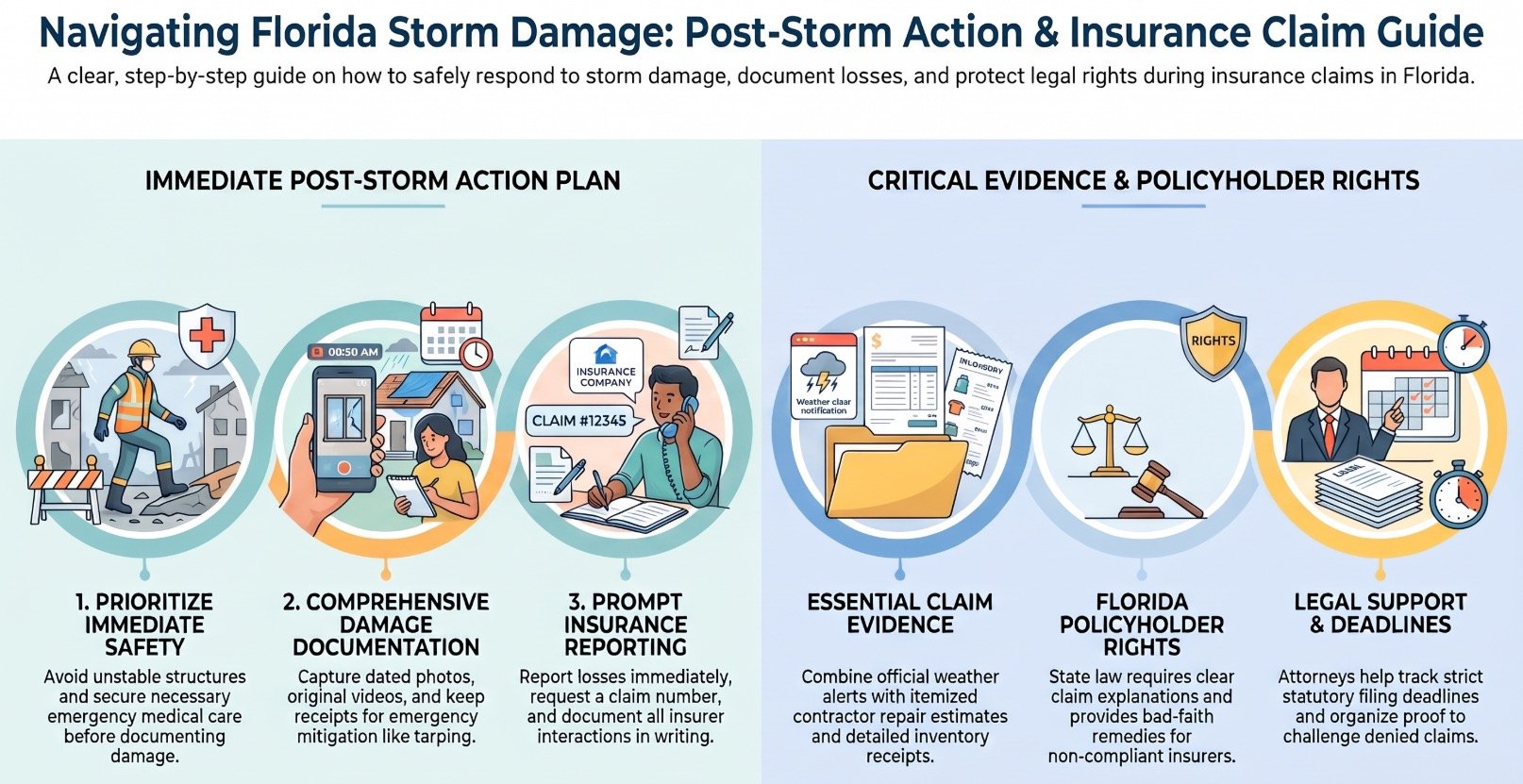
After storm-related property damage or injury, prioritize immediate safety by avoiding unstable structures and seeking medical attention when needed. Once conditions are safe, the property owner should document visible damage with photographs and keep records of related expenses. The owner should then contact the insurer promptly to report the loss and ask about the claims process.
Prioritize Immediate Safety
If severe weather damages a property and causes injury, prioritize immediate safety over documenting damage or contacting an insurer. Anyone facing an urgent threat should move away from unstable walls, broken glass, exposed wiring, floodwater, or other hazards. Emergency evacuation may be necessary if officials advise leaving or the structure appears unsafe. Household sheltering is appropriate when conditions outside pose greater danger; occupants should use a secure interior room away from windows and follow local emergency alerts. Injured people should receive prompt medical attention, and someone should call emergency services when the injury is serious or the scene remains dangerous. Those assisting should avoid entering damaged areas or moving an injured person unless staying put poses an immediate threat. Once everyone is safe, follow responders’ instructions and arrange appropriate care.
Document Storm Damage
Once occupants are safe and urgent medical needs are addressed, careful documentation can clarify the extent and cause of storm damage. Before cleanup begins, residents should photograph and record affected rooms, damaged belongings, roof openings, fallen trees, and visible water intrusion. Wide views can show the overall conditions, while close images capture specific damage. Dated photographs and brief notes may help preserve an accurate record for later review.
Where conditions remain hazardous, documentation should never require entering an unsafe area. Temporary measures may be necessary to limit further loss. Emergency tarping can protect an exposed roof when qualified workers perform it safely, and you should retain receipts or service records. A restoration professional can do moisture mapping to identify hidden dampness and guide drying. When practical, residents can also keep damaged items available for inspection while prioritizing health and vital community support.
Contact Your Insurer
Prompt notice to the insurer is an important step in addressing storm or weather damage to an Estero property. The policyholder should report the loss through the insurer’s designated phone line, website, or agent as soon as reasonably possible. A clear account of when the damage occurred, what areas were affected, and any urgent repairs completed can help the insurer begin its review. The policyholder should request a Claim Number and record the date, time, and details of the report. The insurer may assign an adjuster to inspect the property and assess the claimed damage. The policyholder should confirm the adjuster’s contact information, ask about inspection timing, and keep communications in writing when practical. Prompt, organized cooperation can support a fair evaluation while preserving records for those assisting with recovery.
Critical Evidence in a Estero Property Claim Storm & Weather Damage Injury Case
A well-documented record can help establish the extent of storm damage and support a property claim.
Crucial evidence includes:
- Photographs and videos showing damage soon after the storm.
- Weather reports and alerts confirming conditions at the property.
- Repair estimates and receipts, along with relevant policy and claim records.
Damage Photographs and Videos
Photographs and videos taken promptly after a storm can provide essential evidence in an Estero property claim by documenting the damage before repairs, cleanup, or further weather changes alter the scene. Clear images should show affected rooms, exterior surfaces, damaged belongings, and the surrounding area. Wide views establish location and context, while close-ups reveal specific conditions such as broken windows, roof openings, or water intrusion. A steady recording can also capture the extent of damage across a property without disturbing affected materials. Timestamp verification helps establish when the documentation was created, and metadata preservation can support its authenticity. Retain original files without edits, and keep secure backup copies. These records can help claim reviewers understand the loss and assist property owners seeking a fair resolution that supports household recovery and community well-being.
Weather Reports and Alerts
When severe weather affects a property, official weather reports and alerts can help establish the conditions surrounding the loss. The National Weather Service provides records of storms, rainfall, wind speeds, and other conditions that may help explain when and how damage occurred. Local emergency alerts can also document warnings issued to residents before or during a weather event. These materials may support a claim by linking reported conditions to observed property damage and the incident’s timing. Claimants can preserve relevant alerts, forecast updates, and official reports, noting their sources and dates. Such records may help insurers, adjusters, and legal representatives assess the event fairly. Accurate weather documentation can also help those responsible for protecting residents and property by clarifying the risks and warnings available at the time.
Repair Estimates and Receipts
After weather reports establish the conditions surrounding a loss, repair estimates and receipts can help document the resulting damage and its financial impact. Detailed estimates should identify affected areas, proposed work, labor charges, and materials, allowing reviewers to compare the documented damage with the recommended repairs. Contractor invoices and proof of payment can show which work was completed and what expenses the property owner incurred. Receipts for temporary protective measures, such as tarps or water removal, may also clarify reasonable costs taken to limit further harm. Material warranties can establish product specifications and relevant coverage terms, while photographs of damaged materials may support the records. Organized, itemized documentation helps ensure repair needs and costs are presented accurately, supporting a fair assessment and timely restoration for those who depend on the property.
Policy and Claim Records
A property owner’s insurance policy and claim records establish the terms of coverage and the history of a storm-damage claim. These documents can clarify which losses are covered, what exclusions apply, and which deadlines or duties the policy imposes. Policy endorsements may modify standard terms by adding protections or limiting coverage, so each endorsement should be reviewed with the complete policy.
Claim records can show when notice was given, what information the insurer received, and how the insurer responded. Relevant materials may include claim forms, emails, letters, inspection reports, recorded statements, and payment explanations. Consistent records retention helps preserve this evidence and supports an accurate account of the claim. Property owners serving their households or communities can organize copies chronologically and keep originals secure. A complete file may help identify disputes and support informed decisions about next steps.
Don’t Wait. Call Our Florida Personal Injury Lawyers Now!
Long-Term Effects of Estero Property Claim Storm & Weather Damage Injuries
Storm and weather-related injuries may have effects that continue long after the initial property damage is addressed. Some individuals experience chronic pain or lasting mobility issues that interfere with daily activities and require ongoing care. Emotional distress may also persist, making the full impact of an injury important to assess over time.
Chronic Pain
When storm or weather damage causes an injury, chronic pain may persist long after the immediate danger has passed. Ongoing discomfort can affect sleep, concentration, mood, and the ability to meet family or community responsibilities. Symptoms may vary in intensity, making consistent care and clear documentation important. A qualified provider can assess the condition, recommend treatment, and record how pain affects daily life. Chronic Pain Management may include medication, counseling, or other approaches tailored to the person’s needs. Keeping a symptom journal can help identify Pain Flare Triggers, such as strenuous activity, stress, or changes in routine, and give clinicians useful information. When pain follows a storm-related injury, records of appointments, treatment costs, and functional effects may also help explain the injury’s continuing consequences during an insurance claim review.
Lasting Mobility Issues
Although immediate injuries may recover, storm- or weather-related accidents on damaged property can leave lasting mobility issues. Falls on flooded walkways, unstable surfaces, or debris may damage joints, bones, or nerves, limiting a person’s ability to walk, stand, or perform routine tasks. These restrictions can affect employment, household responsibilities, and participation in community activities, including efforts to serve others. Some individuals require ongoing rehabilitation, home modifications, or Mobility aids such as canes, walkers, or wheelchairs. Others may need adaptive transportation to attend medical appointments, maintain work, or reach vital services. Documenting treatment, functional limitations, and related expenses can help establish an injury’s long-term consequences. A property claim may account for continuing care needs and reasonable costs when evidence connects those needs to the hazardous property condition.
Emotional Distress
Injuries caused by storm or weather damage on unsafe property can lead to lasting emotional distress, particularly when recovery involves chronic pain, reduced independence, or disruption to daily life. A person may experience Anxiety symptoms such as persistent worry, sleep disruption, irritability, or fear of returning to the property. These reactions can disrupt work, relationships, and routine responsibilities, even after physical injuries begin to heal.
Emotional recovery may require time and support from qualified mental health professionals. Medical records, treatment notes, and personal accounts can help document how distress affects daily functioning. When another party’s negligence contributed to unsafe conditions, evidence of emotional harm may be relevant to a property claim, subject to applicable law. A careful claim review can help identify recoverable losses and support fair compensation while respecting the person’s privacy and dignity.
Proving Liability in Estero Property Claim Storm & Weather Damage Injury Cases
Proving liability in an Estero storm or weather damage injury case requires evidence that a property owner or other responsible party failed to take reasonable steps to protect visitors from a foreseeable hazard. The injured person must generally show that the responsible party knew, or should have known, about the danger and that the failure to address it contributed to the injury.
Relevant evidence may include maintenance records, inspection reports, photographs, weather alerts, incident reports, and witness statements. These materials can help establish when a hazard developed, whether reasonable precautions were taken, and how the condition caused harm. Negligent Maintenance may involve failing to clear debris, repair damaged walkways, secure loose materials, or address water intrusion after severe weather.
Contractor Liability may arise when a hired company performed repairs or cleanup carelessly, creating an unsafe condition. Responsibility can depend on the work agreement, the contractor’s conduct, and the property owner’s oversight. Prompt documentation and careful investigation can clarify each party’s role and support a fair assessment of accountability.
Dealing With Insurance Companies After a Estero Property Claim Storm & Weather Damage Injury
After a storm-related injury on another party’s property in Estero, insurance companies may investigate the incident and assess whether their policyholder is legally responsible. Their representatives may request photographs, maintenance records, witness details, and medical information to evaluate the reported conditions and resulting harm. Injured visitors can help preserve an accurate account by keeping relevant documents and communicating carefully.
Investigators may request recorded statements soon after an incident, while details are still being reviewed. Before providing one, the injured person may benefit from understanding the questions, the intended use of the statement, and any applicable policy requirements. Answers should remain factual and consistent with available evidence. Speculation about how the injury occurred can create misunderstandings.
Coverage disputes may arise over policy terms, exclusions, notice requirements, or whether the property owner’s conduct falls within the policy. A denial or limitation does not necessarily resolve questions of responsibility. Clear records, respectful communication, and careful review of insurer correspondence can help protect an injured person’s interests while the insurer assesses the matter.
What to Expect During a Estero Property Claim Storm & Weather Damage Injury Claim Process
A storm or weather damage claim typically begins with an assessment of the property and a review of the insurance policy’s coverage and requirements. The claim process then relies on clear documentation of damage, repair estimates, and related losses. If the insurer disputes the claim or offers less than the documented amount, settlement negotiations may follow.
Initial Damage Assessment
How thoroughly storm damage is documented can influence the course of a property claim. During an initial assessment, an adjuster or qualified professional examines the home and records visible effects, including roof damage, broken windows, water intrusion, and affected personal property. Photographs, measurements, and written notes can help establish the condition of the property soon after the event.
A structural inspection may identify damage to framing, foundations, or other concealed areas that are not apparent during a basic walkthrough. Moisture mapping can help locate damp materials and define the extent of water intrusion, supporting timely decisions about drying and repairs. Property owners may preserve damaged items when safe, keep receipts for emergency work, and maintain copies of assessment records. Clear documentation can assist those responsible for evaluating the loss and help make certain that repair needs are communicated accurately.
Policy Review
Once the initial damage assessment is complete, the property owner’s insurance policy should be reviewed to identify the coverage, exclusions, deductibles, and notice requirements that may apply to the storm loss. This review helps clarify which types of damage may qualify for payment and what steps the insurer expects before evaluating the claim. Coverage exclusions may limit recovery for certain causes, while deductible provisions determine the amount the owner must pay before benefits apply. Policy language can also distinguish wind damage from flooding, which may involve separate coverage and conditions. The property owner should note deadlines for reporting the loss and any duties to protect the property from further harm. A careful review supports informed decisions and helps guarantee that the claim process proceeds fairly, with the owner’s responsibilities understood.
Claim Documentation
After reviewing the policy’s coverage, exclusions, deductibles, and notice requirements, the property owner should begin organizing documentation for the storm damage claim. Clear records help insurers assess losses and support a complete, accurate account of the damage. Photographs and videos should capture affected areas, damaged belongings, and conditions before cleanup or repairs, when safe to do so. An Inventory checklist can identify each damaged item, its approximate age, purchase information, and replacement cost. Receipts, contractor estimates, inspection reports, and relevant communications should be preserved collectively. The property owner should also maintain a mitigation timeline showing when damage occurred, when it was discovered, and what reasonable steps were taken to prevent further harm. Prompt documentation can assist the claim review and help guarantee that evidence remains available to support the property owner’s account.
Settlement Negotiations
During settlement negotiations, the insurer evaluates the documented damage, policy terms, and repair estimates before presenting or responding to a proposed payment. The property owner’s representative may compare the offer with verified repair costs, applicable coverage limits, and any documented additional living expenses. A clear Demand strategy identifies the losses, explains their connection to the storm, and supports the requested amount with organized evidence. The insurer may request further records, dispute particular items, or propose a revised figure. Careful review helps prevent an early agreement from overlooking necessary repairs or covered costs. If discussions stall, mediation preparation may include summarizing disputed issues, arranging supporting records, and defining acceptable terms. Mediation can provide a structured opportunity to seek resolution, but any settlement should be reviewed for accuracy and consistency with the policy before acceptance.
Compensation for Estero Property Claim Storm & Weather Damage Injury Damages
Compensation for storm and weather damage in Estero depends on the policy’s coverage, the cause and extent of the loss, and the evidence supporting the claim. A property owner may seek payment for covered damage to a home, business, or personal belongings, subject to policy limits, deductibles, exclusions, and claim requirements. The insurer may calculate payment using actual cash value or Replacement cost, depending on the policy terms. Actual cash value generally accounts for depreciation, while replacement coverage may allow recovery of withheld depreciation after eligible repairs or replacement are completed and documented.
A thorough claim record can help establish the property’s condition before the storm and the damage afterward. Useful materials may include photographs, repair estimates, receipts, inspection reports, and communications with the insurer. Prompt reporting and reasonable steps to prevent further damage can also support a claim, provided expenses are documented. When an insurer disputes coverage or valuation, a qualified property claim lawyer can review the policy, assess the evidence, and explain available options. Clear guidance can help property owners pursue fair compensation while preserving resources needed for recovery.
Economic vs Non-Economic Damages in Estero Property Claim Storm & Weather Damage Cases
Storm and weather damage claims may involve economic losses, such as repair costs, damaged belongings, and temporary housing expenses. Non-economic harm may also arise when property damage disrupts daily life or limits the use of a home. Clear records and supporting evidence help establish the extent and value of each category of damages.
Economic Losses
In Estero property claims involving storm or weather damage, economic losses are the measurable financial costs caused by physical damage, such as repair expenses, replacement costs, and certain additional living expenses. These losses may include materials, labor, emergency mitigation, and reasonable costs to protect property from further harm. Owners may also document temporary housing, storage, or other necessary expenses incurred while repairs make a residence unusable. For rental properties, Lost rental income may be recoverable when covered damage prevents tenants from occupying the premises. Businesses may seek compensation for business interruption, supported by records showing reduced revenue and continuing expenses during closure or restricted operations. Clear documentation helps insurers evaluate the amount and cause of each claimed loss. Receipts, contracts, photographs, leases, and financial statements can support a careful assessment and assist affected owners in pursuing a fair resolution.
Non-Economic Harm
Beyond measurable financial costs, storm and weather damage may cause non-economic harm, including disruption, loss of comfort, and reduced enjoyment of a home. Such effects can extend beyond repair expenses or temporary lodging costs. Residents may experience Emotional hardship when damaged rooms, persistent moisture, or interrupted routines make daily life less secure and predictable. A home may also lose its value as a place for rest, privacy, and connection with family or neighbors. This diminished enjoyment can affect ordinary activities, from preparing meals to welcoming visitors, particularly while necessary areas remain unusable. In Estero, these personal consequences may be relevant to understanding the broader impact of a covered property loss. Their significance does not replace economic damages, but reflects how storm damage can affect well-being and the practical use of a residence.
Proving Your Damages
To support a property claim after storm or weather damage in Estero, the policyholder generally needs evidence connecting the loss to covered damage and documenting its effects. Photographs, inspection reports, repair estimates, and maintenance records can help establish the cause, scope, and timing of damage. Damage valuation should distinguish covered repairs from preexisting wear, depreciation, or excluded losses, as required by the policy. Invoices and receipts can document mitigation expenses, such as emergency tarping, water removal, or temporary repairs undertaken to prevent further harm. Economic damages may include reasonable repair costs, damaged contents, and additional living expenses when coverage applies. Non-economic harm, such as disruption or stress, may be difficult to recover under property policies and should not replace documented financial losses. Organized records help insurers and community advocates assess claims fairly and efficiently.
Don’t Wait. Call Our Florida Personal Injury Lawyers Now!
When a Estero Property Claim Storm & Weather Damage Injury Case Goes to Trial vs Settlement
When an insurer disputes the cause or value of storm damage, an Estero property claim may proceed to trial if negotiations do not produce a fair resolution. A settlement can resolve the dispute without a courtroom decision, often allowing the property owner to address repairs sooner and avoid the uncertainty, expense, and time associated with trial. Any proposed agreement should be reviewed carefully to understand what losses it covers and whether it fully resolves the claim.
If the parties cannot agree, trial gives each side an opportunity to present evidence to a judge or jury. Documents, photographs, repair estimates, and trial testimony may help explain how the storm affected the property and what compensation is appropriate. Jury deliberations follow the presentation of evidence and legal instructions, after which jurors reach a verdict. The outcome is not guaranteed, and a trial may take longer than settlement discussions. A lawyer can assess the evidence, explain available options, and help the property owner make an informed decision that supports recovery and responsible planning.
Florida Laws That May Affect Your Estero Property Claim Storm & Weather Damage Case
Florida law can shape how an Estero property owner reports storm damage, supports a claim, and challenges an insurer’s decision. Several legal rules may influence the process and the evidence needed to resolve a dispute fairly.
- Policy duties: A property owner generally must follow the policy’s notice and documentation requirements. Prompt reporting, photographs, repair records, and clear communication can help establish the damage and support an accurate evaluation.
- Building standards: Florida building codes may affect repair scope, particularly when storm damage requires work to meet applicable code requirements. The policy’s coverage terms and relevant code provisions help determine whether those costs may be included.
- Dispute procedures: When the parties disagree about the amount of covered damage, the policy may provide for policy appraisal. This process can help determine the loss amount, but it does not necessarily decide whether coverage applies. An attorney can explain available options and help property owners pursue a careful, well-supported claim while protecting their community’s homes and safety.
The Statute of Limitations for Estero Property Claim Storm & Weather Damage Injury Cases
Because filing deadlines can affect a property owner’s ability to pursue a dispute, Florida’s statute of limitations is an important consideration in an Estero storm damage claim. The applicable deadline depends on the type of claim and the governing law. Florida generally provides five years to bring an action founded on a written contract, while other claims may have different periods. Insurance policies may also impose separate notice and proof-of-loss requirements that apply before litigation.
Deadline calculation requires attention to when the claim accrued, the policy language, and any changes in the law that apply to the loss. A storm’s date, discovery of damage, and communications with the insurer may be relevant, but no single date controls every case. Missing a filing deadline can prevent a court from considering the dispute, regardless of the property owner’s circumstances.
Statutory exceptions may alter or pause a limitations period in limited situations. Prompt review of the relevant documents can help preserve options and support fair resolution for affected property owners and communities.
How a Estero Property Claim Storm & Weather Damage Lawyer Can Help You
An Estero property claim storm and weather damage lawyer can help property owners assess policy requirements, organize supporting evidence, and communicate with an insurer about a disputed or delayed claim. This support can clarify responsibilities and help preserve resources needed to repair a home or business and maintain safe conditions for occupants and neighbors.
A lawyer may assist by:
- Reviewing policy language, coverage limits, exclusions, and claim deadlines, then explaining how those terms may apply to reported storm damage.
- Organizing photographs, repair estimates, invoices, and other records into a clear account of the loss for the insurer’s review.
- Preparing written communications, evaluating claim decisions, and responding to requests for information while documenting the handling of the matter.
Attorney consultations may also help property owners understand available options and the practical steps involved in pursuing benefits. With careful guidance, owners can present accurate information, address insurer questions, and focus on restoring affected property for the people who depend on it.
When to Contact a Estero Property Claim Storm & Weather Damage Lawyer
When storm or severe weather damages a home or business, an owner may benefit from contacting an Estero property claim storm and weather damage lawyer as soon as questions arise about coverage, claim deadlines, or the insurer’s response. Early guidance can help an owner understand policy requirements and preserve relevant records while the claim is being prepared. It may also clarify what steps should be taken before repairs begin.
Prompt attention is especially important when Emergency mitigation is needed to prevent further damage. Owners should document conditions, retain receipts, and keep copies of communications with contractors and the insurer. If a contractor disputes the scope, price, or quality of necessary repairs, legal guidance may help identify how that disagreement affects the insurance claim. Contact may also be appropriate after a delayed inspection, partial payment, denial, or request for additional documentation. An owner serving family members, tenants, employees, or customers can benefit from addressing these concerns promptly, while avoiding assumptions about coverage before reviewing the policy and claim record.
Why You Need an Experienced Estero Property Claim Storm & Weather Damage Lawyer
Storm and weather damage claims can involve policy exclusions, strict notice requirements, and disputes over repair costs that are difficult to assess without legal experience. An experienced lawyer can review policy terms, organize evidence, and explain how coverage provisions may apply to damage caused by wind, rain, or flooding. This support can help property owners understand their rights and respond to insurer requests with accurate, well-documented information.
Attorney experience matters when an insurer questions the cause, extent, or value of a loss. Counsel can assess estimates, identify gaps in an investigation, and communicate with adjusters while protecting the client’s interests. Local knowledge also helps because Estero properties may face weather conditions and building concerns that require careful evaluation. A lawyer familiar with regional claim practices can help make sure relevant facts are presented clearly and deadlines are observed. By managing complicated claim issues, legal counsel can allow property owners to focus on restoring safe homes and serving their families, employees, tenants, and communities.
How to Choose the Right Estero Property Claim Storm & Weather Damage Lawyer for Your Case
Selecting the right Estero property claim lawyer requires careful attention to the attorney’s experience with storm and weather damage disputes, communication practices, and approach to evaluating evidence. A thoughtful Attorney Selection process can help property owners identify counsel prepared to assess a claim carefully and explain available options clearly.
Case Experience matters because storm losses may involve disputed damage estimates, policy terms, deadlines, and insurer decisions. Prospective clients can ask how an attorney has handled comparable property claims, what evidence may support a dispute, and how progress will be communicated. Clear answers can indicate whether the lawyer’s approach is organized and responsive.
A suitable attorney should review the policy, repair records, photographs, inspection findings, and insurer correspondence before offering guidance. The lawyer should also explain potential challenges without promising a particular result. For property owners seeking to restore safe homes and support their families, careful comparison of qualifications, communication style, and case strategy can inform a sound decision. This process helps confirm that legal representation aligns with the claim’s needs and the owner’s priorities.
About The Law Offices of Anidjar & Levine
For property owners evaluating legal representation, learning about The Law Offices of Anidjar & Levine can clarify the firm’s approach to property claim matters. The firm represents clients in Florida, including people seeking guidance after storm and weather damage affects their homes or businesses. Its work may involve reviewing insurance policies, documenting losses, communicating with insurers, and pursuing available remedies when a claim is delayed, underpaid, or denied.
Firm history and attorney credentials are relevant considerations for anyone determining whether a law office fits their needs. Prospective clients can review the firm’s background, the lawyers’ professional qualifications, and their experience handling insurance disputes. They may also ask how the office evaluates evidence, explains legal options, and keeps clients informed throughout a case. For property owners who value helping families and communities recover, clear communication and careful attention to the practical consequences of damage are important. A consultation can help determine whether the firm’s services and approach align with a particular claim.
Frequently Asked Questions
Does Homeowners Insurance Cover Temporary Housing After Storm Damage in Estero?
Homeowners insurance may cover temporary housing after storm damage in Estero when covered damage makes the home uninhabitable. Additional Living Expenses, often including Hotel Reimbursement, can help pay reasonable costs above normal household expenses while repairs are completed. Coverage depends on the policy’s terms, limits, deductible, and cause of damage. The policyholder should document displacement costs, notify the insurer promptly, and obtain approval for major expenses to support a clear, timely claim.
Can I File a Claim for Mold Discovered After a Hurricane?
A homeowner may file a claim for mold discovered after a hurricane, but coverage depends on the policy, the cause of the moisture, and reporting deadlines. Hurricane mold coverage may apply when mold results from covered storm damage, while exclusions or limits may restrict payment. With delayed mold discovery, the homeowner should promptly document the damage, notify the insurer, and take reasonable steps to prevent further spread. Policy terms and claim records should be reviewed carefully.
What Should I Do if My Storm-Damaged Property Is Unsafe to Enter?
Anyone facing storm damage should stay out of an unsafe property and contact emergency services if immediate danger exists. Emergency evacuation is necessary when officials advise it or conditions threaten occupants. Structural hazards may include weakened walls, unstable roofs, exposed wiring, gas leaks, and contaminated water. From a safe location, the owner should notify the insurer, document visible damage without re-entering, and arrange inspection by qualified professionals before repairs or cleanup begin.
Can a Public Adjuster Inspect My Estero Property Damage?
Yes. A public adjuster may inspect storm damage at an Estero property, document visible conditions, and help the policyholder prepare and present an insurance claim. The Public adjuster inspection process should occur only when the property is safe to enter; unsafe areas require qualified assessment first. Adjuster documentation requirements may include photographs, repair estimates, inventories, and policy information. The property owner should verify the adjuster’s Florida license and review any representation agreement before signing.
How Can I Protect Undamaged Belongings While Repairs Are Pending?
Undamaged belongings should be moved away from affected areas and protected from moisture, dust, and ongoing repair activity. Inventory and photograph each item before relocation, noting its condition and storage location for accurate records. Secure salvageable belongings in a dry, locked space, or use a reputable storage provider if the home is unsafe. Keep receipts for packing and storage costs, and coordinate access with contractors to reduce handling, loss, or accidental damage during repairs.
—————————
Storm and weather damage claims can involve complex policy terms, strict deadlines, and disputes about the cause or extent of a loss. Estero property owners should document damage, preserve relevant records, and carefully review insurer communications. If a claim is delayed, undervalued, or denied, legal guidance may help clarify available options and protect the owner’s interests. The Law Offices of Anidjar and Levine can assess the circumstances and explain potential next steps based on the facts and applicable law. For related legal information, visit the Estero Personal Injury Lawyerpage.