

The Law Offices of Anidjar and Levine help Cocoa Beach property owners review storm damage claims, compare insurer decisions with policy terms, and understand available options. Our attorneys can assess deadlines, exclusions, deductibles, repair estimates, photographs, and other evidence when a claim is delayed, underpaid, or denied. Storm damage alone doesn’t establish liability, but unsafe property conditions may support a separate claim when evidence connects negligence to a loss. Learn more about working with a Cocoa Beach Personal Injury Lawyer. We’ll explain practical next steps, and the sections below outline issues that may affect your case.
Main Takeaways
- A Cocoa Beach property-claim lawyer can review your policy, deadlines, coverage limits, exclusions, and the insurer’s reasons for its decision.
- Storm claims may involve hurricane wind, storm surge, hail, heavy rain, roof damage, water intrusion, or damaged belongings.
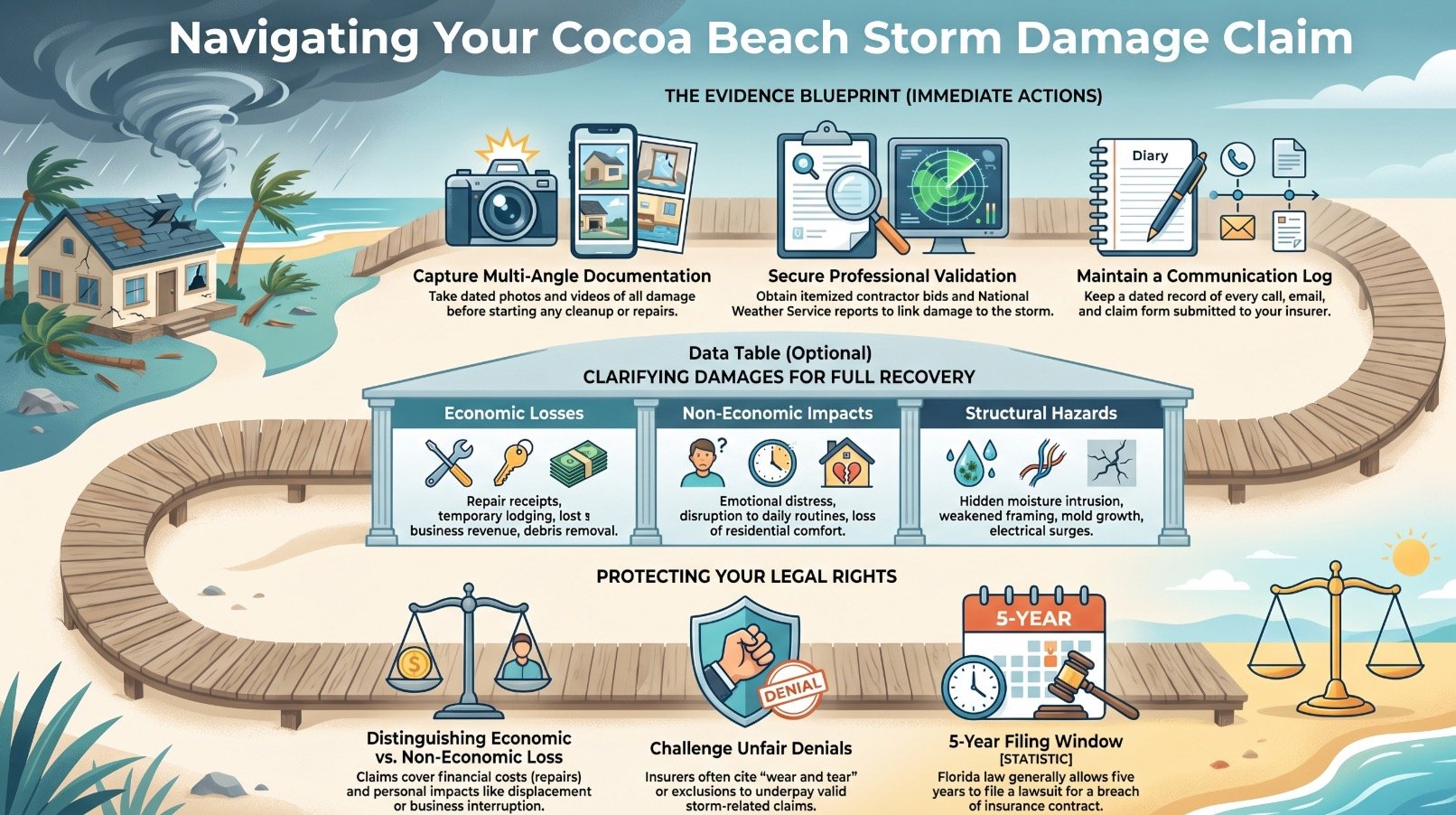
- Document damage with dated photos, videos, repair estimates, receipts, inspection reports, and records of claim communications.
- Ask the insurer to explain denials, underpayments, or delays; a lawyer can assess whether the policy and evidence support a challenge.
- Before signing a release or accepting a settlement, seek legal guidance and confirm that repairs and related losses are addressed.
How We Can Help With Your Cocoa Beach Property Claim Storm & Weather Damage Injury Claim
When a storm damages your Cocoa Beach property, a clear legal strategy can help protect your claim. We can help you understand your options, organize relevant records, and communicate with your insurer. Our work begins with listening to your concerns and identifying the repairs and support your household needs. We’ll explain each step in plain language so you can make informed decisions while keeping your priorities in view.
Through a careful Policy review, we assess coverage terms, deadlines, exclusions, and the insurer’s stated reasons for its decisions. We can help you prepare a clear account of the damage and respond to requests for information. With contractor coordination, we can help keep repair estimates, inspections, and claim communications organized. This cooperation can reduce confusion and support a more complete presentation of your losses.
We’ll stay attentive to your questions, explain developments, and pursue a fair resolution based on the policy and available evidence. Our goal is to help you move forward with clarity and confidence.
Understanding Cocoa Beach Property Claim Storm & Weather Damage Injury Cases


Storm and weather damage claims involve more than identifying visible damage to a home or business. We must understand how the policy defines covered losses, what proof the insurer requires, and how the damage affects your property and daily responsibilities. A careful review helps us identify the issues that matter and present your claim clearly.
OUR CONSULTATIONSARE FREE
START YOUR FREE CASE REVIEW

Policy interpretation can determine whether specific repairs, temporary measures, or related losses qualify for payment. We compare the policy language with inspection findings, photographs, repair estimates, and other records. We also examine coverage exclusions, since insurers may rely on them to limit or deny a claim. Both the wording and the circumstances matter, so assumptions can lead to missed opportunities or unresolved disputes.
When you share your concerns with us, we’ll explain the process and help organize the information needed to support your position. Clear communication and thorough documentation can help protect your interests while allowing you to focus on your family, customers, or community.
Don’t Wait. Call Our Florida Personal Injury Lawyers Now!
Common Causes of Cocoa Beach Property Claim Storm & Weather Damage
We often see Cocoa Beach property claims arise from hurricane winds that damage roofs and storm surges that flood homes. Hail and lightning can also harm structures and electrical systems, while heavy rainfall may expose weak points and cause leaks. We’ll explain how these weather events can lead to property damage and insurance disputes.
Hurricane Winds


Hurricane-force winds can damage Cocoa Beach properties by tearing off roofing, breaking windows, and sending debris into buildings. Roof uplift may loosen shingles, lift roof sections, or expose structural materials to further damage. Once a building’s exterior is breached, rain can enter and harm ceilings, insulation, electrical systems, and personal belongings. Debris impact from branches, signs, or unsecured objects can also crack windows, dent siding, and damage doors. After a storm, we can help you document visible damage, preserve repair records, and review your insurance policy’s requirements. Prompt reporting and clear evidence may support a more complete claim, while temporary protective measures can limit additional harm. We’ll work to explain your options and advocate for a fair assessment, helping you pursue repairs that restore safety and stability for those who depend on your property.
Storm Surge Flooding
When powerful coastal storms push seawater inland, storm surge can flood Cocoa Beach properties with damaging saltwater and debris. Surge may enter homes and businesses quickly, soak walls and flooring, ruin electrical equipment, and leave sediment or contaminants behind. Even shallow flooding can create costly repairs and disrupt residents, employees, and community services. We encourage you to follow local Surge warning systems and use designated coastal evacuation routes when officials advise leaving. Protecting people must come before property, and timely evacuation can reduce exposure to dangerous flood conditions. After authorities confirm it’s safe to return, document visible damage and contact your insurer promptly. Keep receipts for reasonable emergency measures, and avoid discarding damaged materials before recording them. We can help you understand policy requirements and pursue a fair claim for covered surge losses.
Hail And Lightning
How can hail and lightning damage a Cocoa Beach property? Hail impact can crack roof tiles, dent metal panels, break skylights, and damage siding. Even minor damage can weaken materials, reduce a building’s protection, and require prompt inspection. We can help you document visible damage and understand how your policy addresses covered storm losses.
Lightning can strike a structure directly or travel through electrical wiring, causing a lightning surge that damages appliances, computers, security systems, and other equipment. It may also affect electrical panels and create safety concerns that call for a qualified professional’s assessment. When it’s safe, preserve damaged items, take photographs, and keep repair records. We can help you organize evidence and communicate with your insurer, so your claim accurately reflects the damage and supports the people who depend on your property.
Heavy Rainfall Leaks
Heavy rainfall can expose weaknesses in a Cocoa Beach property’s roof, windows, doors, or exterior walls, allowing water to enter and damage ceilings, insulation, flooring, and personal belongings. Roof flashing failures around chimneys, vents, and roof intersections can create openings that let water seep inside. Deteriorating window seals may also allow rain to pass through frames, especially during prolonged storms or wind-driven rainfall. We encourage you to document visible damage promptly, protect people from unsafe areas, and take reasonable steps to limit further loss. Keep damaged materials and receipts when possible, and photograph affected rooms before cleanup. These records can help clarify how the leak occurred and what repairs are needed. When you report a claim, we can help you review policy requirements and accurately communicate the extent of the damage.
Legal Rights of Cocoa Beach Property Claim Storm & Weather Damage Injury Victims
Cocoa Beach property owners have legal rights when storms or severe weather damage their homes or businesses, but insurance policies and Florida law set important limits and deadlines. We can help you understand those rights and pursue a fair claim while protecting the resources your family, employees, or community depend on.
- You may report covered damage, document losses, and request a clear explanation of the insurer’s decision. Policy interpretation matters because policy language determines which repairs and expenses may qualify.
- You can challenge an unfair denial, underpayment, or delay. Coverage exclusions may apply, but an insurer must assess the facts and explain its position under the policy and applicable law.
- You may seek legal guidance before signing a release or accepting a settlement. We can review deadlines, preserve relevant records, and help you evaluate available remedies.
Act promptly, keep communications organized, and avoid guessing about coverage. A careful review can clarify your options and support a responsible resolution.
Why Do Cocoa Beach Property Claim Storm & Weather Damage Injuries Happen?
Understanding your rights is only part of addressing a storm damage claim; identifying how the damage occurred can also affect coverage and the evidence needed to support your loss. In Cocoa Beach, strong winds, heavy rain, storm surge, and salt air can combine to damage homes and businesses. Coastal building vulnerabilities, including aging roofs, exposed windows, and low-lying foundations, may allow water or debris to enter during severe weather. Poor drainage can also direct rainwater toward structures, while prolonged moisture may contribute to mold and weakened materials.
Some losses become more severe when owners or property managers have not followed suitable preventative maintenance practices. Loose roof components, clogged gutters, deteriorated seals, and unrepaired cracks can leave a building less able to withstand a storm. These conditions can affect residents, workers, and visitors who depend on safe, well-maintained properties. Understanding the cause helps us distinguish sudden storm damage from gradual wear, which may influence how an insurer evaluates a claim.
What Should You Do After a Cocoa Beach Property Claim Storm & Weather Damage Injury?
After a storm-related injury, we should seek medical care promptly, even if symptoms seem minor. Document property damage with clear photographs, videos, and records before making temporary repairs. We should also contact our insurer promptly and keep copies of all communications and claim documents.
Seek Medical Care
If a storm or severe weather event injures you, seek medical care promptly, even if your symptoms seem minor. We encourage you to call emergency services for serious injuries, such as difficulty breathing, heavy bleeding, or loss of consciousness. For less urgent concerns, contact a healthcare provider and follow their advice. Some conditions, including head injuries and breathing problems, may worsen over time, so don’t delay an assessment. Tell medical professionals how the weather event occurred and describe every symptom, including pain, dizziness, or anxiety. Follow prescribed treatment, attend recommended appointments, and ask for written instructions about recovery and activity limits. If you serve others, arrange reliable support before resuming caregiving duties. Emotional support may also help you cope with distress. If your home is unsafe, consider temporary relocation while you recover.
Document the Damage
What should you document once the storm has passed and it’s safe to inspect your property? Start with clear photographs and videos of each affected area, capturing wide views and close details before moving or cleaning anything. Record the date, location, and visible condition of damaged roofs, walls, flooring, belongings, and outdoor structures. If water entered the property, note its apparent source, spread, and depth, and arrange professional Moisture mapping to identify hidden dampness that could lead to mold or structural problems. Use inventory cataloging to list damaged items, including their descriptions, approximate ages, purchase details, and condition. Keep receipts for emergency repairs and temporary lodging, and preserve damaged materials when practical. We can help create an organized, accurate record that supports a thorough review of the loss.
Contact Your Insurer
Once you’ve documented the damage and addressed immediate safety concerns, contact your insurer promptly to report the storm loss and ask how to begin a claim. We can help you prepare a clear account of what happened, when you noticed the damage, and what steps you took to protect people and property. Provide photographs, receipts, and other records, but keep copies of everything you submit. Ask the insurer to explain inspection procedures, required forms, and Policy deadlines so you can respond on time. Review your policy carefully, paying attention to coverage limits, deductibles, and coverage exclusions that may affect your claim. Keep a dated record of calls, emails, and instructions, and request written confirmation of important decisions. If the insurer delays, disputes, or undervalues your loss, consider seeking legal guidance.
Critical Evidence in a Cocoa Beach Property Claim Storm & Weather Damage Injury Case
We can strengthen your storm-damage claim by preserving clear evidence of the loss and documenting each step in the process.
Focus on these three categories:
- Photographs showing damage before repairs or cleanup.
- Weather reports and repair estimates linking the damage to the storm and its cost.
- Claim correspondence recording what you and the insurer communicated.
Damage Photographs
Clear, well-dated photographs can help show how a storm affected your Cocoa Beach property and support your insurance claim. We recommend documenting damage as soon as it’s safe, before cleanup or repairs change the scene. Photograph each affected area from several angles, then take close-ups that show specific problems, such as roof openings, water stains, or damaged belongings. Include wider views to establish where the damage occurred and how it relates to the rest of the property. Keep original files when possible; Photo metadata may help confirm when images were captured. Store image backups in a secure location so you don’t lose important evidence if a device fails. We can help you organize photographs and connect them to repair estimates and other claim records, supporting a clear, accurate account for your insurer.
Weather Reports
Weather reports can help establish the conditions that affected your Cocoa Beach property and support your insurance claim timeline. We can review NWS advisories, official storm summaries, and radar archives to identify when severe weather reached your neighborhood and what hazards forecasters observed. These records may document wind speeds, rainfall, flooding, or warnings issued before and during the event. When we compare them with your damage photographs and account of what happened, we can present a clearer, consistent timeline to the insurer. Weather evidence can also help distinguish storm-related damage from conditions that existed earlier, although it doesn’t prove the cause by itself. We’ll preserve relevant reports and note their sources and dates. Careful documentation helps us advocate responsibly for you and supports a fair, evidence-based evaluation of your claim.
Repair Estimates
A detailed repair estimate can show what storm damage requires attention and what those repairs are likely to cost. We can help you organize this evidence so you can assess the scope of work and make informed decisions about restoring your property.
Ask qualified professionals to inspect affected areas and provide written Contractor bids that describe proposed repairs, materials, labor, and expected costs. Keep photographs, inspection notes, and receipts with each estimate to connect the recommended work to documented damage. When estimates differ, estimate comparisons can reveal gaps in scope, pricing, or overlooked repairs. We can review these differences with you and identify questions that may need clarification, without assuming the lowest bid reflects the full repair need. Clear, itemized estimates help you protect your property, plan responsibly, and support a careful evaluation of your claim.
Claim Correspondence
When you report storm damage, your correspondence with the insurer can become important evidence in your Cocoa Beach property claim. We recommend keeping copies of every letter, email, claim form, and message, along with notes from phone calls that record dates, names, and crucial statements. Clear records can show what you reported, when you reported it, and how the insurer responded. Send important documents through a method that provides Proof of delivery, and save receipts or confirmation notices. Track response deadlines stated in policy documents or insurer communications, and follow up in writing when a deadline passes without an answer. We can help you organize this record and identify gaps that may affect your claim. Careful correspondence supports fair review and helps us advocate responsibly for you and your community.
Long-Term Effects of Cocoa Beach Property Claim Storm & Weather Damage Injuries
We’ll examine how storm damage can persist long after the weather clears, affecting your property’s safety and value. Hidden structural deterioration may worsen over time, even when visible damage appears limited. We’ll also explain how delayed repairs can increase long-term costs and complicate your claim.
Persistent Property Damage
After a storm, property damage can persist long after the skies clear, especially when moisture, weakened materials, or hidden structural problems go unaddressed. In Cocoa Beach, lingering water can damage flooring, drywall, furnishings, and personal belongings, while salt air may worsen corrosion on exposed surfaces. Mold growth can develop in damp areas, affecting indoor air quality and making rooms unsafe to use. Storm-damaged wiring and wet outlets may also create electrical hazards that require prompt professional attention. We can help you document continuing losses, preserve repair records, and communicate with your insurer about necessary remediation. When you report damage promptly and keep clear evidence, you support a fair review of your claim and help protect everyone who depends on the property. Don’t delay addressing unsafe conditions or seeking qualified assistance.
Hidden Structural Deterioration
How can a storm leave serious damage that isn’t visible at first? Wind-driven rain can enter through damaged roofing, siding, windows, or seals, then travel behind finished surfaces. These Moisture intrusion pathways may remain hidden long after the storm passes. As damp materials stay enclosed, wood can weaken, fasteners can corrode, and concealed framing decay can threaten a building’s stability. We can help you recognize warning signs such as persistent musty odors, new wall stains, soft flooring, or doors that no longer close properly. A qualified inspection can trace moisture, assess affected structural components, and document findings before deterioration spreads. When we pursue a property claim, clear evidence helps insurers understand the full scope of storm-related damage. Timely attention also protects occupants and supports safe, dependable spaces for everyone who relies on the property.
Long-Term Repair Costs
Even when initial repairs address visible storm damage, unresolved moisture or structural problems can drive up long-term costs. We can help you consider how delayed repairs may affect your property, budget, and ability to serve tenants, customers, or community members. Persistent dampness can damage framing, insulation, and finishes, while weakened components may require replacement sooner than expected. These expenses can exceed an initial estimate, especially when contractors uncover additional damage during work.
We should review your policy, repair records, and the insurer’s estimates to identify potential coverage gaps. Replacement reserves can help you plan for necessary work, but they shouldn’t replace a careful review of your claim. If your policy allows depreciation recovery, we can help you understand what documentation may support a request for withheld amounts. Prompt action and organized records can protect your property and support a more accurate assessment of future repair costs.
Don’t Wait. Call Our Florida Personal Injury Lawyers Now!
Proving Liability in Cocoa Beach Property Claim Storm & Weather Damage Injury Cases
To prove liability in a Cocoa Beach storm or weather damage claim, we must show who caused the loss and how their actions or failure to act caused it. Storms can damage property without anyone being at fault, so we’ll examine whether a person or organization contributed to the harm. Premises liability standards may apply when unsafe property conditions cause injury or damage. We’ll consider who controlled the site, what risks they knew or should have known about, and whether they took reasonable steps to address them.
Proof of negligent maintenance can include inspection records, repair histories, photographs, witness accounts, and expert assessments. These details may show that a property owner failed to clear blocked drainage, secure vulnerable structures, or correct a known hazard before severe weather arrived. We’ll also connect the alleged failure to the specific loss, rather than relying on the storm alone. By carefully preserving evidence and documenting the sequence of events, we can help you pursue accountability and protect others from similar preventable harm.
Dealing With Insurance Companies After a Cocoa Beach Property Claim Storm & Weather Damage Injury
Once we’ve documented the cause and extent of storm damage, we can address the insurance company’s review of your claim. We’ll help you present clear records of damaged property, repair estimates, and related expenses so the insurer can accurately assess your losses. Keep copies of every document and note each conversation, including the date, the representative’s name, and any commitments made. Before you give a recorded statement or sign a release, we can help you understand what the request means and whether it could affect your rights.
Insurers may question the cause, scope, or value of damage. If the company delays, misrepresents policy terms, or offers less than the evidence supports, we can evaluate whether bad-faith tactics may be involved. During settlement negotiations, we’ll explain the strengths and limits of your claim, respond to disputed assessments, and seek compensation that reflects covered losses. By protecting your interests, we can help you focus on restoring your property and supporting those who depend on you.
What to Expect During a Cocoa Beach Property Claim Storm & Weather Damage Injury Claim Process
We’ll begin by reporting the storm damage promptly and documenting your losses with photographs, receipts, and repair estimates. Next, we’ll review the insurer’s decision and compare it with the available evidence and your policy coverage. If the insurer disputes or undervalues your claim, we’ll explain the options for resolving the disagreement.
Reporting the Damage
After a storm damages your Cocoa Beach property, report the loss promptly and document what happened. We can help you notify the company through its required channel and provide the policy number, property address, date of loss, and a concise description of the damage. Ask for a claim reference number, the adjuster’s contact details, and next steps. Keep communication clear and timely, and save copies of notices you send or receive.
If the property presents an immediate safety risk, protect people first and contact emergency services when needed. Ask your insurer about Emergency mitigation and whether it requires approval before work begins. Take reasonable temporary repairs to prevent further damage, such as covering an exposed opening, while keeping receipts and following policy requirements. We’ll help you address questions and meet deadlines.
Documenting Your Losses
As you document your storm-related losses, create a clear record of property damage, repair costs, and any related injuries. Photograph each affected area before cleanup or repairs, and save images with dates and brief descriptions. An Inventory checklist can help us list damaged belongings, note their condition, and record purchase details or estimated replacement costs. Keep receipts, contractor estimates, invoices, and proof of temporary expenses in one organized file. With consistent expense tracking, we can connect each cost to the storm and explain why it was necessary. If anyone was injured, preserve medical records, appointment details, and notes about symptoms or missed work. Ask household members to share relevant observations, and store copies securely. These records help us present a complete, accurate account of what you’ve experienced.
Reviewing the Claim
Once we’ve organized your loss records, we can review how the insurer evaluates your Cocoa Beach storm damage claim and any related injury claim. We’ll compare the adjuster’s findings with photographs, repair estimates, receipts, medical records, and other evidence you’ve provided. We’ll also examine the policy’s Coverage interpretation, including limits, deductibles, and requirements for reporting damage or submitting proof. Because policy exclusions may affect which losses qualify, we’ll identify the provisions the insurer cites and assess how they apply to the facts. For an injury claim, we’ll review medical documentation, treatment needs, and the reported circumstances of the incident. We’ll explain what information the insurer may request and help you respond accurately and promptly. This careful review helps us understand the claim’s status and what steps may follow.
Resolving Disputes
When a dispute arises over a Cocoa Beach storm damage or injury claim, we’ll review the insurer’s position and identify the evidence or policy terms at issue. We’ll compare estimates, photographs, repair records, medical documentation, and relevant correspondence to clarify the disagreement. Then we’ll explain your options and help you respond with a focused, well-supported position.
Mediation options may allow you and the insurer to seek a practical resolution with help from a neutral facilitator. For disputes about the amount of property loss, the appraisal process may provide another route, depending on your policy and the nature of the disagreement. We’ll explain applicable deadlines, costs, and potential outcomes before you choose a path. Throughout the process, we’ll keep you informed and work to protect your interests while supporting a fair resolution.
Compensation for Cocoa Beach Property Claim Storm & Weather Damage Injury Damages
Storm and weather damage can leave Cocoa Beach property owners facing substantial repair costs and related losses. We can help you understand which covered expenses your policy may provide for and what documentation can support your claim. Depending on your coverage, compensation may include reasonable costs to repair or rebuild damaged structures, remove debris, and protect property from further harm. Keep photographs, receipts, contractor estimates, and communications with your insurer so we can present a clear account of the loss.
If damage makes your home unsafe or uninhabitable, your policy may cover Additional living expenses, such as temporary lodging and certain increased daily costs, subject to its terms and limits. Coverage may also provide for contents replacement when personal belongings are damaged or destroyed. We can help you prepare an inventory, identify proof of ownership, and review valuation requirements. By carefully documenting each loss and addressing policy deadlines, we can pursue compensation that helps restore your home and supports your family’s stability.
Economic vs Non-Economic Damages in Cocoa Beach Property Claim Storm & Weather Damage Cases
We distinguish economic losses, such as repair costs and damaged belongings, from non-economic impacts, including disruption to your daily life. Both may matter when we assess a storm damage claim. We’ll explain how to document each type of loss to support your claim.
Economic Property Losses
After storm or weather damage in Cocoa Beach, the financial impact can extend beyond the cost of repairs. You may face expenses for temporary relocation, emergency protection, debris removal, and replacing damaged equipment or inventory. If you operate a business, Business interruption can prevent you from serving customers while repairs are underway. Lost income may also result when storm damage forces a temporary closure or reduces your capacity to work. We can help you identify and document these measurable losses, using receipts, invoices, payroll records, tax returns, and other relevant evidence. Keep records of each expense and any income disruption, and review your insurance policy’s coverage requirements. A thorough claim should account for eligible economic losses, not only visible structural damage, so you can pursue the financial recovery your policy provides.
Non-Economic Impacts
Beyond documented expenses and lost income, storm damage can affect your comfort, privacy, and sense of security at home or work. These personal effects differ from economic losses, such as repair costs, damaged belongings, or reduced business revenue. Emotional distress may arise when you face uncertainty, displacement, or repeated disruption after severe weather. Disrupted routines can also affect sleep, family responsibilities, work, and your ability to serve customers or community members. We recognize that damage to a home or workplace can reach beyond the property itself, affecting relationships and daily well-being. When you review a claim, consider how the event changed your life, not only what it cost to repair. The availability of recovery for non-economic impacts depends on the policy, applicable law, and specific facts of your claim. We can help you understand those distinctions.
Documenting Your Damages
To document storm damage, we should separate measurable financial losses from personal effects that may not have a direct price. We can organize receipts, repair estimates, contractor invoices, and records of damaged belongings to support the economic portion of a claim. A detailed Personal Property Inventory should identify each item, its approximate age and value, and the damage it sustained. Photographs and videos taken promptly can show the property’s condition before repairs begin.
We should also track Temporary Housing Expenses, including lodging, meals, and other necessary costs while our home remains unsafe or uninhabitable. Keep dated receipts and explain why each expense was reasonable. Non-economic effects, such as disruption to daily routines or loss of comfort, may be harder to quantify. We can record these impacts clearly and consistently, helping others understand the full consequences of the storm.
Don’t Wait. Call Our Florida Personal Injury Lawyers Now!
When a Cocoa Beach Property Claim Storm & Weather Damage Injury Case Goes to Trial vs Settlement
Whether a storm-damage property claim settles or goes to trial depends on the evidence, the policy terms, and the insurer’s response to the loss. We can assess the available records, repair estimates, photographs, and communications to understand how strongly they support your claim. When both sides can reach a fair agreement, settlement negotiations may resolve the dispute sooner and reduce the demands of a courtroom case. A settlement can also give you greater certainty about the amount and timing of payment, helping you focus on restoring your property and supporting those who depend on you.
If the insurer disputes responsibility or the value of covered damage, trial may become necessary. We can present your evidence, question witnesses, and explain how the loss affected your home or business. The judge or jury then evaluates the case, and Jury deliberations follow the presentation of evidence and arguments. We’ll discuss the risks, costs, and potential outcomes with you so you can make an informed decision about the path forward.
Florida Laws That May Affect Your Cocoa Beach Property Claim Storm & Weather Damage Case
Florida law sets important deadlines and requirements that can shape how we pursue a Cocoa Beach storm-damage property claim. Understanding these rules helps us protect your interests while supporting the people who depend on your home or business.
We can review the facts and explain how relevant Florida statutes and your policy may affect coverage.
- Prompt notice: Your policy may require timely notice of storm damage. We can help you report the loss accurately and preserve photographs, repair records, and other evidence.
- Proof and cooperation: Insurers may request documents, inspections, or sworn statements. We can help you respond carefully, meet policy requirements, and keep a clear record of communications.
- Coverage terms: We must examine covered causes, deductibles, and policy exclusions. Wind, flooding, and water intrusion may receive different treatment, so we’ll compare the damage and policy language before evaluating available benefits.
These steps can clarify disputes and support a well-documented claim. We’ll focus on your recovery and the needs of those relying on you.
The Statute of Limitations for Cocoa Beach Property Claim Storm & Weather Damage Injury Cases
Although Florida law sets deadlines for property insurance lawsuits, the applicable time limit depends on the claim type and the circumstances surrounding the loss. For many residential property claims, Florida generally allows five years to file a lawsuit after a breach of the insurance contract. However, the date of loss, policy terms, and any legal changes may affect how a deadline applies. We shouldn’t assume that the lawsuit period is the only deadline. Your policy may require prompt notice, documentation, or other steps, and missing these Policy deadlines could create disputes or jeopardize coverage.
A storm claim may also involve appraisal options, which can address disagreements about the amount of damage. Appraisal doesn’t necessarily pause or extend the time to sue, so we should confirm how the process affects any applicable deadline. Keep your policy, claim correspondence, repair records, and proof of loss organized. By tracking dates carefully, we can protect your household’s financial stability and preserve resources that support your family and community. When the loss involves another party’s negligence, different limitation periods may apply.
How a Cocoa Beach Property Claim Storm & Weather Damage Lawyer Can Help You
A Cocoa Beach property claim storm and weather damage lawyer can help you evaluate the damage, interpret the policy, and address disputes with the insurer. We can organize evidence, explain available remedies, and pursue a fair assessment while you focus on restoring your home and supporting those who depend on you.
A Cocoa Beach storm damage lawyer can help assess your losses, interpret your policy, and pursue a fair resolution with your insurer.
- We can review your policy’s terms, limits, and deadlines. Careful Policy interpretation helps us identify what the insurer must consider and whether its decision follows the contract.
- We can examine the insurer’s estimate and compare it with repair records, photographs, and qualified assessments. This process can clarify the scope and cost of storm damage.
- We can assess Coverage exclusions and challenge their application when the facts or policy language support coverage. We can also prepare clear written responses and negotiate with the insurer on your behalf.
Throughout the claim, we can explain each step, preserve relevant documentation, and help you make informed decisions. Our work can promote accountability and protect resources needed for safe repairs and community care.
When to Contact a Cocoa Beach Property Claim Storm & Weather Damage Lawyer
Timing can affect how effectively we protect your property claim after storm or weather damage. Contact us soon after you discover damage, especially if you’re unsure what your policy requires or how to document the loss. Early guidance can help you keep records organized while you arrange necessary repairs and continue serving your family, employees, tenants, or community.
Reach out before signing a release, accepting a settlement, or making statements you don’t fully understand. We can review relevant documents and discuss questions about deadlines, claim communications, and next steps. A Policy review may clarify what your insurer expects and whether coverage exclusions could affect particular damage. If the insurer delays, disputes the cause or value of the loss, or requests additional information, contact us promptly so we can discuss your options.
You don’t need to wait for a denial to seek advice. If damage is extensive, conditions worsen, or uncertainty is disrupting recovery, we’re ready to help you assess the claim and plan a careful response.
Why You Need an Experienced Cocoa Beach Property Claim Storm & Weather Damage Lawyer
When a storm damages your property, an experienced Cocoa Beach property claim lawyer can help you understand your policy, document the loss, and respond to the insurer’s decisions. We can explain Policy interpretation in practical terms, including how policy language applies to wind, rain, flooding, and other damage. We can also examine coverage exclusions and assess whether the insurer has applied them correctly.
After severe weather, you may be focused on restoring a safe home or reopening a business that serves the community. We can organize repair estimates, photographs, receipts, and expert findings to present a clear account of your losses. If the insurer delays, undervalues damage, or disputes responsibility, we can challenge its position with evidence and pursue the benefits your policy provides.
Our guidance can reduce confusion during a demanding process and help you make informed decisions. By addressing disputes promptly and carefully, we work to protect your property interests and support your recovery.
How to Choose the Right Cocoa Beach Property Claim Storm & Weather Damage Lawyer for Your Case
Choosing the right Cocoa Beach property claim storm and weather damage lawyer requires more than finding someone who handles insurance disputes. Look for counsel experienced in evaluating storm-related property losses, reviewing policy terms, and challenging claim denials or inadequate payments. Ask how the lawyer would approach your circumstances and what evidence may strengthen your claim.
Consider Attorney credentials, including Florida licensure, relevant experience, and a record of handling property insurance disputes. We can also ask who will manage the case, how the lawyer communicates, and how often we should expect updates. Clear communication helps us make informed decisions while we focus on restoring our home and supporting those who depend on us.
Before signing an agreement, review the fee structures and ask about costs, payment obligations, and any potential expenses. A trustworthy lawyer should explain these terms plainly and answer questions without pressure. We should compare our options carefully, then choose counsel whose approach, experience, and communication style fit our needs.
About The Law Offices of Anidjar & Levine
For Cocoa Beach property owners evaluating legal representation, The Law Offices of Anidjar & Levine handles property insurance disputes involving storm and weather damage. We help clients understand policy terms, document losses, and respond when an insurer delays, underpays, or disputes a claim. Our work focuses on protecting your interests while you address repairs and support your household or business.
Firm history can help you assess whether a firm’s experience fits your needs. We represent people across Florida in insurance and injury matters, and we approach each property claim with attention to its facts, deadlines, and available evidence. We’ll explain your options and communicate clearly as the matter progresses.
When considering attorney recognition, review credentials and professional standing alongside the practical service you’ll receive. Recognition alone can’t predict an outcome, so we encourage you to ask direct questions about strategy, fees, and case handling. Our goal is to provide informed guidance and pursue a fair resolution with diligence and respect for your circumstances.
Frequently Asked Questions
Does Homeowners Insurance Cover Damage From Named Storms in Cocoa Beach?
Yes, homeowners insurance may cover named-storm damage in Cocoa Beach, but coverage depends on your policy and the cause of loss. We recommend reviewing your declarations and endorsements before a storm, because named storm deductibles may be higher than standard deductibles. Your policy may also include hurricane coverage exclusions or limit protection for flooding, which often requires separate insurance. We can help you understand these terms and document damage so you can pursue a fair claim.
Can I File a Claim if My Roof Leaks After a Storm?
Yes, you can file a claim if a storm caused your roof leak, but coverage depends on your policy and the cause of the damage. We recommend documenting the leak, photographing affected areas, and taking reasonable steps to prevent further damage. Review your policy’s exclusions and deductible, then notify your insurer promptly. We can help you assess claim eligibility, organize supporting records, and communicate clearly with the insurer while protecting your interests throughout the process.
What if My Insurer Says the Damage Resulted From Wear and Tear?
If your insurer attributes the damage to wear and tear, we can help you examine the policy, evidence, and inspection findings. Policy Exclusions may limit coverage for gradual deterioration, but they don’t automatically resolve whether a storm caused or worsened the damage. We can document the roof’s condition, gather repair estimates, and challenge unsupported conclusions. In Claim Disputes, clear records and timely responses help protect your rights and support a fair review of your claim.
Can I Choose My Own Contractor to Inspect Storm Damage?
Yes, you can generally choose your own contractor to inspect storm damage, and we can help you coordinate that review. Confirm the contractor’s qualifications and Contractor Licensing before authorizing an inspection. We should also review your policy and arrange Inspection Access with your insurer, since the company may need to examine the property independently. Keep photographs, reports, estimates, and communications so we can support an accurate claim and address any disagreement about the cause of the damage.
Should I Document Temporary Repairs Before Completing Them?
Yes, document temporary repairs before you begin, then record the completed work. Photograph Emergency Repairs from several angles, capturing the damage, materials, and each stage of the work. Keep damaged materials when practical, and note the date, scope, and reason for every urgent step. Save Repair Receipts, invoices, and proof of payment. We recommend keeping copies in one place and sharing them with your insurer so your actions to limit further damage remain clear and verifiable.
—————————
Storm damage can leave you facing costly repairs, unanswered questions, and pressure from your insurer. We can review your policy, document your losses, and explain the options available under Florida law. If your claim has been delayed, underpaid, or denied, contact The Law Offices of Anidjar and Levine to discuss your circumstances. We’ll help you understand the next steps and pursue the compensation your policy may provide, while keeping you informed throughout the process. Learn more about a Cocoa Beach Personal Injury Lawyer.

