
If you were injured in a Clearwater slip and fall, the Law Offices of Anidjar and Levine can assess whether a hazardous condition may support a claim and explain your legal options. We’ll review how the hazard arose, whether the property owner knew or should have discovered it, and how it contributed to your injuries. Prompt medical care and preserved evidence can help evaluate your claim. Liability depends on the facts. Learn more from a Clearwater Personal Injury Lawyer about essential steps, potential losses, and what to consider next.
Main Takeaways
- A Clearwater slip-and-fall lawyer can assess whether a hazardous condition and the property owner’s actions support a claim.
- Liability may depend on whether the responsible party knew or should have known about the hazard and took reasonable safety measures.
- Useful evidence includes scene photographs, incident reports, witness accounts, and inspection or maintenance records.
- Seek prompt medical care, report the fall, and preserve relevant clothing, footwear, and original photographs.
- Compensation isn’t automatic; your options depend on the facts, injuries, evidence, and any shared responsibility.
How We Can Help With Your Clearwater Slip & Fall Hazardous Conditions Injury Claim
When a hazardous condition causes a slip and fall in Clearwater, we can help you pursue compensation and hold the responsible party accountable. We’ll listen carefully, learn how the injury has affected your health and daily responsibilities, and explain practical options for moving forward.
Our team can manage communications with insurers, organize relevant records, and help document the financial and personal effects of your injury. We’ll develop a Claim strategy that reflects your circumstances and supports a clear, well-prepared demand. If negotiations don’t produce a fair resolution, we can discuss whether filing a lawsuit is appropriate and guide you through each stage.
With attorney advocacy, you won’t have to address complicated legal demands alone while focusing on recovery and caring for those who depend on you. We’ll keep you informed, answer your questions, and prepare you for important decisions. Our goal is to pursue a responsible outcome with diligence, respect, and attention to your needs throughout the process.
Don’t Wait. Call Our Florida Personal Injury Lawyers Now!
Understanding Clearwater Slip & Fall Hazardous Conditions Injury Cases


Understanding a Clearwater slip and fall hazardous conditions injury case starts with identifying what caused the fall and who had a legal duty to address it. We examine whether a property owner or occupier knew, or reasonably should have known, about the condition and whether they took appropriate steps to protect visitors.
OUR CONSULTATIONSARE FREE
START YOUR FREE CASE REVIEW

Premises liability law provides the framework for evaluating these responsibilities. The duty of care owed may depend on why you entered the property and the circumstances surrounding your visit. We’ll consider whether the responsible party maintained the premises reasonably, provided adequate warnings, and acted within a reasonable time after learning of a hazard.
To support a claim, we’ll also assess how the incident occurred, what evidence is available, and whether the condition caused your injuries. Records, photographs, witness accounts, and medical documentation can help establish these facts. By carefully reviewing each element, we can explain your options and help you pursue accountability while protecting your ability to focus on recovery.
Common Causes of Clearwater Slip & Fall Hazardous Conditions
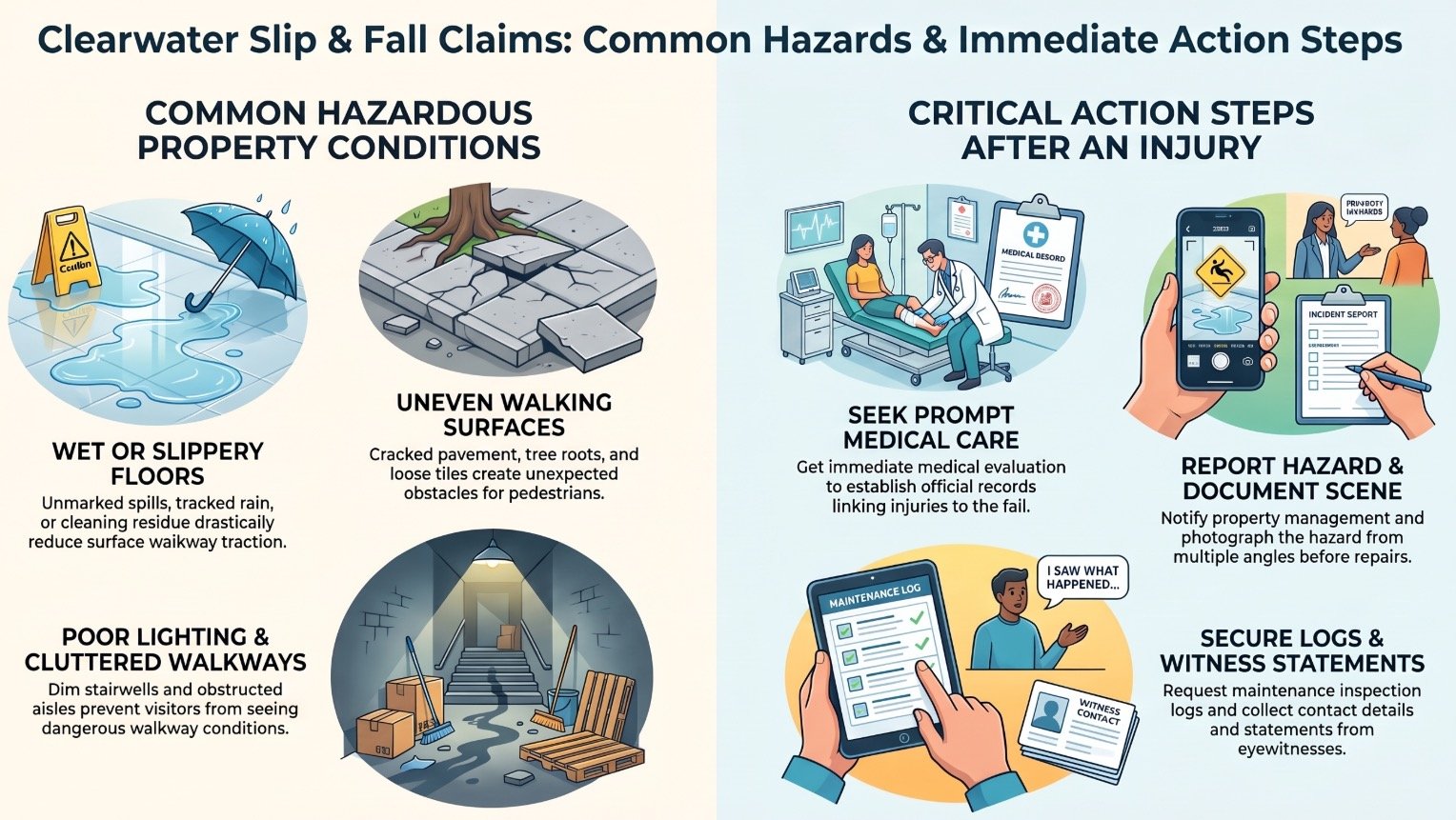
Clearwater slip and fall hazards often stem from wet or slippery floors, uneven walking surfaces, and poor lighting. Cluttered walkways can also block a person’s path and increase fall risk. We’ll explain how these conditions develop and why they matter when evaluating an injury claim.
Wet or Slippery Floors


Wet or slippery floors can turn an ordinary walk through a Clearwater business into a serious fall hazard. Spilled drinks, tracked-in rain, leaks, and recently mopped areas can leave surfaces slick, especially when staff don’t mark them or address them promptly. Some flooring materials offer less traction when wet, increasing the risk for customers and employees moving through entrances, aisles, or service areas.
Cleaning products can also contribute to dangerous conditions if workers use too much, leave residue, or fail to dry a floor before reopening the area. Businesses that serve the public should follow consistent inspection and cleanup procedures, place visible warning signs near temporary hazards, and keep walkways clear while floors dry. When we investigate a fall, we look at how the slippery condition arose and whether reasonable steps could have prevented it.
Uneven Walking Surfaces
Uneven walking surfaces can cause a fall when cracks, raised pavement, loose tiles, or abrupt changes in floor height disrupt a person’s footing. In Clearwater, these hazards may develop as sidewalks age, tree roots push against concrete, or shifting soil causes pavement heaving. Inside businesses, damaged flooring, worn thresholds, and poorly secured mats can also create unexpected obstacles.
Surface changes between rooms or materials merit careful attention, especially where a small elevation change can catch a shoe or affect balance. Property owners and managers should inspect walking areas, repair defects promptly, and provide safe routes for visitors, customers, and employees. When we help someone injured by an uneven surface, we examine how the condition arose, whether it was addressed, and what evidence can clarify responsibility. A careful review can help protect others from similar harm.
Poor Lighting Conditions
Poor lighting can make hazards such as spills, floor damage, steps, and changes in elevation hard to see, increasing fall risk. When we visit businesses, apartment buildings, or public spaces, we expect owners and managers to provide lighting that helps everyone move safely. Burned-out bulbs, poorly placed fixtures, dim hallways, and dark stairwells can leave visitors unable to judge their footing. These conditions may be especially dangerous for older adults and people with impaired vision.
Property managers should follow applicable visibility standards and promptly address lighting problems. Regular Lighting maintenance, including inspections and timely repairs, can help keep walkways and entrances adequately illuminated. If you’ve fallen in a poorly lit area, document the location and conditions when possible, and report the hazard. We can help you understand what evidence may matter.
Cluttered Walkways
Cluttered walkways can create trip-and-fall hazards when boxes, merchandise, cords, cleaning equipment, or other objects obstruct a path. In stores, restaurants, and public buildings, these obstacles can prevent visitors from moving safely, especially when they’re carrying items or assisting children and older adults. Blocked passageways may also hinder access for people using wheelchairs, walkers, or other mobility aids. Businesses should keep aisles and exits clear, store supplies in designated areas, and promptly remove debris or equipment after completing work. Misplaced merchandise left on floors or projecting into walking areas can cause someone to stumble, even when the obstruction seems minor. When we serve customers and community members, we should treat clear paths as a basic safety responsibility. If a fall occurs, photographs, witness details, and incident reports may help clarify what happened.
Legal Rights of Clearwater Slip & Fall Hazardous Conditions Injury Victims
When a hazardous condition causes a slip and fall in Clearwater, injured people may have the right to seek compensation from the property owner. We can help you understand these rights and consider steps that protect your interests while supporting fair treatment for others. Victim advocacy and rights education can make the process clearer, especially when an injury disrupts daily life.
Depending on the circumstances, you may be able to:
- Seek payment for reasonable medical expenses, lost income, and other legally recognized losses.
- Preserve evidence, such as photographs, incident reports, and witness contact information, that may help establish what happened.
- Consult an attorney about deadlines, liability, and whether a claim is appropriate.
Property owners and other responsible parties don’t automatically owe compensation; the facts and applicable law matter. We can review available information, explain potential options, and help you make informed decisions without promising a particular outcome. Prompt guidance may also help you avoid missing important filing deadlines and preserve records needed to evaluate your claim.
Why Do Clearwater Slip & Fall Hazardous Conditions Injuries Happen?
Clearwater slip and fall injuries often happen when a hazardous condition develops and goes unnoticed, isn’t corrected, or lacks an adequate warning. Spilled drinks, tracked-in rain, loose flooring, uneven walkways, and cluttered aisles can create dangerous surfaces. When property owners and staff don’t inspect these areas regularly, a preventable hazard may remain in place long enough to injure someone.
Environmental design can also contribute to falls. Poor lighting, abrupt changes in floor level, missing handrails, and confusing walkways may make hazards difficult to see or avoid. In busy stores, restaurants, apartment buildings, and public spaces, behavior also matters. People may carry items, assist children, or focus on reaching a destination rather than watching each step. These ordinary activities shouldn’t put visitors at unreasonable risk.
We can better understand why a fall occurred by considering the condition, how long it existed, and whether reasonable maintenance or warnings could have reduced the risk. Each detail helps explain how these injuries happen.
What Should You Do After a Clearwater Slip & Fall Hazardous Conditions Injury?
After a Clearwater slip and fall, seek medical care promptly, even if your injuries seem minor. Report the hazard to the property owner or manager and ask them to document the incident. If it’s safe, we should photograph the scene and preserve any evidence that may help show what caused the fall.
Get Medical Care
Seek medical care promptly after a slip and fall, even if your injuries seem minor. Some conditions, including head injuries and fractures, may not cause obvious symptoms at first. If you experience severe pain, confusion, difficulty breathing, or heavy bleeding, seek emergency evaluation immediately. For less urgent concerns, contact a healthcare professional and describe how you fell and what hurts. Follow their recommendations, attend scheduled appointments, and keep records of diagnoses, treatment, prescriptions, and expenses. We should also monitor symptoms in the days after the incident, since pain, swelling, dizziness, or limited movement can develop or worsen over time. Tell your provider about any changes, and don’t delay follow-up care. Prompt treatment supports your recovery and creates a clear medical record that may help explain the nature and timing of your injuries.
Report the Hazard
Once you’re safe and have addressed urgent medical needs, report the hazardous condition to the property owner, manager, or responsible staff member as soon as possible. Prompt reporting can help protect other visitors from similar injuries and may lead to a timely repair. Clearly explain what caused your fall and where the hazard is located. If you’re unable to make the report yourself, ask a trusted person to contact the responsible party on your behalf.
Request that staff address the danger promptly, such as by blocking access or arranging cleanup or repairs. Ask for a Staff notification or maintenance request to be recorded, and note the name or role of the person who receives your report. Keep your communication factual and courteous. Don’t assume that someone else has already reported the condition.
Document the Scene
A prompt report can help address the hazard, and documenting the scene can preserve details that may otherwise be lost. If you’re able, take clear photographs before anyone cleans or repairs the area. Capture the hazard from several Camera angles, including close views and wider images showing its location and nearby landmarks. Record the date, time, and exact place, and note lighting, warning signs, and whether the surface was wet, uneven, or obstructed. Describe weather conditions, especially rain or tracked-in water, and preserve any relevant clothing or footwear without altering it. Ask witnesses for their names and contact information, and write down what they observed in their own words. We can help you organize these details and protect evidence while respecting others’ privacy. Don’t risk another injury to obtain a photograph.
Critical Evidence in a Clearwater Slip & Fall Hazardous Conditions Injury Case
We’ll help you identify evidence that shows how the hazard caused your injury and whether the property owner knew about it.
Start by gathering these three important categories:
- Incident-scene photos and hazard inspection records.
- Witness statements from people who saw the fall or the hazardous condition.
- Medical documentation linking your injuries to the incident.
Incident Scene Photos
Photographs taken at the scene can preserve details of a slip-and-fall hazard that may change or disappear before anyone investigates. If you can do so safely, document the area promptly and ask a companion to help. Capture the substance, uneven surface, obstruction, or other condition involved, along with nearby landmarks that show where it appeared. Take wide views and close-ups from several Camera angles so the images provide context without obscuring important details. Include the surrounding walkway, lighting, warning signs, and any visible footwear or damaged belongings, when relevant. Keep original files, because image metadata may help establish when and where each photograph was taken. Avoid altering or cropping originals; save copies for sharing. These images can help us explain what you encountered and support a fair review of your injury claim.
Hazard Inspection Records
How often did the property owner inspect the area before your fall? Inspection frequency can reveal whether staff checked the location often enough to identify and address a dangerous condition. We can request inspection logs, maintenance records, and cleaning schedules to determine when employees last examined the area and what they documented. These records may show recurring hazards, missed checks, or repair delays. They can also clarify whether the owner followed established safety procedures or ignored warning signs. We’ll act promptly because Retention policies may limit how long businesses preserve these materials. A written preservation request can help prevent relevant records from being altered or destroyed. By carefully examining this evidence, we can assess whether reasonable precautions were taken and help you pursue accountability while protecting others from similar injuries.
Witness Statements
When someone witnesses your fall or the hazardous condition that caused it, their account can help establish what happened and when. We can speak with witnesses promptly to learn what they observed, including the location, lighting, warning signs, and how long the hazard may have existed. Their descriptions may also clarify whether employees knew about the danger or had an opportunity to address it.
Witness credibility matters. We consider whether a person saw events directly, can describe them consistently, and has any connection to those involved. We also seek contact information and record each witness’s account while memories remain fresh. Careful preservation of statements can protect important details from fading or changing over time. If you know who saw the incident, share that information with us, and we can respectfully document their observations.
Medical Documentation
After a Clearwater slip and fall, prompt medical care creates a record that can connect your injuries to the hazardous condition. Tell your provider when and where you fell, what surface caused the fall, and which symptoms began afterward. Accurate details help clinicians assess your condition and document the timeline. Follow recommended treatment and report new or worsening symptoms, even if they seem minor. Choose providers who can treat your injuries and explain your care clearly. We can review records for consistent descriptions, diagnoses, treatment plans, and any gaps that may invite questions. Keep appointment summaries, test results, prescriptions, bills, and discharge instructions in one place. Careful record retention helps preserve evidence while supporting your recovery. With your permission, we can request relevant records and use them to present a clear account of your injuries.
Long-Term Effects of Clearwater Slip & Fall Hazardous Conditions Injuries
A serious slip and fall injury can leave you with chronic pain or limited mobility long after the initial accident. We’ll also consider lasting emotional distress and how it may affect your daily life. Ongoing treatment can create substantial medical expenses, making the injury’s long-term impact important to understand.
Chronic Pain and Mobility
Persistent pain and reduced mobility can turn a Clearwater slip-and-fall injury into a long-term challenge. An injury to your back, hip, knee, or ankle may limit walking, standing, or completing routine tasks. When these changes affect your ability to care for family, serve your community, or fulfill work responsibilities, consistent treatment can help you preserve function and independence.
We encourage you to follow your clinician’s recommendations and discuss Pain management options that suit your condition. Physical therapy may improve strength and flexibility, while mobility aids, such as a cane or walker, can support safer movement when needed. Keep records of symptoms, appointments, treatment costs, and changes in daily activities. These details can help us assess how the fall continues to affect your life and identify losses that may support a claim for compensation.
Lasting Emotional Distress
Physical recovery may not resolve the emotional effects of a Clearwater slip and fall injury. We recognize that fear, frustration, and uncertainty can continue long after visible injuries mend. Post-traumatic anxiety may make you wary of walking through stores, using stairs, or returning to places connected with the fall. You might also experience sleep disruption, difficulty concentrating, or persistent distress when ordinary activities remind you of what happened.
These reactions can affect your relationships and responsibilities. Social withdrawal may leave you less able to support family, serve your community, or take part in routines that once mattered. We encourage you to tell a trusted health professional about lasting emotional changes and seek appropriate support. As you focus on recovery, we can help you understand your legal options and pursue accountability for the hazardous condition that caused your injury.
Ongoing Medical Expenses
Ongoing care after a Clearwater slip and fall can create medical expenses long after the initial injury. You may need follow-up visits, physical therapy, diagnostic tests, or surgery as symptoms develop or recovery slows. Future treatment can also address lasting mobility limits, chronic pain, or complications that weren’t clear when you first sought care. We can help you document these needs through medical records, provider recommendations, and a reasonable estimate of expected costs.
Medication costs may continue for months or become part of your long-term care plan. Keep receipts, prescriptions, and records of treatment changes so we can present a clear account of your expenses. When we pursue compensation, we consider both bills you’ve already paid and anticipated costs supported by evidence. Careful documentation helps protect your ability to focus on recovering and serving those who depend on you.
Proving Liability in Clearwater Slip & Fall Hazardous Conditions Injury Cases
To prove liability in a Clearwater slip and fall case, we must show that a hazardous condition caused your injury and that the property owner or responsible party failed to take reasonable steps to address it. We’ll examine how the hazard arose, how long it existed, and whether inspections or maintenance could have prevented your fall. Photographs, incident reports, witness accounts, and medical records can help establish what happened and connect your injuries to the condition.
Florida law considers whether the owner knew about the hazard or should have discovered it through reasonable care. We’ll assess applicable Notice requirements and gather evidence that supports your account. Your actions may also matter. Under comparative negligence, a court can reduce compensation if it finds you shared responsibility, such as by failing to notice an obvious danger. We’ll evaluate these issues carefully and explain how the evidence may affect your claim, so you can focus on recovering and supporting those who depend on you.
Dealing With Insurance Companies After a Clearwater Slip & Fall Hazardous Conditions Injury
After a Clearwater slip and fall, the property owner’s insurer may contact you to discuss the incident and your injuries. We can help you handle these conversations carefully while you focus on recovery and your responsibilities to family, work, and community. Adjuster communication may sound routine, but the insurer represents its policyholder’s interests. Be courteous, answer basic questions accurately, and avoid guessing about details you don’t remember. Don’t minimize your pain or speculate about how long recovery will take.
Before providing recorded statements, consider getting legal guidance. An adjuster may ask questions that appear straightforward, yet an incomplete or unclear answer could later be used to challenge your account. You can request questions in writing and ask for time to review documents before signing them. Keep copies of correspondence, note the date and name of each person you speak with, and preserve receipts and medical records. We can help you communicate clearly and protect your interests without disrupting your recovery or service to others.
What to Expect During a Clearwater Slip & Fall Hazardous Conditions Injury Claim Process
We’ll begin by evaluating your claim, reviewing the circumstances of your fall and the potential value of your losses. Next, we’ll gather evidence and negotiate with the insurer, keeping you informed as the claim progresses. If negotiations don’t produce a fair resolution, we may file a lawsuit and prepare to present your case in court.
Initial Case Evaluation
What happens during an initial case evaluation for a Clearwater slip and fall claim? We’ll discuss your account of the incident, your injuries, and how the fall has affected your daily responsibilities. This conversation helps us understand your concerns and determine whether we can guide you through the claim process.
Our evaluation criteria include whether a property owner may have failed to address a hazardous condition, whether that failure contributed to your injury, and what losses you may have suffered. We’ll also consider deadlines and practical challenges that could affect your claim. To help us prepare for our consultation, please note important dates, the treatment you received, and any questions you’d like answered. We’ll explain potential next steps, discuss our role, and give you a clear opportunity to decide how you’d like to proceed, without pressure or unrealistic promises.
Evidence Collection
Once we understand the circumstances of your fall, we can begin gathering evidence to assess what happened and who may be responsible. We’ll document the location, identify the hazardous condition, and collect photographs, witness statements, and relevant records. Evidence preservation matters because spills, damaged flooring, and warning signs can change or disappear quickly. We’ll also request surveillance retrieval before a property owner’s system overwrites footage that may show the incident or conditions beforehand. Medical records can link your injuries to the fall and help explain how they affect your daily life. We’ll organize these materials carefully, verify important details, and identify any gaps that require further investigation. Your cooperation helps us pursue a complete account, while our work supports accountability and safer conditions for others in the community.
Insurance Negotiations
After we organize the evidence and assess your injuries, we’ll present the claim to the responsible party’s insurer and explain why its insured may be liable. We’ll support our position with records, photographs, witness accounts, and medical documentation, while describing how the hazardous condition affected your daily life and ability to serve others. Our Demand strategy will account for your treatment, documented losses, and likely future needs. The insurer may investigate, request additional information, or question liability and damages. We’ll review each response with you, explain what it means, and help you evaluate any proposed settlement. Strong evidence and consistent medical care can improve your settlement leverage, but we can’t guarantee an outcome. We’ll negotiate carefully, protect your interests, and keep you informed before you decide whether an offer meets your needs.
Filing a Lawsuit
If settlement negotiations don’t resolve your claim, we can file a lawsuit in the appropriate court and explain each step before it begins. During Complaint Preparation, we’ll identify the parties, describe the hazardous condition and resulting injuries, and state the compensation you seek. We’ll review the facts with you so the complaint accurately reflects what happened and how the injury has affected your ability to work, care for others, and manage daily responsibilities.
After We File the Complaint, the defendant must receive formal notice and an opportunity to respond. The case may then proceed through discovery, where both sides exchange records, ask questions, and assess evidence. We’ll guide you through deadlines, prepare you for required participation, and pursue a fair resolution. If the parties can’t agree, we’ll present your claim in court.
Don’t Wait. Call Our Florida Personal Injury Lawyers Now!
Compensation for Clearwater Slip & Fall Hazardous Conditions Injury Damages
A slip and fall caused by a hazardous condition can lead to compensation for medical expenses, lost income, pain and suffering, and other losses. We can help you identify the harm the incident caused and pursue a claim that reflects its full impact. Compensation may address ongoing treatment, rehabilitation, reduced ability to work, and the effects of lasting injuries on daily activities and relationships. We’ll review available evidence, such as incident reports, photographs, witness accounts, and medical records, to connect the hazardous condition to your losses.
In some cases, a property owner’s conduct may support a request for punitive damages, which are intended to address particularly serious wrongdoing. If a fall results in wrongful death, surviving family members may have a claim for damages under Florida law. We can explain which remedies may apply to your circumstances and guide you through the process with care. Our goal is to help you seek fair accountability while protecting your interests at every stage.
Economic vs. Non-Economic Damages in Clearwater Slip & Fall Hazardous Conditions Cases
We can distinguish economic damages, such as medical bills and lost income, from non-economic damages for pain, emotional distress, and reduced quality of life. To assess what your Clearwater slip and fall claim may cover, we’ll consider how the hazardous condition affected you and your daily activities. We’ll also explain how records, receipts, and other evidence can help prove your losses.
Economic Damages
When a hazardous condition causes a slip and fall in Clearwater, economic damages can compensate you for measurable financial losses tied to your injury. We can help you identify and document costs that your injury caused, including emergency care, follow-up appointments, medication, rehabilitation, and necessary medical equipment. Keep bills, receipts, insurance statements, and records of recommended treatment so we can connect each expense to the fall.
You may also recover lost wages if your injuries prevent you from working. If you return with limitations or cannot earn what you did before, reduced earning capacity may support a claim for future financial loss. We can review pay records, employer statements, and professional assessments to clearly explain these losses. Careful documentation helps us present an accurate accounting and seek compensation that protects your financial stability while you focus on recovery and responsibilities.
Non-Economic Damages
Beyond bills and lost income, a Clearwater slip and fall may cause non-economic harm that’s harder to measure but still matters. These losses reflect how an injury affects your comfort, independence, relationships, and daily routines. Pain and Suffering may include physical discomfort, emotional distress, and the strain of coping with limitations after a fall. Loss of Enjoyment can arise when an injury prevents you from taking part in activities, family responsibilities, or community service that once gave your life meaning. Unlike medical expenses or missed wages, these damages don’t have a fixed price. We can help you understand how Florida law treats non-economic losses and how they differ from economic damages. Recognizing their impact ensures your claim reflects the full effect of the hazardous condition and the resulting injury.
Proving Your Losses
To prove your losses in a Clearwater slip and fall case, we must connect the hazardous condition and resulting injury to both your financial costs and personal harm. We’ll document economic damages with medical bills, receipts, pay records, and evidence of future treatment needs. Lost wages may include income you missed while recovering, while reduced earning capacity can reflect lasting limits on your ability to work. We’ll also explain non-economic damages, such as pain, emotional distress, and reduced enjoyment of daily activities. Your account, supported by treatment records and testimony from people who understand your responsibilities, can show how the injury affected your life and ability to serve others. By organizing this evidence and linking each loss to the fall, we can present a clear, credible claim for fair compensation.
When a Clearwater Slip & Fall Hazardous Conditions Injury Case Goes to Trial vs. Settlement
A Clearwater slip and fall injury case may settle through negotiation or proceed to trial, depending on the evidence, the parties’ willingness to resolve the dispute, and the strength of each side’s arguments. We’ll assess the available proof, your documented losses, and the practical risks of each option before recommending a path. Settlement can provide a clear resolution without the uncertainty and time of court. However, an offer may not meet your needs, and we can continue negotiating or prepare to present your case to a jury.
At trial, both sides present evidence and question witnesses. Trial testimony may include your account, medical evidence, and statements from people familiar with the hazard or its inspection. We’ll help you understand what to expect and prepare to explain how the injury affected your life. After closing arguments, the jury deliberates and reaches a verdict. We’ll discuss the potential outcomes, answer your questions, and support an informed decision focused on your recovery and responsibilities.
Florida Laws That May Affect Your Clearwater Slip & Fall Hazardous Conditions Case
Florida law sets specific requirements for proving liability in a Clearwater slip and fall case. We must show that a hazardous condition existed and that the property owner knew, or should have known, about it but failed to address it or provide adequate warning. The facts and applicable rules may affect how responsibility is assessed.
Proving a Clearwater slip-and-fall claim requires evidence of a hazard and the property owner’s actual or constructive knowledge.
- Notice and evidence: We can gather incident reports, photographs, witness accounts, and maintenance records to help establish how long the hazard existed and whether reasonable action could have prevented harm.
- Comparative negligence rules: Florida may reduce compensation if you share responsibility for the fall. We’ll examine the evidence carefully so fault reflects each party’s conduct.
- Safety standards: Florida building codes may help identify relevant safety requirements, though a code violation doesn’t automatically prove liability. We can assess whether the condition violated an applicable standard and contributed to your injury.
The Statute of Limitations for Clearwater Slip & Fall Hazardous Conditions Injury Cases
Even when the evidence supports a property owner’s liability, Florida law limits how long you have to file a slip and fall lawsuit. For most negligence claims, you generally must file within two years of the accident. Missing this Limitations deadline can prevent you from pursuing compensation, regardless of how serious your injuries are or how clearly unsafe conditions contributed to your fall.
The deadline may differ in certain cases. For example, claims involving government entities can require formal notice and shorter filing periods. Florida law also recognizes statutory exceptions that may pause or alter the limitations period, including circumstances involving a minor or a defendant who cannot be located. These rules depend on the facts and applicable law, so you shouldn’t assume extra time applies.
Acting promptly helps preserve your ability to seek accountability and protect the interests of those who depend on you. We encourage you to note the accident date, keep relevant records, and confirm the applicable deadline before time runs out. A timely filing keeps your claim available for consideration.
How a Clearwater Slip & Fall Hazardous Conditions Lawyer Can Help You
When should you involve a lawyer after a slip and fall? We help you understand your options and pursue a claim while you focus on your health and responsibilities. Local legal guidance can clarify how Florida premises liability rules apply to the specific hazard and property involved. We can support your efforts to seek fair accountability while keeping in mind others who may face similar risks.
Our work may include:
- Evaluating the evidence: We review incident reports, photographs, witness accounts, and available records to assess whether a property owner may have failed to address a dangerous condition.
- Building case strategy: We identify relevant facts, organize supporting documentation, and prepare a clear presentation of your losses and the circumstances of the fall.
- Managing communications: We handle discussions with insurers and opposing counsel, explain proposed resolutions, and help you make informed decisions about settlement or litigation.
Throughout the process, we provide practical updates and candid guidance. Our goal is to protect your interests, present your claim accurately, and encourage safer conditions for the community.
When to Contact a Clearwater Slip & Fall Hazardous Conditions Lawyer
Prompt action can help preserve evidence and protect your options after a slip and fall in Clearwater. We encourage you to contact a lawyer as soon as you’ve addressed your immediate medical needs, especially if you suffered an injury, the hazard remains unresolved, or the property owner disputes what happened. Early communication gives us a chance to learn the circumstances while details are fresh and to explain practical next steps.
You don’t need to wait until treatment ends or you know every expense. If you’re unsure whether the incident warrants legal help, an Initial consultation can help you discuss your concerns and understand whether further action may be appropriate. Bring any available photographs, incident reports, witness names, and medical records, but don’t delay a conversation because you don’t have complete documentation.
We can also explain fee arrangements before you decide how to proceed. Seeking guidance promptly can help you make informed choices while keeping your focus on recovery and the people who depend on you.
Don’t Wait. Call Our Florida Personal Injury Lawyers Now!
Why You Need an Experienced Clearwater Slip & Fall Hazardous Conditions Lawyer
An experienced Clearwater slip and fall lawyer can help you assess whether a property owner may be responsible and build a claim supported by reliable evidence. We can investigate the hazard, preserve relevant records, and identify witnesses before important details disappear. Prompt, careful work helps you focus on recovery while we examine the circumstances that caused your fall.
Attorney experience matters because these claims often require proof that an owner knew or should have known about a dangerous condition and failed to address it. We can evaluate inspection practices, maintenance records, warning signs, and the connection between the hazard and your injuries. Our case strategy should reflect the facts, applicable law, and documented losses, not assumptions.
We also communicate with insurers and respond to arguments that may minimize your injuries or shift blame. By organizing medical evidence and presenting a clear account of what happened, we can seek fair compensation and support your ability to care for yourself and those who depend on you.
How to Choose the Right Clearwater Slip & Fall Hazardous Conditions Lawyer for Your Case
Choosing the right Clearwater slip and fall lawyer requires more than comparing advertisements or promises of a quick result. We should assess whether a lawyer listens carefully, explains our options clearly, and treats our concerns with respect. A thoughtful first conversation can show whether the lawyer understands how an unsafe property affected our health, work, and daily responsibilities.
Consider the attorney’s experience with premises liability claims, including cases involving falls, hazardous conditions, evidence gathering, and negotiations with insurers. Ask how the lawyer would investigate the incident, identify responsible parties, and preserve relevant records. We should also discuss fees and what services representation includes before deciding.
Pay attention to communication style. We need a lawyer who answers questions directly, provides updates, and helps us understand each stage of the process. When we compare candidates, we can look for sound judgment, careful preparation, and a genuine commitment to serving injured people. The right fit should help us make informed choices without guaranteeing a particular outcome.
About The Law Offices of Anidjar & Levine
When a fall on unsafe property disrupts your health and daily life, The Law Offices of Anidjar & Levine can help you understand your legal options. We work with injured people and families seeking accountability and support after preventable accidents. Our team can explain the steps involved in a premises liability claim and help you make informed decisions.
Our firm’s history reflects a commitment to serving clients throughout Florida. We approach each matter with careful preparation, clear communication, and attention to the practical effects an injury can have on your life. We’ll listen to your concerns, review the available information, and discuss possible paths forward without promising a particular result.
Our attorney credentials and experience shape how we assess evidence, identify responsible parties, and respond to insurance company questions. We can help gather records, document hazardous conditions, and pursue compensation when the facts and law support a claim. If you’re recovering from a Clearwater fall, contact us to discuss your circumstances and learn how we may assist.

Frequently Asked Questions
Can I File a Claim if I Fell at a Friend’s Home in Clearwater?
Yes, you may be able to file a claim if you fell at a friend’s home in Clearwater. We can help you assess whether a hazardous condition caused your fall and whether your friend knew, or reasonably should have known, about it. Homeowner insurance may cover Guest injuries, but coverage depends on the policy and circumstances. We’ll review your medical records, document the hazard, and explain your options before you decide how to proceed.
What if a Child or Older Adult Is Injured in a Clearwater Slip and Fall?
A child or older adult injured in a Clearwater slip and fall may have a claim if a hazardous condition caused the fall and someone responsible failed to address it. We can help you preserve evidence, report the incident, and obtain medical care promptly. Child Injury Claims may involve a parent or guardian acting for the child. Age-related injuries can require careful assessment because falls may cause serious or lasting harm.
Can I Pursue a Claim After Falling on a Cruise Ship Docked in Clearwater?
Yes, we can assess whether you may pursue a claim after a fall on a cruise ship docked in Clearwater. Cruise ship jurisdiction and maritime liability depend on where the hazard occurred, who controlled the area, and the circumstances of your injury. We’ll review your ticket terms, incident records, and medical evidence, then identify applicable deadlines and responsible parties. Prompt action can help preserve evidence and support a fair recovery for your losses.
Does Workers’ Compensation Apply if I Slip and Fall at Work?
Yes, Workers’ Compensation may cover a slip and fall at work if you were performing job duties when the injury occurred. We can help you report the incident promptly, seek medical care, and document how the fall happened. Coverage generally doesn’t depend on proving Employer Negligence, though exceptions and third-party claims may apply. We’ll review your circumstances, explain deadlines and benefits, and help protect your ability to pursue appropriate compensation.
Can a Property Owner Be Liable for a Fall Caused by a Temporary Hazard?
Yes, a property owner may be liable when a temporary hazard causes a fall, but responsibility depends on the circumstances. We assess whether the owner or staff created the danger, knew about it, or should have discovered it through reasonable inspections. Notice Requirements can determine whether the owner had enough time to address the hazard or warn visitors. We also examine your injuries, the evidence, and applicable safety duties before evaluating Temporary Hazard Liability.
—————————
If a hazardous condition caused your fall in Clearwater, we can help you understand your legal options and pursue compensation for your injuries. Preserve photographs, incident reports, medical records, and witness details, and avoid discussing fault with insurers before seeking legal guidance. We’ll review the evidence, explain the steps ahead, and address your questions directly. Contact The Law Offices of Anidjar and Levine to speak with a Clearwater slip and fall hazardous conditions lawyer about your situation. Learn more about a Clearwater Personal Injury Lawyer.