
If you were injured in a slip-and-fall on a hazardous floor or surface in Clearwater, The Law Offices of Anidjar and Levine can review the incident, explain your legal options, and help you pursue compensation from responsible parties. Liability may depend on the hazard, how long it existed, and whether the property owner knew or should have known about it. Compensation may cover medical care, lost income, and other documented losses, though comparative negligence can reduce or bar recovery. Learn more from a Clearwater Personal Injury Lawyer. Below, we explain the claims process and important considerations.
Main Takeaways
- A Clearwater slip-and-fall lawyer can review whether unsafe floor or surface conditions contributed to your fall.
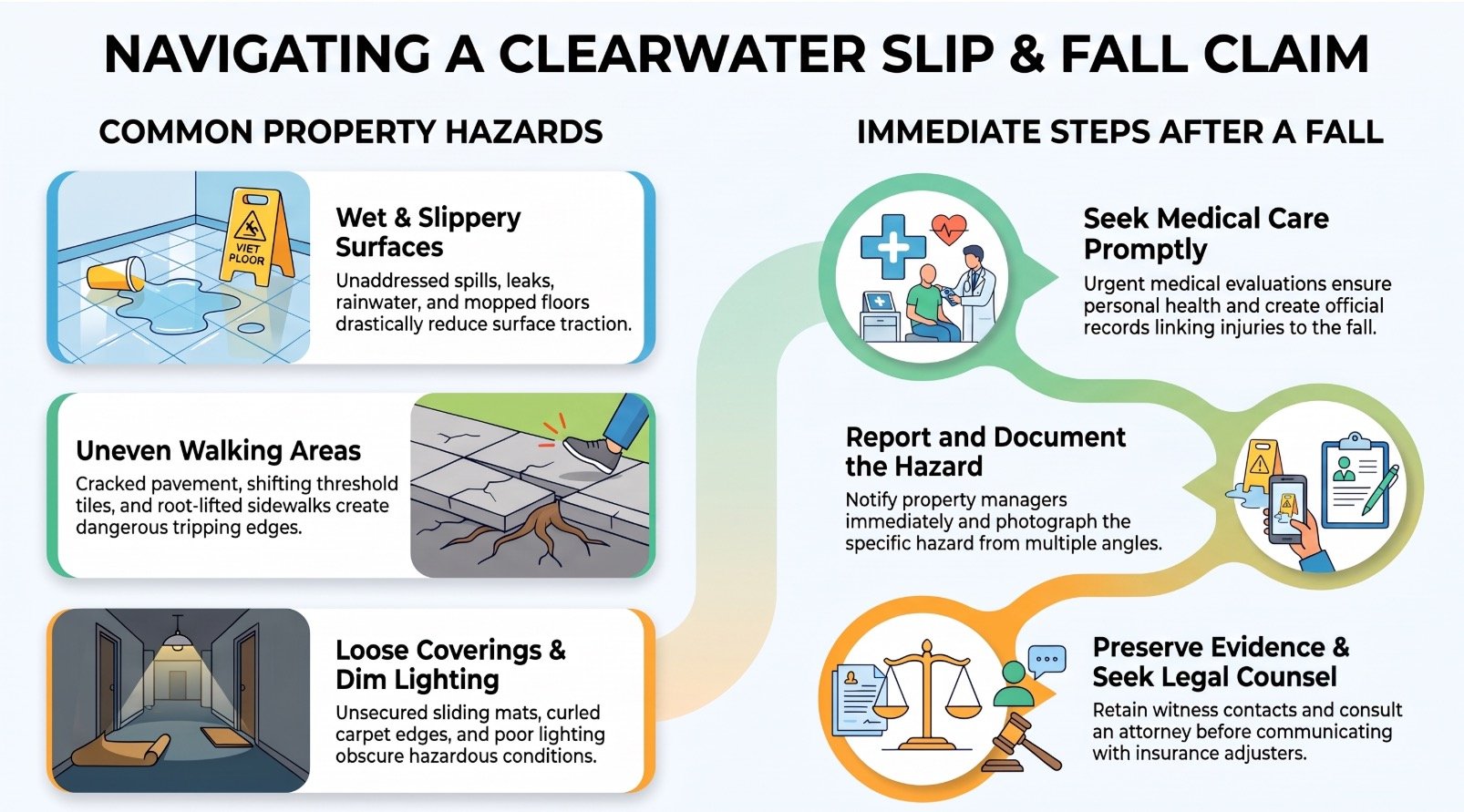
- Common hazards include wet floors, uneven pavement, loose mats, poor lighting, and cluttered walkways.
- Seek medical care promptly, report the hazard, and preserve photos, incident details, medical records, and bills.
- Potential compensation may include medical expenses, lost income, future care, pain, and other documented losses.
- Florida’s comparative negligence rules may reduce compensation based on your responsibility and bar recovery if it exceeds 50 percent.
How We Can Help With Your Clearwater Slip & Fall Floor & Surface Injury Claim
When a hazardous floor or surface causes a fall in Clearwater, we can help you pursue compensation for your injuries and related losses. We’ll listen carefully, learn how the incident has affected your health and daily responsibilities, and explain practical steps for moving forward. Our team can communicate with insurers, organize relevant records, and manage claim-related deadlines so you can focus on recovery and the people who rely on you.
During a Legal Consultation, we’ll discuss your concerns, review the information available, and outline how we may assist. We’ll keep you informed about the Claim Timeline, explain important developments, and answer your questions in clear terms. If you’re helping an injured family member, we can also discuss ways to support their interests while respecting their needs and choices.
Our goal is to provide attentive guidance and dependable representation throughout the process. We’ll assess your options, address obstacles as they arise, and work toward a fair resolution based on your documented losses and circumstances.
Don’t Wait. Call Our Florida Personal Injury Lawyers Now!
Understanding Clearwater Slip & Fall Floor & Surface Injury Cases


Understanding a Clearwater slip and fall floor or surface injury case begins with identifying the hazard, how long it existed, and whether the responsible property owner or operator knew or should have known about it. We examine available records, witness accounts, photographs, and incident reports to assess what happened and whether reasonable care could have prevented the injury.
OUR CONSULTATIONSARE FREE
START YOUR FREE CASE REVIEW

The condition of the walking area matters, as do the Surface material, footwear traction, lighting, and any warnings or barriers. These details help us evaluate how the surface affected your footing and whether the property’s maintenance or inspection practices met applicable safety standards. We also review medical records and other evidence to link the incident to your injuries and document how they affect your daily life.
When you share your account, we listen carefully and explain the process in clear terms. Our goal is to help you understand your options, protect your interests, and pursue accountability while treating everyone involved with respect and care.
Common Causes of Clearwater Slip & Fall Floor & Surface
We often see Clearwater slip-and-fall injuries caused by wet or slippery floors and uneven walking surfaces. Loose mats and carpets can shift underfoot, while poor lighting may prevent you from noticing hazards in time. Recognizing these conditions can help us assess how a fall occurred and whether negligence contributed.
Wet or Slippery Floors


Wet or slippery floors commonly cause slip-and-fall injuries in Clearwater, especially when property owners fail to address hazards promptly. Spilled drinks, leaking equipment, tracked-in rainwater, and recently mopped surfaces can reduce floor traction and put visitors at risk. Businesses and other property owners should inspect high-traffic areas, clean spills quickly, and use clear warning signs while floors dry. We encourage you to document the conditions if you fall, including the location, any visible liquid, and whether warnings were present. Photos and witness details may help preserve important evidence. Owners can also improve safety by selecting appropriate flooring and maintaining slip resistant coatings where needed. When hazards remain unaddressed, people seeking ordinary services may suffer serious injuries. We can help you understand your options and pursue accountability after a preventable fall.
Uneven Walking Surfaces
Unlike spills or tracked-in rainwater, uneven walking surfaces create hazards through changes in height or stability. In Clearwater, cracked pavement, worn flooring, and poorly maintained walkways can interrupt a person’s step and cause a sudden fall. Tile height differences may form where sections shift, repairs leave uneven edges, or installation creates a raised threshold. Outside, sidewalk heaving can lift concrete slabs as roots grow or soil moves, leaving edges that pedestrians may not see in time.
Property owners and managers should regularly inspect walking areas, address level changes, and post clear warnings while repairs are pending. These steps matter wherever residents, customers, employees, or visitors rely on safe access. When someone falls, we can help assess whether a hazardous surface and inadequate maintenance contributed, preserve evidence, and document the resulting injuries.
Loose Mats and Carpets
When mats and carpets shift, curl, or bunch underfoot, they can create an unexpected tripping or slipping hazard. In busy Clearwater businesses, entryways, hallways, and service areas often rely on floor coverings to protect visitors and staff. When those coverings aren’t secured, someone may lose their balance while entering, walking through, or performing routine tasks.
Mat Adhesive Failure can allow a mat to slide across a smooth floor, while Carpet Edge Curling may catch a shoe or mobility aid. Worn backing, damp conditions, and improper placement can also make coverings unstable. Property owners and managers should inspect mats regularly, replace damaged materials, and secure edges with suitable products. If you’ve been hurt, we can help assess whether a loose floor covering and inadequate maintenance contributed to your fall and resulting injuries.
Poor Lighting Conditions
Poor lighting can make hazards such as spills, uneven flooring, and changes in floor level difficult to see, increasing the risk of a slip or fall. In Clearwater businesses and public spaces, owners and managers should provide adequate lighting in entrances, hallways, stairwells, parking areas, and other walkways. Burned-out bulbs, poorly placed fixtures, and dark corners can reduce lighting-related visibility and leave visitors unable to identify hazards in time. These concerns can worsen at night, when limited natural light creates additional hazards. We encourage property operators to inspect lighting regularly, replace failed bulbs promptly, and address dim areas. If you’ve fallen because poor lighting concealed a dangerous condition, we can help you understand what evidence may establish responsibility and support a claim for your injuries.
Legal Rights of Clearwater Slip & Fall Floor & Surface Injury Victims
If a hazardous floor or surface causes a fall in Clearwater, you may be able to seek compensation from the party responsible for maintaining the property. We can help you understand how Premises liability standards apply and what evidence may support your claim. Property owners and occupiers generally must take reasonable steps to protect visitors from foreseeable harm, though the duty depends on your reason for entering and the circumstances.
You may be able to pursue payment for:
- Medical expenses, rehabilitation, and related future care
- Lost income and reduced ability to earn
- Pain, suffering, and other documented losses
Comparative negligence rules may affect recovery if your actions contributed to the fall. Florida law can reduce compensation based on your share of responsibility, and certain cases may bar recovery if that share exceeds 50 percent. We can review the facts, explain deadlines, and help you communicate with insurers. By asserting your rights, you can seek accountability while focusing on recovery and the support you need.
Why Do Clearwater Slip & Fall Floor & Surface Injuries Happen?
Why do slip and fall floor and surface injuries happen in Clearwater? They often occur when a property’s walking surfaces create hazards that owners or managers could have prevented. Spilled drinks, tracked-in rain, leaking equipment, and recently mopped floors can leave surfaces unexpectedly slick. Uneven tiles, loose mats, damaged flooring, and abrupt changes in elevation may also catch a visitor’s foot and cause a fall.
The risk depends partly on Floor material selection and how well a surface performs in the conditions where people use it. A polished floor may become dangerous when wet, while worn or poorly maintained materials can lose their grip. Inadequate lighting may make hazards harder to see, and cluttered walkways can restrict a person’s ability to avoid them. Footwear traction properties also matter, but they don’t excuse a failure to maintain reasonably safe premises. When we recognize how these factors combine, we can better identify preventable conditions and support safer spaces for everyone who visits.
What Should You Do After a Clearwater Slip & Fall Floor & Surface Injury?
After a Clearwater slip and fall, seek medical care promptly, even if your injuries seem minor. Report the hazardous condition to the property owner or manager and ask them to document the incident. If it’s safe, we should photograph the scene and preserve details that may help explain how the fall occurred.
Seek Medical Care
Seek medical care promptly after a slip and fall, even when your injuries seem minor. Some conditions, including head injuries and fractures, may not cause obvious symptoms at first. We can protect our health and keep a clear record by describing how we fell, where we feel pain, and when symptoms began. Call 911 or seek an Emergency evaluation for severe pain, heavy bleeding, confusion, loss of consciousness, or difficulty moving. For less urgent concerns, contact a healthcare provider as soon as possible and follow the recommended treatment plan. Attend follow-up appointments, take prescribed medication as directed, and keep copies of medical records and bills. If your provider recommends a specialist referral, arrange it promptly. Timely care helps us address injuries and understand recovery needs.
Report The Hazard
Once we’re safe and have addressed urgent injuries, we should promptly report the hazardous floor or surface to the property owner, manager, or employee. A clear employee notification helps those responsible understand the danger and take steps to protect other visitors. We should describe the hazard accurately, explain where it is, and state that someone has been injured. If we can do so safely, we can ask staff to block access or arrange prompt hazard signage while they address the condition. We should remain courteous but direct, emphasizing that swift action may prevent another person from falling. If no responsible person is available, we can contact the property’s management or security office. Reporting the hazard promptly supports everyone’s safety and creates an important record of notice.
Document The Scene
If it’s safe, document the scene before conditions change or the hazard is cleaned up. Use your phone to photograph the floor, the specific hazard, and the surrounding area. Include wide views that show where you fell, then take close-ups that capture details such as liquid, debris, uneven flooring, or missing warning signs. Consider Camera angles from several directions, and include a familiar landmark to establish the hazard’s location. Record the date and time, and preserve the original files to keep the timestamp; avoid editing or cropping. If witnesses are present, ask for their names and contact information, and ask them to describe what they observed. We can also note lighting, weather, and any nearby warning signs. Keep these records secure and share copies with your attorney.
Critical Evidence in a Clearwater Slip & Fall Floor & Surface Injury Case
We’ll assess evidence that can help establish how the hazard caused your injury and whether the property owner knew about it.
- Scene photos and hazard inspection records
- Witness statements
- Medical documentation
We’ll explain how to preserve and use these records to support your claim.
Incident Scene Photos
Photographs taken soon after a slip and fall can preserve details of a floor or surface hazard that may change or disappear. We can help you document the scene promptly, while respecting your safety and the needs of others nearby. Capture the entire area, then take close-up images of the substance, uneven flooring, damaged surface, or other condition involved. Include nearby landmarks to show where the hazard was located. Use several camera angles and, when possible, place an object of known size beside the condition to provide scale. Keep original files, since photo metadata may help establish when and where images were taken. Avoid altering or filtering photographs, and note who took each image. These steps provide a clearer basis for assessing what happened and explaining the scene accurately.
Hazard Inspection Records
Because inspection records can show when staff discovered a hazard and how they responded, they may be important evidence in a Clearwater slip-and-fall case. We can review these documents to see whether a business followed its inspection schedule and promptly addressed unsafe floor or surface conditions. Records may include dates, inspection findings, cleaning activity, maintenance requests, and corrective measures. Together, these details can help us assess what the property owner knew and whether they took reasonable steps to protect visitors.
We can also examine Record retention practices because relevant logs may be lost or routinely discarded. If you’ve been injured, preserve any records you already have and tell us where the incident occurred. We can request relevant materials, evaluate whether they support your claim, and help you pursue accountability and safer conditions for others.
Witness Statements
When witnesses observe a slip and fall, their statements can help establish how the incident occurred and what conditions existed beforehand. We can speak with people who saw the fall, noticed a spill or damaged surface, or observed how staff responded. Their accounts may clarify when a hazard appeared, whether warnings were visible, and how the property was maintained. Witness credibility matters, so we should record each person’s name and contact information and note what they personally observed, rather than relying on assumptions. Prompt statement preservation can help protect accurate details before memories fade or witnesses become difficult to reach. We can also compare accounts with available inspection records and other evidence to identify consistent facts or differences. By treating witnesses respectfully, we help present a clear, reliable account of the incident.
Medical Documentation
Prompt medical care can protect your health and create a reliable record of injuries from a slip and fall. We encourage you to seek evaluation promptly, describe every symptom accurately, and follow your provider’s recommendations. These steps support your recovery and help us show how the incident affected your daily life.
Keep copies of visit summaries, test results, prescriptions, referrals, and bills. A Medical record chronology can connect the fall to your symptoms, treatment, and progress over time. Tell each provider when and where you fell, and report changes rather than minimizing discomfort. Treatment compliance also matters: attend appointments, follow care instructions, and discuss barriers with your provider. Gaps in care may raise questions about injury severity, so document reasonable explanations. With organized records, we can present clear evidence while respecting your privacy and focusing on your needs.
Long-Term Effects of Clearwater Slip & Fall Floor & Surface Injuries
A slip and fall injury can cause chronic pain and mobility limits that disrupt daily activities long after the initial accident. We’ll also consider whether lasting nerve damage affects your ability to work or care for yourself. These physical effects may create emotional and financial strain, adding to the long-term consequences you face.
Chronic Pain and Mobility Limits
Persistent pain and reduced mobility can follow a slip and fall, even after the initial injury appears to recover. You may find that standing, walking, or completing routine tasks takes more effort than before. Pain flare patterns can vary, with symptoms worsening after activity or following long periods of rest. We can help you understand how these limitations affect your work, caregiving, and ability to serve others in your community. Your treatment team may recommend pacing activities, physical therapy, or adaptive equipment to support safer movement and preserve independence. Keep records of symptoms, medical visits, and daily challenges, since these details can clarify the injury’s ongoing impact. If a property owner’s negligence caused your fall, we can explain how documented long-term effects may factor into a claim for compensation.
Lasting Nerve Damage
Nerve damage can persist after a slip and fall, even when bruising or other visible injuries have recovered. A hard impact or twisted limb may injure nerves, affecting sensation, strength, or coordination. You might notice numbness, tingling, burning, or sudden sensitivity in an area that seemed to recover. These symptoms can interfere with everyday tasks and your ability to care for others.
Nerve regeneration varies by injury and may take months; some damage doesn’t fully resolve. A clinician can assess symptoms, recommend treatment, and monitor changes. Keep records of your diagnosis, care, and how symptoms affect daily activities. If neuropathic pain develops, describe its location, intensity, and triggers to your provider. We can help you understand your options for pursuing a claim while you focus on appropriate medical care and recovery.
Emotional and Financial Strain
When a slip and fall injury disrupts your health, the effects may extend beyond physical pain. Ongoing treatment, reduced mobility, or missed work can make routine responsibilities harder to manage. We recognize that you may need to adjust household budgeting to cover medical expenses while income declines. These financial pressures can create relationship stress, especially when family members take on caregiving duties or household tasks. We can help you consider how the injury affects your daily life, future care needs, and ability to serve the people who depend on you. Keeping records of treatment, expenses, lost wages, and changes in your responsibilities may clarify the lasting impact. With informed legal guidance, we can assess available options and pursue compensation that reflects both measurable losses and the broader strain your recovery has placed on your household.
Don’t Wait. Call Our Florida Personal Injury Lawyers Now!
Proving Liability in Clearwater Slip & Fall Floor & Surface Injury Cases
To prove liability in a Clearwater slip and fall case, we must show that a dangerous floor or surface condition caused your injury and that the property owner or responsible party knew, or should have known, about the hazard but failed to address it. We’ll examine how the condition developed and whether reasonable inspections or repairs could have prevented your fall.
Evidence may include photographs, incident reports, maintenance logs, witness statements, and surveillance footage. We can also look for Prior similar incidents that may show the hazard existed before your injury or that responsible parties had notice of it. Property ownership records can help identify who controlled the area and had a duty to maintain it safely.
Your medical records can connect the fall to your injuries, while prompt documentation helps preserve important details. We’ll gather and assess this evidence carefully, so you can focus on recovery and continue serving the people who depend on you. Each case turns on its specific facts.
Dealing With Insurance Companies After a Clearwater Slip & Fall Floor & Surface Injury
After a Clearwater slip and fall, an insurance adjuster may contact you to discuss the incident or request a recorded statement. We can help you respond carefully while protecting your interests and preserving your ability to focus on recovery and the people who depend on you.
Before answering detailed questions, confirm the adjuster’s identity and which company they represent. You’re not required to provide a recorded statement to the other party’s insurer, and recorded statement risks include misunderstood answers or comments taken out of context. Keep communications factual, and don’t guess about conditions, timing, or your injuries. You can explain that you need time to review the request and seek guidance.
Insurers may use Claim denial tactics, such as disputing notice of a hazard, questioning injury severity, or suggesting your actions caused the fall. We can help you recognize these approaches, organize relevant records, and communicate accurately. Avoid signing releases or accepting payment before you understand the terms and potential effect on your rights.
What to Expect During a Clearwater Slip & Fall Floor & Surface Injury Claim Process
We’ll start with an initial case evaluation to assess your claim, identify key issues, and explain the next steps. Next, we’ll gather evidence to support your account and negotiate a settlement with the responsible party or insurer. If the parties can’t reach a fair agreement, we’ll prepare for trial and work toward a resolution.
Initial Case Evaluation
During an initial case evaluation, we’ll review how the fall happened, the surface condition that caused it, and the injuries you sustained. We’ll ask how the incident has affected your daily responsibilities, work, and ability to care for others. Your account helps us understand the injury’s practical consequences and the support you may need.
Our Liability assessment considers whether a property owner or another responsible party failed to address a hazardous condition or provide adequate warning. We’ll also examine how the circumstances may affect your legal options, without promising a particular outcome. Case valuation involves considering your documented losses, ongoing treatment needs, and potential future effects. We’ll explain the factors that may influence a claim’s worth and discuss a path forward. This evaluation gives you a clearer basis for deciding how to proceed with confidence.
Evidence Collection
Because floor and surface conditions can change quickly, prompt evidence collection can help establish what caused your fall. We’ll ask you to record where and when it happened, describe the hazard, and identify witnesses who may have seen the incident or its aftermath. Photographs of the floor, nearby warning signs, lighting, and footwear can document relevant details before conditions change. We’ll also gather medical records and incident reports to connect your injuries with the event.
Evidence Preservation matters because businesses may repair a surface or discard records. We can send written requests to preserve relevant materials and request available video before routine deletion. We’ll organize the evidence, assess its reliability, and follow up for missing information. Your careful cooperation helps us build an accurate account and supports a fair review of your claim.
Settlement Negotiations
Once we’ve gathered the available evidence and comprehend the extent of your injuries, we can begin settlement negotiations with the insurer. We’ll prepare a demand that explains how the hazardous floor or surface caused your fall, documents your losses, and states the compensation we’re seeking. Demand timing matters: we should account for your medical progress and avoid valuing the claim before we comprehend its likely impact. The insurer may accept, reject, or respond with a lower offer. We’ll review each response with you, explain its strengths and limits, and use a counteroffer strategy grounded in the evidence and documented damages. Throughout these discussions, we’ll keep you informed and consider your priorities, including protecting your health and meeting financial obligations. You’ll decide whether an offer meets your needs.
Trial and Resolution
If settlement negotiations don’t resolve your Clearwater slip and fall claim, we may need to pursue a lawsuit and prepare for trial. We’ll file the required court documents, exchange evidence, and question witnesses to establish how the hazardous floor or surface caused your injuries. Throughout this process, we’ll explain deadlines and decisions so you can make informed choices while focusing on your recovery and responsibilities.
Before trial, both sides may present motions or explore resolution again. If the case proceeds, Jury Selection begins the trial, followed by opening statements, testimony, and closing arguments. We’ll present evidence of negligence, harm, and losses, while challenging unsupported claims. The jury then reaches a verdict. If either side identifies a legal error, Verdict Appeals may follow. We’ll discuss your options and next steps.
Compensation for Clearwater Slip & Fall Floor & Surface Injury Damages
Compensation after a Clearwater slip and fall can cover medical expenses, lost income, and other losses caused by unsafe flooring or surfaces. We’ll assess how the incident affected your health, work, and ability to manage daily responsibilities. You may seek payment for treatment, rehabilitation, prescription costs, and reasonable future care when supported by evidence. If injuries prevent you from working, we can document missed wages and any lasting effect on your earning capacity.
We’ll also consider how pain, limitations, and disruption have changed your life and relationships. Clear records, witness accounts, and expert opinions can help connect these losses to the hazardous condition. In cases involving especially reckless conduct, Punitive damages may be available to address and deter that behavior, though they aren’t awarded in every claim.
When appropriate, Structured settlements can provide compensation through scheduled payments rather than one lump sum. We’ll explain potential options and review any proposed resolution with you, so you can make informed decisions while protecting your recovery and future needs.
Economic vs Non-Economic Damages in Clearwater Slip & Fall Floor & Surface Cases
We distinguish economic damages, such as medical bills and lost income, from non-economic losses, including pain and reduced quality of life. We’ll explain how each category may apply to your Clearwater slip and fall case. We’ll also outline the records and other evidence that can help establish the full extent of your damages.
Economic Damage Categories
When a slippery floor or uneven surface causes a fall in Clearwater, the resulting losses may include both economic and non-economic damages. Economic damages cover measurable financial costs tied to the injury. We can help you document medical bills, rehabilitation expenses, prescription costs, and the cost of necessary medical equipment. Keep invoices, receipts, and treatment records so we can link each expense to the fall.
You may also recover income lost while you’re unable to work. Lost wages can include missed shifts, reduced hours, or employment benefits you didn’t receive. If your injuries limit the work you can perform or reduce your future income, diminished earning capacity may also be considered. We’ll review pay records, employer statements, and professional assessments to present these losses clearly, support a fair claim, and help you focus on your recovery and responsibilities.
Non-Economic Losses
Beyond medical bills and lost income, a Clearwater slip and fall claim may include non-economic damages for the personal effects of an injury. These losses recognize how an accident can affect your comfort, independence, relationships, and daily routines. Pain and suffering may include physical discomfort as well as emotional distress, such as anxiety or disruption to sleep. Loss of enjoyment may apply when injuries prevent you from taking part in activities, hobbies, or family responsibilities that once mattered to you. Non-economic damages differ from financial losses because they don’t have a direct price tag, yet they can represent a significant part of your experience. We can help you understand how these effects fit within a claim and pursue compensation that reflects the injury’s impact on your life and ability to care for others.
Proving Your Damages
To prove damages in a Clearwater slip-and-fall case involving a floor or surface hazard, we link the injury to documented financial losses and its impact on your daily life. We gather medical bills, pay records, receipts, and employer statements to show expenses and lost income. When injuries limit future work or require continued care, we use medical opinions and employment evidence to support recovery projections. We calculate these economic losses from records, while non-economic damages address pain, emotional distress, and limits on daily activities. We may use treatment notes, personal accounts, and statements from people who have seen these changes. Careful damage valuation considers both categories and avoids unsupported estimates. By presenting clear evidence, we help you pursue fair compensation and protect your ability to meet your needs and serve others.
When a Clearwater Slip & Fall Floor & Surface Injury Case Goes to Trial vs. Settlement
A Clearwater slip and fall case may settle through negotiation or proceed to trial, depending on the evidence, the extent of your injuries, and whether the parties can agree on fair compensation. We’ll review the available evidence, your treatment records, and how it affects your daily life before advising you on each path. Settlement can resolve a claim without a courtroom decision, but you’ll need to understand the proposed terms and what rights you give up by accepting them.
If negotiations don’t produce an acceptable offer, we may present your case at trial. You’ll explain how the fall affected you, and witnesses and qualified professionals may testify. Both sides present evidence, and the judge or jury evaluates the claims. After closing arguments, jurors deliberate and decide the outcome. We’ll prepare you for each stage, answer your questions, and help you weigh the risks and potential benefits of settlement against proceeding to trial. Our goal is to support your recovery and pursue a fair resolution.
Florida Laws That May Affect Your Clearwater Slip & Fall Floor & Surface Case
Florida law sets the standards for proving fault and recovering compensation after a slip and fall in Clearwater. Premises liability rules require property owners or occupiers to use reasonable care to maintain safe conditions. When a dangerous floor or surface causes harm, we must examine what the responsible party knew or should have known and whether reasonable steps could have prevented the hazard. These details help us build a clear account of how the incident occurred.
Several legal principles may shape your claim:
- We assess whether the property owner created the hazard, knew about it, or should have discovered it through reasonable inspections.
- We gather evidence, including incident reports, photographs, maintenance records, and witness accounts, to support your position.
- Comparative negligence may reduce compensation if your own actions contributed to the fall, based on your share of responsibility.
We’ll explain how these rules apply to your circumstances and pursue accountability with care. That work can also help property owners address hazards and protect others from similar injuries.
Don’t Wait. Call Our Florida Personal Injury Lawyers Now!
The Statute of Limitations for Clearwater Slip & Fall Floor & Surface Injury Cases
Time limits can determine whether you can still pursue compensation after a Clearwater slip and fall. Florida law generally gives you two years from the date of an injury to file a negligence lawsuit. If you miss that deadline, a court may dismiss your claim, leaving you unable to recover damages through litigation.
Deadline calculation depends on the facts and the type of claim. The clock usually starts on the injury date, but special circumstances can affect when it begins or how much time remains. Claims involving government entities may require earlier notice and follow separate procedures, so waiting can jeopardize your rights.
Limited filing exceptions may pause or extend a deadline, including certain cases involving minors or a defendant’s absence from Florida. These exceptions are fact-specific and don’t apply automatically. We encourage you to preserve records and seek reliable legal guidance promptly, so you can understand the applicable time limit and protect your ability to pursue fair compensation.
How a Clearwater Slip & Fall Floor & Surface Lawyer Can Help You
Protecting your claim takes more than meeting the filing deadline; you’ll also need evidence showing how the dangerous condition caused your injuries. We can help you document the floor or surface hazard, preserve relevant records, and connect the incident to your losses. Our work supports your recovery while respecting your responsibilities to family, coworkers, and others who depend on you.
We can assist by:
- Gathering photographs, incident reports, witness accounts, and maintenance records that may clarify how the hazard developed.
- Reviewing medical documentation and consulting qualified professionals to explain how the fall caused your injuries and affected your daily life.
- Developing a Case Strategy that addresses liability, damages, and responses to arguments raised by the property owner or insurer.
During an Attorney Consultation, we can review the available facts, explain your options, and answer questions about the legal process. We’ll communicate clearly, handle case-related discussions, and help you make informed decisions as your claim progresses. Our goal is to pursue fair compensation with careful preparation and professional attention.
When to Contact a Clearwater Slip & Fall Floor & Surface Lawyer
Contact us as soon as possible after a slip and fall, while evidence is easier to preserve and witnesses’ recollections are fresh. Prompt action can help preserve evidence and support a fair review of your concerns. We’ll listen carefully, discuss your immediate questions, and help you identify practical next steps.
Seek medical attention promptly, even if your injuries seem minor. Keep records of treatment, photographs, incident reports, and communications with the property owner or insurer. Write an Incident Timeline while details remain clear, including when and where you fell, the surface condition, and anyone who saw it. These notes may help us understand the circumstances accurately.
You don’t need to wait until you know the full extent of your injuries or have gathered every document before requesting an Attorney Consultation. We can explain what information may be useful and discuss applicable deadlines. Reaching out early gives us more opportunity to preserve relevant details and help you pursue accountability responsibly.
Why You Need an Experienced Clearwater Slip & Fall Floor & Surface Lawyer
An experienced Clearwater slip and fall lawyer can help you assess what happened, identify evidence that may support your account, and understand your legal options. When an unsafe floor or surface causes injury, you may face medical expenses, missed work, and uncertainty about what comes next. We can help you focus on recovery while protecting your ability to seek accountability.
Premises liability cases often depend on details such as the hazard’s location, how long it existed, and whether the property owner had notice. An experienced attorney can investigate these issues, preserve key records, and communicate with insurers on your behalf. Attorney experience also helps us recognize challenges that may arise when evidence is incomplete or responsibility is disputed.
How to Choose the Right Clearwater Slip & Fall Floor & Surface Lawyer for Your Case
Choosing the right Clearwater slip and fall lawyer means looking beyond general experience to find someone who understands floor and surface hazards, premises liability, and the evidence these cases require. We can assess whether a lawyer has handled claims involving spills, uneven flooring, poor lighting, or inadequate warnings. Ask how they investigate incidents, preserve surveillance footage, obtain maintenance records, and identify witnesses before evidence disappears.
Review Attorney credentials, including licensing, relevant experience, and any disciplinary history. Also look for clear communication and a willingness to explain risks without promising a specific outcome. During a consultation, use focused consultation questions: Who will manage our case? What evidence should we preserve? How will you evaluate liability and damages? How often will you update us?
A thoughtful choice supports more than our claim. When we hold negligent property owners accountable, we can help encourage safer spaces for customers, workers, and neighbors. Choose counsel who treats that responsibility seriously and explains the next steps plainly.
About The Law Offices of Anidjar & Levine
At The Law Offices of Anidjar & Levine, we represent people injured in slip-and-fall accidents in Clearwater and throughout Florida. We understand a fall can disrupt your health, income, and ability to care for those who depend on you. Our team works to understand what happened, identify responsible parties, and explain your legal options with care and clarity.
Our firm’s history reflects a commitment to helping injured people pursue accountability and compensation. We approach each matter with attention to the facts, the applicable law, and your individual needs. We’ll communicate with you, answer your questions, and keep you informed as your claim progresses.
Our attorney credentials and experience support our work on premises liability claims, including cases involving unsafe floors and surfaces. We investigate hazards, gather evidence, and assess your losses. When you contact us, we’ll discuss your circumstances and outline practical next steps, so you can make informed decisions about seeking recovery.

Frequently Asked Questions
Can I Pursue a Claim if I Slipped on a Floor at a Friend’s Home?
Yes, you may pursue a claim if your friend’s negligence caused your fall and injuries. We’d assess Homeowner liability by examining whether your friend knew, or reasonably should have known, about a hazardous floor and failed to address it or warn you. Your guest status and the circumstances of your visit may affect the duty owed. We’d also review medical records, photographs, witness accounts, and applicable deadlines before advising you on potential next steps.
What if I Slipped at a Store but Didn’T Notice the Hazard Beforehand?
Yes, you may still pursue a claim if you didn’t notice the hazard before falling. We’ll assess whether the store knew, or reasonably should have known, about the dangerous condition and failed to address it or warn customers. Evidence of a Hazard may include photographs, witness accounts, incident reports, and Store Surveillance Footage. Report the fall promptly, seek medical care, and preserve relevant records so we can evaluate your options and help protect others.
Can I File a Claim if My Shoes Contributed to My Fall?
Yes, we may be able to pursue a claim even if your shoes contributed to the fall. Under Comparative Negligence, responsibility may be divided between you and the property owner, and your compensation could be reduced according to your share of fault. We’ll review footwear evidence alongside the hazard, inspection records, and witness accounts to assess whether the owner failed to exercise reasonable care. Preserve your shoes and document their condition promptly.
Does a Property Owner’s Apology Affect My Slip-And-Fall Claim?
A property owner’s apology may support your slip-and-fall claim, but it doesn’t prove liability by itself. We’ll assess whether the statement qualifies as an Apology as an admission and whether apology evidence admissibility rules allow it in court. The exact words, circumstances, and applicable law matter. Preserve any written messages and identify witnesses who heard the apology. We can also examine whether the owner knew about the hazard and took reasonable steps to protect visitors.
Can I Recover Damages if I Fell on a Floor Marked With a Warning Sign?
Yes, we may recover damages even if a warning sign was present, depending on the circumstances. We’ll assess whether the sign provided adequate Warning Sign Visibility, appeared before you reached the danger, and clearly described the risk. A sign doesn’t automatically excuse a property owner from addressing Hazardous Floor Conditions or taking reasonable precautions. Your recovery may depend on the owner’s conduct, your own actions, and the evidence documenting the fall and your injuries.
—————————
If a dangerous floor or surface caused your fall in Clearwater, a Clearwater Personal Injury Lawyer can help you understand your options and pursue compensation for your injuries. Prompt action may preserve evidence, clarify how the hazard arose, and protect your ability to bring a claim. The Law Offices of Anidjar and Levine will review the circumstances, explain the next steps, and handle communication with insurers. Contact us to discuss your case and learn how we can support you.