The Law Offices of Anidjar and Levine can help victims injured in Jacksonville slip-and-fall accidents prove hazardous property conditions, preserve evidence, identify responsible parties, and pursue compensation. These claims may involve wet floors, uneven pavement, poor lighting, unsafe stairs, or missing warnings. Liability often depends on whether a property owner knew or should have known about the danger and failed to correct it or provide adequate notice. Evidence, medical records, and questions of fault are important. For additional guidance, contact a Jacksonville Personal Injury Lawyer.
Main Takeaways
- A Jacksonville slip and fall lawyer can identify hazardous property conditions and responsible parties.
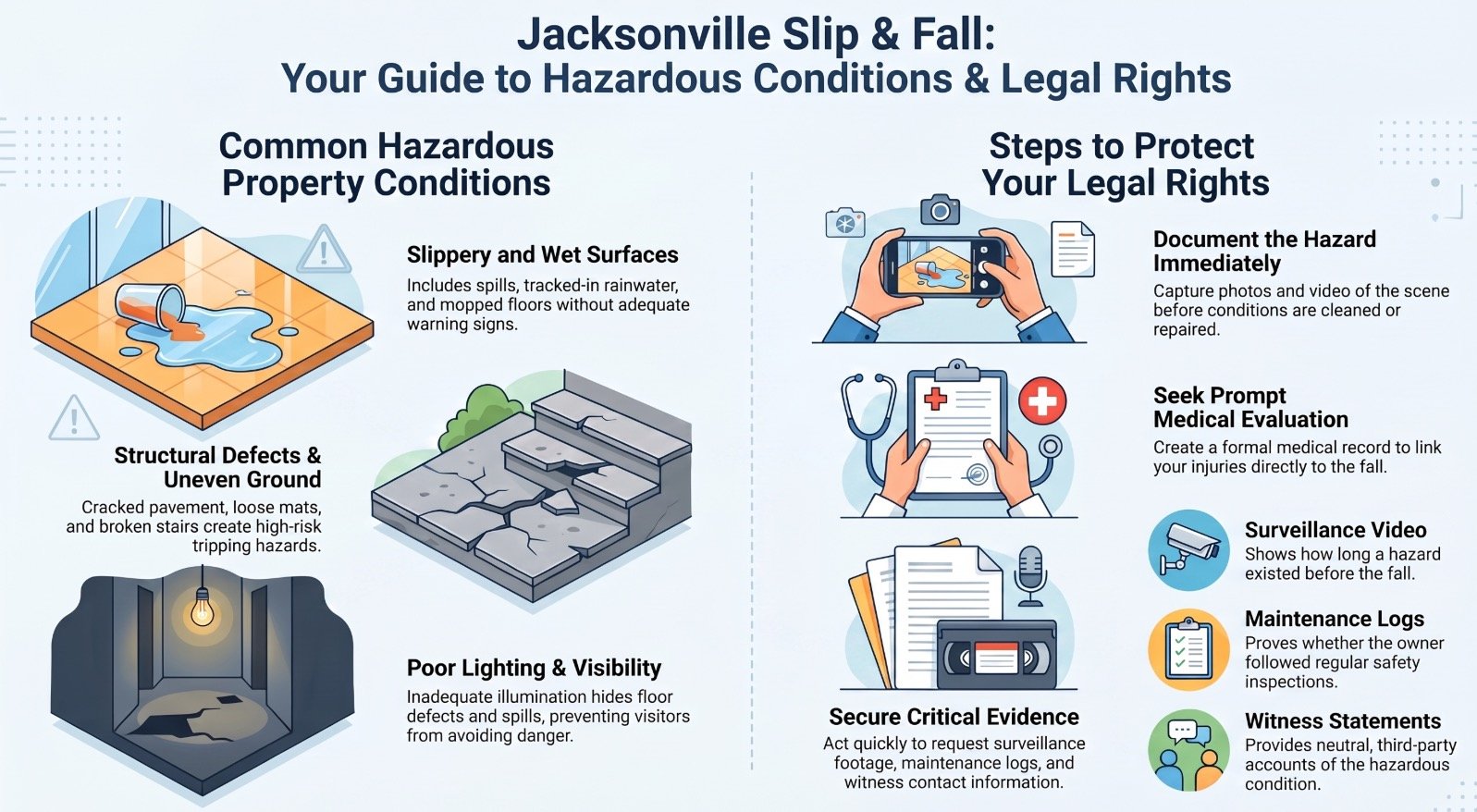
- Common hazards include wet floors, uneven surfaces, poor lighting, unsafe stairs, loose mats, and damaged walkways.
- Property owners may be liable if they knew or should have known about the danger and failed to fix or warn.
- Strong evidence includes photos, surveillance video, witness statements, incident reports, maintenance logs, and medical records.
- Florida comparative negligence may reduce compensation if the injured person shares fault for the fall.
How We Can Help With Your Jacksonville Slip & Fall Hazardous Conditions Injury Claim
After a slip and fall caused by hazardous property conditions, an injured person may face medical expenses, lost income, insurance disputes, and uncertainty about who is legally responsible. A Jacksonville slip and fall hazardous conditions lawyer can help by organizing evidence, identifying responsible parties, and presenting a claim with care and precision. This support may include reviewing incident reports, preserving photographs, obtaining witness statements, and consulting medical records to connect the injury to the unsafe condition.
Counsel may also address Comparative negligence analysis, especially when an insurer argues the injured person shared fault. By evaluating conduct, warnings, lighting, maintenance practices, and inspection records, legal support can clarify how responsibility should be divided. Premises liability defenses may also be anticipated and answered, including claims that the danger was open, obvious, or unknown to the property owner. Through diligent advocacy, the process can serve the injured person’s recovery and pursuit of accountability.
Understanding Jacksonville Slip & Fall Hazardous Conditions Injury Cases


When hazardous conditions cause a fall, the legal analysis often turns on whether the property owner, business operator, or other responsible party failed to keep the premises reasonably safe. These cases require careful attention to duty, notice, causation, and damages. A Defective premises liability claim may arise when an unsafe condition existed, the responsible party knew or should have known about it, and reasonable action was not taken to correct it or warn lawful visitors.
OUR CONSULTATIONSARE FREE
START YOUR FREE CASE REVIEW

In Jacksonville, these claims are evaluated under Florida law, including comparative negligence when the injured person’s conduct may be examined. If fault is shared, compensation may be reduced according to the assigned percentage of responsibility. For individuals and families focused on recovery, understanding this framework helps clarify the path forward. A thorough case review can identify responsible parties, preserve relevant evidence, and support a claim aimed at accountability, care, and meaningful restitution after injury.
Don’t Wait. Call Our Florida Personal Injury Lawyers Now!
Common Causes of Jacksonville Slip & Fall Hazardous Conditions
Common causes of Jacksonville slip and fall hazardous conditions often involve preventable property defects or maintenance failures. Wet or slippery floors, uneven walking surfaces, poor lighting conditions, and unsafe stairs or handrails can each create serious risks for lawful visitors. Identifying the specific hazard is an important step in evaluating responsibility and the potential basis for an injury claim.
Wet Or Slippery Floors


Because slick surfaces often develop without warning, wet or slippery floors remain a frequent source of slip and fall hazardous conditions in Jacksonville businesses, apartment complexes, hotels, restaurants, and public properties. Spilled drinks, tracked-in rainwater, leaking equipment, recently mopped areas, and poorly managed entryways may each become a Cause of injury when reasonable care is lacking. Outside hazards, including wet sidewalks leading into lobbies, can also create dangerous conditions when owners fail to respond promptly. Responsible property management requires inspections, warning signs, absorbent mats, and timely cleanup to protect guests, tenants, workers, and community members. When janitorial crews or repair vendors create or ignore slick conditions, Contractor liability may arise. In many cases, maintenance failure shows that preventable risks were allowed to endanger those lawfully present on the property.
Uneven Walking Surfaces
Although many walking surface defects appear minor at first glance, uneven floors, sidewalks, parking lots, ramps, and walkways can create serious slip-and-fall hazardous conditions across Jacksonville properties. These conditions may develop from cracked concrete, lifted pavement, loose mats, settling foundations, poor repairs, or changes between flooring materials. Tripping hazards are especially concerning in places where property owners invite customers, patients, residents, or guests to enter and move safely through the premises. Uneven flooring can interrupt a person’s normal stride, causing sudden loss of balance and harmful falls. Responsible property maintenance requires timely inspections, careful repairs, and appropriate warnings when hazards cannot be corrected immediately. By addressing these defects, property managers help protect community members and support safer environments for everyone they serve daily.
Poor Lighting Conditions
Poor lighting can turn otherwise manageable walking areas into dangerous slip-and-fall hazards, particularly in Jacksonville businesses, apartment complexes, parking lots, stairwells, and entryways. When property owners fail to provide adequate illumination, visitors may not see spilled liquids, floor defects, curbs, changes in elevation, or objects left in common paths. Nighttime visibility is especially important in exterior areas where pedestrians depend on lighting to move safely and confidently. Poorly placed fixtures may also create glare hazards, shadows, or uneven brightness that obscures dangers rather than revealing them. Those responsible for maintaining premises serve the community best by promptly replacing bulbs, inspecting fixtures, and addressing dim areas. Proper lighting supports safe movement, reduces preventable injuries, and reflects reasonable care for guests, residents, customers, workers, and lawful visitors.
Unsafe Stairs Or Handrails
When stairs or handrails are poorly maintained, improperly designed, or left in disrepair, they can become serious slip-and-fall hazards for visitors, residents, customers, and workers. Staircase safety depends on stable steps, consistent riser heights, secure tread surfaces, adequate lighting, and clear walking paths. When property owners overlook cracked steps, loose carpeting, worn edges, or slippery materials, individuals may lose balance and suffer preventable injuries. Railing maintenance is equally important because loose, missing, or improperly positioned handrails can leave people without needed support while ascending or descending stairs. Businesses, landlords, public facilities, and other property managers serve their communities by inspecting stairways regularly, promptly correcting defects, and documenting repairs. These measures help protect lawful visitors while reducing the risk of dangerous and avoidable falls.
Legal Rights of Jacksonville Slip & Fall Hazardous Conditions Injury Victims
After a hazardous fall on another party’s property, an injured person in Jacksonville may have the right to pursue compensation when unsafe conditions contributed to the incident. These rights may include recovery for medical expenses, lost income, reduced earning capacity, and pain and suffering resulting from the injury. A careful liability review helps determine whether the property owner, manager, or another responsible party failed to act with reasonable care.
Unsafe property conditions may support compensation when reasonable care was not taken to prevent a hazardous fall.
- Injured persons may seek accountability when a dangerous condition was known, or should have been discovered, through reasonable inspection.
- Evidence Preservation is important, including photographs, incident reports, witness names, footwear, and medical records, because conditions may change quickly after a fall.
- Comparative Fault may affect compensation if the injured person is found partly responsible, but recovery may still be possible under Florida law.
These protections help injured community members seek support while promoting safer spaces for others in Jacksonville.
Why Do Jacksonville Slip & Fall Hazardous Conditions Injuries Happen?
Across Jacksonville, slip and fall injuries often occur because a property condition creates an unreasonable risk that is not corrected, marked, or inspected in a timely manner. Wet entryways, uneven pavement, loose mats, poor lighting, damaged stairs, and cluttered walkways can endanger visitors, residents, employees, and customers. Seasonal weather also contributes, as heavy rain, humidity, and tracked-in moisture can make floors or exterior surfaces unexpectedly slick.
Hazards may arise from routine operations, inadequate maintenance, or poor coordination among those responsible for a site. Independent contractor hazards can develop when cleaning crews, repair vendors, landscapers, or delivery personnel leave cords, debris, spills, or equipment in areas used by the public. In service-oriented settings, careful property management helps protect those who come for assistance, care, worship, commerce, or community support. Injuries happen when reasonable attention to safety is missing, delayed, or divided among multiple parties.
What Should You Do After a Jacksonville Slip & Fall Hazardous Conditions Injury?
After a Jacksonville slip and fall injury caused by hazardous conditions, the injured person should seek prompt medical care to address injuries and create a reliable record. When possible, document the hazard with photographs, witness information, and incident reports. A lawyer may then evaluate the circumstances, preserve essential evidence, and explain potential legal options.
Seek Medical Care
Prompt medical care is one of the most important steps following a Jacksonville slip and fall injury caused by hazardous conditions. An injured person should be evaluated as soon as possible, even if the pain seems minor, because delayed symptoms may indicate serious harm. Medical professionals can assess fractures, head trauma, spinal injuries, soft tissue damage, and other conditions that may worsen without treatment. Clear communication with providers is important, including accurate Injury location details and Incident time records, so the medical chart reflects how the injury occurred. For those committed to protecting others, timely care also supports responsible decision-making and helps identify safety concerns that may affect the community. Follow continued treatment as directed, and avoid missed appointments whenever possible after the incident.
Document The Hazard
When safe, document the hazardous condition before cleaning, repairing, moving, or altering it. Photographs or video may show liquid, debris, uneven flooring, poor lighting, missing warnings, or weather-related hazards. Images should include close views and wider views showing the surrounding area, entrances, aisles, or walkways. If you report an issue to a manager, handle incident reporting calmly, and record the date, time, location, and description. Names of employees, witnesses, or responding personnel may help establish notice, especially if they observed the danger or raised similar concerns before. Keep any shoes, clothing, receipts, or related items in their original condition. Careful documentation supports accountability and helps protect others from preventable harm.
Contact A Lawyer
Because hazardous condition cases often turn on evidence that can disappear quickly, contacting a lawyer soon after a Jacksonville slip and fall injury can help preserve important proof and protect the injured person’s rights. Legal guidance may assist with prompt requests for surveillance footage, maintenance records, incident reports, and witness statements before memories fade or conditions change. Counsel can also help preserve accident timeline details, including when the hazard appeared, who reported it, and how the injury occurred. This organized approach supports accountability while reducing unnecessary burdens on the injured person and family. A lawyer may evaluate applicable premises liability rules, Identify property owner liability, and communicate with insurers or opposing parties. Early involvement helps ensure decisions are informed, deadlines are monitored, and valid claims are presented responsibly.
Don’t Wait. Call Our Florida Personal Injury Lawyers Now!
Critical Evidence in a Jacksonville Slip & Fall Hazardous Conditions Injury Case
Critical evidence can determine whether a Jacksonville slip and fall claim clearly shows a hazardous condition, notice, and resulting injury. Critical materials often include: 1. incident scene photographs, 2. surveillance video footage and witness statements, and 3. maintenance records showing inspection or repair history. Preserving these items quickly may help establish how the fall occurred, who was responsible, and whether the danger should have been corrected earlier.
Incident Scene Photographs
How can incident scene photographs shape the outcome of a Jacksonville slip and fall hazardous conditions injury case? Photographs may preserve conditions that quickly change, including spills, debris, uneven flooring, missing warnings, and poor Lighting. This Documentation can help counsel, insurers, and courts evaluate whether a property owner acted reasonably and whether the injured person had an opportunity to avoid harm. Images should capture wide views, close details, surrounding walkways, footwear, injuries, and any warning signs. When taken promptly, they may also support statements from Witnesses who observed the hazard before cleanup or repair. Although Video may later become relevant, still photographs often provide immediate, focused proof of the scene. Careful preservation of images can help responsible advocates serve injured clients with accuracy, fairness, and diligence throughout the claim process.
Surveillance Video Footage
When surveillance video captures a hazardous condition, the footage may become some of the most important evidence in a Jacksonville slip and fall injury case. Cameras can show when a spill, debris, poor lighting, or other unsafe condition appeared, how long it remained, and whether staff had a fair opportunity to correct it. Video preservation tips include promptly asking the property owner to secure all relevant recordings, including footage before and after the fall, before routine deletion occurs. Surveillance clip analysis may also reveal camera angles, gaps, timestamps, employee activity, and customer traffic patterns that clarify responsibility. For advocates committed to serving injured individuals, careful review of video evidence can support accountability, protect the truth, and strengthen a claim grounded in documented unsafe conditions.
Witness Statements
After a fall, witness statements can provide important details not always visible in photographs, incident reports, or surveillance footage. Bystanders may describe the hazard, the injured person’s movements, or employees’ conduct before and after the incident. Third-party witnesses can be especially important because they have no direct interest in the claim, which may strengthen witness credibility. Gather accurate witness statements promptly, while memories remain clear and contact information is available. A careful legal review can compare each account with other evidence to identify consistency, gaps, or disputed facts. We should help by treating witnesses respectfully, asking focused questions, and preserving their observations so the truth of the hazardous condition can be fairly evaluated.
Maintenance Records
Witness statements may explain what people saw at the scene, but maintenance records can show what the property owner or business knew, did, or failed to do before the fall occurred. In a Jacksonville slip-and-fall hazardous conditions injury case, maintenance logs may reveal inspection schedules, cleaning practices, repair requests, and prior reports of spills, leaks, broken flooring, or poor lighting. These records can help determine whether management used reasonable care to protect visitors. Incident notification records may also show when management first learned of a dangerous condition and how quickly staff responded. When records are incomplete, altered, or inconsistent, that absence may raise serious questions. Careful review of these materials supports accountability, encourages safer practices, and helps injured individuals seek fair resolution.
Long-Term Effects of Jacksonville Slip & Fall Hazardous Conditions Injuries
Slip and fall injuries caused by hazardous conditions in Jacksonville can produce lasting consequences that extend well beyond initial medical treatment. Chronic pain, reduced mobility, and ongoing medical costs may affect a person’s ability to work, manage daily activities, and maintain independence. These long-term effects often become central issues when evaluating the full impact of an injury claim.
Chronic Pain Issues
When a hazardous condition causes a fall, the physical impact may lead to chronic pain that lasts long after the initial injury appears to recover. Persistent back, neck, shoulder, hip, or joint pain can affect an injured person’s ability to work, provide care, and maintain daily responsibilities. These conditions often require continued medical evaluation, physical therapy, diagnostic testing, and Medication management. Pain flare-ups may occur without warning, especially when inflammation, nerve irritation, or soft tissue damage remains unresolved. For those committed to serving family, clients, or community members, chronic pain can create ongoing strain and uncertainty. In a Jacksonville slip and fall claim, documentation of lasting pain, treatment needs, and functional limitations may help establish the full impact of hazardous condition injuries.
Reduced Mobility Challenges
After a hazardous condition causes a fall, reduced mobility may become one of the most disruptive long-term effects. A person who once moved independently may require support when walking, climbing stairs, driving, or completing routine household tasks. These limitations can affect employment, caregiving responsibilities, community involvement, and personal dignity. In Jacksonville slip and fall cases, reduced mobility may also require careful evaluation of how unsafe property conditions changed the injured person’s daily life. Accessible Assistance from relatives, neighbors, coworkers, or service providers may become crucial for maintaining independence. Safety Accommodations, such as handrails, mobility devices, adjusted work duties, or modified living spaces, may help prevent further harm. These challenges demonstrate why lasting mobility restrictions require serious attention in any injury assessment.
Ongoing Medical Costs
Although the initial injury may receive the most immediate attention, ongoing medical costs can become a substantial long-term consequence of hazardous condition falls in Jacksonville. Injured individuals may require hospital follow ups, diagnostic imaging, expert evaluations, physical therapy, medication, and assistive devices to support recovery and daily function. These needs can continue for months or years, especially when fractures, spinal trauma, joint damage, or head injuries are involved. For families, caregivers, and community members committed to helping others, understanding these burdens is important. Medical treatment may also create future expenses, including surgery, rehabilitation, home modifications, and transportation to appointments. Carefully reviewing these costs helps show the full impact of the injury and supports responsible planning for ongoing care and stability after a serious fall.
Proving Liability in Jacksonville Slip & Fall Hazardous Conditions Injury Cases
A successful slip and fall claim in Jacksonville requires clear proof that a hazardous condition existed, that the property owner or responsible party knew or should have known about it, and that the condition caused the injury. Evidence may include photographs, incident reports, maintenance records, witness statements, surveillance footage, and medical documentation connecting the fall to specific harm. Liability often depends on whether the property owner conducted reasonable inspections and took timely corrective action to protect lawful visitors.
Attorneys serving injured individuals evaluate notice, causation, and safety practices with careful attention to Florida law. Comparative Fault may reduce recovery if the injured person is found partly responsible, such as by ignoring visible warnings. A complete Damages Calculation also supports liability arguments by showing the practical impact of the unsafe condition, including medical costs, lost income, and reduced daily functioning. Strong documentation helps establish accountability and promotes fair responsibility.
Dealing With Insurance Companies After a Jacksonville Slip & Fall Hazardous Conditions Injury
When an injured person reports a Jacksonville slip and fall involving hazardous conditions, insurance companies often begin evaluating the claim quickly, sometimes before they know the full extent of the injury. Adjusters may request recorded statements, medical authorizations, or broad background information they can later use to limit responsibility. Those assisting the injured should encourage careful documentation and measured communication, especially when pain, mobility limits, or future treatment remain uncertain.
Claim denial tactics may include arguing that the hazard was obvious, the property owner lacked notice, or the injuries were unrelated. A lawyer can review these positions, preserve supporting evidence, and identify weaknesses in the insurer’s analysis. Effective settlement negotiation strategies focus on medical records, photographs, witness accounts, incident reports, and the injury’s practical impact. By presenting a clear, organized demand, counsel can help protect the injured person’s dignity while pursuing fair compensation without unnecessary conflict.
What to Expect During a Jacksonville Slip & Fall Hazardous Conditions Injury Claim Process
A Jacksonville slip and fall hazardous conditions injury claim typically begins with reporting the hazard and preserving relevant evidence that may establish how the incident occurred. The insurance claim review then evaluates liability, damages, medical records, and available documentation before considering any resolution. Depending on the facts and the insurer’s position, the claim may proceed toward settlement negotiations or litigation.
Reporting The Hazard
After a slip and fall occurs, reporting the hazardous condition is an important early step in preserving the facts of the incident. The injured person, or someone assisting, should notify the property owner, manager, or responsible employee as soon as practical. A clear Report timeline helps show when the danger was disclosed and whether prompt action followed. The notice should identify the hazard location with enough detail to avoid confusion, such as the aisle, entrance, stairway, restroom, or walkway involved. In Jacksonville claims, this report may help establish that the condition was serious enough to require attention. It also supports orderly communication between the injured person, insurers, and any legal representative. Courteous, direct reporting promotes accountability while respecting the role of those responsible for maintaining safe premises.
Gathering Key Evidence
Because evidence can change or disappear quickly, gathering key proof is a central part of a Jacksonville slip and fall hazardous conditions injury claim. Attorneys may document the scene, preserve photographs, obtain surveillance footage, and identify witnesses who observed the hazard or its aftermath. Medical records, incident reports, footwear, and damaged personal items may also help clarify how the fall occurred and what harm resulted. A careful review of Property condition history can reveal prior complaints, maintenance failures, or repeated dangers needing correction. In larger buildings, indoor hazard mapping may help show where spills, uneven flooring, poor lighting, or obstructed walkways created risk. This evidence supports a fair understanding of responsibility, while honoring the injured person’s need for dignity, accountability, and practical assistance after a preventable fall.
Insurance Claim Review
When an insurance claim begins, the review process often focuses on how the hazardous condition developed, whether the property owner or manager had notice, and how the fall caused measurable harm. Adjusters typically examine incident reports, medical records, photographs, witness statements, maintenance logs, and prior complaints to assess responsibility. A careful Claim timeline review helps determine whether the injured person acted promptly, obtained appropriate care, and preserved relevant proof. Policy coverage analysis then identifies available insurance, exclusions, reporting requirements, and limits that may affect the claim’s value. Throughout this stage, clear documentation supports a fair evaluation and helps protect the injured person’s dignity. For those serving injured individuals, organized communication with providers, insurers, and witnesses can reduce confusion and promote a more complete, accurate claim review.
Settlement Or Litigation
A completed insurance claim review often determines whether a Jacksonville slip and fall hazardous conditions case is positioned for settlement discussions or likely to proceed toward litigation. During negotiations, the parties evaluate liability, medical documentation, lost income, and the injury’s long-term effects. Comparative negligence may reduce recovery if the injured person is alleged to share responsibility, making careful analysis necessary. Evidence preservation remains key, including photographs, incident reports, surveillance footage, maintenance records, and witness statements. When an insurer presents a fair resolution, settlement may spare the injured person added delay and uncertainty. If negotiations fail, litigation may allow formal discovery, depositions, expert review, and trial preparation. Throughout either path, the process should remain focused on accountability, truthful presentation, and securing support for meaningful recovery.
Compensation for Jacksonville Slip & Fall Hazardous Conditions Injury Damages
Slip-and-fall hazardous conditions can cause injuries that lead to significant medical expenses, lost income, and long-term physical limitations. In Jacksonville cases, compensation helps restore stability and support necessary recovery after a preventable incident. A lawyer may evaluate the circumstances, identify responsible parties, and document how the unsafe condition affected the injured person’s daily life, work capacity, and need for continued care.
Effective claims often depend on prompt evidence collection and thorough witness interviews. Photographs, incident reports, maintenance records, footwear details, and surveillance footage may help show that a hazardous condition existed and that appropriate care was not taken. Witness accounts can clarify how long the danger remained, whether warnings were present, and how the fall occurred. Through organized preparation, legal advocates help injured individuals present a credible claim for available compensation, while promoting accountability and safer conditions for the broader Jacksonville community.
Don’t Wait. Call Our Florida Personal Injury Lawyers Now!
Economic vs Non-Economic Damages in Jacksonville Slip & Fall Hazardous Conditions Cases
In Jacksonville slip and fall hazardous conditions cases, damages are often divided into economic losses, such as medical bills and lost wages, and non-economic losses, including pain and emotional distress. This distinction clarifies how an injury affects both the injured person’s finances and overall quality of life. Proving these damages requires organized evidence, credible documentation, and a clear connection between the hazardous condition and the resulting harm.
Medical Bills And Lost Wages
After a hazardous fall, medical bills and lost wages often form the foundation of the financial recovery sought in a Jacksonville premises liability claim. Economic damages may include emergency treatment, diagnostic testing, surgery, rehabilitation, medication, assistive devices, and follow-up care. They may also include income lost while the injured person cannot work, reduced earning capacity, and missed benefits. Careful documentation helps connect these losses to the dangerous condition and supports fair insurance negotiations. Records from physicians, employers, and payroll departments can show the practical burden placed on a household and those who depend on it. A safety policies review may also reveal whether the property owner failed to prevent foreseeable harm. Thorough proof allows responsible service providers to pursue accountability with accuracy, dignity, and purpose.
Pain And Emotional Distress
Financial losses tell only part of the story when a hazardous fall causes lasting harm. Non-economic damages address the human impact that invoices or payroll records cannot capture. Chronic pain may interfere with sleep, mobility, caregiving, worship, and community service. Daily limitations can change how an injured person prepares meals, assists family members, or participates in meaningful responsibilities. Emotional distress may also follow, including anxiety symptoms connected to walking in public places, entering stores, or fearing another fall. These effects warrant careful attention because they influence dignity, independence, and quality of life. Treatment challenges, including slow recovery or limited improvement, may intensify frustration and isolation. In Jacksonville slip and fall hazardous conditions cases, such losses reflect burdens beyond direct financial expense.
Proving Slip And Fall Damages
When a hazardous fall leads to an injury claim, you must prove damages with evidence that connects the condition, the fall, and the resulting losses. Economic damages may include emergency care, rehabilitation, prescriptions, lost wages, reduced earning capacity, and future medical needs. Records, invoices, employment documents, and physician opinions help establish these measurable losses with accuracy. Damages calculation also requires attention to non-economic harm, including pain, emotional distress, loss of mobility, and reduced enjoyment of daily life. In Jacksonville cases, credible testimony from the injured person, family members, caregivers, and medical providers may clarify how the injury changed ordinary routines and responsibilities. A careful presentation of both categories helps decision makers understand the full impact of the fall while supporting fair, service-centered accountability and lawful recovery.
When a Jacksonville Slip & Fall Hazardous Conditions Injury Case Goes to Trial vs Settlement
In many Jacksonville slip and fall hazardous conditions cases, the decision to settle or proceed to trial depends on the strength of the evidence, the severity of the injuries, and the willingness of the property owner or insurer to accept responsibility. Settlement may serve an injured person by providing a more predictable resolution, reducing delay, and preserving resources needed for medical care, recovery, and family support.
Trial may become necessary when liability is disputed, damages are undervalued, or comparative fault defenses are raised to shift blame onto the injured person. In those circumstances, a lawyer may prepare witnesses, organize medical proof, and present evidence showing how the hazardous condition caused harm.
The trial settlement timeline can vary based on investigation, negotiations, court scheduling, and case intricacy. A carefully prepared claim often improves the opportunity for fair resolution, whether through settlement discussions or a verdict after trial. Strong documentation helps guide each strategic decision.
Florida Laws That May Affect Your Jacksonville Slip & Fall Hazardous Conditions Case
Because Florida premises liability law controls how slip and fall hazardous conditions claims are evaluated, several legal rules may affect a Jacksonville injury case from the initial investigation through settlement or trial. These rules guide how responsibility is assessed, what evidence matters, and how compensation may be reduced.
- Premises liability duties require property owners and occupiers to use reasonable care to keep lawful visitors safe from dangerous conditions they knew, or should have known, existed.
- Notice requirements often matter in falls involving spills, debris, poor lighting, or unsafe flooring, because the injured person may need evidence showing the hazard was present long enough to be discovered and corrected.
- Comparative negligence may reduce recovery when the injured person is found partly responsible, such as by ignoring visible warnings or failing to use reasonable care.
These laws encourage careful investigation, fair accountability, and protection for community members harmed by preventable property hazards in Jacksonville.
The Statute of Limitations for Jacksonville Slip & Fall Hazardous Conditions Injury Cases
Every Jacksonville slip and fall hazardous conditions case is subject to strict filing deadlines, and missing those deadlines can prevent an injured person from pursuing compensation. In Florida, most negligence-based Premises Liability claims must be filed within two years from the date of injury, subject to limited exceptions. This deadline encourages timely notice, evidence preservation, and fair resolution for all parties involved.
For injured individuals and families seeking stability after an accident, prompt attention to the filing period supports responsible stewardship of legal rights. Medical records, incident reports, photographs, witness accounts, and Damages Proof may become harder to obtain as time passes. Early awareness also helps address issues involving Comparative Fault, where responsibility may be disputed between the property owner and the injured person.
If the deadline expires, courts may generally dismiss the claim, regardless of injury severity. Timeliness is required in Jacksonville slip and fall hazardous conditions cases.
How a Jacksonville Slip & Fall Hazardous Conditions Lawyer Can Help You
After a hazardous-condition fall, a Jacksonville slip and fall lawyer can evaluate the facts, identify legally responsible parties, and determine whether the property owner failed to use reasonable care. Through Premises liability analysis, counsel can connect unsafe conditions, notice, and resulting injuries with the duties owed to visitors.
A lawyer’s support often includes:
- Investigating the scene: Reviewing maintenance records, incident reports, photographs, video, and witness accounts to clarify how the danger developed.
- Managing evidence preservation: Sending preservation requests, securing available documentation, and reducing the risk that important proof is lost or altered.
- Presenting the claim: Calculating medical expenses, lost income, and other losses, then communicating with insurers or opposing parties in a structured manner.
This work can help injured individuals focus on recovery while still honoring responsibilities to family, coworkers, and community. It also promotes accountability, encouraging safer properties for those who depend on them.
When to Contact a Jacksonville Slip & Fall Hazardous Conditions Lawyer
Timely legal consultation can make a substantial difference in how a hazardous-condition fall claim is evaluated and preserved. After a fall in a store, apartment complex, workplace entrance, or public location, an injured person should consider contacting a Jacksonville slip and fall hazardous conditions lawyer as soon as possible, after addressing immediate safety and health needs. Early guidance may help identify relevant deadlines, locate witnesses, and preserve photographs, surveillance footage, maintenance records, or incident reports before they are lost or changed.
Medical treatment should be sought promptly, both to protect the injured person’s health and to create reliable injury documentation. This documentation may later help show the nature, timing, and progression of harm. Contact is especially important when injuries are serious, fault is disputed, the property owner denies notice of the hazard, or an insurance representative requests statements. Prompt action supports a more orderly process and helps protect the interests of those affected.
Why You Need an Experienced Jacksonville Slip & Fall Hazardous Conditions Lawyer
Because hazardous-condition claims often turn on evidence that is difficult to obtain without legal action, experienced representation can be critical from the beginning. A Jacksonville slip and fall lawyer can identify responsible parties, secure surveillance footage, request maintenance records, and document unsafe conditions before they disappear. This careful approach helps prevent Evidence preservation mistakes that may weaken an injured person’s ability to seek compensation.
Experienced counsel also understands how property owners, managers, and insurers may respond after a serious fall. Insurance delay tactics can burden injured individuals who are already focused on medical care, family needs, and returning to service in their communities. A lawyer can manage communications, evaluate settlement offers, and pursue accountability while the client concentrates on recovery. In hazardous-condition cases, legal guidance provides structure, discipline, and protection. It helps ensure the facts are presented clearly, deadlines are met, and those harmed by preventable dangers are treated fairly.
How to Choose the Right Jacksonville Slip & Fall Hazardous Conditions Lawyer for Your Case
When selecting a Jacksonville slip and fall hazardous conditions lawyer, an injured person should look for experience with premises liability claims involving unsafe flooring, poor lighting, neglected spills, broken handrails, uneven surfaces, and other dangerous property conditions. The lawyer should understand how to coordinate a prompt Property inspection, preserve evidence, and identify responsible parties, including owners, managers, or maintenance contractors.
A careful case evaluation should address liability, medical documentation, lost income, and long-term needs, while respecting the client’s dignity and recovery goals. The injured person may also consider whether the lawyer communicates clearly, answers questions directly, and supports informed decisions throughout the process. A fee contingency arrangement can reduce financial pressure because payment depends on the outcome. Strong claim negotiation skills are also important, since insurers often dispute fault or minimize injuries. The right lawyer should provide steady guidance, careful preparation, and a service-minded commitment to seeking fair compensation.
About The Law Offices of Anidjar & Levine
For individuals evaluating legal representation after a hazardous slip and fall accident in Jacksonville, The Law Offices of Anidjar & Levine offers client-focused support in premises liability matters involving unsafe property conditions. The firm assists injured individuals by examining the circumstances of a fall, identifying responsible parties, and developing a Legal Strategy aligned with the client’s needs and recovery goals.
Its attorneys understand that service to injured clients requires careful attention, clear communication, and diligent case preparation. In Premises Liability claims, the firm may address hazards such as wet floors, poor lighting, broken stairs, uneven walkways, or missing warnings. Prompt Evidence Preservation can be crucial, including incident reports, surveillance footage, witness statements, and maintenance records.
The firm also handles insurance negotiation, focusing on fair compensation for medical costs, lost income, and related damages. Through structured advocacy, it helps clients move forward with informed decisions and support.
Frequently Asked Questions
Can Weather Conditions Affect a Jacksonville Slip and Fall Claim?
Yes, weather conditions can affect a Jacksonville slip and fall claim, but they do not automatically excuse unsafe property conditions. Rain, storms, or tracked-in water may influence Liability timelines and the duty to inspect, warn, or clean hazards. A claimant must prove notice, meaning the property owner knew or should have known about the danger. Careful documentation supports fair service to injured individuals and responsible community safety.
Are Slip and Fall Claims Different on Government Property?
Yes, slip and fall claims on government property are different because sovereign immunity rules may limit liability, damages, and filing procedures. An injured person must usually follow strict notice requirements before pursuing compensation. These deadlines can be shorter than ordinary premises liability claims. A careful evaluation helps determine whether a public agency knew, or should have known, about the hazard, supporting accountability while respecting procedures designed to serve the public.
What if I Fell at a Rented Apartment Complex?
A fall at a rented apartment complex may involve Landlord responsibility if unsafe conditions existed in common areas or resulted from neglected maintenance. A careful premises inspection can help determine whether the owner, property manager, or maintenance contractor failed to correct hazards. The injured person should report the incident, document conditions, and seek medical care. Prompt action helps preserve evidence and supports accountability for those entrusted with protecting residents and guests.
Can Poor Lighting Alone Justify a Hazardous Conditions Claim?
Yes, poor lighting alone can support a hazardous conditions claim if it created an unreasonable risk and contributed to the fall. In premises liability, the inquiry considers whether management knew, or should have known, that inadequate lighting endangered residents, guests, or service providers. Security cameras, maintenance records, complaints, and incident reports may show notice. A careful evaluation helps protect vulnerable visitors and promotes safer community spaces.
Do Jacksonville Slip and Fall Cases Require Expert Witnesses?
Not always, but expert witnesses may be needed when liability, causation, or damages require expert explanation. In Jacksonville slip and fall cases, experts can address floor safety, lighting, maintenance practices, medical causation, or future care needs. Courts and insurers often weigh credibility factors, including consistency, qualifications, and reliable methods. Strong injury documentation, witness accounts, and photographs may reduce the need for litigation, supporting fair service to injured persons.
—————————
A Jacksonville slip and fall hazardous conditions lawyer can evaluate the circumstances of an injury, identify potentially liable parties, and pursue compensation for medical expenses, lost income, and related damages. Prompt legal guidance may help preserve evidence, meet filing deadlines, and strengthen a claim. The Law Offices of Anidjar and Levine provides experienced representation for injured clients seeking accountability. Those harmed by unsafe property conditions may benefit from a timely consultation with a Jacksonville Personal Injury Lawyer to protect their rights and legal options.