



If you suspect your loved one contracted MRSA in a Fort Lauderdale nursing home, you should act fast to protect their health and your legal rights.
Get urgent medical care, request cultures and wound-care notes, and start a dated timeline with photos, medication logs, and caregiver names.
The Law Offices of Anidjar and Levine can help by sending preservation letters, securing facility records, and investigating failures in hygiene, isolation, and timely treatment.
Learn more by contacting a Fort Lauderdale Nursing Home Abuse and Neglect Lawyer to understand what matters most next.



Key Takeaways
- Seek urgent medical care for MRSA symptoms and start a same-day timeline of fevers, wound changes, pain, and confusion.
- Preserve evidence immediately: date-stamped wound photos, dressing-change notes, medication lists, and missed-dose records.
- Obtain key records: lab cultures, physician notes, wound-care charts, discharge summaries, and infection-control policies and incident reports.
- Document facility failures: hand hygiene lapses, improper wound care, contaminated shared equipment, understaffing, delayed escalation, and missing isolation measures.
- Contact a Fort Lauderdale nursing home MRSA lawyer quickly to send preservation letters, secure records, and protect Florida filing deadlines.
How We Can Help With Your Fort Lauderdale Nursing Home MRSA Infection Claim
Act quickly if you suspect a MRSA infection has begun or worsened in a Fort Lauderdale nursing home. You can protect your loved one and support safer care for others by documenting symptoms, requesting records, and reporting concerns.
When you hire us, you get a team that moves fast, preserves evidence, and coordinates medical reviews so you’re not carrying the burden alone.
You’ll have clear guidance on what to collect, who to contact, and how to communicate with the facility without escalating conflict. We’ll prepare for family meetings, attend with you when possible, and help you ask focused questions about infection control, wound care, and staffing.
You’ll also receive straightforward updates on settlement timelines, including what can slow a claim and what can speed it up. Throughout the process, you’ll stay informed, respected, and empowered to advocate.
Understanding Fort Lauderdale Nursing Home MRSA Infection Cases
When you start piecing together how an MRSA infection developed in a Fort Lauderdale nursing home, the details matter—where the bacteria likely entered, how quickly staff responded, and whether basic infection-control steps were followed.
You’ll want a clear timeline of symptoms, testing, treatment, and any isolation measures, because MRSA can worsen fast in older adults with fragile skin or weakened immunity.
You can also look at what the facility knew and documented: lab results, physician notes, wound-care records, and medication logs.
Pay attention to antibiotic stewardship—whether antibiotics were chosen appropriately, adjusted based on culture results, and monitored to prevent resistance and complications.
Environmental screening can matter too, especially if residents report recurring infections or multiple people become colonized.


Common Causes of Fort Lauderdale Nursing Home MRSA Infections
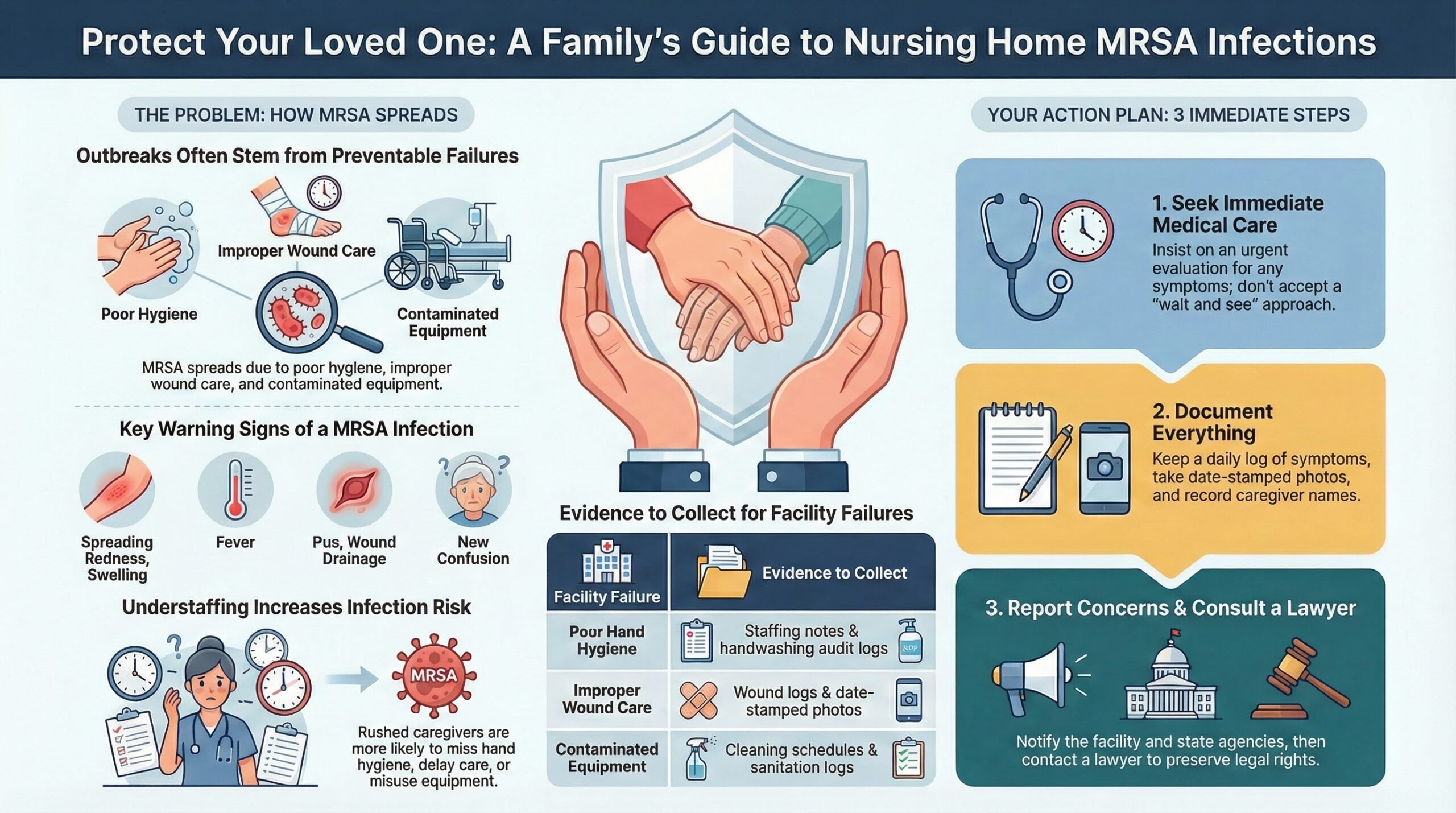
When you’re looking at how MRSA spreads in a Fort Lauderdale nursing home, you’ll often find basic infection-control failures at the center.
You may see poor hand hygiene, improper wound care, or contaminated medical equipment that allows bacteria to spread from one resident to another.
Overcrowding and understaffing can make these lapses more common and harder to correct.
Poor Hand Hygiene Practices
Too often, poor hand hygiene in Fort Lauderdale nursing homes turns routine care into a pathway for MRSA to spread from resident to resident.
When staff rush between rooms without proper handwashing or sanitizer use, you see germs move onto bed rails, call buttons, and mobility aids.
If you’re a family member, you can help by asking whether the facility tracks handwashing audits and reinforces glove compliance during every resident contact.
You also serve residents by practicing careful hand hygiene yourself and supporting visitor education at the front desk, including reminders about sanitizer stations and when to avoid touching shared surfaces.
When leadership doesn’t train, monitor, and correct lapses, residents bear the consequences.
You merit a home that treats cleanliness as compassionate care.
Improper Wound Care
Cutting corners in wound care can turn a small sore or surgical incision into an MRSA entry point. When staff skip a careful wound assessment, they may miss swelling, drainage, odor, heat, or new pain that signals infection.
If they delay reporting changes, you lose precious time for cultures, antibiotics, and isolation steps that protect other residents.
Improper dressing selection also raises risk. A dressing that’s too occlusive can trap moisture and bacteria; one that’s too dry can crack tissue and slow healing.
If staff don’t change dressings on schedule, cleanse correctly, or document progress, you’re left vulnerable. You serve your loved one best by asking how wounds are assessed, who changes dressings, and how concerns get escalated promptly.
Contaminated Medical Equipment
A shared blood-pressure cuff, thermometer, or gait belt can transmit MRSA from one resident to another if staff don’t disinfect it between uses. When you’re caring for elders, you rely on tools that should protect them—not expose them.
But contaminated stethoscopes, wound-care trays, lift slings, and wheelchairs can harbor bacteria in seams and cracks, then transfer them to fragile skin or surgical sites.
You can reduce risk by insisting on clear sterilization protocols, including single-resident supplies when possible, proper contact times for disinfectants, and documentation after each use.
You also need consistent equipment maintenance: replace frayed straps, cracked plastics, and worn padding that can’t be fully cleaned. If a facility ignores these basics, residents pay the price with preventable infections.
Overcrowding And Understaffing
When a nursing home packs too many residents into too little space and doesn’t staff enough trained caregivers to match, MRSA spreads faster.
You’ll see more shared rooms, rushed toileting, and missed hand hygiene because the day’s tasks outnumber the minutes available.
Overcrowding also pushes facilities beyond capacity, increasing contact among residents, visitors, and surfaces that require constant disinfection.
With staff shortages, caregivers may skip proper gowning and glove changes, delay wound care, or reuse equipment without thorough cleaning.
You can’t serve vulnerable seniors well when a nurse covers too many beds and can’t monitor infections early.
If you suspect overcrowding or chronic understaffing contributed to MRSA, document conditions, request care plans, and seek accountability so your loved one receives safe, dignified care.
Legal Rights of Fort Lauderdale Nursing Home MRSA Infection Victims
You may seek compensation for medical bills, pain, disability, and wrongful death, and you can demand transparency about outbreaks and records.
Seek compensation for medical bills, pain, disability, or wrongful death—and demand transparency about outbreaks and facility records.
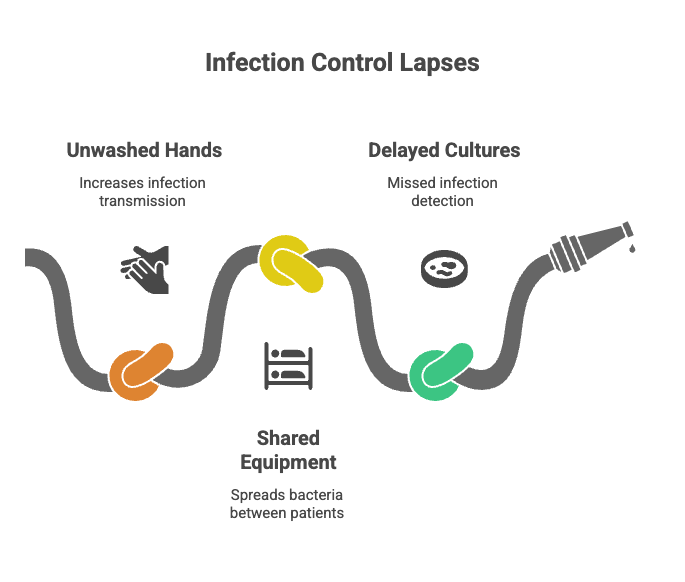
Evidence often shows up in everyday moments:
- Unwashed hands before dressing changes or catheter care
- Shared equipment moved room-to-room without proper disinfection
- Delayed cultures, missed wound checks, or ignored fever warnings
When a home violates Florida regulations or its own policies, you can hold it responsible and help protect other residents, too.


Steps to Take After a Fort Lauderdale Nursing Home MRSA Infection
If you suspect a MRSA infection in a Fort Lauderdale nursing home, you should get medical care immediately to protect your health and prevent complications.
You’ll want to document symptoms, diagnoses, medications, and all treatment details as they occur. Then report the infection to the facility and contact a Fort Lauderdale nursing home MRSA lawyer to protect your rights and preserve crucial evidence.
Seek Immediate Medical Care
Act quickly and get medical care right away at the first sign of a possible MRSA infection in a Fort Lauderdale nursing home.
If you notice spreading redness, warmth, swelling, fever, pus, or a painful sore, insist on an Emergency evaluation the same day.
Ask for a clinician to assess the wound, check essential signs, and rule out bloodstream infection.
Prompt care protects your loved one and helps safeguard other residents and staff you’re trying to serve. Don’t accept “wait and see” when symptoms worsen, or the resident seems confused, weak, or short of breath.
Request lab testing and follow-up orders so the facility can act without delay. Start Antibiotic treatment only under medical direction, and make sure doses aren’t missed. If needed, go to the ER.
Document Symptoms And Treatment
Once MRSA is suspected or confirmed in a Fort Lauderdale nursing home, start documenting everything the same day so the timeline stays clear and the care plan can’t be rewritten later.
Keep a daily symptom timeline: fever, redness, swelling, drainage, pain level, confusion, and appetite. Photograph wounds with date stamps and note dressing changes, lab orders, culture results, and isolation steps.
Ask for printed medication lists and record each dose given or missed to support medication adherence, including antibiotics, pain relief, and, if ordered, probiotics.
Save discharge summaries, transport notes, and follow-up instructions.
Write down the names and roles of everyone who provides care and what they did. Your careful records protect your loved one and help you advocate calmly, respectfully, and effectively.
Report Facility And Consult a Lawyer
After you’ve stabilized your loved one’s care, report the suspected or confirmed MRSA infection to the Florida Agency for Health Care Administration (AHCA) and the Broward County Health Department so the facility’s infection-control practices can be reviewed and the issue can’t be quietly brushed aside.
Ask for written confirmation, request an incident report, and raise concerns in family meetings to ensure other residents remain protected.
Then consult a nursing home MRSA lawyer to preserve evidence, obtain staffing and sanitation logs, and coordinate medical records without delays. A lawyer can also manage insurance claims and calculate future care needs.
| Action | Who to Contact | Purpose |
|---|---|---|
| File complaint | AHCA | Trigger oversight |
| Notify | County Health Dept. | Public health review |
| Request records | Facility admin | Preserve facts |
| Consult counsel | MRSA lawyer | Build case |
| Track costs | Insurer/Medicare | Support claims |
How a Fort Lauderdale Nursing Home MRSA Infection Lawyer Can Help You
When a nursing home MRSA infection upends your family’s life, a Fort Lauderdale nursing home MRSA infection lawyer can step in quickly to protect your rights and build a strong claim. You shouldn’t have to fight alone while caring for someone you love. Your lawyer can explain resident rights, communicate with the facility, and push for safe care while the case moves forward.
They also focus on evidence preservation before records disappear or stories change. You can expect steady guidance, clear deadlines, and respectful advocacy that honors your desire to serve and protect your loved one.
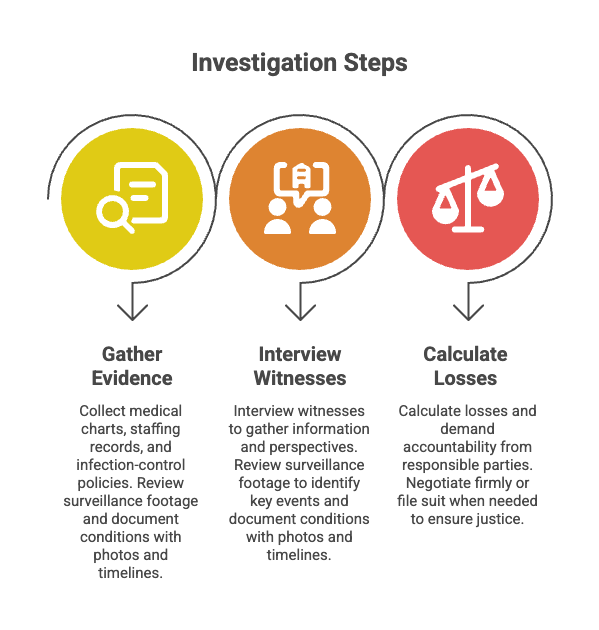
- Request medical charts, wound logs, staffing records, and infection-control policies
- Interview witnesses, review surveillance, and document conditions with photos and timelines
- Calculate losses, demand accountability, and negotiate firmly or file suit when needed
With a focused plan, you can seek justice, improve standards, and help prevent the next resident from suffering.
Long Term Effects of Fort Lauderdale Nursing Home MRSA Infection Injuries
If you’ve suffered a MRSA infection in a Fort Lauderdale nursing home, you may face chronic wound complications that heal slowly and require ongoing care.
You can also experience recurring MRSA infections that lead to repeated treatments and hospital visits.
Over time, you’re at higher risk of functional decline, with reduced mobility and independence.
Chronic Wound Complications
Although a Fort Lauderdale nursing home MRSA infection may start as a small sore or irritated skin, it can spiral into chronic wound complications that won’t close, repeatedly reopen, or spread into deeper tissue.
You may see tunneling, foul drainage, or blackened edges, and you’ll often need debridement, advanced dressings, and careful pain control to keep healing on track.
When you’re serving a loved one, you can advocate for consistent turning schedules, nutrition support, and meticulous hand hygiene.
Ask staff about pressure redistribution mattresses to reduce shear and pressure that stalls healing.
If someone suggests woundbotanical remedies, insist they’re coordinated with evidence-based wound care, not used as a substitute.
Chronic wounds can limit mobility, strain dignity, and increase caregiving demands, so you’re entitled to clear documentation and timely specialty referral.
Recurring MRSA Infections
Recurring MRSA infections often hit hard in nursing home settings because the bacteria can linger on skin, in the nose, or on shared surfaces long after the first wound “looks” healed.
If you’re caring for a loved one, you may watch symptoms return as new sores, redness, fever, or drainage, forcing repeat isolation and treatment.
Each flare-up can mean more lab work, more wound care, and more risk of complications from powerful medications.
You can advocate for Antibiotic stewardship to prevent overuse or misapplication of antibiotics, which helps prevent resistance and protects other residents.
You can also push staff to address Environmental reservoirs by disinfecting high-touch areas, laundering linens properly, and following strict hand hygiene.
When a facility ignores these basics, you’re entitled to answers and accountability under Florida law.
Functional Decline Risks
Even when a MRSA wound begins to heal, the infection can trigger a lasting decline in strength and independence for nursing home residents.
You may notice fatigue, pain, or weakness that makes walking, dressing, or transferring harder, increasing fall risk, and the need for more hands-on help.
MRSA often disrupts therapy schedules and sleep, so your loved one’s progress stalls. If appetite drops during antibiotics or hospitalization, nutritional decline can accelerate muscle loss and slow healing.
Fear of spreading germs or repeated isolation precautions can also deepen social isolation, reducing motivation to participate in activities that maintain mobility and mood.
When you advocate for careful wound care, infection control, and timely rehabilitation, you help protect dignity, function, and quality of life after the infection.
Proving Liability in Fort Lauderdale Nursing Home MRSA Infection Cases
When an MRSA infection spreads in a Fort Lauderdale nursing home, proving liability comes down to showing the facility didn’t follow basic infection-control rules and that failure harmed your loved one.
You’ll connect the dots between what staff should’ve done and what actually happened, then show how that gap led to infection and decline.
Start by gathering records: care plans, wound logs, antibiotic use, lab reports, and infection-control policies. Look for lapses in hand hygiene, isolation precautions, cleaning, and timely reporting.
Witness statements from families and staff can reveal patterns of rushed care and missed steps.
Gather care plans, wound logs, lab reports, and infection-control policies to spot hygiene lapses and rushed care patterns.
To prove bacterial transmission, you may compare culture results across residents and track shared rooms, equipment, and caregivers. In some cases, experts use molecular typing to show strains match, supporting a common source.
You’ll also document when symptoms began, how the facility responded, and whether delays worsened outcomes. Your focus stays on accountability and safer care for everyone.
Compensation for Fort Lauderdale Nursing Home MRSA Infection Damages
Fairness matters most after a Fort Lauderdale nursing home MRSA infection upends your loved one’s health. You can seek compensation that restores dignity, funds proper care, and supports the family members who step up to serve.
| Damage Type | What It Can Cover |
|---|---|
| Medical costs | Hospitalization, antibiotics, wound care, rehab |
| Added care needs | Home health aides, higher-level facility placement |
| Pain and suffering | Pain valuation for infections, procedures, scarring |
| Family losses | Emotional impact, lost income, caregiving time |
You’ll document bills, treatment plans, and expert opinions to connect the infection to real-world costs. You can also show how isolation precautions, repeated debridement, and fear of recurrence changed daily life. If the infection caused lasting disability, you may pursue damages for reduced quality of life and future care. By focusing on measurable needs and compassionate storytelling, you help a court see the full extent of the harm and provide meaningful relief.
The Statute of Limitations for Fort Lauderdale Nursing Home MRSA Infection Cases
Because deadlines can cut off otherwise strong claims, you should learn Florida’s statute of limitations for nursing home MRSA infection cases as soon as you suspect negligent care caused harm.
In many situations, you’ll have limited time to act after the infection, hospitalization, or wrongful death, so document symptoms, wound changes, test results, and when staff first learned of them.
Your timeline may start when the injury occurred, but it can also depend on when you reasonably discovered the MRSA infection and its link to substandard precautions.
That’s where discovery tolling may matter, especially if records were delayed, symptoms were masked, or the facility didn’t disclose outbreaks. Still, tolling isn’t automatic, so you shouldn’t assume it extends your filing deadlines.
To protect the resident and honor your duty to family and community, request records promptly, preserve photos and timelines, and track every date that could control when you must file.
Why You Need an Experienced Fort Lauderdale Nursing Home MRSA Infection Lawyer
Although MRSA cases can look straightforward on paper, you need an experienced Fort Lauderdale nursing home MRSA infection lawyer to move fast, lock down evidence, and prove the facility’s lapses caused the infection.
You’re advocating for a loved one’s dignity, so you can’t rely on assumptions or delayed records. A seasoned lawyer pushes for preservation letters, obtains wound photos, medication logs, and infection-control policies, and spots warning signs like rushed bed turnover and weak staff training.
You also need someone who can work with medical experts to connect symptoms, cultures, and timelines, and who can challenge blame-shifting onto residents or families. That focus helps you seek accountability and safer care for others.
| Facility lapse | Evidence to secure | Why it matters |
|---|---|---|
| Poor hygiene | CNA notes, audit logs | Shows preventable spread |
| Fast bed turnover | Cleaning schedules | Reveals shortcuts |
| Weak staff training | Training records | Proves foreseeability |
How to Choose the Right Fort Lauderdale Nursing Home MRSA Infection Lawyer for Your Case
Narrow it down to lawyers who routinely handle Fort Lauderdale nursing home MRSA cases and can show you, in plain terms, how they’ll prove where the infection started and which specific infection-control failures caused it.
Ask what records they’ll request, which experts they’ll use, and how they’ll connect symptoms, cultures, and facility logs to a clear timeline.
Choose someone who treats your family’s pain with respect and keeps your goals centered on protecting other residents.
In your initial consultation, notice whether they listen, explain options without pressure, and give you realistic expectations about time, risk, and value.
Get answers on communication: who returns calls, how often you’ll receive updates, and what you’ll need to do. Review fee structures carefully, including costs for experts and medical records, and confirm what happens if the case doesn’t recover.
Pick the lawyer who’s prepared, transparent, and mission-minded.
About the Law Offices of Anidjar and Levine
When you reach out to the Law Offices of Anidjar and Levine about a suspected MRSA infection in a Fort Lauderdale nursing home, you’ll talk with a team that builds cases around the medical evidence and the facility’s own records.
You’ll get practical guidance and a plan focused on accountability and safer care for every resident.
You can expect your attorneys to request charts, lab results, wound photos, medication logs, and infection-control policies.
They’ll look for breakdowns in hygiene, isolation, and staff training, and they’ll compare the facility’s actions to required standards.
They’ll also review prior complaints, survey findings, and facility inspections to identify patterns of neglect. If the home delayed treatment, ignored symptoms, or failed to follow precautions, you’ll have support documenting the harm.
You’ll stay informed, and you won’t feel alone. Your case can help your loved one recover losses and help protect others from preventable infections.

Frequently Asked Questions
Can MRSA Spread to Other Residents, and Who Must Notify Families?
Yes, MRSA can spread to other residents through person-to-person contact and environmental contamination on shared surfaces.
You should expect the facility to act quickly to implement isolation, hygiene, and cleaning measures to protect everyone in its care.
The nursing home’s administrator or infection-control nurse typically must notify families, following facility policy and health rules.
You can ask for written updates, test results, and the exact precautions staff members follow daily.
What Signs of MRSA Should Families Watch for During Visits?
You should watch for skin changes that signal MRSA: warmth, pain, swelling, and redness expanding around a cut, IV site, or pressure sore.
Look closely for a draining wound, pus, or foul odor, and note new fevers, chills, fatigue, or confusion.
Ask staff about recent cultures, antibiotics, and dressing changes.
You can also check for poor appetite or breathing trouble, and report concerns promptly and kindly.
Can I Transfer My Loved One Without Losing Access to Medical Records?
Yes, you can transfer your loved one and still access their medical records. You’ll request copies through the facility’s medical records department and sign the appropriate release with the patient’s consent or your legal authority.
Ask the new provider to send a formal records request as well. Facilities must follow records retention rules, so they can’t destroy charts just because you move.
Keep written requests, dates, and contact names to guarantee continuity of care.
Will Pursuing a Claim Affect My Loved One’s Medicaid or Medicare Benefits?
Pursuing a claim usually won’t reduce your loved one’s Medicare or Medicaid, but you must handle any settlement carefully for benefits preservation.
Medicare doesn’t have income limits, yet it may seek reimbursement for related care.
Medicaid can review payments during an asset assessment and may require a spend-down unless you structure funds properly (like a special needs trust).
You’ll want clear records and guidance so you protect coverage while seeking justice.
Are Expert Witnesses Required to Confirm the MRSA Infection Source?
You don’t always need expert witnesses, but you’ll often rely on them to prove where MRSA started. Expert testimony can explain medical records, infection timelines, and facility practices, strengthening source attribution beyond guesswork.
If the facts are obvious—like documented outbreaks or lab matches—you may use fewer experts, yet they still help. By building solid proof, you protect your loved one and promote safer care for others.
——————————
You don’t have to face a Fort Lauderdale nursing home MRSA infection alone.
If you suspect neglect, act quickly to protect your loved one’s health and your legal rights by documenting symptoms, requesting medical records, and reporting concerns to the facility and appropriate state agencies.
The Law Offices of Anidjar and Levine can investigate what went wrong, identify liable parties, and pursue compensation for medical treatment, pain, and lasting harm.
Learn more about your options by speaking with a Fort Lauderdale Nursing Home Abuse and Neglect Lawyer before legal deadlines cut off your claim.


We Can Help.