A Miami Gardens car accident lawyer at The Law Offices of Anidjar and Levine can help injured people assess whether impairment or distraction contributed to a crash. Evidence may include witness accounts, crash reports, photographs, medical records, and available phone or toxicology data. Prompt medical care should come first, followed by careful preservation of relevant records. An attorney can explain potential claims, insurance communications, deadlines, and how Florida comparative fault may affect recovery. Learn more from a Miami Gardens Personal Injury Lawyer. The sections below outline primary causes, legal options, and factors to weigh when choosing counsel.
Main Takeaways
- Alcohol, drugs, cannabis, and some medications can impair judgment, attention, coordination, and reaction time, increasing crash risk.
- Phone use, reaching for objects, and drowsiness can distract drivers and contribute to collisions in Miami Gardens.
- Seek prompt medical care after a crash; symptoms such as concussion or internal injuries may appear later.
- Preserve crash reports, photos, witness details, medical records, and other evidence when safe.
- A Miami Gardens car accident lawyer can review potential liability, explain deadlines and options, and help you deal with insurers.
How We Can Help With Your Miami Gardens Car Accident Impaired & Distracted Driving Injury Claim
When a Miami Gardens car accident involves impaired or distracted driving, an injured person may face serious medical, financial, and legal challenges. A legal team can provide organized support so the injured person can focus on treatment and daily responsibilities. Counsel may review available records, communicate with insurers, and explain important deadlines and options in clear terms.
A tailored Claim Strategy can address the person’s documented losses and practical needs. This may include gathering relevant evidence, organizing medical and employment records, and presenting a well-supported request for compensation. The legal team can also handle insurer inquiries and evaluate proposed settlements, helping the client make informed decisions rather than respond under pressure.


Recovery Planning considers how injuries affect care, work, household duties, and future expenses. By coordinating legal tasks with the client’s priorities, counsel can reduce avoidable burdens and keep the claim moving. Each person’s circumstances differ, so advice and next steps should reflect the available information and individual goals. This service-centered approach supports responsible decisions throughout the process.
Understanding Miami Gardens Car Accident Impaired & Distracted Driving Injury Cases
OUR CONSULTATIONSARE FREE
START YOUR FREE CASE REVIEW

Impaired and distracted driving cases in Miami Gardens involve distinct legal and factual questions that can affect how an injury claim is evaluated. A careful review considers whether a driver’s conduct breached a legal duty and whether that conduct contributed to the collision and resulting harm. Evidence may include crash reports, witness statements, photographs, medical records, and available electronic data. Each source must be assessed for reliability and relevance.
Crash dynamics help explain how vehicles moved, where impact occurred, and whether the reported injuries align with the collision. Investigators may also examine roadway hazards, visibility, traffic controls, and other conditions that could have influenced events. These details can help distinguish a driver’s responsibility from other contributing factors.


An injury claim may involve questions about liability, damages, insurance coverage, and applicable deadlines. Clear documentation supports an accurate account of the losses and helps protect the injured person’s interests. A thorough, impartial evaluation can also support fair resolution while recognizing the effects on families and the wider community.
Don’t Wait. Call Our Florida Personal Injury Lawyers Now!
Common Causes of Miami Gardens Car Accident Impaired & Distracted Driving
Common causes of impaired and distracted driving crashes in Miami Gardens include alcohol or drug use, which can reduce judgment, coordination, and reaction time. Phone use may divert a driver’s attention from traffic, while drowsiness can impair alertness and delay responses. Identifying the contributing behavior can help clarify how a collision occurred.
Alcohol-Impaired Driving
Alcohol-impaired driving is a serious cause of preventable crashes in Miami Gardens, where reduced judgment, slower reaction times, and impaired coordination can make it difficult for a driver to respond safely to traffic conditions. Even a small amount of alcohol may affect attention, decision-making, and the ability to judge distance or speed. Drivers who consume alcohol before getting behind the wheel can endanger passengers, pedestrians, cyclists, and other motorists. Alcohol limits establish legal thresholds, but impairment may begin before a driver reaches those limits. Sobriety checkpoints and public education can help discourage impaired driving and support safer roads. When a suspected impaired driver causes a collision, injured people may face medical expenses, lost income, and lasting disruption. Promptly documenting the crash and seeking legal guidance can help protect their rights and pursue accountability.
Drug-Impaired Driving
Drug-impaired driving can contribute to serious car accidents in Miami Gardens by affecting a driver’s judgment, coordination, attention, and reaction time. These effects may arise from illegal substances, cannabis, or medications that cause drowsiness, dizziness, or confusion. Some drivers underestimate how substances affect their ability to operate a vehicle safely, while others may not recognize that combining medications can intensify impairment. Prescription interactions can also occur when prescribed drugs are mixed with alcohol or other substances, creating unpredictable effects. Drug recognition by trained law enforcement may help identify signs of impairment, though determining the substance involved can require further testing. Drivers have a responsibility to follow medication warnings and avoid driving when impaired. When a crash injures another person, a careful investigation can help establish relevant circumstances and support accountability.
Phone Distractions
When drivers use phones behind the wheel, even briefly, their attention can shift from traffic, increasing the risk of a crash in Miami Gardens. Reading a message, checking a map, or answering a call can divert a driver’s eyes, hands, or focus from the road. A vehicle may travel a significant distance while its driver looks at a screen, leaving less time to notice pedestrians, cyclists, changing signals, or sudden hazards.
Notification Alerts can prompt drivers to reach for a device, even when they do not intend to engage with it. Silencing alerts and setting navigation before departure can reduce these distractions. Hands-Free Laws may restrict certain phone use, but legal compliance does not eliminate every risk. Drivers who avoid phone interactions help protect passengers and others sharing the road.
Drowsy Driving
Drowsy driving can impair judgment, slow reaction times, and make it harder to stay in your lane, increasing the risk of a serious crash in Miami Gardens. Sleep deprivation may leave drivers less alert, while circadian rhythms can cause predictable periods of reduced wakefulness, particularly overnight and in the early morning. Long shifts, demanding schedules, untreated sleep disorders, and some medications may also contribute to fatigue behind the wheel. Warning signs can include frequent yawning, heavy eyelids, drifting between lanes, and difficulty recalling recent miles. A fatigued driver may fail to notice hazards or respond in time to protect passengers, pedestrians, and other road users. Drivers should stop in a safe location when drowsiness develops rather than rely on open windows or loud music. Rest and responsible scheduling can help prevent avoidable collisions.
Legal Rights of Miami Gardens Car Accident Impaired & Distracted Driving Injury Victims
Impaired and distracted driving can create serious legal consequences when a crash injures someone in Miami Gardens. An injured person may seek compensation from a driver whose negligence caused the collision. Available damages may include medical expenses, lost income, reduced earning capacity, and pain and suffering. A claim can also help protect a household’s financial stability while the injured person focuses on recovery.
Victims generally have rights to:
- Obtain prompt medical care and preserve treatment records.
- Request a crash report and retain relevant evidence.
- Pursue an insurance claim or file a civil lawsuit.
- Seek damages supported by evidence of losses and injury.
- Consult counsel about deadlines, coverage, and settlement terms.
Florida’s Comparative negligence rules may reduce recovery if an injured person shares responsibility. Uninsured motorists coverage may provide another potential source of compensation when the at-fault driver lacks adequate insurance, subject to policy terms. Careful documentation and timely action can support a fair evaluation. Pursuing these rights may also promote accountability and help protect others from preventable harm.
Why Do Miami Gardens Car Accident Impaired & Distracted Driving Injuries Happen?
Impaired and distracted driving injuries in Miami Gardens often occur when drivers make unsafe decisions that reduce their ability to perceive hazards, react promptly, or control their vehicles. Alcohol and drugs can cause Impaired judgment, weaken coordination, and make it harder to assess speed or distance. Even when a driver does not appear visibly impaired, reduced attention may create serious risks for others sharing the road.
Distraction also diverts a driver’s focus from traffic. Reading a message, adjusting a navigation system, or reaching for an object can take a driver’s eyes, hands, or attention off the road. These lapses may lead to delayed reactions when traffic slows, a pedestrian enters a crossing, or another vehicle changes lanes. Fatigue and speeding can further limit a driver’s ability to respond safely. In busy Miami Gardens traffic, these factors may combine, leaving little time to avoid a collision. The resulting injuries can affect drivers, passengers, pedestrians, and families throughout the community.
What Should You Do After a Miami Gardens Car Accident Impaired & Distracted Driving Injury?
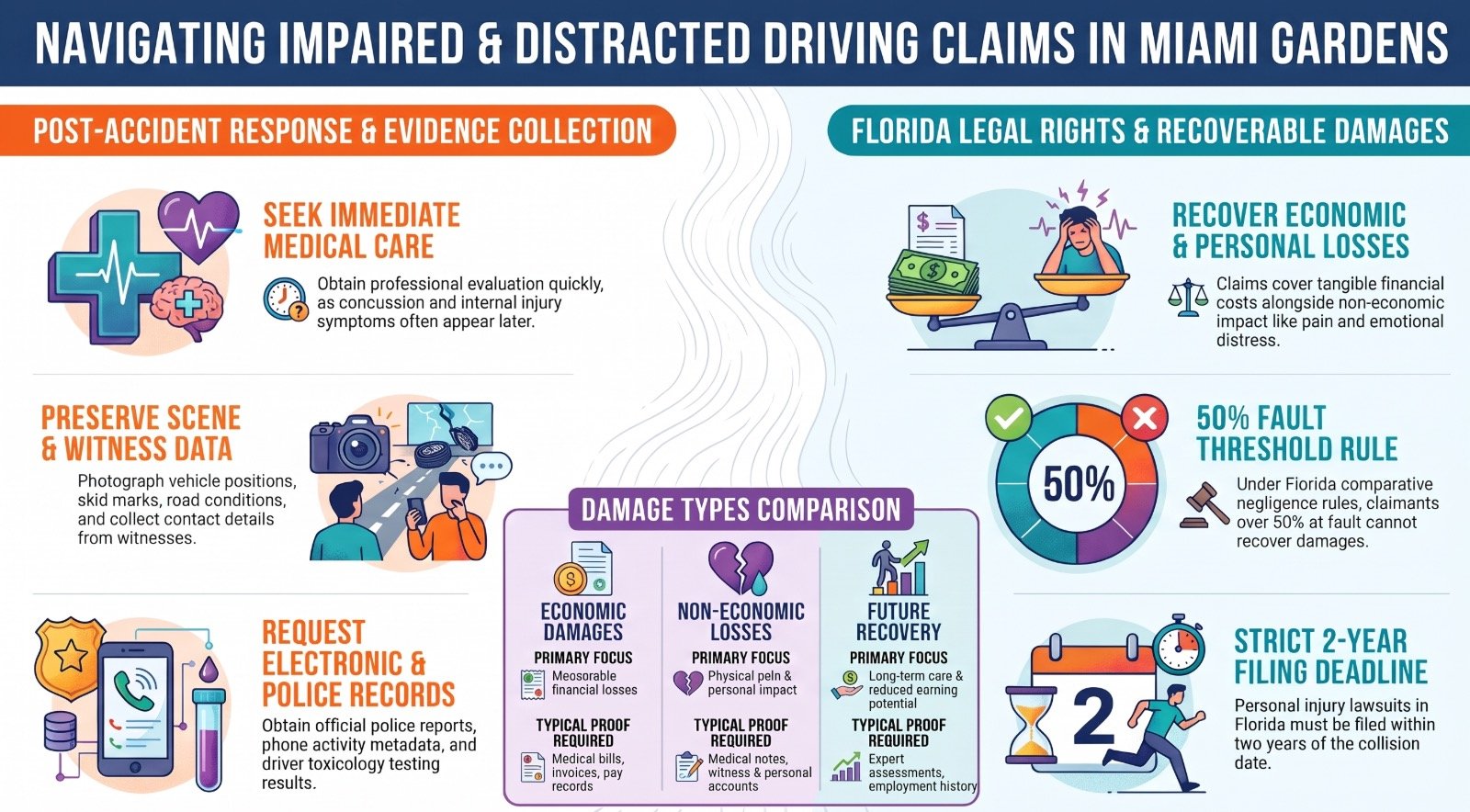
After an impaired or distracted driving crash in Miami Gardens, injured individuals should seek prompt medical care, even if their symptoms initially seem minor. They should document the scene by preserving photographs, witness details, and relevant records when it is safe to do so. Contacting a car accident lawyer can clarify legal options and help preserve important evidence.
Seek Medical Care
Prompt medical evaluation is essential for anyone injured in a Miami Gardens collision involving an impaired or distracted driver, even when symptoms seem minor. Some injuries, including concussions and internal trauma, may not become apparent until hours or days later. An Emergency evaluation can identify urgent conditions and establish a timely record of the injuries. If emergency symptoms arise, such as difficulty breathing, severe pain, confusion, or loss of consciousness, the injured person should receive immediate emergency assistance. Otherwise, prompt assessment by a physician or qualified medical provider can help determine appropriate treatment options and follow-up care. Patients should describe all symptoms, disclose relevant medical history, and follow professional instructions. Keeping scheduled appointments and adhering to prescribed care supports recovery and helps prevent complications. Medical needs should remain the priority after a collision.
Document The Scene
When it is safe to do so, documenting the scene can preserve important evidence after a Miami Gardens collision involving suspected impaired or distracted driving. A person who is physically able may record the vehicles’ positions, visible damage, skid marks, debris, traffic signals, and relevant road conditions. Scene photography should include wide views showing the surrounding area and close-up images of specific evidence, taken from several angles without entering traffic or disturbing objects. Note names and contact details for witnesses, along with the time, location, and weather conditions. If safe, roadway measurements may help show distances between vehicles, impact points, or road features. Injured people should not delay medical care to gather evidence. When possible, another responsible person can document details while those affected receive prompt assistance and follow emergency responders’ instructions.
Contact A Lawyer
A Miami Gardens car accident lawyer can help an injured person understand the available legal options after a crash involving suspected impaired or distracted driving. Prompt legal guidance can also help preserve evidence, identify responsible parties, and address communication with insurers. After receiving necessary medical care, the injured person may contact a lawyer and provide available details, including the crash report, photographs, witness information, and treatment records. These materials can help counsel assess the circumstances without delaying urgent care or recovery.
A Free Consultation may allow the person to discuss the incident, potential claims, and next steps before deciding how to proceed. Attorney Availability is important when deadlines, evidence preservation, or insurer requests require timely attention. A lawyer can explain the process clearly and pursue accountability while supporting the injured person’s ability to focus on recovery.
Critical Evidence in a Miami Gardens Car Accident Impaired & Distracted Driving Injury Case
Evidence can help establish whether impairment or distraction contributed to a Miami Gardens crash and resulting injuries.
Relevant records and testimony may include:
- Police crash reports
- Witness statements
- Phone records
- Toxicology results
- Photographs, video, and other scene documentation
Together, these materials may clarify how the collision occurred and support an injury claim.
Police Crash Reports
Police crash reports can provide important evidence in a Miami Gardens car accident involving suspected impaired or distracted driving. Officers may record the collision’s location, time, vehicle positions, road conditions, observed damage, and statements made at the scene. The report may also note signs of impairment, suspected phone use, citations, or whether sobriety testing was conducted. These details can help an injured person and those supporting recovery understand how the crash was investigated, though a report is not a final determination of fault.
Report access procedures vary, and obtaining the document promptly can help preserve useful information. If the report contains factual errors, you may request corrections through the appropriate agency, with supporting documentation. A careful review can identify missing details or inconsistencies and guide further investigation without treating preliminary observations as conclusive evidence.
Witness Statements
Beyond the details recorded in a crash report, witness statements may clarify how an impaired or distracted-driving collision unfolded in Miami Gardens. People who saw the moments before impact may describe a vehicle’s movement, delayed reactions, or conduct that suggested a driver was not attentive. Their accounts can help establish the sequence of events and identify details that may not appear in official records.
Eyewitness credibility depends on factors such as the person’s vantage point, ability to observe, and consistency over time. Investigators may compare accounts with physical evidence and other available information to assess reliability. Prompt statement preservation can reduce the risk that memories fade or important observations are lost. Investigators may ask witnesses to provide contact information and describe what they saw in their own words. Respectful, careful documentation supports a fair review and helps those affected pursue accountability and recovery.
Phone Records
When a Miami Gardens crash involves suspected impaired or distracted driving, phone records may help establish whether a driver was using a device around the time of impact. Carrier records can show call and text activity, while app metadata may indicate when certain applications were active. These details can help investigators compare device activity with the collision timeline and assess whether distraction may have contributed. However, records do not automatically prove who used a phone or what appeared on its screen. Their meaning depends on accurate timestamps, reliable interpretation, and other evidence, including witness accounts and roadway data. Access may require consent, a subpoena, or court authorization, and relevant information should be preserved promptly. Careful review can support a fair assessment and help injured people pursue accountability while respecting privacy and legal requirements.
Toxicology Results
Toxicology results can help determine whether alcohol, prescription medication, or other substances affected a driver’s ability to operate a vehicle before a Miami Gardens crash. Investigators may obtain blood, urine, or other samples, subject to applicable legal requirements, and review when and how each sample was collected. Laboratory procedures matter because proper handling, testing methods, and documentation support the reliability of the evidence. Result interpretation requires care: a detected substance does not automatically establish impairment at the time of the collision. Experts may consider concentration, timing, prescribed dosage, interactions, and the driver’s observed conduct. These findings can help clarify how impairment contributed to the crash and resulting injuries. Accurate evidence may also support accountability and help injured people pursue resources needed for recovery, while protecting the fairness of the process for everyone involved.
Don’t Wait. Call Our Florida Personal Injury Lawyers Now!
Long-Term Effects of Miami Gardens Car Accident Impaired & Distracted Driving Injuries
Impaired or distracted driving crashes can cause injuries with effects that persist long after initial treatment. Survivors may experience chronic pain, lasting cognitive changes, or ongoing emotional distress that interferes with daily activities. The severity and duration of these effects vary, making careful medical assessment important.
Chronic Pain
How long can pain from a Miami Gardens car accident last? For some injured people, discomfort improves within weeks; for others, it continues for months or becomes Chronic Pain. Impaired or distracted driving collisions can cause injuries to muscles, joints, nerves, and the spine, and symptoms may persist even after initial treatment. Ongoing pain can limit mobility, disrupt sleep, and make everyday responsibilities more difficult. A careful medical evaluation can identify the source of symptoms and guide appropriate care. Treatment may include physical therapy, medication, or other Pain Management approaches tailored to the individual’s condition. Following medical recommendations and keeping records of symptoms, appointments, and expenses can help clarify the injury’s effects over time. When another driver’s negligence caused the collision, these records may also help establish the resulting losses.
Lasting Cognitive Changes
Beyond physical pain, a Miami Gardens car accident caused by impaired or distracted driving may lead to lasting cognitive changes, particularly when a collision results in a traumatic brain injury. These changes can affect a person’s ability to remember instructions, concentrate, process information, or complete familiar tasks. Memory impairment may disrupt work, education, household responsibilities, and the ability to maintain important routines. Executive dysfunction can make planning, organizing, decision-making, and controlling attention more difficult, even when physical injuries appear to have recovered. Such limitations may require ongoing medical evaluation, rehabilitation, workplace adjustments, or assistance from family members and caregivers. Clear documentation of symptoms and their effects can help healthcare providers guide treatment and support an accurate assessment of long-term needs. Early recognition may improve access to appropriate services and practical accommodations.
Ongoing Emotional Distress
Emotional effects may persist long after a Miami Gardens car accident caused by impaired or distracted driving. Survivors may experience anxiety, irritability, depression, or difficulty trusting others, even after physical injuries improve. These responses can affect family relationships, work, and daily routines, making consistent support important.
Emotional triggers, such as traffic noise, intersections, or reminders of the collision, may cause distress or prompt avoidance of driving. Affected individuals may benefit from counseling, medical evaluation, and support from trusted family members. Effective coping strategies can include gradual return to driving, relaxation practices, and structured routines, guided by qualified professionals. Family members and caregivers can help by listening without judgment and recognizing changes in mood or behavior. When symptoms persist or interfere with daily functioning, timely professional care may support recovery and help prevent further isolation.
Proving Liability in Miami Gardens Car Accident Impaired & Distracted Driving Injury Cases
When impaired or distracted driving causes a crash in Miami Gardens, proving liability requires evidence that the driver’s conduct fell below the standard of reasonable care and contributed to the injuries. Negligence standards focus on whether a reasonably careful driver would have acted differently under similar circumstances. Evidence may include police reports, witness accounts, vehicle damage, traffic camera footage, and records showing alcohol or drug impairment. Phone records, messages, or other device data may help establish that a driver was distracted at the time of impact.
Medical documentation can connect the collision to specific injuries and support an accurate account of their effects. Investigators may also examine the crash scene and vehicle data to clarify how the collision occurred. Florida’s comparative fault rules may affect responsibility if an injured person’s actions also contributed to the crash. Careful evidence collection helps establish each party’s role and supports a fair assessment of harm, while serving the broader goal of accountability and safer roads.
Dealing With Insurance Companies After a Miami Gardens Car Accident Impaired & Distracted Driving Injury
After an impaired or distracted driving crash in Miami Gardens, injured people may face insurance adjusters seeking statements and information about the collision. Careful communication can help protect the injured person’s interests while allowing the insurer to review the matter. Adjusters may request recorded statements, medical authorizations, or details about prior injuries. Before responding, claimants can review each request and seek guidance from a qualified professional, particularly when questions concern fault or the extent of harm.
Insurers may dispute responsibility, question whether injuries relate to the crash, or offer less than the documented losses support. A Claim Denial may follow if the insurer finds insufficient evidence or identifies a policy limitation. Settlement Delays can also occur while records are gathered or coverage issues are examined. Keeping copies of correspondence, bills, and repair records can support clear communication and help prevent misunderstandings. Injured people should avoid signing releases or accepting payment without understanding what rights they may be giving up. Prompt, organized responses can assist a fair review.
What to Expect During a Miami Gardens Car Accident Impaired & Distracted Driving Injury Claim Process
A Miami Gardens impaired or distracted driving injury claim typically begins with an initial case review to assess the collision, injuries, and available legal options. Evidence is then collected to establish fault and document losses, followed by negotiations with insurers or other responsible parties. The process concludes with a settlement or other resolution that determines any compensation available to the injured person.
Initial Case Review
During an initial case review, a Miami Gardens car accident lawyer examines how suspected impairment or distracted driving may have contributed to the crash and the resulting injuries. This Initial Case Assessment provides an organized overview of the claim, including the injured person’s account, known circumstances, medical concerns, and immediate needs. During an Attorney Consultation, the lawyer may ask focused questions about the collision, treatment, work limitations, and communications with insurers. The discussion helps clarify potential legal issues, identify unanswered questions, and determine whether further representation may be appropriate. The lawyer can explain general claim procedures, possible challenges, and the importance of following medical guidance. This early review also gives the injured person an opportunity to understand available support and make informed decisions while considering the crash’s effects on family, employment, and daily responsibilities.
Evidence Collection
Once the initial review identifies unanswered questions, evidence collection can help clarify how impairment or distraction may have contributed to a Miami Gardens crash. The process may include obtaining the crash report, photographs, witness statements, and available medical records. Investigators may examine vehicle damage, roadway conditions, and physical evidence that helps establish the sequence of events. Evidence preservation is important because records and recordings can be lost or overwritten. A legal representative may send timely requests to retain relevant materials, including surveillance footage from nearby businesses or traffic cameras. In suspected impaired-driving cases, available toxicology results, arrest records, and officer observations may also provide context. For distraction claims, phone records or electronic data may be reviewed when legally accessible. Careful collection helps document facts while respecting privacy and applicable procedures.
Claim Negotiations
After the available evidence has been reviewed, settlement negotiations may begin with the at-fault driver’s insurer. The injured person or their representative typically presents a written demand explaining how the collision occurred, why the insured driver bears responsibility, and how the injuries affected daily life. A sound Demand strategy relies on documented facts, consistent medical information, and a clear account of relevant losses. The insurer may request records, question liability, or propose a lower amount, particularly when impairment or distraction is disputed. Responses should address those concerns with evidence, not speculation. Careful communication can help protect the injured person’s interests while keeping the process orderly. Settlement leverage may depend on the strength of the proof, the parties’ willingness to negotiate, and the practical risks of continued disagreement. No outcome is guaranteed.
Resolution And Compensation
A Miami Gardens impaired or distracted driving injury claim may resolve through a negotiated settlement or, if the parties cannot agree, a court decision. The process generally begins with a review of medical records, crash evidence, lost income, and other documented losses. Settlement timelines vary according to injury severity, treatment progress, insurer responses, and the time needed to establish fault. A settlement may provide payment without trial, but the injured person typically releases related claims in exchange. If negotiations fail, a lawsuit may proceed through discovery, hearings, and, when necessary, trial. Compensation may address medical expenses, future care, lost wages, reduced earning capacity, and pain and suffering. Applicable compensation limits and legal deadlines can affect recovery. Careful assessment helps confirm that any proposed resolution reflects the person’s needs and supports a fair outcome.
Don’t Wait. Call Our Florida Personal Injury Lawyers Now!
Compensation for Miami Gardens Car Accident Impaired & Distracted Driving Injury Damages
When impaired or distracted driving causes a crash in Miami Gardens, injured people may seek compensation for losses supported by the evidence. The available recovery depends on the injury, its effects, and the facts establishing responsibility. Medical records, employment documents, and other reliable evidence can help explain how the collision affected a person’s daily life and ability to work.
Compensation may address reasonable medical care, including treatment already received and care expected to be needed in the future. It may also include Lost wages when injuries prevent a person from working during recovery. If lasting limitations reduce the ability to earn income, diminished earning capacity may be considered based on the evidence and relevant work history. A claim may also account for physical pain, emotional strain, and restrictions on ordinary activities, where supported by the circumstances.
Careful documentation helps clarify the scope of each loss. A thorough review can identify relevant records, assess the injury’s continuing effects, and present the claim accurately.
Economic vs Non-Economic Damages in Miami Gardens Car Accident Impaired & Distracted Driving Cases
In Miami Gardens impaired and distracted driving cases, economic damages may include medical expenses, lost income, and other measurable financial costs. Non-economic damages address losses such as pain, emotional distress, and reduced quality of life. Establishing both categories requires evidence that connects the losses to the crash and supports their extent.
Economic Damage Categories
Economic damages represent the measurable financial losses caused by an impaired or distracted driving crash in Miami Gardens. These costs may include Medical expenses for emergency care, hospital treatment, medication, rehabilitation, and follow-up appointments. When injuries require ongoing care, anticipated future treatment costs may also be considered if supported by reliable evidence.
Lost wages can account for income missed during recovery, while reduced earning capacity may apply when injuries limit a person’s ability to work in the future. Other economic losses may include property damage, transportation to medical appointments, and necessary household or caregiving services. Receipts, invoices, pay records, employer statements, and professional assessments can help document these amounts. Careful records allow an injured person and those assisting with the claim to present a clear, evidence-based account of financial harm.
Non-Economic Losses
Not every loss from an impaired or distracted driving crash appears on a bill or paycheck. Non-economic damages address personal effects that do not have a direct market price. They may include Pain and Suffering, such as physical discomfort, emotional distress, anxiety, or disruption to daily routines. A person may also experience Loss of Enjoyment when injuries limit participation in family activities, hobbies, community service, or other meaningful parts of life. These losses differ from economic damages, which generally involve measurable financial costs such as medical expenses and missed income. Their significance depends on how the crash and resulting injuries affect the individual’s well-being and relationships. In Miami Gardens cases, non-economic damages recognize that recovery involves more than paying expenses; they reflect the human impact of an impaired or distracted driver’s conduct.
Proving Your Damages
After identifying the personal effects of a crash, the next step is to support each claimed loss with reliable evidence. In Miami Gardens, economic damages may include treatment costs, lost income, vehicle repairs, and future expenses related to ongoing care or reduced work capacity. Medical documentation, billing records, pay statements, repair estimates, and expert assessments can help establish the amount and cause of these losses. Non-economic damages, such as pain, emotional distress, and reduced enjoyment of daily activities, require a different showing. Consistent treatment notes, personal accounts, and statements from family or colleagues may help demonstrate how injuries affect ordinary life. In impaired or distracted driving cases, evidence connecting the driver’s conduct to the collision and resulting injuries is also important. Organized records can clarify the full scope of a claim.
When a Miami Gardens Car Accident Impaired & Distracted Driving Injury Case Goes to Trial vs Settlement
Whether a Miami Gardens impaired or distracted driving injury claim settles or proceeds to trial depends on the evidence, the parties’ assessment of liability and damages, and their willingness to resolve the dispute. A settlement may provide a more predictable resolution and avoid the time, expense, and uncertainty of a courtroom proceeding. It can also allow injured people to focus on recovery while the parties negotiate compensation for documented losses.
If negotiations do not produce an acceptable agreement, the case may proceed to trial. Each side presents evidence, and witnesses may testify about the collision, injuries, and their effects. The parties’ presentations help the fact finder evaluate disputed issues and reach a decision. Jury deliberations follow the presentation of evidence and arguments when a jury hears the case. A trial can offer a formal decision, but no result is guaranteed. The choice between settlement and trial depends on the case’s circumstances and the injured person’s informed priorities.
Florida Laws That May Affect Your Miami Gardens Car Accident Impaired & Distracted Driving Case
The decision to settle or proceed to trial may depend in part on how Florida law applies to the collision and resulting injuries. Florida statutes and court decisions can affect fault, available damages, and the evidence needed to support a claim. These rules may be especially relevant when impairment or distraction is alleged.
Florida law can shape fault, damages, and evidence when deciding whether to settle a collision claim or proceed to trial.
Key legal considerations may include:
- Comparative negligence: A claimant’s share of responsibility may reduce recoverable damages; under Florida law, a claimant found more than 50 percent at fault generally cannot recover damages in a negligence action.
- Impaired driving: Evidence of intoxication, testing, and law enforcement findings may help establish whether a driver breached a duty of care.
- Distracted driving: Phone records, witness accounts, and crash evidence may help show whether distraction contributed to the collision.
- Dram shop liability: Florida law generally limits claims against alcohol providers, subject to specific statutory exceptions involving unlawful service.
- Insurance and damages: Coverage terms and proof of injury may shape compensation and the resources available to support recovery.
Careful legal review helps identify applicable rules and present a well-supported claim.
The Statute of Limitations for Miami Gardens Car Accident Impaired & Distracted Driving Injury Cases
Because filing deadlines can determine whether an injured person may pursue compensation, the statute of limitations is a key consideration in a Miami Gardens car accident case involving alleged impaired or distracted driving. Under Florida law, a negligence action for injuries generally must be filed within two years of the accident. Missing this Filing Deadline can prevent a court from considering the claim, regardless of the seriousness of the injuries or the strength of the evidence.
The deadline may differ when a crash causes a death, involves a government entity, or raises other legally significant circumstances. Potential Claim Exceptions can affect when the limitations period begins or whether it is paused, but they depend on specific facts and statutory requirements. An injured person should not assume an exception applies without confirming the relevant law.
Prompt attention to the filing period helps preserve access to the civil justice system and supports timely consideration of claims. Because deadlines can be complicated, carefully reviewing the accident date and applicable rules is important.
How a Miami Gardens Car Accident Impaired & Distracted Driving Lawyer Can Help You
After reviewing filing deadlines, an injured person may benefit from legal guidance on the evidence and procedures involved in an impaired or distracted driving claim. A Miami Gardens lawyer can help clarify how the at-fault driver’s conduct relates to the collision, injuries, and available compensation. This support can also help protect the injured person’s interests while pursuing a fair resolution.
Depending on the facts, legal assistance may include:
- Gathering police reports, witness accounts, photographs, and other relevant records.
- Reviewing medical documentation to connect injuries with the crash.
- Identifying potentially responsible parties and applicable insurance coverage.
- Preparing a claim strategy based on liability, losses, and supporting evidence.
- Handling communications and negotiations with insurers through Attorney advocacy.
A lawyer can explain procedural requirements, assess settlement proposals, and organize information for a consistent presentation of the claim. By addressing these tasks carefully, counsel may reduce avoidable errors and help the injured person focus on recovery and responsibilities to family or community. Each case depends on its evidence, applicable law, and individual circumstances; no particular outcome can be guaranteed.
When to Contact a Miami Gardens Car Accident Impaired & Distracted Driving Lawyer
Prompt legal guidance may be important when a crash involves suspected impairment or distracted driving, particularly if injuries require treatment or the driver’s account conflicts with available evidence. Early Consultation can help an injured person understand practical deadlines, preserve relevant information, and make informed decisions while events remain recent. A lawyer may be contacted after urgent medical needs are addressed, especially when there are questions about insurance communications, witness accounts, or access to records.
Prompt contact is also appropriate if an insurer requests a recorded statement or offers a settlement before the full extent of an injury is known. The injured person should avoid speculation and retain available photographs, contact details, and medical documents. Attorney Availability may vary, so asking about scheduling and initial consultation options can help families plan their next steps. Seeking advice does not require a commitment to pursue a claim. Timely guidance can support a careful response and help protect the person’s ability to make decisions after a serious collision.
Why You Need an Experienced Miami Gardens Car Accident Impaired & Distracted Driving Lawyer
An experienced Miami Gardens car accident lawyer can assess how evidence of impairment or distraction may affect a claim and identify steps to protect relevant information. Such evidence may include crash reports, witness accounts, vehicle data, or records showing a driver’s condition. An attorney can help preserve materials before they are lost and organize facts into a clear account of how the collision occurred.
Attorney experience can also help address disputed responsibility and explain how Florida law may apply to the available evidence. Insurers may question whether distraction or impairment caused the crash, or argue that an injured person contributed to it. A lawyer can evaluate these issues, communicate with insurers, and pursue compensation supported by the facts.
A thoughtful case strategy can account for medical needs, lost income, and how injuries affect daily responsibilities. By handling legal demands and evidence-related tasks, counsel can help an injured person focus on recovery and maintain the capacity to care for family and community obligations.
How to Choose the Right Miami Gardens Car Accident Impaired & Distracted Driving Lawyer for Your Case
Choosing the right Miami Gardens car accident lawyer for an impaired or distracted driving case requires careful attention to the attorney’s relevant experience, communication practices, and approach to evidence. A suitable attorney should understand how investigators assess impairment, phone use, witness accounts, and crash records. These details may help establish how another driver’s conduct caused harm and support a careful review of available compensation.
Attorney credentials can help a prospective client evaluate an attorney’s education, licensing, and experience handling comparable injury claims. The client may also ask how the attorney investigates cases, explains legal options, and addresses challenges without promising a particular result. A clear communication style matters, especially when an injured person or family needs timely updates and understandable answers.
During an initial consultation, the attorney should listen closely, explain the process, and identify information needed to assess the claim. Comparing these factors can help clients select counsel whose professional judgment and service approach align with their needs and priorities.
About The Law Offices of Anidjar & Levine
For those evaluating legal representation after a Miami Gardens car accident, the Law Offices of Anidjar & Levine provides information about its services, attorneys, and approach to injury claims. The firm represents people injured in vehicle collisions and assists families dealing with the consequences of serious accidents. Its work may include investigating how a crash occurred, communicating with insurers, and pursuing compensation supported by the available evidence.
Firm history can help prospective clients understand the experience and development behind a legal practice. The firm’s published materials describe its background, practice areas, and the attorneys who handle injury matters. Individuals can review this information to assess whether the firm’s services align with their needs and circumstances.
Attorney values also matter when a case involves impaired or distracted driving. Clear communication, careful preparation, and attention to a client’s concerns can support informed decisions throughout the claims process. People considering representation may ask about case management, expected updates, and the steps involved in pursuing a claim.
Frequently Asked Questions
Can I Recover Damages if I Was a Passenger in a Crash Caused by an Impaired Driver?
A passenger may recover damages when an impaired driver causes a crash, including compensation for medical expenses, lost income, and pain and suffering. Passenger Injury Claims may involve pursuing the driver’s insurance or, when appropriate, other responsible parties. Comparative Negligence can reduce recovery if the passenger’s own conduct contributed to the injuries, though merely riding with an impaired driver does not automatically bar a claim. Evidence and deadlines matter. A qualified attorney can assess available options.
What Happens if the At-Fault Driver Was Using a Company Vehicle?
When an at-fault driver was using a company vehicle, the employer may share responsibility if the driver was performing job duties at the time. Employer liability depends on the circumstances, including whether the trip served the business or was personal. Commercial insurance may cover injuries and property damage, subject to policy terms and limits. The injured person can seek compensation from the driver, employer, or insurer, depending on the evidence and applicable law.
Can a Bar or Restaurant Be Liable for Serving an Impaired Driver?
A bar or restaurant may be liable for serving an impaired driver in limited circumstances under Florida dram shop liability law. Liability generally applies when a business willfully and unlawfully serves alcohol to a person under 21, or knowingly serves someone habitually addicted to alcohol. Ordinary negligent alcohol service to an adult who is not habitually addicted usually does not create liability. Evidence about the service and the driver’s condition may help clarify whether an exception applies.
Will My Immigration Status Affect My Ability to Pursue a Car Accident Claim?
Immigration status generally does not prevent an injured person from pursuing a car accident claim. The claim focuses on responsibility for the collision and the resulting losses, not citizenship or visa status. Immigration status protections may apply, and confidentiality safeguards can help limit unnecessary disclosure of sensitive information. An attorney can explain how information may be used, assess relevant risks, and pursue compensation while respecting the person’s privacy and legal rights.
Can I File a Claim if the At-Fault Driver Left the Scene?
Yes, an injured person may file a claim even when the at-fault driver leaves the scene. Hit-and-run claims may proceed through the driver’s insurer if the driver is identified, or through the injured person’s Uninsured Motorist Coverage if available and applicable. Promptly reporting the crash, preserving evidence, and seeking medical care can support the claim. Coverage terms and deadlines vary, so a qualified attorney can explain available options and protect the injured person’s interests.
—————————
Impaired and distracted driving crashes can leave Miami Gardens victims facing serious injuries, financial strain, and uncertainty about their rights. A timely investigation may help preserve evidence, establish fault, and document the full impact of the collision. The Law Offices of Anidjar and Levine represents injured people seeking accountability and compensation under Florida law. Those affected can contact the firm to discuss their circumstances, understand available legal options, and determine the appropriate next steps for pursuing a claim with a Miami Gardens Personal Injury Lawyer.