The Law Offices of Anidjar and Levine can investigate whether texting, intoxication, fatigue, or another form of driver inattention contributed to a Hollywood car accident. A lawyer may help preserve phone records, witness accounts, vehicle data, and medical documentation, communicate with insurers, and evaluate available coverage. Compensation may include medical expenses, lost income, pain, and future care, depending on the evidence and applicable law. Learn more from a Hollywood Personal Injury Lawyer. The following sections explain essential rights, evidence, and steps in pursuing a claim.
Main Takeaways
- A Hollywood car accident lawyer can assess whether impaired or distracted driving contributed to your collision and identify potential sources of compensation.
- Preserve photos, witness details, police reports, medical records, and repair estimates; request prompt preservation of footage and vehicle data.
- Seek medical care promptly, follow treatment recommendations, and document symptoms, appointments, missed work, and daily limitations.
- Insurers may review crash reports, witness accounts, phone or vehicle records, and medical documentation; communicate accurately and avoid speculation.
- Report the crash promptly and check applicable insurance requirements and legal deadlines; outcomes depend on the individual facts and evidence.
How We Can Help With Your Hollywood Car Accident Impaired & Distracted Driving Injury Claim
When an impaired or distracted driver causes a collision in Hollywood, injured people may face medical expenses, lost income, and uncertainty about their legal options. A Legal Team can help clarify available steps and provide steady support while a person focuses on recovery. Its role may include reviewing the circumstances, organizing relevant records, communicating with insurers, and explaining what information may be needed to evaluate a claim.


A thoughtful Case Strategy should reflect the injured person’s circumstances and practical needs. Counsel can assess potential sources of compensation, track deadlines, and address questions as the matter progresses. When appropriate, the team may negotiate with insurers or prepare to pursue the claim through formal legal proceedings. Clear communication helps clients make informed decisions without unnecessary pressure.
Each claim requires individual attention, and no particular result can be guaranteed. By offering careful guidance and responsive service, legal counsel can help injured people understand their options and pursue a fair resolution while attending to their health, work, and family responsibilities.
Understanding Hollywood Car Accident Impaired & Distracted Driving Injury Cases
OUR CONSULTATIONSARE FREE
START YOUR FREE CASE REVIEW

Impaired and distracted driving cases in Hollywood involve more than establishing that a collision occurred; they require examining how a driver’s conduct contributed to the crash and resulting injuries. A careful review connects available evidence with the events before, during, and after impact. This process may include reviewing medical records, witness accounts, vehicle damage, and official reports to clarify the nature and extent of harm.
Each claim also requires attention to the responsibilities of other parties and the applicable legal standards. Reliable documentation can help distinguish confirmed facts from assumptions and support a fair assessment of losses, including treatment needs, missed work, and lasting limitations. These cases affect not only injured people but also families and neighbors concerned with safer travel.
Community safety initiatives can help identify broader concerns and encourage responsible road use. In some circumstances, roadway design flaws may warrant separate review, without replacing the need to establish how the collision occurred and who may be legally accountable.
Common Causes of Hollywood Car Accident Impaired & Distracted Driving


Common causes of impaired and distracted driving include texting behind the wheel, alcohol or drug use, and drowsiness that reduces alertness and reaction time. In-car distractions, such as adjusting navigation or interacting with passengers, can also divert a driver’s attention from traffic. Identifying these behaviors can help clarify how a Hollywood collision occurred and who may be responsible.
Texting Behind the Wheel
Texting behind the wheel is a serious form of distracted driving that can contribute to car accidents in Hollywood. Reading or composing a message diverts a driver’s eyes from the road, hands from the driving wheel, and attention from surrounding traffic. Even a brief glance can prevent a driver from noticing a pedestrian, cyclist, or vehicle slowing ahead. These risks may be greater in busy areas where traffic conditions change quickly. Texting ban enforcement can help discourage unlawful phone use, while public education can reinforce drivers’ responsibility to protect others. Hands-free technology may reduce manual handling, but it does not eliminate mental distraction. Drivers can avoid unnecessary risks by silencing notifications, setting navigation before departure, and stopping in a safe location when communication is necessary. These precautions support safer roads for everyone.
Alcohol and Drug Impairment
Alcohol and drug impairment can make driving in Hollywood dangerous by reducing judgment, coordination, reaction time, and awareness of surrounding traffic. Alcohol may affect a driver’s ability to stay in their lane, judge distance, or respond safely to changing conditions. Some prescription and illegal drugs can also alter perception, slow responses, or cause confusion, even when a person believes they remain capable of driving.
Law enforcement may use observations, Drug recognition procedures, and sobriety testing to assess suspected impairment. However, impairment can be difficult to identify from a crash scene alone, and evidence may require careful review. Drivers who choose not to operate a vehicle after consuming alcohol or impairing substances help protect passengers, pedestrians, and other road users. When an impaired driver causes a collision, documenting relevant facts can support accountability and help those affected pursue appropriate remedies.
Drowsy Driving
Drowsy driving can impair a motorist’s attention and reaction time, creating risks similar to those associated with alcohol or drug impairment. Sleep deprivation may reduce alertness, slow decisions, and make it harder to respond to changing traffic conditions. A driver who has been awake for extended periods may experience brief lapses in awareness, increasing the likelihood of a serious collision.
Circadian disruption can also affect driving ability, particularly during overnight hours or other periods when the body is naturally inclined to sleep. Shift work, irregular schedules, and insufficient rest may contribute to this risk. Motorists who recognize fatigue should stop driving and arrange a safe alternative rather than continue while impaired. By understanding these causes, drivers can help protect passengers, pedestrians, and other road users from preventable harm.
In-Car Distractions
In-car distractions can divert a driver’s attention from the road and increase the risk of a collision. In Hollywood traffic, even a brief lapse may prevent a driver from noticing a pedestrian, cyclist, or changing signal. Common sources include adjusting navigation systems, reaching for dropped items, eating, and handling mobile devices while the vehicle is moving.
Dashboard clutter can obstruct visibility or tempt drivers to search for objects instead of watching the road. Passenger interference, such as loud conversations or requests that require a driver to turn away, can also compromise safe vehicle control. Drivers are responsible for limiting these distractions and keeping their attention on surrounding traffic. When distracted driving causes a crash, injured people may need prompt medical care and support in understanding their legal options. Witness accounts and available records can help clarify what occurred.
Legal Rights of Hollywood Car Accident Impaired & Distracted Driving Injury Victims
When an impaired or distracted driver causes a crash in Hollywood, injured victims may have the right to seek compensation from the at-fault driver. California law may allow recovery for medical expenses, lost income, pain, and other documented losses. A claim can also help protect a household’s stability and support continued care.
Victims may pursue several forms of relief:
- Payment for emergency treatment and ongoing medical care
- Compensation for wages lost during recovery
- Damages for physical pain and emotional distress
- Support for long-term disability or reduced earning capacity
- Accountability that may help protect others from similar harm
Comparative negligence may reduce compensation if a victim shares responsibility, but it does not automatically bar recovery. In cases involving especially reckless conduct, punitive damages may be available to punish wrongdoing and deter similar behavior. Evidence, deadlines, and insurance terms can affect a claim’s value and outcome. A qualified attorney can explain legal options, preserve records, and communicate with insurers, allowing victims and their families to focus on recovery and community responsibilities.
Why Do Hollywood Car Accident Impaired & Distracted Driving Injuries Happen?
Why do impaired and distracted driving injuries occur so often in Hollywood? Heavy traffic, frequent stops, and competing visual demands can leave little room for driver error. Alcohol, drugs, fatigue, or certain medications may slow reaction time and weaken judgment. A driver who looks at a phone, adjusts navigation, or attends to passengers may miss a signal change, pedestrian, or vehicle braking ahead.
Local conditions can add to these risks. Roadway design, including intricate intersections, limited sightlines, and busy access points, may require careful attention that an impaired or distracted driver cannot provide. Poor weather and nighttime visibility can further reduce the time available to respond. Vehicle maintenance also matters: worn tires, faulty brakes, or defective lights can make a collision more likely or its consequences more severe, particularly when a driver is already inattentive.
Understanding these contributing factors helps explain why preventable crashes occur and why safer driving practices protect everyone using Hollywood’s roads.
What Should You Do After a Hollywood Car Accident Impaired & Distracted Driving Injury?
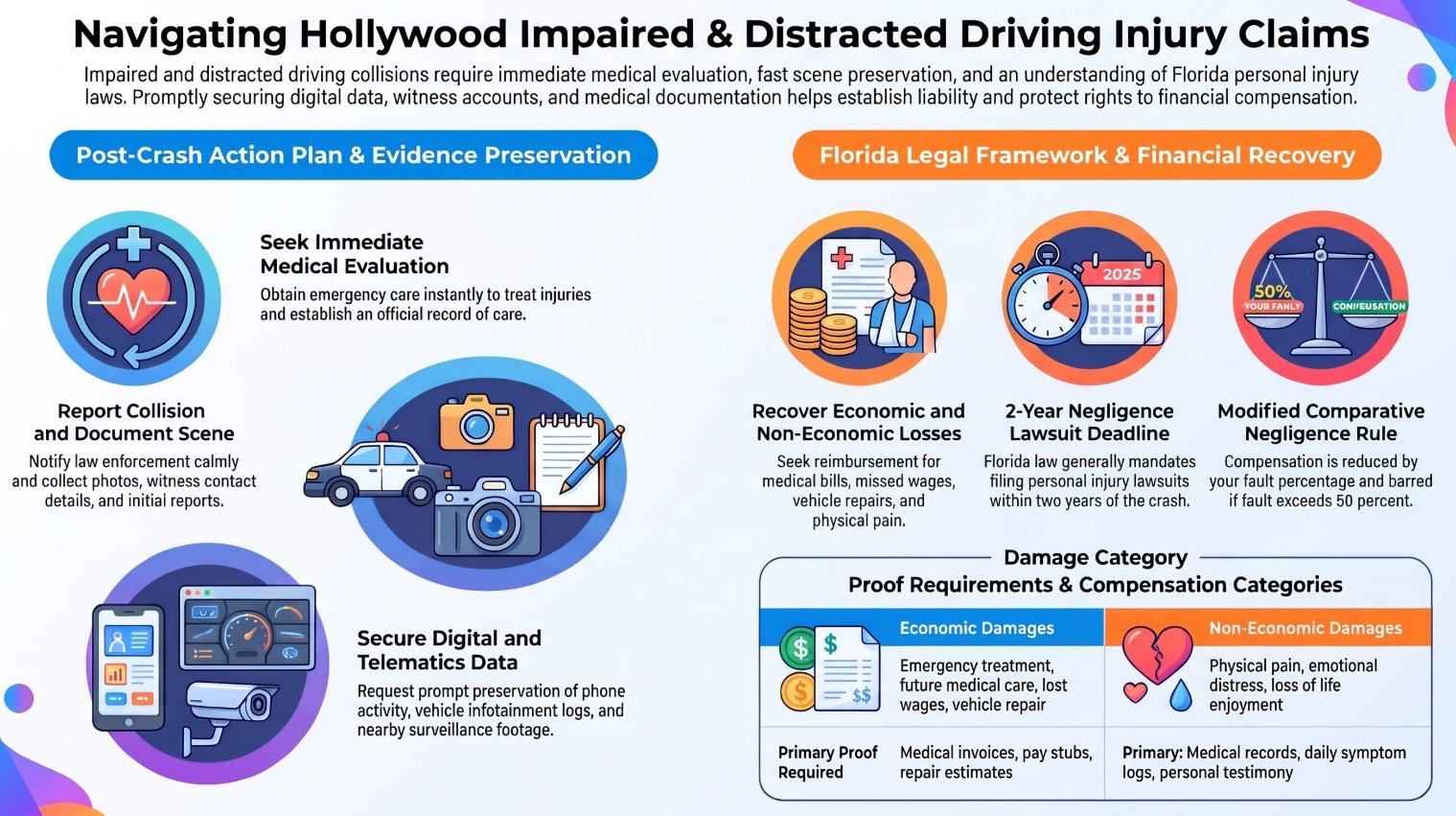
After a Hollywood crash involving suspected impaired or distracted driving, injured individuals should seek prompt medical care, even if their symptoms appear minor. They should report the collision to law enforcement and ensure essential details are documented. Preserving photographs, witness information, and other evidence may help clarify how the crash occurred.
Seek Medical Care
Prompt medical evaluation is essential after a Hollywood car accident involving suspected impaired or distracted driving, even if injuries seem minor at first. A person should seek Emergency evaluation for severe pain, bleeding, difficulty breathing, confusion, or loss of consciousness. When symptoms appear less urgent, prompt assessment by a doctor can still identify injuries that may not be immediately apparent, including head, neck, or internal injuries. Medical professionals can recommend appropriate tests, treatment, and follow-up care based on the person’s condition. They should also explain warning signs that require urgent attention. Consistent symptom monitoring helps the injured person notice changes, such as worsening pain, dizziness, or new limitations, and report them to a healthcare provider. Following medical instructions supports recovery and creates a clear record of the injuries and care received.
Report the Crash
Once medical needs have been addressed, report the crash promptly to law enforcement, especially if impaired or distracted driving may have contributed. A timely report allows officers to assess the scene, address immediate hazards, and document the incident through official channels. If anyone remains in danger or needs urgent assistance, contacting Emergency dispatch can help coordinate medical response and roadway safety measures. The injured person or a responsible companion should provide the location, describe apparent injuries, and explain any immediate concerns without speculating about fault. If the other driver appears impaired, communicate that concern calmly to responding officers rather than confronting the driver directly. Cooperating with law enforcement helps protect everyone involved and supports an orderly investigation. The crash should also be reported to the appropriate insurer promptly, consistent with policy requirements.
Preserve Evidence
Preserving evidence can help establish how an impaired or distracted driver caused a Hollywood crash and the injuries that followed. The injured person should keep photographs of vehicle damage, road conditions, visible injuries, and relevant traffic signs. Contact information for witnesses and copies of the crash report, medical records, and repair estimates may also help clarify what occurred and document resulting losses.
Evidence preservation should begin promptly because surveillance footage, vehicle data, and other records may be lost or overwritten. An attorney can send retention notices to businesses, government agencies, or other parties that may possess relevant material. These notices request that records be maintained while a claim is investigated. The injured person should avoid altering damaged items or posting details about the crash online. Organized, accurate records can support a fair review and help protect the interests of everyone affected.
Critical Evidence in a Hollywood Car Accident Impaired & Distracted Driving Injury Case
Reliable evidence can clarify whether impairment or distraction contributed to a Hollywood collision and document the harm suffered.
Essential records may include:
- Police accident reports that preserve initial observations and scene details
- Witness statements that capture what others saw before and after impact
- Phone and vehicle data that may reveal distraction or impaired driving
- Medical records documenting injuries, treatment, and lasting effects
- Photographs and other documentation that preserve evidence before it is lost or changed
Police Accident Reports
When a Hollywood crash involves suspected impairment or distracted driving, the police accident report can provide an important early record of the incident. It may document the crash location, time, vehicle positions, road conditions, and officers’ initial observations. The report may also note whether impairment was suspected, whether testing occurred, and whether a driver appeared to be using a phone. These entries can help injured people and those assisting them understand what authorities recorded, but a report is not a final determination of fault and may contain errors or omissions.
The Report request process generally involves contacting the investigating agency and following its identification, fee, and release requirements. If information is inaccurate, report amendment procedures may allow a person to submit supporting documentation or request a correction. Promptly obtaining and reviewing the report can preserve useful information and guide responsible follow-up.
Witness Statements
Witness statements can provide essential evidence in a Hollywood car accident involving suspected impairment or distracted driving. People who saw the collision may describe a driver’s movements, attention, speech, or conduct before and after impact. Their observations can help clarify how the crash occurred and support a fair assessment of responsibility.
Witness credibility depends on factors such as the person’s opportunity to observe, consistency, and ability to recall events. Investigators may compare accounts with the police report and other available evidence, while noting differences without assuming that every discrepancy undermines a witness.
Prompt statement preservation can help protect accurate recollections before memories fade. A lawyer may gather contact information, record detailed accounts, and identify additional witnesses. Respectful, careful interviews can serve injured people by preserving relevant facts and helping decision-makers understand the full circumstances of the collision.
Phone And Vehicle Data
Phone and vehicle data can help establish whether distraction or impairment contributed to a Hollywood car accident. With appropriate legal process, investigators may seek call records, text timestamps, app activity, and location information to determine whether a driver used a device near the time of a collision. Such records do not automatically prove fault, but they can be compared with witness accounts and other evidence to clarify events.
Telematics Records may capture speed, braking, turning, and vehicle movement before impact. Infotainment Logs can show connected devices, navigation use, or system interactions, depending on the vehicle and its data settings. Preservation is important because some information may be overwritten or deleted. A careful review by qualified professionals can help identify relevant details while respecting privacy and supporting a fair assessment of responsibility and the needs of those affected.
Medical Records And Documentation
Medical records can document the injuries, treatment, and recovery needs of people harmed in a Hollywood car accident involving suspected impaired or distracted driving. Emergency department notes, diagnostic images, prescriptions, and follow-up evaluations may help establish when symptoms began and how they affected daily activities. Consistent documentation also allows treating professionals to assess progress and identify continuing care needs.
Accurate records can support a clear account of the harm, but they do not independently prove how a collision occurred or who was responsible. Provider coordination may help make certain that relevant records are complete and that treatment information is communicated appropriately. Patients can request copies, correct factual errors through proper channels, and maintain a timeline of appointments and symptoms. Careful record retention protects important evidence, supports informed decisions, and helps those assisting injured people understand the scope of their needs.
Long-Term Effects of Hollywood Car Accident Impaired & Distracted Driving Injuries
Impaired and distracted driving injuries can have lasting effects, including chronic pain and disabilities that limit daily activities or employment. Some people also experience cognitive difficulties and emotional changes that affect relationships and overall well-being. Ongoing treatment, rehabilitation, and medical monitoring may be necessary long after the collision.
Chronic Pain And Disability
How long can the effects of a Hollywood car accident last? For some injured people, pain and physical limitations continue long after initial treatment ends. Impaired or distracted driving collisions may cause lasting damage to the back, neck, joints, or nerves, restricting movement and making routine tasks difficult. Chronic pain can also require ongoing medical care, rehabilitation, or medication.
When injuries prevent a return to previous duties, a person may need reduced hours, modified responsibilities, or other Workplace accommodations. Medical records documenting symptoms, treatment, and functional limits can help explain these needs to employers and insurers. If a lasting condition substantially limits the ability to work, Social Security eligibility may also warrant review. A qualified professional can help assess available options and preserve accurate documentation, supporting injured people as they seek appropriate care and practical assistance.
Cognitive And Emotional Changes
Beyond physical pain and mobility limits, a Hollywood car accident may also lead to lasting changes in memory, concentration, mood, or behavior. These effects can follow injuries caused by impaired or distracted driving and may disrupt a person’s work, relationships, and daily responsibilities. Difficulty focusing or recalling information can make ordinary tasks more challenging, while Mood swings may strain communication with family, friends, and colleagues. Some individuals experience anxiety, irritability, or reduced confidence after a collision. Others may withdraw socially, distancing themselves from people and activities that once provided connection and support. Such changes can affect both the injured person and those who depend on them. Recognizing these effects with patience and respect can help loved ones offer meaningful support without judgment, while preserving the person’s dignity and independence.
Long-Term Medical Care
When injuries from a Hollywood car accident require ongoing treatment, long-term medical care may become an essential part of recovery. Impaired or distracted driving crashes can cause lasting physical limitations, chronic pain, or cognitive difficulties that require continuing attention. A coordinated care plan may involve physicians, therapists, and other qualified professionals who monitor progress and adjust treatment as needs change.
Rehabilitation planning can help establish realistic goals, schedule therapy, and identify equipment or services that support daily activities. Home health may provide nursing care or assistance with personal tasks when travel or independent living becomes difficult. Family members and caregivers can help by maintaining routines and communicating observed changes to providers. Consistent follow-up, clear records, and timely referrals can reduce gaps in care. The appropriate treatment depends on each person’s injuries, recovery, and medical guidance.
Proving Liability in Hollywood Car Accident Impaired & Distracted Driving Injury Cases
Establishing liability in a Hollywood car accident involving impaired or distracted driving requires evidence that the driver’s conduct caused the collision and resulting injuries. Negligence standards generally require proof that the driver owed a duty of care, breached that duty, and caused measurable harm. Evidence may include police reports, witness statements, traffic-camera footage, vehicle data, and medical records. In suspected impairment cases, toxicology results, field sobriety observations, and officer testimony may help establish the driver’s condition. For distracted driving, phone records, onboard data, and video may show whether attention was diverted before impact. A careful investigation can preserve relevant evidence and clarify how the crash occurred. The injured person’s conduct may also be considered under comparative fault rules, which can reduce or otherwise affect recovery depending on applicable law. Each claim depends on its specific facts, including the available evidence and the connection between the driver’s conduct and the injuries. Accurate documentation supports a fair assessment of responsibility and helps protect the interests of those harmed.
Dealing With Insurance Companies After a Hollywood Car Accident Impaired & Distracted Driving Injury
After a Hollywood car accident involving impaired or distracted driving, insurance companies may review the evidence to assess fault, injuries, and potential compensation. Their representatives may request statements, medical records, or access to other personal information. An injured person can respond carefully, provide accurate facts, and avoid speculation about the crash or the full extent of injuries before treatment is understood.
Adjuster tactics may include questioning whether symptoms resulted from the collision, emphasizing gaps in treatment, or presenting an early offer before the person has a clear view of future needs. A measured review of any offer can help protect resources intended for recovery and household stability. The insurer’s policy limits may also affect the compensation available, even when documented losses are substantial.
A qualified attorney can communicate with insurers, organize supporting records, and explain coverage issues. This assistance allows injured people and their families to focus on recovering while seeking a fair, evidence-based resolution.
What to Expect During a Hollywood Car Accident Impaired & Distracted Driving Injury Claim Process
A Hollywood impaired or distracted driving injury claim typically begins with an evaluation of the facts, injuries, and potential liability. The process may then involve collecting evidence and negotiating with the insurance company to establish the claim’s basis and value. If the parties cannot reach an acceptable settlement, the case may proceed to trial.
Initial Case Evaluation
When a Hollywood car accident involves suspected impaired or distracted driving, the initial case evaluation helps determine how the collision occurred, what evidence may support the claim, and which losses may be recoverable. During this review, an attorney typically asks about the crash, reported injuries, medical care, missed work, and communications with insurers. These details help clarify the injured person’s immediate needs and whether legal representation may help pursue a fair resolution. Case eligibility may depend on whether another party’s conduct contributed to the collision, the nature of the injuries, and applicable filing deadlines. The evaluation timeline varies with the intricacy of the incident and the availability of basic records. A careful assessment can also identify questions requiring further review, while helping the injured person make informed decisions and protect their interests.
Evidence Collection
Evidence collection establishes the factual foundation of a Hollywood car accident claim involving suspected impaired or distracted driving. Investigators may document vehicle positions, road conditions, traffic controls, and visible damage before the scene changes. Scene photography can preserve details relevant to how the collision occurred, while measurements and diagrams may clarify distances and points of impact. Witness names and contact information are typically recorded promptly, and their accounts may help establish what drivers did before the crash. Records may also include police reports, emergency response notes, and available surveillance footage from nearby businesses or residences. Medical documentation can connect reported injuries to the collision and show the care required. Preserving electronic data, such as vehicle or phone records, may also be important. Careful collection supports an accurate account and helps protect the interests of injured people.
Insurance Negotiations
Once the available evidence and injury records are reviewed, insurance negotiations typically focus on fault, the extent of the harm, and the compensation supported by the claim. In a Hollywood impaired or distracted driving case, insurers may examine police reports, witness accounts, medical documentation, and evidence of financial losses. They may question how the collision occurred, whether the injuries relate to the crash, or whether treatment was necessary. A clear, organized response can help address these issues and keep discussions grounded in documented facts. A policy limit strategy may guide the evaluation of available coverage and the claim’s supported value. Mediation preparation can also involve organizing records, identifying disputed points, and clarifying the injured person’s needs. Throughout negotiations, careful communication helps protect the claim while allowing the parties to assess the evidence and applicable coverage.
Settlement Or Trial
After negotiations, a Hollywood car accident injury claim may resolve through settlement or proceed to trial if the parties cannot agree on responsibility or compensation. A settlement provides an agreed payment without a court verdict, but the injured person generally releases related claims in exchange. Before accepting, the claimant should understand the proposed terms, documented losses, and possible future medical needs.
If settlement remains unavailable, each side presents evidence, witness testimony, and legal arguments in court. A lawyer develops courtroom strategy around the facts, including evidence of impaired or distracted driving and the extent of resulting injuries. The judge or jury evaluates liability and damages under applicable law. Jury deliberations follow the presentation of evidence and closing arguments, after which a verdict may determine compensation. Trial outcomes are uncertain, so preparation and informed decisions remain crucial.
Compensation for Hollywood Car Accident Impaired & Distracted Driving Injury Damages
When an impaired or distracted driver causes a crash in Hollywood, an injured person may seek compensation for losses such as medical expenses, lost income, property damage, and pain and suffering. These damages can address the practical effects of an injury and help an injured person access needed care and support.
Compensation may include emergency treatment, hospital stays, medication, rehabilitation, and reasonably anticipated future medical care. Lost wages may be recoverable when injuries prevent a person from working, while diminished earning capacity may apply if lasting limitations reduce future income opportunities. Property damage may cover repair or replacement of a vehicle and other belongings harmed in the collision.
An injured person may also seek damages for physical pain, emotional distress, and disruption to daily activities. The amount available depends on the evidence, the nature and duration of the injuries, and applicable law. Records of treatment, employment, expenses, and the crash can help establish the losses. A careful assessment can support a fair claim and protect the person’s ability to pursue recovery.
Economic vs Non-Economic Damages in Hollywood Car Accident Impaired & Distracted Driving Cases
In impaired and distracted driving cases, damages may include both measurable financial losses and harm without a direct monetary value. Economic damages can cover medical expenses, lost income, and other documented costs, while non-economic damages may address pain, emotional distress, and reduced quality of life. Establishing these losses with records and other relevant evidence is crucial to supporting a compensation claim.
Economic Damages
Economic damages are the measurable financial losses caused by a car accident, including medical bills, lost income, and expenses for future care or reduced earning capacity. In Hollywood impaired or distracted driving cases, these losses may include emergency treatment, rehabilitation, prescription medication, and other documented health care costs. Property damage, such as vehicle repair or replacement, may also be included, along with transportation expenses for medical appointments or a temporary rental vehicle. Records such as invoices, pay statements, repair estimates, and medical reports help establish the amounts claimed. When injuries affect a person’s ability to work, evidence of missed wages and anticipated changes in earning capacity may support a claim. Careful documentation allows an injured person’s representatives to assess financial needs and pursue compensation that reflects both current costs and reasonably expected future expenses.
Non-Economic Damages
Non-economic damages address the personal effects of a car accident that do not have a direct price, such as physical pain, emotional distress, and loss of enjoyment of daily activities. In impaired or distracted driving cases, these harms may affect a person’s independence, relationships, and ability to participate in meaningful routines. Emotional distress can include anxiety, fear, or other psychological effects associated with the collision and its aftermath. Loss of enjoyment may arise when injuries prevent someone from pursuing hobbies, caring for family members, or engaging in community activities that once brought purpose. Unlike medical bills or lost wages, these damages do not have a straightforward monetary value. They recognize that a serious crash can disrupt a person’s quality of life, even when those consequences cannot be measured by receipts or invoices.
Proving Your Losses
After identifying the personal effects of a crash, the next step is to support the losses claimed with reliable evidence. In Hollywood impaired or distracted driving cases, economic damages may include medical expenses, repair costs, and income lost during recovery. Damage documentation can include bills, treatment records, repair estimates, and receipts for necessary out-of-pocket expenses. Wage verification, such as pay statements, employer records, or tax documents, can help establish missed earnings and reduced work capacity.
Non-economic damages address less measurable effects, including pain, emotional distress, and limitations on daily activities. Consistent medical records and clear accounts of how injuries affect routines may help demonstrate these losses. Evidence should be organized and accurate, with each claimed amount connected to the collision. Careful preparation supports a fair assessment and helps protect the injured person’s interests.
When a Hollywood Car Accident Impaired & Distracted Driving Injury Case Goes to Trial vs. Settlement
In a Hollywood car accident involving impaired or distracted driving, an injured person may resolve a claim through settlement or pursue compensation at trial. A settlement can provide a defined resolution without the time and uncertainty of a courtroom proceeding. The parties may negotiate payment and other terms, and include settlement confidentiality when appropriate. Any proposed agreement should be reviewed carefully to confirm it addresses the injured person’s documented losses and future needs.
If negotiations do not produce an acceptable offer, a trial may allow the injured person to present evidence, question witnesses, and ask a jury to decide responsibility and damages. The process can require substantial preparation and may take longer, with no guaranteed outcome. Jury deliberation follows the presentation of evidence and legal instructions, after which jurors reach a verdict. A lawyer can explain the practical differences, assess the strength of available evidence, and help the injured person make an informed decision while keeping recovery and family needs in view.
Florida Laws That May Affect Your Hollywood Car Accident Impaired & Distracted Driving Case
When an impaired or distracted driver causes a collision in Hollywood, Florida law may shape how fault is determined, and compensation is pursued. Florida DUI statutes prohibit impaired driving and may provide important evidence when a driver’s conduct causes harm. Evidence of distracted driving, including phone records or witness accounts, may also help establish negligence. Under comparative negligence rules, an injured person’s compensation may be reduced by that person’s share of responsibility; Florida’s modified system can bar recovery when the person is more than 50 percent at fault.
Florida law may use impairment and distraction evidence to determine fault, while comparative negligence can reduce or bar recovery.
Several legal principles may guide a claim:
- Police reports can document suspected impairment and preserve important observations.
- Medical records connect injuries to the collision and support needed care.
- Witness statements may clarify how the crash unfolded.
- Vehicle and phone evidence can reveal dangerous choices.
- A careful investigation can help protect an injured neighbor’s ability to seek accountability.
These rules may affect insurers’ evaluations and any court determination. A thorough review helps ensure each person’s actions and losses receive fair consideration.
The Statute of Limitations for Hollywood Car Accident Impaired & Distracted Driving Injury Cases
Evidence establishing fault in a Hollywood impaired or distracted driving case must be gathered within the time Florida law allows to file a lawsuit. For most negligence claims involving injuries from a crash, Florida generally provides two years from the date of the accident to file suit. Missing that deadline can prevent an injured person from obtaining compensation through the courts, regardless of the strength of evidence concerning impairment or distraction.
Different time limits may apply when a claim involves a government entity, a wrongful death, or another legally distinct circumstance. Deadline Exceptions are limited and depend on the facts and governing law; they should not be assumed to extend the filing period. Claim Tolling may pause a deadline in certain situations, such as when a defendant cannot be located or a claimant is legally incapacitated, but statutory requirements apply.
Prompt attention to the applicable deadline helps preserve a person’s ability to seek accountability and support recovery after a serious collision.
How a Hollywood Car Accident Impaired & Distracted Driving Lawyer Can Help You
After an impaired or distracted driving crash, a Hollywood car accident lawyer can investigate how the collision occurred, identify potentially responsible parties, and preserve evidence before it is lost. Local legal guidance can clarify insurance procedures and explain how Florida law may apply to a claim. An attorney may also coordinate with medical providers and other professionals to document injuries and their effects.
A Hollywood car accident lawyer can investigate the crash, preserve evidence, and explain how Florida law may apply to your claim.
Support can include:
- Gathering crash reports, photographs, witness accounts, and available video.
- Reviewing phone records or other evidence relevant to distraction.
- Examining whether alcohol or drug impairment contributed to the collision.
- Communicating with insurers so injured people can focus on treatment and family responsibilities.
- Seeking compensation for medical costs, lost income, and lasting harm.
Attorney accessibility can help clients receive clear updates and understand important decisions throughout the process. By organizing evidence and presenting a well-supported claim, counsel can help protect the interests of injured clients and their families while pursuing accountability from those whose conduct caused harm.
When to Contact a Hollywood Car Accident Impaired & Distracted Driving Lawyer
Prompt legal guidance can be important after a crash involving suspected impairment or distraction, particularly when injuries require treatment or fault is disputed. Contact with a Hollywood car accident lawyer may be appropriate as soon as immediate medical needs are addressed. Early Consultation can help an injured person understand important deadlines, preserve available evidence, and avoid statements or agreements that could affect a potential claim. It may also help families coordinate practical steps while supporting someone recovering from serious injuries.
A prompt conversation is especially useful when the other driver denies responsibility, an insurer requests a recorded statement, or witnesses are hard to locate. Relevant records, photographs, and contact details can become harder to obtain as time passes. An attorney can explain what information may be useful and what options apply to the circumstances.
Attorney Selection should reflect the person’s needs, communication preferences, and the nature of the collision. A timely initial discussion allows questions to be raised before decisions about representation are made.
Why You Need an Experienced Hollywood Car Accident Impaired & Distracted Driving Lawyer
An experienced Hollywood car accident impaired and distracted driving lawyer can help an injured person assess a claim when evidence of intoxication, phone use, or other inattention is disputed. Attorney Experience matters because these cases may involve police reports, witness accounts, vehicle data, and records that must be evaluated collectively. A lawyer can identify gaps in the evidence, preserve relevant materials, and explain how fault may affect available compensation.
A thoughtful Case Strategy also helps ensure the injured person’s needs remain central throughout the process. Counsel can coordinate with medical providers, document how injuries affect daily responsibilities, and present supported demands to insurers. When liability is contested, the lawyer can investigate the circumstances and respond to arguments that minimize the harm or shift blame. This work can reduce the burden on someone already managing recovery and family obligations. By handling legal communications and deadlines, experienced counsel allows the injured person to focus on recuperating while pursuing accountability through appropriate legal channels.
How to Choose the Right Hollywood Car Accident Impaired & Distracted Driving Lawyer for Your Case
Choosing the right Hollywood car accident impaired and distracted driving lawyer requires careful attention to the attorney’s experience with disputed liability, evidence preservation, and injury claims. A careful review of Attorney Credentials can help identify relevant training, licensing, and a record of handling cases involving impaired or distracted drivers. The attorney should understand how to obtain and assess crash reports, witness statements, surveillance footage, and other evidence before it is lost.
Prospective clients can ask how the lawyer evaluates damages, addresses insurance company disputes, and keeps a case moving. Clear Client Communication matters throughout the process. The lawyer should explain available options, likely timelines, and potential challenges in language the injured person can understand, while responding to questions promptly.
A suitable attorney also recognizes the practical needs of people recovering from serious injuries and treats their concerns with respect. Comparing several qualified lawyers can help a person make an informed decision based on experience, communication, and an approach aligned with the case’s needs.
About The Law Offices of Anidjar & Levine
For people injured in Hollywood car accidents, The Law Offices of Anidjar & Levine represents clients seeking guidance with injury claims and insurance disputes. The firm assists people affected by impaired or distracted driving and explains available legal options, claim procedures, and potential next steps. Its attorneys may communicate with insurers, gather relevant records, and pursue compensation supported by the facts of a case.
Firm history can help prospective clients understand the experience and approach behind a law practice. The Law Offices of Anidjar & Levine has represented injured people in Florida and handles personal injury matters, including motor vehicle collision claims. Each case depends on its specific circumstances, and outcomes cannot be guaranteed.
Community involvement also reflects a firm’s connection to the people it serves. The firm describes charitable and outreach efforts intended to support local communities. For injured individuals and families, clear communication and attentive guidance can help make a difficult process more manageable while preserving informed choices about their legal matters.
Frequently Asked Questions
Can I Recover Damages if I Was a Passenger in an Impaired-Driving Crash?
A passenger may recover damages after an impaired-driving crash if another party’s negligence caused the injuries. Passenger Injury Claims may seek compensation for medical expenses, lost income, pain, and other documented losses. Potentially responsible parties can include the impaired driver and, in some cases, another negligent driver or vehicle owner. Comparative Negligence may reduce recovery if the passenger’s own conduct contributed to the crash. A lawyer can assess liability, evidence, and applicable deadlines.
What Happens if the At-Fault Driver Was Using a Company Vehicle?
When an at-fault driver was using a company vehicle, the employer may share responsibility if the driver was performing job duties at the time of the crash. Employer liability depends on the facts, including the driver’s work assignment and the employer’s role in the incident. Commercial insurance may cover injuries and losses, although policy terms and limits vary. A careful review can clarify available recovery options and help protect affected people.
Can a Bar or Restaurant Be Liable for Serving an Impaired Driver?
A bar or restaurant may be liable for serving an impaired driver when state law permits Dram Shop Liability and the establishment’s conduct meets the legal standard. Alcohol Service Negligence may involve serving a visibly intoxicated person or someone under the legal drinking age. Liability depends on the evidence, applicable statutes, and whether the service contributed to the crash. Injured people should preserve records and seek advice from a qualified attorney promptly.
Will My Immigration Status Affect My Ability to File a Claim?
Immigration status generally does not prevent an injured person from filing a car accident claim or seeking compensation. A claim focuses on the collision, injuries, and responsible parties, not the claimant’s citizenship. The person should provide accurate information and consult an attorney about applicable Privacy Protections, since disclosure rules may depend on the circumstances. They should also observe the Filing Deadline, which can vary by claim type and jurisdiction, to preserve their rights.
Can I Pursue a Claim if the Impaired Driver Was Uninsured?
Yes, an injured person may pursue compensation even when the impaired driver lacks insurance. Uninsured motorist coverage may pay for eligible losses, depending on the policy terms, coverage limits, and claim requirements. The injured person can also consider a personal injury lawsuit against the driver, although recovery may depend on the driver’s available assets. Promptly reporting the collision, preserving evidence, and seeking legal guidance can help protect the claim and support an accurate assessment.
—————————
Impaired and distracted driving crashes can cause serious injuries, lasting financial strain, and difficult legal questions. Victims in Hollywood may have options for pursuing compensation, but evidence and deadlines can affect the strength of a claim. The Law Offices of Anidjar and Levine can review the circumstances, explain available legal rights, and address communications with insurers. Learn more from a Hollywood Personal Injury Lawyer. Prompt legal guidance can help protect important evidence and support informed decisions as an injured person considers the next steps toward recovery.