

The Law Offices of Anidjar and Levine can investigate whether alcohol, drugs, fatigue, phone use, or another distraction contributed to a Margate car accident. The review may include police reports, witness accounts, photographs, available video, vehicle information, and medical records. Injured people should seek prompt care, report the crash, and preserve relevant documents and evidence. A lawyer can explain deadlines, insurance requirements, and potential compensation for documented losses. Learn more from a Margate Personal Injury Lawyer. The sections below outline legal rights, claim steps, and factors to weigh when choosing counsel.
Main Takeaways
- A Margate car accident lawyer can review whether impaired or distracted driving contributed to your crash and injuries.
- Evidence may include crash reports, witness accounts, photos, video, medical records, and lawfully obtained phone or toxicology records.
- Phone activity or signs of impairment alone do not establish fault; evidence must connect the driver’s conduct to the collision.
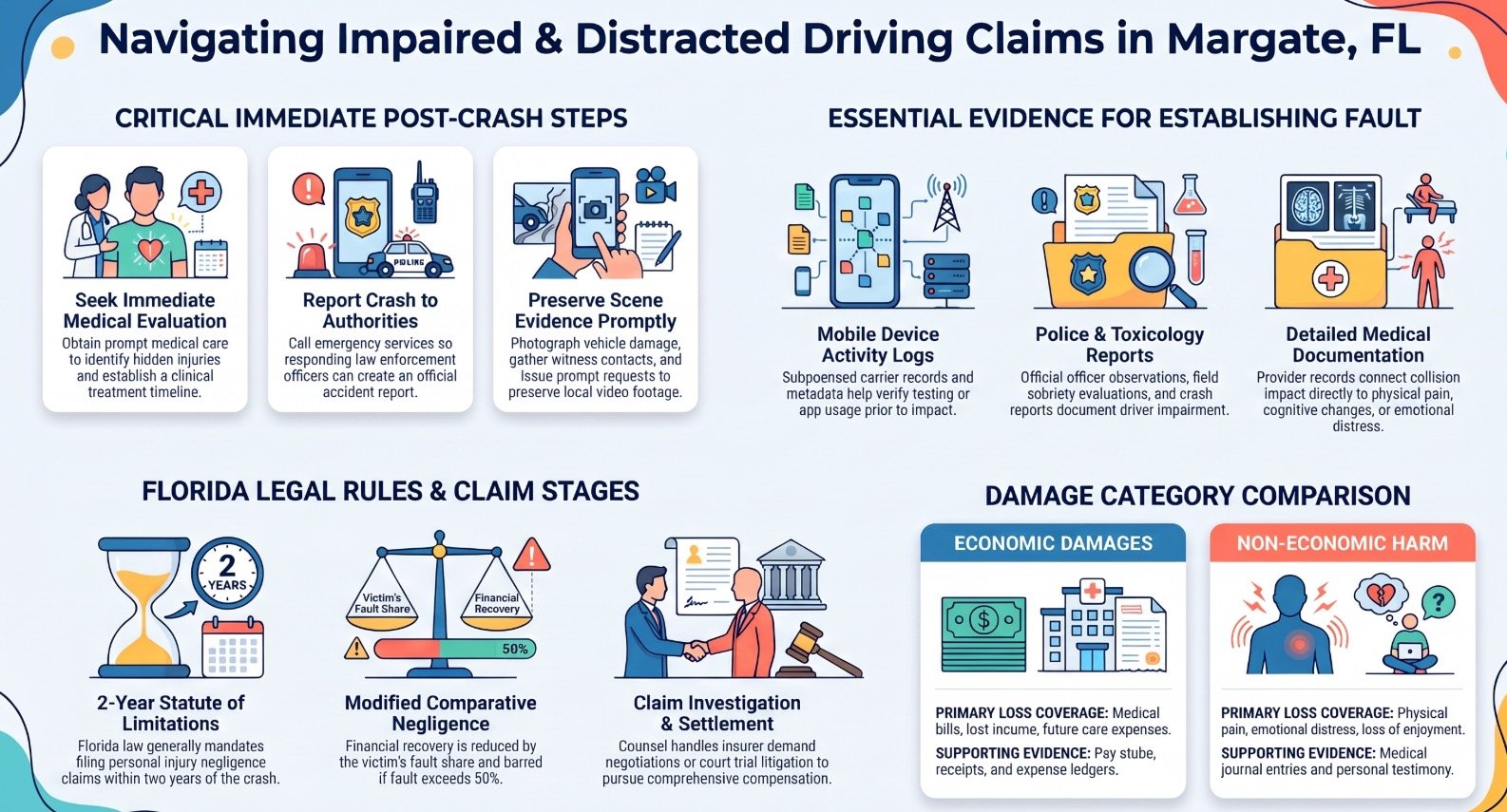
- Seek prompt medical care, report the crash, document the scene when safe, and preserve records and potential video.
- A lawyer can explain Florida deadlines, insurance requirements, comparative fault, potential damages, and steps to preserve evidence.
How We Can Help With Your Margate Car Accident Impaired & Distracted Driving Injury Claim
When an impaired or distracted driver causes a collision in Margate, an injured person may face medical expenses, lost income, and uncertainty about how to pursue compensation. Legal counsel can provide practical guidance while treating the injured person’s concerns with respect. A lawyer may review available records, identify key deadlines, and explain options in clear terms so the client can make informed decisions.
Local advocacy can help connect a claim to the community and the circumstances surrounding the collision. Counsel may coordinate with medical providers, insurers, and other parties, while keeping the client’s priorities central. Careful documentation and timely follow-up can reduce avoidable delays and help preserve important information.


Consistent client communication is also vital. The lawyer can provide updates, answer questions, and explain significant developments without overstating likely outcomes. By managing claim-related tasks and advocating for fair consideration, counsel can give the injured person more time to focus on treatment, family responsibilities, and recovery.
Understanding Margate Car Accident Impaired & Distracted Driving Injury Cases
OUR CONSULTATIONSARE FREE
START YOUR FREE CASE REVIEW

Impaired and distracted driving cases in Margate involve more than proving a collision occurred; they require evidence linking a driver’s conduct to the crash and resulting injuries. A careful review may include police reports, witness accounts, available video, and medical records. Collectively, these materials can clarify how the incident unfolded, whether the driver breached a duty of care, and how the injuries have affected the injured person.
Each claim depends on its specific facts. Evidence must support both responsibility and the nature and extent of harm, while accounting for other explanations that may be raised. Local crash patterns can help community members and public agencies understand where safety concerns arise, but they do not determine fault in an individual case. Prevention initiatives also matter because they promote safer roads and reduce risks for all travelers. Understanding these issues helps injured people pursue accountability while supporting broader efforts to protect the community.
Don’t Wait. Call Our Florida Personal Injury Lawyers Now!
Common Causes of Margate Car Accident Impaired & Distracted Driving


Common causes of impaired driving include alcohol consumption and the use of drugs that affect judgment, coordination, or reaction time. Distracted driving may involve texting behind the wheel or other activities that divert a driver’s attention from the road. These behaviors can increase crash risk and may be relevant when determining how a collision occurred.
Alcohol-Impaired Driving
Alcohol-impaired driving remains a serious cause of preventable crashes in Margate, as alcohol can weaken judgment, slow reaction time, and interfere with a driver’s ability to control a vehicle. Alcohol metabolism varies by person and depends on factors such as body size, food intake, and how much is consumed. Because these differences make impairment difficult to assess, drivers cannot reliably determine when they are safe to drive based on how they feel. Even modest consumption may affect attention, coordination, and the ability to respond to changing traffic conditions. Law enforcement may use DUI checkpoints to identify drivers suspected of operating vehicles while impaired. Preventing these crashes protects passengers, pedestrians, and other motorists. Choosing a sober driver or arranging alternate transportation helps reduce risks and supports safer roads throughout the Margate community.
Drug-Impaired Driving
Drug-impaired driving can contribute to serious crashes in Margate by affecting judgment, coordination, attention, and reaction time. Cannabis, illegal substances, and certain medications may interfere with a driver’s ability to respond safely to changing road conditions. Drug impairment signs can include unusual drowsiness, confusion, slowed movements, poor coordination, or erratic driving, although these indicators do not establish impairment on their own. Prescription medication risks also merit attention because some drugs cause dizziness, blurred vision, or delayed reactions, particularly when combined with other substances. Drivers should review medication warnings and consult a healthcare professional about possible effects before driving. When suspected impairment leads to a collision, prompt medical care and careful documentation can help protect injured people and clarify what occurred. Responsible decisions on the road support the safety of the entire community.
Texting Behind the Wheel
When drivers read or send text messages, their attention shifts from the road, and their ability to respond to hazards can decline. Even a brief glance at a phone may delay braking or prevent a driver from noticing changing traffic conditions. Typing requires visual, manual, and mental attention, increasing collision risk. Notification Alerts can prompt drivers to look at a screen, but responding while moving can place passengers, pedestrians, and other motorists at risk. Florida’s Texting Ban restricts texting while driving, subject to exceptions established by law. Drivers can reduce danger by silencing alerts, securing devices, and waiting until they are safely parked before communicating. When a crash involves suspected texting, available evidence may help clarify what occurred and support accountability. Prompt legal guidance can help injured people understand their options.
Other Driving Distractions
Texting is not the only distraction that can contribute to a Margate car accident. Drivers may divert their attention to navigation systems, music controls, or other in-vehicle technology. Dashboard distractions can take a driver’s eyes from the road and attention from changing traffic conditions, even when a task seems brief. Eating, reaching for objects, or adjusting climate controls may also reduce a driver’s ability to respond promptly.
Passenger interference is another potential hazard. Conversations, arguments, or passenger requests can draw a driver’s focus away from surrounding vehicles and pedestrians. Children or unsecured items may require attention while the vehicle is moving, increasing the risk of a sudden reaction or missed signal. Drivers have a responsibility to maintain focus and protect everyone sharing the road. Recognizing these behaviors can help injured people understand how distraction may have contributed to a collision.
Legal Rights of Margate Car Accident Impaired & Distracted Driving Injury Victims
Impaired or distracted driving can cause serious collisions in Margate, and injured victims may have legal rights to pursue compensation from the responsible parties. Florida law may permit an injured person to seek damages when another driver’s negligence caused harm. Civil justice can help address medical costs, lost income, pain, and other documented losses, while victim advocacy supports fair treatment throughout the claims process.
- Establishing responsibility: Evidence such as crash reports, witness accounts, and available phone or vehicle records may help show how the collision occurred and who bears legal responsibility.
- Documenting losses: Medical records, bills, employment information, and records of daily limitations can support a claim and clarify the injury’s effects.
- Protecting procedural rights: Deadlines, insurance requirements, and comparative fault rules may affect recovery. Timely legal guidance can help preserve evidence, assess potential claims, and communicate with insurers.
Depending on the facts, a claim may involve drivers or other legally responsible parties. Each case requires careful review, and compensation is not guaranteed.
Why Do Margate Car Accident Impaired & Distracted Driving Injuries Happen?
Understanding the causes of impaired and distracted driving can help explain how preventable collisions occur on Margate roads. Impaired driving prevalence reflects the continuing risk created when motorists drive after consuming alcohol, using certain drugs, or combining substances that affect judgment and coordination. Even modest impairment can slow reaction time, reduce attention, and make it harder to judge distance or respond to changing traffic conditions. Fatigue may also weaken alertness and safe decision-making.
Distraction risk factors include texting, handling navigation systems, adjusting vehicle controls, eating, or focusing on passengers rather than the road. Visual, manual, and cognitive distractions can each interfere with a driver’s ability to notice hazards and maintain control. These behaviors may become especially dangerous at intersections, near pedestrians, or in congested areas where conditions change quickly. When impairment or distraction prevents a driver from responding appropriately, other road users may suffer serious injuries. Recognizing these causes underscores the value of attentive, responsible driving and safer choices throughout the community.
What Should You Do After a Margate Car Accident Impaired & Distracted Driving Injury?
After an impaired or distracted driving crash in Margate, injured individuals should seek prompt medical care, even if symptoms initially appear minor. Report the collision to law enforcement, and document relevant details while they’re still available. Preserving photographs, witness information, medical records, and other evidence may help clarify how the crash occurred and support a later claim.
Seek Medical Care
Even when injuries appear minor, anyone involved in a Margate car accident caused by impaired or distracted driving should seek prompt medical care. Some conditions, including concussions, internal injuries, and soft-tissue damage, may not produce immediate symptoms. A timely evaluation can identify problems early and help prevent complications. If symptoms are severe or urgent, an Emergency room can provide immediate assessment and treatment. For less urgent concerns, a physician can examine the injured person, document symptoms, and recommend appropriate care. The provider may refer the patient to a specialist when further evaluation or focused treatment is needed. Following medical instructions and attending scheduled appointments supports recovery and creates a clear record of the injuries. Prompt care also helps ensure injured passengers and other affected people receive attention suited to their needs. Medical care should take priority over assumptions that an injury will resolve without treatment.
Report the Crash
Prompt medical care addresses injuries, while reporting the crash creates an official record of the incident. After reaching a Safe Location, the driver should call 911 if anyone is injured, traffic is blocked, or a suspected impaired driver remains a danger. The responding officers can assess immediate risks and prepare a report documenting the collision. Those involved should provide accurate, factual information and avoid guessing about details they cannot confirm. If police do not respond, you may still need to report the crash to the appropriate Florida agency, depending on the circumstances. The driver should obtain the report number and ask how to request a copy. Emergency Contacts can be notified once urgent needs are addressed to help coordinate transportation or support. Prompt, accurate reporting can assist everyone affected and clarify next steps.
Preserve Evidence
Preserve evidence as soon as it is safe to do so, since details from an impaired or distracted driving crash can become difficult to verify over time. The injured person or a trusted representative should photograph vehicle damage, road conditions, traffic signs, visible injuries, and relevant debris. Record witnesses’ names and contact information, along with the responding officer’s report details. Medical records, discharge instructions, repair estimates, and receipts can help document the injury and resulting expenses.
Evidence preservation also includes protecting electronic records and requesting surveillance retention. Nearby businesses, residences, or traffic systems may have video footage that is routinely erased, so a prompt written request can help prevent its loss. The person should keep damaged property and avoid altering relevant files. A lawyer can advise on lawful collection and secure storage of evidence.
Critical Evidence in a Margate Car Accident Impaired & Distracted Driving Injury Case
Evidence can help establish whether impairment or distraction contributed to a Margate crash and document the resulting injuries. Relevant records may include:
- Police crash reports and witness statements describing the collision and driver conduct.
- Phone records that may indicate device use near the time of the crash.
- Medical documentation linking the collision to the injuries and treatment required.
Police Crash Reports
After a crash involving suspected impaired or distracted driving, how can investigators establish what happened? A police crash report can provide an early, structured account of the collision. It may record the location, time, vehicle positions, road conditions, observed damage, and actions taken by responding officers. In suspected impairment cases, it may also note signs of intoxication, field sobriety procedures, or testing referrals. For distracted driving, the report may document observations or statements about device use, without proving that conduct caused the crash.
Report access helps injured people and their representatives review this information and identify issues that require further investigation. If factual details appear inaccurate or incomplete, report corrections may be requested through the appropriate agency, with supporting documentation. The report is valuable evidence, but it is not conclusive; careful review helps ensure decisions reflect the available facts.
Witness Statements
What did bystanders observe in the moments before and after a collision? Witnesses may describe a driver’s conduct, the vehicle’s movements, traffic conditions, and the immediate effects of impact. Their accounts can help clarify whether distraction or impairment appeared to contribute, though observations alone do not establish fault. A careful review considers each person’s location, visibility, attention, and opportunity to perceive events. Witness credibility may depend on these circumstances, as well as the witness’s ability to recall details accurately. Statement consistency across interviews and other available evidence can strengthen an account, while differences may require clarification rather than automatic dismissal. In Margate injury cases, collecting contact information promptly can preserve access to firsthand accounts. Respectful, neutral questioning helps protect reliable evidence and supports a fair assessment of the injured person’s claim.
Phone Records
Witness accounts may raise questions about a driver’s attention, but phone records can help establish whether a device was in use near the time of a Margate collision. Call logs, text activity, and data-use records may indicate when a driver communicated or accessed online services. Carrier subpoenas can seek relevant records, subject to applicable privacy rules and legal procedures. Because a phone’s timestamp may differ from the time shown by other evidence, metadata analysis can help assess timing and activity more precisely. Records alone may not prove that a driver was looking at a screen or caused a crash. They can, however, be compared with witness statements, vehicle data, and scene evidence to clarify disputed facts. Careful review may support a fair account of events and help protect injured people’s interests.
Medical Documentation
Medical documentation can connect injuries to an impaired or distracted driving collision and show how those injuries developed over time. Prompt evaluation creates a record of reported symptoms, examination findings, diagnoses, and recommended care. Consistent follow-up may help clarify whether pain, mobility limits, or other effects persisted or changed after the crash.
Records from physicians, emergency departments, therapists, and clinicians can establish a treatment chronology, including referrals, procedures, and recovery milestones. Provider credentials and the basis for each clinical opinion may also help readers assess the records’ reliability. Accurate documentation should distinguish observed findings from patient-reported symptoms and note relevant medical history. When appropriate, injured people can request copies and preserve bills, imaging results, prescriptions, and discharge instructions. Organized records may help explain the injury’s impact and support a fair claim review.
Long-Term Effects of Margate Car Accident Impaired & Distracted Driving Injuries
Impaired or distracted driving injuries may lead to effects that persist well beyond the initial treatment period. Some people experience chronic physical pain or lasting cognitive changes that interfere with daily activities and work. Emotional health challenges may also develop, making long-term care and support important considerations.
Chronic Physical Pain
Chronic physical pain can persist long after a Margate car accident, even when initial injuries appear to have recovered. Soft-tissue damage, fractures, and back or joint injuries may leave lasting discomfort that interferes with work, household responsibilities, and community service. Symptoms can vary day to day, with pain flare-ups triggered by movement, prolonged sitting, or weather changes. Ongoing discomfort may also disrupt sleep, reduce energy, and make routine tasks harder. Consistent medical evaluation can help identify the source of pain and guide appropriate treatment, such as physical therapy or medication. Keeping records of symptoms, appointments, and limitations may clarify how the injury affects daily life. A careful recovery plan can support function and help injured people continue contributing to those who depend on them.
Lasting Cognitive Changes
Beyond persistent physical pain, a Margate car accident may cause lasting cognitive changes, particularly when a head injury results from an impaired or distracted driver’s actions. These effects can interfere with attention, memory, processing speed, and the ability to plan or complete familiar tasks. Difficulties may emerge immediately or become clearer as the injured person resumes work, education, and daily responsibilities. A thorough medical assessment can identify affected functions and guide appropriate care. Cognitive rehabilitation may help individuals develop practical strategies, strengthen skills, and adapt to ongoing limitations. Neuroplasticity research examines how the brain can reorganize and form new connections after injury, informing recovery approaches. Progress varies by person and injury severity, so treatment plans should reflect individual needs. Clear documentation can also help explain how cognitive changes affect independence and the ability to serve others.
Emotional Health Challenges
Emotional health challenges may persist long after a Margate car accident caused by impaired or distracted driving. Survivors may experience anxiety, depression, irritability, sleep disruption, or recurring distress when reminded of the collision. These effects can strain relationships, interfere with work, and make routine activities feel difficult. Family members and caregivers may also need guidance to understand changing needs and provide steady, respectful support.
Trauma coping can involve professional counseling, medical care, peer support, and practical adjustments that reduce daily stress. A qualified mental health provider can assess symptoms and recommend treatment suited to each person’s circumstances. Emotional resilience may develop gradually through consistent care, supportive relationships, and realistic recovery goals, though progress can vary. Recognizing these challenges early helps survivors access appropriate assistance and maintain meaningful connections while adapting to lasting effects of their injuries.
Don’t Wait. Call Our Florida Personal Injury Lawyers Now!
Proving Liability in Margate Car Accident Impaired & Distracted Driving Injury Cases
When a driver in Margate causes a crash while impaired or distracted, proving liability requires evidence that the driver acted negligently and that this conduct caused the injuries. A careful investigation can identify the facts needed to establish Duty Breach, including whether the driver failed to use reasonable care by driving after drinking, handling a phone, or ignoring traffic conditions. Relevant evidence may include police reports, witness accounts, photographs, vehicle damage, and available video footage. Toxicology results or phone records may help show impairment or distraction, when lawfully obtained and properly interpreted.
A Causation Analysis connects the driver’s conduct to the collision and the resulting harm. Medical records, crash reconstruction, and expert opinions may clarify how the impact occurred and whether it caused specific injuries. The injured person’s own account can also explain the collision’s effects, while consistent documentation supports an accurate assessment. Promptly preserving evidence helps protect the integrity of the investigation and supports a fair determination of responsibility. Each case depends on its particular facts and applicable law.
Dealing With Insurance Companies After a Margate Car Accident Impaired & Distracted Driving Injury
After establishing how impaired or distracted driving contributed to a Margate crash, the injured person may need to address insurance companies seeking information about the collision and resulting losses. Clear, accurate communication can help protect a claim while allowing the injured person to focus on recovery and family responsibilities. Insurers may request statements, records, or access to medical information. Before responding, the claimant should understand what is being requested and avoid guessing about details that remain uncertain. Adjuster tactics may include minimizing injuries, questioning treatment, or suggesting that an early payment resolves the matter. A prompt settlement may not account for future care, lost income, or lasting limitations. The injured person should preserve relevant documents, keep copies of communications, and avoid signing broad releases without careful review. If a Claim denial occurs, the written explanation and supporting policy language may clarify the insurer’s position. A qualified attorney can help assess communications and advocate for fair consideration of the losses.
What to Expect During a Margate Car Accident Impaired & Distracted Driving Injury Claim Process
A Margate impaired or distracted driving injury claim typically begins with an initial case review to assess the circumstances and potential legal issues. Evidence is then collected to support the claim, followed by negotiations with insurers over liability and damages. The process concludes with a resolution, which may provide compensation through a settlement or, if necessary, a court decision.
Initial Case Review
What happens during an initial case review of an impaired or distracted driving injury claim in Margate? The review begins with case screening and conflict checks to determine whether the firm can evaluate the matter and provide independent representation. A legal professional asks about the collision, reported injuries, treatment, insurance coverage, and communications with other parties. The injured person may also explain how the incident has affected work, family responsibilities, and daily activities. This discussion helps identify the claim’s immediate needs, potential legal issues, and any applicable deadlines. The reviewer can explain the general process, clarify what information may be needed, and discuss available next steps without promising a particular result. The injured person should receive clear guidance and time to decide whether to proceed with representation.
Evidence Collection
Once the initial review identifies a potential claim, evidence collection helps establish how the Margate collision occurred and how it affected the injured person. Counsel may obtain police reports, photographs, witness statements, and available traffic or business surveillance footage. In suspected impaired or distracted driving cases, records concerning phone use, sobriety testing, and officer observations may also be relevant, subject to applicable procedures. Medical records and treatment documentation can help describe the injuries and their effects on daily activities. Scene preservation is important because vehicle damage, roadway conditions, and physical marks may change or disappear. Investigators may document these details promptly and arrange inspections when appropriate. Maintaining a reliable Evidence chain helps show where materials came from, who handled them, and whether they remained intact. Careful collection supports an accurate account of the collision and its consequences.
Claim Negotiations
After reviewing the evidence and initial damages, claim negotiations typically begin with a demand to the insurer outlining the facts, injuries, treatment, and requested compensation. A careful demand strategy connects documented losses to the collision and explains how impaired or distracted driving contributed. The insurer may investigate further, request records, or question liability and the extent of injuries. Review responses against available evidence, policy terms, and the injured person’s ongoing medical needs. Negotiations can involve written offers, counteroffers, and requests for clarification, with each position supported by relevant documentation. Settlement timing varies based on the investigation, treatment progress, and the complexity of disputed issues. A measured process helps protect the injured person’s interests while allowing the insurer a fair opportunity to assess the claim.
Resolution And Compensation
A claim may resolve through a negotiated settlement or, if key issues remain disputed, through litigation. In either path, the injured person’s documented losses, medical outlook, and evidence of impaired or distracted driving can affect the outcome. Compensation may cover medical expenses, lost income, reduced earning capacity, property damage, and pain and suffering, subject to applicable law and available insurance. Settlement timelines vary based on treatment, investigation, insurer responses, and the complexity of liability questions. A settlement should account for future care when injuries require ongoing support, not just immediate bills. Structured payouts may distribute compensation over time when that arrangement serves the injured person’s needs. Before accepting an offer, the claimant generally reviews its terms and the rights being released. A final resolution can provide resources to support recovery and daily responsibilities.
Compensation for Margate Car Accident Impaired & Distracted Driving Injury Damages
Compensation for injuries caused by impaired or distracted driving in Margate may include payment for medical care, lost income, reduced future earning capacity, and pain and suffering. A claim may account for treatment already received and reasonable care expected in the future. Future Care Costs can include rehabilitation, medication, assistive devices, or in-home support when injuries affect daily activities. Records from medical providers and qualified experts can help establish the nature, duration, and likely expense of that care.
An injured person may also seek compensation for income missed during recovery and work opportunities limited by lasting impairments. The value of a claim depends on the evidence, the injuries, and applicable insurance coverage. In cases involving particularly wrongful conduct, Florida law may allow punitive damages, subject to specific legal standards. These damages are intended to address misconduct rather than reimburse treatment or wages. Careful documentation and a thorough review of the circumstances can help determine which forms of compensation may be supported.
Economic vs Non-Economic Damages in Margate Car Accident Impaired & Distracted Driving Cases
In Margate impaired and distracted driving cases, economic damages are supported by records such as medical bills, repair estimates, and proof of lost income. Non-economic damages address harms such as pain, emotional distress, and reduced quality of life, which may not have a direct financial measure. Comparing these damage types helps clarify how documented costs and personal losses may contribute to a compensation claim.
Economic Damage Documentation
When an impaired or distracted driver causes a crash in Margate, clear documentation helps distinguish economic damages from non-economic losses. Economic damages are measurable financial costs connected to the collision and its effects on a person’s ability to work. Medical bills, pharmacy receipts, rehabilitation invoices, and transportation costs can help establish expenses already incurred. Wage records, such as pay stubs, employer statements, and tax documents, may support claims for missed income or reduced earning capacity. An Expense ledger can organize payments, dates, providers, and outstanding balances, making the financial impact easier to review. Preserve records in their original form and update them as treatment or recovery continues. Consistent documentation can help insurers, attorneys, and courts evaluate losses and direct appropriate compensation, while helping injured people pursue accountability responsibly.
Non-Economic Harm
Beyond documented bills and lost wages, a Margate crash caused by impaired or distracted driving may result in non-economic harm, including pain, emotional distress, and reduced ability to enjoy daily activities. These effects can persist after immediate injuries are treated, affecting a person’s sleep, relationships, independence, and participation in community life. Pain and Suffering may include physical discomfort as well as anxiety, fear, or other emotional effects connected to the collision. Loss of Enjoyment may arise when injuries prevent someone from pursuing hobbies, caring for family members, volunteering, or maintaining ordinary routines. The nature and duration of these effects vary by person and injury. Medical records, personal accounts, and observations from people familiar with the injured person may help describe how the crash changed everyday life and ongoing well-being.
Comparing Damage Types
A Margate car accident claim involving impaired or distracted driving may include both economic and non-economic damages, which address different effects of an injury. Economic damages cover measurable financial losses, such as medical bills, rehabilitation costs, lost wages, and reduced future earning capacity. Receipts, employment records, and expert assessments may help document these amounts. Non-economic damages address less quantifiable consequences, including pain, emotional distress, loss of enjoyment, and disruption to family or community responsibilities. These harms can affect a person’s ability to care for others, maintain relationships, or participate in daily life. Evidence from the crash scene, including Vehicle deformation and paint transfer damage, may help explain how the collision occurred and support an injury claim. A careful assessment distinguishes documented expenses from personal harms while considering the accident’s full impact.
When a Margate Car Accident Impaired & Distracted Driving Injury Case Goes to Trial vs Settlement
In Margate, an impaired or distracted driving injury claim may settle or proceed to trial, depending on the evidence, the extent of the injuries, and whether the parties can agree on fair compensation. Settlement allows the injured person and the at-fault driver’s insurer to resolve the claim without a courtroom decision. Negotiations may address medical expenses, lost income, ongoing care, and the injury’s effects on daily life. A settlement can provide a more predictable resolution, though the parties must agree on its terms.
If negotiations do not produce an acceptable outcome, the case may proceed to trial. Each side presents evidence, and witnesses may explain how the collision occurred and how injuries have affected the claimant. Trial testimony helps jurors assess disputed facts and claimed losses. After hearing the evidence, the jury deliberates and decides responsibility and compensation. Both paths require careful preparation focused on presenting an accurate account and supporting the injured person’s needs.
Florida Laws That May Affect Your Margate Car Accident Impaired & Distracted Driving Case
Florida law can affect how a Margate impaired or distracted driving claim is evaluated, including who may be held responsible and what compensation may be available. The rules address driver conduct, evidence, fault, and damages, helping clarify how an injured person’s needs may be considered.
Florida law shapes how impaired or distracted driving claims are assessed, including responsibility, evidence, fault, and potential compensation.
- Impairment evidence: Florida DUI thresholds generally include a blood- or breath-alcohol level of 0.08 percent or higher for most drivers. A lower level may still support a DUI charge when impairment is evident. A DUI finding can inform a civil claim, but it does not establish every element of liability on its own.
- Phone use: Florida distracted driving statutes restrict texting while driving and allow primary enforcement in specified circumstances. Phone records, witness accounts, and scene evidence may help show whether distraction contributed to a collision.
- Comparative fault and damages: Florida’s modified comparative negligence system may reduce recovery based on an injured person’s share of fault, and generally bars recovery above 50 percent. Recoverable damages may include medical costs, lost income, and pain and suffering.
Don’t Wait. Call Our Florida Personal Injury Lawyers Now!
The Statute of Limitations for Margate Car Accident Impaired & Distracted Driving Injury Cases
Beyond questions of fault and damages, the time allowed to bring a claim can determine whether an injured person may pursue compensation. In Florida, most negligence claims arising from car crashes must be filed within two years of the accident. This period generally applies when impaired or distracted driving causes injury, though the facts and applicable law may affect the calculation. Filing deadlines are strict; missing the applicable limit can prevent recovery, regardless of the seriousness of the harm or the strength of the evidence.
Some deadline exceptions may apply. For example, the time limit can differ when a claim involves a government entity, a minor, or an injury that could not reasonably be discovered immediately. A defendant’s absence from Florida may also affect the calculation in limited circumstances. These rules are fact-specific, and exceptions should not be assumed. Prompt attention to the date of the collision, the injured person’s circumstances, and any notice requirements helps preserve access to the courts and the opportunity to seek accountability.
How a Margate Car Accident Impaired & Distracted Driving Lawyer Can Help You
When a crash involves suspected impairment or distraction, a Margate car accident lawyer can help an injured person assess the evidence, identify potentially responsible parties, and pursue a claim. The lawyer’s work may also support community safety by encouraging accountability and preserving reliable facts about the collision. During an Initial Consultation, counsel can review the circumstances, explain potential legal options, and clarify what information may be needed to evaluate losses.
A lawyer may assist by:
- Gathering and reviewing available evidence, such as crash reports, witness accounts, photographs, and relevant phone or toxicology records.
- Identifying potentially liable drivers or other parties and evaluating how their conduct may have contributed to the injuries.
- Preparing claim materials, communicating with insurers, and addressing disputes over fault, damages, or supporting documentation.
Consistent Attorney Communication helps the injured person understand case developments and make informed decisions. Counsel can also organize medical and financial records to present a clear account of the harm suffered. This structured support allows the person to focus on recovery while the claim receives careful, professional attention.
When to Contact a Margate Car Accident Impaired & Distracted Driving Lawyer
Prompt legal guidance can help preserve evidence and clarify available options after a crash involving suspected impairment or distraction. Consider contacting a Margate car accident lawyer as soon as you address immediate medical needs. Early consultation may help protect time-sensitive information, such as nearby surveillance footage, witness contact details, and crash records. It can also clarify deadlines and the steps available for communicating with insurers.
A consultation may be appropriate even when fault is disputed, injuries appear minor, or the other driver denies using alcohol, drugs, or a phone. Symptoms can develop later, and relevant evidence may become harder to obtain with time. Those seeking to support an injured family member or help another affected person can also ask about lawful ways to assist.
Attorney selection should reflect the circumstances of the collision, the person’s needs, and the lawyer’s ability to explain the process clearly. Prompt outreach helps you make informed decisions without requiring an immediate commitment to pursue a claim.
Why You Need an Experienced Margate Car Accident Impaired & Distracted Driving Lawyer
An experienced Margate car accident impaired and distracted driving lawyer can help identify evidence that may establish how a collision occurred and who may be responsible. In suspected impaired driving cases, relevant proof may include police reports, witness accounts, toxicology results, and available video. Distracted driving claims may require examination of phone records, vehicle data, or other information showing a driver’s attention before impact. Careful evidence preservation can support a clearer account of events and help prevent important details from being lost.
Attorney Experience can also help evaluate injuries, document losses, and address disputes over fault or insurance coverage. A lawyer may coordinate with investigators and qualified professionals to evaluate evidence and explain its significance. An informed Case Strategy can organize the facts, identify legal issues, and guide communications with insurers or opposing counsel. This work can help injured people pursue accountability while allowing them to focus on recovery and their responsibilities to family and community. Each matter requires an assessment of its specific circumstances.
How to Choose the Right Margate Car Accident Impaired & Distracted Driving Lawyer for Your Case
Choosing the right Margate car accident impaired and distracted driving lawyer involves evaluating the attorney’s experience with similar claims, ability to investigate disputed evidence, and approach to client communication. A careful review can help an injured person select counsel prepared to pursue accountability while treating everyone affected with fairness and respect.
Verify attorney credentials, including licensing, disciplinary history, and relevant experience handling crashes involving suspected impairment or distraction. The lawyer should be able to explain how evidence such as crash reports, witness accounts, phone records, and toxicology results may support or complicate a claim. Questions about investigation methods and case strategy can reveal whether the attorney gives clear, practical answers rather than guarantees.
Communication style also matters. A suitable lawyer should explain important developments, respond within reasonable periods, and make the client’s responsibilities understandable. The injured person may compare consultation impressions, fee terms, and available resources before deciding. Selecting counsel based on competence, transparency, and respectful service can support informed decisions throughout a demanding legal process.
About The Law Offices of Anidjar & Levine
The Law Offices of Anidjar & Levine represents people injured in car accidents, including crashes involving suspected impairment or distracted driving. The firm helps clients understand their legal options, document losses, and pursue compensation from responsible parties. Its attorneys communicate with insurers and build claims using available evidence, such as crash reports, witness accounts, and medical records. Each matter depends on its specific facts, and no particular result can be guaranteed.
Firm History provides context for the firm’s work and its experience representing injured people. That background may help prospective clients assess whether the firm’s approach aligns with their needs and priorities. The firm also describes Community Involvement as part of its broader commitment to serving individuals and families. For people coping with injuries, practical guidance and attentive communication can be important throughout a claim. The firm’s role is to explain procedures, address questions, and help clients make informed decisions while they focus on recovery and daily responsibilities.

Frequently Asked Questions
Can I File a Claim if I Was a Passenger in an Impaired-Driving Crash?
Yes, an injured passenger can generally file a claim after a crash caused by impaired driving. Passenger injury claims may seek compensation from the impaired driver and, depending on the facts, another responsible party or applicable insurance coverage. Shared fault rules can affect recovery if the passenger’s own conduct contributed to the injuries, though merely riding with an impaired driver does not automatically prevent a claim. Prompt medical care and legal review can help preserve evidence and identify available options.
Can I Pursue Compensation if the At-Fault Driver Was Uninsured?
Yes, an injured person may pursue compensation even when the at-fault driver lacks insurance. Uninsured motorist coverage may pay for eligible losses, subject to the policy’s limits and terms. Personal injury protection can help cover medical expenses and certain lost income, regardless of fault. The available recovery depends on the injured person’s insurance, the circumstances of the crash, and applicable law. A careful review can identify potential benefits and preserve important claim deadlines.
Could a Bar or Restaurant Be Liable for Serving the Impaired Driver?
A bar or restaurant may be liable for an impaired driver’s crash when evidence shows unlawful or negligent alcohol service contributed to the harm. Dram shop liability rules vary by state and may depend on whether staff served a visibly intoxicated person or someone underage. The injured person must generally establish a connection between the establishment’s conduct and the collision. Prompt investigation can help preserve receipts, witness accounts, and surveillance footage.
Can I Bring a Claim if the Impaired Driver Was Charged but Not Convicted?
Yes. A person injured by an impaired driver may bring a civil claim even if the driver was charged but not convicted. Criminal proceedings and injury claims are separate, and each applies a different Civil burden of proof. The injured person must establish liability and damages using admissible evidence, which may include police reports, witness statements, medical records, and toxicology results. Independent evidence can support the claim, though outcomes depend on the specific facts and applicable law.
What Happens if a Crash Involved a Driver Using a Prescription Medication?
A crash involving a driver taking prescription medication may support a claim if the medication impaired safe driving. Prescription Drug Impairment Evidence can include toxicology results, medical records, pharmacy information, witness accounts, and expert analysis. Medication Warning Compliance matters because labels may caution against driving or combining drugs. A prescription alone does not establish fault; the evidence must show impairment and a connection to the collision. A careful investigation can help protect injured people’s rights.
—————————
Impaired and distracted driving crashes can leave Margate victims with serious injuries, financial strain, and questions about their rights. A careful review of the collision, available evidence, and applicable Florida law can help clarify potential recovery options. The Law Offices of Anidjar and Levine can assess a claim, communicate with insurers, and pursue compensation supported by the facts. Learn more from a Margate Personal Injury Lawyer. Prompt legal guidance may also help preserve important evidence and protect an injured person’s interests throughout the process.

