

The Law Offices of Anidjar and Levine help Bradenton property owners document storm and weather damage, review insurance policy requirements, and address disputes over covered losses. Wind, hail, heavy rain, flooding, and lightning can damage structures and belongings, while hidden moisture may worsen conditions over time. We encourage prompt reporting, safe documentation, and careful recordkeeping of repairs, expenses, and insurer communications. When an injury or disputed claim arises, we can help assess available options, including guidance from a Bradenton Personal Injury Lawyer. The sections below explain practical steps and considerations.
Main Takeaways
- A Bradenton storm-damage lawyer can review your property policy, coverage limits, exclusions, deadlines, and claim requirements.
- Report damage promptly, request written confirmation, and keep copies of insurer communications and claim documents.
- Photograph damage and save repair estimates, receipts, inspection reports, and records of temporary repairs.
- Ask for written explanations of claim denials or reduced payments, and submit evidence to address factual errors.
- Injury claims may require different evidence and follow different procedures; seek prompt medical care and document the incident.
How We Can Help With Your Bradenton Property Claim Storm & Weather Damage Injury Claim
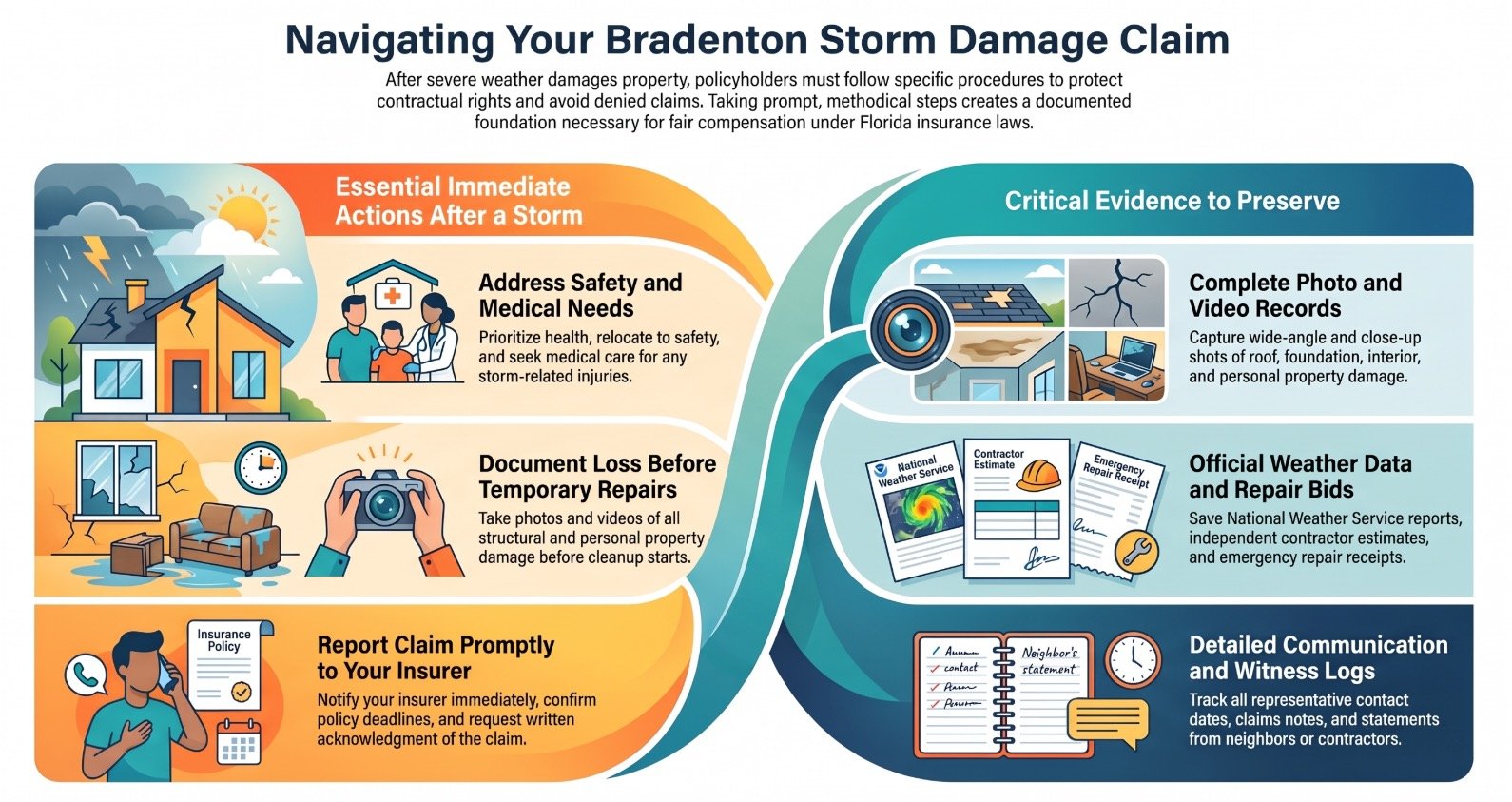
When a storm damages your Bradenton property or causes an injury, we can help you understand your options and pursue a claim. We’ll listen carefully, learn how the event affected your home, business, or well-being, and identify practical steps to protect your interests. Our team can conduct a Policy coverage review to clarify applicable terms, exclusions, deadlines, and documentation requirements. We’ll help you organize photographs, repair estimates, medical records, and communications so the claim presents a clear account of your losses.
We can also coordinate contractors by helping you communicate with qualified professionals and track inspections, estimates, and repairs. When questions arise, we’ll explain your choices in straightforward language and respond promptly, so you can make informed decisions while attending to family, employees, or neighbors who rely on you. We’ll manage claim-related discussions with insurers and work to address delays or disputes. Throughout the process, we’ll keep you informed and focus on a fair resolution supported by the available evidence.
Understanding Bradenton Property Claim Storm & Weather Damage Injury Cases


Storms can damage buildings, personal property, and the places where people live or work, and they can also cause injuries that may require separate legal consideration. When someone is hurt during a weather-related event, we help you distinguish a personal injury matter from a property insurance claim. Each may involve different evidence, responsible parties, and procedures, so careful documentation can help you understand your options.
OUR CONSULTATIONSARE FREE
START YOUR FREE CASE REVIEW

We can review relevant insurance policies, repair records, photographs, medical documents, and communications to assess how the damage and injury relate to the event. Policy exclusions and claim deadlines may affect coverage or the time available to act, making prompt review important. We’ll also consider whether another party’s conduct contributed to the harm, without assuming that every loss creates a valid claim.
Don’t Wait. Call Our Florida Personal Injury Lawyers Now!
Common Causes of Bradenton Property Claim Storm & Weather Damage
We commonly see storm-related property claims arise from hurricane-force winds and heavy rainfall that causes flooding. Hail and windblown debris can damage roofs, siding, and windows, while lightning can start fires or cause power surges that damage electrical systems. We’ll explain how these events can affect your property and the evidence that may support a claim.
Hurricane-Force Winds


Hurricane-force winds can damage Bradenton properties even when a storm’s center remains far offshore. Strong gusts may lift shingles, loosen flashing, and expose roof decking to further damage. Roof uplift can also strain connections between the roof, walls, and foundation, especially when a building has existing weaknesses or inadequate maintenance. Windborne projectiles, including branches and unsecured outdoor objects, may break windows, damage siding, or puncture roofing materials. These impacts can compromise a property’s safety and disrupt the people who rely on it for shelter, work, or community services.
After a wind event, we can help you document visible damage, preserve relevant records, and review your insurance policy’s requirements. Prompt reporting and careful photographs may support a clearer claim. We’ll explain available options and help you pursue a fair assessment without overlooking less obvious structural damage.
Heavy Rainfall Flooding
When heavy rainfall overwhelms Bradenton’s drainage systems, water can collect around buildings, enter through doors or windows, and seep into roofs, walls, and foundations. Flooding can also occur when canals, ditches, or nearby waterways exceed capacity. In some areas, limited drainage infrastructure leaves properties vulnerable even after a brief, intense storm. Floodplain mapping can help identify locations with elevated flood risk, but it cannot predict every drainage failure or prevent water from reaching a building.
After flooding, we encourage you to put safety first and document visible damage when conditions allow. Keep receipts for emergency repairs and temporary housing, and report the loss promptly to your insurer. We can help you review policy terms, preserve relevant evidence, and assess whether the insurer has fairly evaluated the cause and extent of the water damage.
Hail and Debris
Hail can crack roof tiles, dent metal siding, and damage windows, while wind-driven branches and other debris may puncture roofs or break exterior features. In Bradenton, these impacts can compromise a building’s weather protection and expose its interior to further damage. Hail impact may leave marks that seem minor, yet loosened materials or concealed fractures can worsen over time. Flying debris can also damage fences, gutters, vents, and outdoor equipment, creating hazards for occupants and neighbors.
After a storm, we recommend documenting visible damage from a safe location and arranging a qualified inspection. Keep photographs, repair estimates, and receipts, and take reasonable steps to prevent additional harm without risking anyone’s safety. When you report a property claim, we can help you organize supporting records, understand policy requirements, and respond to questions about the storm-related damage.
Lightning and Power Surges
Lightning can damage a Bradenton property directly or trigger power surges that harm wiring, appliances, and electronic systems. A strike may also start a fire, damage roofing, or travel through utility lines and connected equipment. We can help you recognize that damage may extend beyond visible burn marks, so document affected areas and devices promptly. Keep receipts, photographs, repair estimates, and any inspection reports to support your property claim. Surge protection and proper lightning grounding can reduce future risks, but they won’t prevent every loss. If a storm damages your home or business, report the incident to your insurer and take reasonable steps to protect people and property from further harm. We can review the evidence, explain your options, and help you pursue fair compensation for covered losses.
Legal Rights of Bradenton Property Claim Storm & Weather Damage Injury Victims
Storms and severe weather can damage property and cause injuries, but Florida law gives affected people important rights. We can help you understand those protections and take informed steps while supporting your family, neighbors, or community.
Policyholder rights include fair consideration of a covered claim under the insurance policy. You can document losses, submit supporting records, request explanations, and challenge an unfair denial through available procedures.
Review your policy and note claim deadlines, since reporting and filing requirements may apply.
- Keep copies of your policy, claim forms, correspondence, and repair estimates.
- Photograph damage and preserve receipts for reasonable temporary expenses.
- Give the insurer accurate information and request written decisions.
- Ask for clarification when coverage terms or settlement calculations are unclear.
- Consult a qualified attorney if a dispute threatens your ability to recover.
If someone was injured, you may also have rights to pursue compensation from a responsible party. We can help you identify relevant legal options and protect your interests without delaying necessary care or assistance.
Why Do Bradenton Property Claim Storm & Weather Damage Injuries Happen?
When severe weather damages a Bradenton property, unsafe conditions can cause injuries during the event or afterward. High winds may break windows, loosen roofing, or send debris through occupied spaces. Heavy rain can overwhelm drainage systems, flood floors, and create slippery surfaces. Lightning, falling trees, and damaged electrical equipment may also seriously harm residents, workers, and visitors.
Some risks reflect preventable property conditions. Building code vulnerabilities, including inadequate roof connections or poorly maintained drainage, can reduce a structure’s ability to withstand severe weather. Bradenton’s coastal exposure adds concerns, as storm surge, salt air, and intense rainfall can weaken materials and increase flood risk. After a storm, hidden structural damage may cause ceilings, walls, or stairs to fail without warning.
When we recognize how these hazards arise, we can better assess whether a property’s condition contributed to someone’s injury. That insight can help protect injured people and support safer spaces for everyone who depends on them.
What Should You Do After a Bradenton Property Claim Storm & Weather Damage Injury?
After a storm-related injury, we recommend seeking medical attention promptly, even if your symptoms seem minor. We can help you document the damage with photographs, repair estimates, and records of your losses. Then contact your insurer to report the claim and ask about the next steps.
Seek Medical Attention
Your health should come first after storm or weather damage causes an injury on someone else’s property. If you’re hurt, move to a safe area when possible and seek prompt medical care. Call 911 for severe bleeding, difficulty breathing, suspected fractures, head injuries, or other urgent symptoms. Emergency care can address immediate risks, while a clinician can assess injuries that may not be obvious at first. Follow the provider’s treatment instructions and attend recommended follow-up appointments. Even if your symptoms seem minor, get evaluated because pain, dizziness, or limited movement can develop or worsen over time. Monitor symptoms and contact a medical professional if your condition changes. By caring for yourself promptly, you can also help ensure you’re able to support family, neighbors, and others affected by the storm.
Document the Damage
Once you’ve addressed your immediate medical needs, document storm-related damage as soon as it’s safe. Take clear photographs and videos of affected rooms, belongings, and exterior areas before moving or discarding anything. Include wide views and close-ups, and note when and where you recorded each image. Keep damaged items available for inspection when practical, while protecting yourself and others from hazards.
Create a written record describing the damage, when you noticed it, and any steps taken to prevent further harm. Save receipts and records related to emergency mitigation, such as temporary repairs or cleanup. An inventory organization system can help you list damaged property, estimate its age and value, and track supporting documents. Ask household members or neighbors who witnessed the conditions to record what they observed. Careful documentation can help preserve an accurate account of your losses.
Contact Your Insurer
When it’s safe, contact your insurer promptly to report the storm damage and ask what steps you must take to open a claim. We can help you prepare by keeping your photographs, repair estimates, and damage notes organized. Give the insurer accurate information, describe what you observed, and avoid guessing about the cause or extent of loss. Ask for the claim number, the adjuster’s contact details, and a written claim acknowledgment. Confirm Policy deadlines for submitting forms, supporting records, and any required proof of loss; missing a deadline could affect your coverage. Keep copies of every message and record the dates of calls, names of representatives, and instructions received. If the insurer requests an inspection, ask how to protect the property while preserving evidence and preventing further damage.
Critical Evidence in a Bradenton Property Claim Storm & Weather Damage Injury Case
We can strengthen your storm damage claim by preserving clear evidence of the loss and its cause. Gather these records promptly, before repairs or changing conditions make details harder to verify.
Essential evidence may include:
- Photographs and videos showing damage, ideally taken soon after the storm
- Local weather reports documenting the storm’s timing and severity
- Written repair estimates and invoices from qualified contractors
- Statements and contact details from witnesses who saw the damage or its effects
- Insurance correspondence, inspection reports, and receipts for emergency expenses
Damage Photographs
Clear photographs can preserve crucial evidence after a storm damages your Bradenton property. We recommend photographing every affected area before cleanup or repairs begin, including roofs, ceilings, walls, flooring, and damaged belongings. Take wide views to show the location and close-ups to document specific damage. Use steady lighting, capture several angles, and include an object for scale when it helps clarify the extent of a problem. Photo metadata may record when images were taken, so preserve original files and avoid edits that could alter their details. Create image backups in a secure location, and keep a separate copy for your records. If immediate repairs are necessary to protect people or prevent further loss, document conditions first when safe, then retain receipts and removed materials when practical. We can help organize these photographs for your claim.
Weather Reports
Weather reports can help establish the conditions that caused damage to your Bradenton property and support your claim timeline. We can compare official records with your photographs and account of when the damage occurred. The National Weather Service provides information about rainfall, wind speeds, hail, and severe weather alerts that may help explain what your property endured. Local storm tracking data can also show a storm’s path and timing, giving insurers a clearer picture of conditions in your area.
We should preserve relevant reports, alerts, and dated observations as soon as possible. These records may help distinguish storm-related damage from preexisting conditions and address questions about the event. By organizing reliable weather evidence, we can present a more complete account of your loss and help protect the interests of everyone who depends on your property.
Repair Estimates
Alongside weather records, repair estimates help show the extent and likely cost of storm damage to your Bradenton property. We can use detailed assessments to connect visible damage with necessary repairs and document losses for an insurer. Ask qualified professionals to inspect affected areas, identify materials and labor needs, and explain how they calculated each cost. When practical, obtain written contractor bids, since independent pricing can clarify whether the proposed work reflects local conditions and appropriate repair methods. If an insurer’s estimate omits damaged components or understates replacement costs, we can compare the documents and identify discrepancies. Keep invoices, photographs, and updated estimates as repairs progress. Organized records help us present a reliable claim, support fair payment, and preserve resources that your household or organization needs to recover and serve others.
Witness Statements
Witness statements can help establish how a storm affected your Bradenton property and when the damage occurred. Neighbor accounts may confirm when severe weather began, what conditions they observed, and whether damage appeared before or after the storm. We can help you identify people with firsthand knowledge and request clear, specific accounts while their memories remain fresh.
Contractor observations can also clarify your home’s condition during inspections or repairs. A roofer, plumber, or restoration professional may describe storm-related damage, visible signs of water intrusion, or changes discovered while work was underway. When possible, we should preserve these observations in dated notes, photographs, and written statements.
Together, reliable witness evidence can support your timeline and help explain the loss to an insurer. We can organize these records alongside repair estimates and other claim documentation.
Don’t Wait. Call Our Florida Personal Injury Lawyers Now!
Long-Term Effects of Bradenton Property Claim Storm & Weather Damage Injuries
We’ll examine how storm damage can leave lasting structural problems that threaten your property’s safety and value. Persistent moisture can lead to mold, material deterioration, and further damage if you delay repairs. We’ll also explain how ongoing repair costs can affect your claim and why documenting future expenses matters.
Lasting Structural Damage
Although a storm may pass quickly, its effects can leave lasting structural damage to a Bradenton property. High winds, falling debris, and flood forces can weaken load-bearing components even when damage isn’t immediately visible. Over time, foundation settlement may cause uneven floors, widening cracks, or doors that no longer close properly. Framing distortion can shift walls and rooflines, reducing stability and complicating repairs. We can help you recognize why a thorough inspection matters before you rely on a quick cosmetic fix. Clear photographs, repair estimates, and professional assessments can document the damage and support a property claim. When structural problems threaten a home or business, timely action can protect occupants and preserve the property’s value. We’ll help you understand your options and pursue the compensation you need for proper repairs.
Persistent Moisture Problems
Even after you repair visible storm damage, trapped moisture can keep harming a Bradenton property. Water may remain behind walls, beneath flooring, or inside insulation, where it can weaken materials and support Hidden mold growth. Because these conditions aren’t always visible, we encourage you to watch for musty odors, discoloration, peeling surfaces, or recurring respiratory irritation. Persistent indoor humidity can also signal that moisture hasn’t been fully removed, particularly in enclosed rooms and poorly ventilated areas.
When we help you assess storm-related property damage, we consider both obvious harm and less visible signs of lingering water. Prompt, careful inspection can help protect your home and the people who depend on it. Document changes, preserve relevant records, and seek qualified guidance when moisture returns after repairs or remains unexplained.
Ongoing Repair Costs
When storm or weather damage leads to recurring repairs, the costs can continue long after the initial claim is resolved. We can help you assess expenses that may arise as hidden damage worsens, materials fail, or earlier repairs prove inadequate. Keep invoices, photographs, contractor reports, and communications with your insurer to document each cost and its connection to the covered loss. If repairs make your home unsafe or unlivable, Temporary housing and emergency storage may add substantial expenses. We can review your policy, identify applicable coverage, and explain what evidence may support reimbursement. Promptly report new damage and request written explanations for denied or reduced payments. By tracking ongoing costs carefully, you can protect your household’s resources and preserve funds for the repairs needed to restore a safe, stable home.
Proving Liability in Bradenton Property Claim Storm & Weather Damage Injury Cases
Proving liability after storm or weather damage in Bradenton requires more than showing that a property suffered harm. We must connect the loss to someone’s failure to take reasonable steps, rather than to the storm alone. The responsible party may be a property owner, manager, contractor, or another person whose conduct contributed to unsafe conditions.
A Duty of care may require owners to inspect premises, maintain roofs and drainage systems, or address hazards they knew about or reasonably should have discovered. Negligence standards help determine whether their actions fell below what a careful person would have done in similar circumstances. We can examine maintenance records, inspection reports, photographs, repair histories, and witness accounts to establish what happened and when.
Evidence should also show how the failure caused the damage and support the losses claimed. Prompt documentation can preserve important details, especially when repairs or cleanup change the scene. By carefully tracing responsibility, we can help you pursue accountability and protect those who depend on safe property.
Dealing With Insurance Companies After a Bradenton Property Claim Storm & Weather Damage Injury
After storm or weather damage in Bradenton, an insurer’s decisions can affect how quickly and fully you recover your losses. We can help you communicate clearly with the company while protecting your interests and the people who depend on you. Report damage promptly, provide accurate information, and keep copies of photographs, repair estimates, receipts, and every message you exchange with the insurer. Avoid guessing about the cause or extent of damage; explain what you observed and identify what remains uncertain.
Review your policy carefully, including coverage limits, deadlines, and policy exclusions. If the insurer raises an exclusion, we can examine whether it applies to the facts and the specific damage. A Claim denial should include an explanation, but that explanation may not resolve every coverage question. We can help you request clarification, correct factual errors, and present supporting records. Stay professional in discussions, and don’t sign a release or accept a settlement until you understand what it covers and whether it meets your needs.
What to Expect During a Bradenton Property Claim Storm & Weather Damage Injury Claim Process
We’ll start by promptly reporting the storm damage and documenting your losses with photos, repair estimates, and other records. Next, we’ll review the insurer’s assessment and coverage decision to identify any gaps or errors. If a dispute arises, we’ll explain your options for pursuing a fair resolution and payment.
Reporting the Damage
Promptly reporting storm or weather damage to your insurer helps establish when the loss occurred and starts the property claim process. We recommend contacting your insurer as soon as reasonably possible, even if you’re still evaluating the situation. Provide an Initial notice through the method your policy requires, such as a phone call or online form, and request confirmation that the insurer received it. Explain the date and general nature of the damage, and share any immediate safety concerns affecting occupants or neighbors. Ask what information the insurer needs next, who will handle your claim, and how to reach that person. Review your policy for claim deadlines and comply with any notice requirements. If circumstances delay your report, explain why and keep communication clear so the insurer can evaluate your claim fairly.
Documenting Your Losses
As you assess the damage, document each affected area and item before making non-emergency repairs. We can help you create a clear record by taking dated photographs and videos, noting visible damage, and keeping receipts for urgent work. When practical, save damaged materials, as they may help show what the storm affected. For each item, record its description, age, condition, and estimated value. A detailed Personal property inventory can help you account for belongings throughout the home, including items that may not appear in initial photographs. Keep copies of contractor estimates, repair invoices, and communications about emergency services in one secure location. If you must leave your home, track temporary housing expenses, such as lodging and necessary meals, and retain supporting receipts. Organized documentation helps us explain the full scope of your losses.
Reviewing the Insurance Claim
What happens after you report storm damage to your insurer? We’ll help you understand the review process and prepare for the insurer’s assessment. The company may assign an adjuster to inspect your Bradenton property, examine your records, and ask questions about when and how the damage occurred. We can help you organize the information you’ve gathered, including photographs, repair estimates, and receipts, so the details are clear and consistent.
A thorough Coverage review compares the reported damage with the protections and exclusions in your policy. Through careful Policy interpretation, we can explain relevant terms and identify what the insurer is evaluating. We’ll also help you respond to reasonable requests for information and keep track of communications. Understanding each step can help you serve your household and community responsibly while protecting your ability to present a complete claim.
Resolving Disputes and Payment
If the insurer disputes the cause or value of your storm damage, we can help you understand the reasons and assess your options. We’ll review the policy, inspection findings, repair estimates, and claim correspondence to identify gaps or errors. You can provide additional photographs, contractor reports, or other records to support your position. If negotiations stall, we’ll explain available Mediation options and help you prepare to present the evidence clearly. We’ll also discuss whether further legal action may be appropriate for your circumstances.
Payment timelines depend on the policy, the insurer’s decision, and any dispute resolution process. Once the insurer approves payment, we’ll review the amount and explain any applicable deductible, depreciation, or limits. We’ll help you track outstanding payments and address delays, so you can focus on restoring your property and supporting those who rely on you.
Compensation for Bradenton Property Claim Storm & Weather Damage Injury Damages
When a storm damages your Bradenton property, repair costs may be only part of your loss. We can help you identify covered expenses and clearly document how the damage disrupted your household. Depending on your policy and circumstances, compensation may include reasonable temporary living costs when your home cannot safely support daily life. Document replacement housing expenses, such as lodging and other necessary costs, with receipts and dates.
Your claim may also include damaged belongings. A careful personal property valuation can connect each item to its condition, age, and applicable policy terms. Photographs, purchase records, inventories, and repair estimates can support the amount you request. We’ll review whether the insurer has considered the full scope of covered property damage and related expenses, rather than relying on an incomplete assessment. By organizing evidence and explaining your needs clearly, we can help you pursue fair compensation while protecting your family’s stability and ability to serve others in your community.
Economic vs Non-Economic Damages in Bradenton Property Claim Storm & Weather Damage Cases
We’ll distinguish economic losses, such as repair costs and temporary housing expenses, from non-economic harm caused by the disruption and stress of storm damage. To support your claim, we’ll explain how to document both categories with clear records and evidence.
Economic Losses
Storm and weather damage can create economic losses that extend beyond the cost of visible repairs. When a covered event disrupts your home or business, we can help you identify the financial effects and present clear supporting records to your insurer.
For a business, Business interruption may lead to lost income while damaged premises remain unusable. You may also face continuing expenses, such as payroll, rent, temporary relocation, or equipment replacement. At home, additional costs can include temporary lodging, emergency protection, debris removal, and damaged personal property. We’ll help you organize invoices, estimates, receipts, financial statements, and other evidence that connects these losses to the storm.
Accurate documentation matters when we seek payment under your policy. By carefully evaluating each claimed expense, we can help you pursue compensation that supports your recovery and your ability to serve others.
Non-Economic Harm
Although property insurance generally addresses financial losses, storm damage can also disrupt your sense of security and daily routine. We recognize that a damaged home may affect more than repair costs or lost belongings. Emotional distress can arise when you worry about safety, face ongoing disruption, or struggle to restore a stable living environment. You may also experience diminished enjoyment of your home when rooms remain unusable or normal activities become difficult. These effects matter, especially when your home supports family life and your ability to care for others. We can help you distinguish these personal impacts from economic losses and explain how they may relate to your claim. Coverage for non-economic harm depends on the policy, applicable law, and facts, so we’ll assess your circumstances carefully and provide clear guidance.
Damage Documentation
How can you show the full impact of storm damage on your Bradenton property? We can help you build a clear record that connects each loss to the storm and supports your insurance claim.
Document economic damages with dated photographs, repair estimates, contractor invoices, receipts, and proof of temporary housing or other necessary expenses. An Insurance inventory should list damaged belongings, their condition, age, and replacement cost. Keep damaged items when safe, and avoid discarding evidence before your insurer can inspect it.
We should also preserve records of non-economic harm, such as disrupted family routines, loss of use, and stress caused by unsafe or unlivable conditions. A mitigation timeline can show when you reported damage, prevented further loss, and completed repairs. Organized documentation helps us present the full picture and seek fair compensation.
Don’t Wait. Call Our Florida Personal Injury Lawyers Now!
When a Bradenton Property Claim Storm & Weather Damage Injury Case Goes to Trial vs. Settlement
When should a Bradenton property damage claim involving storm or weather damage settle, and when might it need to go to trial? We assess the evidence, repair estimates, policy terms, and the insurer’s position before advising you. Settlement may make sense when the offer fairly addresses documented losses and avoids the time, expense, and uncertainty of trial. It can also help you resolve the claim sooner, focus on restoring your home or business, and support those who depend on you.
If the insurer disputes responsibility, undervalues repairs, or refuses meaningful negotiations, trial may be necessary. We’ll explain the risks and potential outcomes so you can make an informed decision. Mediation preparation helps us present the claim clearly, respond to concerns, and evaluate possible resolutions. If settlement efforts fail, our Jury verdict strategy organizes the evidence and testimony around the issues the jury must decide. We’ll work with you at each stage, keeping your priorities central while pursuing a fair result.
Florida Laws That May Affect Your Bradenton Property Claim Storm & Weather Damage Case
Florida law sets deadlines and requirements that can shape how we pursue a Bradenton storm damage claim. We can help you understand the rules that apply, organize evidence, and communicate with your insurer while you focus on supporting your family or community. Policy language and the facts of the loss matter.
Florida claim deadlines and policy requirements can shape your Bradenton storm damage case; understanding them can help you plan practical next steps.
- Florida matching statutes may affect whether an insurer must address differences between damaged and undamaged materials when repairs require a reasonably uniform appearance.
- Your policy may require prompt notice, reasonable steps to prevent further damage, and cooperation with the insurer’s investigation.
- Keep photographs, repair estimates, receipts, and records of communications to support the scope and value of your loss.
- Policy appraisal rules may provide a process for resolving disputes over the amount of damage, subject to the policy’s terms.
- Florida law regulates claim handling, but coverage depends on your policy, the cause of damage, and available evidence.
We can review these issues with you and explain practical next steps. Because rules and policy terms vary, seek guidance specific to your circumstances.
The Statute of Limitations for Bradenton Property Claim Storm & Weather Damage Injury Cases
If a storm damages your Bradenton property, the deadline to file a lawsuit may depend on the claim type and the applicable deadline. Florida law generally gives property owners five years to sue for breach of a written contract, including many disputes over insurance policies. A negligence claim may have a shorter limitations period, so the facts and legal basis matter. Separate insurance policy deadlines may also require prompt notice, proof of loss, or other action before a lawsuit becomes necessary.
Deadline calculation can turn on when the claim accrued and whether a specific statute or policy provision applies. Don’t assume that ongoing negotiations, repairs, or an insurer’s review pause the clock. Claim tolling may apply in limited circumstances, but it isn’t automatic. We encourage you to preserve notices, policy documents, photographs, and repair records, and to check deadlines promptly. Acting within the correct time protects your ability to seek compensation and helps you support those who depend on your property.
Don’t Wait. Call Our Florida Personal Injury Lawyers Now!
How a Bradenton Property Claim Storm & Weather Damage Lawyer Can Help You
After storm or weather damage, a Bradenton property claim lawyer can help you understand your policy, document your losses, and respond to an insurer’s decision. We can explain Policy interpretation, assess coverage exclusions, and help you present a clear, well-supported claim. Our work can protect your ability to restore your home or business and continue serving your family, employees, or community.
We may help you by:
- Reviewing policy terms and explaining how they apply to reported damage.
- Organizing photographs, repair estimates, receipts, and other claim records.
- Comparing the insurer’s assessment with available evidence of your losses.
- Identifying disputed damage, missing information, or potentially relevant coverage.
- Communicating with the insurer and explaining your options for addressing a denial or reduced payment.
We’ll approach your claim with care, keeping your priorities and responsibilities in view. By clarifying the issues and presenting accurate documentation, we can help you make informed decisions about the claim and pursue a fair evaluation under the policy.
When to Contact a Bradenton Property Claim Storm & Weather Damage Lawyer
Contact a Bradenton property claim storm and weather damage lawyer when an insurer delays its review, disputes the cause or extent of damage, offers less than your documented losses, or denies coverage. Prompt timing matters because policy deadlines and claim requirements can affect your options. We encourage you to consult an attorney as soon as you notice a serious dispute or unexplained delay, rather than waiting until a deadline approaches.
You may also want legal guidance if the insurer requests a recorded statement, asks you to sign a release, or presents settlement terms you don’t understand. Before responding, gather your policy, claim correspondence, photographs, repair estimates, and receipts. These records help us understand the issue and discuss practical next steps.
If damage disrupts your home or business, prompt action can help you protect the property while preserving evidence. We’ll help you identify relevant deadlines and communicate clearly, so you can focus on your family, employees, and community.
Why You Need an Experienced Bradenton Property Claim Storm & Weather Damage Lawyer
An experienced Bradenton property claim storm and weather damage lawyer can help you respond when an insurer disputes your loss, delays a decision, or offers less than your records support. We can review your policy, organize evidence, and explain how coverage terms apply to wind, rain, flooding, or other severe weather damage. Careful Policy exclusion review can clarify whether an insurer has relied on an exclusion that fits the facts and policy language. We can also compare repair estimates, inspection findings, photographs, and invoices to identify gaps in the insurer’s assessment.
When you and the insurer disagree on the amount of damage, appraisal clause guidance can help you understand the process and its limits. We can communicate with the insurer on your behalf, track deadlines, and present a clear account of your loss. That support lets you focus on restoring your property and serving your family, employees, or community while we work to protect your claim and pursue a fair resolution under the policy.
How to Choose the Right Bradenton Property Claim Storm & Weather Damage Lawyer for Your Case
Choosing the right Bradenton property claim storm and weather damage lawyer starts with evaluating the lawyer’s experience handling insurance disputes like yours. Ask whether they’ve represented homeowners with similar storm losses, disputed estimates, delayed payments, or denied claims. We can use those answers to assess whether the lawyer understands the issues affecting our property and the evidence insurers expect.
Review Attorney credentials, including Florida licensure, relevant practice experience, and any disciplinary history. We should also ask who will handle our case, how the lawyer will communicate updates, and what records or inspections may support our claim. Clear answers help us make an informed decision and stay prepared throughout the process.
Discuss fee structures before signing an agreement. We need to understand how fees and case expenses are calculated, when payment is due, and whether we may owe costs if we don’t recover compensation. Carefully comparing experience, communication, and written terms can help us choose counsel that fits our needs and goals.
About The Law Offices of Anidjar & Levine
After reviewing a lawyer’s experience, communication practices, and fee terms, we can consider whether the Law Offices of Anidjar & Levine may be suited to our property damage claim. The firm represents clients in Florida, including property owners seeking help after storms and severe weather. Its attorneys can explain available options, review claim documents, and communicate with insurers as a dispute moves forward.
When evaluating Firm History, we should confirm how long the firm has handled insurance and property damage matters and whether its approach aligns with our needs. We can also review Attorney Credentials, including relevant licensing, experience, and professional standing. These details help us evaluate who may handle our claim and how the firm will keep us informed.
A property loss can affect a household, business, or community. By asking focused questions about strategy, costs, and expected communication, we can make an informed choice and seek representation that treats our concerns with care and respect.
Frequently Asked Questions
Does Homeowners Insurance Cover Damage Caused by Named Storms in Bradenton?
Yes, homeowners insurance may cover damage from named storms in Bradenton, but coverage depends on your policy and the damage source. Wind damage is often covered, while flooding typically requires separate flood insurance. Your policy may also impose named storm deductibles, which can be higher than standard deductibles. We can help you review exclusions, document covered storm losses, and understand the steps needed to pursue a fair claim for your household.
What Is the Difference Between Wind Damage and Flood Damage Coverage?
Wind damage coverage generally applies when wind physically harms your home, while flood coverage addresses rising water that enters the property. We encourage you to review both policies carefully because standard homeowners insurance often excludes flooding. Wind-driven rain exclusions may limit payment when rain enters through openings caused by wind, and storm surge coverage limits can restrict recovery after coastal flooding. We can help you identify applicable coverage and protect your household’s interests.
Can I File a Claim if My Roof Leaked During Heavy Rain?
Yes, we can help you assess whether your homeowners policy covers a roof leak after heavy rain. Coverage often depends on whether wind or another covered event caused sudden damage, rather than gradual deterioration or neglected roof maintenance. We should review your policy and inspect the damage before you file a claim. Keep leak documentation, including photographs, repair estimates, and dates, and take reasonable steps to prevent further damage while preserving evidence for the insurer.
Should I Hire a Public Adjuster for a Storm Damage Claim?
You may benefit from hiring a public adjuster if your storm damage claim is complicated, disputed, or undervalued. We recommend comparing public adjuster fees and confirming how the adjuster gets paid before signing an agreement. A qualified professional can inspect damage, prepare claim documentation, and negotiate with your insurer, but cannot guarantee payment. We encourage you to review the contract carefully and consider whether the expected support justifies the cost.
Can I Dispute an Insurer’s Estimate if Repair Costs Are Higher?
Yes, we can dispute an insurer’s estimate when documented repair costs exceed its offer. Submit supplemental repair documentation, including photographs, invoices, and a detailed contractor estimate, and request a written review. A careful contractor estimate review can identify omitted damage, necessary repairs, or pricing differences. We can also ask the insurer to reinspect the property. Keep copies of all communications, meet policy deadlines, and consider professional guidance if disagreements remain unresolved.
—————————
Storm damage can leave Bradenton property owners facing costly repairs, disputed coverage, and uncertainty about what comes next. We help you understand your policy, document losses, and respond to insurer challenges. If your claim has been delayed, underpaid, or denied, contact The Law Offices of Anidjar and Levine to discuss your options and important deadlines. We’ll review the circumstances and explain how we can help you pursue the benefits your policy provides. Learn more about a Bradenton Personal Injury Lawyer.


