

The Law Offices of Anidjar and Levine help Spring Hill property owners handle storm and weather damage claims, including losses from wind, hail, heavy rain, flooding, lightning, or fallen trees. We can review policy terms, organize photographs and repair estimates, and communicate with insurers about delays, denials, or underpayments. Keep records of damage, temporary repairs, expenses, and claim correspondence, and avoid signing a release before understanding its effect. Learn more about our Spring Hill Personal Injury Lawyer and how legal support may help you assess your options and next steps.
Main Takeaways
- A Spring Hill storm-damage lawyer can review your policy, claim documents, and insurer’s decision.
- Coverage depends on policy terms, storm-related evidence, exclusions, deductibles, and applicable deadlines.
- Photograph damage, save original images, keep weather reports, and obtain itemized repair estimates.
- Request a written explanation for a denial or reduced payment, then consider challenging unsupported decisions.
- Consult a lawyer before signing a release or accepting a settlement, especially if injuries or lasting effects are involved.
How We Can Help With Your Spring Hill Property Claim Storm & Weather Damage Injury Claim
When a storm damages your Spring Hill property, we can help you pursue the compensation your insurance policy provides. We’ll listen carefully, explain your options, and guide you through each step of the claim process. Our goal is to reduce the burden on you and your family while helping you restore a safe, functional home.
We can review your policy, organize photos and repair records, and communicate with your insurer about the damage and the benefits you’re requesting. If your home is temporarily uninhabitable, we’ll help you understand whether your coverage includes Emergency housing and what documentation may be required. We can also help coordinate contractors, so you can address estimates, schedules, and insurer questions without losing sight of your needs.
You don’t have to manage every detail alone. We’ll provide clear updates, respond to your concerns, and work diligently to pursue the benefits available under your policy, so you can focus on your household and community.
Don’t Wait. Call Our Florida Personal Injury Lawyers Now!
Understanding Spring Hill Property Claim Storm & Weather Damage Injury Cases


Storm and weather damage claims involve more than documenting visible harm to a home; they require connecting the damage to a covered event and showing that the requested repairs fall within the policy’s terms. We help you understand how insurers assess evidence, interpret coverage, and determine the scope of necessary work. Coverage eligibility depends on the policy language, the facts surrounding the loss, and whether the damage meets applicable requirements. We review relevant records, repair estimates, photographs, and insurer communications to identify questions that may affect your claim.
OUR CONSULTATIONSARE FREE
START YOUR FREE CASE REVIEW

Policy exclusions can limit or bar payment for particular damage, while deductibles, deadlines, and documentation duties may also shape the outcome. We explain these provisions in clear terms so you can make informed decisions and respond effectively. A careful review can distinguish covered repairs from disputed items and help you pursue a fair evaluation. By understanding the process, you can protect your household’s interests while focusing on the people who rely on you.
Common Causes of Spring Hill Property Claim Storm & Weather Damage
Spring Hill property claims often stem from hurricane-force winds and hail that tear shingles, damage roofs, and expose interiors to further harm. Heavy rain can cause flooding, while lightning strikes and fallen trees may damage structures and personal property. We’ll explain how these hazards affect your property and what evidence can help support your claim.
Hurricane-Force Winds


Hurricane-force winds can tear off roofing, break windows, and drive rain into a Spring Hill property, causing damage that may extend beyond what’s visible. We encourage you to document affected areas promptly and take reasonable steps to protect people and prevent further loss. Wind thresholds describe the speeds associated with particular storm classifications, but an insurer’s review should consider the conditions at your property and the evidence of resulting damage. Strong gusts can create structural uplift, lifting roof sections or weakening connections between building components. Once the exterior is compromised, wind-driven rain may damage ceilings, walls, insulation, and belongings. Keep photographs, repair records, and communications with your insurer organized. We can help you understand policy requirements, assess whether the investigation addresses the full scope of damage, and pursue a fair claim.
Hail and Roof Damage
Hail can bruise or crack shingles, damage flashing, and leave roof surfaces vulnerable to leaks, even when the damage isn’t obvious from the ground. Hail impact may also dent vents, gutters, and other roof components, weakening the protection your home depends on. Because shingle damage can be subtle, we recommend a careful inspection after a severe storm rather than a quick visual check. A qualified professional can document affected areas, note the storm’s timing, and distinguish new damage from prior wear. These records may help you present a clear, well-supported insurance claim. We can review the insurer’s assessment, explain policy terms, and help you respond if the decision overlooks documented damage. By addressing concerns promptly, we can protect your interests and support a fair resolution for your household and community.
Heavy Rain and Flooding
When heavy rain overwhelms drainage systems or saturates the ground, water can enter homes through roofs, windows, foundations, and other vulnerable areas. In Spring Hill, drainage system failures may leave streets and yards unable to carry runoff away, increasing the risk of interior damage. Floodwater contamination can also expose residents to sewage, chemicals, and other hazards, so we should avoid contact and arrange safe cleanup promptly. Document affected rooms, belongings, and repair needs with photographs, and keep receipts for temporary housing or protective work. We can help you review your policy, report the loss, and organize supporting records. Because flooding coverage may differ from coverage for rain entering through a damaged structure, we should review the policy language carefully and respond to insurer requests promptly.
Lightning and Fallen Trees
Lightning can ignite fires, damage electrical systems, and create power surges that harm appliances and other property. We encourage you to prioritize Lightning safety by staying indoors during storms, avoiding wired devices, and following local emergency guidance. After a strike, we can help you document damage and understand what information your insurer may need to evaluate your property claim.
Fallen trees can crush roofs, break windows, block access, and damage vehicles or fences. Regular Tree maintenance, including removing dead limbs and evaluating vulnerable trees, may reduce risks before severe weather arrives. If a tree falls, stay clear of damaged structures and downed power lines, and contact emergency services if needed. Photograph the damage when it’s safe, preserve receipts for urgent repairs, and notify your insurer promptly. We can help you review policy terms, organize evidence, and pursue a fair evaluation of covered storm losses.
Legal Rights of Spring Hill Property Claim Storm & Weather Damage Injury Victims
Spring Hill property owners have legal rights when storms or severe weather damage their homes or businesses. We can help you understand your policy, document your losses, and pursue the benefits you’re owed. Insurers must handle claims fairly, investigate them reasonably, and explain decisions based on the policy and evidence. If an insurer delays, undervalues, or wrongfully denies a valid claim, Insurance Bad Faith may become relevant. Coverage
Exclusions can limit payment, but insurers should identify applicable terms and explain how they affect your claim.
- We can review policy limits, deadlines, and required notices.
- You may submit photographs, repair estimates, and other supporting records.
- You can request a written explanation for a denial or reduced payment.
- We can challenge unsupported decisions and seek a fair reassessment.
- You may consult an attorney before signing a release or accepting a settlement.
Why Do Spring Hill Property Claims for Storm & Weather Damage Happen?
Storm and weather damage in Spring Hill often begins with severe winds, heavy rain, hail, or fallen trees that compromise roofs, windows, and exterior walls. These conditions can also break power lines, flood rooms, and weaken structural supports, creating hazards for residents, visitors, and responding crews. People may be injured when they walk through debris, enter unstable buildings, or try urgent repairs without proper equipment. Slippery floors, exposed nails, shattered glass, and falling materials can cause cuts, fractures, or head injuries. Floodwater may conceal sharp objects or electrical dangers, while damaged roofs can collapse under added weight.
We understand that these events affect more than individual households. When families need Emergency shelter, crowded or unfamiliar settings may present additional safety concerns. Limited access to transportation, medical care, or clear information can make recovery harder, especially for older adults and people with disabilities. As neighbors support one another, careful coordination helps protect volunteers and strengthens neighborhood recovery. Recognizing these risks helps us understand why storm-related injuries happen.
What Should You Do After a Spring Hill Property Claim Storm & Weather Damage Injury?
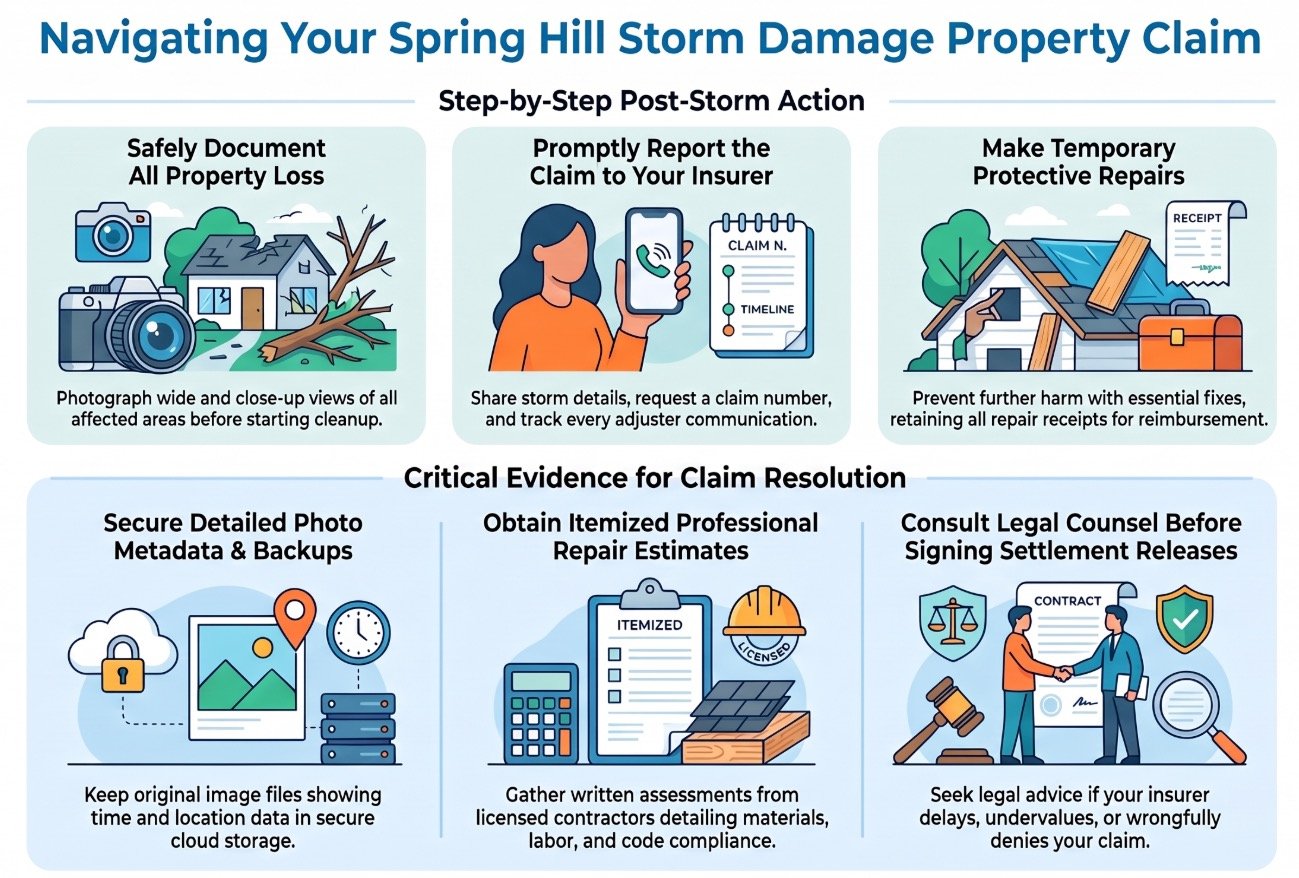
After storm or weather damage, we should document the affected property with clear photographs and keep records of related expenses. Contact your insurer promptly to report the loss and follow its claim instructions. If the insurer disputes or undervalues the claim, we can consult a property lawyer about our options.
Document the Damage
Careful documentation can strengthen a property claim after severe weather damages your home or business. Once conditions are safe, photograph and record damage before moving belongings or beginning cleanup. Capture wide views of each affected area, then take close-ups that show specific damage to walls, roofing, furniture, and personal property. Include dates and keep original image files.
Create a Room inventory listing damaged items, their approximate age, purchase price, and current condition. Save receipts, warranties, and other records that help establish ownership and value. Keep notes about when you discovered damage and any changes you observe.
Make temporary repairs only when needed to prevent further harm or protect people. Photograph the damage first, keep receipts for materials and labor, and retain damaged items when practical. Organized records can help us explain the loss clearly and support a complete, accurate account of its effects on your household or workplace.
Contact Your Insurer
Contact your insurer promptly to report the weather damage and ask what steps you must take to open a claim. We can help make this conversation clear by sharing when the storm occurred, describing the affected areas, and referring to the photographs and notes we gathered. Ask for your claim number, the adjuster’s name, and the expected inspection timeline. Review policy limits and ask which deductibles, exclusions, or documentation requirements may apply. Confirm contact details so the insurer can reach you and you can respond without delay. Keep a record of each call, email, and instruction, including dates and the names of representatives. Follow reasonable steps to prevent further damage, but keep receipts and document those efforts. Prompt, organized communication helps us protect the property and support everyone who depends on it.
Consult a Property Lawyer
When should we consult a property lawyer about storm damage? Seek legal guidance when your insurer delays, denies, or undervalues a claim, or when policy terms are unclear. Early advice can help us preserve evidence and meet deadlines while we focus on keeping our household and community safe.
A lawyer can review estimates, photographs, repair records, and insurer correspondence, then explain how the policy applies. Careful Policy interpretation can clarify covered losses, while review of coverage exclusions can identify disputed reasons for withholding payment. We should share complete, accurate information and avoid signing a release before understanding its effect.
If we’re helping others manage storm-related property losses, we can encourage them to document damage and ask informed questions. A qualified Spring Hill property lawyer can outline practical options and help us pursue a fair resolution through appropriate channels.
Critical Evidence in a Spring Hill Property Claim Storm & Weather Damage Injury Case
Strong evidence can help us establish the extent of your storm damage and support your property claim. We’ll review photographs, weather reports, repair estimates, and communications with your insurer to assess how well the record supports your position.
Preserve these materials and organize them by date so we can evaluate them efficiently.
- Storm damage photos: Capture affected areas and damaged belongings from multiple angles.
- Weather reports: Keep records that document the storm’s timing and severity.
- Repair estimates: Save written assessments and itemized costs from qualified contractors.
- Claim correspondence: Retain letters, emails, and messages exchanged with your insurer.
- Related records: Keep receipts, inspection reports, and notes about temporary repairs.
Storm Damage Photos
Clear photographs can preserve vital evidence after a storm damages your Spring Hill property. We recommend documenting every affected area before cleanup or repairs begin, as long as it’s safe to enter. Photograph roofs, ceilings, walls, flooring, damaged belongings, and any openings that allowed water inside. Take wide views to show each room’s layout, then capture close details that reveal the damage. Shoot from several angles, and don’t move items until you’ve photographed their condition. Keep original files whenever possible because Photo Metadata may record when and where an image was taken. Create an Image Backup in secure storage so the evidence remains available if your phone is lost or damaged. We can help you organize these images and present them clearly to support your property claim and the people who depend on you.
Weather Reports
Weather reports can help establish the conditions that damaged your Spring Hill property and support your claim timeline. We can compare official Weather Data with your account of the storm, photographs, and the date you discovered damage. Records from trusted sources may document rainfall, wind speeds, hail, lightning, or severe weather alerts near your home. This evidence can help us explain how a specific event affected your property and distinguish storm-related damage from preexisting conditions.
Forecast Accuracy may also matter when an insurer questions whether the storm was severe enough to cause the reported harm. We can review forecasts and local observations without treating predictions as proof of actual conditions. Preserve relevant reports and note when you obtained them. A clear, evidence-based timeline helps us present your claim responsibly and advocate for your household and community.
Repair Estimates
After documenting the storm conditions, we can use repair estimates to show the work needed to address damage to your Spring Hill property and the likely cost. We’ll help you gather detailed estimates that identify damaged areas, necessary repairs, materials, labor, and any code-related requirements. Clear documentation helps demonstrate the scope of the loss and supports a fair assessment of what restoring your property may require.
An Estimate comparison can reveal meaningful differences in proposed work or costs. We’ll review each estimate for omissions, inconsistent measurements, and reasonable contractor pricing, while considering the damage documented at your property. Photographs and inspection findings can help connect the proposed repairs to storm conditions. When estimates differ, we can identify the basis for those differences and explain why particular work may be necessary. This careful review helps you present reliable evidence and protect the resources needed to restore a safe, functional home.
Claim Correspondence
When you communicate with your insurer about storm damage to your Spring Hill property, each letter, email, and claim note can become important evidence. We can help you keep these records organized and accurate, supporting a fair review while protecting your ability to serve your family and community.
Save copies of every message, including attachments, dates, and delivery confirmations. Record phone conversations promptly, noting the representative’s name, the topics discussed, and any promised action. A clear Claim letter should describe the damage, identify supporting documents, and state what resolution you’re requesting. Keep your language factual and avoid speculation.
Track response deadlines carefully, including dates set by your policy or insurer. If a response seems incomplete or conflicts with earlier statements, preserve the correspondence and seek guidance before replying. A consistent record can clarify disputes and strengthen your claim.
Long-Term Effects of Spring Hill Property Claim Storm & Weather Damage Injuries
Storm-related injuries can cause chronic pain and lasting mobility issues that disrupt daily activities long after the immediate danger has passed. We should also consider ongoing emotional distress, which may affect sleep, concentration, and a person’s sense of security. When we assess a property claim, we’ll account for these lasting effects and the care they may require.
Chronic Pain
Chronic pain can develop when storm-related injuries, such as falls on damaged property or strains sustained during cleanup, fail to recover fully. Persistent discomfort may affect sleep, concentration, and the ability to meet family or community responsibilities. We encourage you to seek medical evaluation and follow a treatment plan tailored to your condition. Your providers may recommend medication, therapy, or other approaches as part of Chronic pain management. Keep records of appointments, symptoms, prescriptions, and expenses; these details can help explain how the injury continues to affect your daily life. If you’re pursuing a property claim, document the connection between the storm-related event and your ongoing care. Long-term pain care may involve repeated treatment, so we can help you understand which claim documents may support recovery of eligible costs.
Lasting Mobility Issues
Pain that persists after a storm-related injury can also limit walking, balance, or stair use. These mobility problems may make routine tasks, such as preparing meals, caring for family, or returning to work, more difficult. Documenting how an injury affects daily activities helps show the practical consequences of a property claim. Your medical provider can assess whether Physical therapy may improve strength, coordination, and safe movement. If recovery remains limited, adaptive equipment, such as a cane, walker, or handrail, may support greater independence and reduce the risk of falls. Keep records of treatment, mobility restrictions, equipment costs, and assistance you need from others. We can use this information to clarify the injury’s lasting effects and evaluate related losses under your claim.
Ongoing Emotional Distress
Even after physical injuries begin to recover, a serious weather-related accident can leave lasting emotional effects. You may feel anxious during storms, uneasy in damaged spaces, or distressed when reminders disrupt daily routines. Sleep disruption can deepen fatigue and make it harder to focus at work, care for family, or continue serving others. We encourage you to take these changes seriously rather than dismissing them as temporary stress. A qualified mental health professional can assess your symptoms and recommend treatment, while anxiety management strategies may help you regain a sense of control. Keep records of symptoms, appointments, and how emotional effects limit your activities. If another party’s negligence caused your injuries, these documented effects may be relevant to your property claim. We can help you understand your options and pursue evidence-supported compensation.
Proving Liability in Spring Hill Property Claim Storm & Weather Damage Injury Cases
Proving liability in a Spring Hill storm or weather damage injury case requires more than showing that severe weather caused harm. We must identify who had a responsibility to protect people and determine whether that party failed to meet it. Property owners, managers, contractors, and public entities may each have different obligations depending on their role and the conditions involved.
Duty standards help us assess whether reasonable steps were required, such as inspecting a roof, maintaining drainage, securing loose materials, or warning visitors about a known hazard. A storm does not automatically excuse unsafe property conditions, particularly when a responsible party knew of a danger or had time to address it.
We also conduct a careful causation analysis. Evidence such as maintenance records, photographs, weather reports, witness accounts, and expert assessments can help show how a specific failure contributed to your injury. By establishing these facts, we can seek accountability and support safer spaces for everyone in the community.
Don’t Wait. Call Our Florida Personal Injury Lawyers Now!
Dealing With Insurance Companies After a Spring Hill Property Claim Storm & Weather Damage Injury
After a storm-related injury on someone else’s property, insurance companies may contact you to discuss the incident or evaluate a claim. We can help you approach those conversations carefully while keeping your recovery and responsibilities in view. Before responding, gather relevant records, such as photographs, medical bills, and messages about the property’s condition. Share accurate information, but don’t guess about details you can’t confirm or downplay your injury’s impact.
Adjuster communications can influence how an insurer understands what happened. We can help you prepare clear, consistent responses and review requests for statements or documents before you agree. Policy interpretation also matters because coverage terms, exclusions, and notice requirements can affect available benefits. We can examine the policy language and explain its practical meaning without promising a particular result.
What to Expect During a Spring Hill Property Claim Storm & Weather Damage Injury Claim Process
We’ll start by promptly reporting the storm or weather damage and documenting your losses with photographs, receipts, and repair estimates. Next, we’ll review the insurer’s decision and supporting evidence to assess whether the claim reflects the damage. If a dispute arises, we’ll explain the available options for challenging the decision and pursuing a fair resolution.
Reporting the Damage
When a storm damages your Spring Hill property, report the loss to your insurer as soon as it’s safe. During this Initial notification, we recommend providing the date, location, and general nature of the damage, keeping your account accurate and direct. Ask for a claim number, confirm how the insurer will contact you, and learn what steps it expects you to take next. We can help you understand policy requirements and communicate with the insurer, especially when delays could affect your household or the people who depend on your property. The insurer may arrange an adjuster inspection to assess the reported damage. We can help you prepare for that visit, explain the inspection process, and answer questions. Prompt, clear reporting helps move your claim forward.
Documenting Your Losses
What should you document while your Spring Hill storm damage claim is under review? We can help you create a clear record of damage and related expenses. Photograph each affected room, exterior area, and damaged item before cleanup or repairs, when it’s safe to do so. Take wide shots and close-ups, and note the date, location, and apparent cause of each loss. Keep receipts for emergency repairs, materials, and services, along with copies of estimates and invoices. An Inventory checklist can help us record damaged belongings, including each item’s description, age, condition, and estimated value. If the home becomes unsafe or unlivable, save receipts and records for temporary housing, meals, and necessary travel. Store copies of all documentation securely, so we can provide an organized account of your losses.
Reviewing the Claim
Once you’ve documented your losses, the insurer will review the claim and assess the available evidence. During this stage, the adjuster may inspect your Spring Hill property, examine photographs and repair estimates, and ask questions about when and how the damage occurred. We can help you organize your records and prepare clear, accurate responses so the review reflects the full impact on your home and household.
A thorough Coverage review considers the policy’s limits, exclusions, deductibles, and requirements for storm or weather damage. Careful policy interpretation helps us understand which losses may qualify and what documentation the insurer needs. The adjuster may also compare reported damage with inspection findings and applicable policy terms. We’ll track communications, note requests and deadlines, and explain what each step means. This preparation supports a complete, well-documented assessment and helps you make informed decisions throughout the claim process.
Resolving Disputes
If the insurer disputes the cause, scope, or value of your storm damage, we’ll examine its position against your policy, inspection findings, and supporting records. We’ll identify gaps in the insurer’s reasoning and explain what evidence may strengthen your claim, such as repair estimates, photographs, or expert assessments. When direct discussions don’t resolve the disagreement, we can review available Mediation options and help you understand whether a neutral facilitator may support a practical resolution. Your policy may also provide an appraisal process for disputes about the amount of loss; we’ll explain its requirements, costs, and potential limits before you proceed. Throughout each step, we’ll keep you informed, respond to insurer requests, and protect your ability to pursue a fair outcome while you focus on your family and community.
Compensation for Spring Hill Property Claim Storm & Weather Damage Injury Damages
Recovering compensation for storm or weather damage to a Spring Hill property depends on your insurance policy terms and the evidence supporting your claim. We can help you review applicable coverage, document losses, and present a clear request to your insurer. Depending on your policy, compensation may address repairs to your home, damage to detached structures, and the replacement or restoration of personal belongings. If covered damage makes your home temporarily unlivable, your policy may also provide benefits for Temporary housing and certain additional living expenses. We’ll help you identify relevant limits, exclusions, deductibles, and deadlines so you can make informed decisions while protecting your household’s needs. Photographs, repair estimates, receipts, inventories, and correspondence with the insurer can support your claim. Keep records of damaged items and necessary expenses, and when practical, avoid discarding property before documenting it. By organizing reliable evidence and communicating promptly, we can pursue the benefits your policy provides and help you restore a safe, functional home.
Economic vs Non-Economic Damages in Spring Hill Property Claim Storm & Weather Damage Cases
We’ll distinguish economic losses, such as repair costs and damaged belongings, from the non-economic effects a storm can have on your daily life. We’ll also explain how clear records, photographs, and receipts can help support your property claim.
Economic Property Losses
After a storm damages your Spring Hill property, economic losses are the measurable costs tied to the damage, such as repair expenses, damaged belongings, and additional living costs. We can help you identify and document these amounts with invoices, receipts, estimates, and temporary housing records. If you operate a business, Business interruption losses may include income lost while storm damage prevents normal operations, along with necessary expenses to resume service. Property owners may also claim lost rental income when damaged units cannot safely accommodate tenants. Keep records of repairs, replacement purchases, canceled bookings, and communications with your insurer. We’ll review the policy and evidence to assess which losses may qualify for coverage. Clear documentation helps us present a complete claim and pursue funds needed to restore your property and continue serving your community.
Non-Economic Impacts
Financial records can capture repair costs and lost income, but they may not reflect the personal strain a storm-damaged property causes. When a home becomes unsafe or difficult to use, we may face stress, uncertainty, and disruption to routines that support family and community life. Sleep disruption can affect health, concentration, and our ability to care for others. Temporary displacement or damaged shared spaces may also lead to Social isolation, especially when we can’t welcome relatives, neighbors, or those who rely on us. These effects differ from measurable economic losses, such as repair expenses, because they concern well-being and daily life rather than financial value. We can help you understand whether applicable law recognizes these impacts in your claim and how they may relate to the specific facts of your case.
Documenting Your Damages
To document storm-related damages in a Spring Hill property claim, we should separate measurable financial losses from personal effects that may not have a clear dollar value. For economic losses, we can gather repair estimates, contractor invoices, receipts, and records of additional expenses. Photograph damaged areas before cleanup, and keep an inventory of affected Personal Property with purchase details, condition, and replacement costs. If the home becomes unsafe, we should save receipts for Temporary Housing, meals, storage, and other necessary costs. These records help show how the storm affected your finances. Non-economic effects, such as disruption, stress, or lost use of your home, may require a written account describing their duration and impact on daily life. By organizing evidence promptly, we can present a clear, credible claim and support a fair review.
When a Spring Hill Property Claim Storm & Weather Damage Injury Case Goes to Trial vs Settlement
A Spring Hill storm and weather damage property claim may settle through negotiation or proceed to trial if the parties can’t agree on coverage or compensation. We can help you weigh each path based on the evidence, the insurer’s position, and your priorities for restoring your property and serving those who depend on you.
During Settlement Negotiations, we present supporting records, explain the losses, and assess proposed terms. A settlement may resolve the dispute sooner and reduce the uncertainty of a courtroom decision, but you should understand what the agreement covers before accepting it. We’ll discuss the potential benefits and limits with you.
If negotiations don’t produce an acceptable resolution, we can pursue a trial. Trial Preparation may include organizing evidence, identifying witnesses, and preparing you to explain the damage and its effects. A judge or jury then evaluates the dispute and reaches a decision. We’ll keep you informed throughout, help you make considered choices, and advocate for a fair outcome at every stage.
Florida Laws That May Affect Your Spring Hill Property Claim Storm & Weather Damage Case
When a storm damages your Spring Hill property, Florida law can shape how you report the loss, document damage, and challenge an insurer’s decision. We can help you understand the rules that apply and protect the resources your family or community depends on.
- Your policy sets duties after a loss, including notice and cooperation requirements. We should review these terms before responding to insurer requests.
- Policy exclusions may limit coverage for certain causes, but we can examine whether the insurer properly applied them to the damage.
- Florida law requires insurers to handle claims fairly and communicate decisions. We can preserve records of requests, inspections, and responses.
- Appraisal procedures may resolve disputes about the amount of a covered loss. We should check whether your policy requires appraisal and what issues it can address.
- Building codes and local permitting rules may affect repair work. We can document required upgrades and obtain qualified estimates before authorizing repairs.
The Statute of Limitations for Spring Hill Property Claim Storm & Weather Damage Injury Cases
Storm damage claims have legal deadlines, and missing one can limit your ability to recover benefits. Florida law sets time limits for filing lawsuits over property insurance disputes, and those limits may depend on the claim and the date the loss occurred. We encourage you to record when the storm struck, when you reported the damage, and when your insurer issued any decision. These details can support accurate Deadline calculation and help protect your household’s financial stability.
A policy may impose separate notice or proof-of-loss requirements, so review its terms alongside state law. Policy exceptions, changes in law, or particular circumstances may affect which deadline applies; don’t assume that an insurer’s ongoing review pauses the legal clock. If you’re helping a family or community recover after severe weather, timely attention to these requirements can preserve options and reduce uncertainty. Because deadlines can be complicated, confirm the applicable filing period promptly and keep copies of communications, estimates, and repair records.
How a Spring Hill Property Claim Storm & Weather Damage Lawyer Can Help You
How can a lawyer help you pursue a storm or weather damage claim in Spring Hill? We can help you present a clear, well-supported claim while you focus on protecting your household and serving the people who depend on you.
Our work may include:
A lawyer can organize your storm damage evidence, explain your coverage, and challenge unsupported insurance decisions.
- Reviewing your policy and explaining how its terms apply to the reported damage.
- Conducting a careful Policy interpretation, including analysis of limits, deadlines, and coverage exclusions.
- Organizing photographs, repair estimates, invoices, and other evidence of your losses.
- Communicating with the insurer and challenging claim decisions that lack adequate support.
- Evaluating whether the proposed payment accounts for covered repairs and related property damage.
We can also help you document how storm damage affects your home’s safety and use. By presenting accurate records and addressing the insurer’s stated reasons for its decision, we work to keep the review focused on your policy and the evidence. Our guidance can help you make informed choices and pursue a fair resolution without losing sight of your responsibilities to family, neighbors, or community.
When to Contact a Spring Hill Property Claim Storm & Weather Damage Lawyer
Early guidance can help protect your options after severe weather damages your Spring Hill property. Contact a lawyer promptly if a storm has harmed your home, business, or community property, especially when damage appears extensive or the cause is uncertain. We can help you understand what steps to take while you focus on safety and caring for those who depend on you.
Prompt reporting matters. Notify your insurer as soon as practical, document visible damage, and keep records of calls, repairs, and related expenses. Don’t wait for every detail before reporting a loss; hidden damage may emerge later, and delays can complicate the claim. If the insurer questions coverage, requests extensive information, or offers an amount that doesn’t reflect documented damage, seek legal guidance before responding or accepting a settlement.
Review your policy for coverage deadlines and notice requirements. We can help you identify important dates and act before time limits pass, preserving a clearer path to resolve your claim.
Why You Need an Experienced Spring Hill Property Claim Storm & Weather Damage Lawyer
When severe weather damages your property, an experienced Spring Hill property claim storm and weather damage lawyer can help you address coverage disputes and protect your interests. We can review your policy, explain how its terms apply to the damage, and identify the information you need to support your claim. This guidance matters when an insurer questions the cause of loss, estimates repairs below actual costs, or delays a decision.
Policy exclusions can affect whether specific damage qualifies for coverage, but insurers must apply policy language accurately. We can examine the facts, challenge unsupported interpretations, and present evidence that clarifies the extent and source of damage. If a dispute involves repair estimates, appraisal clauses may provide a process for resolving differences, though their terms and limits require careful review.
How to Choose the Right Spring Hill Property Claim Storm & Weather Damage Lawyer for Your Case
Choosing the right Spring Hill property claim storm and weather damage lawyer requires more than a general understanding of insurance disputes. Look for counsel who regularly handles storm-related property claims and understands how insurers assess damage, interpret policy terms, and evaluate repair estimates. Ask about the attorney’s credentials, relevant experience, and the lawyer’s role in managing your case. A qualified advocate should explain the process clearly and help you make informed decisions while protecting your interests.
We should also discuss fee structures before signing an agreement. Ask how fees and case expenses are calculated, when payment is due, and whether any costs remain your responsibility if the claim doesn’t succeed. Clear answers help prevent misunderstandings and let you compare representation fairly. During an initial consultation, notice whether the lawyer listens carefully, answers questions directly, and treats your concerns with respect. Choose someone who communicates consistently and is prepared to pursue a fair outcome, so you can focus on restoring your home and supporting those who depend on you.
About The Law Offices of Anidjar & Levine
At The Law Offices of Anidjar & Levine, we represent Florida property owners facing storm and weather damage insurance disputes, including claims involving homes in Spring Hill. We help clients understand their policy obligations, document losses, and respond when an insurer delays, underpays, or denies a claim. We focus on protecting your interests while you focus on restoring your home and supporting your family.
Our firm’s history reflects a commitment to helping people through difficult legal and personal challenges. We approach each property dispute with careful attention to the facts, the policy language, and the insurer’s decisions. Our team can review correspondence, organize supporting records, and explain available options in clear terms.
Attorney credentials matter when you’re choosing counsel for an insurance dispute. We bring legal experience to evaluating coverage issues and advocating for fair treatment under the policy. We’ll discuss your circumstances, answer your questions, and provide practical guidance, so you can make informed decisions about the next steps in your claim.

Don’t Wait. Call Our Florida Personal Injury Lawyers Now!
Frequently Asked Questions
Does Homeowners Insurance Cover Temporary Housing After Storm Damage?
Yes, homeowners insurance may cover temporary housing after storm damage if covered damage makes your home unlivable. We can help you review your policy’s Additional Living Expenses coverage, which may cover reasonable costs above your normal living expenses while repairs proceed. Check hotel reimbursement limits, time restrictions, and documentation requirements before booking. Keep receipts and records, and contact your insurer promptly to confirm eligible expenses and avoid unexpected costs during displacement.
Can I Make Emergency Repairs Before the Insurance Adjuster Inspects My Property?
Yes, we can make emergency repairs before the adjuster inspects, as long as we take reasonable steps to prevent further damage. Document the damage first with clear photos and video to preserve evidence, and keep damaged materials when practical. We should also notify our insurer promptly, follow policy instructions, and avoid permanent repairs until the adjuster has assessed the property. Saving repair receipts and written estimates supports reimbursement and helps us explain necessary work.
What Should I Do if a Contractor Discovers Hidden Storm Damage During Repairs?
If your contractor discovers hidden storm damage, we should pause work in the affected area when safe and notify your insurer promptly. Photograph and video the damage before covering or removing materials, and ask the contractor for a written report, repair estimate, and dated findings. Documenting concealed damage thoroughly preserves Supplemental claim evidence. We should submit these records with a request to inspect and update the claim before completing additional repairs.
Can My Insurer Require Me to Use a Preferred Repair Contractor?
Your insurer generally can’t require you to use its preferred contractor, though your policy and state law may affect your choices. Review the preferred vendor program terms, including any workmanship guarantees, pricing limits, and dispute procedures, before agreeing. Choosing independent contractors lets you select a qualified professional, but confirm the insurer will consider their estimate and document all damage. We recommend getting written approval for proposed repairs and keeping receipts, photos, and communications for your records.
How Can I Protect My Belongings From Mold After Water Intrusion?
We can protect your belongings from mold by moving them to a clean, dry area as soon as it’s safe. Separate damp items from dry ones, and don’t seal wet belongings in plastic, which can trap moisture. Use fans and dehumidifiers to dry the space, and follow safety guidance for contaminated water. To prevent mold, document damage and arrange professional cleaning when needed. Choose dry belongings storage until repairs are complete. We can also help you prioritize items for recovery.
—————————
Storm and weather damage can leave you facing costly repairs, disputed coverage, and uncertainty about what to do next. We can review your policy, document the loss, communicate with the insurer, and explain your options under Florida law. If your Spring Hill property claim has been delayed, underpaid, or denied, contact The Law Offices of Anidjar and Levine to discuss your circumstances. Learn more about our Spring Hill Personal Injury Lawyer services. We’ll help you understand the next steps and pursue the benefits your policy may provide.

