

The Law Offices of Anidjar and Levine can help property owners and injured visitors document damage or an injury, review relevant insurance terms, and respond to disputes about coverage, responsibility, or losses. Preserve records and evidence, and communicate carefully with insurers. If you’ve been hurt, seek medical care promptly and keep treatment records. Claim outcomes depend on the facts, policy language, and available evidence. Learn more from a Spring Hill Personal Injury Lawyer. Below, we explain essential steps, legal considerations, and how to evaluate your options.
Main Takeaways
- A Spring Hill property claims lawyer can review your policy, claim documents, deadlines, and the insurer’s coverage decision.
- Document property damage promptly with photos, repair estimates, receipts, and records of steps taken to prevent further harm.
- Compare any denial or reduced payment with the policy terms, exclusions, and evidence of the loss.
- After you document and assess the loss, a lawyer can help present a reasoned settlement position and respond to insurer questions.
- Before accepting a settlement or signing a release, consider legal guidance; outcomes and timelines depend on the facts and insurer review.


How We Can Help With Your Spring Hill Property Claims Injury Claim
When property damage or an injury disrupts your life, we can help you pursue a fair resolution. We’ll listen carefully, learn how the loss has affected you, and explain practical steps for moving forward. We begin with a focused review of the facts and available documents so you can make informed decisions without losing sight of your priorities.
We can help with Claim filing deadlines by identifying key dates and organizing the information needed to submit a timely, complete claim. Through a policy coverage review, we’ll examine relevant terms, limits, exclusions, and insurer communications, then explain how they may apply to your circumstances. We can also help you prepare clear records of expenses, repairs, and other losses, and communicate with the insurer on your behalf.
You merit attentive guidance and respectful service throughout the process. We’ll keep you informed, answer your questions, and work to pursue a resolution that reflects the documented impact of your claim.
OUR CONSULTATIONSARE FREE
START YOUR FREE CASE REVIEW

Understanding Spring Hill Property Claims Injury Cases
Understanding a Spring Hill property claims injury case begins with identifying how the incident occurred, who may be responsible, and what losses it caused. We’ll help you organize the available evidence, such as incident records, photographs, medical documentation, and witness accounts, to present a clear account of your experience. This careful review can support both your recovery and the fair treatment of everyone affected.
We’ll also examine the insurance policy and explain how its terms apply to your claim. Policy interpretation can determine which benefits may be available, what documentation the insurer requires, and how deadlines affect your options. We’ll assess any coverage exclusions the insurer raises and compare them with the policy language and facts. If the insurer questions responsibility or the extent of your losses, we’ll help you respond with relevant information and a reasoned position.
Common Causes of Spring Hill Property Claims
We commonly see Spring Hill property claims arise from wind and hail, which can damage roofs, siding, and other structures. Water and flood damage, as well as fire and smoke, may also cause significant losses that require careful documentation. Theft and vandalism can create additional claims, and we can help you understand what evidence and policy terms may affect your recovery.
Wind and Hail Damage
Strong winds and hail can damage roofs, siding, windows, and other parts of a Spring Hill property, sometimes leaving problems that aren’t immediately visible. After a storm, we recommend carefully inspecting the property and documenting visible damage with photographs. A qualified contractor can identify compromised materials, while we can help you understand policy requirements and prepare a clear claim.
Insurers may assess the cause, extent, and timing of the damage before deciding whether coverage applies. Keep repair estimates, inspection notes, and communications organized, and report damage promptly. Avoid making permanent repairs before documenting the affected areas, but take reasonable steps to protect the property from further harm. When planning future improvements, consider wind-resistant roofing and materials with strong hail impact ratings. These choices may help reduce storm damage and support the safety of everyone who relies on your property.
Water and Flood Damage
Water damage can result from burst pipes, appliance failures, roof leaks, or flooding after heavy rain, and the source may not be obvious at first. We can help you document visible damage and identify affected areas before you begin repairs. Prompt action matters: standing water can weaken building materials, encourage mold growth, and damage belongings. If it’s safe, shut off the water supply and move valuables away from wet areas. Arrange professional water extraction and keep receipts, photographs, and repair records for your claim. Flood mitigation may include temporary barriers, drying equipment, or repairs that limit further loss. Your policy’s coverage may depend on the cause of the water intrusion, exclusions, and required notice. We can review your policy and help you present clear evidence to the insurer.
Fire and Smoke Damage
Fire and smoke damage can stem from kitchen accidents, electrical faults, heating equipment, or nearby fires, and smoke may affect rooms beyond the area where flames reached. Even a contained fire can leave Smoke residue on walls, furnishings, and personal belongings, while heat and water used to extinguish flames may cause additional harm. We can help you document affected areas, preserve receipts, and report the loss promptly to your insurer. Avoid discarding damaged items before recording them, unless they pose a safety risk. Professional soot cleanup may be necessary to safely address residue and odors, especially when smoke has entered ventilation systems. As you focus on protecting your household and supporting those who depend on you, we can review policy terms, clarify claim requirements, and help you respond to delays or disputes.
Theft and Vandalism
When theft or vandalism damages your Spring Hill property, prompt documentation can help support your insurance claim. We can help you take practical steps that protect your interests while keeping safety and community needs in view. Contact law enforcement, obtain a report, and photograph damaged doors, windows, belongings, and other affected areas before making nonurgent repairs. Keep receipts for emergency work and create an inventory of stolen personal property, including descriptions, estimated values, and proof of ownership. If available, preserve security camera footage and share relevant copies with police and your insurer. Review your policy for reporting deadlines, coverage limits, and exclusions, then notify your insurer promptly. We can help you organize records, communicate clearly with the insurer, and address disputes if the company delays or undervalues your covered losses.
Don’t Wait. Call Our Florida Personal Injury Lawyers Now!


Legal Rights of Spring Hill Property Claims Injury Victims
If unsafe property conditions injure you in Spring Hill, you may have the right to seek compensation from the party responsible for maintaining the premises. Premises liability rights allow injured visitors to pursue a claim when a property owner or occupier failed to meet a legal duty of care.
We can help you understand which rules apply and what evidence may support your case.
- You may seek payment for medical expenses, lost income, and other documented losses.
- You can preserve photographs, records, and witness contact information to support your account.
- You may have a claim even if you were helping another person when the injury occurred.
- Negligent security claims may apply when inadequate security contributes to an assault or other harm.
- You can consult a lawyer before accepting a settlement or signing a release.
We’ll carefully assess responsibility, deadlines, and available insurance. Prompt legal guidance can help protect your rights while you focus on recovery and continue supporting those who depend on you. Each claim turns on its specific facts, so we’ll explain your options clearly and avoid promising a particular outcome.
Why Do Property Injury Claims Happen in Spring Hill?
Property injuries in Spring Hill often happen because owners or occupiers fail to identify and correct hazards or warn visitors about them. Falls may be caused by wet floors, uneven walkways, loose handrails, poor lighting, or cluttered entrances. Inadequate maintenance can allow these dangers to persist, while a missing warning may leave guests unaware of a risk they could not reasonably anticipate.
Weather can add further hazards. Heavy rain and strong winds may create slippery surfaces, fallen branches, roof damage, or standing water. Effective storm preparedness helps property owners anticipate these conditions, inspect affected areas, and address hazards before people encounter them. Building resilience also matters: sound drainage, secure structures, and routine upkeep can reduce risks during severe weather.
In many cases, injuries result from preventable choices or overlooked conditions rather than unavoidable events. When owners take reasonable precautions and consider how visitors use a property, they can better protect neighbors, customers, workers, and other members of our community.
What Should You Do After a Spring Hill Property Claims Injury?
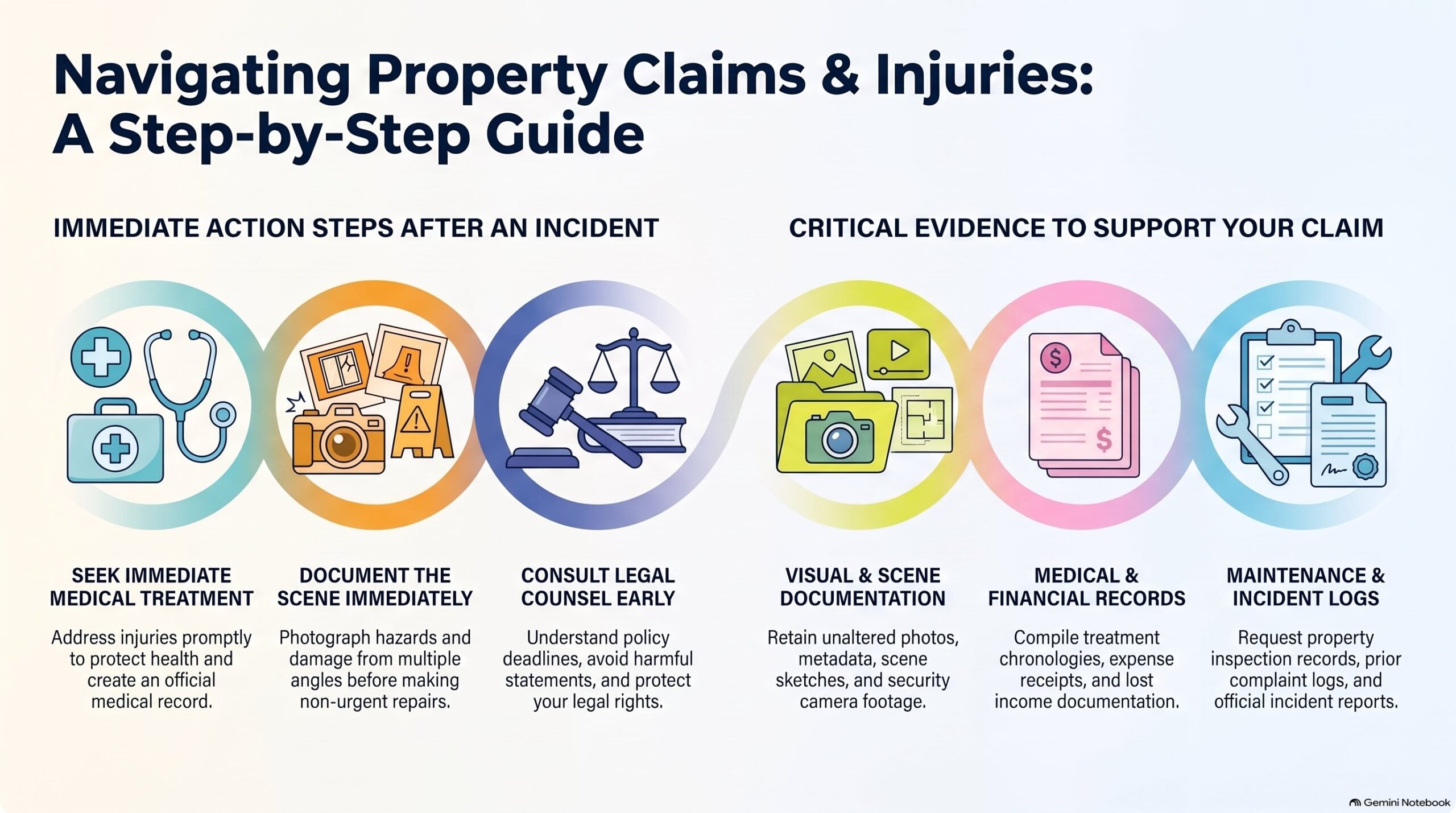
After a property injury, we recommend seeking medical care promptly, even if your symptoms seem minor. If it’s safe, document the scene with photographs and gather relevant details while they’re fresh. We can help you understand your options and determine whether contacting a property claims lawyer is appropriate.
Get Medical Care
Prompt medical care should be your first priority after an injury on someone else’s property in Spring Hill. Seek an appropriate evaluation promptly, even when symptoms seem minor, because some injuries worsen or become apparent over time. Call 911 for severe pain, heavy bleeding, difficulty breathing, loss of consciousness, or other emergencies. For less serious injuries, Urgent care may provide timely assessment and treatment. Follow the clinician’s instructions, take prescribed medication as directed, and attend recommended follow-up appointments. If your condition requires further evaluation, ask about Specialist referrals and keep those appointments. We shouldn’t delay care to avoid inconvenience to the property owner or others; addressing our health promptly helps us recover and remain able to care for the people who depend on us. Keep a record of treatment dates and expenses.
Document the Scene
If it’s safe, document the scene as soon as possible while conditions remain unchanged. Use your phone or camera to record the area from several angles, including wide views and close-ups of hazards, damaged belongings, and any visible warning signs. Photographing Property Damage can preserve details that may be repaired, moved, or removed before the claim is reviewed. Include nearby landmarks to show where each image was taken, and avoid altering anything to improve the photo. Note the date, time, weather, lighting, and names of people who witnessed the incident. Creating Scene Sketches can also help us explain the layout, showing where you were, what caused the injury, and where others stood. Keep original files and notes organized, and ask a trusted person to help if needed.
Contact a Lawyer
When should you contact a lawyer about a Spring Hill property claim injury? Reach out as soon as you can, especially if the owner disputes responsibility, an insurer delays your claim, or your injuries require ongoing care. Early guidance can help us preserve evidence, identify deadlines, and avoid statements that could weaken your position. Prompt action also supports a fair process, so you can focus on recovery and the people who depend on you.
During an Initial consultation, we can review what happened, discuss your injuries, and explain possible next steps. Bring photographs, incident reports, medical records, and correspondence with the property owner or insurer. Ask about attorney availability, expected communication, fees, and how the firm handles similar claims. We can help you understand your options without making decisions before you have clear information.
Critical Evidence in a Spring Hill Property Claims Injury Case
We’ll assess evidence that shows how the injury occurred and who may be responsible. You can help preserve important details by collecting records and identifying people with firsthand knowledge.
Crucial evidence may include:
- Incident scene photos: Document the hazard, surrounding area, and any visible injuries as soon as possible.
- Witness statements: Record witnesses’ names and contact details, along with what they observed.
- Medical records: Keep treatment notes, test results, and bills that connect the injury to the incident.
- Maintenance documentation: Request inspection logs, repair records, and reports of prior complaints.
- Incident reports: Obtain any report filed with the property owner, manager, or insurer.
Incident Scene Photos
Photographs can preserve details of an accident scene that may disappear before an injury claim is resolved. We encourage you to document the area promptly, if you can do so safely, before repairs, cleanup, or routine activity changes important conditions. Capture the hazard that caused the injury, the surrounding area, warning signs, lighting, and any visible damage. Use multiple Camera angles, including wide views that establish context and close-ups that show specific details. Keep the original files, because photo metadata may help establish when and where images were taken. Don’t alter or filter photographs, and note when, where, and by whom each image was captured. These records can help us explain what happened, support a fair assessment of your losses, and promote safer conditions for others.
Witness Statements
Alongside scene photographs, witness statements can help establish how an injury occurred and what conditions existed at the time. We can help you identify people who saw the incident or noticed hazards before it happened. Their observations may clarify details that photographs cannot show, such as changes in lighting, warning signs, or how long a dangerous condition remained.
Eyewitness credibility depends on factors such as a person’s opportunity to observe, consistency, and willingness to provide an honest account. We should record each witness’s contact information and recollection promptly, while details remain clear. Statement preservation matters because memories can fade, and witnesses may become difficult to reach. With permission, we can preserve written or recorded accounts and note when and how we obtained them. Careful documentation helps us present reliable evidence and pursue a fair resolution while respecting everyone involved.
Medical Records
Medical records provide essential evidence in a Spring Hill property injury claim by documenting your diagnosis, treatment, and recovery. They help us connect your injuries to the incident and explain how those injuries affect your daily responsibilities and ability to serve others. Records from physicians, hospitals, therapists, and other providers can show when symptoms began, what care you received, and whether your condition changed over time.
We can organize these materials into a Medical chronology that presents your care in a clear sequence. Treatment summaries can highlight important diagnoses, recommendations, and limitations without requiring readers to review every page. Accurate, complete records also help us address questions about prior conditions or gaps in care. Tell your providers about all relevant symptoms, attend recommended appointments, and keep copies of bills and records. We can use this documentation to present your claim clearly and support a fair recovery.
Maintenance Documentation
While medical records show how an injury affected you, maintenance documentation can help explain why the hazardous condition existed and whether the property owner knew about it. We can review Routine inspection logs to identify missed checks, recurring problems, or reports that staff failed to address. Contractor maintenance records may show when repairs were requested, what work was completed, and whether a known hazard remained afterward. Collectively, these documents can help establish notice and reveal whether reasonable steps were taken to protect visitors. We can also compare records with photographs, incident reports, and witness accounts to build a clearer timeline. If you reported a dangerous condition, preserve any messages or written responses. By gathering and reviewing these materials, we can help you present a well-supported claim, pursue accountability, and seek fair compensation.
Long-Term Effects of Spring Hill Property Claims Injuries
A property injury can cause chronic pain that continues well beyond the initial recovery period. We’ll also consider lasting mobility issues that may limit your ability to work or manage daily activities. Ongoing medical needs, including treatment and rehabilitation, can add high costs over time.
Chronic Pain
Chronic pain can persist long after an injury on someone else’s property appears to have recovered, limiting mobility, disrupting sleep, and affecting a person’s ability to work. We recognize that ongoing discomfort can also make it harder to care for family, serve others, and maintain daily responsibilities. A consistent treatment plan may help you manage symptoms and document how they affect your life. Follow your clinician’s recommendations, attend appointments, and keep records of pain levels, medications, missed work, and other limitations. Pain flare management can include pacing activities, using prescribed treatments, and noting triggers to discuss with your provider. For sleep disruption coping, ask about practical strategies and report persistent problems. These records can help us explain the injury’s continuing effects when pursuing a property claim and seeking fair compensation.
Lasting Mobility Issues
When a property-related injury causes lasting mobility issues, even routine activities such as walking, climbing stairs, or standing for extended periods may become difficult. These limitations can affect how you care for family, serve your community, and meet work responsibilities. We can help you understand how the injury has changed your daily function and what evidence may show its impact.
Recovery may involve gait rehabilitation to improve balance, coordination, and safe movement. Some people also rely on adaptive mobility devices or modified routines to remain independent and participate in meaningful activities. We can document how these adjustments affect your household and service commitments, while connecting the limitations to the incident and resulting injuries. Clear records of mobility challenges can help support a property claim and show the practical consequences you face.
Ongoing Medical Needs
Property-related injuries can require ongoing medical care long after the initial treatment ends. As you focus on recovery and continue serving your family and community, we can help you consider the long-term costs of care. Some injuries require medication, physical therapy, follow-up procedures, or assistive devices, and needs may change as symptoms develop. Treatment planning with your healthcare providers can clarify recommended care, expected timelines, and likely expenses. Keep records of appointments, prescriptions, bills, and changes in your condition. These details can help us assess how the injury affects your daily responsibilities and future needs. When appropriate, consultant referrals may provide further evaluation or treatment. We can use medical documentation to support a property claim for reasonable, injury-related care while helping you understand the steps involved and make informed decisions.
Proving Liability in Spring Hill Property Claims Injury Cases
To prove liability in a Spring Hill property injury case, we must show that a property owner or responsible party failed to use reasonable care and that this failure caused the injury. We begin by identifying the hazard, such as a wet floor, broken step, or unsafe walkway, and determining who controlled the area. Premises liability standards require us to examine whether the responsible party knew, or reasonably should have known, about the danger and had a fair chance to address it or warn visitors.
We then gather evidence that supports your account, including photographs, incident reports, witness statements, and maintenance records. Medical documentation can help connect the incident to your injuries, while a clear timeline may show how the hazard developed and remained uncorrected. Property owner defenses may include claims that the danger was obvious or that you caused the incident. We assess those arguments carefully and focus on the facts, so we can pursue accountability and help protect others from similar harm.
Don’t Wait. Call Our Florida Personal Injury Lawyers Now!
Dealing With Insurance Companies After a Spring Hill Property Claims Injury
After a property injury in Spring Hill, insurance companies may contact you quickly to discuss the incident and your injuries. We can help you respond carefully, protect your interests, and keep the focus on your recovery. Before speaking with an adjuster, gather relevant records, including photographs, medical information, and communications about the hazard. Share accurate facts, but don’t guess, speculate, or minimize your injuries. You can ask for questions in writing and take time to review documents before signing anything.
Policyholder communication should remain clear, respectful, and documented. Keep copies of emails and letters, note call dates, and record who contacted you. If the insurer requests a recorded statement or broad medical authorization, we can explain what the request may mean and help you decide how to respond. Review claim denial letters closely; they may identify the insurer’s stated reasons and relevant policy terms. We can help you understand those explanations and protect your ability to seek fair treatment.
What to Expect During a Spring Hill Property Claims Injury Claim Process
We’ll begin with an initial review of your claim, then gather evidence to assess the damage and support your position. As the claim progresses, we’ll explain how settlement negotiations work and evaluate any offers with you. We’ll also guide you through resolution and payment so you understand what to expect at each stage.
Initial Claim Review
During the initial review, we examine how the injury occurred, the property conditions involved, and the records supporting your claim. We’ll listen carefully to your account and clarify how the incident has affected your health, responsibilities, and ability to serve others. Our goal is to understand the claim’s crucial facts before recommending a path forward.
We conduct a Policy review to identify relevant duties, deadlines, exclusions, and notice requirements. A careful coverage analysis helps us assess whether the policy may apply and what benefits or limitations could shape your options. We’ll explain these terms in clear language, answer your questions, and identify any issues that need prompt attention.
At this stage, we focus on the claim’s scope and practical next steps. We won’t promise an outcome; instead, we’ll provide an informed assessment based on the information available.
Evidence Collection
Once we’ve reviewed the claim and applicable policy terms, we gather evidence to clarify how the incident occurred and document the resulting injuries. We may inspect the property, photograph hazards and damage, and identify witnesses who can describe what they observed. If you can safely do so, preserve relevant items and avoid altering the scene before we assess it. Evidence preservation can include keeping damaged belongings, saving photographs, and requesting that surveillance footage or maintenance records remain available. We’ll also collect medical records, treatment notes, and other materials that connect your injuries to the incident. Careful Claim documentation helps us organize these details, identify gaps, and present a reliable account of your experience. We’ll explain what information we need and keep you informed as we collect evidence.
Settlement Negotiations
After we’ve documented the claim and assessed your losses, we’ll negotiate with the insurer for a settlement that reflects the available evidence and the full impact of your injuries. Our negotiation strategy will draw on repair estimates, records, and other documentation to support your position. We’ll explain how the damage affects your property and daily responsibilities, including any effects on your ability to care for others. The insurer may question the cause, scope, or value of the loss, and we’ll respond with evidence and clear reasoning. Settlement timing depends on the insurer’s review, the complexity of the claim, and whether they need more information. We’ll keep you informed, assess each offer carefully, and discuss the risks of accepting or rejecting it. You’ll make decisions with a clear understanding of your options.
Resolution and Payment
When you accept a settlement, we’ll confirm the terms in writing and explain any documents you need to sign before we can issue payment. We’ll review the release carefully with you, including what claims it resolves and whether it prevents further recovery for the same loss. Once you complete the required paperwork, the insurer processes payment according to the agreement. Payment timelines vary based on the insurer, documentation, and any outstanding mortgage or lien interests. We’ll track each step and explain delays so you can plan responsibly and continue supporting those who depend on you. If you dispute the amount, the Appraisal process may help resolve differences in property value under your policy. We’ll clarify its scope, costs, and potential effect before you decide whether to proceed. Our guidance helps you make informed decisions throughout the resolution process.
Compensation for Spring Hill Property Claims Injury Damages
Compensation for property-claim injuries may cover medical expenses, lost income, and other losses caused by the incident. When a property defect or damaging event injures you, we can help identify the applicable coverage and document how the incident affected your recovery. Keep medical records, receipts, repair estimates, and correspondence with the insurer. These materials help us connect your losses to the event and support a clear claim.
A property policy may also address damage to your home or belongings. Replacement cost valuation may pay to repair or replace covered property without subtracting depreciation, subject to policy terms and limits. Ordinance upgrade coverage may help pay added costs when local building codes require changes during repairs. We’ll review these provisions with you and explain what evidence the insurer may need.
Economic vs Non-Economic Damages in Spring Hill Property Claims Cases
We distinguish economic losses, such as repair costs and lost income, from non-economic harm, including stress and disruption to your daily life. To support a claim, we’ll help you identify and document each category of damages. Clear records can strengthen the connection between your losses and the property claim.
Economic Losses
Property damage can create measurable financial losses and personal strain, but these harms are treated differently in a claim. Economic losses are costs we can document with bills, receipts, contracts, and reliable records. If damage makes a home unlivable, temporary housing expenses may include reasonable lodging and related costs while repairs proceed. Property owners who rent out a damaged building may also claim Lost rental income when the interruption is supported by lease documents and payment history. Other losses can include repair or replacement costs, debris removal, and necessary emergency work to prevent further damage. We can help you organize these records and connect each expense to the covered event. Clear evidence helps insurers assess the financial impact accurately and supports your pursuit of compensation for your household or community.
Non-Economic Harm
Although economic losses can be documented through bills and financial records, property damage may also cause non-economic harm that’s harder to measure. Emotional distress may arise when a damaged home disrupts your sense of safety, privacy, or stability. You might also experience diminished enjoyment if you can no longer use rooms, host family, or carry out routines that matter to you. These effects differ from repair costs and other measurable financial losses, but they can still shape how a property claim affects your household. When we assess a claim, we consider how the damage has changed your daily life, not only what repairs may cost. If you’re helping family members or others affected by the loss, we can explain which forms of harm may be relevant under applicable law.
Documenting Damages
To support a Spring Hill property claim, we document economic losses with records such as repair estimates, invoices, and receipts, while separately identifying non-economic effects that may be harder to quantify. We also gather photographs, contractor reports, and proof of the age and condition of damaged items. A Digital inventory can organize belongings, descriptions, purchase dates, and estimated replacement costs, helping us present a clear account of personal property losses. Non-economic effects may include disruption, stress, or loss of use of your home. We record these impacts through dated notes and relevant supporting documents, without overstating their significance. By separating financial costs from personal effects, we help insurers and decision-makers assess each category fairly. Careful documentation supports your claim and helps protect the resources your family may need to recover and serve others.
When a Spring Hill Property Claims Injury Case Goes to Trial vs Settlement
When a property-related injury claim in Spring Hill can’t be resolved through negotiations, we may need to take the case to trial. Settlement can provide a more predictable resolution, often without the time, expense, and uncertainty of a courtroom proceeding. We’ll assess any offer against your documented losses, ongoing needs, and goals before advising you about your options.
If the parties can’t agree on fair compensation, we prepare to present your case to a judge or jury. Trial preparation may include organizing records, preparing witnesses, consulting qualified experts, and developing clear evidence about how the injury occurred and affected your life. We’ll explain each stage so you can make informed decisions and know what to expect.
At trial, both sides present evidence, and the decision-maker evaluates the claim. A jury verdict can result in compensation, but no outcome is guaranteed. We’ll discuss the potential risks and benefits of proceeding, keeping your priorities in view as we work toward a resolution that supports your recovery and responsibilities.
Florida Laws That May Affect Your Spring Hill Property Claims Case
The outcome of a Spring Hill property claims case may depend on Florida laws governing liability, deadlines, and available compensation.
We can help you understand how these rules shape your claim and protect the people who rely on you.
- Policyholder duties: Your policy may require prompt notice, reasonable steps to prevent further damage, and cooperation with the insurer. We should document each action and keep relevant records.
- Coverage terms: Florida law does not replace your policy’s exclusions, limits, or conditions. We’ll compare the insurer’s decision with the contract and supporting evidence.
- Appraisal deadlines: Policies may set procedures and time limits for requesting appraisal. We should review those terms promptly so a dispute doesn’t lose this option.
- Claim handling: Florida law imposes standards on insurers’ claim practices. Clear records of communications and inspections can help show whether the insurer handled your claim fairly.
- Damage proof: Estimates, photographs, and expert opinions can support repair costs and help us pursue compensation consistent with your coverage.
We’ll explain your options and help you make informed decisions.
Don’t Wait. Call Our Florida Personal Injury Lawyers Now!
The Statute of Limitations for Spring Hill Property Claims Injury Cases
Because filing deadlines can determine whether a claim proceeds, we’ll identify which Florida statute of limitations applies to your Spring Hill property injury case and calculate the relevant deadline. For many negligence claims, Florida law generally allows two years from the date of injury to file a lawsuit. However, the applicable period can depend on when the injury occurred, how it happened, and whether special rules apply. We’ll also distinguish legal Filing Deadlines from Policy Limitations. An insurance policy may require prompt notice, cooperation, or proof of loss, and missing those contractual requirements can affect coverage even when the lawsuit deadline hasn’t passed. Keep records of the incident, medical care, communications, and any notice you send. If you’re helping a family member or supporting someone injured on another person’s property, don’t assume that a compassionate response from the property owner pauses the clock. We can review the circumstances and clarify the dates that may govern your claim, so you can make informed decisions and protect your opportunity to seek compensation.
How a Spring Hill Property Claims Lawyer Can Help You
A Spring Hill property claims lawyer can help you meet deadlines and comply with policy requirements that may affect your case. We can organize the evidence, explain your options, and communicate with the insurer so you can focus on protecting your home and supporting those who depend on you.
A Spring Hill property claims lawyer can clarify policy requirements, organize evidence, and help you respond to the insurer.
- Policy review: We examine your policy’s terms, limits, and duties so you understand what the insurer requires.
- Coverage exclusions: We identify exclusions that may affect the claim and explain how they relate to the documented damage.
- Evidence development: We help gather photographs, repair estimates, receipts, and expert findings that support your account.
- Insurer communication: We prepare clear responses to requests and challenge unsupported conclusions with relevant records.
- Claim evaluation: We assess the insurer’s offer against covered losses and explain potential next steps.
We’ll keep you informed, address questions directly, and help you make decisions based on the available evidence. Our guidance can bring structure to a difficult process while preserving your ability to pursue benefits the policy provides.
When to Contact a Spring Hill Property Claims Lawyer
Contact us when an insurer delays your claim, disputes coverage, offers less than the documented loss, or requests information you’re unsure how to provide. Early guidance can help you respond accurately while protecting your ability to pursue payment for damage to your home or business.
Reach out promptly after a fire, storm, water leak, or other covered event, especially if the damage affects your family, employees, or the people who depend on your services. Policy deadlines may apply to reporting damage, submitting documents, or challenging an insurer’s decision. Waiting can make it harder to preserve records and meet those requirements.
You should also contact us if the insurer denies a claim, reduces an estimate without a clear explanation, or asks you to accept a settlement before you understand the scope of repairs. We can review the correspondence and help you identify practical next steps. If you’re uncertain whether a concern warrants legal advice, ask us before signing a release or missing a deadline.
Why You Need an Experienced Spring Hill Property Claims Lawyer
When an insurer questions your property claim, an experienced Spring Hill property claims lawyer can assess the policy, damage records, and settlement offer to identify issues that may affect your recovery. We can explain how Policy interpretation applies to your loss and whether the insurer has accurately relied on Coverage exclusions. These details matter because unclear terms, incomplete inspections, or unsupported estimates can reduce a payment you need to repair your home and restore stability for your family.
We can organize evidence, communicate with the insurer, and challenge decisions that don’t reflect the documented damage or policy terms. Our guidance can also help you understand deadlines and avoid statements or agreements that could limit your options. When you’re focused on protecting your household and supporting those who depend on you, we can handle the claim’s legal demands with care and purpose. An experienced advocate helps ensure your concerns receive a thorough review and that the insurer meets its obligations under the contract.
How to Choose the Right Spring Hill Property Claims Lawyer for Your Case
Choosing the right Spring Hill property claims lawyer starts with finding counsel who understands your type of loss, the policy terms, and how the insurer handles your claim. Start by reviewing a lawyer’s experience with property disputes like yours, including denied, delayed, or underpaid claims. Ask how the attorney investigates damage, documents losses, and communicates with insurers, so you know what to expect at each stage.
Check attorney credentials, including licensing, disciplinary history, and relevant experience. Ask who will handle the case and how often the lawyer will provide updates. Clear communication matters when you’re trying to protect your home and maintain stability for your family or community.
Before signing an agreement, discuss fee structures, case expenses, and what happens if the claim doesn’t succeed. Request the terms in writing and make sure you understand them. A careful comparison helps us choose counsel whose approach, availability, and costs fit our needs.
About The Law Offices of Anidjar & Levine
The Law Offices of Anidjar & Levine represents people facing property claim disputes and helps them understand their options.
We work to clarify the claims process, explain available legal paths, and help clients assess which steps may serve their interests.
When you contact us, we’ll listen to your concerns and discuss how the circumstances of your loss and your insurer’s response may affect your claim.
Our Firm’s history reflects a commitment to representing individuals and families across Florida in matters involving insurance disputes and other serious legal challenges.
We approach each case with attention to its specific facts, communicate directly with clients, and seek practical solutions grounded in the evidence and applicable law.
We also value community involvement and the responsibility to serve people beyond the courtroom.
By supporting local communities and treating each client with respect, we aim to provide dependable guidance during difficult circumstances.
If you’re dealing with a property claim, we can help you understand the process and consider your next steps.

Frequently Asked Questions
Can I File a Property Claim if I Rent My Home?
Yes, you can file a claim if you rent, but the type of loss and your insurance policy determine what you may recover. Tenant insurance coverage may protect your belongings and provide liability benefits, while the property owner’s policy generally covers the building. We can help you identify which insurer to contact and document your losses. Landlord responsibilities may include addressing covered building damage, but they don’t automatically include replacing your personal property.
Does Homeowners Insurance Cover Damage Caused by Mold?
Homeowners insurance may cover mold damage when it results from a covered, sudden event, such as a burst pipe, but it usually won’t pay for mold caused by ongoing leaks, flooding, or poor maintenance. Mold coverage depends on your policy’s terms, limits, and exclusions. We recommend reviewing your documents promptly, documenting the damage, and reporting the loss to your insurer. We can help you understand your options and support a fair resolution.
Can I Dispute an Insurer’s Estimate of Repair Costs?
Yes, you can dispute an insurer’s repair estimate if it omits necessary work, uses inaccurate measurements, or relies on costs that don’t reflect local prices. When reviewing a Low Estimate, we recommend comparing each line item with contractor bids, photographs, and other supporting records. Challenging Repair Valuations effectively requires clear evidence and prompt written communication. We can help you document the differences, request a revised assessment, and pursue a fair resolution under your policy.
Will Filing a Property Claim Affect My Insurance Premiums?
Filing a property claim can affect your insurance premiums, but an increase isn’t automatic. We can help you assess how your insurer may consider the claim’s size, cause, and your claim history when setting future rates. Your policy, state rules, and prior losses also matter. Before filing, we should review your coverage, deductible, and likely repair costs so you can make an informed decision while protecting your household’s financial stability.
Can I Hire a Public Adjuster to Help With My Claim?
Yes, we can hire a public adjuster to represent us in a property claim, document damage, prepare estimates, and negotiate with the insurer. Before signing, we should review the public adjuster’s fee structure and contract terms, including fees, services, cancellation rights, and any limits on authority. We should also verify the adjuster’s license and confirm that hiring one supports our claim strategy without delaying necessary repairs or deadlines.
—————————
If you’ve been injured because of unsafe property conditions in Spring Hill, we can help you understand your legal options and decide on next steps.
We’ll review the circumstances, explain your rights, and pursue compensation supported by the evidence.
Acting promptly may help preserve important records and protect your claim.
Contact The Law Offices of Anidjar and Levine to discuss your situation and learn how we can assist.
You can also learn more about a Spring Hill Personal Injury Lawyer.

