The Law Offices of Anidjar and Levine can assess whether a property owner or operator failed to address a hazard or provide an adequate warning after a slip-and-fall accident in a store or on another premises. Claims involving spills or other temporary substances may require evidence of actual or constructive notice. An attorney can help preserve photographs, incident reports, witness accounts, surveillance footage, and medical records, then evaluate liability, insurance communications, and potential damages. A Daytona Beach Personal Injury Lawyer can explain common hazards, legal considerations, and steps that may protect a claim.
Main Takeaways
- A Daytona Beach premises lawyer can assess whether a store or property operator may be responsible for a slip-and-fall injury.
- Florida claims involving spills or other transitory substances generally require evidence of actual or constructive notice.
- Preserve photos, incident reports, witness details, clothing, footwear, and records related to the fall.
- Seek prompt medical care, report the hazard, and follow recommended treatment.
- A lawyer may gather evidence, communicate with insurers, evaluate losses, negotiate, and advise on litigation.


How We Can Help With Your Daytona Beach Slip & Fall Stores & Premises Injury Claim
After a slip-and-fall in a Daytona Beach store or on another property, an injured person may face medical expenses, lost income, and uncertainty about who is responsible. A law firm can help by listening carefully, explaining available options, and organizing the steps needed to pursue a claim. Its team may gather incident reports, photographs, witness accounts, and relevant records while the injured person focuses on recovery.
The firm can also request information about property conditions and maintenance practices. Store safety audits may help identify inspection procedures, hazard reporting systems, and corrective measures relevant to the incident. Through a focused liability assessment, attorneys can evaluate the available evidence, identify potentially responsible parties, and explain how the facts may affect a claim. They can communicate with insurers, prepare supporting documentation, and negotiate for compensation when appropriate. If discussions do not resolve the dispute, the firm can advise the client about litigation and represent the client’s interests. Clear guidance and responsive service can help injured people make informed decisions throughout the process.
OUR CONSULTATIONSARE FREE
START YOUR FREE CASE REVIEW

Understanding Daytona Beach Slip & Fall Stores & Premises Injury Cases
Understanding a Daytona Beach slip-and-fall case begins with examining where and how the injury occurred. The legal analysis considers the person’s reason for entering the property, the owner’s relationship to that person, and the circumstances surrounding the incident. These facts help establish whether the property owner owed a duty of reasonable care and whether that duty was breached.
Visitor Classifications can affect the scope of those responsibilities under Florida law. Customers and other invited visitors generally receive protections different from those afforded to people entering without permission. The specific classification depends on the circumstances, not simply on the location where the injury happened.
Store Owner Duties include taking reasonable steps to maintain the premises and addressing conditions that may present an unreasonable risk. A claim also requires evidence connecting a failure to meet those duties with the injury and resulting losses. Careful review of records, witness accounts, and medical information can clarify the legal issues and support a fair assessment of the injured person’s needs.
Common Causes of Daytona Beach Slip & Fall Stores & Premises
Slip-and-fall hazards in Daytona Beach stores and other premises commonly include wet or slippery floors caused by spills, leaks, or inadequate cleaning. Uneven walking surfaces, such as damaged flooring or raised thresholds, can also create risks for visitors. Poor lighting and limited visibility may make these hazards harder to notice and avoid.
Wet Or Slippery Floors
Wet or slippery floors are a common cause of falls in Daytona Beach stores and other public premises, particularly when spills, tracked-in rainwater, or recently cleaned surfaces are left without adequate warning. Property operators can reduce these hazards by selecting flooring suited to the area’s expected foot traffic and maintaining surfaces in a reasonably safe condition. Floor traction may decline when polished materials become damp, or cleaning leaves a slick residue. Clear signs and temporary barriers can alert visitors while floors are being cleaned or remain wet, allowing them to choose a safer route. Visitors also benefit from taking measured steps and choosing appropriate footwear, especially in rainy weather. When a fall occurs, the condition of the floor, available warnings, and the response to the hazard may help clarify whether reasonable safety measures were taken.
Spills And Leaks
Spills and leaks can create sudden hazards in Daytona Beach stores and other public premises, particularly when liquids spread across walkways or collect near entrances, coolers, and plumbing fixtures. Refrigeration failures may release water from display cases, while plumbing defects can cause leaks under sinks, in restrooms, or in service areas. Customers and visitors may not notice these hazards, especially during busy periods or when lighting is limited. Property operators and staff can reduce risks by inspecting vulnerable areas, responding promptly to reports, and placing clear warnings around affected locations. Routine maintenance may help identify equipment problems before they lead to a spill. When a leak occurs, staff should restrict access and arrange for thorough cleanup. Records of inspections, complaints, and corrective measures may help clarify whether reasonable safety steps were taken.
Uneven Walking Surfaces
Uneven walking surfaces can create hazards in Daytona Beach stores and other public premises, even when no liquid or debris is present. Cracked tiles, loose flooring, worn mats, and raised thresholds may catch a visitor’s foot or disrupt a steady stride. These conditions can develop due to normal wear, improper installation, building movement, or inadequate maintenance. Store owners and property managers generally have a responsibility to inspect walking areas and address hazards within a reasonable time. Repairs, replacement materials, warning signs, or temporary barriers may help reduce the risk while a permanent correction is arranged. When a fall occurs, the surface condition, its location, and the property’s inspection and repair records may be relevant. Prompt reporting and documentation can help clarify how the hazard arose and whether reasonable care was taken.
Poor Lighting And Visibility
Poor lighting can make hazards difficult to see in Daytona Beach stores and other public premises, increasing the risk of slips or falls. Dimmed aisles may conceal spilled liquids, loose merchandise, uneven flooring, or other obstacles along a customer’s path. Obscured signage can also prevent visitors from noticing warnings about wet floors, steps, or temporary maintenance areas. When lighting is inadequate, customers may have difficulty judging distances and identifying changes in floor level, particularly near entrances, restrooms, and storage areas. Property owners and operators should maintain working lights, promptly replace failed bulbs, and make sure warning signs remain visible from relevant approaches. Regular inspections can help identify dark areas before someone is injured. Clear visibility supports safer premises and helps protect customers, employees, and other visitors from avoidable falls.
Don’t Wait. Call Our Florida Personal Injury Lawyers Now!


Legal Rights of Daytona Beach Slip & Fall Stores & Premises Injury Victims
When a person is injured in a Daytona Beach store or other commercial property, Florida law may allow recovery if the owner or operator failed to address a dangerous condition or provide adequate warning. A claim generally requires evidence that the responsible party knew or should have known about the hazard and did not take reasonable steps to protect visitors. Visitor status and property ownership may affect which duties apply, so identifying the proper party is an important early step.
A commercial property claim may depend on proving the responsible party knew or should have known about a hazard and failed to address it.
An injured person may have rights to pursue compensation for documented losses, subject to proof and applicable deadlines.
Relevant considerations include:
- Whether the property owner or operator owed a duty of reasonable care.
- Whether a dangerous condition caused the injury and the defendant’s failure contributed to it.
- Whether medical expenses, lost income, or other damages can be established.
Florida’s comparative negligence rules may reduce recovery if the injured person shares responsibility. Prompt medical care, preserved records, and careful documentation can help clarify the facts and support a fair evaluation of the claim.
Why Do Slip & Fall Injuries Happen at Daytona Beach Stores & Premises?
Daytona Beach slip-and-fall injuries often occur when a hazardous condition develops and a property owner or operator fails to correct it or provide adequate warning. In stores and other premises, common hazards include spilled liquids, tracked-in rainwater, loose mats, uneven flooring, cluttered aisles, and poorly maintained stairs. Inadequate lighting can make these conditions harder to see, increasing the risk for customers, visitors, and workers.
Such hazards may result from delayed maintenance, insufficient cleaning, or weak safety procedures. Regular store inspections can help identify problems before they cause harm, particularly at entrances, in restrooms, in food areas, and on busy walkways. Clear reporting systems also enable staff to promptly communicate risks to the responsible managers.
Employee training is important because workers need to recognize hazards, follow cleaning and maintenance procedures, and use warnings when a condition cannot be addressed immediately. When these safeguards are inconsistent, preventable dangers may remain on the premises, exposing people to avoidable injuries.
Don’t Wait. Call Our Florida Personal Injury Lawyers Now!
What Should You Do After a Slip & Fall at a Daytona Beach Store or Premises?
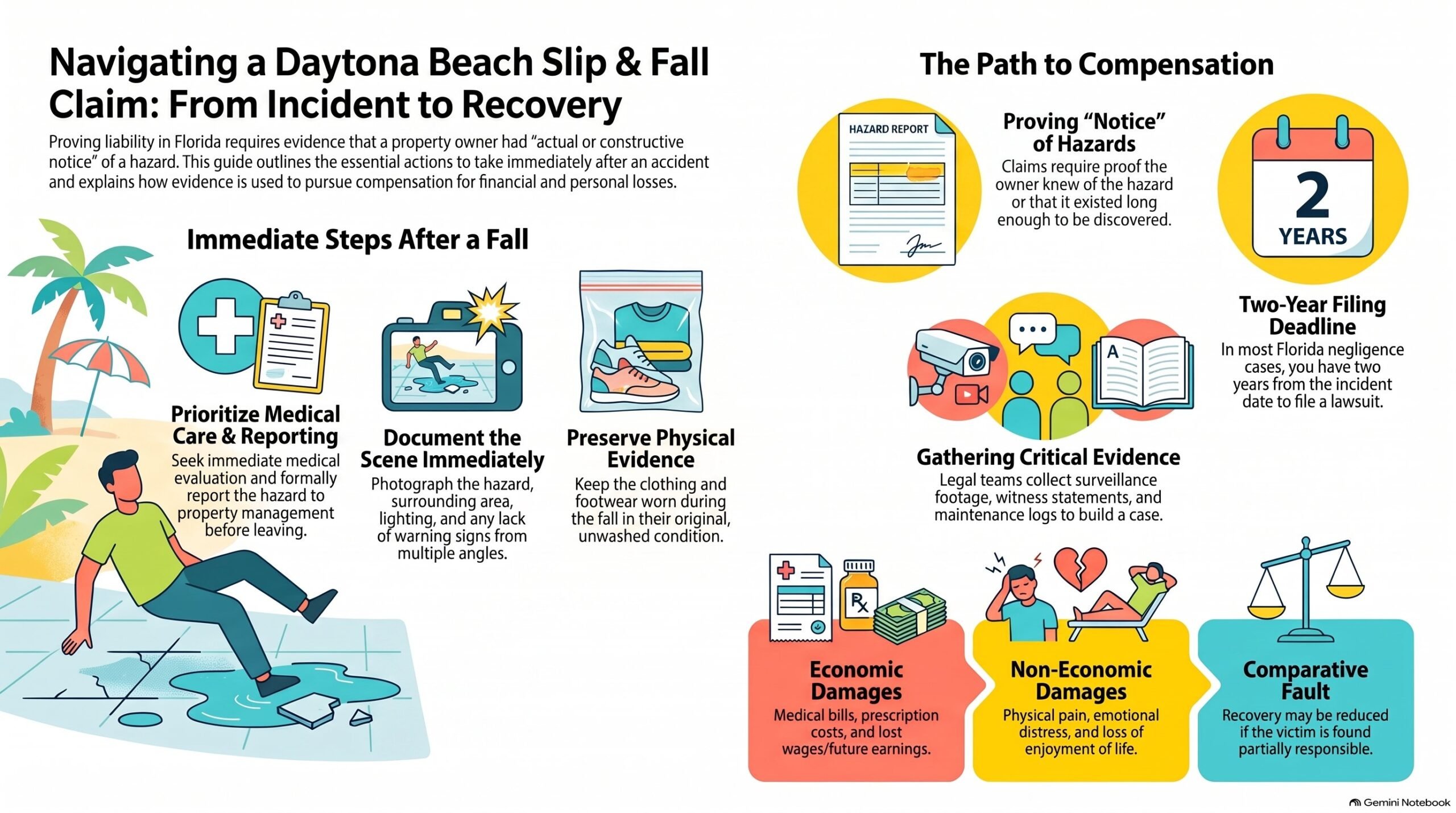
After a slip-and-fall at Daytona Beach, the injured person should seek prompt medical care, even if symptoms initially appear minor. The incident should be reported to the store or property manager, with a request that the report be documented. Photographs of the hazard, surrounding area, and any visible injuries can help preserve relevant evidence.
Seek Medical Care
Prompt medical care should be a priority after a slip-and-fall at a Daytona Beach store or other premises, even if the injury initially seems minor. A qualified medical professional can assess visible injuries and identify conditions that may not become apparent until hours or days later. Emergency evaluation is appropriate for severe pain, head trauma, loss of consciousness, difficulty moving, or other urgent symptoms. For less serious concerns, prompt assessment by a physician or urgent care provider can still help guide treatment and recovery. The injured person should describe how the fall occurred and report all symptoms accurately. Following medical advice, taking prescribed measures, and attending follow-up appointments can support recovery and create a clear record of the injury. Timely care also helps reduce preventable complications.
Report the Hazard
If it is safe to do so, the injured person should promptly report the hazard to a store employee, property manager, or other responsible representative. A timely report can alert staff to a dangerous condition and help protect other customers from similar harm. The injured person should describe where and how the fall occurred, identify the condition involved, and explain any immediate effects. They should ask that the incident be formally recorded and request the name and role of the person who will receive the report. Notify management if an employee cannot address the concern or complete an incident report. The injured person should provide accurate information without guessing about details or accepting blame. They should preserve receipts for purchases or expenses related to the visit, keeping the originals in a safe place for later reference.
Document the Scene
Photographs and video can preserve important details of the scene before conditions change. A person who is able should Photograph Surroundings, including the floor, nearby displays, warning signs, lighting, and any visible hazard. Images taken from several angles can help show where the incident occurred and how the area was arranged. The injured person should avoid moving objects or altering the scene when possible, while prioritizing immediate safety and medical care.
Witness names and contact details may also be recorded, along with the time and location of the fall. Preserve Clothing and footwear worn during the incident in their original condition, since stains, moisture, or damage may be relevant. These steps can support a clear account of events and assist those evaluating the circumstances, while respecting the needs and safety of everyone involved.
Critical Evidence in a Daytona Beach Slip & Fall Stores & Premises Injury Case
Evidence can help establish how a store or property owner handled a slip-and-fall hazard and the injuries that followed.
Essential records and accounts may include:
1. incident reports and surveillance footage; 2. witness statements; and 3. medical records. Promptly preserving these materials can support a clear assessment of the claim.
Incident Reports
When a slip-and-fall occurs at a Daytona Beach store or other property, an incident report can help establish when the incident was reported, where it occurred, and what staff observed. The document may also record the condition described, the names of witnesses, and any steps employees took after receiving notice. These details can help clarify how the property responded and whether important information was documented promptly.
A person involved may request copies of the incident report from the business or its insurer. The report should be reviewed for accuracy, including dates, locations, descriptions, and any omitted details. If an account differs from what the injured person recalls, the discrepancy should be noted, and supporting information preserved. Reports can contain errors or reflect only one perspective, so they should be considered alongside medical records, witness accounts, and other evidence.
Surveillance Footage
Surveillance footage can provide an objective record of the conditions and events surrounding a slip-and-fall at a Daytona Beach store or another property. Video may show a spill, debris, a damaged surface, warning signs, lighting, and how long a hazard remained before the incident. It can also document the area shortly afterward, helping clarify whether conditions changed and what steps were taken to address them. Because businesses may overwrite recordings on routine schedules, prompt Camera retention requests can be important. Relevant footage should be preserved in its original form, with available dates, timestamps, and system details maintained. Video authentication may be necessary to establish that a recording is accurate and unaltered. Careful review can help determine whether property conditions were reasonably managed and support a fair assessment of the injury claim.
Witness Statements
Witness statements can clarify how a slip-and-fall occurred and what conditions existed before or immediately after the incident. Customers, employees, and other observers may describe a spill, obstruction, warning sign, or the store’s response. Their accounts can help establish when a hazard appeared and whether staff had an opportunity to address it.
Witness credibility depends on factors such as a person’s opportunity to observe, ability to recall events, and neutrality. Promptly recorded accounts may preserve details that could otherwise fade. Consistency of statements across interviews and with other available evidence can strengthen an account, while meaningful differences may require careful review. Investigators should document each witness’s contact information and exact observations without suggesting answers. Respectful, accurate collection of these accounts can support a fair assessment of what happened and help those affected pursue an informed resolution.
Medical Records
Medical records provide objective evidence of the injuries reported after a slip-and-fall in Daytona Beach and the care required to treat them. Treatment notes, diagnostic imaging, prescriptions, and rehabilitation records can document symptoms, findings, and changes over time. Prompt medical attention also creates a clearer record of when concerns arose and how providers responded.
Record organization helps make certain that documents from hospitals, physicians, and other clinicians are complete and arranged in a useful sequence. Provider coordination may help identify missing records, clarify treatment timelines, and explain referrals or follow-up recommendations. Consistent documentation can also distinguish injuries related to the fall from unrelated health conditions, supporting an accurate review of the claim. These records may assist those evaluating the incident in understanding the injured person’s needs and the practical effects of the injury on daily activities.
Long-Term Effects of Daytona Beach Slip & Fall Stores & Premises Injuries
Long-term effects of a slip-and-fall injury may persist well beyond the initial treatment period. Chronic pain and limited mobility can interfere with daily activities, work, and independence. Some injured individuals also experience emotional distress, including anxiety or reduced confidence, as they adjust to lasting physical changes.
Chronic Pain
When a slip and fall injury causes lasting damage, chronic pain can interfere with a person’s mobility, work, and daily activities long after the initial accident. Persistent pain may arise from fractures, nerve damage, or soft-tissue injuries that do not fully recover. It can also affect concentration, mood, and the ability to maintain regular responsibilities. Sleep disruption is common when discomfort continues at night, and inadequate rest may make symptoms harder to manage. A physician can assess the injury, document ongoing symptoms, and recommend appropriate treatment. Pain management may include medication, physical therapy, or other care tailored to the individual’s condition. Following medical guidance and keeping records of symptoms and treatment can help clarify the injury’s long-term effects. These steps may also support an accurate evaluation of related losses and needs.
Limited Mobility
Limited mobility can persist after a slip-and-fall in Daytona Beach, particularly when injuries affect the legs, hips, back, or joints. These limitations may make walking, standing, climbing stairs, or completing routine tasks more difficult. Some injured people require a cane, walker, wheelchair, or assistance from another person to move safely. Physical therapy, medical treatment, and adaptive equipment may help restore function, but recovery varies according to the injury and individual circumstances.
When a fall occurs in a store or other business, barriers such as narrow aisles, obstructed pathways, or uneven flooring can create added challenges for people with reduced mobility. Accessible store layouts and appropriate mobility accommodations can help customers move through premises more safely. Businesses should address hazards promptly and maintain clear routes. Documentation of ongoing limitations and related care may help explain the injury’s long-term effects.
Emotional Distress
Emotional distress may continue after a Daytona Beach slip and fall, particularly when pain, reduced independence, or uncertainty about recovery disrupts daily life. Emotional trauma can affect sleep, concentration, confidence, and relationships, even after physical injuries begin to mend. Some injured people develop anxiety symptoms, such as fear of walking through stores, returning to the location, or falling again. These reactions may limit community involvement and make ordinary responsibilities more difficult. Family members and caregivers may also notice changes in mood or behavior and provide practical support without dismissing the person’s concerns. When distress persists, a qualified mental health professional can assess symptoms and recommend appropriate care. Medical records, treatment notes, and personal accounts may help document these effects. Legal guidance can clarify whether documented emotional harm is relevant to a premises injury claim.
Proving Liability in Daytona Beach Slip & Fall Stores & Premises Injury Cases
Proving liability in a Daytona Beach slip-and-fall case requires evidence that a property owner or business failed to exercise reasonable care and that the failure caused the injury. Evidence may include photographs of the hazard, incident reports, witness statements, and records showing when the area was inspected or cleaned. These details can help establish how the dangerous condition arose and whether reasonable steps could have prevented harm.
In Florida, the injured person generally must show that the business had actual or constructive knowledge of a transitory substance and should have addressed it. Constructive knowledge may be supported by evidence that the condition existed long enough to be discovered or occurred regularly. Notice requirements and other legal rules can affect what must be proven, so timely documentation matters. Medical records can connect the fall to the reported injuries, while inspection logs may clarify the business’s practices. Careful evidence gathering can help protect the injured person’s rights and support accountability.
Dealing With Insurance Companies After a Daytona Beach Slip & Fall Stores & Premises Injury
After a slip-and-fall in Daytona Beach, an insurance adjuster may contact the injured person to gather information and evaluate the claim. The adjuster represents the insurer, not the injured person, so communications should be handled carefully. Clear, factual answers can help explain what happened, but speculation about the cause or the extent of injuries may create misunderstandings. Recorded statements are not automatically required, and an injured person may seek legal guidance before agreeing to provide one. Medical records, photographs, incident reports, and witness details should be preserved and shared only with appropriate consideration of privacy and relevance. The insurer may request authorization to obtain records or offer an early settlement before the full effects of an injury are known. A Claim denial may follow if the insurer disputes responsibility, the evidence, or the reported losses. Calm, organized communication and careful review of documents can help protect the injured person’s interests while allowing the insurer to assess the matter fairly.
What to Expect During a Daytona Beach Slip & Fall Stores & Premises Injury Claim Process
A Daytona Beach slip-and-fall claim typically begins with an initial case review to assess the circumstances, potential liability, and available evidence. The process may then involve gathering records and witness accounts, followed by settlement negotiations with the responsible party or insurer. If a fair resolution is not reached, court proceedings may be necessary to determine the outcome.
Initial Case Review
When a Daytona Beach slip-and-fall claim begins, the initial case review helps determine how the incident occurred, who may be responsible, and what evidence is needed. The injured person typically describes the location, circumstances, resulting harm, and communications with the property owner or insurer. The lawyer assesses whether the facts may support a premises liability claim and identifies questions requiring further review. Conflict screening checks whether the firm can consider the matter without a conflict of interest. If the lawyer and client decide to proceed, representation terms explain the scope of services, fees, responsibilities, and decision-making process. This discussion also helps clarify the client’s priorities and the practical challenges that may affect a claim. A careful review supports informed choices and a responsible path toward seeking fair treatment and accountability.
Evidence Collection
Once representation begins, evidence collection helps establish how the fall occurred and whether a property owner or another party may be responsible. Counsel may request incident reports, maintenance logs, inspection records, and available surveillance footage from the store or property manager. Photographs of the hazard, surrounding area, lighting, and warning signs can help preserve conditions that may change quickly. Medical records and witness statements may document the injury and its immediate effects. Evidence Preservation may also include retaining footwear, clothing, or other items connected to the fall. Chain of custody documentation records when materials were obtained, who handled them, and where they were stored, supporting their reliability. The injured person may be asked to provide a clear account and identify witnesses. Careful collection allows the claim to be evaluated on documented facts rather than assumptions.
Settlement Negotiations
After the available evidence has been reviewed, settlement negotiations may begin with the property owner’s insurer or another responsible party. The injured person’s representative may present records documenting the incident, medical treatment, lost income, and other related losses. The insurer may assess liability, question aspects of the claim, or request additional documentation before responding. A sound Negotiation strategy considers the strength of the evidence, the extent of the injuries, and the likely costs of ongoing care. It also accounts for the injured person’s priorities, including a fair resolution that supports recovery and financial stability. Settlement timelines vary according to claim intricacy, treatment progress, and the parties’ responsiveness. Before accepting an offer, the claimant should understand its terms, including any release of future claims. Careful review can help secure an informed decision.
Court Proceedings
If settlement negotiations do not resolve a Daytona Beach slip-and-fall claim, the injured person may pursue the matter in court. The process generally begins with filing a complaint and serving it on the property owner or business. Both sides may exchange records, question witnesses, and present evidence about the hazard, notice, and resulting injuries. Pretrial hearings can address disputed issues and determine which evidence the judge or jury may consider.
If the case proceeds to trial, Jury selection allows attorneys and the court to identify impartial jurors. Each side then gives an opening statement, presents evidence, and questions witnesses. Courtroom testimony may include accounts from the injured person, employees, medical providers, or qualified experts. After closing arguments and legal instructions, jurors deliberate and return a verdict. A court judgment may follow.
Compensation for Daytona Beach Slip & Fall Stores & Premises Injury Damages
Compensation for a Daytona Beach slip-and-fall injury may cover medical expenses, lost income, reduced future earning capacity, and pain and suffering. The amount depends on the injury’s severity, its effect on daily activities, and the evidence connecting the condition to the fall. Documentation can help establish the treatment received, time away from work, and ongoing limitations.
A claim may account for reasonable costs already incurred and anticipated Future care, such as rehabilitation, follow-up appointments, or necessary assistance. Lost income may include wages missed during recovery, while reduced future earning capacity may apply when lasting restrictions affect a person’s ability to work. Pain and suffering may reflect physical discomfort and disruption to ordinary life.
Accurate records, including medical reports, employment information, and accounts of how the injury affects routine responsibilities, can support a fair assessment. A careful review also considers whether the property owner had notice of the hazard and a reasonable opportunity to address it. Each case depends on its specific facts and applicable law.
Economic vs Non-Economic Damages in Daytona Beach Slip & Fall Stores & Premises Cases
In Daytona Beach slip-and-fall cases, economic damages cover measurable financial losses, while non-economic damages address harms such as pain and emotional distress. The value of each category depends on the circumstances and evidence of the injury. Records, receipts, and other supporting documentation can help substantiate the claimed losses.
Economic Damages
After a slip-and-fall injury at a Daytona Beach store or other property, damages may include both economic losses and non-economic harm. Economic damages cover measurable financial losses resulting from the injury. They may include medical bills, prescription costs, rehabilitation costs, and reasonable transportation costs to treatment. Records such as invoices, pay statements, and employment documentation can help establish these losses.
Lost wages may be recoverable when injuries prevent an employee from working during recovery. If the injury limits future work or reduces the ability to earn at the prior level, a claim may also include diminished earning capacity. These losses may require evidence from medical providers, employers, or qualified financial professionals. Careful documentation helps clarify the financial effect of the incident and supports a fair assessment of the injured person’s needs.
Non-Economic Damages
While economic damages reflect measurable financial losses, non-economic damages address the personal effects of a slip-and-fall injury. In Daytona Beach premises cases, damages may include pain and suffering, such as physical discomfort and the emotional strain associated with recovery. They may also reflect limitations that interfere with ordinary routines, relationships, and responsibilities. Loss of enjoyment can arise when an injury prevents someone from participating in activities that previously brought fulfillment, such as spending time with family, pursuing hobbies, or serving the community. Unlike medical bills or lost wages, these harms do not have a fixed price, yet they can meaningfully affect a person’s daily life. Non-economic damages recognize that an injury’s consequences extend beyond financial costs and may persist even after treatment ends, affecting independence and well-being.
Proving Your Losses
Establishing the value of a slip-and-fall claim requires evidence linking the injury to specific financial losses and personal harm. Economic damages may include medical bills, rehabilitation charges, prescription costs, and Lost wages documented through pay records or employer statements. Receipts, invoices, and insurance records can help verify amounts already paid. Future expenses may also be considered when medical providers explain the expected cost of continued treatment, assistive devices, or reduced work capacity. Non-economic damages address harm that does not have a direct price, such as pain, emotional distress, and limitations on daily activities. Treatment notes, personal records, and statements from people familiar with the injured person’s condition may support these losses. Clear, consistent documentation helps insurers and courts assess the full impact and supports a fair resolution that recognizes both financial needs and personal well-being.
Don’t Wait. Call Our Florida Personal Injury Lawyers Now!
When a Daytona Beach Slip & Fall Stores & Premises Injury Case Goes to Trial vs. Settlement
A Daytona Beach slip-and-fall claim may settle through negotiation or proceed to trial, depending on the evidence, the parties’ positions, and the injuries involved. Settlement discussions can allow both sides to resolve a dispute without a courtroom decision. The injured person may receive compensation sooner, while the property owner avoids the uncertainty and expense of trial. Any proposed agreement should be assessed against documented losses, future needs, and the strength of the available evidence.
If negotiations do not produce an acceptable resolution, a trial may be necessary. Each side presents evidence and witnesses, including trial testimony about the incident, the hazardous condition, and its effects. The judge or jury then evaluates the information and decides the outcome. Jury deliberations occur after the evidence and arguments have been presented. A trial can take longer and carries uncertainty, but it may provide a formal decision when the parties cannot agree. Careful preparation supports a fair process and helps the injured person pursue accountability.
Florida Laws That May Affect Your Daytona Beach Slip & Fall Stores & Premises Case
Whether a Daytona Beach slip-and-fall claim settles or proceeds to trial, Florida law governs the evidence and legal standards that may determine its outcome. Several rules can shape how responsibility is assessed and what proof may support an injured visitor’s claim.
- Under Florida’s premises-liability law, an invitee generally must show that a business knew or should have known of a dangerous condition and failed to address it or provide adequate warning. Evidence may include inspection records, incident reports, photographs, and witness accounts.
- Premises classifications matter because a visitor’s legal status, such as invitee or licensee, can affect the duty owed by the property owner. The specific circumstances of entry and use should be evaluated.
- Comparative negligence may reduce a claimant’s recovery if the claimant is found partly responsible. Florida’s modified comparative-fault rule generally bars recovery when a claimant’s share of fault exceeds 50 percent.
These standards help clarify the issues and support fair, evidence-based outcomes for injured people and the community.
The Statute of Limitations for Daytona Beach Slip & Fall Stores & Premises Injury Cases
How long does an injured visitor have to file a slip-and-fall lawsuit in Daytona Beach? In most Florida negligence cases, the statute of limitations is two years from the date of the fall. This deadline generally applies to claims involving unsafe conditions at stores and other premises. Missing it may prevent an injured person from pursuing compensation in court, regardless of the seriousness of the harm.
Filing deadlines can depend on the facts, including when an injury was discovered and whether the claim involves a government entity. Claims against public agencies may require formal notice and have shorter deadlines. Certain limitation exceptions may pause or alter the time limit, such as when the injured person is a minor or legally incapacitated. These exceptions are narrow and depend on applicable law and evidence.
Because deadlines can be difficult to calculate, prompt attention to the incident date and relevant records is important. A person who acts within the required period preserves the opportunity to seek accountability and support recovery.
How a Daytona Beach Slip & Fall Stores & Premises Lawyer Can Help You
Meeting the filing deadline is only one part of pursuing a slip-and-fall claim; establishing liability and documenting losses also require careful attention. A Daytona Beach lawyer can organize the evidence and explain how Store owner accountability may depend on the hazard, notice, and reasonable opportunities to address it.
The work may include:
- Reviewing incident reports, photographs, witness accounts, and available surveillance footage to clarify how the fall occurred.
- Examining maintenance records and inspection practices to assess whether premises safety standards were followed and whether any dangerous conditions were addressed.
- Gathering medical records, wage information, and other documentation to present a supported account of physical, financial, and practical losses.
Counsel can also communicate with insurers, evaluate proposed settlements, and prepare legal filings when needed. This assistance can help injured people pursue fair treatment while allowing them to focus on recovery and family responsibilities. A careful, evidence-based approach supports a clear presentation of the claim and the injury’s impact.
When to Contact a Daytona Beach Slip & Fall Stores & Premises Lawyer
After a slip and fall, contacting a Daytona Beach premises lawyer promptly can help preserve evidence and clarify the steps needed to protect a potential claim. Prompt representation may be especially important when a store’s floor condition, warning signs, or incident records could change quickly. Photographs, witness names, and location details can help document what happened, but these materials may become harder to obtain over time.
Contact timing also matters when injuries require medical attention. A person who has fallen should seek appropriate care first and follow medical guidance, while keeping records of treatment and related expenses. Once immediate health needs are addressed, a lawyer can review the circumstances and explain relevant deadlines and next steps. Early contact does not require certainty about the claim; it allows questions to be raised while information is still available. Those who assist an injured person can support prompt documentation and help make certain that important communications are not overlooked. Delays may complicate review, so timely advice can help preserve options.
Why You Need an Experienced Daytona Beach Slip & Fall Stores & Premises Lawyer
An experienced Daytona Beach slip-and-fall lawyer can help evaluate whether a property owner may be responsible for unsafe conditions and identify evidence relevant to the claim. This assessment may include reviewing incident reports, photographs, witness accounts, maintenance records, and available surveillance footage. Prompt attention can help preserve information before it is lost or altered.
Attorney Experience matters because premises liability claims require careful analysis of notice, reasonable inspections, and the connection between a hazard and an injury. An attorney can explain applicable deadlines, organize supporting documentation, and address communications with insurers. This guidance allows injured people to focus on recovery while their concerns receive informed attention.
A sound Legal Strategy considers the facts, potential defenses, and documented losses before determining how to proceed. Counsel can help assess medical expenses, lost income, and other effects, then pursue an appropriate resolution through negotiation or litigation when warranted. Experienced representation can promote fair review and accountability for unsafe conditions while keeping expectations grounded in evidence and governing law.
How to Choose the Right Daytona Beach Slip & Fall Stores & Premises Lawyer for Your Case
Choosing the right Daytona Beach slip-and-fall lawyer begins with evaluating the attorney’s experience handling premises liability claims and their familiarity with Florida law. A qualified attorney should understand how evidence, notice of hazards, and injury documentation can affect a claim. Reviewing Attorney Credentials, including licensing, relevant training, and professional standing, can help an injured person assess whether counsel has the preparation the case requires.
The attorney’s approach to investigation also matters. Counsel should be prepared to identify useful records, inspect the location when appropriate, and seek information from witnesses while evidence remains available. A clear communication style is vital: the lawyer should explain procedures, answer questions, and discuss risks without promising a specific outcome. A prospective client can ask who will handle the case, how updates will be provided, and which decisions require client input. Comparing several attorneys may clarify differences in experience and service. The choice should reflect the injured person’s needs, practical expectations, and confidence in the attorney’s ability to pursue a fair resolution.
About The Law Offices of Anidjar & Levine
The Law Offices of Anidjar & Levine represents people injured in slip-and-fall incidents in Daytona Beach and throughout Florida.
The firm assists clients seeking accountability after hazardous conditions cause injuries in stores, restaurants, and other properties.
Its attorneys review the circumstances of each incident, explain available legal options, and pursue compensation supported by the evidence.
Firm history reflects a practice focused on representing injured people and helping them work through the legal process.
Slip-and-fall claims may involve questions about property maintenance, notice of a dangerous condition, and the extent of resulting harm.
The firm can gather relevant records, communicate with insurers, and prepare a claim for negotiation or litigation when appropriate.
The firm’s work also includes community involvement and service to people facing difficult circumstances.
For individuals who value serving others, this commitment may be relevant when choosing legal counsel.
Prospective clients can ask about the firm’s experience, communication practices, and approach to their specific case before deciding how to proceed.
Frequently Asked Questions
Can I File a Claim if I Fell in a Store Parking Lot?
A person may file a claim after falling in a store parking lot if evidence suggests the store or property owner failed to address a hazardous condition and that failure caused injury. Relevant factors include the hazard’s duration, notice to responsible parties, and reasonable Parking lot maintenance. Weather hazards may affect responsibility, but do not automatically prevent a claim. Medical records, photographs, witness details, and prompt legal guidance can help preserve evidence and clarify available options.
What if I Slipped While Shopping With a Child?
A shopper who slips while accompanying a child may still pursue a premises liability claim if unsafe conditions caused the fall. The child’s presence does not automatically prevent recovery, though the shopper should prioritize Child Supervision and seek medical care promptly. Reporting the incident, photographing the hazard, and preserving witness details can support a claim. A careful review of the circumstances can clarify responsibility and help protect the family’s recovery.
Can a Store Be Responsible for a Fall Caused by a Spilled Product?
Yes. A store may be responsible when a spilled product creates a dangerous condition, and the store knew, or should have known, about it but failed to address it reasonably. Florida store notice requirements make the timing and circumstances of the spill important. Photographs, incident reports, witness accounts, and inspection records may provide evidence of spilled product. A careful investigation can clarify whether the store had sufficient notice and whether its response met reasonable safety standards.
Does a Store’s Incident Report Prove That It Was at Fault?
A store’s incident report does not, by itself, prove that the store was at fault. It may provide useful evidence for the incident report, including details about the hazard, employee observations, and actions taken after the fall. However, fault determination depends on the full set of circumstances, including whether the store knew or reasonably should have known about the danger and failed to address it. Photographs, witness accounts, and medical records may also help establish what occurred.
Can I Pursue a Claim if I Fell on a Temporary Floor Mat?
A person may pursue a claim after falling on a temporary floor mat if unsafe conditions, such as curling edges, shifting, or poor maintenance, contributed to the fall. Temporary Mat Hazards often involve preventable risks, while Mat Placement Standards require mats to lie flat and remain secure. Liability depends on evidence that the responsible party knew or reasonably should have known of the danger and failed to address it, as well as proof of resulting injury and losses.
—————————
A slip-and-fall at a Daytona Beach store or other property can lead to serious injuries, financial strain, and difficult questions about responsibility.
Prompt medical care, careful documentation, and timely legal guidance can help protect an injured person’s interests.
The Law Offices of Anidjar and Levine can review the circumstances, explain available legal options, and pursue a claim where the evidence supports one.
A Daytona Beach Personal Injury Lawyer can also help evaluate how the facts, applicable law, and available proof may affect the case.