

The Law Offices of Anidjar and Levine’s Orlando medical malpractice maternal and fetal lawyer evaluates whether prenatal, labor, delivery, or postnatal care departed from accepted standards and caused preventable harm. The attorney reviews medical records, fetal monitoring, imaging, medications, communications, and delivery decisions, then consults qualified medical experts regarding breach and causation. Potential damages may include treatment costs, lifelong care, lost income, impairment, and emotional suffering. Early legal guidance can help protect evidence, manage insurers, and clarify deadlines and available claim pathways. Learn more from an Orlando Personal Injury Lawyer.
Main Takeaways
- An Orlando medical malpractice lawyer evaluates whether prenatal, delivery, or postpartum care departed from the accepted standard of care.
- Attorneys review prenatal records, fetal monitoring, imaging, laboratory results, delivery notes, medications, and follow-up documentation.
- Qualified medical experts assess whether provider decisions caused preventable maternal or fetal injuries.
- Legal guidance may address future treatment, caregiving needs, lost income, emotional harm, and other recoverable damages.
- A lawyer explains Florida’s procedural requirements, applicable deadlines, responsible parties, and potential resolution options.


How We Can Help With Your Orlando Medical Malpractice Maternal & Fetal Injury Claim
When maternal or fetal harm results from suspected medical negligence, an Orlando medical malpractice attorney can evaluate the circumstances, identify potential breaches in the applicable standard of care, and determine whether legal action may be appropriate. The legal team can help preserve relevant records, organize medical information, and communicate with healthcare providers or insurers on the family’s behalf. A careful case valuation may consider documented injuries, future treatment, lost income, caregiving needs, and other legally recognized damages. Counsel can also coordinate an expert strategy designed to assess prenatal monitoring, delivery decisions, emergency responses, and related professional conduct without prematurely asserting conclusions. Throughout the process, attorneys may explain procedural requirements, applicable deadlines, and potential resolution paths in clear terms. Their work can reduce administrative burdens while protecting the family’s ability to make informed decisions. By approaching each matter with preparation, discretion, and respect, counsel supports individuals seeking accountability and resources for maternal and fetal recovery.
OUR CONSULTATIONSARE FREE
START YOUR FREE CASE REVIEW

Understanding Orlando Medical Malpractice Maternal & Fetal Injury Cases
Understanding an Orlando medical malpractice maternal and fetal injury case requires examining whether a healthcare provider’s conduct departed from the accepted standard of care and caused identifiable recovery. A careful review considers the mother’s condition, the fetus’s development, relevant medical records, and the timing of each clinical decision. Cause analysis connects the alleged breach to a specific injury rather than relying on an unfavorable outcome alone.
Evidence may include prenatal screening results, imaging, laboratory findings, consultations, delivery records, and follow-up care. Medication errors require assessment of prescribing, dispensing, administration, and monitoring practices, as well as whether an alternative process could have prevented harm. Qualified medical professionals generally explain the standard of care and evaluate whether the provider’s actions were reasonably appropriate under the circumstances. The legal review may also consider damages, including additional treatment, disability, lost income, and continuing care needs. A precise, compassionate evaluation helps families understand available remedies while supporting accountability and improved patient safety.
Common Causes of Orlando Medical Malpractice Maternal & Fetal
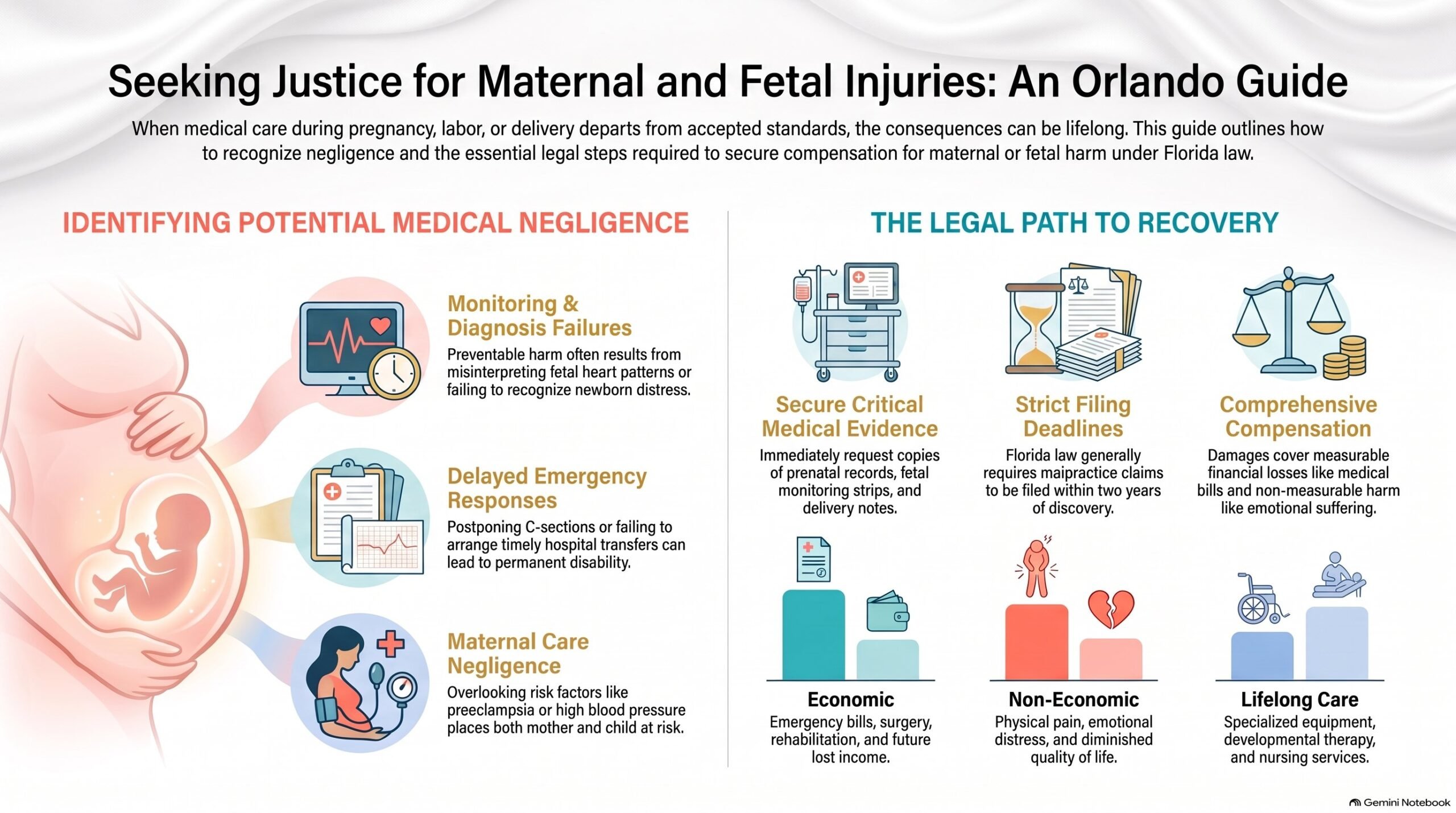
Common causes of maternal and fetal medical malpractice may include birth injury misdiagnosis, delayed emergency intervention, and errors in fetal monitoring. Maternal care negligence, including failures in assessment, treatment, or communication, may also place both patient and child at significant risk. Identifying these failures requires careful review of medical records, clinical decisions, and the timing of care provided.
Birth Injury Misdiagnosis
Birth injury misdiagnosis occurs when medical professionals fail to recognize, interpret, or respond appropriately to signs that a newborn or mother has suffered harm before, during, or shortly after delivery. Misdiagnosed Labor may involve overlooking abnormal fetal heart patterns, maternal complications, or indications that delivery is not progressing safely. After birth, providers may attribute breathing difficulties, seizures, feeding problems, unusual weakness, or limited movement to temporary conditions instead of investigating possible injury. Failure to detect can prevent families from receiving timely evaluations, supportive treatment, and accurate information about a child’s prognosis. Misinterpretation may result from incomplete examinations, inadequate documentation, communication failures, or insufficient attention to changing symptoms. When care falls below accepted standards and causes harm, affected families may seek guidance regarding medical records, independent review, and potential legal remedies.
Delayed Emergency Intervention
When an urgent maternal or fetal complication develops, delayed emergency intervention may increase the risk of severe injury or death. Delays can occur when providers fail to recognize worsening symptoms, postpone consultation, overlook abnormal clinical measurements, or encounter communication and staffing problems. A hospital’s failure to arrange timely transfer, surgery, delivery, or expert evaluation may also contribute to preventable harm. Misdiagnosis impacts treatment decisions by allowing a serious condition to progress while appropriate care is deferred. Potential consequences include permanent disability, organ damage, premature delivery, or maternal death. A legal review may examine medical records, timelines, communications, and applicable standards of care to determine whether negligence caused the outcome. If liability is established, affected families may pursue compensatory damages for medical expenses, lost income, suffering, and long-term care needs.
Fetal Monitoring Errors
Fetal monitoring errors can prevent providers from recognizing signs of fetal distress and responding before permanent injury occurs. Electronic fetal monitoring requires accurate placement, consistent observation, and timely interpretation of heart-rate patterns. Errors may arise when sensors are positioned incorrectly, equipment malfunctions, or staff fail to distinguish maternal and fetal heart rates. Inadequate documentation, interruptions in monitoring, and failure to communicate concerning changes can further delay appropriate evaluation. Monitoring may also be insufficient when clinical circumstances require more frequent assessment, such as abnormal patterns or concerns about reduced oxygenation. Although monitoring cannot prevent every complication, careful surveillance helps providers identify developing problems and coordinate timely responses. Families affected by suspected errors may seek an independent review of records to determine whether monitoring practices met accepted standards and whether fetal injury could have been avoided.
Maternal Care Negligence
Although pregnancy and delivery involve inherent medical risks, maternal care negligence can increase those risks when providers fail to identify or appropriately treat complications affecting the mother. Examples may include inadequate risk screening, delayed responses to high blood pressure, untreated infection, excessive bleeding, or failure to recognize symptoms of preeclampsia. Providers may also overlook relevant medical history, neglect necessary consultations, or discharge a patient without appropriate instructions and follow-up. These failures can contribute to severe maternal injury, emergency surgery, organ damage, or preventable death. Medical professionals are expected to follow established standards of care, communicate significant findings, monitor changes in condition, and take timely action when warning signs arise. An Orlando medical malpractice attorney may evaluate whether the provider’s conduct departed from accepted practice and whether that departure caused compensable harm.
Don’t Wait. Call Our Florida Personal Injury Lawyers Now!


Legal Rights of Orlando Medical Malpractice Maternal & Fetal Injury Victims
Orlando maternal and fetal injury victims may have legal rights when negligent medical care causes preventable harm during pregnancy, labor, delivery, or the immediate postnatal period. Florida law may allow an injured patient or child’s representative to pursue compensation when evidence establishes a medical provider breached applicable Florida healthcare standards and caused measurable damages. Legal options can include a medical malpractice claim, settlement negotiations, or litigation. A qualified attorney may help preserve records, identify responsible parties, and evaluate deadlines under Florida law.
Potential recoverable losses may include:
- Additional medical treatment, rehabilitation, and future care
- Lost income, reduced earning capacity, and related household expenses
- Physical impairment, emotional suffering, and diminished quality of life
Victims may also have the right to understandable case explanations and to make informed decisions about resolution. Expert testimony is often required, and the costs of expert review should be discussed before representation begins. Prompt consultation can help preserve evidence, assess the value of a claim, and connect families with resources while pursuing accountability and appropriate support through the legal process.
Why Do Orlando Medical Malpractice Maternal & Fetal Injuries Happen?
Understanding the causes of maternal and fetal injuries can help clarify whether preventable medical negligence contributed to the harm. These injuries may arise from delayed diagnosis, inadequate monitoring, communication failures, or improper responses to warning signs during pregnancy, labor, or delivery. Clinical staffing shortages can increase workloads, limit supervision, and contribute to missed changes in a patient’s condition. Inadequate training, incomplete medical histories, and failures to follow established protocols may also affect timely treatment.
Medication dosing errors represent another potential cause, particularly when drugs are ordered, administered, or monitored without sufficient attention to allergies, weight, pregnancy status, or interactions. Surgical mistakes, failures to recognize fetal distress, and delays in performing an emergency cesarean delivery can produce serious consequences. Some injuries result from known medical risks despite appropriate care, while others may reflect departures from accepted professional standards. Careful evaluation of records, clinical decisions, and outcomes is necessary to distinguish unavoidable complications from potentially preventable harm.
Don’t Wait. Call Our Florida Personal Injury Lawyers Now!
What Should You Do After an Orlando Medical Malpractice Maternal & Fetal Injury?
After a maternal or fetal injury, the affected patient should seek immediate medical care to address urgent health concerns and document the condition. Medical records, test results, bills, and related communications should be preserved carefully. Consulting a qualified malpractice lawyer can help evaluate potential negligence and identify appropriate legal steps.
Seek Immediate Medical Care
Prompt medical evaluation should be obtained when a maternal or fetal injury is suspected following potential medical malpractice. A parent, support person, or caregiver should promptly contact emergency services or go to an appropriate emergency department, especially if symptoms are severe, sudden, or worsening. Individuals should recognize red flags, including heavy bleeding, severe abdominal pain, difficulty breathing, chest pain, seizures, fainting, high fever, confusion, decreased fetal movement, or signs of newborn distress. During pregnancy or after delivery, urgent assessment can identify complications that may require monitoring, medication, surgery, or specialized neonatal care. Patients and families should follow postpartum escalation guidance from qualified clinicians and clearly describe symptoms, timing, and any recent treatments. Immediate care protects health, supports informed decisions, and helps ensure that potentially serious maternal or fetal conditions receive timely attention.
Preserve Medical Records
Preserving complete medical records is an important step after a suspected maternal or fetal injury in Orlando. The patient or family should request copies of prenatal records, labor and delivery notes, fetal monitoring strips, imaging studies, laboratory results, medication lists, discharge instructions, and follow-up documentation. Records should include dates, provider names, diagnoses, treatment decisions, and communications regarding symptoms or complications. Documentation concerning informed consent may also clarify what risks, alternatives, and expected outcomes were explained before procedures or treatment. Electronic files should be saved in their original format when possible, while paper records should remain organized and secure. Maintaining a written timeline of appointments, symptoms, treatments, and observed changes helps preserve evidence. Original documents should not be altered, marked, discarded, or surrendered without retaining complete copies.
Consult A Malpractice Lawyer
Consulting an Orlando medical malpractice lawyer can help a patient or family evaluate whether a maternal or fetal injury may have resulted from negligent medical care. An attorney can review prenatal records, delivery notes, diagnostic results, treatment decisions, and communications with healthcare providers. A confidential case review may clarify whether the care departed from accepted medical standards and whether that departure caused measurable harm. During a free legal consultation, the family can discuss potential claims, applicable deadlines, and evidence needed to support an investigation. The lawyer may also identify responsible parties, including physicians, nurses, hospitals, or other facilities. Prompt legal guidance can help preserve relevant information and protect procedural rights. Families should provide complete records and accurate timelines while avoiding public statements that could complicate a future claim.
Critical Evidence in an Orlando Medical Malpractice Maternal & Fetal Injury Case
Important evidence in an Orlando maternal and fetal injury case may establish whether negligent care caused harm and the extent of resulting damages.
Essential materials commonly include:
- Medical records and prenatal care documentation
- Expert medical testimony regarding the applicable standard of care
- Evidence of the injury, treatment, long-term effects, and related financial losses
Medical Records
When maternal or fetal harm may have resulted from medical negligence, complete medical records can provide key evidence for evaluating what occurred. Records may show assessments, orders, communications, test results, treatments, and responses documented during the relevant episode of care. Their timing can help establish what clinicians knew, when they knew it, and which decisions followed. Charting errors, late entries, inconsistent descriptions, or documentation gaps may raise questions about accuracy and communication, although they do not, on their own, establish liability. A careful review can compare recorded information with facility policies, witness accounts, billing data, and other available evidence. Preserving original records, metadata, and related communications may help prevent alteration or loss. An experienced legal team can organize these materials respectfully, clarify disputed events, and assist affected families seeking accountability and support.
Prenatal Care Documentation
Prenatal care documentation can provide a detailed record of the information available to providers throughout a pregnancy and the actions taken in response. It may include visit notes, ultrasound findings, laboratory results, medication histories, risk assessments, referrals, and communications with the patient. These materials can help identify whether important symptoms were reported, whether warning signs were documented, and whether follow-up occurred within an appropriate timeframe. A prenatal checklist may help organize appointments, screenings, and care decisions, but it does not replace the complete medical record. Families seeking information may submit a formal record request for prenatal, hospital, and fetal monitoring records. Preserving original entries, amendments, timestamps, and communication logs can clarify the sequence of events and support a careful review of potential maternal or fetal injury.
Expert Medical Testimony
How medical events are interpreted often depends on testimony from qualified experts who can explain whether the care provided met accepted professional standards. In maternal and fetal cases, an Expert witness may review prenatal records, imaging, monitoring data, delivery notes, and relevant communications. The expert can identify applicable clinical practices, explain what a reasonably careful provider would have done, and determine whether deviations occurred. Testimony may also link an alleged lapse to the medical outcome with clear proof of causation, while distinguishing negligence from an unavoidable complication. Attorneys use this analysis to develop courtroom strategy, organize questioning, and address opposing opinions. Courts generally require opinions grounded in reliable methods and sufficient facts. Clear expert testimony helps decision-makers evaluate complex medical information fairly and responsibly, supporting accountability and informed service to affected families.
Injury And Damages Evidence
Injury and damages evidence establishes the physical, emotional, and financial consequences of an alleged maternal or fetal medical error. Medical records, imaging, birth documentation, and treatment histories can show the nature, timing, and progression of injuries. Testimony from physicians, therapists, economists, and life-care planners may explain future medical needs, lost earning capacity, disability, and required assistance. Parents may also document emotional distress, caregiving demands, and changes to family life, while avoiding unsupported conclusions.
This evidence must connect documented harm to the alleged breach under applicable Causation standards. A clear timeline can distinguish preexisting conditions from injuries arising during prenatal care, labor, delivery, or neonatal treatment. In Orlando litigation, courtroom strategy evidence should be organized to present damages accurately and persuasively. Careful preparation helps decision-makers evaluate compensation, support accountability, and protect families facing long-term consequences.
Long-Term Effects of Orlando Medical Malpractice Maternal & Fetal Injuries
Maternal and fetal injuries attributed to medical malpractice may result in lifelong medical challenges requiring ongoing treatment, monitoring, and dedicated care. Developmental or cognitive impacts can affect education, employment, independence, and overall quality of life. These consequences may also create substantial financial and emotional strain for the affected individual and family.
Lifelong Medical Challenges
When medical malpractice causes maternal or fetal harm, the resulting challenges may continue long after delivery and require extensive, ongoing care. Individuals may experience permanent physical conditions involving mobility, muscle control, seizures, organ function, or other bodily systems. Managing these conditions can require surgeries, medications, rehabilitation, medical equipment, and regular monitoring throughout life. Treatment side effects may create additional burdens, particularly when medications affect energy, appetite, sleep, or immune function. Families may coordinate consultants, transportation, home care, and insurance as medical needs change. Lifelong support can include nursing services, physical therapy, assistive devices, and accessible housing. When negligent care contributes to these consequences, medical records and expert evaluations may help clarify causation, future needs, and the financial resources required to protect an affected person’s health and dignity.
Developmental and Cognitive Impacts
How a child develops after a maternal or fetal injury may be affected by disruptions in oxygen supply, brain development, or other highly important medical processes. These injuries can influence neurodevelopmental outcomes across infancy, childhood, and adolescence. Affected children may experience delayed speech, impaired motor coordination, difficulties with attention, or challenges involving memory and problem-solving. Some may require expert educational services, speech therapy, occupational therapy, or continued developmental monitoring. In more significant cases, permanent cognitive disability can limit learning, communication, independence, and adaptive functioning. The severity and pattern of impairment often depend on the timing, duration, and medical cause of the injury. Careful assessments by qualified experts can identify developmental needs, document functional limitations, and guide interventions intended to focus on supporting the child’s abilities and long-term participation in school and community life.
Financial and Emotional Strain
Long-term maternal or fetal injuries can create substantial financial and emotional strain for the affected child and family. Care costs may include therapy, adaptive equipment, medications, transportation, and ongoing medical supervision, often extending throughout the child’s development. These expenses can exceed insurance limits and require families to pursue public benefits or other assistance. Parents may also experience workplace disruption when appointments, emergencies, or caregiving responsibilities reduce consistent employment. Over time, emotional burnout can affect caregivers who must coordinate services while managing uncertainty about the child’s future. Trauma support, counseling, and informed community resources may help families address grief, stress, and changing responsibilities. A careful evaluation of projected needs can clarify the long-term impact and identify appropriate avenues for accountability, compensation, and continued support for the injured individual.
Proving Liability in Orlando Medical Malpractice Maternal & Fetal Injury Cases
Proving liability in an Orlando maternal and fetal medical malpractice case requires evidence that a healthcare provider failed to meet the accepted standard of care and that the deviation caused preventable harm to the mother or fetus. Attorneys typically examine prenatal records, fetal monitoring strips, imaging, medication orders, delivery notes, and testimony from qualified medical professionals. Causation evidence must connect the provider’s specific act or omission to an injury, such as delayed treatment, oxygen deprivation, infection, hemorrhage, or birth trauma. A case may involve inadequate assessment, failure to recognize warning signs, improper response to complications, or negligent communication between caregivers. Hospital protocol adherence is also relevant, although following a policy does not automatically establish appropriate care. Investigators compare the treatment provided with professional guidelines, clinical circumstances, and available alternatives. Preserving complete records and consulting maternal-fetal medicine experts can clarify whether earlier intervention would likely have prevented the resulting harm. This process supports accountability and informed service to affected families.
Dealing With Insurance Companies After an Orlando Medical Malpractice Maternal & Fetal Injury
When an Orlando maternal and fetal injury claim is reported, the insurer may begin investigating before the family understands the full extent of the harm. Adjusters may request recorded statements, medical authorizations, employment information, or access to personal communications. Families should respond carefully, because early statements can be interpreted narrowly or used to challenge later conclusions about causation, damages, or recovery.
A lawyer can help establish appropriate Patient Communication with the insurer and prevent unnecessary disclosures. The family may be advised not to speculate about medical events, accept blame, or discuss settlement value before the injuries and future needs are evaluated. Prompt Claim Documentation should include medical records, billing statements, diagnostic reports, wage information, correspondence, and a dated account of relevant events.
Insurance representatives may appear helpful while protecting the carrier’s financial interests. Respectful, accurate communication remains important, but the family’s interests require informed guidance. Preserving evidence and directing substantive inquiries through counsel can protect the claim while allowing caregivers to focus on recovery and service to the child.
What to Expect During an Orlando Medical Malpractice Maternal & Fetal Injury Claim Process
The Orlando medical malpractice maternal and fetal injury claim process typically begins with an initial case evaluation to assess the facts, legal requirements, and potential liability. Counsel then gathers medical records, expert opinions, and other evidence before filing the claim. The matter may proceed through settlement negotiations or, if necessary, to litigation.
Initial Case Evaluation
During an initial case evaluation, an Orlando medical malpractice maternal and fetal injury attorney reviews the medical records, pregnancy history, delivery circumstances, and resulting injuries to determine whether the facts support a viable negligence claim. The Client Intake typically addresses prenatal care, communications with providers, symptoms, treatment decisions, and the family’s concerns about preventable harm. The attorney may explain applicable deadlines, potential responsible parties, and the standards governing professional negligence without promising a particular outcome. An Evidence Checklist helps organize available information, such as provider names, appointment dates, discharge materials, photographs, and written accounts of relevant events. This preliminary discussion also allows the legal team to identify unanswered questions, assess potential damages, and determine whether further review by qualified medical professionals is appropriate before accepting representation.
Gathering Medical Evidence
After an initial evaluation, gathering medical evidence provides the factual foundation for determining whether negligent care caused maternal or fetal injury. Counsel typically requests complete prenatal, labor, delivery, neonatal, and follow-up records, including nursing notes, physician assessments, medication administration records, and monitoring strips. Diagnostic tests, imaging, laboratory results, and subspecialist consultations may clarify the timing and severity of complications. Consent forms can show what risks were explained and whether material information was omitted. Hospital billing records may help identify services provided, treatment dates, and inconsistencies requiring further review. Evidence timelines organize symptoms, interventions, clinical decisions, and outcomes into a coherent sequence. Records are examined carefully for omissions, altered entries, delayed documentation, or departures from accepted practice. Expert review may then assess causation, prognosis, and the relationship between treatment and injury.
Filing The Claim
When sufficient medical evidence supports a potential claim, the injured patient or authorized representative may begin the formal medical malpractice process by filing a complaint against the responsible healthcare providers or institutions. Before filing, a Pre-Claim Investigation typically examines applicable deadlines, potential defendants, and whether qualified medical experts can support allegations of negligence. Records Collection remains crucial and includes prenatal charts, fetal monitoring strips, imaging, laboratory results, delivery notes, neonatal records, and billing documentation. The complaint identifies the parties, summarizes the alleged departure from accepted care, and describes the maternal or fetal injury claimed. Procedural requirements may include a pre-suit notice, expert affidavit, or certificate of credentials, depending on Florida law. Proper service formally alerts each defendant and starts the applicable response period.
Negotiating Or Litigating
Negotiation or litigation generally begins once the defendants respond to the complaint and the parties assess the available medical evidence. Counsel evaluates records, witness accounts, causation opinions, and potential damages to determine settlement leverage and identify weaknesses in each position. Mediation may provide a structured setting for resolution, using tactics such as focused presentations, realistic demands, and careful risk evaluation. If negotiations fail, the claim proceeds through discovery, depositions, expert review, and pretrial motions. An expert dispute may require additional opinions, challenges to methodology, or testimony addressing whether care departed from accepted standards and caused maternal or fetal injury. During trial, attorneys develop trial strategies, present admissible evidence, question witnesses, and explain intricate medical issues clearly. The court ultimately determines liability and damages if no agreement is reached.
Compensation for Orlando Medical Malpractice Maternal & Fetal Injury Damages
Compensation for maternal and fetal injuries caused by medical malpractice may address both immediate losses and the long-term effects of preventable harm. A legal evaluation may examine medical records, expert opinions, employment information, and evidence describing how the injury affects the family’s future. These details help establish a defensible claim and guide discussions with responsible parties and insurers.
Counsel may apply damages calculation methods that account for documented consequences, projected care requirements, and the severity of the injury. The assessment should remain grounded in reliable evidence rather than speculation. When resolution is possible, settlement negotiation strategies may include presenting organized records, consulting appropriate professionals, and explaining the consequences in clear terms. A settlement should reflect the claim’s supported value and provide meaningful assistance for ongoing needs.
If negotiations do not produce a fair result, litigation may provide another path for accountability. An Orlando medical malpractice attorney can help families understand available remedies, protect procedural rights, and pursue compensation while treating affected individuals with dignity and respect.
Economic vs Non-Economic Damages in Orlando Medical Malpractice Maternal & Fetal Cases
Economic damages may include medical expenses, lost income, and future care costs resulting from maternal or fetal injuries. Non-economic damages address less-measurable harms, such as pain, emotional distress, and diminished quality of life, that require careful assessment. In court, medical records, expert testimony, financial documentation, and other evidence help establish the nature and value of both categories of damages.
Economic Damages Explained
In Orlando medical malpractice cases involving maternal or fetal care, economic damages refer to the measurable financial losses caused by negligent treatment, while non-economic damages address the resulting pain, emotional distress, disability, and diminished quality of life. Economic loss may include medical bills for emergency treatment, hospitalization, surgery, rehabilitation, medications, therapy, and specialized equipment. It can also encompass lost wages when a parent cannot work during recovery or must reduce employment to provide necessary care. For an injured child, documented future expenses may include ongoing medical services, developmental support, educational assistance, personal care, and adaptive technology. Attorneys and financial professionals may review records, employment history, prognosis, and life-care needs to calculate these losses. Thorough documentation helps families seek compensation that supports long-term care and preserves access to vital services.
Non-Economic Damages Assessed
Although non-economic damages do not have fixed price tags, they may represent a substantial part of a maternal or fetal medical malpractice claim in Orlando. These damages can address physical pain, emotional distress, loss of enjoyment of life, disfigurement, and the lasting effects of birth-related injuries. For parents, recoverable harm may include trauma associated with pregnancy complications, delivery injuries, or the loss of a child. A child’s claim may involve diminished quality of life, disability, and loss of normal developmental opportunities. Florida law does not impose a general cap on non-economic damages in medical negligence cases, although the amount awarded depends on the circumstances and applicable legal standards. Comparative fault may reduce recovery. Ultimately, a jury award reflects the seriousness, duration, and human consequences of the injury.
Proving Damages In Court
To prove damages in an Orlando maternal or fetal medical malpractice case, the claimant must present reliable evidence connecting the alleged negligence to specific financial losses and personal harm. Economic damages may include medical bills, rehabilitation, medications, specialized childcare, lost income, and projected future treatment. Records, invoices, employment documentation, and expert forecasts can support a careful calculation of damages. Non-economic damages address pain, emotional distress, loss of enjoyment of life, disability, and changes in family relationships. Because these injuries may be difficult to measure, courtroom testimony from physicians, life-care planners, economists, and family members can explain their lasting effects. Clear timelines and consistent medical evidence help establish causation and prevent speculation. A qualified legal team can organize documentation, prepare witnesses, and present the family’s experience respectfully while seeking compensation that reflects both measurable costs and human consequences.
Don’t Wait. Call Our Florida Personal Injury Lawyers Now!
When an Orlando Medical Malpractice Maternal & Fetal Injury Case Goes to Trial vs. Settlement
When an Orlando medical malpractice maternal and fetal injury case proceeds toward resolution, the parties generally evaluate whether settlement or trial best serves the interests of the mother and child. Settlement may provide earlier financial support, greater privacy, and more predictable results. A carefully planned Settlement negotiation strategy can address medical needs, future care, lost income, and the family’s desire for stability while avoiding prolonged litigation.
A trial may become necessary when responsibility, damages, or future treatment needs remain in dispute. The court process allows each side to present testimony, medical records, expert opinions, and other evidence for a formal decision. Trial timeline factors can include discovery, expert evaluations, scheduling, motions, and courtroom availability, which can make resolution lengthy and demanding.
Families and their representatives generally compare immediate needs with long-term interests before choosing a path. A settlement should account for the child’s ongoing care and the mother’s recovery, while trial preparation should ensure an accurate presentation of the injury’s full impact. Professional guidance can help maintain focus on service, accountability, and the family’s welfare.
Florida Laws That May Affect Your Orlando Medical Malpractice Maternal & Fetal Case
Florida law may substantially affect an Orlando medical malpractice case involving maternal and fetal injury by establishing filing deadlines, evidentiary requirements, damage limitations, and procedures for pursuing a claim.
These rules help determine whether a Florida healthcare provider’s conduct met applicable negligence standards and whether that conduct caused maternal or fetal harm.
- Pre-suit requirements generally require investigation, notice, and an opportunity for the healthcare provider to respond before a lawsuit proceeds.
- Medical expert review can evaluate whether the provider departed from accepted practice and explain the connection between that departure and the alleged injury.
- Florida statutes and court decisions may govern comparative fault, recoverable damages, confidentiality, and expert testimony.
Counsel serving affected families typically reviews prenatal records, delivery documentation, monitoring data, and facility policies to identify responsible parties. Legal standards can vary according to the provider, setting, and claimed injury. Because procedural errors may weaken an otherwise valid case, timely coordination with qualified medical and legal professionals remains important, without assuming that every poor outcome establishes malpractice.
The Statute of Limitations for Orlando Medical Malpractice Maternal & Fetal Injury Cases
Because Florida medical malpractice claims are subject to strict filing deadlines, the statute of limitations may determine whether an Orlando maternal or fetal injury case can proceed. Generally, a claim must be filed within two years after the injury is discovered, or should reasonably have been discovered. An absolute four-year statute of repose may also apply, limiting claims regardless of when the harm became known. Different rules can affect injuries involving infants, concealed negligence, or delayed recognition of birth-related harm. Certain tolling exceptions may extend the applicable period, but they are limited and fact-specific. Before filing suit, Florida law generally requires presuit investigation and written notice to each prospective defendant. These notice requirements can affect the timetable and must be handled carefully. Records documenting prenatal care, delivery, diagnosis, and subsequent treatment may help establish when discovery occurred. Because missed deadlines can bar otherwise valid claims, families and caregivers should promptly review the timeline and preserve relevant information to support an informed legal assessment.
How an Orlando Medical Malpractice Maternal & Fetal Lawyer Can Help You
An Orlando medical malpractice maternal and fetal lawyer can help families evaluate whether negligent prenatal, labor, delivery, or postpartum care caused preventable harm. The lawyer’s role may include:
An Orlando maternal and fetal malpractice lawyer helps families assess whether negligent care contributed to preventable injuries during pregnancy, delivery, or postpartum recovery.
- Conducting Client communication that explains medical records, legal standards, potential claims, and procedural developments in clear language.
- Developing case strategy after consulting qualified medical experts, identifying responsible parties, and evaluating the relationship between substandard care and maternal or fetal injuries.
- Managing evidence preservation by securing records, imaging, monitoring strips, billing documents, witness information, and other materials before they are altered or lost.
Counsel can also coordinate expert review, address insurance communications, and present organized demands or litigation filings when appropriate. Throughout the process, a lawyer may provide emotional support through respectful guidance while maintaining professional boundaries and realistic expectations. This assistance allows families, caregivers, and advocates to focus on recovery and service to affected loved ones while counsel works to protect legal interests and pursue accountability for preventable harm.
When to Contact an Orlando Medical Malpractice Maternal & Fetal Lawyer
Prompt consultation with an Orlando medical malpractice maternal and fetal lawyer may be appropriate when a pregnancy, delivery, or postpartum complication appears connected to delayed diagnosis, inadequate monitoring, improper treatment, or another departure from accepted medical standards. Warning signs may include unexplained injuries, emergency procedures, worsening symptoms after repeated complaints, unexpected fetal distress, or conflicting explanations from healthcare providers. Immediate consultation can help a family understand potential deadlines and determine whether concerns warrant further review. During attorney case intake, the legal professional may request medical records, discharge instructions, imaging, test results, billing documents, and a timeline of events. Evidence preservation is important because records, electronic communications, monitoring data, and witness recollections may become harder to obtain or interpret over time. The affected individual should seek necessary medical care without delay and avoid altering, discarding, or publicly discussing relevant materials. A prompt, organized account allows counsel to identify preliminary issues while respecting the family’s need for compassionate, informed support.
Why You Need an Experienced Orlando Medical Malpractice Maternal & Fetal Lawyer
When pregnancy, delivery, or postpartum care may involve negligence, an experienced Orlando maternal and fetal medical malpractice lawyer can evaluate the medical evidence and determine whether the care departed from accepted standards. Such experience helps clarify complex records, identify critical timelines, and link clinical decisions to injuries affecting the mother or child. The lawyer may consult qualified medical professionals to assess whether appropriate monitoring, diagnosis, treatment, or communication occurred. Effective Witness interview strategies can preserve recollections from family members, nurses, and other individuals while addressing inconsistencies that may influence the claim. An experienced attorney also understands Damages calculation, including medical expenses, rehabilitation, lost income, future care, and the broader consequences of permanent impairment. Careful preparation supports a fair presentation of the family’s needs and promotes accountability when preventable harm has occurred. By handling legal analysis and evidence development, counsel allows affected families to focus on recovery and accessing necessary support.
How to Choose the Right Orlando Medical Malpractice Maternal & Fetal Lawyer for Your Case
Selecting the right Orlando medical malpractice maternal and fetal lawyer requires careful consideration of the attorney’s experience with pregnancy-related injuries, birth complications, and claims involving both maternal and infant harm. A prospective client should examine case experience, professional credentials, communication practices, and familiarity with Florida’s medical negligence requirements. Client interview questions may address how the lawyer evaluates medical records, consults qualified experts, identifies responsible parties, and explains potential challenges without promising a specific result. The attorney should demonstrate patience and respect, particularly when families are coping with permanent injuries, loss, or uncertainty. Understanding the basics of contingency fees is also required. The agreement should clearly describe attorney fees, litigation expenses, responsibility for costs, and whether payment is required if the claim does not succeed. A careful comparison of written fee agreements and consultation discussions can help families make informed decisions. The selected lawyer should provide realistic guidance, protect legal rights, and remain focused on serving the family’s long-term interests.
About The Law Offices of Anidjar & Levine
The Law Offices of Anidjar & Levine represents individuals and families pursuing compensation for injuries caused by medical negligence, including complications affecting mothers and infants.
The firm evaluates cases involving delayed diagnoses, birth injuries, surgical errors, inadequate monitoring, and other failures in maternal or fetal care.
Its attorneys examine medical records, consult qualified professionals, and assess whether a healthcare provider breached the applicable standard of care.
Anidjar Levine’s experience includes handling intricate personal injury and medical malpractice claims, where evidence, causation, and damages must be established carefully.
The firm’s approach is grounded in Client-Focused Advocacy, with attention to each family’s circumstances, concerns, and long-term needs.
Communication helps clients understand the legal process and available options while investigations proceed.
When appropriate, the firm seeks compensation for medical expenses, rehabilitation, lost income, ongoing care, and other legally recognized losses.
Its work is directed toward accountability and meaningful support for families affected by preventable harm during pregnancy, delivery, or neonatal treatment.

Frequently Asked Questions
Can I Afford an Orlando Medical Malpractice Maternal-Fetal Lawyer?
Affordability depends on the firm’s structure, the case’s difficulty, and the family’s financial circumstances. Many Orlando attorneys provide low-cost consultations, allowing prospective clients to understand potential expenses before committing. Payment Options may include Sliding Scale Fees for qualifying households or Contingency Arrangements, where legal fees are paid only if compensation is recovered. A prospective client should request a written fee agreement, clarify litigation costs, and compare reputable firms before deciding.
Will My Case Remain Confidential Throughout the Legal Process?
A case generally remains confidential through attorney-client privilege and professional duties, allowing the client to communicate candidly while the legal team evaluates evidence and serves the client’s interests. However, confidentiality limits apply. Information may be disclosed with authorization, when required by law, or during court proceedings and discovery. Privilege rules can also contain exceptions, particularly when communications involve future harm, fraud, or waiver through voluntary disclosure to others.
Can Family Members Attend Meetings With My Medical Malpractice Attorney?
Yes, family members may attend meetings with a medical malpractice attorney when the client provides informed Client Consent. However, the attorney should explain that the Attorney-Client Privilege generally protects communications between the attorney and client, not necessarily discussions held in the presence of another person. The client may thus decide whether family participation is necessary and appropriate. Counsel may recommend limiting attendance when confidentiality, strategy, or independent decision-making could be affected during the legal process.
What Happens if the Responsible Healthcare Provider No Longer Practices?
If the responsible healthcare provider no longer practices, a malpractice claim may still proceed. Finding evidence can include obtaining patient records, securing expert opinions, and identifying the provider’s former employer or insurer. An attorney can investigate whether coverage remains available and address attorney passage if representation changes. Successor liability may apply when another practice or organization assumed relevant obligations, but its application depends on ownership, contracts, and governing law. Prompt legal review helps preserve vital evidence.
Can I Change Attorneys if I Am Dissatisfied With My Current Representation?
Yes, a client may generally change attorneys if dissatisfied with current representation, though it is important to review the engagement agreement and applicable deadlines. Ethical duties require counsel to protect the client’s interests, communicate significant developments, and facilitate an orderly transfer of records. Dissatisfaction rights do not eliminate potential financial obligations, including earned fees or case expenses. A replacement attorney should promptly assess the matter, preserve evidence, and coordinate with prior counsel to prevent interruption or prejudice.
—————————
Maternal and fetal injuries may result from preventable errors during pregnancy, labor, delivery, or postpartum care.
Victims and families should understand their legal rights, preserve relevant medical records, and promptly seek qualified counsel.
An experienced Orlando maternal-fetal medical malpractice lawyer can evaluate the evidence, identify negligent conduct, consult with appropriate medical professionals, and pursue available compensation.
Orlando Personal Injury Lawyer: The Law Offices of Anidjar and Levine provides informed guidance and determined representation for families confronting the consequences of suspected medical negligence.

