

The Law Offices of Anidjar and Levine, an experienced Orlando Personal Injury Lawyer resource, evaluates whether delayed recognition, inadequate testing, medication errors, or treatment failures departed from Florida’s standard of care and caused preventable harm. The investigation typically involves medical records, imaging, medication histories, staffing information, communications, and a detailed treatment timeline. Qualified medical experts may assess breach and causation, including effects on disability, rehabilitation, income, and future care. Families should preserve evidence and seek prompt legal guidance. Additional information explains case evaluation, compensation, and the selection of counsel.
Main Takeaways
- An Orlando medical malpractice stroke lawyer evaluates whether delayed diagnosis, inadequate monitoring, or treatment errors violated Florida’s professional negligence standards.
- Attorneys investigate medical records, imaging, medication histories, staffing information, communications, and treatment timelines to identify potential care failures.
- Qualified medical experts assess whether providers recognized warning signs, ordered appropriate testing, and treated the stroke within medically reasonable timeframes.
- A viable claim generally requires proof of a professional duty, a breach, measurable damages, and a causal connection between the negligence and the stroke-related injuries.
- Potential damages may include medical expenses, rehabilitation costs, disability-related losses, loss of earning capacity, and other legally recognized harms.


How We Can Help With Your Orlando Medical Malpractice Stroke Injury Claim
When a stroke may have resulted from medical negligence, an Orlando medical malpractice lawyer can assess the available evidence and identify the parties potentially responsible for the patient’s injury. The legal team may explain potential claims, communicate with healthcare providers, and coordinate an investigation focused on the patient’s needs.
Assistance can include evidence preservation, such as securing medical records, imaging studies, medication histories, staffing information, and relevant communications before materials are altered or lost. Qualified medical professionals may review whether symptoms were recognized promptly, testing was ordered appropriately, and treatment decisions met applicable standards. This review helps clarify the issues without placing responsibility on the patient or family.
Counsel may also manage insurer communications and identify possible Insurance bad faith when claim handling appears unreasonable or unfair. If a viable claim is established, the lawyer can pursue compensation for medical expenses, rehabilitation, lost income, and other documented losses. Throughout the process, careful guidance can help families make informed decisions while protecting the injured person’s interests.
OUR CONSULTATIONSARE FREE
START YOUR FREE CASE REVIEW

Understanding Orlando Medical Malpractice Stroke Injury Cases
Understanding an Orlando medical malpractice stroke injury case requires examining whether a healthcare provider departed from the applicable standard of care and whether that departure caused or contributed to the stroke or resulting recovery or repair harm. Attorneys typically review medical records, timelines, diagnostic decisions, treatment plans, and follow-up procedures to evaluate the provider’s conduct. Stroke risk factors may influence the analysis, but they do not automatically eliminate responsibility when timely intervention could have reduced harm. Effective doctor-patient communication is also relevant, particularly when symptoms, warnings, medication instructions, or recommended testing were not adequately explained or documented. Florida negligence standards generally require proof of a professional duty, a breach, measurable damages, and a sufficient connection between the breach and injury. Causation evidence may include expert opinions, imaging, laboratory results, and testimony concerning how earlier recognition or treatment could have affected the outcome. A careful evaluation helps families understand the available options while supporting accountability and compassionate care for injured patients.
Common Causes of Orlando Medical Malpractice Stroke
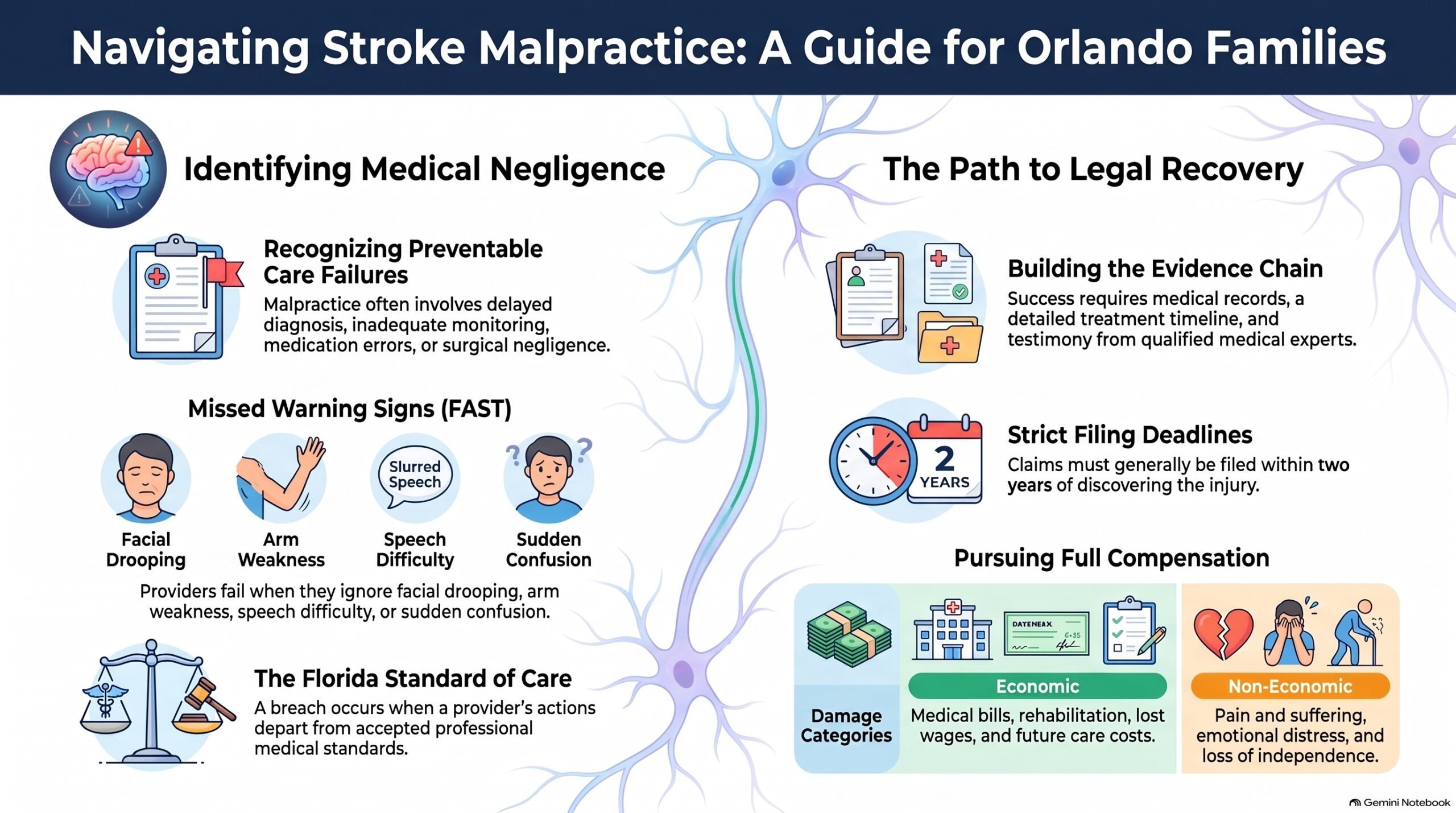
Common causes of medical malpractice strokes may include delayed diagnosis, inadequate monitoring, medication errors, and negligence during surgery. Each circumstance can prevent timely treatment or increase a patient’s risk of suffering a serious neurological injury. Evaluating these potential failures requires a careful review of medical records, clinical decisions, and the patient’s resulting harm.
Delayed Stroke Diagnosis
A delayed stroke diagnosis can occur when healthcare providers fail to recognize warning signs, obtain appropriate imaging, or respond promptly to changes in a patient’s neurological condition. Stroke warning signs may include facial weakness, arm numbness, speech difficulty, sudden confusion, vision changes, dizziness, or an intense headache. When these symptoms appear, timely evaluation can be essential because some treatments are most effective within limited windows. Diagnostic delays may result from incomplete history-taking, misattributing symptoms to less serious conditions, or failing to accurately document and interpret the symptom timeline. A delay can permit brain injury to progress and may reduce available treatment options. Families seeking accountability may consult qualified counsel to determine whether care departed from accepted medical standards and contributed to preventable harm. Documentation, imaging records, and witness accounts can help clarify what occurred.
Failure To Monitor
When stroke symptoms emerge, or a patient’s condition changes, failure to monitor neurological status can allow deterioration to go unnoticed. Appropriate monitoring may include repeated assessments of speech, strength, balance, alertness, pupil response, and essential signs, with timely documentation of meaningful changes. Problems can arise when staffing shortages, unclear protocols, inadequate handoffs, or incomplete chart reviews prevent clinicians from recognizing a worsening condition. Patient communication errors may also obscure reports of numbness, confusion, severe headache, or other warning signs, particularly when language, hearing, or cognitive barriers exist. HIPAA violations involving the improper disclosure of records can further disrupt coordinated care and accountability. Hospitals and clinicians generally have a duty to respond to documented changes, communicate concerns, and escalate evaluation when neurological findings indicate possible stroke progression. Families may seek legal guidance when preventable monitoring failures cause harm.
Medication Errors
Medication errors can contribute to stroke-related harm when an incorrect drug, dose, timing, or administration method delays treatment or worsens a patient’s condition. Errors may occur when clinicians overlook allergies, contraindications, drug interactions, or relevant medical history. An inaccurate Medication dosage can reduce a preventive drug’s effectiveness or create dangerous bleeding risks, particularly when treatment involves anticoagulants. Proper anticoagulant monitoring may require timely laboratory testing, medication reconciliation, and adjustments based on kidney function, age, or changing clinical conditions. Communication failures during admissions, transfers, or discharges can also lead to patients receiving duplicate therapies or stopping vital medications prematurely. When a preventable medication mistake contributes to a stroke or worsens resulting injuries, medical records, pharmacy documentation, and witness accounts may help clarify whether responsible professionals followed accepted safety standards.
Surgical Negligence
Surgical negligence can cause or worsen a stroke when a surgeon or surgical team fails to meet accepted standards of care before, during, or after a procedure. Potential failures include inadequate preoperative assessment, which may overlook clotting risks, vascular disease, medication interactions, or previous stroke symptoms. Surgical technique errors can damage blood vessels, restrict blood flow, or release clots into circulation. Anesthesia negligence may involve improper medication, insufficient oxygenation, or failure to manage blood pressure, each of which can increase neurological risk. Appropriate intraoperative monitoring should promptly detect changes in oxygen levels, circulation, and neurological status. After surgery, delayed recognition of weakness, speech difficulty, or altered consciousness may prevent timely treatment. Careful documentation, qualified personnel, and prompt response to complications help protect patients and support safer outcomes.
Don’t Wait. Call Our Florida Personal Injury Lawyers Now!


Legal Rights of Orlando Medical Malpractice Stroke Injury Victims
Orlando stroke injury victims may have legal rights when a healthcare provider’s negligent failure to diagnose, treat, or respond to stroke symptoms causes preventable harm. Florida law may permit an injured patient, or an authorized representative, to seek compensation when medical negligence contributes to disability, additional treatment, lost income, or diminished quality of life.
Potential claims may involve patient consent issues, hospital protocol failures, or inadequate communication, but each matter requires careful evaluation of medical records and applicable deadlines.
- A patient may request records, imaging, medication histories, and written explanations of treatment decisions.
- A qualified attorney may investigate whether care departed from accepted standards and whether that departure caused injury.
- A claim may seek damages for medical expenses, rehabilitation, lost earning capacity, and other legally recognized losses.
Families serving an injured person can preserve evidence, document changes in functioning, and avoid altering relevant records. Because Florida’s medical malpractice requirements are intricate, prompt consultation with an experienced Orlando lawyer can help preserve procedural rights.
Why Do Stroke Injuries from Medical Malpractice Happen in Orlando?
Why do Orlando medical malpractice stroke injuries happen? They often result when healthcare professionals fail to recognize, evaluate, or treat a stroke within an appropriate timeframe. Risk factors such as hypertension, diabetes, atrial fibrillation, prior stroke, and medication complications may require careful monitoring, yet warning signs can be overlooked.
Breakdowns in hospital protocols can also contribute. Delayed triage, incomplete neurological assessments, inaccurate documentation, communication failures, or failure to order suitable imaging may prevent timely diagnosis. A patient’s symptoms, including sudden weakness, facial drooping, speech difficulty, confusion, or severe dizziness, may be misinterpreted as fatigue, intoxication, or another condition.
An inadequate emergency response can further increase the risk of permanent harm. Delays in activating stroke teams, obtaining scans, consulting experts, or administering appropriate treatment may allow brain injury to progress. These events are not always malpractice, but preventable departures from accepted standards may warrant professional review. Understanding these causes helps healthcare organizations strengthen practices and better protect vulnerable patients.
What Should You Do After a Stroke Injury from Medical Malpractice in Orlando?
After a suspected medical malpractice stroke injury, the individual should seek immediate medical care to address urgent health concerns and establish a clinical record. The individual should also document symptoms, treatments, expenses, and other injury-related details. Consulting a qualified malpractice attorney can help preserve evidence and assess potential legal claims.
Seek Immediate Medical Care
Immediate medical evaluation is very important when a stroke is suspected following a medical error, because treatments may be time-sensitive and further harm can occur without prompt intervention. A person experiencing stroke symptoms, including facial drooping, arm weakness, speech difficulty, confusion, or sudden balance problems, requires an emergency response. Someone nearby should call 911 rather than arranging private transportation, since emergency personnel can begin assessment and notify the receiving hospital. The affected individual should not eat, drink, or take medication unless directed by qualified professionals. If symptoms improve, medical attention remains necessary because temporary episodes can precede a serious stroke. Timely care can protect brain function, identify complications, and support rehabilitation planning. A responsible caregiver should remain available, provide reassurance, and follow medical instructions until emergency responders assume care.
Document Your Injuries
Thorough documentation can help establish the nature and extent of a stroke injury following suspected medical malpractice. The patient or a dependable caregiver should record symptoms, treatment dates, provider instructions, and changes in physical, cognitive, or emotional functioning. Symptom documentation should identify when each problem began, how frequently it occurs, its severity, and whether it improves or worsens. Maintaining daily activity logs can show how the injury affects bathing, dressing, walking, communication, employment, and other routine responsibilities. Photographs, medication lists, rehabilitation records, discharge papers, and copies of diagnostic results may also preserve important details. Records should remain factual and organized, without speculation or altered entries. A caregiver can assist when speech, memory, vision, or weakness makes consistent documentation difficult. This information can support continuity of care and accurately communicate the patient’s needs.
Consult a Malpractice Attorney
Consulting a medical malpractice attorney can help a stroke patient or family determine whether negligent medical care may have caused or worsened the injury. An attorney can review medical records, treatment timelines, imaging results, and communications with healthcare providers to identify possible failures in diagnosis, monitoring, or timely intervention. The attorney consultation process commonly begins with an initial case review, followed by authorization to obtain records and evaluation by qualified medical experts. Common evidence gathering may include preserving prescriptions, discharge instructions, witness accounts, rehabilitation records, and documentation of financial losses. Families should avoid altering records or making detailed statements to insurers before receiving legal guidance. A qualified attorney can explain deadlines, potential claims, and practical next steps while helping protect the patient’s interests throughout the investigation and any resulting legal proceedings.
Critical Evidence in an Orlando Medical Malpractice Stroke Injury Case
An Orlando medical malpractice stroke injury case commonly includes:
- Medical records review and diagnostic test results.
- A documented treatment timeline, including delays or missed warning signs.
- Expert medical testimony addressing whether the care met accepted standards and caused the injury.
Together, these materials help establish the facts, identify potential negligence, and evaluate the strength of the claim.
Medical Records Review
When a stroke injury may have resulted from negligent medical care, a medical records review can help establish what occurred, when it occurred, and whether appropriate treatment was provided. A qualified review may examine admission notes, nursing observations, physician entries, medication administration records, and discharge documentation. Patient timeline analysis can identify changes in symptoms, delays in recognition, communication failures, or departures from documented care plans. It may also clarify which professionals participated in decision-making and whether concerns were escalated appropriately. Because records can contain inconsistent or incomplete entries, careful comparison is crucial. Second opinion procurement may provide an independent assessment of whether the documented care met accepted standards. Preserving the complete record, including electronic entries and amendments, supports reliable evaluation and helps affected individuals pursue accountability and seek meaningful assistance.
Diagnostic Test Results
Diagnostic test results can provide objective evidence in an Orlando medical malpractice stroke injury case by showing whether warning signs were identified and addressed within an appropriate timeframe. Brain imaging, vascular studies, laboratory findings, and neurological assessments may help establish what information was available to healthcare professionals. Careful interpretation of test results can reveal whether findings were accurately understood, documented, and communicated to the appropriate providers. Records may also show whether a radiology report clearly described urgent abnormalities or contained reporting errors that obscured a possible stroke. Comparing original images with written reports can clarify whether a missed finding resulted from an interpretation problem, communication failure, or another issue. These materials assist qualified reviewers in evaluating diagnostic accuracy and determining whether the available evidence supports concerns about professional negligence.
Treatment Timeline
A treatment timeline can show whether healthcare providers recognized stroke symptoms, treated symptoms, ordered appropriate interventions, and responded within medically reasonable timeframes. Records may establish when symptoms began, when emergency services were contacted, and when the patient arrived at a facility. Medication administration, neurological checks, imaging, consultant consultations, and transfers should be arranged in chronological order to identify delays or gaps in care. Documentation can also show whether changes in condition were communicated and whether discharge instructions addressed continuing risks. Later records may link the treatment course to rehabilitation needs, including therapy, recovery planning,g and disability support services. A clear timeline helps organize evidence concerning the patient’s care, functional limitations, and ongoing needs without relying on assumptions. It may also preserve details that witnesses later cannot accurately recall.
Expert Medical Testimony
Expert medical testimony can explain whether the healthcare providers’ decisions met the applicable standard of care and whether any departure contributed to the patient’s stroke-related injuries. A qualified neurologist, emergency physician, or other expert may review records, imaging, medication history, and the treatment timeline to evaluate diagnosis, monitoring, and response. The expert can address whether warning signs required additional testing, consultation, transfer, or treatment, and whether timely action might have repaired the resulting harm. Testimony must connect the alleged error to specific injuries, such as neurological impairment, loss of independence, or continuing recovery needs. A phased witness strategy may present opinions in an organized sequence, while addressing liability standards under Florida law. Clear, objective explanations help courts assess complicated medical issues and support fair accountability.
Don’t Wait. Call Our Florida Personal Injury Lawyers Now!
Long-Term Effects of Orlando Medical Malpractice Stroke Injuries
Long-term stroke injuries linked to medical malpractice may result in substantial physical disabilities that limit mobility, coordination, and independence. Cognitive impairment can also affect memory, communication, judgment, and the ability to perform daily activities. These lasting challenges often require ongoing medical care, rehabilitation, assistive services, and other expenses, which can create significant financial burdens.
Physical Disability
When a stroke is delayed, misdiagnosed, or improperly treated, the resulting physical disability may affect a person’s mobility, coordination, balance, and ability to perform basic daily activities. Survivors may require assistance with walking, transferring, bathing, dressing, eating, or using medical equipment. Some experience permanent weakness, paralysis, muscle stiffness, or impaired hand function that limits employment and independent living. Rehabilitation services planning can identify physical therapy, occupational therapy, assistive devices, transportation, and home modifications suited to documented needs. Long-term caregiver needs may include family assistance, professional home health support, skilled nursing, and supervision to reduce the risk of falls and prevent additional injuries. Careful records of treatment, functional limitations, expenses, and daily assistance can help establish the continuing impact of alleged malpractice and support efforts to secure appropriate care and accountability.
Cognitive Impairment
Cognitive impairment after a stroke may affect memory, attention, language, judgment, problem-solving, and information processing. These limitations can interfere with communication, personal safety, employment, education, and participation in family or community responsibilities. Affected individuals may struggle to follow instructions, recall conversations, manage schedules, or recognize changes in their condition. A thorough brain injury diagnosis can help identify affected cognitive functions and distinguish stroke-related deficits from prior conditions or other contributing factors. Medical professionals may use examinations, neuropsychological testing, therapy assessments, and caregiver observations to evaluate these changes. Families should document symptom progression, including new confusion, speech difficulties, mood changes, or declining independence. Such records may assist healthcare providers in coordinating appropriate support and may clarify how delayed or inadequate treatment contributed to lasting cognitive harm.
Ongoing Medical Expenses
Because stroke-related impairments may persist or worsen over time, affected individuals can face ongoing medical expenses for treatment, rehabilitation, medication, monitoring, and supportive care. These costs may include physical, occupational, and speech therapy, neurological evaluations, mobility equipment, home modifications, and assistance with daily activities. When medical negligence contributed to a stroke, documenting the injury’s continuing effects can help clarify the financial consequences. Medical bills documentation should include invoices, insurance statements, prescription records, therapy notes, and transportation receipts. Future care planning may require evaluations from physicians, experts, life-care planners, and economists to estimate anticipated services and expenses. A thorough assessment can address changing needs, lost earning capacity, and long-term supervision. Careful records and professional projections may support fair compensation while helping families maintain necessary treatment and dignity.
Proving Liability in Orlando Medical Malpractice Stroke Injury Cases
Establishing liability in an Orlando medical malpractice stroke injury case requires evidence that a health care provider failed to meet the accepted standard of care and that this failure caused or substantially contributed to the patient’s injuries. Attorneys may examine medical records, imaging, medication histories, monitoring data, and communications among providers to identify missed warning signs or delayed treatment. Causation standards require a clear connection between the alleged negligence and the stroke, resulting disability, or additional medical needs. Qualified medical experts typically explain what a reasonably careful provider would have done under comparable circumstances and whether the provider’s conduct departed from that standard. An Expert deposition can preserve testimony, clarify intricate opinions, and reveal weaknesses in the opposing side’s analysis. Witness accounts and hospital policies may further support the claim. Careful investigation allows families and their advocates to present reliable evidence, respect the patient’s dignity, and pursue accountability for preventable harm through lawful means.
Dealing With Insurance Companies After an Orlando Medical Malpractice Stroke Injury
After evidence of negligence and causation has been identified, communication with insurance companies requires careful attention. Insurers may request medical records, employment information, and a recorded account of the stroke injury. A representative should avoid speculation, minimize statements about recovery, and refrain from accepting blame before counsel reviews the matter. A disciplined recorded statement strategy can preserve accuracy while preventing incomplete answers from being taken out of context.
Insurance adjusters may present early settlement offers before the long-term effects of a stroke are understood. Such offers should be evaluated against rehabilitation needs, lost earning capacity, ongoing treatment, and potential changes in daily functioning. Policy limits disputes can also arise when multiple providers, insurers, or layers of coverage are involved. Written communications should remain factual and organized, and deadlines should be monitored carefully. A qualified Orlando medical malpractice attorney can manage contact with insurers, protect the injured person’s interests, and help secure a fair, informed resolution without adding unnecessary stress to the family.
What to Expect During an Orlando Medical Malpractice Stroke Injury Claim Process
The claim process generally begins with an initial case evaluation, followed by a careful review of medical records and other relevant evidence. Establishing medical negligence requires demonstrating that the healthcare provider breached the applicable standard of care and that the breach caused the stroke-related injuries. Depending on the evidence and negotiations, the matter may conclude through settlement or proceed to trial.
Initial Case Evaluation
How does an initial case evaluation shape an Orlando medical malpractice stroke injury claim? It provides an organized assessment of whether medical care may have fallen below accepted standards and caused harm. During this discussion, the attorney typically asks about the stroke, treatment timeline, resulting impairments, and suspected errors, while identifying potential defendants and available legal remedies. The evaluation also considers the statuteof limitations, which can affect whether a claim remains timely under Florida law. Because stroke cases often involve nuanced medical questions, counsel may determine whether expert testimony will be necessary to establish negligence and causation. The individual may also learn about anticipated litigation steps, possible challenges, and communication expectations. A careful evaluation helps the legal team serve the injured person responsiblyand determineg whether further investigation iswarrantedd before accepting representation.
Medical Records Review
During a medical records review, an Orlando medical malpractice stroke attorney examines the patient’s records to reconstruct the treatment timeline and identify potential departures from accepted medical standards. The review may include emergency department notes, imaging reports, laboratory results, medication administration records, nursing documentation, discharge instructions, and follow-up communications. The attorney compares entries across providers to clarify when symptoms appeared, how concerns were communicated, and what responses were documented. Missing pages, inconsistent timestamps, or unexplained changes may require additional requests to hospitals, physicians, and diagnostic facilities. Evidence preservation begins by securing complete copies and maintaining their original organization and metadata. This information supports a Prior case strategy by identifying relevant witnesses, narrowing the issues, and guiding consultation with qualified medical professionals, while preserving an accurate foundation for the claim.
Proving Medical Negligence
Establishing medical negligence in an Orlando medical malpractice stroke claim generally requires evidence that a healthcare provider failed to meet the accepted standard of care and that the failure caused or contributed to the patient’s injury. The review typically examines medical records, diagnostic results, treatment decisions, staffing information, and applicable standards of care. Qualified medical professionals may explain whether clinicians recognized warning signs, ordered appropriate testing, administered timely treatment, or properly communicated urgent findings. Causation evidence must connect the alleged deviation to the stroke, worsened impairment, or other measurable harm, rather than merely showing an unfavorable outcome. The claim may also require documentation of rehabilitation needs, ongoing limitations, and related losses. A careful, impartial evaluation helps clarify disputed facts and supports accountability for patients and families seeking appropriate assistance.
Settlement Or Trial
After medical negligence and resulting harm are evaluated, an Orlando medical malpractice stroke claim may resolve through settlement or proceed to trial. During settlementnegotiationsn, the parties assess liability, medical evidence, future care needs, lost income, and other losses before discussing payment. A careful damages calculation helps establish a reasonable claim value while accounting for rehabilitation, disability, and continuing support. If negotiations fail, litigation advances toward discovery, depositions, expert testimony, and trial preparation. Counsel develops a trial strategy based on the medical records, applicable standards of care, and anticipated defenses. At trial, jury selection determines which prospective jurors may fairly evaluate the evidence. The jury then considers whether negligence caused the stroke-related injuries and what compensation is appropriate. Throughout the process, respectful advocacy helps protect the injured person’s interests.
Compensation for Orlando Medical Malpractice Stroke Injury Damages
When negligent medical care causes a stroke, the injured patient may pursue compensation for the full range of losses resulting from the malpractice. Recoverable compensation may address the consequences of delayed diagnosis, improper treatment, or inadequate monitoring, depending on the evidence and applicable Florida law.
A claim commonly requires proof that a healthcare provider breached the required standard of care and that the breach caused the stroke or worsened its effects. Expert testimony can clarify medical decisions, causation, and the patient’s expected recovery. Documentation from physicians, therapists, caregivers, and family members may also help establish the injury’s lasting impact.
The jury evaluation may consider the credibility of witnesses, medical records, and competing explanations for the outcome. Florida damage caps and other statutory limitations can affect available recovery in certain circumstances. An informed claim strategy thus addresses liability, evidence preservation, responsible parties, and procedural deadlines while prioritizing the patient’s dignity and long-term welfare. Legal guidance can help families pursue accountability and support for those affected.
Economic vs Non-Economic Damages in Orlando Medical Malpractice Stroke Cases
Economic damages may include medical expenses, rehabilitation costs, lost income, and future care required after a stroke. Non-economic damages address losses such as pain, emotional distress, disability, and reduced quality of life. Calculating stroke-related losses generally requires examining documented expenses, projected needs, employment impacts, and the injury’s lasting effects.
Economic Damages Explained
A stroke-related medical malpractice claim in Orlando may involve two distinct categories of damages: economic losses and non-economic harm. Economic damages compensate for measurable financial losses resulting from negligent care. They may include emergency treatment, hospitalization, rehabilitation, prescription medication, medical equipment, home modifications, and necessary future care. Lost wages and reduced earning capacity may also be recoverable when the stroke limits employment or requires a career change. Documentation such as bills, employment records, tax information, and care estimates can help establish these losses. Expert witnesses may explain the patient’s medical needs, prognosis, and likely expenses. Punitive damages differ in that they punish exceptionally reckless conduct rather than reimburse ordinary financial losses; they are uncommon and require specific proof under Florida law. Careful evaluation helps preserve resources for long-term recovery and support.
Non-Economic Damages Assessed
Non-economic damages address the personal consequences of a stroke that cannot be measured solely through bills or financial records. In Orlando medical malpractice cases, assessment may consider pain, emotional distress, loss of enjoyment, disfigurement, disability, and diminished independence. The evaluation focuses on how negligent treatment affected daily life, relationships, communication, mobility, and the ability to participate in meaningful activities.
A careful damages calculation requires evidence showing the injury’s duration, severity, and continuing impact. Medical observations, rehabilitation records, testimony from relatives, and statements from caregivers may help establish these effects without converting personal suffering into an arbitrary figure. Evidence preservation is also important, including diaries, photographs, treatment notes, and accounts of changed routines. Florida law may impose limits or specific standards affecting recovery, so legal guidance helps present non-economic harm accurately while supporting a fair result.
Calculating Stroke-Related Losses
After non-economic harm has been documented, stroke-related losses are generally organized into two categories: economic and non-economic damages. Economic damages may include emergency treatment, hospitalization, medication, therapy, adaptive equipment, lost wages, reduced earning capacity, and future medical needs.Long-termm rehabilitation planning helps estimate continuing treatment, transportation, and assistance requirements. Caregiver expense tracking can document professional services and reasonable family-provided support. Non-economic damages address harms without fixed invoices, including pain, emotional distress, loss of independence, impaired relationships, and diminished quality of life. A careful evaluation may compare pre-stroke activities with present limitations and anticipated progression. Insurance documentation, evidence preservation, medical records, employment information, receipts, and expert opinions can support a reliable calculation. Counsel may coordinate these materials to present losses accurately and pursue compensation that supports ongoing recovery and caregiving.
When an Orlando Medical Malpractice Stroke Injury Case Goes to Trial vs. Settlement
Settlement negotiations and trial proceedings represent two distinct paths in an Orlando medical malpractice stroke injury case. Settlement may resolve the dispute privately, reduce litigation time, and provide compensation without requiring the injured person or family to testify. Negotiations generally involve reviewing medical records, expert opinions, rehabilitation needs, and documented financial losses. Counsel may assess whether an offer fairly reflects continuing care and life changes.
A trial may be necessary when responsibility, the severity of injury, or damages remain in dispute. The process may include depositions, expert testimony, courtroom exhibits, and questioning of medical professionals. Evidence preservation is vital because records, treatment timelines, communications, and witness accounts can influence credibility and case preparation. A jury trial strategy typically organizes complex medical information into a clear account of what occurred, why it mattered, and how the stroke affected daily living.
The decision to settle or proceed depends on the strength of the evidence, risk tolerance, projected costs, and the family’s service-centered priorities. Experienced counsel helps evaluate each option objectively while protecting the client’s interests.
Don’t Wait. Call Our Florida Personal Injury Lawyers Now!
Florida Laws That May Affect Your Orlando Medical Malpractice Stroke Case
Florida lawgovernsn an Orlando medical malpractice stroke case, including the filing deadline, required pre-suit investigation, proof of medical negligence, and available damages. These requirements help promote accountability while protecting patients, families, and healthcare professionals from unsupported claims.
Florida law governs Orlando stroke malpractice claims, from pre-suit requirements and filing deadlines to proving negligence and recovering damages.
- Before filing, a claimant generally must obtain a qualified medical expert’s opinion and provide formal notice to each prospective defendant. This process permits investigation and may encourage resolution.
- Medical negligence must be established through evidence that the provider breached the applicable standard of care and that the breach caused the stroke injury or resulting harm. Florida’s expert witness thresholds can affect which testimony is admissible and how negligence is proven.
- Comparative negligence rules may reduce a recovery if the injured person’s conduct contributed to the harm. Recoverable damages may include medical expenses, rehabilitation, lost income, diminished earning capacity, and non-economic losses, subject to applicable Florida law.
Because procedural requirements can determine whether a claim proceeds, careful legal review supports informed decisions and service to affected families.
The Statute of Limitations for Orlando Medical Malpractice Stroke Injury Cases
Why does timing matter in an Orlando medical malpractice stroke injury case? Florida law imposes deadlines for filing claims, and missing them can permanently prevent recovery, regardless of the seriousness of the harm. Generally, a medical malpractice action must be filed within two years after the patient discovers, or should have discovered, the injury and its possible negligence. An outside limit of four years typically applies from the date of the alleged malpractice, subject to limited exceptions, including fraud, concealment, or misrepresentation. Cases involving minors or delayed discovery may follow different rules.
Prompt attention also protects evidence gathering. Medical records, treatment protocols, witness recollections, and electronic communications may become increasingly difficult to obtain over time. Expert testimony is commonly required to evaluate whether providers breached the applicable standard of care and whether that breach caused the stroke injury. Because deadlines depend on specific facts, preserving relevant information and determining the controlling period requires careful, timely assessment for affected patients and families.
How an Orlando Medical Malpractice Stroke Lawyer Can Help You
An Orlando medical malpractice stroke lawyer can evaluate whether a healthcare provider’s conduct departed from the applicable standard of care and contributed to the patient’s injury.
The lawyer can organize medical records, consult qualified experts, and explain how treatment decisions may have affected the stroke’s severity and resulting disabilities.
- The lawyer can identify responsible providers, facilities, and insurers while developing a clear theory of negligence.
- The lawyer can calculate damages, including medical expenses, rehabilitation, lost income, future care, and diminished quality of life.
- The lawyer can assess Wrongful death eligibility when a stroke causes a patient’s death and explain available relief to surviving relatives.
Counsel can also address Florida claim deadlines, required pre-suit procedures, and evidence preservation. By managing communications and presenting the claim in an orderly manner, the lawyer allows families and caregivers to focus on recovery and practical support. The representation may include settlement negotiations or litigation when accountability requires formal court action. A careful legal review helps protect the patient’s interests and promotes responsible healthcare practices.
When to Contact an Orlando Medical Malpractice Stroke Lawyer
Because evidence and legal deadlines can affect the viability of a stroke-related malpractice claim, families should contact an Orlando medical malpractice stroke lawyer as soon as they suspect that negligent care contributed to the injury. Early consultation allows counsel to review medical records, preserve relevant communications, and identify witnesses while the information is still available.
A lawyer may examine the timeline of stroke symptoms, including reported warning signs, testing, consultations, treatment decisions, and the timing of neurological damage. This review can help determine whether healthcare providers responded appropriately under the circumstances. Families should seek guidance even when the medical outcome is uncertain, because Florida filing deadlines may limit the time available to pursue a claim.
Prompt legal assistance also supports a legal damages assessment addressing medical expenses, rehabilitation, lost income, ongoing care, and other measurable consequences. Individuals serving injured patients and families can benefit from timely information, careful documentation, and a clear understanding of available options before making significant decisions.
Why You Need an Experienced Orlando Medical Malpractice Stroke Lawyer
Effective representation often depends on counsel who understands both the medical and legal issues involved in stroke-related malpractice claims. An experienced Orlando attorney can examine treatment records, timelines, diagnostic decisions, and communication failures to determine whether negligent conduct contributed to a preventable injury. This focused review helps protect patients and families seeking accountability while preserving evidence that may otherwise become difficult to obtain.
Knowledge of Insurance company tactics also provides an important advantage. Insurers may minimize symptoms, dispute causation, or characterize complications as unavoidable. Experienced counsel can respond with organized medical evidence, qualified expert analysis, and a clear presentation of damages.
Understanding the basics of case valuation is equally important. A proper evaluation may consider medical expenses, rehabilitation, lost income, future care needs, disability, and the impact of neurological impairment on daily life. Skilled representation supports fair treatment and informed decisions, allowing families to pursue remedies that reflect the full consequences of the injury without compromising their dignity or long-term interests.
How to Choose the Right Orlando Medical Malpractice Stroke Lawyer for Your Case
Choosing the right Orlando medical malpractice stroke lawyer requires careful consideration of the attorney’s experience, resources, and approach to complicated medical evidence. A qualified lawyer should understand stroke diagnosis, treatment standards, rehabilitation needs, and how delayed care can cause lasting harm. Clients should ask about prior medical negligence cases, trial experience, access to independent medical experts, and familiarity with Florida’s procedural requirements.
An effective Attorney case strategy should identify potential departures from accepted care, link those failures to the stroke injury, and clearly present damages. Early evidence preservation is also crucial. Medical records, imaging, medication histories, witness statements, and electronic communications can become important when reconstructing events and evaluating liability. Prospective clients should discuss Fee structure options, including whether representation will be on a contingency basis, and clarify litigation expenses, communication practices, and decision-making authority. A lawyer who listens carefully, explains realistic outcomes, and treats the family’s concerns with respect can help protect the injured person’s interests while pursuing accountability and appropriate compensation.
About The Law Offices of Anidjar & Levine
The Law Offices of Anidjar & Levine represents individuals and families pursuing compensation for injuries caused by suspected medical negligence, including strokes allegedly linked to delayed diagnosis or inadequate treatment.
The firm evaluates medical records, treatment timelines, and communications to determine whether healthcare providers met applicable standards of care.
Its attorneys may explain the Types of damages that may be available, including medical expenses, rehabilitation costs, lost income, reduced earning capacity, and non-economic losses associated with disability or diminished quality of life.
The firm also assists with insurance disputes, including disagreements concerning coverage, causation, or the value of a claim.
Early evidence preservation can help protect records, imaging, witness accounts, and other information relevant to the investigation.
When appropriate, the legal team consults qualified expert witnesses to assess diagnosis, treatment decisions, and resulting harm.
Through case evaluation and litigation support, the firm seeks to present clients’ circumstances accurately while pursuing accountability and compensation under applicable Florida law.

Frequently Asked Questions
Can I File a Claim if the Stroke Occurred During a Telemedicine Appointment?
A claim may be possible if a stroke occurred during a telemedicine appointment, but liability depends on whether the provider recognized warning signs, gave appropriate instructions, arranged timely emergency evaluation, and met applicable Telemedicine standards. A qualified attorney can conduct a medical record review, examine communications and timestamps, and consult relevant experts. The patient generally must show a breach of professional duty caused preventable harm, subject to filing deadlines and jurisdiction-specific requirements.
Does Malpractice Insurance Cover Experimental Stroke Treatments or Procedures?
Malpractice insurance may cover claims involving experimental stroke treatments, but coverage depends on the policy, the provider’s conduct, and applicable insurance exclusions. An insurer may defend or indemnify a clinician if the treatment was authorized, properly disclosed, and consistent with the accepted standard of care. Coverage may be denied when informed consent was inadequate, the procedure violated regulations, or the provider knowingly departed from established medical practices without reasonable justification.
Can Family Members Pursue a Claim for Loss of Companionship?
Family members may pursue a claim for loss of companionship, but legal eligibility depends on state law, the claimant’s relationship, and whether the patient suffered death or a severe, legally recognized injury. Loss of consortium typically refers tos a spouse’s diminished companionship, affection, and support. Bereavement damages may apply after death. Evidence requirements often include medical records, expert opinions, relationship testimony, and proof connecting the provider’s negligence to the claimed losses.
What Happens if Multiple Healthcare Providers Contributed to My Stroke?
When multiple healthcare providers may have contributed to a stroke, investigators examine each provider’s conduct, timing, and role in causing or worsening the injury. Shared causation may support claims against multiple parties, with liability allocatedbased ono proven responsibility. Comparative negligence can reduce recovery if the patient’s conduct also contributed. Medical records, expert opinions, and coordinated legal review are critical to establish preventable errors and pursue fair compensation while supporting the affected family.
Can a Hospital Be Liable for Negligence by an Independent Contractor?
A hospital may be liable for negligence by an independent contractor when it represented that the provider was part of the hospital’s staff, failed to use reasonable care in selecting or supervising that contractor, or exercised sufficient control over the treatment. Generally, vicarious liability does not automatically apply because the provider is an independent contractor. Liability depends on state law, the hospital’s conduct, and the specific facts surrounding the patient’s care.
—————————
Stroke-related medical malpractice claims require careful review of medical records, treatment decisions, and the resulting harm.
Victims and their families may face significant medical expenses, rehabilitation needs, lost income, and permanent disabilities.
An experienced Orlando medical malpractice stroke lawyer can assess whether negligence contributed to a delayed diagnosis, improper treatment, or preventable injury and pursue appropriate compensation.
The Law Offices of Anidjar and Levine provides informed legal guidance while protecting each client’s rights throughout the claims process.
For additional assistance, visit our Orlando Personal Injury Lawyer resource.

