Law Offices of Anidjar and Levine evaluates whether a healthcare provider departed from the accepted standard of care and caused injury. A Florida medical malpractice specialty and condition lawyer may review diagnosis, treatment, surgery, medication, monitoring, or obstetric care. Medical records, expert opinions, treatment histories, and financial documentation can help establish negligence, causation, and damages. Potential compensation may include medical expenses, lost income, rehabilitation, pain, and diminished quality of life. For related legal guidance, visit our Florida Personal Injury Lawyer resource for information about claim requirements, evidence, deadlines, and legal options.
Main Takeaways
- A Florida medical malpractice lawyer evaluates whether the care departed from the accepted standard of care for the provider’s specialty and the patient’s condition.
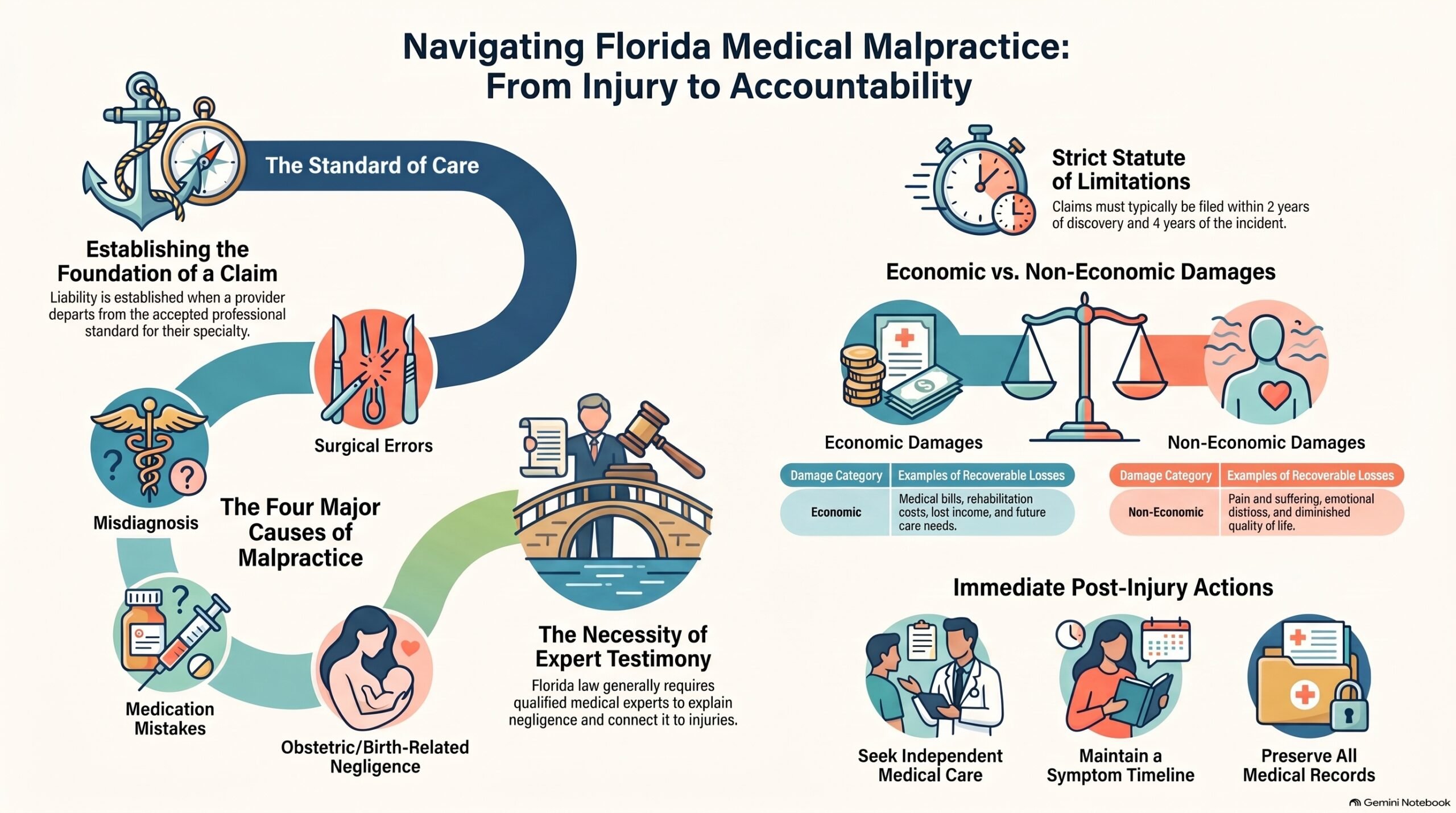
- Qualified medical experts typically explain the applicable standard, identify negligence, and connect it to the patient’s injury or worsening condition.
- Potential claims may involve misdiagnosis, delayed diagnosis, surgical errors, medication mistakes, infections, or birth-related negligence.
- Compensation may include medical expenses, rehabilitation, lost income, reduced earning capacity, pain, and diminished quality of life.
- Prompt medical care, organized records, expert review, and attention to Florida deadlines can help protect a potential malpractice claim.


How We Can Help With Your Florida Medical Malpractice Specialty & Condition Malpractice Injury Claim
When medical negligence causes harm, a Florida medical malpractice lawyer can assess whether a healthcare provider’s conduct departed from the accepted standard of care and contributed to the patient’s injury. The legal team may organize medical records, obtain relevant billing information, and identify deadlines affecting the claim. It can also communicate with insurers and healthcare representatives, helping preserve the patient’s ability to seek an informed resolution.
Expert Evidence may be necessary to explain the applicable professional standard, identify a departure, and connect that departure to the reported harm. Qualified authorities can review treatment decisions and present opinions in a clear, supportable manner. Damages Proof may include documentation of medical expenses, lost income, rehabilitation needs, ongoing care, and other measurable consequences. Counsel can help gather these materials while treating the patient and family with professionalism and respect. By coordinating investigation, documentation, and legal strategy, the firm supports a careful process focused on accountability and meaningful assistance for those affected by negligent care.
OUR CONSULTATIONSARE FREE
START YOUR FREE CASE REVIEW

Understanding Florida Medical Malpractice Specialty & Condition Malpractice Injury Cases
Understanding a Florida medical malpractice specialty or condition injury case begins with identifying the healthcare provider’s role, the medical condition involved, and the circumstances surrounding the alleged negligent care. Each case requires careful analysis of whether the provider acted consistently with professional obligations applicable to that specialty.
Standard-of-care proof generally comes from qualified medical professionals who explain what level of care is reasonably required under comparable circumstances. Causation evidence must connect the alleged departure from that standard to a specific injury, worsening condition, or measurable loss. Because specialized issues may be difficult to evaluate, expert review panels can help assess medical records, treatment decisions, and disputed outcomes objectively.
Injury documentation is also important. Timely records, diagnostic results, treatment histories, and testimony may clarify the condition’s progression and the effects on daily life. A careful review helps affected patients and their families understand the available options and supports fair, informed decisions about accountability and compensation under Florida law.
Common Causes of Florida Medical Malpractice Specialty & Condition Malpractice
Common causes of medical malpractice in Florida include misdiagnosis or delayed diagnosis, which may delay necessary treatment and worsen a patient’s condition. Surgical errors, medication and dosage mistakes, and preventable complications can also result from inadequate preparation, communication, or monitoring. Birth injuries and obstetric negligence represent additional concerns when healthcare providers fail to meet established standards during pregnancy, labor, or delivery.
Misdiagnosis And Delayed Diagnosis
Misdiagnosis and delayed diagnosis can constitute medical malpractice in Florida when a healthcare provider fails to meet the accepted standard of care, and that failure causes patient harm. Symptom misinterpretation may lead a provider to overlook a serious condition, select an inappropriate explanation, or dismiss warning signs that warrant additional evaluation. Diagnostic delays can allow an illness to progress, reducing available treatment options and worsening the patient’s prognosis. Treatment postponement may follow when testing is not ordered, results are not reviewed, or findings are not communicated promptly. Referral failures can also occur when a patient is not referred to an appropriate generalist despite symptoms or test results that require specialized assessment. Establishing liability generally requires evidence of the applicable standard, its breach, causation, and measurable harm. A Florida medical malpractice lawyer can help evaluate records and deadlines.
Surgical Errors And Complications
Surgical errors and complications may constitute medical malpractice in Florida when a healthcare provider’s conduct falls below the accepted standard of care and causes injury. Examples include operating on the wrong site, leaving an object in the body, damaging nearby organs, or failing to monitor a patient appropriately during and after surgery. A postoperative infection may indicate negligence when preventable contamination, inadequate sterilization, or delayed treatment contributed to harm, although not every infection establishes liability. Proper preparation also requires a meaningful consent procedure, including disclosure of significant risks, alternatives, and expected outcomes. Patients who experience unexpected injuries may benefit from preserving medical records, operative reports, photographs, and witness information. A qualified attorney can evaluate whether the provider breached professional duties and determine which damages may be recoverable under Florida law.
Medication And Dosage Errors
Medication and dosage errors may constitute medical malpractice in Florida when a healthcare professional’s failure to prescribe, dispense, administer, or monitor medication appropriately causes patient harm. Common problems include prescribing contraindicated drugs, overlooking allergies, misreading records, and providing incomplete instructions. Medication reconciliation pitfalls can occur when clinicians fail to compare a patient’s current medications with new prescriptions, leading to duplication, harmful interactions, or unintended omissions. Incorrect dosage calculations may result from inaccurate assessments of weight, age, kidney function, concentration, or infusion rate. Pharmacy labeling mistakes, inadequate communication, and insufficient monitoring can also contribute to injury. Potential harm may include overdose, underdosing, organ damage, severe reactions, or delayed treatment. A malpractice evaluation generally examines the applicable standard of care, documentation, causation, and the extent of resulting damages, while preserving relevant records and expert review.
Birth Injury And Obstetric Negligence
Birth injury and obstetric negligence claims may arise when a healthcare provider’s failure to meet the accepted standard of care causes harm to the mother or child during pregnancy, labor, delivery, or the immediate postnatal period. Potential concerns include inadequate prenatal monitoring, failure to recognize preeclampsia, delayed response to fetal distress, improper use of delivery instruments, and errors during cesarean procedures. Providers may also face scrutiny when they fail to communicate material risks, obtain informed consent, or follow Hospital consent policies. A careful review may examine medical records, fetal monitoring strips, staffing decisions, medication administration, and post-delivery care. These cases often require qualified medical experts to determine whether conduct departed from accepted practice and whether that departure caused injury. Timely evaluation can help affected families understand available remedies and promote accountability within maternal healthcare.
Don’t Wait. Call Our Florida Personal Injury Lawyers Now!


Legal Rights of Florida Medical Malpractice Specialty & Condition Malpractice Injury Victims
When a healthcare provider’s negligence causes harm, Florida medical malpractice victims may have legal rights to pursue compensation for their injuries and related losses. A claim may address medical expenses, rehabilitation, lost income, reduced earning capacity, pain, and diminished quality of life. Surviving family members may have additional rights when negligence results in death.
Potential claimants should understand that Florida law imposes strict deadlines and procedural requirements. The timing of patient compensation can depend on medical investigations, required notices, settlement discussions, and litigation. Legal evidence preservation is equally important because records, prescriptions, diagnostic images, billing statements, and witness accounts may establish what occurred and how the injury developed.
Key protections may include:
- The right to obtain relevant medical records and consult qualified experts.
- The right to seek compensation through negotiation, mediation, or court proceedings.
- The right to receive informed guidance concerning deadlines, risks, and potential recovery.
A medical malpractice attorney can evaluate available evidence, identify responsible parties, and pursue a fair resolution while treating the injured person with dignity.
Why Do Florida Medical Malpractice Specialty & Condition Malpractice Injuries Happen?
In Florida, medical malpractice injuries often occur when a healthcare provider’s conduct falls below the accepted standard of care for a particular medical field or patient condition. Common causes include misdiagnosis, delayed treatment, surgical errors, medication mistakes, and inadequate monitoring of known risks. Intricate conditions may require coordinated services, making Continuity of care vital. When providers fail to communicate test results, treatment changes, or warning signs, preventable harm can develop.
Specialty-based injuries may also arise from insufficient training, failure to follow established protocols, or reliance on incomplete patient information. Clinical documentation can reveal whether decisions were supported by accurate histories, test findings, and timely assessments. Establishing responsibility requires careful analysis of the applicable professional standard, the provider’s conduct, and the resulting injury. Attorneys and medical professionals may assist with expert witness selection to evaluate focused issues and develop causation proof. These factors help distinguish an unavoidable complication from harm caused by negligent care, while promoting accountability and improved patient service.
What Should You Do After a Florida Medical Malpractice Specialty & Condition Malpractice Injury?
After a suspected specialty or condition-related malpractice injury, the patient should seek immediate medical care to address ongoing harm and establish an appropriate treatment plan. They should document injuries, symptoms, medical expenses, and related communications, and preserve relevant records. Consulting a qualified Florida medical malpractice lawyer can help assess the claim and explain potential legal options.
Seek Immediate Medical Care
Prompt medical evaluation should be obtained as soon as a suspected medical malpractice injury occurs, particularly if symptoms are severe, worsening, or potentially life-threatening. Immediate treatment can prevent worsening, identify complications, and provide appropriate stabilization. The individual should contact emergency services for urgent symptoms or promptly visit a qualified physician, urgent care center, or hospital when emergency intervention is not required. The treating provider should be informed of relevant procedures, medications, allergies, and changes in condition to ensure accurate care decisions. If the original provider may have contributed to the injury, an independent medical evaluation may offer an objective assessment. The patient should follow reasonable treatment instructions and avoid delaying care while considering potential legal claims. Legal counsel can help obtain records immediately and preserve relevant information.
Document Your Injuries
How can an injured patient preserve an accurate account of a suspected medical malpractice injury? Careful documentation can clarify what occurred and help medical providers understand continuing needs. The patient should maintain a dated Symptom timeline describing pain, changes in function, visible injuries, medications, and reactions after treatment. Entries should distinguish personal observations from information received from clinicians.
Photographs can record swelling, bruising, wounds, or other visible changes when taken consistently and stored with dates. Copies of discharge instructions, prescriptions, test results, appointment summaries, and billing records should be organized in a secure file. The patient should also record missed work, caregiving difficulties, transportation expenses, and other measurable effects.
Individuals who observed relevant events may provide witness statements while memories remain fresh. Records should remain factual, complete, and unaltered.
Consult A Malpractice Lawyer
A documented account of the injury can help a Florida medical malpractice lawyer evaluate whether a provider’s conduct may have caused harm. An Urgent consultation may be appropriate when symptoms worsen, treatment is delayed, or records could be altered or lost. During an initial meeting, the patient should present initial case facts, including dates, diagnoses, procedures, communications, expenses, and subsequent medical care. The lawyer can explain potential deadlines, identify responsible parties, and assess whether the circumstances support a legally actionable claim. Evidence gathering may include medical records, expert opinions, billing documents, photographs, witness statements, and relevant correspondence. A qualified attorney can then develop a legal strategy suited to the patient’s condition and objectives. Prompt advice also helps preserve rights while allowing the patient to focus on necessary treatment and recovery.
Don’t Wait. Call Our Florida Personal Injury Lawyers Now!
Critical Evidence in a Florida Medical Malpractice Specialty & Condition Malpractice Injury Case
Essential evidence in a Florida medical malpractice specialty and condition injury case may establish the applicable standard of care, any breach, and the resulting harm. Medical records, expert testimony, treatment documentation, and injury evidence should be collected and reviewed for consistency, completeness, and relevance.
Central evidence typically includes:
- Medical records and diagnostic findings
- Qualified expert opinions regarding negligence
- Treatment records and documentation of resulting injuries
Medical Records
In a Florida medical malpractice specialty and condition injury case, medical records provide key evidence of the patient’s condition, treatment, and the healthcare provider’s decisions. These records may include histories, examination notes, diagnostic results, medication orders, consent forms, discharge instructions, and documented follow-up care. A careful review can reveal changes in symptoms, missed warning signs, delayed referrals, or departures from documented treatment plans. Complete records also help establish timing, causation, and the extent of resulting harm. Insurance communication may contain statements about the incident, claimed injuries, or proposed compensation, but it should be evaluated alongside the clinical record. Preserving every page and electronic entry can help prevent confusion and protect against a wrongful settlement before the full impact of the injury’s recovery is understood. Properly organized documentation supports fair evaluation and accountability.
Expert Testimony
Expert testimony helps explain whether the medical care met Florida’s applicable standard of care and whether a departure from that standard caused the alleged injury. Qualified physicians or other appropriate experts may evaluate the circumstances and present opinions grounded in accepted medical practice. Expert qualifications matter because courts assess education, training, experience, licensure, and familiarity with the relevant specialty or condition. The expert must connect the alleged error to the claimed harm rather than offer speculation. Testimony may clarify whether the conduct reflected reasonable medical judgment or fell below professional standards. Counsel typically develops a trial preparation strategy that addresses opposing opinions, anticipated cross-examination, and the presentation of intricate issues in understandable terms. Reliable expert analysis can help fact finders evaluate competing accounts fairly while supporting a claimant’s pursuit of accountability and service.
Treatment Documentation
Treatment documentation provides a contemporaneous record of the care delivered, the patient’s condition, clinical decisions, and responses to treatment. In a Florida medical malpractice case, these records may clarify whether providers followed accepted procedures for a particular specialty or condition. Entries concerning examinations, orders, medications, monitoring, and follow-up can establish the sequence of clinical decisions without relying solely on memory. Charting compliance also reflects whether required assessments and interventions were recorded accurately and promptly. Provider communication, including consultations and escalated concerns, may show how important information moved among members of the care team. Documentation of informed consent can indicate whether material risks, alternatives, and expected benefits were explained before treatment. Accurate records further support continuity of care when patients transition between providers, facilities, or services, helping legal professionals evaluate the standard of care.
Injury Evidence
Evidence of injury links an alleged medical error to the physical, emotional, or financial harm the patient claims. In a Florida medical malpractice case, relevant proof may include diagnostic images, laboratory results, surgical records, medication histories, and testimony from treating physicians. These materials can establish when symptoms appeared, how the condition progressed, and whether additional treatment became necessary. Medical bills, employment records, and rehabilitation documentation may help demonstrate financial consequences, while counseling records can support claims involving psychological harm. Demonstrative timelines organize events, linking appointments, treatment decisions, complications, and lasting impairment in a clear presentation. Damages timelines separately track expenses, lost income, continuing care, and other losses over time. Thorough evidence of injury assists the court in evaluating causation and determining fair compensation for the affected patient.
Long-Term Effects of Florida Medical Malpractice Specialty & Condition Malpractice Injuries
Florida medical malpractice injuries may produce chronic health complications that continue to affect a person’s function, independence, and quality of life. The emotional and psychological impact can also persist, contributing to anxiety, depression, trauma, or difficulty adjusting to permanent limitations. Ongoing medical expenses, including treatment, rehabilitation, medication, and dedicated care, may create substantial long-term financial burdens.
Chronic Health Complications
When medical malpractice causes lasting damage, the resulting chronic health complications may continue long after the initial injury or procedure. Patients may experience persistent pain, limited mobility, organ dysfunction, recurring infections, or reduced ability to perform crucial daily activities. These conditions can require continuing treatment, expert consultations, prescription medications, rehabilitation, assistive devices, or additional corrective procedures. A qualified attorney may help document how negligent care contributed to the ongoing impairment and identify damages associated with medical expenses, lost income, and necessary support services. Thorough records are important for chronic symptom management because they show changes in diagnosis, treatment, and functional capacity over time. They may also assist with future healthcare planning by establishing anticipated costs and care requirements. Careful legal guidance can help affected individuals pursue accountability and protect access to needed services.
Emotional and Psychological Impact
Long-term medical malpractice injuries may produce significant emotional and psychological effects in addition to physical impairment. Individuals may experience anxiety, depression, grief, diminished confidence, or persistent fear concerning future treatment. Some develop PTSD after traumatic procedures, unexpected complications, or prolonged periods of feeling unheard and unsafe. These effects can interfere with relationships, employment, sleep, and participation in daily activities. Family members may also experience distress as they adapt to changes in communication, independence, or responsibilities. Mental health professionals can evaluate symptoms and develop appropriate treatment plans, including trauma-informed therapy, medication management, support groups, or long-term counseling. Compassionate assistance may help affected individuals recover stability and establish realistic coping strategies. Accurate documentation of psychological symptoms, diagnoses, treatment, and functional limitations may clarify the injury’s continuing impact.
Ongoing Medical Expenses
Ongoing medical expenses may arise when a malpractice injury requires continuing treatment, prescription medication, rehabilitation, medical equipment, or periodic expert evaluations. These costs can persist long after an initial settlement or insurance payment, particularly when complications affect mobility, cognition, or independent living. A careful assessment should address projected care, inflation, treatment frequency, transportation, and potential changes in medical needs. Billing coverage strategies may include reviewing health insurance benefits, preserving itemized records, seeking public assistance, and negotiating payment arrangements with providers. When an insurer disputes necessary treatment, insurer denial responses should rely on medical documentation, physician opinions, policy language, and timely appeals. A Florida medical malpractice attorney may coordinate with healthcare professionals and financial experts to establish reasonable future damages. Accurate planning helps protect access to vital care while supporting fair compensation.
Proving Liability in Florida Medical Malpractice Specialty & Condition Malpractice Injury Cases
Proving liability in a Florida medical malpractice case requires evidence that a healthcare professional breached the applicable standard of care and that the breach caused the patient’s injury. In specialty and condition cases, the relevant standard may depend on accepted practices for diagnosis, treatment, monitoring, or referral within that field. A qualified medical expert generally explains what a reasonably careful professional would have done under comparable circumstances and identifies the conduct that fell below that standard.
A Causation evidence strategy connects the alleged error to the specific harm, using medical records, treatment timelines, diagnostic findings, and expert opinions. The evidence must distinguish malpractice from the underlying condition, expected complications, or unrelated causes. Attorneys may also conduct a Comparative negligence analysis when evidence suggests that the patient’s actions contributed to the injury, although such allegations do not eliminate the provider’s duty of care. Thorough documentation and credible testimony help clarify disputed facts, protect patient interests, and support an accurate determination of responsibility under Florida law.
Dealing With Insurance Companies After a Florida Medical Malpractice Specialty & Condition Malpractice Injury
Once liability evidence identifies a potential medical error and resulting injury, communication with the provider’s insurance company requires careful handling. An insurer may request recorded statements, medical authorizations, employment information, or explanations of the patient’s condition. Before responding, the injured person should consult qualified counsel to protect legal rights and preserve accurate information.
Claims documentation should include medical records, billing statements, diagnostic reports, treatment notes, correspondence, and a dated account of symptoms and limitations. Organized materials can help establish the extent of the injury without overstating or minimizing its effects. Every communication should remain factual, consistent, and limited to the requested subject.
Insurance tactics may include delayed responses, broad authorization forms, early settlement offers, or questions designed to shift responsibility. A patient should avoid signing releases or accepting payment before understanding the long-term consequences. Counsel can manage communications, identify improper requests, and seek fair consideration while respecting the patient’s need for continued treatment and recovery.
What to Expect During a Florida Medical Malpractice Specialty & Condition Malpractice Injury Claim Process
The Florida medical malpractice claim process typically begins with an initial case evaluation and a careful review of the relevant medical records. Attorneys may then consult qualified medical experts to assess whether negligence occurred and establish how it caused the injury. Depending on the evidence and negotiations, the claim may conclude through settlement or proceed to trial.
Initial Case Evaluation
How does a Florida medical malpractice lawyer evaluate a potential claim? The initial case evaluation establishes whether the reported injury may support a legally actionable malpractice case. During client intake, the lawyer typically asks about the medical provider, the treatment received, the suspected error, the resulting harm, and the individual’s current needs. The client may also describe communications with providers, changes in daily functioning, and efforts made to address the injury. These details help counsel identify important issues without making premature conclusions. A preliminary case timeline organizes significant events, including appointments, procedures, symptoms, diagnoses, and related expenses. The lawyer may explain potential legal standards, filing deadlines, costs, and the roles of clients and counsel. If the circumstances appear suitable for further review, the lawyer explains next steps and expected communication procedures.
Medical Records Review
After the initial evaluation, a Florida medical malpractice lawyer generally conducts a structured review of the available medical records. This examination may include office notes, diagnostic images, laboratory results, medication histories, discharge instructions, and consent forms. The lawyer organizes events chronologically to identify symptoms, decisions, communications, and changes in condition. Particular attention is given to whether treatment met the applicable standard of care and whether documentation supports the patient’s account. Records may also reveal conflicting entries, omissions, or indications that additional materials are needed from hospitals, experts, pharmacies, or insurers. A careful review establishes negligence timelines, preserves relevant evidence, and clarifies potential injuries and damages. When appropriate, the lawyer may request a Peer review of internal records or policies without presenting outside expert opinions at this stage.
Expert Testimony Process
When expert testimony becomes necessary, a Florida medical malpractice lawyer typically identifies qualified experts who can evaluate whether the provider’s conduct met the applicable standard of care and whether that conduct caused the claimed injury. The experts may review medical records, imaging, laboratory results, treatment protocols, and witness statements before preparing written opinions. Counsel coordinates deposition scheduling so experts can explain their conclusions under oath and respond to questions from opposing attorneys. The injured person may also be questioned about treatment history, symptoms, and effects on daily life. Attorneys evaluate each opinion for consistency, credibility, and evidentiary support. During verdict preparation, counsel organizes testimony and medical evidence into a clear presentation designed to help decision-makers understand the alleged errors, resulting harm, and claimed damages without overstating the evidence.
Settlement Or Trial
Once expert opinions and supporting medical evidence have been evaluated, a Florida medical malpractice lawyer generally assesses whether the claim should proceed toward settlement or trial. A settlement strategy considers liability strength, documented damages, medical needs, litigation costs, and the client’s long-term interests. During lawyer negotiation, counsel may present a demand, respond to insurer offers, and seek terms that fairly address treatment expenses, lost income, and other harm. If negotiations do not produce an acceptable resolution, trial preparation becomes necessary. Counsel organizes witnesses, medical records, expert opinions, and procedural filings while preparing the claimant for testimony. At trial, courtroom evidence must establish the applicable standard of care, a breach, causation, and damages. Throughout either path, the legal team should communicate clearly, protect the claimant’s dignity, and pursue an outcome that supports recovery.
Compensation for Florida Medical Malpractice Specialty & Condition Malpractice Injury Damages
Compensation in a Florida medical malpractice claim depends on the nature of the negligent treatment, the medical condition involved, and the resulting harm. A qualified attorney evaluates how a provider’s breach of the applicable professional standard caused injury, worsened an existing condition, or delayed necessary care. The assessment may consider the claimant’s medical history, prognosis, treatment requirements, and effects on daily functioning.
An Independent damages calculation can help establish a supportable settlement demand or trial presentation. It should reflect documented consequences rather than assumptions and account for evidence from physicians, experts, and other appropriate professionals. Clear records, consistent testimony, and timely expert review can strengthen the claim’s valuation.
When negligence results in death, eligible survivors may pursue Wrongful death compensation under Florida law. Recoverable damages depend on statutory requirements and the family’s circumstances. Counsel may also explain filing deadlines, responsible parties, and available remedies, helping affected individuals seek accountability while protecting their legal interests throughout negotiations or litigation.
Economic vs Non-Economic Damages in Florida Medical Malpractice Specialty & Condition Malpractice Cases
Economic damages may include medical expenses, rehabilitation costs, lost income, and future care needs arising from specialty-related malpractice. Non-economic damages address losses such as pain, emotional distress, disability, and diminished quality of life, subject to applicable Florida limitations. Proving these losses generally requires detailed financial records, medical evidence, expert testimony, and documentation connecting the condition or specialty error to the claimed harm.
Economic Damage Categories
In Florida medical malpractice cases, damages are generally divided into economic and noneconomic categories, and that distinction applies whether the alleged negligence involves a surgical specialty, a chronic condition, or another area of medical care. Economic damages compensate for measurable financial losses caused by the claimed injury. They may include emergency treatment, hospitalization, medications, rehabilitation, assistive equipment, follow-up care, and anticipated medical needs. Medical bills documentation, such as invoices, insurance statements, prescription records, and provider estimates, can help establish these amounts. Economic damages may also include lost wages and losses in earning capacity when an individual cannot work, must reduce hours, or faces diminished future employment prospects. A careful evaluation may consider tax records, employment history, vocational evidence, and medical opinions concerning work restrictions. Accurate organization supports a fair assessment and helps protect needed resources for recovery.
Non-Economic Damage Limits
Florida medical malpractice claims may also involve noneconomic damages, which address harm that cannot be measured in monetary terms or through bills or wage records. These damages can include pain, emotional distress, inconvenience, loss of enjoyment, disfigurement, and diminished quality of life. A damages overview should distinguish these losses from economic damages, such as treatment costs, lost income, and future medical expenses. Florida’s legal limits for noneconomic recovery depend on the applicable law, the claim’s circumstances, and whether the defendant is a healthcare provider or another legally responsible party. Because statutory rules and court decisions may change, an attorney should evaluate whether a Cap damages provision applies and how it affects the claim. Careful review promotes accurate expectations and supports fair treatment for injured patients and their families throughout the litigation process.
Proving Specialty-Related Losses
When a medical error affects a particular specialty or medical condition, proving the resulting losses requires evidence connecting the provider’s conduct to both financial harm and personal suffering. In Florida, the Standard of care is established through medical records, accepted specialty practices, and qualified expert consultation. Causation proof must show that the alleged breach probably caused the injury, worsened the condition, or delayed necessary treatment. Economic damages may include medical expenses, rehabilitation, lost income, reduced earning capacity, and future care costs. Non-economic damages address pain, emotional distress, disability, disfigurement, and diminished quality of life. A reliable damages calculation should use bills, employment records, expert projections, and testimony describing daily limitations. Attorneys serving injured patients can organize this evidence while addressing statutory requirements, comparative fault, and applicable non-economic damage limits.
Don’t Wait. Call Our Florida Personal Injury Lawyers Now!
When a Florida Medical Malpractice Specialty & Condition Malpractice Injury Case Goes to Trial vs Settlement
How a Florida medical malpractice specialty and condition injury case proceeds often depends on the strength of the evidence, the disputed medical issues, and the parties’ willingness to accept a negotiated resolution. Settlement may provide an earlier, more predictable outcome while reducing the stress, expense, and uncertainty associated with testimony and cross-examination. Settlement timelines vary, particularly when medical records, expert reviews, and damage evaluations require careful preparation.
A trial may become necessary when liability or the value of the injury remains seriously contested. Counsel may develop a trial strategy involving expert testimony, treatment records, witness statements, and clear explanations of how the specialty-related error affected the patient’s life. A judge or jury then evaluates the evidence and determines whether compensation is warranted.
The appropriate path depends on the case’s objectives, evidentiary risks, and the injured person’s needs. Attorneys serving affected individuals can explain likely benefits and challenges, support informed decisions, and pursue a resolution that reflects the documented harm.
Florida Laws That May Affect Your Florida Medical Malpractice Specialty & Condition Malpractice Case
Beyond the choice between settlement and trial, several Florida laws may govern a medical malpractice case involving a specialty and a specific injury. These rules influence how negligence is evaluated, what evidence may be presented, and which damages may be recoverable. Counsel typically examines the patient’s records, treatment standards, and the conduct of each provider.
Important considerations may include:
- Expert review: Florida generally requires an appropriate medical expert to support allegations that care departed from accepted standards and caused injury.
- Statute caps: Limits or restrictions may affect certain damages, depending on the claim, defendant, and controlling law. Courts may assess whether a limitation applies.
- Comparative responsibility: Evidence regarding a patient’s actions, other providers’ actions, or separate medical conditions may affect liability and the amount awarded.
Additional laws govern pre-suit investigation, required notices, access to records, confidentiality, and proof of causation. These requirements can be involved in specialty cases involving delayed diagnosis, surgical errors, medication problems, or treatment complications. A careful legal review helps protect patients and supports accountability within Florida’s healthcare system.
The Statute of Limitations for Florida Medical Malpractice Specialty & Condition Malpractice Injury Cases
Florida law imposes strict time limits for filing a medical malpractice lawsuit, and failure to comply may permanently bar a claim. Generally, an action must be filed within two years after the alleged malpractice is discovered, or should reasonably have been discovered. An absolute four-year limit may also apply from the date of the incident, subject to limited exceptions, including fraud, concealment, or misrepresentation.
Specialty and condition-specific malpractice cases can involve delayed symptoms, complex treatment histories, or injuries that become apparent only after ongoing care. Those circumstances may affect when the limitations period begins, but they do not eliminate the need for prompt legal attention. Tolling considerations may apply in narrowly defined situations, such as a defendant’s concealment of wrongdoing or a claimant’s legal disability.
Potential claimants should preserve medical records, treatment dates, and communications while evaluating claim filing deadlines. Because procedural requirements and exceptions are fact-specific, identifying the governing dates early helps protect the interests of injured patients and supports timely accountability for negligent care.
How a Florida Medical Malpractice Specialty & Condition Malpractice Lawyer Can Help You
When deadlines may determine whether a medical malpractice claim can proceed, a qualified Florida medical malpractice specialty-specific lawyer can provide focused guidance from the earliest stages of evaluation. The lawyer can assess medical records, identify potential deviations from accepted standards, and explain how an injury may be related to negligent treatment. Thorough Case investigation steps may include consulting qualified medical professionals, reviewing diagnostic decisions, interviewing witnesses, and organizing a timeline of care. Evidence preservation tips can help protect records, communications, photographs, prescriptions, and billing documents before they become unavailable.
The lawyer may also:
- Evaluate whether pre-suit requirements and legal deadlines have been addressed.
- Communicate with insurers and opposing parties while protecting the client’s interests.
- Present a supported claim for appropriate compensation through negotiation or litigation.
When to Contact a Florida Medical Malpractice Specialty & Condition Malpractice Lawyer
Early consultation with a Florida medical malpractice specialty and condition lawyer may be appropriate as soon as a patient suspects that negligent care caused an injury or worsened an existing condition. Prompt contact allows relevant records, treatment details, and communications to be identified while information remains available.
A patient or family member should seek guidance after an unexpected complication, delayed diagnosis, medication error, surgical mistake, or failure to obtain informed consent, particularly when the condition has resulted in additional treatment, disability, or financial losses. Consultation may also be appropriate when a healthcare provider offers conflicting explanations or declines to address concerns.
Statute deadlines can restrict the time available to investigate and pursue a claim, and those deadlines may depend on when the injury was discovered and other legally significant facts. Because the urgency of filing can affect a patient’s ability to preserve options, waiting for complete certainty may create unnecessary risk. Early review helps clarify whether further action is timely and appropriate.
Why You Need an Experienced Florida Medical Malpractice Specialty & Condition Malpractice Lawyer
An experienced Florida medical malpractice specialty and condition lawyer can evaluate whether a healthcare provider’s conduct departed from the applicable standard of care and caused a compensable injury. Medical cases often involve complex diagnoses, treatment decisions, and specialist duties that require careful review of records and expert opinions. Counsel can identify Specialty errors, distinguish recognized complications from negligence, and explain how the injury affected the patient’s health, work, and family responsibilities.
Experienced representation also supports case preservation. Relevant records, imaging, medication histories, billing documents, and witness accounts may become harder to obtain over time. Early investigation can help prevent delayed filing and preserve the evidence needed to establish causation and damages. In addition, counsel can develop courtroom strategy suited to technical testimony, disputed facts, and the standards governing the provider’s field. By organizing the claim responsibly, an attorney helps injured patients pursue accountability while allowing healthcare professionals and institutions to receive a fair, evidence-based evaluation of the allegations.
How to Choose the Right Florida Medical Malpractice Specialty & Condition Malpractice Lawyer for Your Case
Selecting the right Florida medical malpractice specialty and condition lawyer requires more than reviewing general experience or advertising claims. A prospective client should examine the attorney’s work involving the relevant medical specialty, alleged injury, and applicable Florida standards. Experience with similar cases can help counsel identify necessary records, qualified experts, and responsible parties.
The lawyer’s approach to investigation also merits careful attention. Questions should address case evaluation, evidence preservation, expert consultation, litigation strategy, and realistic outcomes. Client communication standards should be clearly defined, including response times, primary contacts, and methods for receiving important updates. Consistent communication supports informed decisions throughout a demanding legal process.
Fee agreement clarity is equally important. The written agreement should explain contingency percentages, litigation expenses, expert fees, reimbursement obligations, and circumstances that could affect recovery. A suitable lawyer should provide direct answers without promising a particular result. Comparing qualifications, resources, communication practices, and contractual terms allows an injured patient or family to select representation aligned with the case’s needs and the pursuit of responsible accountability.
About The Law Offices of Anidjar & Levine
The Law Offices of Anidjar & Levine represents individuals and families pursuing compensation for injuries allegedly caused by medical negligence in Florida.
The firm evaluates claims involving diagnostic errors, surgical mistakes, medication errors, birth injuries, and other alleged departures from accepted medical standards.
Its attorneys review medical records, consult qualified professionals, and assess whether negligence caused identifiable harm and financial loss.
The firm also helps clients understand Patient rights, including access to medical information, informed consent, and the ability to seek independent legal guidance.
Early consultation may support evidence preservation by protecting records, documenting communications, identifying witnesses, and addressing deadlines that could affect a claim.
Because medical malpractice cases often involve disputed facts and intricate causation issues, the firm’s legal team develops case-specific strategies rather than relying on general assumptions.
Anidjar & Levine serves clients throughout Florida and provides information intended to clarify legal options.
Individuals considering a claim can discuss their circumstances with the firm to determine appropriate next steps.

Frequently Asked Questions
Can I File a Medical Malpractice Claim if the Patient Died?
Yes. If a patient died because of suspected medical negligence, an authorized representative may pursue a wrongful death claim on behalf of eligible surviving beneficiaries. The estate’s representative commonly coordinates the action through the probate process, while applicable state law determines who may recover damages. The Statute limitations is strict and may vary according to circumstances, so prompt review of medical records and consultation with qualified counsel is crucial.
Are Medical Malpractice Damages Taxable in Florida?
Medical malpractice damages are not automatically taxable in Florida, but damages taxability depends on the award’s purpose and applicable federal rules. Compensation for physical injuries or illness is generally excluded from federal income taxation, while punitive damages and certain interest payments may be taxable. Florida has no state individual income tax, yet federal reporting remains relevant. Florida exemptions may affect related estate or property matters, so recipients should obtain individualized advice from a qualified tax professional.
Can Family Members Pursue Compensation for a Patient’s Malpractice Injuries?
Family members may pursue compensation, but eligibility depends on the patient’s circumstances and Florida law. If the patient survives, the claim generally belongs to the patient, although certain relatives may recover damages for documented losses under limited circumstances. If malpractice causes death, eligible survivors may bring wrongful death claims through the estate’s representative. Because family standing issues can determine who may sue and which damages apply, prompt legal guidance is critical.
What Happens if Multiple Healthcare Providers Contributed to My Injury?
When multiple healthcare providers contribute to an injury, liability may be apportioned under a shared-responsibility theory. The patient generally must establish that each provider owed a duty, breached the applicable standard of care, and caused identifiable harm. Proving negligence in teamwork often requires medical records, expert testimony, and careful reconstruction of treatment decisions. Depending on the evidence and applicable law, one or more providers may be liable for damages, subject to comparative fault rules.
Can a Medical Malpractice Lawyer Represent Me if I Live Outside Florida?
Yes, a medical malpractice lawyer may represent a person who lives outside Florida, provided jurisdiction is appropriate and Florida law applies to the alleged negligence. Out-of-state eligibility generally depends on where treatment occurred, where harm was sustained, and applicable filing deadlines. The lawyer must satisfy attorney licensing requirements, including authorization to practice in Florida. Remote consultations may be available, while hearings, testimony, or examinations could require travel or local coordination.
—————————
Florida medical malpractice claims involving a specific medical specialty or condition require a careful review of professional standards, medical records, and resulting harm.
Victims may face significant physical, emotional, and financial consequences, making timely legal guidance important.
An experienced Florida medical malpractice lawyer can investigate the circumstances, consult qualified experts, and pursue appropriate compensation when negligence caused an injury.
Florida Personal Injury Lawyer: The Law Offices of Anidjar and Levine can evaluate the claim, explain available legal options, and advocate for the victim’s rights throughout the process.