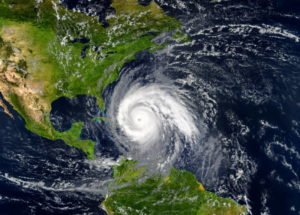
The Law Offices of Anidjar and Levine can help St. Augustine policyholders evaluate property insurance coverage, document storm and weather damage, and challenge delayed, underpaid, or denied claims. Legal review may address wind, hail, hurricanes, flooding, lightning, causation disputes, exclusions, valuation, and policy deadlines. Important evidence includes photographs, repair estimates, receipts, weather records, inspection reports, expert opinions, and insurer correspondence. Prompt action can help protect contractual and legal rights while preserving proof of damage. For related legal guidance, visit our St. Augustine Beach Personal Injury Lawyer page to learn more about available strategies and essential next steps.
Main Takeaways
- Review your policy, reported damage, exclusions, limits, and insurer explanations with a St. Augustine property claim lawyer.
- Preserve photographs, estimates, receipts, inspection reports, weather records, and complete claim correspondence in chronological order.
- Obtain qualified assessments to distinguish recent storm damage from preexisting deterioration, maintenance issues, or unrelated defects.
- Challenge denials or underpayments through reconsideration, appraisal, mediation, negotiation, or litigation when appropriate.
- Act promptly because policy terms and Florida law may impose deadlines for notice, proof of loss, complaints, and lawsuits.
How We Can Help With Your St. Augustine Property Claim Storm & Weather Damage Injury Claim
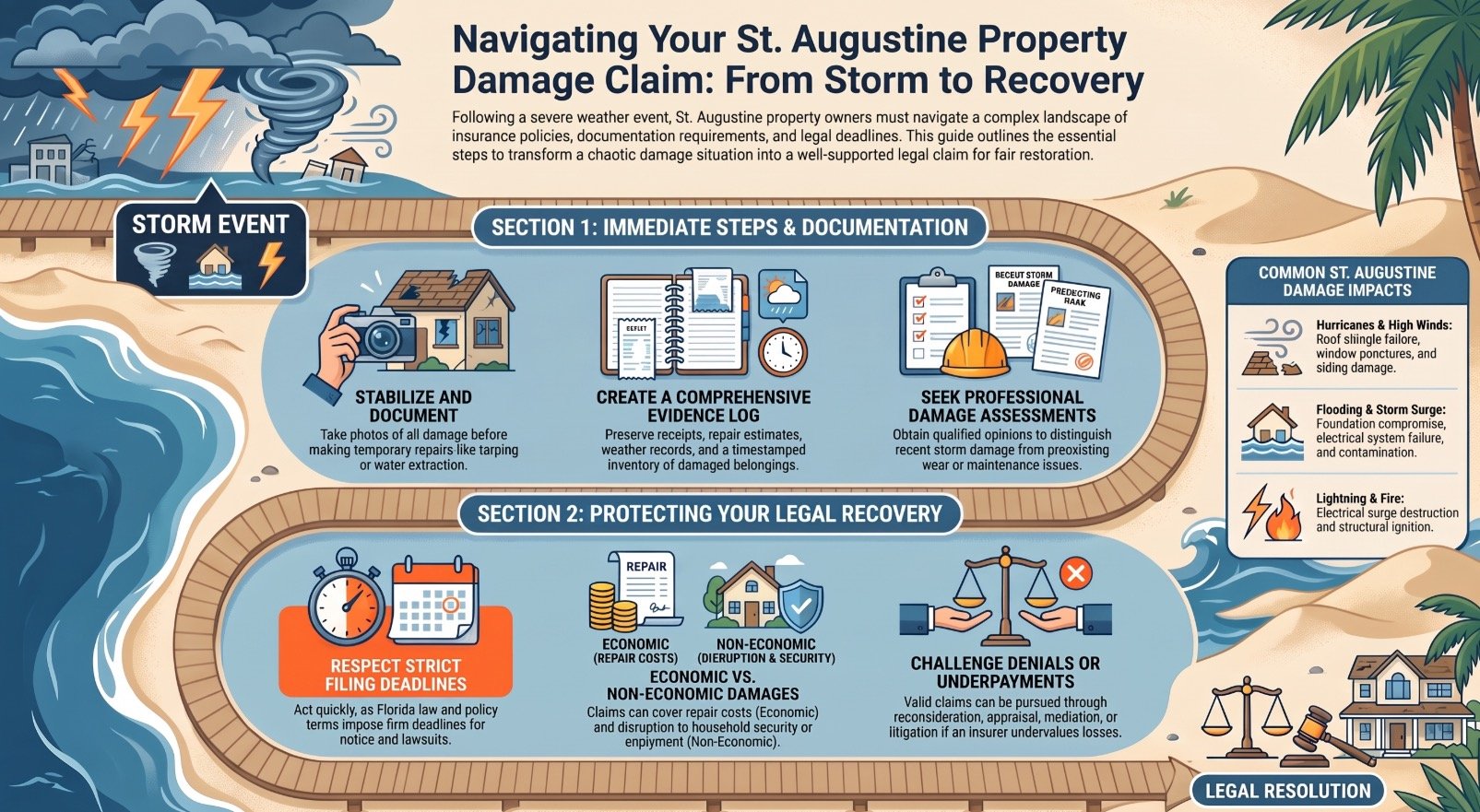
When a storm or severe weather event damages a home or other property, a St. Augustine property claim storm and weather damage lawyer can help policyholders pursue fair treatment from insurers. The attorney begins with Claim evaluation steps, reviewing coverage terms, deadlines, reported damage, and the insurer’s explanation for any limitation or denial. Evidence documentation tips may include preserving photographs, repair estimates, receipts, inspection reports, weather records, and communications with claims representatives.
Counsel can organize the claim so that relevant facts are presented clearly and supported by reliable documentation. When coverage or valuation remains disputed, an Insurance dispute strategy may involve examining policy language, identifying incomplete investigations, obtaining qualified opinions, and addressing inconsistencies in the insurer’s position. Settlement negotiation tactics can then focus on a supported demand, measurable losses, and practical resolution terms. If negotiations fail, the attorney can explain available procedures and help protect the client’s rights while seeking an outcome that supports restoration and financial stability.
Understanding St. Augustine Property Claim Storm & Weather Damage Injury Cases


Storm and weather damage injury cases typically involve disputes over whether a policy covers the claimed loss, the extent of the physical damage, and the compensation required for proper repairs. In St. Augustine, an evaluation generally begins with the insurance policy, reported facts, photographs, estimates, and records showing when damage was discovered. Adjusters may assess causation, depreciation, exclusions, and whether claimed repairs are reasonably supported.
OUR CONSULTATIONSARE FREE
START YOUR FREE CASE REVIEW

Policyholders should preserve damaged materials when safe, document conditions, and take reasonable storm mitigation steps to prevent additional loss. Receipts, contractor communications, inspection reports, and repair timelines can help establish the claim’s value and support a complete review. Homeowner claim delays can create further financial pressure, especially when temporary housing or urgent repairs are needed. A careful case assessment can identify whether the insurer followed applicable duties, communicated adequately, and offered payment consistent with the policy. Legal guidance may help affected property owners pursue fair treatment while maintaining accurate records and protecting the interests of families and communities they serve.
Don’t Wait. Call Our Florida Personal Injury Lawyers Now!
Common Causes of St. Augustine Property Claim Storm & Weather Damage
St. Augustine property damage claims commonly arise from hurricanes, high winds, hail, flooding, and storm surge. Lightning strikes may also cause fires and structural damage, creating additional insurance concerns. Each cause can involve distinct coverage requirements, evidence, and claim-handling issues.
Hurricane Damage


Hurricanes can cause extensive property damage in St. Augustine, leaving homeowners, tenants, and community organizations responsible for difficult repairs. Sustained coastal winds can loosen roofing materials, damage exterior walls, and create openings that allow rainwater to enter buildings. Wind-driven debris may break windows, puncture siding, or strike mechanical equipment, while roof shingle failure can expose decking and insulation to prolonged moisture. Storm surge and flooding may also compromise foundations, electrical systems, flooring, and personal property, depending on the structure’s location and elevation. After conditions become safe, a careful inspection and detailed documentation can help identify covered losses and prevent overlooked damage. Property owners serving affected residents should preserve photographs, repair invoices, and communications with insurers. A qualified property claim lawyer can assist with evaluation, evidence preservation, and disputes concerning valuation, causation, or policy coverage.
Wind And Hail
Wind and hail can produce significant property damage in St. Augustine, affecting roofs, siding, windows, gutters, and exterior structures. Strong wind may lift shingles, loosen flashing, or drive rain beneath damaged materials, while hail can create fractures, punctures, and concealed weaknesses. A roofing leak may appear days after the storm, allowing interior staining, insulation damage, or deterioration of ceilings and walls. Property owners should document conditions promptly with photographs, repair estimates, weather reports, and itemized inventories. Insurers may dispute whether a covered storm event caused the damage, inadequate maintenance, or preexisting wear. Policy language can also create deductible disputes, particularly when carriers apply separate windstorm or hail deductibles. An experienced claim professional can evaluate the policy, organize supporting evidence, and help affected owners pursue fair treatment while protecting crucial property and community resources.
Flooding And Storm Surge
When heavy rainfall, rising waterways, or coastal storm surge overwhelms drainage systems, St. Augustine properties may sustain extensive flooding, foundation damage, contamination, and losses to personal belongings. Storm surge risks increase when tropical systems push seawater inland, allowing waves and tidal water to enter homes, businesses, and low-lying neighborhoods. Even limited water intrusion can create hazardous conditions and require immediate professional drying, cleaning, and structural evaluation. Property owners should document water levels, damaged materials, temporary repairs, and related expenses while keeping occupants out of unsafe areas. Coverage often depends on the policy’s definitions, exclusions, and cause-of-loss provisions. Because standard property insurance may exclude flood damage, policyholders should review available flood insurance options before severe weather develops. Experienced claim professionals can help affected owners understand deadlines, evidence requirements, and fair recovery considerations.
Lightning And Fire Damage
Lightning strikes can damage St. Augustine homes by igniting roof materials, electrical wiring, or nearby trees. Resulting fires may spread rapidly, while electrical surges can destroy appliances, security systems, and vital building components without visible flames. After a suspected strike, property owners should prioritize evacuation, emergency services, and documentation. Lightning strike protocols include disconnecting utilities when safe, avoiding damaged wiring, preserving photographs, and obtaining professional assessments before repairs begin. Smoke, soot, water used for suppression, and lingering odors may create additional covered losses requiring prompt attention. Fire damage restoration professionals can stabilize structures, remove contaminated materials, dry affected areas, and identify hidden damage. A thorough inventory of destroyed or damaged property supports an insurance claim. Legal guidance may help affected owners communicate accurately with insurers and seek fair consideration of storm-related losses.
Legal Rights of St. Augustine Property Claim Storm & Weather Damage Injury Victims
St. Augustine storm and weather damage victims may possess important legal protections when an insurer evaluates a property claim. Policyholder rights generally include receiving a copy of the policy, submitting supporting evidence, obtaining a timely explanation, and pursuing benefits provided by the contract. Professional guidance can help affected owners serve their families, tenants, or communities while preserving those protections.
- Policyholders may document damage, mitigation efforts, estimates, photographs, and communications.
- Insurers should investigate claims fairly and communicate decisions clearly.
- Claim denials can be reviewed through policy analysis, reconsideration, appraisal, mediation, or litigation.
- Legal timelines may limit notice, proof-of-loss submissions, regulatory complaints, and lawsuits.
A denial does not necessarily end a valid claim. Counsel may assess exclusions, coverage limits, valuation methods, causation disputes, and the insurer’s handling conduct. Prompt consultation is prudent because deadlines differ by policy language and applicable Florida law. Accurate records and consistent communication can strengthen the claim while preventing avoidable procedural complications. Each matter requires individualized evaluation based on the policy, evidence, and applicable deadlines.
Why Do St. Augustine Property Claim Storm & Weather Damage Injuries Happen?
Storm and weather-related property claim injuries often arise from the interaction of severe conditions, building vulnerabilities, and disputed insurance coverage. High winds, hurricanes, flooding, lightning, and falling debris can damage roofs, windows, electrical systems, and structural supports. These hazards may injure occupants, visitors, contractors, or first responders when weakened components collapse, or unsafe conditions remain unaddressed.
Negligence patterns frequently contribute to the harm. Property owners, managers, or maintenance providers may overlook deteriorating roofs, blocked drainage, unsecured materials, or known leaks. Contractors can create additional risks through improper repairs or inadequate storm-resistant installations. Weather preparedness failures, including insufficient inspections, delayed maintenance, and ineffective emergency planning, may increase exposure before and during a storm.
Insurance disputes can intensify the consequences when carriers question causation, exclude certain conditions, or characterize damage as preexisting. Such disagreements may delay repairs, allowing moisture, mold, electrical hazards, and structural instability to worsen. Understanding these contributing factors helps explain why storm-related property injuries occur and why responsibility may involve several parties.
What Should You Do After a St. Augustine Property Claim Storm & Weather Damage Injury?
After a storm or weather-related injury, the individual should document all property damage and preserve photographs, repair records, and other relevant evidence. Prompt medical care should be obtained, even when symptoms initially appear minor, to establish the nature and extent of any injuries. The individual should then contact a qualified lawyer to evaluate the insurance claim, protect legal rights, and guide further action.
Document All Damage
Thorough documentation is essential when a property sustains damage from severe weather, because insurers often rely on detailed evidence to evaluate the cause and extent of a claim. Property owners should take clear Photos of every affected area, including structural damage, water intrusion, damaged belongings, and surrounding conditions. When available, include timestamped images to establish when the damage was observed and preserve the sequence of events. A written inventory should identify each damaged item, its approximate age, purchase information, and estimated replacement cost. Witness statements can help confirm the storm’s timing, intensity, or visible impact. Property owners should also preserve inspection reports, repair estimates, receipts, and communications with insurers. Careful records help witnesses, adjusters, and legal representatives understand the loss accurately and support a fair claim evaluation.
Seek Medical Care
Documenting property damage should be paired with prompt medical attention when a storm-related condition causes injury. A person hurt by debris, flooding, structural collapse, electrical hazards, or unsafe conditions should seek emergency care when symptoms are severe, sudden, or potentially life-threatening. Even seemingly minor injuries warrant evaluation because pain, concussion symptoms, infections, and breathing complications can worsen over time. Medical professionals can diagnose conditions, recommend treatment, and create records describing the injury and its connection to the storm event. The individual should follow all instructions, attend follow-up appointments, and preserve bills, prescriptions, and discharge paperwork. First, focus on recovery rather than returning to normal activities prematurely. Attention to mental health is also important, since displacement, fear, and financial uncertainty may produce anxiety, sleep disruption, or trauma-related symptoms requiring professional support.
Contact Your Lawyer
When should a storm-injured property owner contact a lawyer? A property owner should seek legal guidance promptly after a storm, particularly when an insurer delays, denies, or undervalues a claim. Early advice can protect evidence, clarify claim timelines, and prevent statements or agreements that could harm recovery. A lawyer can also explain policy duties, coverage limitations, and available remedies while coordinating with professionals who serve affected families.
The owner should document damage with photographs, preserve receipts, and report conditions accurately. Emergency preparedness records, contractor estimates, inspection reports, and communications with the insurer may support the claim. Immediate property mitigation, including reasonable water removal and temporary repairs, can limit additional loss. If moisture creates health concerns, consult qualified mold remediation professionals. Legal counsel can help determine whether those expenses are covered and ensure the insurer evaluates the property fairly under applicable Florida law.
Critical Evidence in a St. Augustine Property Claim Storm & Weather Damage Injury Case
Critical evidence can establish the cause, scope, and value of storm-related property damage in a St. Augustine claim. Relevant materials may include:
- Storm damage documentation, including photographs, videos, dates, and repair records.
- Property condition records showing the premises’ condition before and after the storm.
- Insurance claim correspondence, estimates, notices, and coverage decisions.
- Expert damage assessments identifying the damage’s origin, extent, and repair costs.
Together, these records can support a property owner’s position and clarify disputed issues during claim evaluation or litigation.
Storm Damage Documentation
A thorough record of storm-related property damage can establish the condition of the premises, the timing of the loss, and the scope of required repairs in a St. Augustine property claim. Before photographing, the claimant should note the date, time, weather conditions, and apparent hazards without disturbing damaged areas. Clear images and video should show exterior elevations, roofing, windows, interior rooms, and affected contents from multiple angles. Weather Logs, official alerts, and photographs of nearby storm impacts may help connect the damage to the reported event. After Inspection, written findings from qualified professionals can identify necessary stabilization and repairs. Preserve repair receipts, estimates, invoices, and proof of payment in chronological order. Organized documentation can help representatives present an accurate claim and support fair treatment for affected property owners.
Property Condition Records
Consistent property condition records can establish the premises’ pre-loss state, identify post-storm changes, and clarify whether reported damage resulted from the covered event. Photographs, inspection reports, repair invoices, and dated videos may demonstrate the condition of roofs, windows, siding, drainage systems, and interior spaces before and after severe weather. Property maintenance logs can show routine upkeep, prior repairs, and unresolved conditions that may affect causation or the scope of a loss. Neighbor communications records may provide independent observations regarding wind, hail, flooding, falling trees, or unusual structural conditions. Preserve records in their original form, organize them chronologically, and supplement them with brief explanations identifying locations and dates. Accurate documentation helps professionals evaluate evidence responsibly and supports fair treatment of affected property owners and the people they serve.
Insurance Claim Correspondence
When a storm or weather event affects a property, insurance claim correspondence can document notice of the loss, reported conditions, requested information, and the insurer’s responses. Emails, letters, portal messages, and recorded delivery confirmations may establish when communications occurred and whether deadlines were met. They can also show shifting explanations, incomplete investigations, reservation-of-rights notices, or requests answered but later characterized as outstanding. Organized correspondence helps counsel evaluate coverage positions and prepare claim denial appeals when the insurer rejects, limits, or delays payment. It may further support adjuster negotiation strategies by identifying disputed issues, preserving factual concessions, and clarifying what documentation remains necessary. Policyholders and their representatives should retain complete copies, attachments, metadata when available, and proof of transmission. Accurate records promote fair treatment and assist those serving affected property owners.
Expert Damage Assessments**
Expert damage assessments can connect the documented storm conditions and insurance correspondence to the property’s actual physical losses. Qualified professionals examine roofing, siding, windows, foundations, interiors, and surrounding structures for evidence consistent with wind, hail, flooding, or other covered events. Their findings may distinguish recent storm damage from preexisting deterioration, maintenance concerns, or unrelated defects. Independent damage inspections also provide measurements, photographs, repair estimates, and written opinions that clarify the scope and probable cause of the loss. This information can help policyholders, adjusters, and legal representatives evaluate whether the insurer’s investigation was complete and fair. When coverage, causation, or valuation remains contested, a carefully prepared assessment can support insurance disputes. This objective evidence helps affected property owners by supporting accurate claim review and informed decisions about necessary repairs, documentation, and available remedies.
Long-Term Effects of St. Augustine Property Claim Storm & Weather Damage Injuries
Storm and weather damage can produce delayed structural problems that remain hidden until they compromise roofs, walls, foundations, or other vital components. Persistent moisture may create mold risks and worsen indoor conditions, while inadequate drying can facilitate repair needs and related health concerns. These issues may also cause lasting financial strain through coverage disputes, rising restoration costs, and extended property displacement.
Delayed Structural Damage
Although a property may appear stable after a severe weather event, structural damage can develop gradually and remain hidden for weeks or months. Shifting foundations, compromised framing, weakened roof connections, and damaged load-bearing elements may eventually produce uneven floors, cracks, sticking doors, or other warning signs. Prompt documentation and evaluation can help establish when the damage occurred and whether it resulted from the covered event. A qualified inspector may identify conditions that are not apparent during an initial walkthrough. Maintaining photographs, repair estimates, inspection findings, and communications can support an accurate insurance claim timeline. When an insurer questions causation, scope, or policy obligations, organized evidence may help resolve coverage disputes. Property owners who serve families, tenants, or community members should address suspected structural problems promptly to protect safety and preserve available remedies.
Mold And Moisture Risks
Moisture that enters a property during a storm can remain concealed behind walls, beneath flooring, or within insulation, creating conditions for mold growth and progressive material damage. Without prompt attention, mold may spread through air systems and porous materials, worsening indoor conditions and complicating restoration. Preventive inspections can identify hidden saturation before visible staining or odors appear. Humidity monitoring also helps occupants recognize persistent dampness that may support microbial growth. Professional after-storm remediation should include careful drying, removing contaminated materials, and documenting affected areas. Effective moisture mitigation limits structural deterioration and supports safer living conditions for residents, visitors, and vulnerable individuals. Property owners and responsible representatives may benefit from preserving photographs, inspection findings, and remediation records while ensuring that qualified professionals evaluate suspected mold and moisture damage promptly.
Lasting Financial Strain
Financial strain often persists after storm and weather damage, especially when repairs, temporary housing, lost income, and medical expenses keep accumulating. Long-term repairs may require extensive funding, especially when hidden structural damage, mold, or worsening moisture conditions emerge after initial work. These expenses can disrupt household stability and limit the ability to meet ordinary obligations. Financial Recovery may depend on timely insurance payments, documented losses, and appropriate legal guidance. Coverage Denials can intensify hardship by shifting repair costs to affected property owners without adequate explanation. A careful review of Policy Rights may reveal available benefits, deadlines, and procedures for challenging an insurer’s decision. Qualified professionals can help organize evidence and communicate with insurers, supporting fair treatment while allowing families and community members to focus on safety, housing, and crucial recovery needs.
Don’t Wait. Call Our Florida Personal Injury Lawyers Now!
Proving Liability in St. Augustine Property Claim Storm & Weather Damage Injury Cases
Proving liability in a St. Augustine property claim storm and weather damage injury case requires organized evidence connecting the loss to a responsible party’s conduct or contractual obligation. A careful investigation may examine weather records, photographs, repair histories, inspection reports, building codes, and policy provisions. These materials can help establish when damage occurred, whether a hazard existed, and whether reasonable maintenance or prompt mitigation could have prevented additional harm.
Witness statement collection can preserve observations from occupants, neighbors, contractors, emergency personnel, and other individuals who saw the property before and after the event. Their accounts may clarify the condition of the premises, notice of dangerous conditions, and the sequence of damage.
Documentation should be dated, preserved, and compared with professional assessments. Insurance denial appeals may require a clear factual record showing covered damage and challenging unsupported conclusions. Liability analysis remains focused on evidence, causation, and applicable legal duties rather than speculation, while supporting fair treatment for affected property owners and communities.
Dealing With Insurance Companies After a St. Augustine Property Claim Storm & Weather Damage Injury
Once the available evidence establishes the nature and cause of the loss, communications with the insurance company should remain organized, accurate, and consistent. A property owner should report the damage promptly, follow policy requirements, and describe affected structures, contents, and necessary temporary protections without speculation. Written correspondence can reduce misunderstandings and create a reliable record of requests, responses, inspections, and payments.
Evidence preservation remains important throughout these communications. Store photographs, repair estimates, receipts, weather reports, contractor observations, and damaged materials securely, and document emergency repairs before disposal whenever safety permits. Policyholders should provide relevant records but avoid signing broad releases or accepting settlements before understanding the claimed damage and coverage implications.
When an insurer delays, undervalues, or denies a claim, Policy denial appeals may require a focused written response addressing policy language, factual errors, and supporting documentation. Professional assistance can help protect the policyholder’s interests while maintaining respectful, precise communication and preserving all available remedies under applicable Florida law.
What to Expect During a St. Augustine Property Claim Storm & Weather Damage Injury Claim Process
A St. Augustine property claim storm and weather damage process generally begins with filing a timely insurance claim and documenting the property’s condition through photographs, records, and repair estimates. The insured can expect insurance adjusters to inspect the damage, review supporting evidence, and evaluate coverage under the applicable policy. If disagreements arise regarding liability, valuation, or payment, the claim may proceed through negotiation, additional investigation, appraisal, or legal dispute resolution.
Filing Your Insurance Claim
When storm or weather damage affects a property in St. Augustine, the policyholder should promptly notify the insurer and begin the formal claim process. The initial report generally identifies the loss date, affected property, suspected cause, and any immediate services needed to prevent further damage. The insurer then assigns an adjuster to evaluate whether the policy applies and determine the anticipated payment. Claimants should review policy deadlines, comply with reasonable requests, and maintain communication in writing. Carefully review exclusions, deductibles, limits, and endorsements to clarify what the policy may provide. If the carrier delays payment, offers less than the covered loss, or issues a denial, legal guidance may help address denied claims. A qualified attorney can explain available remedies and support fair treatment throughout the process for affected property owners.
Documenting Storm Damage
Because insurers evaluate the condition and cause of the loss, begin thorough documentation as soon as it is reasonably safe to access the property. Photographs should show the entire structure, individual rooms, damaged materials, standing water, debris, and nearby conditions that may clarify how the storm affected the premises. Photograph timestamping can help establish when images were taken, while original files should be preserved without editing. Video walkthroughs capturing a continuous view of the property may provide useful context that individual photographs cannot show. A written inventory should identify damaged or destroyed belongings, approximate purchase dates, values, and available receipts. Also retain copies of emergency repair invoices, contractor estimates, maintenance records, and communications. Safety remains critical; document unstable areas only from a secure location.
Handling Insurance Adjusters
After you document storm damage, the insurer typically assigns an adjuster to investigate the loss, evaluate policy coverage, and estimate repair or replacement costs. The adjuster may inspect the property, request photographs, review maintenance records, and ask detailed questions about when and how the damage occurred. Policyholders should provide accurate information and avoid speculating about facts they cannot confirm. Insurance adjusters may narrow questions, separate storm-related damage from preexisting conditions, or rely on limited inspections. Claimants should keep copies of all correspondence, inspection notes, invoices, and recorded damage estimates. A qualified contractor may identify conditions an initial inspection overlooks. Clear organization and respectful communication help protect the claim’s documentation and help everyone involved evaluate the loss fairly and efficiently.
Resolving Claim Disputes
Resolving a storm or weather damage claim dispute typically begins with a careful comparison of the policy language, the insurer’s coverage position, and the available evidence concerning the property’s condition and the cause of loss. A property owner may need photographs, repair estimates, inspection reports, weather records, and maintenance documentation to establish the scope and timing of damage. When coverage is denied or underpaid, Claim denial appeals can present organized evidence and address exclusions, causation disputes, or valuation errors. Counsel may develop a negotiation strategy that seeks payment while preserving the owner’s rights under the policy and applicable Florida law. If discussions fail, mediation, appraisal, or litigation may follow, depending on the policy and circumstances. Throughout the process, timely communication and accurate records help protect the claim and support a fair resolution.
Compensation for St. Augustine Property Claim Storm & Weather Damage Injury Damages
When severe storms damage a home or business in St. Augustine, property owners may seek compensation for covered repair and replacement costs. Recoverable amounts can include structural repairs, roof restoration, water extraction, debris removal, damaged contents, and necessary temporary accommodations when the premises cannot be used safely. A strong claim connects each requested expense to the storm, policy language, and supporting documentation.
Policyholders can strengthen their position by promptly reporting the loss, preserving damaged materials when safe, photographing conditions, and maintaining invoices, estimates, and receipts. Appropriate Mitigation strategies may reduce further damage while demonstrating responsible conduct. Insurers may also consider depreciation, deductibles, coverage limits, exclusions, and the property’s condition before the event. Detailed records can help establish reasonable recovery timelines and clarify whether delays resulted from unavailable contractors, hidden damage, or disputed coverage. Professional guidance may help affected individuals present complete information and pursue benefits efficiently while supporting fair treatment during a difficult recovery.
Economic vs Non-Economic Damages in St. Augustine Property Claim Storm & Weather Damage Cases
Storm and weather damage claims may include economic damages, such as repair costs, replacement expenses, and lost rental income. Non-economic losses can arise when property damage disrupts a household’s use, security, or enjoyment of the premises. Establishing these damages generally requires clear documentation, credible valuations, and evidence connecting the losses to the covered event.
Economic Damage Categories
Economic damages in St. Augustine storm and weather damage claims represent measurable financial losses caused by covered property harm. Common categories include reasonable repair costs, replacement expenses, emergency mitigation, debris removal, temporary security, and costs for necessary temporary housing. Business owners may also document lost rental income or interruption-related revenue when policy terms provide applicable coverage. Additional expenses, such as professional inspections, engineering evaluations, and storage, may qualify when they are necessary to protect property or establish the claim. Insurance documentation should connect each expense to the reported event, using invoices, receipts, photographs, estimates, and payment records. FEMA assistance may provide limited support after qualifying disasters, but it generally does not replace insurance benefits. Careful records help claimants and their representatives identify recoverable amounts and present an accurate valuation.
Non-Economic Losses
Non-economic losses in St. Augustine storm and weather damage cases may reflect the personal disruption caused by unsafe, uninhabitable, or suddenly altered living conditions. Although these losses lack a simple invoice, they can include emotional distress, anxiety, inconvenience, loss of enjoyment of the home, and interference with family routines. Their significance may increase when repairs require temporary relocation or when coverage uncertainty is prolonged. Florida law and the applicable insurance policy determine whether such damages are recoverable, and the available remedies can vary with the claim’s circumstances. Comparative Negligence may affect recovery when a policyholder’s conduct contributed to the alleged loss, although its application depends on the facts. Insurance Bad Faith may create separate concerns when claim handling causes additional harm, subject to statutory and common-law requirements.
Proving Property Claim Damages
Establishing damages in a St. Augustine property claim requires organized proof connecting covered storm or weather damage to specific financial losses. Economic damages may include emergency services, structural repairs, replacement of personal property, temporary housing, and tenant compensation when displacement affects renters. Contractor repair estimates, invoices, receipts, photographs, inventories, and mitigation documentation can demonstrate the amount and necessity of those costs. Records should distinguish preexisting conditions from storm-related damage and show reasonable efforts to prevent additional losses. Residential stormproofing expenses may be recoverable when necessary to protect the property after a covered event, subject to policy terms. Non-economic damages generally involve inconvenience, loss of use, or disruption, and their availability depends on applicable law and the claim’s circumstances. Clear, consistent evidence helps insurers and decision-makers evaluate the full claim fairly.
When a St. Augustine Property Claim Storm & Weather Damage Injury Case Goes to Trial vs Settlement
When a St. Augustine property claim storm and weather damage injury case approaches resolution, the parties generally evaluate settlement against trial. Settlement may provide a defined recovery, reduced expense, and greater control over timing and privacy. It can also help an injured property owner address repairs and related needs without the uncertainty of courtroom proceedings. However, an insurer’s offer may not reflect the full scope of documented losses, future expenses, or disruption.
Trial lets each side present evidence, question witnesses, and ask a judge or jury for a decision. This process may produce a stronger result, but it often requires additional time, preparation, and financial resources. Counsel may assess documentation, witness credibility, disputed causation, and comparative fault considerations before recommending either path. Unexpected injury payouts are possible, but no outcome is guaranteed. A careful evaluation should account for the client’s priorities, financial position, evidence, and willingness to accept litigation risk. The objective remains a fair resolution that supports recovery and responsible service.
Florida Laws That May Affect Your St. Augustine Property Claim Storm & Weather Damage Case
Florida laws may greatly affect a St. Augustine property claim storm and weather damage case by defining policy duties, proof requirements, and insurer conduct. An informed review can help property owners serve tenants, families, or community members responsibly while protecting legitimate recovery rights.
Key considerations may include:
- Florida insurance deadlines can govern prompt notice, sworn statements, document production, and cooperation with an insurer. Missing a requirement may complicate evaluation, even when damage appears clear.
- Policy language, exclusions, deductibles, and endorsements determine whether wind, hail, flooding, or resulting interior damage receives coverage.
- Florida’s bad-faith standards may apply when an insurer unreasonably delays investigation, undervalues covered losses, or fails to communicate adequately.
- Post-storm repair considerations include emergency mitigation, photographs, receipts, contractor records, and, when reasonably possible, preserving damaged materials.
Local building codes and emergency orders may also influence repair methods and reimbursement questions. Because circumstances differ, a qualified attorney can assess coverage, communications, evidence, and applicable regulations without making premature assumptions about the claim’s outcome.
The Statute of Limitations for St. Augustine Property Claim Storm & Weather Damage Injury Cases
Although storm damage may appear immediately, the deadline for filing a St. Augustine property damage lawsuit depends on Florida law, the insurance policy, and the type of loss involved. Missing a statutory deadline can prevent recovery, even when the damage is substantial and the claim appears valid. Insurance claim deadlines may require prompt notice to the carrier, often within a period stated in the policy. Separate deadlines can govern lawsuits against an insurer or other responsible party. Policyholders should review all correspondence, record the date of loss, and preserve photographs, repair estimates, inspection reports, receipts, and other property damage documentation. Storm-related conditions may worsen over time, making timely evaluation and careful records particularly important. Tolling rules, contractual provisions, public-emergency measures, and distinctions between covered damage and later-discovered damage can affect the calculation. Because deadlines may vary by circumstances, affected property owners should identify applicable dates promptly and avoid assuming that negotiations automatically extend the filing period.
How a St. Augustine Property Claim Storm & Weather Damage Lawyer Can Help You
A St. Augustine property claim storm and weather damage lawyer can help a policyholder secure coverage, organize documentation, and present a well-supported claim. The lawyer’s role includes interpreting policy language, identifying applicable exclusions, and explaining Policyholder duties that may affect eligibility for benefits.
Key assistance may include:
- Conducting a structured review of the insurance policy, endorsements, deductibles, and applicable conditions.
- Coordinating qualified inspectors or contractors to assess roofing, structural, water, and interior damage.
- Guiding Evidence preservation, including photographs, repair records, receipts, weather reports, and communications with insurers.
- Preparing claim narratives, estimates, inventories, and other materials needed to substantiate covered losses.
A lawyer may also communicate with the carrier, challenge unsupported positions, and help secure that information remains accurate and consistent. Through careful preparation, the lawyer supports fair treatment of affected property owners and helps reduce confusion during the claims process. This assistance can be particularly valuable when damage involves multiple causes, intricate policy provisions, or disputed valuation, while preserving the policyholder’s ability to pursue appropriate relief.
When to Contact a St. Augustine Property Claim Storm & Weather Damage Lawyer
When storm or weather damage creates uncertainty about coverage, the policyholder should consider contacting a St. Augustine property claim storm and weather damage lawyer before communicating extensively with the insurer. Early guidance can help preserve records, identify policy requirements, and organize a post-storm checklist without unnecessarily escalating the matter.
A consultation may be appropriate when the insurer delays acknowledgment, requests broad recorded statements, disputes the cause of damage, or offers an amount that appears inconsistent with the property’s condition. The policyholder should also review insurance deadlines, because notice, proof-of-loss, appraisal, and lawsuit limitations may affect available remedies.
A pre claim inspection can document conditions before temporary measures or repairs alter the evidence. Keep photographs, contractor observations, receipts, and repair estimates in an organized file. Legal guidance may also assist when covered damage affects habitability, business operations, or the safety of occupants and neighbors. Prompt consultation supports informed decisions and helps the policyholder serve household, tenant, or community interests responsibly.
Don’t Wait. Call Our Florida Personal Injury Lawyers Now!
Why You Need an Experienced St. Augustine Property Claim Storm & Weather Damage Lawyer
Experienced legal counsel provides structured guidance when storm or weather damage creates a disputed or detailed property claim. An experienced St. Augustine property claim storm and weather damage lawyer can evaluate policy language, identify covered losses, and organize evidence supporting repairs, displacement, and related expenses. This assistance helps property owners serve tenants, families, employees, or community members who depend on safe, functional spaces.
Counsel can also address causation disputes involving wind, flooding, fallen trees, mold, or delayed maintenance. Comparative negligence rules may affect recovery when an insurer alleges that a property owner contributed to the loss, making accurate documentation and careful legal analysis important. An attorney can challenge unsupported exclusions, incomplete inspections, undervaluation, and insurer delay tactics that interfere with timely restoration.
Professional representation further promotes clear communication, preserves claim deadlines, and supports meaningful negotiations or litigation when necessary. By managing complex procedures and protecting the claimant’s position, experienced counsel lets responsible property owners focus on restoring services and meeting the needs of those they serve.
How to Choose the Right St. Augustine Property Claim Storm & Weather Damage Lawyer for Your Case
Selecting the right St. Augustine property claim storm and weather damage lawyer requires careful evaluation of experience, communication, and professional integrity. A suitable lawyer should understand Florida insurance requirements, investigate storm-related losses, and explain available legal options in clear terms. Experience with Coverage denials and policy exclusions can help identify whether an insurer’s position is supported by the policy or improperly limits recovery.
Potential clients should review the lawyer’s record handling property claims, including water intrusion, wind damage, roof loss, and valuation disputes. References, published client information, and professional standing may provide useful insight into reliability and preparation. The lawyer should also explain case strategy, expected timelines, evidence requirements, and litigation risks without making unrealistic promises.
Because Public adjusters may participate in claim preparation, the lawyer should clarify how their work interacts with legal representation. Written agreements should address responsibilities, costs, communication, and possible fee disputes before representation begins. Careful comparison supports informed decisions and effective advocacy.
About The Law Offices of Anidjar & Levine
The Law Offices of Anidjar & Levine represents policyholders in disputes involving storm and weather-related property damage throughout Florida, including St. Augustine. The firm assists homeowners, landlords, and business owners who must address repairs, financial losses, and insurer disputes after hurricanes, windstorms, flooding, or other severe weather events.
Its attorneys review policies, evaluate damage, and help clients understand coverage obligations and available remedies. Careful Insurance documentation can support a claim by preserving estimates, photographs, correspondence, receipts, and inspection reports. The firm also evaluates claim deadlines and policy exclusions that may affect an insurer’s response or limit potential recovery.
Clients may receive guidance in assembling an evidence checklist tailored to the property and loss. This process can help identify missing records, document communications, and organize proof before negotiations or litigation. By serving policyholders throughout the claims process, the firm seeks to promote accountability and informed decision-making. Case results depend on individual facts, policy language, and applicable law.
Frequently Asked Questions
Can I Make Temporary Repairs Before the Insurance Adjuster Inspects My Property?
Yes, temporary repairs are generally permitted when necessary to prevent further damage, but the policyholder should document conditions first. Photos before repairs should capture each affected area, visible damage, and any hazards. Emergency tarp use may help protect exposed roofing or openings, and the policyholder should retain receipts and repair records. Permanent work should ordinarily wait until inspection, unless safety requires immediate action. Notify the insurer promptly and give them access to inspect.
Does My Homeowners Insurance Cover Mold or Water Damage After a Storm?
Homeowners insurance may cover storm-related water damage when a covered peril, such as wind or hail, caused the intrusion. Mold coverage is often limited, conditional, or excluded unless mold resulted from that covered damage and was reported promptly. Policies commonly exclude flooding, gradual leaks, poor maintenance, and neglected repairs. The policyholder should document conditions, prevent further harm, preserve damaged materials, and review policy language before accepting a claim decision.
What Should I Do if My Property Has Damage From a Fallen Tree?
A property owner should first ensure everyone’s safety and avoid unstable limbs, damaged structures, and downed power lines. Emergency Tarps: Safety measures may limit additional water intrusion, but only qualified professionals should remove hazardous trees or perform temporary repairs. Evidence Collection: Immediately, it is essential to photograph damage, preserve receipts, and document the tree’s condition and cause. The owner should promptly notify the insurer, prevent further loss, and obtain professional assessments before permanent repairs begin.
Can I File a Claim for Damage to Landscaping, Fences, or Outdoor Structures?
A policyholder can often file a claim for damaged landscaping, fences, and outdoor structures, but coverage depends on the policy, cause of loss, exclusions, and applicable limits. Claim requirements may include photographs, repair estimates, receipts, ownership records, and prompt notice. The policyholder should document conditions before cleanup, pursue reasonable temporary mitigation, and preserve damaged materials when safe. Professional guidance can help identify covered losses and prevent avoidable mistakes during adjustment.
How Should I Document Personal Belongings Damaged During a Severe Weather Event?
Personal belongings damaged during severe weather should be documented promptly and systematically. A Photo inventory should show each item from multiple angles, including damage, identifying marks, and its location within the property. Item notes should record descriptions, purchase dates, approximate values, receipts, warranties, and repair or replacement estimates. The individual should preserve damaged property when safe, avoid discarding it prematurely, and maintain copies of all communications and submitted records.
—————————
Property owners dealing with storm and weather damage may face complex insurance procedures, coverage disputes, or delays in receiving compensation. A St. Augustine property claim storm and weather damage lawyer can review policy provisions, document losses, communicate with insurers, and pursue available remedies when a claim is undervalued or denied. Prompt legal guidance may help preserve important evidence and meet applicable deadlines. The Law Offices of Anidjar and Levine carefully evaluate each claim and help property owners understand their legal options. For related legal assistance, visit our St. Augustine Beach Personal Injury Lawyer page.