

The Law Offices of Anidjar and Levine can investigate whether understaffing, inadequate training, delayed responses, or poor supervision contributed to preventable injuries at a nursing home. These cases may involve falls, pressure injuries, dehydration, medication errors, elopement, or other forms of medical decline. Important evidence can include care plans, staffing schedules, incident reports, medication records, surveillance footage, and prior complaints. A Jacksonville Personal Injury Lawyer may pursue compensation and accountability while helping encourage safer facility practices.
Main Takeaways
- A Jacksonville nursing home lawyer investigates whether understaffing, poor training, or weak supervision caused preventable harm to residents.
- Key evidence includes medical charts, care plans, staffing schedules, incident reports, medication logs, photographs, and communication records.
- Families should seek prompt medical evaluation and report suspected neglect to facility administrators and appropriate Florida authorities.
- Preservation letters can help secure video footage and records before they are lost, altered, or overwritten.
- Legal claims may seek compensation for falls, pressure injuries, medication errors, dehydration, elopement, pain, and related losses.
How We Can Help With Your Jacksonville Nursing Home Staffing & Supervision Failures Injury Claim
Investigating a nursing home staffing or supervision failure requires careful review of records, witness accounts, and the facility’s compliance with state and federal care standards. A Jacksonville nursing home injury lawyer can identify whether understaffing, poor training, delayed responses, or inadequate oversight contributed to harm. This support may include obtaining medical charts, staffing schedules, incident reports, and prior complaint histories to build a clear timeline of events.
Legal counsel can also coordinate with medical professionals, evaluate damages, and communicate with insurers or facility representatives. For families committed to protecting vulnerable residents, this process helps preserve dignity while pursuing accountability. Guidance may include Emotional Support Options, such as referrals to counseling or advocacy resources, and Family Communication Planning to keep relatives informed, organized, and prepared for decisions. Through structured case management, evidence preservation, and careful claim presentation, counsel can help families seek compensation while promoting safer care practices for current and future residents.
Understanding Jacksonville Nursing Home Staffing & Supervision Failures Injury Cases


When a nursing home fails to maintain adequate staffing or supervision, residents may face preventable injuries, medical decline, or unsafe living conditions. These cases often involve vulnerable individuals who depend on attentive caregivers for daily needs, medication assistance, hygiene, mobility support, and timely response to distress. In Jacksonville, staffing and supervision failure claims focus on whether the facility provided care consistent with professional standards and resident care plans.
OUR CONSULTATIONSARE FREE
START YOUR FREE CASE REVIEW

A careful Documentation Review can reveal patterns in charting, missed assessments, delayed interventions, unexplained injuries, or inadequate monitoring. These records may help determine whether residents received the protection, dignity, and attention required under Patient Rights and applicable care regulations. Families, advocates, and legal professionals may examine medical files, incident reports, staffing records, and communication logs to understand what occurred.
Such cases require respect for the resident’s condition, the family’s concerns, and the broader duty to safeguard those entrusted to long-term care providers.
Common Causes of Jacksonville Nursing Home Staffing & Supervision Failures
Common causes of Jacksonville nursing home staffing and supervision failures often include chronic understaffing, poor staff training, inadequate resident monitoring, and high employee turnover. These conditions can weaken daily care systems, reduce accountability, and increase the risk of preventable harm to vulnerable residents. Identifying the source of these failures is essential when evaluating whether a facility met its legal and professional obligations.
Chronic Understaffing


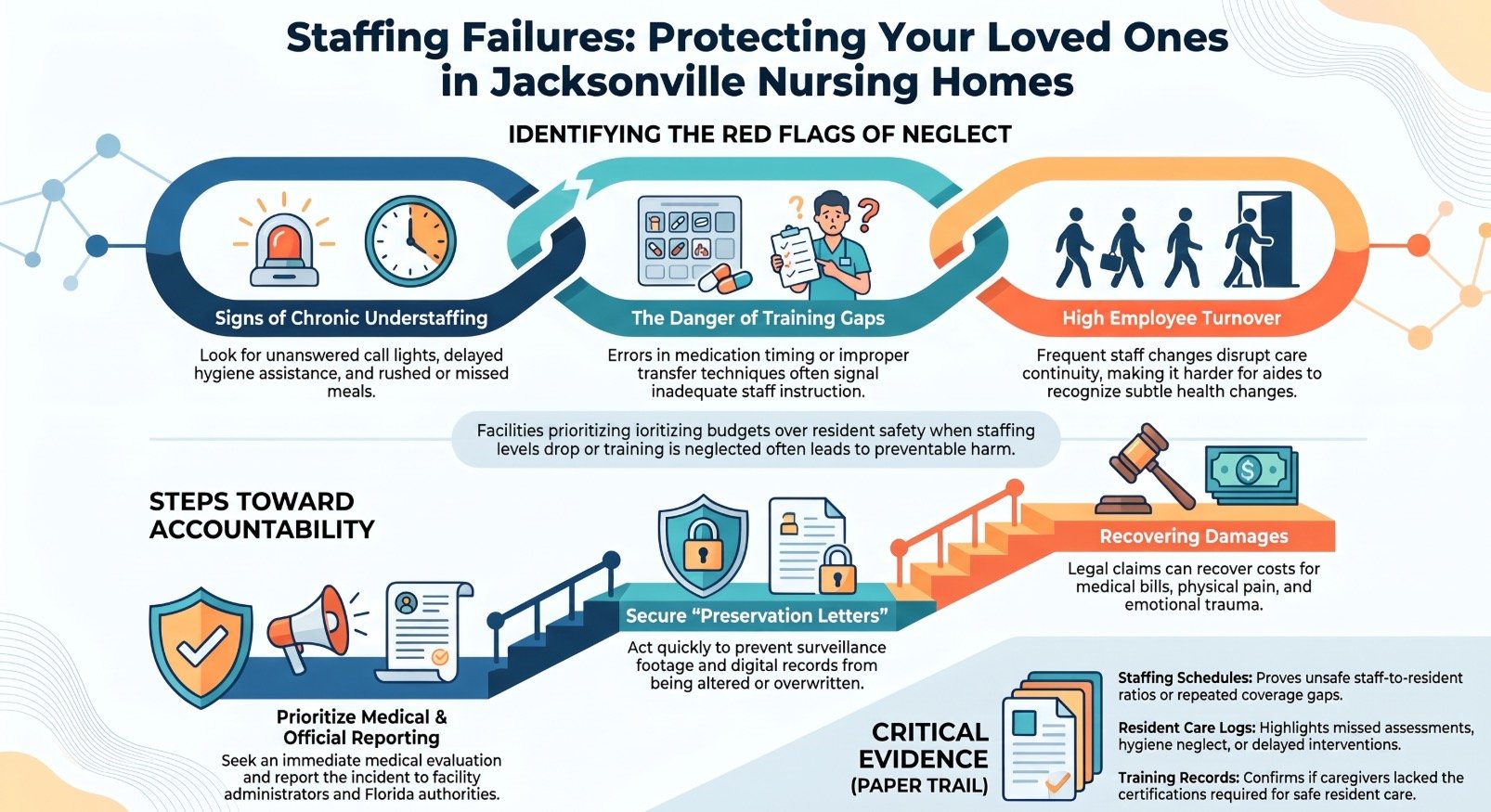
Chronic understaffing often develops when a nursing home fails to maintain enough qualified employees to meet residents’ daily medical, hygiene, mobility, and supervision needs. In Jacksonville facilities, this problem may appear through unanswered call lights, delayed toileting assistance, missed repositioning, rushed meals, and limited monitoring of residents at risk for falls or wandering. Staffing ratio violations can place conscientious caregivers in impossible situations, where even diligent efforts cannot meet every resident’s needs. Over time, insufficient coverage may interfere with Care plan compliance, including scheduled bathing, medication support, nutrition assistance, and safety checks. Families and advocates may review schedules, incident reports, and care records to determine whether inadequate staffing contributed to neglect. Proper staffing supports dignity, safety, and compassionate service for vulnerable residents.
Poor Staff Training
Insufficient staffing is often compounded by poor staff training because even a facility with enough employees may put residents at risk if workers do not understand proper care procedures. Training gaps can affect safe transfers, infection control, hygiene assistance, documentation, nutrition support, and respectful communication with vulnerable residents. Medication management also requires careful instruction, since errors in timing, dosage, or documentation can cause serious harm. Facilities serving older adults should ensure that employees understand resident rights, care plans, emergency procedures, and reporting duties. Supervisors must reinforce standards through orientation, ongoing education, skills checks, and compliance audits. When training is neglected, preventable mistakes can become routine. A Jacksonville nursing home may face scrutiny when poor preparation contributes to injuries, neglect, or violations of accepted care standards.
Inadequate Resident Monitoring
When residents require close observation, missed checks can quickly turn known risks into preventable injuries. Inadequate resident monitoring may involve failing to watch residents at risk for falls, swallowing difficulties, pressure sores, confusion, or changing medical conditions. When staff do not verify rounds, respond to call lights, or report changes promptly, Care quality declines, and residents may experience harm that careful supervision could have prevented.
Monitoring failures can also contribute to medication errors, especially when residents are not assessed before or after receiving prescribed drugs. Sedation, dizziness, allergic reactions, or worsening symptoms may go unnoticed until the condition becomes severe. A Jacksonville nursing home must maintain systems that ensure consistent observation, accurate records, and timely communication so vulnerable residents receive the support their care plans require.
High Employee Turnover
Frequent employee turnover can weaken resident care by disrupting continuity, reducing institutional knowledge, and putting remaining staff under increased pressure. In Jacksonville nursing homes, high turnover may leave residents served by unfamiliar aides who do not recognize subtle changes in condition, behavior, or daily needs. Turnover rates affect scheduling stability, training consistency, and supervisors’ ability to maintain reliable standards across shifts. When new employees are rushed into service, mistakes may occur in medication reminders, mobility assistance, hygiene care, and fall prevention. Caregiver continuity problems can also affect trust, because residents often rely on consistent relationships for comfort, dignity, and communication. Facilities committed to service must address retention, supervision, and onboarding practices to protect vulnerable residents from preventable harm. Strong staffing policies support safer, more compassionate care.
Don’t Wait. Call Our Florida Personal Injury Lawyers Now!
Legal Rights of Jacksonville Nursing Home Staffing & Supervision Failures Injury Victims
Legal rights may allow an injured resident, or the resident’s family, to seek accountability when a facility fails to provide safe assistance, monitoring, hygiene, mobility support, or timely medical attention.
Injured residents and families may seek accountability when unsafe care or neglect causes preventable harm.
- Compensation may include medical expenses, pain, suffering, and related losses.
- Families may request records that show staffing levels, care plans, and incident reports.
- Claims may address falls, pressure injuries, medication errors, dehydration, or elopement.
- Legal action may encourage safer practices that protect other residents.
A Jacksonville nursing home staffing and supervision failures lawyer can evaluate whether the facility’s conduct violated legal duties and caused harm.
Why Do Jacksonville Nursing Home Staffing & Supervision Failures Injuries Happen?
Often, Jacksonville nursing home staffing and supervision failure injuries happen because a facility does not assign enough trained caregivers to meet residents’ daily needs. When too few staff members are available, essential support with bathing, transfers, meals, toileting, medication reminders, and fall prevention may be delayed or missed. Residents who depend on close observation can suffer harm when call lights go unanswered, mobility risks are ignored, or staff do not report changes in condition promptly.
These failures may reflect poor hiring practices, inadequate training, high turnover, weak management oversight, or scheduling decisions that prioritize budgets over resident safety. Regulatory compliance issues can also contribute, especially when leadership fails to meet documentation duties, care plan requirements, or staffing ratio standards. In a setting devoted to serving vulnerable people, essential supervision is not optional. It is a basic safeguard that helps preserve dignity, reduce preventable injuries, and ensure that each resident receives attentive, compassionate, and reliable care daily.
What Should You Do After a Jacksonville Nursing Home Staffing & Supervision Failure Injury?
After a Jacksonville nursing home staffing or supervision injury, address the resident’s health and safety first through prompt medical evaluation. Report the incident to facility administrators and, when appropriate, to state regulatory authorities. Families should also preserve crucial evidence, including photographs, medical records, witness information, and written communications with the nursing home.
Seek Immediate Medical Care
If a resident may have been harmed by inadequate staffing or poor supervision, make immediate medical care the first priority. Prompt evaluation can identify fractures, infections, dehydration, medication errors, head injuries, or worsening chronic conditions before they become life-threatening. Caregivers should ensure qualified medical personnel assess the resident, including emergency providers when symptoms are severe or unexplained.
Provide comfort measures while help is obtained, including safe positioning, hydration when appropriate, and reassurance. Pain monitoring is critical, especially for residents who have dementia, communication barriers, or fear of speaking up. Family communication should be clear and timely, so trusted decision-makers understand the resident’s condition and care needs. Thorough medical documentation also helps preserve clinical details needed for treatment, accountability, and later review.
Report The Incident
Once the resident’s immediate medical needs are addressed, report the incident to the nursing home administration without delay. Prompt reporting helps leadership respond to possible staffing or supervision failures and take steps that support Resident Safety. A family member, guardian, or advocate should request that the facility create formal Incident Documentation, including the date, time, location, persons involved, reported injuries, and any staffing concerns observed. Report the incident to the administrator, director of nursing, or charge nurse, depending on facility procedure. If the injury suggests neglect or an ongoing risk, the concern may also be reported to Florida’s long-term care ombudsman or appropriate regulatory authorities. Clear reporting promotes accountability, protects vulnerable residents, and helps caregivers fulfill their duty to serve with diligence.
Preserve Key Evidence
As soon as the incident is reported, preserve essential evidence before records are altered, memories fade, or physical conditions change. Families should maintain a clear Paper Trail, including incident reports, care plans, medication logs, staffing schedules, discharge papers, photographs of injuries, and written communications with the facility. Date, copy, and store requests for records securely.
Video Footage may also be important, especially from hallways, common areas, entrances, or monitoring systems near the resident’s room. Because such footage may be overwritten quickly, prompt written preservation requests can help protect it. Document witness names, staff assignments, and descriptions of unsafe conditions while details remain fresh. Careful preservation supports accountability, protects the resident’s dignity, and helps advocates evaluate whether supervision failures contributed to harm.
Critical Evidence in a Jacksonville Nursing Home Staffing & Supervision Failures Injury Case
Critical evidence in a Jacksonville nursing home staffing and supervision failures injury case often shows whether the facility had enough qualified staff to meet resident needs. Records may reveal patterns of neglect, delayed care, or inadequate oversight that contributed to harm.
Critical materials often include:
- Staffing schedules
- Resident care logs
- Incident reports
- Training records
Staffing Schedules
Why do staffing schedules matter in a Jacksonville nursing home staffing and supervision failures injury case? They may reveal whether a facility planned adequate Shift coverage for residents who depended on timely help, observation, and safe supervision. Schedules can show how many nurses, certified nursing assistants, and supervisors were assigned on relevant days or nights. Compared with census levels and care needs, they may reveal unsafe staffing ratios or repeated coverage gaps. This evidence can help determine whether management knew, or should have known, that residents faced preventable risks. It may also identify patterns, such as short weekend shifts, unfilled call-outs, or reliance on temporary workers. For families seeking accountability and higher care standards, staffing schedules provide a focused record of operational choices that affect resident safety.
Resident Care Logs
Resident care logs can provide a detailed record of whether a Jacksonville nursing home delivered the monitoring, assistance, and supervision each resident required. These entries may show bathing help, repositioning, toileting, hydration, meals, mobility support, and response to call lights. When compared with Shift scheduling and staffing metrics, the logs may reveal whether caregivers had enough time to meet known needs.
A careful documentation audit can identify late entries, repeated omissions, copied language, or gaps during high-risk periods. Such findings may support a neglect pattern when unmet care needs align with worsening health, falls, pressure injuries, or preventable decline. For families and advocates committed to protecting vulnerable residents, these records help clarify whether the facility served with reasonable diligence, adequate oversight, and consistent attention to individual care plans.
Incident Reports
Beyond routine care logs, incident reports can show how a Jacksonville nursing home documented specific events involving falls, injuries, elopement attempts, medication errors, aggressive interactions, delayed responses, or other breakdowns in supervision. These reports may identify who discovered the resident, when assistance was requested, what condition was observed, and whether follow-up care occurred. Incident timing reviews can reveal delays between warning signs, response efforts, and provider notification. They may also show repeated problems during evenings, weekends, meals, bathing, or shift changes. Compared with schedules, incident reports may reveal staffing-ratio patterns that placed residents at foreseeable risk. For families and advocates seeking safer care, these records help connect preventable harm to supervision failures, incomplete monitoring, or neglected responsibilities within the facility’s daily operations and reporting practices.
Training Records
When a facility claims that staffing decisions and supervision practices were adequate, training records can show whether employees were actually prepared to meet residents’ documented needs. These records may identify orientation gaps, missed in-service sessions, expired certifications, or limited instruction on fall prevention, dementia care, transfers, nutrition, infection control, and emergency response. In a Jacksonville nursing home injury case, such evidence helps evaluate whether caregivers had the knowledge required to serve residents safely and respectfully.
Compare training files with care plans, job assignments, and Staffing metrics analysis to determine whether untrained employees were placed in high-risk roles. They may also reveal whether compliance program audits identified repeated education failures without corrective action. When training deficiencies align with preventable harm, they can support claims involving negligent staffing, supervision, and management decisions.
Long-Term Effects of Jacksonville Nursing Home Staffing & Supervision Failures Injuries
Staffing and supervision failures in Jacksonville nursing homes can produce lasting consequences, particularly when injuries lead to chronic physical decline. Residents may also experience emotional trauma, including fear, anxiety, or loss of trust in caregivers, after repeated neglect or preventable harm. Over time, these effects can reduce independence, limit daily functioning, and increase the need for ongoing medical care or personal assistance.
Chronic Physical Decline
Although a single missed care task may seem limited in scope, repeated staffing and supervision failures can contribute to chronic physical decline in Jacksonville nursing home residents. When caregivers are unavailable or poorly supervised, residents may miss repositioning, hydration, mobility assistance, wound checks, and timely medical observation. Nutrition neglect can lead to weight loss, weakness, impaired recovery, and increased susceptibility to infection. Medication mismanagement may worsen existing conditions, cause preventable complications, or reduce the effectiveness of prescribed treatment. Over time, these failures can diminish strength, balance, endurance, and independence, making residents more vulnerable to falls, pressure injuries, and avoidable hospital transfers. For families, advocates, and care providers committed to serving vulnerable adults, recognizing this pattern is vital to promoting accountability, safer care practices, and dignity.
Emotional Trauma
Repeated neglect or poor supervision can leave Jacksonville nursing home residents with emotional trauma that persists long after the immediate incident has passed. Residents may develop fear, distrust, withdrawal, depression, or heightened anxiety when basic needs are ignored, or safety is not protected. These long-term psychological effects can interfere with sleep, communication, appetite, and willingness to participate in care. For vulnerable adults, emotional harm may be especially severe when neglect comes from those entrusted with daily support. Family caregiver impact is also significant, as relatives may experience guilt, distress, and uncertainty after learning a loved one suffered preventable harm. Careful documentation, compassionate advocacy, and attentive evaluation can help identify emotional injuries and support a response that honors dignity, safety, and accountable caregiving standards.
Reduced Independence
When inadequate staffing or supervision allows preventable harm to occur, a Jacksonville nursing home resident may lose abilities that once supported daily independence. An avoidable fall, untreated infection, medication error, or delayed response can lead to weakness, pain, impaired mobility, or cognitive decline. These changes may require help with bathing, dressing, eating, transfers, and toileting, reducing dignity and personal control.
Reduced independence often reflects systemic failures in Fall Prevention and Care Coordination. Staff shortages can limit timely assistance, observation, rehabilitation support, and communication among caregivers. When residents do not receive consistent encouragement, therapy follow-through, or protective supervision, temporary injuries may become lasting limitations. Careful legal review may identify whether negligent staffing practices contributed to this decline and whether accountability can support safer, more respectful care.
Don’t Wait. Call Our Florida Personal Injury Lawyers Now!
Proving Liability in Jacksonville Nursing Home Staffing & Supervision Failures Injury Cases
Because staffing and supervision failures often develop over time, proving liability in a Jacksonville nursing home injury case requires a careful review of facility records, witness accounts, care plans, and the resident’s medical condition before and after the harm occurred. Liability may be shown through understaffing schedules, ignored fall risks, delayed responses to call lights, incomplete charting, or failure to follow physician orders. Families seeking accountability often serve others by protecting a vulnerable resident and helping prevent similar harm.
Evidence Preservation is important because staffing logs, surveillance footage, incident reports, and internal communications may be changed, misplaced, or destroyed if not requested promptly. A thorough investigation may compare the facility’s actions with Florida regulations, accepted care standards, and the resident’s known needs. Legal Deadlines also matter, because delayed action can limit available claims. Strong proof connects the facility’s staffing or supervision failures to the injury, decline, or preventable suffering.
Dealing With Insurance Companies After a Jacksonville Nursing Home Staffing & Supervision Failures Injury
After a staffing or supervision failure causes harm in a Jacksonville nursing home, insurance companies may become involved quickly, often before the full extent of the resident’s injuries is known. Their representatives may request statements, records, or authorizations that they could later use to limit responsibility. Families seeking to serve and protect a vulnerable resident should approach these contacts with caution.
Independent evidence can be critical when an insurer questions neglect, understaffing, or inadequate monitoring. Medical records, photographs, incident reports, staffing schedules, and witness accounts may help counter an insurance denial. Witness protection is also important, especially when employees or residents fear retaliation for describing unsafe conditions. A lawyer may help preserve statements and prevent improper pressure. If benefits or compensation are refused, an appeal strategy should address the insurer’s stated reasons, correct missing documentation, and present a clear record of harm tied to supervision failures.
What to Expect During a Jacksonville Nursing Home Staffing & Supervision Failures Injury Claim Process
A Jacksonville nursing home staffing and supervision failures injury claim typically begins with an initial case evaluation, followed by a review of medical records, staffing logs, incident reports, and witness information. The process then focuses on identifying liability and neglect, including whether understaffing, poor training, or inadequate oversight caused or contributed to the resident’s harm. Depending on the evidence, the claim may proceed through settlement negotiations or, when necessary, litigation to pursue appropriate compensation.
Initial Case Evaluation
During the initial case evaluation, a Jacksonville nursing home staffing and supervision failures lawyer examines whether inadequate staffing, poor oversight, or unsafe facility practices contributed to a resident’s injury, decline, or preventable harm. This review often begins with listening to the family’s concerns, understanding the resident’s condition, and identifying warning signs that suggest unmet care needs. The lawyer may discuss timelines, caregiver responsibilities, prior complaints, and facility responses to determine whether further investigation is justified. Reviewing Neglect Evidence and Documenting Staffing Records are considered preliminarily, without replacing later formal record collection. The goal is to identify legal and factual issues, preserve the resident’s dignity, and guide families toward informed decisions that support accountability, safer care, and responsible advocacy for vulnerable elders.
Evidence And Records
In staffing and supervision failure claims, evidence and records often determine whether a Jacksonville nursing home failed to provide the level of care required to protect a resident from preventable harm. The review may include care plans, medication logs, fall reports, call-light records, wound documentation, and staff assignment sheets. Counsel may also obtain incident footage when cameras captured hallways, common areas, entrances, or response times. A request staffing audit may compare scheduled personnel, actual attendance, resident needs, and required supervision levels during the relevant period. Witness statements from family members, aides, nurses, and visiting providers can help clarify patterns of delayed assistance or missed monitoring. Careful preservation of these materials supports an organized claim and helps identify whether resident protection efforts were properly documented, communicated, and followed.
Liability And Neglect
After preserving and reviewing the relevant records, the claim process typically focuses on whether staffing shortages, poor supervision, or management failures caused or contributed to the resident’s injury. Liability may involve direct neglect by caregivers, inadequate training, poor care planning, or facility-level decisions that left residents without timely assistance. Evidence documentation helps connect missed checks, delayed responses, medication errors, falls, infections, or unexplained decline to preventable failures in daily care.
A careful review may also consider whether staff ignored warning signs, mishandled complaints, or failed to follow policies. Through resident advocacy, the claim process evaluates whether the facility met its duty to provide safe, attentive, and dignified care. This stage clarifies responsibility and supports informed decisions about the next appropriate legal steps.
Settlement Or Litigation
Once the claim has evaluated liability evidence, it may move toward settlement negotiations or, when necessary, formal litigation. Settlement discussions often focus on medical harm, staffing records, supervision lapses, and the resident’s future care needs. A well-prepared claim may encourage fair resolution while protecting the dignity of the injured resident. Evidence preservation remains required because charting, incident reports, witness accounts, and staffing schedules may affect the value and direction of the case. If negotiations fail, litigation may involve pleadings, discovery, depositions, expert review, and court hearings. Trial readiness strengthens your negotiation position and ensures the claim can proceed responsibly before a judge or jury. Throughout the process, the goal is accountability, safer care practices, and meaningful support for those harmed by preventable neglect.
Compensation for Jacksonville Nursing Home Staffing & Supervision Failures Injury Damages
When a Jacksonville nursing home’s staffing or supervision failures cause harm, compensation may address the resident’s medical losses, physical pain, emotional distress, and related financial consequences. A claim may seek recovery for injuries tied to missed monitoring, delayed assistance, medication mistakes, falls, pressure sores, dehydration, or worsening medical conditions caused by inadequate care. The purpose is to recognize the harm suffered and support resources needed for the resident’s continued dignity, safety, and well-being.
Evidentiary documentation is critical when evaluating responsibility and the scope of damages. Records may include care plans, staffing schedules, incident reports, medical charts, photographs, witness statements, and expert assessments. These materials help connect deficient supervision to the resident’s injuries. Settlement value often depends on the severity of harm, the duration of neglect, available insurance, and the strength of proof. A carefully developed claim can help families pursue accountability while honoring the resident’s need for protection and compassionate care.
Economic vs Non-Economic Damages in Jacksonville Nursing Home Staffing & Supervision Failures Cases
In Jacksonville nursing home staffing and supervision failure cases, damages are often assessed as either economic or non-economic losses. Economic damages may include medical bills and expenses, as well as lost income or financial support tied to the resident’s injuries. Non-economic damages address pain, emotional harm, and the broader human impact caused by neglect or inadequate supervision.
Medical Bills And Expenses
Because inadequate staffing or poor supervision can allow preventable injuries to occur, medical bills and related expenses often become a central category of economic damages in Jacksonville nursing home cases. These losses may include ambulance transport, emergency treatment, hospitalization, surgery, wound care, rehabilitation, prescriptions, medical equipment, and follow-up appointments. They may also include out-of-pocket costs paid by the resident or family for supplies, transportation, or services needed after the incident.
Careful documentation helps show how the facility’s failures increased the resident’s financial burden. Records, invoices, insurance statements, and physician recommendations can connect the expenses to the injury. Billing Disputes may also arise when insurers, providers, or facilities question responsibility. A lawyer may review these charges, organize proof, and seek recovery that supports responsible care and accountability.
Pain And Emotional Harm
Financial losses may be documented through bills and invoices, but pain and emotional harm require a different type of proof in Jacksonville nursing home staffing and supervision failure cases. These damages may reflect fear, humiliation, anxiety, depression, loss of dignity, or reduced trust after neglectful care. Residents affected by Medication Errors or Staff Mismanagement may experience physical suffering and lasting emotional distress, especially when preventable incidents make them feel unsafe or abandoned. Evidence may include medical records, mental health evaluations, staff notes, family observations, and testimony describing behavioral changes. Careful documentation helps show how inadequate supervision harmed the resident’s well-being beyond measurable expenses. In these cases, non-economic damages recognize the human impact of neglect and support accountability for those entrusted with protecting vulnerable adults in long-term care settings.
Lost Income And Support
When staffing or supervision failures disrupt a resident’s ability to work, manage business affairs, or provide household support, those losses may form part of the economic damages in a Jacksonville nursing home negligence case. Some residents still earn wages, run small businesses, assist spouses, or care for relatives. A preventable fall, infection, medication error, or untreated decline may reduce those contributions and shift burdens onto family members. Lost income claims may require employment records, tax documents, benefit statements, and testimony describing the resident’s usual responsibilities. Financial compensation calculations may also consider missed opportunities, reduced earning capacity, and the cost of replacement services. Careful family support planning helps identify practical needs, including transportation, caregiving, budgeting assistance, and household tasks affected by negligent supervision or inadequate staffing.
Don’t Wait. Call Our Florida Personal Injury Lawyers Now!
When a Jacksonville Nursing Home Staffing & Supervision Failures Injury Case Goes to Trial vs Settlement
Although many Jacksonville nursing home staffing and supervision failure cases resolve through settlement, trial may become necessary when the facility, insurer, or corporate owner refuses to accept responsibility for preventable harm. Settlement may provide a timely resolution, reduce uncertainty, and spare vulnerable families from prolonged proceedings. However, it must reflect the full scope of injury, loss, and future care needs.
When settlement offers undervalue the harm, a trial allows evidence to be presented before a judge or jury. Trial preparation may include staffing records, care plans, incident reports, surveillance materials, and testimony from nurses, aides, administrators, residents, and family members. Evidence preservation is essential, particularly when records may reveal understaffing, missed supervision, or ignored warning signs. Witness credibility can strongly affect how the facts are understood. Expert testimony may explain accepted care practices, staffing needs, and how supervision failures caused injury. A carefully prepared case can promote accountability and help protect other residents.
Florida Laws That May Affect Your Jacksonville Nursing Home Staffing & Supervision Failures Case
Because nursing home claims depend on both statutory rights and procedural requirements, Florida law can materially affect how a Jacksonville staffing and supervision failures case is evaluated. These laws help define the duties owed to residents, the records that may be reviewed, and the conduct that may support liability.
Florida law may shape how Jacksonville nursing home claims evaluate staffing failures, supervision gaps, and resident harm.
- Florida’s nursing home statutes recognize Resident rights, including dignity, safety, privacy, and freedom from neglect.
- State regulations may guide whether staffing levels, training, and supervision satisfied required care standards.
- Licensing rules and inspection findings may help show patterns of understaffing, poor oversight, or repeated deficiencies.
- Documentation, including care plans, incident reports, and staffing schedules, may be important when assessing preventable harm.
For families committed to protecting vulnerable residents, these legal standards provide a framework for accountability. A Jacksonville case may turn on whether the facility had notice of risks, failed to assign qualified staff, or ignored residents’ changing needs.
The Statute of Limitations for Jacksonville Nursing Home Staffing & Supervision Failures Injury Cases
In Florida, strict filing deadlines can substantially affect a Jacksonville nursing home staffing and supervision failures injury case. Claims involving resident harm generally must be evaluated promptly, because evidence of understaffing, poor supervision, missed care, or delayed response may become harder to preserve over time. Records, witness memories, staffing schedules, incident reports, and care plans may all become central to determining whether neglect contributed to an injury.
Florida law may allow limited time to bring a nursing home injury claim, and different rules may apply when the resident has died. A Wrongful death filing has its own deadline considerations, making timely review especially important for families seeking accountability while honoring a loved one’s dignity. Government investigations may also affect the factual record, but they do not necessarily pause or extend civil filing deadlines. Careful attention to timing helps protect the resident’s interests and supports responsible action on behalf of vulnerable elders.
How a Jacksonville Nursing Home Staffing & Supervision Failures Lawyer Can Help You
Timely action is only one part of protecting a resident’s rights after suspected understaffing or poor supervision in a Jacksonville nursing home. A lawyer can evaluate whether staffing patterns, supervision gaps, or ignored care plans contributed to injury, decline, or neglect.
This guidance helps families serve vulnerable residents with dignity, while pursuing accountability through organized, informed action.
- Reviews records, staffing logs, care plans, incident reports, and witness accounts to identify preventable failures.
- Builds evidentiary recordkeeping that preserves timelines, communications, photographs, medical findings, and facility responses.
- Coordinates with medical, nursing, and regulatory professionals to assess whether accepted standards of care were violated.
- Pursues damages for medical costs, pain, loss of dignity, and emotional distress claims when supported by the facts.
Through careful case preparation, counsel can communicate with insurers and facility representatives, reduce procedural errors, and present the resident’s experience with accuracy, discipline, and compassion.
When to Contact a Jacksonville Nursing Home Staffing & Supervision Failures Lawyer
When should a family consider legal guidance after suspected staffing or supervision failures in a Jacksonville nursing home? Contact may be appropriate when injuries, rapid decline, repeated falls, medication errors, dehydration, unexplained infections, or signs of neglect appear alongside concerns about inadequate staff attention. Families who serve an elder’s interests should act promptly when questions remain unanswered, records seem incomplete, or staff reports conflict with visible conditions.
Legal consultation may also be warranted after discharge from a hospital, a serious change in mental status, or discovery that care plans were not followed. Early review can help preserve Health Evidence, including photographs, medical charts, witness statements, staffing schedules, and communication records. It may also clarify whether staff respected Patient Rights, including the right to safe care, dignity, informed participation, and freedom from preventable harm. Timely action supports accountability while helping families protect vulnerable residents with measured, responsible attention to the facts.
Why You Need an Experienced Jacksonville Nursing Home Staffing & Supervision Failures Lawyer
Because staffing and supervision failures often involve more than a single mistake, an experienced Jacksonville nursing home attorney can help identify whether the harm resulted from unsafe staffing patterns, poor training, inadequate monitoring, or repeated violations of a resident’s care plan. These cases may require careful review of schedules, incident reports, medication records, staffing ratios, and prior complaints to determine whether medical negligence occurred.
A lawyer familiar with nursing home claims can also help protect Resident rights by addressing neglect that facility operators may minimize or explain away. Timely evidence preservation is especially important because records can be altered, lost, or incomplete. Experienced counsel may work with medical professionals, staffing experts, and care standards to connect preventable failures to the resident’s injury or decline. This foundation supports a focused trial strategy, encourages accountability, and helps families seek lawful remedies while honoring the dignity and safety of vulnerable residents in Jacksonville care facilities.
How to Choose the Right Jacksonville Nursing Home Staffing & Supervision Failures Lawyer for Your Case
How can a family identify the right Jacksonville nursing home staffing and supervision failures lawyer for a serious neglect claim? Start by vetting experience with proven handling of understaffing, poor supervision, delayed assistance, and preventable resident injuries. A qualified lawyer should understand nursing home regulations, staffing records, incident reports, care plans, and the patterns that reveal systemic neglect.
Families should also evaluate communication standards. The lawyer should clearly explain rights, answer questions patiently, and respect the family’s desire to protect a vulnerable resident. Compassion is important, but it should be supported by disciplined investigation and sound legal judgment.
Case strategy planning is another primary factor. The attorney should be prepared to identify responsible parties, preserve evidence, consult qualified experts, and assess damages tied to physical, emotional, and financial harm. The right choice is a lawyer who combines practical skill, careful preparation, and a service-minded commitment to accountability.
About The Law Offices of Anidjar & Levine
After identifying the qualities that matter in a nursing home neglect attorney, families may consider whether The Law Offices of Anidjar & Levine has the experience, resources, and client-focused approach needed for a serious staffing or supervision failure claim. The firm represents injured residents and families seeking accountability when inadequate staffing, poor oversight, or delayed intervention causes preventable harm.
Its legal team builds cases through careful investigation, medical record review, witness development, and close attention to regulatory standards governing resident care. The firm’s experience also includes matters involving appellate review and Federal appeals, which can be important when involved legal issues affect a client’s pursuit of justice.
The Law Offices of Anidjar & Levine emphasizes responsive communication, organized case management, and practical guidance for families who are protecting vulnerable loved ones. This approach supports clients who value dignity, safety, and service to others while seeking meaningful remedies.
Frequently Asked Questions
Can Staffing Violations Affect a Nursing Home’s License in Florida?
Yes, staffing violations can affect a nursing home’s license in Florida. Regulators may review whether inadequate staffing placed residents at risk, failed care standards, or showed poor supervision. Impact investigations can lead to citations, fines, corrective action plans, admissions restrictions, or heightened monitoring. Repeated or severe violations may support license revocation, especially when residents are harmed. Facilities serving vulnerable people must maintain staffing that protects safety, dignity, and required care.
Are Jacksonville Nursing Homes Required to Post Staffing Levels Publicly?
Yes. Jacksonville nursing homes must make staffing information available under Florida reporting rules and federal CMS disclosure obligations. Facilities generally must post daily staffing details in a public area, including licensed nurses and direct care staff on duty. They must also report payroll-based staffing data to CMS. For families, advocates, and service-focused caregivers, these disclosures support informed decisions, accountability, and early identification of concerns when resident care may be affected.
Can Families Request a Resident’s Complete Nursing Home Care Plan?
Yes. Families may request full care plan records when they are the resident’s legal representative, health care surrogate, or authorized contact. Federal nursing home rules support care plan access, including assessments, goals, services, and updates. Facilities should provide records promptly and explain any lawful limits. Those serving a resident’s interests should review the plan carefully, compare it with observed needs, and raise documented concerns with administration or appropriate agencies.
Do Staffing Agencies Share Liability for Negligent Temporary Nursing Home Workers?
Yes, staffing agencies may share liability when negligent temporary nursing home workers harm residents. Vicarious liability can apply if the agency employed, trained, assigned, or controlled the worker’s duties. Temporary worker agreements may also define responsibility for screening, supervision, credential verification, and incident response. When agencies fail these duties, they may share fault with the facility, helping ensure vulnerable residents receive accountable, service-focused protection under applicable negligence principles.
Can Prior Complaints Against a Facility Support My Case?
Yes, a prior complaint can support a case when it shows notice, repeated risks, or ignored corrective duties. Its evidentiary weight depends on similarity, timing, documentation, and whether investigators substantiated the concern. Multiple complaints may reveal patterns of neglect, especially when linked to the same injuries, staffing gaps, or supervision failures. These records can also support witnesses who serve residents’ safety, dignity, and basic care needs.
—————————
Staffing and supervision failures in Jacksonville nursing homes can cause serious, preventable harm to vulnerable residents. Families may have legal options when neglect, understaffing, or inadequate oversight leads to injury or decline. A qualified Jacksonville nursing home staffing and supervision failures lawyer can investigate the facility’s conduct, preserve evidence, and pursue appropriate compensation. The Law Offices of Anidjar and Levine provides focused legal guidance, including through its Jacksonville Personal Injury Lawyer resources, for families seeking accountability and protection for their loved ones.

