

The Law Offices of Anidjar and Levine, a Boca Raton nursing home staffing and supervision failures lawyer, investigates whether inadequate personnel, training, or oversight contributed to a resident’s injury. The investigation may examine staffing schedules, care plans, incident reports, medical records, facility policies, and witness accounts to determine whether the nursing home breached its duties and caused harm. Potential compensation may include medical expenses, rehabilitation costs, pain and suffering, emotional distress, disability, and reduced quality of life. For additional information about legal rights, evidence, deadlines, and selecting appropriate counsel, contact a Boca Raton Personal Injury Lawyer.
Main Takeaways
- A Boca Raton nursing home staffing lawyer can investigate whether understaffing, inadequate training, or poor supervision contributed to a resident’s injury.
- Attorneys may preserve care plans, staffing schedules, training records, incident reports, communications, and medical evidence relevant to the claim.
- Evidence can include witness interviews, facility policies, shift documentation, staffing audits, and records showing delayed assistance or unsafe practices.
- Potential claims may involve neglect, negligent hiring, negligent supervision, inadequate documentation, and violations of Florida nursing home resident rights.
- Families may seek compensation for medical expenses, rehabilitation, pain, emotional distress, disability, and diminished quality of life.
How We Can Help With Your Boca Raton Nursing Home Staffing & Supervision Failures Injury Claim
When inadequate staffing or supervision contributes to a Boca Raton nursing home resident’s injury, an experienced injury lawyer can evaluate the circumstances and identify the parties that may be legally responsible. The legal team can preserve relevant records, interview witnesses, and examine facility policies, staffing documentation, and communications concerning the resident’s care. This process may clarify whether preventable failures affected the injury and help determine an appropriate legal strategy.


Through resident advocacy, counsel can keep the resident’s interests central while communicating with family members and facility representatives. Care monitoring records, incident reports, medical documentation, and photographs may provide important evidence regarding the resident’s condition and the response after an event. The lawyer can also coordinate with medical professionals to assess the injury’s consequences and future needs.
Understanding Boca Raton Nursing Home Staffing & Supervision Failures Injury Cases
OUR CONSULTATIONSARE FREE
START YOUR FREE CASE REVIEW

Boca Raton nursing home staffing and supervision failures injury cases generally involve allegations that a facility failed to provide sufficient personnel, training, oversight, or timely assistance to protect a resident from foreseeable harm. These claims examine whether the facility met applicable standards of care and fulfilled its responsibility to safeguard residents.
Evidence may include care plans, incident reports, employee schedules, training records, and staffing audits. Medical records can help connect an alleged failure to injuries, worsening health, emotional distress, or loss of function. Witness accounts from residents, families, nurses, and other personnel may clarify whether assistance was delayed or supervision was inadequate.


A case may also address resident neglect when repeated omissions indicate that a facility failed to respond appropriately to known needs. Legal evaluation generally considers the resident’s condition, required level of care, facility policies, and the actions taken after an incident. Careful review allows families and advocates to pursue accountability while supporting safer, more attentive institutional care.
Common Causes of Boca Raton Nursing Home Staffing & Supervision Failures
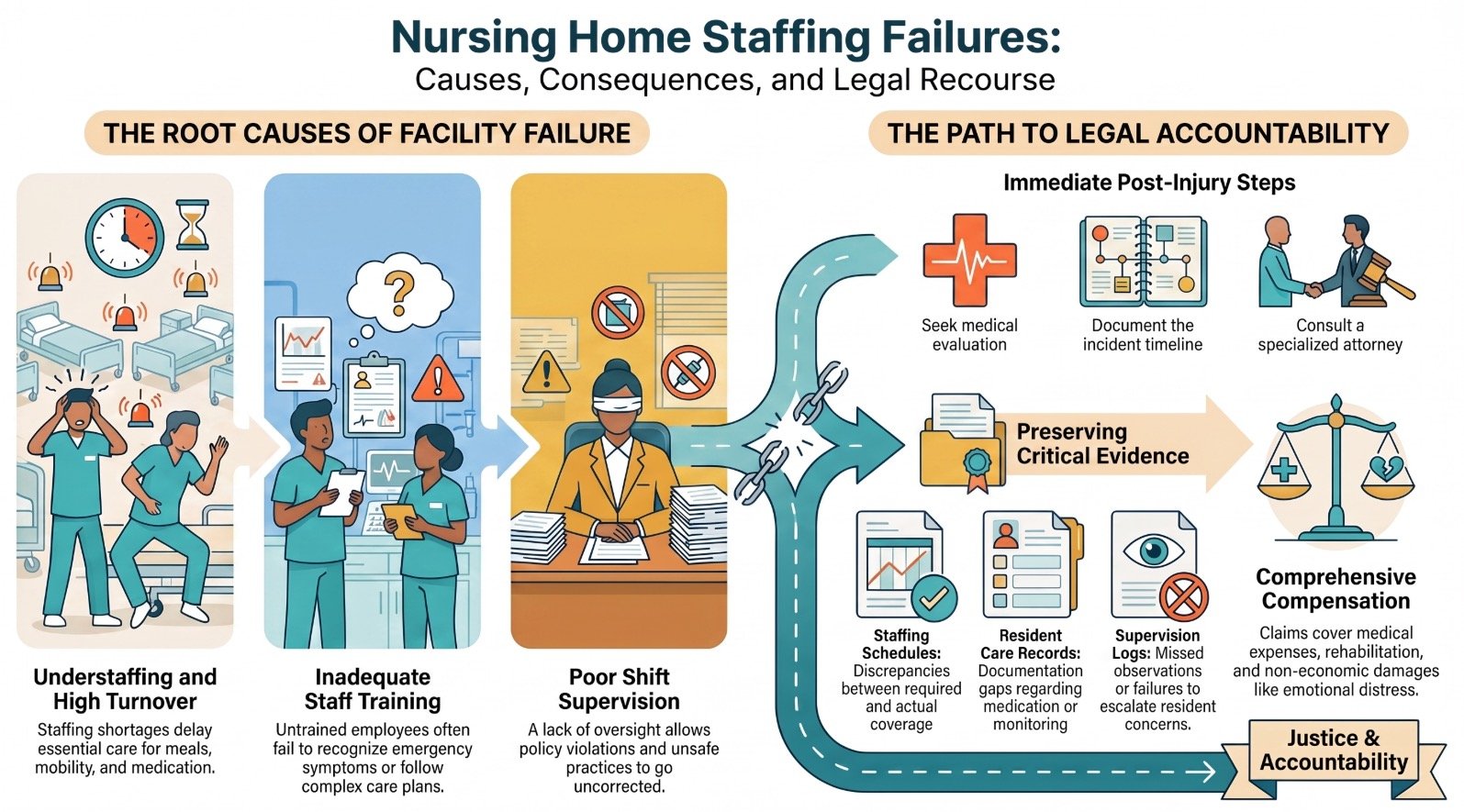
Common causes of Boca Raton nursing home staffing and supervision failures include understaffing and high employee turnover, which can reduce consistent care for residents. Inadequate staff training and poor shift supervision may leave caregivers unprepared to recognize or respond to residents’ needs. Negligent hiring practices can further increase risk when facilities fail to properly screen, qualify, or monitor employees.
Understaffing And High Turnover
Understaffing and high employee turnover can substantially impair a nursing home’s ability to provide consistent, attentive care and adequate supervision. Staffing shortages may leave too few caregivers responsible for residents with varied medical, mobility, and personal needs. As assignments expand, workload pressure can delay assistance with bathing, meals, toileting, repositioning, and medication-related observations. Residents may also face long response times when seeking help or inconsistent monitoring during vulnerable periods.
High turnover further disrupts continuity because new employees and temporary personnel may be unfamiliar with residents’ routines, preferences, and changing conditions. Frequent departures can strain remaining workers, increase fatigue, and create scheduling gaps that undermine reliable oversight. Facility leaders must maintain sufficient coverage and promptly address recurring vacancies. When preventable staffing failures contribute to neglect or injury, affected residents and families may seek legal guidance.
Inadequate Staff Training
When nursing home employees receive incomplete or inconsistent training, they may lack the knowledge and judgment necessary to recognize risks, follow care plans, and respond appropriately to residents’ changing needs. Training deficiencies can affect safe transfers, medication assistance, infection prevention, fall response, and communication with residents who have cognitive or physical limitations. Employees may also misunderstand when Emergency notification is required, delaying contact with designated representatives, medical professionals, or emergency services. Inadequate instruction regarding documentation can produce incomplete records and interfere with regulatory reporting after injuries, abuse allegations, neglect concerns, or other reportable events. Effective facilities provide role-specific education, practical demonstrations, competency evaluations, and periodic refresher courses. Consistent training supports respectful, individualized care and helps staff protect residents’ dignity, safety, and legal rights while fulfilling professional responsibilities.
Poor Shift Supervision
Poor shift supervision can allow unsafe practices, missed care needs, and policy violations to continue without timely correction. Supervisors may fail to conduct rounds, verify care assignments, respond to call-light delays, or communicate changes in resident condition between shifts. When oversight is inconsistent, staff members may overlook fall risks, medication concerns, hygiene needs, or signs of distress. These failures can create a Chain of causation in which an unaddressed problem develops into injury, illness, or prolonged suffering. Accurate resident neglect documentation may reveal whether supervisors received reports, reviewed care concerns, and took appropriate corrective action. Facilities serving vulnerable residents should maintain clear escalation procedures, timely handoffs, and documented supervisory checks. A consistent leadership presence helps identify problems early, supports conscientious caregivers, and promotes accountability for safe, respectful, and dependable resident care.
Negligent Hiring Practices
Negligent hiring practices can undermine every level of nursing home care, particularly when a facility employs individuals without adequately verifying their qualifications, experience, background, or ability to work safely with vulnerable residents. Inadequate background checks may overlook criminal histories, prior abuse allegations, license restrictions, falsified credentials, or documented misconduct at other facilities. When administrators prioritize filling vacancies over responsible screening, residents may face preventable neglect, mistreatment, medication errors, or unsafe care. Facilities should confirm references, licensing status, employment records, training, and competency before assigning staff to care for residents. Regular staffing audits can help identify incomplete files, expired credentials, repeated complaints, and patterns suggesting unsuitable hiring decisions. Thorough selection procedures protect residents and support compassionate, dependable service. Families may consult legal counsel when negligent hiring contributes to injury, decline, or loss of dignity.
Legal Rights of Boca Raton Nursing Home Staffing & Supervision Failures Injury Victims
Boca Raton nursing home residents injured by inadequate staffing or ineffective supervision may have legal rights to seek compensation and hold responsible parties accountable.
Florida law and federal regulations establish protections intended to preserve dignity, safety, informed decision-making, and access to appropriate care.
- Residents or authorized representatives may report suspected violations to regulators, ombudsman programs, or law enforcement without unlawful retaliation.
- They may request medical records, staffing documentation, incident reports, and other evidence relevant to the injury.
- A civil claim may seek damages for neglect, including medical expenses, rehabilitation costs, pain, emotional distress, disability, and diminished quality of life.
- Families may consult a qualified nursing-home injury attorney regarding deadlines, available defendants, and procedures for preserving evidence.
Resident rights under Florida statutes can support demands for reasonable care, accurate records, privacy, and participation in treatment decisions. Prompt assistance may help protect vulnerable individuals, clarify legal options, and promote accountability while allowing caregivers and families to advocate for safer, more respectful long-term care.
Why Do Boca Raton Nursing Home Staffing & Supervision Failures Injuries Happen?
Staffing and supervision failures in Boca Raton nursing homes often arise from insufficient personnel, inadequate training, high employee turnover, or ineffective management systems. When too few caregivers serve residents, crucial tasks such as repositioning, medication assistance, monitoring, and timely response may be delayed. Inexperienced or poorly trained employees may not recognize fall risks, medical changes, behavioral concerns, or signs of neglect. Frequent turnover can also disrupt continuity of care and leave remaining workers stretched too thin.
Management weaknesses may compound these conditions. Facilities that do not conduct Staffing compliance audits, verify qualifications, or enforce clear supervision policies can overlook recurring deficiencies. Inadequate scheduling, weak communication, and failure to investigate complaints may allow preventable hazards to persist. Reviewing resident incident trends could reveal repeated falls, elopements, medication errors, or unexplained injuries, yet some administrators fail to respond promptly. These systemic conditions increase the likelihood that residents will suffer harm while seeking necessary care, protection, and dignified daily support.
What Should You Do After a Boca Raton Nursing Home Staffing & Supervision Failure Injury?
After a Boca Raton nursing home staffing or supervision injury, the resident or representative should seek immediate medical care and ensure all treatment is documented. Document the incident promptly, including injuries, staff involvement, witnesses, photographs, and relevant facility records. Contacting a nursing home lawyer can help protect the injured person’s rights and support a thorough review of potential negligence.
Seek Immediate Medical Care
When a nursing home resident suffers an injury linked to inadequate staffing or supervision, obtain prompt medical evaluation, even if the harm initially appears minor. A physician or emergency department can assess fractures, head trauma, dehydration, medication effects, infection, and other conditions that may worsen without treatment. Emergency symptoms triage should be performed immediately when the resident has trouble breathing, chest pain, severe bleeding, sudden confusion, loss of consciousness, weakness, uncontrolled pain, or a possible spinal injury. Staff or family members should provide clinicians with relevant medication lists, known diagnoses, and the resident’s baseline condition. Medical professionals should document urgent findings, treatment recommendations, and required follow-up care in the clinical record. Timely care protects the resident’s health, supports informed decisions, and helps secure that necessary services are arranged without delay.
Document the Incident
Promptly documenting the incident can preserve important evidence of a Boca Raton nursing home staffing or supervision failure. A resident, family member, or caregiver should record the date, time, location, and circumstances surrounding the injury while details remain clear. The incident timeline should identify who was present, what assistance was requested, how staff responded, and when medical attention was provided. Photographs may document visible injuries, unsafe conditions, equipment problems, or environmental hazards, as long as privacy is respected. Preserve copies of medical records, care plans, medication logs, staffing information, and facility reports when available. Witness names and contact information can help clarify conflicting accounts. Written complaints should request a supervisor review and document the facility’s response, without altering original records or speculating about fault.
Contact a Nursing Home Lawyer
A Boca Raton nursing home staffing or supervision failure may involve incomplete records, conflicting accounts, and legal deadlines that are difficult to evaluate without professional guidance. A nursing home lawyer can preserve relevant evidence, request staffing schedules, incident reports, medication records, and surveillance materials, and identify responsible parties. Counsel may also arrange independent medical reviews to assess whether inadequate staffing or supervision contributed to the resident’s injury. Staffing compliance audits can reveal patterns involving insufficient personnel, missed checks, or departures from required policies. Family members should avoid altering records, speculating about fault, or discussing the matter publicly before receiving advice. Witness interview preparation helps organize observations and supports accurate, consistent testimony. A prompt consultation allows the lawyer to evaluate potential claims, explain available remedies, and protect the resident’s interests throughout the process.
Critical Evidence in a Boca Raton Nursing Home Staffing & Supervision Failures Injury Case
Critical evidence can establish whether inadequate staffing or supervision contributed to a resident’s injury and whether the facility violated its duties.
Relevant materials may include:
- Staffing schedules and ratios
- Supervision policies and logs
- Resident care records
- Witness statements and testimony
Reviewing these sources can help clarify what occurred, who was responsible, and whether timely protective measures were available.
Staffing Schedules and Ratios
When staffing schedules and resident-to-staff ratios are examined against the timing of an injury, they may reveal whether a Boca Raton nursing home maintained adequate coverage and supervision. Daily assignment sheets, timecards, call-out records, and agency staffing documents can show who was scheduled, present, or absent during key periods. Evaluate ratios in relation to resident acuity, mobility limitations, fall risks, and required assistance rather than as isolated numbers. Discrepancies may support questions about whether administrators followed staffing policies and responded appropriately to predictable coverage needs. Workflow compliance audits can identify recurring shortages, while staffing policy enforcement records may indicate whether corrective measures were applied consistently. This evidence can help clarify whether insufficient staffing contributed to delayed assistance, unmet needs, or preventable harm.
Supervision Policies and Logs
Effective supervision depends on written policies that define observation intervals, rounding requirements, response procedures, and staff responsibilities for residents requiring assistance. In a Boca Raton nursing home injury case, these policies can show whether management established reasonable safeguards and communicated them consistently. Supervision logs may document completed rounds, missed observations, delayed responses, unusual conditions, and corrective action. Entries should be timely, specific, and attributable to the responsible employee; later alterations may raise questions about reliability. Staffing compliance audits can reveal recurring gaps between written requirements and actual supervisory practices. Incident report reviews may identify patterns involving unattended residents, unanswered call systems, or failures to escalate concerns. In addition, policies and logs help clarify notice, accountability, and whether leadership took meaningful steps to protect vulnerable residents.
Resident Care Records
Resident care records can establish what assistance, monitoring, and interventions a resident required before an injury occurred in a Boca Raton nursing home staffing and supervision failures case. These records may identify scheduled checks, fall precautions, mobility limitations, toileting needs, and changes in medical condition. Documentation can also reveal whether assigned personnel completed required tasks or left vital care undocumented. Medication administration records may help identify Medication errors, missed doses, delayed treatment, or inadequate monitoring for adverse effects. Progress notes, care plans, and treatment orders can be compared to determine whether services matched professional recommendations and facility policies. Accurate entries may clarify incident timelines, including the resident’s condition before, during, and after an event. Missing, altered, or contradictory records can raise concerns requiring careful legal review and preservation.
Witness Statements and Testimony
Witness statements and testimony can clarify how staffing levels, supervision practices, and response times contributed to an injury in a Boca Raton nursing home. Residents, family members, nurses, aides, and administrators may describe what occurred, when assistance was requested, and whether policies were followed. Attorneys assess witness credibility by comparing accounts with care records, schedules, incident reports, and physical evidence. Expert review can help determine whether staffing decisions or supervisory omissions departed from accepted standards and contributed to harm. A careful deposition strategy may preserve detailed testimony, identify inconsistent explanations, and examine training, communication, and escalation procedures. Liability mapping connects each witness account to specific duties, decisions, and failures, helping clarify responsibility among employees, contractors, management, and the facility. This evidence may support a thorough, service-oriented pursuit of accountability and appropriate compensation.
Long-Term Effects of Boca Raton Nursing Home Staffing & Supervision Failures Injuries
Boca Raton nursing home staffing and supervision failures can cause chronic physical complications that persist long after the initial injury. Residents may also experience lasting emotional trauma, including anxiety, depression, or diminished trust in caregivers. Ongoing medical expenses for treatment, rehabilitation, medications, and supportive care may create substantial financial burdens.
Chronic Physical Complications
Chronic physical complications may develop when inadequate staffing or supervision allows injuries, untreated medical needs, or unsafe conditions to persist in a nursing home. A fall may lead to fractures, reduced mobility, pressure injuries, or permanent loss of independence. Missed repositioning, poor wound care, and delayed treatment can permit infections to worsen and create lasting functional limitations. Medication errors may cause organ damage, uncontrolled disease, or additional injuries when prescriptions are omitted, duplicated, or administered incorrectly. Residents may require prolonged rehabilitation, assistive devices, treatments tailored to specific conditions, or increased daily support. Families and advocates can help by documenting symptoms, requesting medical records, and promptly reporting concerns. Compliance audits, staffing reviews, and careful incident investigations may identify preventable failures. Legal guidance can clarify accountability and support recovery-related needs.
Lasting Emotional Trauma
When staffing or supervision failures expose nursing home residents to preventable injuries, neglect, or repeated unsafe conditions, the resulting emotional trauma may persist long after physical wounds have recovered. Residents may develop anxiety, depression, sleep disturbances, heightened fear, or reluctance to trust caregivers. Some repeatedly recall frightening events, withdraw from social activities, or feel powerless when routines resemble earlier unsafe experiences. These effects can impair dignity, independence, and willingness to participate in daily care. Compassionate observation is critical because older adults may communicate distress through silence, agitation, or behavioral changes rather than direct statements. Rehabilitation support can help restore confidence, coping skills, and engagement in meaningful activities. Family counseling may help relatives understand trauma responses, communicate patiently, and strengthen supportive relationships. Documentation and attentive advocacy help ensure emotional injuries receive appropriate recognition and response.
Ongoing Medical Expenses
Ongoing medical expenses can arise after staffing or supervision failures cause injuries that require extended treatment, rehabilitation, medication, expert evaluations, or increased assistance with daily activities. These costs may continue long after initial hospitalization, particularly when a resident develops chronic pain, reduced mobility, cognitive changes, or complications requiring expert care. Necessary services can include follow-up appointments, physical or occupational therapy, medical equipment, transportation, and in-home support. Qualified providers should evaluate pain management options and select treatment based on the resident’s condition and safety needs. Families may also explore financial assistance programs, insurance benefits, public resources, and the facility’s responsibility for eligible expenses. Thorough records of invoices, prescriptions, care plans, and functional changes can help document future needs and support informed legal and financial decisions.
Proving Liability in Boca Raton Nursing Home Staffing & Supervision Failures Injury Cases
Establishing liability in a Boca Raton nursing home staffing and supervision failure case requires evidence that the facility breached its duty to provide adequate personnel, training, and oversight, and that the breach caused the resident’s injury. Relevant proof may include staffing schedules, time records, employee qualifications, training materials, and supervision policies. Staffing audits can reveal recurring shortages, excessive assignments, or deviations from required care standards. State inspections, deficiency citations, and corrective-action reports may further document unsafe conditions or management’s failure to address known problems. Medical records and expert opinions can connect inadequate staffing or supervision to falls, medication errors, neglect, pressure injuries, or other harm. Witness testimony from residents, family members, employees, and treating professionals may establish what occurred and whether staff ignored warning signs. Preserving records promptly is important because electronic logs and surveillance footage may be routinely overwritten. A qualified nursing home injury lawyer can evaluate the evidence, identify responsible parties, and pursue accountability for the affected resident.
Dealing With Insurance Companies After a Boca Raton Nursing Home Staffing & Supervision Failures Injury
Insurance companies may respond to a Boca Raton nursing home staffing and supervision failure claim by minimizing the injury, disputing causation, or attributing the harm to the resident’s preexisting medical conditions. Representatives may request extensive records, statements, and authorizations while presenting releases that could limit future recovery. A resident or family should avoid guessing about events, signing documents without review, or accepting an early settlement before fully understanding the medical impact. Counsel can help preserve evidence, communicate with insurers, and distinguish ordinary disease progression from harm linked to inadequate staffing, poor monitoring, or unsafe supervision. Coverage questions may involve liability insurance, personal injury protection, and benefits available through Medicare coverage. Medicaid appeals may also become necessary when an injury creates treatment expenses, eligibility concerns, or disputes over payment responsibility. Caregivers and families serving vulnerable residents should maintain organized records of bills, treatment recommendations, communications, and changes in condition. Prompt, careful communication protects the resident’s interests while reducing avoidable administrative complications.
What to Expect During a Boca Raton Nursing Home Staffing & Supervision Failures Injury Claim Process
A Boca Raton nursing home staffing and supervision failures claim generally begins with an initial case evaluation to assess liability, injuries, and available legal remedies. The process then involves gathering evidence and documentation, followed by settlement negotiations based on the claim’s strength and value. If the parties do not reach a resolution, the matter may proceed to trial preparation and court proceedings.
Initial Case Evaluation
During the initial case evaluation, a Boca Raton nursing home staffing and supervision failures lawyer examines whether inadequate staffing, ineffective oversight, or improper delegation contributed to the resident’s injury. The lawyer listens to the family’s concerns, identifies the resident’s condition before and after the incident, and determines whether the circumstances warrant further review. A Resident Records Review may clarify care needs, documented supervision, and responses to changing risks. Staffing Audit Evidence can help assess whether staffing levels, schedules, qualifications, and supervisory practices aligned with the facility’s responsibilities. The evaluation also considers potential defendants, applicable deadlines, and the resident’s current needs. This early assessment does not establish liability, but it helps families understand available options and supports a careful, service-centered decision about pursuing accountability for harm within the facility.
Evidence And Documentation
Once the initial evaluation supports further review, evidence and documentation help clarify how staffing and supervision practices may have contributed to the resident’s injury. Counsel may request medical records, care plans, medication logs, incident reports, and prior complaints concerning similar conditions. Incident scene photos can preserve information about room layout, bed placement, call-light access, equipment, lighting, and other environmental details that may change after the event. Witness interviews may address staffing levels, response times, handoff procedures, and whether required monitoring occurred. A staff timecards analysis can compare scheduled assignments, clocked hours, overtime, and actual coverage during the relevant shift. Facility policies, training records, inspection findings, and electronic monitoring data may provide additional context. Families can assist by preserving communications, photographs, clothing, and personal notes. Accurate records support a careful, service-focused evaluation.
Settlement Negotiations
Settlement negotiations generally begin after the available records, medical evidence, and liability information support a meaningful assessment of the claim. Counsel may present a demand describing the resident’s injuries, treatment, financial losses, and the facility’s alleged staffing or supervision failures. Evidence collection, including schedules, care plans, incident reports, and communications, can help establish how inadequate oversight contributed to harm.
The facility or its insurer may respond by accepting responsibility, disputing liability, or proposing a different valuation. Expert witnesses may clarify whether staffing levels, delayed responses, or supervisory practices departed from accepted standards and caused the injury. Negotiations can involve several exchanges, supported by updated medical information and documented damages. Review any proposed settlement carefully, including payment terms, liens, confidentiality provisions, and the effect on future care. A resolution is finalized only after informed approval.
Trial Preparation and Proceedings
Trial preparation begins when the available evidence, witness testimony, and expert opinions establish the issues likely to be disputed in court. Counsel reviews staffing records, supervision policies, incident reports, medical documentation, and facility communications to develop a focused trial strategy. Evidence preservation remains crucial because schedules, electronic records, surveillance footage, and internal investigations may clarify whether understaffing or inadequate oversight contributed to the resident’s injury. During preparation, attorneys identify witnesses, conduct depositions, consult qualified experts, and file motions addressing admissibility or other procedural matters. At trial, each side presents opening statements, examines witnesses, introduces evidence, and delivers closing arguments. The judge determines legal issues, while the jury evaluates disputed facts when applicable. Throughout the proceedings, the resident’s legal team seeks accountability and fair compensation.
Compensation for Boca Raton Nursing Home Staffing & Supervision Failures Injury Damages
Compensation for injuries caused by inadequate nursing home staffing or supervision in Boca Raton may include medical expenses, rehabilitation costs, additional care needs, pain and suffering, and other documented losses. A legal review may examine whether understaffing, inadequate supervision, deficient Workplace safety training, or failures to follow federal staffing standards contributed to a resident’s injury. Relevant evidence can include medical records, incident reports, staffing schedules, witness statements, inspection findings, and facility policies. Compensation may also address costs associated with treating complications, arranging qualified assistance, or modifying a resident’s living environment. An attorney may help identify responsible parties, preserve evidence, and present a claim supported by reliable documentation. Families and residents seeking accountability for preventable harm may benefit from prompt consultation, especially when injuries worsen or records become difficult to obtain. Each claim depends on its facts, applicable deadlines, and proof connecting the facility’s conduct to the resulting injuries and losses.
Economic vs Non-Economic Damages in Boca Raton Nursing Home Staffing & Supervision Failures Cases
Boca Raton nursing home staffing and supervision failure claims may include economic damages, such as medical expenses, rehabilitation costs, and other measurable financial losses. Non-economic damages can cover pain, emotional distress, diminished quality of life, and other harms without a fixed monetary value. Proving these damage claims generally requires medical records, financial documentation, witness testimony, and other reliable evidence connecting the losses to the facility’s conduct.
Economic Damages
When inadequate staffing or supervision at a Boca Raton nursing home causes injury, damages may include both measurable financial losses and non-economic harm that is more difficult to quantify. Economic damages generally cover documented expenses resulting from the resident’s injury or worsened condition. These may include hospital bills, emergency treatment, physician visits, rehabilitation, medications, medical equipment, transportation, and necessary future care. A claim may also address increased residential-care costs when a resident requires a higher level of supervision or dedicated services. Financial records, care plans, invoices, and expert projections can help establish the amount. Staffing turnover trends may support resident neglect proof when they indicate chronic understaffing, inadequate training, or disrupted care. A careful review can connect facility failures to expenses, helping families pursue accountability and resources for appropriate ongoing care.
Non-Economic Damages
Non-economic damages address the physical pain, emotional distress, humiliation, anxiety, and diminished quality of life a resident may experience after inadequate staffing or supervision causes harm. Unlike economic damages, these losses do not have a fixed price, yet they reflect profound effects on dignity, independence, relationships, and emotional security. In Boca Raton cases, residents and families may seek compensation for discomfort from untreated conditions, fear following falls, embarrassment caused by neglect, or grief associated with reduced participation in meaningful activities. The value of compassionate care underscores why these harms matter. Staffing Compliance Audits and Documentation Improvement Strategies may strengthen facility practices and help preserve residents’ dignity, although they do not erase suffering already experienced. Evaluation typically considers the injury’s nature, duration, severity, and impact on daily living.
Proving Damage Claims
Proving damage claims in Boca Raton nursing home staffing and supervision failure cases requires clear evidence connecting the facility’s conduct to the resident’s losses. Economic damages may include medical treatment, rehabilitation, medication, medical equipment, transportation, and future care needs. Billing records, treatment notes, expert assessments, and employment or financial documentation can help establish these amounts. Non-economic damages address pain, emotional distress, loss of enjoyment, disfigurement, and diminished quality of life, which require careful testimony and professional evaluation. Evidence preservation is critical because records, surveillance footage, staffing schedules, incident reports, and electronic communications may clarify what occurred. Witness credibility also matters; consistent statements from residents, family members, caregivers, and experts can strengthen causation and damages. A thorough claim distinguishes documented expenses from personal harms while presenting both within a coherent account of the resident’s experience.
When a Boca Raton Nursing Home Staffing & Supervision Failures Injury Case Goes to Trial vs Settlement
A Boca Raton nursing home staffing and supervision failures injury case may proceed to trial or resolve through settlement, depending on the strength of the evidence, the severity of the resident’s injuries, and the parties’ assessment of litigation risks. Settlement can provide earlier compensation, reduce uncertainty, and spare families the demands of testimony and courtroom proceedings. Negotiations may address medical expenses, continuing care needs, pain, and other documented losses.
Trial may become necessary when liability remains disputed, settlement offers do not reflect the harm, or the facility denies responsibility. At trial, attorneys present records, staffing information, care plans, and testimony concerning what occurred. Evidence timelines can clarify whether inadequate staffing or supervision preceded the injury and whether the facility took corrective action. Witness credibility dynamics may substantially influence how jurors evaluate competing accounts from employees, family members, medical professionals, and administrators. Each path requires careful preparation focused on protecting the resident’s dignity and securing meaningful accountability.
Florida Laws That May Affect Your Boca Raton Nursing Home Staffing & Supervision Failures Case
When a Boca Raton nursing home resident suffers harm linked to inadequate staffing or supervision, several Florida laws may affect the resulting legal claim.
These rules help define facility duties, resident protections, and available evidence.
- Nursing Home Residents’ Rights: Florida Statutes section 400.022 protects dignity, safety, informed participation, and freedom from abuse or neglect. Violations may support negligence or statutory claims.
- Facility Regulation: Chapter 400 and related administrative rules address staffing, training, supervision, documentation, and emergency procedures. Records may reveal departures from required standards.
- Negligence Principles: Florida law generally requires proof of a duty, breach, causation, and damages. A facility’s policies, staffing decisions, and failure to monitor residents may be relevant.
- Evidence and Damages: Medical records, incident reports, staffing logs, witness statements, and inspection findings can clarify responsibility and losses.
Resident advocacy may help families identify concerns and preserve information. Strong Quality-of-care practices are both a legal expectation and a crucial safeguard for vulnerable residents. Consulting counsel can help evaluate how these laws apply.
The Statute of Limitations for Boca Raton Nursing Home Staffing & Supervision Failures Injury Cases
Florida law generally imposes strict deadlines for filing injury claims arising from nursing home staffing or supervision failures. The applicable limitations period can depend on the injury, the claim’s legal basis, the resident’s circumstances, and when the harm was discovered or reasonably should have been discovered. Certain statutes may provide different deadlines for negligence, medical negligence, wrongful death, or claims involving vulnerable adults.
A delayed filing can bar recovery even when inadequate staffing, improper training, or insufficient supervision caused serious harm. Potential claimants and their families should thus identify relevant dates promptly, including the incident, discovery of the injury, death, and any written notice required by law. Timely evidence preservation is also important because staffing schedules, supervision records, incident reports, medical charts, and surveillance footage may change or disappear.
Understanding the negligence elements does not eliminate the deadline, and informal discussions with a facility generally do not extend it. Because exceptions and notice requirements may apply, prompt legal review helps protect a resident’s ability to pursue accountability.
How a Boca Raton Nursing Home Staffing & Supervision Failures Lawyer Can Help You
How can a Boca Raton nursing home staffing and supervision failures lawyer assist after a resident suffers preventable harm? The lawyer can provide structured guidance, preserve relevant evidence, and advocate for residents whose dignity and safety depend on attentive care. A careful review may reveal whether inadequate staffing, weak oversight, or ignored warnings contributed to the incident.
A lawyer can investigate staffing failures, protect resident rights, preserve evidence, and pursue accountability after preventable nursing home harm.
- Investigating care failures: The lawyer may examine schedules, training records, incident reports, medical charts, and surveillance evidence to identify preventable breakdowns.
- Protecting resident rights: Counsel can address Resident retaliation concerns and support safeguards against intimidation, neglect, or other responses to complaints.
- Improving family communication: The lawyer can help families obtain clear explanations, organize questions, and communicate concerns through appropriate channels.
- Pursuing accountability: Findings from safety audits may clarify whether facility practices met regulatory compliance obligations and accepted standards of care.
This assistance enables families to serve vulnerable residents responsibly while encouraging transparency, corrective action, and safer institutional practices.
When to Contact a Boca Raton Nursing Home Staffing & Supervision Failures Lawyer
Knowing when to contact a Boca Raton nursing home staffing and supervision failures lawyer can help preserve evidence and clarify legal options. Families and concerned caregivers should seek urgent legal guidance after an unexplained injury, medication error, fall, wandering incident, neglect allegation, or sudden decline in a resident’s condition. Prompt consultation may also be appropriate when staffing shortages, inadequate monitoring, delayed assistance, or repeated safety concerns appear connected to harm.
A lawyer can advise the resident’s representative about immediate reporting steps, relevant records, and communications with the facility. Begin preserving evidence as soon as possible, including photographs, medical documentation, incident reports, staffing information, witness accounts, and messages about the resident’s care. Contact may be especially important before records change, surveillance footage is overwritten, or recollections become less reliable. Even when the cause of harm remains uncertain, an initial consultation can help identify whether staffing or supervision failures warrant further investigation and what steps may protect the resident’s interests.
Why You Need an Experienced Boca Raton Nursing Home Staffing & Supervision Failures Lawyer
An experienced Boca Raton nursing home staffing and supervision failures lawyer can evaluate whether inadequate staffing, poor training, or insufficient oversight contributed to a resident’s injury or decline. This review may identify missed assessments, delayed responses, medication errors, unsafe transfers, or failures to follow individualized care plans. Legal experience also helps preserve records, witness accounts, schedules, and facility policies that may clarify what occurred.
A careful investigation can reveal caregiver neglect patterns that are not apparent from a single incident. Repeated understaffing, inadequate supervision, incomplete documentation, or ignored complaints may demonstrate broader failures affecting resident safety. Counsel can explain how these facts relate to statutory duties, professional standards, and a resident rights overview, while helping families understand available remedies.
Experienced representation also promotes accountability and supports a meaningful response to preventable harm. By objectively examining the facility’s conduct, a lawyer can present evidence clearly, address disputed explanations, and pursue compensation for medical needs, suffering, and related losses without losing sight of the resident’s dignity.
How to Choose the Right Boca Raton Nursing Home Staffing & Supervision Failures Lawyer for Your Case
Selecting the right Boca Raton nursing home staffing and supervision failures lawyer requires careful attention to the attorney’s experience with long-term care cases, facility records, and vulnerable resident injuries. Attorney specialization fit matters because these claims may involve neglect, inadequate staffing, missed supervision, regulatory standards, and intricate medical evidence. A lawyer should know how to review staffing schedules, training records, incident reports, care plans, and internal communications for inconsistencies or omissions.
Local experience counts when evaluating counsel. Familiarity with Boca Raton courts, regional healthcare facilities, and applicable Florida nursing home laws can support efficient case preparation and informed strategy. Prospective clients may ask how similar matters were handled, who will manage the case, and how the firm develops evidence and expert testimony. Clear communication, compassionate representation, and a willingness to explain legal options are also important. A suitable attorney should protect the resident’s interests while pursuing accountability and resources that help the affected family move forward.
About The Law Offices of Anidjar & Levine
The Law Offices of Anidjar & Levine represents individuals and families addressing serious injuries linked to nursing home staffing and supervision failures. The firm examines whether inadequate staffing, insufficient training, or ineffective oversight contributed to neglect, preventable accidents, medication errors, or other harm.
Its legal team evaluates medical records, facility policies, staffing documentation, incident reports, and witness accounts to clarify what occurred. This review can help determine whether a nursing home failed to meet applicable duties and whether those failures affected a resident’s quality of care or resident safety.
The firm also helps families understand potential legal options and the evidence needed to support a claim. When appropriate, attorneys communicate with facilities, insurers, and other involved parties while pursuing accountability through negotiation or litigation. Its approach centers on careful investigation, informed decision-making, and respectful representation. Families seeking guidance may discuss their concerns with the firm to learn how Florida law could apply to the circumstances.
Frequently Asked Questions
Can Family Members Visit Unexpectedly to Assess Nursing Home Conditions?
Family members can often make unannounced visits to assess nursing home conditions, although facilities may enforce reasonable visitor limitations for safety, privacy, infection control, or resident routines. During Unannounced visits, visitors should remain respectful and avoid disrupting care. Observational checklists can help record staffing levels, responsiveness, cleanliness, and resident interactions. Documentation guidance includes dates, specific observations, names, communications, and photographs only when legally permitted, supporting responsible follow-up.
What Protections Exist for Residents Who Report Staffing or Supervision Concerns?
Residents who report staffing or supervision concerns may receive protections through federal and state laws, including non-retaliation safeguards that prohibit punishment, intimidation, eviction, or reduced services because of a complaint. A Mandatory Ombudsman program can provide confidential advocacy, investigate reported conditions, and help residents communicate with regulators. Residents may also contact licensing agencies, adult protective services, or law enforcement when warranted, while documenting concerns and preserving relevant records.
Can a Nursing Home Retaliate Against Relatives Who Raise Complaints?
A nursing home generally cannot lawfully retaliate against relatives who raise good-faith concerns about staffing, supervision, neglect, or resident safety. Retaliation may include restricting communication, denying visitation, intimidation, threats, or adverse treatment toward the resident because of family advocacy. The legality of retaliation depends on the facts and applicable protections. Families should preserve messages, document incidents, identify witnesses, and understand available complaint defenses before reporting concerns to regulators or pursuing legal remedies.
Are Staffing Records Available to Residents or Their Authorized Representatives?
Staffing records may be available to residents or their authorized representatives, although access depends on the record type, privacy restrictions, and applicable state and federal requirements. Resident access commonly includes requests for staffing logs, schedules, and related care documentation when necessary to evaluate services. Submit an authorized inquiry in writing, identifying the requested period and purpose. Facilities may require verification before approving documentation release or providing supervised review.
How Can Families Monitor a Loved One’s Care After Filing a Complaint?
Families can monitor a loved one’s care by visiting regularly, communicating directly with nurses and administrators, and documenting changes in condition. They should document care logs, including medication administration, meals, hygiene, injuries, and unanswered concerns. Families should also request incident reports promptly and compare them with medical records and care plans. Continued follow-up, written correspondence, and attendance at care meetings can identify unresolved problems and support appropriate corrective action.
—————————
Staffing and supervision failures can place nursing home residents at risk of falls, neglect, medication errors, abuse, and other serious injuries. Families should document warning signs, medical treatment, facility communications, and relevant records as soon as possible. An experienced Boca Raton nursing home negligence lawyer can investigate staffing practices, identify responsible parties, preserve evidence, and pursue available compensation. The Law Offices of Anidjar and Levine can evaluate the circumstances and explain potential legal options during a confidential consultation. Learn more from a Boca Raton Personal Injury Lawyer.

