

The Law Offices of Anidjar and Levine can examine whether poor supervision, unsafe premises, medication issues, staffing shortages, or care plan failures contributed to preventable harm in a Jacksonville nursing home. A Jacksonville Personal Injury Lawyer may review medical records, fall-risk assessments, incident reports, witness statements, surveillance footage, and facility policies. A claim may seek compensation for treatment, pain, reduced mobility, and related losses. Early action can help preserve important evidence before it disappears, and the sections below explain these issues in greater detail.
Main Takeaways
- A Jacksonville nursing home fall lawyer investigates staffing, supervision, care plans, medical records, and unsafe facility conditions.
- Falls may indicate neglect when known risks, call lights, mobility assistance, or bathroom safety needs were ignored.
- Evidence may include incident reports, witness statements, chart entries, medication records, care plans, and facility policies.
- Compensation may cover medical treatment, pain, reduced mobility, rehabilitation needs, and related losses from preventable fall injuries.
- Legal help can manage insurance negotiations, discovery disputes, missing records, and claims for resident care standard violations.


How We Can Help With Your Jacksonville Nursing Home Falls & Fall Injury Claim
When a nursing home resident suffers a fall, the injury claim may require immediate investigation into staffing practices, supervision failures, medical records, and facility safety conditions. A Jacksonville nursing home falls attorney can guide the resident’s family through each stage with disciplined attention to accountability and care. The legal team may evaluate Negligence standards, preserve legal documentation, interview witnesses, and consult medical professionals to determine how the fall occurred and what harm resulted. Careful case preparation can also address discovery disputes, missing chart entries, incident reports, and facility policies that may reveal preventable risks. When insurers or facility representatives respond, counsel can manage insurance negotiation, protect the resident’s interests, and pursue fair compensation for treatment, pain, and related losses. This support allows families to focus on the resident’s dignity and recovery while the legal process moves forward with purpose, compassion, and a clear demand for responsible conduct and meaningful corrective action.
OUR CONSULTATIONSARE FREE
START YOUR FREE CASE REVIEW

Understanding Jacksonville Nursing Home Falls & Fall Injury Cases
Although falls in nursing homes are sometimes dismissed as unavoidable accidents, many Jacksonville cases require a closer review of supervision, staffing, care planning, and environmental safety. These matters often involve vulnerable residents who depend on trained caregivers for daily support, mobility assistance, and timely intervention. A fall injury case may examine whether the facility recognized known risks, followed the resident’s care plan, and responded appropriately after warning signs appeared.
Legal review may also consider whether Staffing policies provided caregivers with sufficient time and resources to provide safe assistance. When poor documentation, delayed response, or ignored care needs contribute to harm, the facts may suggest resident neglect rather than an isolated incident. Families seeking accountability often serve an important protective role by asking careful questions and preserving records. In Jacksonville nursing home fall cases, the central issue is whether the facility met its duty to provide attentive, respectful, and reasonably safe care for each resident entrusted to it.
Common Causes of Jacksonville Nursing Home Falls & Fall Injury
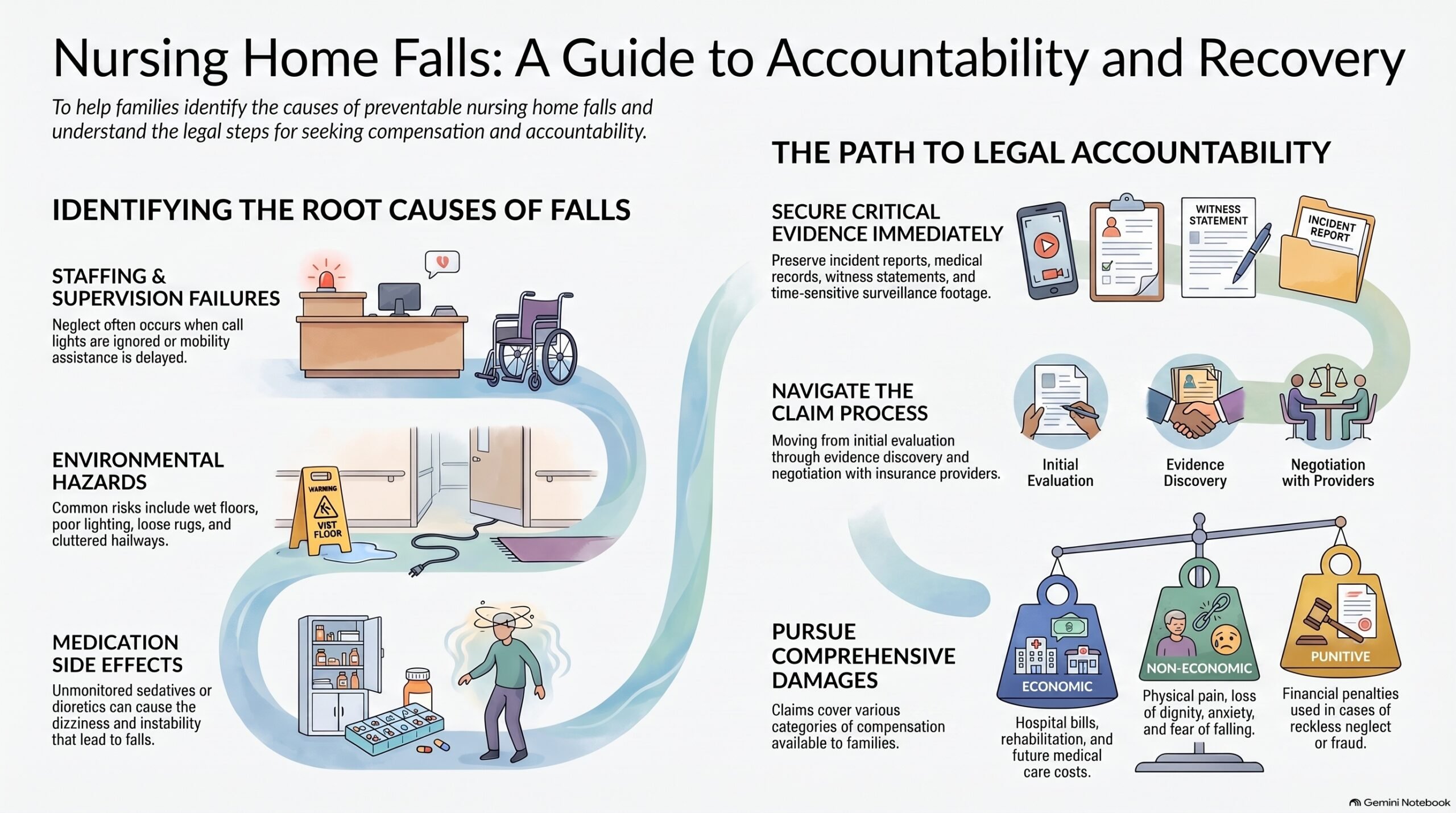
Falls in Jacksonville nursing homes often arise from preventable conditions, including poor staff supervision and unsafe walking areas. Medication side effects may also increase dizziness, confusion, or instability, placing residents at greater risk. When facilities fail to provide adequate mobility assistance, vulnerable residents may suffer serious fall-related injuries that warrant careful legal review.
Poor Staff Supervision
In many Jacksonville nursing homes, poor staff supervision is a major contributor to resident falls, particularly for individuals who need assistance with walking, transferring, toileting, or moving between rooms. When caregivers do not respond promptly, fail to observe recognized fall risks, or do not follow care plans, vulnerable residents may attempt unsafe movements without assistance. Efficient Monitoring Protocols require regular checks, timely call-light responses, and careful documentation of changes in strength, balance, cognition, or medication effects. Staffing Accountability also matters because supervisors must ensure that trained personnel are available, appropriately assigned, and informed about each resident’s needs. Families seeking to protect loved ones often rely on evidence showing whether supervision was consistent with professional standards. Inadequate oversight can indicate neglect when preventable risks were known but not addressed with reasonable care.
Unsafe Walking Areas
Across Jacksonville nursing homes, unsafe walking areas can create serious fall hazards when hallways, bathrooms, dining rooms, or resident rooms are not kept clear, stable, and properly maintained. Residents often rely on walkers, wheelchairs, handrails, and staff assistance, so even minor obstructions may place them at unnecessary risk. Slip Hazards may include wet floors, loose rugs, uneven thresholds, food spills, cluttered pathways, or poorly secured cords. Lighting Deficiencies can also prevent residents from seeing changes in floor level, nearby furniture, or needed support surfaces. Facilities serving vulnerable adults must inspect common areas, promptly correct hazards, and maintain safe routes for daily movement. When these duties are neglected, preventable falls may occur, raising concerns about whether the nursing home staff followed appropriate safety practices.
Medication Side Effects
Within Jacksonville nursing homes, medication side effects can significantly increase a resident’s risk of falling, particularly when prescriptions are not properly monitored or adjusted. Sedatives, blood pressure medications, diuretics, pain relievers, and drugs affecting cognition may cause dizziness, weakness, confusion, or sudden drops in blood pressure. Medication timing is also important, as administering certain drugs before walking, bathing, or therapy may leave residents unsteady during routine activities. Dosing errors can further heighten danger, especially for older adults with kidney impairment, dehydration, or multiple prescriptions. Responsible care requires careful review of medication changes, observation for adverse reactions, and prompt communication with prescribing providers. When staff overlook warning signs or fail to document concerns, preventable falls may occur, exposing vulnerable residents to serious injuries and unnecessary suffering, loss, and prolonged recovery periods.
Inadequate Mobility Assistance
When residents need help standing, walking, transferring, or using the restroom, inadequate mobility assistance can quickly create dangerous conditions for falls in Jacksonville nursing homes. Many residents rely on staff for balance support, gait belts, walkers, wheelchairs, or two-person transfers. If caregivers delay responses, rush movements, or ignore documented limitations, a resident may attempt unsafe movement alone or be improperly positioned during care. These failures can reflect understaffing, poor training, or lack of supervision.
Care plan reviews are essential because mobility needs often change after illness, medication changes, hospitalization, or physical decline. Facilities should update assistance levels, communicate risks, and ensure staff follow instructions consistently. Resident advocacy, including family reporting and attentive observation, helps identify unsafe patterns before serious injuries occur. Proper assistance protects dignity, safety, and well-being daily.
Don’t Wait. Call Our Florida Personal Injury Lawyers Now!


Legal Rights of Jacksonville Nursing Home Falls & Fall Injury Victims
After a fall in a Jacksonville nursing home, an injured resident may have legal rights that extend beyond routine medical care or an internal facility report. Florida law may allow the resident, or family acting with care and purpose, to seek accountability when harm results from neglect, unsafe conditions, or violations of Resident care standards. Legal action may address losses while encouraging safer treatment of vulnerable residents.
Legal rights after a nursing home fall may help protect dignity, safety, and accountability.
- Review of records, care plans, and incident reports
- Compensation for medical costs, pain, and reduced mobility
- Claims involving preventable harm or delayed response
- Protection against retaliation or dismissive treatment
- Evaluation of punitive damages options in serious cases
A legal claim may also help identify whether the facility respected the resident’s dignity, safety, and right to appropriate supervision. Families often pursue these rights not only to assist one person, but to support better care for others who cannot speak for themselves.
Why Do Jacksonville Nursing Home Falls & Fall Injuries Happen?
Why do falls happen so often in nursing homes despite policies designed to prevent them? Many incidents arise when staffing, supervision, and resident assessments do not match a person’s actual needs. Residents may have weakness, dementia, poor vision, medication side effects, or balance problems, yet require timely assistance with walking, transfers, toileting, and daily routines. When call lights go unanswered or high-risk residents are left unattended, preventable falls become more likely.
Care plan mistakes also contribute to serious harm. A resident’s plan may fail to note fall history, mobility limits, footwear needs, or required assistive devices. Even when risks are known, staff may not follow the plan consistently. Bathroom safety is another frequent concern, because many falls occur during urgent toileting, bathing, or transfers. Missing grab bars, wet floors, poor lighting, and inadequate help can create dangerous conditions. These failures undermine the duty to provide attentive, respectful care.
What Should You Do After a Jacksonville Nursing Home Fall & Fall Injury?
After a fall in a Jacksonville nursing home, prompt medical evaluation is necessary to identify injuries and create a reliable record of the resident’s condition. Family members or representatives should preserve evidence, including photographs, witness information, incident reports, and medical records. Consulting a lawyer can help determine whether neglect contributed to the fall and what legal options may be available.
Seek Immediate Medical Care
A resident who experiences a fall in a Jacksonville nursing home should receive prompt medical evaluation, even when injuries are not immediately visible. Staff, family members, or advocates should ensure that qualified medical professionals evaluate injury severity, including possible fractures, head trauma, internal bleeding, or medication-related complications. Delayed care can worsen outcomes, particularly for frail residents or those unable to clearly describe pain.
The incident should be addressed through proper care channels and reported promptly to appropriate nursing staff, supervisors, and the resident’s physician. Medical providers should preserve medical records related to examinations, diagnoses, treatment orders, and follow-up care. Caregivers should also track changes in symptoms, such as confusion, swelling, dizziness, weakness, or increased pain, so that emerging complications receive timely attention.
Document Fall Evidence
Before conditions change, evidence from the fall scene should be documented as thoroughly as possible to preserve details that may later clarify how and why the incident occurred. Caregivers, relatives, or facility representatives may note the incident scene, including flooring conditions, lighting, nearby furniture, footwear, mobility aids, call buttons, and visible hazards. Photographic documentation can help record bruising, torn clothing, wet surfaces, missing rails, or misplaced equipment before repairs or cleaning occur. Written observations should include names of staff present, witness statements, room conditions, and the resident’s immediate complaints. Careful timeline reconstruction may identify when the resident was last checked, when assistance was requested, and when medical care began. Prompt evidence preservation supports accountability, resident dignity, and a clearer understanding of preventable risks.
Contact A Lawyer
When a nursing home fall results in injury, contacting a lawyer can help protect the resident’s rights while evidence is still available and legal deadlines are still running. Families and advocates who seek to protect the resident’s well-being should communicate the urgency, preserve evidence, and request prompt legal guidance before records, video, or witnesses’ memories are lost.
A lawyer can review medical records, staffing levels, care plans, prior fall history, and facility policies to determine whether neglect contributed to the injury. Legal counsel may also handle communications with insurers, administrators, and corporate representatives, reducing pressure on the resident and family. Early involvement supports a careful investigation, strengthens accountability, and helps pursue compensation for medical care, pain, rehabilitation, and related losses when the facts justify a claim.
Critical Evidence in a Jacksonville Nursing Home Falls & Fall Injury Case
Critical evidence in a Jacksonville nursing home falls and fall injury case may determine whether negligence, poor supervision, or unsafe conditions contributed to the resident’s harm. Key records and testimony can help establish what happened before, during, and after the fall.
Important evidence may include:
- Incident reports prepared by nursing home staff
- Medical records documenting injuries, treatment, and prognosis
- Witness statements from residents, visitors, or employees
- Surveillance footage showing the fall or surrounding conditions
- Facility records related to staffing, care plans, and fall-risk assessments
Incident Reports
An incident report is often one of the most essential early records in a Jacksonville nursing home fall injury case because it may capture how the fall occurred, who was present, the resident’s condition, and the steps the facility took immediately afterward. This document can help clarify whether staff responded with appropriate care, whether safety procedures were followed, and whether hazards were identified or corrected. An accurate Incident report timeline may show delays in supervision, response, or notification, which can assist those seeking accountability for a vulnerable resident. Careful preservation of witness details is also crucial because memories may fade and staff assignments may change. When reviewed with other evidence, the report can reveal inconsistencies, omissions, or patterns that warrant further investigation.
Medical Records
Beyond the facility’s incident report, medical records often provide the clearest picture of the resident’s condition before and after a nursing home fall. These records may include physician notes, nursing assessments, medication lists, care plans, hospital evaluations, imaging results, and rehabilitation orders. In a Jacksonville nursing home fall case, they help show whether staff recognized fall risks, followed physician instructions, monitored changes, and responded promptly after injury. A careful review may reveal signs of medical negligence, including delayed treatment, incomplete assessments, or failure to update safety measures after prior concerns were raised. Medical records also support evidence preservation, because timely requests can help secure chart entries before memories fade or documentation becomes harder to verify. For families committed to protecting vulnerable residents, these records can provide objective guidance and accountability during investigation.
Witness Statements
When a fall occurs in a nursing home, witness statements can clarify what happened before, during, and after the incident. Residents, staff members, visitors, and emergency responders may each provide details regarding supervision, hazards, lighting, footwear, calls for help, or delays in assistance. These accounts can help identify whether caregivers followed the resident’s care plan and responded with appropriate diligence. Consistent statements may strengthen a claim, while conflicts may require careful review of witness credibility. Attorneys may compare written reports with later testimony and prepare deposition questions that address timing, observations, training, and prior complaints. For families seeking accountability, witness statements can preserve the voices of those who saw the resident’s needs firsthand. This evidence supports a fuller understanding of whether preventable neglect contributed to serious harm in Jacksonville facilities.
Surveillance Footage
In and around nursing home common areas, surveillance footage can provide vital evidence of how a fall occurred and whether staff acted reasonably before and after the incident. Video may show hazards, delayed assistance, improper transfers, or failures to monitor residents who needed help. For families seeking accountability, this evidence can clarify events when memories are incomplete, or records omit important details. Falls liability standards often depend on what staff knew, what they should have known, and whether timely precautions were taken. Prompt preservation of camera footage is crucial because many systems overwrite recordings within days. A lawyer may send preservation notices, identify relevant camera locations, and compare video with care plans, incident reports, and witness statements. Careful review supports fair evaluation while honoring the resident’s dignity and safety.
Long-Term Effects of Jacksonville Nursing Home Falls & Fall Injury Injuries
Falls in Jacksonville nursing homes can leave residents with lasting consequences, including chronic pain, reduced mobility, and diminished independence. These injuries may also contribute to emotional distress, fear of falling, cognitive decline, or worsening confusion, particularly among residents with existing health concerns. Over time, fall-related harm can increase the risk of medical complications, extended treatment needs, and a broader decline in overall health.
Chronic Pain And Mobility
After a serious nursing home fall, chronic pain and reduced mobility can become lasting problems that affect nearly every part of a resident’s daily life. Pain from fractures, joint injuries, soft tissue damage, or spinal trauma may limit walking, standing, bathing, and transferring from beds or chairs. When movement becomes difficult, residents may require more assistance with basic care, therapy appointments, and safe positioning throughout the day. Reduced mobility can also increase the risk of additional falls, pressure injuries, and physical decline. Care facilities have a duty to monitor pain, follow treatment plans, and adjust support as a resident’s condition changes. Effective fall prevention depends on careful assessment, proper equipment, and consistent staff training. These measures help preserve dignity, independence, and safety for vulnerable residents entrusted to professional care.
Emotional And Cognitive Impact
A serious nursing home fall can disrupt emotional stability and cognitive function, especially for residents who already face frailty, memory loss, or medical vulnerability. After a fall, residents may become fearful, withdrawn, irritable, or hesitant to participate in daily activities that once supported connection and dignity. Some experience confusion, reduced concentration, or worsening anxiety, particularly when the event undermines their sense of safety. Grief and loss may also arise when independence, confidence, or trusted routines are diminished. Families and caregivers serving these residents should recognize that emotional recovery is often as important as physical repair. Supportive communication, consistent reassurance, and careful observation can aid trauma coping while identifying behavioral changes that require attention. Compassionate advocacy helps ensure that emotional harm is not overlooked.
Increased Medical Complications
Often, a serious nursing home fall creates medical complications that extend well beyond the initial injury. Fractures, head trauma, or immobility may lead to infections, blood clots, pressure sores, or worsening cardiac and respiratory conditions. In Jacksonville facilities, these risks require prompt assessment, accurate documentation, and coordinated care planning to protect vulnerable residents. Delayed treatment or poor monitoring can allow manageable conditions to become life-threatening. Medication management is also important because pain medicine, anticoagulants, sedatives, or changed prescriptions may increase confusion, bleeding risk, dizziness, or additional falls. A resident’s recovery often depends on whether staff recognize warning signs and communicate changes to physicians and family members. When complications develop after a preventable fall, legal review may help determine whether neglect contributed to the resident’s decline or prolonged suffering.
Don’t Wait. Call Our Florida Personal Injury Lawyers Now!
Proving Liability in Jacksonville Nursing Home Falls & Fall Injury Cases
When a nursing home resident suffers a fall in Jacksonville, proving liability requires more than showing that an injury occurred on the facility’s premises. The analysis often centers on whether caregivers, administrators, or outside staff failed to follow Negligence standards designed to protect vulnerable residents. Evidence may include care plans, staffing records, fall-risk assessments, incident reports, witness statements, and medical documentation.
A careful review may also address regulatory compliance, including whether the facility followed state and federal rules on supervision, mobility assistance, hazard prevention, and timely response after a fall. Because resident rights include dignity, safety, and appropriate care, violations may support a claim when they directly result in preventable harm.
Jacksonville cases may also involve comparative fault arguments, such as claims that a resident ignored instructions. However, cognitive limits, mobility impairments, and known risks must be considered when evaluating responsibility within a caregiving environment.
Dealing With Insurance Companies After a Jacksonville Nursing Home Fall & Fall Injury
After a fall injury at a Jacksonville nursing home, insurance companies may become involved quickly, particularly if the facility carries liability coverage or is part of a larger corporate ownership structure. Their representatives may seek statements, records, or broad medical authorizations, while evaluating exposure and limiting financial responsibility. Families serving an injured resident should approach these communications with care, since early remarks may later be used to dispute severity, causation, or notice of unsafe conditions.
A focused Denial response strategy may involve reviewing policy language, incident reports, staffing records, photographs, witness accounts, and medical documentation before answering unfavorable coverage positions. Payout timelines explained should also account for insurer investigation periods, documentation demands, medical stabilization, and negotiations over future care needs. A Jacksonville nursing home fall injury lawyer may help preserve communication boundaries, protect the resident’s dignity, and ensure insurers receive accurate evidence without unnecessary disclosures that could undermine fair compensation for harm and losses.
What to Expect During a Jacksonville Nursing Home Falls & Fall Injury Claim Process
The claim process typically begins with an initial case evaluation, where the circumstances of the fall, injuries, and potential liability are reviewed. Evidence and records, including medical files, incident reports, staffing information, and witness statements, may then be gathered to support the claim. If negotiations with insurers do not result in a fair resolution, filing a lawsuit may become necessary to pursue compensation through the court system.
Initial Case Evaluation
How does an initial case evaluation begin in a Jacksonville nursing home fall injury claim? It typically starts with a careful review of the resident’s condition, the circumstances of the reported fall, and the family’s concerns about safety and care. An attorney may assess whether neglect, inadequate supervision, or unsafe conditions contributed to the injury and identify urgent steps for Evidence preservation. The evaluation also considers legal timelines, because prompt action can protect the resident’s rights and support accountability.
During this stage, Medical documentation is reviewed at a general level to understand injury severity, treatment needs, and future care concerns. The attorney may also discuss potential negotiations with the insurer, likely challenges, and available legal options. This early guidance helps families make informed decisions while honoring the resident’s dignity.
Evidence And Records
In a Jacksonville nursing home fall injury claim, evidence and records often become central to determining what occurred, whether care standards were followed, and whether the resident’s injury could have been prevented. Relevant materials may include care plans, fall-risk assessments, medication records, staffing logs, surveillance footage, photographs, witness statements, and hospital records. Careful evidence preservation helps protect fragile information before it is altered, lost, or overwritten. Attorneys may review gaps in incident reports, compare charting with residents’ conditions, and request record authentication to confirm accuracy and source. If a facility destroys or withholds important materials after receiving notice of a potential claim, courts may impose spoliation sanctions. For families committed to a resident’s dignity, these records can provide a structured, factual account of care and accountability.
Negotiating With Insurers
After the evidence is gathered and the resident’s injuries are medically documented, negotiations with insurers may begin as a structured exchange of liability arguments, damages evidence, and settlement positions. Insurers often review incident reports, staffing records, care plans, photographs, and medical opinions to assess responsibility and value. A careful settlement negotiation strategy helps present the resident’s needs with clarity, emphasizing safety failures, preventable harm, and the cost of continued care. Qualified damages calculations may include medical expenses, rehabilitation, pain, reduced mobility, emotional distress, and future support needs. Advocates serving vulnerable residents work to ensure the insurer considers the full impact, not only immediate bills. Each response from the insurer is evaluated against the evidence, with attention to fairness, accountability, and the resident’s long-term dignity and protection.
Filing A Lawsuit
Filing a lawsuit may become necessary when settlement negotiations do not result in fair compensation or when the insurer disputes responsibility for the resident’s fall-related injuries. In Jacksonville nursing home fall claims, litigation begins with a formal complaint identifying negligent acts, injuries, and requested relief. The facility then responds, and both sides enter discovery, during which records, witness statements, staffing information, and care plans are examined. Evidence preservation remains crucial, especially when surveillance footage, incident reports, or medical notes may clarify how the fall occurred. Proving damages requires showing the resident’s physical harm, pain, medical expenses, decline in mobility, and related losses. Throughout the process, counsel may pursue settlement while preparing for trial, helping protect the resident’s dignity and the family’s effort to seek accountability.
Compensation for Jacksonville Nursing Home Falls & Fall Injury Damages
Compensation for Jacksonville nursing home falls and fall injury damages may include payment for medical treatment, pain and suffering, emotional distress, disability, and other losses tied to the resident’s injuries. Such recovery depends on proof that unsafe conditions, inadequate supervision, poor staffing, or neglect contributed to the fall and resulting harm. Families seeking accountability often act not only to address personal loss, but also to protect vulnerable residents from repeated failures in care.
Florida’s Comparative Negligence rules may affect the amount recovered if the resident or another party is found partly responsible. Careful investigation can help clarify how the fall occurred and whether the facility failed to meet accepted safety standards. Damages Caps may also influence certain claims, depending on the type of damages and applicable law. Legal review can help families understand available compensation, preserve evidence, and pursue a fair result with dignity and purpose after serious injury.
Economic vs Non-Economic Damages in Jacksonville Nursing Home Falls & Fall Injury Cases
Economic and non-economic damages serve different roles in Jacksonville nursing home fall injury cases, particularly when evaluating medical cost recovery and the broader impact of harm. Economic damages may include hospital bills, rehabilitation expenses, and future care needs, while non-economic damages address pain and suffering caused by the fall. Valuing fall injuries requires careful review of medical evidence, functional limitations, and the lasting effect on the resident’s quality of life.
Medical Cost Recovery
When a nursing home fall in Jacksonville causes injury, medical cost recovery often becomes a central part of the legal claim. These damages may include ambulance transport, emergency treatment, hospitalization, surgery, rehabilitation, prescription medication, assistive devices, and follow-up care. A careful review of bills, insurance statements, and provider records helps identify the full financial burden created by the fall.
Recovery also requires attention to Medicare liens, Medicaid reimbursement, and private health insurer claims, because benefit providers may seek repayment from any settlement or verdict. Proper handling of these obligations protects the injured resident’s restoration and supports fair distribution of funds. In many cases, documentation from physicians and care planners can also establish the need for future treatment, helping ensure that compensation reflects ongoing medical needs caused by preventable neglect.
Pain And Suffering
After a nursing home fall causes serious harm, pain and suffering damages address losses that medical bills alone do not capture. These non-economic damages may reflect physical pain, emotional distress, loss of dignity, reduced independence, anxiety, and fear of future falls. In Jacksonville nursing home cases, such harm often affects residents who already depend on attentive care, safe supervision, and compassionate support.
Evidence may include medical records, caregiver observations, family testimony, therapy notes, and documentation of changes in mood or daily function. Medication management can also be relevant when improper dosing, sedating drugs, or missed assessments contributed to suffering. Facilities may raise negligence defenses, claiming the fall was unavoidable or caused by the resident’s condition, making careful review critical to protect vulnerable residents and uphold accountability.
Valuing Fall Injuries
In Jacksonville nursing home fall cases, valuing injuries requires carefully separating economic from non-economic damages while recognizing that both categories reflect the full impact of the harm. Economic damages may include hospital bills, rehabilitation costs, medication expenses, assistive devices, and future medical care. They may also account for relocation costs or added caregiving needs after a serious fracture or head injury. Non-economic damages address pain, emotional distress, loss of dignity, reduced mobility, and diminished enjoyment of daily life. A fair fall injury settlement depends on medical proof, witness accounts, facility records, and the resident’s prior condition. In cases involving reckless neglect, ignored fall risks, or falsified records, eligibility for punitive damages may also be evaluated under Florida law to deter harmful conduct and protect vulnerable residents.
When a Jacksonville Nursing Home Falls & Fall Injury Case Goes to Trial vs Settlement
For many Jacksonville nursing home fall injury cases, the decision to settle or proceed to trial depends on the strength of the evidence, the severity of the resident’s injuries, and the willingness of the facility or insurer to accept responsibility. Settlement may serve a vulnerable resident by providing timely care resources, reducing stress on the family, and avoiding uncertain outcomes. However, trial may become necessary when the defense disputes neglect, minimizes harm, or offers compensation that does not reflect the resident’s losses.
Attorneys evaluate Jury Decision Factors, including witness credibility, medical records, fall history, staffing practices, and whether the facility followed safety procedures. Trial Preparation Steps may include gathering incident reports, consulting medical experts, preparing caregivers or family members to testify, and organizing evidence in a clear sequence. Whether resolved through settlement or verdict, the guiding focus remains accountability, dignity, and protection for residents who depended on attentive care.
Don’t Wait. Call Our Florida Personal Injury Lawyers Now!
Florida Laws That May Affect Your Jacksonville Nursing Home Falls & Fall Injury Case
Florida law can shape a Jacksonville nursing home fall injury case long before settlement discussions or trial strategy are complete. Families, caregivers, and advocates often need to understand how resident protections, facility duties, and documentation rules may influence a claim involving nursing home neglect.
- Florida premises rules may apply when unsafe flooring, poor lighting, or uncorrected hazards contribute to a resident’s fall.
- State and federal care standards can help evaluate whether staff failed to assess risks or provide proper supervision.
- Evidence preservation is critical and includes incident reports, care plans, surveillance footage, staffing records, and witness names.
- Reporting requirements may create records that clarify whether prior complaints or repeated falls were ignored.
- Liability deadlines can affect case planning, although each claim requires careful review of the applicable legal framework.
These laws are intended to promote dignity, safety, and accountability for vulnerable residents. A careful legal review can help determine whether a facility’s conduct fell below required standards.
The Statute of Limitations for Jacksonville Nursing Home Falls & Fall Injury Cases
Often, the statute of limitations is one of the most important legal issues in a Jacksonville nursing home fall injury case because it can determine whether a claim may proceed at all. In Florida, filing deadlines may vary depending on whether the case involves negligence, nursing home resident rights, wrongful death, or Premises liability. Missing the applicable deadline can prevent an injured resident or family from seeking compensation, even when the fall caused serious harm.
Time limits also matter because nursing home fall cases often depend on records, witness accounts, staffing information, photographs, and incident reports. Prompt attention supports the preservation of evidence, which can be necessary when determining how the fall occurred and whether preventable hazards, inadequate supervision, or unsafe conditions contributed to the injury. Families who serve as advocates for vulnerable residents should recognize that delay can weaken a claim. Understanding the deadline early helps protect legal rights while preserving the resident’s dignity and care concerns.
How a Jacksonville Nursing Home Falls & Fall Injury Lawyer Can Help You
After filing deadlines are identified and evidence concerns are addressed, a Jacksonville nursing home falls and fall injury lawyer can evaluate whether the incident resulted from neglect, unsafe premises, inadequate staffing, poor supervision, or failures in care planning.
This review may help families protect a vulnerable resident while promoting accountability in a care setting.
- Evidence preservation, including records, photos, videos, and incident reports
- Witness interviews with staff, residents, visitors, and treating providers
- Review of fall-risk assessments, care plans, staffing logs, and supervision notes
- Analysis of nursing home negligence, including ignored warnings or unsafe conditions
- Insurer negotiation aimed at fair compensation for medical needs, pain, and losses
A lawyer can organize medical evidence, identify responsible parties, and present the claim accurately and purposefully. This support allows families to focus on the resident’s dignity, recovery, and continued care, while the legal process addresses preventable harm through structured advocacy.
When to Contact a Jacksonville Nursing Home Falls & Fall Injury Lawyer
When a nursing home resident suffers a fall, legal guidance should be sought as soon as the injury, circumstances, or the facility’s response raises concern. Families, guardians, or advocates may seek counsel after unexplained bruising, fractures, head trauma, repeated falls, delayed medical care, or inconsistent reports from staff. Prompt contact is also appropriate when records are difficult to obtain, witnesses may be unavailable, or the resident cannot clearly describe what occurred.
Early outreach helps preserve important information, including incident reports, care plans, staffing details, medication records, and photographs of unsafe conditions. For families balancing work, caregiving, and distance, video-call consult options may make timely reviews more accessible. When language barriers affect communication, bilingual case support can help relatives share facts accurately and understand next steps. Contacting a Jacksonville nursing home falls lawyer does not require certainty that wrongdoing occurred; it allows concerns to be reviewed responsibly, with the resident’s safety and dignity prioritized.
Why You Need an Experienced Jacksonville Nursing Home Falls & Fall Injury Lawyer
Because nursing home fall cases often involve medical records, staffing practices, and regulatory standards, experienced legal representation can be important in identifying whether a preventable failure occurred. An experienced Jacksonville nursing home falls and fall injury lawyer understands how to evaluate care plans, incident reports, witness statements, and facility policies in relation to a resident’s known risks. This review can reveal Staffing negligence, poor supervision, delayed response times, or failures to implement fall precautions.
Legal experience also helps uncover documentation gaps that may hide what happened before, during, and after a fall. Facilities may record events incompletely, use vague descriptions, or omit critical details about monitoring, equipment, or staff availability. Careful legal analysis can connect these omissions to broader safety concerns. For families seeking accountability, experienced representation supports a focused investigation, preserves important evidence, and helps confirm that vulnerable residents are treated with dignity, protection, and the attentive care they merit under applicable standards.
How to Choose the Right Jacksonville Nursing Home Falls & Fall Injury Lawyer for Your Case
Choosing the right Jacksonville nursing home falls and fall injury lawyer requires attention to experience, case focus, and the ability to investigate facility conduct with precision. Families should seek counsel that understands fall-prevention duties, staffing failures, medical documentation, and the standards that protect vulnerable residents. A thoughtful Attorney consultation can reveal whether the lawyer listens carefully, explains legal options clearly, and treats the resident’s dignity as central to the claim.
A qualified lawyer should outline a case strategy that addresses liability, damages, witness accounts, and facility policies. The firm should also use an evidence checklist to identify incident reports, care plans, surveillance footage, medication records, and prior complaints. These details help determine whether neglect, poor supervision, or unsafe conditions contributed to the injury. Families caring for an injured loved one should choose representation that communicates consistently, prepares thoroughly, and pursues accountability through disciplined advocacy focused on safety, respect, and meaningful recovery.
About The Law Offices of Anidjar & Levine
The Law Offices of Anidjar & Levine represents injured residents and families in Jacksonville nursing home fall injury cases, with a focus on identifying neglect, unsafe conditions, and failures in resident supervision.
The firm approaches each matter with respect for vulnerable residents and the families who seek accountability on their behalf.
Its legal team evaluates medical records, facility policies, staffing practices, incident reports, and witness accounts to determine how a fall occurred and whether preventable harm resulted.
This Investigation strategy helps reveal patterns involving inadequate monitoring, poor mobility assistance, medication errors, or unsafe premises.
The firm also examines Staff liability when caregivers, nurses, administrators, or facility employees fail to follow accepted standards of care.
By building cases with careful documentation and professional analysis, the office supports meaningful compensation claims.
Through client communication, case preparation, and advocacy, The Law Offices of Anidjar & Levine serves families pursuing justice after nursing home fall injuries in Jacksonville.

Frequently Asked Questions
Can Nursing Home Residents Refuse Fall Prevention Measures?
Yes, nursing home residents may generally refuse fall-prevention measures if they have decision-making capacity. Facilities must respect capacity rights while explaining risks, benefits, and safer alternatives. When refusal measures pose a serious danger, staff should reassess care plans, document the informed refusal, notify the appropriate representatives, and consider less restrictive interventions. Those serving residents should balance autonomy with protection, ensuring dignity, safety, and lawful, person-centered care. Consult applicable state regulations.
Are Bed Rails Considered Restraints in Florida Nursing Homes?
Yes, bed rails may be considered restraints in a Florida Nursing Home when they restrict a resident’s movement, access, or ability to exit the bed independently. Bed Rail Rules require individualized assessment, medical justification, resident consent when appropriate, and regular monitoring. Care teams serving residents must consider safer alternatives first, document risks and benefits, and ensure rails are not used for staff convenience, punishment, or unnecessary control.
Can Family Members Install Cameras in a Nursing Home Room?
Yes, family members may install cameras in a nursing home room in Florida, but only when Consent laws and privacy rights are carefully honored. The resident must generally consent if capable, and any roommate’s written permission should be obtained. Facilities may have policies addressing placement, notice, and recording limits. Those seeking to protect vulnerable residents should coordinate respectfully with staff, avoid hidden surveillance, and preserve dignity while monitoring care conditions.
Do Fall Risks Affect Nursing Home Admission Decisions?
Yes, fall risks can affect nursing home admission decisions, but they should not automatically justify rejection. Facilities must assess whether they can meet the person’s care needs with appropriate staffing, supervision, and safety measures. Serious mobility issues may create admission eligibility risks if resources are inadequate. Families caring for a vulnerable loved one should review assessments carefully, because ignored hazards, repeated falls, or poor care planning may constitute evidence of neglect.
Who Pays for Transportation After a Nursing Home Fall?
Transportation after a nursing home fall is often paid for by Medicare, Medicaid, private insurance, or the nursing facility, depending on medical necessity and responsibility. Staff should document the injury, arrange safe transport, and promptly notify the family or representatives. If negligence contributed to the fall, expenses may become part of a liability claim process. Caregivers serving residents should preserve records, invoices, and discharge instructions to support accurate payment review.
—————————
Falls in nursing homes may signal preventable neglect, inadequate supervision, or unsafe conditions.
Injured residents and their families may have legal options for pursuing compensation and accountability.
A Jacksonville nursing home falls and fall injury lawyer can evaluate the circumstances, preserve evidence, and pursue a claim against responsible parties.
The Law Offices of Anidjar and Levine provide experienced guidance in these sensitive matters, helping clients understand their rights and take informed legal action.
Learn more from a Jacksonville Personal Injury Lawyer.

