The Law Offices of Anidjar and Levine, a Florida medical malpractice surgical errors lawyer, evaluates whether a healthcare provider breached the accepted standard of care and caused preventable injury. The review may include operative reports, imaging, consent forms, medication records, follow-up notes, and independent expert opinions. Potential claims can involve miscommunication, anesthesia mistakes, inadequate planning, delayed diagnosis, or poor postoperative monitoring. Recoverable damages may include medical expenses, lost income, rehabilitation, continuing care, and legally available noneconomic losses. For related legal guidance, visit our Florida Personal Injury Lawyer page for further information about vital steps and considerations.
Main Takeaways
- A Florida medical malpractice lawyer evaluates whether a surgical error breached the accepted standard of care and caused preventable injury.
- Attorneys review operative reports, imaging, prescriptions, follow-up notes, billing records, and informed consent documentation.
- Independent medical experts assess surgical technique, planning, anesthesia, communication, postoperative monitoring, and responses to complications.
- Potential compensation may include medical expenses, future care, lost income, reduced earning capacity, pain, and suffering.
- Seek prompt medical treatment, preserve records and bills, document complications, and consult counsel about Florida filing deadlines.


How We Can Help With Your Florida Medical Malpractice Surgical Errors Injury Claim
When a surgical error causes injury, a Florida medical malpractice attorney can evaluate whether the care provided fell below the accepted medical standard and contributed to the patient’s harm. The attorney may begin by listening carefully to the patient’s account, identifying concerns, and explaining potential next steps without making premature conclusions.
A thorough review of Medical Records, operative reports, imaging, prescriptions, and follow-up notes can help clarify what occurred before, during, and after surgery. When appropriate, an attorney may recommend a Second Opinion from a qualified healthcare professional to assess the injury and available Treatment Options. Independent Expert Review can also help determine whether the provider’s decisions, technique, or response to complications were consistent with professional standards.
The legal team can organize relevant information, communicate with healthcare providers and insurers, and preserve evidence supporting the claim. By treating each matter with diligence and respect, the firm helps injured patients and families pursue accountability while protecting their interests throughout the process.
OUR CONSULTATIONSARE FREE
START YOUR FREE CASE REVIEW

Understanding Florida Medical Malpractice Surgical Errors Injury Cases
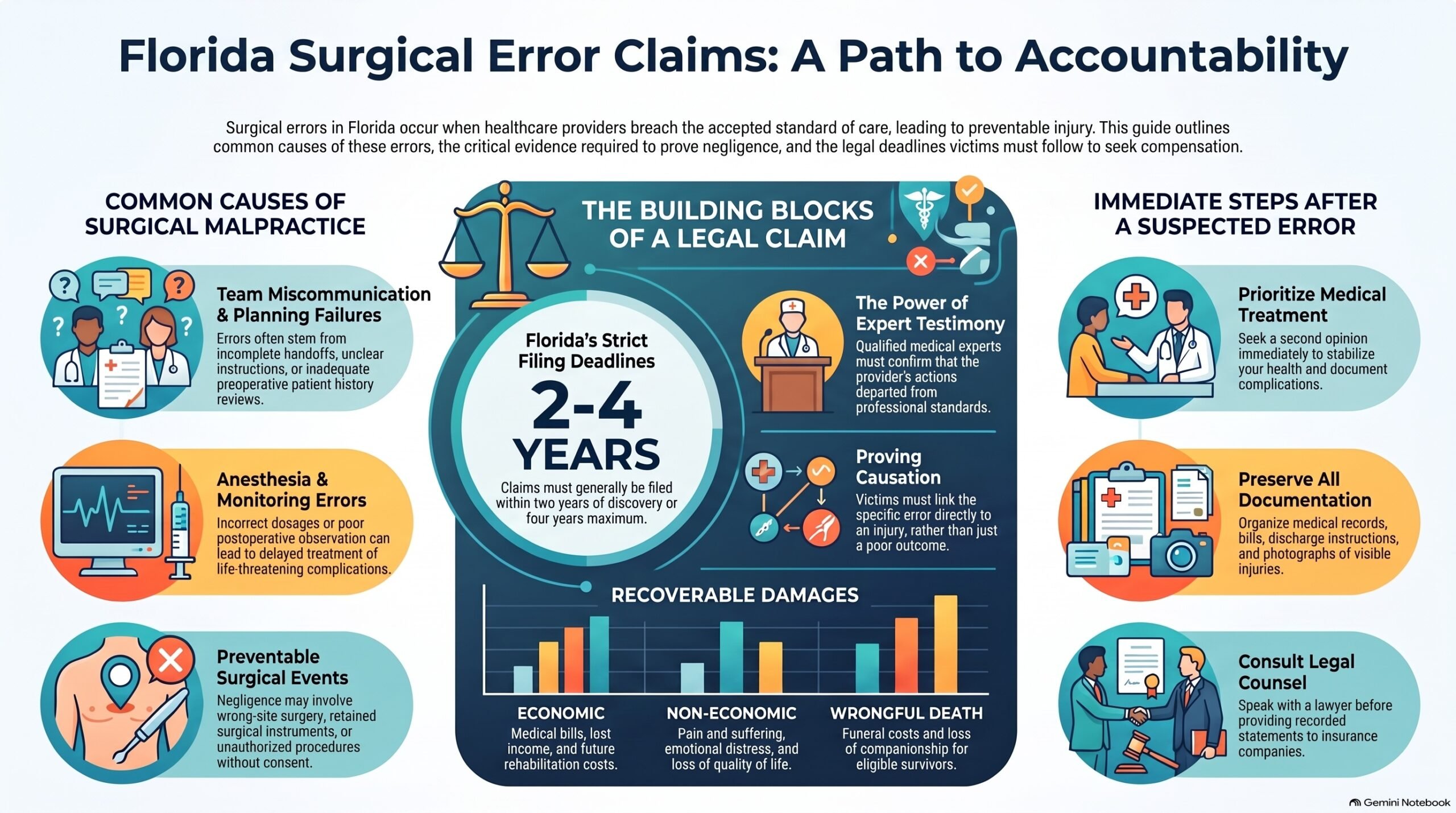
A Florida medical malpractice surgical error case examines whether a healthcare provider failed to meet the accepted standard of care and whether that failure caused a patient’s injury. The analysis generally involves the patient’s medical records, treatment history, informed consent documents, and evidence describing the outcome. An attorney may evaluate whether the provider’s conduct departed from what a reasonably careful professional would have done under comparable circumstances.
Proof of causation is necessary because an unfavorable result alone does not establish negligence. The evidence must connect the alleged breach to a specific injury, additional treatment, disability, or other compensable harm. Expert review often helps clarify technical issues, including the appropriate standard of care, the significance of the provider’s actions, and whether the injury was curable.
A case may also require evidence of damages, such as medical expenses, lost income, rehabilitation needs, and continuing care. A careful evaluation allows legal professionals to serve injured patients responsibly while presenting supported claims rather than relying on assumptions or speculation.
Common Causes of Florida Medical Malpractice Surgical Errors
Common causes of surgical errors in Florida medical malpractice cases may include miscommunication among surgical team members and inadequate preoperative planning. Errors in administering anesthesia can also create serious risks, particularly when medications, dosages, or patient conditions are not properly assessed. Improper postoperative monitoring may further delay the recognition and treatment of complications, potentially worsening patient injuries.
Surgical Team Miscommunication
Surgical team miscommunication can compromise patient safety at every stage of an operation, from preoperative planning through postoperative care. Incomplete handoffs, unclear verbal instructions, and unacknowledged changes may cause team members to rely on different information. These communication failures can contribute to wrong-site surgery, retained instruments, medication errors, or procedures performed on the wrong patient. Accurate Consent Documentation also depends on consistent communication among surgeons, nurses, anesthesiologists, and the patient. When consent details are not properly conveyed or verified, the procedure may exceed the authorized scope. Safety protocols, including surgical timeouts and read-backs, are designed to identify discrepancies before harm occurs. Failure to follow those safeguards may support a medical malpractice claim when a patient suffers preventable injury. Attorneys can examine records, testimony, and communication practices to determine responsibility.
Inadequate Preoperative Planning
Inadequate preoperative planning can leave a surgical team without the information, preparation, or resources needed to perform a procedure safely. Before surgery, clinicians should review the patient’s medical history, imaging, laboratory findings, medications, allergies, and the proposed operative approach. They should also confirm consent, equipment availability, staffing, and contingency measures for foreseeable complications. Failure to identify relevant risks or obtain necessary consultations may cause preventable delays, wrong-site procedures, retained items, or other surgical errors. Effective surgical safety plans establish responsibilities, verify critical information, and provide a structured method for responding to changing conditions. Consistent checklist compliance can help teams complete these safeguards and document them. When planning is incomplete, affected patients may experience avoidable harm, while families may face significant physical, financial, and emotional burdens.
Anesthesia Administration Errors
When anesthesia is administered incorrectly, a patient can suffer serious harm before, during, or immediately after surgery. Errors may involve selecting an unsuitable medication, failing to review allergies, or overlooking significant health conditions that affect anesthesia safety. Dosing mistakes can cause inadequate anesthesia, excessive sedation, dangerous blood pressure changes, respiratory complications, or delayed emergence from the procedure. Intraoperative confusion may arise when medication labels are unclear, communication breaks down, or responsibilities among anesthesia professionals are not properly defined. Equipment failures, inaccurate monitoring data, and failure to respond promptly to changes in vital signs can further increase the risk of injury. Appropriate safeguards include careful preoperative assessment, standardized medication procedures, clear team communication, and continuous vigilance throughout administration. When these protections are neglected, the resulting harm may support a Florida medical malpractice claim.
Improper Postoperative Monitoring
Proper postoperative monitoring is essential because complications may develop after a procedure appears to be complete. Patients require consistent observation during recovery, including essential postoperative checks that assess breathing, blood pressure, heart rate, temperature, and oxygen levels. Staff should also assess pain, surgical sites, drainage, mental status, and mobility, and promptly document any meaningful changes. Inadequate staffing, incomplete handoffs, unclear instructions, or failure to follow established recovery protocols can allow dangerous conditions to progress unnoticed. Delayed complication recognition may permit bleeding, infection, blood clots, medication reactions, or organ problems to become more difficult to treat. Hospitals and clinicians have a responsibility to communicate concerns, respond to abnormal findings, and arrange appropriate escalation. When monitoring falls below accepted standards and causes harm, the circumstances may support a medical malpractice claim under Florida law.
Don’t Wait. Call Our Florida Personal Injury Lawyers Now!


Legal Rights of Florida Medical Malpractice Surgical Errors Injury Victims
Florida medical malpractice surgical error victims may have the right to pursue compensation when a healthcare provider’s negligence causes preventable harm. Florida law generally requires proof that the provider breached applicable standards of care and that the breach caused injury, additional treatment, lost income, or other measurable damages. Legal rights may also involve patient consent. A patient could have a claim if significant risks were not disclosed, or if documented informed refusal was disregarded before a procedure.
Potentially available remedies include:
- Medical expenses and future care costs
- Lost wages and reduced earning capacity
- Pain, suffering, and related losses
Victims or their representatives may request medical records, preserve billing documentation, and seek an independent evaluation. Florida’s filing deadlines and pre-suit requirements can affect whether a claim proceeds, so prompt consultation with a qualified malpractice attorney may protect available rights. Attorneys can also help families communicate with compassion while pursuing accountability and resources for recovery, without making unsupported allegations or compromising necessary medical care.
Why Do Surgical Errors in Florida Medical Malpractice Happen?
Surgical error injuries may occur when a healthcare provider fails to meet the accepted standard of care during planning, preparation, performance, or recovery and rehabilitation. Causes can include inadequate patient evaluation, poor communication, insufficient staffing, or failure to follow established surgical protocols. Surgical consent issues may arise when significant risks, alternatives, or the identity of the procedure are not clearly explained before treatment. Timeline delays can allow a condition to worsen, particularly when urgent testing, referrals, or surgery is postponed without appropriate justification. Diagnostic mistakes may lead to an incorrect procedure, treatment of the wrong condition, or failure to promptly recognize complications. Documentation gaps can prevent providers from understanding a patient’s history, allergies, medications, or prior instructions, increasing the risk of preventable harm. Other contributing factors include equipment problems, fatigue, inadequate supervision, and breakdowns during handoffs. Understanding these causes helps healthcare organizations strengthen safety systems and supports accountability when injuries result from substandard care.
What Should You Do After a Florida Medical Malpractice Surgical Error Injury?
After a suspected surgical error, the injured individual should seek immediate medical care to address complications and establish an appropriate treatment record. All relevant evidence, including medical records, bills, photographs, and communications, should be preserved and organized. Consulting a qualified Florida medical malpractice lawyer can help assess the claim, protect legal rights, and identify applicable filing deadlines.
Seek Immediate Medical Care
Prompt medical attention should be sought when a patient suspects that a surgical error caused an injury, a worsening of their condition, or an unexpected complication. A treating clinician or emergency department can evaluate symptoms, stabilize the patient, and address potentially serious harm without delay. Surgical complication red flags may include uncontrolled bleeding, severe or increasing pain, fever, breathing difficulty, confusion, fainting, spreading redness, or drainage from an incision. These symptoms warrant emergency services rather than waiting for a routine appointment. Even when symptoms appear less urgent, the patient may request an urgent second opinion from another qualified surgeon or physician. Independent evaluation can identify infection, internal injury, medication effects, or other conditions requiring prompt treatment. Medical care should remain the immediate priority, while legal questions can be addressed after the patient’s health and safety are protected.
Document The Surgical Error
When a patient suspects that a surgical error caused harm, careful documentation can preserve important facts and support both medical treatment and a potential malpractice claim. The patient or a trusted caregiver should record symptoms, their severity, timing, and any changes after treatment. Post-surgery symptom tracking may reveal patterns that clinicians need to evaluate and can help distinguish new complications from expected recovery effects. Copies of discharge instructions, medication lists, test results, bills, and appointment summaries should be retained in an organized file. The patient should also note conversations with healthcare personnel, including dates, names, and significant statements. Preserving and documenting consent forms may clarify which risks, procedures, and alternatives were explained before surgery. Photographs of visible injuries, when appropriate, can provide additional chronological evidence. Records should remain factual, dated, and securely stored.
Consult A Malpractice Lawyer
Once the relevant records and observations have been organized, consulting a Florida medical malpractice lawyer can help determine whether a surgical error may support a legal claim. The lawyer can review operative reports, billing records, imaging, consent forms, and treatment notes while evaluating whether the medical provider departed from accepted standards. Patients should continue appropriate care and attend second-opinion appointments when recommended, both to protect health and to recover the injury’s cause. A lawyer may also advise on preserving medical proof, including photographs, medication records, witness information, and written communications with providers. Prompt consultation matters because Florida law imposes deadlines and may require pre-suit investigation before filing. A qualified attorney can coordinate expert review, explain available remedies, and help the patient pursue accountability without interfering with ongoing treatment or recovery.
Don’t Wait. Call Our Florida Personal Injury Lawyers Now!
Critical Evidence in a Florida Medical Malpractice Surgical Errors Injury Case
Critical evidence in a Florida surgical error case may establish whether the medical provider breached the applicable standard of care and caused the injury. Medical records, surgical documentation, expert witness testimony, and records of damages and expenses can help clarify the facts and support a legal claim.
Important evidence commonly includes:
- Complete medical records, including operative notes, imaging, test results, and discharge instructions
- Expert testimony addressing the alleged error, causation, and required medical standard
- Documentation of medical expenses, lost income, rehabilitation, and other injury-related damages
Medical Records
Medical records are often the central evidence in a Florida medical malpractice surgical errors case because they document the patient’s condition, the treatment provided, and the medical providers’ decisions before, during, and after surgery. These records may include histories, examinations, consent materials, medication lists, imaging, laboratory results, anesthesia information, nursing observations, and discharge instructions. Careful review can help clarify whether providers recognized risks, followed accepted practices, and responded appropriately to changing conditions. Surgical documentation issues may include incomplete entries, inconsistent times, altered information, or missing records, which complicate evaluation. Communication gaps among surgeons, nurses, anesthesiologists, and the patient may also manifest as conflicting notes or unanswered concerns. Preserving the complete chart can assist qualified professionals in understanding what occurred and identifying information requiring further investigation for the injured patient and family.
Surgical Error Documentation
When a surgical injury is suspected, documentation can provide a detailed record of what occurred and help clarify whether the care met applicable professional standards. Consent forms may show which risks, procedures, and alternatives were explained before surgery. Surgical checklists can indicate whether staff verified the patient’s identity, the procedure, the surgical site, the equipment, and the medication requirements. Patient communication records, including messages and telephone notes, may document symptoms, warnings, delayed responses, or instructions given after discharge. Postoperative notes can describe findings, complications, treatment decisions, and the patient’s condition during recovery. Preserving these materials in their original form helps maintain an accurate timeline. Photographs, prescription records, billing documents, and personal symptom logs may provide additional context. Careful organization can assist a patient and family in presenting concerns clearly to appropriate legal professionals.
Expert Witness Testimony
Expert witness testimony can help establish whether a surgeon or other healthcare professional departed from the applicable standard of care and whether that departure caused the patient’s injury. In a Florida surgical error case, a qualified expert typically reviews medical records, operative reports, imaging, and relevant communications before offering an independent opinion. The testimony may explain accepted surgical practices, identify a preventable error, and link that error to the patient’s injury. Expert Witness Selection requires careful attention to the witness’s specialty, clinical experience, teaching history, and familiarity with the procedure involved. Credential Verification helps confirm licenses, board certifications, professional standing, and prior testimony experience. A credible expert should present opinions objectively, distinguish established facts from assumptions, and withstand careful questioning. This evidence can clarify intricate medical issues for the court.
Damages and Expenses
Documented damages and expenses are crucial evidence in a Florida medical malpractice surgical error case because they demonstrate the financial and personal consequences of the alleged negligence. Medical records, hospital bills, prescription receipts, rehabilitation invoices, and related travel costs can be used to establish past economic losses. Employment records and expert testimony may help calculate lost wages, reduced earning capacity, and future care requirements. Evidence concerning pain, disability, emotional distress, and diminished quality of life may support noneconomic damages when legally available. Organized documentation strengthens a negotiation strategy by presenting a reliable, well-supported valuation of the claim. It also assists courtroom preparation, allowing counsel to connect each expense and lasting impairment to the surgical error. Careful preservation of records helps serving professionals advocate responsibly for injured patients and their families.
Long-Term Effects of Florida Medical Malpractice Surgical Errors Injuries
Long-term injuries from Florida medical malpractice surgical errors may cause chronic pain, permanent disability, or limitations that affect daily activities and employment. Patients may also experience emotional and psychological trauma, including anxiety, depression, or diminished quality of life. Ongoing medical expenses can include rehabilitation, prescription medications, corrective procedures, assistive devices, and continued expert care.
Chronic Pain and Disability
Chronic pain and disability can result when a surgical error causes nerve damage, tissue injury, infection, or another serious complication that fails to resolve after treatment. Persistent limitations may interfere with walking, lifting, employment, personal care, and other daily activities. Patients may require additional surgery, rehabilitation, assistive devices, or ongoing medication. Physicians can evaluate appropriate pain management options, including physical therapy, targeted procedures, and carefully monitored prescriptions, based on the underlying condition. Detailed medical records should document symptoms, treatment, functional restrictions, and the prognosis for recovery. An attorney may assess whether the complication resulted from a breach of the applicable standard of care and contributed to measurable losses. Depending on the circumstances, a patient may also need guidance regarding disability benefits eligibility, insurance claims, lost wages, future medical expenses, and available legal remedies.
Emotional and Psychological Trauma
The effects of a surgical error may extend beyond physical pain and disability, causing emotional and psychological trauma that persists during recovery. Patients may experience anxiety, depression, anger, sleep disruption, or fear of future medical treatment. Some may struggle with diminished confidence, social withdrawal, and distress connected to lost independence or changed family responsibilities. These effects can interfere with rehabilitation and daily decision-making, even when physical symptoms receive appropriate attention. Trauma counseling may help patients process betrayal, uncertainty, and grief in a structured, supportive setting. Mental health professionals can also develop coping strategies tailored to the person’s circumstances, such as grounding techniques, supportive communication, and gradual reengagement with valued activities. Family members and caregivers may provide practical encouragement while respecting the patient’s autonomy, privacy, and pace throughout recovery.
Ongoing Medical Expenses
When a surgical error causes lasting injury, ongoing medical expenses may become a substantial part of the patient’s financial burden. Follow-up operations, rehabilitation, prescription medications, home health assistance, and specialized equipment can continue for years. Hospital billing may include charges that are difficult to understand, while insurance denials can shift payment responsibilities to the injured patient. Careful documentation of treatment, invoices, travel, and lost work may help establish the long term costs associated with the injury. Some patients also require home modifications, transportation services, or ongoing disability expenses when physical limitations affect daily activities. A Florida medical malpractice lawyer may review medical records and consult qualified professionals to evaluate future needs. This assessment can support a claim that addresses both current expenses and reasonably anticipated care, helping to protect access to necessary services.
Proving Liability in Florida Medical Malpractice Surgical Errors Injury Cases
Proving liability in a Florida medical malpractice surgical errors case requires evidence that the healthcare provider breached the applicable standard of care and that the breach directly caused the patient’s injury. A qualified medical expert generally explains what a reasonably prudent surgeon, hospital, nurse, or anesthesiologist would have done under comparable circumstances. Records may reveal wrong-site surgery, retained instruments, anesthesia mistakes, contamination, or other departures from accepted practice.
Liability can also involve wrongful consent or consent violations when material risks, alternatives, or the nature of a procedure were not adequately disclosed. In addition, lack of follow-up and discharge errors may support a claim if inadequate monitoring, instructions, or response to warning signs allowed complications to worsen. The patient must establish causation by linking the error to identifiable harm rather than merely to an unsuccessful outcome. Relevant evidence may include medical records, imaging, witness statements, expert opinions, and treatment timelines. Careful investigation helps protect patients and promotes accountability throughout Florida’s healthcare system.
Dealing With Insurance Companies After a Florida Medical Malpractice Surgical Error Injury
Insurance companies may contact an injured patient soon after a suspected surgical error, often seeking statements, medical authorizations, or settlement discussions before the full extent of the harm is known. A patient should respond cautiously and avoid making recorded statements, granting broad authorizations, or speculating about recovery without informed guidance. Insurers may examine treatment records, employment information, and prior conditions while evaluating responsibility and damages. An insurance claim denial does not necessarily resolve whether compensation is available; the stated reason should be reviewed against medical evidence, policy provisions, and applicable Florida law. Counsel can help preserve relevant documents, communicate accurately, and prevent inadvertent admissions. During settlement negotiation strategies, a patient’s representative may assess future medical needs, lost income, rehabilitation expenses, and non-economic harm before evaluating any proposal. A fair resolution should account for continuing consequences rather than immediate bills alone. Patients serving others through caregiving or community responsibilities may also need assistance protecting their own interests while responding to insurers.
What to Expect During a Florida Medical Malpractice Surgical Errors Injury Claim Process
A Florida medical malpractice surgical errors claim generally begins with an initial case evaluation to assess potential negligence, injuries, and legal deadlines. The process may then involve gathering medical evidence, consulting qualified experts, and negotiating a settlement with the responsible parties or their insurers. If negotiations do not produce a fair resolution, the claimant may need to prepare for trial.
Initial Case Evaluation
During an initial case evaluation, a Florida medical malpractice surgical errors lawyer reviews the patient’s medical records, the nature of the alleged error, and the injuries that followed. The lawyer explains liability basics, including the applicable standard of care, potential departures from that standard, and the need to connect the error to measurable harm. This discussion helps determine whether the circumstances may support a claim and identifies possible responsible parties, such as a surgeon, hospital, or anesthesiology provider. The evaluation also addresses deadlines, procedural requirements, and practical concerns affecting the patient’s recovery. Limited evidence gathering may begin through the client’s account, available records, and related information, while a fuller investigation is considered later. The lawyer may describe potential remedies, risks, costs, and the expected timeline before recommending whether representation is appropriate.
Gathering Medical Evidence
Once a potential surgical error is identified, counsel typically gathers the medical evidence needed to evaluate negligence and causation. This process may include obtaining surgical notes, anesthesia records, nursing documentation, diagnostic images, laboratory results, prescriptions, discharge instructions, and follow-up reports. Medical billing records can help identify services provided, dates of treatment, and expenses associated with the injury. Counsel may also request records from primary care physicians, subspecialists, rehabilitation providers, and subsequent hospitals to understand the patient’s condition before and after surgery. Timeline documentation organizes symptoms, appointments, communications, procedures, and changes in treatment, helping clarify when complications arose and how providers responded. Independent medical experts may review the materials to assess whether care departed from accepted standards and whether that departure likely caused harm. Patient cooperation and accurate information can support a thorough evaluation.
Negotiating A Settlement
Settlement negotiations generally begin after the claimant’s attorney has reviewed the medical records, consulted appropriate experts, and calculated the losses associated with the alleged surgical error. During this pre-trial negotiation, the attorney may send a demand package explaining liability, medical consequences, lost income, treatment costs, and other legally recognized damages. The insurer or defense counsel may accept the demand, reject it, or make a counteroffer. Each response is evaluated against the evidence and the potential risks of continued litigation. Settlement value modeling can help estimate a reasonable negotiation range by considering comparable outcomes, projected care needs, disputed fault, and available insurance coverage. The claimant generally decides whether to accept an offer after receiving informed legal advice. Negotiations may involve several exchanges before reaching a documented agreement and release.
Preparing For Trial
Trial preparation begins when settlement efforts do not resolve the surgical error claim, and the case proceeds toward a courtroom presentation. Counsel evaluates medical records, expert opinions, operative reports, and testimony to establish how the error occurred and how it caused injury. The patient may participate in depositions, where opposing counsel asks detailed questions under oath. Witness prep helps medical professionals and other witnesses provide accurate, consistent testimony without speculation. Attorneys also organize exhibits, identify legal issues, and prepare opening statements, direct examination, and cross-examination. A continuing settlement strategy may remain appropriate because negotiations can occur before or during trial. The court ultimately considers evidence, credibility, and applicable Florida law. Careful preparation allows the injured person’s experience to be presented respectfully while supporting a fair determination of responsibility and compensation.
Compensation for Florida Medical Malpractice Surgical Errors Injury Damages
Compensation for surgical errors in Florida medical malpractice cases may cover the full economic and personal harm caused by negligent medical care. A successful claim can address necessary corrective treatment, rehabilitation, prescription expenses, and future medical needs resulting from the error. It may also account for lost income, reduced earning capacity, and other documented financial consequences. When a surgical mistake causes death, eligible survivors may pursue Wrongful Death Benefits, including certain funeral costs, lost support, and loss of companionship under Florida law. The available recovery depends on the evidence, the severity of the injury, applicable legal requirements, and the causal link between the negligence and the claimed losses. An attorney can evaluate records, consult qualified medical professionals, identify responsible parties, and explain Case Timeline Estimates without promising a particular result. Careful preparation helps ensure that an injured patient or family receives informed guidance while preserving a claim within Florida’s strict filing deadlines and supporting a fair resolution through negotiation or trial.
Economic vs Non-Economic Damages in Florida Medical Malpractice Surgical Errors Cases
Economic damages may include medical expenses, lost income, rehabilitation costs, and other objectively measurable losses resulting from a surgical error. Non-economic damages address harms such as pain, emotional distress, disability, and diminished quality of life, which may be subject to statutory limits under Florida law. Proving these losses generally requires medical records, financial documentation, expert testimony, and evidence connecting the claimed harm to the surgical negligence.
Economic Damages Explained
When a surgical error causes injury in Florida, damages are generally divided into economic and non-economic categories. Economic damages compensate for measurable financial losses resulting from the malpractice. They may include emergency treatment, corrective surgery, hospitalization, prescription medications, rehabilitation, medical equipment, and necessary future care. Lost wages, reduced earning capacity, and other employment-related losses may also qualify when the injury limits a person’s ability to work. Accurate documentation, such as bills, employment records, medical opinions, and life-care projections, helps establish the value of these losses. A lawyer may use this evidence in a settlement negotiation strategy while pursuing proof of causation linking the surgical error to the claimed expenses. Careful calculation supports fair compensation and helps preserve resources needed for recovery, treatment, and continued support.
Non-Economic Damages Limits
Non-economic damages address the less measurable effects of a surgical error, including pain and suffering, emotional distress, disability, disfigurement, and loss of enjoyment of life. Florida law may limit non-economic recovery in certain medical malpractice cases, though applicable caps and constitutional rulings can depend on the claim’s facts and evolving legal developments. Economic damages, such as medical expenses and lost income, generally receive different treatment and may remain separately recoverable. Careful legal analysis is thus necessary before estimating potential compensation. Evidence preservation supports an accurate assessment of the patient’s circumstances, while expert review can clarify the significance of the injury. Causation proof must connect the surgical error to the claimed harm, and damages documentation should reflect the condition’s continuing effects. These safeguards help attorneys serve injured patients responsibly while presenting a precise, lawful evaluation of damages.
Proving Surgical Error Losses
Establishing losses after a surgical error requires clear proof distinguishing measurable financial harm from the broader personal consequences of the injury. Economic damages may include additional medical treatment, rehabilitation, prescription costs, lost wages, reduced earning capacity, and necessary future care. Bills, employment records, and life-care projections can document these losses. Non-economic damages address pain, emotional distress, disfigurement, disability, loss of enjoyment, and diminished quality of life. Their value depends on credible evidence describing how the injury affects daily functioning and relationships. Causation evidence must connect the provider’s conduct to each claimed harm, while proving negligence generally requires showing a breach of the applicable standard of care. Expert testimony and medical record review can clarify surgical decisions, complications, treatment needs, prognosis, and the extent of lasting consequences for the injured person.
Don’t Wait. Call Our Florida Personal Injury Lawyers Now!
When a Florida Medical Malpractice Surgical Errors Injury Case Goes to Trial vs. Settlement
A Florida surgical error injury case may resolve through settlement or proceed to trial, depending on the strength of the evidence, the parties’ willingness to negotiate, and the damages involved. Settlement can provide a defined outcome, reduce uncertainty, and deliver compensation without the demands of courtroom proceedings. Negotiations may occur before or after significant investigation, including medical-record review, expert analysis, and Witness depositions.
Trial may become necessary when liability or damages remain disputed, or when an offered settlement fails to address the injured patient’s documented needs. Counsel may develop a jury trial strategy involving expert testimony, demonstrative evidence, witness examination, and a clear explanation of how the surgical error caused harm. The patient’s testimony, family observations, and treatment history may help present the injury’s practical effects. Although trial can provide an opportunity for full adjudication, it also involves delay, expense, and an uncertain result. Careful preparation allows each path to be evaluated responsibly while preserving the patient’s dignity and interests.
Florida Laws That May Affect Your Florida Medical Malpractice Surgical Errors Case
Florida medical malpractice surgical error cases are governed by procedural and substantive laws that can affect whether a claim succeeds and the compensation available. Florida generally requires proof that a healthcare provider breached the accepted standard of care and that the breach caused injury. Before filing, counsel typically conducts an expert review and follows presuit investigation and notice requirements. These rules help distinguish negligence from an unfortunate outcome.
Key issues may include:
- Informed consent: Providers may face liability when material risks, alternatives, or consequences were not adequately explained.
- Medical records, including operative reports, notes, imaging, and billing documents, can clarify what occurred and support causation.
- Insurance defenses: Carriers may dispute fault, damages, causation, or coverage under the policy, requiring careful evidence and legal analysis.
Florida law also addresses comparative negligence, damage categories, and evidentiary standards. A qualified attorney can organize records, consult appropriate experts, and present the claim accurately while protecting the patient’s interests and supporting accountability for preventable surgical harm.
The Statute of Limitations for Florida Medical Malpractice Surgical Errors Injury Cases
Because Florida medical malpractice claims are subject to strict filing deadlines, the date on which a surgical error occurred or was discovered can significantly affect whether an injured patient can pursue compensation. Generally, Florida law requires a medical malpractice action to be filed within two years after the incident is discovered, or reasonably should have been discovered. An absolute four-year limit commonly applies from the date of the negligent act, although limited exceptions may extend that period, including concealment, fraud, or misrepresentation. These exception periods are fact-specific and should not be assumed to apply automatically. Claims involving minors, foreign objects left in the body, or continuous treatment may involve different rules. Wrongful death timing also matters because a death claim typically has its own limitations period, measured from the date of death rather than solely from the surgical error. Since missing a deadline can bar recovery, prompt preservation of medical records and careful assessment of applicable dates remains critical.
How a Florida Medical Malpractice Surgical Errors Lawyer Can Help You
When surgical errors cause injury, a Florida medical malpractice surgical errors lawyer can evaluate the available evidence, identify potentially responsible parties, and determine whether the claim satisfies Florida’s legal requirements. The lawyer can organize medical records, operative reports, billing documents, and witness statements to establish a clear account of what occurred.
Through Expert Review, qualified medical professionals may assess whether the provider departed from the accepted standard of care and whether that departure caused the injury. This process supports Proving Negligence while addressing defenses related to the patient’s condition or unavoidable complications.
Key assistance may include:
- Identifying potentially liable surgeons, hospitals, nurses, or other entities
- Calculating medical expenses, lost income, rehabilitation needs, and related damages
- Preparing required notices, pleadings, evidence, and settlement negotiations
Counsel can communicate with insurers and opposing representatives on the injured person’s behalf, helping preserve an orderly process. A lawyer may also coordinate specialists and consultants whose testimony clarifies complex medical issues, allowing decision-makers to evaluate the claim fairly and responsibly.
When to Contact a Florida Medical Malpractice Surgical Errors Lawyer
Prompt legal consultation may be appropriate as soon as a patient suspects that a surgical error caused an injury, worsened a medical condition, or required additional treatment. Early guidance can help preserve relevant records, identify potential deadlines, and clarify whether the concern involves negligent care or an expected complication.
A patient or family member should consider contacting counsel after an unexplained procedure-related injury, unexpected revision surgery, retained surgical item, anesthesia problem, infection, or significant delay in diagnosis. Consultation is also prudent when healthcare providers give inconsistent explanations or when a claim may involve several professionals or facilities.
Florida’s statute of limitations can restrict the time available to pursue a medical negligence action. Pre-suit notice deadlines and investigation requirements may apply before filing. Patients should retain Healthcare provider communication logs, operative reports, photographs, billing records, and insurance claim timelines. Promptly documenting symptoms, treatment changes, and financial impacts may help preserve an accurate record while the matter is being evaluated.
Why You Need an Experienced Florida Medical Malpractice Surgical Errors Lawyer
An experienced Florida medical malpractice surgical errors lawyer can evaluate whether a surgical injury resulted from negligent care rather than a recognized complication. That distinction may require reviewing operative reports, consent documents, imaging, medication records, and post-operative observations. Through Expert consultation, counsel can identify potential departures from accepted medical standards and explain how those departures may have caused harm.
A lawyer also develops a disciplined case strategy suited to the facts, damages, and available proof. Evidence gathering may involve securing complete medical records, preserving relevant communications, consulting qualified medical professionals, and documenting treatment needs, lost income, and long-term effects. These steps can prevent important information from being overlooked or compromised.
Understanding the litigation timeline is equally important. Florida medical malpractice claims may involve pre-suit requirements, statutory deadlines, expert review, negotiations, and, when necessary, court proceedings. Experienced representation helps coordinate these demands while allowing injured patients and their families to focus on recovery and supporting one another during a difficult period.
How to Choose the Right Florida Medical Malpractice Surgical Errors Lawyer for Your Case
Selecting the right Florida medical malpractice surgical errors lawyer requires careful consideration of the attorney’s experience, resources, and approach to detailed negligence claims. A prospective client should assess whether the lawyer regularly handles surgical error cases rather than treating medical negligence as an occasional matter. Practice area fit is necessary because these claims may involve complicated records, expert testimony, causation disputes, and strict filing deadlines.
The attorney’s investigative process also deserves attention. A qualified lawyer should explain how medical records will be reviewed, how independent experts may evaluate the care provided, and how potential damages will be documented. Clear communication is important for clients seeking accountability and support for injured patients and families.
Before retaining counsel, the client should request an explanation of the fee structure, litigation expenses, and any financial obligations if the claim does not succeed. References to professional standing, disciplinary history, and relevant results may assist comparison. A careful consultation can help determine whether the lawyer offers informed, ethical, and practical representation.
About The Law Offices of Anidjar & Levine
The Law Offices of Anidjar & Levine represents individuals and families pursuing compensation after surgical errors and other forms of medical negligence in Florida.
The firm focuses on helping clients understand their legal options while pursuing accountability for preventable harm.
Anidjar & Levine attorneys examine medical records, operative reports, billing information, and related evidence to identify possible departures from accepted standards of care.
This Medical Review can help clarify whether a surgical injury resulted from negligence, inadequate preparation, poor communication, or another actionable circumstance.
The firm develops a Case Strategy tailored to each client’s injuries, financial losses, treatment needs, and long-term concerns.
Attorney Communication remains an important part of representation, allowing clients to receive updates, ask questions, and make informed decisions.
By combining investigation, legal analysis, and client service, the firm seeks to present well-supported claims and assist families during difficult periods following serious medical injuries throughout Florida and protect their legal interests.
Frequently Asked Questions
Can I Sue if Surgical Equipment Was Left Inside My Body?
A patient may be able to sue when surgical equipment is unintentionally left inside the body, particularly if the event resulted from negligence and caused injury. Potential claims may include additional surgery, medical expenses, lost income, pain, and damages for postoperative infection. Consent documentation issues may also matter if the patient was not informed of material risks. Evidence should be preserved, including records, imaging, bills, and operative reports, and legal advice should be sought promptly due to filing deadlines.
Are Family Members Allowed to File Wrongful Death Claims After Surgical Errors?
Yes. Eligible family members may file wrongful death claims after surgical errors, but wrongful death standing depends on state law and the deceased person’s relationship to each claimant. A representative of the estate may also pursue certain damages. The statute of limitations can restrict how long survivors have to act, often beginning at death or discovery of negligence. Prompt consultation with qualified counsel helps preserve evidence, identify responsible parties, and protect the family’s legal rights.
Can a Surgical Error Affect My Immigration or Employment Status?
A surgical error generally does not automatically create immigration consequences or change a person’s work status. However, related circumstances, such as an arrest, fraudulent documentation, prolonged absence from employment, or inability to meet job requirements, may affect immigration or employment matters. The injured individual should preserve medical and employment records and obtain advice from qualified immigration, employment, and medical-malpractice professionals. Prompt, coordinated guidance can protect legal rights while supporting recovery and continued service to others.
Will My Health Insurance Cover Treatment Related to a Surgical Error?
Health insurance may cover treatment related to a surgical error, but coverage depends on the policy, diagnosis, provider, and whether the care is considered medically necessary. The patient should review exclusions, deductibles, and appeal rights and promptly address prior authorization issues. Insurers may limit out-of-network coverage, potentially creating substantial costs. A representative can assist with documentation, billing disputes, and coordination with providers without assuming liability on the insurer’s part.
Can I Remain Anonymous During a Florida Medical Malpractice Lawsuit?
A patient generally cannot remain completely anonymous in a Florida medical malpractice lawsuit because the parties, attorneys, witnesses, and the court must be identified. However, confidentiality protections may limit public access to sensitive medical records and personal information. Courts may permit initials, sealed filings, or restricted proceedings in appropriate circumstances, but these remedies are not automatic. Anonymous depositions are uncommon and typically require a specific court order supported by compelling privacy concerns and legal justification.
—————————
Surgical errors can lead to serious physical, emotional, and financial consequences.
Establishing medical negligence requires careful legal and medical analysis.
Florida victims may be entitled to compensation for additional medical treatment, lost income, pain and suffering, and other damages, subject to strict procedural requirements and filing deadlines.
An experienced Florida medical malpractice lawyer specializing in surgical errors can investigate the incident, consult with qualified medical experts, and pursue an appropriate claim.
The Law Offices of Anidjar and Levine provides informed guidance and determined representation throughout the process.
For related legal support, visit our Florida Personal Injury Lawyer page.