1.0 Introduction: The High-Stakes Nature of T-bone Accident Litigation
T-bone, or broadside, collisions in Tampa represent a distinct and severe category of motor vehicle accidents. The strategic importance of these cases stems from their propensity to cause catastrophic, life-altering injuries, including traumatic brain injuries and spinal damage.
Learn More: Tampa T-Bone/Broadside Accident Injury Lawyer
Vehicles offer minimal side protection, exposing occupants to the full force of impact and necessitating a sophisticated legal approach to secure adequate long-term compensation. The purpose of this case study is to deconstruct the legal strategies employed to prove liability and maximize client recovery in these complex cases, focusing on investigation, evidence analysis, and compensation frameworks. This analysis begins by examining the common driver errors that form the basis of a negligence claim.


2.0 The Anatomy of a T-bone Collision: Establishing the Foundation for Negligence
A successful liability claim begins with a deep understanding of the specific driver behaviors that precipitate T-bone accidents at intersections. The strategic importance of this analysis is to directly link a negligent action to the collision, thereby creating an undeniable foundation for fault. Most T-bone collisions result from preventable driver negligence, which can be categorized into several key areas of failure.
2.1 Running Red Lights and Disregarding Traffic Signals
A driver’s decision to disregard a red light constitutes a clear breach of their duty to other motorists. This act is frequently the primary catalyst for T-bone collisions at Tampa intersections. The negligence claim is strengthened by analyzing contributing factors that often exacerbate these violations, including:
- Signal Timing: Drivers may misjudge yellow light durations or attempt to accelerate through a changing signal.
- Poor Intersection Sightlines: The presence of poor intersection sightlines, while not excusing the driver’s actions, can be strategically leveraged to argue that an even higher degree of caution was required, making the driver’s decision to proceed at speed a more egregious breach of duty.
- Distracted Driving and Excessive Speed: These behaviors compound the risk, reducing a driver’s ability to react to traffic control devices and leaving other motorists vulnerable.
2.2 Failure to Yield the Right-of-Way
A driver’s failure to yield the right-of-way creates some of the most dangerous conditions for broadside collisions. The legal liability in these scenarios often arises from specific intersection dynamics. These situations include:
- Intersection Confusion: Drivers may make incorrect assumptions about priority when multiple vehicles arrive simultaneously.
- Poor Sign Visibility: While opposing counsel may cite poor sign visibility as a mitigating factor, a robust liability strategy will counter that a reasonable and prudent driver, when faced with an obscured traffic control device, has a heightened duty to slow down and ensure the intersection is clear before proceeding. The failure to do so is, in itself, a negligent act.
- Left Turns: Navigating left turns at busy intersections presents a particular challenge, as drivers frequently misjudge the speed and distance of oncoming traffic.
2.3 Distracted Driving Behaviors
Distracted driving is a leading contributor to T-bone accidents, as motorists who divert their attention from the road cannot properly monitor traffic signals, stop signs, or approaching vehicles. Texting while driving is an especially hazardous behavior at intersections. This action creates both visual and cognitive distraction, which prevents a driver from recognizing vital traffic control devices and reacting appropriately. Even a brief distraction can lead to a failure to notice a red light or oncoming traffic, resulting in a devastating side-impact collision.
2.4 Impaired Driver Judgment
The consumption of alcohol or drugs, as well as driver fatigue, severely impairs the cognitive abilities necessary for safe intersection navigation. Impairment is a key indicator of negligence, as it directly compromises the split-second decisions required to avoid a collision. Key factors demonstrating this negligence include:
- Reduced Reaction Times: Alcohol and fatigue delay decision-making and reduce situational awareness.
- Impaired Depth Perception: Intoxication makes it difficult for drivers to gauge the speed of approaching vehicles or determine safe gaps in traffic.
While understanding these common negligent acts provides the theoretical basis for a claim, liability is ultimately established through a meticulous and multi-pronged investigative framework designed to prove them.
3.0 The Investigative Framework: A Multi-Pronged Strategy for Proving Liability
Establishing liability is not merely an assertion of fault but a methodical process of evidence collection and expert analysis. The strategic importance of this framework is to build a compelling, evidence-based narrative of negligence that can withstand challenges from insurance companies and opposing counsel. This is achieved through a multi-pronged approach that synthesizes physical, testimonial, and digital evidence.
- 3.1 Analysis of Physical and Official Evidence:
- Police Reports: Provides the official preliminary record of the incident, including officer observations and citations.
- Traffic Camera Footage: Offers objective, visual proof of the collision dynamics and can definitively show traffic signal violations.
- Scene Photographs: Essential for preserving transient evidence like skid marks, final vehicle positions, road conditions, and traffic signals from multiple angles.
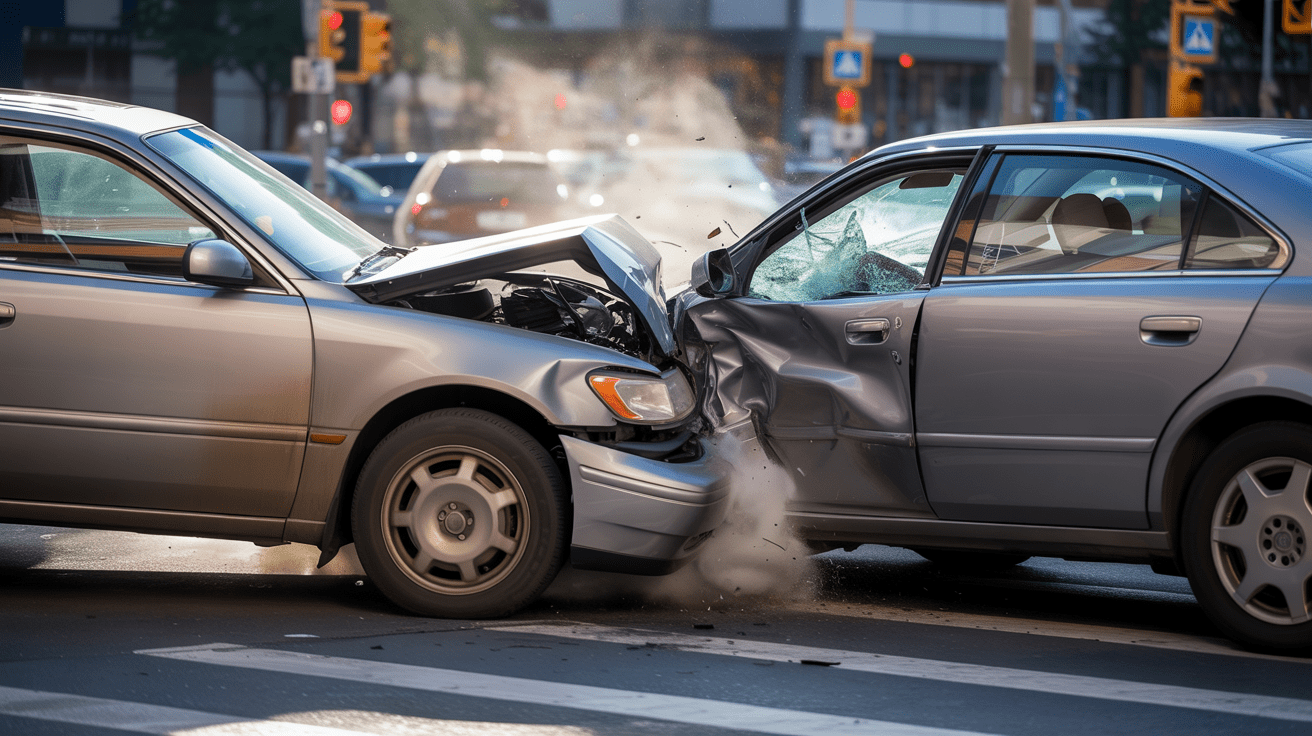
- Vehicle Damage Patterns: Analysis of deformation, impact points, and the severity of damage helps demonstrate the force, angle, and dynamics of the collision.
- 3.2 The Role of Expert and Witness Testimony:
- Accident Reconstruction Experts: These professionals use scientific methods to analyze physical evidence—such as skid marks and vehicle damage patterns—to determine critical factors like vehicle speeds, impact angles, and pre-crash driver actions. Their analysis can authoritatively establish how the accident occurred.
- Eyewitness Credibility: Interviewing witnesses who observed the collision is critical for corroborating the client’s account and establishing a clear, independent sequence of events.
- 3.3 Corroborating Digital and Medical Documentation:
- Medical Records: This documentation is critical for establishing a direct causal link between the collision and the client’s injuries, forming the basis of the damages claim.
- Cell Phone Data and Vehicle Black Box Information: When obtainable, this data can provide additional supporting evidence regarding driver behavior, such as distraction, speed, and braking patterns immediately preceding the impact.
Once this comprehensive investigative framework has established how the accident occurred and who was at fault, the focus shifts to quantifying the full extent of the client’s damages.
4.0 Quantifying Damages: A Comprehensive Approach to Client Compensation
Securing fair compensation requires a meticulous accounting of all losses—both tangible and intangible. The strategic imperative is to construct a comprehensive damages model that addresses not only the client’s immediate needs but also the profound, long-term consequences of catastrophic injuries commonly sustained in T-bone accidents. This involves a detailed analysis of both economic and non-economic damages.
4.1 Economic Damages: Recovering Financial Losses
Economic damages represent the quantifiable financial losses a victim incurs as a direct result of the collision. A thorough claim must document:
- Medical Expenses: This includes the full scope of recoverable medical costs, from emergency treatment, hospitalization, and surgeries to rehabilitation, physical therapy, and projected ongoing care requirements for the future.
- Lost Wages and Diminished Earning Capacity: This calculation covers both immediate income loss from being unable to work and the long-term impact on a client’s career prospects. It accounts for missed promotions, reduced hours, and the financial consequences of a permanent disability that prevents a return to a previous occupation.
4.2 Non-Economic Damages: Addressing Life-Altering Impacts
Beyond financial costs, T-bone accidents inflict deep personal suffering that must be accounted for in a comprehensive compensation claim. These damages address the intangible, life-altering impacts of the collision.
- Chronic Pain and Suffering: This addresses the debilitating discomfort that can persist for months or years, affecting daily activities, work performance, and overall quality of life. Compensation must account for ongoing pain management needs.
- Permanent Disability Challenges: This covers the life-altering changes related to mobility limitations, cognitive impairments, and loss of independence. It includes the costs associated with assistive technology, home modifications, and extensive vocational rehabilitation to develop new skills when a client cannot return to their prior profession.
- Emotional and Psychological Trauma: It is critical to address the profound psychological injuries that survivors endure, such as anxiety, depression, and post-traumatic stress disorder (PTSD). A complete damages model includes the costs of mental health treatment required to help clients rebuild emotional stability.
After quantifying the full range of damages, the final step involves navigating the legal rules and procedures that govern the recovery process.


5.0 Navigating the Legal and Procedural Landscape
A successful outcome in T-bone accident litigation depends on expertly navigating critical legal statutes and adversarial negotiations. The strategic importance of this phase lies in protecting the client’s right to recovery by adhering to strict deadlines and effectively countering insurance company tactics designed to minimize compensation.
5.1 Adherence to the Statute of Limitations
Florida law imposes a strict deadline for filing personal injury claims. In most T-bone accident cases, a lawsuit must be filed within two years of the collision date. Missing this deadline permanently eliminates the ability to seek damages. Certain exceptions exist, such as the discovery rule, which may apply if an injury is not immediately apparent. Cases involving government entities require a different procedure, mandating that a notice be filed within three years and a lawsuit initiated within four years.
5.2 Application of Florida’s Comparative Negligence System
Under Florida’s comparative negligence rule, a client can recover damages even if they are found to be partially at fault for the accident. However, the total recovery amount is reduced proportionally to their assigned degree of responsibility. A key strategic goal is to present evidence that minimizes any assigned liability to the client, thereby maximizing their potential compensation.
5.3 Strategic Negotiation with Insurance Companies
An experienced lawyer’s role includes handling all communications with insurance companies. This is critical to prevent insurers from employing tactics designed to devalue or deny a legitimate claim. The primary objective is to pursue an aggressive settlement negotiation strategy based on the comprehensive evidence gathered during the investigation and the detailed damages model. This ensures that any settlement offer fully reflects the client’s immediate and long-term needs.
Successfully navigating these legal mechanics is a testament to a comprehensive strategy, the core principles of which warrant a final summary.
6.0 Conclusion: Key Strategic Takeaways for Legal Professionals
The successful litigation of a T-bone accident case is a multi-faceted endeavor that hinges on a proactive, evidence-based, and client-focused strategy. It requires moving beyond a simple assertion of fault to build an irrefutable narrative of negligence, meticulously document the full scope of human and financial loss, and expertly navigate a complex legal system. The ultimate goal is to secure a recovery that not only addresses immediate burdens but provides the resources necessary for a lifetime of healing and stability.
For legal professionals, the key strategic takeaways from this analysis are:
- The necessity of a rapid and thorough investigation to preserve transient evidence, engage reconstruction experts, and build a robust liability case before critical details are lost.
- The critical importance of documenting the full spectrum of damages, with a particular focus on quantifying the long-term physical, emotional, and financial impacts of catastrophic injuries to create a comprehensive and defensible compensation model.
- The indispensable role of experienced legal counsel in navigating Florida’s procedural requirements, applying principles like comparative negligence, and aggressively negotiating with insurance companies to achieve a just outcome that reflects the client’s total needs.