

A Port St. Lucie truck accident companies and brands lawyer can investigate which parties may be responsible, including the driver, motor carrier, vehicle owner, maintenance provider, or cargo handler. The Law Offices of Anidjar and Levine can help preserve electronic records, maintenance files, and employment documents, assess insurance issues, and pursue compensation for documented losses. A company’s name on a truck alone does not establish liability; evidence and the relationships among businesses matter. Learn more about working with a Port St. Lucie Personal Injury Lawyer.
Main Takeaways
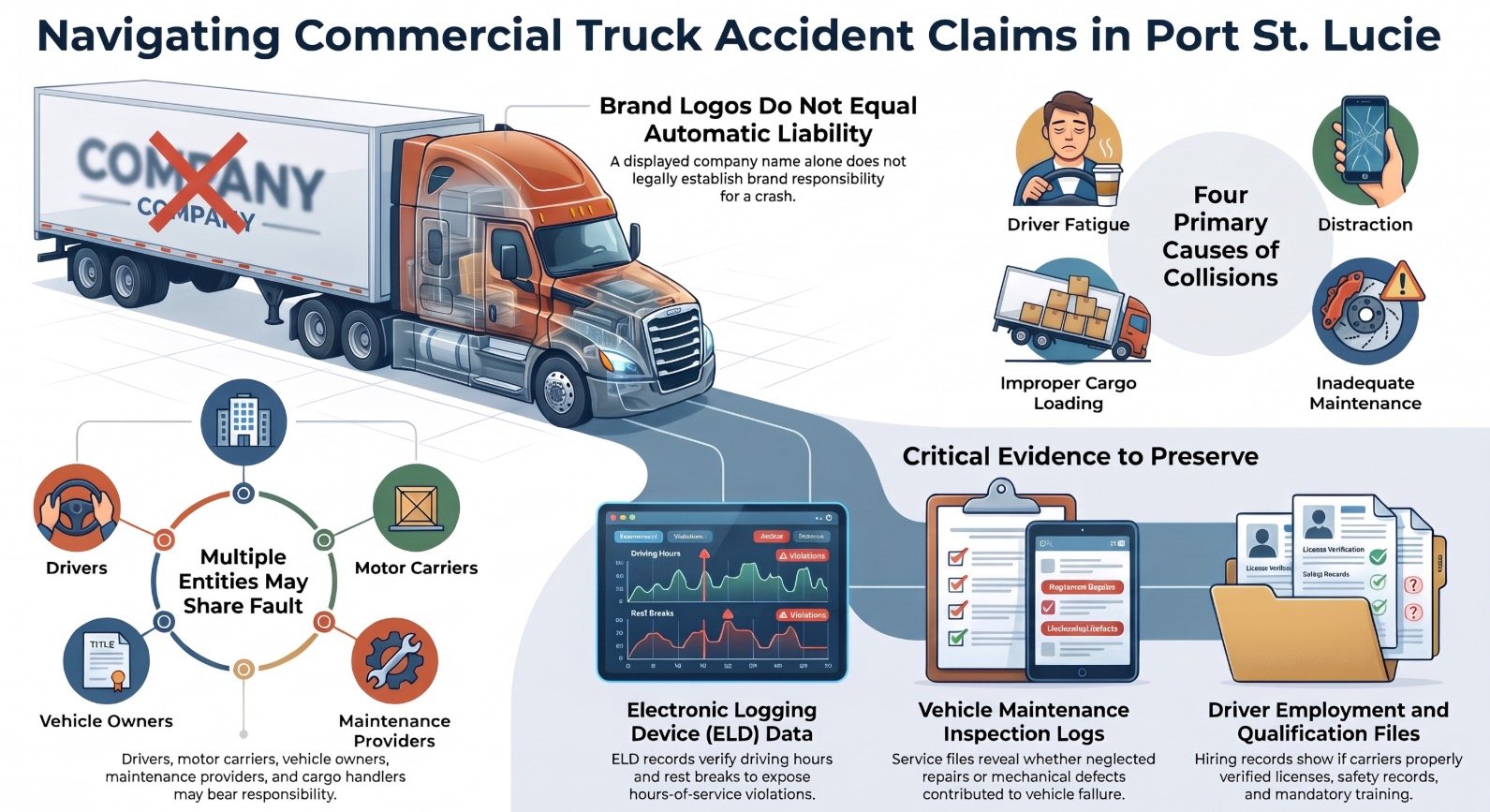
- A truck’s logo or company name does not automatically establish that the brand is legally responsible for a crash.
- Potentially responsible parties may include the driver, motor carrier, truck owner, employer, maintenance provider, cargo handler, or manufacturer.
- A lawyer can investigate contracts, ownership, insurance, employment relationships, and safety practices to identify relevant companies.
- Key evidence may include crash-scene records, driver logs, dispatch messages, maintenance files, cargo documents, and witness accounts.
- Promptly preserving records and vehicle evidence can help prevent important information from being lost or overwritten.
How We Can Help With Your Port St. Lucie Truck Accident Companies & Brands Injury Claim
After a truck crash in Port St. Lucie, an injured person may face medical appointments, lost income, and uncertainty about the next steps. Legal assistance can provide structure while letting the person and family focus on health and essential responsibilities. Counsel can review available records, identify key deadlines, and explain claim options in clear terms.
Claim Preparation may include collecting medical documentation, employment records, crash reports, photographs, and other evidence that supports the account of the collision and its effects. Careful organization helps present a consistent, well-supported demand and respond to insurer questions. Where information is incomplete, counsel can identify what further documentation may be needed.


Recovery Planning can also help account for ongoing treatment, future care needs, and practical financial concerns. A measured assessment can reduce the risk of overlooking losses before you consider a resolution. Throughout the process, communication and timely updates help the injured person make informed decisions.
Don’t Wait. Call Our Florida Personal Injury Lawyers Now!
Understanding Port St. Lucie Truck Accident Companies & Brands Injury Cases
OUR CONSULTATIONSARE FREE
START YOUR FREE CASE REVIEW

Understanding a Port St. Lucie truck accident injury case begins with identifying the people and businesses whose responsibilities may be relevant. A commercial vehicle may be operated by a driver, owned through fleet ownership arrangements, maintained by a separate provider, or connected to a larger company or brand. These relationships can affect which parties must be examined and what records may help clarify their roles.
Brand liability is not automatic simply because a truck displays a company name. The facts must establish whether a brand or affiliated business had a legal duty or meaningful control connected to the incident. A careful review may consider contracts, ownership documents, insurance information, employment records, and communications among the involved entities. This process can help injured people and their families understand available options while supporting a fair assessment of responsibility. Each case depends on its evidence, applicable law, and the specific relationships among the parties involved.
Common Causes of Port St. Lucie Truck Accident Companies & Brands


Truck accidents in Port St. Lucie may result from driver fatigue, distracted driving, improper cargo loading, or inadequate vehicle maintenance. These conditions can impair a driver’s ability to operate safely or cause a truck to become unstable or fail on the road. Identifying the contributing cause can help clarify how a collision occurred and which parties may bear responsibility.
Driver Fatigue
Driver fatigue is a serious risk in Port St. Lucie, where commercial truck drivers may travel long distances under demanding schedules. Insufficient sleep can slow reaction time, weaken judgment, and make it harder to maintain steady control of the vehicle. Circadian rhythm risks also increase when drivers work overnight or through hours when the body naturally needs rest. Federal hours-of-service rules limit driving time, but violations, unrealistic delivery demands, or inadequate rest can still contribute to dangerous conditions.
Fatigue warning signs may include frequent yawning, heavy eyelids, drifting within a lane, missed road signs, and delayed responses. Trucking companies must set reasonable schedules, monitor compliance, and address reports of exhaustion. When a fatigued driver causes a collision, injured people may need medical care and support. Reviewing records can help clarify whether preventable fatigue contributed to the crash.
Distracted Driving
When a commercial truck operator divides attention between the road and another task, even a brief lapse can create a serious collision risk in Port St. Lucie. Distractions may include texting, handling a dispatch device, adjusting navigation, eating, or interacting with in-cab systems. At highway speeds, a few seconds without focused observation can delay braking or prevent a driver from noticing stopped traffic, pedestrians, or changing signals. Trucking companies can support safer operations through clear device policies, practical training, and Driver distraction technology designed to limit nonessential alerts while vehicles are moving. Attention monitoring may also help identify patterns that warrant coaching, though it does not replace responsible driving or proper oversight. After a crash, investigators may review records and communications to determine whether distraction contributed and whether safety procedures were followed. These findings can help clarify accountability and support affected road users.
Improper Loading
Improperly loaded cargo can make a commercial truck unstable and increase the risk of a serious crash on Port St. Lucie roads. When freight shifts during a turn, sudden stop, or lane change, the driver may lose control or require more distance to stop. Uneven weight distribution can also affect handling and braking, placing nearby motorists and pedestrians at risk.
Federal and state rules require carriers and drivers to inspect loads and use appropriate Cargo securement methods. Straps, chains, and other restraints must be suitable for the freight and properly applied. Overloaded trailers or cargo that exceeds safe limits can further compromise stability. Companies responsible for loading, shipping, or transporting freight may share responsibility when careless practices contribute to a collision. Identifying how the load was handled can help clarify what happened and support those injured.
Poor Vehicle Maintenance
Poor vehicle maintenance can leave commercial trucks with worn brakes, damaged tires, faulty lights, or handling problems that increase crash risk on Port St. Lucie roads. When carriers or maintenance providers skip required inspections, minor defects can become serious hazards. Maintenance inspection gaps can conceal worn components, fluid leaks, or tire damage that affects a truck’s ability to stop and remain stable. Defective brake systems are especially dangerous because heavy vehicles need substantial distance to slow down, particularly in traffic or poor weather. Companies responsible for fleet upkeep may face scrutiny when records show missed inspections, delayed repairs, or inadequate safety procedures. Identifying who controlled maintenance and when problems became known can help clarify responsibility. Thorough review may support injured people seeking accountability and safer practices for others.
Legal Rights of Port St. Lucie Truck Accident Companies & Brands Injury Victims
Truck accident victims in Port St. Lucie may have legal rights to pursue compensation when another party’s conduct causes injury. These rights can help injured people obtain care, support their families, and hold responsible businesses accountable. A claim may involve a driver, motor carrier, or another company, depending on the evidence. Employer accountability and corporate negligence may apply when a business’s actions or omissions contributed to the harm.
Victims and their representatives may consider these options:
- Seek payment for medical expenses, lost income, and other documented losses.
- Preserve records, photographs, and witness details that may support a claim.
- Determine which parties may bear legal responsibility, including employers or companies.
- Consult a qualified attorney about deadlines, evidence, and available legal remedies.
Florida law sets time limits and requirements for injury claims, so delay can affect a person’s ability to act. Legal guidance can clarify options while helping victims protect their interests and pursue a fair resolution. Each case depends on its facts and applicable law.
Why Do Port St. Lucie Truck Accident Companies & Brands Injuries Happen?
Because commercial trucking involves large vehicles, tight schedules, and multiple safety requirements, crashes in Port St. Lucie may occur when one or more safeguards fail. Driver fatigue can impair attention and reaction time, especially when demanding schedules or inadequate rest lead to long hours behind the wheel. Distraction, speeding, unsafe lane changes, and failure to maintain a safe following distance can also increase collision risks.
Mechanical problems, including worn tires, defective brakes, or neglected maintenance, may reduce a truck’s ability to stop or remain stable. Improperly loaded or unsecured cargo can shift during travel, affecting balance and control. Company practices may contribute when safety procedures, vehicle inspections, or driver training are insufficient.
Roadway design can create additional hazards where narrow lanes, confusing intersections, construction zones, or limited visibility challenge large vehicles. Changing weather conditions, such as heavy rain or strong winds, may further reduce traction and control. These factors can combine, causing serious injuries to drivers, passengers, and others sharing the road.
What Should You Do After a Port St. Lucie Truck Accident Companies & Brands Injury?
After a truck accident in Port St. Lucie, injured individuals should seek prompt medical care, even if their symptoms seem minor at first. When safe, they should document the scene, including vehicle damage, road conditions, and witness information. A truck accident lawyer can help preserve evidence and clarify available legal options.
Seek Immediate Medical Care
Anyone injured in a Port St. Lucie truck accident should seek medical care promptly, even if symptoms appear minor or delayed. A qualified medical professional can identify hidden injuries, assess their severity, and recommend appropriate treatment. Emergency services are appropriate for serious pain, difficulty breathing, loss of consciousness, or other urgent symptoms. For less severe concerns, the injured person should still contact a healthcare provider without delay and describe all symptoms accurately. Following medical advice supports recovery and helps prevent complications. The patient should attend all follow-up appointments, report changes in condition, and follow prescribed medication schedules. Clear communication with clinicians is especially important when the injured person has existing health conditions or takes other medications. Timely care prioritizes well-being and provides a reliable medical record of the injuries.
Document the Accident Scene
When it is safe to do so, documenting the accident scene can preserve details that may be important in a truck accident claim. If injuries or traffic hazards make remaining at the scene unsafe, the injured person should prioritize safety and follow emergency responders’ instructions. Otherwise, take photos or videos of vehicle positions, damage, skid marks, road signs, and visible hazards. Images should include both close views and wider perspectives that show the surrounding roadway. Weather conditions, lighting, and traffic patterns may also help explain how the collision occurred, so note these details promptly. Names and contact information for witnesses can support later fact-finding, and Witness statements should be recorded accurately without pressure or leading questions. The injured person should also preserve relevant documents and avoid altering or discarding evidence.
Contact a Truck Accident Lawyer
Prompt legal guidance can help an injured person understand how to protect a truck accident claim in Port St. Lucie. After receiving necessary medical care and documenting the scene, the injured person may contact a truck accident lawyer to discuss available options. A lawyer can explain deadlines, identify potentially responsible parties, and advise how to preserve records, photographs, and communications. This guidance may also help prevent avoidable statements or agreements that could affect a claim. During a Free consultation, the person can describe the collision, injuries, and any contact with trucking companies or insurers. A case evaluation can help clarify possible next steps and what information may be needed. Timely advice can support a fair process while allowing the injured person to focus on recovery and responsibilities to family and community.
Critical Evidence in a Port St. Lucie Truck Accident Companies & Brands Injury Case
Evidence can help establish how a truck crash occurred and whether the driver’s or company’s conduct contributed to the injuries.
Essential records may include:
- Crash scene documentation
- Electronic logging data
- Vehicle maintenance records
- Driver employment files
Crash Scene Documentation
Accurate crash scene documentation can preserve facts that may otherwise be lost after a truck accident in Port St. Lucie. Photographs and video can show vehicle positions, road conditions, traffic controls, visibility, and damage before vehicles or debris are moved. Scene measurements can record distances, skid marks, impact locations, and roadway dimensions, helping investigators assess how the collision occurred. Debris patterns may indicate the direction of travel, points of impact, or the sequence of events. Witness contact information and statements can also help preserve independent accounts while memories remain fresh. Prompt documentation supports a clearer review of responsibility and the harm suffered. When emergency responders must clear a roadway, careful scene documentation can help protect evidence and support a fair evaluation of the injured person’s claim.
Electronic Logging Data
When a truck collision occurs in Port St. Lucie, electronic logging device records may help explain the driver’s activity before impact. These records can show driving periods, rest breaks, and changes in duty status, offering a timeline that can be compared with other evidence. Prompt ELD data preservation is important because relevant information may be overwritten or become harder to obtain as time passes. A lawyer may request records from the carrier and compare them with dispatch messages, trip documents, and the crash timeline. Logbook discrepancy analysis can identify gaps or inconsistencies that warrant further investigation, including whether the driver exceeded permitted driving hours. Careful review can help establish facts, support accountability, and clarify how a collision affected injured people and those who depend on them.
Vehicle Maintenance Records
Vehicle maintenance records can reveal whether a truck’s brakes, tires, steering system, or other vital components were inspected and repaired before a Port St. Lucie collision. These documents may help show whether a company followed required inspection schedules and addressed reported defects promptly. Maintenance logs can identify recurring problems, missed service appointments, repairs, and the dates parts were replaced. Comparing those entries with inspection reports and repair invoices may clarify whether a mechanical failure contributed to the crash or worsened injuries. Preserving these records is important because routine documentation may be altered, lost, or discarded over time. A careful review can help establish what the company knew about the vehicle’s condition and whether it took reasonable steps to protect drivers, passengers, and others sharing the road.
Driver Employment Files
Driver employment files may provide crucial evidence about a truck driver’s qualifications, training, and work history after a Port St. Lucie collision. These records can show whether a carrier verified required licenses, prior driving experience, and safety credentials before assigning the driver to a commercial vehicle. Hiring documentation may also reveal what information the company reviewed, including employment applications, reference checks, and background screening.
Personnel disciplinary history can identify prior safety violations, complaints, or corrective actions that may bear on whether the carrier knew of a potential risk. Training records and performance evaluations may further indicate whether the driver received appropriate instruction and supervision. When preserved and examined carefully, employment files can help clarify the responsibilities of the driver and trucking company. Their contents may support a thorough, evidence-based evaluation of the injury claim.
Long-Term Effects of Port St. Lucie Truck Accident Companies & Brands Injuries
Truck accident injuries may have lasting consequences that continue well beyond initial treatment. Chronic pain and reduced mobility can interfere with work, daily activities, and independence. Emotional trauma may also persist, making appropriate medical and psychological care important.
Chronic Pain
After a Port St. Lucie truck accident, chronic pain may persist long after initial treatment ends. Injuries to muscles, joints, nerves, or the spine can leave a person with recurring discomfort that affects daily routines and the ability to meet personal responsibilities. Pain flare-ups may occur during ordinary activities or without a clear trigger, making symptoms difficult to predict. Sleep disruption can also develop when discomfort interferes with rest, contributing to fatigue and reduced concentration. Ongoing pain may require continued medical care, medication, physical therapy, or changes in work and household routines. Consistent records of symptoms, treatment, and related expenses can help clarify the injury’s long-term effects. A careful legal review may also identify responsible trucking companies, manufacturers, or other parties and assess potential compensation for continuing losses.
Lasting Mobility Limits
When a Port St. Lucie truck collision causes lasting mobility limits, the injured person may struggle to walk, stand, lift, or complete routine tasks. Spinal injuries, fractures, and damage to joints can restrict movement long after initial treatment ends. These limitations may affect caregiving, community service, and other responsibilities that depend on reliable physical function.
A physician’s assessment can document the condition, expected duration, and need for continued care. Treatment may include physical therapy, mobility aids, home modifications, or Adaptive equipment that supports safer daily activity. If injuries prevent a return to prior employment, vocational retraining may help the person qualify for work suited to changed abilities. Treatment records, functional restrictions, and related expenses can clarify the long-term effects. Legal counsel can review how the collision and responsible parties contributed to these lasting limitations.
Emotional Trauma
Emotional trauma can persist alongside physical injuries after a serious truck collision in Port St. Lucie. Survivors may experience anxiety, disrupted sleep, difficulty concentrating, or fear when traveling near commercial vehicles. Emotional flashbacks can arise from reminders of the crash, making ordinary routines feel unsafe or overwhelming. These symptoms may continue after visible injuries improve, affecting work, medical appointments, and community participation.
Family strain can develop when relatives take on caregiving duties or struggle to understand changes in a survivor’s mood and behavior. Clear communication and access to qualified mental health care can help families respond with patience while supporting recovery. Counseling may address trauma-related symptoms and provide practical coping strategies. Documenting treatment, symptoms, and effects on daily life can also help explain the collision’s lasting impact when pursuing a claim.
Proving Liability in Port St. Lucie Truck Accident Companies & Brands Injury Cases
Proving liability in a Port St. Lucie truck accident requires identifying who caused the crash and establishing how their conduct contributed to the injuries. Depending on the circumstances, responsible parties may include the driver, trucking company, vehicle owner, maintenance provider, cargo handler, or a manufacturer. A careful investigation can preserve evidence and clarify each party’s role.
Relevant records may include driver logs, inspection reports, maintenance histories, dispatch communications, cargo documents, and electronic vehicle data. Witness accounts, photographs, and crash-scene measurements can help establish how the collision occurred. When a mechanical failure is suspected, qualified experts may examine the truck and its components for product defects or inadequate maintenance.
Corporate liability may arise when a company’s hiring, training, supervision, scheduling, or safety practices contributed to the event. Investigators may also assess whether federal and state requirements were followed. Clear documentation helps injured people pursue accountability while supporting community safety. Early evidence preservation is especially important because records, vehicle conditions, and witness recollections can change over time.
Don’t Wait. Call Our Florida Personal Injury Lawyers Now!
Dealing With Insurance Companies After a Port St. Lucie Truck Accident Companies & Brands Injury
After identifying the parties who may be responsible, injured people often must communicate with one or more insurance companies. Truck crashes may involve coverage for a driver, motor carrier, vehicle owner, or other responsible party, and each insurer may view the incident differently. Clear, accurate communication can help protect an injured person’s interests while allowing the insurer to review relevant information.
Insurance representatives may request statements, records, or authorization to obtain medical information. Before responding, injured people should understand what is being requested and avoid speculation about fault or the full extent of their injuries. An early settlement offer may not account for ongoing treatment, lost income, or other documented harm. Policy limits can also affect the available coverage, particularly when several people have suffered injuries.
Florida law prohibits bad faith practices, but you should carefully evaluate concerns about an insurer’s conduct. Legal guidance can help injured people communicate responsibly and seek fair consideration without compromising their recovery or ability to support others.
What to Expect During a Port St. Lucie Truck Accident Companies & Brands Injury Claim Process
A Port St. Lucie truck accident injury claim typically begins with an assessment of the circumstances, injuries, and potential sources of liability. The process then involves collecting evidence and negotiating with insurers or other responsible parties to pursue fair compensation. The claim concludes through a settlement or, when necessary, further legal proceedings.
Initial Case Assessment
During an initial case assessment, a Port St. Lucie truck accident lawyer reviews how the collision affected the injured person and identifies the parties who may bear responsibility. The discussion typically covers the crash circumstances, reported injuries, medical care, missed work, and the claimant’s immediate concerns. Initial liability screening considers whether a driver, trucking company, vehicle manufacturer, or another party may have contributed to the harm. A claim viability review then evaluates whether the known facts support pursuing compensation and what legal or practical issues may affect the process. The lawyer may explain deadlines, potential insurance coverage, and available options in clear terms. This early guidance helps the injured person make informed decisions while preserving the ability to seek fair treatment. It also establishes priorities for responsible representation and continued communication.
Evidence Collection
Evidence collection begins with preserving records that may clarify how the truck collision occurred and who may be responsible. Evidence preservation may include obtaining photographs, vehicle inspection records, driver logs, maintenance documents, and available electronic data. These materials can help establish the truck’s condition, its route, and whether safety procedures were followed. A lawyer may also request relevant company records before routine retention practices result in their loss. Witness interviews can document observations while memories remain clear, including details about traffic, vehicle movements, and scene conditions. Medical records and employment documentation may help describe the injury’s effects and support an accurate account of the person’s needs. Careful collection allows the claim to be evaluated on reliable information and helps those affected pursue accountability without overlooking evidence that could serve the public interest.
Settlement Negotiations
Once the available records clarify the collision and its consequences, settlement negotiations may begin with a claim outlining the injured person’s losses and supporting evidence. The claim may address medical expenses, lost income, property damage, and anticipated care needs. A truck company or insurer may review the materials, request additional documentation, or dispute responsibility and the value of particular losses. Negotiation strategy should reflect the strength of the evidence, the extent of the injuries, and the risks of accepting an offer before understanding the consequences. The injured person’s representatives may respond with records, explanations, and a counteroffer, while keeping communications focused on documented facts. Settlement timing can vary because investigation, treatment, and insurer review may take time. Careful preparation helps protect the injured person’s interests and support informed discussions.
Claim Resolution
When settlement discussions conclude, a Port St. Lucie truck accident lawyer can explain the proposed resolution and its consequences. The injured person should review the amount, payment terms, and any conditions before accepting. Settlement timelines vary based on insurer procedures, documentation, and the claim’s complexity. A written agreement may resolve medical expenses, lost income, property damage, and other legally recoverable losses. Before signing release agreements, the claimant should understand whether the document ends all claims against the trucking company, driver, or other responsible parties. Once signed, a release generally prevents further recovery for the injuries covered, even if later treatment becomes necessary. After the insurer receives the required documents, it issues payment under the agreed terms. Careful review helps confirm the resolution reflects the evidence and supports the claimant’s recovery.
Compensation for Port St. Lucie Truck Accident Companies & Brands Injury Damages
A truck accident may cause injuries and financial losses that extend beyond immediate medical bills. Compensation may address the practical needs that arise during recovery and help an injured person maintain stability while treatment continues. A Medical expense claim may include emergency care, hospital stays, medication, rehabilitation, and recommended follow-up services. Records and provider statements can help connect these costs to the collision and document the care required.
When injuries prevent a person from working, wage replacement may help cover lost income during recovery. Pay records, employer verification, and medical restrictions can support a request for missed earnings. If the injury affects the ability to return to the same work, evidence about job duties and limitations may also be relevant to evaluating future work-related needs.
A claim may involve a trucking company, driver, insurer, or other responsible party, depending on the circumstances. Careful documentation helps clarify the losses being requested and supports an orderly review. Legal guidance can help identify available compensation and present supporting information clearly.
Economic vs Non-Economic Damages in Port St. Lucie Truck Accident Companies & Brands Cases
Truck accident claims may include economic damages, such as medical expenses and lost income, as well as non-economic damages for pain, suffering, and other personal impacts. The types and value of recoverable damages depend on the circumstances of the collision and the resulting harm. Proving these losses typically requires reliable records, supporting documentation, and, in some cases, expert assessments.
Economic Damages
Economic damages in a Port St. Lucie truck accident case are measurable financial losses linked to the collision. They may include medical expenses, rehabilitation costs, prescription charges, and necessary future treatment. A claim can also cover property damage, such as repairing or replacing a vehicle and other affected belongings. Lost wages may be recoverable when injuries prevent a person from working during recovery. If lasting limitations reduce the ability to earn income, diminished earning capacity may also be considered. These losses are often supported by records such as bills, employment documents, repair estimates, and opinions from qualified professionals. Careful documentation clarifies the financial impact of a crash and supports a fair assessment of the claim. When a commercial carrier or truck company may share responsibility, evidence can help identify relevant coverage and responsible parties.
Non-Economic Damages
Beyond documented financial losses, a Port St. Lucie truck accident may cause harm without a direct price tag. Non-economic damages address the personal effects of an injury, including physical discomfort, emotional distress, and changes to daily life. Pain and suffering may reflect ongoing pain, anxiety, or the strain of adapting to new limitations. Loss of enjoyment may apply when injuries prevent someone from participating in family activities, hobbies, or community service that previously brought meaning. These damages differ from medical bills and lost income because they concern the human consequences of a collision rather than measurable expenses. Recognizing them can help injured people seek support for the full impact of an accident while enabling them to maintain important relationships and responsibilities. The nature and extent of these effects vary by individual.
Proving Your Losses
To prove losses after a Port St. Lucie truck accident, an injured person must connect each claimed expense or hardship to the collision. Economic damages include medical bills, rehabilitation costs, property damage, and Lost wages. Pay stubs, tax returns, employer records, invoices, and medical documentation can help establish these amounts. When injuries limit future work, vocational assessments and expert testimony may support a claim for diminished earning capacity. Non-economic damages address harm that does not have a precise price, such as pain, emotional distress, and reduced ability to participate in daily life. Medical records, treatment notes, and consistent accounts from the injured person and their caregivers may help demonstrate these effects. Careful documentation allows insurers, courts, and decision-makers to evaluate the full impact and provide a fair basis for recovery.
When a Port St. Lucie Truck Accident Companies & Brands Injury Case Goes to Trial vs Settlement
A Port St. Lucie truck accident injury case may settle or proceed to trial. A settlement is a negotiated agreement in which the injured person accepts compensation in exchange for resolving the claim. It can provide a more predictable outcome and avoid the time, expense, and uncertainty of a courtroom proceeding. The parties may negotiate through counsel, using evidence about the collision, injuries, and losses to assess the claim.
If negotiations do not produce an acceptable agreement, the case may go to trial. Each side presents evidence, questions witnesses, and argues before the judge or jury. Trial testimony may include accounts from the injured person, witnesses, and qualified professionals. The jury evaluates the evidence, and Jury deliberations determine its verdict when the matter is tried before a jury.
The choice between settlement and trial depends on the case’s evidence, disputed issues, and the injured person’s priorities. Counsel can explain the risks and practical considerations of each path before you decide.
Florida Laws That May Affect Your Port St. Lucie Truck Accident Companies & Brands Case
Florida law can shape how a Port St. Lucie truck accident case is investigated, valued, and resolved. The rules may affect the injured person, the driver, the trucking company, and other responsible parties. Understanding these principles can help those supporting an injured neighbor or family member make informed decisions.
Florida law affects how truck accident claims are investigated, valued, and resolved—and who may be responsible for the harm.
- Comparative negligence: Florida generally reduces compensation according to an injured person’s share of fault. If that person is found more than 50 percent responsible, recovery may be barred in many negligence cases.
- Insurance minimums: Required coverage depends on the vehicle and its use. Commercial trucking policies may provide substantial coverage, but policy terms and applicable requirements must be reviewed.
- Employer responsibility: A trucking company may be liable for a worker’s conduct within the scope of employment. Separate claims may arise from negligent hiring, training, or vehicle maintenance.
- Evidence duties: Crash reports, electronic records, and maintenance documents can clarify responsibility. Prompt preservation requests may help protect evidence and support a fair evaluation of the claim.
Don’t Wait. Call Our Florida Personal Injury Lawyers Now!
The Statute of Limitations for Port St. Lucie Truck Accident Companies & Brands Injury Cases
Beyond rules governing fault and insurance, filing deadlines can determine whether an injured person may pursue compensation after a Port St. Lucie truck crash. Florida law generally gives a person two years from the date of an injury-causing negligence incident to file a personal injury lawsuit. A wrongful death action generally must be filed within two years of the date of death. Missing the applicable deadline can bar recovery, even when the evidence supports the claim.
Filing deadlines may depend on the case’s circumstances, including when an injury was discovered and whether a public entity is involved. Certain claim exceptions may alter the ordinary time limit, but they are narrow and governed by specific legal requirements. Claims against government agencies can also require advance notice and shorter response periods. Because deadlines may differ by claim type and facts, preserving records and identifying relevant dates promptly can protect the interests of injured people and their families. Timely attention also supports accountability for businesses whose vehicles cause harm.
How a Port St. Lucie Truck Accident Companies & Brands Lawyer Can Help You
When a truck crash causes serious injuries, a Port St. Lucie lawyer can help identify which companies may share responsibility and pursue an evidence-based claim. This work can support an injured person while promoting safer practices that protect other road users.
A Port St. Lucie lawyer can investigate a serious truck crash, identify responsible companies, and pursue an evidence-based claim.
- Investigating the crash: Counsel can gather collision reports, vehicle data, maintenance records, and witness accounts to clarify how the event occurred.
- Identifying responsible parties: A lawyer can assess the roles of carriers, contractors, manufacturers, and other businesses, including whether their conduct contributed to the harm.
- Building the claim: Legal counsel can organize medical records, employment information, and other documentation to establish losses and support a demand for fair compensation.
- Advancing accountability: By examining company policies and safety practices, counsel can pursue Corporate accountability and reinforce brand responsibility where the evidence supports it.
Through careful preparation and representation, a lawyer can help clients seek appropriate recovery while encouraging businesses to meet their duties to drivers, workers, and communities.
When to Contact a Port St. Lucie Truck Accident Companies & Brands Lawyer
Prompt legal guidance can be important after a truck crash, particularly when a trucking company, contractor, or other business may have contributed to the collision. Contacting a Port St. Lucie truck accident lawyer soon after the incident can help clarify appropriate next steps while details remain available. Early advice may also help an injured person understand which parties could be responsible and how to preserve relevant records.
Timely contact is especially important when injuries require ongoing care, a commercial vehicle was involved, or a business representative or insurer requests a statement or offers a settlement. Claim deadlines vary by the facts and applicable law, so waiting may limit your options. Prompt consultation can help identify filing deadlines and reduce the risk of missing them.
For people focused on protecting family members and supporting their recovery, a lawyer can explain the process in clear terms. Seeking guidance early may also help promote corporate accountability and ensure potential claims receive careful attention.
Why You Need an Experienced Port St. Lucie Truck Accident Companies & Brands Lawyer
An experienced Port St. Lucie truck accident companies and brands lawyer can help injured people pursue a fair response after a serious collision. Commercial truck cases may involve drivers, motor carriers, maintenance providers, manufacturers, or other businesses, each with separate responsibilities. Identifying the relevant parties and preserving records can be critical to understanding how a crash occurred and who may be accountable.
A lawyer familiar with these claims can examine available evidence, including driver logs, inspection records, vehicle data, and company policies. This work may clarify whether unsafe practices or defective equipment contributed to the harm. It can also help families focus on recovery while a legal professional addresses communications and claim procedures.
Effective representation supports Corporate accountability by seeking answers from businesses whose decisions may affect public safety. It may also encourage companies to reflect on how their practices influence brand reputation and community trust. Experienced counsel can explain legal options, assess documented losses, and present the claim carefully, helping injured people access the resources they need for treatment, stability, and continued service to others.
How to Choose the Right Port St. Lucie Truck Accident Companies & Brands Lawyer for Your Case
Choosing the right Port St. Lucie truck accident lawyer begins with identifying the experience and judgment needed to handle a complicated claim. A prospective client can review Attorney credentials, including Florida licensure, relevant case experience, and familiarity with trucking regulations and commercial insurance practices. These qualifications help indicate whether counsel can investigate a collision, preserve evidence, and assess responsibility across drivers, carriers, or other companies.
Client communication is equally important. The lawyer should explain the process clearly, respond within a reasonable time, and provide meaningful updates as the matter develops. During an initial consultation, the injured person can ask who will manage the case, how evidence will be gathered, and what challenges may affect recovery. Answers should be specific, not based on guarantees.
A careful selection also considers the lawyer’s approach to serving injured people and their families. The right fit is a professional who listens, respects the client’s priorities, and offers a realistic plan grounded in the available facts.
About The Law Offices of Anidjar & Levine
The Law Offices of Anidjar & Levine represents people injured in truck accidents and their families. The firm assists clients with claims involving commercial carriers, trucking companies, and other responsible parties. Its attorneys review available evidence, explain legal options, and handle communications with insurers while clients focus on medical care and recovery. The firm evaluates each matter based on its circumstances, including the nature of the collision and the losses involved.
Firm history reflects a practice serving injured people across Florida. The firm’s work includes investigating accidents, gathering records, and pursuing compensation when negligence has caused harm. Its approach emphasizes clear guidance and attention to each client’s concerns, rather than assuming a case’s likely outcome.
Community involvement is another part of the firm’s public presence. Through outreach and support for local organizations, it seeks to contribute to the communities where clients live and work. For Port St. Lucie residents, the firm offers legal assistance grounded in experience, communication, and respect for those affected by serious truck crashes.

Frequently Asked Questions
Which Truck Manufacturers and Companies Operate Commercial Vehicles in Port St. Lucie?
National carriers, regional carriers, Local delivery fleets, construction contractors, waste haulers, and public agencies operate commercial vehicles in Port St. Lucie. Common manufacturers include Freightliner, International, Kenworth, Peterbilt, Volvo, Mack, and Isuzu, though specific fleets vary by business and vehicle purpose. These trucks support goods movement, municipal services, building projects, and local commerce. You can confirm current operators and vehicle ownership through company records, vehicle markings, or applicable state and federal filings.
Can a Truck’s Manufacturer Be Liable for a Defective Part That Contributed to a Crash?
Yes. A truck manufacturer may be liable when a defective part, such as a brake system or tire, contributed to a crash. A Defective Part Investigation can examine the component, maintenance history, and crash evidence to identify the cause. Manufacturer Liability Standards generally require proof that the part was defective and that the defect caused harm. A careful review can help injured people pursue accountability and support safer commercial vehicles.
What Happens if a Trucking Company Has Gone Out of Business?
A trucking company’s closure does not automatically end a potential injury claim. A dissolved corporation may remain responsible for claims arising before dissolution, depending on state law and how it distributed its assets. Successor liability may also apply if another business acquired the company’s operations or assets under circumstances that transfer legal obligations. An injured person may also pursue available insurance coverage or other responsible parties, such as a truck owner, maintenance provider, or manufacturer.
Can Multiple Truck Companies or Brands Be Involved in One Accident Claim?
Yes. Multiple truck companies or brands may be involved in one accident claim when different parties contributed to the collision or resulting harm. Multiple Truck Defendants can include a carrier, vehicle owner, maintenance provider, manufacturer, or subcontractor, depending on the evidence. Shared Liability Theories may apply when negligent acts combine, such as unsafe loading and defective brakes. Identifying each responsible party can support a fair assessment of liability and available compensation for those affected.
Are Rental Truck Companies Responsible for Accidents Involving Their Vehicles?
Rental truck companies are not automatically responsible for accidents involving their vehicles. Rental liability depends on the company’s conduct, applicable laws, and the facts surrounding the crash. A company may face responsibility if negligent maintenance or another wrongful act contributed to the collision. The driver’s actions and insurance coverage also matter, including any policies provided through the rental agreement. Reviewing these details can help injured people identify responsible parties and pursue appropriate compensation.
—————————
Truck accidents involving commercial companies or branded fleets can raise complex questions about liability, insurance, and evidence. Injured people in Port St. Lucie may have the right to pursue compensation, but Florida law and filing deadlines can affect a claim. A qualified attorney can investigate the crash, identify potentially responsible parties, and explain available options. The Law Offices of Anidjar and Levine can review the circumstances and help claimants make informed decisions about seeking recovery. Learn more from a Port St. Lucie Personal Injury Lawyer.

