The Law Offices of Anidjar and Levine can help determine whether a truck driver, motor carrier, broker, maintenance vendor, cargo loader, or branded company may share liability after a collision. A Jacksonville Personal Injury Lawyer can pursue the prompt preservation of critical evidence, including driver logs, maintenance files, dispatch records, loading documents, electronic data, photographs, and witness statements. Counsel can also evaluate available insurance coverage, comparative fault issues, and damages related to medical treatment, lost income, and long-term limitations. The sections below explain these issues in greater detail.
Main Takeaways
- A Jacksonville truck accident lawyer can identify liable companies, brands, carriers, brokers, leasing entities, and maintenance vendors.
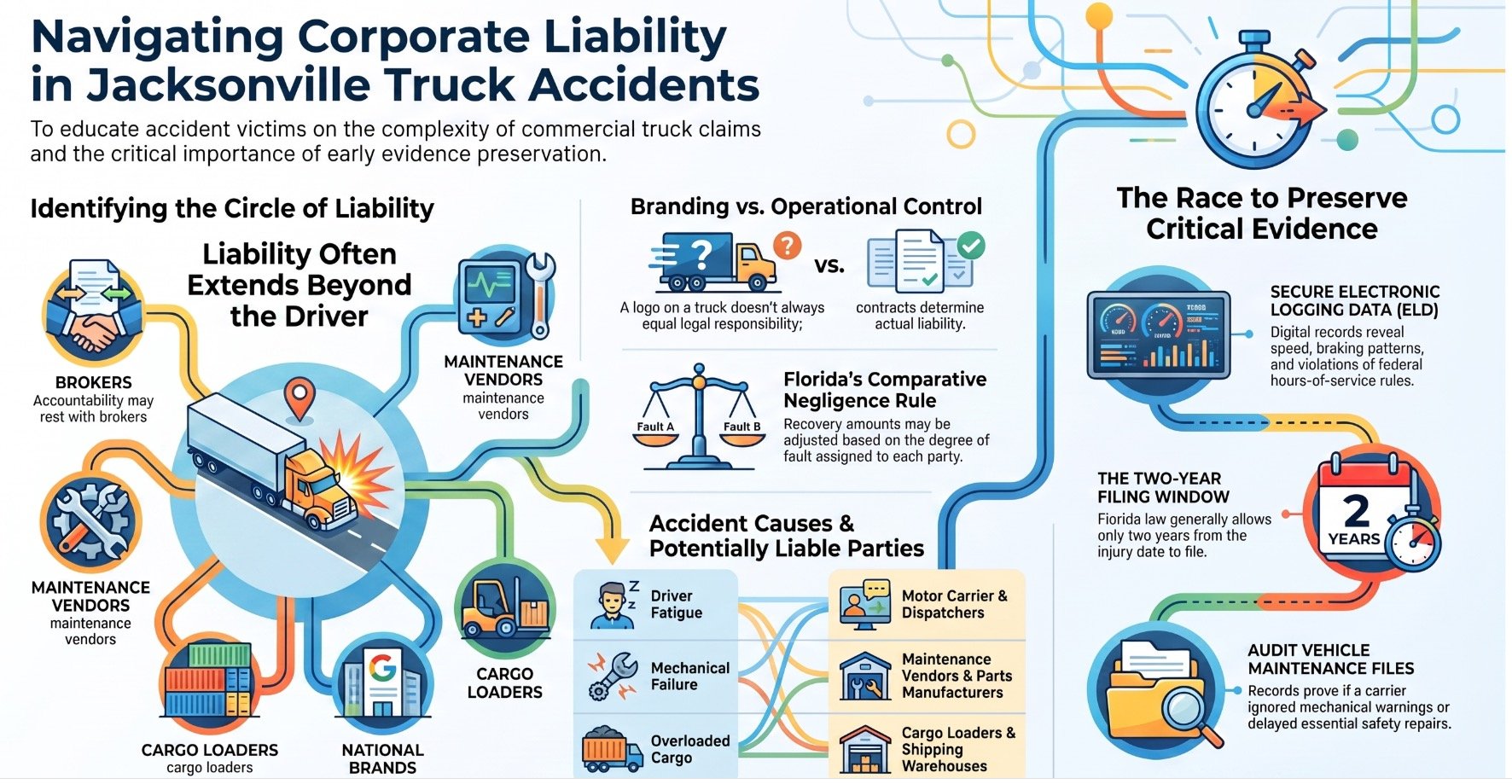
- Corporate branding does not always reveal legal responsibility; contracts and operational control often determine accountability.
- Preserve evidence quickly, including driver logs, maintenance records, dispatch communications, and electronic truck data.
- Liability may involve driver fatigue, unsafe loading, poor maintenance, speeding, distracted driving, or company safety failures.
- Florida comparative negligence and layered insurance coverage can affect recovery in commercial truck accident claims.
How We Can Help With Your Jacksonville Truck Accident Companies & Brands Injury Claim
When a collision involves a commercial truck, the resulting claim often requires immediate investigation, careful evidence preservation, and a clear understanding of the companies and brands connected to the vehicle. Legal support can help injured persons identify responsible parties, review insurance coverage, and coordinate the documentation needed to pursue compensation. This work can include requesting driver records, maintenance materials, inspection reports, dispatch communications, and electronic data before they are lost or altered. Evidence preservation is especially important when multiple entities may have handled the truck, trailer, cargo, or route planning.
Counsel may also help evaluate medical losses, wage disruption, long-term care needs, and how the injury affects daily service to family and community. In cases involving uninsured claims, limited coverage, or disputed responsibility, structured advocacy can protect the injured person from avoidable delays. Careful case preparation supports fair negotiation and, when necessary, informed litigation.
Understanding Jacksonville Truck Accident Companies & Brands Injury Cases


Understanding Jacksonville truck accident companies and brands injury cases begins with recognizing that a commercial trucking claim may involve more than the driver and the vehicle owner. A careful review may identify brokers, leasing entities, maintenance vendors, insurers, or national brands whose policies, contracts, or operational control affected the claim.
OUR CONSULTATIONSARE FREE
START YOUR FREE CASE REVIEW

These cases require orderly evaluation, especially when injured people and their families need guidance that supports recovery, stability, and accountability. Shared fault determination may address the actions of several parties, while Comparative negligence can affect the amount of compensation available under Florida law. Early Evidence preservation tips often include securing electronic data, inspection records, photographs, carrier files, and communications before they are lost or altered. Witness statement collection is also important, because neutral accounts may clarify vehicle positions, timing, and post-crash observations.
A structured legal assessment helps protect the injured person’s interests while ensuring every responsible business entity is examined carefully.
Common Causes of Jacksonville Truck Accident Companies & Brands
Common causes of Jacksonville truck accidents often involve driver fatigue, improper truck maintenance, distracted driving, and overloaded cargo. These factors may reflect failures by drivers, trucking companies, maintenance providers, or cargo loaders to follow required safety practices. Identifying the cause is a key step in determining liability, preserving evidence, and evaluating the full scope of an injury claim.
Driver Fatigue


Driver fatigue is a leading factor in serious truck accidents in Jacksonville, especially when commercial drivers work long hours on highways, port routes, and high-traffic corridors. Drowsy driving can reduce reaction time, impair judgment, and cause brief lapses in attention that endanger families, workers, and first responders sharing the road. In many cases, unsafe long-haul scheduling places pressure on drivers to meet delivery demands despite physical exhaustion. Effective fatigue management requires lawful rest periods, careful route planning, and company oversight that values public safety over speed. Rest stop violations, falsified logs, or ignored warning signs may indicate broader corporate neglect. When fatigue contributes to a crash, investigators often review driving records, electronic logs, dispatch practices, and policies to determine accountability for preventable harm.
Improper Truck Maintenance
Fatigue is not the only preventable condition that can turn a commercial vehicle into a serious road hazard; poor maintenance practices also contribute to many Jacksonville truck accidents. When a carrier neglects inspections, repairs, or documentation, vital components may fail without warning. A worn brake system can lengthen stopping distance, while inadequate tire maintenance can cause blowouts, loss of control, or dangerous debris on the roadway. Companies serving the public must maintain fleets with care, employ qualified mechanics, and respond promptly to reported defects. Negligent hiring may place untrained or careless personnel in roles that require judgment and discipline. Effective safety training helps drivers identify mechanical concerns before each trip. When maintenance failures harm others, evidence of records, inspections, and ignored warnings may reveal preventable negligence.
Distracted Driving
Although commercial trucks are often associated with mechanical failures or driver fatigue, distracted driving remains a major cause of preventable crashes in Jacksonville. Large vehicle operators must continually monitor traffic, mirrors, blind spots, signals, and changing road conditions. When attention shifts to phones, dispatch devices, navigation systems, food, paperwork, or conversation, the risk to nearby motorists rises sharply. Texting and driving is especially dangerous because it removes visual, manual, and cognitive focus from the road. Hands-free risks also remain significant, since voice commands and calls can still divide a driver’s judgment and reaction time. For families, caregivers, and community members seeking safety for others, these distractions reflect preventable choices. Careful investigation may reveal whether driver inattention, employer practices, or unsafe communication demands contributed to a collision.
Overloaded Cargo
When cargo exceeds safe weight limits or is loaded improperly, a commercial truck can become difficult to control on Jacksonville roads. Excess weight can strain brakes, reduce maneuvering response, and increase stopping distance, especially near bridges, ports, and congested highways. Uneven loads may shift during turns or sudden stops, causing rollovers, jackknifes, or cargo spills that endanger nearby motorists and first responders. Cargo weight scales help identify violations before trucks enter traffic, but some carriers may ignore required checks or pressure drivers to meet delivery demands. Overloading penalties exist to discourage unsafe practices and protect the public. When an overloaded truck contributes to a crash, investigators may review loading records, inspection reports, and company policies to determine whether preventable negligence occurred and who bears responsibility for resulting harm.
Don’t Wait. Call Our Florida Personal Injury Lawyers Now!
Legal Rights of Jacksonville Truck Accident Companies & Brands Injury Victims
After a serious truck crash, injured victims in Jacksonville may have the right to pursue compensation from trucking companies, commercial brands, drivers, maintenance contractors, cargo loaders, or other parties whose negligence contributed to the collision.
These rights may support recovery for medical care, lost income, reduced earning ability, pain, and long-term support needs.
- Victims may file injury claims seeking payment for hospital bills, rehabilitation, medications, and future treatment reasonably connected to the crash.
- Families may pursue Wrongful Death Claims when a loved one’s life is lost, including damages for financial support, services, and companionship.
- Available Insurance Coverage Options may include commercial liability policies, umbrella coverage, employer coverage, or policies tied to contracted logistics work.
- Legal action may also help preserve evidence, identify responsible entities, and protect vulnerable families from unfair settlement pressure.
These rights exist to promote accountability, restore stability, and support those harmed while communities continue serving others.
Why Do Jacksonville Truck Accident Companies & Brands Injuries Happen?
Understanding the rights available to injured victims also requires examining the conditions that cause serious truck crashes in Jacksonville. Commercial truck injuries often arise from driver fatigue, speeding, distracted driving, improper loading, poor maintenance, and unsafe hiring or training practices. Large carriers and recognizable brands may operate under tight delivery schedules, which can increase pressure on drivers and reduce safety margins. When heavy vehicles travel through congested corridors, construction zones, bridges, and port-related routes, even minor errors can create catastrophic harm for motorists, pedestrians, and workers.
Truck crash statistics often show that collisions involving tractor-trailers cause more severe injuries because of vehicle size, braking distance, and cargo weight. Mechanical defects, shifting freight, or ignored inspection duties may further contribute to preventable crashes. These causes also affect injury claim timelines, since determining responsibility may require reviewing driver logs, maintenance records, loading documents, and company safety policies before liability becomes clear.
What Should You Do After a Jacksonville Truck Accident Involving Companies & Brands Injury?
After a Jacksonville truck accident involving companies or brands, an injured person should take prompt steps to protect health, evidence, and potential legal rights. Seek medical care as soon as possible, and preserve photographs, witness information, records, and other crucial evidence. A truck accident lawyer can then assess liability, address insurer communications, and help determine the appropriate path forward.
Seek Medical Care
Seek prompt medical evaluation for any injury linked to a Jacksonville truck accident, even when symptoms appear minor at the scene. A physician can identify hidden trauma, including concussion, internal injury, soft tissue damage, or delayed pain conditions. The injured person should follow all treatment instructions, attend referrals, and keep accurate records of diagnoses, prescriptions, and limitations. These steps support recovery and help caregivers, family members, and legal representatives understand the person’s needs. When health permits, someone assisting the injured person may Get witness statements and Document scene photos, but medical attention should remain the priority. Delays in care can worsen injuries and create disputes about causation. Consistent treatment also demonstrates responsible action, which can protect the person’s well-being and related claim. Medical documentation may guide future support.
Preserve Key Evidence
When it is safe to do so, preserving critical evidence can help clarify how a Jacksonville truck accident occurred and who may be responsible. A person may support later review by taking photos of vehicle positions, cargo spills, skid marks, traffic signals, road conditions, and visible injuries. This scene documentation can protect facts before cleanup, repairs, or weather changes alter the location.
Witness statements may also be valuable, especially from bystanders, passengers, or responding personnel who observed the collision or its aftermath. Names, phone numbers, and brief notes should be gathered respectfully. The injured person should save medical records, repair estimates, correspondence, and insurer messages. As part of a careful insurance claim strategy, it is also prudent to avoid giving recorded statements until rights and obligations are understood.
Contact A Truck Lawyer
In the days following a serious commercial vehicle collision, contacting a Jacksonville truck accident lawyer can help an injured person protect important rights and avoid preventable mistakes. Counsel can coordinate a prompt scene investigation, preserve driver and company records, and identify whether a carrier, broker, maintenance provider, or product manufacturer may share responsibility. A lawyer may also obtain witness statements while memories remain reliable and evidence is still available. This guidance can be valuable when the injured person is focused on medical treatment, family needs, and service to others affected by the crash. Legal representation can manage insurance communication, limiting statements that may be misunderstood or used unfairly. Counsel can also monitor claim deadlines, evaluate damages, and pursue accountability through careful preparation and disciplined advocacy.
Critical Evidence in a Jacksonville Truck Accident Companies & Brands Injury Case
Important evidence in a Jacksonville truck accident injury case often determines whether negligence can be clearly established and linked to the harm suffered.
Vital materials may include:
- Driver Qualification Records
- Electronic Logging Data
- Vehicle Maintenance Files
- Cargo Loading Evidence
These records can reveal whether the driver, trucking company, or another responsible party failed to follow required safety standards.
Driver Qualification Records
Because trucking companies must make sure that their drivers are properly qualified before placing them behind the wheel, driver qualification records can become central evidence in a Jacksonville truck accident injury case. These records may show whether a company reviewed licensing, medical certification, prior driving history, and employment background before allowing service on public roads. They may also reveal gaps in driver training or safety compliance failures that put families, workers, and other motorists at risk. For those seeking to serve an injured person with diligence, these files can help clarify whether a crash resulted from careless hiring, inadequate supervision, or ignored warning signs. Careful review may support accountability when a company’s internal records show it should have made safer choices before the collision occurred in Jacksonville.
Electronic Logging Data
After a serious truck collision in Jacksonville, electronic logging data can provide a precise record of a driver’s hours, rest periods, duty status, and movement before the crash. These digital records help determine whether a carrier pushed unsafe schedules, ignored fatigue risks, or failed to correct patterns that endangered the public. They may also show Overspeed violations, route deviations, and timing conflicts that clarify how the collision developed. When reviewed alongside dispatch records, bills of lading, and cargo-securing information, the data can reveal whether operational pressure contributed to unsafe choices. For injured people and those serving their recovery, preserving this evidence quickly is vital. A lawyer may seek downloads, backups, and audit trails before records are altered, overwritten, or lost during routine company processes.
Vehicle Maintenance Files
When a tractor-trailer has not been properly inspected or repaired, vehicle maintenance files may become central evidence in a Jacksonville truck accident case. These records can show whether a company addressed brake wear, tire defects, handling problems, lighting failures, or repeated mechanical warnings before a collision. A careful review may reveal delayed repairs, incomplete inspections, or safety policy violations that put the public at risk. Maintenance files also help compare a company’s written standards with its actual practices, offering insight into whether supervision was responsible and consistent. In some cases, investigators evaluate these records alongside driver background checks to determine whether broader safety failures contributed to the crash. For injured people and those assisting them, such evidence can support accountability, fair compensation, and safer commercial transportation practices.
Cargo Loading Evidence
Improperly loaded cargo can change how a tractor-trailer brakes, turns, and stays stable on Jacksonville roads, making cargo-loading evidence an important part of a truck accident investigation. Records may show whether freight was weighed, balanced, blocked, braced, or secured before departure. Bills of lading, loading diagrams, scale tickets, photographs, and inspection notes can identify who handled the cargo and whether safety duties were followed. Shipping contracts may also reveal responsibilities assigned to carriers, brokers, warehouses, or branded companies. When cargo shifts, spills, or exceeds legal limits, these materials may help explain why a crash occurred. Investigators may also compare loading evidence with Driver qualification records, training history, and trip documentation. This review helps injured people, families, and advocates understand accountability with care and accuracy.
Long-Term Effects of Jacksonville Truck Accident Injuries
Long-term injuries from Jacksonville truck accidents may involve chronic pain conditions that interfere with work, medical care, and daily routines. Some victims also face permanent mobility limitations, including reduced strength, restricted movement, or the need for assistive devices. Emotional trauma impacts, such as anxiety, depression, or post-traumatic stress, can further affect recovery and the overall value of an injury claim.
Chronic Pain Conditions
Although the immediate injuries from a Jacksonville truck accident may receive the most attention, chronic pain conditions often become one of the most disruptive long-term consequences. Persistent back pain, nerve irritation, joint inflammation, and soft tissue damage can continue long after emergency care ends, affecting sleep, concentration, employment, and daily caregiving responsibilities. These conditions may also complicate Surgery recovery, requiring ongoing treatment, medication management, physical therapy, and expert evaluations. For individuals committed to serving their families, workplaces, and communities, chronic pain can reduce stamina and create steady emotional strain. Careful medical documentation is essential, because Insurance settlement negotiations often depend on proof of continuing symptoms, future care needs, and measurable limitations. Legal evaluation may help connect long-term pain to the truck collision and support fair compensation.
Permanent Mobility Limitations
When a severe truck collision causes lasting damage to the spine, hips, knees, or lower extremities, permanent mobility limitations may alter nearly every part of an injured person’s routine. Walking, standing, driving, bathing, and maintaining employment can require assistive devices, home modifications, or continuing medical oversight. In Jacksonville truck accident cases, these limitations may also affect caregiving needs, access to transportation, and the ability to meet family or community responsibilities.
Rehabilitation support options may include physical therapy, occupational therapy, mobility training, braces, wheelchairs, or adaptive equipment designed to preserve independence. The Disability documentation process often requires medical records, functional capacity evaluations, physician opinions, and evidence of daily restrictions. Careful documentation helps establish the injury’s long-term effects and supports claims for future care, lost earning capacity, and accessibility-related expenses.
Emotional Trauma Impacts
Physical recovery and mobility loss often represent only part of the harm caused by a serious Jacksonville truck accident. Survivors may experience nightmares, anxiety, depression, irritability, and avoidance of driving or medical care. These emotional trauma impacts can disrupt employment, caregiving duties, spiritual routines, and community service roles. Therapy access is often critical, yet transportation limits, cost concerns, and appointment shortages may delay meaningful treatment. PTSD recovery may require counseling, medication management, peer support, and consistent family support over many months. Caregivers, employers, and advocates can serve injured individuals by recognizing symptoms without judgment and encouraging steady follow-through. Legal documentation should include mental health evaluations, treatment records, work limitations, and witness observations, helping establish how emotional injuries affect daily life, relationships, and long-term stability after the crash.
Proving Liability in Jacksonville Truck Accident Companies & Brands Injury Cases
In Jacksonville truck accident injury cases, proving liability requires a careful review of how the crash occurred, which parties controlled the vehicle or cargo, and whether any company failed to meet its legal duties. The analysis often begins with police reports, driver logs, inspection records, maintenance files, and electronic data from the truck. Witness statements may clarify lane position, speed, braking, or unsafe actions, while dashcam footage can provide a direct view of the events leading to impact.
Liability may rest with a truck driver, motor carrier, maintenance contractor, cargo loader, or corporate brand responsible for safety practices. Investigators examine whether fatigue, distraction, speeding, improper loading, or defective equipment contributed to the harm. For injured individuals and their families, this process supports accountability and helps identify each responsible party. Careful documentation also preserves facts that may otherwise be lost, enabling a stronger claim grounded in evidence, service, and lawful responsibility for the community.
Dealing With Insurance Companies After a Jacksonville Truck Accident Companies & Brands Injury
After a Jacksonville truck accident involving a company vehicle or commercial brand, insurance communications can become complex and strategically managed. Corporate insurers may respond quickly, yet their early contact often serves to protect financial interests. Injured individuals, caregivers, and advocates should approach each conversation with care, accuracy, and a service-minded commitment to truthful reporting.
Independent evidence can help balance the information controlled by trucking companies, insurers, and brand representatives. Photographs, witness details, medical records, and repair records may support claim documentation and reduce confusion. When statements are requested, consistency matters, because minor errors may later be used to question the injury or its cause.
Insurance denials and settlement delays may arise when liability is disputed, medical treatment is ongoing, or damages are minimized. Careful organization, written communication, and respectful persistence can help preserve the injured person’s position while discouraging unfair pressure, incomplete review, or premature resolution.
Don’t Wait. Call Our Florida Personal Injury Lawyers Now!
What to Expect During a Jacksonville Truck Accident Companies & Brands Injury Claim Process
A Jacksonville truck accident injury claim often begins with an initial case evaluation, where the facts, injuries, and potential defendants are carefully assessed. Evidence collection may include crash reports, driver records, maintenance logs, electronic data, and company policies relevant to liability. After reviewing company responsibility, the claim typically moves toward settlement negotiations, where damages are presented, and compensation is pursued based on documented losses.
Initial Case Evaluation
When a Jacksonville truck accident claim begins, the initial case evaluation serves as the foundation for determining liability, damages, and the strength of the potential injury claim. During this stage, an attorney reviews the crash circumstances, injured person’s medical concerns, employment impact, and parties potentially responsible, including carriers, drivers, contractors, or branded commercial entities. The evaluation also considers early Witness statements, available reports, and insurer communication to identify risks that may affect recovery. We pay close attention to deadlines, insurance layers, and the client’s immediate needs so guidance is practical and service-focused. This assessment helps determine whether the claim warrants further action, what legal strategy may be appropriate, and how to support the injured person with dignity throughout the process.
Evidence Collection Process
Because commercial truck accident claims often depend on records controlled by carriers, contractors, or branded business entities, the evidence collection process should begin promptly and methodically. Investigators may preserve crash reports, driver logs, dispatch records, maintenance files, electronic control module data, photographs, and vehicle inspection materials. An Eyewitness statement can clarify traffic conditions, driver conduct, and the moments before impact, especially when physical evidence is disputed. Nearby businesses, intersections, loading areas, or fleet facilities may also have video surveillance, which you should request before routine deletion. Medical records, wage documentation, and repair estimates help connect the collision to specific losses. Throughout this process, careful organization supports accurate review, protects the injured person’s interests, and helps responsible advocates serve clients with diligence, fairness, and disciplined attention to detail.
Company Liability Review
After securing key records, a company liability review examines whether a motor carrier, delivery contractor, logistics provider, maintenance vendor, or branded business entity contributed to the crash. This review may compare driver qualification files, dispatch practices, inspection reports, safety policies, and communications against accepted industry duties. Negligent hiring concerns can arise when a company allowed an unsafe driver to operate despite a disqualifying history, poor training, or ignored warning signs. Vendor oversight also comes into play when outsourced maintenance, loading, leasing, or delivery operations affect public safety. For those focused on serving injured people with care, the review clarifies which entities had control, knowledge, or responsibility. It helps separate mere association with a brand from conduct that may support legal accountability under Florida law and applicable safety standards.
Settlement Negotiation Steps
Settlement negotiations begin with a structured presentation of liability, damages, insurance coverage, and each company’s or brand-related entity’s role in the truck accident. Counsel typically submits medical records, wage documentation, crash evidence, and expert evaluations to support the injured person’s demand. Independent evidence preservation strengthens the claim by protecting logs, maintenance data, vehicle inspections, and electronic records before they change or are lost. Prompt communication with the insurer also helps clarify coverage layers, policy limits, and defense positions. Negotiators then evaluate comparative fault arguments, future care needs, and business conduct tied to the collision. Each offer is reviewed against documented losses and litigation risks. If discussions remain fair and responsive, settlement may serve the injured person while conserving judicial resources.
Compensation for Jacksonville Truck Accident Companies & Brands Injury Damages
In a Jacksonville truck accident claim, compensation may be available for the full range of injury-related damages caused by trucking companies, commercial carriers, logistics brands, or other responsible parties. Recovery often depends on identifying every entity whose decisions contributed to the crash, including employers, maintenance vendors, cargo loaders, or vehicle owners. Records may show whether commercial liability contracts define coverage duties, indemnity obligations, or shared responsibility among business partners. Evidence from truck safety inspections can also help establish whether preventable mechanical defects, ignored warnings, or poor maintenance practices caused harm.
Compensation may address medical treatment, rehabilitation needs, lost income, reduced work capacity, property loss, and the long-term consequences of serious injury. In service-centered representation, the focus remains on restoring stability, protecting access to care, and holding well-funded organizations accountable. Each claim requires careful documentation, credible expert review, and disciplined negotiation to secure fair relief for the injured person.
Economic vs Non-Economic Damages in Jacksonville Truck Accident Companies & Brands Cases
In Jacksonville truck accident cases involving companies and brands, damages are often separated into economic losses, such as medical bills and lost income, and non-economic losses, such as pain and emotional distress. This distinction helps determine how to document, value, and present each category of harm during a claim. Proving damage values requires credible records, expert input, and a clear connection between the accident and the injured person’s losses.
Medical Bills And Lost Income
After a serious truck collision in Jacksonville, medical bills and lost income often form the core of the economic damages claim, while pain, suffering, and loss of normal life fall into non-economic damages. Economic losses may include ambulance charges, emergency treatment, surgery, rehabilitation, medication, pain management, and future medical care. They may also include missed wages, reduced earning capacity, and lost employment benefits when injuries prevent steady work. In fatal crashes, wrongful death claims may seek related financial support losses and final medical expenses. Careful documentation helps attorneys, insurers, and courts measure these losses with discipline and fairness. For families and advocates committed to serving others, accurate financial proof supports accountability, protects household stability, and helps injured people pursue necessary care without avoidable hardship.
Pain And Emotional Distress
Financial losses may be measured through bills, pay records, and employment documents, but pain and emotional distress require a different form of proof in Jacksonville truck accident cases. These losses may include chronic pain, sleep disruption, anxiety, humiliation, grief, and reduced enjoyment of daily life. A severely injured person may struggle with family roles, community service, worship, or caregiving duties that once gave life structure. Survivor counseling may become necessary when trauma affects trust, concentration, or the ability to travel near commercial vehicles. PTSD triggers, including braking sounds, highway congestion, or the sight of a truck brand, may deepen distress. Victim impact is considered through the human consequences of injury, recognizing that service-minded individuals often suffer when they can no longer support others.
Proving Damage Values
Establishing damage values in a Jacksonville truck accident case requires a clear separation between economic losses and non-economic harm, especially when claims involve trucking companies, corporate carriers, or recognizable commercial brands. Economic damages may include medical bills, rehabilitation costs, lost wages, reduced earning capacity, and future care needs. Medical documentation helps confirm treatment, prognosis, and the connection between injuries and the crash. Non-economic damages address pain, emotional distress, loss of enjoyment, and lasting disruption to daily life. These losses require careful presentation because invoices don’t measure them. Valuation experts may assist by reviewing records, employment history, life expectancy, and long-term limitations. Their analysis can support fair compensation while helping decision-makers understand the full human and financial impact of the collision in serving justice.
When a Jacksonville Truck Accident Companies & Brands Injury Case Goes to Trial vs Settlement
In a Jacksonville truck accident case involving a commercial carrier, freight company, delivery brand, or other corporate defendant, the decision to settle or proceed to trial usually depends on liability, damages, insurance coverage, and the strength of the available evidence. Settlement may serve injured individuals by providing certainty, privacy, and timely financial recovery, especially when fault is well documented and the insurer recognizes the seriousness of the harm.
Trial may become necessary when a company disputes responsibility, minimizes injuries, withholds fair compensation, or relies on conflicting expert opinions. A careful Trial evidence strategy may include driver records, maintenance files, electronic logging data, crash reconstruction, medical testimony, and proof of long-term needs. Attorneys often evaluate whether a jury may respond to corporate safety failures, preventable conduct, and the human impact of the collision. Because jury verdict outcomes can exceed or fall below settlement offers, each path requires disciplined risk assessment.
Florida Laws That May Affect Your Jacksonville Truck Accident Companies & Brands Case
Because Florida law controls many parts of a Jacksonville truck accident case, claims against commercial carriers, freight companies, delivery brands, and other corporate defendants must be evaluated under rules that affect fault, damages, insurance, and filing deadlines.
These laws help identify responsibility and protect injured people who need stability, care, and practical support.
- Florida Comparative Negligence may reduce compensation if the injured person shares fault, making accurate evidence collection critical.
- Federal Motor Carrier safety rules may apply to trucking companies, including standards for driver qualification, hours of service, maintenance, inspections, and cargo securement.
- Florida insurance requirements can influence available recovery, especially when multiple policies cover the tractor, trailer, cargo owner, or corporate operator.
- Employer and agency principles may hold a company responsible for unsafe hiring, poor training, negligent supervision, or decisions that pressured drivers to place delivery schedules above public safety and reasonable care.
The Statute of Limitations for Jacksonville Truck Accident Companies & Brands Injury Cases
After fault, insurance, and corporate responsibility are evaluated, the filing deadline becomes a controlling issue in any Jacksonville truck accident injury case involving companies or brands. Florida generally allows two years from the date of injury to file a negligence lawsuit, and missing that deadline can bar recovery regardless of severity. This limit may affect claims against trucking companies, delivery brands, maintenance contractors, loading entities, and other commercial parties whose conduct contributed to harm.
Timely filing also supports fair service to injured people and their families, because delays can weaken witness memory, access to records, and vehicle data preservation. Comparative fault issues may also become harder to address as time passes, particularly when multiple companies argue over responsibility. Evidence disputes involving driver logs, inspection reports, electronic data, or corporate policies become harder when deadlines are ignored. Prompt attention to the limitation period helps preserve orderly review and protects the injured party’s right to seek accountability.
How a Jacksonville Truck Accident Companies & Brands Lawyer Can Help You
When a commercial truck crash involves a company, brand, contractor, or corporate fleet, a Jacksonville truck accident lawyer can help identify who may be legally responsible and what evidence supports the claim. This guidance can be important for injured people, families, and caregivers seeking accountability while preserving dignity and stability.
- Investigating responsibility: Counsel may review driver conduct, company policies, maintenance records, hiring practices, and fleet oversight to determine fault.
- Managing evidence preservation: A lawyer can seek driver logs, black box data, dispatch records, inspection reports, and video before crucial information is lost.
- Reviewing Insurance coverage options: Commercial trucking cases may involve layered policies, corporate coverage, contractor insurance, or excess coverage that requires careful analysis.
- Preparing the claim: Legal support can organize medical records, wage information, witness statements, and damages evidence, helping present the case clearly to insurers or opposing parties.
When to Contact a Jacksonville Truck Accident Companies & Brands Lawyer
Early legal involvement can strengthen the work described above by helping secure evidence, identify corporate defendants, and evaluate insurance issues before deadlines or document loss affects the claim. After a commercial truck collision, contact should happen as soon as medical needs are addressed and basic safety concerns are stabilized. Prompt guidance may help preserve driver logs, maintenance records, dispatch data, onboard camera footage, and communications with carriers or third-party vendors.
Timing also matters because the Timeline to file a claim may vary depending on the facts, available defendants, and applicable law. Families seeking to serve an injured loved one should not wait for uncertainty to resolve itself. Insurance company timelines can begin immediately, and early statements, forms, or settlement discussions may influence the direction of the case. When injuries are serious, liability is unclear, or a recognizable company vehicle is involved, timely consultation helps protect the claim’s integrity from the start.
Why You Need an Experienced Jacksonville Truck Accident Companies & Brands Lawyer
Because commercial truck crashes often involve layered corporate relationships, an experienced Jacksonville truck accident companies and brands lawyer can play a crucial role in identifying who may be legally responsible. Liability may extend beyond the driver to motor carriers, leasing entities, maintenance vendors, cargo loaders, brokers, or recognizable brands that influence operations. A thorough investigation helps protect evidence, including driver logs, inspection records, electronic data, dispatch communications, and corporate safety policies.
Experienced counsel also helps injured people and grieving families understand compensation options after severe injuries or Wrongful deaths. These matters may involve medical costs, lost income, long-term care, funeral expenses, and the broader harm caused by preventable conduct. When insurers issue insurance denials or attempt to shift blame, legal guidance can help preserve accountability and support a well-documented claim. For communities focused on serving others, this work promotes safer practices and helps affected families pursue stability with dignity after devastating truck collisions.
Don’t Wait. Call Our Florida Personal Injury Lawyers Now!
How to Choose the Right Jacksonville Truck Accident Companies & Brands Lawyer for Your Case
Selecting the right Jacksonville truck accident companies and brands lawyer requires attention to experience, investigative resources, and a clear understanding of commercial transportation liability. A qualified attorney should know how to examine driver records, maintenance logs, loading practices, corporate safety policies, and insurer conduct. This depth supports a case strategy that protects injured people and helps them pursue accountability with dignity.
Those seeking representation should review credentials, including trial experience, trucking litigation background, and results in serious injury claims. Client communication also matters because responsive guidance can reduce confusion while families focus on recovery and supporting one another. Fee transparency is equally important, as clear terms help clients understand costs before representation begins.
A strong lawyer should explain potential challenges, preserve vital evidence quickly, and coordinate expert review when needed. The best choice is often the professional who combines legal skill with steady counsel, respectful service, and disciplined preparation throughout the claim.
About The Law Offices of Anidjar & Levine
When serious truck accident injuries disrupt a life, The Law Offices of Anidjar & Levine offers legal guidance focused on accountability, preparation, and client support. The firm assists injured people and families in Jacksonville by examining crash evidence, identifying liable trucking companies or brands, and pursuing compensation through structured legal action.
Its team recognizes that service begins with responsiveness, clear communication, and respect for each client’s circumstances. Through case updates, careful investigation, and coordination with medical documentation, the firm works to reduce confusion during a difficult recovery period. Clients may also receive referrals to local injury resources that help them understand practical next steps after a collision.
The firm offers timeline consultations so potential clients can discuss deadlines, insurance concerns, and claim development before important opportunities pass. This approach supports informed decisions, thorough preparation, and steady advocacy for those harmed by negligent trucking practices in Jacksonville and surrounding communities.
Frequently Asked Questions
Can Truck Brand Defects Affect My Jacksonville Accident Claim?
Yes. A truck defect may affect a Jacksonville accident claim if unsafe design, a manufacturing error, or a component failure contributed to the crash. Product liability principles may allow responsibility to extend beyond the driver or carrier to manufacturers, distributors, or maintenance entities. Investigators typically examine compliance with federal standards, recalls, service records, and expert findings. This evidence can help protect injured persons and support fair accountability for preventable harm.
Are Maintenance Contractors Liable for Jacksonville Truck Crashes?
Yes, maintenance contractors may be liable when careless inspection, repair, or servicing contributes to a truck crash. Maintenance contractor liability often depends on records, work orders, industry standards, and whether defects were missed or created. Common negligence theories include failure to identify worn brakes, improper tire service, negligent fluid checks, or incomplete safety inspections. Those seeking accountability should examine each service provider’s role with disciplined care and evidence.
Do Trucking Company Safety Ratings Matter in Injury Cases?
Yes, trucking company safety ratings can matter in injury cases because they may reveal patterns of unsafe conduct. Federal oversight records, including inspection histories and violation data, can support trucking negligence proof when they show ignored risks or repeated compliance failures. These records may help injured people, families, and advocates understand whether a carrier failed its duty to protect others. Courts may consider them alongside crash evidence, maintenance records, and driver conduct.
Can Cargo Loading Companies Be Sued After a Truck Accident?
Yes, cargo loading companies can be sued after a truck accident when improper loading, unsecured freight, or weight imbalance contributes to harm. Their conduct may support claims of cargo carrier liability, especially if they ignored safety duties. In some cases, vicarious liability may also apply when workers acted within their assigned roles. A careful investigation helps injured people and service-minded advocates identify responsible parties and pursue accountability through lawful means.
Are Corporate Truck Policies Useful Evidence in Jacksonville Claims?
Yes, Corporate Policies can provide important Evidence Value in Jacksonville claims, particularly when they show required safety practices, driver supervision, maintenance standards, or cargo procedures. A reviewing party may compare those policies with actual conduct to identify preventable failures. When a company ignores its own rules, the evidence may clarify responsibility, support injured people, and promote safer service through accountable business practices.
—————————
Truck accident claims involving companies and brands in Jacksonville may involve complex questions about liability, insurance coverage, and evidence. Injured victims can benefit from prompt legal guidance to protect their rights, document their losses, and seek appropriate compensation. The Law Offices of Anidjar and Levine provide knowledgeable representation to people harmed by negligent truck drivers, trucking companies, or other responsible parties. Consulting a Jacksonville Personal Injury Lawyer can help victims understand their legal options and take informed action after a serious collision.