

The Law Offices of Anidjar and Levine handles Port St. Lucie truck accident claims involving improperly loaded or unsecured cargo, acting quickly to protect your health and preserve critical evidence.
We help document scene conditions, secure shipping papers and inspection records, and send preservation letters for telematics and onboard data before it disappears.
We also identify every liable party, including the carrier, shipper, and loading crew, then manage insurer communications and pursue full compensation.
Learn more by speaking with a Port St. Lucie Truck Accident Lawyer and continue below to see what steps matter most.
Main Takeaways
- Get medical care and call 911 immediately; internal injuries and shock can appear later, even if you feel fine.
- Preserve evidence fast: photos of cargo, straps, trailer doors, skid marks, debris, and weather before vehicles move.
- A lawyer can send preservation letters for telematics, load plans, bills of lading, scale tickets, and inspection logs.
- Liability may include the driver, motor carrier, shipper, warehouse/loading crew, or contractors under federal and Florida securement rules.
- Avoid recorded statements and fault guesses with insurers; counsel can manage communications and build a demand or lawsuit if needed.


How We Can Help With Your Port St. Lucie Improper Loading Truck Accident Claim
When cargo is loaded incorrectly, the crash often traces back to preventable decisions made long before the truck reached Port St.
Cargo crashes often start with preventable loading choices made long before the truck ever reaches Port St.
We step in to serve you with steady guidance, clear communication, and a focused plan that protects your time, health, and future.
We gather and preserve vital records, including bills of lading, weight tickets, cargo securement logs, and shipment communications.
We coordinate with qualified professionals to evaluate load distribution, tie-down practices, and safety procedures, then connect those findings to your injuries and losses.
We handle insurer calls, respond to low offers, and present a thorough demand package that reflects medical care, missed work, and long-term impacts.
If negotiations stall, we prepare your case for court and keep you informed at each stage.
We also provide Language assistance and Accessibility accommodations so you can participate fully and confidently throughout your claim.
OUR CONSULTATIONSARE FREE
START YOUR FREE CASE REVIEW

Understanding Port St. Lucie Improper Loading Truck Accident Cases
Our support doesn’t stop at gathering records and pressing insurers for fair compensation; it also includes explaining how improper loading claims work in Port St. Lucie.
These cases often turn on whether cargo securement or weight distribution violated a clear duty of care, and whether that breach contributed to the collision and your losses.
We guide you through a Regulatory Overview, including federal motor carrier rules and Florida requirements that govern loading practices, documentation, and inspection responsibilities.
We also compare conduct against Industry Standards used by carriers, warehouses, and logistics teams, since courts and insurers weigh what trained professionals should have done under similar conditions.
To serve you well, we focus on proof that links the loading decisions to the crash, using shipping papers, scale tickets, photos, and witness accounts.
We then present damages in a disciplined manner, so your claim reflects the full impact on your life.
Common Causes of Port St. Lucie Improper Loading Truck Accident
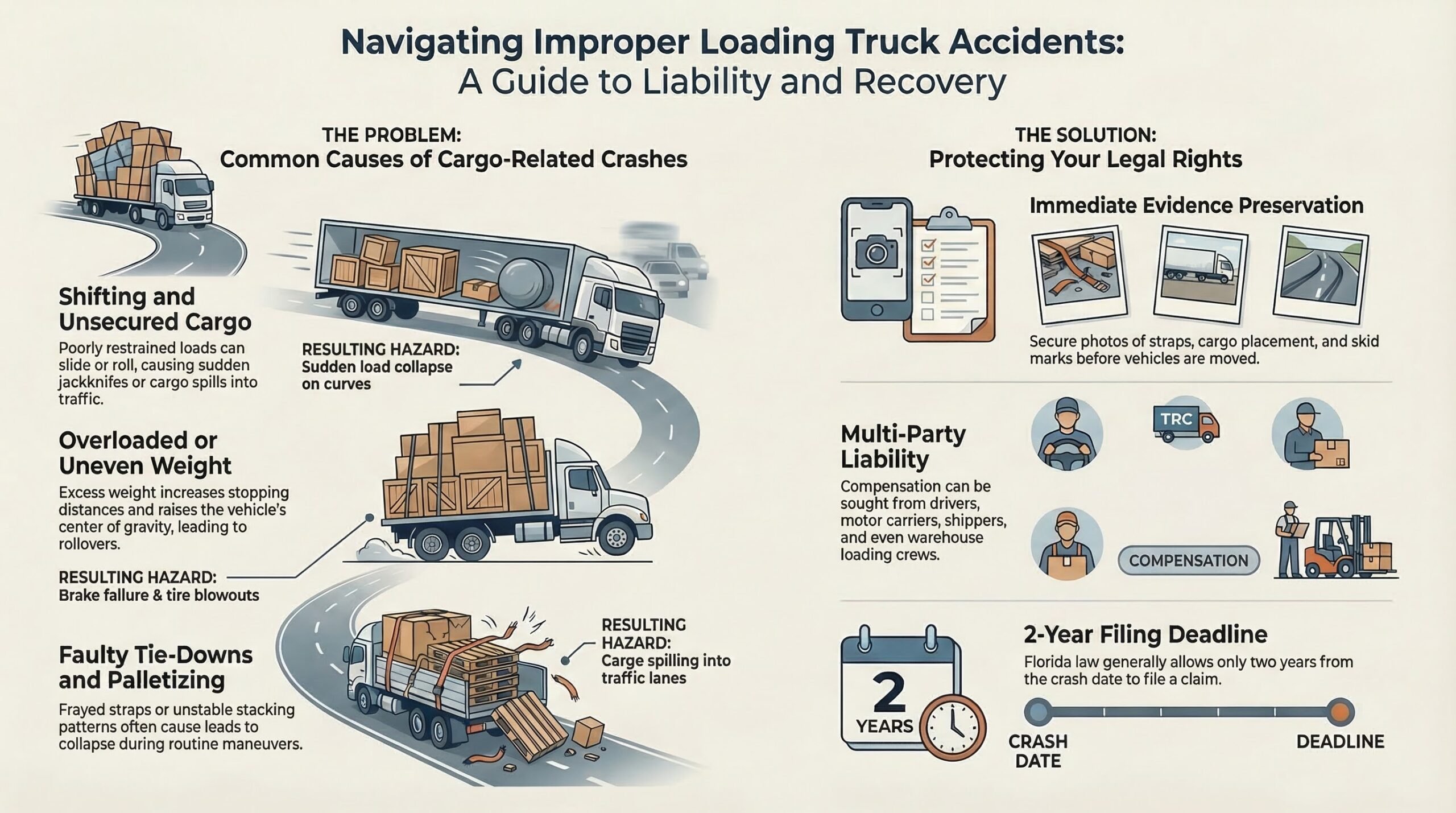
We often see improper loading truck accidents in Port St. Lucie when cargo isn’t secured and shifts in transit, throwing off the truck’s balance and control.
We also encounter overloaded or uneven loads that strain braking and handling, as well as improper tie-down equipment that fails under normal road forces.
We’ll also address how faulty palletizing and stacking can cause sudden load collapse, increasing the risk of rollovers and serious multi-vehicle crashes.
Unsecured Cargo And Shifting
Although cargo may look stable at the dock, unsecured or poorly restrained loads can shift in transit and turn a routine haul into a serious crash on Port St. Lucie roads.
When straps loosen, pallets slide, or drums roll, the driver may brake or maneuver to compensate, and the truck’s motion dynamics can amplify the shift.
That sudden change can lead to jackknifes, lane departures, or cargo spilling into traffic, endangering families and first responders who rush to help.
We often see preventable failures in tie-down selection, anchor points, and load checks at required intervals.
With better procedures and modern tools, including sensor integration that alerts crews to load movement, carriers can protect the public.
If shifting cargo caused harm, we’ll help you promptly pursue accountability.
Overloaded Or Uneven Loads
Shifting cargo often starts with poor restraint, but overloads and uneven weight distribution create their own set of hazards on Port St. Lucie roads.
When a truck carries more than its rated capacity, stopping distances increase and handling response diminishes, leaving less margin for safe, service-minded driving around families and work zones.
Uneven load distribution can also raise the center of gravity, making rollovers more likely on curves, ramps, and sudden lane changes.
These conditions commonly trigger axle overload, which stresses brakes, tires, and suspension components, and can lead to blowouts or loss of control.
We help you evaluate weights, manifests, and inspection records to identify negligence, protect the public, and pursue accountability after a preventable crash.
Improper Tie-Down Equipment
Faulty or mismatched tie-down equipment can turn a routine haul into a serious roadway hazard in Port St. Lucie.
When straps are frayed, chains are underrated, or anchor points are worn, cargo can shift during braking or turns and place everyone at risk.
We encourage carriers and shippers to treat securement as a duty of care, not a last-minute task.
Strong Inspection Protocols should require documented checks before departure, at early intervals, and after any notable road event.
We also look for whether teams adopted Strap Innovations, such as load-rated webbing, edge protection, and tension indicators, and whether workers were trained to use them correctly.
If improper equipment contributed to your crash, we’ll help you pursue accountability and safer practices.
Faulty Palletizing And Stacking
Secure tie-downs can’t compensate for cargo that was poorly stacked from the start, and we often see serious crashes traced back to palletizing mistakes.
When loaders ignore stable packing patterns, weight shifts during braking or turns, forcing drivers to fight sudden imbalance.
Overhanging boxes, uneven pallet heights, and gaps between loads allow freight to slide, tip, or collapse into adjacent lanes.
We also watch for material compatibility, because mixing slick shrink-wrapped items with rough cartons, or stacking heavy goods on fragile products, increases the risk of a load failure.
If you were harmed, we’ll review photos, bills of lading, and warehouse practices to identify who breached basic safety duties.
Our goal is accountability that protects others on the roads in Port St. Lucie each day.


Legal Rights of Port St. Lucie Improper Loading Truck Accident Victims
Although an improperly loaded truck crash can seem like an unavoidable roadway hazard, Florida law gives victims in Port St. Lucie clear rights to pursue accountability.
When cargo shifts, falls, or crushes a vehicle, we can seek compensation from every responsible party, including carriers, loaders, brokers, and maintenance providers, depending on the evidence.
We also protect your privacy rights while gathering records, and we request accessibility accommodations so you can participate fully in the legal process.
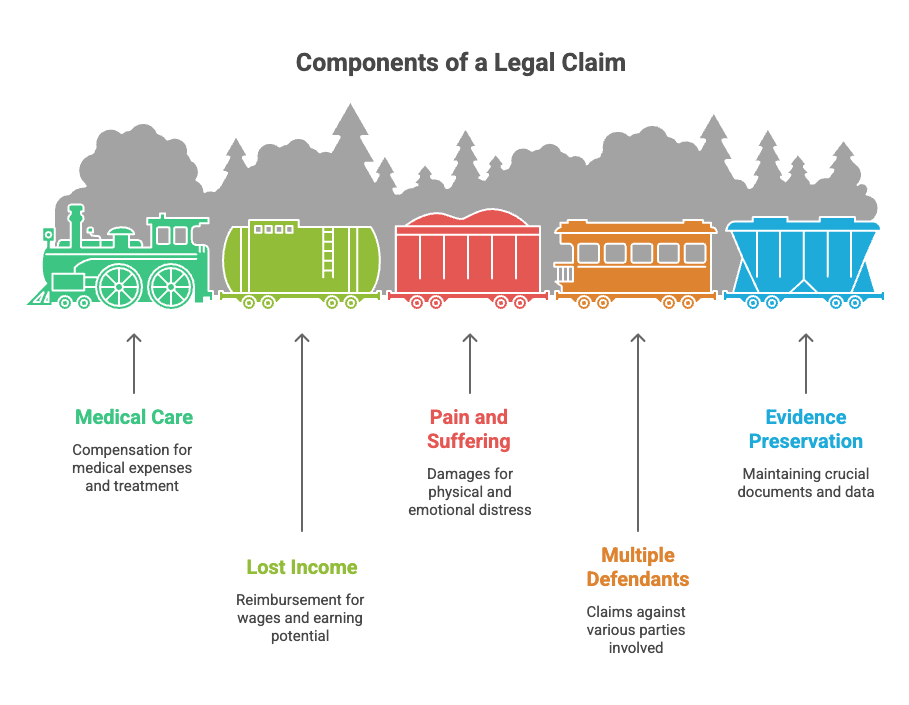
Your legal rights commonly include:
- Recovery for medical care, lost income, and reduced earning capacity.
- Payment for pain, suffering, and loss of enjoyment of life.
- Claims against multiple defendants under state negligence standards and federal cargo securement rules.
- Preservation of essential evidence, including bills of lading, loading logs, surveillance, and electronic data.
We aim to serve you with diligence, integrity, and steady guidance through each stage.
Steps to Take After a Port St. Lucie Improper Loading Truck Accident
After a Port St. Lucie improper loading truck accident, we’ll help you prioritize safety and get medical care immediately, even if symptoms seem minor.
Next, we’ll guide you through documenting the evidence and the scene, including photos, witness details, and, when possible, the truck’s load or spill conditions.
Finally, we’ll explain how to notify insurers carefully and contact a lawyer promptly, so we can protect your claim and prevent missteps that could reduce your recovery.
Ensure Safety And Medical Care
Move deliberately to protect life and limit further harm, because an improperly loaded truck crash can leave hazards that worsen within seconds.
If you can do so safely, move yourself and others out of traffic and away from shifting cargo, spilled fuel, or unstable debris.
Call 911 immediately, give clear location details, and request police, fire, and medical assistance so scene stabilization can begin without delay.
We should check for injuries, prioritize breathing and severe bleeding, and avoid moving anyone with possible neck or back trauma unless danger is imminent.
Accept evaluation even if you feel “fine,” since shock and internal injuries may not show right away.
Follow paramedics’ instructions, and support transport coordination to the appropriate emergency facility for timely care.
Document Evidence And Scene
Once the scene is stable and we’ve addressed urgent medical needs, we should begin documenting evidence because improper loading cases often turn on details that can disappear quickly.
We’ll photograph the vehicles, cargo, tie-downs, trailer doors, and any spill patterns, then capture wide shots showing lane positions, skid marks, debris fields, and roadway defects.
If it’s safe and permitted, we can request drone imagery to preserve an overhead view of the crash geometry and surrounding traffic controls.
We should record weather, lighting, time, and visible signage, and note any shifting loads or damaged straps before anything is moved.
We’ll also gather names of witnesses and first responders, and keep copies of medical and tow documents.
Forensic mapping can later align these observations with measurements for reconstruction accuracy.
Notify Insurers And Lawyer
Although it may feel like a routine administrative step, notifying insurers and contacting a lawyer early can directly protect our claim in an improper loading truck accident.
We should report the crash promptly, provide basic facts, and avoid speculation about fault, injuries, or cargo securement.
To serve others responsibly, we must preserve truthful records so insurers can act fairly and resources reach those harmed.
Using Communication Templates helps us stay consistent, document each call, and request claim numbers, adjuster names, and written confirmations.
We also need to address Privacy Concerns; we shouldn’t share medical details, recorded statements, or broad authorizations without counsel’s review.
When we retain a lawyer, we can route communications through that office, reduce pressure, and ensure that deadlines, evidence requests, and settlement discussions remain controlled and accurate.
How a Port St. Lucie Improper Loading Truck Accident Lawyer Can Help You
When a truck crash traces back to improper loading, we can step in quickly to identify how the cargo was secured, who handled the load, and which safety rules were ignored.
We preserve evidence, request records, and coordinate inspections so the truth is documented before it disappears.
We also serve you through steady client communication and practical legal education, so you can make informed choices while we shoulder the legal burden.
Our role is to build a clear liability story and pursue fair compensation with disciplined preparation.
- We trace responsibility across shippers, loaders, carriers, brokers, and drivers.
- We obtain bills of lading, weight tickets, load plans, and training materials.
- We work with qualified experts to evaluate securement methods and industry standards.
- We handle insurer contact, demand drafting, and, if needed, litigation planning.
Throughout, we keep your goals central and act with integrity, always respecting your time and recovery.
Long-Term Effects of Port St. Lucie Improper Loading Truck Accident Injuries
We often see that improper loading truck accidents in Port St. Lucie leave injuries that don’t end when the initial treatment does, and we want you to understand what long-term recovery may involve.
Chronic pain and reduced mobility can limit work and daily activities, while traumatic brain injury effects may disrupt memory, concentration, and overall function over time.
We also need to address the emotional and psychological impacts, since anxiety, depression, and sleep disruption can persist and complicate medical progress.
Chronic Pain And Mobility
Endurance becomes the daily test for many people injured in Port St. Lucie after an improperly loaded truck crash.
Chronic pain can persist long after bones mend, limiting sleep, work, and the steady ability to care for family, neighbors, and those who depend on you.
We often see mobility decline as inflammation, nerve irritation, and compensatory movement strain the back, hips, and shoulders over time.
We help you document how symptoms affect ordinary tasks, from lifting groceries to serving at your place of worship.
Consistent medical records support effective Pain Management plans, including therapy, targeted medication, and activity pacing.
When walking or balance becomes difficult, Adaptive Devices such as canes, braces, or walkers can restore safer independence, reduce falls, and preserve dignity while recovery continues.
Traumatic Brain Injury Effects
Chronic pain and reduced mobility often draw the most attention after an improperly loaded truck crash in Port St. Lucie, yet traumatic brain injuries can quietly shape a survivor’s future.
Even a “mild” TBI may disrupt concentration, processing speed, and decision-making, limiting safe work and daily service to others.
Many people experience memory impairment that complicates medication routines, appointments, and caregiving responsibilities.
Head trauma can also alter balance and vision, increasing fall risk and reducing driving safety.
Another serious concern is seizure risk, which may appear weeks or months later and require ongoing monitoring, restrictions, and treatment.
We help you document these long-term effects through medical records, testing, and credible life-care planning, so your claim reflects the full scope of your needs.
Emotional And Psychological Impacts
Although physical injuries often dominate early medical care after an improperly loaded truck crash in Port St. Lucie, we can’t ignore the emotional and psychological toll that follows.
Many survivors live with anxiety, irritability, or a persistent sense of danger, even when the body is recovering.
We often see sleep disturbances that undermine recovery, reduce focus, and make daily service to family, patients, or coworkers harder to sustain.
As routines shift, relationship strain may develop, especially when pain, fatigue, or trauma responses change communication and patience.
We encourage you to seek structured support, such as counseling, peer groups, and trauma-informed care, because early treatment can prevent long-term impairment.
When we document these impacts carefully, we help guarantee the full consequences of the crash are recognized and addressed in a claim.
Proving Liability in Port St. Lucie Improper Loading Truck Accident Car Accident Cases
When a truck’s cargo shifts, spills, or overloads a trailer, proving who’s legally responsible in a Port St. Lucie crash requires disciplined evidence and a service-minded approach.
Cargo-shift and overload crashes demand disciplined evidence to pinpoint responsibility—and a service-minded approach that protects injured people.
We’ll help you identify every party whose choices put others at risk, including the driver, the loading crew, the shipper, the freight broker, or the motor carrier that sets unrealistic schedules.
We use records such as bills of lading, weight tickets, load securement logs, and inspection reports to show whether the cargo met legal limits and tie-down standards.
We often coordinate forensic reconstruction to connect the load’s movement to braking, turns, and impact angles, and to distinguish improper loading from unrelated driving errors.
We also review driver training materials, dispatch communications, and prior safety violations to show knowledge, foreseeability, and preventable conduct.
Dealing With Insurance Companies After a Port St. Lucie Improper Loading Truck Accident
After we identify the driver, motor carrier, shipper, or loading crew that caused the cargo shift, we’ve to make sure the insurance process doesn’t rewrite the facts.
We protect you by controlling the narrative early, gathering documents, photographs, and witness details before adjusters frame the loss to fit their file notes.
We also insist that all communications stay accurate, complete, and consistent with the evidence.
Insurance companies often rely on denial tactics, including rushed recorded statements, selective medical reviews, and pressure to accept quick payments.
We help you respond without volunteering assumptions, and we present damages in a clear, service-minded way that reflects the full impact on your life and your ability to care for others.
When carriers invoke policy exclusions, we demand the exact policy language, endorsements, and coverage letters, then challenge misapplications with firm, timely objections.
Throughout, we keep interactions professional, documented, and focused on accountability.
What to Expect During a Port St. Lucie Improper Loading Truck Accident Claim Process
We’ll start by evaluating your claim, identifying liable parties, and estimating damages based on how improper loading contributed to the crash.
Next, we’ll gather and organize the evidence and documentation that support your case, then handle negotiations with insurers from a position grounded in facts and applicable standards.
Throughout the process, we’ll keep you informed about the expected timeline, pivotal decision points, and what a fair resolution may look like through settlement or, when necessary, litigation.
Claim Evaluation Steps
Although every case turns on its own facts, our claim evaluation in a Port St. Lucie improper loading truck accident begins with a focused intake, where we learn how the crash affected you and those who depend on you.
Next, we perform Liability Mapping to identify all potentially responsible parties, including carriers, shippers, loaders, and contractors, and we compare their roles to applicable safety duties.
We then complete a disciplined Risk Assessment, weighing dispute points, insurance posture, and venue considerations, so you can make informed decisions that protect your family and support your recovery.
We’ll outline likely timelines, communication expectations, and decision checkpoints, and we’ll discuss resolution options, including negotiation or litigation, always keeping your goals and community impact in view.
Evidence And Documentation
Because improper loading claims often turn on what gets preserved in the first days, evidence and documentation become the backbone of a Port St. Lucie case.
We’ll help you secure photos of the scene, cargo placement, tie-downs, and trailer condition, while obtaining crash reports and witness statements.
We also request bills of lading, load plans, weight tickets, inspection logs, and driver qualification and hours records to show who controlled the load and whether standards were followed.
To protect the truth, we send preservation letters and press for metadata preservation from phones, cameras, and onboard systems.
We also seek vehicle telematics, including speed, braking, and stability data, to connect handling issues to shifting freight.
We’ll organize everything so you can focus on serving your family and community.
Negotiations With Insurers
How do insurer negotiations typically unfold after an improper loading truck crash in Port St. Lucie? We begin by presenting a focused demand package that ties the cargo shift, safety violations, and your damages into a clear, service-minded narrative.
The adjuster often responds with requests for recorded statements, broad medical releases, or early settlement offers, and we help you answer only what’s necessary.
We challenge low valuations with documented proof, prioritize respectful communication, and keep you informed before any counteroffer leaves our office.
If the insurer suggests alternative dispute options, we evaluate whether Confidentiality Agreements protect your interests and whether proposed Mediation Costs are reasonable.
Throughout negotiations, we protect your privacy, maintain leverage, and press for terms that honor your recovery and accountability.
Timeline And Resolution
Once negotiations begin to take shape, most clients want to know what the claim will look like week to week and what milestones signal real progress toward resolution.
We’ll map the process around Case milestones, so you can plan for medical follow-ups, document requests, and insurer response windows without guesswork.
Early weeks often focus on confirming liability, preserving loading records, and gathering witness accounts, then we package damages and send a demand.
Next, we track Resolution benchmarks, such as a meaningful counteroffer, agreement on pivotal facts, or scheduled mediation.
If talks stall, we’ll file suit, complete discovery, and push for a settlement conference, always keeping service to your recovery at the center.
Most cases resolve after strong evidence narrows risk for the defense.
Compensation for Port St. Lucie Improper Loading Truck Accident Damages
After an improperly loaded truck causes a crash in Port St. Lucie, we help you pursue compensation that reflects the full scope of harm and supports your recovery.
We start by documenting the load shift, securement failures, and carrier practices, then connect those facts to the losses you’ve endured.
We gather records, consult qualified experts when needed, and present a clear demand that encourages prompt, fair resolution without sacrificing accuracy.
We also evaluate whether Punitive awards may apply when reckless conduct, such as ignoring safety rules or falsifying load documentation, put others at risk.
Because meaningful service includes protecting your future, we address Tax implications early, coordinating with appropriate professionals so settlement structure and timing don’t create avoidable burdens.
Throughout the claim, we communicate with insurers, manage deadlines, and keep you informed, so you can focus on recuperation and rebuilding your daily life.
Economic vs Non-Economic Damages in Port St. Lucie Improper Loading Truck Accident Cases
We’ll explain how economic damages cover measurable financial losses like medical bills, lost wages, and future care needs after an improper loading truck crash in Port St. Lucie.
We’ll also address non-economic damages, which compensate for pain and suffering, emotional distress, and reduced quality of life that don’t come with receipts.
Finally, we’ll show you how we prove both categories with records, expert analysis, and clear documentation that connects the improper loading to your harm.
Defining Economic Damages
Because improper loading can trigger sudden shifts in cargo and catastrophic impacts, we start by separating economic damages from non-economic damages in a Port St. Lucie truck accident claim.
Economic damages are the measurable financial losses you can document with reliable records and reasonable projections.
We help you identify medical bills, rehabilitation costs, prescription expenses, and future treatment needs tied to the crash.
We also calculate lost wages, reduced earning capacity, and employment benefits you couldn’t receive while recovering.
Property losses matter as well, including vehicle repair or replacement, towing, and related out-of-pocket costs.
To serve you well, we organize proof using international standards for documentation and apply strict accounting ethics, so every figure is supported, consistent, and defensible in negotiations or a trial.
Understanding Non-Economic Damages
How do you place a dollar value on pain that doesn’t come with an invoice? In Port St. Lucie improper loading truck accident cases, non-economic damages address the human losses that follow an injury, even when no receipt exists.
We’re talking about physical pain, emotional distress, loss of enjoyment of life, and the strain injuries place on relationships and daily purpose.
Because these harms are personal, juror perceptions can strongly influence how they’re valued, especially when a person’s service to family, work, and community has been disrupted.
We also keep award caps in mind, since legal limits may affect what a court can ultimately allow in certain claims.
When we evaluate these damages, we focus on honoring your lived experience with clear, responsible advocacy.
Proving Damages After Improper Loading
Proving damages after an improper loading truck crash starts with separating what the injury costs on paper from what it takes from your day-to-day life.
We document economic damages through medical bills, rehabilitation estimates, lost wages, reduced earning capacity, and out-of-pocket expenses, then connect each figure to records that a jury can trust.
We also present non-economic damages by showing how pain, limitations, anxiety, and loss of enjoyment affect your ability to serve your family, work, and community, using journals, testimony, and treating provider notes.
We address your Mitigation responsibility by highlighting timely treatment, reasonable work efforts, and careful follow-through, so the defense can’t claim avoidable losses.
When conduct is reckless, we evaluate Punitive damages to promote accountability and public safety.
When a Port St. Lucie Improper Loading Truck Accident Case Goes to Trial vs Settlement
Even when the evidence of improper loading looks clear, we still have to decide whether a negotiated settlement will fully reflect your losses or whether a trial offers the better path to a fair result.
We evaluate medical needs, future care, lost income, and the human cost of disruption, then compare those damages to the insurer’s best offer and the risks of litigation.
Settlement can provide faster funds for recovery and stability, and it can reduce stress for families who are focused on serving others in their homes, workplaces, and faith communities.
Trial becomes more likely when defendants deny fault, minimize harm, or hide critical records about cargo securement, weight limits, or supervision.
We also account for jury dynamics, including how jurors may view commercial safety choices, and we plan for trial publicity that can shape perceptions outside the courtroom.
Throughout, we stay prepared to litigate aggressively while remaining open to a resolution that honors your needs.
The Statute of Limitations for Port St. Lucie Improper Loading Truck Accident Case
Because deadlines can decide a case before the evidence ever reaches a courtroom, we treat Florida’s statute of limitations as a central part of any Port St. Lucie improper loading truck accident claim.
In most negligence cases, Florida law generally allows two years from the date of the crash to file suit, and missing that window can end the right to recover, no matter how clear the fault may be.
In Florida negligence cases, you typically have two years to file—miss it, and recovery may be barred regardless of fault.
We also watch for Statute Exceptions that can change the deadline, such as claims involving a deceased victim, a defendant who can’t be located for service, or conduct that conceals a responsible party.
In limited situations, Discovery Tolling may apply when critical facts couldn’t reasonably be known earlier, though courts apply these rules narrowly.
To serve you well, we calendar essential dates, preserve records, and confirm every potentially responsible carrier, broker, loader, and shipper before time expires.
When to Contact a Port St. Lucie Improper Loading Truck Accident Lawyer After a Port St. Lucie Improper Loading Truck Accident
Although you may feel pressured to “wait and see” after a Port St. Lucie improper loading truck accident, we should contact a lawyer as soon as medical needs are addressed and you’re safe.
Early outreach helps us preserve time-sensitive details, identify witnesses, and guarantee we don’t miss crucial reporting steps that may affect later claims.
We can also guide you on what to document, including symptoms, appointments, property damage, and communications with insurers.
We should reach out immediately if injuries worsen, fault is disputed, a commercial carrier calls you, or you’re asked for a recorded statement.
Prompt legal support also helps us coordinate family involvement, so loved ones can assist with records, transportation, and daily responsibilities while you focus on recovery.
Finally, early advice supports financial planning by clarifying likely expenses, wage disruption, and practical options for keeping household obligations current.
Why You Need an Experienced Port St. Lucie Improper Loading Truck Accident Lawyer
After an improper loading truck crash, we need an experienced Port St. Lucie improper loading truck accident lawyer because liability rarely stops with the driver.
We must identify who loaded, secured, and inspected the cargo, then connect each lapse to the harm you’re facing.
That work protects your recovery and supports the broader goal of safer roads for our neighbors.
Experience matters when carriers move quickly to control evidence and shape the narrative.
With Local Insight, we understand where to request records, how local procedures affect timing, and which entities commonly handle freight in this region.
With Regulatory Knowledge, we apply cargo securement rules, weight limits, and industry standards to show how a preventable decision created an unreasonable risk.
We also calculate damages with care, including medical needs, lost income, and future limitations, so the claim reflects real service to your family and community.
How to Choose the Right Port St. Lucie Improper Loading Truck Accident Lawyer for Your Case
Experience and regulatory knowledge set the foundation for a strong improper loading claim, but we also need to choose counsel who can apply those strengths to the specific facts of our crash.
We should look for a track record with cargo securement failures, shifting loads, and evidence preservation, because early decisions often shape the outcome.
We can ask how the lawyer investigates, whether they use qualified experts, and how they document chain of custody for photos, logs, and inspection reports.
We should also evaluate Communication Style, since we’ll need clear updates, timely responses, and guidance that helps us serve our family and community while the case moves forward.
Client Reviews can confirm whether past clients felt respected, informed, and supported, especially during negotiations or litigation.
Finally, we should discuss fee structures, expected timelines, and who’ll handle day-to-day work, so our choice matches our needs and values.
About The Law Offices of Anidjar & Levine
When we take on a Port St. Lucie improper-loading truck accident case, we do so with a service-first mindset and a disciplined plan.
We listen carefully, explain your options in plain terms, and move quickly to preserve evidence, identify responsible parties, and pursue full compensation.
You’ll get steady communication and practical guidance because you merit clarity during a difficult time.
Our firm history reflects consistent, client-centered advocacy built on preparation and accountability.
We’ve developed processes that help us respond promptly, coordinate medical care when needed, and manage claims so you can focus on recovery.
We also value community involvement, because public safety and mutual responsibility matter beyond any single case.
By supporting local initiatives and staying engaged with the people we serve, we keep our work grounded in respect, reliability, and results.
If you’re ready, we’re prepared to help.
Frequently Asked Questions
Can I Recover Damages if I Was Partly at Fault?
Yes, we can often pursue damages even if you were partly at fault, because comparative negligence allows recovery reduced by your percentage of responsibility.
We’ll evaluate evidence to determine shared liability, then calculate how fault allocations affect medical costs, lost income, and other losses.
If your role is limited, meaningful compensation may still remain.
We’ll document duty breaches, preserve records, and present a clear, service-focused claim.
Are There Language Interpreters Available During My Case?
Yes, we can arrange language support throughout your case, and we’ll confirm your preferred language early.
We’ll request court interpreters for hearings and depositions when required, and we’ll coordinate qualified legal translators for documents, medical records, and correspondence.
We won’t let language barriers limit your ability to make informed decisions that serve your family and community.
Tell us your language needs, and we’ll handle the logistics promptly.
Will My Immigration Status Affect My Ability to File a Claim?
In most cases, your immigration status won’t prevent you from filing a claim, and we’ll protect your rights with discretion.
We focus on the facts of the incident, your injuries, and the liable parties, not your background.
We’ll guide you through document requirements, request records, and help coordinate police cooperation when needed.
If concerns arise about identification or confidentiality, we’ll plan carefully and advocate firmly.
Can I Pursue a Claim if the Truck Was Owned Out-Of-State?
Yes, we can still pursue a claim even if the truck was owned out-of-state.
We’ll assess where the crash occurred, where the driver and the company conduct business, and how foreign registration affects notice and access to insurance.
While jurisdictional challenges may arise, we can often file in the jurisdiction where the harm occurred or where the defendant has sufficient contacts.
We’ll gather records promptly so we can serve others by protecting your rights responsibly.
What if the Crash Involved a Rental Truck or Leased Trailer?
If a crash involved a rental truck or leased trailer, we can still pursue responsible parties, and you can often recover fully.
We’ll examine the rental contract, maintenance records, and loading control to determine Liability Transfer between the driver, rental company, trailer owner, or shipper.
Don’t assume Damage Waivers bar your claim; they typically address the renter’s obligations, not third-party injuries.
We’ll preserve evidence quickly and coordinate care-focused support.
—————————
If an improperly loaded truck caused your crash in Port St. Lucie, the Law Offices of Anidjar and Levine can help you pursue full compensation with a focused, evidence-driven approach.
We’ll investigate loading practices, secure vital records, and identify every liable party, including carriers, shippers, and contractors.
We’ll handle insurer communications and negotiations, so you can concentrate on recovery.
Don’t wait to protect your rights—deadlines apply, and early action preserves pivotal proof and testimony.
Learn more by speaking with a Port St. Lucie Truck Accident Lawyer.

