

The Law Offices of Anidjar and Levine help Port St. Lucie blind-spot truck accident victims protect their health and their claims from day one.
We’ll act fast to preserve dashcam video, witness statements, driver logs, maintenance records, and black-box data before it’s lost, while we document the scene and coordinate medical proof of injuries.
We also identify every responsible party and insurance layer, then push back on recorded statements and low offers. Learn more from our Port St. Lucie Truck Accident Lawyer page, and continue below to see the critical steps and timelines.
Main Takeaways
- Get medical care and call 911 immediately; safety and treatment come before fault discussions or insurance paperwork.
- Document the scene fast with photos, witness contacts, and preserved dashcam/phone footage before evidence disappears.
- A Port St. Lucie lawyer can send preservation letters for driver logs, maintenance files, dispatch records, EDR data, and video.
- Liability may include the truck driver, motor carrier, brokers, and maintenance providers, with vicarious and direct negligence claims.
- Counsel can identify all insurance layers, manage insurer communications, and address subrogation to protect your net recovery.


How We Can Help With Your Port St. Lucie Blind Spot Truck Accident Claim
Take control of your claim early, because blind-spot truck crashes can hinge on details that disappear quickly.
We act fast to preserve vital evidence, request logs and maintenance records, and secure available video before it’s overwritten.
Take control early after a blind spot truck crash—we move fast to preserve evidence, request records, and secure video before it’s gone.
We’ll coordinate your medical documentation, track missed work, and build a clear timeline that supports a fair demand.
We handle insurer communications so you don’t risk misstatements, and we prepare every claim as if it may proceed to litigation.
You’ll receive practical guidance on next steps, deadlines, and how to protect your recovery while you focus on recuperating and serving your family and community.
We offer Virtual Consultations to remove travel barriers, and we provide Multilingual Support so every client can share facts accurately and confidently.
When settlement talks begin, we present organized proof and push back against low offers, keeping your goals and long-term needs central throughout.
OUR CONSULTATIONSARE FREE
START YOUR FREE CASE REVIEW

Understanding Port St. Lucie Blind Spot Truck Accident Cases
Acting quickly helps preserve evidence, but a strong result also depends on understanding how blind-spot truck accidents typically occur in Port St. Lucie.
These cases often turn on what the driver could and should have seen, and whether proper lookout procedures were followed under company policy and professional standards.
We’ll help you frame the incident around observable facts, including vehicle positions, traffic flow, and the timing of lane changes or merges.
We also evaluate objective indicators that support responsibility, such as Accident statistics and roadway patterns that show where conflicts frequently arise.
At the same time, we consider Local ordinances governing commercial vehicle operation, lane use, and safe maneuvering expectations on city streets and nearby highways.
When we connect these elements to the evidence, we can present a clear narrative that serves your recovery and promotes safer conduct for others.
Common Causes of Port St. Lucie Blind Spot Truck Accident
We’ll start by identifying the most common causes of blind spot truck accidents in Port St. Lucie, so you can recognize how these crashes typically unfold.
We often see unsafe lane changes, improper mirror adjustment, and driver distraction or fatigue combine to eliminate the time and visibility needed to avoid a collision.
We’ll also explain how truck design blind zones can obscure smaller vehicles, even when a truck driver believes the path is clear.
Unsafe Lane Changes
How do unsafe lane changes turn into blind spot truck crashes in Port St. Lucie?
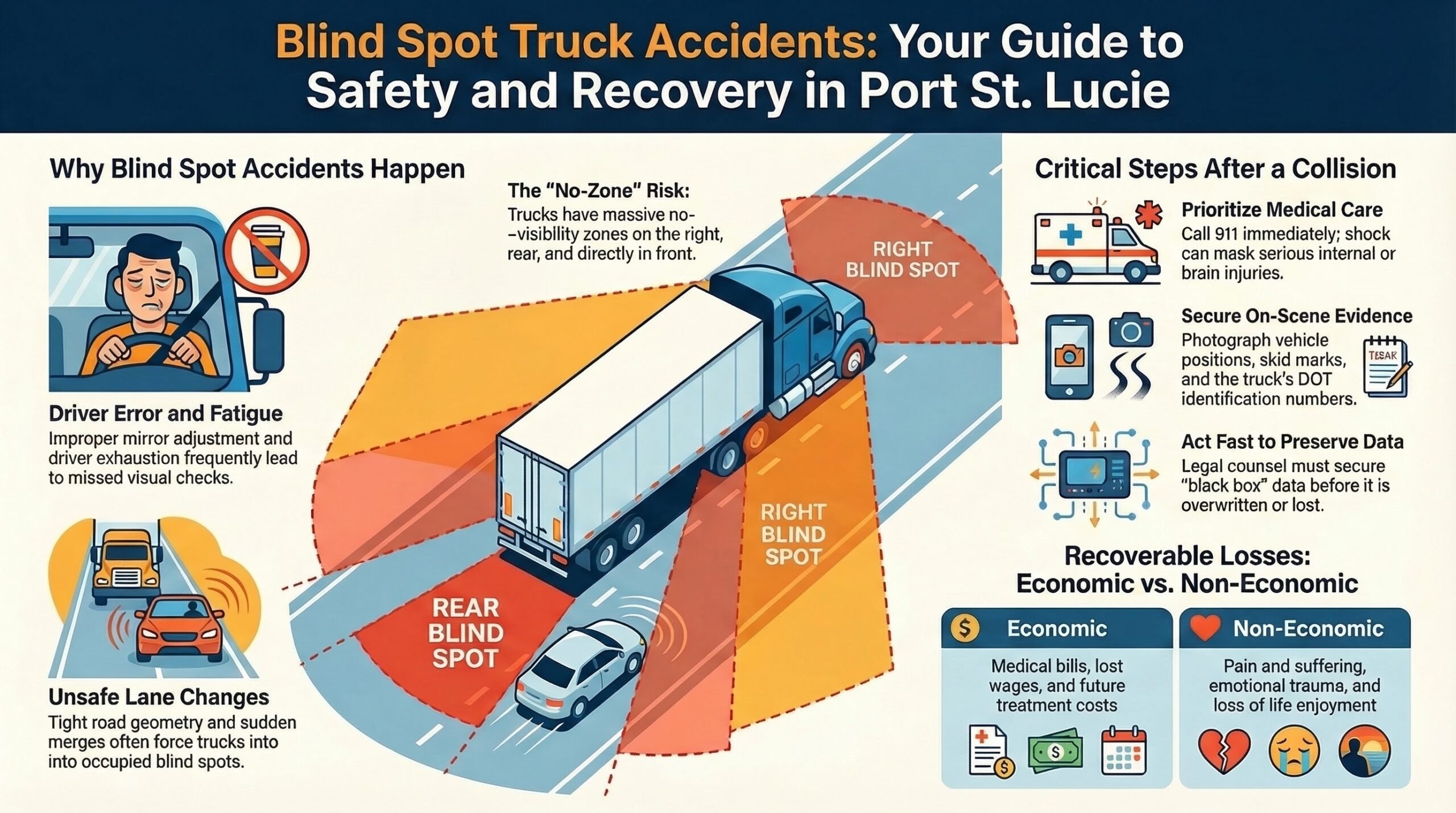
When a truck driver moves laterally without confirming a clear path, smaller vehicles can vanish alongside the trailer, and an impact can occur before anyone can react.
We often see this risk increase where road geometry tightens, such as on curves, merges, or short on-ramps that compress decision time.
Faded or confusing lane markings also invite sudden drifting or late corrections, especially in heavy traffic.
As a community that values protecting others, we can encourage patience, predictable signaling, and proper spacing around large trucks.
If a crash happens, we’ll help you document the lane change, gather witness accounts, and connect the event to measurable roadway conditions and timing.
Improper Mirror Adjustment
Overlooking proper mirror adjustment can quietly set the stage for a blind spot truck crash in Port St. Lucie, even when a driver intends to operate responsibly.
When mirrors sit too far inward or outward, they create hidden zones beside the trailer where smaller vehicles disappear.
We often see cases where fleets skip mirror calibration after a cab change, a minor repair, or a new driver assignment, and that small oversight can carry serious consequences.
Consistent mirror maintenance matters because vibration, weather exposure, and routine wear can loosen mounts and shift angles over time.
We encourage carriers and drivers to verify mirror alignment at the start of each route, and to document inspections, because those simple steps protect the public and support a culture of service on our roads.
Driver Distraction And Fatigue
Even with properly aligned mirrors, a truck driver’s attention and stamina determine whether blind spots get checked before a lane change or turn.
We often see crashes that begin with a brief glance at a phone, a dashboard message, or paperwork, followed by a split-second decision that places a smaller vehicle in harm’s way.
Fatigue is equally dangerous because slowed reaction time and drifting focus can erase safe habits that drivers usually follow.
We encourage carriers and drivers to treat rest as a duty to the public, not a personal preference.
Effective microsleep prevention includes planned breaks, hydration, and strict limits on overnight driving when alertness drops.
Responsible workplace scheduling also matters, since unrealistic delivery windows and long shifts can push drivers past safe limits and into avoidable blind spot collisions.
Truck Design Blind Zones
Where do blind spot crashes in Port St. Lucie often begin? In many cases, the truck’s design creates large no-visibility zones along the right side, behind the trailer, and directly in front of the cab.
High cabs, long trailers, and wide mirrors can still leave gaps that smaller vehicles disappear into, especially during lane changes or tight turns.
We also see failures tied to modern safety systems, including poor camera placement that limits usable views, and inconsistent sensor integration that produces false alerts or no warning at all.
When companies choose cheaper equipment or skip calibration, they shift risk onto the public. We help you focus on prevention and accountability, so safer choices protect everyone on the road.


Legal Rights of Port St. Lucie Blind Spot Truck Accident Victims
Although a blind spot collision can happen in seconds, Port St. Lucie victims often face months of medical care, wage loss, and uncertainty.
We can assert your right to seek compensation for medical bills, future treatment, lost income, and pain and suffering, while also holding negligent drivers and trucking companies accountable.
Florida law may allow claims against multiple parties, including employers, maintenance providers, and insurers, when their conduct contributed to the crash.
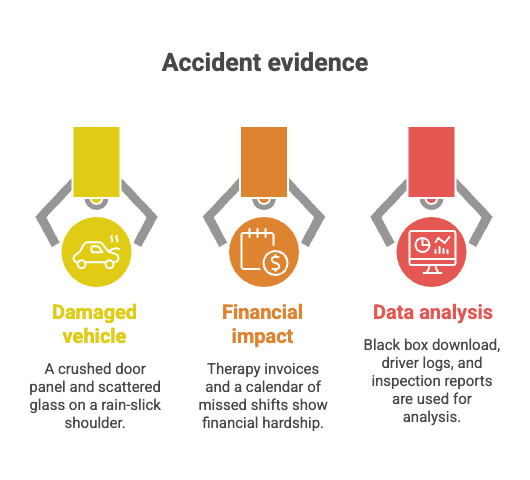
To help you picture what those rights protect, imagine:
- A crushed door panel beside scattered glass on a rain-slick shoulder
- A stack of therapy invoices next to a calendar of missed shifts
- A black box download paired with driver logs and inspection reports
We also protect Employment Rights by pursuing wage and job-impact damages without allowing intimidation.
We safeguard Medical Privacy by limiting disclosures to what the claim requires, and by challenging improper requests for unrelated records.
Steps to Take After a Port St. Lucie Blind Spot Truck Accident
After a Port St. Lucie blind-spot truck accident, we’ll want you to prioritize safety, then seek prompt medical care even if symptoms seem minor.
We should document the scene thoroughly, gather photos, contact details, and witness statements, and preserve any available dashcam or phone footage.
We’ll also notify the appropriate insurers carefully and involve legal counsel early, so we don’t risk missteps that could weaken your claim.
Ensure Safety And Medical Care
Because blind spot truck crashes can involve multiple vehicles and hidden injuries, we should prioritize safety and medical care before focusing on fault or paperwork.
If we can move without worsening injuries, we should get to a safer location away from traffic, turn on hazard lights, and help others do the same.
We should call 911 and request Immediate stabilization for anyone in pain, bleeding, or showing confusion, since shock and head trauma may not be obvious.
While waiting, we can provide calm reassurance, keep injured people still and warm, and avoid giving food or drink.
When first responders arrive, we should support on-site triage by clearly reporting symptoms and any medical conditions.
Even if we feel “fine,” we should seek prompt evaluation, as delayed symptoms can complicate recovery.
Document Evidence And Witnesses
Once we’re safe and medical care is underway, we should start documenting the scene and identifying witnesses while details remain clear and evidence is still available.
We’ll take wide and close photos of vehicle positions, damage patterns, lane markings, skid marks, signage, lighting, and weather, then record the time and exact location.
We should preserve driver and vehicle identifiers, including DOT numbers, license plates, and company markings, and request the responding officer’s information.
For Document Authentication, we’ll keep original files, note when each photo or video was captured, and avoid edits that could raise questions.
We should politely gather names, phone numbers, and brief statements from bystanders, focusing on what they directly observed to support Witness Credibility and serve everyone fairly.
Notify Insurers And Counsel
Notifying the right insurers and counsel early helps us control the narrative and protect our claim as deadlines begin to run.
We should report the crash to our auto insurer promptly, provide basic facts, and avoid speculation about fault or injuries.
If we were driving for work, we must follow employer protocols for incident reporting, drug testing, and vehicle inspection, because missed steps can jeopardize coverage.
We also need to alert the trucking company’s insurer through counsel, so communications remain documented and consistent.
Before giving recorded statements, signing authorizations, or accepting quick payments, let’s consult an attorney who can coordinate evidence requests and preserve our rights.
Finally, we should practice disciplined media handling, declining interviews, and limiting social posts that could be misinterpreted later.
How a Port St. Lucie Blind Spot Truck Accident Lawyer Can Help You
How do we turn a blind spot truck crash in Port St. Lucie into a clear plan for accountability and service?
We start by protecting evidence, identifying every responsible party, and relieving you of insurer pressure so you can focus on what matters most.
Protect evidence fast, identify every responsible party, and take insurer pressure off your shoulders—so you can focus on what matters most.
We secure driver logs, dispatch records, onboard data, and camera footage, then coordinate with qualified experts to explain what the trucking company should’ve seen and done.
We pursue fair compensation through disciplined negotiation, and we prepare every case as if it will be tried.
- Skid marks photographed before rain erases them
- Black-box downloads preserved before data is overwritten
- Witness statements recorded while memories stay sharp
We also commit to safety advocacy, pressing for safer procedures that protect others on our roads.
With fee transparency, we explain costs, timelines, and options upfront, so you can make informed decisions with confidence.
Long-Term Effects of Port St. Lucie Blind Spot Truck Accident Injuries
When a blind spot truck crash happens in Port St. Lucie, it’s clear that the harm can extend far beyond the initial emergency care, and you may face lasting complications that reshape daily life.
We’ll explain how chronic pain and reduced mobility can limit work and independence, and how brain injuries can affect memory, focus, and decision-making over time.
We’ll also address emotional trauma and PTSD, since these conditions can disrupt sleep, relationships, and your ability to feel safe on the road.
Chronic Pain And Mobility
Living with chronic pain after a Port St. Lucie blind spot truck crash can change how we move, work, and serve those who rely on us.
Persistent back, neck, and joint pain often limits lifting, standing, and driving and can interrupt sleep, reducing endurance and patience.
We encourage you to document pain levels, flare-ups, and missed activities, since consistent records help connect daily limitations to the collision.
Treatment may include physical therapy, medication management, and structured home exercise, all aimed at restoring safe function.
When mobility remains restricted, Adaptive equipment can reduce strain and prevent falls, while Home modifications, such as ramps or grab bars, can help you stay independent and ready to support others.
Brain Injury Impacts
Although many Port St. Lucie residents focus on visible injuries after a blind spot truck crash, brain trauma can create long-term limits that are harder to measure.
We often see problems with attention, memory, and executive function, which can disrupt work performance, household tasks, and safe driving.
Changes in sensory processing may cause difficulty filtering noise, light, or motion, leading to headaches, dizziness, and reduced tolerance for busy environments.
Brain injuries can also affect sleep regulation and contribute to hormonal imbalances, which may influence energy levels, weight stability, and recovery speed.
When you’re committed to serving family and community, these deficits can restrict how you show up for others.
We help you document symptoms, coordinate appropriate evaluations, and pursue compensation for ongoing care needs.
Emotional Trauma And PTSD
Brain trauma often draws early medical attention after a blind spot truck crash, yet the psychological impact can last just as long and disrupt daily functioning in quieter ways.
We often see emotional trauma develop into PTSD, marked by intrusive memories, hypervigilance, and sudden panic when traffic sounds or tight lanes resemble the collision.
If you serve others at work, home, or in your community, these symptoms can erode confidence and reduce the energy you rely on to care for people well.
Effective treatment may include counseling, structured coping plans, and Nightmare management that improves sleep and daytime focus.
We also address Relationship strain, since irritability and avoidance can isolate families.
We’ll help you document these harms and pursue support that restores stability.
Proving Liability in Port St. Lucie Blind Spot Truck Accident Car Accident Cases
How do we prove liability after a blind spot truck crash in Port St. Lucie? We start by building a clear timeline, then connect each decision to the harm it caused you and your community.
We obtain the crash report, scene photos, and surveillance video, and we interview witnesses while memories remain reliable.
We analyze vehicle damage, skid marks, and roadway design to show how an unsafe lane change or merge occurred.
We also secure electronic evidence, including ECM data, GPS history, and cellular forensics to confirm distraction, speed, and braking patterns.
When company policies or dispatch pressures contribute, we document training gaps, logbook violations, and maintenance failures.
We pursue accountability through vicarious liability when the driver acted within the scope of employment, and we also evaluate the carrier’s direct negligence.
Dealing With Insurance Companies After a Port St. Lucie Blind Spot Truck Accident
After a blind spot truck collision in Port St. Lucie, we’ll likely face quick calls from multiple insurers, including the trucking carrier, the driver’s insurer, and our own.
We should stay service-minded and disciplined, because careless statements can be used to minimize what you’ve endured.
We’ll ask you to avoid recorded interviews, broad medical authorizations, and early settlement offers until we review the facts and your treatment needs.
We’ll also track deadlines, preserve correspondence, and insist that adjusters communicate in writing when possible.
Because Policy limits can cap available coverage, we’ll identify every potentially responsible policy and confirm all coverage layers promptly.
We’ll also address Subrogation concerns, since health insurers and benefit plans may seek repayment from any recovery, reducing what you can use to rebuild.
Throughout, we’ll remain respectful but firm, protecting your rights and your ability to serve others.
What to Expect During a Port St. Lucie Blind Spot Truck Accident Claim Process
We’ll explain what you can expect as we move your Port St. Lucie blind spot truck accident claim forward, starting with claim filing requirements and crucial deadlines that can affect your rights.
Next, we’ll gather and preserve evidence through a focused investigation, then prepare clear insurance demands and handle negotiations with the carriers.
If the case doesn’t resolve on fair terms, we’ll guide you through settlement talks with informed leverage or prepare for trial with a disciplined litigation strategy.
Claim Filing And Deadlines
Although the aftermath of a blind spot truck collision can feel overwhelming, a successful Port St. Lucie claim depends on timely filing and disciplined follow-through.
We’ll help you start with prompt notice to insurers, then prepare the demand package. If needed, we’ll file suit before Florida’s statute of limitations expires.
Deadlines can arrive quickly, so we rely on Calendar Management to track notice requirements, medical billing submissions, and court dates.
We also keep you informed of each milestone.
We also recommend careful Record Retention, including bills, wage statements, and correspondence, to ensure your claim remains consistent and complete.
If an insurer requests a recorded statement or broad authorizations, we’ll review them first and respond strategically.
When we meet deadlines and communicate clearly, we protect your ability to serve your family and community well.
Evidence Collection And Investigation
Because blind spot truck crashes often hinge on details that disappear within days, we start the claim by securing and analyzing evidence before it’s lost or overwritten.
We send preservation letters, request driver logs, dispatch records, maintenance files, and cargo documents, and we move quickly to obtain dash-cam, nearby surveillance, and 911 audio.
We also document your injuries and vehicle damage, then map the scene and measure sightlines, signage, and lighting.
When available, we arrange EDR Analysis to capture speed, braking, and wheel inputs around the impact.
We coordinate witness interviews while memories remain fresh, and we consult qualified experts for Forensic Reconstruction to clarify lane position, timing, and avoidability.
Throughout, we keep you informed, so you can focus on recovery and serving your family and community.
Insurance Negotiations And Demands
With crucial evidence secured and the facts organized, we put the claim into a demand posture and begin direct negotiations with the trucking company’s insurers.
We prepare a clear demand package that ties liability to your documented losses, then press for timely confirmation of all available policies and limits.
We review the motor carrier’s primary coverage, investigate umbrella coverage, and evaluate whether additional entities, such as brokers or contractors, must be notified.
If your own policies may apply, we analyze policy-stacking issues and coordinate the required notifications, so coverage isn’t forfeited due to technical missteps.
Throughout this phase, we handle communications, respond to adjuster requests, and keep you informed, so you can focus on recovery and serving those who rely on you daily.
Settlement Talks Or Trial
Once the insurers respond to our demand, we move into settlement talks while preparing every file as if it will be tried, so we don’t negotiate from a position of uncertainty.
We share each step with you, because serving your family and your recovery requires clear choices, not pressure.
We evaluate liability, damages, and medical needs, then compare offers to likely outcomes and timelines.
When a fair resolution is possible, we use focused mediation strategies, including targeted exhibits and witness outlines, to keep the discussion anchored in proven facts.
If negotiations stall, we file suit, complete discovery, and prepare motions that narrow issues.
As the trial nears, we plan jury selection, refine themes, and present your story with disciplined, respectful advocacy.
Compensation for Port St. Lucie Blind Spot Truck Accident Damages
How do we put a fair number on the harm caused by a blind-spot truck crashin Port St. Lucie?
We start by documenting every measurable loss, then align it with what Florida law permits and what insurers typically contest.
We help you gather medical records, crash reports, wage verification, and future care projections, so the demand is grounded in proof, not guesswork.
Next, we identify all responsible parties and available policies, including the truck driver, motor carrier, and contractors, because full compensation often depends on broader coverage.
We also plan for timing and structure, since settlement design can affect tax implications and long-term stability.
When appropriate, we coordinate with financial and benefits professionals to ensure your recovery supports your family and preserves eligibility for needed resources.
If you’re committed to serving others, we can also discuss giving goals, including charitable grants, without weakening your claim or leverage.
Economic vs Non-Economic Damages in Port St. Lucie Blind Spot Truck Accident Cases
In Port St. Lucie blind spot truck accident cases, we’ll help you separate economic damages, such as medical bills, lost income, and future care costs, from non-economic damages, including pain and suffering and loss of enjoyment of life.
We’ll also explain how these categories interact with your recovery, and why accurately valuing each one can shape settlement negotiations and trial strategy.
To prove damages after the crash, we’ll work with you to gather records, documentation, and credible testimony that tie your losses directly to the collision.
Defining Economic Damages
A clear definition of economic damages sets the foundation for valuing a Port St. Lucie blind spot truck crash claim with accuracy and integrity.
Economic damages are the measurable financial losses you can document, calculate, and verify through reliable records.
Using Historical definitions from Florida injury practice, we treat these losses as the objective costs of harm rather than estimates based on personal perception.
We help you identify medical bills, rehabilitation expenses, prescription costs, future treatment projections, lost wages, reduced earning capacity, and necessary out-of-pocket services such as transportation or in-home assistance.
Comparative standards then guide us in confirming reasonableness, aligning charges with local market rates, and connecting each expense to the collision.
This disciplined approach supports fair recovery and responsible advocacy for your family.
Understanding Non-Economic Damages
Economic damages give us the documented price tag of a Port St. Lucie blind spot truck crash, but they don’t capture the human cost that follows you home.
Non-economic damages address what can’t be tallied on invoices, including pain, suffering, emotional distress, loss of enjoyment of life, and strain on close relationships.
When we serve injured neighbors, we focus on telling the full story of how daily routines, sleep, mobility, and confidence have changed, because those losses merit respect and recognition.
We also stay mindful of juror perceptions, since fairness often depends on whether the impact feels concrete and believable.
Using clear pain metrics, we connect symptoms to real-life limitations without exaggeration, keeping the narrative steady and credible throughout.
Proving Damages After a Crash
Proving damages after a blind spot truck crash requires building a disciplined record that separates measurable financial loss from the personal harm that doesn’t come with a receipt.
We document economic damages with invoices, pay stubs, employer letters, repair estimates, and future care projections, so you can show what the collision has cost your household and community service commitments.
We also prove non-economic damages through consistent medical notes, therapy records, symptom journals, and statements from people who’ve seen the daily impact, establishing pain, limitations, and loss of enjoyment with credible detail.
Because recovery planning matters, we evaluate tax implications for different categories of compensation and guide you through structured settlements when long-term stability and responsible stewardship are priorities.
We present these proofs clearly, tying each loss to the crash and anticipated needs.
When a Port St. Lucie Blind Spot Truck Accident Case Goes to Trial vs Settlement
Although many Port St. Lucie blind spot truck accident claims resolve through settlement, we prepare every case as if it will be tried.
Settlement often serves you best when liability is clear, damages are well supported, and the insurer is willing to pay a figure that protects your medical needs and your family’s stability.
We prepare every blind spot truck case for trial, leveraging clear liability and proven damages to secure stability-focused settlements.
We negotiate firmly, but we also measure risk, delay, and the real cost of continued litigation.
Trial becomes more appropriate when the carrier disputes fault, minimizes your injuries, or refuses to address future care.
In that setting, we evaluate jury perception, including how local jurors may view a commercial driver’s choices and a company’s safety culture.
We also consider appeal prospects, because a verdict can invite post-trial motions and review.
Throughout, we stay guided by service, helping you choose the path that best honors your recovery and long-term responsibilities.
The Statute of Limitations for Port St. Lucie Blind Spot Truck Accident Case
Because the deadline can control whether you can recover anything at all, we address the statute of limitations early in every Port St. Lucie blind spot truck accident case.
Florida law sets strict filing windows for personal injury and, when a death occurs, wrongful death claims, and missing them can end a worthy claim regardless of fault.
We help you identify the correct period based on your losses, the crash date, and the parties involved.
We also evaluate tolling exceptions that may pause or extend time, such as delayed discovery in limited situations, incapacity, or a defendant’s concealment or absence.
At the same time, jurisdictional nuances matter when a carrier is out of state, a federal entity is involved, or the case belongs in a different court.
When to Contact a Port St. Lucie Blind Spot Truck Accident Lawyer After a Port St. Lucie Blind Spot Truck Accident
Act quickly after a Port St. Lucie blind spot truck accident, because early action protects both your recovery and the people who depend on you.
We recommend contacting a Port St. Lucie blind spot truck accident lawyer as soon as you can safely do so, ideally within days, while memories remain clear and road conditions can still be documented.
Reach out immediately if you’re hospitalized, if the trucking company contacts you, or if an insurer requests a recorded statement.
We should also be involved when police reports contain disputed fault, when you suspect driver fatigue or impairment, or when a criminal inquiry is possible.
Timing matters if a vehicle impound occurs, since access to the truck, onboard data, and maintenance records may be limited.
Early contact also helps us identify witnesses, preserve photographs, and coordinate medical documentation, so your claim reflects the full scope of harm.
Why You Need an Experienced Port St. Lucie Blind Spot Truck Accident Lawyer
When a blind spot truck crash upends your life, you need counsel with the experience to move faster than the trucking company’s response team and to control the evidence before it disappears.
We act immediately to secure driver logs, inspection records, onboard data, and camera footage, then preserve witness accounts while memories are fresh.
With Local Knowledge of Port St. Lucie roadways, law enforcement practices, and regional trucking routes, we can identify where visibility, signage, or lane patterns contributed to the collision.
We also know how insurers evaluate claims here, which helps us present damages in a credible, service-minded way that honors your medical needs and your family’s stability.
Our Courtroom Experience matters because meaningful accountability often requires firm litigation pressure.
We build cases that can withstand cross-examination, challenge shifting narratives, and clearly connect violations to harm. That preparation strengthens every negotiation.
How to Choose the Right Port St. Lucie Blind Spot Truck Accident Lawyer for Your Case
Although many firms advertise “truck accident” experience, blind spot collisions demand a lawyer who can prove exactly what the driver could and couldn’t see and tie that visibility failure to specific safety duties.
We should ask how they investigate sightlines, mirror settings, cab height, and lane-change timing, and whether they’ve worked with reconstruction experts and complied with trucking safety standards before.
We’ll also want a lawyer who acts with service in mind, treating our recovery as a means of protecting others from repeat harm.
We can evaluate communication style early: do they return calls promptly, explain options clearly, and give realistic timelines?
Fee transparency matters just as much, so we should request a written explanation of costs, contingency terms, and what happens if the case doesn’t resolve favorably.
Finally, we can review past results in similar blind-spot cases and confirm they’re ready for trial if needed.
About The Law Offices of Anidjar & Levine
The Law Offices of Anidjar & Levine represents people injured in serious truck crashes, and we approach blind spot collisions with a clear plan built around evidence, accountability, and client service.
We listen closely, explain your options, and act quickly to preserve driver logs, electronic data, and inspection records before they disappear.
Our team coordinates medical care support, handles insurer communications, and keeps you informed so you can focus on recovery.
Our firm’s history reflects a steady commitment to disciplined case preparation and respectful advocacy.
We build claims that show how unsafe lane changes, poor mirror use, and inadequate training cause preventable harm, then we pursue fair compensation through negotiation or trial when needed.
We also value community involvement, because service extends beyond the courtroom.
Port St. Lucie Blind Spot Truck Accident Lawyer
Frequently Asked Questions
Can I Recover Damages if I Was Partially at Fault?
Yes, you can often recover damages even if you were partially at fault, depending on your state’s comparative negligence rules.
We’ll help you document how the crash occurred, then argue for fair damage apportionment based on each party’s conduct.
Even when you share some responsibility, we can pursue compensation to support your recovery and protect others by encouraging safer driving practices and accountability.
We’ll also review deadlines, evidence, and insurance tactics.
Do I Have to Attend All Medical Appointments to Keep My Claim?
We don’t recommend missing medical appointments, because consistent care supports your claim, but you usually don’t have to attend every visit if you have a valid reason and document it.
Treatment Continuity shows your injuries remain serious and that you’re acting responsibly.
No show Consequences can include gaps in records, insurer skepticism, and reduced damages.
If you must reschedule, notify the provider promptly, follow medical advice, and keep written proof.
Can I Pursue a Claim if the Truck Driver Was an Independent Contractor?
Yes, we can still pursue a claim even if the truck driver was an independent contractor.
We’ll examine vicarious liability by focusing on how much control the carrier exercised, and whether federal regulations tied the driver to the company’s operations.
We’ll also identify Contractor insurance and any motor carrier policies that apply.
What if the Trucking Company Deletes or “Loses” Electronic Log Data?
If a trucking company deletes or “loses” electronic log data, we can treat it as potential spoliation and act quickly to protect your claim.
We’ll send preservation demands, seek court orders, and document gaps to pursue spoliation consequences, including sanctions or adverse inferences.
We can also request driver, dispatch, and ECM records and use forensic recovery to retrieve logs from devices, backups, or vendors, where possible.
Can My Immigration Status Affect My Ability to File a Claim?
Yes, your immigration status usually won’t prevent you from filing a claim, and we’ll help you pursue fair recovery with dignity.
Even without Work Authorization, you may still seek compensation for medical costs, pain, and lost income, depending on the facts and documentation.
We also address Deportation Fears by limiting unnecessary disclosures and using protective legal strategies.
We’ll guide you carefully, so you can focus on recovery and serving others.
—————————
If you’ve been injured in a Port St. Lucie blind spot truck crash, the Law Offices of Anidjar and Levine can help you protect your rights and pursue full compensation.
We’ll investigate the collision, preserve crucial evidence, and identify every liable party, including the driver, carrier, and insurers.
We’ll also handle communications and negotiations so you’re not pressured into an unfair settlement.
If litigation is necessary, we’re prepared to take your case to court and advocate for you.
Learn more by visiting our Port St. Lucie Truck Accident Lawyer page.

