

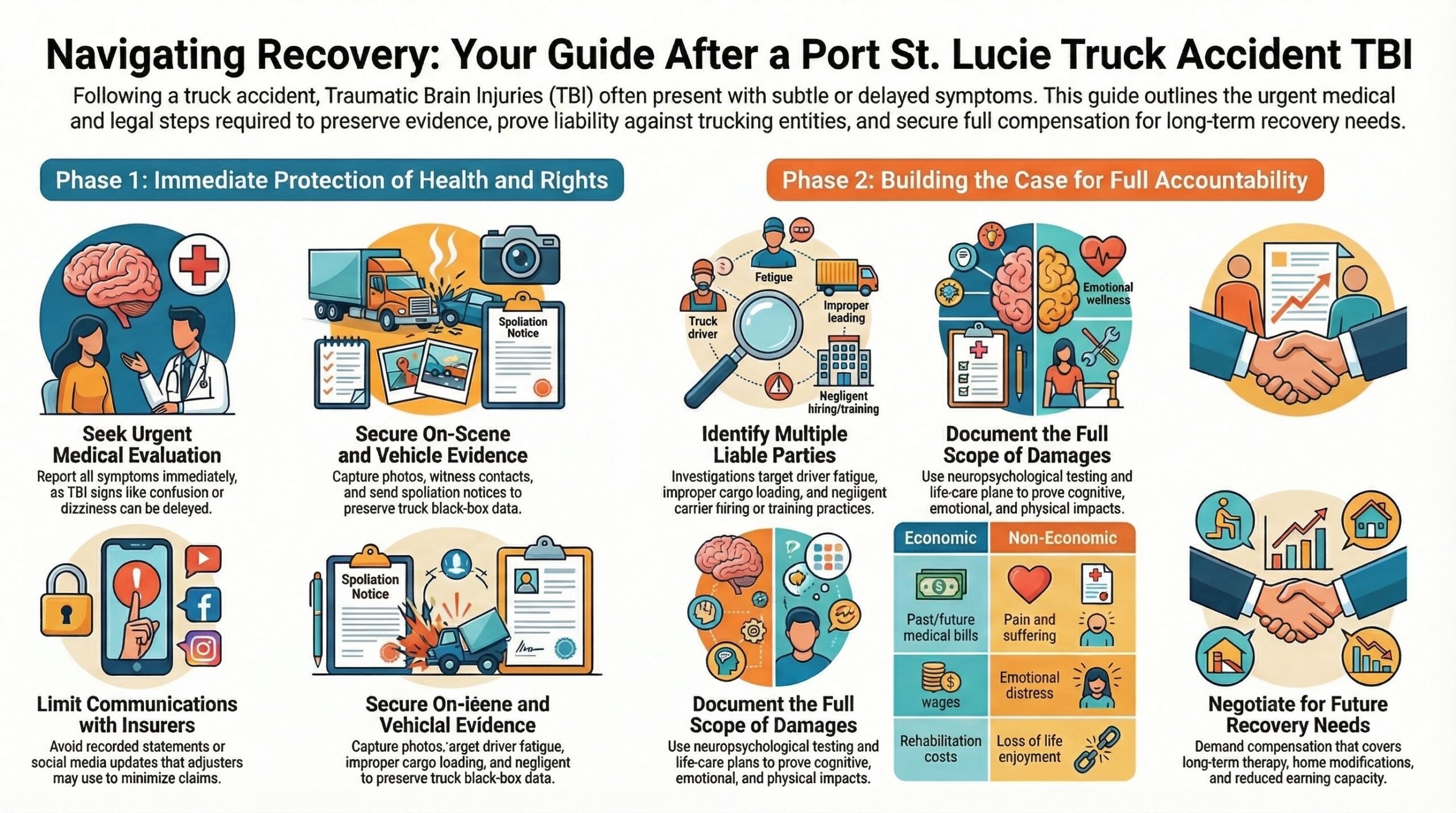
We help Port St. Lucie truck crash victims with traumatic brain injuries by acting fast to protect your claim and preserve crucial evidence, including photos, witness contacts, black-box data, driver logs, and maintenance records.
The Law Offices of Anidjar and Levine coordinate prompt medical evaluation, track symptoms, and use treatment records and neuropsychological testing to document cognitive, emotional, and physical effects.
We handle insurer communications, avoid harmful recorded statements, and pursue full compensation from all liable parties. Learn more from our Port St. Lucie Truck Accident Lawyer.
Main Takeaways
- Get immediate medical evaluation and document all symptoms, as TBI signs can be subtle or delayed after a Port St. Lucie truck crash.
- Preserve critical evidence fast: photos, witnesses, nearby camera footage, vehicle black-box data, driver logs, and maintenance records.
- A lawyer investigates liability by examining fatigue, distraction, speeding, and improper loading, as well as carrier hiring, training, and supervision practices.
- Protect your claim by avoiding social media posts, limiting communication with the insurer, and delaying vehicle repairs until inspections are complete.
- Build damages with organized medical records, neuropsychological testing, work-loss proof, and daily-impact summaries showing long-term cognitive, emotional, and physical effects.
How We Can Help With Your Port St. Lucie Truck Accident Traumatic Brain Injury Claim
Because a traumatic brain injury can change your health, work, and finances in an instant, we move quickly to protect your claim after a Port St. Lucie truck crash. We preserve evidence, send spoliation notices, and coordinate with investigators so crucial records and vehicle data aren’t lost.
We also handle insurer communications, so you can focus on stability and recovery while we pursue fair compensation.
We begin with a free consultation to understand what happened, identify immediate needs, and outline a clear plan. We organize your medical documentation, track symptoms and functional limits, and connect those details to the harm you’ve suffered.
When treatment is complicated, we support rehab coordination by helping schedule care, obtain records, and document progress and setbacks. Throughout the case, we provide consistent updates, prepare you for pivotal steps, and negotiate firmly, always guided by service, integrity, and respect for your goals.
Understanding Port St. Lucie Truck Accident Traumatic Brain Injury Cases


After we’ve taken steps to protect your claim and stabilize the evidence, we also need to frame the case in a way that shows exactly how a Port St. Lucie truck crash caused a traumatic brain injury and reshaped your daily life.
After protecting your claim and stabilizing evidence, we frame how a Port St. Lucie truck crash caused TBI and changed daily life.
We connect the collision forces to the medical diagnosis and then document how symptoms affect work, relationships, and independent functioning.
Because brain injuries can be misunderstood or minimized, we present clear timelines, consistent treatment records, and credible witness accounts.
We also address insurance tactics that label problems as “preexisting” or unrelated, and we respond with objective proof.
When Media Coverage or Public Awareness influences perceptions, we focus on verified facts rather than headlines or assumptions.
Our goal is service-centered advocacy: we pursue accountability while respecting your privacy and your long-term recovery needs. By building a disciplined narrative, we help decision-makers see the full scope of harm and support fair compensation.
Common Causes of Port St. Lucie Truck Accident Traumatic Brain Injury
When a Port St. Lucie truck crash causes a traumatic brain injury, we often trace the harm back to preventable conduct behind the wheel or in the loading process.
We’ll discuss how driver fatigue and hours-of-service violations, distracted or impaired driving, and speeding with aggressive moves can trigger violent impacts that lead to head trauma.
We’ll also explain how improper loading and unsecured cargo can shift a truck’s balance, increase rollover risk, and intensify the force transferred to occupants in a collision.
Driver Fatigue And Hours
Logging long hours and pushing past safe limits can leave a truck driver dangerously fatigued, and that fatigue remains a leading cause of Port St. Lucie truck crashes that lead to traumatic brain injury.
When schedules ignore Circadian rhythms, alertness drops, reaction time slows, and judgment weakens, even on familiar routes.
We can help you identify whether logbooks, electronic data, and dispatch demands show hours-of-service violations or unrealistic deadlines.
We also look at whether a carrier failed to encourage safer planning, including reasonable rest breaks and Napping strategies that reduce risk without sacrificing accountability.
If fatigue played a role, we’ll work to document it carefully, because serving injured people means holding each responsible party to the same safety standard.
Your recovery warrants that diligence.
Distracted Or Impaired Driving
Although many crashes stem from simple inattention, distracted or impaired driving often turns an ordinary traffic moment into a Port St. Lucie catastrophe.
When a truck driver looks down at a device, adjusts a navigation screen, or relies on Hands-free myths, reaction time suffers, and lane control erodes.
Impairment isn’t limited to alcohol; fatigue, illicit substances, and Prescription interactions can alter judgment, depth perception, and coordination, even when a driver believes they feel normal.
We focus on protecting the community by identifying what diverts attention from the roadway and which substances compromise safe operation.
You can help by reporting unsafe driving and encouraging employers to enforce strict policies, consistent training, and documented compliance for every route and shift.
Speeding And Aggressive Maneuvers
Distracted or impaired driving often sets the stage for disaster, but speeding and aggressive handling can turn a recoverable mistake into a violent truck crash with a high risk of traumatic brain injury in Port St. Lucie.
OUR CONSULTATIONSARE FREE
START YOUR FREE CASE REVIEW

When a tractor-trailer exceeds safe speeds, stopping distance expands and impact forces rise, leaving drivers and passengers with little protection from sudden head trauma. We also see lane weaving that pressures surrounding traffic, disrupts predictable flow, and triggers sideswipes or rollover collisions.
Aggressive tailgating is equally dangerous because it removes the buffer time needed to react to braking, debris, or merging vehicles. If you serve others on our roads, we all share a duty to drive with patience, maintain safe following distances, and respect speed limits to prevent life-altering injuries.
Improper Loading And Cargo
When cargo isn’t loaded, balanced, and secured to industry standards, a truck can become unstable in seconds and turn an ordinary traffic event into a severe crash with a high risk of traumatic brain injury in Port St. Lucie.


We often see collisions triggered by cargo shifting during braking, lane changes, or turns, which can cause rollovers or jackknifes without warning. Improper weight distribution also increases stopping distance and strains tires and suspension, raising the chance of a blowout and sudden loss of control.
Load containment failures, such as broken straps, inadequate tie-downs, or missing edge protection, can allow freight to spill into traffic and strike other vehicles. We’ll help you focus on accountability, by examining bills of lading, inspection logs, and loading practices to protect the community you serve.
Legal Rights of Port St. Lucie Truck Accident Traumatic Brain Injury Victims
Because a traumatic brain injury can change a person’s life in an instant, we treat Port St. Lucie victims’ legal rights with urgency and respect, so you can focus on recovery and caring for others.
When a traumatic brain injury changes everything, we act with urgency and respect so Port St. Lucie victims can focus on healing.
You may pursue compensation from negligent drivers, trucking companies, and related insurers for medical treatment, rehabilitation, lost income, and long-term support needs.
We also evaluate whether evidence supports punitive damages when misconduct is severe, and we protect you from unfair claim tactics.
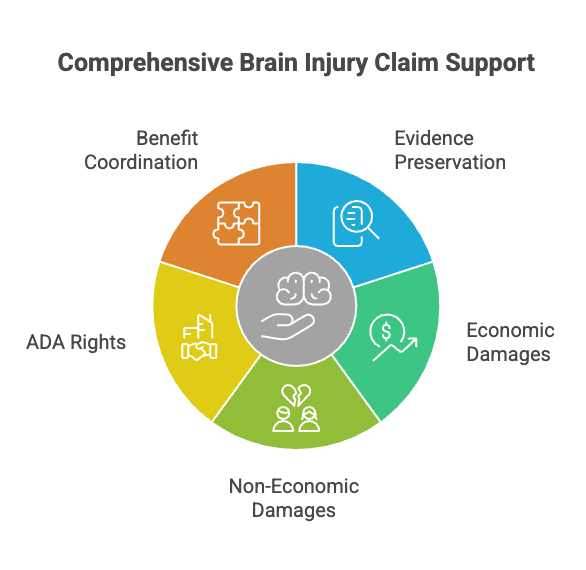
- Demand preservation of logbooks, electronic data, and maintenance records
- Seek full economic and non-economic damages tied to the brain injury’s impact
- Assert workplace protections and accommodations through ADA Rights when applicable
- Coordinate benefits options, including Social Security, without undermining your claim
We’ll explain deadlines, fault rules, and available insurance layers in clear terms, then advocate with disciplined, service-minded resolve through negotiation or litigation, as needed.
Steps to Take After a Port St. Lucie Truck Accident Traumatic Brain Injury
After a Port St. Lucie truck accident involving a traumatic brain injury, we need to act quickly and methodically because early decisions can affect both recovery and any future claim.
We should seek immediate medical care, then preserve crash scene evidence when it’s safe to do so, including photos, witness information, and details about the truck and driver.
As soon as possible, we should contact a truck accident lawyer to protect our rights, manage communications with the insurer, and begin building a strong case.
Seek Immediate Medical Care
Although a traumatic brain injury may not feel severe in the first minutes or hours, we shouldn’t delay medical evaluation after a Port St. Lucie truck accident.
We should call 911, request Emergency triage, and follow paramedic instructions, because subtle symptoms can worsen quickly.
If responders recommend Onsite stabilization, we should accept it and minimize movement, as additional impact or strain may cause further harm.
At the hospital, we should describe every symptom, even a mild headache, dizziness, confusion, nausea, vision changes, or sleepiness.
We should also report any loss of consciousness, memory gaps, or medication use, so clinicians can order appropriate imaging and monitoring.
Prompt care protects your health, supports your ability to keep serving others, and documents the injury’s true onset and progression clearly.
Preserve Crash Scene Evidence
Preserving crash scene evidence can shape the outcome of a Port St. Lucie truck crash claim, especially when a traumatic brain injury limits clear recall.
If it’s safe, we’ll document the scene with photos and video, capturing vehicle positions, skid marks, debris fields, and visible injuries.
We’ll note lighting, weather, and road design, because Environmental hazards like standing water, construction zones, or poor signage can explain why the collision occurred.
We’ll also record any Wildlife interference, such as a sudden animal crossing that triggered evasive actions.
We’ll gather names, contact details, and brief statements from witnesses, then identify nearby cameras from businesses or traffic systems.
We’ll preserve torn clothing, helmets, and damaged personal items, and we won’t repair vehicles until inspections are completed.
Contact A Truck Accident Lawyer
In the early hours following a Port St. Lucie truck crash involving a suspected traumatic brain injury, we should contact a truck accident lawyer to protect your rights and preserve vital proof.
We’ll promptly secure driver logs, black box data, maintenance records, and carrier communications before they’re lost or altered.
We can also coordinate your medical documentation, ensure symptoms are recorded accurately, and help you avoid statements that could be used against you.
If mobility is limited, we can start the case via online intake and follow up by phone or in person as needed.
Our goal is service, not pressure, so we’ll explain options, timelines, and costs with clarity. We offer multilingual support to assist your family and caregivers throughout.
How a Port St. Lucie Truck Accident Traumatic Brain Injury Lawyer Can Help You
When a truck crash leaves you or a loved one with a traumatic brain injury, we can step in quickly to protect your health, your rights, and your financial future.
We coordinate with your medical team, preserve crucial evidence, and take over insurer communications so you can focus on recovering and serving your family and community.
Our client advocacy is steady and disciplined, and we insist on fee transparency so you understand costs and options before you make decisions.
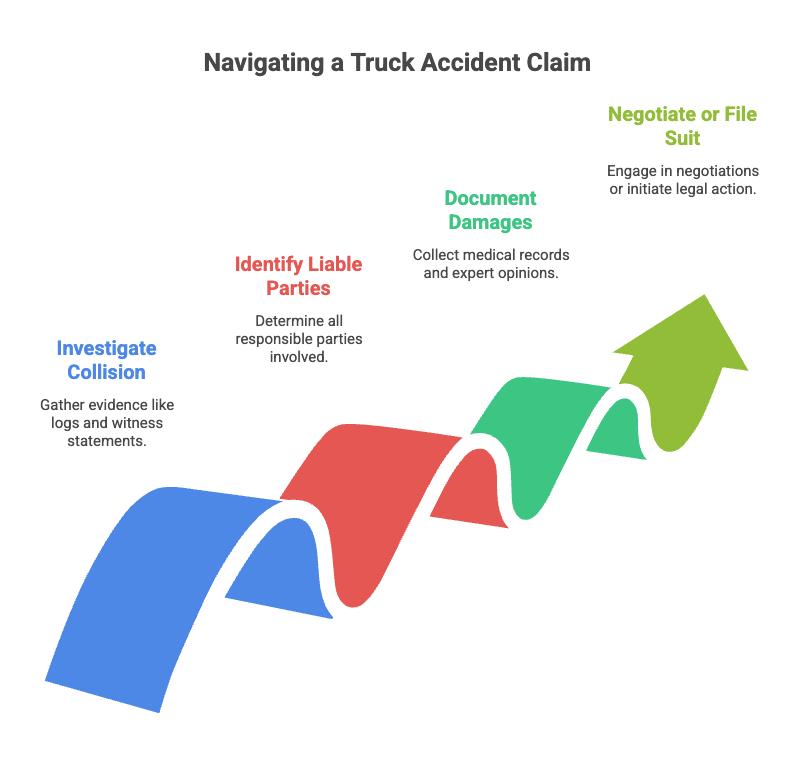
- Investigate the collision, secure logs, black-box data, and witness statements
- Identify all liable parties, including carriers, contractors, and maintenance providers
- Document damages with medical records, expert input, and daily-impact summaries
- Negotiate firmly, and if needed, file suit and manage every court deadline
We’ll explain each step, return calls promptly, and pursue a resolution that reflects the full scope of your losses, with respect and care throughout.
Long Term Effects of Port St. Lucie Truck Accident Traumatic Brain Injury Injuries
After a Port St. Lucie truck accident, a traumatic brain injury can create lasting problems that don’t always appear right away, and we’ll help you understand what to watch for.
We often see cognitive and memory decline that affects work and daily routines, along with emotional and behavioral changes that strain relationships and judgment.
We’ll also address ongoing physical impairments, including headaches, balance issues, and fatigue, so we can connect these long-term effects to the full scope of your recovery and claim.
Cognitive And Memory Decline
Although many truck accident survivors focus on physical recovery first, traumatic brain injuries often leave lasting cognitive and memory decline that can quietly reshape daily life.
We may see slowed processing, reduced attention, and difficulty organizing tasks, which can affect medication routines, appointments, and safe driving decisions. Memory gaps can interrupt work performance, limit volunteer roles, and strain a survivor’s ability to reliably support others.
We can help you document these changes through neuropsychological testing, treatment records, and practical examples from family or coworkers.
Drawing on neuroplasticity research, clinicians may recommend structured cognitive therapy and consistent skills practice to strengthen function over time. We can also explore assistive technology, such as reminder apps or speech-to-text tools, to promote independence while protecting safety and dignity.
Emotional And Behavioral Changes
Because a traumatic brain injury can disrupt the brain’s emotion-regulation networks, many Port St. Lucie truck crash survivors experience shifts that feel unfamiliar and hard to manage. You may notice mood swings that arise quickly, irritability that lingers, or anxiety that complicates everyday decisions.
Families often report personality changes, including reduced patience, impulsive reactions, or withdrawal from trusted relationships. These effects can strain marriages, parenting, and workplace interactions, even when the survivor wants to act differently.
We encourage you to track patterns, communicate openly, and seek structured counseling or neuropsychological support that respects the survivor’s dignity.
When we serve others through advocacy, we also help you document these behavioral impacts, so your claim reflects the full, lasting cost of this injury.
Ongoing Physical Impairments
Physical limitations often follow the emotional and behavioral changes we see after a truck crash–related traumatic brain injury, and they can reshape daily life long after the initial treatment ends.
We often help you track ongoing symptoms like balance problems, chronic headaches, dizziness, vision changes, and slowed coordination, each of which can limit driving, cooking, and safe mobility.
Fatigue and sleep disruption may reduce stamina, making basic tasks take longer and increasing the risk of falls.
When these impairments persist, we encourage structured rehabilitation and careful documentation from treating providers. We can also guide practical planning, including home modifications such as grab bars or ramp access, and workplace accommodations like adjusted schedules or reduced lifting.
Proving Liability in Port St. Lucie Truck Accident Traumatic Brain Injury Cases
When a truck crash in Port St. Lucie leads to a traumatic brain injury, proving liability starts with disciplined fact gathering and a clear theory of fault. We’ll help you document the scene, preserve vehicle damage, and secure video, witness accounts, and 911 records before they disappear.
We also analyze driver logs, dispatch instructions, maintenance files, and black-box data to show unsafe speed, fatigue, distraction, or improper loading.
Because multiple actors may share responsibility, we assess Fleet Liability by tracing negligent hiring, training, supervision, or maintenance practices back to the carrier.
We also address Comparative Negligence by measuring how each party’s actions contributed, then presenting evidence that keeps responsibility where it belongs.
Finally, we connect the breach of duty to the TBI through medical records and qualified expert analysis, so your claim rests on proof, not assumptions.
Dealing With Insurance Companies After a Port St. Lucie Truck Accident Traumatic Brain Injury
Although insurers may present themselves as neutral fact-finders, they often move quickly after a Port St. Lucie truck crash to shape the narrative and limit payouts.
When a traumatic brain injury is involved, we should slow the process down, protect our health decisions, and insist that communication stays accurate and respectful.
We recommend that you direct adjusters to us, because seemingly friendly questions can become leverage in settlement talks.
We also urge you not to provide recorded calls or broad medical authorizations until we’ve reviewed them, since these tools can be used to minimize symptoms or blame preexisting issues.
In addition, we’ll remind you to avoid posting on social media, even harmless updates can be misread and used against you.
Our role is service-driven: we handle the pressure, document losses, and keep the focus on your recovery and accountability.
What to Expect During a Port St. Lucie Truck Accident Traumatic Brain Injury Claim Process
We’ll explain how we file your claim on time and meet every deadline that can affect your right to recover.
We’ll also outline the evidence and medical proof we gather to support a traumatic brain injury, then address how we negotiate with insurers from a position of strength.
Finally, we’ll set clear expectations for the settlement or trial timeline, so you can plan your next steps with confidence.
Claim Filing And Deadlines
Because deadlines can determine whether a traumatic brain injury claim moves forward at all, we start the Port St. Lucie process by tracking every notice requirement and filing date tied to your truck crash.
We’ll confirm which time limits apply and promptly prepare the initial claim materials, so you can keep focusing on family and community responsibilities.
We handle Electronic Filing when available, and we maintain strict Paperwork Organization to prevent missing forms, signatures, or required attachments.
We’ll also calendar insurer response windows, coordinate timely communications, and document what we submit and when. If a deadline is approaching, we’ll prioritize urgent filings and request extensions only when permitted by the rules.
Throughout, we’ll explain each step in plain terms, so you always know what’s due and why.
Evidence And Medical Proof
When a truck crash causes a traumatic brain injury, the claim often turns on whether the evidence and medical proof clearly connect the collision to your symptoms, diagnosis, and long-term limitations.
We help you gather crash reports, witness accounts, vehicle damage photos, and any available electronic logging data that shows force, timing, and fault.
On the medical side, we coordinate complete records from emergency care through rehabilitation, and then organize imaging, physicians’ notes, and therapy progress notes to document changes over time.
Neuropsychological testing can measure memory, attention, processing speed, and mood effects that may not appear on scans.
When appropriate, Biomarker analysis may support objective findings tied to brain injury.
We also track missed work, daily assistance needs, and future care plans to present a clear, service-driven narrative.
Negotiations With Insurers
Strong evidence and well-organized medical proof set the foundation for insurer discussions, but the negotiation phase often determines whether that documentation results in fair compensation.
We’ll communicate directly with the adjuster, present a clear demand supported by records and expert input, and keep you informed at each response.
Insurers may question causation, minimize long-term cognitive effects, or shift blame to reduce value, so we answer promptly and document every point.
Our Offer evaluation focuses on future treatment, lost earning capacity, and daily limitations, not just current bills.
We use Negotiation tactics that stay professional and service-minded, pressing for accountability while remaining respectful.
When offers change, we compare them to the evidence and your goals, and refine our position accordingly.
Settlement Or Trial Timeline
Although each case progresses at its own pace, we guide Port St. Lucie families through a clear settlement or trial timeline.
After we finish the medical record review and expert evaluation, we submit a demand package and set a response deadline.
Negotiations may resolve the claim within months, especially when liability is well documented and future care needs are supported.
If the carrier delays or disputes the traumatic brain injury, we file suit, conduct written discovery, take depositions, and schedule mediation.
Many cases settle shortly before trial, once the evidence has been fully tested and the risk is clear.
When a settlement is offered, we explain Settlement Taxation issues and review Confidential Clauses so you can make an informed decision.
If a trial becomes necessary, we prepare you for testimony, timelines, and a verdict-driven resolution.
Compensation for Port St. Lucie Truck Accident Traumatic Brain Injury Damages
Because a traumatic brain injury can disrupt every part of a person’s life, we pursue compensation in Port St. Lucie with focus and care.
We work to document medical treatment, rehabilitation plans, future care needs, and the full impact on your ability to serve your family and community.
We gather records, consult qualified professionals, and present a clear demand that reflects both current costs and long-term support.
When the case allows, we also evaluate Structured Settlements that can provide steady payments and protect resources over time.
We’ll explain available options in plain terms, so you can make decisions aligned with your goals and responsibilities.
At every stage, we address Tax Considerations, including how different payment structures may affect what you keep.
Our objective is practical: secure the resources you need to recover, adapt, and move forward with dignity.
Economic vs Non-Economic Damages in Port St. Lucie Truck Accident Traumatic Brain Injury Cases
We’ll explain how economic damages in Port St. Lucie truck accident traumatic brain injury cases cover measurable financial losses, such as medical bills, rehabilitation costs, and reduced earning capacity.
We’ll also address how non-economic damages account for pain and suffering, emotional distress, and loss of enjoyment of life, and how we can present a reasonable valuation of those harms.
Finally, we’ll outline the evidence that supports both categories of damages, including medical records, expert opinions, and clear documentation of how the injury affects your daily function.
Economic Damages Explained
When a Port St. Lucie truck crash causes a traumatic brain injury, we focus first on economic damages, the measurable financial losses that keep families stable while care continues.
These losses often include past and future medical bills, rehabilitation, prescriptions, assistive devices, home modifications, and in-home support.
We also document lost wages, reduced earning capacity, and employment benefits you’ve missed, using records that employers and medical professionals can verify.
Sound Cost Forecasting matters because brain injuries may require long-term treatment, monitoring, and periodic therapy, and we must project those costs responsibly.
We also consider Tax Implications, since certain settlement allocations, liens, or wage components can affect net recovery.
Our goal is to quantify every dollar with evidence so you can serve your family and community without added financial strain.
Non-Economic Losses Valuation
How do you put a fair value on the losses a Port St. Lucie truck crash survivor with a traumatic brain injury endures when the harm reaches beyond bills and paychecks?
Non-economic damages address the human cost,
including physical discomfort, emotional distress, loss of enjoyment of life, and strain on family relationships.
We approach pain valuation by translating daily limitations into a reasonable monetary figure,
guided by the injury’s severity, duration, and the disruption to your independence and purpose.
We also consider future suffering, because many TBI effects evolve over time, affecting sleep, concentration, mood, and community involvement.
While no number restores what was taken, a careful valuation can support dignity, stability, and continued service to others.
Evidence Supporting Damage Claims
Documentation often determines whether a traumatic brain injury claim reflects the full scope of your losses or only the most obvious ones.
To prove economic damages, we help you gather hospital bills, therapy invoices, medication receipts, and wage records, then connect them to medical opinions on future care and reduced earning capacity.
For non-economic harms, we rely on treatment notes, neuropsychological testing, and day-in-the-life accounts from family, coworkers, and caregivers who want to serve the truth with integrity.
When essential records are outside your reach, we use third-party subpoenas to obtain employment files, prior imaging, and insurer communications. We pair that with a focused deposition strategy to lock in testimony, expose inconsistencies, and show how the crash changed daily function and relationships.
When a Port St. Lucie Truck Accident Traumatic Brain Injury Case Goes to Trial vs Settlement
Although many Port St. Lucie truck accident traumatic brain injury claims resolve through settlement, we prepare every matter as if it will be tried.
Many Port St. Lucie truck accident traumatic brain injury claims settle, but we prepare each case as if it will be tried.
Settlement can protect your privacy, reduce stress, and deliver funds sooner for treatment, home care, and family support. When insurers dispute fault, downplay long-term cognitive effects, or refuse to value future losses, we may recommend trial to seek full accountability.
At trial, we present medical testimony, life-care planning, and clear timelines that connect the crash to daily limitations, then we address Jury dynamics with disciplined, service-minded advocacy.
We help you weigh the uncertainty of a verdict against the stability of a negotiated agreement, and we assess how witnesses, visuals, and courtroom rulings may shape outcomes. We also plan an Appeal strategy from the start, preserving critical objections and building a clean record.
Throughout, we counsel you with candor so you can make a confident decision.
The Statute of Limitations for Port St. Lucie Truck Accident Traumatic Brain Injury Case
Because deadlines control whether a claim can be heard at all, we treat the statute of limitations as a primary issue in every Port St. Lucie truck accident traumatic brain injury case.
Florida law sets strict filing windows, and missing them can end your right to pursue compensation, no matter how serious the harm or how clear the fault appears. We track the controlling date, identify the proper defendants, and confirm which limitation period applies under current statutes.
These deadlines reflect Historical Origins that favored timely dispute resolution, when evidence faded quickly, and courts relied on prompt presentation of facts.
Modern Policy Rationales remain similar: they promote fairness, encourage diligent investigation, and protect the integrity of records, witness recollection, and medical documentation.
In serving injured neighbors and their families, we focus on preserving your claim’s viability, coordinating records requests, and avoiding procedural missteps that could undermine accountability. When exceptions may apply, we document them carefully and address them precisely.
When to Contact a Port St. Lucie Truck Accident Traumatic Brain Injury Lawyer After a Port St. Lucie Truck Accident Traumatic Brain Injury
Deadlines may control whether your case can move forward, but timing also matters in a more practical way: the sooner we get involved after a Port St. Lucie truck crash, the sooner we can help protect your health, your family, and your ability to serve others.
Contact us as soon as a traumatic brain injury is suspected, even if symptoms seem mild or delayed.
Early involvement lets us document changes in cognition, preserve truck logs and electronic data, and coordinate with medical providers so records clearly reflect the injury’s impact.
We can also address immediate pressures, including lost income, insurance calls, and the need for careful financial planning while you focus on recovery.
In the days after the wreck, we’ll advise you to avoid discussing the incident on social media, since posts can be misread and used against you. If you’re unsure, we’ll guide you promptly and discreetly.
Why You Need an Experienced Port St. Lucie Truck Accident Traumatic Brain Injury Lawyer
When a truck crash leaves you with a suspected traumatic brain injury, we need an experienced legal team to take control of the investigation before vital evidence disappears.
We move quickly to secure driver logs, black box data, maintenance records, and witness statements, then preserve them through formal legal demands.
We act fast to secure driver logs, black box data, maintenance records, and witness statements, preserving them through formal legal demands.
We also coordinate prompt medical documentation because TBI symptoms can evolve, and insurers often challenge delayed findings.
Experience matters because trucking cases involve layered regulations, multiple corporate actors, and aggressive defense counsel.
We identify every liable party, evaluate coverage issues, and calculate long-term needs such as therapy, cognitive care, and lost earning capacity.
Through our Expert network, we consult neurologists, crash reconstructionists, and life care planners to connect the collision to your impairments.
At the same time, we practice Community advocacy, helping you access local resources while we pursue a recovery that supports both your family and the broader community.
How to Choose the Right Port St. Lucie Truck Accident Traumatic Brain Injury Lawyer for Your Case
How do we choose the right Port St. Lucie truck accident traumatic brain injury lawyer for your case? We start by confirming relevant experience with trucking claims and brain injury damages, because these cases demand careful proof and a disciplined strategy.
We also evaluate responsiveness, since timely action protects evidence and supports the medical record that often guides recovery.
Next, we assess Local Reputation through peer feedback, court experience, and client results, focusing on consistency over marketing.
We then schedule consultations and prepare Interview Questions about past TBI settlements or verdicts, investigative resources, expert coordination, and how the lawyer communicates with families and care teams. We should ask who’ll handle the day-to-day work, how costs will be advanced, and what you can expect at each stage.
Finally, we choose counsel whose values align with service, someone who treats your case as a responsibility to protect your future and community.
About The Law Offices of Anidjar & Levine
The Law Offices of Anidjar & Levine represent injured people in Port St. Lucie who face the lasting effects of truck crashes and traumatic brain injuries.
We focus on clear guidance, careful case preparation, and practical support so you can pursue recovery with confidence and dignity.
Our team communicates promptly, coordinates medical and claim needs, and works to reduce the burdens that often fall on families after a serious collision.
Our firm’s history reflects steady growth built on service, accountability, and results for clients across Florida.
We investigate crashes thoroughly, document the impacts of brain injuries, and press insurers and defendants for fair compensation through negotiation or litigation when necessary.
Community involvement remains part of how we practice, because a safer, stronger Port St. Lucie benefits everyone.
If you share a commitment to helping others, you’ll find we take that responsibility seriously, and we’ll stand with you throughout the process.
Frequently Asked Questions
Can I Recover Damages if I Wasn’T Wearing a Seatbelt?
Yes, you can still recover damages, but your award may be reduced.
Under comparative fault, insurers may argue your injuries worsened because you weren’t belted, and a jury may assign you a percentage of responsibility.
We’ll focus on evidence preservation, including crash reports, vehicle inspections, and medical records, to show the other party’s negligence caused the collision and primary harm, so you can serve your family and community.
What if My Traumatic Brain Injury Symptoms Appear Weeks After the Crash?
If your traumatic brain injury symptoms appear weeks after the crash, we still can document them and pursue compensation, because Delayed Symptoms are common with head trauma.
We’ll urge you to seek prompt medical evaluation, follow treatment, and report changes in writing to build clear causal evidence.
We also must watch the Statute of Limitations, since deadlines can run even before symptoms surface. Acting early helps us serve you and others responsibly.
How Are Future Medical Needs and Life-Care Plans Calculated for TBI Cases?
We calculate future medical needs and life-care plans by combining medical records with functional assessments that measure your daily limitations and recovery potential.
We work with physicians, rehabilitation experts, and economists, and then apply cost forecasting to project the costs of therapies, medications, assistive devices, attendant care, and likely complications over time.
We adjust for inflation, life expectancy, and regional pricing, and we document assumptions carefully so the plan supports fair compensation and accountable long-term care.
Can I Sue the Truck Manufacturer for Defective Parts That Worsened Injuries?
Yes, you can sue a truck manufacturer if a defective part worsened your injuries, and we’d evaluate it under Product Liability standards.
We’ll need proof that the defect existed, caused added harm, and wasn’t due to poor maintenance or misuse.
We gather Recall Evidence, engineering analyses, crash data, and inspection records, then compare them with industry safety requirements.
If the defect increased your damages, we’ll pursue accountability that supports safer roads for others.
Will My Immigration Status Affect My Ability to Pursue a Truck Accident Claim?
Your immigration status usually won’t prevent you from pursuing a truck accident claim, and we can often seek compensation regardless of documentation.
We’ll address deportation risk by limiting unnecessary disclosures and coordinating carefully with counsel when needed.
Insurance eligibility may vary by policy and state rules, yet liability coverage typically applies to injured people, not citizenship.
We’ll gather evidence, document losses, and advocate firmly while respecting your privacy and service-minded values.
—————————
We’re prepared to guide you through every stage of a Port St. Lucie truck accident traumatic brain injury claim, from immediate evidence preservation to final resolution.
At Law Offices of Anidjar and Levine, we’ll explain your rights, evaluate liability, and pursue full compensation for medical care, lost income, and long-term support.
Time matters in these cases, and early action can protect vital records and witness accounts.
If you’re unsure what to do next, contact a Port St. Lucie Truck Accident Lawyer for clear, focused counsel.

