

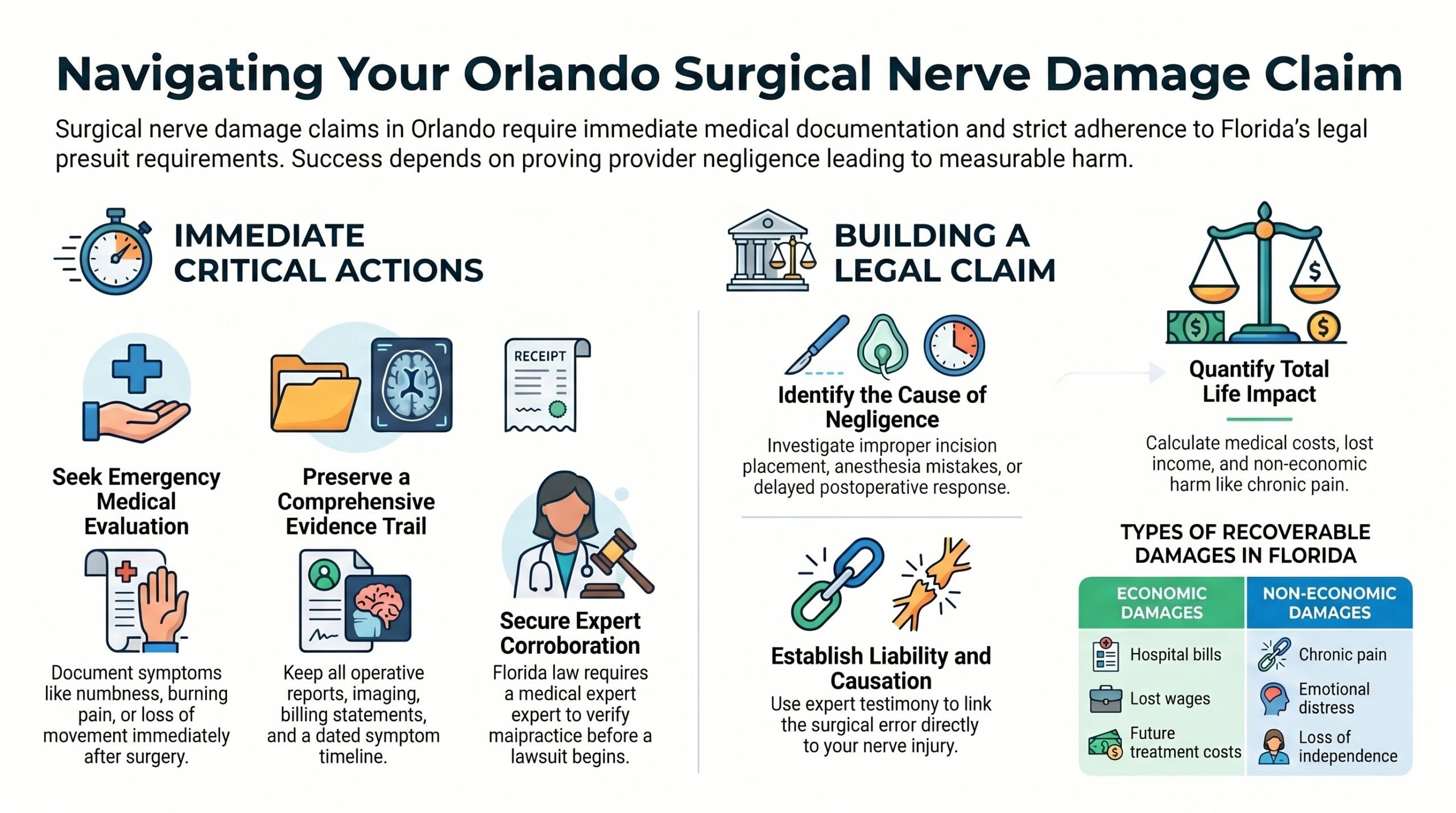
If you suspect surgical nerve damage in Orlando, you should seek immediate medical care, preserve every record, and speak with a lawyer quickly. Your claim may depend on proving that a surgeon, hospital, or anesthesia provider failed to meet the accepted standard of care and directly caused measurable harm.
The Law Offices of Anidjar and Levine can protect your rights, handle insurers, and satisfy Florida’s presuit requirements.
For help, contact an Orlando Medical Malpractice Lawyer.
The sections below explain your next steps and legal options.
Main Takeaways
- Seek immediate medical evaluation for numbness, weakness, burning pain, or loss of movement to protect your health and document the injury.
- Preserve evidence by keeping records, operative reports, imaging, bills, consent forms, photos, and a dated symptom timeline.
- Surgical nerve damage claims often involve improper incisions, instrument errors, anesthesia mistakes, infections, or delayed postoperative treatment.
- An Orlando surgical nerve damage lawyer can investigate negligence, work with medical experts, and prove causation and damages.
- Florida medical malpractice cases require pre-suit compliance and expert corroboration, so early legal guidance helps ensure compliance with deadlines and maintain claim viability.
How We Can Help With Your Orlando Surgical Nerve Damage Lawsuit Injury Claim
When a surgical error causes nerve damage, you need a legal team that can quickly assess what went wrong and determine whether medical negligence played a role. We help you gather records, identify responsible providers, and build a clear claim that reflects the full effect of your injury on your work, family, and ability to serve others.
You can rely on us to coordinate evidence, consult qualified medical professionals, and present your losses with precision. We focus on strong communication, so you understand each step and can make informed decisions. Our approach combines legal strategy with medical advocacy, helping you pursue accountability while protecting your long-term interests. We also support recovery planning by documenting treatment needs, future care, and practical limitations that may affect your daily life.
From the first review through negotiations, we work efficiently, advocate firmly, and keep your goals at the center of every action. You receive steady guidance throughout.
Understanding Orlando Surgical Nerve Damage Lawsuit Injury Cases


Because surgical nerve injury claims often involve complex medical facts, you need a clear understanding of how these Orlando cases are evaluated under Florida law. To succeed, you must show that a provider failed to meet the accepted standard of care and that the failure directly caused nerve harm, measurable losses, and ongoing limitations.
OUR CONSULTATIONSARE FREE
START YOUR FREE CASE REVIEW

Your case often turns on records, imaging, expert review, and careful analysis of surgical anatomy. Physicians may examine whether preoperative planning, intraoperative technique, and postoperative follow-up reflected reasonably competent care. In some matters, nerve mapping helps clarify where injury likely occurred and whether it aligns with the procedure performed.
Florida’s presuit requirements also shape your path, because you generally need corroboration from a qualified medical expert before filing. When you understand these elements, you can make informed decisions, protect your family, and pursue accountability in a way that honors both truth and service to others through responsible legal action.

Common Causes of Orlando Surgical Nerve Damage Lawsuit


You should understand that surgical nerve damage often results from preventable mistakes made before, during, or after a procedure. Your case may involve improper incision placement, surgical instrument errors, or anesthesia injection mistakes that place nearby nerves at serious risk. You may also have grounds for a claim when a delayed postoperative response allows nerve injury symptoms to worsen without timely treatment.
Improper Incision Placement
Although every surgical procedure requires careful planning, improper incision placement can expose or sever nerves that should have remained protected. When a surgeon misjudges anatomy, places an incision without adequate nerve mapping, or fails to account for swelling, scar tissue, or prior procedures, you can suffer lasting numbness, weakness, burning pain, or loss of function.
You may also experience cosmetic effects when an avoidable nerve injury affects muscle control, facial symmetry, or recovery. In a profession centered on helping others, providers must choose incision sites that protect both function and dignity. If they disregard accepted standards and harm follows, you may have grounds to pursue accountability. Careful legal review can help you determine whether poor surgical planning, rather than an unavoidable risk, caused the nerve damage and related losses you now endure.
Surgical Instrument Errors
Mishandled surgical instruments can turn a routine procedure into a source of serious nerve injury. If a surgeon uses excessive force, slips with a cutting tool, or relies on defective equipment, your nerves can suffer lasting harm that affects how you work, care for family, and serve your community.
You may also face preventable risks from robotic malfunctions, which can disrupt precision during delicate procedures near major nerves. Instrument contamination can cause inflammation or infection that places added pressure on vulnerable nerve tissue and complicates recovery. When hospitals fail to inspect, sterilize, maintain, or replace surgical tools, they put your health in danger. If you suspect an instrument error caused your injury, you can seek accountability and pursue resources that help you recover, support others, and move forward with confidence.
Anesthesia Injection Mistakes
Anesthesia injection mistakes can cause nerve damage even when the surgery itself proceeds as planned. If a provider places a needle too close to a nerve, uses excessive force, or injects medication into the wrong tissue, you may suffer lasting pain, numbness, or weakness. These errors often reflect failures in judgment, training, and injection protocols.
When you seek accountability, you help protect future patients and support safer care for your community. Careful review of records, medication logs, and witness statements can reveal whether the team followed accepted standards. In many cases, anesthesia liability turns on preventable acts, including poor site identification, inadequate patient positioning, or failure to respond when you report sharp pain during injection. A thorough legal evaluation can clarify your options and strengthen your claim.
Delayed Postoperative Response
When postoperative warning signs aren’t addressed promptly, a temporary nerve irritation can progress into lasting damage. You may notice numbness, burning pain, weakness, or delayed reflexes, yet your concerns may be minimized as routine discomfort. That delay can allow swelling, compression, or reduced blood flow to continue damaging vulnerable nerves.
You merit attentive postoperative care because timely action can significantly affect the recovery timeline and long-term outcome. When providers fail to examine worsening symptoms, order appropriate tests, or intervene promptly, preventable harm can result. If you’re caring for a loved one or seeking accountability for yourself, documenting symptoms, follow-up requests, and provider responses can help clarify what happened. In Orlando surgical nerve damage cases, a delayed postoperative response may show that a medical team failed to meet the standard of care owed to you.
Legal Rights of Orlando Surgical Nerve Damage Lawsuit Injury Victims
Accountability matters when a surgical error causes nerve damage, because Florida law gives you the right to pursue compensation for the harm you’ve suffered. You may recover damages for medical costs, lost income, pain, disability, and reduced quality of life. If your surgeon failed to honor Patient consent requirements, concealed risks, or made preventable mistakes, you can demand answers and lawful remedies. Florida malpractice claims also involve Statute nuances, which can affect when and how your case proceeds.
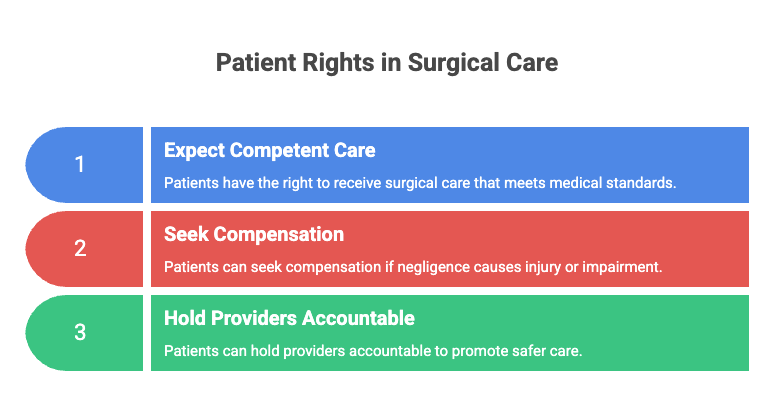
Florida law lets you seek compensation when surgical negligence causes nerve damage, disability, and lasting harm.
- You have the right to expect competent surgical care that meets accepted medical standards in Orlando hospitals and clinics.
- You have the right to seek compensation when negligence causes nerve injury, ongoing treatment needs, or permanent impairment.
- You have the right to hold providers accountable in ways that promote safer care for future patients and families.
Steps to Take After an Orlando Surgical Nerve Damage Lawsuit Injury
After a surgical nerve injury in Orlando, you should seek immediate medical care to restore your health and create a clear record of your condition. You should also preserve all records and evidence, including medical reports, bills, photographs, and any communication related to your treatment. As soon as possible, you should consult an injury lawyer, because early legal guidance can help you protect your rights and assess your potential claim.
Seek Immediate Medical Care
Start by getting medical attention right away, because prompt evaluation can protect your health and create a clear record of the nerve injury. You should seek an emergency evaluation if you notice numbness, weakness, burning pain, loss of movement, or worsening symptoms after surgery. Immediate care helps physicians identify complications, begin pain management, and reduce the risk of lasting harm.
When you pursue timely treatment, you also put yourself in a stronger position to continue serving your family, patients, coworkers, or community members who depend on you. Follow all medical instructions carefully, attend recommended appointments, and report any new symptoms without delay. Ask your providers which activities to avoid, whether you need imaging or consultation, and how to support your recovery safely. Acting quickly shows responsibility, protects your well-being, and promotes proper recuperation.
Preserve Records And Evidence
Preserving records and evidence can markedly strengthen your position if a surgical nerve injury leads to a legal claim. Keep every medical record, discharge paper, prescription receipt, billing statement, insurance letter, and communication related to your care. Create a timeline that notes symptoms, pain levels, mobility limits, follow-up visits, and how the injury affects your ability to serve your family, work, or community.
Practice careful document preservation by storing originals securely and making dated copies. Save photographs of visible changes, assistive devices, and medication labels. If you receive physical items, protect the chain of custody by limiting handling, labeling each item with its date, and noting where each item was kept. Preserve emails, voicemails, and text messages as well. Organized evidence helps present a clear, credible account of what happened and why it matters.
Consult An Injury Lawyer
Once you’ve gathered and organized the records tied to your surgical nerve injury, speaking with an Orlando injury lawyer can help you understand whether those facts support a viable claim. A lawyer reviews your timeline, medical records, and losses, then explains whether medical malpractice may have caused the harm you now face.
You also gain guidance on deadlines, insurance communications, and the evidence needed to protect client rights. When you meet with counsel, bring your notes, provider names, bills, and any written responses from the hospital or surgeon. Ask direct questions about strategy, possible outcomes, and how the firm will communicate with you. By seeking legal advice promptly, you place yourself in a stronger position to pursue accountability, secure fair compensation, and continue serving your family and community with confidence.
How an Orlando Surgical Nerve Damage Lawsuit Injury Lawyer Can Help You
When a surgical error leaves you with nerve damage, an Orlando surgical nerve damage lawsuit injury lawyer can step in quickly to evaluate your claim, protect vital evidence, and identify who may be legally responsible. You need counsel that serves your interests with disciplined patient advocacy and a clear strategy. Your lawyer reviews records, consults experts, and uses expert testimony to connect the mistake to your injury. That work strengthens your case and helps you pursue fair compensation while remaining focused on your recovery.
A skilled attorney can help you by:
- Investigating the procedure, preserving records, and locating liable surgeons, hospitals, or staff.
- Calculating losses, handling insurers, and presenting a persuasive demand supported by evidence.
- Filing your lawsuit on time, meeting Florida requirements, and preparing your case for settlement or trial.
With capable legal guidance, you can hold negligent providers accountable and seek resources that support your family, your care, and your ability to continue serving others.
Long-Term Effects of Orlando Surgical Nerve Damage Lawsuit Injuries
After a surgical nerve injury, you may face chronic pain that disrupts your daily routine and reduces your quality of life. You could also experience lasting mobility loss, making it harder to work, manage household tasks, and maintain your independence. Over time, these physical limits often create emotional stress and financial strain, which can affect nearly every part of your life.
Chronic Pain Challenges
Often, chronic pain is one of the most disruptive long-term effects of surgical nerve damage, because it can persist long after the original procedure and interfere with nearly every part of your daily life.
You may struggle to rest, concentrate, work reliably, or remain present for the people who depend on your care. In many cases, nerve sensitization causes ordinary touch, temperature, or movement to trigger severe discomfort, which can wear down your patience and emotional resilience. Effective pain coping often requires coordinated medical treatment, counseling, and practical support from those around you.
You may also face mounting expenses for medications, specialist visits, and ongoing therapy, while your ability to serve your family, workplace, or community becomes harder to sustain. These persistent burdens can strengthen the basis of your legal claim.
Lasting Mobility Loss
Lasting mobility loss can change your independence just as profoundly as chronic pain, especially if surgical nerve damage affects the strength, coordination, or sensation you need for routine movement. You may struggle to stand safely, climb stairs, drive, or carry supplies while caring for others. Even short distances can require planning, rest, and focused effort.
Your recovery may involve gait rehabilitation, targeted strengthening, balance training, and adaptive equipment that helps you move with greater safety and consistency. A brace, cane, walker, or hand controls may restore function, but they also reflect the lasting limits nerve injuries can impose. When mobility remains reduced, you may need ongoing assistance with household tasks, transportation, or physical caregiving duties. Clear medical documentation helps show how these changes affect your daily abilities and long-term functioning.
Emotional And Financial Strain
Because surgical nerve damage can affect every part of daily life, the long-term strain usually extends beyond physical symptoms and into your emotional stability and financial security.
You may struggle with anxiety, frustration, or grief as pain, weakness, and uncertainty disrupt your work, relationships, and ability to help others. Over time, those pressures can undermine your mental health and make ordinary responsibilities feel heavier. Financial losses often grow as medical bills continue, income declines, and future care becomes necessary. You may need careful financial planning to manage treatment costs, household expenses, and lost earning capacity.
When your injury limits your independence, the burden can affect your family as well. Seeking legal guidance can help you pursue compensation that protects your well-being, supports your recovery, and provides stability for the people who rely on you.
Proving Liability in Orlando Surgical Nerve Damage Lawsuit Injury Cases
When a surgical procedure leaves you with nerve damage, proving liability requires more than showing that an injury occurred. You must connect the harm to medical negligence by showing that a surgeon, anesthesiologist, or hospital failed to meet the accepted standard of care. That often means gathering operative notes, imaging, consent forms, and follow-up records that reveal what happened before, during, and after surgery.
You also need expert testimony from qualified medical professionals who can explain how the provider’s conduct caused your nerve injury and why that outcome should have been prevented. In Orlando surgical nerve damage cases, timing matters because early investigation helps preserve records and identify witnesses. You strengthen your claim when you document symptoms, treatment, lost function, and the ways the injury affects your ability to care for your family and serve your community.
A well-supported case clearly shows both fault and the full extent of your losses.
Dealing With Insurance Companies After an Orlando Surgical Nerve Damage Lawsuit Injury
After a surgical nerve injury, insurance companies often move quickly to limit what they pay, and their early contact can affect the value of your claim. You should respond carefully, because adjusters may sound helpful while using claim tactics designed to reduce responsibility. Avoid giving recorded statements, accepting quick offers, or signing broad medical releases before you understand the full extent of your losses.
You can protect your position by keeping organized records, following medical advice, and directing insurer questions through your attorney when possible. Clear documentation of pain, treatment, missed work, and daily limitations helps prevent insurers from minimizing your injury. You should also be cautious about discussing your condition casually, especially in writing or online, because those statements may be used against you. Insurance representatives often raise issues about coverage, fault, and settlement timelines to create pressure.
A disciplined, service-minded approach helps you stay focused on recovery while protecting the resources your family and future may need.
What to Expect During an Orlando Surgical Nerve Damage Lawsuit Injury Claim Process
You can expect your claim process to begin with an initial case evaluation, where your attorney reviews the facts of your injury and determines the strength of your case. From there, you’ll need to gather medical records, expert opinions, and other evidence, while your lawyer handles filing requirements and negotiates with the opposing party. If a fair agreement isn’t reached, your case may proceed to trial, where the outcome will depend on the evidence presented and the extent of your damages.
Initial Case Evaluation
Because surgical nerve damage claims often depend on precise medical and legal analysis, the initial case evaluation focuses on the facts of your procedure, the nature of your injury, and whether the evidence supports a viable lawsuit.
During this stage, you explain what happened, when symptoms began, how your condition affects daily life, and what treatment followed. Your lawyer uses that information to assess negligence, causation, damages, and potential defendants. You can expect a free consultation to help you understand whether pursuing a claim could protect your future and support those who rely on you. The attorney may also outline a preliminary case timeline, discuss possible legal obstacles, and answer questions about communication, costs, and next steps. This meeting gives you practical direction, so you can make informed decisions with confidence and purpose.
Evidence And Medical Records
Once your attorney determines that your claim appears legally and medically supportable, the next step is gathering the records and other evidence needed to prove what occurred and how the nerve injury developed. You can help by identifying every provider involved, from surgeons and nurses to rehabilitation clinicians. Your legal team will review operative reports, imaging, follow-up notes, billing records, and consent forms.
They’ll compare your treatment history against accepted medical protocols to see whether preventable errors, delays, or omissions contributed to the damage. You may also preserve photographs, medication lists, symptom journals, and statements from family members who observed your condition. These materials can clarify how your injury changed your daily life and your ability to serve others. Careful documentation strengthens accountability and helps your attorney present a clear, well-supported claim.
Filing And Negotiation Steps
After your attorney assembles the essential medical evidence, the claim typically moves into a formal filing and negotiation phase that sets the pace for the rest of the case. Your lawyer drafts the complaint, identifies liable parties, and files within Florida deadlines. You then serve each defendant and await formal responses, which may admit, deny, or challenge pivotal allegations.
As the case advances, your attorney exchanges documents, submits written questions, and schedules depositions to clarify disputed facts. You may also review insurance positions and discuss mediation strategies designed to resolve issues efficiently and honor the impact on your family and community. Throughout this stage, your lawyer protects your rights, carefully evaluates offers, and thoroughly prepares the record while preserving arguments that could matter later, including for post-trial appeals if necessary.
Settlement Or Trial Outcome
Evaluate each settlement offer against the strength of your medical proof, the expected cost of future treatment, and the extent to which the nerve injury has changed your daily life and ability to work. Your lawyer should explain realistic Settlement Strategies, including when an insurer’s proposal serves your long-term needs and when it falls short.
If negotiations don’t produce fair compensation, you may proceed toward trial. During Trial Preparation, you’ll review expert opinions, organize records, and prepare testimony that clearly explains how the surgical error harmed you. You should expect motions, scheduling conferences, and continued settlement discussions even as the court approaches. A favorable outcome may result from a negotiated agreement or a verdict that accounts for medical expenses, lost income, pain, and future limitations. Your choices should protect your family, honor truth, and support responsible patient care.
Compensation for Orlando Surgical Nerve Damage Lawsuit Injury Damages
Accountability matters when surgical nerve damage leaves you with lasting pain, weakness, numbness, or reduced mobility, because the law may allow you to recover compensation for both your financial losses and the personal harm you’ve endured. If a provider’s mistake caused your injury, you can pursue a claim that reflects the seriousness of your condition and the disruption it has brought to your life and ability to serve others.
You may seek compensation for the treatment your injury requires, including diagnostic testing, follow-up procedures, rehabilitation, assistive devices, pain management, and care related to nerve regeneration. You can also pursue recovery when your condition limits your ability to work, volunteer, care for family, or participate in your community. Strong evidence often includes medical records, expert opinions, treatment timelines, and proof of how symptoms affect daily function. By acting promptly, you give your legal team the best chance to build a clear, persuasive case on your behalf.
Economic vs Non-Economic Damages in Orlando Surgical Nerve Damage Lawsuit Cases
In an Orlando surgical nerve damage lawsuit, you may seek economic damages for measurable financial losses, such as medical bills, lost wages, and future treatment costs. You may also pursue non-economic damages for harder-to-quantify harm, including pain, suffering, emotional distress, and loss of enjoyment of life. To recover fair compensation, you must show clear evidence of both the amount of your losses and how the nerve injury has affected your daily life.
Economic Damages Explained
When a surgical nerve injury results in measurable financial losses, economic damages cover the direct costs you’ve incurred and the expenses you’re likely to face in the future. In an Orlando claim, you may seek compensation for hospital bills, medical specialist visits, diagnostic testing, rehabilitation, prescriptions, medical equipment, and transportation for treatment.
Economic damages also cover income-related harm. If your injury kept you from work, you can pursue lost wages for the time you missed. If lasting limitations reduce the type or amount of work you can perform, you may also recover for diminished future earning capacity. Careful records, invoices, employment documents, and expert opinions help prove these losses. By documenting them thoroughly, you strengthen your case and protect your ability to continue serving your family and community with stability.
Non-Economic Losses Overview
Often, the most serious effects of a surgical nerve injury don’t appear on a bill or paycheck, yet they can alter nearly every part of your daily life. Non-economic losses address those human harms, including ongoing pain, emotional distress, loss of enjoyment, disfigurement, and reduced independence.
If your injury limits how you care for family, participate in ministry, volunteer, sleep, or move comfortably, those losses matter. They reflect a diminution in quality, not just a financial cost. In a nerve damage case, Pain valuation considers how symptoms affect your relationships, routine, dignity, and ability to serve others consistently and compassionately. These damages recognize that your well-being has value beyond income. While no legal result can restore what was taken, compensation for non-economic harm acknowledges the full personal impact of negligent surgical care on your life.
Proving Damage Value
Non-economic harm reflects the personal cost of a surgical nerve injury, but a strong claim also requires clear proof of its value alongside your financial losses. To support damage valuation, you should gather medical records, billing statements, wage reports, and evidence showing how the injury changed your daily service to family, work, and community. Economic damages often include treatment costs, future care, lost income, and reduced earning capacity.
Non-economic damages require careful presentation. Your pain, limitations, emotional strain, and loss of independence must be documented through consistent treatment notes, personal journals, and witness statements. In many cases, expert testimony from physicians, vocational experts, or life care planners helps connect your symptoms to long-term harm. When your evidence is organized and credible, you give the court a reliable basis to measure full damages fairly.
When an Orlando Surgical Nerve Damage Lawsuit Injury Case Goes to Trial vs Settlement
Although many Orlando surgical nerve damage claims resolve through settlement, a case may proceed to trial if the parties dispute liability, the extent of the injury, or the full value of your damages. If insurers minimize your losses or deny negligence, your attorney may advise litigation to protect your interests and strengthen your position.
Settlement often offers privacy, faster compensation, and lower costs, which can help you focus on recuperation and supporting those who depend on you. Trial, however, may become necessary when expert testimony sharply conflicts, jury dynamics favor a persuasive presentation, or the defense refuses a fair amount. Your lawyer will weigh medical evidence, witness credibility, projected expenses, and risk tolerance before recommending a path.
If the case proceeds, counsel will also consider appellate strategies because trial outcomes can be challenged post-verdict. By preparing thoroughly for both settlement and trial, you place yourself in the strongest position to pursue accountability, meaningful recovery, and service to your family and community.
The Statute of Limitations for Orlando Surgical Nerve Damage Lawsuit Injury Cases
Because Florida imposes strict filing deadlines on medical negligence claims, the statute of limitations can determine whether you may pursue compensation for a surgical nerve damage injury in Orlando at all. If you miss the applicable statute deadlines, a court may bar your claim, regardless of how serious your injury is or how deeply it affects your ability to care for others.
In many Florida medical negligence cases, you must act within a limited period measured from when the injury occurred or when you reasonably discovered it. However, specific facts can change the timeline. Certain filing exceptions may apply, including circumstances involving delayed discovery, fraud, or concealment. Minors and incapacitated patients may also face different rules. You should preserve records, note treatment dates, and keep a clear timeline of symptoms and follow-up care.
Careful attention to deadlines helps protect your rights and supports your efforts to pursue accountability, stability, and resources for those who depend on you.
When to Contact an Orlando Surgical Nerve Damage Lawsuit Injury Lawyer
Recognizing the warning signs early can safeguard both your health and your legal options after a surgical nerve injury in Orlando. You should contact a lawyer as soon as numbness, burning pain, weakness, or loss of function continues beyond expected recovery, especially when your doctor offers limited answers. Careful post-op timing matters because early action helps preserve records, identify witnesses, and document how the injury affects your daily service to your family, work, and community.
You should also seek legal guidance promptly if symptoms worsen, follow-up care feels inadequate, or another physician suggests preventable harm may have occurred. Consult urgency increases when bills rise, income drops, or your ability to care for others becomes restricted. A timely conversation can help you understand what information to gather, what deadlines may apply, and how to protect your rights while you continue treatment. Acting without delay supports accountability and informed decision-making for everyone depending on you.
Why You Need an Experienced Orlando Surgical Nerve Damage Lawsuit Injury Lawyer
Once you’ve identified signs that a surgical nerve injury may involve preventable harm, the quality of the lawyer you choose can directly affect the strength of your claim. An experienced Orlando surgical nerve damage lawyer helps you understand whether Medical malpractice occurred and how the facts support legal accountability. You need counsel who can connect medical records, expert opinions, and timelines into a clear, persuasive narrative.
Experience also matters because these cases often involve intricate standards of care, disputed causation, and significant long-term losses. Your lawyer builds a focused Case strategy, anticipates defenses, and works to prove how the provider’s conduct changed your life and limited your ability to serve your family, work, and community. Skilled representation also protects you from costly mistakes, undervalued claims, and pressure from insurers. When your future care, income, and daily function are at stake, experienced legal guidance gives your case structure, credibility, and a stronger path toward fair recovery.
How to Choose the Right Orlando Surgical Nerve Damage Lawsuit Injury Lawyer for Your Case
Start by looking for a lawyer who handles surgical nerve damage claims on a regular basis and can explain how Florida medical malpractice law applies to the facts of your case. You should ask about similar results, courtroom experience, and whether the attorney works with qualified medical experts who can support your claim.
During client interviews, pay close attention to how clearly the lawyer answers questions and whether you feel respected, informed, and heard. Choose counsel who values service, communicates promptly, and understands that your case affects your health, family, and ability to help others. Review fee structures carefully, including contingency terms, litigation costs, and how expenses are handled if your claim does not succeed.
You should also evaluate the firm’s resources, case preparation process, and willingness to take the matter to trial if necessary. A strong attorney will provide honest guidance, realistic expectations, and a strategy tailored to your injuries and long-term recovery needs.
About The Law Offices of Anidjar & Levine
Serving injured clients across Florida, The Law Offices of Anidjar & Levine represents people whose lives have been altered by serious nerve damage and other preventable medical errors. When you need trusted legal guidance, you can turn to a team that values service, responsiveness, and results. This firm overview reflects a client-centered practice built to help you pursue accountability and meaningful recovery after medical negligence.
The firm’s founding history reflects a commitment to advocating for injured people and families throughout the state. You receive direct communication, practical guidance, and legal strategies tailored to your circumstances. The attorneys and staff understand that your case affects your health, livelihood, and ability to care for others. They work diligently to investigate medical records, consult qualified experts, and prepare a compelling claim.
With a strong reputation for personalized attention and disciplined advocacy, the firm endeavors to protect your rights and help you move forward with confidence and stability.
Frequently Asked Questions
Can Surgical Nerve Damage Affect Future Pregnancies or Fertility?
Yes, surgical nerve damage can affect future pregnancies or fertility, depending on the nerve involved and the extent of injury. You may face pain, impaired pelvic function, or pregnancy complications that influence conception or carrying a pregnancy safely. You should seek prompt evaluation from qualified experts who can assess reproductive risks and guide treatment. Fertility counseling can help you understand your options, protect your health, and make informed decisions about future family planning.
Are Out-Of-State Surgeons Subject to Florida Malpractice Laws?
Yes, you can often hold out-of-state surgeons to Florida malpractice laws when the care occurred in Florida or harmed you there. You should examine choice-of-law issues because courts decide which state’s rules govern specific claims. Licensing reciprocity doesn’t usually excuse negligence or remove accountability. If you’re serving a patient or family in need, you should gather records promptly and evaluate jurisdiction, licensure, and filing deadlines with experienced counsel.
Can Retained Surgical Hardware Worsen Nerve Damage Symptoms?
Yes, retained surgical hardware can worsen your nerve damage symptoms. You may experience increased pain, numbness, weakness, or tingling if hardware migration compresses nearby nerves. Scar entrapment can also develop around the surgical site, tightening tissue and irritating affected nerves over time. If you’re serving a loved one or patient, prompt medical evaluation helps identify the cause, protect function, and guide appropriate treatment before symptoms become permanent or disabling.
Do Language Barriers Impact Informed Consent in Surgical Injury Cases?
Yes, language barriers can directly undermine informed consent in surgical injury cases. If you can’t achieve clear Language comprehension, you may not fully understand risks, alternatives, or postoperative instructions. That gap can weaken consent and affect patient safety. You should evaluate whether Consent translators were provided, qualified, and used consistently throughout discussions. By identifying communication failures, you help protect patients, support accountability, and strengthen the factual basis of a potential legal claim.
Can Telemedicine Records Be Used in Nerve Damage Claims?
Yes, you can use telemedicine records in nerve damage claims. They often capture symptoms, provider advice, follow-up plans, and timing, which may support causation and notice. Telemedicine documentation from virtual consultations can also reveal missed warnings, delayed referrals, or inconsistent charting. You should preserve visit summaries, messages, images, and recordings when available, because these records may help you demonstrate what providers knew, when they knew it, and responded.
—————————
If you’ve suffered nerve damage after surgery, you need clear guidance and decisive legal support. You can protect your rights by acting promptly, preserving records, and seeking experienced counsel.
An Orlando Medical Malpractice Lawyer can evaluate your claim, explain your options, and pursue the compensation you may merit.
The Law Offices of Anidjar and Levine can help you move forward with confidence, while holding negligent parties accountable under Florida law and protecting your interests.

